Urban Studies

You are currently browsing the archive for the Urban Studies category.

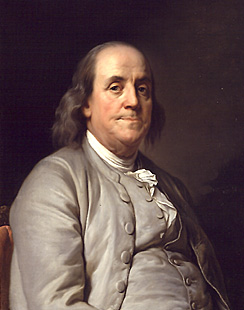
Even though he was reputed to really like orgies, Benjamin Franklin was careful about his body when it came to food and drink, experimenting with vegetarianism and preaching temperance. Franklin’s disregard for alcohol made him an oddball in an age when most folks were continually soused. An excerpt from Joyce Chaplin’s The First Scientific American:

“Fat though he grew, the adult Franklin’s much-noted coolness and detachment may have been the result, at least in part, of his measured consumption of alcohol. His sobriety was striking in an age when people drank steadily–to consume calories, to keep warm, and to avoid tainted water. Tipsiness was so common that it went unnoticed, even in small children, pious clerics, and pregnant women. We might call them drunk; but drunkenness at the time meant inability to stand.”

Tags: ,

As the mouse is replaced by the touch-pad in the contemporary world of computing, let’s look back to San Francisco in 1968 when the first mouse was given a demo by its inventor, Douglas Engelbart. “I don’t know why we call it a mouse,” he said. “It started that way, and we never did change it.” From Engelbart’s ibiblio entry:

Douglas Engelbart has always been ahead of his time, having ideas that seemed far-fetched at the time but later were taken for granted. For instance, as far back as the 1960s he was touting the use of computers for online conferencing and collaboration. Engelbart’s most famous invention is the computer mouse, also developed in the 1960s, but not used commercially until the 1980s. Like Vannevar Bush and J.C.R. Licklider, Engelbart wanted to use technology to augment human intellect. He saw technology, especially computers, as the answers to the problem of dealing with the ever more complex modern world and has dedicated his life to the pursuit of developing technology to augment human intellect.”

Tags: , ,

"Bunch of morons!"

A sense of decencency and respect (Midtown West)

What is it about Creepslist that makes people think it is okay to forgo all manners and common decency towards one another? This is NOT the .99 cent store. Most people here are trying to sell items at what they have deemed a fair price. If you do not like the offering or asking price, simply move on. It is not your business.

Is your life so empty and meaningless that you peruse CL seeking out listings for sale that you can not afford or “think”, though I doubt your capable of logical thought, the price is unreasonable. Then you feel the need to write to total strangers, mean, horrible things, you would never say to their face. Because lets face it, you are a coward with just an old fashioned computer in your mothers basement. If you were not such a loser you would do what most of us do and simply move on to other listings.

It baffles me, you take the time to write hateful, mean e-mails to total strangers who are simply trying to sell something. You do not know us. You have not seen the item in person, yet you judge so harshly.

For those of you who respond with offers of half for less than half the asking price….are you serious? If we thought if was only worth half, we’d be asking that. Where do you think you are, a bazaar or flea market in Morocco? This is NYC moron.

If you do not like a listing…move on. Do you think your pea brain, pathetic, hateful e-mails do anyone any good or is that the point. Are you just so mean spirited that writing mean e-mails to strangers gives you pleasure? We just laugh at you. We don’t even pity you because you are so beneath morality and decency it’s not worth it.

Lastly, just because you are writing “e-mails” does not mean basic grammar in communication is void. A salutation is usually a proper beginning, then a comma, usually a space or two, then try capital letter for the beginning of sentences (this is first grade stuff by the way), after the “body” and simple “Thank you”, or just your name if it’s all too much.

Bunch of morons!

Yes, I know my spelling and grammar here probably has some mistakes…no need to point that out, the is written hastily and I expect I’ve made some errors.

"One of Jump’s first megaclients was Target, in 2001." (Image by David Weekly.)

David Segal’s Times article, “In Pursuit of the Perfect Brainstorm,” looks at the world of Ideas Entrepreneurs, individuals and companies that help corporations and government agencies solve problems and develop products. The field has its own Orwellian argot (e.g., “thought leaders”) and tries to overcome “highly ambiguous problems.” One such think tank is Jump in San Mateo, California. In this excerpt, Segal writes of how Jump helped Target defend its market niche:

“One of Jump’s first megaclients was Target, in 2001. Still early in its spiffy-design phase, Target was selling home products by the designers Michael Graves and Phillipe Starck. Kmart was teamed up with Martha Stewart. Robyn Waters, then Target’s vice-president of trend, design and product development, was worried that the company’s famous-designer-on-a-budget success was being mimicked in categories that Target considered strongholds. One such category was back-to-college. Using a variety of methods, including ‘Yes, and?’ brainstorming and having anthropologists analyze video footage of collegebound kids shopping for kitchenware, Jump helped devise a product called Kitchen in a Box, a collection of dozens of different utensils, pans, pots and a kettle, later designed by Todd Oldham. Sales took off. ‘It worked phenomenally well,’ Waters says.”

Tags: , , , , ,

Micky, taking a break form dish-washing duties. (Image by Michelle Reback.)

Queens Village was the place to be in 1949 if you needed your household chores done by a monkey. At least that was the case according to an article I found in Life magazine’s August 29, 1949 issue. The piece,Micky the Dishwashing Monkey,” recalls a simpler time in America, when capuchins were called upon to rinse silverware. It also recalls a time when everyone in the offices of Life magazine was apparently drunk.

In addition to his domestic talents, Micky liked waving to pretty girls from the apartment window and rubbing extinguished cigar butts on himself. He also once punched his owner in the foot so hard that she was unable to wiggle he toes for six months. The owners weren’t quadriplegics who needed assistance but apparently just lazy and bored middle-class people. A brief excerpt from the article, which was subtitled “A talented Long Island capuchin loves to work at the kitchen sink”:

“For the past few years Mrs. John Taral of Queens Village, N.Y. has been letting her pet monkey, Micky, wash the dishes for her without ever thinking there was anything special about having a monkey who washed the dishes. Then the newspapers found out about it and suddenly Micky and his mistress landed on the front pages. For days, Micky washed dishes for the press, and Mrs. Taral suddenly realized what a household gem she had.

‘You could put a million dollars on the table for my monkey and I wouldn’t take it,’ she told the Herald Tribune‘s animal story expert, John O’Reilly.”

Tags: , , ,

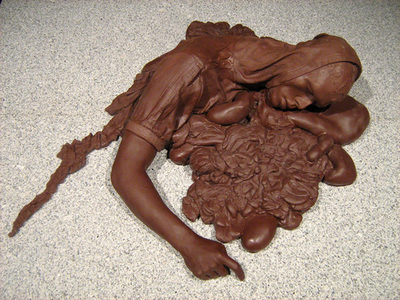
Stephen J. Shanabrook's chocolate sculpture of a mutiliated suicide bomber will be on display at MONA. (Image by Shanbrook.)

Cristina Ruiz has an interesting piece in the Utne Reader about the opening the Museum of Old and New Art (MONA) in Tasmania. It’s an eccentric  temple to secularism built by 49-year-old entrepreneur David Walsh. It sounds like an attempt to create a permanent version of the more pungent, button-pushing elements of Sensation. (Thanks Marginal Revolution.) An excerpt:

Finally, there is the international contemporary art. Walsh owns some 300 works, and more have been commissioned for the opening of MONA. These include an untitled 1998 installation by Jannis Kounellis that incorporates seven rotting beef carcasses and a new version of Wim Delvoye’s Cloaca. The machine, which simulates the human digestive process, creates excrement that is apparently indistinguishable from the real thing.

The smell of rotting beef and excrement may be too much for some visitors, but to Walsh they are important. ‘Aren’t we just machines for manufacturing shit?’ he asks.

Some visitors may find these displays shocking, a reaction Walsh welcomes. ‘There’s a lot of controversial stuff [that will go on display]. And, hopefully, it will cause a backlash because that’s how you attract visitors—and also I want to get some discussion going.’

Other works likely to produce strong responses include Stephen J. Shanabrook’s On the Road to Heaven the Highway to Hell, a chocolate sculpture depicting the mutilated body of a suicide bomber, and Gregory Green’s Bible Bomb #1854 (Russian style), a mixed media ‘bomb’ in a Bible.”

Tags: , , , ,

Because of marathon gaming sessions at Internet cafes in China, the gov’t banned all teens from the establishments. Image by Matthew Lyons/Game Gavel https://gamegavel.com.

Some parents in China became alarmed in recent years by their children overindulging in web-related activities, particularly marathon gaming sessions. That led to a market arising in Internet-addiction boot camps, and as often is the case, the cure was worse than the “disease.” Electroshock therapy was just the beginning of the madness. An excerpt from Christopher S. Stewart’s article on the topic  in Wired:

“One of the first signs that things had gotten out of hand in China’s Internet-addiction camps was the emergence of Uncle Yang — Yang Yongxin — a psychiatrist who opened a treatment center at a state-owned hospital in eastern Shandong Province in 2006. His camp was one of hundreds that had sprung up in China — many of them unregulated, uncredentialed, and relying on a grab bag of treatments: antidepressants, counseling, even intense physical exertion. (One sent its young clients on a 528-mile trek through Inner Mongolia.) What began as a fairly well-regarded and disciplined approach had spun into a growth industry, packed with untrained entrepreneurs.

Yang’s battery of therapies included electroshock — known as xing nao, or ‘brain waking.’ Electrodes were attached to his patients’ hands and temples, then shot through with 1 to 5 milliamps of electricity. One girl recalled wearing a mouth guard to prevent her from biting off her tongue. Some sessions apparently went on for a half hour; occasionally, a shock was said to leave burns. In an interview with a local paper, Yang defended the practice, saying, ‘It doesn’t cause any damage to the brain. But it is painful, quite painful!’

Yang was not a psychotherapist, nor was he licensed to administer electroshock. But that didn’t matter. He claimed to know what he was doing. ‘It will clear the mind,’ he promised. He charged almost $900 per month — a remarkable sum for a country in which the average monthly wage is around $400. Still, some 3,000 desperate parents sent their kids to him for four-month stints. The media hailed Yang as a ;national Web-addiction expert,’ recounting his heroic tales of life at his rehab center. Even after Yang’s methods were deemed excessive — in July, Chinese authorities banned electroshock as an Internet-addiction treatment, claiming the tactic required further study — his services were reportedly still in demand.”

Tags: ,

The introduction of push-button telephones at the 1962 World’s Fair in Seattle.

"I'm too 'yough' and too stressed out."

golf clubs..wanted – $1

hello there. i’m looking for a golf club set with bag for free. i want to take up golf to bring down my blood pressure. i’m too yough and too stressed out. please help…..

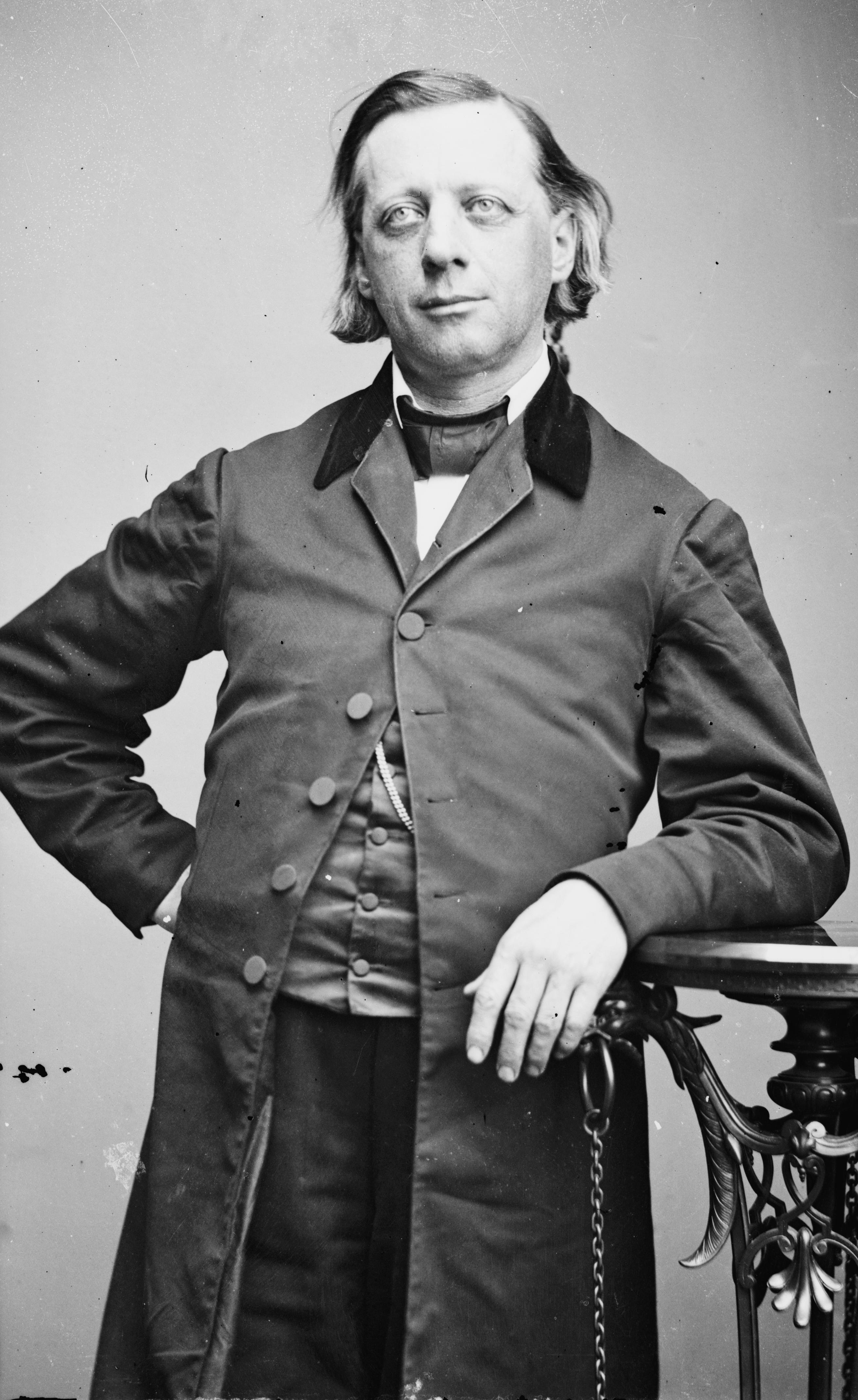
Henry Ward Beecher: Congregationalist pussy hound. (Image by Mathew Brady.)

Connecticut resident Delight Beecher may not have been the most well-known member of her famous family, but she had an interesting life just the same. She was a part of the clan best known for celebrated preacher and abolitionist Henry Ward Beecher (who was ensnared in an adultery scandal in the 1870s) and Harriet Beecher Stowe, author of Uncle Tom’s Cabin. Delight, who outlived both of her younger relations and never visited a dentist in her life, was the subject of a brief article in the May 18, 1901 Brooklyn Daily Eagle, on the occasion of having reached the 100-year-old mark. (She would live until 103.) An excerpt:

“Mrs. Delight Beecher Upson, a cousin of Henry Ward Beecher, celebrated the 100th anniversary of her birth at her home, in Burlington, near this city yesterday. The event was made the occasion of a public celebration.

Mrs. Upson delights in talking of her famous cousin, Henry Ward Beecher.

Mrs. Upson is well-preserved. Aside from deafness, her faculties are only slightly impaired. She prides herself on never having required the services of a dentist. Her physical endurance is remarkable. One day last week she walked to a neighbor’s home and back, a distance of half a mile.

Mrs. Upson’s mind is clear and she tells with precision important events of the earlier years of the nineteenth century. Her maternal grandfather served in the Revolution, and her nephews took part in the War of 1812. She has always been an ardent Congregationalist.

Two years ago Mrs. Upson visited Collinsville, where she saw a railroad for the first time in forty years.”

Tags: , ,

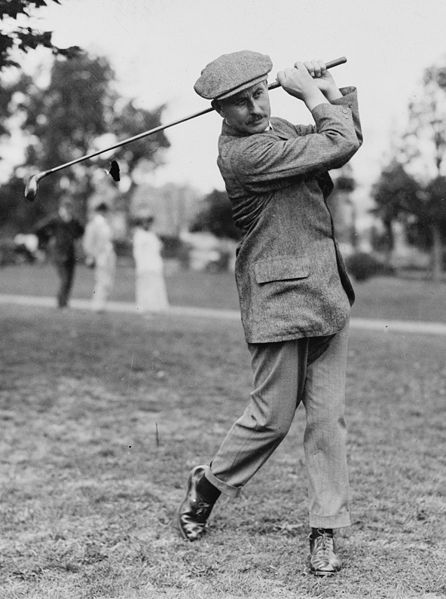
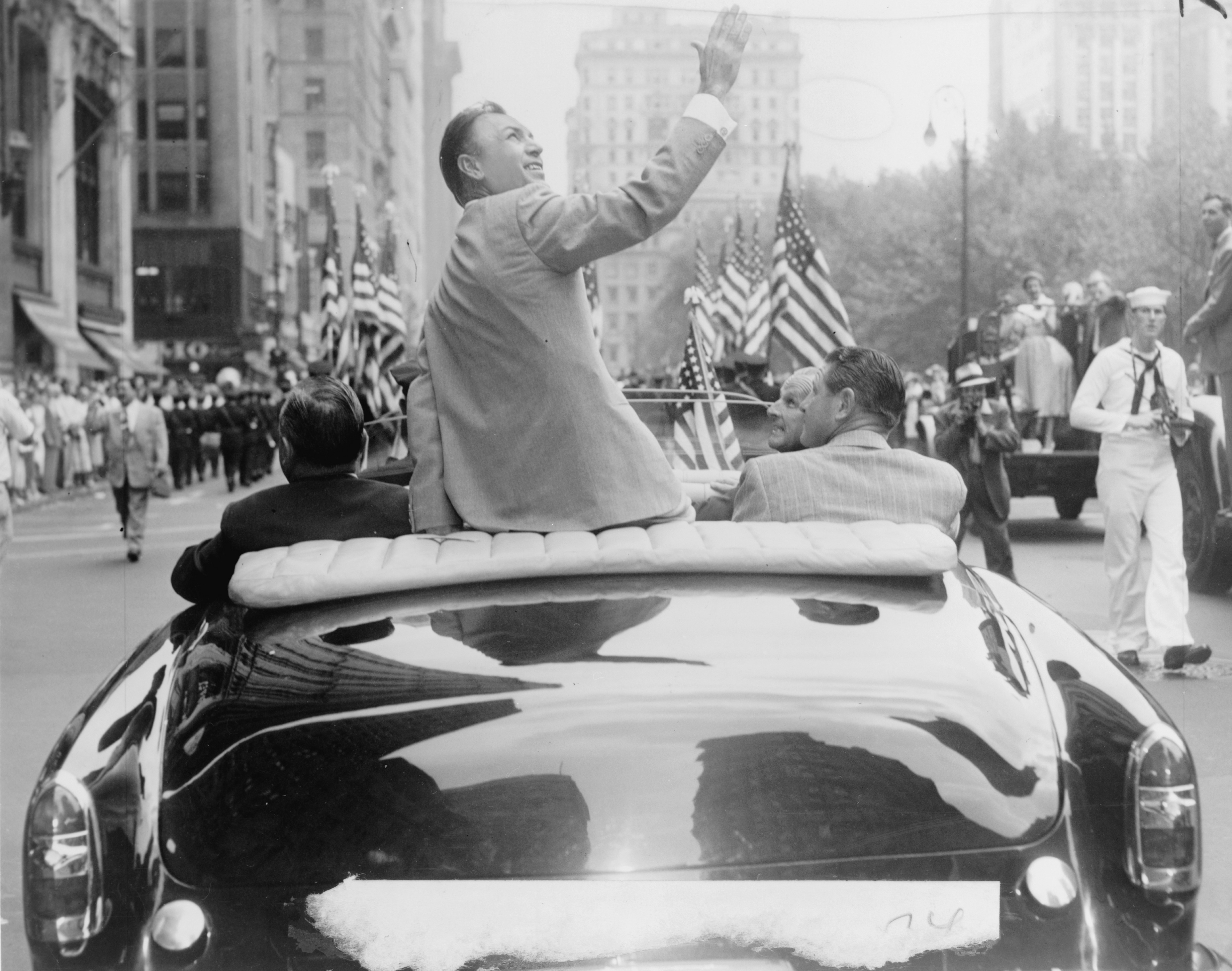
Ben Hogan competed in the British Open only once, in 1953. (Image by Dick DeMarsico.)

For the last dozen years, ticker-tape parades in New York City have been reserved  for when the Yankees or Giants win a championship, but they used to be frequent, even excessive, occurrences.

The first such parade, which took place in 1886 for the dedication of the Statue of Liberty, was an unplanned, spontaneous occasion. Since then, Theodore Roosevelt (1910), Albert Einstein (1921), Charles Lindbergh (1927), Amelia Earhart (1928, 1932), Jesse Owens (1936), Howard Hughes (1938), Winston Churchill (1946), Haile Selassie, (1954), the Apollo 11 astronauts (1969) and Nelson Mandela (1990) have been celebrated in such fashion.

Luminaries all, but there’ve been lesser lights who’ve received parades. Amelia Gade Corson (1923) was the first mother to swim the English Channel. Prince Ludovico Spado Potenziani (1928) was the governor of Rome. Viscount Harold Alexander of Tunis (1947) was the governor general of Canada. William V.S. Tubman (1054) was president of Liberia. And Sammy Sosa (1998) was Sammy Sosa (sort of).

Although only one scientist has ever received a ticker-tape parade in NYC (the aforementioned Einstein), there have been loads of athletes to be so honored. The great photo above by Dick DeMarsico of the New York World Telegram captures golfer Ben Hogan mid-parade as he’s celebrated after his victory at the 1953 British Open. You can see more of DeMarsico’s wonderful work here.

Tags: ,

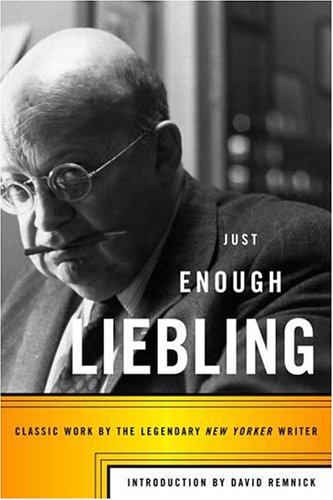
“Just Enough Liebling” has a foreword by current “New Yorker” editor David Remnick. (Image by North Pointe Press.)

An indifferent student from a wealthy Upper East Side family, A.J. Liebling had an endless curiosity of all things, especially French food, press criticism and pugilism. “The University of Eighth Avenue” is a piece from the latter category though not from the New Yorker. It’s a great two-part story from a pair of December 1955 issues of Sports Illustrated, about an old-school fighter named Billy Ray, who was soon to turn 90. In it, Ray recalls the raffish, cold-blooded side of the 19th-century Brooklyn sporting scene. (Read the full article, part one and part two.) An excerpt:

“Ray grew up in the gracious old Brooklyn of Henry Ward Beecher, in which prizefighting was as much against the law as cocking mains or dogfights, but less frowned upon, since there were no Humane Societies needling the police to stop the fist fighters. Left to their own devices the police were lenient. ‘A fellow named Hughie Bart ran a great place around 1882,’ Mr. Ray said. ‘It was right across the street from Calvary Cemetery and there would be dogfights in the basement, rooster fights on an upper floor, and we would be fighting on the ground floor, all at the same time. Mourners would stop in on their way back, to take their mind off their loss. The gravediggers were old tads with beards. They’d sit in Hughie’s drinking between jobs, and when they were watching a fight you dassn’t quit, because they would split your skull with a spade.'”

See also:

Tags: , , , ,

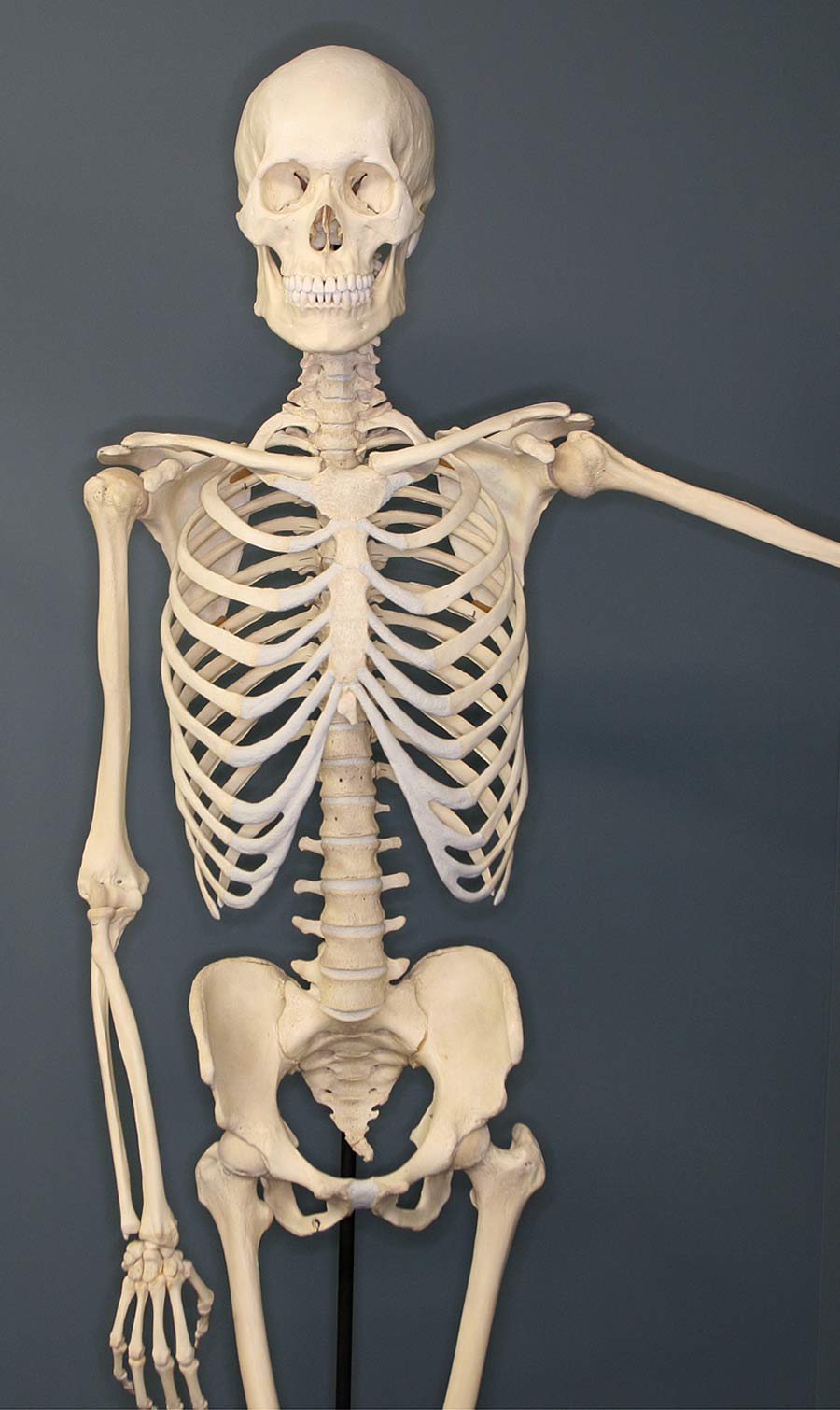
“Good quality.” (Image by Sklmsta.)

HUMAN SKELETON (Bushwick)

Im looking for good quality human skeletons, also animal skeletons. Contact email. Thanks!

Edward Albee at the Miami Bookfair International in 1987. (Image by MDCarchives.)

This isn’t suprising at all, is it? From a new interview in Vice:

Do you have a specific writing space?

I do my writing in my head. There are tables around for whenever I feel like writing something down. I don’t care where I do it. It’s called a manuscript, so I write by hand.

That’s pretty old school.

I don’t believe in all those machines.

And the internet?

I know it exists. I don’t use it.

Do you have a cell phone?

No. It’s a waste of time. I might as well watch television. I walk along the streets of New York and I find people bumping into each other, bumping into things, and they have these things in their ears or in their face. They’re not seeing anything of the real world.”

Tags:

A TV commercial from Mego for its unfortunately titled ’70s board game, Ball Buster. “It’s a family game. Fun for children…and for adults it’s exciting.” Before the commercial is over, you know what name the husband will call his wife. Not even Scott Joplin’s amazing ragtime music can class this one up.

Tags:

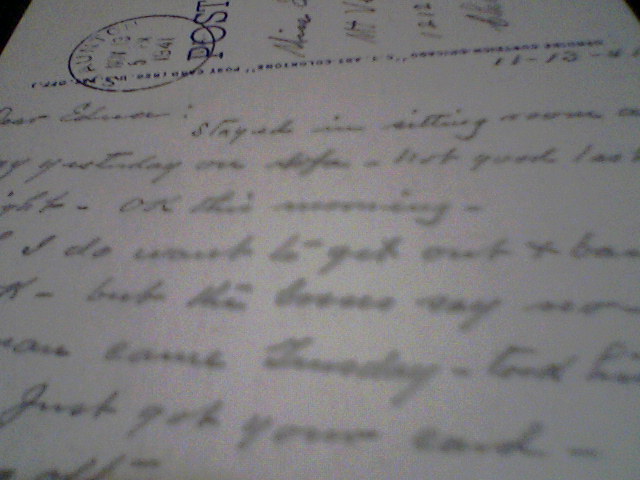
On 1-cent stamp on reverse side: "United States of America, Industry & Agriculture for Defense."

Dear Edna,

Stayed in sitting room all day yesterday on sofa — not good last night– ok this morning.

Oh I do want to get out & back to work–but the bosses say soon.

Herman came Tuesday. Went home Sat. Just got your card–write me often.

Dad


Tags:

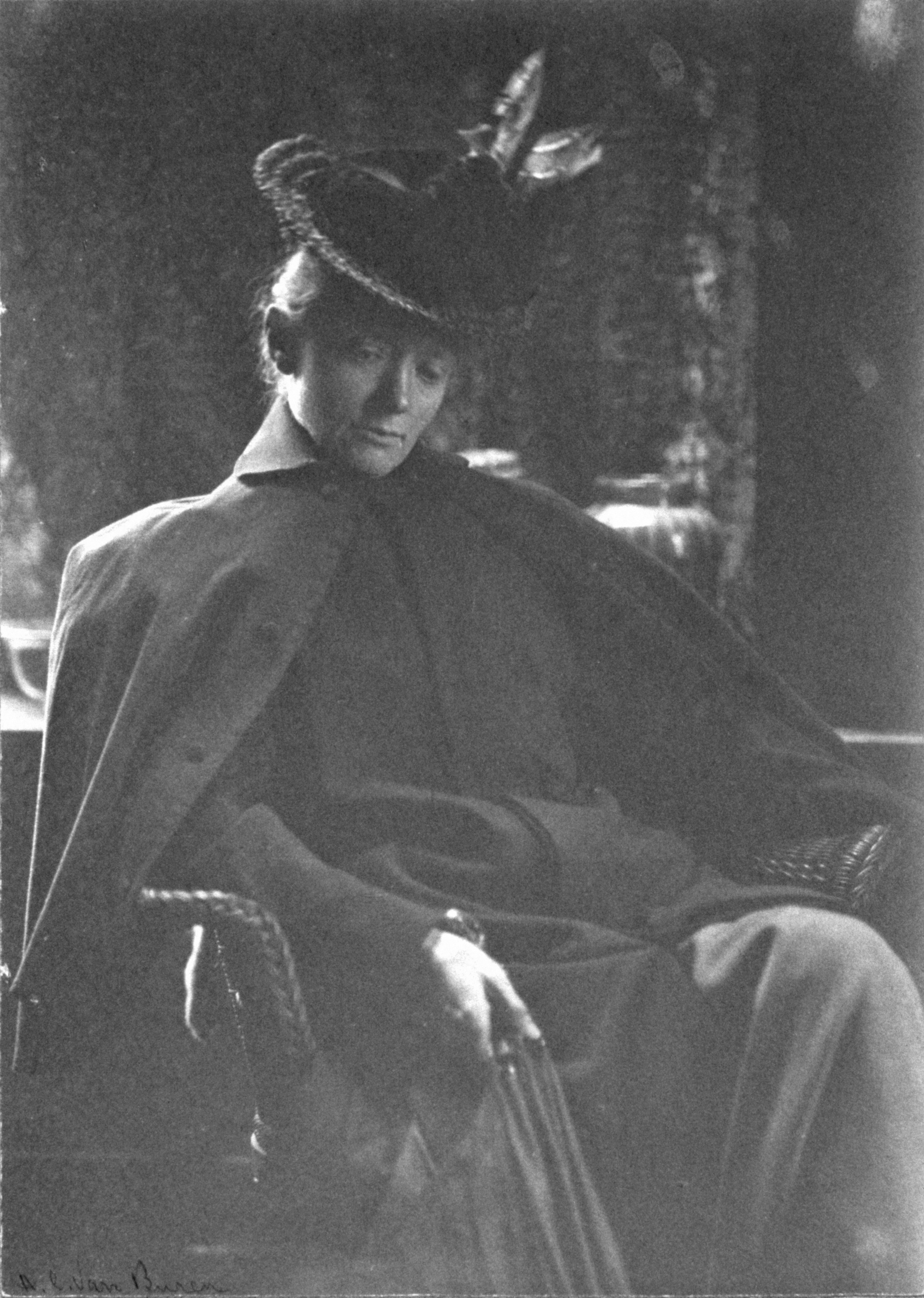
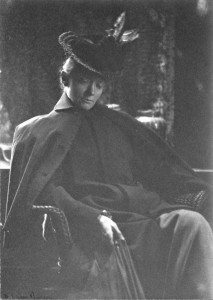
"She swung a handsome unbrella in one hand with an air of quiet determination." (Image by Amelia Van Buren.)

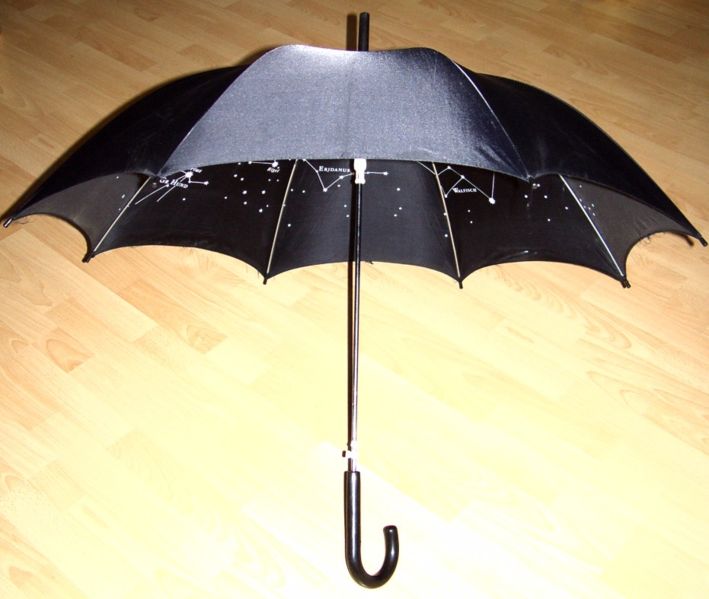
A willowy widow who was wronged wickedly wielded an umbrella to gain a measure of revenge against a pair of railroad executives in Brooklyn in 1889. The Daily Eagle provided a blow-by-blow account in its March 31 edition (and the Times also provided a report of the unusual confrontation.) An excerpt:

“A tall, thin, willowy blonde woman, elegantly attired in a black dress, a black hat, a close fitting green tailor made coat, with a fur boa around her neck, walked uneasily back and forth in front of the entrance to the offices of the Union Elevated Railroad, 31 Sands street, on Friday morning. It lacked a few minutes of being 9 o’clock and it was apparent that she was expecting some one at that hour. She swung a handsome unbrella in one hand with an air of quiet determination.

She had not long to wait. Presently a carriage drove up to the curb and out stepped Major Stephen Pettus, the secretary andf treasurer of the Union Elevated Railroad, and Mr. Joseph Elliott, his brother in law and one of the directors of the road.

‘You scoundrel! You deceiver! You heartless betrayer!,’ screamed the tall, thin woman, as soon as she caught sight of Major Pettus and Mr. Elliott.

There was a tremendous scene forthwith and a crowd of people, who had been hurrying toward the bridge, paused and gathered around to listen. Messrs. Elliott and Pettus made some rapid and vehement remarks, and the tall young woman lent emphasis to her derogatory statements concerning the two railroad magnates by brandishing her umbrella and whacking and thumping Messrs. Elliott and Pettus with it as fast as she could. She first directed her attack against Major Pettus, and when Mr. Elliott stepped between she turned her attention to him and he had to put up his arm to defend his head and shoulders from the shower of blows she rained upon him.
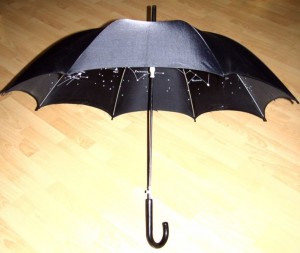
"He had to put up his arm to defend his head and shoulders from the shower of blows she rained upon him." (Image by Jean D'Alembert.)

The street was full of people and a big crowd collected in a twinkling. There was a great deal of excitement. An officer was close by, but did not interfere and no arrests were made. Messrs. Elliott and Pettus escaped upstairs into the railroad offices and the woman went away.

In the afternoon when the reporter called he was informed by a servant that Major Pettus was not at home and that Mrs. Pettus was entertaining company in the parlor and could not be disturbed. In the evening Mr. Elliott was found at the house. He said that Major Pettus had been sick all day and was lying in bed asleep. Mr. Elliott was asked to relate the particulars of Friday’s sensational occurrence. He said:

‘Major Pettus and I are the persons who were assaulted. This woman was waiting for us and when we reached the sidewalk in front of 31 Sands street she applied every conceivable derogatory epithet to us.’

‘What is the name of the young woman?’

‘She is Mrs. Hannah Martin Southworth. She is a widow, I believe. I do not think she has any children. I do not know whether her husband ran away  or is dead. If he is dead he is probably in heaven.’

‘You know her?’

‘Oh, yes. I have known her for several years.’

‘Did Major Pettus also know her?’

‘Yes, he knew her well.’

‘What was the nature of her charges against you?’

‘That is a private matter which I do not propose to discuss.’

He positively refused to discuss the nature of Mrs. Southworth’s charge against Major Pettus, on the ground that the Major was a married man, whose domestic affairs ought not to be dragged into the newspapers under any circumstances.

‘This woman merely wants the earth. She is a holy terror.'”
Tags: , ,

"Stickball cap of Warhol Superstar Candy Darling."

WARHOL MEMORABILIA – $20000

“Stickball cap of Warhol Superstar CANDY DARLING. Yellow in color, dated 1956 and reads” LONG ISLAND STICKBALL” and has “JIMMY SLATTERY” written on the underside of the bill. $20,000 firm or will consider something of equal non-cash value.

$100 bill autographed by Warhol Superstar HOLLY WOODLAWN. Has a still from the Warhol produced film “TRASH” of Holly collaged over Ben Franklin and a BRIGHT RED LIPSTICK KISS by Holly. $8,000 firm or will consider something of equal non-cash value.”

Tags: , ,

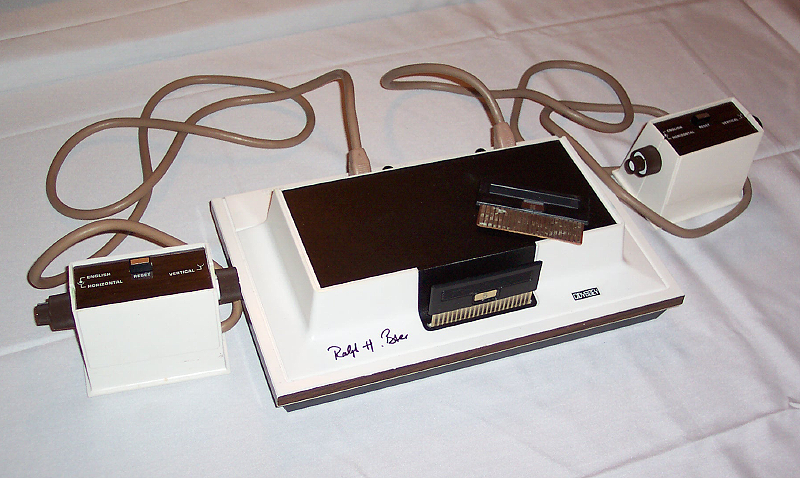
As this 1973 television commercial clearly illustrates, the first home video game console, the Magnavox Odyssey, was incredibly lame. There were no graphics for backgrounds, so you had to attach some sort of plastic sheet to your TV screen, and then you got to move around some sickly looking dots with a controller. But designer Ralph Baer‘s pioneering efforts were still incredible. His prototype (“brown box”) is today housed at the Smithsonian.

Ralph Baer autograph on lower left side of console. (Image by Wgungfu at en.wikipedia.)

Tags:

I was browsing Ray Kurzweil’s site and found a posting of predictions for the 21st century that the late science-fiction writer Arthur C. Clarke made back in 2001. Clarke, of course, gave us HAL, the rebellious computer from the 1968 novel, 2001: A Space Odyssey. Clarke made one mistake with his list: He gave specific dates when events would occur. That renders most of his predictions from the first decade of the century incorrect. But it might just mean that he is 20 or 50 or 80 years premature. Some of his predictions:

2009: A city in a third world country is devastated by an atomic bomb explosion.

2009: All nuclear weapons are destroyed.

2010: Despite protests against “big brother,” ubiquitous monitoring eliminates many forms of criminal activity.

2013: Prince Harry flies in space.

2019: There is a meteorite impact on Earth.

2020: Artificial Intelligence reaches human levels. There are now two intelligent species on Earth, one biological, and one nonbiological.

2021: The first human landing on Mars is achieved. There is an unpleasant surprise.

2023: Dinosaurs are cloned from fragments of DNA. A dinosaur zoo opens in Florida.

2040: The concept of human “work” is phased out.

2095: A true “space drive” is developed. The first humans are sent out to nearby star systems already visited by robots.

2100: History begins.

Tags: , , ,

Panels covered with photovoltaic cells. (Image by Björn Appel.)

Swedish architect and urban planner Mans Tham has a great idea for the Los Angeles freeways, but it really should apply to highways and building rooftops in every metropolitan area. Tham has proposed that L.A. incorporate photovoltaic cells (or solar cells) into its freeways in order to turn them into urban power plants. From a story on Autosinthenews:

“In an effort to make freeways more attractive and functional, Tham would like to see Los Angeles’ famed highways covered in photovoltaic cells to power the very city the freeway bisects.

Aside from providing extra electricity to cities throughout the region, the proposal could ‘bring green-tech jobs for farming, harvesting and processing to the very neighborhoods that today are the most disadvantaged by their proximity to the freeway.’

Tham estimates that if the Santa Monica Freeway was covered with solar panels between downtown L.A. and the coastline, it could provide 115 MW — enough electricity to power the needs of a city like Venice, California.

‘The possibility of producing energy within the city is much better than ruining a desert for a solar farm and then losing energy on expensive transmission lines,’ said Tham. ‘By letting infrastructure be a visually powerful part of the city, inside and out, its citizens are allowed to understand and cherish the complexity of their daily urban life.’”

Tags:

Panic came to Wall Street in October 1907. It certainly wouldn't be the last time.

This great (and sadly uncredited) image of the Panic of 1907 captures frenzied bankers collecting near Federal Hall on Wall Street as the entire financial system teetered precariously. The stock market lost half its value as the economy was plagued by liquidity issues, bank runs, the collapse of the Knickerbocker Trust Company (which attempted and failed to corner the copper market) and risky bucket shop operations. All seemed lost.

But the turmoil subsided when fat-pocketed plutocrat J.P. Morgan ponied up a large sum of his own dough to prop up the system and avert disaster. No one could save the day 22 years later, however, as even dicier schemes caused the stock market to collapse and the Great Depression to begin in earnest.

Tags:

John S. Stokes III cuts one of his amazing puzzles. (Image by Stokes.)

I’ve never been a hobby shop enthusiast, so I didn’t realize how elaborate jigsaw puzzle making (or cutting) apparently is. It’s a highly specialized industry that has adults making insanely difficult puzzles for other adults. It seems a lot of tech people enjoy the puzzles as a lo-fi, tactile diversion.

Jennifer A. Kingson has a piece in the New York Times about the jigsaw subculture. In it, she profiles a San Diego puzzle cutter who does sinister and stunning work. An excerpt:

John S. Stokes III, of San Diego, who cuts dazzlingly intricate puzzles by hand, would agree. Sometimes he deliberately leaves wavy or irregular borders to thwart people who like to put the edge pieces together first.

‘By far the hardest-to-assemble puzzle I ever made was a transparent plastic puzzle with nearly identically shaped pieces,’ said Mr. Stokes, 60, who turned to puzzle cutting after a career in computer programming. ‘Also, you can’t tell which side is up.’

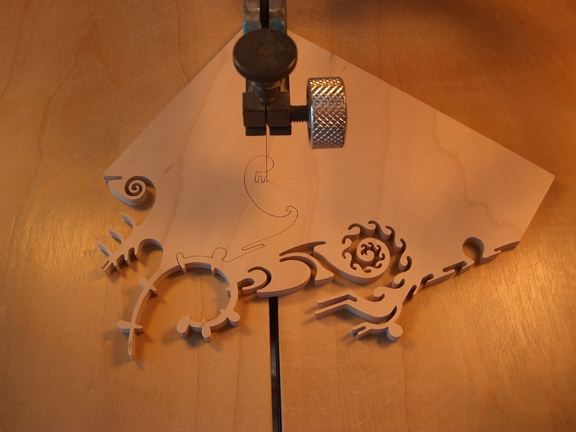
At age 4, Mr. Stokes said, he was putting together 500-piece puzzles. He turned professional about 10 years ago, spending long days guiding pieces of wood into the stationary blade of a scroll saw. ‘It’s very much like a sewing machine,’ he observed.

Among the more spectacular puzzles he has created was a map of the world that had 1,384 pieces and measured nearly three feet long; it took three weeks to cut, he said. His largest puzzle was a four-and-a-half-foot triptych of Hieronymus Bosch’s Garden of Earthly Delights, with 4,271 pieces. It sold on eBay for $25,100.”

Tags: ,

"$400." (Image by Gage Skidmore.)

Celebrity signed hat – $400 (Slate hill)

I have a signed hat from the celebrity apprentice television show. It’s signed by Lennex Lewis, Tito Ortiz, “big pussy” from the sopranos, Steven Baldwin, and bob saget.

Tags: , , , ,

A 1972 news report about the brazen, offbeat bank robbery in Brooklyn that inspired Dog Day Afternoon. One robber, John Wojtowicz, paces nervously outside the bank as Al Pacino later did in the 1975 film, but the wiry criminal never once shouts “Attica!” That famous holler wasn’t in the script either; it was suggested to Pacino between takes, and he thankfully went for it. Wojtowicz, who committed the robbery to try to raise cash for his lover’s sexual reassignment surgery, didn’t get along too well with movie people.

Tags: ,

« Older entries § Newer entries »