Urban Studies

You are currently browsing the archive for the Urban Studies category.

Hunter S. Thompson in all his glory in Vegas and Hollywood in 1978.

From Lucian K. Truscott IV’s review of Fear and Loathing in Las Vagas in the July 13, 1972 Village Voice: “Hunter Thompson lived in Aspen then, and his ranch, located outside town about 10 miles, tucked away up a valley with National Forest land on every side, was the first place I stopped. It was late afternoon and Thompson was just getting up, bleary-eyed and beaten, shaded from the sun by a tennis hat, sipping a beer on the front porch.

I got to know him while I was still in the Army in the spring of 1970, when he and a few other local crazies were gearing up for what would become the Aspen Freak Power Uprising, a spectacular which featured Thompson as candidate for sheriff, with his neighbor Billy for coroner. They ran on a platform which promised, among other things, public punishment for drug dealers who burned their customers, and a campaign guaranteed to rid the valley of real estate developers and ‘nazi greedheads’ of every persuasion. In a compromise move toward the end of the campaign, Thompson promised to ‘eat mescaline only during off-duty hours.’ The non-freak segment of the voting public was unmoved and he was eventually defeated by a narrow margin.

In the days before the Freak Power spirit, Thompson’s ranch served as a war room and R&R camp for the Aspen political insurgents. Needless to say there was rarely a dull moment. When I arrived last summer, however, things had changed. Thompson was in the midst of writing a magnum opus, and it was being cranked out at an unnerving rate. I was barely across the threshold when I was informed that he worked (worked?) Monday through Friday and saved the weekends for messing around. As usual, he worked from around midnight until 7 or 8 in the morning and slept all day. There was an edge to his voice that said he meant business. This was it. This was a venture that had no beginning or end, that even Thompson himself was having difficulty controlling.

‘I’m sending it off to Random House in 20,000-word bursts,’ he said, drawing slowly on his ever-present cigarette holder. ‘I don’t have any idea what they think of it. Hell, I don’t have any idea what it is.’

‘What’s it about?’ I asked.

‘Searching for The American Dream in Las Vegas,’ replied Thompson coolly.”

Tags: ,

"Within this group is a quixotic band of soldering, laser-cutting, software-programming types who, defying all economic logic, contend that they can reverse America’s manufacturing slump." (Image by littleBits.)

Anand Giridharadas has a really good piece in the Sunday Times Magazine this week about littleBits founder Ayah Bdeir and the American culture of manufacturing things, in the wake of the credit-default swap scheme that made nothing and left us nearly bankrupt. An excerpt:

“If you lived in Detroit in 1961 and watched Alfred Hitchcock’s Psycho at a drive-in, you might have caught a 30-minute trailer called ‘American Maker,’ sponsored by Chevrolet. ‘Of all things Americans are, we are makers,’ its narrator began, over footage of boys building sand castles. ‘With our strengths and our minds and spirit, we gather, we form and we fashion: makers and shapers and put-it-togetherers.’

Fifty years on, the American maker is in a bad way. Such is the state of American industry that waste paper is among the top 10 exports to China, behind nuclear equipment but far ahead of traditional mainstays like iron and steel. Manufacturing employment has fallen by a third in the last decade alone, with more than 40,000 factories shutting down. More Americans today are unemployed than are wage-earning ‘put-it-togetherers.’ But the American romance with making actual things is going through a resurgence. In recent years, a nationwide movement of do-it-yourself aficionados has embraced the self-made object. Within this group is a quixotic band of soldering, laser-cutting, software-programming types who, defying all economic logic, contend that they can reverse America’s manufacturing slump. America will make things again, they say, because Americans will make things — not just in factories but also in their own homes, and not because it’s artisanal or faddish but because it’s easier, better for the environment and more fun.”

••••••••••

The 1961 “American Maker” trailer mentioned in the article:

Tags: , ,

The McGurk Effect explains how what we see influences what we hear. (Thanks Reddit.)

From “Invasion,” Tom Junod’s 2010 Esquire piece about his house being besieged by an army of those tiny colonists known as ants:

“A few years ago, I interviewed the great biologist E. O. Wilson right before he and his colleague Bert Hölldobler published their magnum opus, The Superorganism. The book, a study of ant societies, was an exploration of the notion that ants are such organized organisms that they almost don’t count as individual organisms at all but rather as cells of the colony they serve. The colony is the superorganism, and as Wilson told me, ‘an ant colony is far more intelligent than an ant.’ I’ll say. An ant by itself is an inoffensive creature, at worst a crunchy annoyance, smidgeny and obsessively clean and, above all, dumb, with a pindot of a brain. An ant by itself is not going to get any ideas… the problem being that it’s rarely by itself, that it’s representative of something, and that what it represents not only has ideas — it has designs. Wilson’s book proposes that what an ant colony possesses is a kind of accumulated intelligence, the result of individual ants carrying out specialized tasks and giving one another constant feedback about what they find as they do so. Well, once they start accumulating in your house in sufficient numbers, you get a chance to see that accumulated intelligence at work. You get a chance to find out what it wants. And what you find out — what the accumulated intelligence of the colony eventually tells you — is that it wants what you want. You find out that you, an organism, are competing for your house with a superorganism that knows how to do nothing but compete. You are not only competing in the most basic evolutionary sense; you are competing with a purely adaptive intelligence, and so you are competing with the force of evolution itself.” (Thanks Atlantic.)

••••••••••

Ant-sploitation horror movie trailer from 1977:

Tags: , ,

“A World for Women in Engineering” is an excellent 20-minute doc made by Bell Labs in 1975. It’s a look at a multicultural collection of women working for Bell during the age of feminist ascendancy and the push for the Equal Rights Amendment. A testament to the times as well as a love letter to science.

Tags: , , , ,

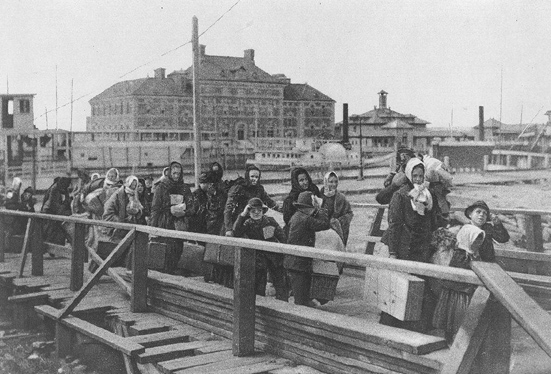
Immigrants arrive at Ellis Island in NYC in 1902.

Annie Lowrey’s Slate piece,Let in the Super-Immigrants!,” argues that America’s quickest path to economic turnaround is to fast-track educated alien workers to citizenship status, favoring the highly skilled over the poor, huddles masses. The opening:

“This winter, George Mason economist Tyler Cowen published The Great Stagnation, an ebook arguing that the United States has exhausted all its easy sources of growth. We have, Cowen says, no more low-hanging fruit: no more cheap frontier land to farm, no more places to build new interstates, no rural homes to electrify, no more girls to send to school and then add to the workforce. From now on, Cowen says, growth will be slower, and transformative innovations like toilets and telephones will be rarer.

Cowen is alarmingly convincing, and The Great Stagnation received a round of queasy applause from the chattering classes—including from this publication. But maybe there remains one last shiny, fat apple hanging right in front of our faces, one last endeavor that would bring us fast, costless, and easy growth. It is immigration reform. The United States can grow faster by stealing the rest of the world’s smart people.

Today, the Obama White House is reaffirming its pledge to do just that.”


Tags: ,

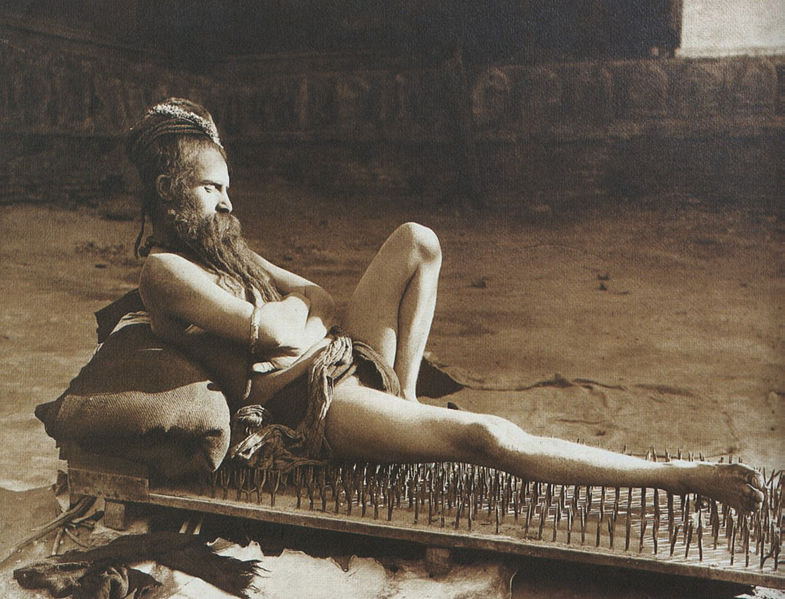
"I am well groomed gentleman." (Image by Herbert Ponting.)

Magic Sex Bed – $100 (Norwalk, CT)

I am moving selling my magic sex bed. When I moved to Connecticut I purchased this bed from a guy who ran his “store” out of a room below a Dunkin’ Donuts. I checked out the floor model, liked it and decided to buy it. The next day I picked up the bed at warehouse in Wilton and the legend began… This bed has been amazing. I had my fair share of lady friends before the bed, but things really took a turn for the better once I got this bed. I am not sure what the actual count was, but let me tell you it was nothing short of respectable. I am moving now and tried everything to take this bed with me, but things have fallen through at the last minute. If you are looking to turn things around in your own life and need a bit of luck consider this bed your knew rabbits foot!!

The bed is not dirty. I am a well groomed gentleman and even if it was dirty you would probably still want to buy this bed.

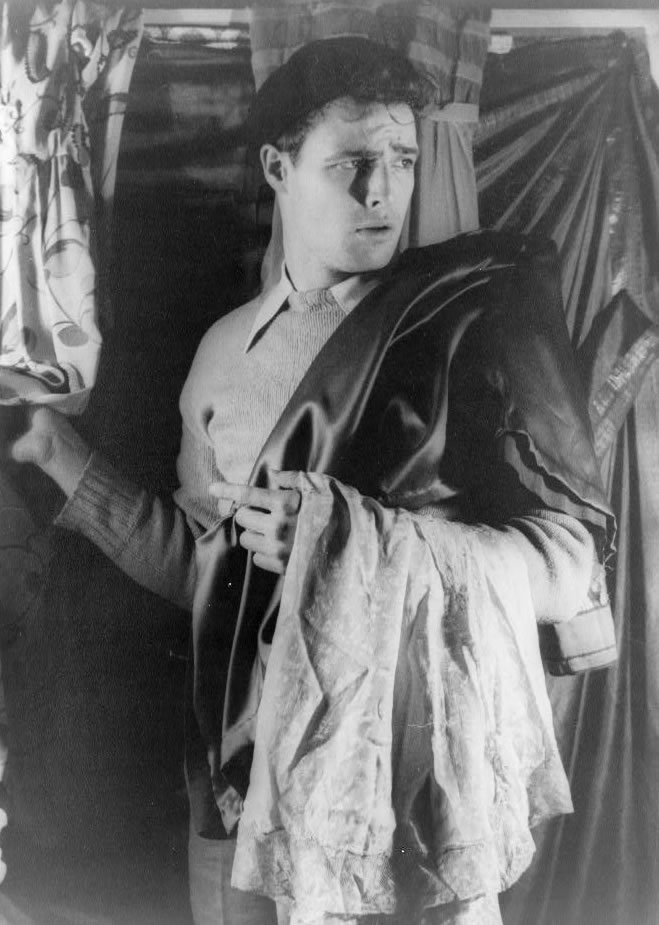
"Have you ever been analyzed? I was afraid of it at first." (Image by Carl Van Vechten.)

Longform made an incredible find with “The Duke In His Domain,” a 1957 New Yorker profile of Marlon Brando by Truman Capote. The former was already an icon thanks to Streetcar, The Wild One and On the Waterfront; the latter was still roughly a decade from publishing his masterpiece, In Cold Blood. Capote traveled to the set of Sayonara in Tokyo to interview Brando, who was at the start of a long personal decline, still somewhat accessible but increasingly less so. An excerpt:

“The maid had reëntered the star’s room, and Murray, on his way out, almost tripped over the train of her kimono. She put down a bowl of ice and, with a glow, a giggle, an elation that made her little feet, hooflike in their split-toed white socks, lift and lower like a prancing pony’s, announced, ‘Appapie! Tonight on menu appapie.’

Brando groaned. ‘Apple pie. That’s all I need.’ He stretched out on the floor and unbuckled his belt, which dug too deeply into the swell of his stomach. ‘I’m supposed to be on a diet. But the only things I want to eat are apple pie and stuff like that.’ Six weeks earlier, in California, Logan had told him he must trim off ten pounds for his role in Sayonara, and before arriving in Kyoto he had managed to get rid of seven. Since reaching Japan, however, abetted not only by American-type apple pie but by the Japanese cuisine, with its delicious emphasis on the sweetened, the starchy, the fried, he’d regained, then doubled this poundage. Now, loosening his belt still more and thoughtfully massaging his midriff, he scanned the menu, which offered, in English, a wide choice of Western-style dishes, and, after reminding himself ‘I’ve got to lose weight,’ ordered soup, beefsteak with French-fried potatoes, three supplementary vegetables, a side dish of spaghetti, rolls and butter, a bottle of sake, salad, and cheese and crackers.

‘And appapie, Marron?’

He sighed. ‘With ice cream, honey.’

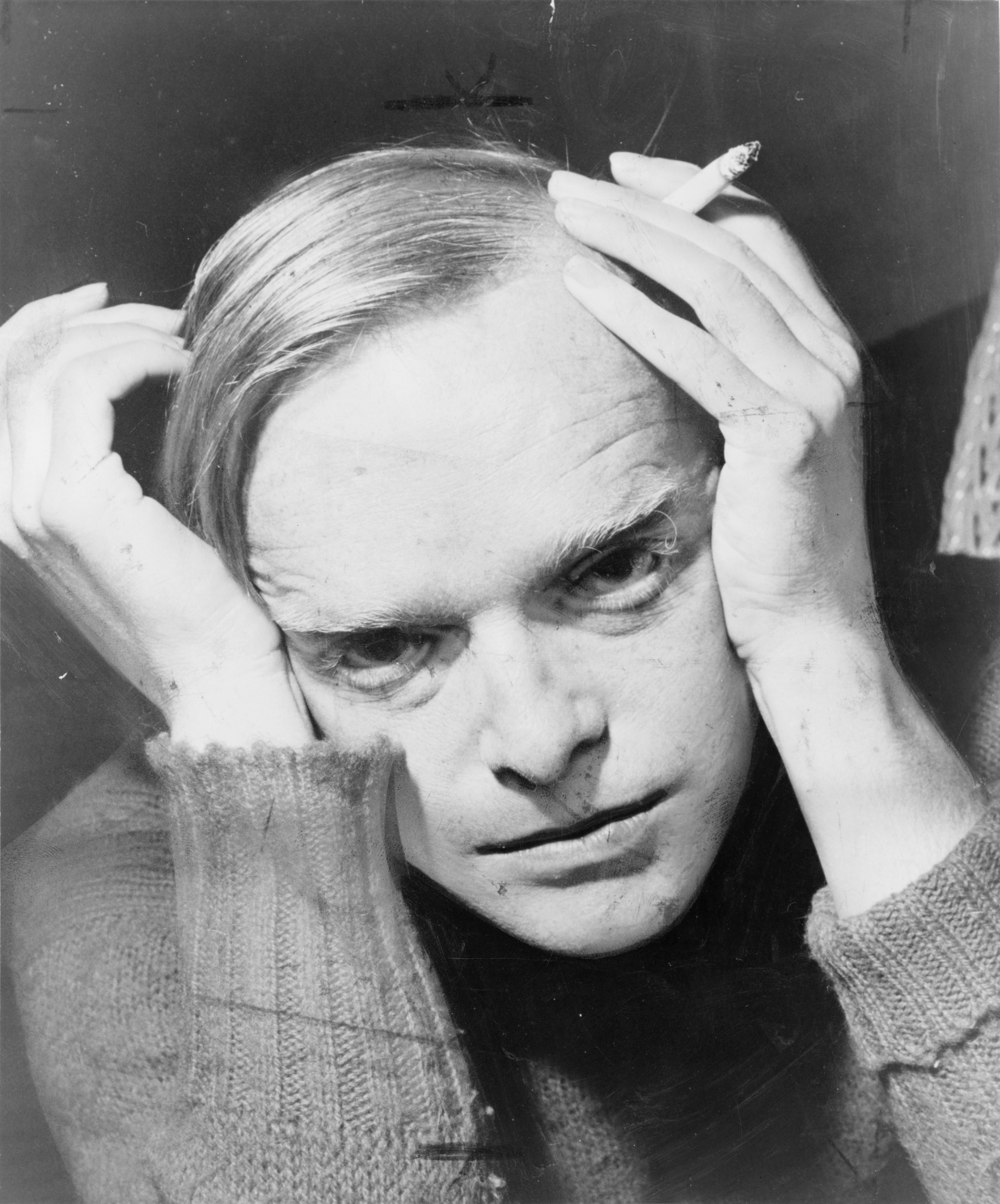
Capote, world-weary in 1959. (Image by Roger Higgins.)

Though Brando is not a teetotaller, his appetite is more frugal when it comes to alcohol. While we were awaiting the dinner, which was to be served to us in the room, he supplied me with a large vodka on the rocks and poured himself the merest courtesy sip. Resuming his position on the floor, he lolled his head against a pillow, drooped his eyelids, then shut them. It was as though he’d dozed off into a disturbing dream; his eyelids twitched, and when he spoke, his voice—an unemotional voice, in a way cultivated and genteel, yet surprisingly adolescent, a voice with a probing, asking, boyish quality—seemed to come from sleepy distances.

‘The last eight, nine years of my life have been a mess,’ he said. ‘Maybe the last two have been a little better. Less rolling in the trough of the wave. Have you ever been analyzed? I was afraid of it at first. Afraid it might destroy the impulses that made me creative, an artist. A sensitive person receives fifty impressions where somebody else may only get seven. Sensitive people are so vulnerable; they’re so easily brutalized and hurt just because they are sensitive. The more sensitive you are, the more certain you are to be brutalized, develop scabs. Never evolve. Never allow yourself to feel anything, because you always feel too much. Analysis helps. It helped me. But still, the last eight, nine years I’ve been pretty mixed up, a mess pretty much.'”

••••••••••

Dick Cavett interviews a reluctant Brando in 1973. After the show, Brando took Cavett to dinner in Chinatown, and the actor famously punched paparazzo Ron Galella, breaking his jaw. The photographer sued and ultimately agreed to a $40,000 settlement.

Watch the rest of interview here.

Tags: , , ,

Yesterday, I put up a post about the neurological phenomenon Synesthesia, in which the senses merge, allowing some people to taste colors, smell words and identify numbers by their “personalities.” Here’s a Time video, featuring neuroscientist V.S. Ramachandran, which demonstrates this disorder.

Tags:

"The girl a few years ago was thought to be a little daft and was confined to the Flatnush Asylum for the insane." (Image by Lewis Hine.)

The August 22, 1886 Brooklyn Daily Eagle carried an odd item about a strange girl who earned a living repairing barbershop supplies. An excerpt:

“‘Nothing today,’ said a Fulton street barber to a fantastically dressed young girl carrying a valise and a parasol, much worse for the wear. An Eagle reporter who was present was curious and inquired the meaning of the tonsorial artist’s words. He said: ‘The girl who was just here makes a living by renovating barbers’ brushes. She takes the brushes when the bristles are about ready to drop out and makes them into new ones. Sometimes she also puts on new backs and inserts new bristles, and straightens those which have become bent. A good  barber’s brush when new costs $1.50. After a brush leaves the little workwoman’s hands it is as good as new. She charges but 50 cents for her work, and it is well worth that sum. ‘There is a history connected with that girl,’ continued the barber, neatly curling the reporter’s mustache and covering the face with magnesia. ‘She is the daughter of formerly wealthy Brooklyn parents who have become reduced.’

‘The girl a few years ago was thought to be a little daft and was confined to the Flatnush Asylum for the insane. She escaped from the institution and went to Newark, N.J., where she was employed in a brush factory. During the dull months she makes a living by repairing barbers’ brushes. In many ways the girl is a great curiosity and would make a great drawing card for a dime museum. She is able to turn her feet in any direction, which would be an improbability for you or I to attempt. This girl, it must be considered, has enjoyed the gift from birth, owing to the tendons of her feet being broken.  I guess she makes a good living at her trade,’ said the barber in conclusion, jerking the apron off the reporter’s neck and crying, ‘Next!'”

••••••••••

Edison film of an 1894 barber shop:


"When there is a legitimate demand for a product or service and no legal recourse to purchase said product/service, a black market will spawn to serve the needs of the demand." (Image by miak.)

My kidney for sale. Not a joke. – $40000

Hello. Given that you clicked the link, either you are a skeptic, and were flabbergasted, or you really are in need of a kidney to save your life or the life of a loved one.

First and foremost, I am not insane, crude, impolite, or anything that would indicate that I am not in full control of my faculties. I am not homeless, nor am I disease/drug ridden.

I have smoked marijuana, but even a mere student of medicine will inform you of how inconsequential that is. For he purposes of this post.

Because a person’s body is legally their own property, I believe that laws preventing the sale of a person’s organs by the owner of those organs should be regulated, not prohibited. For, as evidenced by current and past trends, when there is a legitimate demand for a product or service and no legal recourse to purchase said product/service, a black market will spawn to serve the needs of the demand.

Thus, I am offering a private party with a legitimate need for a kidney transplant or liver sample the opportunity to discuss with me the possibility of purchasing my organ tissue. I believe that the price that I have quoted is reasonable. Included in the payment, there should be compensation for medical/testing fees of the entire procedure.

Even if you are from a country that does allow the sale of organs, I am willing to travel, as long as expenses are paid for. This is a serious offer and a serious post. Serious inquiries will be handled with the utmost professionalism. Thank you.


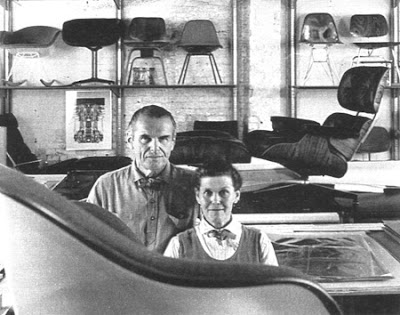
The Eames Lounge Chair debuts in 1956 on an Arlene Francis show on NBC.

Tags: , ,

"The employees families have to promise 'not sue the compan.'"(Image by Glenn Fleishman.)

If a new report on Think Progress is accurate, Apple is employing curious methods to deal with a series of suicides by workers turning out iPhones and iPads at a soul-crushing pace at the Taiwan-based Foxconn factories:

“In the wake of a huge wave of suicides at Foxconn plants, the company began reforming its practices related to the suicides. Among these changes included installing anti-suicide nets to catch workers who attempted to leap out of company windows. Yet workers are also being forced to sign a non-suicide pact as a condition of employment. As part of the pact, the employees families have to promise ‘not sue the company, bring excessive demands, take drastic actions that would damage the company’s reputation or cause trouble that would hurt normal operations’ in the case of a suicide.”

joandidionwater34567

The opening of Holy Water,” Joan Didion’s 1977 essay about H2O, a scarce and precious thing in Southern California, with its endless summer, omnipresent swimming pools and expansive deserts:

Some of us who live in arid parts of the world think about water with a reverence others might find excessive. The water I will draw tomorrow from my tap in Malibu is today crossing the Mojave Desert from the Colorado River, and I like to think about exactly where that water is. The water I will drink tonight in a restaurant in Hollywood is by now well down the Los Angeles Aqueduct from the Owens River, and I also think about exactly where that water is: I particularly like to imagine it as it cascades down the 45-degree stone steps that aerate Owens water after its airless passage through the mountain pipes and siphons.

As it happens my own reverence for water has always taken the form of this constant meditation upon where the water is, of an obsessive interest not in the politics of water but in the waterworks themselves, in the movement of water through aqueducts and siphons and pumps and forebays and afterbays and weirs and drains, in plumbing on the grand scale. I know the data on water projects I will never see. I know the difficulty Kaiser had closing the last two sluiceway gates on the Guri Dam in Venezuela. I keep watch on evaporation behind the Aswan in Egypt. I can put myself to sleep imagining the water dropping a thousand feet into the turbines at Churchill Falls in Labrador. If the Churchill Falls Project fails to materialize, I fall back on waterworks closer at hand — the tailrace at Hoover on the Colorado, the surge tank in the Tehachapi Mountains that receives California Aqueduct water pumped before — and finally I replay a morning when I was seventeen years old and caught, in a military-surplus life raft, in the construction of the Nimbus Afterbay Dam on the American River near Sacramento. I remember that at the moment it happened I was trying to open a tin of anchovies with capers. I recall the raft spinning into the narrow chute through which the river had been temporarily diverted. I recall being deliriously happy.•

joandidion6

Tags:

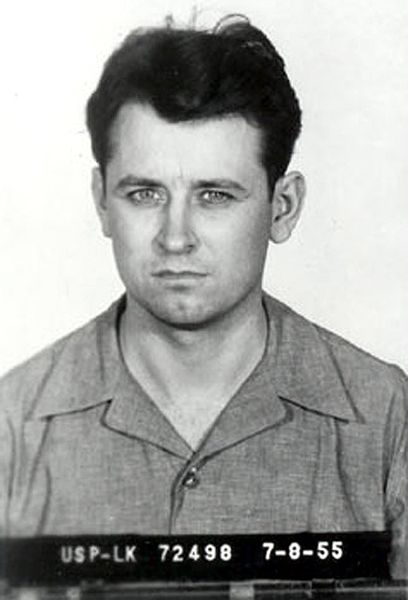
Only one supermarathon has been inspired by a prison break by MLK assassin James Earl Ray.

A brief history of the bizarre and creepy origins of the annual Barkley Marathons in Tennessee, from The Immortal Horizon,” Leslie Jamison’s new Believer account of the grueling 100-mile race:

“The first race was a prison break. On June 10, 1977, James Earl Ray, the man who shot Martin Luther King Jr., escaped from Brushy Mountain State Penitentiary and fled across the briar-bearded hills of northern Tennessee. Fifty-four hours later he was found. He’d gone about eight miles. Some might hear this and wonder how he managed to squander his escape. One man heard this and thought: I need to see that terrain!

Over twenty years later, that man, the man in the trench coat—Gary Cantrell by birth, self-dubbed Lazarus Lake—has turned this terrain into the stage for a legendary ritual: the Barkley Marathons, held yearly (traditionally on Lazarus Friday or April Fool’s Day) outside Wartburg, Tennessee. Lake (known as Laz) calls it ‘The Race That Eats Its Young.’ The runners’ bibs say something different each year:SUFFERING WITHOUT A POINT; NOT ALL PAIN IS GAIN. Only eight men have ever finished. The event is considered extreme even by those who specialize in extremity.” (Thanks Longform.)

••••••••••

Local runners attempt the Barkley:

Tags: , ,

A Michael Matas TED Talk about the coming evolution of e-books. The Kindle probably needs to be free and ubiquitous really soon in order to have a future. (Thanks Open Culture.)

Tags:

A Radiolab series called Limits examines how far humans can push themselves in a variety of ways. In one episode, entitled “Limits of the Mind,” hosts Jad Abumrad and Robert Krulwich explore the outer boundaries of memory, focusing on the story of 1920s Russian journalist Mr. S., (Solomon Veniaminovich Shereshevsky, to be precise), who had a memory so elastic so as to be almost without borders. Mr. S., who was the subject of a book and became a popular mnemonist who performed at circuses, suffered from a neurological disorder known as Synesthesia, which was responsible for his remarkable recall and many of his problems in life. (Thanks Atlantic.)

Tags: , ,

Doesn’t sass you like those punks at the Key Food. (Thanks IEEE Spectrum.)

Straight razor applied to lathered face by pubescent boy.

A muckraker and an artist, the great photographer Lewis Hine took this classic 1917 shot of 12-year-old barber Frank De Natale plying his trade in Boston. By this point, child labor laws, which Hine’s work had helped advance, precluded this lad from working full-time; he was a barber after-school and on Saturdays. A note from an 1884 Brooklyn Daily Eagle article about the child barbers of an earlier era:

“‘How are barbers taught?’

‘We generally get small boys. They are regularly indentured to us by their parents. They are compelled to stay with us for three years. We give them about $50 for the first year and increase their wages as they become accustomed to the work. At first they do nothing but brush the clothes of the customers. Then we make them watch us while we are shaving or hair cutting. If the boy is smart he is soon permitted to lather the customers’ faces, while the hands are busy with other men. They finally graduate into full fledged barbers and receive a salary of from $5 to $12 per week.'”

Tags: ,

"If you are smart you will shut your pie hole."

You are making me angry (u know where)

As far as the Baymont Inn and Suites in Pensacola Florida, I better not hear of one more person posting a bad review for Mr Patel’s property. Not on Yahoo, not on trip advisor, not no where. I am going to start walking mud puddles in peoples butt. I will know who you are. If you are smart you will shut your pie hole.

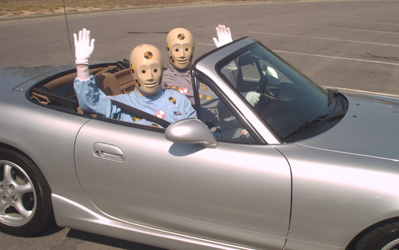
The heft of Google’s wealth and influence is squarely behind the proliferation of self-driving cars, a concept which has been around since the 1950s and may be coming to Nevada roads in the near future. John Markoff reports in the New York Times:

“Google, a pioneer of self-driving cars, is quietly lobbying for legislation that would make Nevada the first state where they could be legally operated on public roads.

And yes, the proposed legislation would include an exemption from the ban on distracted driving to allow occupants to send text messages while sitting behind the wheel.

The two bills, which have received little attention outside Nevada’s Capitol, are being introduced less than a year after the giant search engine company acknowledged that it was developing cars that could be safely driven without human intervention.

Last year, in response to a reporter’s query about its then-secret research and development program, Google said it had test-driven robotic hybrid vehicles more than 140,000 miles on California roads — including Highway 1 between Los Angeles and San Francisco.

More than 1,000 miles had been driven entirely autonomously at that point; one of the company’s engineers was testing some of the car’s autonomous features on his 50-mile commute from Berkeley to Google’s headquarters in Mountain View.”

Tags:

Typing words instead of processing them. (Thanks Reddit.)

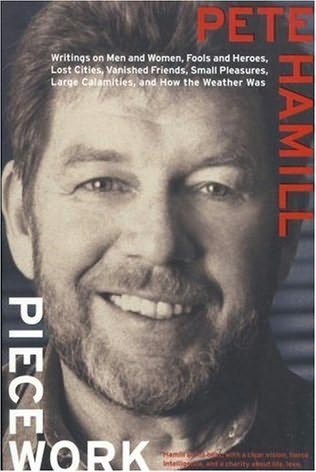
The opening of “Cities of New York,” from Pete Hamill’s excellent collection, Piecework, in which the writer recalls NYC’s mid-twentieth century decline, which didn’t reverse until new media technology businesses began to take root in the city in the 1990s:

“If I’d grown up in another city, I almost certainly would have become another kind of writer. Or I might not have become a writer at all. But I grew up in New York in the 1940s, when New York was a great big optimistic town. The war was over and the Great Depression was a permanent part of the past; now we would all begin to live. To a kid (and to millions of adults) everything seemed possible. If you wanted to be a scientist or a left-fielder for the Dodgers, a lawyer or a drummer with Count Basie: well, why not? This was New York. You could even be an artist. Or a writer.

As a man and a writer, I’ve been cursed by the memory of that New York. Across five decades, I saw the city change and its optimism wane. The factories began closing in the late 1950s, moving to the South, or driven out of business by changing styles or tastes or means of production. When the factories died, so did more than a million manufacturing jobs. Those vanished jobs had allowed thousands of men like my father (an Irish immigrant with an eighth-grade education) to raise families in the richest city on earth. They joined unions. They proudly voted for the Democratic ticket. The put paychecks on kitchen tables, asked their kids if they’d finished their homework, went off to night games at the Polo Grounds or Ebbets Field, and were able to walk in the world with pride. Then the great change happened. The manufacturing jobs were replaced with service work. Or with welfare. One statistic tells the story: In 1955, there were 150,000 New Yorkers on welfare; in 1995, there were 1.3 million.

With the jobs gone, the combined American plagues of drugs and guns came to the neighborhoods.”

••••••••••

Pete Hamill discusses the legacy of Frank Sinatra on local NYC news:

Tags: ,

Meghalaya, India, is a very wet place, so the locals use roots from live strangler figs to build pedestrian bridges that are alive. Video from BBC’s Human Planet series.

A 2008 National Socialist Party rally in D.C.

The opening of Jesse McKinley’s well-written New York Times account of the strange murder of Riverside, California, resident Jeff Hall, a representative of the neo-Nazi National Socialist Party, who was recently shot to death by his tow-headed ten-year-old son:

“The day before he allegedly shot his father, the sandy-haired 10-year-old boy showed off a prized possession to a visitor. It was a thin leather belt emblazoned with a silver insignia of the Nazi SS.

‘Look what my dad got me,’ the boy said shyly, perched on the living room stairs, one of the few quiet spots in a house with five children.

A little more than 12 hours later, the police say, the boy stood near those stairs with a handgun and killed his father, Jeff Hall, as he lay on the living room couch. It was about 4 a.m. on May 1; paramedics declared Mr. Hall dead when they arrived.

The police say that the killing was intentional, but that the motives behind it are still not fully understood. But whatever the reason, it has cast fresh light on the fringe group to which Mr. Hall devoted his life: the National Socialist Movement, the nation’s largest neo-Nazi party, whose message stands in surreal juxtaposition to the suburban, workaday trappings of many of its members.”

••••••••••

Hall can be seen at this creepy 2009 anti-immigration rally. He’s the speaker with the shaved head who’s on camera early in the clip:

Tags: ,

« Older entries § Newer entries »