A quick jolt of Martha Graham on what would have been her 117th birthday.
By the way, the artist who created the amazing Google logo animation celebrating Graham is Ryan Woodward. This animated dance is also his:
Ideas and technology and politics and journalism and history and humor and some other stuff.
You are currently browsing the archive for the Urban Studies category.
A quick jolt of Martha Graham on what would have been her 117th birthday.
By the way, the artist who created the amazing Google logo animation celebrating Graham is Ryan Woodward. This animated dance is also his:
Tags: Martha Graham, Ryan Woodward

A failed launch during IGY saw the Vanguard malfunction in December 1957.
In 1957-58, 64 nations from both sides of a Cold War that would continue for three more decades came together to perform large-scale scientific research as part of an alliance known as International Geophysical Year. It was an unprecedented display of global information sharing, with satellites launched and knowledge of space travel gained. Life magazine covered the outset of the project with the article, “The World Studies the World.” An excerpt:
“Through the top of a strange sheet-metal shack at Ft. Churchill, Manitoba, a powerful research rocket last week streaked into the upper air to perform one of the first major experiments of the newly launched International Geophysical Year. While the rocket is radioing its data from 160 miles up, a team of seismologists deep in a Chilean tunnel were taking data from earthquake recorders. A pair of oceanographers on the remote Pacific island of Jarvis were collecting samples of ocean water. And in the South Pole Americans were observing the fluctuations of a rare red aurora.

Japanese stamp commemorating IGY.
In hundreds of other places and ways, 8,000 scientists of 64 nations were starting history’s most ambitious scientific research program. In the IGY, says Dr. Joseph Kaplan, chairman of U.S. IGY committee, ‘scientists of the world are going to take a long and special look at our earth –at its wrinkled crust, its hot heart, its deep seas, its envelope of air, its mighty magnetism, its relationship to outer space.’
IGY, which will last for 18 months through December 1958, will cost half a billion dollars. Its end results should be of extreme practical value; vastly improved communications, more accurate navigation for ships and planes, billions of dollars and many lives saved with improved weather forecasting, and further progress toward mastery of polar regions and outer space.”
••••••••••
Donald Fagen sings a hopeful 1982 song which he wrote from the vantage point of those involved in IGY: “Here at home we’ll play in the city / Powered by the sun / Perfect weather for a streamlined world / There’ll be spandex jackets, one for everyone.”
Tags: Donald fagen, Dr. Joseph Kapla
You remember Ayn Rand. She was that novelist who believed a woman should not be President. Mike Wallace interviews her in 1959. (Thanks Open Culture.)
Tags: Ayn Rand, Mike Wallace
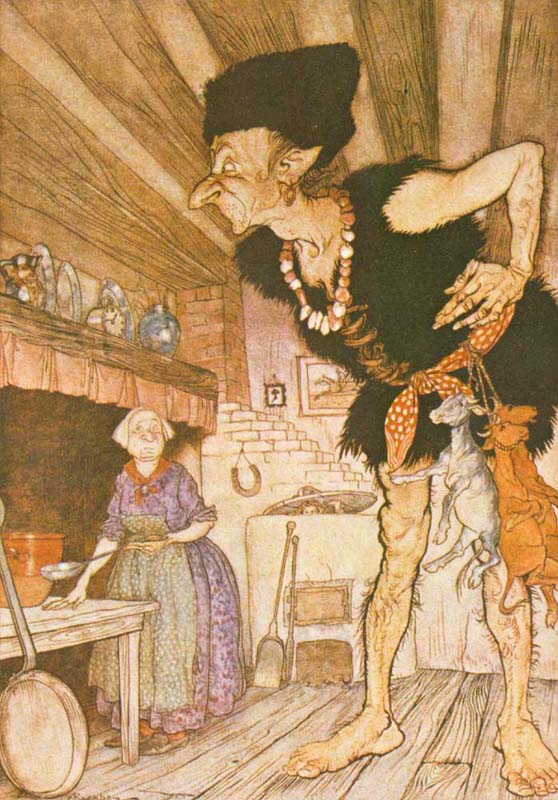
"Does anybody believe that a race of gigantic men, who were 12 to 30 feet high, ever lived in these United States of America?"
While the following article from the May 16, 1900 Brooklyn Daily Eagle, which was repinted from the Prescott Prospect, doesn’t prove that a race of 20-foot giants once roamed America, it is conclusive evidence that the newspaper’s editors had been drinking heavily. An excerpt:
“Does anybody believe that there ever has been a race of giants in the world? Does anybody believe that a race of gigantic men, who were 12 to 20 feet high, ever lived in these United States of America? And yet the proof that such a race of people did live in this country is to be found in the Grand Canyon of the Colorado River in northern Arizona. This proof consists of, first, footprints in the red sandstone, footprints that appear to have been made by the moccasined feet of gigantic men, men whose tracks measured twenty inches in length and who stepped five feet at a stride.
The second proof is that there is the petrified body of such a man likewise in the red sandstone of the Grand Canyon district. This body was of a living, breathing man, but after death the flesh was replaced by lime or silica, held in solution in the water. There is ample evidence that nature was able to perform this feat, as the petrifying process is being carried on in the canyon to this day. The third fact is that there is and was a strong and almost universal tradition among the ancient people of Mexico and Peru that such a race of giants lived in their country.
Perhaps it is almost too much to call this proof, but it is at least corroborative testimony. Last June I visited the Grand Canyon as a tourist. There I met Mr. Hull, who was acting as a guide into the canyon and who was a pioneer of northern Arizona. He told me the following story, and with apologies for my credulity, I believe him.
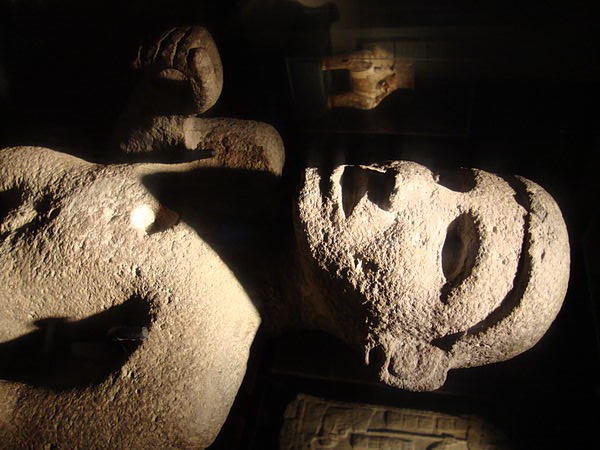
"Outstretched on this slab was the body of a gigantic man turned into stone."
Three years ago he and a companion named Jim Lavelle had been prospecting in this part of the country. They found a ledge which they thought was valuable and had started out of the canyon with samples of the ore, expecting to return in a few days. One of the Indians was with them. Mr. Hull speaks the Indian language fluently, and the Indians have a great admiration for him. The Indian said, ‘Have you ever seen the big Indian up here?’ volunteering to show it. They followed him up a foot trail, which led through a crevice in the red wall, thence on to the bench like formation above but still in the midst of the red sandstone.
They came to a place where a projecting rock formed a shelter over a sloping table like slab of stone which was covered with a white incrustation of lime. Outstretched on this slab was the body of a gigantic man turned into stone. The body was entirely nude and lay face downward. They estimated his height at 18 or 20 feet. They looked at it 10 or 20 minutes and then continued their journey, intending to return and make a more complete investiagtion. Plans changed and they failed to return.
This was startling information, but I had been in a measure prepared for it. It had always seemed reasonable to me that the prehistoric, primeval hunting savages should have been of large stature.”
Tags: Jim Lavelle, Mr. Hull
Someone is trying to contact my people, Mavis.
I have a car that Jay Leno would be interested in I believe, can anyone get a hold of a contact and have them call me. Thanks.
And then it celebrates. (Thanks Singularity Hub.)
••••••••••
Hungarian architect Ernő Rubik discusses his famous puzzle in 1981:
“Of course you can’t give the exact time of an idea’s birth, it seems impossible to me, to me particularly, for who time, from this point of view, has very little interest. It can have been in spring, 1974 that the idea came to me, as a noteworthy possibility. I have a nature attached to experiences, so, since the beginning, I studied variations of a 2x2x2 cube. I was immediately struck by the wealth that could be sensed only from this start. The final technical solution, which is the simplest form 3x3x3, the most easily workable in models, after a few tries, came to me toward the end of autumn, 1974. Several models ready to work were made for me and my friends, it has been exciting to play with them for the first time. We were all surprised to discover gradually that we had made something original, new.The question of the patent of the invention was immediately raised, so I began the necessary process the 30 January, 1975. Almost at the same, sensing something of the importance of the invented game, of its possibilities and of its real value, I began searching for a partner for the manufacturing and by an extraordinary chance, I indeed found one. The following is rather simple : after its launch on the market (1977) the game became, rapidly and as if by magic, very popular in Hungary, then, from 1980 in the whole world. I feel like the story only begins, and that we can’t predict the end, as well as nobody, I think, could have guessed its future.”
Tags: Ernő Rubik

Hanna Rosin’s 2010 Atlantic article, “The End Of Men,” concerns American males falling further and further behind women in education, employment, etc. The opening focuses on biologist Ronald Ericsson, who caused a media-stoked panic in the 1970s when he created a method that purportedly allows parents to choose the sex of their offspring. This development led some feminists to fear that women would be doomed in America. An excerpt:
“IN THE 1970s the biologist Ronald Ericsson came up with a way to separate sperm carrying the male-producing Y chromosome from those carrying the X. He sent the two kinds of sperm swimming down a glass tube through ever-thicker albumin barriers. The sperm with the X chromosome had a larger head and a longer tail, and so, he figured, they would get bogged down in the viscous liquid. The sperm with the Y chromosome were leaner and faster and could swim down to the bottom of the tube more efficiently. Ericsson had grown up on a ranch in South Dakota, where he’d developed an Old West, cowboy swagger. The process, he said, was like ‘cutting out cattle at the gate.’ The cattle left flailing behind the gate were of course the X’s, which seemed to please him. He would sometimes demonstrate the process using cartilage from a bull’s penis as a pointer.

Dr. Ericsson's property was used for this 1980 Marlboro Country print ad.
In the late 1970s, Ericsson leased the method to clinics around the U.S., calling it the first scientifically proven method for choosing the sex of a child. Instead of a lab coat, he wore cowboy boots and a cowboy hat, and doled out his version of cowboy poetry. (People magazine once suggested a TV miniseries based on his life called Cowboy in the Lab.) The right prescription for life, he would say, was “breakfast at five-thirty, on the saddle by six, no room for Mr. Limp Wrist.’ In 1979, he loaned out his ranch as the backdrop for the iconic ‘Marlboro Country’ ads because he believed in the campaign’s central image—’a guy riding on his horse along the river, no bureaucrats, no lawyers,’ he recalled when I spoke to him this spring. ‘He’s the boss.’ (The photographers took some 6,500 pictures, a pictorial record of the frontier that Ericsson still takes great pride in.)
Feminists of the era did not take kindly to Ericsson and his Marlboro Man veneer. To them, the lab cowboy and his sperminator portended a dystopia of mass-produced boys. ‘You have to be concerned about the future of all women,’ Roberta Steinbacher, a nun-turned-social-psychologist, said in a 1984 People profile of Ericsson. ‘There’s no question that there exists a universal preference for sons.’ Steinbacher went on to complain about women becoming locked in as ‘second-class citizens’ while men continued to dominate positions of control and influence. ‘I think women have to ask themselves, ‘Where does this stop?’ she said. ‘A lot of us wouldn’t be here right now if these practices had been in effect years ago.’
Ericsson, now 74, laughed when I read him these quotes from his old antagonist. Seldom has it been so easy to prove a dire prediction wrong.” (Thanks to The Electric Typewriter.)
Fun short 1976 documentary about Lillian Schwartz, an artist who was an early adapter of digital technology and pioneered a merging of computer graphics and fine art.
Tags: Lillian Schwartz
From an 1895 edition of the Brooklyn Daily Eagle:
“Members of the Fifteenth ward citizens’ association for the abolishment of Newtown Creek nuisances are complaining that stenches from the creek at night have increased steadily since April 17, and that the air was so filled with foul smelling vapor at 4 o’clock yesterday morning that sleep was out of the question for people living in the Fifteenth and Eighteenth wards. The members of the citizens’ association insist that fat rendering and bone boiling establishments and fertilizer manufactories on the shores of the creek empty foul smelling material stored during the day into the creek at night, and they believe that if the proprietors of stench emitting factories who are indicted are not speedily brought to trial the nuisances will soon become as intolerable as ever.”
A beautiful passage of the late folkie, Karen Dalton, who was something of a Billie Holiday for the coffee-house set and was sadly plagued by many of the same demons as Lady Day. (Thanks to The Documentarian.)
From the 2007 Guardian article, “The Best Singer You’ve Never Heard Of“: “Dalton turned up in Greenwich Village in the early 60s. She had left behind her husband in Enid, Oklahoma, and arrived with her 12-string guitar, a banjo and at least one of her two children. She began to sing at the pass-the-hat folk venues that were flourishing at the time and played with Bob Dylan, Fred Neil and Richard Tucker. Dylan recalls her as ‘funky, lanky and sultry.’ ‘My favorite singer in the place was Karen Dalton,’ he remembers in Chronicles. ‘Karen had a voice like Billie Holiday’s and played the guitar like Jimmy Reed.'”
Tags: Bob Dylan, Karen Dalton

"If you find any neat dead animals in good condition (raccoons, owls, etc) please put them in a bag and into a freezer immediately and I can taxidermy them!" (Image by Usha Eugene.)
I need bird cages to use as a way to air out carcasses and get the bones from dead animals…I ONLY USE DEAD ANIMALS AND EMPHASIZE THE ETHICS OF TAXIDERMY…NO KILL POLICY….
thanks for any help!
also, if you find any neat dead animals in good condition (raccoons, owls, etc) please put them in a bag and into a freezer immediately and I can taxidermy them!
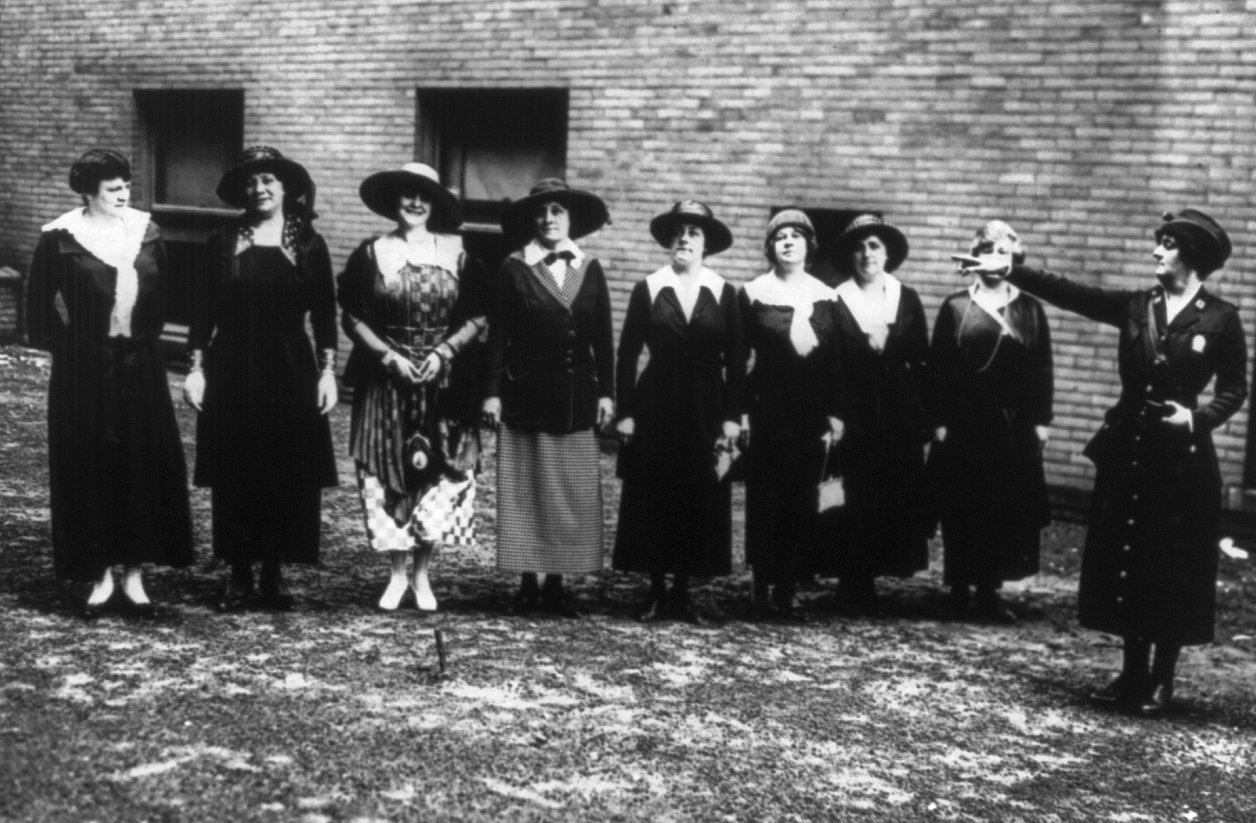
This classic photo from the Bain Collection profiles members of the women’s police reserve of New York City in 1918, the year that females began participating in the volunteer auxiliary. From a New York Times article about the formation of this new crime-fighting force:.
“New York City’s morals are to be toned up in the near future by the activities of a police reserve of volunteer women. It was announced at Police Headquarters last night that the Police Reserves which Commissioner Enright reorganized out of the Home Defense League, recruited so successfully by his predecessor, Commissioner Woods, was to have the prestige of this auxiliary.
The Special Deputy would not have the women police cope with rough and violent lawbreakers; on the the other hand, their forte under the plan would be to keep a finger on the city’s pulse in an effort to detect signs of unlawful developments before they grew to serious proportions, to watch out for cases of sedition, to uplift the general moral atmosphere of the city in the neighborhood of their posts. If need arose for the use of a nightstick or other instrument for curbing crime, the work would be referred to the men members of the force.”
Tags: Commissioner Enright
 The perfect opening of “The Double Game,” a just-published New Yorker article about the best-laid post-war American plans for Pakistan and India, written by the resolutely excellent Lawrence Wright:
“It’s the end of the Second World War, and the United States is deciding what to do about two immense, poor, densely populated countries in Asia. America chooses one of the countries, becoming its benefactor. Over the decades, it pours billions of dollars into that country’s economy, training and equipping its military and its intelligence services. The stated goal is to create a reliable ally with strong institutions and a modern, vigorous democracy. The other country, meanwhile, is spurned because it forges alliances with America’s enemies.
The country not chosen was India, which ’tilted’” toward the Soviet Union during the Cold War. Pakistan became America’s protégé, firmly supporting its fight to contain Communism. The benefits that Pakistan accrued from this relationship were quickly apparent: in the nineteen-sixties, its economy was an exemplar. India, by contrast, was a byword for basket case. Fifty years then went by. What was the result of this social experiment?
India has become the state that we tried to create in Pakistan. It is a rising economic star, militarily powerful and democratic, and it shares American interests. Pakistan, however, is one of the most anti-American countries in the world, and a covert sponsor of terrorism. Politically and economically, it verges on being a failed state.”
Tags: Lawrence Wright

From “World’s Largest Wooden Structure,” a photo essay on Yatzer.com about Seville’s recently completed Metropol Parasol, which was designed by J. Mayer H. Architects:
“The Metropol Parasol scheme with its imposing timber structure offers a range of attractions and amenities to be used by the public. Such functions include an archaeological museum, a farmers market, an elevated plaza, and multiple bars and restaurants underneath and inside the parasols, as well as a panorama terrace on the upper level of the parasols. Realized as one of the largest and most innovative bonded timber-constructions with a polyurethane coating, the parasols grow out of the archaeological excavation site into a contemporary landmark, thus defining a distinctive relationship between the historical medieval city and the contemporary city beat! Metropol Parasols mix-used multicultural program sets off a dynamic development for culture and commerce in the heart of Seville and beyond.”
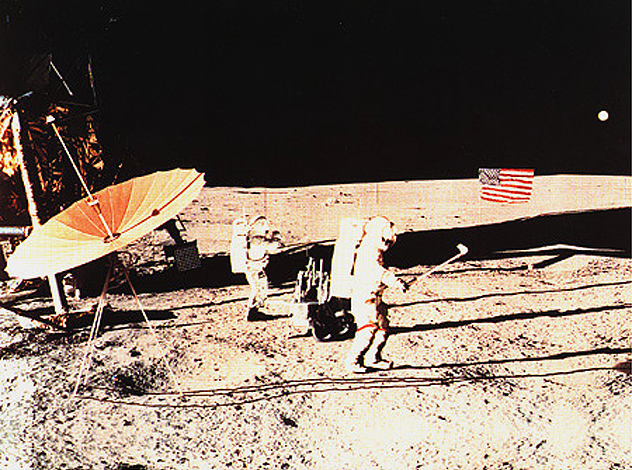
The great Gil Scott-Heron, being critical of Space Race myopia back in the day.
Tags: Gil Scott-Heron
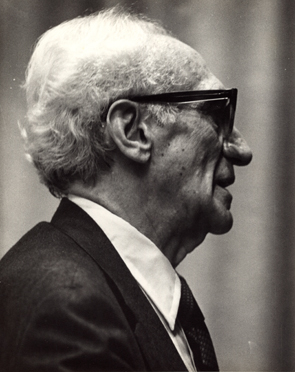
Immanuel Velikovsky’s theories about our planet’s history, which came into vogue during the 1970s, are catastrophist nonsense but a whole lot of fun if you recognize they’re fictional. Philip Kaufman realized this and used them to forward the plot of his excellent version of Invasion of the Bodysnatchers, which was released in 1978, the year before the scientist died at age 84. Below is an amusing 1972 BBC doc about the Velikovsky phenomenon.
A 1950 Popular Science note about Velikovsky: “Astronomers at Harvard consider the sensational theory of Dr. Immanuel Velikovsky that the earth stood still a couple of times in Biblical days sheer nonsense.”

"Without you, Mom, that would not have been possible." (Image by Alvesgaspar.)
I was born April 7th 1955 at Meadowbrook Hospital in East Meadow.You named me Noreen Mary .You were single,22y/o,Irish,your mother deceased,Father left when you were 2, & lived in Levittown when I was born.You were unemployed at this time and my birthfather not in the picture.You wanted to keep me and came to visit me, you were trying to find a job and a place to live.You realized too much time had lapsed and you didn’t want me to grow up without a father as you did, I was relinquished in July of 1955.I was adopted by good parents who lived in Levittown at the same time you did,about a mile apart,I had a good life and I am a mother of a wonderful 29 y/o son.Without you Mom,that would not have been possible. I just can not imagine your pain and what you suffered back then. I just wanted to thank you, tell you HAPPY MOTHERS DAY and that I love you so very much. And so does your grandson Matt.I think of you everyday,I pray that you are well and happy and have had a good life. And I know if we never meet on earth,we will meet in Heaven someday. I love you Mom! Forever your daughter–Noreen
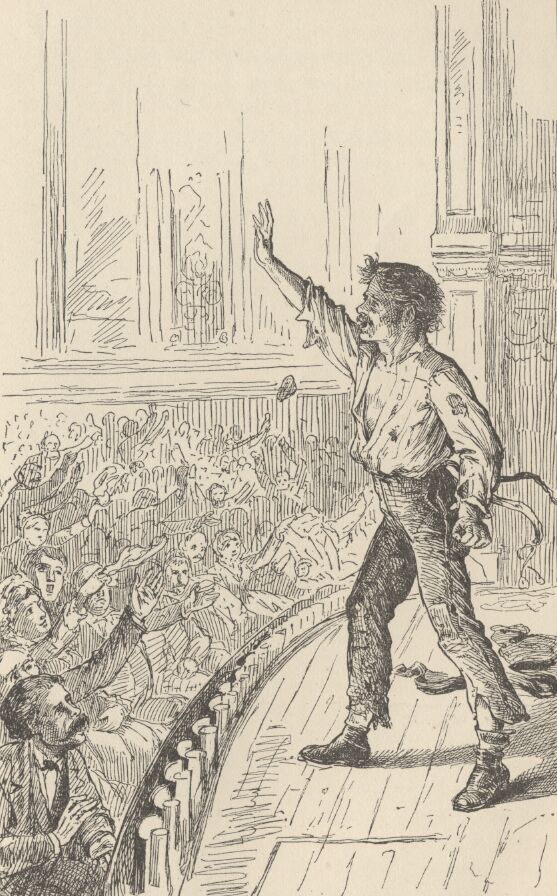
"His clothes differed in no respect from a 'wharf-rat's,' except that they were raggeder."
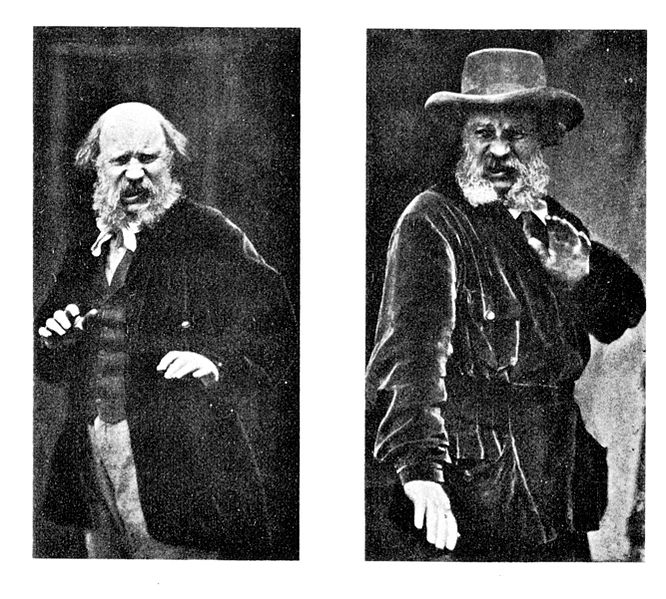
The nineteenth-century Pennsylvania-born preacher and orator Henry Clay Dean (not to be confused with the statesman Henry Clay) lived in roughly the same time frame as Horatio Alger, which made sense, since Dean was Algeresque, a poor and ragged lad who made his way in the world, though he never lost the raggedness.
Mark Twain, another contemporary, had this to say about Dean: “He began life poor and without education. But he educated himself – on the curbstones of Keokuk. He would sit down on a curbstone with his book, careless or unconscious of the clatter of commerce and the tramp of the passing crowds, and bury himself in his studies by the hour, never changing his position except to draw in his knees now and then to let a dray pass unobstructed; and when his book was finished, its contents, however abstruse, had been burned into his memory, and were his permanent possession. In this way he acquired a vast hoard of all sorts of learning, and had it pigeonholed in his head where he could put his intellectual hand on it whenever it was wanted. His clothes differed in no respect from a ‘wharf-rat’s,’ except that they were raggeder, more ill-assorted and inharmonious (and therefore more extravagantly picturesque), and several layers dirtier.”
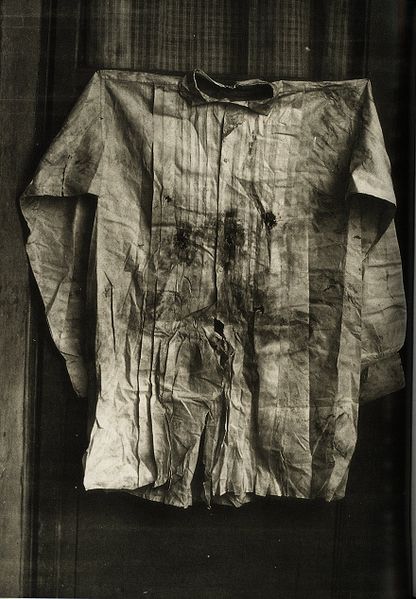
"He was a man who put on a clean shirt every New Year's Day and didn't take it off until the 31st of December."
The Brooklyn Daily Eagle took notice of Dean’s death with an article in its February 10, 1887 edition. An excerpt:
“Who was Henry Clay Dean? According to a legend familiar in every newspaper office at the mighty West he was a man who put on a clean shirt every New Year’s Day and didn’t take it off until the 31st of December. But that does not fully describe him. Mr. Dean had a useful and honorable career. In the first place he was a preacher of the Gospel and expounded the simple and beautiful truths of the Sermon on the Mount with an unction never surpassed. It was said of him by a Chicago admirer that his fervid eloquence ‘was enough to make the pin feathers of an heretical rooster quiver.’ In the second place he was a political orator whose addresses from the stump often recalled the extemporary speeches of Tom Benton. In the third place he was chaplain of the United States Senate at a time when Senators feared God more than they do to-day, and when their hearts and minds afforded a richer soil for the seeds of divine knowledge. Lastly, Mr. Dean was a Democrat, pure and undefiled–one of the ‘old timers,’ who believed that although Noah was justified in taking a Republican and Democrat into the ark, he ought to have thrown the former overboard before the waters subsided. He was a good man and true. Peace to his ashes.”
Tags: Henry Clay Dean, Horatio Alger, Mark Twain
Start smiling this instant or else. (Thanks Reddit.)
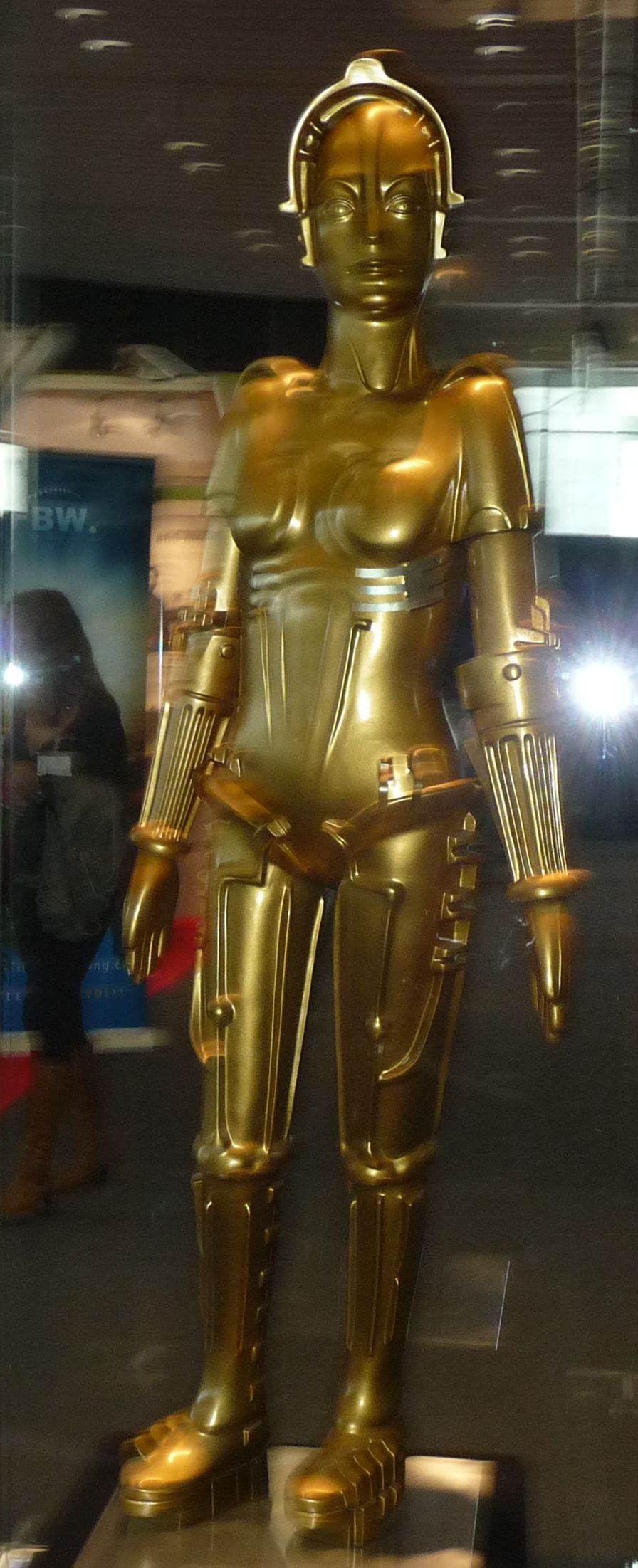
The opening of “Mind vs. Machine,” Brian Christian’s recent Atlantic article about the author’s particpation in the Turing Test, an annual event in which computers compete to exhibit intelligent behavior that can pass for human:
“BRIGHTON, ENGLAND, SEPTEMBER 2009. I wake up in a hotel room 5,000 miles from my home in Seattle. After breakfast, I step out into the salty air and walk the coastline of the country that invented my language, though I find I can’t understand a good portion of the signs I pass on my way—LET AGREED, one says, prominently, in large print, and it means nothing to me.
I pause, and stare dumbly at the sea for a moment, parsing and reparsing the sign. Normally these kinds of linguistic curiosities and cultural gaps intrigue me; today, though, they are mostly a cause for concern. In two hours, I will sit down at a computer and have a series of five-minute instant-message chats with several strangers. At the other end of these chats will be a psychologist, a linguist, a computer scientist, and the host of a popular British technology show. Together they form a judging panel, evaluating my ability to do one of the strangest things I’ve ever been asked to do.
I must convince them that I’m human.
Fortunately, I am human; unfortunately, it’s not clear how much that will help.” (Thanks to The Electric Typewriter.)
••••••••••
Tags: Alan Turing, Brian Christian
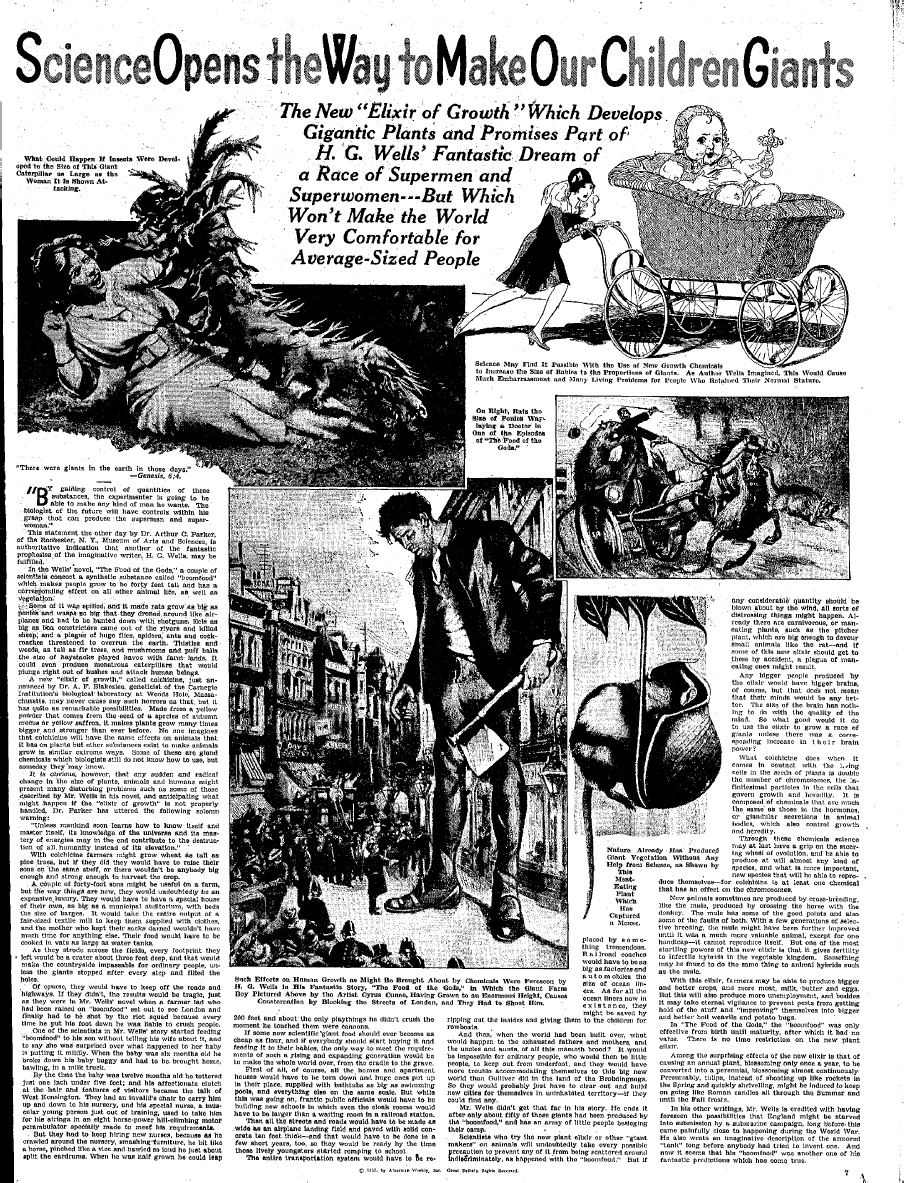
Retro-Futurist expert Matt Novak uses his amazing PaleoFuture site to catalog wild predictions from the past that never panned out. For instance: The article below from a 1937 San Antonio Light opined that advances in chemistry would make gigantic babies a reality in the near term. Sadly, that hasn’t happened. Not yet, anyhow. It seems like anything we dream, no matter how unlikely, can come true given enough time. (Thanks Marginal Revolution.)
••••••••••
“Giant Baby” by Ron Mueck:
Tags: H.G. Wells, Matt Novak
The likley future of phones and tablets. (Thanks CNET.)
On this Kentucky Derby weekend, we look back more than three decades ago when Bluegrass State native Steve Cauthen collected record earnings in 1977 as a 17-year-old jockey and followed it up by winning the Triple Crown the next year astride Affirmed. Cauthen became an international sensation, featured in People as well as Sports Illustrated. But he couldn’t maintain jockey weight as he continued growing and moved to England to compete for a few years, as that country’s jockeys ride at a heavier weight.
Cauthen and Affirmed triumph in 1978 at Churchill Downs:
From a 1977 SI issue in which Cauthen was crowned Sportsman of the Year: “It is not enough to marvel that at the age of 17 he has accomplished more in a year than any jockey in history. It is not enough that already there exists the mad school of thought that this little boy is the finest rider of all time. These are incredible things to ponder about someone so young, but somehow, as young as he is—and younger-looking still—the immensity of his achievement in 1977 cannot be properly understood until you stand in his high school and see the open country faces of the other children of Walton and realize that Steve Cauthen should be there among them still. He should be a senior in high school this day, hearing the bells and whiffing the smell.
And he would be…but for the coincidence of his size and his family background, but for the depth of his desire and some amazing gift of God that no one can comprehend.
Instead, almost at this very moment, several hundred miles away, when a bell rings, Steve Cauthen will burst from the starting gate at Aqueduct, bound to his horse in consummate harmony, seamless, one with the creature—a prodigy like none we have ever seen before, the leading money rider of any year, a fearless athlete, a resolute little doll-person, Sportsman of the Year, so very tiny, so very young, so very extraordinary and ageless in his grace at this one thing he does that he always calls ‘race riding.'”
Tags: Steve Cauthen
Retronaut dug up this fun print ad for the first commercially successful laptop microcomputer, the 1981 Osborne 1.

From the ad copy: “The guy on the left has two file folders, a news magazine, and a sandwich. The guy on the right has the Osborne 1, a fully functional computer system in a portable package the size of a briefcase. Also in the case are the equiva;lent of 1600 typed pages. stored on floppy diskettes. The owner of the Osborne 1 is going to get more work done–and better work done with less time and with less effort.”
Very cute neurowear in action. (Thanks Reddit.)