Urban Studies

You are currently browsing the archive for the Urban Studies category.

Like reverse product placement, a “shoppable video” is an online video in which models engage in banal activity, a movie of sorts, while showing off products. Susannah Edelbaum of the High Low has an interesting post about a Korean clothing retailer Oki-Ni, which has created an interactive video called “The Game.” Ridley Scott’s production company turned out this very mild “action film” which has dudes playing table tennis in a sprawling and spartan home. Everything they’re wearing can be purchased with a couple of clicks.

It’s strange to see the full extrapolation of product placement, where the clothes are essentially wearing the people, but it’s only a more extreme version of almost every film and TV program we watch. The catalog has come to life, or some denatured semblance of life. And it will likely only grow slicker and more elaborate as time goes by. Because of the interactive element of the video, it can’t be embedded, but watch it here.


Tags:

"Won't last long."

free monkey (manhattan)

Hello, I have a monkey that I am giving to a nice home, wont last long.

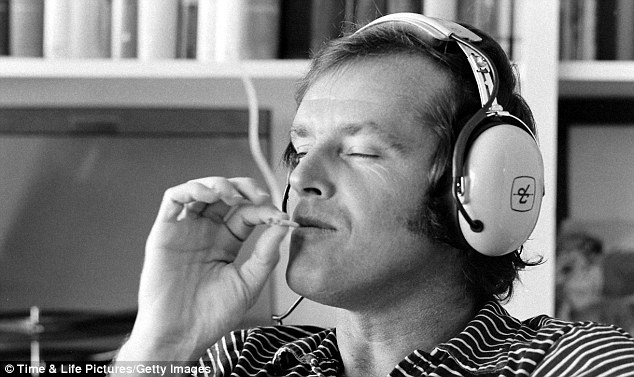
Jack Nicholson was part of a group of ’70s California investors trying to market clean, cheap hydrogen fuel that was created by solar. “There are a lot of good things that can come from using the power of the sun,” Nicholson said. Never panned out, obviously.

Tags:

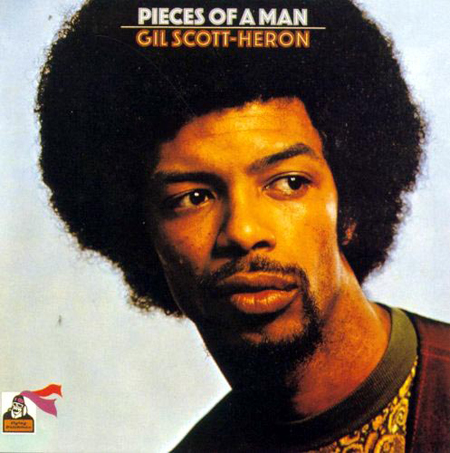
From “New York Is Killing Me,” Alec Wilkinson’s smart and sad 2010 New Yorker profile of Gil Scott-Heron:

“Sometimes when I spoke to people who used to know Scott-Heron, they told me that they preferred to remember him as he had been. They meant before he had begun avidly smoking crack, which is a withering drug. As a young man, he had a long, narrow, slightly curved face, which seemed framed by hair that bloomed above his forehead like a hedge. The expression in his eyes was baleful, aloof, and slightly suspicious. He was thin then, but now he seems strung together from wires and sinews—he looks like bones wearing clothes. He is bald on top, and his hair, which is like cotton candy, sticks out in several directions. His cheeks are sunken and deeply lined. Dismayed by his appearance, he doesn’t like to look in mirrors. He likes to sit on the floor, with his legs crossed and his propane torch within reach, his cigarettes and something to drink or eat beside him. Nearly his entire diet consists of fruit and juice. Crack makes a user anxious and uncomfortable and, trying to relieve the tension, Scott-Heron would sometimes lean to one side or reach one hand across himself to grab his opposite ankle, then perhaps lean an elbow on one knee, then maybe press the soles of his feet together, so that he looked like a swami.” (Thanks Longform.)

••••••••••

“Should’ve been asleep when I turned the stack of records over and over / So I wouldn’t be up by myself  / Where did the night go? / Should go to sleep now.”

Tags: ,

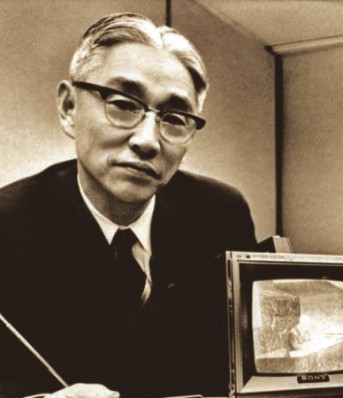
Legendary Sony founder Akio Morita was reputedly the tech titan that Steve Jobs studied most closely. In the 1950s, Morita opened a start-up in the basement of a bombed-out department store and created the world’s first transistor radio. He was more responsible than anyone for Japan emerging as a world leader in consumer electronics. In 1980, he visited Tom Snyder to unveil a line of new products.

From “Akio Morita: Guru of Gadgets,” Kenichi Ohmae’s 1998 Time article about the late-life Morita: “Almost exactly five years ago, Akio Morita–Mr. Sony–fell to the ground during a game of tennis. The co-founder and chairman of the board had suffered a stroke. He has since been in a wheelchair. This is particularly sad, as Morita had never been able to sit still and relax. At 72, he was playing tennis at 7 a.m. each Tuesday. I know this well because I would practice on the court next to him. My tennis, however, was very different from his. I played with an instructor, and if I was tired, I would just take a break. Not him. He challenged everybody, including young athletes.

This was in keeping with a man who created one of the first global corporations. He saw long before his contemporaries that a shrinking world could present enormous opportunities for a company that could think beyond its own borders, both physically and psychologically. And he pursued that strategy with his relentless brand of energy in every market, particularly the U.S. It is notable that this year, according to a Harris survey, Sony is rated the No. 1 brand name by American consumers, ahead of Coca-Cola and General Electric.”

Tags: , ,

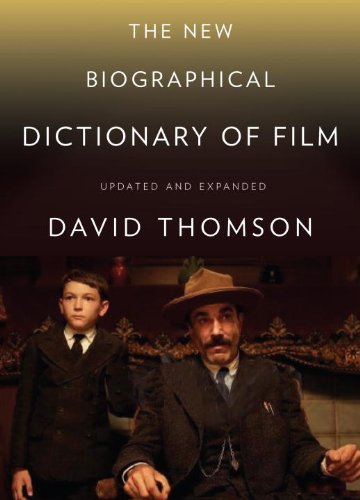
First published in 1975, the book now stretches past 1,000 pages.

FromHollywood: A Love Story,” an excellent article in the Atlantic by astute cultural critic Clive James about David Thomson, that woolly film maven best known for his indispensible and idiosyncratic reference book:

“After five editions in 35 years, Thomson’s famous compendium of biographical sketches about the movie people—hey, it’s read by the movie people, the movie people are fighting to get into it, male stars measure their manhood by the length of their entry—is still a shantytown with the ambitions of a capital city. It gets bigger all the time without ever becoming more coherent. But with more than a thousand pages of print to wander in, only the most churlish visitor would complain about lack of cogency. Better to rejoice at the number of opportunities to scream in protest at what the author has left out, put in, skimmed over, or gone on about with untoward zeal. As a book meant to be argued with, it’s a triumph.

Also, there is the frustrating consideration that Thomson is often right. Most people of his generation who have spent their lives seeing every properly released movie even if it stars Steven Seagal are incapable of judging them. The reason is simple: those people are monomaniacs. Thompson has found time to do other things: read books, breathe clean air, cook and eat real food.”

••••••••••

David Thomson in 2010 at Google Talks:

Tags: ,

This stuff is crazy. Henrik Ehrsson at Sweden’s Karolinska Institute is able to make people believe that they are giants or barbie dolls with the aid of a virtual reality headset. It’s creepy and odd and sort of spectacular.

From an article about the research in Discover: “In Alice’s Adventures in Wonderland, the titular heroine quaffs a potion that shrinks her down to the size of a doll, and eats a cake that makes her grow to gigantic proportions. Such magic doesn’t exist outside of Lewis Carroll’s imagination, but there are certainly ways of making people thinkthat they have changed in size.

There’s nowhere in the world that’s better at creating such illusions than the lab of Henrik Ehrsson in Sweden’s Karolinska Institute. In a typical experiment, a volunteer is being stroked while wearing a virtual reality headset. She’s lyng down and looking at her feet, but she doesn’t see them. Instead, the headset shows her the legs of a mannequin lying next to her.

As she watches, Bjorn van der Hoort, one of Ehrsson’s former interns, uses two rods to stroke her leg, and the leg of the mannequin, at the same time. This simple trick creates an overwhelming feeling that the mannequin’s legs are her own.  If the legs belong to a Barbie, she feels like she’s the size of a doll. If the legs are huge, she feels like a 13-foot giant.”

Tags:

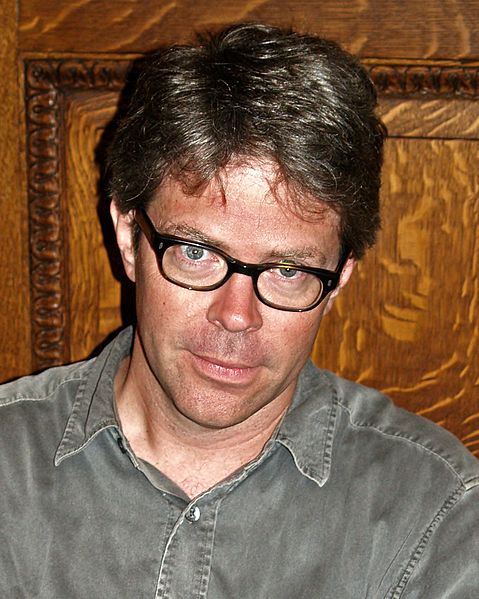
Jonathan Franzen: Loves birds, iffy on Oprah. (Image by David Shankbone.)

Jonathan Franzen has an excellent essay, “Liking Is For Cowards, Go For What Hurts,” in the New York Times, which makes many salient points about the pleasing, dishonest mirror that is consumer electronics:

“Consumer technology products would never do anything this unattractive, because they aren’t people. They are, however, great allies and enablers of narcissism. Alongside their built-in eagerness to be liked is a built-in eagerness to reflect well on us. Our lives look a lot more interesting when they’re filtered through the sexy Facebook interface. We star in our own movies, we photograph ourselves incessantly, we click the mouse and a machine confirms our sense of mastery.

And, since our technology is really just an extension of ourselves, we don’t have to have contempt for its manipulability in the way we might with actual people. It’s all one big endless loop. We like the mirror and the mirror likes us. To friend a person is merely to include the person in our private hall of flattering mirrors.”

••••••••••

Franzen discusses some lesser-known books he loves:


Tags:

"The peddler of hot sausages at the corner of Fulton and Sands streets, was folding his tent, when he was accosted by James Kenny." (Image by Berenice Abbott.)

A nineteenth-century sausage peddler and some random nudnik decided to have a battle royal in the street, as chronicled in this January 18, 1887 article in the Brooklyn Daily Eagle:

“It was nearly 2 o’clock this morning when Robert Henry Moore, of 67 Nassau Street, the peddler of hot sausages at the corner of Fulton and Sands streets, was folding his tent, when he was accosted by James Kenny, of 91 Orange Street, who accused the peddler of refusing to drink with him on New Years Eve. Moore repudiated the accusation and offered to produce a cloud of witnesses to testify that he was constitutionally unable to refuse such an invitation, but Kenny clinched with him and the two men writhed in a debris of hot sausages and cakes and hotter charcoal. Bridge Officer Courtney separated the combatants and Justice Walsh further separated them this morning by sending Kenny to the Penitentiary for sixty days and putting Robert Henry Moore in jail for one day. Moore is a favorite with the bridge officers, who say he is peaceable and very generous with his edibles.”

Tags: , , ,

Michael Crichton predicts the future (fairly poorly) in 1999: Printed matter will be fine, movies will soon be dead, communications will be consolidated into fewer hands. Well, he did foresee YouTube and large-scale terrorism in NYC.

Crichton, who was fascinated by science and often accused of being anti-science, commenting in a 1997 Playboy interview on technology creating moral quandries we’re not prepared for: “I think we’re a long way from cloning people. But I am worried about scientific advances without consideration of their consequences. The history of medicine in my lifetime is one of technological advances that outstrip our ethical systems. We’ve never caught up. When I was in medical school—30-odd years ago—people were struggling to deal with mechanical-respiration systems. They were keeping alive people who a few years earlier would have died of natural causes. Suddenly people weren’t going to die of natural causes. They were either going to get on these machines and never get off or—or what? Were we going to turn the machines off? We had the machines well before we started the debate. Doctors were speaking quietly among themselves with a kind of resentment toward these machines. On the one hand, if somebody had a temporary disability, the machines could help get them over the hump. For accident victims—some of whom were very young—who could be saved if they pulled through the initial crisis, the technology saved lives. You could get them over the hump and then they would recover, and that was terrific.

But on the other hand, there was a category of people who were on their way out but could be kept alive. Before the machine, ‘pulling the plug’ actually meant opening the window too wide one night, and the patient would get pneumonia and die. That wasn’t going to happen now. We were being forced by technology to make decisions about the right to die—whether it’s a legal or religious issue—and many related matters. Some of them contradict longstanding ideas in an ethically protected world; we weren’t being forced to make hard decisions, because those decisions were being made for us—in this case, by the pneumococcus.

This is just one example of an ethical issue raised by technology. Cloning is another. If you’re knowledgeable about biotechnology, it’s possible to think of some terrifying scenarios. I don’t even like to discuss them. I know people doing biotechnology research who have decided not to pursue avenues of research because they think they’re too dangerous. But we go forward without sorting out the issues. I don’t believe that everything new is necessarily better. We go forward with the technology while the ethical issues are still up in the air, whether it’s the genetic variability of crop streams, which is a resource in times of plant plagues, to the assumption that we all have to be connected all the time. The technology is here so you must use it. Do you? Do you have to have your cell phone and your e-mail address and your Internet hookup? I was just on holiday in Scotland without e-mail. I had to notify people that I wouldn’t be checking my e-mail, because there’s an assumption that if I send you an e-mail, you’ll get it. Well, I won’t get it. I’m not plugged in, guys. Some people are horrified: ‘You’ve gone offline?’ People feel so enslaved by technology that they will stop having sex to answer the telephone. What could be so important? Who’s calling, and who cares?”


Tags:

"Corporate zealots/sleazebags all welcome. We pass no judgement."

Surrealist/Anarchist/Post-Apocalyptic Press/Publisher seeks Benefactor – $1 (Downtown)

Our letterpress printing outfit is seeking a moderately well-funded and enthusiastic benefactor for indulgent and potentially unsalable printing and publishing projects.

Trust funders, hedge funders & corporate zealots/sleazebags all welcome~ we pass no judgement.

If you’d like to be involved in the semi-devious manipulation of society and culture through unpopular(?) speech and offensive(?) art we’d love to speak to you.

No obligations; no hard feelings.

Pilkington, idiot savant sidekick to Ricky Gervais and Stephen Merchant, opines on the future. Not so crazy, really.

Tags: , ,

There are used paperback copies of the book on Amazon for as little as $1.62.

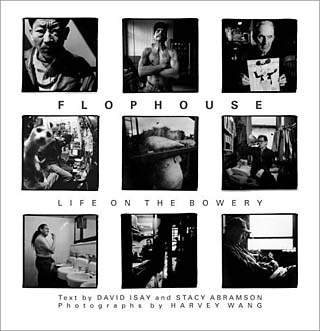
Photographer Harvey Wang and radio documentarian David Isay gravitate to those people, places and things that have passed into obsolescence in our culture and capture their essence before they become obsolete. They focus a good deal of attention on NYC, a place that changes rapidly, often driven more by the lure of the dollar than the pull of history. The two collaborated with Stacy Abramson on the great 2000 book, Flophouse: Life on the Bowery, which looked at the lowly boarding houses that still stood in that famous (and infamous) neighborhood like anachronisms with bedbugs. But despite their shabby shape, these lodgings were filled with the fascinating stories of the tenants, which Wang and Isay chronicled with great care. You can listen to audio documentaries about the flophouses here. The opening copy of the book:

“From the end of the nineteenth century through the middle of the twentieth, the Bowery was the world’s most infamous skid row. Under the shadow of the elevated Third Avenue line, the sixteen-block stretch of lower Manhattan was jammed with barber schools, bars, missions, men’s clothing stores, slop joints (cheap restaurants), flophouses, and tattoo parlors. The estimates vary, but in its heyday somewhere between 25,000 and 75,000 men slept on the Bowery each night.

Today the barber colleges are all gone. Al’s, the last rummy bar on the Bowery, closed in 1993. There are no tattoo parlors, no employment agencies, no pawnshops, no burlesque houses, no secondhand stores, no El train. All that remains of the skid-row Bowery are a single mission and a handful of flops, still offering the shabbiest hotel accommodations imaginable for as little as $4.50 a night.”

More Harvey Wang and David Isay posts:

Tags: , ,

A boarded-up Montgomery Ward store in Georgia. (Image by Caldorwards4.)

Really good article by David Streitfeld in the New York Times about the phenomenon of Groupon, a company running forward at a breakneck pace but still (wisely) looking over its shoulder. The Internet outfit inhabits the Chicago building made famous by Montgomery Ward, the once-powerful retailer which also changed the face of commerce in its own day. An excerpt:

“CHICAGO has revolutionized retailing before. In 1872, a dry-goods salesman named Aaron Montgomery Ward wearied of visiting far-flung stores, so he mailed descriptions of goods directly to rural residents. The orders were sent by a new delivery system that wreaked havoc on traditional commerce: the railroad.

Ward’s innovation was as much of a cultural achievement as a merchandising one — farmers read his catalogues for pleasure, dreaming of a better world. They were the foundation of a retail empire that lasted more than a century until the management failed one time too often to anticipate a shift in consumer tastes. Ward’s went bust a decade ago.

Groupon’s corporate headquarters are in the old Montgomery Ward building, which should be reminder enough of the dangers of neglecting the customer’s desires. But Mr. Mason, the chief executive, sought to underline the point by putting on the wall certain business magazine covers. They celebrate tech start-ups — the social network Friendster, the music site MySpace — at the moment they seemed poised for greatness, before they irrevocably stumbled.”

••••••••••

Montgomery Ward commercial, 1967:

Montgomery Ward commercial, 1982:

Montgomery Ward going-out-of-business commercial, 2001:

Tags: , ,

Soundless and oddly poetic footage of Blackbeard’s anchor being recovered:

From a 1945 Life magazine article entitled “American Legends“: “The lonely stretch of sand, sea and sky above is Ocracoke Inlet, on the coast of North Carolina, where the great pirate Edward Teach, or Blackbeard, used to hide. The local people say that Blackbeard gave the place its name when, oppressed one day by its loneliness, he cried, ‘Oh crow, cock.’ (But Ocracoke is really an Indian name.) Blackbeard was born in England but lived in North Carolina during his busy career as a pirate. He was a friend and perhaps even a partner of the governor, Charles Eden. Blackbeard came to a violent end on Nov. 22, 1718 when Lieut. Maynard of the Royal Navy cornered him at Ocracoke, killed him and nailed his head to the bowsprit of his ship. Blackbeard was never popular while he was alive but he was brave and had a rough, bloody humor. The people who lived along the eastern coast have made a legend out of his murderous deeds. Once he wanted to marry the governor’s pretty daughter even though he had been married 12 times. But she preferred another man. Blackbeard kidnapped his rival, cut off one hand and threw him into the  sea. He sent the severed hand to Miss Eden in a silver casket and then married a different girl.”

Tags: , , , ,

Recent footage of the great writer-composer Gil Scott-Heron, who just died.

Tags:

The 70-year-old legend passed away soon after this talk with Merv Griffin.

More Orson Welles Posts:

Tags: ,

"They really are trying to get at what people think using how they talk."

Since language is available in critical mass all over the Internet, researchers will continue to mine this material to promote more efficient marketing or to determine the nature of our hearts and minds. The Atlantic has a new article about an intelligence branch of the government running a program designed to unravel how people around the globe use metaphors. An excerpt from Alexis Madrigal’s article:

“Every speaker in every language in the world uses them effortlessly, and the Intelligence Advanced Research Projects Activity wants know how what we say reflects our worldviews. They call it The Metaphor Program, and it is a unique effort within the government to probe how a people’s language reveals their mindset.

‘The Metaphor Program will exploit the fact that metaphors are pervasive in everyday talk and reveal the underlying beliefs and worldviews of members of a culture,’ declared an open solicitation for researchers released last week. A spokesperson for IARPA declined to comment at the time.

IARPA wants some computer scientists with experience in processing language in big chunks to come up with methods of pulling out a culture’s relationship with particular concepts. ‘They really are trying to get at what people think using how they talk,’ Benjamin Bergen, a cognitive scientist at the University of California, San Diego, told me. Bergen is one of a dozen or so lead researchers who are expected to vie for a research grant that could be worth tens of millions of dollars over five years, if the team scan show progress towards automatically tagging and processing metaphors across languages.”

Tags:

If you subscribe to the New Yorker, make sure to read the excellent profile of artist Cory Arcangel, which was written by Andrea K. Scott, a smart former colleague from a few years back. Arcangel, whose new show just opened at the Whitney, is a Buffalo native who has gained critical acclaim at a young age for his digital art, especially his tinkerings with video game graphics, reimagining their aesthetic in surprising ways.

••••••••••

The one that made him famous:

A tasteful homage to Andy Warhol:

Cats playing Schoenberg:

Tags: ,

Open locks and hand out virtual keys with your phone and Lockitron. (Thanks Singularity Hub.)

u$ed rubbers (5 boros)

must be from str8 contact

cash paid

Ad for Hunter S. Thompson’s campaign for Sheriff of Aspen in 1970. (Thanks Bibliokept.)

From a 2005 Tahoe Daily Tribune article: “Thompson had been a resident of Pitkin County since the late 1960s. In a 1970 Rolling Stone article titled ‘Freak Power in the Rockies’ (also later published in the Thompson collection The Great Shark Hunt), he documented the rise of a new political generation of hippy activists in Aspen. In 1970, Thompson himself ran unsuccessfully for Pitkin County sheriff.

Thompson’s political legacy in Aspen and the surrounding area is far-reaching, even though his involvement dropped off in recent years. His bid for the sheriff’s post was a direct attack on the traditional, conservative style of policing in place at the time, and set the stage for the more tolerant, community-minded law enforcement that took root in the 1970s under Sheriff Dick Kienast.

Thompson’s activism also extended into the nuts and bolts of county government, and he helped pioneer the anti-development streak in local politics that survives to this day. He backed strict land-use controls and the candidates who were willing to impose them. Many of the land-use regulations still in place in Aspen and Pitkin County can be traced back to Thompson’s work as a growth-control activist.

‘The guy used to call me at 3 a.m. and talk about land use,’ said Pitkin County Commissioner Mick Ireland.'”

Tags:

"He rereads what you probably haven't heard of, like Anton Chekhov's Sakhalin Island."

A couple of passages about the voracious reading habits of economist, excellent blogger and The Great Stagnation author Tyler Cowen, from a new Businessweek profile of him:

“When Tyler Cowen was 15, he became the New Jersey Open Chess Champion, at the time the youngest ever. At around the same age, he began reading seriously in the social sciences; he preferred philosophy. By 16 he had reached a chess rating of 2350, which today would put him close to the top 100 in the U.S. Shortly thereafter he gave up chess and philosophy for the same reason: little stability and poor benefits.

He’d been reading economics, though. He figured that economists were supposed to publish, and by age 19 he had placed two papers in respected journals. As a PhD candidate at Harvard, he published in the Journal of Political Economy and the American Economic Review. ‘They were weird, strange pieces,’ he says, ‘but still in good journals, top journals. That cemented my view that I could, you know, somehow fit in somewhere.’ I ask him what he was like, what made him doubt he could fit in.

‘I was like I am now.’

‘You’ve always been like that?’

‘Always. Age 3. Whatever.’

‘What did you do at age 3?’

‘Read a lot of books.'”

••••••••••

“Tyler Cowen has read what’s listed in Harold Bloom’s The Western Canon, though not, he concedes, every single last one of the Icelandic sagas. He rereads what you probably haven’t heard of, like Anton Chekhov’s Sakhalin Island. For the Brazil trip, in case he runs out of new books, he has also brought Neal Stephenson’s 1,100-page Cryptonomicon, which he has already read. Fiction slows him down, he says, which makes packing easier. He carries a Kindle but reads paper when he can; he says he’s invested too much time on the rhythm of how the eye tracks the page. Several people have told me the same story about Cowen: They have watched him read, and he scans a page as others might scan a headline.”

••••••••••

Cowen visits Big Think to discuss the free market and morality:

Tags:

Pre-fame David Letterman on some sort of local Los Angeles TV show.

Tags:

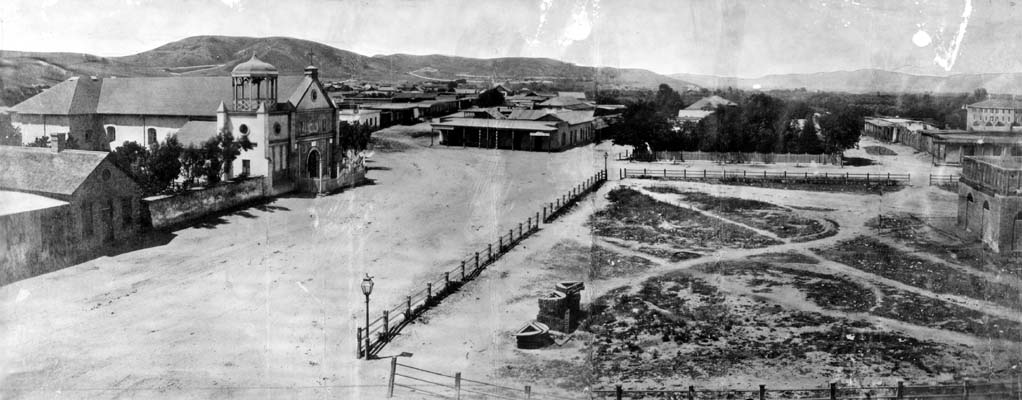
Mission Nuestra Señora Reina de los Angeles, 1869.

Bernard-Henri Lévy’s 2006 book, American Vertigo, received, via Garrison Keillor, one of the most famous and harshest slams ever in the New York Times Book Review. The French writer’s volume grew from a series of articles he penned for the Atlantic, which saw him retrace Tocqueville’s path across AmericaAn excerpt from one of the Atlantic pieces, in which Lévy looked at the unfathomable city known as Los Angeles:

“A legible city has to have a heart, and this heart must be pulsating. It has to have, somewhere, a starting point from which, one feels, the city was produced, and from which its mode of production is still intelligible today. It has to have a historical neighborhood, if you like, but one whose historicity continues to shape, engender, inspire, the rest of the urban space. But this place, too, is nonexistent. In Los Angeles there is nothing like the old neighborhoods from which you feel, almost physically, that the European cities, or even New York, have emerged. They do show me the old neighborhood. Kevin Starr, the excellent California historian, takes me not far from Chinatown, to Olivera Street and Old Plaza, which are supposed to be the nucleus of what was once called El Pueblo de Nuestra Señora la Reina de Los Angeles. But they are dead places. It’s a neighborhood frozen in time. However much Starr leaps from house to house, with his considerable bulk proving surprisingly agile, with his ink-blue too-warm suit and his bow tie that makes him look like a private eye out of Raymond Chandler, to explain to me how gargantuan Los Angeles was born from this tiny seed; for all this, something isn’t right. You don’t feel any possible common denominator between this stone museum, these relics, and the vital, luxuriant enormousness of the city. And the truth is that with its pedestrian islands and its restored façades, its profusion of typical restaurants and its stands selling authentic Mexican products, its wrought-iron bandstands, its cobblestones, the varnished wood of the Avila Adobe, which is supposed to be the first house in the neighborhood, this street makes me think of all the fake “heritage towns” that I keep running into in America.

For an illegible city is also a city without a history.

An unintelligible city is a city whose historicity is nothing more than an ageless remorse.

And a post-historical city is, I fear, a city about which one can predict with some certainty that it will die.”

••••••••••

Bernard-Henri Lévy on the Daily Show in 2006:
www.thedailyshow.com

Tags: , , ,

« Older entries § Newer entries »