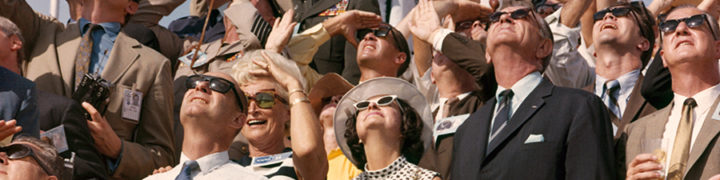
“Incredible Machine” by Bell Labs is a fun, old-school 1968 look the early use of computers in communications research (graphics, film, music).
You are currently browsing the archive for the Urban Studies category.

Bellevue Homeless Shelter, NYC. (Image by Beyond My Ken.)
Longreads pointed me in the direction of an amazing series of articles in Capital about homelessness in NYC during the Bloomberg years, which was written by Steven Boone, a former colleague of mine who was always an excellent writer and person. An excerpt from “Out, But Not Up: Homelessness In The Age Of Bloomberg“:
“Three months later, the last of my small savings ran out, and I went to my landlady in Castle Hill to tell her that I would be leaving at the end of the week, so that she could get a new room renter lined up right away. She asked where I was going. I lied, and told her I would stay with family until I got back on my feet. On Friday, I went to 30th Street Intake Shelter (better known as the Bellevue homeless shelter) for the first time and got assigned to Ready Willing and Able shelter in Brooklyn.
The next morning, I met my father to load his van up with my belongings and store them in an uncle’s garage. He asked me where I was going. I lied again.
This man was 72 years old, living in a small apartment with his wife and supplementing his fixed income by working in a high school cafeteria. All my life, he’d worked seven days a week—six for the U.S. Postal Service, and Sundays cleaning up at a beauty school. (Growing up, I used to be his assistant at the school, paid in movie money and donuts.)
Decades later, I hadn’t managed to do anything to ease his burden. All my adult life in New York, working simply meant paying the rent and keeping the lights on. So, to the extent that I was committed to living, I was committed to making the next transaction between us be a check for some outrageous sum of money, from me to him. If I told him as much, I knew what he would say: ‘Sport, I never cared that you kids would become king of the hill or any kind of bigshot, so long as I raised y’all to be good people in this world. That’s all I ever wanted, and I got what I wanted.’ And in fact that’s how he put it a couple years later, during one of our annual shy, stare-at-the-floor heart-to-hearts.”
Tags: Michael Bloomberg, Steven Boone
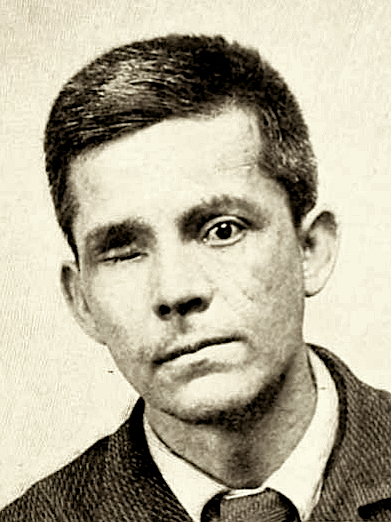
"The second shot struck Russell in the groin and the third in the back."
Seemingly everyone in America in the late nineteenth century would behand you with a butcher’s knife for a sawbuck, so you had to be particularly heinous to be identified as a “rough character,” as the following quartet of Brooklyn Daily Eagle articles prove.
••••••••••
“Chopped His Wife’s Head Off” (June 16, 1889): “Philadelphia, Pa.–A most brutal murder was committed in this city this afternoon. George McCann, aged about 30 years, a rough character, killed his wife, Maggie, five years younger, by chopping her head off in a horrible manner with a hatchet. Jealousy was the cause.”
••••••••••
“Not Satisfied With The Play” (January 13, 1887): “Chicago, Ill.–A dramatic company from Kansas City gave an entertainment in the City Hall last night. At the close of the performance a number of rough characters demanded the return of their money, and, not getting it, the manager and the members of the company were shamefully beaten. Adam Gorman pursued one of the men half a square, and a few minutes later was found with his left arm split open and a fearful gash near the breast. The mob then pursued the company to the Marion House, where the officers defended them from the mob. Gorman’s injuries are probably fatal.”
••••••••••

"George McCann...killed his wife, Maggie, five years younger, by chopping her head off in a horrible manner with a hatchet."
“Bloody Deeds” (September 29, 1884): “Middletown, Ohio–Henry Slopy was murdered here yesterday afternoon at half past four o’clock by Sandy Jackson, a rough character. Jackson was drunk and attempted to stir up a row. Slopy ran away and was struck with a stone, which broke his neck. Jackson was arrested immediately together with a confederate, a young man named John Flaherty. The murder caused much excitement among the citizens and threats of lynching being made, special policemen were called in to guard the jail.”
••••••••••
“Attacked By Roughs” (February 7, 1895): “Stocktown, Mass.–Shortly after the arrival of the 11 o’clock train last night Officer Curtis was quietly walking with a man down the street behind a crowd of rough local characters. One of the company, Christopher Russell, turned and asked the officer why he was following them. The officer replied, ‘I have the right to.’
There was some little talk and Russell sprang at the officer, biting him severely in the cheek. Officer Curtis finally used his revolver, first shooting into the air. The second shot struck Russell in the groin and the third in the back. Although badly used up, Curtis took Russell and one other man in the party, F. Dillon, to the lock up. Russell was taken to the Massachusetts General Hospital on the 5:40 train this morning. His condition is critical. Officer Curtis lies ill at his home.”
From New Zealand. (Thanks Endgadget.)

"I'm a man of my word." (Image by Eugen Nosko.)
Play me for my ping pong table! – $50/150 (Greenpoint/Williamsburg)
I have a perfectly functional, regulation size Sportcraft ping pong table that I need to sell before I move into a smaller place. It folds up so you can store it in a corner.
In order to have a little fun in the process of letting it go, I decided to make a wager: best out of 3 games to 21. If you win, you can buy it for the low price $50, but if I win you buy it for $150 (which is still not a terrible deal). We’ll shake on it up front. I’m a man of my word, and I expect you to be a person of your word as well. I can help you dismantle it for transportation after the game.
I’m not making the bet because I’m sure that I’ll win. In fact, I realize that an ad like this might attract very good players. I just wanted to make the process of letting my table go more exciting than sad.
Let the games begin!
Rob
Tags: Rob
Stewart Brand adapted his 1995 book, How Buildings Learn, into a 1997 BBC TV sepcial.
More Stewart Brand Posts:
Tags: Stewart Brand
Theoretical cosmologist Sean Carroll explains to Steven Colbert the idea of the Multiverse, the theory that multiple universes make up all that exists.
•••••••••
The Mulitverse Theory via Family Guy:
Tags: Sean Carroll, Steven Colbert

I was shopping in a supermarket recently and noticed a mountain of Quisp cereal, an erstwhile dead brand that was originally introduced in 1965. It reminded me of Rob Walker’s excellent 2008 Sunday Times Magazine article about River West Brands, a Chicago outfit that purchases and reivitalizes ghost products, including the sugar-coated flying saucer cereal, hoping to capitalize on nostalgia and brand familiarity. An excerpt from Walker’s article:
“River West’s offices, on the 36th floor of the Chicago Board of Trade Building, are sprinkled with the bric-a-brac of obscure products: a Quisp cereal box, Ipana toothpaste packages, Duz detergent bottles. On a wall of Paul Earle’s office is a framed, five-foot-by-three-foot sheet of uncut ‘Wacky Packages’ stickers — those 1970s trading-card-size brand-parody images that rendered the word Crust in the style of the Crest logo, for example. Earle has a Midwestern everyman quality about him: he’s compact, with a big and friendly let’s-get-along voice and a penchant for deadpan jokes. Only his designer-eyeglass frames deviate from his overall demeanor.
Earle loves brands. They are not mere commercial trademarks to him, but pieces of Americana. He seems not just nostalgic but almost hurt about the fate of the ‘castoff brands’ of the world. ‘If commerce is part of the American fabric, then brands are part of the American fabric,’ he said to me on one occasion. ‘When a brand goes away, a piece of Americana goes away.’
Earle’s professional entanglement with branding began at Saatchi & Saatchi, where he was a cog in a gigantic ad agency working for gigantic clients, like General Mills and Johnson & Johnson. That was in the mid-1990s, and he saw what happened as conglomerates merged: brands that didn’t have the potential for global scale got squeezed to the bottom shelf, or out of existence. He was attracted to the idea of working with ‘noncore’ brands, but when he figured out that big-agency economics made it impractical, he left Saatchi and went to the Kellogg School of Management at Northwestern University, and then took a brand-management job at Kraft.
At Kraft he observed the same mergers-and-consolidation process from a different angle, and he seems to have found it equally frustrating. ‘These are American icons with loyal consumers,’ he says. ‘It’s not their fault a $40 billion company doesn’t like them anymore. Consumers like them.’ He sees reviving brands as ‘a civic mission’ of sorts. ‘If it weren’t my job,’ he said, ‘it would be my hobby.’ He says this in a way that sounds not just plausible but hard to doubt.
Even so, he has set out to make this particular civic mission turn a profit. While he recognizes that a given brand might not be able to survive in the portfolio of a multinational, different sorts of business models might work to sustain it. As surely as the ownership of brands has consolidated through one megamerger after another, the consumer market seems to be moving in the opposite direction, with an individualism-fueled demand for almost unlimited variety.”
______________________
The cereal from Planet Q:
Tags: Paul Earle, Rob Walker
There was a ridiculous and popular 1968 book by Erich Von Daniken, called Chariots of the Gods?, that was turned into a 1970 film by Harald Reinl. It proposed that extraterrestrial astronauts visited Earth and influenced history. This video, a TV reedit of the film, is narrated by Rod Serling.
Tags: Erich Von Daniken, Harald Reinl, Rod Serling
Newly opened at the University of Chicago. (Thanks Singularity Hub.)

"It can be done in a day if you focus on it." (Image by Bjørn som tegner.)
I need someone to do my college paper – $9999999 (bronx)
I have a paper that needs to get done, it is 17 paragraphs and all the sources are included. The paper has very specific instructions eg.what is included in each parapgrah etc… There is less than 30 pages total of reading. It can be done in a day if you focus on it.
I can give $20 cash, $45 chilli’s gift card (3x $15 chili gift cards) or you can feel free to offer what you would want to do this assignment.
I need this done asap, someone please help!
One of the first machines to convert solar power to electricty. If you’re going to do nothing, do it like this.
Tags: Charles Eames, Ray Eames

"He was literally and figuratively behind the wheel of our bus, driving it the way Charlie Parker worked the saxophone." (Image by Joe Mabel.)
In a 1994 Paris Review Q&A, Ken Kesey explains how Beat muse Neal Cassady wound up driving Furthur, the Merry Pranksters’ bus:
“Cassady was around us often. There was one incident in particular when he truly impressed me not only as a madman, genius, and poet but also as an avatar—someone in contact with other powers. He took me to a racetrack near San Francisco. He was driving and talking very fast, checking his watch frantically, hoping we would get to the track on time. If we got to the track just before the last three races, we’d get in free. We made it just in time and we bet on the last two races. Cassady had a theory about betting he’d learned in jail from someone named Knee-Walking Jackson. His theory was that the third favorite at post time is often the horse most likely to upset the winner and make big money. Cassady’s strategy was to step up to the tellers at the ticket booths just at post time. He’d glance up to see who was third favorite and put money on that horse. He didn’t look at the horses, the jockeys, or the racing sheets. He said to me, This is going to be the one, I can feel it. He asked me for ten bucks and I gave it to him. He put three dollars down with my ten. Given the odds we would have made some good money. We went right down to the line to watch, and it was a close race, neck and neck. I’m no horse fan, but I was getting into it because it looked like the third favorite could win. There was a photo finish and Cassady suddenly tore up his tickets and left. I followed him back to the car and could hear the announcement: We have a photo finish and the winner is . . . It turned out to be the favorite. Neal was so confident of his vision that if he lost, he never waited around or looked back.
Cassady was a hustler, a wheeler-dealer, a conniver. He was a scuffler. He never had new clothes but was always clean, and so were his clothes. He always had a toothbrush and was always trying to sell us little things and trying to find a place where he could wash up. Cassady was an elder to me and the other Pranksters, and we knew it. He was literally and figuratively behind the wheel of our bus, driving it the way Charlie Parker worked the saxophone. When he was driving he was improvising an endless monologue about what he was seeing and thinking, what we were seeing and thinking, and what we had seen, thought, and remembered. Proust was his literary hero and he would quote long passages from Proust and Melville from memory, lacing his revelations with passages from the Bible. He was a great teacher and we all knew it and were affected by him.”
••••••••••
Cassady in conversation with Allen Ginsberg, 1965:
Tags: Allen Ginsberg, Ken Kesey, Neal Cassady
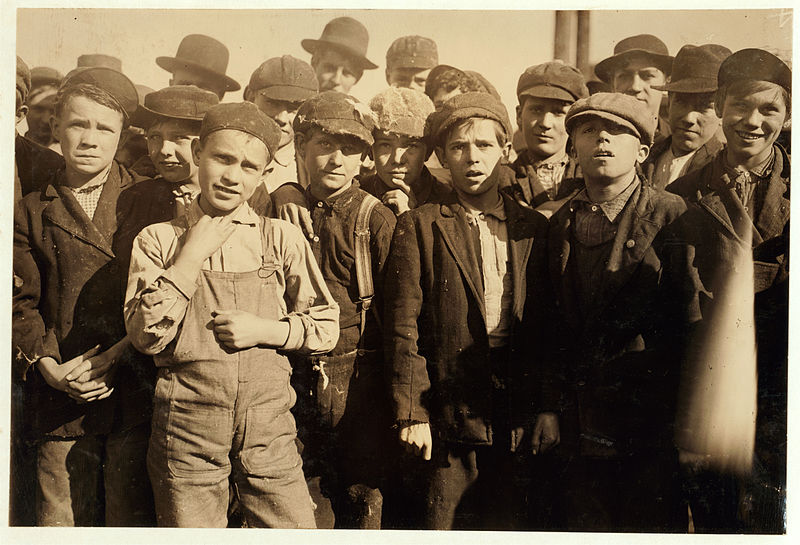
"They have been pestered almost to death by a gang of young ruffians." (Image by Lewis Hine.)
In a December 24, 1890 article in the Brooklyn Daily Eagle, a New York candy store owner has lots of problems with neighborhood toughs, and for some strange reason, the shakedowns, beatdowns, arson and explosions were treated as laughing matters by the police. An excerpt:
“Charles Bauer’s candy store at 35 Second Avenue, New York, was entered by burglars at 1 o’clock this morning. After ransacking the store they fired the place and tried to blow it up with the use of powder and gas. A package of powder was placed by the fire and the plug in the gas pipe was removed, causing the gas to escape.
An explosion occurred but fortunately did little damage. Two policemen who had discovered the burglary and fire narrowly escaped being blinded. The store is on the ground floor of a four story tenement. Bauer, a young German, who with his wife, had saved a little money, and four months ago they bought the place from the former owner. They sell newspapers, tobacco, stationery and candy. Ever since they have had the store they have been pestered almost to death by a gang of young ruffians who hang around the corner on Second Avenue and Second Street. They have made life miserable for Bauer and his wife. He has been robbed a number of times and some of the loafers on one or two occasions have beaten him when he protested against their outrages. He says that they have been in the habit of running into his place when the police drove them from the corners. He got himself a club and when they came into the store again he attempted to put them out. They defied him and beat him.
 Bauer says he appealed to the police, but he got no protection. His tormentors would come boldly into the store, steal cigars and cigarettes and get out again. A week after they took that kind of possession of the place it was broken into and robbed. Last night Bauer closed up about 11 o’clock and he and his wife went home. They live across the way.
At 1:20 o’clock the police found the door of the candy store open. There was a fire burning in the back part of the place. Around the store at the end of the counter had been piled a lot of papers, in the center of which was a pile of rags and a package of powder.
The rags were burning. One policeman was badly burned while putting the fire out. Police Captain McCollagh said he was investigating the matter. He didn’t believe there was a gang in his precinct. There are only little boys, 9 or 10 years old, he said. He apparently regarded the burglary and attempt to blow up the building as a joke. However, he said he would look into it.”
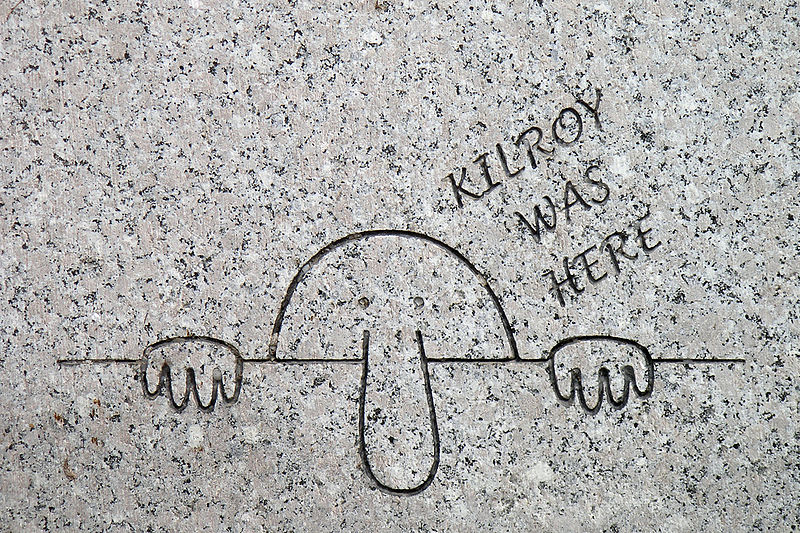
"American troops wrote 'Kilroy was here' on the walls of Europe in World War II in order to prove that somebody had been there." (Image by Luis Rubio.)
Matthew Hahn interviewed Hunter S. Thompson for The Atlantic in 1997, discussing the impact of the Internet on journalism and culture, among other matters. Thompson was particularly prescient about the ego-feeding nature of the Net. An excerpt:
“Matthew Hahn: The Internet has been touted as a new mode of journalism — some even go so far as to say it might democratize journalism. Do you see a future for the Internet as a journalistic medium?
Hunter S. Thompson: Well, I don’t know. There is a line somewhere between democratizing journalism and every man a journalist. You can’t really believe what you read in the papers anyway, but there is at least some spectrum of reliability. Maybe it’s becoming like the TV talk shows or the tabloids where anything’s acceptable as long as it’s interesting.
I believe that the major operating ethic in American society right now, the most universal want and need is to be on TV. I’ve been on TV. I could be on TV all the time if I wanted to. But most people will never get on TV. It has to be a real breakthrough for them. And trouble is, people will do almost anything to get on it. You know, confess to crimes they haven’t committed. You don’t exist unless you’re on TV. Yeah, it’s a validation process. Faulkner said that American troops wrote ‘Kilroy was here’ on the walls of Europe in World War II in order to prove that somebody had been there — ‘I was here’ — and that the whole history of man is just an effort by people, writers, to just write your name on the great wall.
You can get on [the Internet] and all of a sudden you can write a story about me, or you can put it on top of my name. You can have your picture on there too. I don’t know the percentage of the Internet that’s valid, do you? Jesus, it’s scary. I don’t surf the Internet. I did for a while. I thought I’d have a little fun and learn something. I have an e-mail address. No one knows it. But I wouldn’t check it anyway, because it’s just too fucking much. You know, it’s the volume. The Internet is probably the first wave of people who have figured out a different way to catch up with TV — if you can’t be on TV, well at least you can reach 45 million people [on the Internet].”
Tags: Hunter S. Thompson, Matthew Hahn
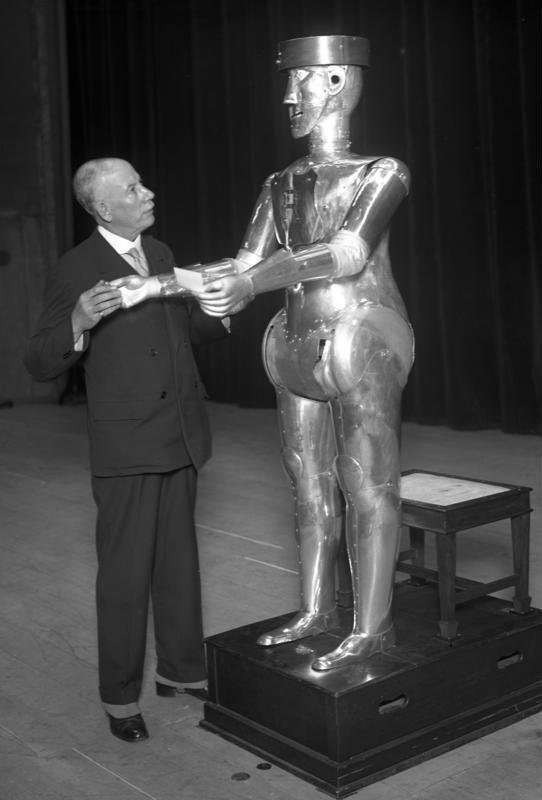
We’re so annoying even machines don’t want to talk to us. According to a BBC article, scientists are encouraging robots to develop their own words. An excerpt:
“The Lingodroid research project lets robots generate random sounds for the places they visit in both simulations and a real office.
The ‘words’ are shared and the robots play games to establish which sound represents which location.
The lexicon has proved so sophisticated that it can be used to help robots find places other robots direct them to.
The machines are being allowed to generate their own words because human language is so loaded with information that robots found it hard to understand, said project leader Dr Ruth Schulz from the University of Queensland.
‘Robot-robot languages take the human out of the loop,’ she said. ‘This is important because the robots demonstrate that they understand the meaning of the words they invent independent of humans.'”

Charles Mingus, Manhattan, July 4, 1976.
This classic 1976 photograph shows the tempestuous musical genius Charles Mingus playing in Manhattan as part of the celebration for the two hundredth anniversary of the signing of the Declaration of Independence. Mingus would live just three more years, passing away from ALS in 1979. From a 1971 Ebony article about the musician’s memoir:
“In his offbeat autobiography, Beneath the Underdog: His World as Composed by Mingus, the noted composer, bassist and general enigma of that name contends that he is really three people. One man stands at dead center, cooly surveying his domain and expressing what he sees to the other two, one of whom is prone to strike out like a frightened animal while the other is gentle and painfully vulnerable. While it is not quite clear as to which self wrote this “Sex Machine” of a book (possibly it was the middle man since he speaks of himself in the third person), it is interesting to note that one might find elements of all these selves in this man’s music. Mingus composes and plays like a beleaguered genius challenging some nameless deity to account for the inequities imposed on the man by fate and other men–and to do so in no uncertain terms. He is a music of storm and constant questioning, beauty, brilliance and embracing tenderness, all of it molded on a framework of logical musical order. It is difficult to think of any ‘jazz’ artists, aside from Mingus’ idol, Duke Ellington, who is capable of creating such impressionistic tapestries of shimmering sound. In other words, Charles Mingus is one of the truly great ones, beneath the layer of legends surrounding his sexual exploits and eccentricities. His genius must be acknowledged.”
••••••••••
Silent super-8 footage of Battery Park celebration on July 4, 1976:
Tags: Charles Mingus
J.G. Ballard speaking the truth in 1986. Seemingly even more spot-on today, though exhibitionism is now as much of a diversion as violence.
Tags: J.G. Ballard
“The Boy in the Bubble”
It was a slow day
And the sun was beating
On the soldiers by the side of the road
There was a bright light
A shattering of shop windows
The bomb in the baby carriage
Was wired to the radio
These are the days of miracle and wonder
This is the long distance call
The way the camera follows us in slo-mo
The way we look to us all
The way we look to a distant constellation
That’s dying in a corner of the sky
These are the days of miracle and wonder
And don’t cry baby, don’t cry
Don’t cry

"The bomb in the baby carriage is wired to the radio." (Image by Malene Thyssen.)
It was a dry wind
And it swept across the desert
And it curled into the circle of birth
And the dead sand
Falling on the children
The mothers and the fathers
And the automatic earth
These are the days of miracle and wonder
This is the long distance call
The way the camera follows us in slo-mo
The way we look to us all
The way we look to a distant constellation
That’s dying in a corner of the sky
These are the days of miracle and wonder
And don’t cry baby, don’t cry
Don’t cry
It’s a turn-around jump shot
It’s everybody jump start
It’s every generation throws a hero up the pop charts
Medicine is magical and magical is art
The boy in the bubble
And the baby with the baboon heart
And I believe
These are the days of lasers in the jungle
Lasers in the jungle somewhere
Staccato signals of constant information
A loose affiliation of millionaires
And billionaires and baby
These are the days of miracle and wonder
This is the long distance call
The way the camera follows us in slo-mo
The way we look to us all
The way we look to a distant constellation
That’s dying in a corner of the sky
These are the days of miracle and wonder
And don’t cry baby, don’t cry
Don’t cry
Tags: Paul Simon
"Nice content and easily readable."
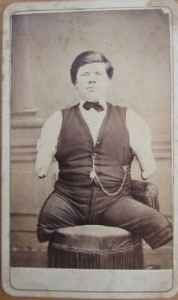
SIDESHOW ARMLESS/LEGLESS MAN WRITES LETTER WITH HIS MOUTH 1868 – $400 (NEW JERSEY)
This is a two-page letter written by Walter H. Stuart of Brownfield, Maine dated 1868, Stuart had no arms or legs and worked the Sideshows and Carnivals in the years after the Civil War. He was also known as “Texas Jack the One-Armed Whittler” His performance would include him writing a letter or signing autographs with his mouth. A real unique piece of Americana. I have included a scanned photo of Stuart with a comparison autograph on the reverse. I do not possess the photo, just the letter. CDV photo’s of Stuart are frequently available on EBAY, which is where I copied this photo. This letter details his summer shedule for the year 1868. Nice content and easily readable. This is a “Must Have” for the collector or historian of Sideshow memorabilia. This letter comes with it’s original envelope, also addressed by Stuart. This letter is suitable for framing along with the many other scanned photos of Stuart which I will provide with the sale of this document.
Tags: Walter H. Stuart
For some reason in 1973, more Americans than usual imagined they were seeing UFOs. Maybe after trips to the moon, we thought we were due a visit of our own? Maybe the Vietnam-and-Watergate era was so surreal that everything felt alien anyway? Governor John Gilligan of Ohio, who thought he saw a saucer, is, of course, the father of Kathleen Sebilius, the current Secretary of Health and Human Services.
Tags: John Gilligan, Kathleen Sebilius, Walter, Walter Cronkite
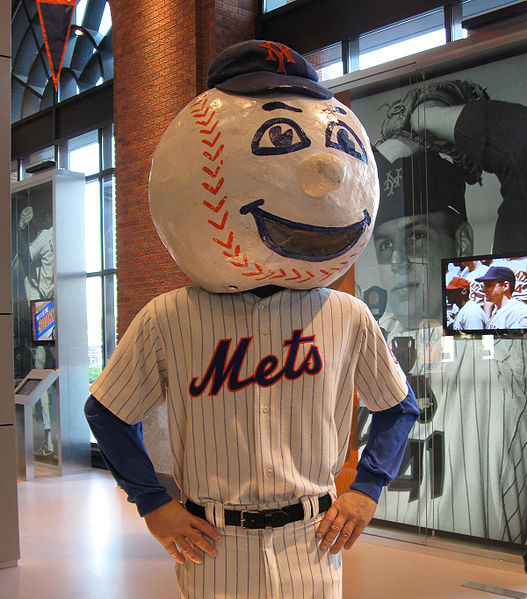
Much like team owner Fred Wilpon, Mr. Met is a balloon-headed symbol of mediocrity. (Image by richiek.)
Madoff-mired Mets owner Fred Wilpon, the handsomely attired and hapless dummkopf who, with help from his jugheaded scion, Jeff, has run the New York baseball team into the ground for half his adult life, is the focus of a new profile in the New Yorker by the reliably excellent Jeffrey Toobin. An excerpt:
“In the game against the Astros, Jose Reyes, leading off for the Mets, singled sharply up the middle, then stole second. ‘He’s a racehorse,’ Wilpon said. When Reyes started with the Mets, in 2003, just before his twentieth birthday, he was pegged as a future star. Injuries have limited him to a more pedestrian career, though he’s off to a good start this season. ‘He thinks he’s going to get Carl Crawford money,’ Wilpon said, referring to the Red Sox’ signing of the former Tampa Bay player to a seven-year, $142-million contract. ‘He’s had everything wrong with him,’ Wilpon said of Reyes. ‘He won’t get it.’
After the catcher, Josh Thole, struck out, David Wright came to the plate. Wright, the team’s marquee attraction, has started the season dreadfully at the plate. ‘He’s pressing,’ Wilpon said. ‘A really good kid. A very good player. Not a superstar.’
Wright walked.
When Carlos Beltran came up, I mentioned his prodigious post-season with the Astros in 2004, when he hit eight home runs, just before he went to the Mets as a free agent. Wilpon laughed, not happily. ‘We had some schmuck in New York who paid him based on that one series,’ he said, referring to himself. In the course of playing out his seven-year, $119-million contract with the Mets, Beltran, too, has been hobbled by injuries. ‘He’s sixty-five to seventy per cent of what he was.’ Beltran singled, loading the bases with one out.
Ike Davis, the sophomore first baseman and the one pleasant surprise for the Mets so far this season, was up next. ‘Good hitter,’ Wilpon said. ‘Shitty team—good hitter.’ Davis struck out. Angel Pagan flied out to right, ending the Mets’ threat. ‘Lousy clubs—that’s what happens.’ Wilpon sighed. The Astros put three runs on the board in the top of the second.
‘We’re snakebitten, baby,’ Wilpon said.”
••••••••••
Tags: Bernie Madoff, Fred Wilpon, Jeff Wilpon, Jeffrey Toobin, Mr. Met
The Musalman, a four-page evening paper, published in India since 1927.
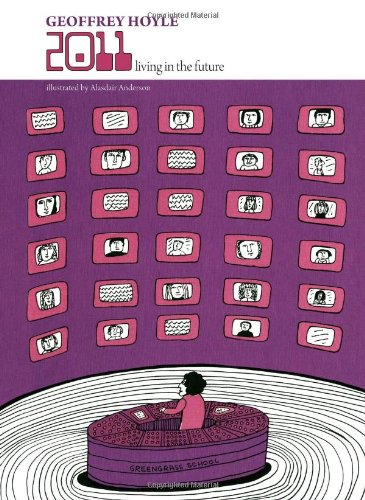
I have no love for science fiction as art or entertainment, but I really like the cultural visionary aspect of it. The Independent feeds that interest with an article by Simmy Richman about a sci-fi writer named Geoffrey Hoyle, who was asked in 1972 to write a book (2011: Living in the Future) for children that would predict what life would be like this year. His prognostications were amazingly correct. In the piece, Hoyle discusses what he got right and the aspects of contemporary life he simply doesn’t understand. An excerpt:
“‘Over the years politicians have added new thing to new thing and nobody has the intellect to wipe the slate clean and say, ‘What do we need?’ What have changed over the decades are the levels of bureaucracy, the control over our lives and the rise of the career politician with pop-star status. We live in a time where there’s a huge amount of disinformation and facts can be twisted to alarm or control. The original draft of the US constitution is 20 pages long; Brussels turns out thousands and thousands of pages – which says to me that no one knows how to make law [any more].’
So while Hoyle predicted both the large (the ubiquity of the computer, the invention of the smartphone and the microwave) and the small (Skype, home supermarket delivery, touchscreens and webcams) ways our lives have changed, he has no idea why the social model of Europe is still ‘tailored to the way people were living in 1947.'”
Tags: Geoffrey Hoyle, Simmy Richman