
Urban Studies

You are currently browsing the archive for the Urban Studies category.

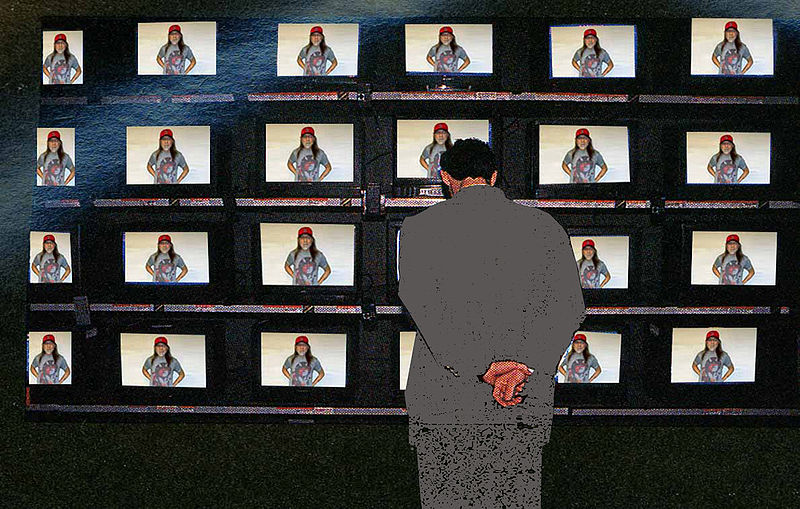
I just realized that “The Chameleon,” David Grann’s brilliant 2008 New Yorker article is online for free. It’s a long profile of Frédéric Bourdin, a Frenchman who would serially pose as teenagers. He took the modern obsession with reinvention through “reality” TV and social media to an extreme. The perfect opening:

“On May 3, 2005, in France, a man called an emergency hot line for missing and exploited children. He frantically explained that he was a tourist passing through Orthez, near the western Pyrenees, and that at the train station he had encountered a fifteen-year-old boy who was alone, and terrified. Another hot line received a similar call, and the boy eventually arrived, by himself, at a local government child-welfare office. Slender and short, with pale skin and trembling hands, he wore a muffler around much of his face and had a baseball cap pulled over his eyes. He had no money and carried little more than a cell phone and an I.D., which said that his name was Francisco Hernandez Fernandez and that he was born on December 13, 1989, in Cáceres, Spain. Initially, he barely spoke, but after some prodding he revealed that his parents and younger brother had been killed in a car accident. The crash left him in a coma for several weeks and, upon recovering, he was sent to live with an uncle, who abused him. Finally, he fled to France, where his mother had grown up.

French authorities placed Francisco at the St. Vincent de Paul shelter in the nearby city of Pau. A state-run institution that housed about thirty-five boys and girls, most of whom had been either removed from dysfunctional families or abandoned, the shelter was in an old stone building with peeling white wooden shutters; on the roof was a statue of St. Vincent protecting a child in the folds of his gown. Francisco was given a single room, and he seemed relieved to be able to wash and change in private: his head and body, he explained, were covered in burns and scars from the car accident. He was enrolled at the Collège Jean Monnet, a local secondary school that had four hundred or so students, mostly from tough neighborhoods, and that had a reputation for violence. Although students were forbidden to wear hats, the principal at the time, Claire Chadourne, made an exception for Francisco, who said that he feared being teased about his scars. Like many of the social workers and teachers who dealt with Francisco, Chadourne, who had been an educator for more than thirty years, felt protective toward him. With his baggy pants and his cell phone dangling from a cord around his neck, he looked like a typical teen-ager, but he seemed deeply traumatized. He never changed his clothes in front of the other students in gym class, and resisted being subjected to a medical exam. He spoke softly, with his head bowed, and recoiled if anyone tried to touch him.

Gradually, Francisco began hanging out with other kids at recess and participating in class. Since he had enrolled so late in the school year, his literature teacher asked another student, Rafael Pessoa De Almeida, to help him with his coursework. Before long, Francisco was helping Rafael. ‘This guy can learn like lightning,’ Rafael recalls thinking.

One day after school, Rafael asked Francisco if he wanted to go ice-skating, and the two became friends, playing video games and sharing school gossip. Rafael sometimes picked on his younger brother, and Francisco, recalling that he used to mistreat his own sibling, advised, ‘Make sure you love your brother and stay close.’

At one point, Rafael borrowed Francisco’s cell phone; to his surprise, its address book and call log were protected by security codes. When Rafael returned the phone, Francisco displayed a photograph on its screen of a young boy who looked just like Francisco. ‘That’s my brother,’ he said.
Francisco was soon one of the most popular kids in school, dazzling classmates with his knowledge of music and arcane slang—he even knew American idioms—and moving effortlessly between rival cliques. ‘The students loved him,’ a teacher recalls. ‘He had this aura about him, this charisma.’
During tryouts for a talent show, the music teacher asked Francisco if he was interested in performing. He handed her a CD to play, then walked to the end of the room and tilted his hat flamboyantly, waiting for the music to start. As Michael Jackson’s song ‘Unbreakable’ filled the room, Francisco started to dance like the pop star, twisting his limbs and lip-synching the words “You can’t believe it, you can’t conceive it / And you can’t touch me, ’cause I’m untouchable.’ Everyone in the room watched in awe. ‘He didn’t just look like Michael Jackson,’ the music teacher subsequently recalled. ‘He was Michael Jackson.’

Later, in computer class, Francisco showed Rafael an Internet image of a small reptile with a slithery tongue.

‘What is it?’ Rafael asked.

‘A chameleon,’ Francisco replied.”•

Read also:

Tags: ,

Adam Curtis has just republished a post on his BBC blog about that class act Rupert Murdoch. One segment concerns the late talk show host Russell Harty, who played a sort of jackass interviewer on TV, but certainly did not deserve to be hounded by Murdoch reporters as he lay dying in a hospital bed from an AIDS-related illness. An excerpt:

“In 1989 – on the 20th anniversary of buying the Sun – Murdoch helped write an editorial that trumpeted his vision of himself as a revolutionary:

‘The Establishment does not like the Sun. Never has

There is a growing band of people in positions of influence and privilege who want OUR newspaper to suit THEIR private convenience. They wish to conceal from readers’ eyes anything that they find annoying or embarrassing.

LIVING LIES AND HYPOCRISY ON HIGH CAN HAVE NO PLACE IN OUR SOCIETY

IT IS THE STRUGGLE OF ALL THOSE CONCERNED FOR FREEDOM IN BRITAIN.’

But the liberal elite were already fighting a counterattack. It had begun with the chat-show host Russell Harty the year before as he lay dying in a hospital bed from hepatitis.

Harty was a homosexual who had been hounded by the News of the World. With his illness this had turned into a media frenzy – with reporters from all the tabloids pursuing him in a hospital, posing as junior doctors demanding to see Harty’s medical notes, and photographers renting a flat opposite his hotel room.

At Harty’s funeral in 1988 the playwright Alan Bennett publicly accused the tabloid press of accelerating his friend’s death. ‘The gutter press finished him.’

The Sun chose to reply:

‘Stress did not kill Russell Harty. The truth is that he died from a sexually transmitted disease.

The press didn’t give it to him. He caught it from his own choice. And by paying young rent boys he broke the law.

Some – like ageing bachelor Mr Bennett – can see no harm in that. He has no family.

But what if it had been YOUR son Harty had bedded?'”

Tags: ,

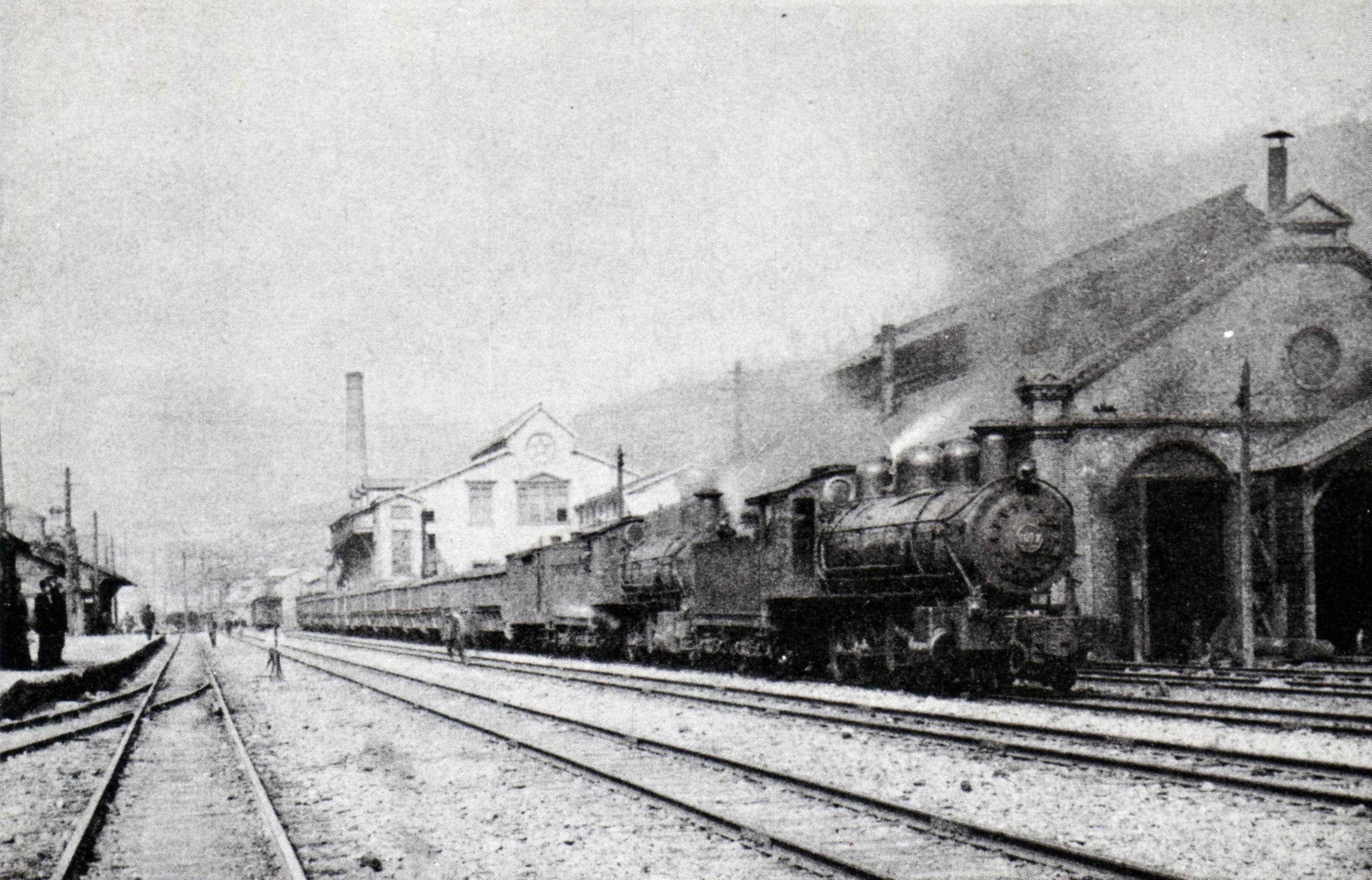
Yubari, 1918.

Japan’s population is aging and thinning, with so many younger natives moving abroad. That leaves the country in a precarious position for the future, though long-term prognostications of doom like predictions of sustained glory are often wrong. At any rate, the opening of Hiroki Tabuchi’s New York Times article on a dying town that may be a microcosm of sorts for the nation:

“YUBARI, Japan — Most young people have already fled this city of empty streets and shuttered schools, whose bankrupt local government collapsed under the twin burdens of debt and demographics that are slowly afflicting the rest of Japan.

Now, Yubari, a former coal-mining town on Japan’s northernmost main island, Hokkaido, is hoping an unlikely savior can reverse its long decline: a 31-year-old rookie mayor who has come to symbolize the struggle confronting young Japanese in the world’s most graying and indebted nation.

‘Japan  will tread the same path someday,’ said Naomichi Suzuki, who a year ago this month became the youngest mayor of the country’s most rapidly aging city. ‘If we can’t save Yubari, what will it mean for the rest of Japan?’

Indeed, the city’s plight and attempt to fight back — which has become a story line in the national media — could offer a glimpse of Japan’s future.”

Tags: ,

Casinos bring people but not prosperity. I like them because I enjoy bustle, but no city should be banking its future on them or offering huge tax breaks to ensure their construction. (The same goes for sports stadiums.) A 1977 AT&T film about Atlantic City’s future as that town was about to roll the dice.

Justice Roberts: Like Judy Sheindlin without the charm.

There’s been no time in my life when the country has had a Supreme Court of such rancor, such arrogance and such nastiness as the Roberts Court. I’m not talking about Justice Alito showing disdain for President Obama during the State of the Union, though that is symptomatic of the problem. I’m referring more to the mocking, sarcastic, obnoxious, impatient tone of the Justices as they question American citizens who come before them. It’s not just behavior unbecoming of the highest court of the land but decorum that wouldn’t be tolerated in a playground. 

It’s always been a lie that the Constitution is this document that can interpreted with purity, that politics and personal prejudices don’t enter the picture. But the immaturity of numerous members of the current Court makes it dubious that they have the wisdom to sort as best they can through the objective and the subjective. Or that they even have that process as their goal. It may be that the Roberts Court ultimately has the distinction of being the one that makes Americans seriously question the wisdom of lifetime appointments for Justices.•

Judge Judy: I presided over the landmark case of the missing fish stick.

Tags: ,

Apple is building its own private restaurant in Cupertino to better ensure that its employees won’t be overheard when discussing company business. From The Next Web:

“Apple has had a planning request approved for a new off-campus restaurant by the Cupertino Planning Commission, providing employees with a place to eat and discuss company plans and product development without fear of Apple’s competitors overhearing conversations.

The new 21,468-square-foot cafeteria, which was approved at a meeting on Tuesday, is located a short walk from Apple’s Infinite Loop headquarters and will provide cafe, meeting room, lounge areas and courtyard facilities, as well as a dedicated second floor for restaurant staff.

At the meeting Dan Whisenhunt, Apple’s director of real estate facilities, spelled out why the new building would be beneficial for the company:

‘We like to provide a level of security so that people and employees can feel comfortable talking about their business, their research and whatever project they’re engineering without fear of competition sort of overhearing their conversations.'”

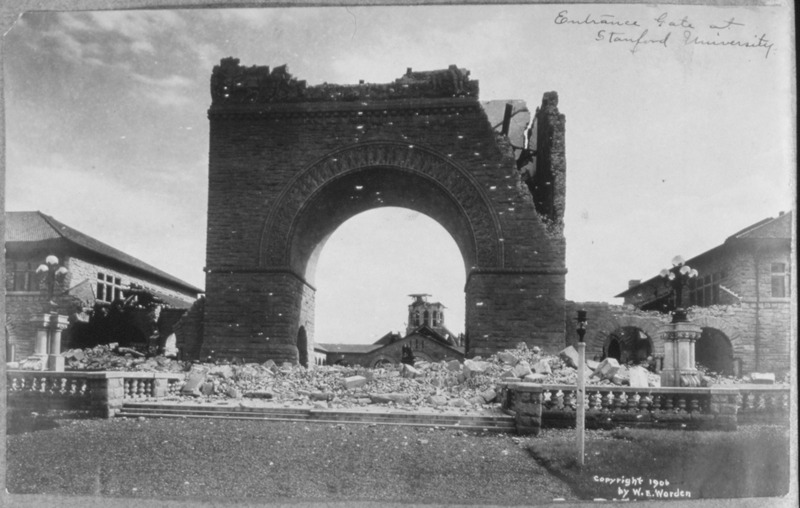
In his New Yorker article this week about Leland Stanford’s famed university, Ken Auletta poses a smart question which has largely gone unasked in the whir of excitement over students and teachers cashing in on start-ups: Has the line between Stanford and Silicon Valley been blurred to the detriment of education? An excerpt, in case you haven’t read it yet, about the big money Valley ties of the university’s brilliant president John L. Hennessy:

“Debra Satz, the senior associate dean for Humanities and Arts at Stanford, who teaches ethics and political philosophy, is troubled that Hennessy is handcuffed by his industry ties. This subject has often been discussed by faculty members, she says: ‘My view is that you can’t forbid the activity. Good things come out of it. But it raises dangers.’ Philippe Buc, a historian and a former tenured member of the Stanford faculty, says, ‘He should not be on the Google board. A leader doesn’t have to express what he wants. The staff will be led to pro-Google actions because it anticipates what he wants.’

Hennessy has also invested in such venture-capital firms as Kleiner Perkins, Sequoia Capital, and Foundation Capital—companies that have received investment funds from the university’s endowment board, on which Hennessy sits. In 2007, an article published in the Wall Street Journal—’THE GOLDEN TOUCH OF STANFORD’S PRESIDENT’—highlighted the cozy relationship between Hennessy and Silicon Valley firms. The Journal reported that during the previous five years he had earned forty-three million dollars; a portion of that sum came from investments in firms that also invest Stanford endowment monies. Hennessy flicks aside criticism of those investments, noting that he isn’t actively involved in managing the endowment and likening them to a mutual fund: ‘I’m a limited partner. I couldn’t even tell you what most of these investments were in.’

Perhaps because his position is so seemingly secure, and his assets so considerable, Hennessy rarely appears defensive. He knows that questions about conflicts of interest won’t define his legacy, and they seem less pressing when Stanford is thriving. Facebook’s purchase of Instagram made millions for, among others, Sequoia Capital—which means that it made money for Hennessy and for Stanford’s endowment, too.”

Tags: , , , ,

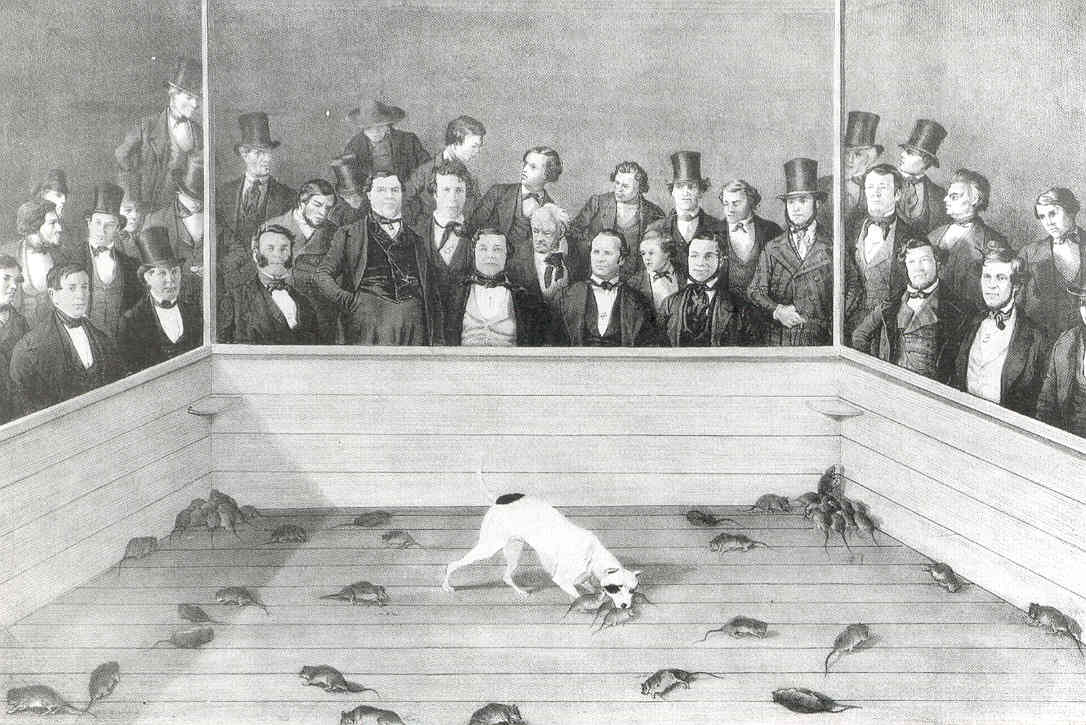
I found this classic 19th-century illustration with the following caption: “The celebrated Terrier dog ‘Major’ killing 100 rats in 8 minutes, 58 seconds. The artist has taken great care to note the facial features of the spectators, undoubtedly notable figures of those times.”

"I had a great cut and still had $10!"

LOOKING FOR MY BARBER……INFO? – $1000 (reward for your help,thanks)

(1993)… I was a college student at St. Rose University located in Albany, NY. And like most college kids: I had no car, very little money, and no real desire to be in school. I really needed a haircut so I went back a barber shop where I was brought only once before by some of my classmates who played on the St. Rose Baseball team.

There was no one waiting so the barber waived his hand to come right over and sit down. Though I had met him only once before, he remembered my name.”Your name is Jimmy, right?” Yes I replied surprisingly. “The guys from the baseball team brought you in a few months ago. Great to see you!” Boy, was this a cheerful guy, I thought to myself. For the next 20 minutes he cut my hair and neither of us spoke a word. When he was done, he spun me around to face the mirror and smiled. He could tell I was very happy. So we walked over to the register, again the barber surprised me with his memory. “I think one of your friends mentioned to me that you do amateur stand-up comedy at the St. Rose once a month in the gymnasium, right?” …that’s right I said.

“Well, listen….at 8 a.m. tomorrow morning in Troy, NY, there is a professional audition being held for a pilot comedy show and they are looking for 13 young comedians.” He went on to tell me that a client of his (Donald Metzner, who owns a huge car dealership in Albany and has a lot of connections) is teaming up with Fox23-TV and Metroland Magazine to host a pilot for a comedy called “Metroland’s Loose Camera.” He suggested to me to go and audition. “Thanks Ron, but I don’t have a car or even know how to get to Troy.” He said that if I like, he would come to my dorm at 7:30 a.m., pick me up and bring me to the audition and introduce me to Donald Metzner, himself. This is kinda weird I thought to myself, but said “sure”. I gave the barber my dorm address and my last $10…..he took the address, but handed me back my $10….”NO charge, just be ready at 7:30.”

I had a great cut and still had $10!

So I went about my day and really didn’t give too much thought of this 7:30 a.m. audition stuff.

“WHO IS BEEPING THEIR HORN!!!! It’s only 7:45 in the morning, for crying out loud!… I look out my window only to see the barber waiting outside honking his horn….oh, yeah, the audition. I poked my head out and yelled I would be right out. Boy, I guess this guy wasn’t kidding. So I jumped into his car and we drove fast to somewhere called Troy. I remember we were late, I remember a 2-story house, going in and seeing about 200 people sitting everywhere waiting to audition. I signed my name on clip board. We sat down and waited while names were slowly being called. As we were waiting a really sharp guy comes in and my barber jumps up and says,” Donald!” as they shake hands . Ron whispered something to Donald, then came over and introduced me to him. “Donald, this my friend Jimmy, he does stand up comedy at his college.” “Nice to meet you, Jimmy. I stood and shook his hand. Then I sat back down and waited for my name to be called……3 days later after cuts and call-backs, I was picked as a member of the cast!

For the next several months, we shot the pilot. During the filming, myself, the 12 other cast members, and my barber, filmed a series of commercials in the Armory Garage Show room featuring the late-actor Geoffrey Holder. “You can’t get Armory off your mind” summer of 1994 campaign.

Finally the pilot was finished and had a big premier showing and though it was a very funny comedy, no networks were interested. But Donald Metzner and other talent scouts liked me and asked me to quit school and go to California where they would set me up with an agent and some comedy work…..I quit school immediately and flew off to CA!

Things happened very fast for me. 18 years have gone by since the day I walked in for that haircut by Razor Ron. I never really ever thanked him, or even paid for my haircut…..Just when you think you are going to have a boring, regular day, things can change in an instant….Thank you Razor Ron for taking the time to do more than just your job. You went out of your way for a stranger that day. Finding out later that you had sad things going on in your life at the same time you helped me and never let anyone know, you did a very self-less act of kindness which changed my life. I would like to have you on my late-nite talk show and thank you publicly. Sincerely, Jimmy Fallon

Tags:

Perhaps not in our lifetimes, but eventually. By the tipsy futurists at Absolut.

From Donald Melanson’s Endgadget interview with Bill Buxton, Microsoft’s Principal Researcher, a discussion of NUI (Natural User Interfaces), such as Surface-like devices:

Are there areas that you think could benefit from natural user interfaces that haven’t yet?

I would say that we have just scratched the surface in this regard. We live in the physical world, and for a long time there was no digital world. Today we have some connections between the two worlds, but when we can truly blend them together, we get something completely new, something we are only now beginning to understand. This is why this is the most exciting time in my career since the first time I used a computer 41 years ago. Compared to what we have done in the past, what we can do today is fantastic. Compared to where we have the potential to be in 10-20 years, we still have a lot of work to do. We still work with computers. But reflecting what I said above, that is just a stepping stone to getting to the point where we are unaware that we are dealing with computers. As the saying goes, people don’t want a hammer or nail, nor even a hole in the wall. They want their picture hanging on the wall at the spot where they want it. That is the high order task. Every time you encounter an issue dealing with some intermediate step or tool in doing some higher order activity, that may well be an opportunity for a more natural, or appropriate means of accomplishing it.

In the future, neither the physical world nor the digital world will be sufficient by itself. The ability to translate your real-world experience metaphorically into the things that you want to do in the virtual world is key.”

••••••••••

Microsoft Office Labs vision, 2019, featuring natural user interfaces:

Tags: ,

From the August 23, 1896 Brooklyn Daily Eagle:

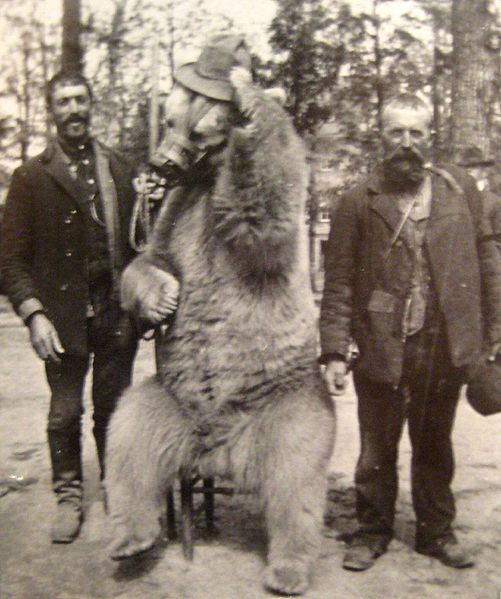
“Emil Befils, a young Arab attached to the Egyptian encampment at Bergen Beach was badly bitten by a bear belonging to the show yesterday afternoon. He took the beast to the board walk to make it dance. The bear was in an ugly humor and refused to perform. When Belfis poked the bear in the ribs with a heavy stick the animal, with a savage growl, went for the Arab’s leg and bit a piece out of it. The injured man was removed to Kings County hospital.”

Tags:

Dubai, 1971.

From Tom Wodicka’s recent article about Douglas Coupland’s first visit to Dubai:

“I felt Dubai was a city ripe for his fiction. Had he ever thought about placing a novel here?

‘Until this trip I would never have been so presumptuous. One reason I’m glad I came is that all the things about Emirati culture that were really alien to me … clothing … architecture … art … suddenly made sense, so when I see things Arabic back home now, instead of being confused, I think, I know what that means.

‘I think everyone should come to Dubai. It would bring a lot of peace to the world. I’m always attracted to situations where new electronic patterns collide with the old. I can now very easily imagine writing a story set in that huge Dubai Mall wherein everyone talks only by texting and screen snaps.’

He then spoke about one of the strongest impressions Dubai left on him: ‘I think the key thing about the Emirati world right now is that it’s beginning to define itself as itself, as opposed to importing creativity from elsewhere. So it’s a pivotal moment for the region’s young artists: can they translate their experience and emotion into a form that makes others elsewhere understand their world more? It seems like there’s this whole massive mode of being that’s itching to be understood. And you’re getting a new museum [a modern art facility in Emaar’s Downtown Dubai development]. Young artists are going to have to fill it.'”

Tags: ,

An interview with Laurie Anderson from the Whistle Test, 1986.

Tags:

The opening of Chris Anderson’s new Wired Q&A with computing legend Marc Andreessen, who created the first popular graphical web browser:

Chris Anderson: At 22, you’re a random kid from small-town Wisconsin, working at a supercomputer center at the University of Illinois. How were you able to see the future of the web so clearly?

Marc Andreessen: It was probably the juxtaposition of the two—being from a small town and having access to a supercomputer. Where I grew up, we had the three TV networks, maybe two radio stations, no cable TV. We still had a long-distance party line in our neighborhood, so you could listen to all your neighbors’ phone calls. We had a very small public library, and the nearest bookstore was an hour away. So I came from an environment where I was starved for information, starved for connection.

Anderson: And then at Illinois, you found the Internet.

Andreessen: Right, which could make information so abundant. The future was much easier to see if you were on a college campus. Remember, it was feast or famine in those days. Trying to do dialup was miserable. If you were a trained computer scientist and you put in a tremendous amount of effort, you could do it: You could go get a Netcom account, you could set up your own TCP/IP stack, you could get a 2,400-baud modem. But at the university, you were on the Internet in a way that was actually very modern even by today’s standards. At the time, we had a T3 line—45 megabits, which is actually still considered broadband. Sure, that was for the entire campus, and it cost them $35,000 a month! But we had an actual broadband experience. And it convinced me that everybody was going to want to be connected, to have that experience for themselves.”

Tags: ,

As DVDs become an increasingly marginal product in this age of streaming, will Netflix too be shunted aside by the lower entry costs of businesses that deal purely in digital data? From Nicholas Thompson’s post, “Is Netflix Doomed?” on the New Yorker’s Culture blog:

“It’s a bad time, too, for Netflix to have declining subscriber loyalty. The company believes that the mail-order-DVD business is finished, and that our DVD players are following our VCRs to the junkyard. So it is killing off that part of its business. Unfortunately, though, that’s the part with the high barriers to entry. It’s not easy for a startup to build massive warehouses and systems for mailing discs. It is easy, however, to get into the streaming business. Yesterday, for example, we learned of a startup called NimbleTV, which plans to let you watch all the channels you subscribe to through your cable provider on your phone or your tablet. If you had that, would you want Netflix, too?”

••••••••••

“The incredible new world of DVD,” 1997:

Tags:

David Cronenberg discussing casting porn star Marilyn Chambers in Rabid, 1979.

Tags: ,

From a really good FiveBooks interview with philosopher David Edmonds at the Browser, a succinct explanation of the thought experiment, the Trolley Problem:

What is a trolley problem?

There are two basic trolley problems. The first problem, invented by a philosopher called Philippa Foot, is that a trolley is going to kill five people on the rails. The question is whether you should turn the trolley onto another set of tracks on a spur where there is just one person. So you can save five lives at the cost of one life. Almost everyone, when you ask them that question, says you should do that and kill the one person.

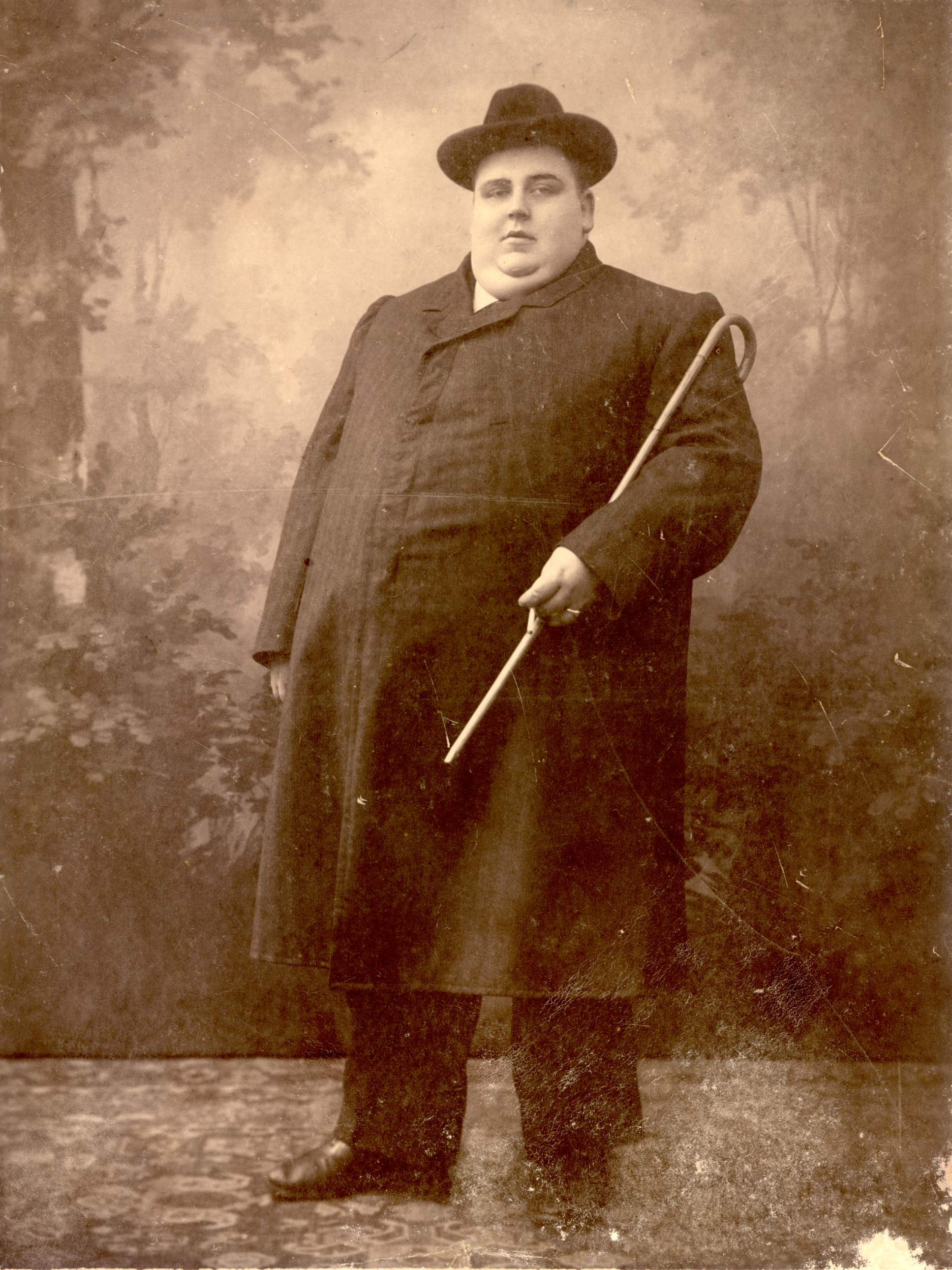
Another moral philosopher called Judith Jarvis Thomson came up with another trolley problem, the ‘fat man’ problem. The trolley is going along as before, and is going to kill five people. But this time you’re on a footbridge, and you can stop the train by pushing a fat man onto the tracks, who is so large that his bulk will stop the train and save the five lives. The question, again, is whether you should save five lives by sacrificing one. But 90% of people think it’s wrong to push the fat man.

Because it’s a more active way to kill the one man than in the first scenario?

That’s one possible psychological explanation. But there’s a third version of the trolley problem where instead of pushing the fat man, by turning a switch he will fall through a trapdoor, stop the train and save the five people. When you ask people that, most people still say you shouldn’t kill the fat man. More people are willing to turn the switch than push the fat man, but not dramatically more. The first trolley problem has been around since 1967, the fat man version appears in the 1980s, and nobody agrees exactly what the distinction is between them. It doesn’t look like it’s to do with the different actions.

The point of the trolley problem is to figure out what principle distinguishes those two variations – and, more importantly, what that tells us about real life cases.”

Tags:

From an article by David L. Chandler on Physorg, a capsule of the early education of Rodney Brooks, the robotics experts from Errol Morris’ great film, Fast, Cheap, and Out of Control:

“The former director of MIT’s Computer Science and Artificial Intelligence Laboratory (CSAIL) described growing up in in Adelaide, Australia. While he had never heard of MIT, he was an inveterate tinkerer who became intrigued early on by robotics.

In the early 1960s, Brooks recalled, he built a very primitive computer, using vacuum tubes, that had a total random access memory capacity of 64 bits (or 8 bytes) and took a year and a half to build. He then went on to build a very simple robot that remained in his mother’s garden shed for the next 30 years, he said.

After seeing the 1968 movie 2001: A Space Odyssey, he became intrigued by HAL, the movie’s intelligent, responsive computer. ‘He was a murdering psychopath,’ Brooks quipped — but nonetheless an impressive portrayal of machine intelligence.

Brooks’ first exposure to the Institute came when he read that an MIT professor named Marvin Minsky had been a consultant to filmmaker Stanley Kubrick; he immediately decided he wanted to attend MIT.

That dream took a while to realize: Brooks was turned down for graduate school at MIT, and turned down again — twice — for faculty positions after earning his doctorate at Stanford University. ‘Rejection is not the end,’ he advised the students, saying that it’s important to persevere in pursuit of one’s dreams: ‘Persistence pays off.'”

••••••••••

Rodney Brooks, roboticist:

Tags: ,

"This will be a permanent situation."

SEEKING FEMALE WHO BUYS AND SELLS ON THE INTERNET (QUEENS)

or goes to flea markets etc. i am in need of someone who can help me out about once or twice a month with the following:

1. administer an enema and a full body deep tissue massage.

in exchange for these services i will swap various things that you can sell. this will be a permanent situation and i have quite a bit of things. each visit you can pick a certain amount of things to sell. the 2 treatments take about 3 hours. if interested please leave contact info. thank you kindly.

"It was the face of a handsome brunette just verging into womanhood."

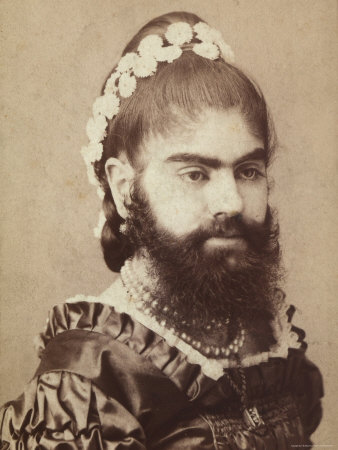
The history of electrolysis has its origins in the 19th century, as evidenced by an article that ran in the September 20, 1885 Brooklyn Daily Eagle. An excerpt:

“It was the face of a handsome brunette just verging into womanhood. On her upper lip and slightly shading its scarlet hue, grew a dark, silken mustache that on a dude would have been cherished and cultivated as the choicest treasure on earth. Her head rested in a metal plate connected by a wire with a galvanic battery on the table. The doctor took up from the table at his elbow something that looked like an ebony pen staff. This also was connected with the battery. In the end was a very fine gold plated needle. The doctor looked cautiously over the young lady’s dainty little mustache, and at length, singling out a hair, inserted the point of the needle down by the hair bulb and, pressing a little spring in the handle, turned on the current from the battery.

"The doctor looked cautiously over the young lady's dainty little mustache."

When the electric current ran down the point of the little needle the young lady winced and clenched her hands, while the tears came to her eyes. This lasted only for a moment, for as soon as a little froth appeared around the needle it was removed and the hair dropped out. After forcing out about a dozen of the hairs on each side of the lip the doctor stopped. The young lady removed her head from the metal plate, wiped her face with a scented pocket handkerchief and tripped gayly to the mirror. She took a long glance of intense satisfaction and gleefully remarked that they would soon all be gone. Then she put on her hat and left, after having made an appointment for another sitting.

‘So you remove mustaches from young ladies who are unfortunate enough to have such hirsute adornments?’ remarked the reporter. ‘Will you tell me how it is done?’

‘The operation is not very new,’ was the reply. ‘It has been known and practiced for several years, especially in the East. The electric current decomposes the salt in the skin into acid, which goes to the metal plate and alkali, which accumulates around the needle and destroys the hair bulb so that the hair can never reappear. This method is also very useful in removing the ugly bristles that grow in moles, for the hairs are then large in size and few in number. It is only necessary to spend a few seconds on each hair, and but a few minutes on a dozen, after which a rest of several days is taken to allow the inflammation to disappear before undertaking any more.'”

From Ron Rosenbaum’s reliably idiosyncratic work, his 1993 New York Times Magazine article about the violent underbelly of Long Island’s bedroom communities, where the only rest for the weary is often the big sleep:

A UNIFIED FIELD theory of longing would go a long way toward explaining what sometimes seems like an epidemic of desperate — and often desperately incompetent — spouse-murder plots on the Guyland. Recently I immersed myself in some 10 years of tabloid clippings on sensational Long Island homicides and came away with two powerful impressions. First, that the most sensational ones were almost always intrafamily homicides or spouse slayings. Now it’s true that, cross-culturally, homicides among intimates occur more frequently than ‘stranger’ homicides. But in another sense of the word, there’s no doubt Long Island has some of the stranger family homicides, stranger and more desperate. That was the second impression I had from study of the tabloid clips: the desperate longing to get the deed done — however bizarrely, incompetently or self-revealingly — often proved to be the undoing of the doer.

Consider this 1988 New York Post story, not one of the most sensational but representative of the broad midrange of Long Island spouse slayings. It appeared under the headline: ACCUSED HUBBY-KILLER’S HUNT FOR HIT MAN

The trial testimony therein described a woman who might be called the Ancient Mariner of Spouse Slayers — she soliciteth one of three:

‘A Long Island housewife on trial for arranging her husband’s murder openly sought a hit man several times, witnesses testified.’

The key word here is ‘openly.’ She ‘tried to hire a fellow church member, a county official and an undercover cop to kill [ her husband ] prior to his November 1986 bludgeoning death.’

‘Are you connected to the mob?’ she asked a county official with an Italian surname shortly after meeting him. ‘I’m looking for someone to kill my husband.’

Yes, surely this goes on in the rest of America, but not, I feel, with the urgency Long Islanders bring to it.” (Thanks TETW.)

••••••••••

In 1979, an earnest Merv Griffin interviews Kathleen and George Lutz, the Long Island couple at the center of the Amityville Horror hokum.

Read also:

Tags:

A future of plastic lawns for all was once the dream of some. From BBC, 1968:

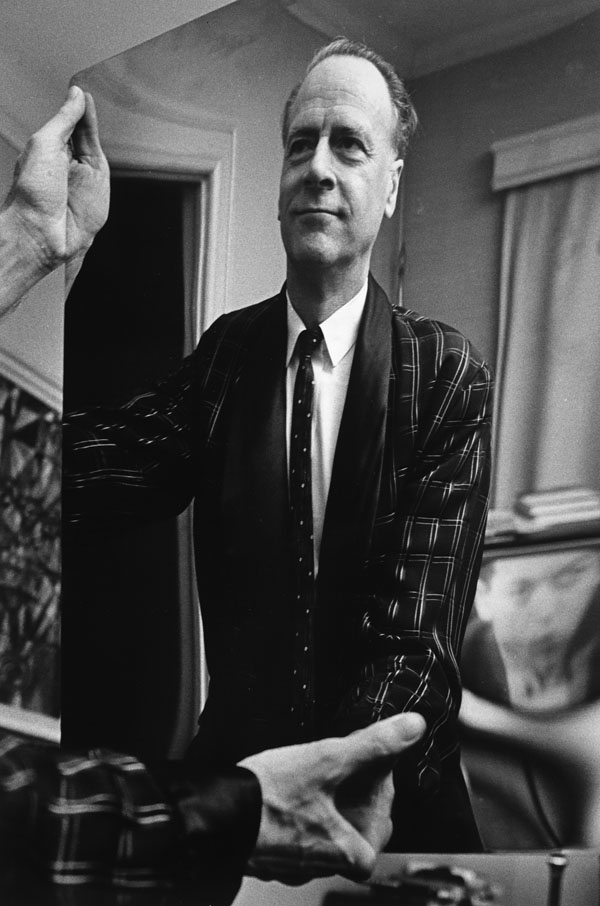
From Lewis Lapham’s TomDispatch post about publishing and technology, a passage about Marshall McLuhan’s idea that what we create ends up creating us:

“Why then does it come to pass that the more data we collect — from Google, YouTube, and Facebook — the less likely we are to know what it means?

The conundrum is in line with the late Marshall McLuhan’s noticing 50 years ago the presence of ‘an acoustic world,’ one with ‘no continuity, no homogeneity, no connections, no stasis,’ a new ‘information environment of which humanity has no experience whatever.’ He published Understanding Media in 1964, proceeding from the premise that ‘we become what we behold,’ that ‘we shape our tools, and thereafter our tools shape us.’

Media were to be understood as ‘make-happen agents’ rather than as ‘make-aware agents,’ not as art or philosophy but as systems comparable to roads and waterfalls and sewers. Content follows form; new means of communication give rise to new structures of feeling and thought.”

Tags: ,

Hollywood is certainly moving ass-backwards through our technological revolution, but it seems a stretch to say that it will be undone by crowdsourcing. Decentralized by more people having better filmmaking tools, sure, but not toppled by the defeat of personal vision. Jimmy Wales disagrees, however. From Wired:

“Jimmy Wales has a message for Hollywood: You’re doomed, it won’t be piracy that kills you, and nobody will care.

The Wikipedia founder, delivering a keynote address at the Internet Society’s INET convention in Geneva, predicted that Hollywood will likely share the same fate as Encyclopedia Britannica, which shut down its print operation this year after selling just 3,000 copies last year.

‘Hollywood will be destroyed and no one will notice,’ Wales said. But it won’t be Wikipedia (or Encarta) that kills the moviemaking industry: ‘Collaborative storytelling and filmmaking will do to Hollywood what Wikipedia did to Encyclopedia Britannica,‘ he said.”

Tags:

« Older entries § Newer entries »