Urban Studies

You are currently browsing the archive for the Urban Studies category.

Adam Davidson of the New York Times Magazine sat down with former Bain Capital managing director and Romney supporter Edward Conard for an open discussion about how the latter believes the 1% getting richer is better for all Americans. Conard seems to be living in a delusional bubble, but it’s a fascinating article. An excerpt:

“Nearly every economist I spoke with said that Conard has too much faith in the market’s ability to reward only those who create real value. Conard, for instance, insists that even the dodgiest financial products must have been beneficial or else nobody would have bought them in the first place. If a Wall Street trader or a corporate chief executive is filthy rich, Conard says that the merciless process of economic selection has assured that they have somehow benefited society. Even pro-market Romney supporters take issue with this. ‘Ed ought to be more concerned about crony capitalism,’ Hubbard told me.

Unintended Consequences ignores some of the most important economic work of the past few decades, about how power and politics influence economic growth. In technical language, this field is the study of ‘rent seeking,’ in which people or companies get rich because of their power, not because of their ideas. This is one of the few fields in economics in which left and right share many influences and ideas — namely that wealthy individuals and corporations are able to influence politicians and regulators to make seemingly insignificant changes to regulations that benefit themselves. In other words, to rig the game. One classic example is banking. Banks have enormous resources to constantly put explicit or subtle pressure on lawmakers and regulators so that regulation can eventually serve their interests.

Conard’s version of the financial crisis ignores much reporting and analysis — including work I’ve done with NPR’s Planet Money team — that shows that some of the nation’s largest banks actively manipulated customers and regulators and, sometimes, their own stockholders to profit from dangerous risk. And for many economists, rising inequality can create exactly the wrong outcomes for society over all. Rather than simply serving as an invitation for everybody to engage in potentially beneficial risk-taking, inequality can allow those with wealth to crush new ideas.”
Tags: ,

Digital information cannot be scratched or damaged, but it has a “shelf-life” all the same. And as new formats push out the old, what traces will remain? The Record-Vacuum, 1979:

From a 1902 edition of the Honolulu Commercial Advertiser:

“The base ball fever has struck the leper settlement and on the last visit the superintendent organized two teams and partially equipped them. The settlement ‘league’ has been formed and the two teams will swat the sphere during seven games, which have been proposed, and the winning team will capture the prize of $20, which is already subscribed.”

From “The Call of the Future,” Tom Vanderbilt’s Wilson Quarterly piece about the potential and pitfalls of the Internet as a tool:

“As we start to understand how people actually use the Internet, the cyberutopian hopes of a borderless, postnational planet can look as naive as most past predictions that new technologies would transform societies. In 1912, radio pioneer Guglielmo Marconi declared, ‘The coming of the wireless era will make war impossible, because it will make war ridiculous.’ Two years later a ridiculous war began, ultimately killing nine million Europeans.

While it’s easy to be dismissive of today’s Marconis—the pundits, experts, and enthusiasts who saw a rise in Internet connection leading to a rise in international understanding—that’s too simple and too cynical a response. Increased digital connection does not automatically lead to increased understanding. At the same time, there’s never been a tool as powerful as the Internet for building new ties (and maintaining existing ones) across distant borders.

The challenge for anyone who wants to decipher the mysteries of a connected age is to understand how the Internet does, and does not, connect us. Only then can we find ways to make online connection more common and more powerful.”

••••••••••

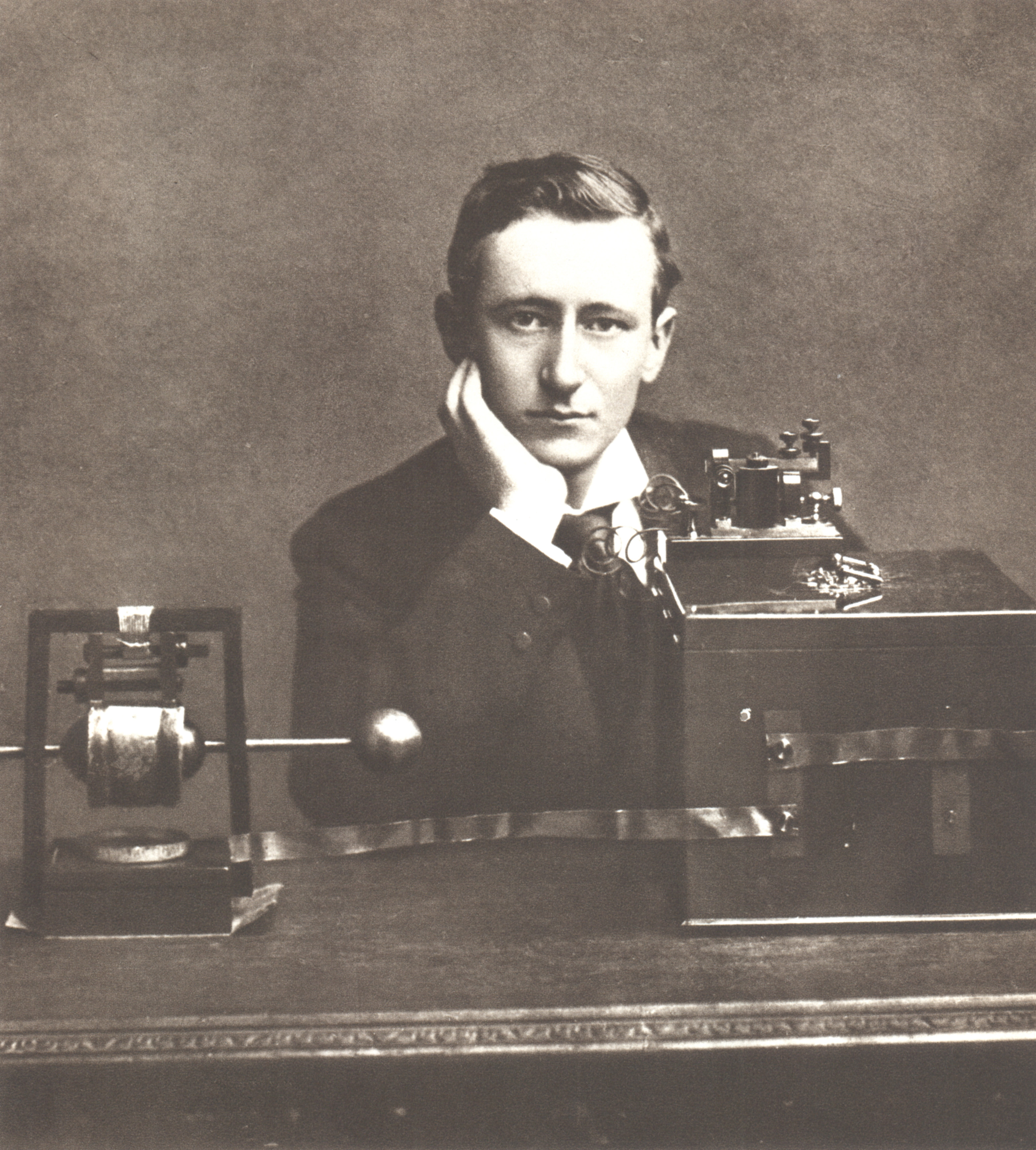
Marconi demonstrates the wireless telegraph:

Tags: ,

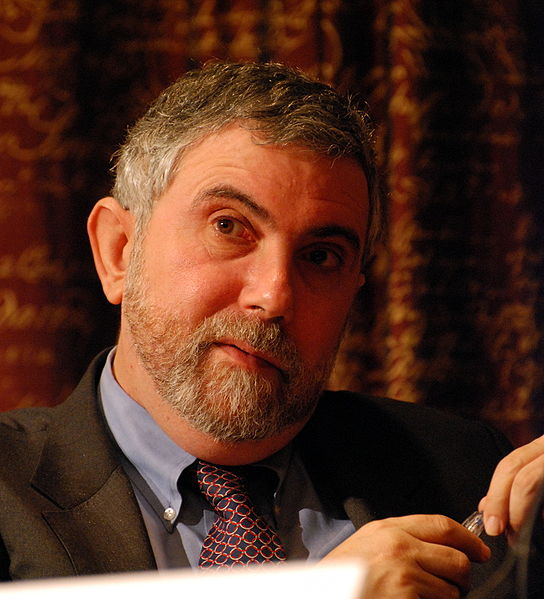
Full, but not unruly. (Image by Prolineserver.)

Two questions from the excellent Ask Me Anything that Paul Krugman just did on Reddit, one about the cause of American income disparity and one about his fabulous beard:

[–]Ashoat 382 points  ago

I want to ask about your perspective on increasing wealth and income disparities. There a couple camps on this issue, and it seems that mainstream economists haven’t yet formed a consensus on the cause for this.

Greg Mankiw and others seem to believe that the main cause of increasing income and wealth inequality is a changing labor market that rewards and values high-skilled laborers more and more. Consequently, he argues that attempts at addressing income inequality issues should be heavily based on education reform.

On the other hand, you’ve made the point that a lot of the increases in income and wealth inequality come from shifting fiscal policies and government regulation. You seem to argue that decreased taxes on the rich and more lenient policies in regards to financial industry have resulted in an economy that unduly favors certain individuals. Sorry if I’m putting words in your mouth!

I have the following two questions:

  • Do you think any of the increased disparity has resulted from the shifting labor market?
  • Do you think it makes sense to focus efforts on improving higher education and increasing access to it?

[–]nytimeskrugman[S] 573 points  ago

Well, if you look at the Congressional Budget Office report from last fall, it shows that about half the rise in income inequality is accounted for by the divergence of the 1 percent from everyone else. That part is NOT about education and returns to skills — the next 19 have about as much education as the top 1, or if you prefer, hedge fund managers and high school teachers have roughly comparable education levels. So something else is driving at least half the rise in inequality, and probably more.

That doesn’t mean that market forces play no role, but it says that it’s nowhere close to the whole story, or even most of it — a point that people like Mankiw refuse to acknowledge.

By all means let’s expand access to higher education — but I’d say that the biggest reason to do that it is not so much to reverse inequality as to stop the ongoing decline in social mobility. Horatio Alger has left the building; it’s getting ever harder for Americans born into the lower half of the income distribution to move up. And more aid for college would help make climbing the ladder easier.

[–]lifeofquill 114 points  ago

How do you maintain such a lovely beard?

[–]nytimeskrugman[S] 140 points  ago

Shave around it every day, and get your wife to clip it fairly often.”

Tags:

From Katie Drummond at Wired: “According to Dmitry Itskov, a 31-year-old Russian media mogul, the U.S. military’s Avatar initiative doesn’t go nearly far enough. He’s got a massive, sci-fi-esque venture of his own that he hopes will put the Pentagon’s project to shame. Itskov’s plan: Construct robots that’ll (within 10 years, he hopes) actually store a human’s mind and keep that consciousness working. Forever.

‘This project is leading down the road to immortality,’ Itskov, who founded New Media Stars, a Russian company that runs several online news outlets, tells Danger Room. ‘A person with a perfect Avatar will be able to remain part of society. People don’t want to die.'”

Tags: ,

"Ed Powell and Jim Leper were hung in the jail yard yesterday afternoon." (Image by Robert Runyon.)

Scenes from a double execution in Texas from the September 30, 1891 Brooklyn Daily Eagle:

Gatesville, Tex.–Ed Powell and Jim Leper were hung in the jail yard yesterday afternoon at 2 o’clock. When the sheriff read the governor’s message to let the law take its course, Powell was silent, but Leper said, ‘Let her go.’

Mrs. Powell, young Powell’s mother, who left no stone unturned to secure a change in the sentence, hearing of the message became enraged and told the boys to die like men and pay no attention to religion; if there was a God, he was unjust.

Leper never lost his disposition to joke. He broke into a laugh when taking his seat on the platform. Both men spoke, protesting their innocence, saying they were not afraid to die, stopping at intervals to smoke.

Rev. John Bateman, a minister of Waco, said: ‘Let us pray,’ and the sheriff, prisoners and all on the plaform knelt in prayer. On rising to their feet, Powell said: ‘One thing I forgot. I feel my sins are forgiven, and I will go to heaven. I wish all of you wealth, health and prosperity, and after death may you go to heaven.’

Both men died with scarcely a struggle. Powell and Leper were hanged for the murder of John T. Mathiason, December, 1880, for the purpose of robbery. Powell’s mother is wealthy.”

Tags: , , , ,

NO NEWS!

Anyone else notice the lack of news? There is no news for the average man on the street.

The opening of “Science Fiction No More,” Will Doig’s fascinating new Salon article about pop-up, sentient cities, which use sensors to collect a non-stop stream of data:

“Formula One car racing is the most viewed sport in the world. On any given race day, half a billion people — one-fourteenth of the globe — are watching it on TV. But it’s what they’re not seeing that wins races today: More than 300 sensors are implanted throughout each vehicle to monitor everything from air displacement to tire temperature to the driver’s heart rate. These data are continuously transmitted back to a control room, where engineers run millions of calculations in real time and tweak their driver’s strategy accordingly.

Through this process, every last ounce of efficiency and performance is wrung out of each car. And so it will be with cities like PlanIT Valley, currently being built from scratch in northern Portugal. Slated for completion in 2015, PlanIT Valley won’t be a mere ‘smart city’ — it will be a sentient city, with 100 million sensors embedded throughout, running on the same technology that’s in the Formula One cars, each sensor sending a stream of data through the city’s trademarked Urban Operating System (UOS), which will run the city with minimal human intervention.

‘We saw an opportunity … to go create something that was starting with a blank sheet,’ said PlanIT Valley creator Steve Lewis, ‘thinking from a systems-wide process in the same way we would think about computing technologies.'” (Thanks Browser.)

Tags: ,

Given enough time–and it doesn’t take long–the desert always wins. From The Passenger, 1975.

Tags:

Swims with the fishes.

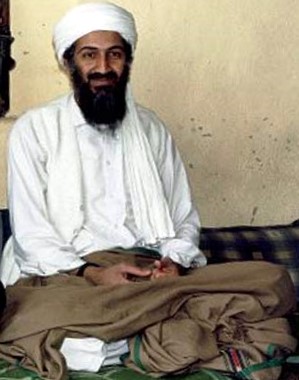
•In regards Obama questioning whether Mitt Romney would have made the call to enter Pakistan and kill Osama bin Laden, it’s based on factual statements that Romney made which were not taken out of context.

•We need to stop acting like the murder of bin Laden was a sacred event. It was a political and military decision to eliminate a mass murderer. Save the sacred feelings for the victims of 9/11.

•If the decision had gone badly, it would have been politicized to the hilt by the GOP, including Romney. The Democrats would have been branded weak on defense as they have been for more than 40 years.

•It’s not like the GOP didn’t do its own–and very undeserved–victory lap over bin Laden’s killing. Members of the Bush Administration (Cheney, Rumsfeld, Rice) came out of the woodwork to try to claim credit.

•You could argue that Obama is hanging his “Mission Accomplished” banner with the ad, except that the mission actually was accomplished. Maybe it seems boastful, but it is accurate.

•It’s hilarious that draft-dodging members of a party that Swiftboated an Army veteran like John Kerry are now crying foul over being called out on being less forceful on military matters.

•If Arianna Huffington wants to better understand the definition of “despicable,” she should recall how she allowed Jenny McCarthy to use the Huffington Post as a platform to repeatedly frighten parents about immunizing their children. And even after it was proven that those charges were linked to junk science, there was still no retraction or apology. Now that’s despicable.•

Tags: , , , , , , ,

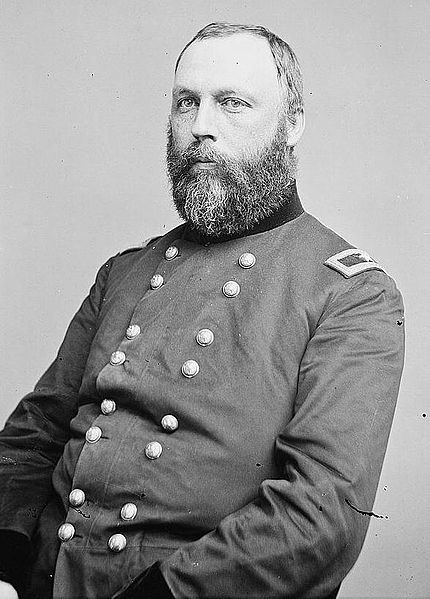
The Civil War didn’t claim so many lives merely because of the brutality of the battles but also because it was fought just before the dawn of modern medicine. One man, William Hammond, by all accounts a miserable prick to work with, saved countless thousands with his bold vision after President Lincoln appointed him Surgeon General of the Army in 1862. But there was only so much he could do. From Pat Leonard in the New York Times:

“Yet even with his state-of-the-art initiatives to improve sanitation and save lives, Hammond was fighting an uphill battle. The American Civil War was fought during what he would later describe as ‘the end of the medical Middle Ages.’ An understanding of germ theory was still a decade away, and thousands died not from their wounds but from infections or gangrene that developed later. During and following a major battle, doctors performed amputations by the hundreds, sawing off mangled limbs as quickly as men could be lifted onto makeshift operating tables, without so much as wiping their blades between procedures. The death rate following amputations ranged as high as 50 percent, especially when major limbs were involved or when soldiers had to wait more than a few hours to be treated.

And that wasn’t the worst of it. The greatest menace to Civil War soldiers was not enemy fire, nor even the infections that almost always inflamed their wounds and/or stumps. The majority of field fatalities – an estimated three out of five among Union dead, and two out of three among Confederates – were caused by preventable diseases that swept through camps and hospitals, including dysentery, typhoid fever, pneumonia, tuberculosis and even ‘childhood’ ailments like measles, chickenpox and whooping cough.

Writing home, soldiers often remarked that they didn’t fear the big battles as much as being taken to a hospital, where they would be exposed to killers they couldn’t see and didn’t understand.”

Tags: ,

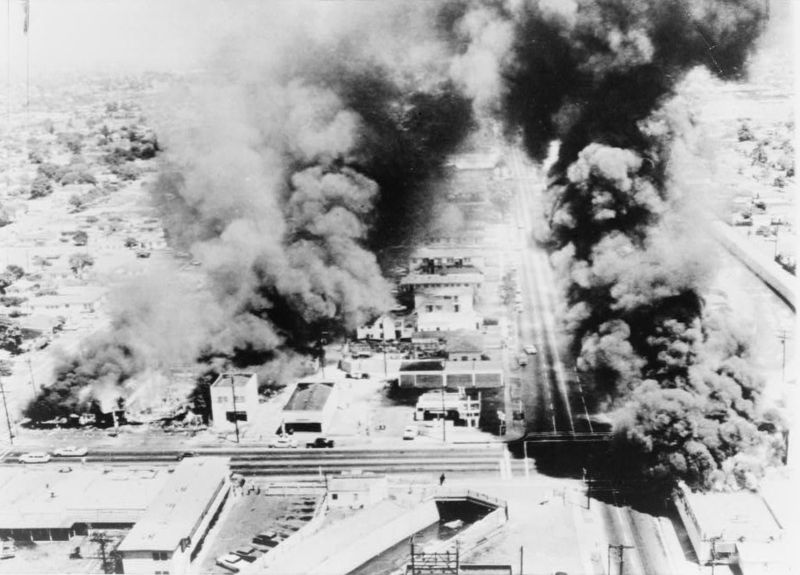
Watts, 1965.

Some of the best writing and thinking in the country right now is being done at the L.A. Review of Books. From an LARB article about lessons gone unlearned in Los Angeles, written by that prophet of doom Mike Davis:

“Indeed, L.A. labor, instead of leading the march toward prison reform and the ending of the war on drugs, now lifts its glass along with the rest to celebrate the legacy of Chief Bratton and the current liberal love affair with the LAPD.  At the same time, a new East Side civic elite (with much political but little economic power) sups from the silver chalices of the latest cohort of super-rich mega-looters (Ed Roski, Ric Caruso, Allen Casden, the Anshutz Entertainment Group, and so on).  That bankruptcy asset known as the Los Angeles Times continues its long tradition of bravely exposing graft on a miniature scale (the City of Bell scandal, for example) while giving a pass to the felonies of billionaires (almost everything having to do with downtown real estate or rail transportation).

I betray my age by noting that the current culture of comfortable corruption and jaded accommodation in City Hall — theoretical liberals doing the heavy lifting for wealthy Republicans — is smugly reminiscent of Tom Bradley’s last term.  If the analogy holds, then a skybox in the new Los Angeles Stadium will afford a wonderful view of the city burning for a third time.”

Tags:

A 15-year-old kid is exposed to the mistreatment of a robot as part of an ethical experiment. The robot will be fine. The child will never trust anyone again. Maybe that’s for the best. (Thanks IEEE Spectrum.)

With so much of life shifted online, it’s natural that elements of warfare will follow. From Michael Gallagher at the BBC:

“‘Sophisticated cyber attackers could do things like derail trains across the country,’ says Richard A Clarke, an adviser on counter-terrorism and cyber-security to presidents Clinton and Bush.

‘They could cause power blackouts – not just by shutting off the power but by permanently damaging generators that would take months to replace. They could do things like cause [oil or gas] pipelines to explode. They could ground aircraft.’

Clarke’s worries are fuelled by the current tendency to put more of our lives online, and indeed, they appear to be borne out by experiments carried out in the United States.”

Tags: ,

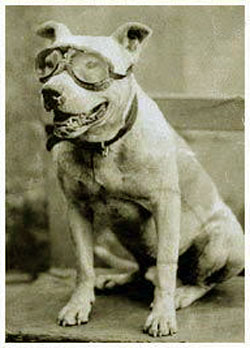
From the November 6, 1898 Brooklyn Daily Eagle:

“Tattooed dogs are now the fashion in London. A coat of arms or a monogram is marked on the throat or breast of the animal. The process is made almost painless by the use of cocaine.”

"I don't want to throw these out, but I'm not drinking this crap either."

Free Tropicana ‘light’ juice (Harlem / Morningside)

There was a sale. Tropicana Fruit Punch juice, 2 for $3.
But there was a catch, it said ‘light’ on the carton.
I thought it was odd, but I didn’t care, I was getting a deal.
I brought it home. I opened it. I tasted it.

It. Is. Disgusting.

It’s gross. It has a nasty after taste. I guess ‘light’ means light on deliciousness, because I can’t stomach this crap.
My little daughter can’t either. She spit it out. My husband gagged.
I bought 6 of these. And I can’t find the receipt.

I don’t want to throw these out, but I’m not drinking this crap either. So it’s yours. Five half gallon cartons of Tropicana ‘light’ Fruit Punch.

I live near 150th and riverside. Come and get it and it’s yours. I’m sorry if my ad isn’t very appealing, but i couldn’t lie to you. 
Who knows, maybe you might like it!
First come, first serve.

“We’re drifting toward becoming a plutocracy.” (Image by Richard Whitney.)

A sequence from former Labor Secretary Robert Reich’s excellent Ask Me Anything on Reddit:

Question (seeker135):

In your opinion, are we in the Endgame of the Republic?

Answer (robertbreich):

No.


Question (hierocles):

In the sense that the United States political system will no longer look like it used to, yes. Obviously the country is not going to fall into anarchy. But without institutional changes, all branches of government will have to be controlled by the same party if they’re going to be at all effective. We will have to enter into a pseudo one-party state.

Answer (robertbreich):

I’m not quite as pessimistic, but I do think there have to be major institutional changes. The most important, in my view, is limiting campaign contributions. That will be hard to do in the wake of the Supreme Court’s grotesque ‘Citizen’s United’ decision, but I still think public financing of general elections can work, if the extent of the potential financing is raised. Remember, both presidential candidates used public financing in 1976, and didn’t rely on any outside financing. Seems hard to believe from where we are now.


Question (kblz):

Mr. Reich, is the United States is a functioning republic? also – what would you do, now, if you were secretary of labor? would you encourage and protect small businesses? what about healthcare?

Answer (robertbreich):

We’re drifting toward becoming a plutocracy, run by a relatively small number of extremely wealthy individuals, CEOs, and Wall Street moguls. That’s why we need to get serious about campaign finance reform, why tax reform is vital, and why the entire economy needs to be reorganized to widen the circle of prosperity — so that far more of us benefit from the gains of productivity growth. If I were back in the administration, I’d strengthen labor unions, try to create a single-payer system for healthcare, use antitrust laws to break up big concentrations of power (such as the biggest banks on Wall Street), resurrect the Glass-Steagall Act (that used to separate investment from commercial banking), and enlarge the Earned Income Tax Credit (a wage subsidy for lower-income workers).”

 • • • • • • • • • •

Oh my god, look at these two tiny communists go! They are so adorable.

Tags:

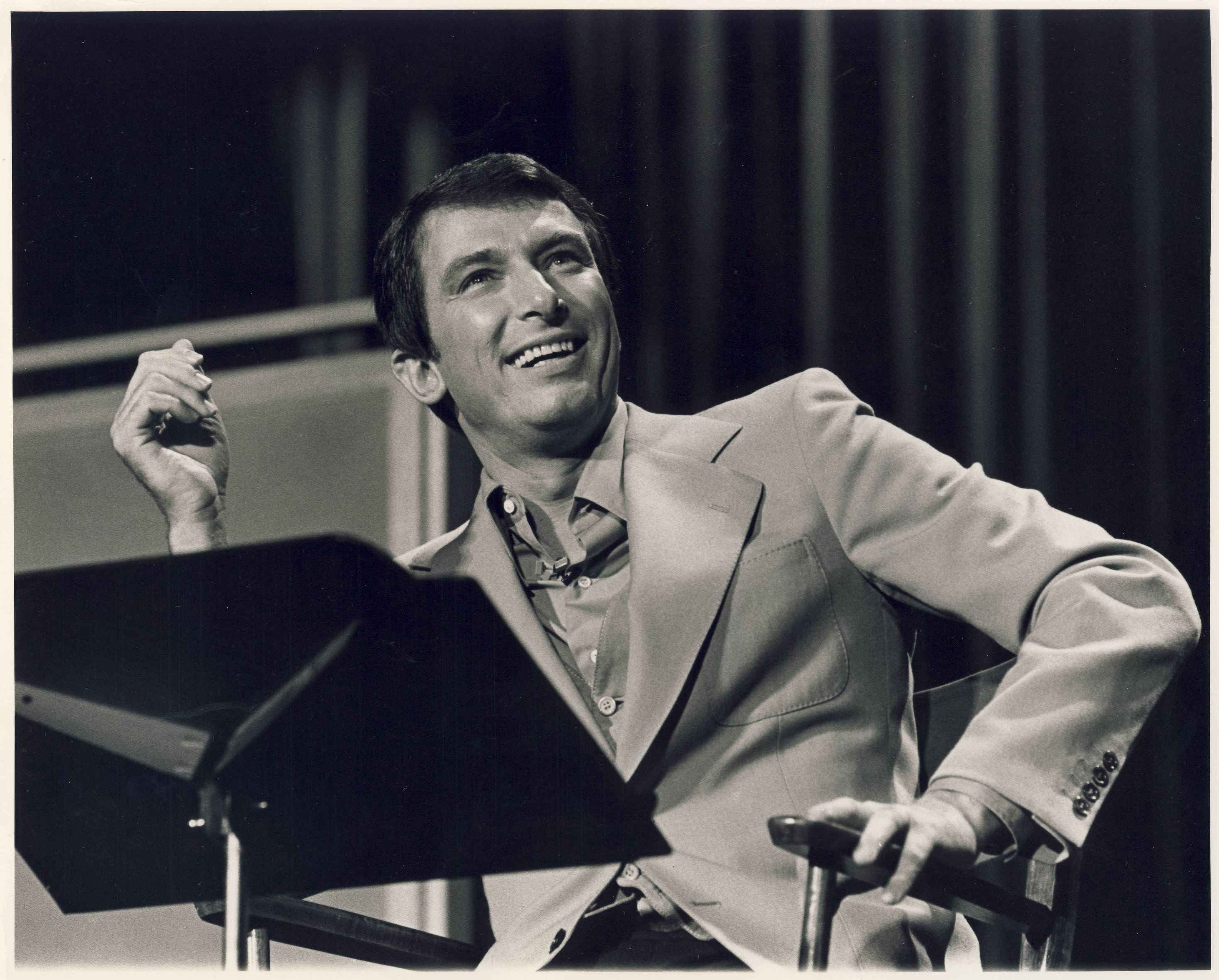
EST salesman Werner Erhard, who converted loads of people in the ’70s and ’80s to a higher level of self-awareness–or some shit–by gathering them in hotel ballrooms and hectoring them, just gave his first interview in a couple of decades. He is still a piece of work. From Lucy Kellaway’s Financial Times article:

“It turns out Werner Erhard sees himself as something far greater than nice. He solemnly tells me that he is, without question, a hero.

‘Here’s my definition of a hero. A hero is an ordinary person given being and action by something bigger than themselves. One thing I’m sure about is I’m real ordinary. Yet I’ve had the chance to touch the lives of a lotta people.’

It is true that Erhard has touched many lives – I’ve come across plenty of his converts – but I’ve never really grasped what it was that they learnt in those long days in hotel ballrooms.

‘People understood that nothing is significant. Life is empty and meaningless, and it’s empty and meaningless, that it’s empty and meaningless.’

I nod, a little confused.

‘Until what is significant is created by you, you aren’t living your life, you are living some inherited life.'” (Thanks Browser.)

••••••••••

John Denver interviews Erhard on the Tonight Show, 1973:

Bucky Fuller + Erhard:

Tags: ,

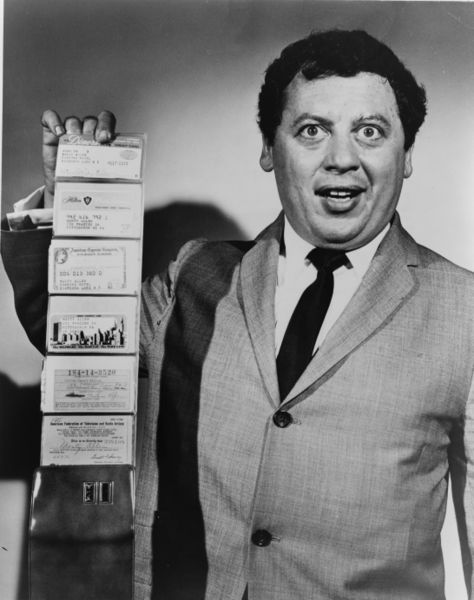
Malls are dead, and money and credit cards aren’t feeling so well, either. From Somini Sengupta in the New York Times:

“‘The physical wallet, which had no innovation in the last 50 years, will become an artifact,’ John J. Donahoe, the chief executive of eBay, told me recently. The wallet would move into the cloud, and ideally, from his perspective, into PayPal. No more would the consumer worry about losing a wallet, nor about organizing coupons and loyalty cards. Everything, he declared, would be contained within PayPal. It would also enable the company to collect vast amounts of data about customer habits, purchases and budgets.  

PayPal recently rolled out a payment system at 2,000 Home Depot stores nationwide, allowing customers to pay simply by typing in their cellphone numbers, along with a PIN. It plans to install similar kiosks later this year at other chains, including a fast food establishment.

Mr. Donahoe said he wanted his company to become ‘a mall in your pocket.'”

Tags: ,

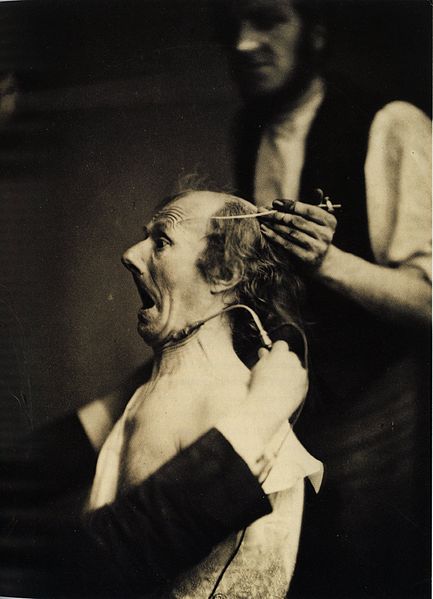
"A search was made, but the neck could not be found." (Image by Thomas Eakins.)

Nineteenth-century autopsies were far from perfect, as evidenced by an article in the December 24, 1899 edition of the Brooklyn Daily Eagle. An excerpt:

“It was discovered at the Manhattan Morgue yesterday that the neck of the headless man, found at the foot of Rutgers Street Tuesday last, is missing. It had been cut off Thursday when Dr. Philip O’Hanlon of the Coroner’s office performed an autopsy on the body. At that time Dr. Ferguson, the eminent pathologist was present, as was Dr. Schultz, former Coroner, and a number of medical students. Dr. O’Hanlon made a careful examination of the neck and, he said, found indentations on the cervical vertebra which were undoubtedly made by a knife. There were two or three on each side and, he said, he thought they had been made by a man who knew how to handle a surgeon’s knife.

"Dr. O'Hanlon then accused Embalmer Arthur Rooney of 336 East Twenty-fifth Street, who was standing by, of having taken the neck."

Dr. O’Hanlon called at the Morgue yesterday afternoon and asked to be shown the neck which had been removed from the body. A man went into the autopsy room, where the headless body and neck had been left, but he could not find it. A search was made, but the neck could not be found. Policeman Morell, who is in charge of the Morgue, said that Dr. O’Hanlon was the last in the room. Dr. O’Hanlon then accused Embalmer Arthur Rooney of 336 East Twenty-fifth Street, who was standing by, of having taken the neck. Rooney indignantly denied that he had done so and and he accused Dr. O’Hanlon of being the last in the room when the autopsy was made. It was thought that it had got mixed with some refuse and been thrown out. There was no suspicion at any time that the man had been murdered, but the loss of the portion is considered curious.”

Tags: , , , ,

Karlheinz Stockhausen,a great composer and a gigantic bag of shit, discussing human evolution in 1972.

In another sign that we’re horribly narcissistic pack animals, this passage from a Physorg post about Clay Voorhees’ study on brand loyalty:

“Customer loyalty increased when the participants viewed other customers as similar to themselves. The general physical appearance and behavior of the other customers also played a role.

‘Basically, do I feel like they’re the same type of person as me?’ said Voorhees. ‘Do they look good? Do they behave? These factors increase the likelihood of people returning to the store.’

Companies that incorporate these factors into their marketing efforts could increase loyalty by 30 percent – nearly doubling the ability to predict customer loyalty compared to traditional survey approaches that narrowly focus on the quality of service provided by the employees.

Voorhees said most companies today have become good at customer service and managing their employees.

‘So the next frontier is how to better manage their portfolio of customers,’ he said. “

Tags:

Bionic eye research in Australia. (Thanks Verge.)

warning (new york city)

something is wrong , many people can feel it! get out of new york city while you can. what ever it is it’s coming soon, you don’t have much time left save your family,get out now!!!

« Older entries § Newer entries »