Major League Baseball long generated most of its income through live attendance, so there was apprehension about “giving away” games on cable, even as screens shrunk and became ubiquitous. But regional–and very lucrative–contracts have proliferated as team owners realized that they weren’t harming their brands but extending them. And cable badly needs baseball, since it can provide so much live content that isn’t likely to be time-shifted. From theSports Economist:
“Local TV rights provides the revenue stream, but doesn’t this just push back the insanity one level? Why would anyone bid these amounts for baseball — America’s dying pastime? A funny thing happened on the way to the funeral — baseball franchises discovered that a substitute was actually a complement. Over the past several years, teams switched to televising most, if not all, of their games via local broadcast/cable/satellite. Teams long resisted such TV saturation, thinking that televised games substitute for fans in the seats. Texas drew almost 3 million fans last season in spite of extensive regional televising of their games. Yes, a few fans, at the margin, will choose to attend fewer games and watch on TV. However, many potential fans will attend very few games regardless. Televising the games becomes a way of extending the stadium capacity to include these households. The TV advertisers along with cable/satellite fees pay for these ‘at-home season ticket holders.'”
From an L.A. Times piece about the C-1, a self-balancing, enclosed, electric motorcycle from Lit Motors.
“Lit Motors calls it the C-1, but the San Francisco start-up’s untippable motorcycle seems nothing short of magic. It uses gyroscopes to stay balanced in a straight line and in turns in which drivers can, in theory, roll down their windows and drag their knuckles on the ground.
Is it a motorcycle? A car? Neither. It’s an entirely new form of personal transportation, presuming it gets off the ground.
The all-electric vehicle is fully enclosed and uses a steering wheel and floor pedals like a car. But it weighs just 800 pounds and balances on two wheels even when stopped, making it more efficient than hauling around a 2-ton four-wheeler and safer than an accident-prone bike.”
From “How Headphones Changed the World,” Derek Thompson’s Atlantic article about the unusual origins of the tech item, which was invented by Nathaniel Baldwin, a Mormon supporter of the polygamist movement:
“In 1910, the Radio Division of the U.S. Navy received a freak letter from Salt Lake City written in purple ink on blue-and-pink paper. Whoever opened the envelope probably wasn’t expecting to read the next Thomas Edison. But the invention contained within represented the apotheosis of one of Edison’s more famous, and incomplete, discoveries: the creation of sound from electrical signals.
The author of the violet-ink note, an eccentric Utah tinkerer named Nathaniel Baldwin, made an astonishing claim that he had built in his kitchen a new kind of headset that could amplify sound. The military asked for a sound test. They were blown away. Naval radio officers clamored for the ‘comfortable, efficient headset’ on the brink of World War I. And so, the modern headphone was born.”
The first three graphs of Wil S. Hylton’s excellent New York Times Magazine article about Craig Venter, who wants to make tiny machines that breathe:
“In the menagerie of Craig Venter’s imagination, tiny bugs will save the world. They will be custom bugs, designer bugs — bugs that only Venter can create. He will mix them up in his private laboratory from bits and pieces of DNA, and then he will release them into the air and the water, into smokestacks and oil spills, hospitals and factories and your house.
Each of the bugs will have a mission. Some will be designed to devour things, like pollution. Others will generate food and fuel. There will be bugs to fight global warming, bugs to clean up toxic waste, bugs to manufacture medicine and diagnose disease, and they will all be driven to complete these tasks by the very fibers of their synthetic DNA.
Right now, Venter is thinking of a bug. He is thinking of a bug that could swim in a pond and soak up sunlight and urinate automotive fuel. He is thinking of a bug that could live in a factory and gobble exhaust and fart fresh air. He may not appear to be thinking about these things. He may not appear to be thinking at all. He may appear to be riding his German motorcycle through the California mountains, cutting the inside corners so close that his kneepads skim the pavement. This is how Venter thinks. He also enjoys thinking on the deck of his 95-foot sailboat, halfway across the Pacific Ocean in a gale, and while snorkeling naked in the Sargasso Sea surrounded by Portuguese men-of-war. When Venter was growing up in San Francisco, he would ride his bicycle to the airport and race passenger jets down the runway. As a Navy corpsman in Vietnam, he spent leisurely afternoons tootling up the coast in a dinghy, under a hail of enemy fire.” (Thanks Browser.)
"We are awfully hungry; can't you give us a bit of something to eat?"
If you were going to be thrown into the clink in 1882, you could do a lot worse than the Butler Street Station House, where you were apparently given an unlimited number of pies to gorge yourself on. From an article in the January 27, 1882 Brooklyn Daily Eagle:
“‘Do you want something to write?’ asked Captain Leavey of a reporter, as he entered the Butler Street Station House this morning.
‘Yes,’ was the reply.
‘Well,’ said the captain, ‘we had a rare pair of lodgers here last night. They gave the names of John M. Clark and William Collins, and said they came from Hempstead. Before being shown upstairs one of them said to me: ‘Captain, we are awfully hungry; can’t you give us a bit of something to eat?’ They looked just the sort of fellows that could have relished some broiled crow, and so I said to them: ‘How hungry are you?’ The elder of the two smacked his lips and said he felt as though he could swallow a house and lot, so I sent around the corner to an adjoining bakery for some pie.
Half a dozen pies were set before them and they disappeared like snow before a blazing sun. Six more were produced and still they were not satisfied. I asked them if they intended to eat up the bakery, and the only reply received was to the effect that the people in Hempstead were all great eaters. So, I sent out for another half dozen, and they went the way of the rest in just as short a time. Then they said they had enough and retired for the night.
‘I tell you,’ said the captain, in conclusion, ‘I would not like to take a contract to feed the folks in Hempstead.'”
From “New York Has Some Prisons To Sell You,” Thomas Kaplan’s NYT article about the Governor Cuomo’s attempts to dismantle the state’s prison-industrial complex:
“These real-estate listings come from an unpracticed seller, the State of New York. After cutting costs through traditional means like freezing wages of state workers and consolidating government offices, Gov. Andrew M. Cuomo is embarking on a less conventional effort: trying to sell New York’s old prisons.
The state has a glut of vacant correctional facilities because of lower crime rates, new programs that allow early release for nonviolent offenders and the dismantling of its strict drug laws. The situation in New York reflects changing national attitudes toward criminal justice policy: the number of state prisoners nationwide declined in 2009 and 2010 for the first times in at least three decades, according to the federal Bureau of Justice Statistics.
Mr. Cuomo’s predecessor, Gov. David A. Paterson, closed three prisons as he confronted budget problems. Mr. Cuomo declared in his first address to the State Legislature that prisons were “not an employment program,” and proceeded to shut seven of the state’s remaining 67 correctional facilities, removing 3,800 beds.
These closings reflect a sharp reversal. After New York adopted mandatory drug sentences in 1973, the state’s prison population soared from 13,437 to a peak of 71,472 in 1999, prompting a boom in prison construction, much of it during the tenure of Gov. Mario M. Cuomo, the current governor’s father. But since then, the number of inmates in state facilities has fallen nearly a quarter, to about 55,000, leaving thousands of empty beds.”
“Once Banham got a driver’s license, the pull of those miles was irresistible, and he spent plenty of time behind the wheel: up and down the California coast, into the deserts and canyons of the Southwest and Texas, across the rust belt and the Midwest, and over and through the northeast megalopolis. There were countless stops in between and along the way, all fully documented in field notebooks, maps, postcards and 35mm slides. Banham visited architectural monuments and natural landmarks, evincing equal interest in the Seagram Building and the Cima Dome. He was attracted to everyday landscapes and out-of-the-way obscurities, supermarkets and motel chains having nearly the same allure as one-off wilderness resorts. He explored thriving commercial centers and abandoned industrial wastelands (and vice versa), lavishing the same attention on a Ponderosa Steak House as on a General Mills grain elevator.
From the Tennessee Valley to Silicon Valley, no building or landscape was unworthy — or safe — from Banham’s formal analysis, socio-cultural critique or outspoken opinionating. He thought the TVA dams with their ‘overwhelming physical grandeur’ were better in real life than in the iconographic New Deal photographs where he had first encountered them, and while he may have sneered at the ‘Redneck Macholand’ in which they were located, he reserved his true scorn for the ‘eco-radicalist’ supporters of the Endangered Species Act who, in the 1970s, prevented the closing of the Tellico Dam sluices in order to preserve the snail darter minnow. The construction of the dam may have looked more arrogant, but Banham wondered if it really was.
The ‘Fertile Crescent of Electronics’ presented no such moral quandaries when Banham visited the sylvan corporate landscapes of IBM, Hewlett-Packard and other now obsolete tech-companies in 1981. Concerns about the environmental impact of all those microchips were still about a decade away and, given his long-standing technophilia, Banham would probably have minimized their significance with the same greater-good rationale he applied to the TVA. While 1981 was early enough in the digital revolution that Space Invaders was cutting edge, it was late enough that Silicon Valley had already produced a ‘better-than-respectable body of architecture.’ The buildings, in Banham’s view, were as sleek, silver and modern as the gadgets designed in the research labs within, an alignment of high-tech imagery and confident industrial consciousness — exemplified by MBT Associate’s IBM’s Santa Teresa campus in San Jose — that Banham considered a cause for celebration. Only the most ‘crass and unobservant’ among the ‘modern-architecture knockers’ and ‘California-mockers’ could possibly disagree.”
Brief 1977 film about laserists and their craft. Dude.
From “The Night the Lights Went Out in Griffith Park,” an L.A. Times article about the first laser-light show for the masses, in 1973: “Before the lights go down, the creator of Laserium, Ivan Dryer, is introduced and receives a lengthy standing ovation. The 62-year-old filmmaker with an astronomy and engineering background saw his first ‘laser light show’ in November 1970, when he was invited to film a demonstration by a Caltech scientist who’d been using a laser in her off hours to create artwork. A month later, he approached officials at the Griffith Park Observatory, where he’d once worked as a guide, with the idea of putting on a show there. For three years, the answer was no, but a new administration warmed to the idea, and Laserium was born.
‘When we first started, there were a whole lot of mistakes to be made,’ recalls Dryer, a tall, wizened, Ichabod Crane of a man. ‘We found that if we made mistakes on cue, on the beat, that was OK with the audience.’There was ‘The John Effect’–if too many toilets were flushed in the bathroom, the water pressure in the water-cooled ion gas laser (which reaches a core temperature of 5,000 degrees) would fail. Dryer also recounts the time his then-partner accidentally touched a high-voltage wire and shocked himself during a show, the audience believing the screaming was part of the entertainment. Similarly, when a fly landed on the lumia lens and began crawling around it, casting a giant sci-fi insect form on the ceiling, the crowd cheered wildly at the clever effect. Rather than swat it away, Dryer says, ‘we wished we could train it and hire it for future shows.’
In the intervening 28 years, laser technology and techniques improved, glitches were removed and new versions came along–Laser Rock, Pink Floyd’s Dark Side of the Moon, Led Zeppelin, Lollapalaser and the final incarnation, Laser Visions, which features ambient/ techno/electronica a la Orb, Enya and Vangelis.”
A brief analysis of the romantic appeal of Mad Men by the resolutely astute Adam Curtis at the BBC:
“The widespread fascination with the Mad Men series is far more than just simple nostalgia. It is about how we feel about ourselves and our society today.
In Mad Men we watch a group of people who live in a prosperous society that offers happiness and order like never before in history and yet are full of anxiety and unease. They feel there is something more, something beyond. And they feel stuck.
I think we are fascinated because we have a lurking feeling that we are living in a very similar time. A time that, despite all the great forces of history whirling around in the world outside, somehow feels stuck. And above all has no real vision of the future.
And as we watch the group of characters from 50 years ago, we get reassurance because we know that they are on the edge of a vast change that will transform their world and lead them out of their stifling technocratic order and back into the giant onrush of history.
The question is whether we might be at a similar point, waiting for something to happen. But we have no idea what it is going to be.”
RCA initially developed SelectaVision for home video in 1964, but bungled its marketing and distribution for nearly two decades until VHS had rendered it beside the point. Although it contained its content on a disc-shaped object, it was not what we think of as a laser disc that utilizes a beam of light. It was essentially akin to a record player that used a needle to read the info and transmit it to a TV screen. From 1979. before content became invisible:
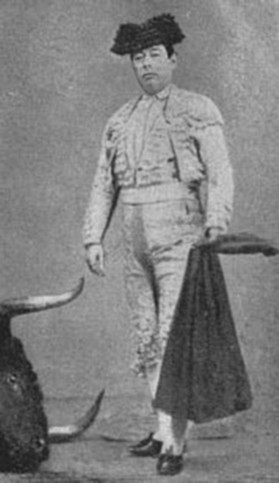
A story of a Texas bullfight exhibition gone horribly wrong, from the March 9, 1900 edition of the Brooklyn Daily Eagle:
“Austin, Tex.–A desperate riot, which came near resulting in the lynching of several bull fighters, took place at San Luis Potosi, Mex. The affair is described as follows in a letter which reached here today:
The bull fight of Sunday afternoon under the leadership of Jose Marrero of Havana, with seven assistants proved a failure. Five arrogant and valiant bulls had been promised. The first bull led out put up a little show of resistance and was killed, but none of the others would fight at all. The spectators began to hiss and groan and throw oranges, lemons and stones into the ring. Finally the disappointed assemblage tossed the chairs, benches and hand-railings into the ring and then set fire to the pile. This stopped the performance. But even this exhibition of ire did not satisfy the belligerents, who laid violent hands on the bull fighters and were in the act of lynching them when the police interfered.”
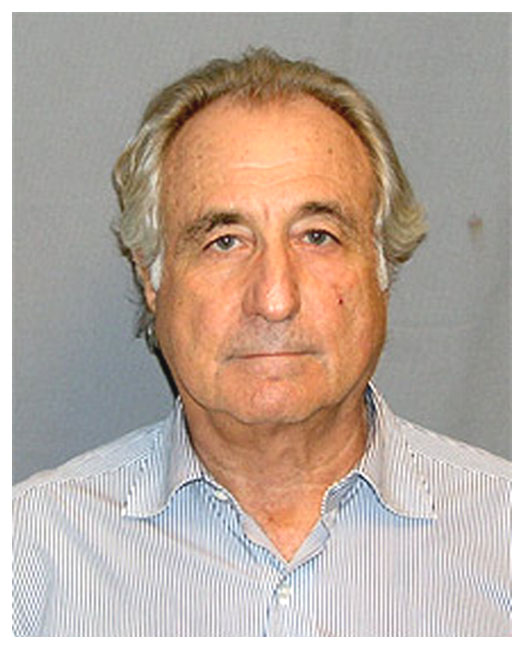
In a new WSJ piece, behavioral economist Dan Ariely looks at how almost everyone is duplicitous and how widespread small-scale cheating aggregates to trump Madoff-sized indiscretions. An excerpt:
“We tend to think that people are either honest or dishonest. In the age of Bernie Madoff and Mark McGwire, James Frey and John Edwards, we like to believe that most people are virtuous, but a few bad apples spoil the bunch. If this were true, society might easily remedy its problems with cheating and dishonesty. Human-resources departments could screen for cheaters when hiring. Dishonest financial advisers or building contractors could be flagged quickly and shunned. Cheaters in sports and other arenas would be easy to spot before they rose to the tops of their professions.
But that is not how dishonesty works. Over the past decade or so, my colleagues and I have taken a close look at why people cheat, using a variety of experiments and looking at a panoply of unique data sets—from insurance claims to employment histories to the treatment records of doctors and dentists. What we have found, in a nutshell: Everybody has the capacity to be dishonest, and almost everybody cheats—just by a little. Except for a few outliers at the top and bottom, the behavior of almost everyone is driven by two opposing motivations. On the one hand, we want to benefit from cheating and get as much money and glory as possible; on the other hand, we want to view ourselves as honest, honorable people. Sadly, it is this kind of small-scale mass cheating, not the high-profile cases, that is most corrosive to society.”
Fun look inside the studio of legendary fashion and portrait photographer, Francesco Scavullo, 1978. Star-crossed model Gia Carangi is his ridiculously beautiful subject.
From aGuardian articleabout superstar psychologist Daniel Kahneman, an example of the type of questions he asks to poke holes in our seemingly natural proclivity for favoring narrative over rational thought:
“Kahneman’s approach to psychology spurns heart-sinking tables and formulae in favour of short, intriguing questions that elegantly illustrate the ways our intuitions mislead us.
Take the famous ‘Linda question’: Linda is a single 31-year-old, who is very bright and deeply concerned with issues of social justice. Which of the following statements is more probable: a) that Linda works in a bank, or b) that Linda works in a bank and is active in the feminist movement? The overwhelming majority of respondents go for b), even though that’s logically impossible. (It can’t be more likely that both things are true than that just one of them is.) This is the ‘conjunctive fallacy,’ whereby our judgment is warped by the persuasive combination of plausible details. We are much better storytellers than we are logicians.”
broke my turtle/fish tank. anyone can drop one off for a price? – $30 (soho/i know this is a weird request)
My poor turtle and fish and shrimp are in a salad bowl right now, because I was cleaning their habitat, scrubbed to hard and cracked the glass. Look at this handsome little dude, he needs a new casa. A 10 or 12 gallon LONG tank would be perfect, but any comfy home besides the glass bowl will be better. It would be a miracle if someone could help me out tonight. I will pay you of course.
If you are even considering this, I thank you gracefully…
I’ve attached some pics from happier days (when they weren’t living in a saladbowl).
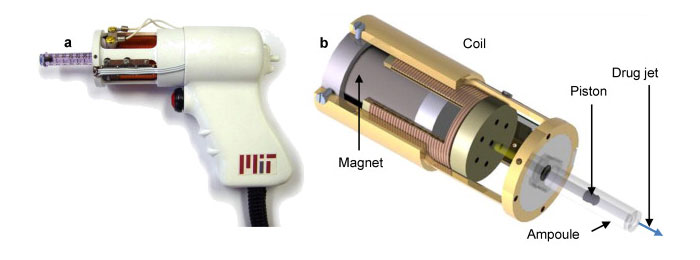
A needleless injection system, just patented by MIT, delivers medicine to the bloodstream through a hypospray. From Dvice: “MIT has developed an injection system that uses a powerful magnetic piston to push a near-supersonic dose of medication straight through your skin into your body. The drugs themselves are carried along on a blast of air that’s skinnier than the proboscis of a mosquito, which means that you can’t feel it at all. In fact, it doesn’t even leave a mark, which means that it can be used on your eardrums or even your eyeballs without causing any damage.”
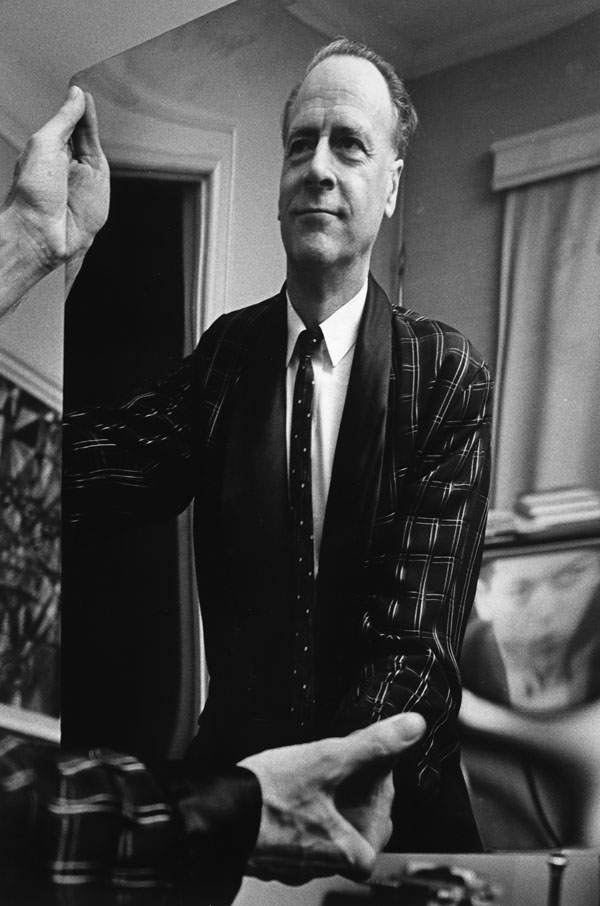
The opening of “Divine Inspiration,” Jeet Heer’s new article in The Walrus about the religious underpinnings of Marshall McLuhan’s vision:
“APPROPRIATELY ENOUGH, a century after his birth in 1911, Marshall McLuhan has found a second life on the Internet. YouTube and other sites are a rich repository of McLuhan interviews, revealing that the late media sage still has the power to provoke and infuriate. Connoisseurs of Canadian television should track down a 1968 episode of a CBC program called The Summer Way, a highbrow cultural and political show that once featured a half-hour debate about technology between McLuhan and the novelist Norman Mailer.
Both freewheeling public intellectuals with a penchant for making wild statements, Mailer and McLuhan were well matched mentally, yet they displayed an appropriate stylistic contrast. Earthy, squat, and pugnacious, Mailer possessed all the hot qualities McLuhan attributed to print culture. Meanwhile, McLuhan adopted the cerebral and cavalier cool approach he credited to successful television politicians like John F. Kennedy and Pierre Trudeau, who responded to attacks with insouciant indifference.
Early on in the program, McLuhan and Mailer tackle the largest possible issue, the fate of nature:
McLuhan: We live in a time when we have put a man-made satellite environment around the planet. The planet is no longer nature. It’s no longer the external world. It’s now the content of an artwork. Nature has ceased to exist.
Mailer: Well, I think you’re anticipating a century, perhaps.
McLuhan: But when you put a man-made environment around the planet, you have in a sense abolished nature. Nature from now on has to be programmed.
Mailer: Marshall, I think you’re begging a few tremendously serious questions. One of them is that we have not yet put a man-made environment around this planet, totally. We have not abolished nature yet. We may be in the process of abolishing nature forever.
McLuhan: The environment is not visible. It’s information. It’s electronic.
Mailer: Well, nonetheless, nature still exhibits manifestations which defy all methods of collecting information and data. For example, an earthquake may occur, or a tidal wave may come in, or a hurricane may strike. And the information will lag critically behind our ability to control it.
McLuhan: The experience of that event, that disaster, is felt everywhere at once, under a single dateline.
Mailer: But that’s not the same thing as controlling nature, dominating nature, or superseding nature. It’s far from that. Nature still does exist as a protagonist on this planet.
McLuhan: Oh, yes, but it’s like our Victorian mechanical environment. It’s a rear-view mirror image. Every age creates as a utopian image a nostalgic rear-view mirror image of itself, which puts it thoroughly out of touch with the present. The present is the enemy.”
••••••••••
The full ’68 McLuhan-Mailer debate the article references:
“Some of the limits and failures are well publicized: among others, the environmental despoliation that has made cancer the leading cause of death in China; the demographic shift caused by the one-child policy that threatens to make China the first society to grow old before it grows rich; and the problems of transparency and accountability in the Chinese governing system, illustrated most recently by the Bo Xilai and Chen Guangcheng cases.
Those, at least, are the problems that get the headlines. But there’s a bigger one, which the Chinese government and public are only now starting to recognize: whether the success of China’s current model is leading toward a ‘low-wage trap,’ in which its outsourcing factories get bigger but don’t necessarily move the country toward the higher tiers of the world economic structure.
PUT differently, will Chinese companies ever go from assembling iPads to fostering future Apples of their own — or, similarly, from selling knockoff copies of Western movies, music, search engines and online apps to establishing China’s own pop-culture industries with worldwide profits and soft-power appeal?
Nearly every Apple product is ‘made’ in China, but barely 10 cents on the Apple sales dollar stay with workers, suppliers or anyone else in te country. The rest goes to designers and shareholders in the United States, component makers in Japan, machine-tool makers in Germany and retailers or shippers around the world. The problem for America with this arrangement is that it disproportionately rewards the top rather than the middle of our income scale. The problem for China is figuring out how to capture more of the rewards to begin with.”
"The nose, eyes and ears will be hermetically sealed with wax."
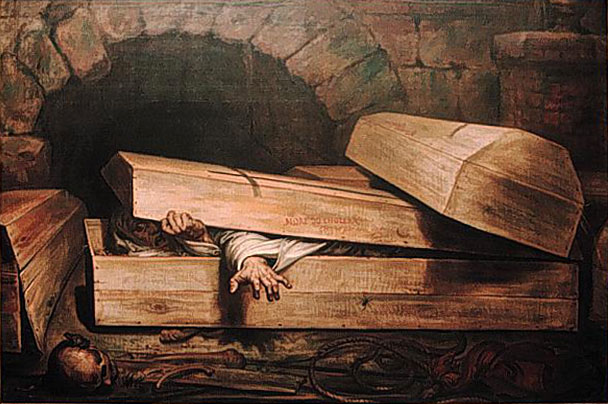
An Illinois mind reader planned in 1893 to have himself buried alive where he would remain while a crop grew above him. He would then emerge unscathed. There are easier ways to kill yourself. From an article in the August 7th edition in that year’s Brooklyn Daily Eagle:
“Hillsboro, Ill.–The mind reader, A.J. Seymour, is generally known in Illinois and his proposed attempt to be buried and remain in the ground while a crop of barley is grown on his grave creates interest in this state. Dr. E.C. Dunn of Rockford has been selected by Seymour as manager. Dr. Dunn says: ‘There is no question that this feat can be performed. I have seen it performed successfully three times in India, at Allahabad, Delhi and Benares. For several days Seymour will be fed upon a diet of fat and heat producing food. He will then throw himself into a cataleptic state. Their lungs will be filled with pure air to their fullest capacity and the tongue placed back and partially down the throat in such a manner as to completely close the aperture to the lungs. The nose, eyes and ears will be hermetically sealed with wax. After parafine has been spread over the entire body, to close the pores, it will be ready for burial. The body will be put in an extra large casket. This will be placed inside another and both will be perforated, in order that if any poisonous gases exude from the body they may make their escape and be absorbed by the soil. The interment is to be made in a clay soil.'”
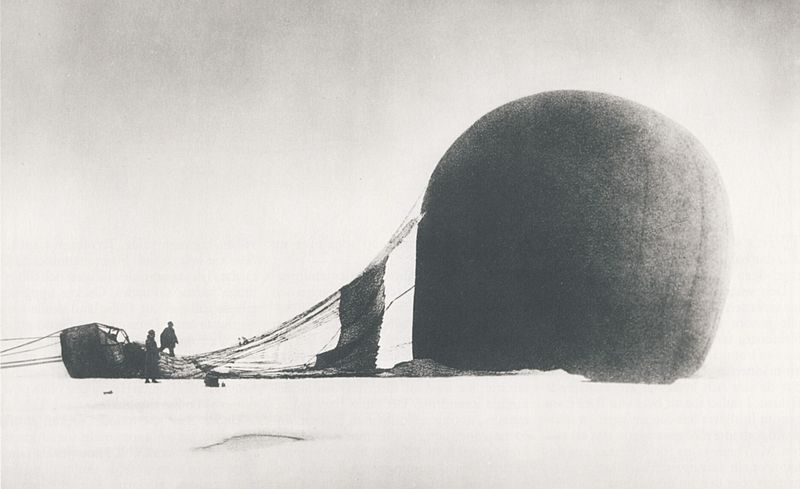
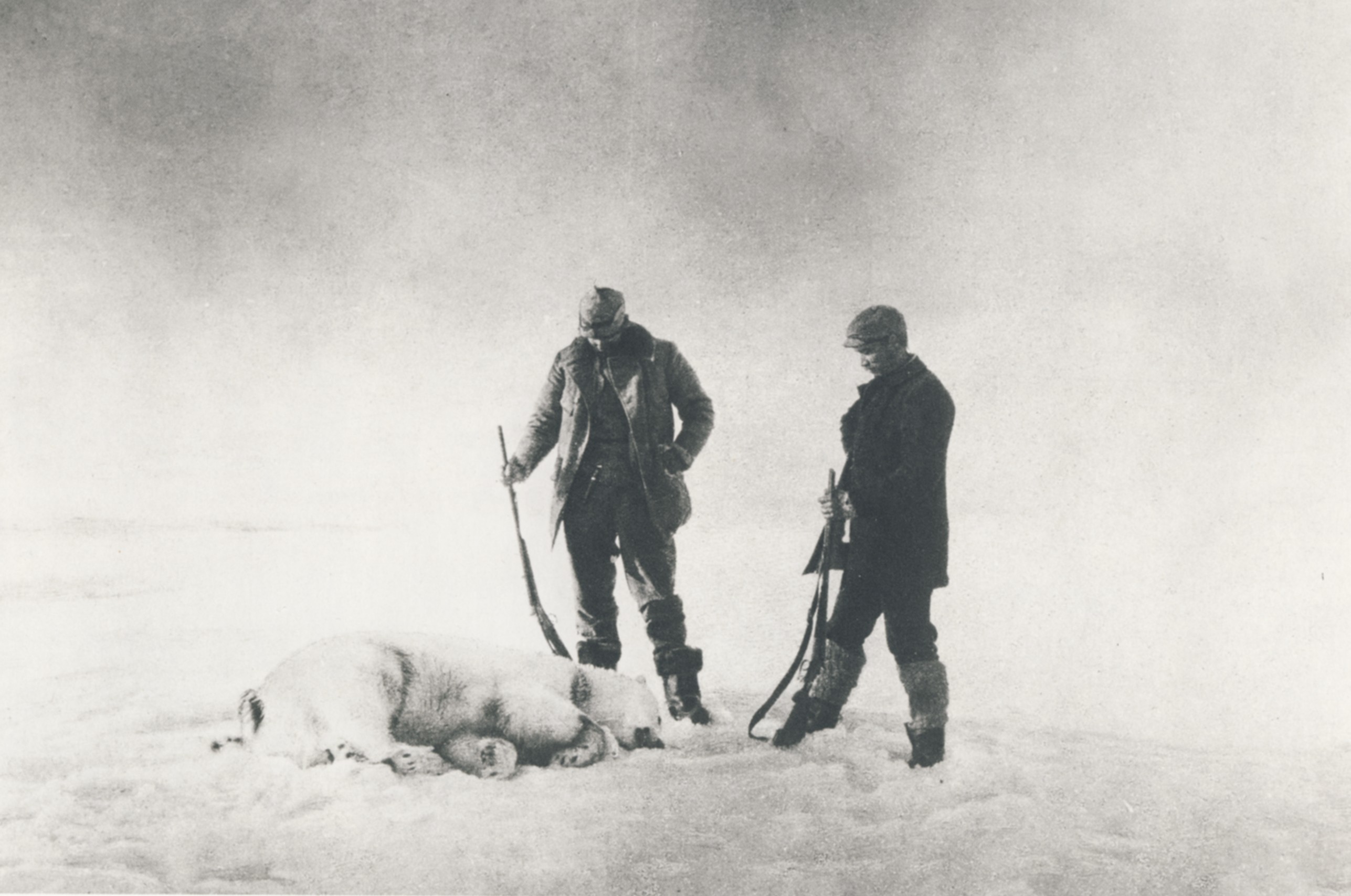
Nils Strindberg, the photographer responsible for these two classic pictures of the Andrée Polar Expedition of 1897, was dead long before the film was developed. Strindberg, fellow crew member Knut Frænkel, and exploration leader, Salomon August Andrée, all succumbed to freezing conditions several months after a ballooning crash stranded them far from their destination. (The film they shot of their struggles wasn’t recovered until 1930, when their mysterious disappearance was finally solved.)
Salomon August Andrée, born in 1854, was a Swedish engineer, physicist and his country’s first aeronaut. He longed to reach the North Pole and set out with that goal in mind in the hydrogen balloon Örnen (or Eagle). He and his cohorts were ill-prepared in numerous ways and certainly he had deluded himself about the possibility for success, but beneath his bravado the truth nagged at him. Even though the skilled adventurer had been nervous about the dangerous expedition, many weren’t worried when he first lost contact with civilization. They should have been. From the July 26, 1897 Brooklyn Daily Eagle:
“Andrée has not been heard from. His alleged pigeons were somebody else’s pigeons. Nevertheless, there is no cause for alarm. His balloon is the staunchest that ever was made and although gas will leak from an ordinary balloon so that it would be unlikely to stay up for more than a week, there is no reason why his should not float for a month, because it has been made actually tight, is composed of three layers of silk, each oiled, and the outer one was thickly varnished. Only an accident could puncture it so as to allow any rapid escape of gas. The loss of his drag rope may have compelled him to fly higher than he had intended, for he wanted, if possible, to keep at a height of about 600 feet. His brief experience in the air may have modified this intention. From a higher altitude he can overlook a far wider expanse of country and even if portions of it were covered with clouds of fog he would still be able to define his whereabouts with a measure of certainty, which he could not do if he were immersed in the vapors near the sea.
As he is prepared for reasonable emergencies, however, the time for anxiety is not yet. As to his forebodings, they count for nothing. Any body would feel a trifle anxious in undertaking a journey of this kind, especially when he had other lives than his own in his charge; but these glooms were probably dispelled within ten minutes after the balloon had risen into the bracing air above Spitzbergen. If Andrée attains the pole and loses his life in so doing we may get the news of the achievement in some of the ways that he has devised.”
“In June of 1983, Henry Lee Lucas was arrested in Texas for possession of a firearm. Five days later, he confessed to the brutal murder of an elderly neighbor, Kate Rich. If his famous predecessor Ted Bundy evoked the serial killer’s ‘mask of sanity,’ Lucas, a one-eyed former mental patient who had already done time for killing his mother, seemed to embody the monster behind the mask. Born in the backwoods ofVirginia, Lucas was a nasty piece of work. His father, according to stories, was a moonshiner who had passed out on a railroad track in a drunken stupor and had had both legs severed by a passing train. He hopped around legless for a while before dragging his sorry self into the cold one night to freeze to death. Henry’s mother was no better: allegedly a prostitute, she forced her family to watch her meetings with ‘clients,’ it was claimed, and regularly beat her children with a club. Not surprisingly, young Henry’s life of crime began at an early age.
Seemingly remorseless, Lucas admitted upon arrest that he had murdered his elderly neighbor and raped her dead body. But that was only the beginning. Once in custody, he spontaneously began confessing to more murders. First it was 27 women. Then 100. Then 150. Then 165. He offered up the name of his frequent accomplice: Ottis Toole, who was already in jail in Jacksonville, Florida. Police declared that between them, Lucas and Toole were good for at least 28 murders in eight states, including some of what were being called ‘the I-35 killings’—the late-’70s murders of around 20 hitchhikers and women with car trouble along Interstate 35 in Texas. By October of 1983, Lucas was admitting to 200 murders. Then Ottis Toole—perhaps greedy to share some of that airtime—confessed to having killed Adam Walsh. The son of a wealthy Florida hotel developer, six-year-old Adam had been kidnapped in 1981 from a Florida shopping mall. When Adam’s severed head turned up sixteen days later, his father, John, dedicated his life to preventing crimes against children. John Walsh went on to found the National Center for Missing and Exploited Children, and would eventually find his niche as host of the Fox network’s longest-running program, America’s Most Wanted.
The Lucas confessions picked up where Ted Bundy left off. Exaggerated though they turned out to be, the confessions of Lucas and Toole confirmed what many already believed: the nation was being haunted by traveling murderers.”
I wouldn’t say that I dislike the young. I’m simply not a fan of naïveté. I mean, unless you have an erotic interest in them, what other interest could you have? What are they going to possibly say that’s of interest? People ask me, Aren’t you interested in what they’re thinking? What could they be thinking? This is not a middle-aged curmudgeonly attitude; I didn’t like people that age even when I was that age.
INTERVIEWER
Well, what age do you prefer?
LEBOWITZ
I always liked people who are older. Of course, every year it gets harder to find them. I like people older than me and children, really little children.
INTERVIEWER
Out of the mouths of babes comes wisdom?
LEBOWITZ
No, I’m just intrigued by them, because, to me, they’re like talking animals. Their consciousness is so different from ours that they constitute a different species. They don’t have to be particularly interesting children; just the fact that they are children is sufficient. They don’t know what anything is, so they have to make it up. No matter how dull they are, they still have to figure things out for themselves. They have a fresh approach.”