
Urban Studies

You are currently browsing the archive for the Urban Studies category.

From “Our Biotech Future,” Freeman Dyson’s 2007 New York Review of Books essay, in which the scientist ponders the possibilities that will result from genetic engineering being conducted by the general public:

“Domesticated biotechnology, once it gets into the hands of housewives and children, will give us an explosion of diversity of new living creatures, rather than the monoculture crops that the big corporations prefer. New lineages will proliferate to replace those that monoculture farming and deforestation have destroyed. Designing genomes will be a personal thing, a new art form as creative as painting or sculpture.

Few of the new creations will be masterpieces, but a great many will bring joy to their creators and variety to our fauna and flora. The final step in the domestication of biotechnology will be biotech games, designed like computer games for children down to kindergarten age but played with real eggs and seeds rather than with images on a screen. Playing such games, kids will acquire an intimate feeling for the organisms that they are growing. The winner could be the kid whose seed grows the prickliest cactus, or the kid whose egg hatches the cutest dinosaur. These games will be messy and possibly dangerous. Rules and regulations will be needed to make sure that our kids do not endanger themselves and others. The dangers of biotechnology are real and serious.

If domestication of biotechnology is the wave of the future, five important questions need to be answered. First, can it be stopped? Second, ought it to be stopped? Third, if stopping it is either impossible or undesirable, what are the appropriate limits that our society must impose on it? Fourth, how should the limits be decided? Fifth, how should the limits be enforced, nationally and internationally? I do not attempt to answer these questions here. I leave it to our children and grandchildren to supply the answers.”

Tags:

Tom Seaver, hugely famous after the Miracle Mets won the 1969 World Series, singing on the Kraft Music Hall.

Tags:

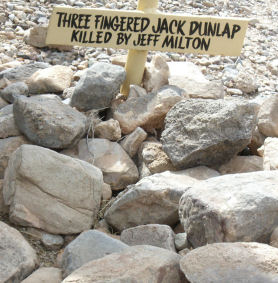
If you lived in the 19th century and your nickname was “Three-Fingered Jack,” you were most likely a huge a-hole and wanted for more than just disturbing the peace. Numerous bandits went by that handle and things got ugly for those who crossed paths with them–and, ultimately, for the criminals themselves. A trio of short Brooklyn Daily Eagle pieces follow about various Three Finger Jacks.

••••••••••

“Three Fingered Jack Wanted” (April 10, 1889): “Police Superintendent Campbell received the following uniquely worded missive from an Indiana sheriff to-day:

‘I want Three Fingered Jack, described as follows: Height, five feet nine inches; weight, 235 pounds; complexion medium, smooth face, brown hair, blocky build, upper teeth white (look like artificial), lips little thick, third finger on one hand off at or near knuckle joint, little finger of same hand bent. He wore stiff black hat, dark suit and overcoat. He is a sport in hard luck, and talks all kind of games. Has been in the prize ring. Is wanted for false pretenses and swindling. Arrest him and wire me.’

George W. Reed
Sheriff La Porte County, La Porte, Ind.”

••••••••••

“Train Robber Found Dying” (Feb 17, 1900): “Tombstone, Ariz.–One of the train robbers who held up the train at Fairbanks Thursday night has been found in a dying condition at Sycamore Springs, nine miles from Tombstone. The robber’s name is John Dunlap, alias Three Fingered Jack. He was brought from Colorado a few months ago on a requisition to answer a charge of highway robbery, but the District Attorney dismissed the case. Dunlap’s three accomplices are being pursued by a sheriff’s posse. The trail leads in the direction of the Cochise stronghold in the Dragoon Mountains. The wounded robber received in the abdomen the full of charge of a shotgun fired by the Wells-Fargo messenger. An ambulance left this place to bring the wounded man to town.”

••••••••••

“An Outlaw Killed in Bed” (December 4, 1895): “Perry, Oklahoma Territory–Jack Phineas, alias Three Fingered Jack, one of the most noted outlaws in Oklahoma, was killed while in bed with his wife near Kildare, Monday night, by some unknown person. He was a member of the famous Dalton Gang, and during his eventful career has probably committed every crime on the calendar. About 9 o’clock Monday night some one crept to the room and cut the throat of the outlaw from ear to ear. The murderer evidently knew the direct spot where Phineas lay, as his wife was not awakened until the deed was done. Whether he had an old grudge against Phineas or what is not known.”

Tags: , , , , ,

At the Financial Times, Simon Schama presents a portrait of Yoko Ono at 79. An excerpt about the bold performance art she made before she was a Beatle bride, which showed a really good understanding of neuroscience:

“In a cold-water apartment on Chambers Street, New York, she gave a series of performances and concerts in which minimalist ‘instructions’ and transient experiences replaced the static, monumental pretensions of framed pictures. The prompted eye and the receptive brain made the pictures instead. The technique was lovely, liberating and genuinely innovative. ‘I thought art should be like science, always discovering things afresh, and I wanted to be Madame Curie.’

So when she and Lennon had their momentous encounter at Indica in 1966, Ono was already established as an avant-garde conceptual artist. She insists she really had no idea who he was or what he did. ‘I just saw this rather attractive guy who seemed to be taking my work very seriously.’ Of pop music she knew nothing, ‘not even of Elvis Presley; just maybe some jazz.’ Of what was about to hit them both out there in Beatlemania land she had no clue. ‘I was naïve. We both were … we thought that it was going to be really great.’ It wasn’t. ‘My work totally disappeared and John, with all that power he had, was going to go down too.’ She falls quiet for a moment; a flicker of sadness clouding the wide, expressively sunny face. ‘I feel very badly if maybe I was the cause of it.'” (Thanks Browser.)

••••••••••

“The Cut Piece,” 1965:

Tags: ,

Speaking of the Singularity, a passage from Carole Cadwalladr’s new Guardian article about Peter Diamandis’ ultra-expensive Singularity University:

“There’s a neat circularity to this. Peter Diamandis grew up in Brooklyn, the son of Greek immigrant parents, and was himself inspired to become a scientist by the Apollo mission, doing degrees in medicine and molecular biology and finally a PhD in aerospace engineering at MIT. The Singularity University isn’t even the first university he’s founded. He set up the International Space University while he was still in his 20s and which has now trained an entire generation of NASA scientists. It’s why Buzz Aldrin has come along, and why another astronaut, Dan Barry, teaches the SU’s robotics course (Barry’s big prediction: cyberdildonics. Robot sex. ‘You think it’s funny, right? But I’m also a rehabilitation physician, and sex is a basic human drive robots will be able to fulfil for the disabled, the widowed, the elderly. It’s going to happen. You might as well accept it and get in on the ground floor.’)

The future isn’t all thrilling robo-sex and free solar energy though. Barry’s talk also includes video of some of the other robots in development. If you think drones are scary, it’s because you haven’t yet seen the video on YouTube of autonomous swarming quadrocoptors. Or the hummingbird-shaped drone that can hover in the air and then fly in through a window, or Big Dog, which looks like something from Blade Runner, or, just last week, a new one with legs that can go where no Dalek ever could: up stairs.

None of these are being developed to help with meals on wheels or palliative care nursing, though. They’re war machines, most of which are being developed with funding or support from DARPA.”

••••••••••

“Preparing humanity for accelerating technological change”:

Tags: , ,

A 1969 Dutch report about Space Age tourism at Cape Kennedy. Don’t really need to know the language.

Interesting article in the Economist predicting the decline of the efficacy of doctors in an increasingly wired world with a growing, graying population:

“The past 150 years have been a golden age for doctors. In some ways, their job is much as it has been for millennia: they examine patients, diagnose their ailments and try to make them better. Since the mid-19th century, however, they have enjoyed new eminence. The rise of doctors’ associations and medical schools helped separate doctors from quacks. Licensing and prescribing laws enshrined their status. And as understanding, technology and technique evolved, doctors became more effective, able to diagnose consistently, treat effectively and advise on public-health interventions—such as hygiene and vaccination—that actually worked.

This has brought rewards. In developed countries, excluding America, doctors with no speciality earn about twice the income of the average worker, according to McKinsey, a consultancy. America’s specialist doctors earn ten times America’s average wage. A medical degree is a universal badge of respectability. Others make a living. Doctors save lives, too.

With the 21st century certain to see soaring demand for health care, the doctors’ star might seem in the ascendant still. By 2030, 22% of people in the OECD club of rich countries will be 65 or older, nearly double the share in 1990. China will catch up just six years later. About half of American adults already have a chronic condition, such as diabetes or hypertension, and as the world becomes richer the diseases of the rich spread farther. In the slums of Calcutta, infectious diseases claim the young; for middle-aged adults, heart disease and cancer are the most common killers. Last year the United Nations held a summit on health (only the second in its history) that gave warning about the rising toll of chronic disease worldwide.

But this demand for health care looks unlikely to be met by doctors in the way the past century’s was.”

••••••••••

“Man…woman…birth…death…infinity”:

"She will do gross stuff like use your kitchen sponge to wash everywhere."

My Grandma… (Westchester)

I would like to barter my Grandma. Currently I am living with her. She is independent and does not need to be taken care of. Just be prepared for her ignorant rants about how everyone is stupid and things used to be so much better. You will hear about how she is glad her husband is dead and probably some racist stuff also. She will be nice to you and everyone else’s face but will badmouth everyone behind their back in the six hours she spends on the phone a day. She will do gross stuff like use your kitchen sponge to wash everywhere and put it back in the sink. Also never eat her cooking. She is unsanitary and you will be crapping liquid for days. She does stuff like dipping raw chicken in bread crumbs and then putting the remainder back in the box to be used again. Grandma is a pack-rat who blows through money recklessly and then complains she is poor but uses the excuse that the bible says the world will end soon. And speaking of the bible if you ever cross her she will say you have the demons in you. She believes that she was diagnosed with MS in her thirties and overcame it. (First case I ever heard of.) Dont try and argue with her. She is always right. If you have any type of headache ever she will insist you are a drunk even though you never drink.

Doesn’t sound too great huh. Maybe we can barter for some yard work exchange for the next sixty years and you could maybe just push her down the stairs. Be creative…will entertain all offers.

Guy Debord directed this 1973 adaptation of his book, Society of the Spectacle. Um, some generalizations.

Tags:

From Vernor Vinge’s famous 1993 essay, “The Coming Technological Singularity: How to Survive in the Post-Human Era,” which coined the word which describes that moment when machine knowledge surpasses the human kind:

“What are the consequences of this event? When greater-than-human intelligence drives progress, that progress will be much more rapid. In fact, there seems no reason why progress itself would not involve the creation of still more intelligent entities — on a still-shorter time scale. The best analogy that I see is with the evolutionary past: Animals can adapt to problems and make inventions, but often no faster than natural selection can do its work — the world acts as its own simulator in the case of natural selection. We humans have the ability to internalize the world and conduct ‘what if’s’ in our heads; we can solve many problems thousands of times faster than natural selection. Now, by creating the means to execute those simulations at much higher speeds, we are entering a regime as radically different from our human past as we humans are from the lower animals.

From the human point of view this change will be a throwing away of all the previous rules, perhaps in the blink of an eye, an exponential runaway beyond any hope of control. Developments that before were thought might only happen in ‘a million years’ (if ever) will likely happen in the next century.

I think it’s fair to call this event a singularity (‘the Singularity’ for the purposes of this paper). It is a point where our models must be discarded and a new reality rules. As we move closer and closer to this point, it will loom vaster and vaster over human affairs till the notion becomes a commonplace. Yet when it finally happens it may still be a great surprise and a greater unknown.”

Tags:

"Seventeen couples have tried it so far. All but one left divorce-ready." (Image by Jennifer Pahlka.)

The road to splitsville can be a tortuous path for many married couples, but Dutch entrepreneur Jim Halfens has come up with an answer of sorts: the Divorce Hotel, a place for quick and tidy dissolutions. He hopes to bring his idea (and a reality show) to America, which will make us no more miserable than we already are. From Janet Morrissey in the New York Times:

“THE American marriage, it seems, is on the rocks. The common line — true or not — is that half of all marriages in this country end in divorce.

So here comes a plucky entrepreneur from, of all places, the Netherlands, with a wild, you’ve-got-to-be-joking plan to profit from the sorry state of so many American unions.

It’s called Divorce Hotel, and the idea is this: Check in on Friday, married. Then, with the help of mediators and independent lawyers, check out on Sunday, divorce papers in hand, all for a flat fee.

And — why not? — toss in some reality TV for good measure.

Unusual as it sounds, the Divorce Hotel concept is up and running in the Netherlands, where its mastermind, Jim Halfens, is helping unhappy marrieds divorce en suite. Seventeen couples have tried it so far. All but one left divorce-ready.

Now Mr. Halfens, 33, wants to take the idea to the United States. He is negotiating with hotels in several cities, including New York and Los Angeles, as well as with law firms and, yes, two television production companies — for a reality show.”

Tags: ,

From the August 23, 1853 Brooklyn Daily Eagle:

“On Saturday, a peacock attacked the infant daughter of John Kreutzer, of Summit Township, Pa., with such fury that he pecked out one of her eyes, and wounded the other before he was driven off. The child had a glass of milk, which, it appears, the bird wanted.”

Tags:

A good chunk of a 1963 Monitor program in which Peter O’Toole and Orson Welles discuss Hamlet.

Tags: ,

Maybe it’s because I’m from a fringy, blue-collar background in NYC, but I’ve always been very familiar with the informal economy, people earning a few extra dollars selling loosies or trinkets or food, handing out betting cards for bookies and other stuff that may or may not be legal. Such low-level entrepreneurship is becoming more common in the West during these desperate times, with the help of digital tools. A succinct explanation of the informal economy by Anand Giridharadas in the New York Times:

“One of the differences between rich and poor countries is that in the latter, people seldom wait for the government to ‘create jobs.’

When times are hard, they buy packs of cigarettes and sell them as singles; they find houses to clean through cousins of a cousin; they rent out bedrooms to students; they stock up on cellphone credit and peddle sidewalk calls by the minute.

It’s called the informal economy, and in much of the world it is bigger than the formal one. But it has been pushed onto the sidelines in the West, the refuge of criminals and the poor, because of labor laws, taxes, health and safety regulations and the like, which emerged to protect workers and consumers from the market’s vicissitudes and companies’ whims.”

Tags:

From the August 9, 1898 edition of the Brooklyn Daily Eagle:

“A horse took an apple yesterday from the fruit stand of Frank Cosleato, an Italian fruit peddler, 55 years old, of 143 Union Street. The peddler was much incensed and pulled out a knife and cut the horse in the nose, causing the animal considerable pain.”

Tags:

"Feel free to ask any questions."

Pinkys, feeders for sale – $1 (queens)

Rats for sale, different colors, different sizes. Pinkys and more. Feel free to ask any questions /problem reptile related. More than happy to help. Have a great day 0) !! 

Norman Mailer, a towering talent prone to huge missteps, became the worst groom this side of William S. Burroughs in 1960 when he stabbed his wife. His punishment was 17 days in Bellevue for observation; a suspended sentence was subsequently arrived at. An excerpt from the initial November 22, 1960 New York Times report of the infamous incident:

“When detectives went to question his wife Sunday at the hospital, they were told she was too ill to be questioned. One wound was said to be near her heart.

Last night, the hospital permitted the police to question her. They said she admitted with reluctance that her husband had stabbed her.

She said the stabbing occurred about 5 A.M. Sunday at a party at their apartment.

Mrs. Mailer told the police she could give no reason for the stabbing.

She said her husband suddenly walked up to her, looked at her, stabbed her with what she thought was a penknife or clasp knife, and left the apartment.

Mrs. Mailer said her husband later took her to the hospital.”

Tags: ,

You’ve probably seen this appearance by Louis C.K. with Conan (whom he wrote for earlier in his career) about a dozen times because it’s arguably the stand-up’s most famous moment. But I post it here anyway because I think when this interconnected and narcissistic age has calmed down, it will be the truest thing anyone has said about us. A compliment it’s not.

From “Do You Really Want to Live Forever?” Ronald Bailey’s Reason review of Stephen Cave’s new book, Immortality, which sees the defeat of death as a Pyrrhic victory: 

Why not simply repair the damage caused by aging, thus defeating physical death? This is the goal of transhumanists like theoretical biogerontologist Aubrey de Grey who has devised the Strategies for Engineered Negligible Senescence (SENS) program. SENS technologies would include genetic interventions to rejuvenate cells, stem cell transplants to replace aged organs and tissues, and nano-machines to patrol our bodies to prevent infections and kill nascent cancers. Ultimately, Cave cannot argue that these life-extension technologies will not work for individuals but suggests that they would produce problems like overpopulation and environmental collapse that would eventually subvert them. He also cites calculations done by a demographer that assuming aging and disease is defeated by biomedical technology accidents would still do in would-be immortals. The average life expectancy of medical immortals would be 5,775 years.” (Thanks Browser.)

Tags: , ,

From a piece about the need for ethical robots, in the Economist:

“Robots are spreading in the civilian world, too, from the flight deck to the operating theatre. Passenger aircraft have long been able to land themselves. Driverless trains are commonplace. Volvo’s new V40 hatchback essentially drives itself in heavy traffic. It can brake when it senses an imminent collision, as can Ford’s B-Max minivan. Fully self-driving vehicles are being tested around the world. Google’s driverless cars have clocked up more than 250,000 miles in America, and Nevada has become the first state to regulate such trials on public roads. In Barcelona a few days ago, Volvo demonstrated a platoon of autonomous cars on a motorway.

As they become smarter and more widespread, autonomous machines are bound to end up making life-or-death decisions in unpredictable situations, thus assuming—or at least appearing to assume—moral agency. Weapons systems currently have human operators ‘in the loop,’ but as they grow more sophisticated, it will be possible to shift to ‘on the loop’ operation, with machines carrying out orders autonomously.

As that happens, they will be presented with ethical dilemmas. Should a drone fire on a house where a target is known to be hiding, which may also be sheltering civilians? Should a driverless car swerve to avoid pedestrians if that means hitting other vehicles or endangering its occupants? Should a robot involved in disaster recovery tell people the truth about what is happening if that risks causing a panic?”

••••••••••

Volvo’s autonomous vehicles in Barcelona:

In Evgeny Morozov’s new article at Slate, he explains why cyber warfare may not be attractive to terrorist groups. Of course, if there was a critical mass of driverless cars or robotic surgeons to tamper with, things might be different. There would definitely by a scary wow factor in that scenario. An excerpt:

“Terrorists may be more keen on anonymity, but the reality is that in the decade since 9/11, no terrorist group has had much success causing serious disruption of the civilian or military infrastructure. For a group like al-Qaida, the costs of getting it right are too high, particularly because it’s not guaranteed that such a cyber-terror campaign would be as spectacular as detonating a bomb in a busy public square.”

Tags:

From the June 5, 1897 Brooklyn Daily Eagle:

“Eva Churchill, 3 years of age, a daughter of James Churchill, a Canarsie bayman, died yesterday afternoon at her house on Rockaway Avenue, near Avenue L, Canarsie Grove, from shock and convulsions caused by fright at the snoring of a drunken man.”

Tags: ,

The complete version of the very cool 1974 film, The World of Buckminster Fuller.

Tags:

"I would rather not compromise my dignity."

Kidney 4 Sale (Manhattan)

Young, healthy, non-smoker, athletic (jogger, tennis), educated (Bachelor of Science in Marketing), blood type A woman is looking to share my kidney with an individual/family who really needs it. I am not willing to travel outside of the continental US to have surgery. The job market has been unsympathetic to me and at this point its either sell a kidney or compromise my dignity. I would rather not compromise my dignity, besides, I would be helping to save someone’s life.

The opening of “Remember This,” Joshua Foer’s excellent 2007 National Geographic piece about people with extreme memories and those of us with more average neural connections governing the data and images we retain:

“There is a 41-year-old woman, an administrative assistant from California known in the medical literature only as ‘AJ,’ who remembers almost every day of her life since age 11. There is an 85-year-old man, a retired lab technician called ‘EP,’ who remembers only his most recent thought. She might have the best memory in the world. He could very well have the worst.

‘My memory flows like a movie—nonstop and uncontrollable,’ says AJ. She remembers that at 12:34 p.m. on Sunday, August 3, 1986, a young man she had a crush on called her on the telephone. She remembers what happened on Murphy Brown on December 12, 1988. And she remembers that on March 28, 1992, she had lunch with her father at the Beverly Hills Hotel. She remembers world events and trips to the grocery store, the weather and her emotions. Virtually every day is there. She’s not easily stumped.

There have been a handful of people over the years with uncommonly good memories. Kim Peek, the 56-year-old savant who inspired the movie Rain Man, is said to have memorized nearly 12,000 books (he reads a page in 8 to 10 seconds). ‘S,’ a Russian journalist studied for three decades by the Russian neuropsychologist Alexander Luria, could remember impossibly long strings of words, numbers, and nonsense syllables years after he’d first heard them. But AJ is unique. Her extraordinary memory is not for facts or figures, but for her own life. Indeed, her inexhaustible memory for autobiographical details is so unprecedented and so poorly understood that James McGaugh, Elizabeth Parker, and Larry Cahill, the neuroscientists at the University of California, Irvine who have been studying her for the past seven years, had to coin a new medical term to describe her condition: hyperthymestic syndrome.

EP is six-foot-two (1.9 meters), with perfectly parted white hair and unusually long ears. He’s personable, friendly, gracious. He laughs a lot. He seems at first like your average genial grandfather. But 15 years ago, the herpes simplex virus chewed its way through his brain, coring it like an apple. By the time the virus had run its course, two walnut-size chunks of brain matter in the medial temporal lobes had disappeared, and with them most of EP’s memory.”

••••••••••

Oliver Sacks discussing his pen pal Alexander Luria, the neuropsychologist who authored The Mind of a Mnemonist:

Tags: , ,

« Older entries § Newer entries »