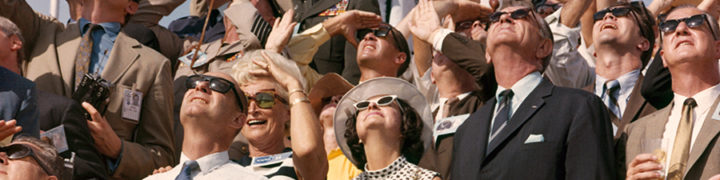
Yoshiyuki Sankai at Tsukuba University has created exoskeletons that increase the limb strength by ten times. Older folks barely able to walk become ambulatory again. (Thanks Singularity Hub.)
You are currently browsing the archive for the Science/Tech category.
Tags: Yoshiyuki Sankai
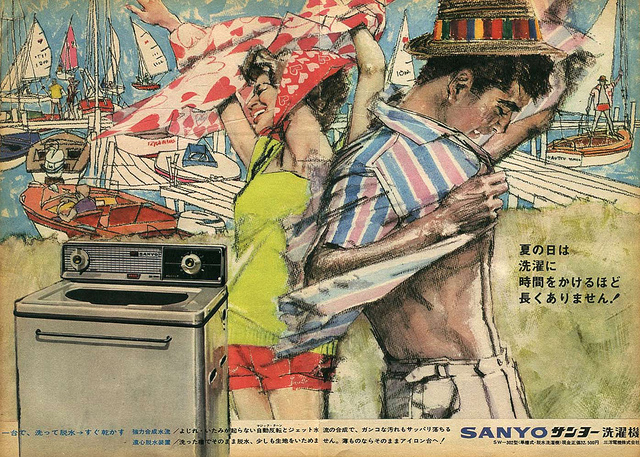
Billions of people on the planet still wash their clothes by hand. Swedish academic and doctor Hans Rosling uses this fact as a jumping-off point for a great TED talk about industrialization and environmentalism.
From “Fifteen Hundred Knuckles at the Tub,” an article in the December 28, 1854 Brooklyn Daily Eagle, as reprinted from the Charleston Courier: “The latest invention is a new washing machine at the Astor House. It is called the ‘great knuckle.’ In the card of the owner it is stated that the new machine is saving from ten to fifteen girls a day, in the wash-room at the Astor House. A vial washing machine man at the Crystal Palace offered a cup valued at $50, to any person who could produce anything that would beat his. The great knuckle washing-machine man will give a cup valued at $500 to any one who will bring his machine to the Astor House, and wash one dozen pieces while he is washing three dozen! He says that instead of using one pair of knuckles, as old Eve commenced with, his machine is a combination of from 200 to 1,500. Great are the merits of washing mahcines!”
Tags: Hans Rosling
A new Daily Mail article by Rob Waugh guesses that Apple design guru Johnathan Ive won’t be leaving the company, as has been rumored, to move back to his native England. It also provides an account of the lengths Ive will go to make his designs sleeker. An excerpt:
“Few Westerners have ever seen the forging of a Japanese samurai sword. It’s considered a sacred practice in Japan; one of the few traditional arts that has yet to be bettered by modern science. Japanese smiths work through the night (better to judge the heat of metal by eye) hammering, melting and forging by hand to produce the finest blades in the world.
The steel is folded and refolded thousands of times to create a hard outer layer and a softer inner core resulting in a singular blade: terrifyingly sharp but far less prone to breaking than any sword forged in the West.
Once the blade is complete it is polished to a mirror finish, an elaborate procedure that itself can take weeks. The long and laborious process pushes metal to its absolute limit – which is precisely why Jonathan Ive wanted to see it first hand.
Ive endlessly seeks crucial knowledge that can help him to make the thinnest computing devices in the world, so it surprised no one at Apple that their obsessive design genius would take a 14-hour flight for a meeting with one of Japan’s leading makers of katana.
Afterwards Ive, shaven-headed, heavily muscled, in his trademark T-shirt and jeans, watched intently as the man went about his nocturnal labour.
This month Apple, the fabulously successful technology company – indeed, now the world’s biggest, having surpassed Microsoft – launched its latest piece of technology, the iPad 2. The machine was the result of this sort of research, and Ive’s preferred process of making the same product over and over again; in this case, carving metal and silicon until the product was one-third thinner and 0.2lb lighter than its predecessor.”
Ive in the documentary, Objectified:
Tags: Jonathan Ive, Rob Waugh
The robotic arms can detect and recognize the food. (Thanks IEEE Spectrum.)
Back when King was based in Miami and still wearing a belt. (Thanks Reddit.)
Fresco being pissy during a 2007 Forbes interview:
“Forbes: What’s one thing you were sure would happen, but didn’t?
Jacque Fresco: I was sure that Forbes.com would ask more significant questions to a futurist about the future. Perhaps something like, What is a positive direction for the future to work toward in order to eliminate many of the problems we face today?
What is needed is the intelligent management of Earth’s resources. If we really wish to put an end to our ongoing international and social problems we must eventually declare Earth and all of its resources as the common heritage of all the world’s people. Earth is abundant with plentiful resources. Our practice of rationing resources through monetary control is no longer relevant and is counter-productive to our survival.
Today we have access to highly advanced technologies. But our social and economic system has not kept up with our technological capabilities that could easily create a world of abundance, free of servitude and debt. This could be accomplished with the infusion of a global, resource-based civilization where all goods and services are available without the use of money, credit, barter or any other form of debt or servitude.”
Tags: Jacque Fresco, Larry King
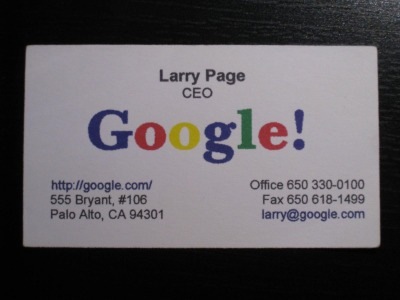
Google’s ambition knows few bounds. A note about Google’s goals from a new Fast Company article at the moment when Larry Page assumes leadership of the company:
“Google is not always easily categorized. You can’t shorthand it the way you can with, say, Apple (a consumer electronics company) or Microsoft (a software company). While minimizing the world-changing visions of Steve Jobs and Bill Gates seems unwise, making computers a utility and transforming their power into desirable objects cannot compare with the ambitions of Google’s founders. Page and Brin’s stated mission has been to catalog and analyze all of the world’s information, and their larger, unstated aim is to reform all of the globe’s inefficiencies. In addition to translation and speech recognition, the founders are obsessed with image recognition (Google Goggles), advanced energy solutions (Google Energy), and robotics (check out its self-driving car).
Page and Brin’s big bets don’t always work. Google has had to back off reinventing TV-, radio-, and print-advertising sales; its book-digitization project has become a protracted mess; and its initiatives to make wireless networks more open and to change the way cell-phone carriers sell their plans have failed.
Focus on the misses, though, and you risk overlooking its remarkable successes. Google persists in reforming modern communications networks. Google Voice has taken off. Indeed, in 10 years, we might look back on this moment in Google’s history with surprise. While tech wags slagged Google for losing to Facebook, almost none of us saw it turning into the world’s largest phone company.
That’s what’s thrilling about Page taking the helm at Google right now. You get the sense that under his leadership, Google could try its hand at anything. More than anything else during my interviews with people who know Page, one comment stands out: ‘I don’t care what you put in the article,’ says David Lawee, Google’s head of acquisitions. ‘To me, this is the real story: Larry is a truly awesome inventor-entrepreneur. My aspiration for him is that he becomes one of the greatest inventors-entrepreneurs in history, in the realm of the Thomas Edisons of the world.'”
Tags: David Lawee, Larry Page, Sergey Brin
Someone to find the clicker for you. (Thanks Fast Company.)
Canadian photographer Edward Burtynsky takes gorgeous photos of environmental ugliness, the indiustrial ruins of abandoned California oil fields and Chinese landfills stuffed with discarded computer motherboards. There’s an excellent documentary about his work if you’d like to see more.
From Burtynsky’s site: “Nature transformed through industry is a predominant theme in my work. I set course to intersect with a contemporary view of the great ages of man; from stone, to minerals, oil, transportation, silicon, and so on. To make these ideas visible I search for subjects that are rich in detail and scale yet open in their meaning. Recycling yards, mine tailings, quarries and refineries are all places that are outside of our normal experience, yet we partake of their output on a daily basis.
These images are meant as metaphors to the dilemma of our modern existence; they search for a dialogue between attraction and repulsion, seduction and fear. We are drawn by desire – a chance at good living, yet we are consciously or unconsciously aware that the world is suffering for our success. Our dependence on nature to provide the materials for our consumption and our concern for the health of our planet sets us into an uneasy contradiction. For me, these images function as reflecting pools of our times.”
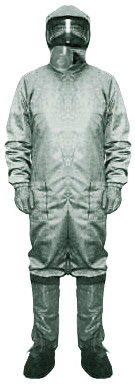
"Everyone is looking for Potassium Iodide with the recent nuclear activity in Japan." (Image by Мясников.)
Potassium Iodide – Anti Radiation Pill – $100 (Brooklyn – Manhattan )
I have a bottle of Potassium Iodide 65mg capsules #28 (a two week supply)
Everyone is looking for Potassium Iodide with the recent Nuclear activity in Japan
Potassium Iodide (KI)
What is Potassium Iodide (KI)?
Potassium iodide (also called KI) is a salt of stable (not radioactive) iodine. Stable iodine is an important chemical needed by the body to make thyroid hormones. Most of the stable iodine in our bodies comes from the food we eat. KI is stable iodine in a medicine form. This fact sheet from the Centers for Disease Control and Prevention (CDC) gives you some basic information about KI. It explains what you should think about before you or a family member takes KI.
What does KI do?
Following a radiological or nuclear event, radioactive iodine may be released into the air and then be breathed into the lungs. Radioactive iodine may also contaminate the local food supply and get into the body through food or through drink. When radioactive materials get into the body through breathing, eating, or drinking, we say that “internal contamination” has occurred. In the case of internal contamination with radioactive iodine, the thyroid gland quickly absorbs this chemical. Radioactive iodine absorbed by the thyroid can then injure the gland. Because non-radioactive KI acts to block radioactive iodine from being taken into the thyroid gland, it can help protect this gland from injury.
Natural and man-made.
Never happened. (Thanks Live Leak.)
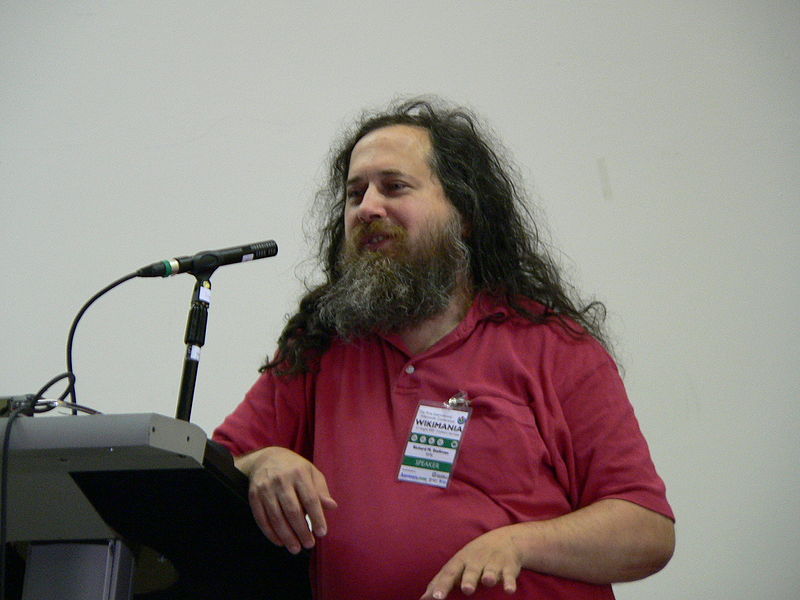
Richard Stallman in Germany, 2005. (Image by Chris McKenna.)
Richard Stallman, who has always been an extremely independent voice, on Networkworld:
“‘I don’t have a cell phone. I won’t carry a cell phone,’ says Stallman, founder of the free software movement and creator of the GNU operating system. ‘It’s Stalin’s dream. Cell phones are tools of Big Brother. I’m not going to carry a tracking device that records where I go all the time, and I’m not going to carry a surveillance device that can be turned on to eavesdrop.”
Tags: Richard Stallman
AT&T industrial film made in 1976, slightly revised in 1980. Helped tide Shatner over until the T.J. Hooker paychecks started rolling in. (Thanks Endgadget.)
Tags: William Shatner
Opening of John Donvan and Caren Zucker’s excellent 2010 Atlantic article about 77-year-old Donald Gray Triplett, the first person to ever be diagnosed with autism:
“IN 1951, A Hungarian-born psychologist, mind reader, and hypnotist named Franz Polgar was booked for a single night’s performance in a town called Forest, Mississippi, at the time a community of some 3,000 people and no hotel accommodations. Perhaps because of his social position—he went by Dr. Polgar, had appeared in Life magazine, and claimed (falsely) to have been Sigmund Freud’s ‘medical hypnotist’—Polgar was lodged at the home of one of Forest’s wealthiest and best-educated couples, who treated the esteemed mentalist as their personal guest.
Polgar’s all-knowing, all-seeing act had been mesmerizing audiences in American towns large and small for several years. But that night it was his turn to be dazzled, when he met the couple’s older son, Donald, who was then 18. Oddly distant, uninterested in conversation, and awkward in his movements, Donald nevertheless possessed a few advanced faculties of his own, including a flawless ability to name musical notes as they were played on a piano and a genius for multiplying numbers in his head. Polgar tossed out ’87 times 23,’ and Donald, with his eyes closed and not a hint of hesitation, correctly answered ‘2,001.’
Indeed, Donald was something of a local legend. Even people in neighboring towns had heard of the Forest teenager who’d calculated the number of bricks in the facade of the high school—the very building in which Polgar would be performing—merely by glancing at it.” (Thanks Longform.)
••••••••••
Tags: Caren Zucker, Donald Gray Triplett, Franz Polgar, John Donvan
Early computer chess, among other cool stuff.
AI pioneer Marvin Minsky at MIT in ’68 showing his robotic arm, which was strong enough to lift an adult, gentle enough to hold a child.
Minsky discussing smart machines on Edge: “Like everyone else, I think most of the time. But mostly I think about thinking. How do people recognize things? How do we make our decisions? How do we get our new ideas? How do we learn from experience? Of course, I don’t think only about psychology. I like solving problems in other fields — engineering, mathematics, physics, and biology. But whenever a problem seems too hard, I start wondering why that problem seems so hard, and we’re back again to psychology! Of course, we all use familiar self-help techniques, such as asking, ‘Am I representing the problem in an unsuitable way,’ or ‘Am I trying to use an unsuitable method?’ However, another way is to ask, ‘How would I make a machine to solve that kind of problem?’
A century ago, there would have been no way even to start thinking about making smart machines. Today, though, there are lots of good ideas about this. The trouble is, almost no one has thought enough about how to put all those ideas together. That’s what I think about most of the time.”
Tags: Marvin Minsky
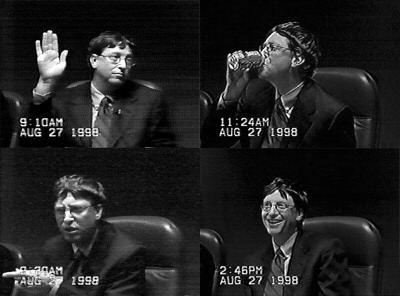
I like Bill Gates the philanthropist, though Bill Gates the extrepreneur was a real a-hole. Longreads put up a link to a Fortune profile about Bill Gates from 1986, when the 30-year-old tech titan was about to take Microsoft public. Here’s how writer Bro Uttal described Gates at the time:
“Money has never been paramount to this unmarried scion of a leading Seattle family, whose father is a partner in a top Seattle law firm and whose mother is a regent of the University of Washington and a director of Pacific Northwest Bell. Gates, a gawky, washed-out blond, confesses to being a ‘wonk,’ a bookish nerd, who focuses singlemindedly on the computer business though he masters all sorts of knowledge with astounding facility. Oddly, Gates is something of a ladies’ man and a fiendishly fast driver who has racked up speeding tickets even in the sluggish Mercedes diesel he bought to restrain himself. Gates left Harvard after his sophomore year to sell personal computer makers on using a version of the Basic computer language that he had written with Paul Allen, the co-founder of Microsoft. Intensely competitive and often aloof and sarcastic, Gates threw himself into building a company dedicated to technical excellence. ‘All Bill’s ego goes into Microsoft,’ says a friend. ‘It’s his firstborn child.””
••••••••••
Microsoft in 1986:
Tags: Bill Gates, Bro Uttal
Not that they have snot. Not yet, anyway. (Thanks Singularity Hub.)
Rudoph Steingass’ invention never caught on, probably because of the loss of trunk space. (Thanks Live Leak.)
Tags: Rudolph Steingass
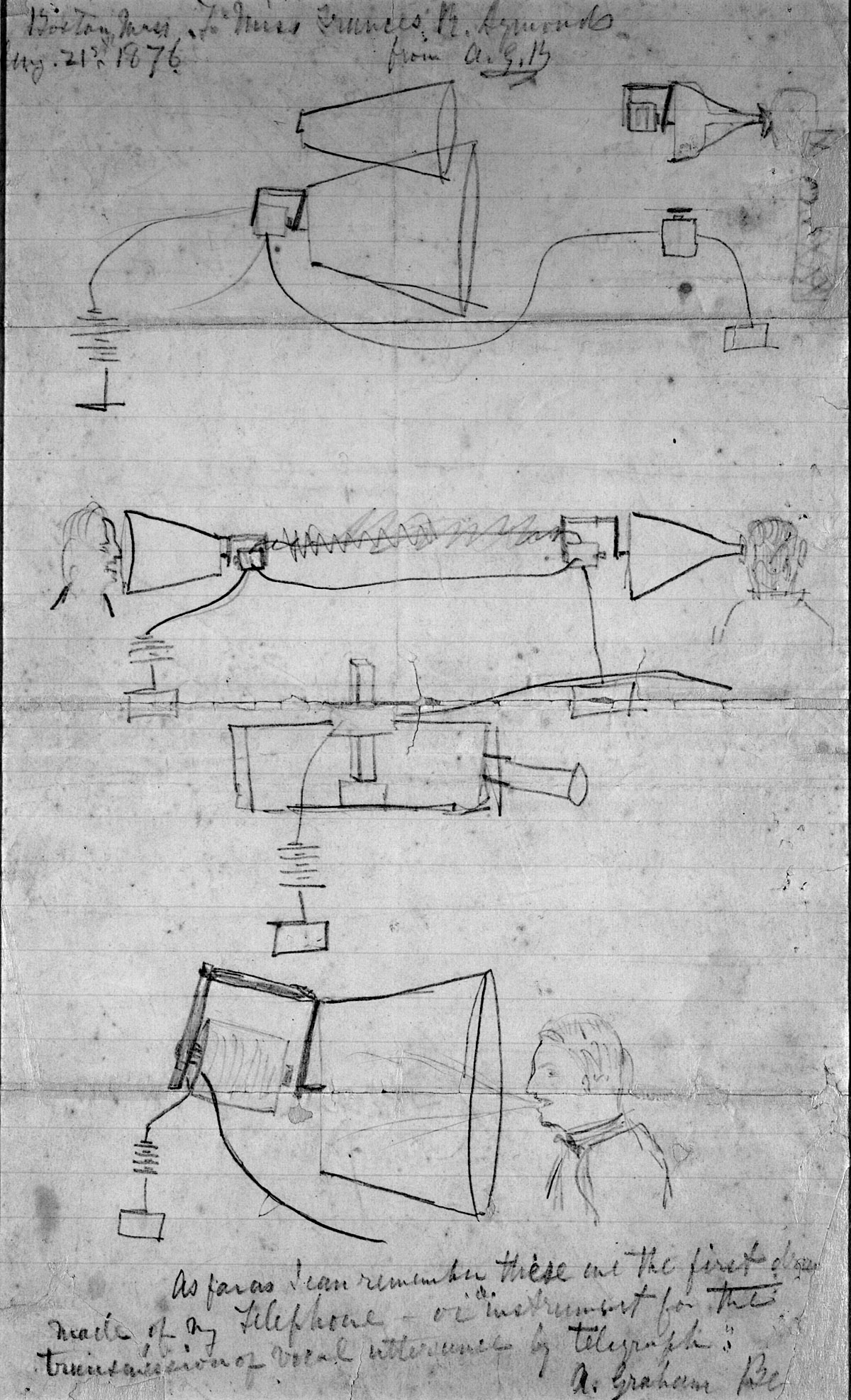
I’m sure Bell appropriated aspects of the telephone from other inventors, but this sketch is still fun to look at. (Thanks CrunchGear.)
Tags: Alexander Graham Bell
Made in 1964. C-3PO’s moves on display in the first minute. (Thanks Reddit.)
He is IBM engineer David Bradley, and he is be-boppin’ and skattin’ all over Bill Gates. (Thanks Reddit.)
Tags: Bill Gates, David Bradley
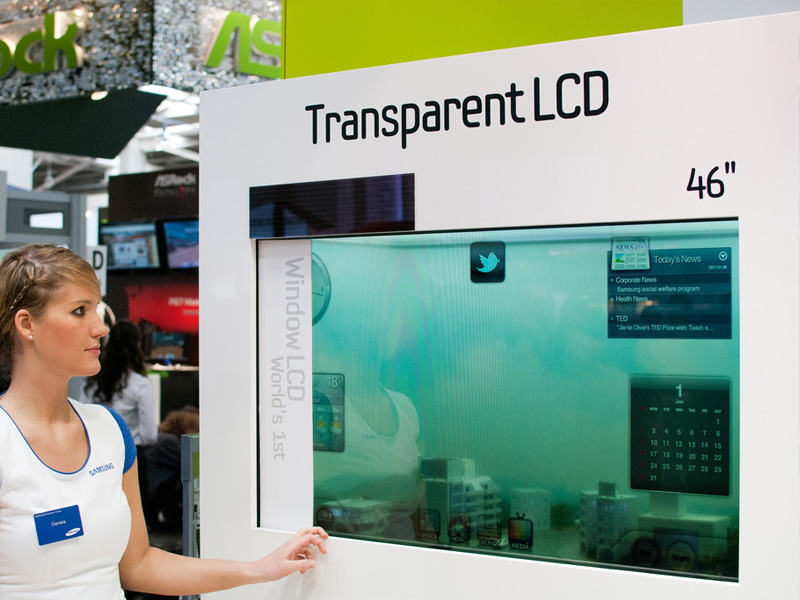
Good for when you want to watch your stories.
What amazing sights you’ll be able to see!
From Inhabitat: “Samsung just unveiled an amazing new solar-powered LCD television that can operate completely free from the power grid! The 46″ prototype TV, shown at CeBit in Germany, includes solar panels that produce energy from the ambient light in a room – because it was engineered to use very little energy, no additional power sources are needed. Another major breakthrough behind the concept is that the thin screen can display images and information while allowing objects behind it to be visible – this means that it has applications ranging from car windshield HUDs to storefront displays and digital window blinds.”
If.
Tags: Stephen Hawking