“Cavity Sam” gets cracked open by a bot. (Thanks Singularity Hub.)
You are currently browsing the archive for the Science/Tech category.

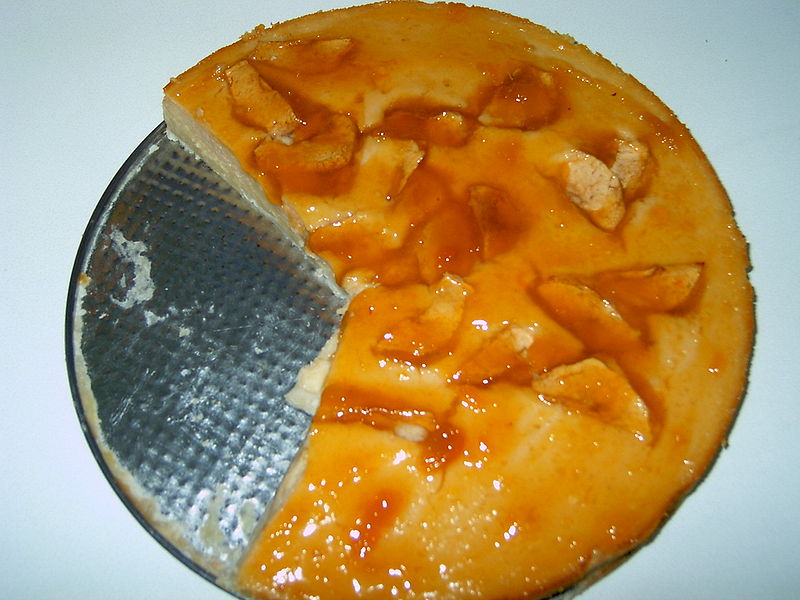
"But I wore the juice." (Image by Paoletta S.)
Idiocy is annoying but repeated idiocy is galling beyond belief. Why don’t we learn from our mistakes? Why do we repeat them? Perhaps we’re too stupid to know that we’re stupid? Errol Morris looks at this conundrum on his Times blog in the extravagantly titled 2010 post, “The Anosognosic’s Dilemma: Something’s Wrong but You’ll Never Know What It Is.” An excerpt:
“David Dunning, a Cornell professor of social psychology, was perusing the 1996 World Almanac. In a section called “Offbeat News Stories” he found a tantalizingly brief account of a series of bank robberies committed in Pittsburgh the previous year. From there, it was an easy matter to track the case to the Pittsburgh Post-Gazette, specifically to an article by Michael A. Fuoco:
ARREST IN BANK ROBBERY,
SUSPECT’S TV PICTURE SPURS TIPS
At 5 feet 6 inches and about 270 pounds, bank robbery suspect McArthur Wheeler isn’t the type of person who fades into the woodwork. So it was no surprise that he was recognized by informants, who tipped detectives to his whereabouts after his picture was telecast Wednesday night during the Pittsburgh Crime Stoppers Inc. segment of the 11 o’clock news.
At 12:10 a.m. yesterday, less than an hour after the broadcast, he was arrested at 202 S. Fairmont St., Lincoln-Lemington. Wheeler, 45, of Versailles Street, McKeesport, was wanted in [connection with] bank robberies on Jan. 6 at the Fidelity Savings Bank in Brighton Heights and at the Mellon Bank in Swissvale. In both robberies, police said, Wheeler was accompanied by Clifton Earl Johnson, 43, who was arrested Jan. 12.
Wheeler had walked into two Pittsburgh banks and attempted to rob them in broad daylight. What made the case peculiar is that he made no visible attempt at disguise. The surveillance tapes were key to his arrest. There he is with a gun, standing in front of a teller demanding money. Yet, when arrested, Wheeler was completely disbelieving. ‘But I wore the juice,’ he said. Apparently, he was under the deeply misguided impression that rubbing one’s face with lemon juice rendered it invisible to video cameras.
In a follow-up article, Fuoco spoke to several Pittsburgh police detectives who had been involved in Wheeler’s arrest. Commander Ronald Freeman assured Fuoco that Wheeler had not gone into ‘this thing’ blindly but had performed a variety of tests prior to the robbery. Sergeant Wally Long provided additional details — ‘although Wheeler reported the lemon juice was burning his face and his eyes, and he was having trouble (seeing) and had to squint, he had tested the theory, and it seemed to work.’ He had snapped a Polaroid picture of himself and wasn’t anywhere to be found in the image. It was like a version of Where’s Waldo with no Waldo. Long tried to come up with an explanation of why there was no image on the Polaroid. He came up with three possibilities:
(a) the film was bad;
(b) Wheeler hadn’t adjusted the camera correctly; or
(c) Wheeler had pointed the camera away from his face at the critical moment when he snapped the photo.
As Dunning read through the article, a thought washed over him, an epiphany. If Wheeler was too stupid to be a bank robber, perhaps he was also too stupid to know that he was too stupid to be a bank robber — that is, his stupidity protected him from an awareness of his own stupidity.”
••••••••••
A Morris commercial for Miller beer:
Tags: David Dunning, Errol Morris, McArthur Wheeler, Michael A. Fuoco
At Cornell University. (Thanks Open Culture.)
Tags: Richard Feynman
Impressive bots if not great soccer players. (Thanks IEEE Spectrum.)
Which was held in Italy. (Thanks Singularity Hub.)
Tags: Ray Kurzweil

"It's about the Internet when it was a more tactile experience."
The Slow Internet movement has been around for awhile, but it seems to be gaining traction. Or perhaps it just hired a better publicist. NPR presents a story about people who seek out dial-up connections, yearning for a slower user experience, a doomed but interesting experiment in ’90s nostalgia. It’s an offshoot of sorts of the Slow Food movement. Listen to the report here. An excerpt:
“Dial-up Internet is enjoying a huge comeback as the slow-net wave (partly inspired by the slow food movement) crashes onto hipster shores nationwide.
OK Go frontman Damian Kulash has written the trend’s anthem. The song is called ‘Love Me Longtime.’
‘It’s about the Internet when it was a more tactile experience — when it took something to be on the Internet,’ Kulash says.” (Thanks Klaw.)
Tags: Damian Kulash
For roaches, the Singularlity has arrived. (Thanks IEEE Spectrum.)
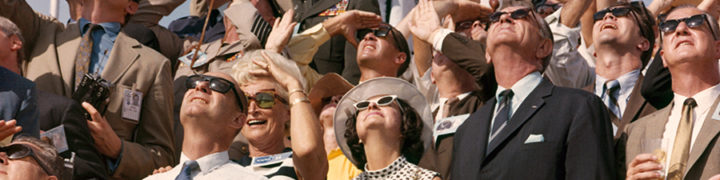
"The upper 1 percent of Americans are now taking in nearly a quarter of the nation’s income every year."
From “Of the 1%, by the 1%, for the 1%,” a cogent takedown in Vanity Fair of the rising wealth inequality by economist Joseph Stiglitz:
“It’s no use pretending that what has obviously happened has not in fact happened. The upper 1 percent of Americans are now taking in nearly a quarter of the nation’s income every year. In terms of wealth rather than income, the top 1 percent control 40 percent. Their lot in life has improved considerably. Twenty-five years ago, the corresponding figures were 12 percent and 33 percent. One response might be to celebrate the ingenuity and drive that brought good fortune to these people, and to contend that a rising tide lifts all boats. That response would be misguided. While the top 1 percent have seen their incomes rise 18 percent over the past decade, those in the middle have actually seen their incomes fall. For men with only high-school degrees, the decline has been precipitous—12 percent in the last quarter-century alone. All the growth in recent decades—and more—has gone to those at the top. In terms of income equality, America lags behind any country in the old, ossified Europe that President George W. Bush used to deride. Among our closest counterparts are Russia with its oligarchs and Iran. While many of the old centers of inequality in Latin America, such as Brazil, have been striving in recent years, rather successfully, to improve the plight of the poor and reduce gaps in income, America has allowed inequality to grow.”
Tags: Joseph Stiglitz

"No matter how tightly they clung to the surrogate mothers, however, the monkeys remained psychologically abnormal."
A note about an important shift in child rearing that occurred during the 1950s from “Hellhole,” a 2009 New Yorker article about solitary confinement by the Brooklyn-born surgeon and excellent writer Atul Gawande:
“Well into the nineteen-fifties, psychologists were encouraging parents to give children less attention and affection, in order to encourage independence. Then Harry Harlow, a professor of psychology at the University of Wisconsin at Madison, produced a series of influential studies involving baby rhesus monkeys.
He happened upon the findings in the mid-fifties, when he decided to save money for his primate-research laboratory by breeding his own lab monkeys instead of importing them from India. Because he didn’t know how to raise infant monkeys, he cared for them the way hospitals of the era cared for human infants—in nurseries, with plenty of food, warm blankets, some toys, and in isolation from other infants to prevent the spread of infection. The monkeys grew up sturdy, disease-free, and larger than those from the wild. Yet they were also profoundly disturbed, given to staring blankly and rocking in place for long periods, circling their cages repetitively, and mutilating themselves.
At first, Harlow and his graduate students couldn’t figure out what the problem was. They considered factors such as diet, patterns of light exposure, even the antibiotics they used. Then, as Deborah Blum recounts in a fascinating biography of Harlow, Love at Goon Park, one of his researchers noticed how tightly the monkeys clung to their soft blankets. Harlow wondered whether what the monkeys were missing in their Isolettes was a mother. So, in an odd experiment, he gave them an artificial one.
In the studies, one artificial mother was a doll made of terry cloth; the other was made of wire. He placed a warming device inside the dolls to make them seem more comforting. The babies, Harlow discovered, largely ignored the wire mother. But they became deeply attached to the cloth mother. They caressed it. They slept curled up on it. They ran to it when frightened. They refused replacements: they wanted only ‘their’ mother. If sharp spikes were made to randomly thrust out of the mother’s body when the rhesus babies held it, they waited patiently for the spikes to recede and returned to clutching it. No matter how tightly they clung to the surrogate mothers, however, the monkeys remained psychologically abnormal.”
Tags: Atul Gawande, Harry Harlow
Their style is reminiscent of Boris Becker.
Seems like a million things could go wrong. (Thanks Singularity Hub.)
Urban planning students in the house.
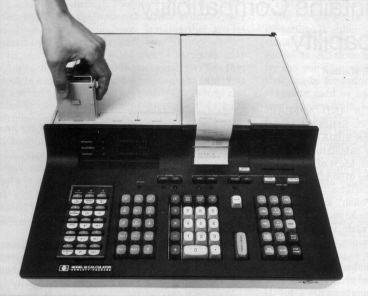
"Hewlett-Packard introduced the first programmable desktop calculator."
In Paul Allen’s forthcoming memoir, Idea Man, which is excerpted in the new Vanity Fair, the Microsoft co-founder pinpoints ten months when the technology we know today first became possible:
“That year, 1968, would be a watershed in matters digital. In March, Hewlett-Packard introduced the first programmable desktop calculator. In June, Robert Dennard won a patent for a one-transistor cell of dynamic random-access memory, or DRAM, a new and cheaper method of temporary data storage. In July, Robert Noyce and Gordon Moore co-founded Intel Corporation. In December, at the legendary ‘mother of all demos’ in San Francisco, the Stanford Research Institute’s Douglas Engelbart showed off his original versions of a mouse, a word processor, e-mail, and hypertext. Of all the epochal changes in store over the next two decades, a remarkable number were seeded over those 10 months: cheap and reliable memory, a graphical user interface, a ‘killer’ application, and more.”
Tags: Douglas Engelbart, Gordon Moore, Paul Allen, Robert Dennard, Robert Noyce

"These days I play video games in the morning, play video games in the afternoon and spend my evenings playing video games."
The opening of journalist Tom Bissell’s account in the Guardian of how he has willfully pissed away several years of his life on twin addictions to Grand Theft Auto IV and cocaine:
“Once upon a time I wrote in the morning, jogged in the late afternoon and spent most of my evenings reading. Once upon a time I wrote off as unproductive those days in which I had managed to put down ‘only’ a thousand words. Once upon a time I played video games almost exclusively with friends. Once upon a time I did occasionally binge on games, but these binges rarely had less than a fortnight between them. Once upon a time I was, more or less, content.
‘Once upon a time’ refers to relatively recent years (2001-2006), during which I wrote several books and published more than 50 pieces of magazine journalism and criticism – a total output of, give or take, 4,500 manuscript pages. I rarely felt very disciplined during this half decade, though I realise this admission invites accusations of disingenuousness. Obviously I was disciplined. These days I have read from start to finish exactly two works of fiction – excepting those I was also reviewing – in the last year. These days I play video games in the morning, play video games in the afternoon and spend my evenings playing video games. These days I still manage to write, but the times I am able to do so for more than three sustained hours have the temporal periodicity of comets with near-earth trajectories.” (Thanks Longreads.)
Tags: Tom Bissell
Supercomputer pioneer Seymour Cray was so far ahead of his time that it took decades for the industry to catch up to him. The Computer History Museum remembers the maverick inventor with this video.
Seymour Cray talking about the merging of the digital and the biological, in 1995: “The whole concept of living things are digital I think we all have to face now. They are truly digital. They are made of molecules, that we don’t understand how they work but we’re beginning to understand their physical properties. It’s a very exciting time coming. Very scary because we don’t know what kind of mess we’re going to get into here with biological tampering I would say is the right word. I certainly don’t want to take any moral responsibility in this area but clearly humans are going to mess with it in the future.”
Tags: Seymour Cray
This way you won’t have to make any effort in life. (Thanks Live Leak.)
I don’t trust the girl with the mustache who says she’s 12. Amazingly, the company that produced this video is still in business. (Thanks Reddit.)
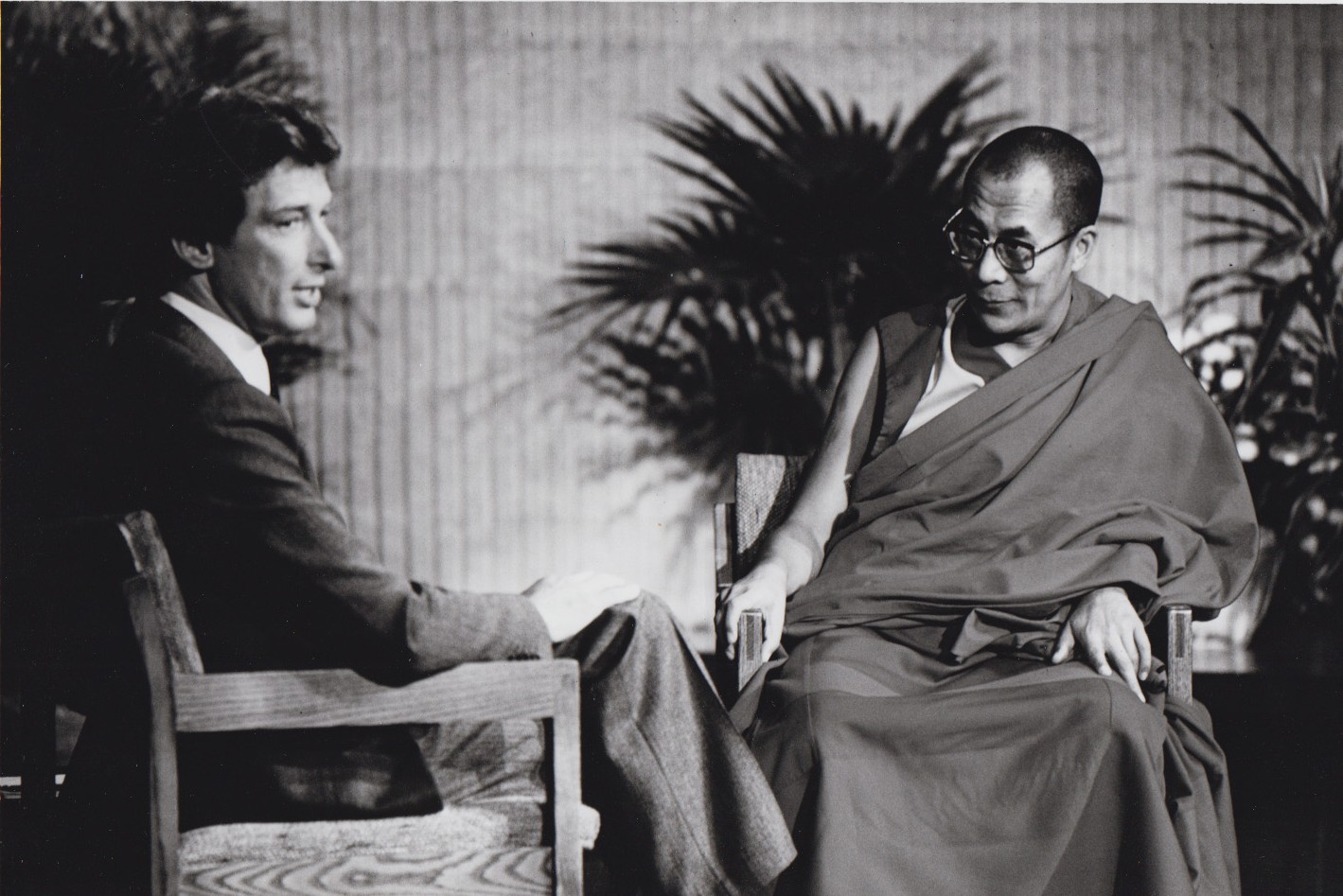
Singer-songwriter John Denver, who was always seeking, never quite finding, was a proponent of the controversial self-help movement, the Erhard Seminar Training. When Denver substituted for vacationing host Johnny Carson on the Tonight Show in 1973, it was natural that he would invite the man behind the verbally abusive est workshops, Werner Erhard.
The footage is shaky and black-and-white, but worth watching. Oh, and that’s puppeteer Shari Lewis of Lamb Chop fame to Erhard’s right.
Suzanne Snider recalls the origins of est in a 2003 Believer magazine:
“Born John Paul Rosenberg in 1935, Werner Erhard changed his name in 1960 and left his wife and three children in Philadelphia to fly West with his mistress June Bryde. The two cobbled together a conspicuously Teutonic moniker for the nice Jewish boy from Pennsylvania (inspired by two different people—German finance minister Ludwig Erhard and atomic scientist Werner Heisenberg—both mentioned in an in-flight article on Germany’s economic recovery). Erhard resumed his career in sales when he reached San Francisco, working for Encyclopedia Britannica, Parents magazine, and Great Books, while experiencing a wide range of what the Human Potential Movement had to offer: Gestalt therapy, Zen Buddhism, Mind Dynamics, Dale Carnegie, Scientology, and a book by Napoleon Hill called Think and Grow Rich. In 1971, Erhard had his infamous epiphany while driving over the Golden Gate Bridge. He said in his biography, ‘…after I realized that I knew nothing—I realized that I knew everything… everything was just the way that it is, and that I was already all right… I realized I was not my motions or thoughts. I was not my ideas, my intellect, my perceptions, my beliefs…I became Self.’ His revelation became the basis for est workshops, his shrewdest business scheme to date.
Erhard’s new view on life, which treads a fine line between Zen Buddhism and mild psychosis, would appear a hard sell. It wasn’t lucid on an intellectual level, if at all, and other parties would have to comprehend it through means, admittedly, other than reason and logic. Nonetheless, est (which stands for Erhard Seminars Training, and also means ‘it is’ in Latin) began in the ballroom of the Jack Tar Hotel in San Francisco, and became the singularly most influential group to emerge from the Human Potential Movement. Understandably, this strange new program, consisting of heady imagery, emotional confessions, est-specific jargon (‘racket,’ ‘asshole,’ ‘barrier’) and aphorisms (‘I know that you know that I love you, what I want you to know is that I know you love me’ or ‘If God told you exactly what it was you were to do, you would be happy doing it no matter what it was. What you’re doing is what God wants you to do. Be happy.’), captured the imagination of men and women across the United States. Between 1971 and 1984, 700,000 people enrolled in the est workshop to ‘get it.’ Participants who approached their est workshops and the elusive ‘it’ with good sense and literalism were rebuffed. One est trainer responded to a participant’s thoughts with ‘Don’t give me your goddamn belief system, you dumb motherfucker.'”
Tags: John Denver, Johnny Carson, Shari Lewis, Suzanne Snider, Warner Erhard
In one clip, he smokes a cigar, which may have been just a cigar.
Tags: Sigmund Freud
Cell phone signal towers kill so many birds every year that it’s time for us to create some artificial birds, so that we”ll have more birds to kill. Singularity Hub posted the attached video of Festo’s Smartbird bot, which is patterned after a seagull and is really quite amazing.

Guay's post is entitled, "iPad: The Microwave Oven of Computing."
Matthew Guay of Techinch recalls the introduction of the microwave oven, which became wildly successful despite being an in-between product, just like tablet computer is in its sector:
“In 1967, American consumers were introduced to the new, must have item for their kitchens: the microwave oven. This device, manufactured mainly by defense contractors such as Raytheon due to their expertise with magnetron, the device that generates microwaves in a radar system or microwave oven, was now supposed to be a fixture in every home, restaurant, and more. It could heat food faster, use less energy, and be less likely to burn your house down than a traditional oven. And it cost just under $500. What more could you ask?
Actually, there was a lot customers could ask. First, why in the world do you need yet another way to heat food? Kitchens already have an oven and range, plus perhaps a toaster, waffle iron, or a grill on the back porch. And the coffee pot can keep coffee hot anyhow. Do you really need another oven? Plus, surely it won’t work quite like an oven, or quite like a stove. It’s like something in the middle. How could we need that?”
Tags: Matthew Guay
French firm Wysips makes a thin film that attaches to phone displays and traps solar energy. Available in 2012.

Tyler Cowen: "Maybe it is stretching the concept, but you can interpret Bill Gates and Steve Jobs as amateurs too."
An excerpt from a post by economist Tyler Cowen on Marginal Revolution about the merits of amateur efforts:
“Amateurism is splendid when amateurs actually can make contributions. A lot of the Industrial Revolution was driven by the inventions of so-called amateurs. One of the most revolutionary economic sectors today — social networking — has been led by amateurs. Maybe it is stretching the concept, but you can interpret Bill Gates and Steve Jobs as amateurs too.
Amateurs are associated with free entry and a lot of experimentation. Barbecue quality is very often driven by amateurs, and in general amateurs still make contributions to food and cooking. The difficulty of maintaining productive amateurs is one of the reasons why scientific progress periodically slows down. Specialization, however necessary it may be, can make big breakthroughs harder at some margin. This is one aspect of the division of labor which Adam Smith did not fully grasp, though he hinted at it.
Through computers, and the internet, the notion of amateurs working together is becoming more important. This includes astronomical searches and theorem-proving, plus collection and collation of data, and Wikipedia; this is Shirky’s ‘cognitive surplus.’”
Tags: Adam Smith, Bill Gates, Clay Shirky, Steve Jobs, Tyler Cowen
Two years before David Bowie released this 1969 promotional video for “Space Oddity,” a Soviet cosmonaut became a casualty of the Space Race. From the BBC: “The Soviet Union has announced the catastrophic failure of its latest space mission, with the crash of Soyuz 1 and the death of the cosmonaut on board. Colonel Vladimir Komarov, 40, is the first known victim of a space flight. He was an experienced cosmonaut, on his second flight, and had completed all his experiments successfully before returning to Earth. But within seconds of landing, just after he re-entered the Earth’s atmosphere, the strings of the parachute intended to slow his descent apparently became tangled. The spaceship hurtled to the ground from four miles up. It is likely that Colonel Komarov was killed instantly on impact.”
Tags: David Bowie, Vladimir Komarov