Science/Tech

You are currently browsing the archive for the Science/Tech category.

From an MSNBC report about the first time the smiley emoticon was used:

“At 11:44 a.m. on September 19, 1982, a man named Scott Fahlman posted a message to an electronic computer-science department bulletin board at Carnegie Mellon University. And with that simple action he did something wonderful: He became the individual who would later be credited as the inventor of :-), an ASCII-based emoticon.”

••••••••••

Ten years after the Smiley was born, Jessica Yu captured a different expression in “Sour Death Balls”:

Tags: ,

From the opening chapter of Thomas Kuhn’s 1957 book, The Copernican Revolution, about the biggest game-changer in science history:

“Even its consequences for science do not exhaust the Revolution’s meanings. Copernicus lived and worked during a period when rapid changes in political, economic, and intellectual life were preparing the bases of modern European and American civilization. His planetary theory and his associated conception of a sun-centered universe were instrumental in the transition from medieval to modern Western society, because they seemed to affect man’s relation to the universe and to God. Initiated as a narrowly technical, highly mathematical revision of classical astronomy, the Copernican theory became one focus for the tremendous controversies in religion, in philosophy, and in social theory, which, during the two centuries following the discovery of America, set the tenor of the modern mind. Men who believed that their terrestrial home was only a planet circulating blindly about one of an infinity of stars evaluated their place in the cosmic scheme quite differently than had their predecessors who saw the earth as the unique and focal center of God’s creation. The Copernican Revolution was therefore also part of a transition in Western Man’s sense of values.”

•••••••••

Explaining Kuhn’s “Paradigm Shift”:

“All I’m offering is the truth”:

Tags: ,

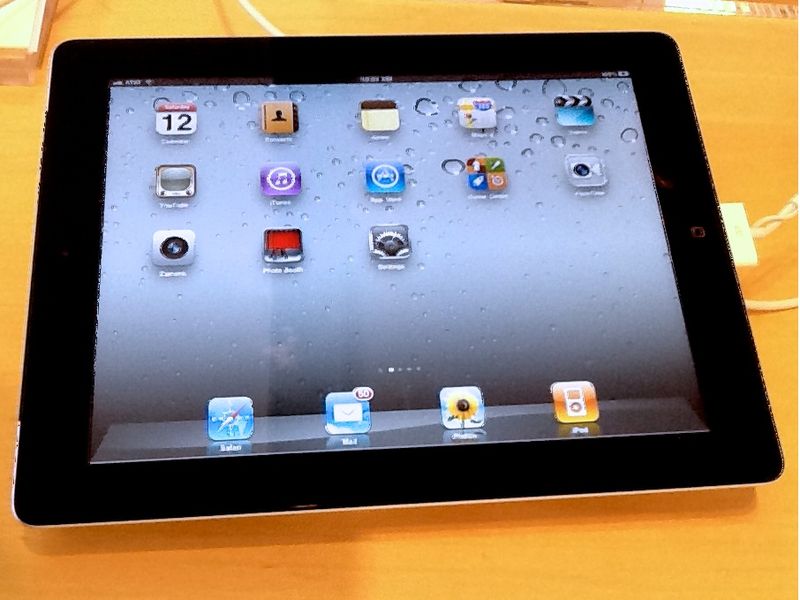
Apple claims that Samsung has ripped off design aspects of its iPad; Samsung has countered by charging Apple with lifting the iPad design from 2001: A Space Odyssey. Odd defense, which I doubt will work. From the legal paperwork, via disinfo:

“Attached hereto as Exhibit D is a true and correct copy of a still image taken from Stanley Kubrick’s 1968 film 2001: A Space Odyssey. In a clip from that film lasting about one minute, two astronauts are eating and at the same time using personal tablet computers…As with the design claimed by the D’889 Patent, the tablet disclosed in the clip has an overall rectangular shape with a dominant display screen, narrow borders, a predominately flat front surface, a flat back surface (which is evident because the tablets are lying flat on the table’s surface), and a thin form factor.”

••••••••••

Eating while using table computers:

Tags:

In writing about the new Steven Soderbergh film, Contagion, Alex Tabarrok of the Marginal Revolution points out an unintended benefit of the war against bio-terrorism that arose after 9/11:

“That is exactly right. Fortunately, under the umbrella of bio-terrorism, we have invested in the public health system by building more bio-safety level 3 and 4 laboratories including the latest BSL3 at George Mason University, we have expanded the CDC and built up epidemic centers at the WHO and elsewhere and we have improved some local public health centers. Most importantly, a network of experts at the department of defense, the CDC, universities and private firms has been created. All of this has increased the speed at which we can respond to a natural or unnatural pandemic.

In 2009, as H1N1 was spreading rapidly, the Pentagon’s Defense Threat Reduction Agency asked Professor Ian Lipkin, the director of the Center for Infection and Immunity at Columbia University’s Mailman School of Public Health, to sequence the virus. Working non-stop and updating other geneticists hourly, Lipkin and his team were able to sequence the virus in 31 hours. (Professor Ian Sussman, played in the movie by Elliott Gould, is based on Lipkin.) As the movie explains, however, sequencing a virus is only the first step to developing a drug or vaccine and the latter steps are more difficult and more filled with paperwork and delay. In the case of H1N1 it took months to even get going on animal studies, in part because of the massive amount of paperwork that is required to work on animals.”

Tags: , , , ,

The Wave Glider travels via water and solar power. From Liquid Robotics.

Albany, New York, is the site of experimentation that may allow us to control computing devices with minds instead of hands. From a new New York Times article by Pagan Kennedy:

Now Schalk can get all the human brains he wants within walking distance of his office. In 2007, he discovered that the Albany Medical Center houses an epilepsy center, and he set up shop in his hometown, working closely with Anthony Ritaccio, a professor of neurology and neurosurgery at Albany Medical College.

When I met Ritaccio in front of the hospital, he also talked about the problems with fingers. ‘We’re always interested in doing things faster,’ he said. ‘I remember the transition to an electric typewriter. We’re addicted to speed. But obviously the way we communicate with computers is rather comical. The way we interact with this blazing fast machine is to poke at it with a finger.’

Schalk and Ritaccio’s research has been underwritten by a $2.2 million Department of Defense grant. The project is part of a $6.3 million Army initiative to invent devices for telepathic communication — for instance, a ‘telepathy helmet‘ that would allow soldiers to beam thoughts to one another. Schalk seemed untroubled by the military applications. He said the grant allows him to do research that could, one day, let us all — civilians included — merge with our machines.”

Tags: ,

Fun, short 1965 AT&T doc about the history of the transistor.

Rat brain cells control robot.

From Aaron Saenz’s Singularity Hub post about Apple’s planned futuristic Cupertino offices, designed by Steve Jobs and scheduled to open in 2015: “Apple Campus 2, nicknamed ‘the Mothership,’ is set to break ground in 2012 and it looks simply stunning. Part flying saucer, part hadron super collider, part Dr. No’s lair, the Mothership will be a 2.8 million square foot facility located on a 175 acre lot off Highway 280 in Cupertino. Featuring a 1000 seat auditorium, 300,000 square feet of research space, and its own power plant, the new campus will house Apple and 12,000 in house employees in glorious style.”

Tags: ,

John Chancellor and NBC News look (astutely) at the future of communications in 1980.

Tags:

At the Atlantic, Alexis Madrigal looks a new book by Shelley Adler which comes to unusual conclusions about the mysterious cluster of deaths among Hmong men who had emigrated to America in the 1980s. The piece’s opening:

“They died in their sleep one by one, thousands of miles from home. Their median age was 33. All but one — 116 of the 117 — were healthy men. Immigrants from southeast Asia, you could count the time most had spent on American soil in just months. At the peak of the deaths in the early 1980s, the death rate from this mysterious problem among the Hmong ethnic group was equivalent to the top five natural causes of death for other American men in their age group.

Something was killing Hmong men in their sleep, and no one could figure out what it was. There was no obvious cause of death. None of them had been sick, physically. The men weren’t clustered all that tightly, geographically speaking. They were united by dislocation from Laos and a shared culture, but little else. Even House would have been stumped.

Doctors gave the problem a name, the kind that reeks of defeat, a dragon label on the edge of the known medical world: Sudden Unexpected Nocturnal Death Syndrome. SUNDS. It didn’t do much in terms of diagnosis or treatment, but it was easier to track the periodic conferences dedicated to understanding the problem.

Twenty-five years later, Shelley Adler’s new book pieces together what happened, drawing on interviews with the Hmong population and analyzing the extant scientific literature. Sleep Paralysis: Night-mares, Nocebos, and the Mind Body Connection is a mind-bending exploration of how what you believe interacts with how your body works. Adler, a professor at the University of California, San Francisco, comes to a stunning conclusion: In a sense, the Hmong were killed by their beliefs in the spirit world, even if the mechanism of their deaths was likely an obscure genetic cardiac arrhythmia that is prevalent in southeast Asia.”

Tags: ,

Evolta is headed to Hawaii next month for the challenge.

That close and obsessive reader, Tyler Cowen of the Marginal Revolution, posted this great passage from Kitty Burns Florey’s book, Script and Scribble: The Rise and Fall of Handwriting:

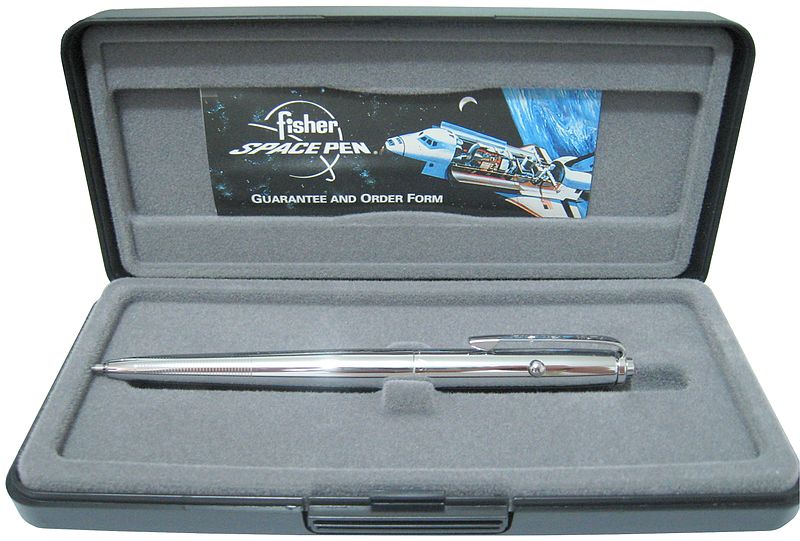
“There’s a popular myth that NASA spent ‘millions’ of dollars developing a pen for astronauts to use in the weightless environment of a space ship — while their sensible Russian counterparts were happy to use the low-tech pencil.  Alas, for all its appeal and plausibility, this is not true.  Initially, astronauts and cosmonauts were both equipped with pencils, but there were problems: if a piece of lead broke off, for example, it could float into someone’s eye or nose.  A pen was needed, one that would defy gravity, write in extreme heat or cold, and be leak proof: blobs of ink floating around the cabin would be more perilous than a stray pencil lead.  A long-time pen maker named Paul C. Fisher patented the ‘space pen’ in 1965 (which he had developed at the cost of a million dollars, at the request of but not under the auspices of NASA.)  NASA bought four hundred of them at $6 each, and, after a couple of years of testing, the pens were put into space.”

••••••••••

Manufacture of the Fisher Space Pen:

Tags: , ,

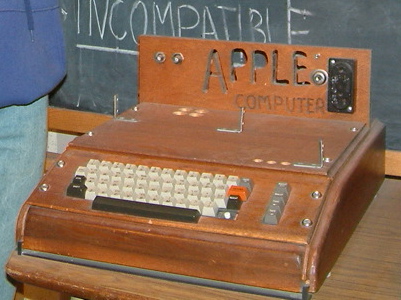
Steven Johnson, who wrote  The Ghost Map, a fascinating account of amateur epidemiology in Victorian England, shares his recollections of the mind-altering, game-changing effect of the Macintosh computer, in the Wall Street Journal. An excerpt:

“But that first Macintosh did much more than expand my data storage needs. It also fundamentally changed my relationship to technology—and in doing that, ultimately changed the course of my life.

It’s hard to remember now, but in the mid-1980s—before Wired Magazine, Pixar, dot-com start-ups, celebrity tweeting—being obsessed with your computer had almost no cultural cachet. You were just a nerd, full stop. The computers of the day had all the playfulness of a tax audit, and the creative people who used them did so begrudgingly.

But one look at the Mac and you could tell something was different. The white screen alone seemed revolutionary, after years of reading green text on a black background. And there were typefaces! I had been obsessed with typography since my grade-school years; here was a computer that treated fonts as an art, not just a clump of pixels. The then-revolutionary graphic interface made the screen feel like a space you wanted to inhabit, to make your own. To paraphrase Le Corbusier, the Mac was a machine you wanted to live in.” (Thanks Browser.)

••••••••••

Steven Johnson revisits the cholera outbreak of 1854 during his TED Talk:

Tags: ,

Gus Grissom makes the second manned U.S. space flight, July 21, 1961. He would perish in a cabin fire during a test run for Apollo 1  five years later.

Tags: ,

"Dr. Holmes died January 8 of softening of the brain."

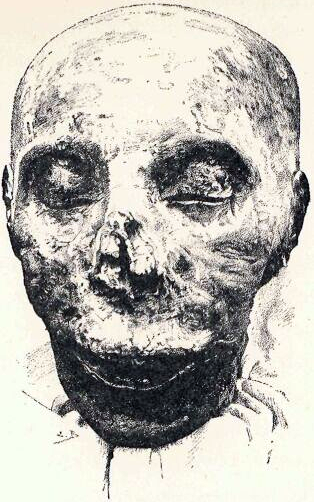
A shockingly ghoulish chapter from the annals of American medicine was recorded following the death of New York coroner Dr. Thomas Holmes, who had stealthily been using unclaimed child cadavers to experiment with the mummification process. An excerpt from a story about his dark science which ran in the November 2, 1900 Brooklyn Daily Eagle:

“Dr. Holmes died January 8 of softening of the brain. He was at the time experimenting with embalming gas. The other day, through the Board of Health, the police removed all the specimens from the basement. They had been put in a box and had lain there almost untouched since Dr. Homes’ death. Their miscellaneous nature may be judged from the following report made by Dr. Wuest after an examination of the specimens of the morgue.The remains are: The mummified body of a male child, apparently 11 years old, with head, shoulders and arms missing. Had evidently been severed from the body with a saw and body was as hard as wood. Sections of skin cut. Whole length of remains, 39 1/2 inches. The body was mummified to such an extent that a crosscut saw went through it like pine wood. The consistency as of dry leather. The body was sawed across the bottom and then between the legs and spine. The remains were evidently many years old. With these remains were those of three other children. There was also removed from the place at the same time two mummified bodies of monkeys and one head of a monkey.
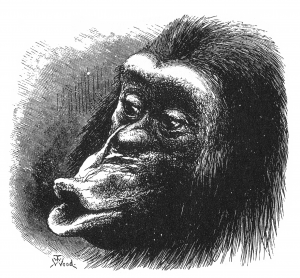
"There was also removed from the place at the same time two mummified bodies of monkeys and one head of a monkey."

The late Dr. Holmes was born at 42 Forsyth Street, Manhattan, in 1842. He studied medicine and graduated from the University of the City of New York. He soon afterward came to practice in the Eastern District, where he amassed considerable wealth. Shortly before the Civil War he bought about twelve lots on the east side of Marcy Avenue, between South Eighth Street and Division Avenue, and other property, and was at one time said to be worth $100,000. During the Civil War he volunteered as an embalmer and embalmed with a fluid which he prepared himself the bodies of 28,400 soldiers.

According to his widow, the doctor first attracted the attention of President Lincoln by embalming the body of Captain Ellsworth.

After the war Dr. Holmes returned to his home in the Eastern District. He at first resumed the practice of medicine, but as years went by began to devote more and more attention to the study of the embalming processes. At one time he thought he could preserve fresh beef and purchased for purposes of experiment an entire cargo of beefs from Texas. By this purchase the doctor lost nearly $17,000 because the beef all had to be destroyed.

After severe losses Dr. Holmes began to devote himself more exclusively to embalming human subjects, trying to invent what he described as the dry process–that is, embalming or preserving by use of gas. He claimed for his invention that it was superior to that used by the Egyptians four thousand years ago. On this process, it is said, he secured letters of patent. He obtained all the human subjects the remains of which have been found in the cellar from Bellevue Hospital, in Manhattan, where he was well known among students. The monkeys were given to the doctor by friends. Some years ago the doctor began to show decided signs of eccentricity. He put some of the stuffed animals in the windows of his home and this began to excite the curiosity of children going to school.
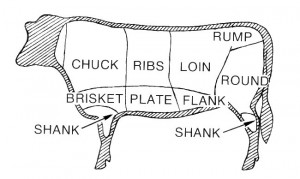
"At one time he thought he could preserve fresh beef and purchased for purposes of experiment an entire cargo of beefs from Texas."

One winter night two years ago, Dr. Holmes wrote a long incoherent letter to the city editor of the Eagle, in which the doctor hinted that he would divulge the secret of his discovery which he had at last perfected. A reporter called at the house and chatted with the doctor for over two hours. Whenever any question was put to him in regard to his invention, however, he evaded it. He would occasionally refer to the preservation of bodies and then divert to some meaningless narrative in regard to the war.”

 

Akinori Ito has created a machine that transforms plastic back into oil. Maybe someday the millions of tons of plastics that are accidentally dropped into the oceans from recycling barges each year will be sought the way oil is now.

Tags:

A railway station in Osaka has a water printer that dispenses information and entertainment to commuters with the aid of H2O.

During the 1970s, the golden era of the airline industry.

At the New York Times, David Plotz, a really talented writer and editor, weighs in on the positive side of the utter lack of regulations overseeing America’s fertility business. An excerpt:

“The American fertility business has long been a cowboy enterprise — cavalier about rules, casual about paperwork, irritated by government interference. Its strange place on the political spectrum shielded it from the regulation that guides other kinds of medicine, or real estate, or even used car sales. Conservatives, skeptical of regulation, were glad to leave fertility alone, and let it grow into a profitable marketplace. Liberals, normally fond of regulation, were leery of doing anything to dictate women’s reproductive choices. The result was an open field.

And there’s no doubt that the American fertility business has been way too chaotic: Sperm banks run by unqualified cranks, unscrupulous egg donation schemes, and practically no way to keep track of who’s fathering whom. (In my reporting, I’ve met numerous sperm donors who travel from bank to bank to bank, spawning uncounted numbers of kids, and leaving virtually no paper trail.) It’s certain that more regulation, and an end to donor anonymity, would clean up the industry, soothe customers, and help donor offspring.

Still, we’ll miss the lawless fertility business when it’s gone. Its lack of rules spurred innovation, and transformed fertility from a prudish, conservative corner of medicine into a consumer-driven business.”

Tags:

About 5% of Americans believe that they are “allergic” to the electromagnetic waves that allow our seemingly endless communications connectivity. Some have begun taking refuge in a Radio Quiet Zone in West Virginia. From a BBC report:

“Diane Schou is unable to hold back the tears as she describes how she once lived in a shielded cage to protect her from the electromagnetic radiation caused by waves from wireless communication.

‘It’s a horrible thing to have to be a prisoner,’ she says. ‘You become a technological leper because you can’t be around people.

‘It’s not that you would be contagious to them – it’s what they’re carrying that is harmful to you.’

Ms Schou is one of an estimated 5% of Americans who believe they suffer from Electromagnetic Hypersensitivity (EHS), which they say is caused by exposure to electromagnetic fields typically created by mobile phones, wi-fi and other electronic equipment.”

Tags:

David Packard's garage, Palo Alto, the birthplace of Silican Valley.

America’s Dream Factory used to be Hollywood, but it’s Silicon Valley now, a place where science and tech push furiously toward the future, untouched even by severe global economic woes. From “Bubble Boys,” Christopher Beam’s smart New York magazine article about a world of big ideas and even bigger money:

“Right this minute, Silicon Valley is America’s opposite: House prices are soaring and demand for young talent far outstrips supply. The ongoing cyberspace race between Facebook, Apple, and Google, among others, means computer engineers enjoy more freedom—and power—than ever before. The barriers to entry for web programming are almost nonexistent. Angel investors are blessing start-ups left and right, and launching a software company is cheaper than ever. Do I take the offer from Google, or take the venture capital to start my own thing? Only in this one little quadrant do people have the luxury to ask such questions. For ­Feross [Aboukhadijeh], the son of a schoolteacher and a Syrian-born electrical engineer, the forecast is bright, though indistinct. He may become the next Mark Zuckerberg or Steve Jobs; he may not. But while most of the country is in economic darkness, the American Dream is beaming bright in Palo Alto.”

Tags: ,

The Cornell Creative Machines Lab is trying to popularize 3D food printers. From a Lakshmi Sandhana article in Fast Company:

“The newest 3-D food printer, now being honed at CCML, can produce: tiny space shuttle-shaped scallop nuggets (image above); and cakes or cookies that, when you slice into them, reveal a special message buried within, like a wedding date, initials (image below) or a corporate logo. They can also make a solid hamburger patty, with liquid layers of ketchup and mustard, or a hamburger substitute that’s made from vegan or raw foods.

The CCML food printers require edible inks and electronic blueprints called FabApps. This machine prints food using multiple cartridges, going line by line until the desired shape is extruded. ‘The electronic blueprint specifies exactly which materials go where–it is essentially a blueprint of the food item,’ says Hod Lipson, the head of the lab.”

Tags: ,

Trains that look like rockets will, perhaps, take China to the moon or the future or something, even as concerns about corruption and safety linger. InHow Fast Can China Go?in the new Vanity Fair, Simon Winchester writes about riding the recent inaugural CRH380A bullet between Shanghai and Beijing. An excerpt:

“Shanghai’s Rainbow Bridge Station is sited next to the city’s old (but newly rebuilt) domestic airport and in a fast-growing nexus of skyscrapers, restaurants, and subway lines (the city had no subway lines until 1995 and now has 11, each one built deeper than the last). The station is run by a woman, Bao Zhenghong. She is a little under 40, pretty, brisk, friendly, with a blue diamond-shaped badge of authority (over dozens of men, at least) on the sleeve of her no-nonsense uniform blouse. As she paced down the concourse marble she remarked, between shy grins and blushes, that she had started work as a menial at a suburban station 20 years ago, on graduation from technical school. She could not in her wildest dreams, she said, have imagined being so swiftly promoted to take total control of this $2.3 billion glass monument (built in only two years) to China’s newness. Hers is the largest station in Asia, with 60 platforms: it sees 250,000 passengers a day, is made of 80,000 tons of steel, is home to countless stores and restaurants and viewing galleries, and is powered by the biggest solar-panel array in creation.

Miss Bao earns only $900 a month, hardly within a whisper of her country’s growing battalions of millionaires, but she’s proud nonetheless: A young woman like me, she gestured at the echoing immensity, standing under a football-field-size electronic display flickering with train information. Who could have believed it?

But behind her was a red silk banner, which was half the station’s width, and which probably granted her all the credibility she needed. It was a banner displaying a 100-yard-long sentence in large Chinese characters, a reminder of the underpinning ethos of a country that to many seems merely—but probably wrongly—a capitalist juggernaut, spinning wildly toward an improbable future. The sign was old-school politburo propaganda, the kind of rhetoric that once blared interminably down from loudspeakers in every factory and village commune in the country. It displayed for the ideological benefit of everyone in her station a sober exhortation, one that most station workers know by heart: LET US ALL WORK HARD TO HARNESS THE GOOD OF TECHNOLOGICAL ACHIEVEMENT TO CREATE THE FINEST RAILWAY IN THE WORLD FOR THE ULTIMATE BETTERMENT OF THE CHINESE PEOPLE. Miss Bao grinned. Perhaps that is why an achievement like hers is more believable.”

••••••••••

Zooooom…

Tags:

From a Steve Lohr New York Times article about computer-written articles proliferating online thanks to new software, like that created by the good people at Narrative Science:

“The company’s software takes data, like that from sports statistics, company financial reports and housing starts and sales, and turns it into articles. For years, programmers have experimented with software that wrote such articles, typically for sports events, but these efforts had a formulaic, fill-in-the-blank style. They read as if a machine wrote them.

But Narrative Science is based on more than a decade of research, led by two of the company’s founders, Kris Hammond and Larry Birnbaum, co-directors of theIntelligent Information Laboratory at Northwestern University, which holds a stake in the company. And the articles produced by Narrative Science are different.

‘I thought it was magic,’ says Roger Lee, a general partner of Battery Ventures, which led a $6 million investment in the company earlier this year. ‘It’s as if a human wrote it.'”

Tags:

« Older entries § Newer entries »