
Politics

You are currently browsing the archive for the Politics category.

In an excellent new Aeon essay, Linda Marsa asks a severely dystopian question: Will the parallels of widening income disparity and innovations in medicine lead to two very different lifespans for the haves and have-nots? The opening:

“The disparity between top earners and everyone else is staggering in nations such as the United States, where 10 per cent of people accounted for 80 per cent of income growth since 1975. The life you can pay for as one of the anointed looks nothing like the lot tossed to everyone else: living in a home you own on some upscale cul-de-sac with your hybrid car and organic, grass-fed food sure beats renting (and driving) wrecks and subsisting on processed junk from supermarket shelves. But there’s a related, looming inequity so brutal it could provoke violent class war: the growing gap between the longevity haves and have-nots.

The life expectancy gap between the affluent and the poor and working class in the US, for instance, now clocks in at 12.2 years. College-educated white men can expect to live to age 80, while counterparts without a high-school diploma die by age 67. White women with a college degree have a life expectancy of nearly 84, compared with uneducated women, who live to 73.

And these disparities are widening. The lives of white, female high-school dropouts are now five years shorter than those of previous generations of women without a high-school degree, while white men without a high-school diploma live three years fewer than their counterparts did 18 years ago, according to a 2012 study from Health Affairs.

This is just a harbinger of things to come. What will happen when new scientific discoveries extend potential human lifespan and intensify these inequities on a more massive scale? It looks like the ultimate war between the haves and have-nots won’t be fought over the issue of money, per se, but over living to age 60 versus living to 120 or more. Will anyone just accept that the haves get two lives while the have-nots barely get one?

We should discuss the issue now, because we are close to delivering a true fountain of youth that could potentially extend our productive lifespan into our hundreds – it’s no longer the stuff of science fiction.”


Tags:

Salon’s raison d’être is to serve up red meat to blue states, to provide liberals with just enough news of conservative outrages, whether it’s the personal opinions of fat-necked fartbag Donald Trump or the judicial opinions of that cracker barrel Antonin Scalia, to keep those clicks coming. But that doesn’t mean what the site reports isn’t true or valuable. Case in point: Paul Rosenberg’s new article about the Christian Right’s separatist dreams. There are scary extremists out there seemingly beyond rational thought, some armed and others in office, who want the country to be what it used to be, even if it never really was what they think it was. History may not be on their side, but they’re sure God is. From Rosenberg:

“A Saturday ago at the annual conference of the Faith and Freedom Coalition, Louisiana Gov. Bobby Jindal accused President Obama and other Democrats of waging a war against religious liberty and all but openly threatened a violent revolution, AP reported:

‘I can sense right now a rebellion brewing amongst these United States,’ Jindal said, ‘where people are ready for a hostile takeover of Washington, D.C., to preserve the American Dream for our children and grandchildren.’

Of course, Jindal’s speech didn’t come out of nowhere. Jindal is notorious as a weather vane, not a leader. So this is a clear sign of the need to take threats of right-wing violence seriously — and to look to its justifications as formulated on the Christian right.

As the latest wave of theocratic violence continues to play out in Iraq, it must feel exotic for most Americans, for whom theocratic violence is something that happens elsewhere. Yet, the idea of such violence coming to America — something Jindal is apparently eager for — is hardly far-fetched. Violence against abortion providers has been with us for decades, after all, and as Jindal’s pandering suggests, there could well be much worse to come, according to a new article from Political Research Associates, ‘Rumblings of Theocratic Violence,’ by Frederick Clarkson, author of Eternal Hostility: the Struggle Between Theocracy and Democracy, and co-founder of Talk2Actionorg. While violent rhetoric is nothing new on the Christian right, Clarkson observes, there are reasons to take such rhetoric more seriously than ever before. Above all, some of those most dedicated to the idea of America as a Christian nation are beginning to lose faith in their inevitable success.

‘[S]omething has changed in recent years,’ Clarkson notes, as ‘disturbing claims are appearing more frequently, more prominently, and in ways that suggest that they are expressions of deeply held beliefs more than provocative political hyperbole.’ He also cites ‘powerful indications in the writings of some Christian right leaders that elements of their movement have lost confidence in the bright political vision of the United States as the once and future Christian Nation — and that they are desperately seeking alternatives.”

Tags: , ,

While Cliodynamics uses quantified information of the past to chart the future, most alternative histories seem to be based on supposition rather than statistics. In a Financial Times piece highlighting the best books of the summer, conservative British politician Kwasi Kwarteng suggests what sounds like a very good volume which focuses on counterfactuals:

“I have enjoyed many books this year but one that stood out, partly because of its unusual nature, was Altered Pasts: Counterfactuals in History (Little, Brown) by Richard J Evans. Counterfactuals are the kind of guessing game we play when we wonder what would have happened if, say, Napoleon had won the battle of Waterloo. Evans’s book reveals how much of our modern thinking about history is dominated by counterfactuals. For example, in the last 20 years, many novels have featured lurid depictions of a Britain conquered by the Nazis. Altered Pasts is a good read, which stimulates further reflection about the nature of history.”

Tags:

The poor and middle class in America are not only under siege by the automation of industries but by our inability to execute policies that intelligently remedy disparity, that keep the gulf from growing so wide. In the final installment of “The Great Divide” series at the New York Times, Joseph Stiglitz looks at how we traveled from World War II to 99 and 1. An excerpt:

“Our current brand of capitalism is an ersatz capitalism. For proof of this go back to our response to the Great Recession, where we socialized losses, even as we privatized gains. Perfect competition should drive profits to zero, at least theoretically, but we have monopolies and oligopolies making persistently high profits. C.E.O.s enjoy incomes that are on average 295 times that of the typical worker, a much higher ratio than in the past, without any evidence of a proportionate increase in productivity.

If it is not the inexorable laws of economics that have led to America’s great divide, what is it? The straightforward answer: our policies and our politics. People get tired of hearing about Scandinavian success stories, but the fact of the matter is that Sweden, Finland and Norway have all succeeded in having about as much or faster growth in per capita incomes than the United States and with far greater equality.

So why has America chosen these inequality-enhancing policies? Part of the answer is that as World War II faded into memory, so too did the solidarity it had engendered. As America triumphed in the Cold War, there didn’t seem to be a viable competitor to our economic model. Without this international competition, we no longer had to show that our system could deliver for most of our citizens.

Ideology and interests combined nefariously. Some drew the wrong lesson from the collapse of the Soviet system. The pendulum swung from much too much government there to much too little here.”

Tags:

People who glorify McJobs as dignified, honest work are almost always those who don’t have to do them. In a Financial Times essay, Douglas Coupland, who sees our technology-driven tomorrow as tragicomedy, revisits the neologism for dead-end, soul-killing, low-wage work that he popularized in his 1991 novel Generation X, back when most people thought such stalled careers were a phase the young people were going through and not our future, all of us. An excerpt:

“Back in the early 1990s I began to see the start of a process that’s currently in full swing: the defunding and/or elimination of the mechanisms by which we once created and maintained a healthy middle class. What was once a stage of life is now turning into, well, all of life.

In the early 1990s I wanted to set a book in a fast-food restaurant and in order to make field notes, I tried hard to get a job in various Vancouver-area McDonald’s restaurants but, as a reasonably well-nourished male in his mid-thirties with no references on his application, I raised too many alarm bells and I never got a job, and good on fast food for having HR mechanisms that can filter out infiltrators like me. A decade later I ended up setting a blackly comic novel in a Staples (The Gum Thief), which is basically fast food but with reams of A4 instead of pink goo-burgers. The point was to foreground the fact that a minimum wage job is not a way to live life fully, and to be earning one past a certain age casts a spell of doom upon its earners, sort of like those middle-class Argentines who lost their jobs in the crash 15 years ago and never went back to being middle class again.

McDonald’s campaigned for years and ultimately failed to have the definition of the word McJob revised in the Oxford English Dictionary, in 2006 even renting a big screen in Piccadilly Circus to put forth its viewpoint. The saga of this process is a fun read on Wikipedia but, given the accelerating shrinkage of the middle class, it all seems like a frivolous corporate bonbon from a nearly vanished era. Discussions of a minimum wage in 2014 seem to have a nasty bite. As I’ve said before, we’re all going to be working at McDonald’s into our eighties (not all, of course, on the minimum wage) but the relentless parade of numbers that are making this clear to us is starting to frighten people to the core. It’s really happening.”

Tags:

If you were living in extreme poverty, in a place rotten with disease, who would you rather see, someone with a laissez–faire attitude who was proud of himself for not causing any unintended consequences as he stood on the sidelines, or someone like Jeffrey Sachs or Bill and Melinda Gates, who, sure, can’t make the world perfect, but who might give you some of the tools you need to survive, maybe even thrive a little? It’s awfully easy to dismiss philanthropists for their failings as they learn the best ways to succeed, but if I were in great need I would always gravitate to people who might give me something real even if it wasn’t ideal. From Samiha Shafy and Mathieu von Rohr’s Spiegel interview with Melinda Gates:

Spiegel:

In your speech at the WHO, you said that you and your husband despise inequity. But isn’t it strange when you return from your trips to your luxurious mansion on Lake Washington outside of Seattle? A property for which you have to pay more than a million dollars a year in taxes.

Melinda Gates:

I think it is the same for you if you go to the developing world and then come home and get into your car with seat heaters. Or you come home, turn on your shower and you have hot water. I don’t care whether you live in a small apartment or in a giant house, there are inequities. Quite frankly, neither Bill nor I would build that house again if we had it to do all over again. But it’s a matter of what are you doing to battle those inequities and for Bill and me, we have now oriented our life around that. We’re spending not only our money, but also our time.

Spiegel:

Are you doing so partly out of a sense of guilt?

Melinda Gates:

No, I wouldn’t say guilt. We feel like we have a responsibility. Any of us that is lucky enough to grow up in a country like Germany or Great Britain or Japan or the US ought to do something for the rest of the world.

Spiegel:

The French economist Thomas Piketty recently triggered a debate with his book in which he argues that iniquities are also growing in the industrialized world. His recipe is that of raising taxes for the very rich. Do you agree with him?

Melinda Gates:

Bill and I are both in favor of an estate tax and we’ve actually been quite outspoken about that. But it hasn’t gotten very far in the US. If you’re in the upper quartile of income in any of these wealthy economies, you ought to give back more than other people. Bill, Warren Buffett and I are quite involved in trying to get people of substantial wealth to commit to giving half back, either in their lifetime or at their death.”

Tags: , , , ,

Neuroscientist Carl Hart shares contrarian views about drugs in his new book, High Price. In addition to refusing the idea that methamphetamines destroy a person’s looks–that widely held belief is just the result of a very successful anti-drug propaganda campaign, he argues–Hart doesn’t think crack is nearly as addictive as it’s made out to be. From an interview by Amy Chozick in the New York Times Magazine:

Question:

You begin your book High Price with a story about an experiment you did. You offered a crack addict a hit or $5.

Carl Hart:

He chose the cash. Why did you lead with this? We have rigorous science to support that crack cocaine is not as addictive as people think and that they have been hoodwinked. I was hoping people would want to read further if they had a myth busted right up front.

Question:

How do you think Hollywood plays into our perceptions about drugs and addiction? It’s not only Hollywood.

Carl Hart:

One of Public Enemy’s bigger songs, ‘Night of the Living Baseheads,’ is all about this crack addict who’s just fiending. Public Enemy did so many good things, but on that song, they were wrong. And New Jack City is on TV, like, every week. Remember New Jack City?

Question:

Yes, the movie about a drug kingpin who turns an apartment complex into a crack factory.

Carl Hart:

Again, the filmmakers were trying to help their community, but the problem was that crack wasn’t the real problem. The real problem was unemployment, lack of education, lack of skills. Politicians are happy not to have to focus on those larger issues. You can just focus on crack cocaine, put more cops on the street and make tougher laws.”

Tags: ,

In a New York Review Books piece, Bill McKibben lays out the sobering ramifications of the Great Melt, which can be slowed down and perhaps managed to some extent with technological innovation and political will, but which cannot be stopped. An excerpt:

“In mid-May of this year, a pair of papers were published in Science and Geophysical Research Letters that made clear that the great glaciers facing the Amundsen Sea were no longer effectively ‘buttressed.’ It turns out that the geology of the region is bowl-shaped: beneath the glaciers the ground slopes downward, meaning that water can and is flooding underneath them. It is eating away at them from below and freeing them from the points where they were pinned to the ground. This water is warmer, because our oceans are steadily warming. This slow-motion collapse, which will occur over many decades, is ‘unstoppable’ at this point, scientists say; it has ‘passed the point of no return.’

This means that as much as ten feet of sea-level rise is being added to previous predictions. We don’t know how quickly it will come, just that it will. And that won’t be all. A few days after the Antarctic announcement, other scientists found that much of Greenland’s ice sheet shows a similar underlying geology, with warm water able to melt it from underneath. Another study that week showed that soot from huge forest fires, which are more frequent as a result of global warming, is helping to melt the Greenland ice sheet, a remarkably vicious cycle.

In certain ways none of this really comes as news. A leading glaciologist, Jason Box of the Geological Survey of Denmark and Greenland (GEUS), has calculated that given the paleoclimatic record, our current atmospheric levels of greenhouse gases are probably enough to produce an eventual sixty-nine feet of sea-level rise.2 But it’s one thing to know that the gun is cocked, and another to see the bullet actually traveling; the news from the Antarctic is a turning point. It doesn’t mean we should give up efforts to slow climate change: if anything, as scientists immediately pointed out, it means we should ramp them up enormously, because we can still affect the rate at which this change happens, and hence the level of chaos it produces. Coping over centuries will be easier than coping over decades.”

Tags:

Great interview by Tyler Cowen at American Interest with Ralph Nader, the consumer watchdog and politician who’s mostly been right and occasionally colossally wrong, tied to the latter’s publication of Unstoppable, a book about finding political common ground in a divisive age. In one exchange, Nader decries the corporatization of sports, which he believes has made us passive spectators. I suppose this might be true of athletics, but I don’t think in a broader sense that the average person has ever participated more in society than right now. Of course, a participatory culture is only as good as its participants. An excerpt:

Tyler Cowen:

Do you think we need a more communitarian culture to push back against the corporate state and its abuses? I’m very struck by something in your book The Seventeen Solutions, for instance, where you talk about how America needs a new tradition of sports. Sports, you say, shouldn’t be something corporate-run that people watch on television, but something they do themselves, something that creates community, something that brings people together. Is that kind of social cohesion a necessary first step?

Ralph Nader:

Yes. We’ve become too much of a spectator culture, spending the better part of each day in front of screens. One of the consequences is that the few more athletic kids play while the rest watch, and the lack of physical activity leads to obesity. It’s not just youngsters; adults conform with the purposes of corporate advertising. The processed food producers and some other corporations, like pharmaceuticals, get rich when Americans get fat.

Corporations are also extremely adept at commercializing childhood and maneuvering around or undermining parental authority. They urge children to nag their parents at a young age to buy junk food, soft drinks, and violent video games. You see fewer kids out in the street now, just playing. These old games we used to play, like hopscotch—kids today wouldn’t even know what you’re talking about. But they do know a lot about video game violence and the heroes and villains involved.

So I think we do need a broad recognition of the need to bring the neighborhoods and communities into more participatory sports. Just a hoop, and throwing the ball into a hoop—anything to connect human to human rather than let kids wallow more and more in virtual reality. The whole electronic world is affecting us in ways we have yet to discover. That amount of time spent day after day in front of these screens can’t not have an effect on the human mind, and probably not a healthy one.”

Tags: ,

I don’t agree with Joe Pappalardo of the Guardian who believes the U.S. should scrap government space programs and rely on investment in the private sector–I think there should be a competition between the two–but his article does spell out really well how reasoning not supported by facts can lead to policy based on gross distortions. The opening:

“‘Elon Musk,’ the satellite industry insider told me over a beer, ‘has got to be the luckiest son of a bitch alive.’

Musk – the insanely dedicated, wealthy and polarizing founder of PayPal, Tesla and Space Exploration Technologies (SpaceX) – is on a hot streak when it comes to spaceflight. He’s raiding revenue streams from Nasa and the US military to fund a private manned space program. His main weapon: low prices, with SpaceX offering satellite launches at about one-fifth the price of competitors at just over $60m a pop.

Sooner or later, the haters say, Musk’s streak will end in a fiery accident, or a satellite horribly deployed. That kind of disaster, naturally, would undercut the current soaring confidence in SpaceX, from investors, private-space believers and even taxpayers.

Another group of doubters on Capitol Hill say the industries needed to keep private space exploration viable simply don’t exist, necessitating a mini-Apollo push from Nasa, despite soaring progress from the Elon Musks of the world and soaring prices for government programs.

‘There’s a sense that America is falling behind, with our best days behind us,’ lamented Rep Lamar Smith of Texas on Wednesday, at yet another painful hearing of the House Committee on Science and Technology. ‘Today, America’s finest spaceships and largest rockets are found in museums rather than on launch pads.’

He’s wrong: Right now there are more space spacecraft and launch systems being designed and tested than any other moment in human history. Smith and others in Congress may be hooked on pork for their districts, but Washington doesn’t know how to build a space program. Inconsistent planning and politics have so stultified Nasa, after all, that America today has no way to launch people into space.”

Tags: , ,

The opening of “New World Order,” a Foreign Affairs essay by Erik Brynjolfsson and Andrew McAfee, authors of The Second Machine Age, and Michael Spence, which astutely examines the new normal and what it will likely bring:

“Recent advances in technology have created an increasingly unified global marketplace for labor and capital. The ability of both to flow to their highest-value uses, regardless of their location, is equalizing their prices across the globe. In recent years, this broad factor-price equalization has benefited nations with abundant low-cost labor and those with access to cheap capital. Some have argued that the current era of rapid technological progress serves labor, and some have argued that it serves capital. What both camps have slighted is the fact that technology is not only integrating existing sources of labor and capital but also creating new ones.

Machines are substituting for more types of human labor than ever before. As they replicate themselves, they are also creating more capital. This means that the real winners of the future will not be the providers of cheap labor or the owners of ordinary capital, both of whom will be increasingly squeezed by automation. Fortune will instead favor a third group: those who can innovate and create new products, services, and business models.

The distribution of income for this creative class typically takes the form of a power law, with a small number of winners capturing most of the rewards and a long tail consisting of the rest of the participants. So in the future, ideas will be the real scarce inputs in the world — scarcer than both labor and capital — and the few who provide good ideas will reap huge rewards. Assuring an acceptable standard of living for the rest and building inclusive economies and societies will become increasingly important challenges in the years to come.”

Tags: , ,

Google’s Larry Page, who believes you’ll eventually have a brain implant, tells Farhad Manjoo of the New York Times, somewhat defensively, one of the main obstacles of technologists who wish to quantify and mine our lives: 

Farhad Manjoo:

You’re saying the usefulness of the products will change how people feel about them?

Larry Page: 

Yeah, and we know that if we talk about things before people see them, there’s a much more negative reaction. That’s one of the things we learned. It’s really important for people to be able to experience products; otherwise you fear the worst without seeing those benefits.

I’m not trying to minimize the issues. For me, I’m so excited about the possibilities to improve things for people, my worry would be the opposite. We get so worried about these things that we don’t get the benefits. I think that’s what’s happened in health care. We’ve decided, through regulation largely, that data is so locked up that it can’t be used to benefit people very well.

Right now we don’t data-mine health care data. If we did we’d probably save 100,000 lives next year. I’m very worried that the media and governments will try to stoke the people’s fears and we’ll end up in a state where we could benefit a lot of people but we’re not able to do that. That’s the likely outcome.”

Tags:

Baseball-stats and true-crime expert Bill James is a brilliant and occasionally maddening person, who can cut through the bullshit of JFK assassination theories yet create some doozies of his own in defending Joe Paterno’s handling of Jerry Sandusky. James’ politics unsurprisingly seem to be complex, a bricolage of beliefs. On his site, he’s provided a simple and straightforward solution to the executive-pay portion of the wealth-disparity argument in America. Courtesy of Tim Marchman at Deadspin, here it is in a nutshell:

“I suppose it is quasi-socialist of me, but I do favor a ’10 to 1′ law stating that no company may pay any employee more than ten times as much as it pays any other employee, on a full-time basis. Enforceable by lawsuit: If your company pays anyone else ten times more than they pay you, you can bring suit against the company AND against the person who is excessively compensated.”

Tags: ,

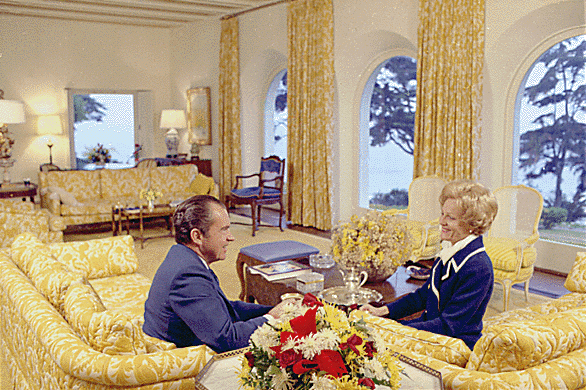
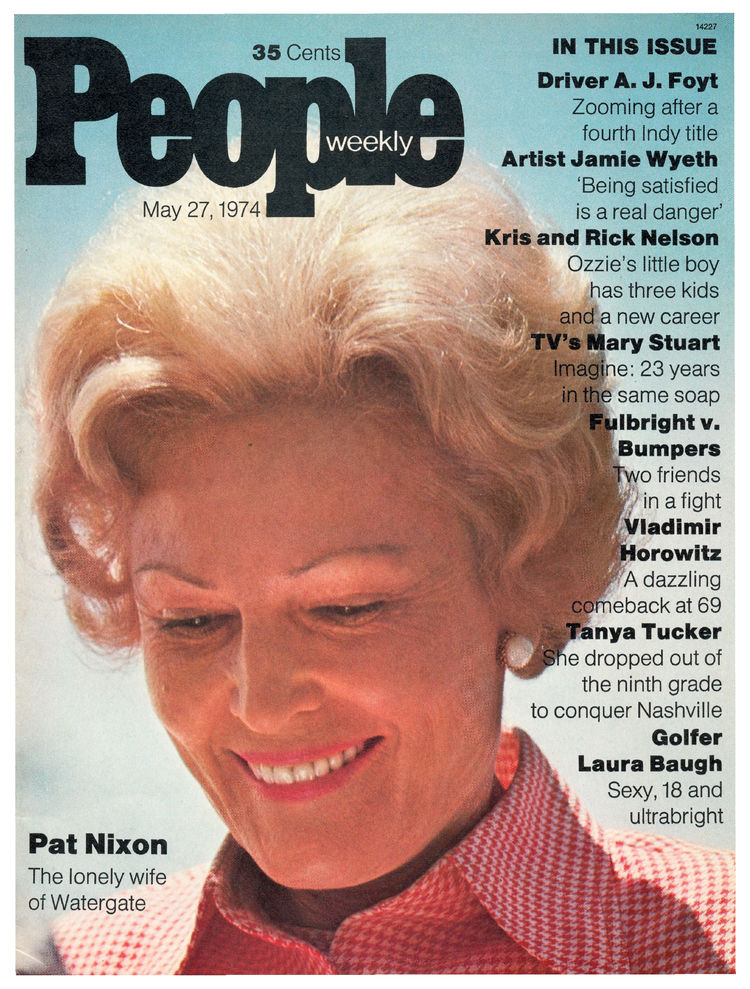
In his day, Richard Nixon was more of a Liberal in most ways than Barack Obama, though it isn’t completely sensible to measure Presidents outside of the era in which they serve. For all his enthusiasm for universal healthcare and racial quotas, Nixon was hated by the Left, and justifiably so, for his handling of Vietnam and his paranoia about the press, campus activists, anti-war demonstrators, the Black Power movement, Women Libbers, the Democratic National Committee, and, well, everything. He had no reason to fear on the homefront, however, where he enjoyed the unwavering support of his spouse, Pat, who was orphaned as a teenager and would not allow a second family to slip from her grasp. From “Watergate Wife,” a May 1974 People article about the First Lady less than three months before her husband became the only U.S. President to resign:

“Even among her staunchest supporters, the question about Patricia Nixon lingers. As visitors queue up to greet her in the Blue Room or crowds press around her at airport rallies, the unspoken curiosity is there: How does she hold up? How can she survive the bruising stress of Watergate?

‘Get it out of your head that this is a woman who takes to her bed with smelling salts,’ cautions a woman reporter who sees her often. ‘Pat Nixon is the tough one in that marriage.’

That is quite a testimonial. While Richard Nixon built his political reputation on toughness, Pat has always seemed the fragile partner. An intensely private woman, married for nearly 34 years to one of the most public of men, she has endured a succession of taxing campaigns behind a facade of smiling good humor. Even now, as President Nixon battles to stay in office during what may be the climactic crisis of a stormy career, his wife has dutifully kept up appearances. Although increasingly wary of the press, she conscientiously tends to ceremonial functions and continues to show her smile like the flag.

Despite her insistence on toughing out Watergate, Mrs. Nixon, of course, has been feeling the pressure. She made herself a virtual recluse in the White House throughout much of the winter, retreating within her family for solace. Only in March, on a goodwill visit to Latin America, did she appear to blossom with a sense of release. The hectic six-day trip afforded her both a reprieve from the solitude and relief from the drumfire of Watergate. When a reporter intruded on her new ebullience by asking about ‘the strain’ of the past year in Washington, she recoiled with a look of dismay. ‘I don’t really wish to speak of it,’ she said abruptly, then added, ‘You all drink some champagne.’

Pat Nixon has long been regarded as a sort of auxiliary personality in Washington—a presidential appendage with little of the lively independence that Jackie Kennedy and Lady Bird Johnson brought to the position of First Lady. Although, paradoxically, she has only two or three close friends outside her family, she seems comfortable among welcoming crowds especially when she is alone, out from under her husband’s shadow. Plunging into a happy sea of strangers, she bubbles over with chatter and cheerfulness and exudes a casual warmth that the President lacks.

But it is endurance that is her own special pride. Once committed, she never breaks an engagement—’I do or die,’ she says. ‘I never cancel out,’—and rarely is so much as a hair out of place. Her secret, she confides, is an ability to deny the demands of her senses. ‘I hate complainers,’ she says, ‘and I made up my mind not to be one. So if it’s cold, I tell myself it’s not cold, and if it’s hot, I tell myself it’s not hot. And you know, it works!’

Her stoical tolerance of discomfort, however, does not extend to critical comment about her husband. It is the vulnerable side of her own personal strength. Her schedule of White House duties—greeting the poster child of the month, playing host to women’s groups—is carefully drawn to avoid embarrassing confrontations. Her mail is likewise thoroughly screened. She rarely grants interviews and is constantly on guard against even the most innocuous questions. Recently, a reporter asked innocently if she were looking forward to going to Europe, should the President decide to visit there soon. ‘You never know what’s going to happen,’ she replied with her mask of a smile. ‘You live for each day.’ It is understandable, perhaps, that after years of warring between the President and the Washington press corps, she should regard the media with instinctive distrust. ‘It’s right out of The Merchant of Venice,’ she recently told her close friend Helene Drown in a discussion of Watergate repercussions. ‘They’re after the last pound of flesh.'”
Tags: ,

Marc Andreessen is sure that the Information Age, like the Industrial Age before it, will lead to an explosion of wealth, and he’s probably right. But who will own that wealth? Will it be concentrated or diffuse? Can a highly automated society provide enough jobs or will we be playing with our smartphones in the margins? Will we have to settle for bread and Kardashians? At Jacobin, in an open letter to Andreessen, Alex Payne asserts that the average person isn’t as frightened by robots as those who own them. An excerpt: 

“While I didn’t jibe with your take on recent macroeconomic history, I was heartened to see that you’re interested in empowering individuals through technology:

[T]he current technology revolution has put the means of production within everyone’s grasp. It comes in the form of the smartphone (and tablet and PC) with a mobile broadband connection to the Internet.

If we’re going to throw around Marxist terminology, though, can we at least keep Karl’s ideas intact?

Owning a smartphone is not the equivalent of owning the means of production. I paid for my iPhone in full, but Apple owns the software that runs on it, the patents on the hardware inside it, and the exclusive right to the marketplace of applications for it. If I want to participate in their marketplace, Apple can arbitrarily reject my application, extract whatever cut of my sales they see fit, and change the terms whenever they like.

Same story with their scant competitors. It seemed like a lot of people were going to get rich in the ‘app economy.’ Outside of Apple and Google, it turns out, not so much. For every WhatsApp there are thousands of failures.

The real money in tech is in platforms, network effects, scale. Sell pickaxes and jeans to the miners, right? Only today it’s Amazon selling the pickaxes. The startup with its servers on EC2 is about as likely to find gold as a ’49er panhandler. Before the startup goes out of business, Amazon gets paid.”

Tags: ,

From an excellent give-and-take at the New York Review of Books blog between philosophers Tim Crane and John Searle, the latter, who doesn’t believe that humans should have the automatic right to housing simply by virtue of being human, shares his views on animal rights:

Tim Crane:

Coming back to the question of rights, since every right requires a corresponding obligation, does it follow from your view that animals don’t have rights, since they have no obligations?

John Searle:

Most rights have to do with specific institutions. As a professor in Berkeley I have certain rights, and certain obligations. But the idea of universal rights—that you have certain rights just in virtue of being a human being—is a fantastic idea. And I think, Why not extend the idea of universal rights to conscious animals? Just in virtue of being a conscious animal, you have certain rights. The fact that animals cannot undertake obligations does not imply that they cannot have rights against us who do have obligations. Babies have rights even before they are able to undertake obligations.

Now I have to make a confession. I try not to think about animal rights because I fear I’d have to become a vegetarian if I worked it out consistently. But I think there is a very good case to be made for saying that if you grant the validity of universal human rights, then it looks like it would be some kind of special pleading if you said there’s no such thing as universal animal rights. I think there are animal rights.

Tim Crane:

Why does that mean they have rights?

John Searle:

For every right there’s an obligation. We’re under an obligation to treat animals as we arrogantly say, ‘humanely.’ And I think that’s right. I think we are under an obligation to treat animals humanely. The sort of obligation is the sort that typically goes with rights. Animals have a right against us to be treated humanely. Now whether or not this gives us a right to slaughter animals for the sake of eating them, well, I’ve been eating them for so long that I’ve come to take it for granted. But I’m not sure that I could justify it if I was forced to.”

Tags: ,

Algorithms replacing workers and upending industries wouldn’t be so frightening provided we had some political solution to reconcile a free-market economy and an automated one should not enough new industries bloom to keep wealth from being even more unevenly distributed. But political solutions aren’t our forte right now. I think Steven Rattner, who did yeoman’s work during the auto bailout, is far too optimistic about the labor market, at least during this painful, transitional period, but he believes the Information Age will play out the same way as the Industrial Age. From “Fear Not the Coming Age of Robots,” his op-ed piece at the New York Times:

“Call it automation, call it robots, or call it technology; it all comes down to the concept of producing more with fewer workers. Far from being a scary prospect, that’s a good thing.

Becoming more efficient (what economists call ‘productivity’) has always been central to a growing economy. Without higher productivity, wages can’t go up and standards of living can’t improve.

That’s why, in the sweep of history, the human condition barely improved for centuries, until the early days of the industrial revolution, when transformational new technologies (the robots of their day) were introduced.

Consider the case of agriculture, after the arrival of tractors, combines and scientific farming methods. A century ago, about 30 percent of Americans labored on farms; today, the United States is the world’s biggest exporter of agricultural products, even though the sector employs just 2 percent of Americans.

The trick is not to protect old jobs, as the Luddites who endeavored to smash all machinery sought to do, but to create new ones. And since the invention of the wheel, that’s what has occurred.

When was the last time you talked to a telephone operator? And yet if rotary dial telephones hadn’t been invented, millions of Americans would currently be wastefully employed saying “Central” every time someone picked up a telephone receiver. More recently but similarly, the Internet has rendered human directory assistance nearly extinct.

Of course, I can’t prove that the impact of some new wave of technological innovation won’t ever upend thousands of years of history. But it hasn’t happened yet.”

Tags:

Scott Carney is an investigative journalist whose 2011 book, The Red Market, looks at the world’s very unsettling illicit trade in human flesh, including an Indian “blood farm,” in which a former dairy farmer kidnapped people, drained their blood and sold it. Carney just finished writing his next book, which focuses on the grisly and confusing death of a man at an Arizona Tibetan retreat, but his new Ask Me Anything at Reddit still mostly centers on underground human-organ trafficking, which is usually less about a shanghaied victim than pure economic predation. A few exchanges follow.

________________________________

Question:

How much of the illegal trade is actually non-consensual though? Do a lot of people sell their organs on the black market out of economic necessity or are they mostly forced into it by gangsters?

Scott Carney:

It’s impossible to get accurate statistics of anything having to do with the illegal organ trade–but from what I witnessed it seems to me that the majority of the trafficking occurs because very rich companies and hospitals take advantage of desperately poor individuals. So, technically, most of it is consensual, it’s also incredibly coercive. There’s a reason that after every major tsunami and earthquake that the organ brokers come in right after the relief agencies.

________________________________

Question:

So it’s less kidnapping people and leaving them in bathtubs full of ice and more pressuring incredibly poor people into selling their organs or face starving to death?

In a way that’s much worse, rather than individual acts of violence it’s an entrenched economic problem that is a lot harder to fix than simply arresting a few kidnapping gangs.

Scott Carney:

Yes. It’s really rare to kidnap people–especially tourists. However, it DOES happen. In this article in Foreign Policy I wrote about several cases where people are simply picked up off the streets and robbed of their organs. That said, it is generally a lot less risky for the brokers to simply convince people they’ve entered into a fair trade, rather than raise suspicion amongst law enforcement.

________________________________

Question:

How valuable are each of the harvested body parts approximately? Does it vary widely around the world or are different organs more valuable in different countries?

Scott Carney:

This is a tough question because body parts don’t have a fixed value. Their price fluctuates like a used car. However, I did write a piece for Wired a few years ago where I tried to come up with general prices. Check it out here.

________________________________

Question:

How big is this industry estimated to be? How many organ trades a year are we talking worldwide? Obviously with all things criminal we don’t have exact stats but are we talking tens of thousands or millions or what?

Scott Carney:

It is easily worth billions of dollars, but there is no solid statistic that I can point to. It turns out that the criminals are terrible at filing quarterly reports. The best I can point to is a WHO report that says that 10% of organ transplants happen on the black market.

________________________________

Question:

Are there any other known places in the world where black market organ trading occurs? And how do they transport the organs?

Scott Carney:

It’s a global problem. I think just about every country has some relation to it. Live organs aren’t usually transported across international lines. In those cases the patients fly abroad for surgery.

________________________________

Question:

Do you think an increase in voluntary organ donation would help reduce this market?

Scott Carney:

This is a fascinating question that has more than one answer. I tackle it in the last chapter of my book a little bit. In short, I have to say no. While voluntary donation will increase the overall supply of organs, it does nothing to stem the overall demand. Since 1984 when the National Organ Transplant Association started up the waiting list for a kidney was almost seven years long. Today, with vastly expanded voluntary supply (I think it is something like 50,000 transplants a year now), the list is still just as long. What is happening is that as the supply grows, doctors find more eligible recipients for organs. It’s perverse, but the demand for organs is actually a reflection of the supply. Not the other way around.•

Tags:

It isn’t difficult to point out holes in ex-Canadian extremist Ted Cruz’s deceptions. In Jeffrey Toobin’s New Yorker article about the GOP disruptor, Cruz asserts that Ronald Reagan won the Presidency twice because he was a true conservative, while George H.W. Bush only secured one term because he raised taxes after being elected, ceding his right-wing bona fides. Except, of course, that Ronald Reagan raised taxes many, many more times than his successor ever did. Cruz’s belief that a Republican will need severe Tea Party-ish leanings to gain the Oval Office in 2016 is bunk. No one like that will win the next Presidential election, Cruz included. In fact, his type of messenger is the surest path to a devastating GOP defeat. From Toobin’s piece:

Cruz’s ascendancy reflects the dilemma of the modern Republican Party, because his popularity within the Party is based largely on an act that was reviled in the broader national community. Last fall, Cruz’s strident opposition to Obamacare led in a significant way to the shutdown of the federal government. ‘It was not a productive enterprise,’ John McCain told me. ‘We needed sixty-seven votes in the Senate to stop Obamacare, and we didn’t have it. It was a fool’s errand, and it hurt the Republican Party and it hurt my state. I think Ted has learned his lesson.’ But Cruz has learned no such lesson. As he travels the country, he has hardened his positions, delighting the base of his party but moving farther from the positions of most Americans on most issues. He denies the existence of man-made climate change, opposes comprehensive immigration reform, rejects marriage equality, and, of course, demands the repeal of ‘every blessed word of Obamacare.’ (Cruz gets his own health-care coverage from Goldman Sachs, where his wife is a vice-president.) Cruz has not formally entered the 2016 Presidential race, but he is taking all the customary steps for a prospective candidacy. He has set up political-action committees to raise money, travelled to early primary states, like Iowa and New Hampshire, and campaigned for Republican candidates all over the country. His message, in substance, is that on the issues a Cruz Presidency would be roughly identical to a Sarah Palin Presidency.”

Tags: ,

Thirty years after trying and failing to turn the UK into a hub for robotics, technologists and politicians are having another go at it. From Amir Mizroch in the Wall Street Journal:

“For the past 18 months, everyone who is anyone in the U.K.’s robotics sector has been hard at work on making sure everything goes according to plan, drawing up a strategy paper to determine the future of intelligent, autonomous machines—AKA robots— in Britain.

A final version of the document, written by the 20 experts of the Robotics and Autonomous Systems Special Interest Group (RAS-SIG), is to be officially unveiled by Science Minister David Willets on July 1.

According to interviews with two members of the interest group, an external consultant, and a summary of earlier drafts, the strategy rests on several key pillars.  Legislators will make the U.K. the world’s most welcoming place for robotics research, testing and development. It won’t be just about creating robots, but also about creating standards and regulations that allow for easier testing of autonomous machines. Areas of industry will be created to tackle some of the country’s most challenging problems, like the decommissioning of nuclear sites, opening up farming productivity, and robotic monitoring of sewage pipes and offshore gas and oil rigs.

Government will deploy robots to build schools, roads and hospitals, and care for the elderly. It will help fund robotics research at schools and universities to raise the number of people who can make and work with robots.  New technologies that improve the ability of humans to control multiple robots simultaneously will be highlighted. Culturally, there will be an emphasis on explaining that automation does not cost people their jobs, but actually creates more opportunities and opens possibilities.

This is not the first time that a U.K. government has looked to robots to boost the economy. Mired in recession, the Thatcher government launched a campaign in 1985 to increase the number of robots in industry. According to the British Automation and Robot Association, in 1982 only 100 robots out of 439 installed in the country were built by U.K. engineers. Most of the robots were installed in the auto industry sector. Thirty years later, the number of new robots working in the U.K. in 2012 alone was 2,447—none of them were manufactured in the U.K.

Tags: ,

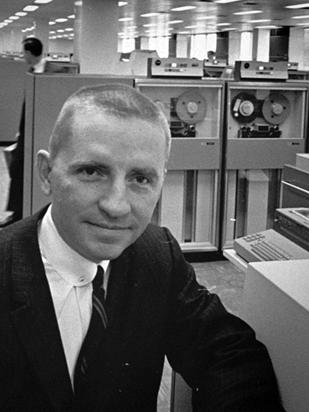
In 1969, computer-processing magnate Ross Perot had a McLuhan-ish dream: an electronic town hall in which interactive television and computer punch cards would allow the masses, rather than elected officials, to decide key American policies. In 1992, he held fast to this goal–one that was perhaps more democratic than any society could survive–when he bankrolled his own populist third-party Presidential campaign. The opening of “Perot’s Vision: Consensus By Computer,” a New York Times article from that year by the late Michael Kelly:

WASHINGTON, June 5— Twenty-three years ago, Ross Perot had a simple idea.

The nation was splintered by the great and painful issues of the day. There had been years of disorder and disunity, and lately, terrible riots in Los Angeles and other cities. People talked of an America in crisis. The Government seemed to many to be ineffectual and out of touch.

What this country needed, Mr. Perot thought, was a good, long talk with itself.

The information age was dawning, and Mr. Perot, then building what would become one of the world’s largest computer-processing companies, saw in its glow the answer to everything. One Hour, One Issue

Every week, Mr. Perot proposed, the television networks would broadcast an hourlong program in which one issue would be discussed. Viewers would record their opinions by marking computer cards, which they would mail to regional tabulating centers. Consensus would be reached, and the leaders would know what the people wanted.

Mr. Perot gave his idea a name that draped the old dream of pure democracy with the glossy promise of technology: ‘the electronic town hall.’

Today, Mr. Perot’s idea, essentially unchanged from 1969, is at the core of his ‘We the People’ drive for the Presidency, and of his theory for governing.

It forms the basis of Mr. Perot’s pitch, in which he presents himself, not as a politician running for President, but as a patriot willing to be drafted ‘as a servant of the people’ to take on the ‘dirty, thankless’ job of rescuing America from ‘the Establishment,’ and running it.

In set speeches and interviews, the Texas billionaire describes the electronic town hall as the principal tool of governance in a Perot Presidency, and he makes grand claims: ‘If we ever put the people back in charge of this country and make sure they understand the issues, you’ll see the White House and Congress, like a ballet, pirouetting around the stage getting it done in unison.’

Although Mr. Perot has repeatedly said he would not try to use the electronic town hall as a direct decision-making body, he has on other occasions suggested placing a startling degree of power in the hands of the television audience.

He has proposed at least twice — in an interview with David Frost broadcast on April 24 and in a March 18 speech at the National Press Club — passing a constitutional amendment that would strip Congress of its authority to levy taxes, and place that power directly in the hands of the people, in a debate and referendum orchestrated through an electronic town hall.•

Tags: ,

In his Guardian defense of Wikileaks founder Julian Assange, Slavoj Žižek takes things to extremes, as is he is wont to do. An excerpt:

“In a country such as China the limitations of freedom are clear to everyone, with no illusions about it. In the US, however, formal freedoms are guaranteed, so that most individuals experience their lives as free and are not even aware of the extent to which they are controlled by state mechanisms. Whistleblowers do something much more important than stating the obvious by way of denouncing the openly oppressive regimes: they render public the unfreedom that underlies the very situation in which we experience ourselves as free.

Back in May 2002, it was reported that scientists at New York University had attached a computer chip able to transmit elementary signals directly to a rat’s brain – enabling scientists to control the rat’s movements by means of a steering mechanism, as used in a remote-controlled toy car. For the first time, the free will of a living animal was taken over by an external machine.

How did the unfortunate rat experience its movements, which were effectively decided from outside? Was it totally unaware that its movements were being steered? Maybe therein lies the difference between Chinese citizens and us, free citizens of western, liberal countries: the Chinese human rats are at least aware they are controlled, while we are the stupid rats strolling around unaware of how our movements are monitored.”

Tags: ,

The opening of Brian Merchant’s Vice Motherboard article which argues that the industries most in need of creative destruction have thus far largely been impervious to it:

“Right now, a few decades-old technologies are not-so-slowly but surely consigning the planet to burn—and to melt—and gas-powered cars and coal-fired power plants lead the pack. As the chief contributors to planetary warming, there may never have been technologies in such dire need of ‘disruption’, to deploy the buzzword of our times, ever before.

Yet a new energy report from BP shows that our reliance on the ancient energy tech—’modern’ coal power was developed in the 1880s, and the combustion engine rose to prominence in the decades that followed—is only continuing to rise, at the precise moment we need to phase it out. Coal consumption grew to its largest market share since 1970 last year. Oil remains the world’s leading fuel.

As such, we don’t just need to build newer and improved energy technologies—which we have, in the way of solar, wind, geothermal, etc—we desperately need to subject the old ones to Schumpeter-style creative destruction. The latest critical analysis of climate science says our best bet for avoiding catastrophic global warming is to wean ourselves off of fossil fuels—altogether—by 2050. In other words, we can’t just settle for creating new cleantech; we really, really need it to displace the old. Asap. We need to disrupt.

Yes, disrupt.”

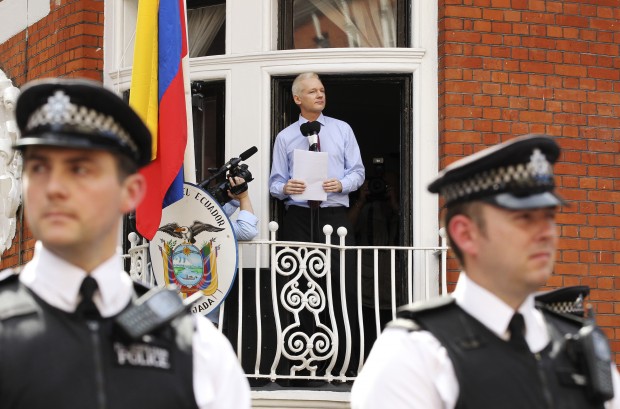
Anyone who leaks information about war crimes is useful, but did it have to be Julian Assange? Yeesh. Part Ellsberg and part Polanski, he’s retreated for the past two years from international law to the safe haven of Ecuador’s embassy, a veritable house arrest of his own design, dodging sex-crime charges. Assange just did an Ask Me Anything at Reddit. A few exchanges follow.

__________________________

Question:

What is your opinion on Edward Snowden? 

Julian Assange:

Edward Snowden performed an intelligent and heroic act. I and others had been calling for exactly this act for years (you can read about that here) co-ordinated his asylum. Our Sarah Harrison kept him secure in his path out of Hong Kong and spent 40 days making sure he was OK in Moscow’s airport. Just last week I co-launched a new international organisation, the Courage Foundation in Berlin. Pentagon Papers whistleblower Daniel Ellsberg, Nobel Peace Prize winner Mairead Maguire and many other great people are involved. 

__________________________

Question:

If you had a chance to do this all again, would you, and what changes would you make?

Julian Assange:

Again – definitely; we only live once and every day spent living your principles is a day at liberty. It is clear that history is on our side. Most of our difficult decisions are constrained by resource limits, not ideas. But I was ignorant about the extent of Sweden’s geopolitical reliance with the United States and to some extent the structure of UK society.

__________________________

Question:

In regards to President Obama you were recently quoted as saying, “You must surely, now, start to reflect on what your legacy will be.” How do you think history will remember you, and how do you feel about that?

Julian Assange:

For presidents it is important, but for the rest of us it is more important to get things done and see your legacy in the world. We’re doing well in the more academic or comprehensive histories and outside the worst aspects of the English speaking mainstream press. Smears don’t have much staying power on their own because they deviate from the foundations of reality (what actually happened). They require constant energy from our opponents to keep going. The truth has a habit of reasserting itself.

__________________________

Question:

Hi Julian, I have 2 questions.

First, what do you do to stop yourself going mental with boredom? From my understanding, you cannot leave the embassy or you’ll be arrested, so you’ve basically placed yourself under house arrest. What are you day to day activities?

Second, (and I don’t mean this to sound inflammatory), why did you start a website to leak classified information? Surely you can understand that many things kept confidential are for the reasons of national security, and releasing secret documents puts lives and international relations at risk?

Julian Assange:

1) I only wish there was a risk of boredom in my present situation. Besides being the centre of a pitched, prolonged diplomatic standoff, along with a police encirclement of the building I am in and the attendant surveillance and government investigations against myself and my staff, I am in one of the most populous cities in Europe, and everyone knows my exact location. People visit me nearly every day. I also continue to direct a small multinational organisation, WikiLeaks, which is a serious logistical and occupational endeavour. I barely have time to sleep, let alone become bored.

2) Confidential government documents we have published disclose evidence of war crimes, criminal back-room dealings and sundry abuses. That alone legitimates our publications, and that principally motivates our work. Secrecy was never intended to enable criminality in the highest offices of state. Secrecy is, yes, sometimes necessary, but healthy democracies understand that secrecy is the exception, not the rule. “National security” pretexts for secrecy are routinely used by powerful officials, but seldom justified. If we accept these terms of propaganda, strong national security journalism becomes impossible. Our publications have never jeopardized the “national security” of any nation. When secrecy is a cover-all for endemic official criminality, I suggest to you, it bespeaks a strange set of priorities to ask journalists to justify their own existence.•

Tags:

In his Foreign Affairs essay, “The Age Of Entropy,” Randall L. Schweller takes the appreciation for creative destruction to strange new heights, arguing that world wars–you know, those things that killed tens of millions–had their good side, too, helping to create lasting peace. Yeesh. Not only is it abhorrent from a humanistic viewpoint, but it’s historically incorrect. WWI and its aftermath actually helped create another devastating war just two decades later. From Schweller:

‘CREATIVE DESTRUCTION

How did we get here? The shift began in the twentieth century, with the advent of nuclear weapons and the spread of economic globalization, which together have made war among the great powers unthinkable. As many scholars have pointed out, the world has enjoyed the longest period of relative peace in recorded history. The absence of cataclysmic wars among great powers has obviously been a great boon. But it has also come at a real cost. For the past several centuries, wars between the extant power in the international system and the rising challenger or challengers have occurred every hundred years or so, crowning a new leading power, which is responsible for organizing international politics and shouldering the burdens of global leadership.

In crowning new kings, these hegemonic wars also obliterated the old orders, wiping the institutional slate clean so that a new global architecture, better suited to the times, could be built from scratch. The wars were thus a good thing in some sense, because they replenished the international system with new energy in service of world order and lasting peace. In their absence, we no longer have a force of ‘creative destruction’ capable of resetting the world. And just as seas become foul without the blowing of the winds, prolonged peace allows inertia and decay to set in.”


Tags:

« Older entries § Newer entries »