Politics

You are currently browsing the archive for the Politics category.

Carlos Slim, who enjoys cable, thinks people should work 33 hours a week but compress their labor into just three days. Not so much because of automaton making jobs scarce but for quality-of-life reasons. From Jude Webber at the Financial Times:

“We’ve got it all wrong, says Carlos Slim, the Mexican telecoms tycoon and world’s second-richest man: we should be working only three days a week.

Attending a business conference in Paraguay, Mr Slim said it was time for a ‘radical overhaul’ of people’s working lives. Instead of being able to retire at 50 or 60, he says, we should work until we are older – but take more time off as we do so.

‘People are going to have to work for more years, until they are 70 or 75, and just work three days a week – perhaps 11 hours a day,’ he told the conference, according to Paraguay.com news agency.

‘With three work days a week, we would have more time to relax; for quality of life. Having four days [off] would be very important to generate new entertainment activities and other ways of being occupied.’

The 74-year-old self-made magnate believes that such a move would generate a healthier and more productive labour force, while tackling financial challenges linked to longevity.”

Tags:

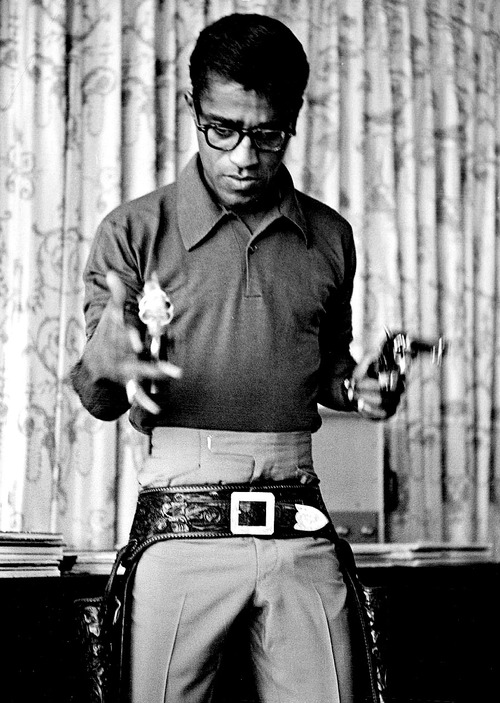
In 1973, K-Tel celebrated (i.e., exploited for cash) Israel’s 25th anniversary. Yes, a song by Sammy Davis, Jr., a famous convert, is included.

The opening of Sasha Archibald’s wonderful Los Angles Review of Books essay about the history of the Smithsonian Institution, the respected American national museum whose roots are neither particularly respectable nor American:

“THE SMITHSONIAN MAY be America’s national museum, but it was not the brainchild of an American. The institution was foisted on the country by an outsider, an obscure British mineralogist who left a mysterious bequest. James Smithson never set foot in America, and there is little evidence that he befriended any Americans. He did not write approvingly (or disapprovingly) of the new democracy, and did not profess to admire American sensibilities. At the time he wrote his will, in 1826, the Smithsonian’s benefactor can best be described as a wealthy apolitical dandy, obsessed with his bloodline.

The Americans didn’t ask for Smithson’s charity, and neither were they glad to receive it. Congress had more pride than greed, and the unexpected gift rankled: not only was it that of a reviled Brit, but a Brit who dared demand he be acknowledged in perpetuity. Moreover, it was earmarked for a purpose Americans never would have chosen themselves. Smithson’s patronage was condescending — nothing more, one Congressman surmised, than a rich man’s bid for immortality. Even John Quincy Adams, the bequest’s most passionate advocate, refused to venerate Smithson as a magnanimous patron. It was Adams who kicked up a fuss when investors were allowed to squander the funds (later replenished by the US Treasury) and Adams who protested that a national farm didn’t meet Smithson’s stipulations. In private, however, he concurred that James Smithson was probably insane.

Insane, or perhaps just consumed by a single obsession. In addition to gifting a fortune to a country he’d never visited, Smithson’s other anomalous life decision was to change his name, at the late age of 36. He was the illegitimate child of the Duke of Northumberland, Sir Hugh Smithson, and although he never suffered for material want — his widowed mother managed to amass a fortune — his exclusion from the Northumberland dynasty irked him through adulthood. After both his parents died, Smithson abandoned his mother’s familial name, Macie, and claimed his father’s, vowing, somewhat histrionically, that Smithson would become more enduring a name than Northumberland.

That seemed unlikely. The Northumberlands were one of the wealthiest and most prominent families in Britain, while Smithson’s solitary life was occupied mainly by the meetings of various science clubs. He collected rocks and published articles on dilettantish topics — the mineral content of a woman’s tear, and how to brew a better cup of coffee. Traveling with a manservant and a lavish silver tea service, he settled in Paris, added a pompous flourish to his new name (‘Monsieur de Smithson’), and commissioned portraits of himself. By 1816, in his early 50s, Smithson had named Britain’s Royal Society as the benefactor of his trust, but the Society misstepped in deleting a few sentences from an article Smithson had submitted for publication. Always quick to perceive a slight, Smithson decided to gift his money elsewhere. He traveled to England one last time, in 1825, to make end-of-life arrangements, liquidating his property and drafting a will and testament that named his nephew as the primary benefactor. Should his nephew have no heirs (legitimate or illegitimate, Smithson pointedly wrote), the money should be used for ‘an Establishment for the increase & diffusion of knowledge among men’ in America, to be known as the ‘Smithsonian Institution.’

Having tended to business, Smithson returned to Paris, and then, likely anticipating his death, decamped in high style to Genoa, bringing along his silk handkerchiefs and jewel collection, where he quietly died June 27, 1829. (There is no record of the cause of death, and exhuming Smithson’s skeleton, in 1973, yielded only that he was very petite, with many rotten teeth.)”

Tags: , ,

In a Nautilus Q&A conducted by John Steele, which focuses on the valuation of nature, Cambridge economist Sir Partha Dasgupta offers up a dismal view of our future:

Question:

What do you think the world will look like in 50 years?

Sir Partha Dasgupta:

I’m pretty pessimistic. I don’t believe humanity is going down the tube; that is meaningless. There will be always some rich people who will overcome the problems that we will face, and enough rich people. But I think the idea that we are in a universal movement towards progress, for example the idea that we will eliminate poverty in 10 years, 15 years, yes, we can do it for a short period, but the way we are attacking nature, the way we are handling nature, she’s biting back. She bites back at the local level; we already know that. Catastrophe is not a feature of the future. Villages have been wiped out in various parts of the world, as we know, over the decades, civil unrest, civil war amongst tribes, neighbors, which we have seen in our own time, are not exactly unrelated to resource scarcities. These are battles for resources. The epiphenomenon might be cultural divides and so forth, but at the end of the day when you’re very poor you worry about who’s going to feed your child, and our baser instincts, our nobler instincts are suppressed. So in my judgment we have seen enough of that. To think that those things can be cured on a large-scale basis, I don’t have many hopes because we are doing enormous damage to the oceans, we have done enormous damage. Obviously the theme of this conference in large measure has been over climate, and God knows what we have in store in 30, 40 years’ time.

Now, it doesn’t really mean that, as I say, the idea isn’t like that we’re all like lemmings, we all fold under the roof. No, it’s not going to happen like that. The richest parts of the world will find ways, because they have enough resources to be able to overcome the difficulties, at least in some measure. They may not be able to prosper as much. But I hate to think what’s going to happen in the drier parts of the world, sub-Saharan Africa, Northern India. I don’t know what will happen there, but to think that it’s all progress ahead of us if we get our institutions right, I think probably we are a bit too late for that. Many of these processes have very long-term irreversibilities. I mean, my climate science friends tell me that even if you were to have a zero emission now, the cumulative effect of the past will come to terrorize us in some form or the other in the future. So I think we’re going to see deep poverty in various parts of the world, even as we move in whatever direction we have to move, because we’ve set in motion processes which are amazingly tenacious, some of them being our own habits. I don’t think we have in the modern era come to terms with the fact that collective action is required with the greatest urgency at every level, community level, and there is collective action at the community level; we see it everywhere in some form. At the national level far less so, and of course at the international level we see mainly disappointments. So we’ll survive, but this idea of progress which we have become accustomed to over a 250-year period since the beginning of the industrial revolution, certainly in the past 60, 70 years, I mean since the end of the Second World War, there’s been this very optimistic and rightly so, optimistic view with the knowledge that we had that reasoned behavior will take us there, but we’ve been using the wrong metric.”

Tags: ,

There’s probably room for just one Las Vegas in America, especially now that gambling is decentralized and ubiquitous, even on that screen in your shirt pocket. Vegas itself makes less money these days from gaming than non-gaming attractions (dining, shopping, shows, etc.). Atlantic City’s casino culture has always been a fraught thing, and now that the chips are falling where they may, the dealers beat, it’s hard to predict what comes next. From the Economist:

“Talk of diversifying the city’s economy is not new. In 2010 Chris Christie became New Jersey’s governor with talk about making Atlantic City more family-friendly, a ‘Las Vegas East.’ He created a commission to look at gaming in the state. A year later he launched a five-year plan to increase conventions, retail and tourism. Last year he gave a tax break to Revel, as the struggling casino had an unusual business model that relied more on revenues from conventions and regular tourists. Non-gambling visitors could easily avoid the casino floor, which until a year ago was also smoke-free. But gamblers fled the casino in greater numbers, and Revel now looks doomed.

Since the 1970s the casinos have delivered essential lucre to New Jersey’s coffers. Atlantic County, which includes Atlantic City, represents 20% of the state’s tourism industry, and tourism is the third-most important industry to the state. To manage Atlantic City’s waning appeal, New Jersey politicians are now seriously mulling a plan to bring casinos to Jersey City, which lies just across the Hudson River from New York City. This would be a big gamble: not only would it involve changing the law and holding a referendum, but also it would further deter travel to Atlantic City.

It is also not clear that more casinos would help.”

__________________________

“You sense the excitement and challenge of change on the way”:

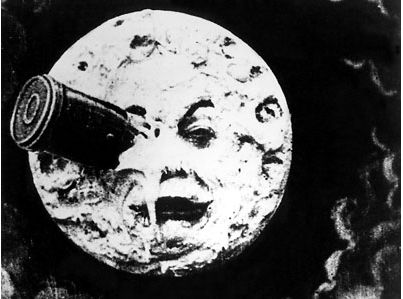
From Zachary Crockett’s Priceonomics post which recalls a proposed mission scrubbed from the collective memory, the time when the United States considered a Sagan-aided plan to put a kaboom on the moon:

“As far back as 1949, Chicago’s Armour Research Institute (known as the IIT Research Institute today) had studied the effects of nuclear explosions on the environment and atmosphere. In 1958, the program was approached by the United States Air Force and asked to determine the hypothetical consequences of a nuclear explosion on the Moon. Sensing that national morale was low after the Soviets launched Sputnik, the U.S. government coined a plan: they’d nuke the Moon, causing an explosion so big that it’d be visible from Earth. They hoped the explosion would not only boost the confidence and approval of Americans, but serve as a show of power to the Soviets.

Led by renowned physicist Leonard Reiffel, a ten-person research team was formed under a rather auspicious project title: ‘A Study of Lunar Research Flights’ (or, ‘Project A-119’). Immediately, the team began studying ‘the potential visibility of the explosion, benefits to science, and implications for the lunar surface.’ An essential element to ensuring that the explosion would be seen from Earth was determining the mathematical projection of the expansion of the resulting dust cloud in space; Carl Sagan, a young doctoral student at the time, was brought in to help find an answer.”

Tags: ,

In an excellent piece of writing, a Foreign Affairs review of a pair of new books, Keith Gessen tackles the question of Russia’s utter oddness, wondering why the heart of the former Soviet Union chooses to live in a fairy tale when it knows such a thing can never have a happy ending. An excerpt:

“The man sitting next to me — Sergei, I’ll call him — was also drunk, and he decided to engage me in a discussion of geopolitics. He said he was a graduate of MEPhI, an elite technical university in Moscow, and that he had made millions in software design. Sergei was, theoretically, the sort of Russian who might be expected to be critical of Russian President Vladimir Putin, but he was not. He was thrilled that Russia had seized Crimea, if only because in doing so, it had extended a big middle finger to the West. Sure, the United States was stronger than Russia, but it was stretched thin. And Russia was unpredictable, which gave it an advantage.

‘Oh, we’ll lose,’ Sergei said, ‘like we always lose. But what a lot of laughs there’ll be along the way!’

We landed soon after that, but the conversation stuck with me. I kept thinking — I keep thinking — what, exactly, is wrong with Russia? Why is it still so aggressive nearly 30 years after the Soviet leader Mikhail Gorbachev launched the process of ‘normalizing’ Russia and its relations with the world? Why, despite two decades of optimistic predictions that it was on the path to becoming, or was on the verge of becoming, or had already become a ‘normal’ country, had it never become one? Why couldn’t it be more like Germany, another country that used to invade other countries but now focuses on making quality automobiles and protecting the health of the euro?

At least part of the trouble is that Russians have never been able to agree on what ‘normal’ means.”

_________________________

“Because of him, we have political instability!”:

Tags:

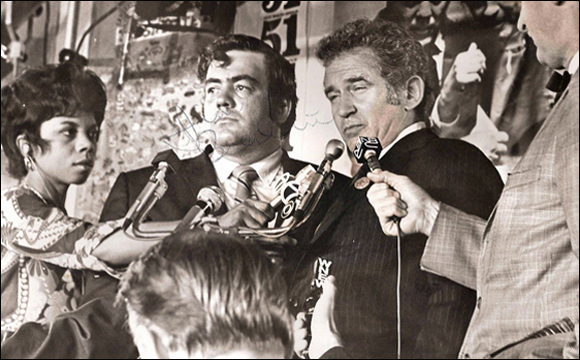
In 1969, Jimmy Breslin, who pours Piels beer over his Grape-Nuts cereal each morning, ran for City Council in NYC on a ticket that aimed to deliver Norman Mailer to Gracie Mansion. It was a secessionist platform that sought to make New York City the nation’s 51st state; 5% of the Democratic Primary voters approved. Here’s an excerpt from “I Run to Win,” Breslin’s May 5, 1969 cover article for New York magazine, written the month before the people voted nay:

The first phone call on Monday morning was at seven o’clock.

“He’s asleep,” I heard my wife mumble.

“Wake him up?” she mumbled.

She kicked me and I reached over for the phone.

“Somebody named Joe Ferris,” she said. “He needs your correct voting registration for the petitions., What petitions?”

I sat up in bed, with the phone in one hand and my head against the wall and my eyes closed.

“What petitions?” my wife said again.

I knew what petitions Joe Ferris was talking about. I knew about them, but I never thought it would come to the point of an early morning phone call about them. You see, when it started, I was only in this thing for pleasant conversation with nice people. “Hello,” I said to Joe Ferris. I was afraid he would send cold waves through the phone.

“I’ve got to be at the printer with the petitions this morning,” Joe Ferris said. “So what I need is the exact way your name and address appears on the voting rolls. We don’t want to have any petitions thrown out on a technicality. Because they’re going to be looking for mistakes. Particularly when they see how much support you and Norman are going to get. That’s all I’ve been hearing around town. You and Norman. I think you’ve got a tremendous chance.”

“I’ll get the information and call you back,” I said to Joe Ferris. He gave me his phone number and I told him I was writing it down, but I wasn’t. Maybe if I forgot his number and never called him back, he wouldn’t bother to call me anymore.

“What petitions?” my wife said when I hung up.

mailer-breslin-button“Nothing,” I said. I put my face in the pillow. Well, to tell you what happened. I really don’t know what happened, but I was in a place called the Abbey Tavern on Third Avenue and 26th Street at four o’clock one afternoon, when it was empty and I wouldn’t have to talk to anybody I didn’t know, and Jack Newfield came in. Jack Newfield is a political writer. He writes for the Village Voice and Life magazine and he does books and we got to know and like each other during the Bobby Kennedy campaigns last spring. Anyway, I’m having coffee with Jack Newfield and he says, “Did you hear me on the radio the other night? I endorsed you. I endorsed Norman Mailer for mayor and you for president of the City Council in the Democratic primary.” I did two things. I laughed. Then I sipped the coffee. While I did it, I was saying to myself, “Why is Mailer on the top of the ticket?”

And a couple of days later, I had lunch in Limerick’s, on Second Avenue and 32nd Street, and here was Newfield and Gloria Steinem, and she likes me and I like her, and Peter Maas, and he is all right with me, too, and we got to talking some more and they kept saying Norman Mailer and I should run in the Democratic primary and finally I said, “Has anybody talked to Norman?”

“No, not recently,” Gloria said.

“Give me a dime,” I said.

I went to the phone and called Norman. While I was dialing, I began to compromise myself. Norman went to college, I thought. Maybe it’s only right that he’s the mayor and I’m the president of the City Council. But that’s the only reason. He has a Harvard diploma. On ability, I should be mayor.

“Norman?”

“Jimmy, how are you?”

“Norman, let’s run.”•

Tags: , , , ,

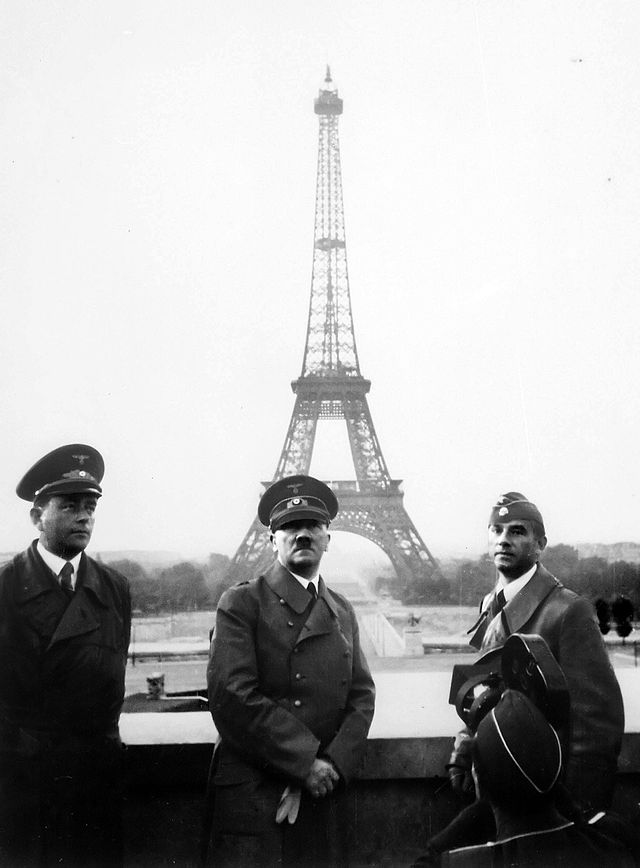
In a new Afterword (published at the Los Angeles Review of Booksto the updated version of 1998’s Explaining Hitler, Ron Rosenbaum looks at the architect of Nazism in light of 9/11, arguing that Hitler was not a failed dictator but a successful terrorist. An excerpt:

“For Hitler, it was not a matter of making the trains run on time so much as making the trains never stop running to Auschwitz and Treblinka. One relatively new aspect of Holocaust study is a focus on what happened when the trains finally did stop running, because the Russians were about to overrun the mainly Polish-based camps. The full story, much of which was new to me, can be found in Daniel Blatman’s 2011 work, The Death Marches: The Final Phase of Nazi Genocide.

When the camps were disbanded, the large SS and native Polish and Ukrainian guard troops feeding the gas chambers were not redeployed to stave off the Russians. Instead they were ordered to take all the living and half-dead captives on the road in what became the final phase of the Final Solution: the Death Marches. Hundreds of thousands of closely-guarded prisoners were mercilessly beaten or shot when they couldn’t keep up, starved to death while being harried along icy roads to . . . where? There was no sanctuary left safe for killing, but the killing had to continue at all costs, a horror at least as unfathomable as the camps themselves. The Death March commanders didn’t have to ‘follow orders.’ They had incorporated Hitlerism so deeply, they wanted to follow orders. As Evans argues, killing Jews was more important than military objectives. These commanders risked their own lives to continue the murder.

What’s worse, Blatman reports, is that it was not just military men but civilians along the way who gleefully took part in murdering the half-dead Jews. For those, like me, who thought it impossible to be further shocked by Hitler’s willing accomplices, reading about the Death Marches introduced a new level of horror.

It is a testament to how deeply dyed the souls of the killers were. Hitler was possessed, some might say, but he was also the cause of possession in others. …

Hitler didn’t lose the war. Not the war Evans argues was most important to him: the racial war. Hitler won that war. Six million to one. Yes, he committed suicide at the end. (And yes, 50 million others lost their lives so he could win the part of the war he cared about most. Collateral damage.)

Thinking about that suicide now, in the light of 9/11 and the subsequent exaltations of suicide bombing on messianic, theological grounds, does in fact offer a radical new way of characterizing Hitler. In retrospect at least, it’s tempting to argue that Hitler was, if not the first, then by far history’s greatest single suicide bomber. He blew up Europe to kill the Jews in it, even if it meant killing himself and tens of millions of others in the end.”

Tags: , ,

Cheap is often expensive, and low prices come off of someone else’s bottom line, almost always workers. In a The Daily Dot piece, Tim Jones-Yelvington argues against the sharing economy for the injuries it causes labor, though I don’t think regulation will cause it to screech to a halt. Nor should it, really. Beyong ride-sharing, driverless cars are going to displace workers, and we shouldn’t try to stop that innovation from occurring. We do, however, need some nimble political solutions to deal with the transitional pain of change and automation. An excerpt:

“What Uber and their ilk are fighting for is their right to evade regulatory protections that ensure not just safety for passengers, but also basic labor protections for the professional taxi drivers for whom cabs are a primary source of income. According to Uber, policies like the one pending in my home state of Illinois will destroy thousands of jobs for people in need of cash to pay their bills, including ‘military veterans, teachers, retirees, students, students, the unemployed and underemployed.’ (See also: babies and dogs.)

They’re referring to the part-time drivers who participate in the low-cost non-taxi ridesharing service UberX, who are currently not required to hold commercial licenses, and who are facing some pretty sketchy working conditions, including unpredictable percentages owed to Uber and unreliable protection from the company in case of accidents.

But UberX drivers are also undercutting professional cab drivers and could arguably be described as scabs, helping encourage an overall race to the bottom. With their help, the taxi cab business is now going the way of many other industries in the 21st century, as what was once a potentially viable career is displaced by contingent, part-time, and more easily exploited workers.”

Tags:

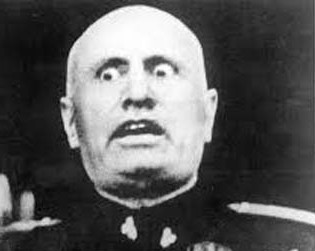
Mussolini is a great leader. It's going to end well for him.

Italy is laughing at America. It’s going to end well for Mussolini.

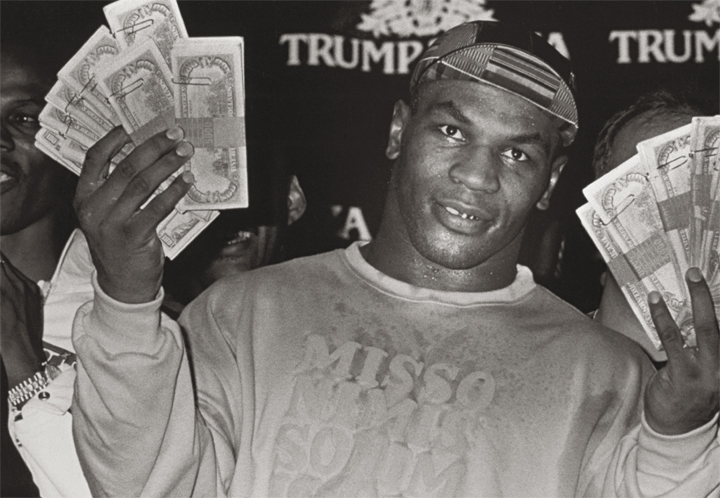
Filled with ego and cow meat, Donald Trump unsurprisingly has a boner for authoritarian regimes like China and Dubai, lauding their great building projects and national resolve. That’s not surprising since like many of his fellow “job creators,” Beefsteak Charlie fails to acknowledge that a lot of that development is accomplished through oppressive labor practices and environmental disregard. The suggestion is that America is being left behind because U.S. workers have rights and because we have some regulations that prevent corporations from ceaselessly polluting. (China, of course, has the world’s highest cancer rate.) It’s similar to a degree to the 1930s, when other buffoonish American businessmen congratulated Hitler’s Germany and Mussolini’s Italy for their “will” to be great and the ways they would keep workers disciplined. (Michael Ignatieff just wrote something about that ).

Trump on Dubai:

“On stage, Trump praises his Dubai. He is effusive—and sincere. Trump is one sort of Westerner who loves the UAE. They find here a throwback to colonialism’s heyday. No matter how much you’ve shat the bed at home, here your whiteness will get you a job, money, servants from the Global South. Help is so affordable when migrant workers make $200 a month. In police states, there is little crime.

‘The world has so many problems and so many failures, and you come here and it’s so beautiful,’ Trump says. ‘Why can’t we have that in New York?'”

Trump on China:

“I have many people from China that I do business with, they laugh at us. They– they feel we’re fools. And almost being led by fools. And they can’t believe what they’re getting away with. You know, they’re getting away with absolute murder. They’re making the products that we used to make in this country, they’re making ’em.”

My corpse was hung upside down on a meat hook from the roof of an Esso gas station.

Tags:

Before we realized that the machines were our common enemy, we fought amongst ourselves. Deep Blue would eventually make us all pale in comparison, but in 1972, it was Red vs. Red, White and Blue, in one of the most thrilling contests ever witnessed. In dethroning Russian chess champion Boris Spassky, Bobby Fischer was his unorthodox self, playing like a supercomputer with its wires crossed. An excerpt from Robert Greene’s The 48 Laws of Power, via Delancey Place:

“The first game of a chess tournament is critical, since it sets the tone for the months to come. It is often a slow and quiet struggle, with the two play­ers preparing themselves for the war and trying to read each other’s strate­gies. This game was different. Fischer made a terrible move early on, perhaps the worst of his career, and when Spassky had him on the ropes, he seemed to give up. Yet Spassky knew that Fischer never gave up. Even when facing checkmate, he fought to the bitter end, wearing the opponent down. This time, though, he seemed resigned. Then suddenly he broke out a bold move that put the room in a buzz. The move shocked Spassky, but he recovered and managed to win the game. But no one could figure out what Fischer was up to. Had he lost deliberately? Or was he rattled? Unset­tled? Even, as some thought, insane?

After his defeat in the first game, Fischer complained all the more loudly about the room, the cameras, and everything else. He also failed to show up on time for the second game. This time the organizers had had enough: He was given a forfeit. Now he was down two games to none, a position from which no one had ever come back to win a chess champi­onship. Fischer was clearly unhinged. Yet in the third game, as all those who witnessed it remember, he had a ferocious look in his eye, a look that clearly bothered Spassky. And despite the hole he had dug for himself, he seemed supremely confident. He did make what appeared to be another blunder, as he had in the first game — but his cocky air made Spassky smell a trap. Yet despite the Russian’s suspicions, he could not figure out the trap, and before he knew it Fischer had checkmated him. In fact Fischer’s un­orthodox tactics had completely unnerved his opponent. At the end of the game, Fischer leaped up and rushed out, yelling to his confederates as he smashed a fist into his palm, ‘I’m crushing him with brute force!’

In the next games Fischer pulled moves that no one had seen from him before, moves that were not his style.”

Tags: , ,

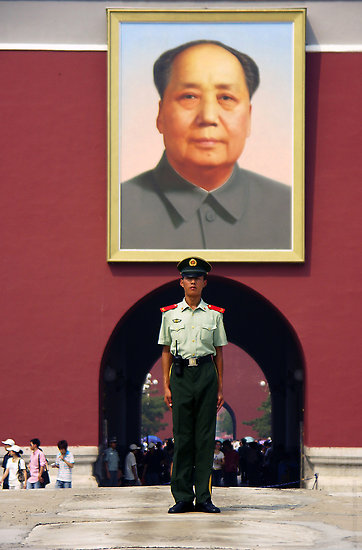
Did capitalism save despotism? An authoritarian regime like China is communist in name only, a place of whirlwind of investment and rampant deregulation envied by some American putzes who don’t seem to understand human rights or environmentalism or even history. Perhaps extreme pollution will eventually cause unrest, but the people seem to have been placated for now from pushing back at a non-democratic government by material gains. Not that there’s not victories in such things, but let’s not confuse it with freedom. The opening of Michael Ignatieff’s “Are The Authoritarians Winning?” at the New York Review of Books:

“In the 1930s travelers returned from Mussolini’s Italy, Stalin’s Russia, and Hitler’s Germany praising the hearty sense of common purpose they saw there, compared to which their own democracies seemed weak, inefficient, and pusillanimous.

Democracies today are in the middle of a similar period of envy and despondency. Authoritarian competitors are aglow with arrogant confidence. In the 1930s, Westerners went to Russia to admire Stalin’s Moscow subway stations; today they go to China to take the bullet train from Beijing to Shanghai, and just as in the 1930s, they return wondering why autocracies can build high-speed railroad lines seemingly overnight, while democracies can take forty years to decide they cannot even begin. The Francis Fukuyama moment—when in 1989 Westerners were told that liberal democracy was the final form toward which all political striving was directed—now looks like a quaint artifact of a vanished unipolar moment.

For the first time since the end of the cold war, the advance of democratic constitutionalism has stopped. The army has staged a coup in Thailand and it’s unclear whether the generals will allow democracy to take root in Burma. For every African state, like Ghana, where democratic institutions seem secure, there is a Mali, a Côte d’Ivoire, and a Zimbabwe, where democracy is in trouble.

In Latin America, democracy has sunk solid roots in Chile, but in Mexico and Colombia it is threatened by violence, while in Argentina it struggles to shake off the dead weight of Peronism. In Brazil, the millions who took to the streets last June to protest corruption seem to have had no impact on the cronyism in Brasília. In the Middle East, democracy has a foothold in Tunisia, but in Syria there is chaos; in Egypt, plebiscitary authoritarianism rules; and in the monarchies, absolutism is ascendant.”

Tags:

In a new Ask Me Anything at Reddit, Richard Dawkins and Lawrence Krauss, subjects of the new documentary The Unbelievers, hold forth, as one might expect, on science and religion. One comment on Krauss’ remarks about Islam: While fundamentalism in a technological world is a challenge, I wonder how much violence the world’s 1.6 billion Muslims are responsible for and how much comes from those who follow other faiths, including secular “gods” (e.g., money)? And that question comes from someone like myself who’s seriously irreligious. A few exchanges from the AMA follow.

__________________________

Question:

Do you guys believe the current state of the USA, theologically, is at a dangerous crossroads? I as a UK resident am seriously scared of America politically

Lawrence Krauss:

I’m not as worried. In spite of the fact that fundamentalists are the loudest, all polls continue to suggest that the number of unbelievers continues to grow in the US.

Richard Dawkins:

Superstitious and supernatural beliefs become more and more dangerous as advanced technology becomes available to ideologically or faith-driven fanatics. The distinguished astronomer Martin Rees gives humanity a 50% chance of surviving through the 21st century.

__________________________

Question:

You (and Sam Harris and others) have often spoken about the unique threats of Islam compared to the other world religions. Most liberals are silent on Islam – or keep repeating that all religions are the same, with “fundamentalism” being the problem. 

Why do you think this is? How do you see the challenge in tackling Islam shaping up at the moment?

Lawrence Krauss:

There is no doubt that Islamic fundamentalism is a huge problem in the current world.

In many ways it’s not that different from other fundamental religions, it’s just 500 years behind Christianity.

In that regard, unfortunately the current world is one in which global communication is possible and dangerous new technologies exist. And that is the key problem.

Ultimately, I suspect that what’s driving Islamic fundamentalism are economic inequities. And, as happens in the first world, once people’s standard of living improves they find wonderful replacements for fundamentalism.

Of course, all of that is nice to say in principle… but in practice it is going to take a long time and a lot of pain before the problem of Islamic fundamentalism can really be addressed.

__________________________

Question:

What is one discovery or innovation that you hope that humanity will achieve in your lifetime?

Lawrence Krauss:

Discovery: to know whether our universe is unique or not.

Innovation: to act globally to solve global problems [like climate change and ridding the world of nuclear weapons].

Richard Dawkins:

Explain consciousness and its evolution. Another one that I think has a realistic chance of being solved, is the origin of life

Lawrence Krauss:

I echo Richard. I actually think the origin of life will be solved in our lifetime, probably in the next decade.•

_________________________

“Science is wonderful, science is beautiful. Religion is not wonderful, religion is not beautiful.”

Tags: ,

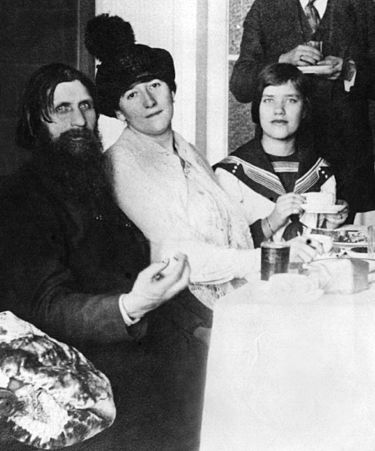
Rasputin must have been a complicated dad, huh? The Russian mystic’s elder daughter, Maria, had a wild and woolly life as you might expect, what with the political revolution and the circus-animal training and all. She died in 1977 in the Silver Lake neighborhood of Los Angeles, having spent the final years of her life collecting Social Security checks and complaining bitterly about communists to Hollywood gossip columnists. Here’s a portrait of her at age 69 from the November 12, 1968 Daily Progress of Charlottesville, Virginia:

We had a pleasant encounter with history last week by taking the daughter of Rasputin, “the mad monk of Russia,” to the Gaslight for a hamburger.

She was in town over the weekend with her friend Patricia Barham, a film and theatre columnist from Los Angeles. While here, they tried and failed to get the apparent Grand Duchess Anastasia to leave her Albemarle County farm for L.A. smog.

The apparent Grand Duchess is, of course, Anna Anderson, the woman who has claimed for 50 years to be the surviving daughter of the last Russian royal family.

If you missed the social news of the summer, Anna moved here from Germany in August and may settle permanently in Albemarle.

Rasputin’s daughter, Maria, has been in the U.S. since 1937 and in Los Angeles since 1965. As was reported during her earlier visit here in August, she came to this country as a circus animal trainer with Ringling Bros.

We learned this trip she was a member of the Hagenbach Brothers animal act, a job she took after several years touring Europe as a Russian folk dancer.

Making a living was a problem for Russian emigres during the 20s and 30s and Maria grabbed at an offer to go on the stage. Girls like Maria who spent their childhood having tea with the Czar’s children every Wednesday weren’t trained to make a living, but Maria had some talent and endless spunk, it appears.

For although Maria was mauled by a bear in Peru, Indiana, she stayed with the circus until the traveling show played Miami, Florida, where she quit and went to work as a riveter in a defense shipyard, she related Saturday night.

She stayed in defense plant work until 1955 when she was laid off because of her age, 66. Since then she has been working in hospitals and baby sitting for friends.

Since credibility gap had yawned intrusively into the conversation, we asked her how she got into the animal training game, and where she got the courage to whip up on lions and tigers. She learned in London, was her unelaborated answer though she noted, ‘After you’ve been the target of a revolution, nothing scares you anymore.’

Gregori Rasputin, her father, was tied in with the Russian royal court as religious advisor.

That lasted until personal enemies decided Rasputin-style religion was going too far and they ended him in a legendary assassination said to involve poisoning, stabbing, and drowning.

Maria said she had it rough in the Bolshevik revolution the year after her father was murdered and eventually left Russia for Berlin, Bucharest, Paris, London, and Miami.

Her English vocabulary isn’t all it might be, she readily admits. She says she speaks Russian best but also German and French. When the time came to write a book – and virtually every notable Russian emigre wrote at least one in the decade 1925-1935 – she dictated her memoirs and the result was, My Father, an anecdotal book on Rasputin published in 1932.

Her friend Pat Barham is in the throws of re-write on a second Rasputin book based on Maria’s recollections. She intends to call it, The Rape of Rasputin and described it as ‘sexsational and exciting’ but not funny.

Maria claims a leaning to be psychic and Pat affirms that on election morning two weeks ago, Maria said that Mrs. Richard Nixon had come to her in a dream and smiled. Maria has ‘signs’ like that often, Pat said.

“Little Mother,” Pat calls Maria for her continual worrying about handbags within reach of strangers in restaurants, suitcases open in hotel rooms, and columnists getting a comfortable chair for interviews.

Since being interviewed is an old game for Rasputin’s only legitimate daughter, she talks willingly and seemingly without reservation. This prompted Gaslight owner John Tuck to volunteer that the father of one of his boyhood chums was one of the band of assassins that did Rasputin in.

‘Why didn’t he like my father?’ Maria asked with genuine curiosity. John didn’t know, or at least didn’t say.

“My father was a kind man,” Maria later said when we returned to her hotel. “Once he was savagely attacked by the most powerful newspaper in Russia. Friends asked why he didn’t close the paper down since he could have done it like this,” she said with a snap of fingers.

“Let them write about me,” her father reportedly said. “Let them make money.” Maria described him as “a kind man who would never have closed the paper.”

Historians may not agree Rasputin was kind but there’s no doubt Maria is thoughtful. “When you leave the hotel, stop at the desk,” she said as the interview closed.

We did and found waiting a pot of white chrysanthemums to carry home through the season’s first snow flurry.•

_________________________

Footage of Maria as an animal trainer:

Tags: , ,

Two major questions about a potential Hillary Clinton White House:

  • Would she still be willing to do big and bold things as she tried to with heath-care reform during her husband’s administration, or has the price exacted from her during that time and from President Obama over the Affordable Care Act made her wary about attempting anything beyond incrementalism?
  • Would she be a neocon’s dream on foreign policy?

There are other questions regarding the undue influence of corporations in our democratic process, but I think those have been unfortunately answered already with the Clintons knee-deep in that kind of money.

From a new Spiegel interview with Clinton conducted by Marc Hujer and Holger Stark, some spying-related word association:

Spiegel:

Edward Snowden.

Hillary Clinton:

You know, I think he is a poor messenger for the message that he’s trying to take credit for. He came into the National Security Agency apparently with the purpose of trying to gather a lot of information, and most of what he gathered had nothing to do with surveillance in the United States, but obviously around the world. And I think he could have provoked the debate in our country without stealing and distributing material that was government property and was of some consequence. And then for him to go first to China and then to Russia raises a lot of questions, but he is going to have to make his own choices. If he returns to the United States, he will certainly stand trial, but he will have an opportunity to speak out and to make his case in both a legal way and a public fashion.

Spiegel: 

We actually wanted to talk about your book and not about the NSA, but since it became known on Friday that a member of the German intelligence agency was arrested who had admitted that he acted as a spy for a US intelligence service, the issue of the NSA has gained a new dimension. Given the tense political climate, do you believe the CIA could seriously come up with idea of infiltrating German intelligence?

Hillary Clinton:

Well, I know that your government is conducting a criminal investigation, and we will learn more as the facts are developed. And I know nothing other than what I read. But clearly, we have to do a much better job in working together between Germany and the United States to sort out what the appropriate lines of cooperation are on intelligence and security. I think the cooperation is necessary for our security, but we don’t want to undermine it by raising doubts again and again. Clearly, the surveillance on Chancellor Merkel’s phone was absolutely wrong. The president said that. I think that he made it very clear it was unacceptable. Where are the lines on both sides? That’s what we have to work out.”

Tags: , ,

Two exchanges from Buzz Aldrin’s new Ask Me Anything at Reddit. The second human on the moon doesn’t think the first ones on Mars should have a return ticket.

_________________________

Question:

Is there any experience on Earth that even compares slightly to having been on the Moon?

Buzz Aldrin:

My first words of my impression of being on the surface of the Moon that just came to my mind was “Magnificent desolation.” The magnificence of human beings, humanity, Planet Earth, maturing the technologies, imagination and courage to expand our capabilities beyond the next ocean, to dream about being on the Moon, and then taking advantage of increases in technology and carrying out that dream – achieving that is magnificent testimony to humanity. But it is also desolate – there is no place on earth as desolate as what I was viewing in those first moments on the Lunar Surface. Because I realized what I was looking at, towards the horizon and in every direction, had not changed in hundreds, thousands of years. Beyond me I could see the moon curving away – no atmosphere, black sky. Cold. Colder than anyone could experience on Earth when the sun is up- but when the sun is up for 14 days, it gets very, very hot. No sign of life whatsoever. That is desolate. More desolate than any place on Earth.”

_________________________

Question:

Our nation and our world have been waiting for another monumental achievement by humanity ever since you were a pioneer in the space race and set foot on the Moon. For lack of any serious government effort, I’m rooting for Elon Musk to accomplish this by sending man to Mars. What advice would you give Elon to achieve the ultimate objective of permanence on Mars?

Buzz Aldrin:

There is very little doubt, in my mind, that what the next monumental achievement of humanity will be the first landing by an Earthling, a human being, on the planet Mars. And I expect that within 2 decades of the 5th anniversary of the first landing on the moon, that within 2 decades America will lead an international presence on Planet Mars. Some people may be rooting for Elon – I think he could, with his SpaceX, contribute considerably, enormously, to an international activity not only at the moon but also on Mars. I have considered whether a landing on Mars could be done by the private sector. It conflicts with my very strong idea, concept, conviction, that the first human beings to land on Mars should not come back to Earth. They should be the beginning of a build-up of a colony / settlement, I call it a “permanence.” A settlement you can visit once or twice, come back, and then decide you want to settle. Same with a colony. But you want it to be permanent from the get-go, from the very first. I know that many people don’t feel that that should be done. Some people even consider it distinctly a suicide mission. Not me! Not at all. Because we will plan, we will construct from the moon of Mars, over a period of 6-7 years, the landing of different objects at the landing site that will be brought together to form a complete Mars habitat and laboratory, similar to what has been done at the Moon. Tourism trips to Mars and back are just not the appropriate way for human beings from Earth – to have an individual company, no matter how smart, send people to mars and bring them back, it is VERY very expensive. It delays the obtaining of permanence, internationally. Your question referred to a monumental achievement by humanity – that should not be one private company at all, it should be a collection of the best from all the countries on Earth, and the leader of the nation or the groups who makes a commitment to do that in 2 decades will be remembered throughout history, hundreds and thousands of years in the future of the history of humanity, beginning, commencing, a human occupation of the solar system.

Tags: ,

I believe sooner or later Texas will face its own intramural Red State-Blue State divide, with most metropolises leaning Democrat and rural areas going even harder to the Right. Texas won’t want to secede from the Union but from itself. Here’s the opening of “Lone Star Crazy,” Mark Binelli’s new Rolling Stone article which is written so beautifully yet is still completely terrifying:

“Jimmy Smith’s ranch sits on the Texas side of the Texas-Oklahoma border, in a little town called Burkburnett, named after a wolf-hunting buddy of Teddy Roosevelt’s. In 1918, a local farmer discovered oil on his land, and the population soared from 1,500 to 15,000 in a single year, inspiring a Clark Gable movie, Boom Town.

Those days have long passed. As I drive along the lonely dirt road wending through Smith’s property, the only Texas movie that comes to mind is the one about chain-saw massacres. I pass junked cars, barns in various states of collapse, cattle skulls dangling from iron gates, rusted metal drums of indeterminate purpose, no sign of human activity. The scene could have almost evoked nostalgia for some lost cowboy era, had it not been for the men with assault rifles guarding the main entrance. I was driving a rental car, a red Prius, in hindsight not the greatest choice for first impressions. But I waved, they nodded, and I kept driving.

The road eventually opened onto a clearing, where about 300 people milled about, eating barbecue, parked in folding campfire chairs, watching a band set up on a large professional stage. If nearly everyone present hadn’t also been heavily armed, it would have felt like a low-key rock festival. A guy in a polo shirt and stonewashed jeans, sipping from a Big Gulp, walks by with a scoped rifle on his back. A woman wearing a mesh Lane Bryant top, a semiautomatic hanging from a shoulder strap, stands beside a bored-looking six-year-old poking around in the dirt with a stick.

The Gathering of the American Patriot, as the event was called, took place on Memorial Day weekend – though you quickly got the sense that the patriotism being displayed was tethered primarily, perhaps exclusively, to the Republic of Texas.”

_______________________

“You’re liable to get all muddy if you don’t put it in reverse”:

Tags: ,

My guess is that Germany doesn’t want to delve too deeply into NSA spying because Germany has been complicit in it. Snowden lawyer Jesselyn Radack and former NSA spy Thomas Drake were just interviewed by Spiegel’s Sven Becker, Marcel Rosenbach and Jörg Schindler about the agency. I really, really wish there was some follow-up questions to points made in the following passage:

Spiegel:

The NSA argues that, in the war against terrorism, in order to find the needle in the haystack, we need lots of hay.

Jesselyn Radack:

If you’re looking for a needle in a haystack, you don’t make the haystack bigger. The US government is fear mongering when it claims: “If you’re against surveillance, the next terrorist attack is on you!”

Spiegel:

What is the true reason for the data collection?

Jesselyn Radack:

It’s about population control. And economic espionage.

Thomas Drake:

One of the big elephants in the room is Germany with its engineers. It’s extraordinarily tempting to know what’s going on here — new products, new methodologies, new approaches.”

Tags: , , ,

Petrotopias eventually run dry, so the key is to use the oil money to diversify the economy, and that’s what Dubai has succeeded in doing with global air travel, though there have been pretty terrible human costs. From “The New Jet Age,” Graham Boynton’s curiously amoral Vanity Fair article on the topic, which somehow elides all mention of the abuse of workers that’s fueled the building boom:

“The emergence of these carriers marks the fourth tectonic shift in international aviation since Pan Am’s founder, Juan Trippe, democratized the industry in the early 1950s. Prior to Trippe’s intervention, air travel was the domain of the ruling classes, and fares between the U.S. and Europe were fixed by the stodgy International Air Transport Association. However, in 1952, Trippe decided to introduce a tourist-class fare between New York and London and thus began a decades-long battle between free-market flying and cartel-led regulation that would see the rise and fall of carriers such as Sir Freddie Laker’s Skytrain in the 70s and People Express in the 80s, along with the breakout success of Virgin Atlantic.

The second shift came with the arrival of the jet age, in 1958, the introduction of the Boeing 747 a little over a decade later, and then the 1978 deregulation of the U.S. airline industry. In the early days of mass air travel, national airlines such as Pan Am and TWA and flag-carrying European airlines (British Airways, Air France, Lufthansa) ruled the world through government-protected colonial-route networks. But as the colonies evaporated and new business models challenged regulation, the legacy U.S. behemoths began to fall. First Eastern, then Pan Am, then TWA.

Southeast Asia then heralded the third tectonic shift. Introducing high-quality, service-led air travel, airlines such as Cathay Pacific, Singapore Airlines, Thai, and the rest all flourished as the international business-travel market grew, and as the old-world airlines struggled to survive. These fleets provided more comfortable seating, particularly at the front of the cabins, and a level of in-flight service that Western airlines had failed to offer with any conviction since the 50s.

Now we are in the fourth age. U.S. airlines are merging and morphing into giant entities with large domestic networks and relatively small international reach, offering only passable amenities on rather old equipment. Meanwhile, the Gulf airlines feature quality service at a competitive price. Peter Morris, chief economist at the aviation consultancy firm Ascend, says that these carriers have now ‘built enough critical mass to be a genuine threat to the traditional European airlines and in the near future to the Americans.’

‘They say that Dubai is Shanghai on steroids,’ notes [Emirates president Tim] Clark as he stares out of his office window in the terminal, admiring a row of gleaming Emirates A380s.”

Tags: , , ,

I’m not saying the Singularity won’t ever occur, but I really doubt it happens within the very aggressive timeline of the next 30 years or so. Physicist Louis Del Monte strongly disagrees. From Dylan Love at the Business Insider:

“The average estimate for when this will happen is 2040, though Del Monte says it might be as late as 2045. Either way, it’s a timeframe of within three decades.

‘It won’t be the Terminator scenario, not a war,’ said Del Monte. ‘In the early part of the post-singularity world, one scenario is that the machines will seek to turn humans into cyborgs. This is nearly happening now, replacing faulty limbs with artificial parts. We’ll see the machines as a useful tool. Productivity in business based on automation will be increased dramatically in various countries. In China it doubled, just based on GDP per employee due to use of machines.”

‘By the end of this century,’ he continued, ‘most of the human race will have become cyborgs [part human, part tech or machine]. The allure will be immortality. Machines will make breakthroughs in medical technology, most of the human race will have more leisure time, and we’ll think we’ve never had it better. The concern I’m raising is that the machines will view us as an unpredictable and dangerous species.’

Del Monte believes machines will become self-conscious and have the capabilities to protect themselves.”

Tags: ,

Ken Silverstein, a Big Oil reporter who’s written a book about the industry’s shadowy middlemen and facilitators, recently sat for an Ask Me Anything at Gawker. Michael Busch of the Los Angeles Review of Books also just interviewed the journalist, and here’s the opening:

Question:

Unlike most books dealing with the oil industry, yours examines the internal machinery of the business, and the players who grease its wheels. Can you start by outlining the scope of your investigation into the world of oil, and the various actors it involves?

Ken Silverstein:

I’ve been writing about the oil industry for more than 15 years, and during that time, I’ve traveled multiple times to Africa and Central Asia, mostly, and Houston, of course. It’s hard to think of any commodity or good that is more important to international commerce than oil. Or more sensitive, for that matter. In this sense, it’s comparable to the global arms trade in its different hidden worlds, which is always interesting. For this project I was funded by Open Society to specifically look at middlemen and oil trading firms that have an enormous role in this trade, but whom are almost never written about. There’s all sorts of great reporting and writing about the oil industry, but rarely do we get a look at these players who are hugely significant but almost entirely hidden.

Question:

Fixers, for example.

Ken Silverstein:

There are fixers, who act as middlemen between the oil industry and those governments from whom oil companies wish to obtain concessions. For a very long time now, oil was mostly pumped in the Third World and generally shipped to the First World, and it was First World companies who controlled the trade. As our illustrious former Vice President, Dick Cheney, put it, ‘The good Lord didn’t see fit to put oil and gas only where there are democratically elected regimes.’ He was saying this at a time when he was still with Halliburton, and using it as a justification for the fact that his company was doing business with some pretty shady regimes.

It’s a good point. Because so much of the oil we rely on is located in the Third World, getting access to it has frequently involved bribing governments. Sometimes those bribes have been legal, and sometimes they haven’t been legal, but payoffs to corrupt government officials have always been involved. In the old days, there were a lot of direct bribes made until the Foreign Corrupt Practices Act was passed in 1974. In Europe, bribes were legal until much more recently — you could deduct them in your taxes. But if you are a company executive, you would rather have other people dealing with these governments than having to do it yourself. It’s a very dicey area, and that’s what makes fixers useful. Companies like to have intermediaries who know a country well, or several countries. Of course, I don’t want to blame all of the corruption only on Third World governments. The companies obviously don’t like making payoffs, but they do it because they benefit; they want to win influence and government friends in the corrupt, undemocratic countries that control oil.

In Equatorial Guinea, for example — a country rich in oil but suffering under a terrible dictatorship — Exxon wanted access to the country’s deposits. The President, Teodoro Obiang [Ngeuma Mbasogo], had land, and the company bought it directly from him. President Obiang has been in power since 1979, so ‘president’ is a generous title. ‘Ruler’ is more accurate. In any event, Obiang sold Exxon some land, where they could build their own compound and develop the land for exploitation. It is safe to say they overpaid enormously for that land. It would be difficult to prove that this constitutes a ‘bribe,’ but these are the sorts of tradeoffs that are made in the name of access.

Ed Chow, a longtime Chevron executive, put it most succinctly. In places like Nigeria or Kazakhstan, he said, ‘You get the land, but you don’t provide a lot of jobs, you may be destroying the environment, and most of the profit goes to international capital. The companies don’t have a strong case to sell to local communities, so they come to not only accept highly centralized governments but to crave it. It’s a lot easier to win support from the top than to build it from the bottom. As long as we want cheap gas, democracy can’t exist.'”

Tags: ,

Utopian communes usually go wrong, wronger or wrongest, but The Farm, a hippie collective in Tennessee founded 43 years ago by ex-marine Stephen Gaskin, who just passed away, came to no horrible conclusion. The opening of his New York Times obituary by Douglas Martin:

“Stephen Gaskin, a Marine combat veteran and hippie guru who in 1971 led around 300 followers in a caravan of psychedelically painted school buses from San Francisco to Tennessee to start the Farm, a commune that has outlived most of its countercultural counterparts while spreading good works from Guatemala to the South Bronx, died on Tuesday at his home on the commune, in Summertown, Tenn. He was 79.

Leigh Kahan, a family spokesman, confirmed the death without giving a specific cause.

By Mr. Gaskin’s account, the Farm sprang in part from spiritual revelations he had experienced while using LSD, the details of which he described to thousands of disciples, who gathered in halls around San Francisco to hear his meditations on Buddhism, Jesus and whatever else entered his mind.

But to his followers, he ultimately offered more than spiritual guidance. In founding the Farm, they said, he gave concrete form to the human longing for togetherness coupled with individual expression that had energized the counterculture.”

Tags: ,

Journalism isn’t a science and while any individual organ might have its code of ethics, there is no overriding one. While that’s probably necessary, it’s alway left plenty of room for manipulators who have reduced the field, leaving it scarred and scorned with few believers. Yet the omnipresence of quasi-news like Rupert Murdoch’s outlets must have some effect, right? If you had said six years ago that President Obama would have reversed a good deal of our economic troubles, helped secure the recovery of the stock market, improved job numbers despite growing automation, kept us out of military quagmires in an exploding world, achieved something approaching universal healthcare (which seems to be good for the economy as well as good in general), heightened support for civil rights (e.g., gay marriage) and moved us in an environmentally sounder direction, and that he would do those things with an extremist opposition party controlling congress for the majority of the time, I think most Americans would have been very pleased. Yet poll after poll supposedly depicts him to be a remarkably unpopular President, with Fox News gleeful and Chuck Todd, a modified Van Dyke having a panic attack, declaring the sky is on the ground. It’s a little strange then that the two most important “polls”–the ones in November of 2008 and 2012 that involved actual polling places–were won rather convincingly by Obama. I think “winning” the media isn’t necessarily the same thing as winning, though not everyone agrees.

From Anders Herlitz’s Practical Ethics piece about the practice of news:

“Covering news and reporting events to a larger group of people is, from a historical perspective, very new. Newspapers with large readerships date back to the 19th century. Photojournalism became widespread in the 1930s. News in the common household’s TV starts becoming widespread in the 1950s. In the early days, to report news was to report facts, to publish an image was to give the audience the opportunity to with their own eyes see what happened in other places in the world. Journalists were witnesses to events in the world, and readers, viewers, listeners, were given the opportunity to through the journalist build their own opinions, to increase their knowledge about their countries, and about the world. Journalism and independent media outlets became a cornerstone of democracy. A well-informed people make better judgements, better choices, and this is enabled by the work of journalists. The culmination of this is the Vietnam War. Journalists were allowed to do their job, and to witness and report back to the American public what took place in Vietnam. Consequently, it became clear that news that in no way were false, untrue or fabricated could in fact generate a reaction in the public that, from the perspective of certain very powerful groups, was highly undesirable. How something is reported matter. Images matter. Details matter.

In the last couple of decades, powerful agents of the most various kind have learned to appreciate this insight to a larger and larger extent. Wars are no longer fought only on the battlefield, the success of political movements depend on what kind of media coverage they get, international relations issues depend on how the world perceives of the events, corporations know very well that they benefit from no media coverage at all of certain elements essential to their organizations (e.g. oil extraction in countries where there is no respect for human rights, assembly factories in poor countries, the origin of certain natural resources needed for the end-product), and even certain individuals are well-aware of the importance of their ‘personal brand’ and do their best to control how they are depicted in the media.”

Tags:

From an Economist report about higher education, an astounding triumph of modern humanity but one that must change to be sustainable and effective, a passage about the forces of disruption:

Higher education suffers from Baumol’s disease—the tendency of costs to soar in labour-intensive sectors with stagnant productivity. Whereas the prices of cars, computers and much else have fallen dramatically, universities, protected by public-sector funding and the premium employers place on degrees, have been able to charge ever more for the same service. For two decades the cost of going to college in America has risen by 1.6 percentage points more than inflation every year.

For most students university remains a great deal; by one count the boost to lifetime income from obtaining a college degree, in net-present-value terms, is as much as $590,000. But for an increasing number of students who have gone deep into debt—especially the 47% in America and 28% in Britain who do not complete their course—it is plainly not value for money. And the state’s willingness to pick up the slack is declining. In America government funding per student fell by 27% between 2007 and 2012, while average tuition fees, adjusted for inflation, rose by 20%. In Britain tuition fees, close to zero two decades ago, can reach £9,000 ($15,000 a year).

The second driver of change is the labour market. In the standard model of higher education, people go to university in their 20s: a degree is an entry ticket to the professional classes. But automation is beginning to have the same effect on white-collar jobs as it has on blue-collar ones. According to a study from Oxford University, 47% of occupations are at risk of being automated in the next few decades. As innovation wipes out some jobs and changes others, people will need to top up their human capital throughout their lives.

By themselves, these two forces would be pushing change. A third—technology—ensures it.•

« Older entries § Newer entries »