Christopher Hitchens was no fan of Mother Teresa and her cult of suffering, and William F. Buckley seemed to have similar apprehensions in 1989.
Ideas and technology and politics and journalism and history and humor and some other stuff.
You are currently browsing the archive for the Politics category.
Christopher Hitchens was no fan of Mother Teresa and her cult of suffering, and William F. Buckley seemed to have similar apprehensions in 1989.
Tags: Mother Teresa, William F. Buckley
George Carlin, our best stand-up ever, with a brilliant bit about the ever-increasing deceit of language. Just audio.
Tags: George Carlin
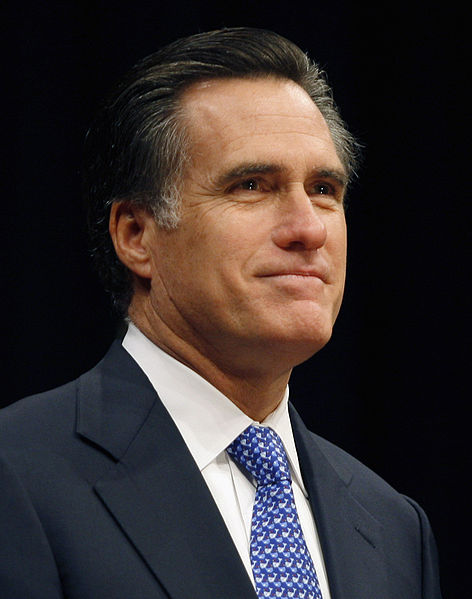
There was a brouhaha last Friday when Mitt Romney’s son, Matt, used some Birther vernacular while campaigning on behalf of his father in New Hampshire, but it really shouldn’t be a surprise to anyone who’s followed the former Massachusetts Governor’s strategy. Playing to the idea that Obama is “Other” has been a tacit but clear part of the Romney strategy. The younger Romney’s only real deviation was being explicit instead of implicit.
When Romney says that “Obama doesn’t have a clue about the economy,” that’s obviously fair game. But when he states that Obama “doesn’t get America,” he’s labeling the President as less than adequately American or not a real American. When Romney says Obama is trying to turn “America into Europe,” he may as well be using “Kenya” in the comparison.
Trying to pander to people who want to see Obama as alien is sad, especially for someone who’s likely been treated to same way because of his own religion. That kind of faux patriotism is often the last refuge of a lout, but it in Romney’s case, it’s been present from the first.
••••••••••
Tags: Matt Romney, Mitt Romney

If you want to argue that athletes shouldn’t be using PEDs because they may suffer terrible health consequences, feel free. It’s risky business. But arguing that enhancement should not occur at all is futile. We’re all going to be enhanced in the future. It’s not a matter of if it will be done but how. In “The Case for Enhancing People” in the New Atlantis, Ronald Bailey examines pretty much every angle of the topic, including the potential inequality of our brave new world. An excerpt:
“Those who favor restricting human enhancements often argue that human equality will fall victim to differential access to enhancement technologies, resulting in conflicts between the enhanced and the unenhanced. For example, at a 2006 meeting called by the American Association for the Advancement of Science, Richard Hayes, the executive director of the left-leaning Center for Genetics and Society, testified that ‘enhancement technologies would quickly be adopted by the most privileged, with the clear intent of widening the divisions that separate them and their progeny from the rest of the human species.’ Deploying such enhancement technologies would ‘deepen genetic and biological inequality among individuals,’ exacerbating ‘tendencies towards xenophobia, racism and warfare.’ Hayes concluded that allowing people to use genetic engineering for enhancement ‘could be a mistake of world-historical proportions.’
Meanwhile, some right-leaning intellectuals, such as Nigel Cameron, president of the Center for Policy on Emerging Technologies, worry that ‘one of the greatest ethical concerns about the potential uses of germline interventions to enhance normal human functions is that their availability will widen the existing inequalities between the rich and the poor.’ In sum, egalitarian opponents of enhancement want the rich and the poor to remain equally diseased, disabled, and dead.
Even proponents of genetic enhancement, such as Princeton University biologist Lee M. Silver, have argued that genetic engineering will lead to a class of people that he calls the ‘GenRich,’ who will occupy the heights of the economy while unenhanced ‘Naturals’ provide whatever grunt labor the future economy needs. In Remaking Eden (1997), Silver suggests that eventually ‘the GenRich class and the Natural class will become … entirely separate species with no ability to cross-breed, and with as much romantic interest in each other as a current human would have for a chimpanzee.’
In the same vein, George J. Annas, Lori B. Andrews, and Rosario M. Isasi have laid out a rather apocalyptic scenario in the American Journal of Law and Medicine:
The new species, or ‘posthuman,’ will likely view the old ‘normal’ humans as inferior, even savages, and fit for slavery or slaughter. The normals, on the other hand, may see the posthumans as a threat and if they can, may engage in a preemptive strike by killing the posthumans before they themselves are killed or enslaved by them. It is ultimately this predictable potential for genocide that makes species-altering experiments potential weapons of mass destruction, and makes the unaccountable genetic engineer a potential bioterrorist.
Let’s take their over-the-top scenario down a notch or two. The enhancements that are likely to be available in the relatively near term to people now living will be pharmacological — pills and shots to increase strength, lighten moods, and improve memory. Consequently, such interventions could be distributed to nearly everyone who wanted them. Later in this century, when safe genetic engineering becomes possible, it will likely be deployed gradually and will enable parents to give their children beneficial genes for improved health and intelligence that other children already get naturally. Thus, safe genetic engineering in the long run is more likely to ameliorate than to exacerbate human inequality.” (Thanks Browser.)
Tags: Ronald Bailey
Georgia Governor Jimmy Carter, completely unknown on the national stage in 1974, appears on What’s My Line? a mere two years before becoming President of the free world’s most powerful country.
Tags: Jimmy Carter

"The evolving role of digital storage in facilitating truly pervasive surveillance is less widely recognized." (Image by Bob Blaylock.)
The opening of John Villasenor’s new cautionary article, “Recording Everything: Digital Storage as an Enabler of Authoritarian Governments“:
“Within the next few years an important threshold will be crossed: For the first time ever, it will become technologically and financially feasible for authoritarian governments to record nearly everything that is said or done within their borders – every phone conversation, electronic message, social media interaction, the movements of nearly every person and vehicle, and video from every street corner. Governments with a history of using all of the tools at their disposal to track and monitor their citizens will undoubtedly make full use of this capability once it becomes available.
The Arab Spring of 2011, which saw regimes toppled by protesters organized via Twitter and Facebook, was heralded in much of the world as signifying a new era in which information technology alters the balance of power in favor of the repressed. However, within the world’s many remaining authoritarian regimes it was undoubtedly viewed very differently. For those governments, the Arab Spring likely underscored the perils of failing to exercise sufficient control of digital communications and highlighted the need to redouble their efforts to increase the monitoring of their citizenry.
Technology trends are making such monitoring easier to perform. While the domestic surveillance programs of countries including Syria, Iran, China, Burma, and Libya under Gadhafi have been extensively reported, the evolving role of digital storage in facilitating truly pervasive surveillance is less widely recognized. Plummeting digital storage costs will soon make it possible for authoritarian regimes to not only monitor known dissidents, but to also store the complete set of digital data associated with everyone within their borders. These enormous databases of captured information will create what amounts to a surveillance time machine, enabling state security services to retroactively eavesdrop on people in the months and years before they were designated as surveillance targets. This will fundamentally change the dynamics of dissent, insurgency and revolution.”
••••••••••
“Soon the ultimate tool will become the ultimate weapon”:
Tags: John Villasenor

From a recent Drake Bennett Businessweek article about David Graeber, the anarchist anthropologist who is one of the more intriguing anti-leaders of the OWS movement:
“Graeber is a 50-year-old anthropologist—among the brightest, some argue, of his generation—who made his name with innovative theories on exchange and value, exploring phenomena such as Iroquois wampum and the Kwakiutl potlatch. An American, he teaches at Goldsmiths, University of London. He’s also an anarchist and radical organizer, a veteran of many of the major left-wing demonstrations of the past decade: Quebec City and Genoa, the Republican National Convention protests in Philadelphia and New York, the World Economic Forum in New York in 2002, the London tuition protests earlier this year. This summer, Graeber was a key member of a small band of activists who quietly planned, then noisily carried out, the occupation of Lower Manhattan’s Zuccotti Park, providing the focal point for what has grown into an amorphous global movement known as Occupy Wall Street.
It would be wrong to call Graeber a leader of the protesters, since their insistently nonhierarchical philosophy makes such a concept heretical. Nor is he a spokesman, since they have refused thus far to outline specific demands. Even in Zuccotti Park, his name isn’t widely known. But he has been one of the group’s most articulate voices, able to frame the movement’s welter of hopes and grievances within a deeper critique of the historical moment. ‘We are watching the beginnings of the defiant self-assertion of a new generation of Americans, a generation who are looking forward to finishing their education with no jobs, no future, but still saddled with enormous and unforgivable debt,’ Graeber wrote in a Sept. 25 editorial published online by the Guardian. ‘Is it really surprising they would like to have a word with the financial magnates who stole their future?'”
••••••••••
Graeber in conversation with that avuncular capitalist, Charlie Rose;
Tags: David Graeber, Drake Bennett

Kim Jong-Il, a diminutive despot who refused to go away, much like Mike Bloomberg, just died–too young, too young–but he sadly lived a full life. When he wasn’t busy dictating, Kim always kept his iron hand in the country’s movie industry. From an insane Mental Floss story by Jessica Royer Ocken about how the Dear Leader “recruited” a star director:
“Long before his father’s death in 1994, Kim Jong Il played supervisor to the North Korean movie industry. As such, he made sure each production served double duty as both art form and propaganda-dispersion vehicle. Per his instructions, the nation’s cinematic output consisted of films illuminating themes such as North Korea’s fantastic military strength and what horrible people the Japanese are. It was the perfect job for a cinephile like Kim, whose personal movie collection reportedly features thousands of titles, including favorites Friday the 13th, Rambo, and anything starring Elizabeth Taylor or Sean Connery.
Despite Kim’s creative influence on the industry during the 1970s (when he served with the country’s Art and Culture Ministries) and the fact that he literally wrote the book on communist filmmaking (1973’s On the Art of the Cinema), North Korean movies continued to stink. Frustrated, Kim sought help by forcing 11 Japanese ‘cultural consultants’ into servitude during the late 1970s and early 1980s, only to have several die inconveniently on the job (some by their own hands). But coerced consulting can only get a film industry so far, and North Korea was still in search of its Orson Welles. Then, in 1978, respected South Korean director Shin Sang Ok suddenly found himself out of work after he angered his own country’s military dictator in a spat over censorship, and Kim Jong Il saw his chance to harness Shin’s artistry.
Kim promptly lured Shin’s ex-wife and close friend, actress Choi Eun Hee, to Hong Kong to ‘discuss a potential role.’ Instead, she was kidnapped.
A distraught Shin searched for Choi, but found himself similarly ambushed by Kim’s minions. After some ‘convincing’—by way of some chloroform and a rag—he was whisked away to North Korea. Choi lived in one of Kim’s palaces, and Shin—having been captured after an attempted escape only months after arriving—lived for four years in a prison for political dissidents, where he subsisted on grass, rice, and communist propaganda.”
Tags: Jessica Royer Ocken, Kim Jong-il
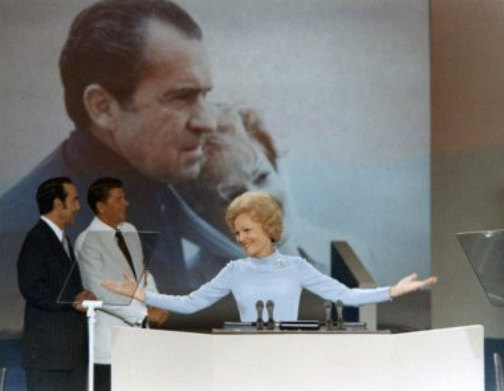
May you live in interesting times, goes the sly, old Chinese curse. Some eras are more interesting than others, but they’re all fascinating in one scary way or another, not just these desperate times we’re facing now. From “The Evil in the Room,” Norman Mailer’s 1972 Republican National Convention coverage from Miami, which he filed for Life:
“There were ghosts on the convention. And the sense of having grown old enough to be passing through life a second time. Flying to San Francisco in 1964 to write up the convention which nominated Barry Goklwater, he had met an Australian journalist who asked why Americans made the interior of their planes look like nurseries, and he had answered, in effect that the dread was loose in American life. Was it still loose, that sense of oncoming catastrophe going to fall on the nation like the first bolt from God? Such dread had taken many a turn–from fear of Communism to fear of walking the streets at night, which was a greater fear if one thought about it (since the streets were nearer). It was a fear when all was said which suggested that the nation, in whatever collection of its consciousness, was like a person who wakes up often in the middle of the night with the intolerable conviction that something is loose in the system, and the body is on a long slide from which there will be no remission unless a solution is found; the body does not even know where the disease is at. Nor will the doctors, is what the body knows in the dark.”
••••••••••
Occupying the GOP Convention, 1972: “Don’t hurt the car, don’t hurt the car!”
“It’s a very plastic, packaged thing”:
Tags: Norman Mailer
One of John and Yoko’s odder gambits for world peace, Bagism, 1969.
Recalling the origins of Bagism with Dick Cavett, 1971 (at 2:28):
Tags: Dick Cavett, John Lennon, Yoko Ono

Christopher Hitchens, that godless heathen (I mean that as a compliment as well as a statement of fact), just passed away from esophageal cancer. From “Mommie Dearest,” his enthusiastic flogging of Mother Teresa published on Slate in 2003:
MT was not a friend of the poor. She was a friend of poverty. She said that suffering was a gift from God. She spent her life opposing the only known cure for poverty, which is the empowerment of women and the emancipation of them from a livestock version of compulsory reproduction. And she was a friend to the worst of the rich, taking misappropriated money from the atrocious Duvalier family in Haiti (whose rule she praised in return) and from Charles Keating of the Lincoln Savings and Loan. Where did that money, and all the other donations, go? The primitive hospice in Calcutta was as run down when she died as it always had been—she preferred California clinics when she got sick herself—and her order always refused to publish any audit. But we have her own claim that she opened 500 convents in more than a hundred countries, all bearing the name of her own order. Excuse me, but this is modesty and humility?
The rich world has a poor conscience, and many people liked to alleviate their own unease by sending money to a woman who seemed like an activist for “the poorest of the poor.” People do not like to admit that they have been gulled or conned, so a vested interest in the myth was permitted to arise, and a lazy media never bothered to ask any follow-up questions. Many volunteers who went to Calcutta came back abruptly disillusioned by the stern ideology and poverty-loving practice of the ‘Missionaries of Charity,’ but they had no audience for their story. George Orwell’s admonition in his essay on Gandhi—that saints should always be presumed guilty until proved innocent—was drowned in a Niagara of soft-hearted, soft-headed, and uninquiring propaganda.•
Eleanor Roosevelt on What’s My Line?, 1953.
Tags: Eleanor Roosevelt

David Remnick can write about any topic brilliantly, but it’s always special when he focuses on American politics, boxing or Russia. He has a new New Yorker article on the latter topic, focusing on Vladimir Putin at a time when the once and perhaps future president of the Russian Federation is facing vociferous dissent from his people for the first time. The opening:
“On the night of November 20th, two weeks before elections for the State Duma, Vladimir Putin set aside the cares of the Kremlin and went to the Olympic SportComplex for an ultimate-fighting match—a ‘no rules’ heavyweight bout between a Cyclopean Russian named Feodor (the Last Emperor) Yemelianenko and a self-described anarchist from Olympia, Washington, named Jeff (the Snowman) Monson. The bout was broadcast nationally on Rossiya-2, one of the main state television channels. Putin, wearing a blue suit and no tie, was at ringside. He has always been eager to project the macho posture of a muzhik, a real man. He has had himself photographed riding horses bare-chested, tracking tigers, shooting a whale with a crossbow, piloting a firefighting jet, swimming a Siberian river, steering a Formula One race car, befriending Jean-Claude Van Damme, and riding with a motorcycle gang. Once, on national television, he tried to bend a frying pan with his bare hands. He did not quite succeed, but the effort was appreciated. And now ultimate fighting: the beery crowd of twenty thousand—some prosperous, some less so—were his own, Putin’s people.
Yemelianenko and Monson were of a rough equivalence: heads shaved, two enormous sacks of rocks, though the Russian was distinguished by his unstained skin; Monson had tattoos from ankle to neck, including two in crowd-friendly Cyrillic—svoboda and solidarnost’. The gesture got him nowhere. Almost from the start, the Russian dominated the fight. Yemelianenko, with a deft and powerful kick, snapped a bone in Monson’s leg, causing the American to limp pitifully. But, even as Yemelianenko took command, steadily reducing Monson to a swollen, bloody pulp—a source of pleasure to the crowd—it was hard to tell if Putin was enjoying himself. The camera flashed to him now and then. He barely betrayed a smile. His face, now smoothed with Botox and filler (it is said), is more enigmatic than ever. What was more, he had larger concerns. He knew that, no matter how hard his operatives tried to get out the vote in the provinces and massage the results, the Kremlin party, United Russia, was going to lose ground.
At the end of the bout—a unanimous decision for Yemelianenko—the Prime Minister climbed through the ropes to pay tribute to the loser and to congratulate his countryman. By this time, the American handlers were tenderly helping their warrior to the dressing room. Monson could no longer walk. His lips were as fat as bicycle tires.
Putin had a kind word for Monson (‘a real man’) and paid Yemelianenko the ultimate compliment of Russian masculinity, calling him a ‘nastoyashii Russki bogatyr‘—a genuine Russian hero. As Putin spoke, and as the national audience watched, many in the crowd started to jeer and whistle. This had never happened to Putin before, not once in two four-year terms as President, not in three-plus years as Prime Minister. And yet now, having announced his intention to reassume the Presidency in March, possibly for another twelve years, he was experiencing an unmistakable tide of derision.”
•••••••••
Bending frying pans:
Emelianenko crushes Monson:
Tags: David Remnick, Vladimir Putin
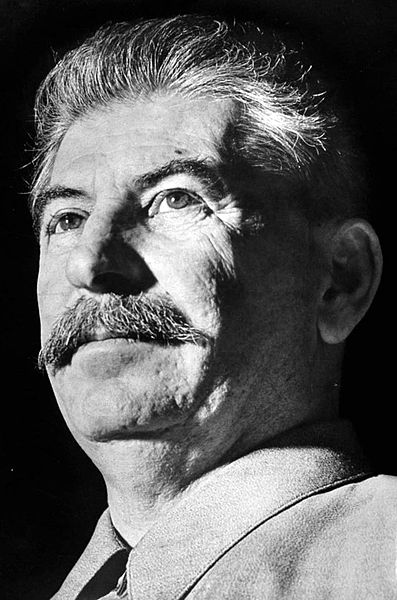
Legendary Life photojournalist Margaret Bourke-White explained how she snapped the above picture of Joseph Stalin smiling–well, smiling by his somber standards–in quotes that ran in her 1971 New York Times obituary, I actually don’t know if she did the world a favor by locating a softer-looking Stalin, but here’s an excerpt:
“For her meeting with Stalin in the Kremlin in 1941, which was arranged by Harry Hopkins, Miss Bourke-White employed a stratagem to catch him off guard. Recalling the incident, she wrote:
‘I made up my mind that I wouldn’t leave without getting a picture of Stalin smiling. When I met him, his face looked as though it were carved out of stone, he wouldn’t show any emotion at all. I went virtually beserk trying to make that great stone face come alive.
‘I got down on my hands and knees on the floor and tried out all kinds of crazy postures searching for a good camera angle. Stalin looke down at the way I was aquirming and writhing and for the space of a lightning flash he smiled-and I got my picture. Probably, he had never seen a girl photographer before and my weird contortions amused him.’
Miss Bourke-White maintained that ‘a woman shoudn’t trade on the fact that she is a woman.’ Nonetheless, several of her male colleagues were certain that her fetching looks–she was tall, slim, dark-haired and possessed of a beautiful face–were often employed to her advantage.
‘Generals rushed to tote her cameras,’ Mr. [Alfred] Eisenstadt recalled, ‘and even Stalin insisted on carrying her bags.'”
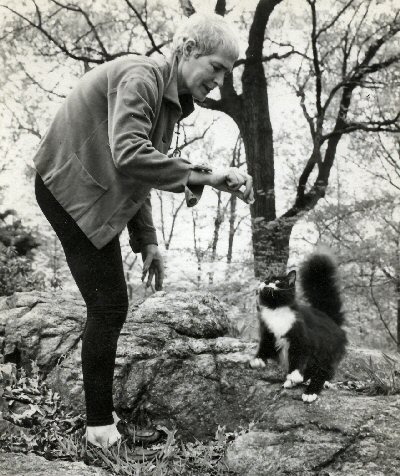
Margaret Bourke-White, 1964.
Walter Cronkite on January 20, 1981, the day Ronald Reagan was inaugurated and the American hostages in Iran returned home.
Tags: Ronald Reagan, Walter Cronkite
President-Elect Ronald Reagan reacts to John Lennon’s murder 31 years ago. The two had met at a Monday Night Football game six years earlier, when the pol tried unsuccessfully to explain the rules of the NFL to the former Beatle.
Richard Stallman is right about social networks, but it’s not like we’re unaware of the intrusion–we just don’t care. In this scary world, we want a brother at any cost, even if it’s Big Brother. We want someone to watch over us.
Tags: Richard Stallman
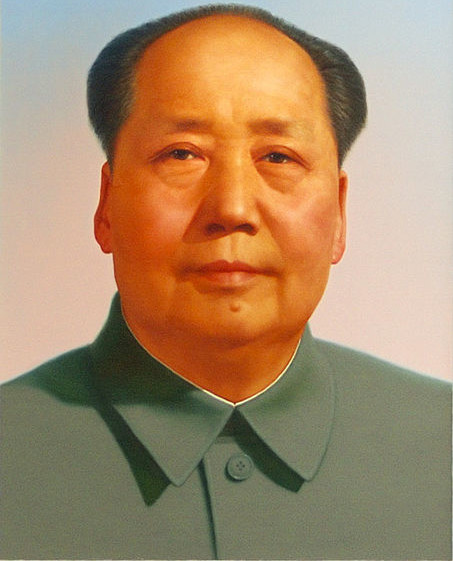
From a 1979 Philip K. Dick interview in Science Fiction Review, in which the author inexplicably shows great love for Chairman Mao and makes an interesting point about the human capacity for blocking out the truth:
Question:
Right now, the first reports are coming back from our probes on Mars. What effect, if any, would news of life on Mars have on humanity?
Philip K. Dick:
You mean the average person?
Question:
Yes. What would it do to their thoughts of themselves, and their place in the universe?
Philip K. Dick:
All right. Yesterday, Chairman Mao died. To me, it was as if a piece of my body had been torn out and thrown away, and I’m not a Communist. There was one of the greatest teachers, poets, and leaders that ever lived. And I don’t see anybody walking around with any particularly unhappy expression. There have been some shots of people in China crying piteously, but I woke my girlfriend up at 7:00 in the morning. I was crying. I said, ‘Chairman Mao has died.’ She said, ‘Oh my God, I thought you said ‘Sharon was dead” — some girl she knows. I think I would be like that. I think there would be little, if any, real reaction. If they can stand to hear that Chairman–that that great poet and teacher, that great man, that–one guy on TV — one Sinologist — said ‘The American public would have to imagine as if, on a single day, both Kennedys, Dr. King, and Franklin D. Rossevelt were all killed simultaneously,’ and even then they wouldn’t get the full impact of it. So I don’t really think that to find life on Mars is going to affect people. One time I was watching TV, and a guy comes on, and he says, ‘I have discovered a 3,000,000-year-old humanoid skull with one eye and two noses.’ And he showed it — he had twenty-five of them, they were obviously fake. And it had one eye, like a cyclops, and had two noses. And the network and everybody took the guy seriously. He says, ‘Man originated in San Diego, and he had one eye and two noses.’ We were laughing, and I said, ‘I wonder if he has a moustache under each nose?
People just have no criterion left to evaluate the importance of things. I think the only thing that would really affect people would be the announcement that the world was going to be blown up by the hydrogen bomb. I think that would really effect people. I think they would react to that. But outside of that, I don’t think they would react to anything. ‘Peking has been wiped out by an earthquake, and the RTD — the bus strike is still on.’ And some guy says, ‘Damnit! I’ll have to walk to work!’ So? You know, 800,000 Chinese are lying dead under the rubble. Really. It cannot be burlesqued.
I think people would have been pleased if there was life on Mars, but I think they would have soon wearied of the novelty of it, and said, ‘But what is there on Jupiter? What can the life do?’ And, ‘My pet dog can do the same thing.’ It’s sad, and it’s also very frightening in a way, to think that you could come on the air, and you could say, ‘The ozone layer has been completely destroyed, and we’re all going to die of cancer in ten years.’ And you might get a reaction. And then, on the other hand, you might not get a reaction from people. So many incredible things have happened.
I talked to a black soldier from World War II who had entered the concentration camp — he had been part of an American battalion that had seized a German death camp — it wasn’t even a concentration camp, it was one of the death camps, and had liberated it. And he said he saw those inmates with his own eyes, and he said, ‘I don’t believe it. I saw it, but I have never believed what I saw. I think that there was something we don’t know. I don’t think they were being killed.’ They were obviously starving, but he says, ‘Even though I saw the camp, and I was one of the first people to get there, I don’t really believe that those people were being killed by millions. For some reason, even though I myself was one of the first human’ — notice the words ‘human beings’ — ‘human beings to see this terrible sight, I just don’t believe what I saw.’ And I guess that’s it, you know. I think that may have been the moment when this began, was the extermination of the gypsies, and Jews, and Bible students in the death camps, people making lampshades out of people’s skins. After that, there wasn’t much to believe or disbelieve, and it didn’t really matter what you believed or disbelieved.•
Tags: Chairman Mao, Mao Zedong, Philip K. Dick
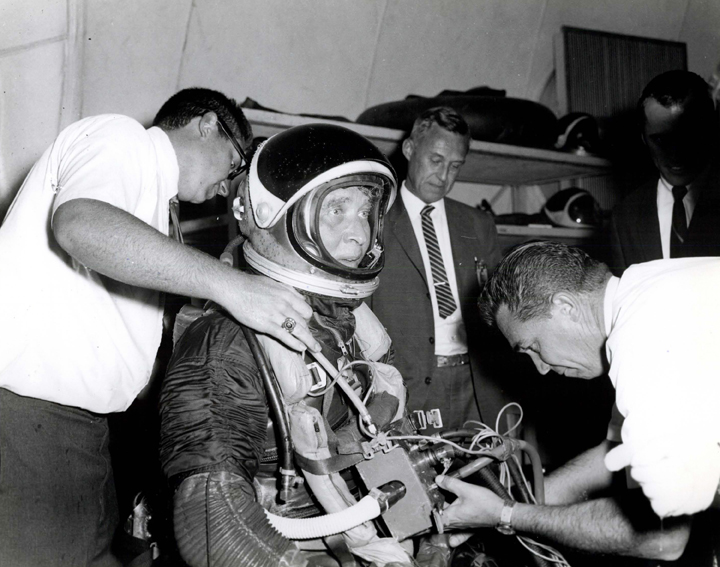
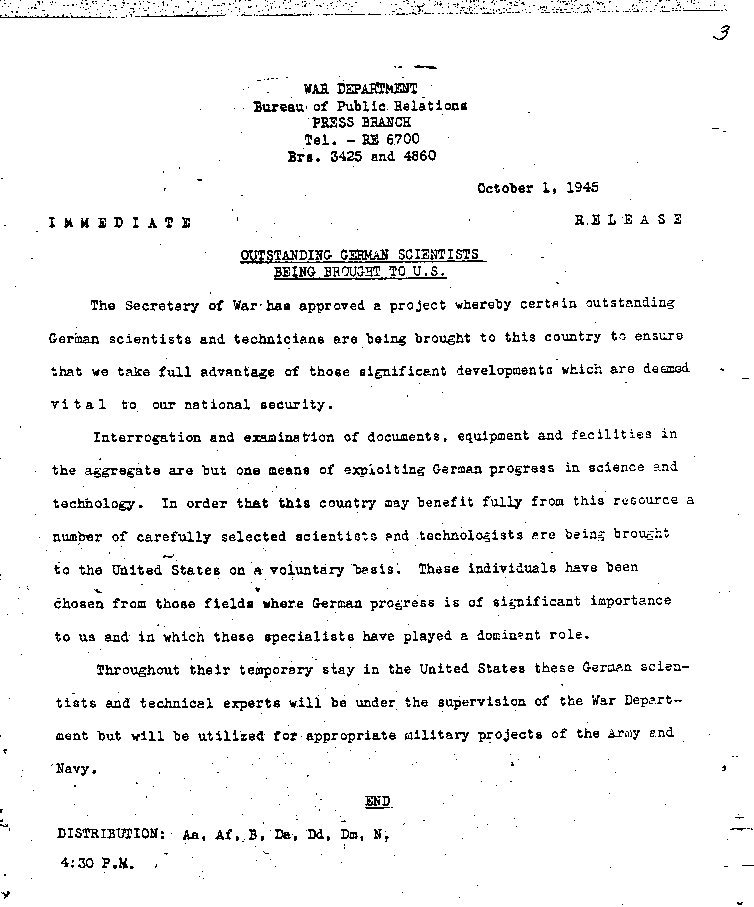
Compromise as much as courage was key to the U.S.A. touching down on the moon first. Operation Paperclip rounded up scores of Nazi scientists at the conclusion of WWII, and brought them to America to make us preeminent in rockets, satellites, and ultimately, spaceships, without ever holding these men accountable for their atrocities. Chief among these unlikely American heroes was brilliant Wernher von Braun, who was portrayed to the American public as a scientist who was dispassionate about politics, just another pawn in the horrible Nazi game. Of course, that was far from the truth. From “The Rocket Man’s Dark Side,” Leon Jaroff’s 2002 Time report about the genius whose awful past was lost in space:
Still, he was apolitical, wasn’t he, and during the war had really only been pursuing his lifelong interest in rocketry. And hadn’t he fully redeemed himself with his great contributions to our space race with the Soviets?
That’s the gist of the official von Braun biography posted on the web site of NASA’s Marshall Space Flight Center, where under the directorship of von Braun, the mighty Saturn 5 rocket was developed. And it’s this sanitized biography that has roused the indignation of Tom Gehrels, a noted University of Arizona astronomer and pioneer in the program to discover and track Earth-threatening asteroids. A member of the Dutch resistance during World War II, Gehrels readily acknowledges von Braun’s contributions to the world of science, but is all too aware of the little-known dark side of both him and his brother Magnus. “They were Jekyll and Hyde characters,” Gehrels insists, “and the full truth ought to be known.”
It is Gehrels who has pieced together that truth, largely from interviews with surviving political prisoners who had been forced to build V-1s and V-2s under the supervision of the von Brauns in an underground complex near Nordhausen, Germany. These prisoners were housed in an adjacent concentration camp called Dora, and new arrivals were given the standard welcoming speech: ‘You came in through that gate, and you’ll leave through that chimney [of the crematorium].’
Indeed, some 20,000 died at Dora, from illness, beatings, hangings and intolerable working conditions. Workers, scantily clad, were forced to stand at attention in the biting cold during roll calls that went on for hours. Average survival time in the unventilated paint shop was one month. One prisoner told of being bitten on his legs by guard dogs. Presumably to test the effectiveness of a new medication, one of his legs was treated, the other allowed to fester and deteriorate.
For reasons best known to von Braun, who held the rank of colonel in the dreaded Nazi SS, the prisoners were ordered to turn their backs whenever he came into view. Those caught stealing glances at him were hung. One survivor recalled that von Braun, after inspecting a rocket component, charged, “That is clear sabotage.” His unquestioned judgment resulted in eleven men being hanged on the spot. Says Gehrels, ‘von Braun was directly involved in hangings.”•
Dr. Strangelove’s backstory—and salutes—were inspired by von Braun.
See also:
Tags: Leon Jaroff, Tom Gehrels, Wernher von Braun
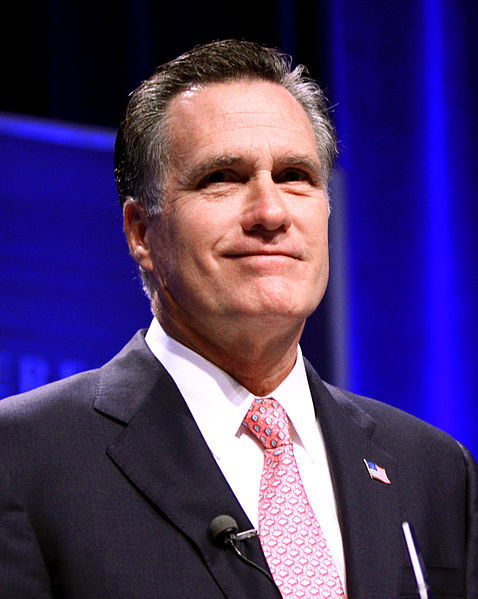
"The footage would capture the candidate seeming engaged in the kind of heart-to-heart dialogues with working-class Americans that the campaign had otherwise left off his schedule that day." (Image by Gage Skidmore .)
The source of the considerable reservoir of rage beneath Mitt Romney’s well-polished exterior is as mysterious as President Obama’s ever-present sense of calm–though it’s obviously more concerning. Robert Draper’s new New York Times Magazine article about the likely GOP Presidential nominee suggests that Romney is unflappable–I’m not buying it–but makes good points about the guy you’d least like to have a beer with competing for the country’s highest office. An excerpt;
“It’s very unlikely that we’ll ever hear Mitt Romney and Barack Obama openly discuss the things they have in common. Nonetheless, we may well see in the general election a contest between two dispassionate and accommodating pragmatists and skilled debaters who relish intellectual give-and-take, and whose willingness to compromise has infuriated the party faithful. Both have promised change. Each will frame the other as being not up to the task.
How ably Romney the nominee will defend himself, given the kid-gloves treatment by his current competition and the campaign’s avoidance of large segments of his own life story, is difficult to say just yet. In early November I watched Romney return to Iowa for only the fourth time. He stopped in Dubuque and Davenport and, before decent-size crowds, essentially regurgitated his address on the economy from the week before. In both cases he spoke for less than 20 minutes and did not take questions from the audience. Far more of his ground time was devoted to filming promotional material in a Dubuque sheet-metal factory, where the footage would capture the candidate seeming engaged in the kind of heart-to-heart dialogues with working-class Americans that the campaign had otherwise left off his schedule that day.
Near the end of his talk in Davenport, he said to the 275 east Iowans in attendance, ‘I want you to get to know me a little better.’ After wrapping up his speech, he moved briskly through the crowd, pausing now and then to take photos and sign autographs, before flying out of Iowa with Stuart Stevens and a couple of other staff members.”
••••••••
“Did you hear what I said?”
Tags: Mitt Romney, Robert Draper

America got rid of the draft but continued waging wars, which meant that a military class needed to emerge and companies had to form to manage outsourced dirty work. Most of us never get any blood on our hands, but America is more than ever in the business of war. In Vanity Fair, Todd S, Purdum investigates how the U.S. transformed during the Cold War and War on Terror from sleeping giant into a militarized security state. An excerpt:
“Just over 50 years ago, in his farewell address from the Oval Office, Dwight D. Eisenhower warned the nation of the dangers inherent in a powerful ‘military-industrial complex,’ and just three days later—as if in proof of Eisenhower’s words—John Fitzgerald Kennedy famously vowed to ‘pay any price, bear any burden, meet any hardship, support any friend, oppose any foe in order to assure the survival and the success of liberty.’ Yes, the United States faced extraordinary challenges in the postwar era—and was forced to shoulder extraordinary responsibilities. But some steps, once taken, prove impossible to walk back. By 1961 the problem that Eisenhower had identified was well advanced. Already, the United States was spending more on military security than the net income of all American corporations combined.
In the years since, the trend has warped virtually every aspect of national life, with consequences that are quite radical in their cumulative effect on the economy, on the vast machinery of official secrecy, on the country’s sense of itself, and on the very nature of national government in Washington. And yet the degree to which America has changed is noticed by almost no one—not in any visceral way. The transformation has taken hold too gradually and over too long a period. Almost no one alive today has a mature, firsthand memory of a country that used to be very different—that was not a superpower; that did not shroud the workings of its government in secrecy; that did not use ends-justify-the-means logic to erode rights and liberties; that did not undertake protracted wars on the president’s say-so; that had not forgotten how to invest in urgent needs at home; that did not trumpet its greatness even as its shortcomings became more obvious. An American today who is 25 or 50 or even 75—such a person has lived entirely in the America we have become.”
Tags: Todd S. Purdum
Carl Zimmer has a really good New York Times profile of pugnacious evolutionary psychologist Steven Pinker, who believes that the world has gotten markedly less violent. An excerpt:
“Dr. Pinker finds an explanation for the overall decline of violence in the interplay of history with our evolved minds. Our ancestors had a capacity for violence, but this was just one capacity among many. ‘Human nature is complex,’ he said. ‘Even if we do have inclinations toward violence, we also have inclination to empathy, to cooperation, to self-control.’
Which inclinations come to the fore depends on our social surroundings. In early society, the lack of a state spurred violence. A thirst for justice could be satisfied only with revenge. Psychological studies show that people overestimate their own grievances and underestimate those of others; this cognitive quirk fueled spiraling cycles of bloodshed.
But as the rise of civilization gradually changed the ground rules of society, violence began to ebb. The earliest states were brutal and despotic, but they did manage to take away opportunities for runaway vendettas.
More recently, the invention of movable type radically changed our social environment. When people used their powers of language to generate new ideas, those ideas could spread. ‘If you give people literacy, bad ideas can be attacked and experiments tried, and lessons will accumulate,’ Dr. Pinker said. ‘That pulls you away from what human nature would consign you on its own.'”
••••••••••
Pinker in discussion with Bill Faux’Reilly:
Tags: Carl Zimmer, Steven Pinker

"That's why we heard so little dissent during the run-up to the Iraq War and the destruction of our economy." (Image by Rotem Danzig.)
Like many people who are intensely interested in politics, I refuse to watch almost everything about politics on TV. I think my breaking point was watching Candy Crowley interview someone from the Bush Administration, being told one bald-faced lie after another and not asking follow-up questions that might annoy her guest–and provide illumination. That’s not to pick on Crowley. She seems like a very good, smart person, and she was really only doing what she was paid to do: Provide a facade of serious political analysis and nothing deeper. That’s what political interviewers do on television. No one says anything that is truly challenging, guests move from one chair to another and everyone keeps getting paid. No one forces the clown car of American journalism off the road. It’s motion without progress.
Equally abhorrent is the of air of “objectivity” provided by news anchors who are quietly complicit in maintaining a status quo power structure in America. That’s why we heard so little dissent during the run-up to the Iraq War and the destruction of our economy. Glenn Greenwald has an excellent essay on the latter topic on Salon, using an interview that Bob Schieffer of CBS conducted with Ron Paul to present his case. The opening:
“CBS News‘s Bob Schieffer is the classic American establishment TV journalist: unfailingly deferential to the politically powerful personalities who parade before him, and religiously devoted to what he considers his own ‘objectivity,’ which ostensibly requires that he never let his personal opinions affect or be revealed by his journalism. Watch how thoroughly and even proudly he dispenses with both of those traits when interviewing Ron Paul last Sunday on Face the Nation regarding Paul’s foreign policy views. In this 7-minute clip, Schieffer repeatedly mocks, scoffs at, and displays his obvious contempt for, two claims of Paul’s which virtually no prominent politician of either party would dare express: (1) American interference and aggression in the Muslim world fuels anti-American sentiment and was thus part of the motivation for the 9/11 attack; and (2) American hostility and aggression toward Iran (in the form of sanctions and covert attacks) are more likely to exacerbate problems and lead to war than lead to peaceful resolution, which only dialogue with the Iranians can bring about.
You actually believe 9/11 was America’s fault? Your plan to deal with the Iranian nuclear program is to be nicer to Iran? This interview is worth highlighting because it is a vivid case underscoring several points about the real meaning of the much-vaunted ‘journalistic objectivity.'”
Tags: Bob Schieffer, Glenn Greenwald
George Carlin, the greatest American stand-up ever and the spiritual father of OWS, boils it all down:
Louis C.K., currently one of the best stand-ups on the planet, remembers Carlin: