Look, it’s that guy from the Apple computer commercial. No, not Justin Long–the other guy. No, not John Hodgman. Seriously, I give up with you.
“Because they change things”:
Ideas and technology and politics and journalism and history and humor and some other stuff.
You are currently browsing the archive for the Politics category.
Look, it’s that guy from the Apple computer commercial. No, not Justin Long–the other guy. No, not John Hodgman. Seriously, I give up with you.
“Because they change things”:
Tags: Mohandas Gandhi

What if war were painless, at least for one side? And what if the American President could fight overseas without getting approval from Congress because what’s being waged isn’t precisely war as we know it, but something beyond the traditional definition? In the brave new world of drones and robots, that’s exactly where the United States is. From Peter W. Singer’s excellent New York Times Opinion piece, “Do Drones Undermine Democracy?“
“Just 10 years ago, the idea of using armed robots in war was the stuff of Hollywood fantasy. Today, the United States military has more than 7,000 unmanned aerial systems, popularly called drones. There are 12,000 more on the ground. Last year, they carried out hundreds of strikes — both covert and overt — in six countries, transforming the way our democracy deliberates and engages in what we used to think of as war.
We don’t have a draft anymore; less than 0.5 percent of Americans over 18 serve in the active-duty military. We do not declare war anymore; the last time Congress actually did so was in 1942 — against Bulgaria, Hungary and Romania. We don’t buy war bonds or pay war taxes anymore. During World War II, 85 million Americans purchased war bonds that brought the government $185 billion; in the last decade, we bought none and instead gave the richest 5 percent of Americans a tax break.
And now we possess a technology that removes the last political barriers to war. The strongest appeal of unmanned systems is that we don’t have to send someone’s son or daughter into harm’s way. But when politicians can avoid the political consequences of the condolence letter — and the impact that military casualties have on voters and on the news media — they no longer treat the previously weighty matters of war and peace the same way.”
• • • • • • • • • •
BigDog, by the good people at Boston Dynamics:
Tags: Peter W. Singer
A clip from Walter Cronkite’s sit-down with Anwar Sadat in the shadows of the pyramids, in 1977, four years before the Egyptian president was murdered. Sadat denies slave labor was used to build the incredible tombs.
Karl Pilkington visits the pyramids (at 5:05):
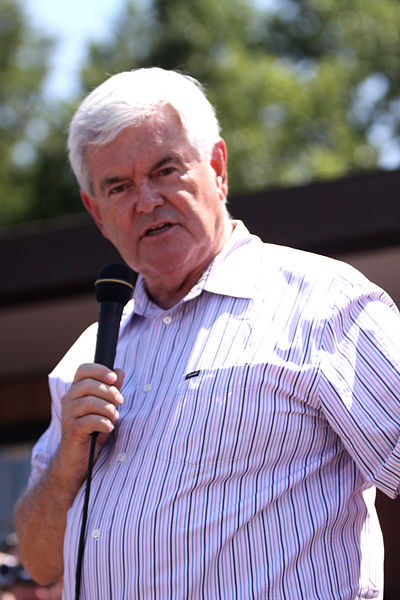
'I am frankly astounded that CNN would take trash like that and use it to open a presidential debate." (Image by Gage Skidmore.)
Newt Gingrich, 2012:
“I think the destructive, vicious, negative nature of much of the news media makes it harder to govern this country, harder to attract decent people to run for public office. And I am appalled that you would begin a presidential debate on a topic like that.
Every person in here knows personal pain.
Every person in here has had someone close to them go through painful things. To take an ex-wife and make it two days before the primary a significant question in a presidential campaign is as close to despicable as anything I can imagine. (Cheers, applause.)
My — my two daughters, my two daughters wrote the head of ABC, and made the point that it was wrong, that they should pull it. And I am frankly astounded that CNN would take trash like that and use it to open a presidential debate.”
“Around the world today, the institution of the presidency has been degraded to the point that it is viewed as the rough equivalent of the Jerry Springer show — a level of disrespect and decadence that should appall every American.”
Tags: Newt Gingrich
The best article I’ve read this very young new year is “How U.S. Lost Out on iPhone Work,” an excellent New York Times piece by Charles Duhigg and Keith Bradsher. It follows up on the question that President Obama famously asked Steve Jobs early last year during a pow-wow with Silicon Valley industry leaders: What can we do to have Apple products manufactured in America again? With his typical bluntness, Jobs told Obama it wasn’t going to happen. One reason is that contemporary America lacks a critical mass of mid-level engineers. But even if we reversed that situation, a larger problem looms: China, with its Foxconn complex, will sacrifice the health and well-being of its workers, treat them like so many indentured servants, in order to fulfill the every whim of tech titans. At any rate, it gives lie to the election-year assertion that all we have to do is loosen regulations and jobs will flood our shores. An excerpt:
“Apple executives say that going overseas, at this point, is their only option. One former executive described how the company relied upon a Chinese factory to revamp iPhone manufacturing just weeks before the device was due on shelves. Apple had redesigned the iPhone’s screen at the last minute, forcing an assembly line overhaul. New screens began arriving at the plant near midnight.
A foreman immediately roused 8,000 workers inside the company’s dormitories, according to the executive. Each employee was given a biscuit and a cup of tea, guided to a workstation and within half an hour started a 12-hour shift fitting glass screens into beveled frames. Within 96 hours, the plant was producing over 10,000 iPhones a day.
‘The speed and flexibility is breathtaking,’ the executive said. ‘There’s no American plant that can match that.'”
Tags: Charles Duhigg, Keith Bradsher
In a new blog post, cultural critic Adam Curtis likens the contemporary West to the 1980s Soviet Union, an idea nearing the closing credits of entropy. An excerpt:
“There are of course vast differences between our present society and the Soviet Union of thirty years ago – for one thing they had practically no consumer goods whereas we are surrounded by them, and for another western capitalism was waiting in the wings to fill the vacuum. But there are also echoes of our present mood – a grand economic system that had once promised heaven on earth had become absurd and corrupted.
Everyone in Russia in the early 1980s knew that the managers and technocrats in charge of the economy were using that absurdity to loot the system and enrich themselves. The politicians were unable to do anything because they were in the thrall of the economic theory, and thus of the corrupt technocrats. And above all no-one in the political class could imagine any alternative future.
In the face of this most Soviet people turned away from politics and any form of engagement with society and lived day by day in a world that they knew was absurd, trapped by the lack of a vision of any other way.” (Thanks Browser.)
••••••••••
Curtis’ analysis of the Computer Age:
Tags: Adam Curtis

In 1963, the year before his death, original Indian Prime Minister Jawaharlal Nehru was interviewed by Playboy. An excerpt:
“Playboy: In a speech given in 1947, on the eve of Indian independence, you said, ‘Long years ago we made a tryst with destiny, and now comes the time when we shall redeem our pledge, not wholly or in full measure, but very substantially.’ How substantial has the redemption of this pledge been? What is the spiritual and material condition of India today, after 16 years of independence?
Nehru: India today presents a very mixed picture of hope and anguish, of remarkable advances and at the same time of inertia, of a new spirit and also of the dead hand of privilege, of an over-all and growing unity and of many disruptive tendencies. There is a great vitality and a ferment in people’s minds and activities. Perhaps we who live in the middle of this ever-changing scene do not always realize the full significance of all that is happening. Often outsiders can make a better appraisal of the situation. It is remarkable that a country and a people rooted in the remote past, who have shown so much resistance to change, should now be marching forward rapidly. We are making history in India even though we might not be conscious of it.
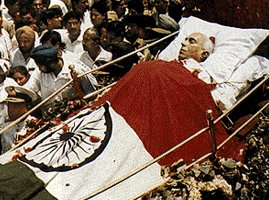
Jawaharlal Nehru, lying in state, 1964.
Playboy: In that same 1947 speech you specifically called for ‘the ending of poverty and ignorance and disease and inequality of opportunity’ in India. Are you still optimistic about the eventual elimination of these conditions?
Nehru: What tomorrow’s India will be like, I cannot say. I can only express my hopes and wishes. Naturally, I want India to advance on the material plane, to fulfill her plans, to raise the standard of living of her vast population. I want the narrow conflicts of today in the name of religion or caste, language or province, to cease, and a classless and casteless society to be built up where every individual has full opportunity to grow according to his worth and ability. In particular, I hope that the curse of caste will be ended, for with it there cannot be either democracy or socialism. Tomorrow’s India will be what we make it by today’s labors. I have no doubt but that India will progress industrially and otherwise; that she will advance in science and technology; that our people’s standards will rise; that education will spread; that health conditions will be better; and that art and culture will enrich people’s lives. We have started on this pilgrimage with strong purpose and good heart, and we shall reach the end of the journey, however long that might be. But what I am concerned with is not merely our material progress, but the quality and depth of our people. Gaining power through industrial processes, will they lose themselves in the quest of individual wealth and soft living? That would be a tragedy for it would be a negation of what India has stood for in the past and, I think, in the present time also as exemplified by Gandhi. Power is necessary, but wisdom is essential. It is only power with wisdom that is good.”
••••••••••
A thumbnail of Nehru’s life, including his 1949 NYC ticker-tape parade:
Tags: Jawaharlal Nehru
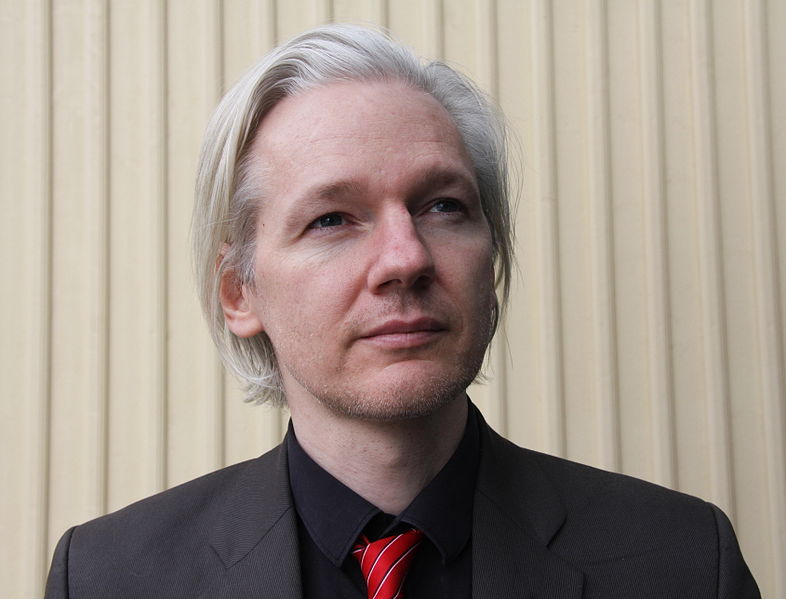
"The Iraq War was the biggest issue for people of my generation in the West." (Image by Espen Moe.)
From Michael Hastings’ new interview in Rolling Stone with Wikileak’s head leaker, Julian Assange, on what inspired him to begin disseminating classified information:
“Then, two years later, the U.S. invaded Iraq.
The creation of WikiLeaks was, in part, a response to Iraq. There were a number of whistle-blowers who came out in relation to Iraq, and it was clear to me that what the world was missing in the days of Iraq propaganda was a way for inside sources who knew what was really going on to communicate that information to the public. Quite a few who did ended up in very dire circumstances, including David Kelly, the British scientist who either committed suicide or was murdered over his revelations about weapons of mass destruction. The Iraq War was the biggest issue for people of my generation in the West. It was also the clearest case, in my living memory, of media manipulation and the creation of a war through ignorance.“
Tags: David Kelly, Julian Assange
RFK in Indiana, 1968: “I have some very sad news for all of you.”
Early MLK TV spot, 1957: “I think it’s better to be aggressive at this point.”
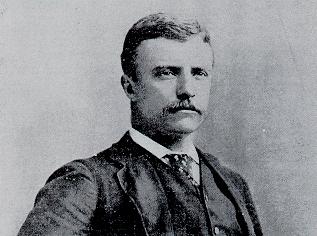
Theodore Roosevelt, NYC Police Commissioner, 1895.
File this one under unintended consequences. Theodore Roosevelt attempted to reduce drunkenness in 1890s New York City while he was police commissioner and instead encouraged vice of all kinds. From “How Dry We Aren’t,” Richard Zacks’ new Opinion piece in the New York Times:
“During the November elections in 1895, corrupt Tammany Democrats won in a landslide by campaigning against Rooseveltism and dry Sundays. Undaunted, Roosevelt lobbied the Republican-dominated legislature to pass even tougher excise laws. On April 1, 1896, the Raines Law went into effect, expanding the Sunday shut-down hours from midnight Saturday to 5 a.m. Monday, banning “free lunch” counters, and requiring that saloon doors be kept locked and blinds raised to let police peer inside. The law also exempted hotels with 10 rooms, which could serve guests liquor with a meal 24 hours a day, seven days a week.
In a New York minute (actually the next few months), more than 1,000 saloons added 10 dinky rooms. Tammany building inspectors didn’t care if some had four-foot-high ceilings or were in former coal bins. “Ten beers and one hard-boiled egg scarcely constitute a meal,” complained Roosevelt, but local judges disagreed, allowing most anything to pass for food. The playwright Eugene O’Neill once described on a saloon table “an old desiccated ruin of dust-laden bread and mummified ham or cheese which only the drunkest yokel from the sticks” would ever dream of eating.
New York — already awash in illegal casinos and brothels — was transformed into the city that never sleeps. These Raines Law saloon-hotels could serve round the clock. Even the Metropolitan Opera added 10 bedrooms to be able to offer late-night wine. And those saloon bedrooms, located a drunken stagger from the bar, provided a haven for prostitutes and a temptation to couples who’d had a few too many drinks. Adding 10,000 cheap beds was bound to loosen the city’s morals.
Roosevelt’s liquor crackdown backfired; so did the Raines Law. The city’s spirit of place, what Stephen Crane once dubbed New York’s ‘wild impulse,’ refused to be tamed.”
••••••••••••
Roosevelt is interred on Long Island, 1919:
Tags: Richard Zacks, Theodore Roosevelt
Because of some scurrilous remarks he made (including in this 1963 video), Malcolm X never got the recognition he deserved in mainstream culture. He had a brilliant mind and cut through all the bullcrap, and it’s still painful that one of our best and brightest sons lived in a situation that forced him to turn against his country. Shame on all these well-heeled reporters for giving him such a difficult time over his name change. Shame also on all the journalists who kept referring to Muhammad Ali as “Cassius Clay” after his own name change. When people have had their history stolen from them, they have the every right to remake their present and future.
Tags: Malcolm X
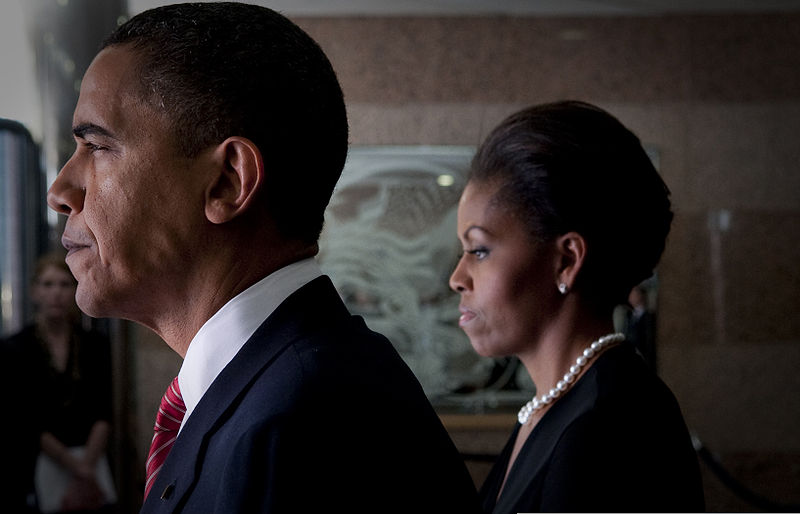
I’m really surprised by the nastiness that Jodi Kantor has faced from media figures since the publication of her book, The Obamas. When Piers Morgan interviewed the author, he seemed to have not read the book but was coached into believing that he had to be accusatory with his guest, to vaguely suggest she had acted poorly. (When you consider Morgan’s deplorable methods of news gathering while he was a tabloid editor in London, the insinuations becomes farcical.) Soledad O’Brien at least read the book but seemed to be acting more as a publicist for Michelle Obama than a journalist.
Because of the many partisan, even racist, attacks on the Obamas, it’s no surprise that the clearly private First Couple might feel sensitive to all scrutiny. But they are the most public of figures and not off bounds to analysis; no one who vigorously pursued the highest office in the land could expect less.
Nor is Kantor above scrutiny. But it would be wise for critics to actually know what they are accusing her of doing, apart from behaving like a reporter. Anyone who’s read Kantor’s work over the years in the New York Times knows that she’s a rigorous and fair-minded writer and can’t readily be mistaken for Kitty Kelley.
Tags: Barack Obama, Jodi Kantor, Michelle Obama
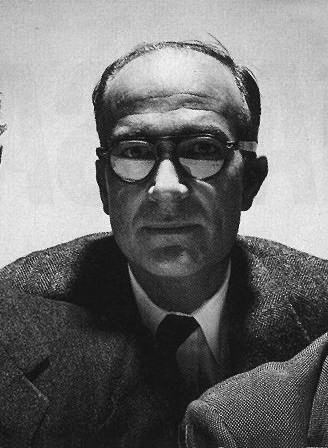
A description of William Shockley from Tom Wolfe’s 1983 Esquire article about Robert Noyce, who worked for a time for the Bell Labs genius and boss from hell, whose erratic nature alienated pretty much everyone, and that was before he dirtied himself with nonsense eugenics theories:
The first months on Shockley’s Ph.D. production line were exhilarating. It wasn’t really a production line at all. Everything at this stage was research. Every day a dozen young Ph.D.’s came to the shed at eight in the morning and began heating germanium and silicon, another common element, in kilns to temperatures ranging from 1,472 to 2,552 degrees Fahrenheit. They wore white lab coats, goggles, and work gloves. When they opened the kiln doors weird streaks of orange and white light went across their faces, and they put in the germanium or the silicon, along with specks of aluminum, phosphorus, boron. and arsenic. Contaminating the germanium or silicon with the aluminum, phosphorus, boron, and arsenic was called doping. Then they lowered a small mechanical column into the goo so that crystals formed on the bottom of the column, and they pulled the crystal out and tried to get a grip on it with tweezers, and put it under microscopes and cut it with diamond cutters, among other things, into minute slices, wafers, chips; there were no names in electronics for these tiny forms. The kilns cooked and bubbled away, the doors opened, the pale apricot light streaked over the goggles, the tweezers and diamond cutters flashed, the white coats flapped, the Ph. D.’s squinted through their microscopes, and Shockley moved between the tables conducting the arcane symphony.
In pensive moments Shockley looked very much the scholar, with his roundish face, his roundish eyeglasses, and his receding hairline; but Shockley was not a man locked in the pensive mode. He was an enthusiast, a raconteur, and a showman. At the outset his very personality was enough to keep everyone swept up in the great adventure. When he lectured, as he often did at colleges and before professional groups, he would walk up to the lectern and thank the master of ceremonies and say that the only more flattering introduction he had ever received was one he gave himself one night when the emcee didn’t show up, whereupon – bango!- a bouquet of red roses would pop up in his hand. Or he would walk up to the lectern and say that tonight he was getting into a hot subject, whereupon he would open up a book and – whump! -a puff of smoke would rise up out of the pages.
Shockley was famous for his homely but shrewd examples. One day a student confessed to being puzzled by the concept of amplification, which was one of the prime functions of the transistor. Shockley told him: ‘If you take a bale of hay and tie it to the tail of a mule and then strike a match and set the bale of hay on fire, and if you then compare the energy expended shortly thereafter by the mule with the energy expended by yourself in the striking of the match, you will understand the concept of amplification.’
On November 1,1956, Shockley arrived at the shed on South San Antonio Road beaming. Early that morning he had received a telephone call informing him that he had won the Nobel Prize for physics for the invention of the transistor; or, rather, that he was co-winner, along with John Bardeen and Walter Brattain. Shockley closed up shop and took everybody to a restaurant called Dinah’s Shack over on El Camino Real, the road to San Francisco that had become Palo Alto’s commercial strip. He treated his Ph. D. production line and all the other employees to a champagne breakfast. It seemed that Shockley’s father was a mining engineer who spent years out on remote durango terrain, in Nevada, Manchuria and all over the world. Shockley’s mother was like Noyce’s. She was an intelligent woman with a commanding will. The Shockleys were Unitarians, the Unitarian Church being an offshoot of the Congregational. Shockley Sr. was twenty years older than Shockley’s mother and died when Shockley was seventeen. Shockley’s mother was determined that her son would someday ‘set the world on fire,’ as she once put it. And now he had done it. Shockley lifted a glass of champagne in Dinah’s Shack, and it was as if it were a toast back across a lot of hardwrought durango grit Octagon Soap sagebrush Dissenting Protestant years to his father’s memory and his mother’s determination.
That had been a great day at Shockley Semiconductor Laboratory. There weren’t many more. Shockley was magnetic, he was a genius, and he was a great research director–the best, in fact. His forte was breaking a problem down to first principles. With a few words and a few lines on a piece of paper he aimed any experiment in the right direction. When it came to comprehending the young engineers on his Ph.D. production line, however, he was not so terrific.
It never seemed to occur to Shockley that his twelve highly educated elves just might happen to view themselves the same way he had always viewed himself: which is to say, as young geniuses capable of the sort of inventions Nobel Prizes were given for. One day Noyce came to Shockley with some new results he had found in the laboratory. Shockley picked up the telephone and called some former colleagues at Bell Labs to see if they sounded right. Shockley never even realized that Noyce had gone away from his desk seething. Then there was the business of the new management techniques. Now that he was an entrepreneur, Shockley came up with some new ways to run a company. Each one seemed to irritate the elves more than the one before. For a start, Shockley published their salaries. He posted them on a bulletin board. That way there would be no secrets. Then he started having the employees rate one another on a regular basis. These were so-called peer ratings, a device sometimes used in the military and seldom appreciated even there. Everybody regarded peer ratings as nothing more than popularity contests. But the real turning point was the lie detector. Shockley was convinced that someone in the shed was sabotaging the project. The work was running into inexplicable delays, but the money was running out on schedule. So he insisted that one employee roll up his sleeve and bare his chest and let the electrodes be attached and submit to a polygraph examination. No saboteur was ever found.•
A 1974 Firing Line with Shockley, who at this point was sadly tarnishing his reputation with a second act as a quack trying to link race, class and IQ, with African-Americans not faring too well in his theories nor anyone who was an unskilled laborer.
Tags: Robert Noyce, Tom Wolfe, William F. Buckley, William Shockley
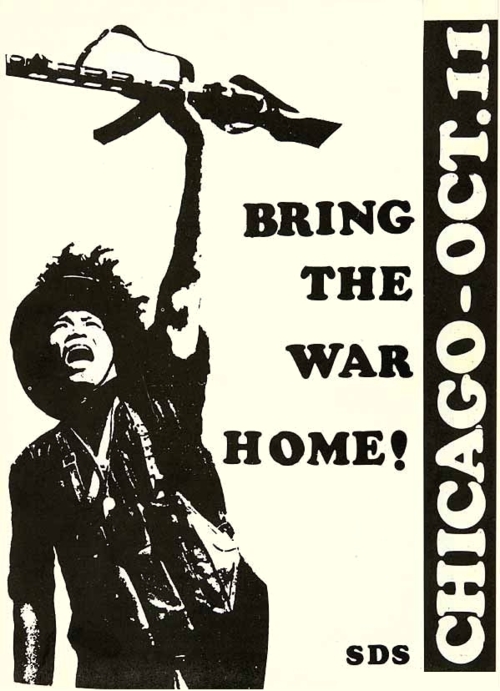
One of the last spooky echoes of the violent elements of the ’60s Radical Left was the armed robbery of a Brinks truck in suburban New York in 1981. The crime went from bad to worse, with two police officers being murdered. Judith Clark, a 31-year-old veteran political activist who was the getaway driver, was arrested and has remained in prison ever since, despite transforming herself from violent activist to model prisoner. I think it’s great when a prisoner reforms, but it’s difficult for me to accept that she should be released considering the nature of the crime. In all fairness, many people, including Clark’s former warden, disagree. The opening of Tom Robbins’ new article about the longtime prisoner in the New York Times Magazine:
“On Oct. 20, 1981, a band of militant zealots armed with automatic weapons tried to rob a Brink’s truck in a shopping mall in Nanuet in Rockland County, N.Y. Before it was over, two armored-car guards were shot and two police officers — one black and one white — were gunned down at a roadblock. The crime was one of the last spasms of ’60s-style, left-wing violence. To the militants, it was an ‘expropriation’ for something they called the Republic of New Afrika, a place that existed mainly in their fevered dreams.
Judith Clark was one of four people arrested that day for armed robbery and murder. She was 31, a veteran of the white left who traveled the radical arc from student protest to the Weathermen to the fringes beyond. A new single mother, she kissed her infant daughter goodbye that morning, promising to be home soon.
No one ever accused Clark of holding or firing a gun that deadly afternoon. But she was there, a willing participant, at the wheel of a tan Honda getaway car. Over the next two years while she awaited trial in jail, Clark became a fiercer warrior than she was on the day of the robbery. During court hearings, she told the judge she was a ‘freedom fighter’ who didn’t recognize the right of imperialist courts to try her. She called court officers ‘fascist dogs!’ when they clashed with her supporters.
Her better-known co-defendant, Kathy Boudin, arrested at the scene of the shootings after having been a fugitive since a 1970 bomb blast in a Greenwich Village town house killed three of her Weather Underground comrades, sat mutely beside her. At trial, Clark and two other defendants — David Gilbert, a Weather Underground member, and Kuwasi Balagoon, a former Black Panther — boycotted the courtroom, listening to the piped-in testimony from their basement cells. The defendants insisted on representing themselves; no one cross-examined witnesses on their behalf. When Clark appeared in court to make a closing argument, she merely confirmed her guilt. ‘Revolutionary violence is necessary, and it is a liberating force,’ she told the jury.”
Tags: Judith Clark, Tom Robbins

"Who is The Foreigner? Is it a guru? A person?" (Image by William McElligott.)
Before religious conversion, a name change, disgraceful comments about the fatwa declaring death to Salman Rushdie, a no-fly list with his new name (Yusuf Islam) on it and a couple of libel lawsuits, Cat Stevens was a wildly popular yet skittish rock star whose work suggested a burgeoning spirituality but could not predict the many permutations ahead. In 1973, as he was releasing his album Foreigner, Stevens was profiled by Paul Gambaccini in Rolling Stone. An excerpt:
“Stevens is a person who obeys his instincts. He went to Jamaica to record Foreigner not so much for studio facilities as ‘for sunshine. I couldn’t get it in England, and I didn’t want to go to America.’ He didn’t work with longtime producer Paul Samwell-Smith because, ‘I wanted an immediate feel to it. He is a great producer, but he is very clean, if a note is wrong he wants to fix it up. This time I wanted to do a certain part, I wanted to just play it, and let it be.’
Veteran musician Phil Upchurch was selected to play because, ‘I was listening to the radio and this long track was playing and it was just getting better and better and I wanted it to end so I could see who it was by and yet it just kept getting better. They said it was Phil Upchurch and I went out and bought an album. I knew from that that he was right to work with.’
‘Foreigner Suite,’ he said, was not a pre-planned opus. ‘It happened. I wrote fragments that came together and as they did I said, what’s happening here? And it turned out to be what I now consider to be not the many parts, but one song.
The only thing left to do was to title the work. Although the word never appears in the suite, ‘foreigner’ was chosen, because: ‘We’re all foreigners. Say to a foreigner that he’s a foreigner and he’ll say you’re a foreigner! We’re all foreigners here, in a wider sense. One hundred years from now I won’t be here, there’ll be nothing left of me, but the earth will still exist. People ask me, ‘Who is The Foreigner? Is it a guru? A person?’ It’s wider than any single person.”
••••••••••
The complete 18-minute “Foreigner Suite,” 1973:
“I’d try to phone Ayatollah Khomeini and tell him exactly where this man is”:
Tags: Cat Stevens, Paul Gambaccini, Yusuf Islam
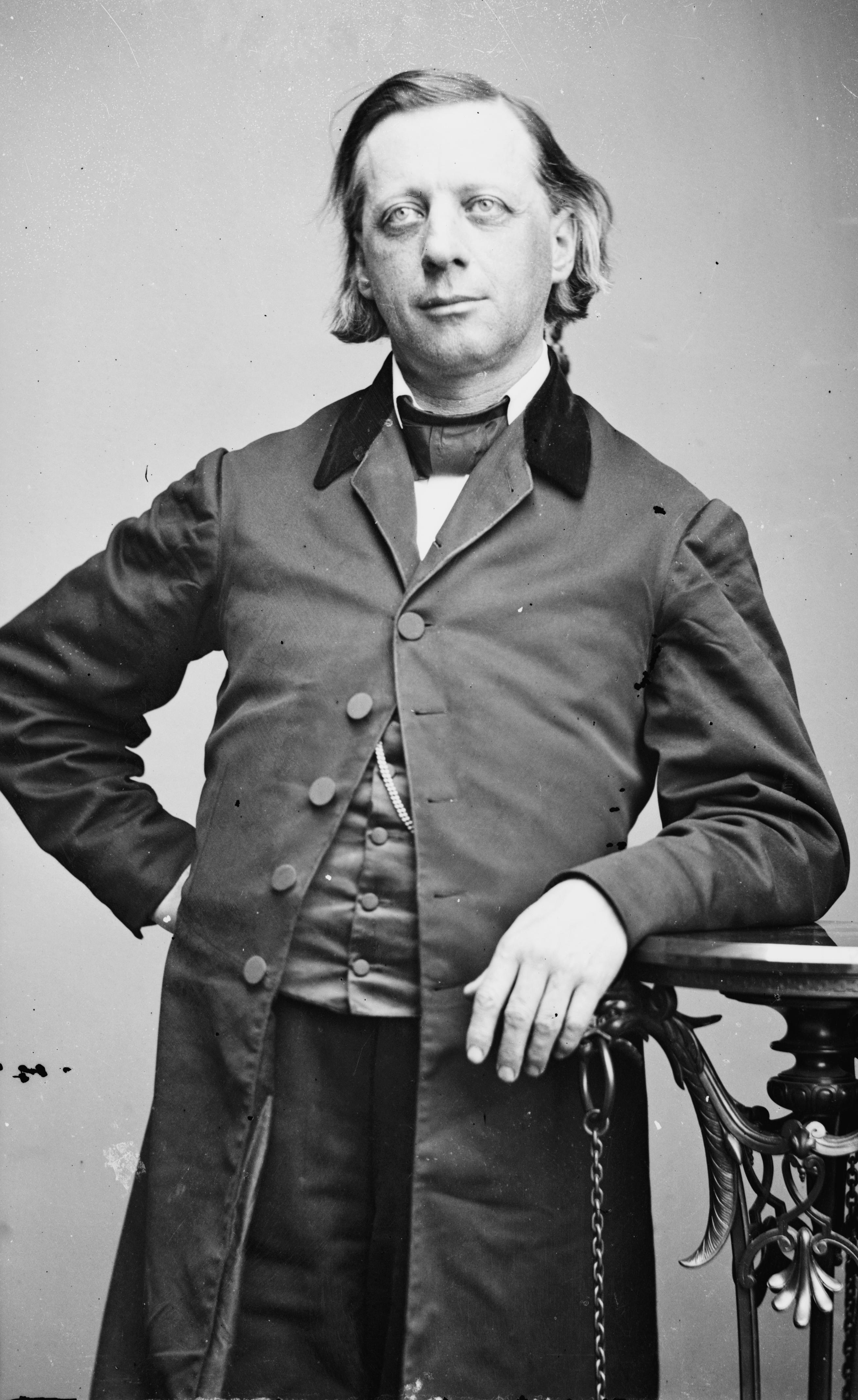
This classic photograph of preacher, politician and fervent abolitionist Henry Ward Beecher was taken at some point between 1855 and 1865 by Mathew Brady’s studio. From an eyewitness account in the New York Times of a speech Ward delivered in Charleston, South Carolina, on April 17, 1865, less than three months after the 13th Amendment outlawed slavery, as countless former slaves who had been sold and sold again tried to reunite with family:
“Feeling was accumulating in the audience, and began to be heard in the low moaning and response, like the sound of the waves upon a distant shore; but when he spoke directly to the blacks before him, of their sufferings in the days gone by, and now of their release; of the loss of their children and of the return of so many, and exhorted them since God had done so much for them to wait with faith and patience for the remainder, and assured them that the morning was on the mountains and the day was at hand, they broke out all over the house in low ejaculations of praise and of thanksgiving. The day was at hand, and they saw it; and the suppressed tone was that of men who could not restrain their joy for the vision. There was no loud shouting, nothing boisterous; it was simply the overflow of deep feeling that could not be restrained. If any of you have open sins, he said, abandon them. If any harbor revenge, rid yourselves of it. I hear good things of you; do better. Mothers in Israel, I expect to hear still more worthy things of you. Fathers, I expect to hear of you counseling better things than ever before. Young men, I expect to hear that you are more virtuous and manly than those that have gone before you.
Many of you old saints will only look over into the promised land, and see it afar off, but your children will enter in. Israel is going to be free. [Cries of ‘Bless de Lord,’ ‘We believe it,’ and one voice near me broke out into a clear hearty laugh of joy.] Intelligence is coming, liberty is coming, virtue is coming.
It is not my joy that this family is down or that one, but this is my joy, that Charleston is free, and every man guiltless of crime can walk her streets unmolested. That our nation marked out for so great things is free. And brethren, consecrate yourselves to the service of Christ, live nobler lives. Bear the cross, it is not for a great white. Some of you are almost down to the river, and it is not half as deep as you think it is. They wait for you on the other shore; you that have showed kindness to the poor white prisoners; you that have borne stripes for it; your reward is waiting you on the further shore.
Sobs and ejaculations of praise swelled through the church.”
Tags: Henry Ward Beecher, Mathew Brady
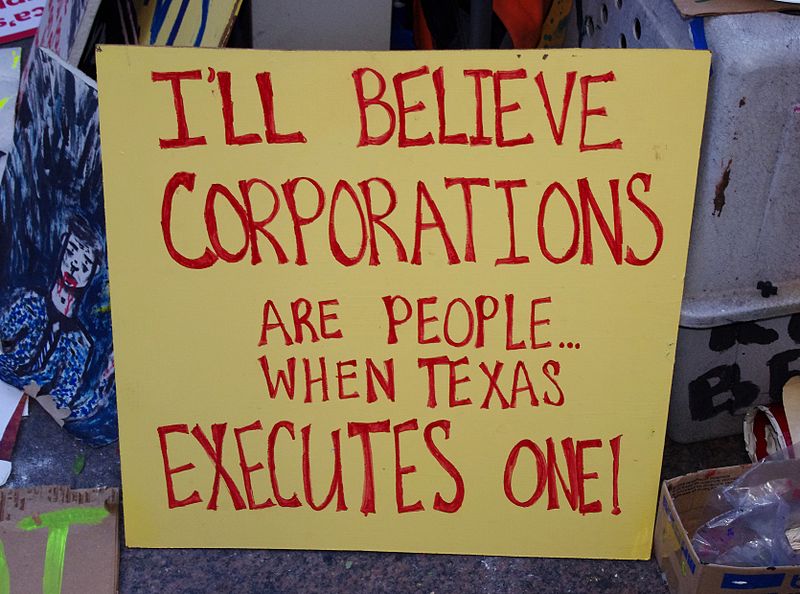
Occupy Wall Street, Day 21. (Image by David Shankbone.)
From a smart oral history about the Occupy Wall Street movement, via Max Chafkin at Vanity Fair:
“CHELSEA ELLIOTT
Freelance graphic designer
I’d gone there the first week, and I was telling my friends about it: ‘Oh, there’s this great march on Saturday. Marches are so fun. We dance, and there’s music, and we laugh the whole time.’ I mean, parts of it were like that, but it was huge and there was chaos.
RAYMOND W. KELLY
New York City police commissioner
You need a permit to have a parade—that’s 50 or more people. In our minds, if you’re not having an actual parade, we’ll let you walk on the sidewalk. But on Saturday in Union Square Park, they decided to violate the tacit understanding that they would stay on the sidewalk. It was at University Place where they ran down the street and started blocking traffic. I happened to be in the area that day and I actually saw people doing this. That’s where the first large number of arrests took place.
CHELSEA ELLIOTT
I was on the sidewalk at 12th Street and University, and this group of cops stood in front of me and said, ‘You can’t go past here.’ There was this girl behind me who was getting upset, screaming ‘Fascists.’ A cop came and slammed her down on the ground and dragged her by her hair. I just started screaming. Then another officer walked over and pepper-sprayed us. It took a few seconds to actually feel it. I was like, ‘What happened? Why am I wet?’ And then all of a sudden it hurts to open your eyes and you can’t really breathe. It’s this horrible burning all over your face.
Elliott was never arrested. She fell to the ground and was attended by volunteer medics. The officer who sprayed her was later identified by Anonymous as Deputy Inspector Anthony Bologna. A Police Department review found that he had broken protocol and docked him 10 vacation days as punishment.
CHELSEA ELLIOTT
I walked back to the park. I talked to some of the people I knew, and they were like, ‘Yeah, there’s already a video online.’
VLAD TEICHBERG
Former derivatives trader; co-founder, Global Revolution
When the pepper-spray video came out, that was the hook. That’s what made people focus on [Occupy Wall Street]. The video showed that we weren’t just a bunch of quote-unquote anarchists. It showed our humanity.”
•••••••••••
Tags: Chelsea Elliott, Max Chafkin, Raymond Kelly, Vlad Teichberg
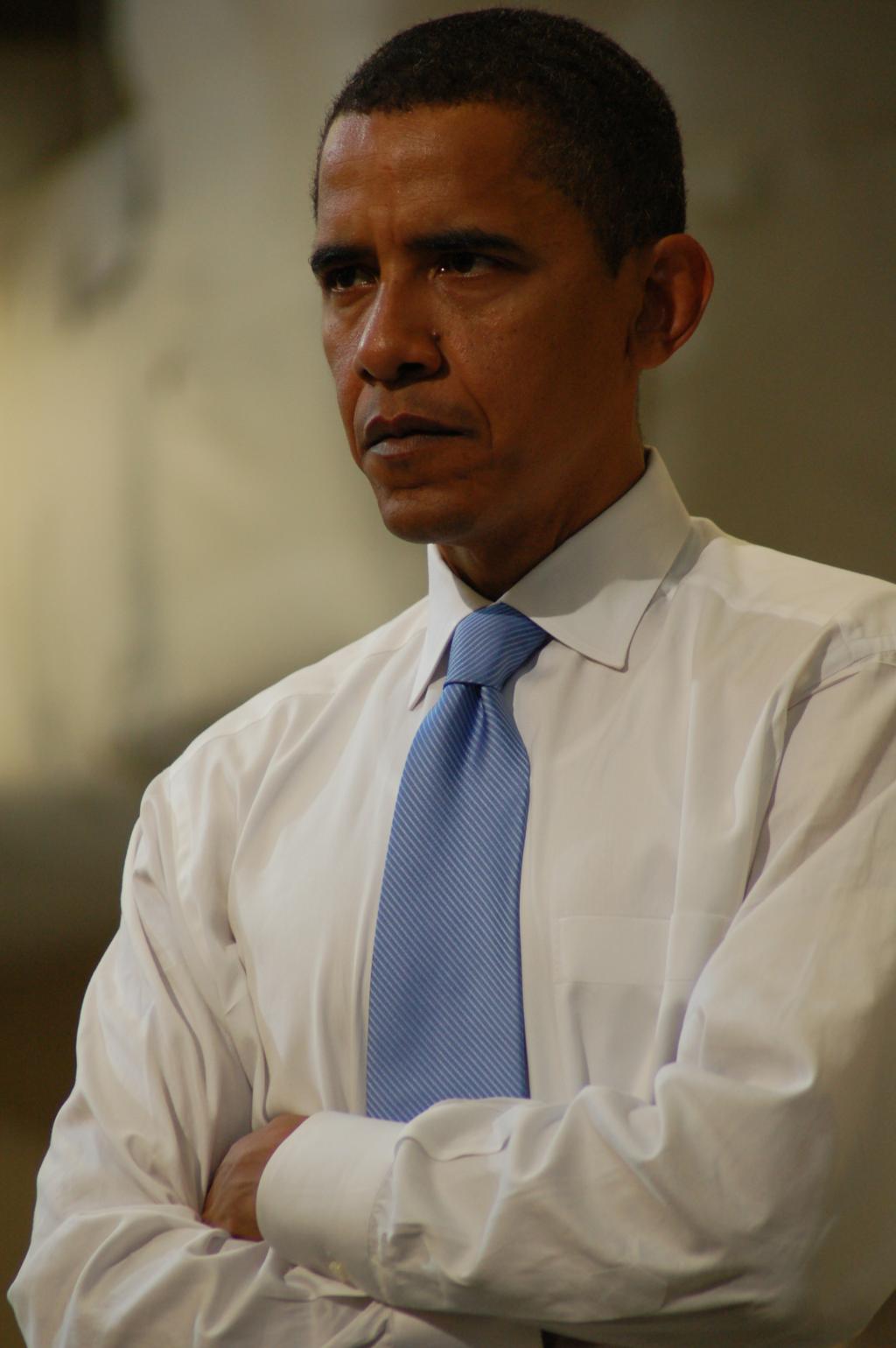
"Obama issued a course correction and started pursuing a strategy that’s in line with the realities of public opinion." (Image by Elizabeth Cromwell.)
William Daley’s demotion from White House Chief of Staff today is the clearest sign yet that President Obama is loading up for bear during this year of election, that he’s through trying to make nice with those whose only goal is to bring him down, from GOP insiders to Wall Street bankers to corporate CEOs. An exceprt from Jonathan Chait’s smart assessment of the surprising news at New York‘s Daily Intel blog;
“The effort failed because Daley’s analysis — which is also the analysis of David Brooks and Michael Bloomberg — was fatally incorrect. Americans were not itching for Obama to make peace with corporate America. Americans are in an angry, populist mood — distrustful of government, but even more distrustful of business. In the most recent NBC/The Wall Street Journal poll, 60 percent of Americans strongly agreed with the following statement:
The current economic structure of the country is out of balance and favors a very small proportion of the rich over the rest of the country. America needs to reduce the power of major banks and corporations and demand greater accountability and transparency. The government should not provide financial aid to corporations and should not provide tax breaks to the rich.
What’s more, it may be true that a bipartisan deal to reduce the deficit would have bolstered Obama’s standing. The trouble is that Republicans believed the exact same thing. Here’s how McConnell frankly explained his calculation:
‘The only way the American people would know that a great debate was going on was if the measures were not bipartisan. When you hang the ‘bipartisan’ tag on something, the perception is that differences have been worked out, and there’s a broad agreement that that’s the way forward.’
Republicans believed that making bipartisan agreements with Obama would make Obama and his agenda more popular. Republicans are not in the business of helping Obama win reelection. And so they refused to sign a bipartisan agreement, and Obama simply looked weak and ineffectual.
Since that debacle, Obama issued a course correction and started pursuing a strategy that’s in line with the realities of public opinion and the Congress, as opposed to Daley’s fantasy version thereof. Recognizing public populism and GOP intransigence, he is outlining the legislation he wants on jobs, under no illusion that Republicans will cooperate, in order to clarify which party is responsible for inaction. Obama’s approval ratings, after sinking under the weight of Daley’s failed gambit, now appear to be rising.”
Tags: Barack Obama, Jonathan Chait, William Daley
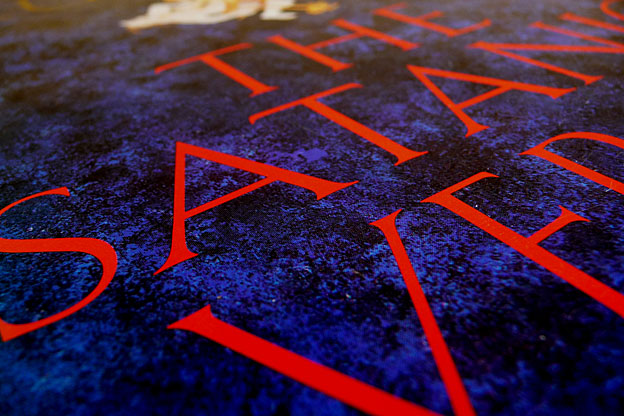
Another moral failing in the recent history of the Catholic Church came in response to the death sentence imposed on Salman Rushdie by Ayatollah Khomeini after the publication of The Satanic Verses. From a 1989 New York Times piece by Michael T. Kaufman:
“In the United States, 17 Roman Catholic writers, including William Kennedy, Maureen Howard, Garry Wills and the Rev. Andrew Greeley, wrote a letter critical of statements by John Cardinal O’Connor, the Archbishop of New York. The letter noted the statement Sunday by the Cardinal in which he said that he would not read the book but that he proclaimed ‘his sympathy for the aggrieved position’ of Muslims.
The Catholic writers said they ‘deplore the moral insensitivity to the plight of Mr. Rushdie and an ecumenical zeal that would appear to support repression.’
Gara LaMarche, the head of the freedom-to-write program of American PEN, an international writers’ group, acknowledged that ‘for a short period of time immediately after the death threat there was a great deal of discussion about what was the best way to help Salman Rushdie.’ He said that this may have ‘given an impression of reluctance,’ but he added that in recent days writers have been calling from all over the world to offer their help with petitions and readings.”
••••••••••
Christopher Hitchens addresses the non-defense of Rushdie, 1989:
Tags: John Cardinal O'Connor, Michael T. Kaufman, Salman Rushdie
One final clip of conservative cartoonist Al Capp in all his smart-ass glory. With William F. Buckley in 1969.
More Al Capp posts:
Tags: Al Capp, William F. Buckley
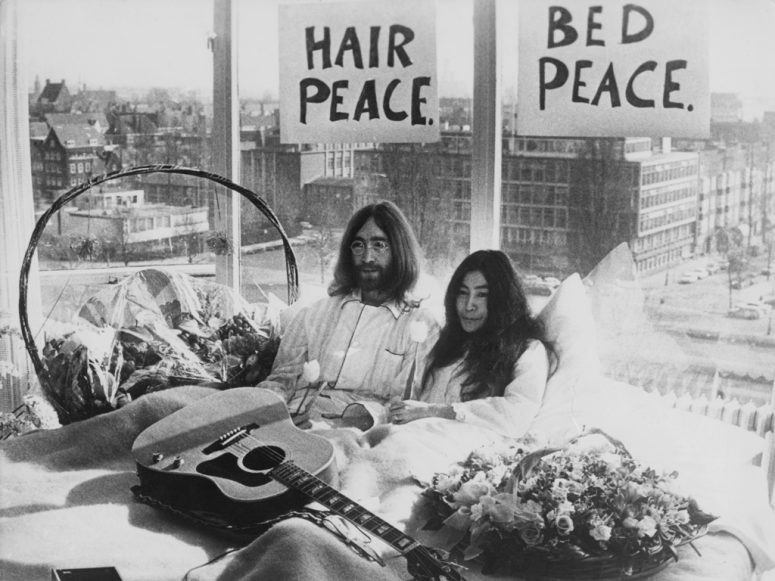
As much as conservative cartoonist Al Capp hated Rev. Sun Myung Moon, he deplored John Lennon and Yoko Ono even more. From Capp’s brief, belligerent visit to the Bed-In for Peace in Montreal in 1969.
Tags: Al Capp, John Lennon, Yoko Ono
The opening of Joan Didion’s writing about the sad and torturous Terri Schiavo case, in the New York Review of Books in 2005:
“Theresa Marie Schindler was born on December 3, 1963, to prosperous and devoutly Catholic parents, Robert and Mary Schindler, in a Philadelphia suburb, Huntingdon Valley. Robert Schindler was a dealer in industrial supplies. Mary Schindler was a full-time wife and mother. They named their first child for Saint Teresa of Avila, the Spanish mystic who believed the Carmelites insufficiently reclusive and so founded a more restrictive order. We have only snapshots of Theresa Marie Schindler’s life before the series of events that interrupted and eventually ended it. According to newspaper accounts published in the wake of those events, there had been the four-bedroom colonial on the leafy street called Red Wing Lane. There had been the day the yellow Labrador retriever, Bucky, collapsed of old age in the driveway and Theresa Marie tried in vain to resuscitate him. There had been the many occasions on which her two gerbils, named after the television characters Starsky and Hutch, got loose and into the air-conditioning unit in the basement.
She gained more weight than she wanted to. The summer she graduated from high school she went on a NutriSystem diet and began to lose the weight. Until then she hung out at the mall. She did not date. She bought her little brother Bobby his first Bruce Springsteen album. She pasted birthday cards into a scrapbook. She read Danielle Steel novels. She saw An Officer and a Gentleman with Richard Gere and Debra Winger four times in one day. She went to a Catholic grade school and a Catholic high school, where the single activity listed in her yearbook entry was ‘Library Aide,’ an extracurricular effort on which she and a friend had settled for the express purpose of having something besides their names in the yearbook. The college application process, in the sense of the crucial competition that it was for many in her generation, an exercise in the marshaling and burnishing of deployable accomplishments, seems not to have entered the picture.
She enrolled in the two-year program at Bucks County Community College, where, in a psychology class during her second semester, she met Michael Schiavo. He was from Levittown. He is said to have been the first person she had ever kissed. At the time they married two years later, in 1984, she was just under twenty-one; he was eight months older. After a honeymoon at Disney World, they moved in with her parents in Huntingdon Valley, then, when the Schindlers decided two years later to move to Florida, preceded them there. They lived first in a condominium the Schindlers had in St. Petersburg. Theresa Schindler Schiavo clerked at the Prudential Insurance Company. She dyed her hair blonde. She lay out by the pool and drank several quarts of iced tea a day. Michael Schiavo, who after his wife’s cardiac arrest would begin and eventually complete studies in nursing and respiratory therapy at St. Petersburg Junior College, took restaurant jobs.”
Tags: Joan Didion, Michael Schiavo, Terri Schiavo
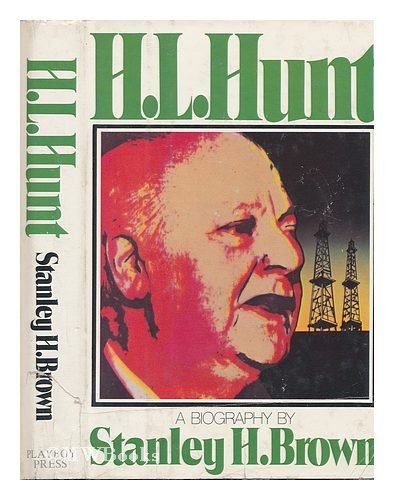
When you possess $5 billion and several families full of highly ambitious people, you bequeath a great deal of drama along with great wealth when you die. H.L. Hunt, an oilman with a backstory as large as Texas itself, left just that sort of a messy arrangement in 1974 when he succumbed to cancer. His descendants behaved in such a manner that they reputedly were the inspiration for the melodramatic TV series, Dallas. From a 1974 People:
“Haroldson Lafayette Hunt was 32 and broke when he sat down to a game of five-card stud in the Arkansas boom town of El Dorado and won his first oil well. By the time he died of cancer two weeks ago at age 85, H.L. Hunt had pyramided his poker winnings into a global oil empire that made him one of the world’s half-dozen wealthiest men. Long before ‘Popsie’ Hunt’s death, however, an ugly struggle had already begun within his family over the disposition of the Texas tycoon’s personal fortune, estimated at $5 billion.
The issue is between Hunt’s children by his first wife and those of his second. His first marriage to Lyda Bunker Hunt produced four sons and two daughters—Mrs. Al Hill, 59, H.L. Jr., 57, Mrs. Hugo W. Schoellkopf Jr., 52, Nelson Bunker, 48, Herbert, 46, and Lamar, 42. Hunt’s second wife was Ruth Ray Wright, a former Hunt company secretary, who married H.L. two years after Lyda’s death in 1955. She had four children, whom H.L. immediately adopted: Ray, 30, June, 29, Helen, 26, and Swanee, 23. (Friends say members of the family have told them H.L. was their actual as well as adoptive father.)
The internecine intrigue began, H.L. confidant Paul Rothermel told a federal grand jury, when he convinced the patriarch in 1969 to leave 51% of Hunt Oil to the ‘second family.’ The first six children, recalled Rothermel, had already amassed many millions of their own. However, the other four children had ‘only’ about $3 million all-told in trust funds. Two years later, private detectives working for Nelson Bunker and Herbert were convicted of tapping the phones of Rothermel and four other Hunt Oil executives believed sympathetic to the younger set of Hunts. Themselves now under federal indictment for ordering the wiretaps, Nelson Bunker and Herbert have pleaded not guilty, arguing that they simply wanted to investigate unaccountable company losses of $62 million over two years. Should the two Hunts be convicted, they could be fined up to $10,000 or be sentenced to five years, or both. For his part, Rothermel has come to an undisclosed out-of-court settlement with the Hunts over the wiretap. “
••••••••••
Hunt was a staunch conservative, 1950s:
Dallas reboot, coming in 2012:
Tags: H.L. Hunt
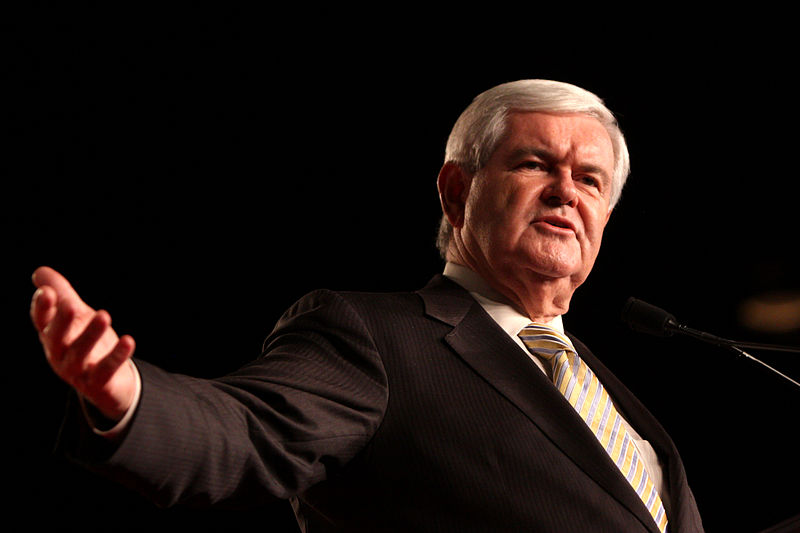
Boo fucking hoo. (Image by Gage Skidmore.)
It would have been hugely satisfying if even one journalist had the temerity to ask Newt Gingrich the most obvious question when he was in mid-whine over Mitt Romney’s negative ads in Iowa: Didn’t you behave far more shamelessly when you pilloried Bill Clinton over his marital infidelities while you yourself were philandering? That nobody called him out on the ridiculousness of his indignation and late-life conversion to fair play is really sad.
Please do not say mean things about Newt.
Tags: Newt Gingrich
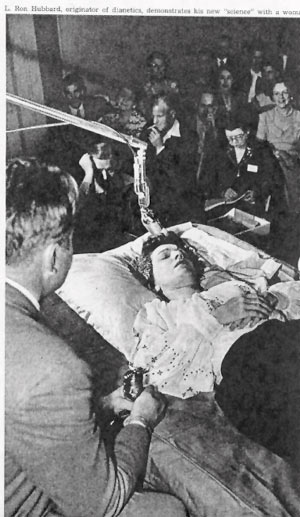
Before we fully descended into the Age of Celebrity, People magazine used to do hard-hitting journalism along with its fluff and risk all sorts of legal hazards in the process. From the 1978 article, “The Bizarre Cult of Scientology“:
“Perhaps no critic of the church has suffered more than New York free-lance writer Paulette Cooper, author of a 1971 book titled The Scandal of Scientology–and the target of the church operation code-named ‘Freak Out.’ Her publisher withdrew Scandal and destroyed most copies almost as soon as it was printed–in the face of defamation suits in five countries seeking $15 million damages. But according to a suit Cooper plans to file after the federal indictments are announced, the church continued for years afterward to press a smear campaign bent on putting her ‘in a mental institution [or] in jail.’ To that end, she charges, that church members followed her, stole her diary, threatened her with a gun, lifted files for her psychiatrist and her lawyer, wrote anonymous ‘Dear Fellow Tenant’ letters saying she was a sexual deviant with venereal disease–and framed her on federal charges of making bomb threats against the church. (They wrote the threats themselves on her stationery, which they had stolen.) Charges were eventually dropped when she passed a seven-hour sodium-pentothal test, but she had to spend $28,000 to defend herself and $4,000 on psychotherapy to cope with the stress. ‘At one point I was down to 83 pounds,’ she remembers. The recently seized church documents may well support her latest suit against the church–for $40 million damages–but she still lives like a fugitive, using the service elevator in her New York apartment and wearing dark sunglasses and disguises.”
••••••••••
People TV ad, 1978:
Tags: Paulette Cooper