Politics

You are currently browsing the archive for the Politics category.

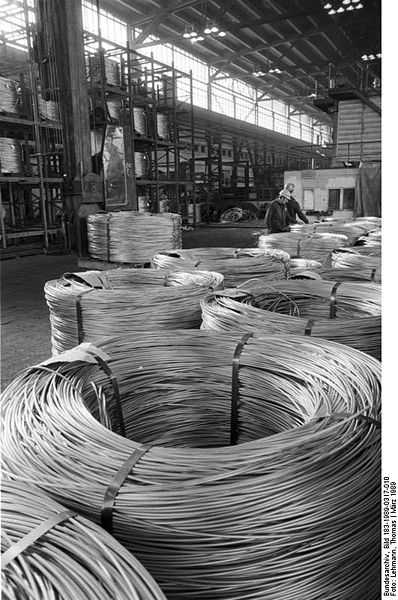
"Copper wires might be ok, but they’ll never deliver a gig." (Image by Thomas Lehmann.)

As Craig Settles points out on a telling piece at Gigaom, today’s telecommunication companies are trying to use legislation to ensure their slow, outdated broadband networks are given preference over faster fiber networks. And that happens to the detriment of us all, especially to people living outside of cities. An excerpt:

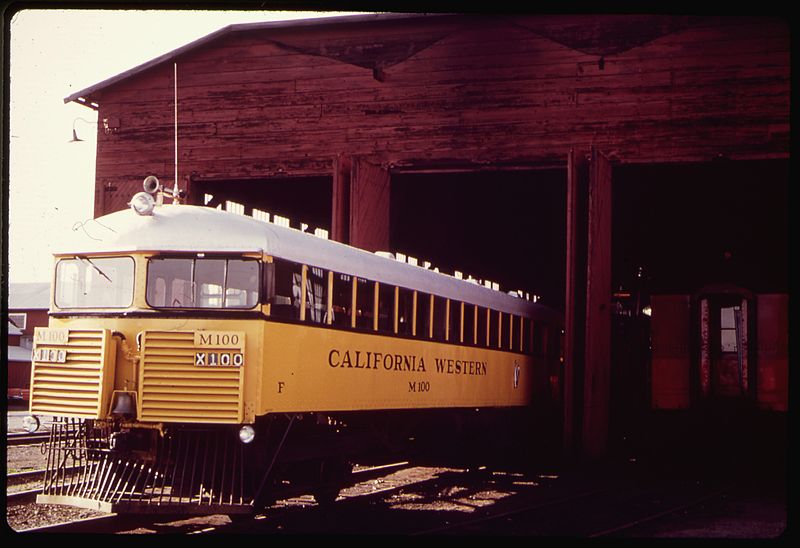
“Around 1940, the railroads were in their heyday. They had made America great, railroads still basked in the glow of their role helping to conquer the West, they had nationwide infrastructure, ushered in innovations, and railroad barons carried clout in D.C. and beyond.

Post-World War II, airplanes were evolving into serious transportation vehicles that moved lots of people, mail and packages much faster than trains did. While railroads tried to make trains faster, more comfortable, etc., airlines made greater technological advances AND market advances. No matter what improvements railroads could make, those trains would never fly. Planes, however, got bigger, faster, and more popular.

Today’s telcos are the railroads. They’ve spent money to build infrastructure to a lot of places. But local governments, co-ops and nonprofits are building supersonic jetliners. Chattanooga, Tenn.; Santa Monica, Calif.; Wilson, N.C.; Lafayette, La. and dozens of cities and counties have fiber networks that kick telcos’ assets.

Copper wires might be ok, but they’ll never deliver a gig. That’s what cities and counties are delivering. Nor will the big corporations go to the places that need broadband the most. AT&T basically just told rural America ‘you’re on your own.’ Verizon FiOS? If you don’t have it by now, you probably aren’t getting it.

So incumbents have flocked to the last refuge of a corporate scoundrel, the legislatures where their money can buy what they can’t do easily in a truly competitive market – bills that kill municipal broadband. In Georgia, they have an anti-muni bill in the state senate (SB 313) that defines broadband as 200 kbps!”

Tags:

In the wake of the recent budget-limit travesty, Bill Clinton opined that if President Obama was in a position to be stubborn and let the government close down, perhaps that would have been the GOP’s waterloo moment. Maybe instead the 2012 Presidential election will be the ultimate cratering of the Republicans, the final bottoming out before it can return to sanity and stop treating politics like a zero-sum game. If its Presidential campaign is a culture war and contraception is a centerpiece, the GOP will suffer a devastating loss. Maybe it can rise from that wreckage and become a party worthy of governance again.

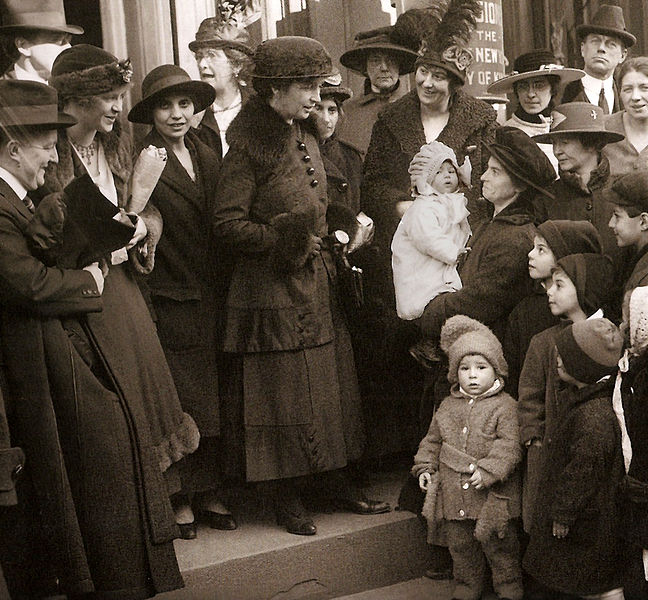
The term birth control was coined by New York nurse Margaret Sanger, who is pictured above in a classic photo exiting a Brooklyn courthouse on January 8, 1917. She was on trial for opening a birth-control clinic the previous year, and she was guilty as charged. In 1921, Sanger founded the American Birth Control League, which eventually became Planned Parenthood. Sanger wasn’t completely enlightened herself, embodying some of the biased views of her time regarding race and eugenics. But she did shine a light on the important area of women’s health. From a 1957 interview which Mike Wallace conducted with Sanger:

WALLACE: Well let’s look at the official Catholic position…opposition to Birth-Control. I read now from a church publication called ‘The Question Box’ in forbidding Birth Control it says the following: It says the immediate purpose and primary end of marriage is the begetting of children, when the marital relation is so used as to render the fulfillment of its purposes impossible–that is by Birth Control–it is used unethically and unnaturally. Now what’s wrong with that position?

SANGER: Well, it’s very wrong, it’s not normal it’s — it has the wrong attitude towards marriage, toward love, toward the relationships between men and women.

WALLACE: Well the natural law they say is that first of all the primary function of sex in marriage is to beget children. Do you disagree with that?

SANGER: I disagree with that a hundred percent.

WALLACE: Your feeling is what then?

SANGER: My feeling is that love and attraction between men and women, in many cases the very finest relationship has nothing to do with bearing a child. It’s secondary. Many, many times and we know that –you see your birth rates and you can talk to people who have very happy marriages and they’re not having babies every year.”

Tags: ,

Brief clip of Che Guevara on Face the Nation, 1964. Castro, Guevara and their fellow revolutionaries had a righteous cause, but ended up making things far worse, entrapping Cuban people in poverty for decades.

Tags:

It took two weeks for the whole country to fall in love with the NBA’s first Taiwanese-American player. As polls repeatedly show, most Americans, even those who disagree with his politics, genuinely like our first African-American President. Polls also show that the majority of Americans support marriage for gay people. Most Americans don’t want illegal aliens who’ve obeyed the law rounded up and deported by the millions. The majority of us want safe and free access to contracepetion and reproductive health care for women. Whether it’s shifting demographics or a more enlightened populace, whether our faces have changed or our hearts, the question is: Are wedge issues, used so often and so successfully by Conservatives in recent decades, a thing of the past? Is the exploiting of social issues a losing gambit now?•

Bob Dylan and Joan Baez at the March on Washington, August 28, 1963.

Tags: ,

The opening of “The Mobility Myth,” Timothy Noah’s New Republic piece which argues that opportunity for upward mobility in America has narrowed as the economic divide has widened:

“When Americans express indifference about the problem of unequal incomes, it’s usually because they see the United States as a land of boundless opportunity. Sure, you’ll hear it said, our country has pretty big income disparities compared with Western Europe. And sure, those disparities have been widening in recent decades. But stark economic inequality is the price we pay for living in a dynamic economy with avenues to advancement that the class-bound Old World can only dream about. We may have less equality of economic outcomes, but we have a lot more equality of economic opportunity.

The problem is, this isn’t true. Most of Western Europe today is both more equal in incomes and more economically mobile than the United States. And it isn’t just Western Europe. Countries as varied as Japan, New Zealand, Singapore, and Pakistan all have higher degrees of income mobility than we do. A nation that prides itself on its lack of class rigidity has, in short, become significantly more economically rigid than many other developed countries. How did our perception of ourselves end up so far out of sync with reality?” (Thanks Browser.)

Tags:

The Catholic Church is run by old white men who lead materially comfortable existences, and the television industry is only slightly better. Maybe that’s why the TV analysis of the birth control brouhaha–even in many liberal outlets–has been so skewed in favor of the Catholic Church. I continually hear how President Obama is going to pay a price for the conflict, and I just don’t see it. Poll results from the New York Times:

“On contraceptive coverage, 65 percent of voters in the poll said they supported the Obama administration’s requirement that health insurance plans cover the cost of birth control, and nearly as many, 59 percent, said the health insurance plans of religiously affiliated employers should cover the cost of birth control.

In a compromise last week, President Obama said insurance companies could shoulder the costs required under the new federal health care law, but the Conference of Catholic Bishops and other religious leaders continue to oppose the rule.

A majority of Catholic voters in the poll were at odds with the church’s official stance, agreeing with most other voters that religiously affiliated employers should offer health insurance that provides contraception. Jennifer Davison, 38, a Catholic from Lomita, Calif., agrees with the federal requirement. ‘My opinion is that it is a personal issue rather than a religious issue,’ she said in a follow-up interview.”

From an American Interest interview with Libertarian thinker Peter Thiel (who was also profiled by George Packer in the New Yorker last year):

Francis Fukuyama: I’d like to begin by asking you about a point you made about there being certain liberal and conservative blind spots about America. What did you mean by that?

Peter Thiel: On the surface, one of the debates we have is that people on the Left, especially the Occupy Wall Street movement, focus on income and wealth inequality issues—the 99 percent versus the 1 percent. It’s evident that both forms of inequality have escalated at a very high rate. Probably from 1973 to today, they have gone up faster than they did in the 19th century. The rapid rise in inequality has been an issue that the Right has not been willing to engage. It tends either to say it’s not true or that it doesn’t matter. That’s a very strange blind spot. Obviously if you extrapolate an exponential function it can go a lot further. We’re now at an extreme comparable to 1913 or 1928; on a worldwide basis we’ve probably surpassed the 1913 highs and are closer to 1789 levels.

In the history of the modern world, inequality has only been ended through communist revolution, war or deflationary economic collapse. It’s a disturbing question which of these three is going to happen today, or if there’s a fourth way out. On the Right, the Tea Party argument has been about government corruption—not ethical violations necessarily, but inefficiency, that government can’t do anything right and wastes money. I believe that is true, and that this problem has gotten dramatically worse. There are ways that the government is working far less well than it used to. Just outside my office is the Golden Gate Bridge. It was built under FDR’s Administration in the 1930s in about three and a half years. They’re currently building an access highway on one of the tunnels that feeds into the bridge, and it will take at least six years to complete.” (Thanks Browser.)

Tags: ,

Two videos of Ronald Reagan, who twisted and gyrated plenty while in Hollywood, asserting his right-wing philosophy during the 1960s.

Reagan denounces hippies at UC Berkeley, 1966:

Reagan and RFK play defense over Vietnam, 1967:

Tags:

Social theorist Charles Murray has repugnant politics, but the very progressive Nick Kristoff is able to find common ground with him on an aspect of poverty. That’s why I like Kristoff so much: He doesn’t care about sides, only solutions. The opening ofThe White Underclassin the New York Times:

“Persistent poverty is America’s great moral challenge, but it’s far more than that.

As a practical matter, we can’t solve educational problems, health care costs, government spending or economic competitiveness so long as a chunk of our population is locked in an underclass. Historically, ‘underclass’ has often been considered to be a euphemism for race, but increasingly it includes elements of the white working class as well.

That’s the backdrop for the uproar over Charles Murray’s latest book, Coming Apart. Murray critically examines family breakdown among working-class whites and the decline in what he sees as traditional values of diligence.

Liberals have mostly denounced the book, and I, too, disagree with important parts of it. But he’s right to highlight social dimensions of the crisis among low-skilled white workers.

My touchstone is my beloved hometown of Yamhill, Ore., population about 925 on a good day. We Americans think of our rural American heartland as a lovely pastoral backdrop, but these days some marginally employed white families in places like Yamhill seem to be replicating the pathologies that have devastated many African-American families over the last generation or two.”

Tags: ,

Sometimes you see someone like Jon Voight, a Birther who vilifies President Obama–not just criticizes him or vehemently disagrees with his politics–but labels him as Other and Evil. When you listen to Voight, you might imagine that there’s a degree of racism at play, and maybe the actor himself doesn’t realize it. Maybe he’s the kind of person who’s troubled by a person of color who is highly educated and successful. Perhaps he’s able to rationalize it by being friendly with minorities he believes to be on a lower social plane than he is, whom he sees as no threat to his ego. Perhaps he likes to imagine himself a protector of such people. Maybe in return he can assign “Magic Negro” qualities to them. Maybe when he hears a black voice in his head, it’s an uneducated, stereotypical one that takes him back to an earlier age in which he was more comfortable. Something tells me this recent anecdote he told CNN puddinghead Piers Morgan is more a world view than an isolated incident. Oh, and Morgan doesn’t really understand what the word “brilliant” means, does he?

_______________________

Piers Morgan:

Midnight Cowboy was the movie that exploded you onto the scene, one of my favorite all-time movies. There’s a brilliant story about how you got this. Just tell me quickly. 

Jon Voight:

Well, it’s not a quick story. 

Piers Morgan:

It is going to have to be. Otherwise, we might get cut off again. 

Jon Voight:

Well, listen, I was told — I did a screen test and I was — with three other fellows, great actors. I was told it came down to another fellow and myself. And it was finally given to the other fellow. 

They finally came back around to me for some reason because they had a difficulty making this thing work. I get a call. They said, Jon, it’s come back to you. Be at your phone at 10:00 tomorrow morning. This is a Saturday morning. John Schlesinger will call you, invite you over to his place just to take a look at you, because it’s been a couple weeks since he’s seen you. And who knows. Good luck. 

So, of course, I couldn’t sleep that night. It rained that night. The wind was blowing against — blowing the rain against my apartment building. I got up early. I didn’t know what to do with myself. I didn’t — I was nervous. 

So I said, well, I’m going to go out and do some grocery shopping. I went out into this rain with my umbrella and I got some groceries. And coming back, I saw in the middle of the street this fellow who I had known who was a homeless man, black fellow, who said he was a boxer and he had kind of puffy eyes and stuff like that. 

I thought, yes, he’s a boxer all right. He was in the middle of the street. It was in the middle of the street, just lost. And the rain was coming down. I ran up to him and I said, George, George, you’ve got to get out of this rain. You’re going to get pneumonia. 

He was like that. I said, George, listen, I’m going to take you up to my apartment and I will give you a sandwich or something. I said, George, listen, you se that liquor store across the street? I’ll go get a bottle of scotch, a little bottle of scotch, and you can come up to my place and get out of the rain. He went, oh, OK. So I got the bottle of scotch, went up to my place. And George sat down. I made him a sandwich, tuna fish sandwich. I can still see this sad looking tuna fish sandwich. I said, George, you know, I’m waiting for a call that’s going to come at any time, and it could change my life because it’s a big movie. I’m a movie actor. I might get this part. 

He said, [stereotypical voice] oh, I hope you get it. I pray you get it. With that, the phone rings. I said, come on, George. Let’s go over and see if this is the fellow. So I had a hall wall phone. I get on. I said hello. 

And I hear the voice says, hello, Jon, John Schlesinger here. Jon, you know, we’re looking at your screen test and we may come your way. But I would like to see you just for a few minutes. Do you think you could come over to my place and just have a little chat? 

I said, that’s fine, John. It’s raining. I’ll get a cab. He gives me the address. I hang up the phone. I said, George, it looks good. I’m going to go over and see him. I’m so glad, he says. I said, now you sit here. Don’t go outside. If you go outside, here’s a coat. I had an extra coat. I said — and just, you know, you can stay here. If I’m a couple of hours, you can stay here. But if you go, take the coat. 

So I leave George. I go over and see John Shlessinger. And John and I — John was as good as his word. He just wanted to say hello, just see how we were doing. We had a little laugh. We did get along. 

He said, Jon, I’ll call you within the hour. We’ll let you know the decision. I said, that’s just fine, John. So I went back. Got a cab both ways. Last money I had to get the cab, see. 

Get back to the place and George is sitting in the same place. I saw a couple bites out of the sandwich, nothing much out of the liquor. I put a glass out for him. I told him — I said, it looks good. We’re going to get a call in a second. He was excited. 

The phone rings. I go to the phone, saying, George, come on. So George is right there in front of me. I take the phone. I am looking right at George like I’m looking at you. I said hello. He said, hello, Jon, John Shlessinger here. It looks like we’re going to go with you. 

I said that’s wonderful, John. He said, yes. We’re going to have costumes on Monday and I’ll have somebody call you. Congratulations. I said thank you so much. He says, is there anything that you’re concerned about? Is there anything you’re concerned about? 

No, John, I said. John, I think you’ve done the right thing. I’ll be terrific in this part. I can’t wait to se you on Monday. Thank you so much. He said, well, very, very good, Jon. I’ll see you then. Hang up the phone. 

I said, George, I got the part. He said, [sterotypical voice] I prayed for it. I so glad. I prayed for you. I prayed for you. I knew you would get it. Then I said — for some reason I said, George, what’s the first thing I should do? George says call your mother. She would be so glad. 

I called my mother. I said, Hi, mom. I just got a great part. It’s going to change my life. Wonderful, Jon. Have you called your brothers? I said, no, but I will. 

And I think to this day, I said this fellow was like an angel. If he hadn’t been in my life — I was more concerned about his well- being, I wouldn’t have been relaxed and I would never have said what I said, which is I’m going to be terrific in this part. You made the right decision.”
Tags: , ,

Over the last three decades, America has become a country where the non-wealthy flatline and the rich grow richer. And that’s not just limited to money. As an article by Sabrina Tavernise in the New York Times points out, while the education gap between white blacks and whites has shrunk, the chasm between well-to-do and poor children has widened exponentially. Programs like the Harlem Children’s Zone are green shoots, but that type of intelligent investment in education is clearly the exception. Sadly, that gives sophists like Charles Murray (who’s quoted in the piece) more opportunity for their ugly politics.

It reminds that having access to endless information doesn’t mean we’re using that opportunity correctly. What should be a great equalizer–cheap technology connecting us to each other and everything we would ever need to know–creates only a wider gap if only the few are being nurtured to use these tools in an empowering way. From the Times article:

“Now, in analyses of long-term data published in recent months, researchers are finding that while the achievement gap between white and black students has narrowed significantly over the past few decades, the gap between rich and poor students has grown substantially during the same period.

‘We have moved from a society in the 1950s and 1960s, in which race was more consequential than family income, to one today in which family income appears more determinative of educational success than race,’ said Sean F. Reardon, a Stanford University sociologist. Professor Reardon is the author of a study that found that the gap in standardized test scores between affluent and low-income students had grown by about 40 percent since the 1960s, and is now double the testing gap between blacks and whites.

In another study, by researchers from the University of Michigan, the imbalance between rich and poor children in college completion — the single most important predictor of success in the work force — has grown by about 50 percent since the late 1980s.

The changes are tectonic, a result of social and economic processes unfolding over many decades. The data from most of these studies end in 2007 and 2008, before the recession’s full impact was felt. Researchers said that based on experiences during past recessions, the recent downturn was likely to have aggravated the trend.

‘With income declines more severe in the lower brackets, there’s a good chance the recession may have widened the gap,’ Professor Reardon said.”

Tags:

The Cold War gave genuine reason to be paranoid, though Bobby Fischer didn’t need any help. During his world-stopping chess series with champion Boris Spassky in 1972, the challenger showed up late, protested camera positions, etc. And his mental problems only increased with age. It’s a shame that two of the great American heroes of the 20th century–Fischer and Charles Lindbergh–ended up so damaged, so disgraced. They each had the world and let it spin from their grasp.

From coverage of the torturous, tremendous event in the July 24, 1972 Sports Illustrated: “Once after a visit to Caracas, Bobby Fischer remarked on how the dictator of Venezuela had chickened out. ‘He won’t go any place unless he has about six cars in front of him and six cars behind,” said the chess star, ‘because he’s afraid of being assassinated.’

‘Well, he nearly was,’ a companion explained. ‘His car was blown up and some people were killed.’

‘Yeah,’ said Fischer, ‘but he wasn’t in it. And ever since he’s been chicken. What kind of dictator is that?’

A similar question piqued watchers of Fischer himself last week—including the champion, Boris Spassky, who must have felt as though, like Alice, he had fallen down a rabbit’s hole. The American challenger for the world chess title had as usual been throwing his weight around dictatorially in Reykjavik, Iceland, site of his match with Spassky. But Fischer had also lost two straight games—the first one by an utterly out-of-character blunder and the second one by forfeit when he refused to leave his hotel room. What kind of chess genius was that?

A doomed one, suggested Icelandic Grandmaster Fridrik Olafsson right after Thursday’s forfeit. Fischer’s whole life is based on the assumption that he is the most compelling figure in chess. He had confidently predicted that this match would make his preeminence official. But his resistance to the playing conditions—he had demanded the removal of all movie cameras covering the match, saying they disturbed him even if he could not see or hear them—might well have cost him any chance at the title. If his intransigence should scuttle this $300,000 showdown, predicted Olafsson, “it would not be forgotten for a long time. And by then I’m afraid Bobby will be destroyed.” It conjured up thoughts of Paul Morphy, the 19th century American chess genius, who quit playing seriously at age 22 on obscure grounds of injured pride.

The comparison with Morphy underestimates Fischer’s redoubtable conception of himself. But hardly anyone in Iceland, the U.S. or the rest of the world seemed to care much if Fischer came to such an end last week. The press and public opinion, which had previously celebrated his eccentricities, were fed up.

The week before, Fischer had arrived in Iceland at the eleventh hour, his holdout of that moment having ended when an English millionaire sweetened the pot by $125,000, but now he seemed lost once more. John Lennon and Yoko Ono had recently sent him a chess set with white-on-white squares, all white pieces and this inscription: ‘For playing as long as you can remember where all your pieces are.’ But Fischer seemed to see nothing but black pieces. He feuded with his aides. He had committed the dictator’s cardinal sin—loss of control.

By Sunday Fischer had tickets on an afternoon plane to New York and the championships seemed doomed, but at the last moment a new accommodation brought him to, the chessboard once again.”

Tags: ,

Fo shizzle.

Fo shizzle.

Courtesy of Joe Pompeo in Capital New York:

“‘This detail is funny and irrelevant so I’ll retail it,’ he said. ‘I was in a meeting with President Obama not long ago, on foreign policy, that was off the record. One of the people was kind of hectoring about the fact of how much money we give to Egypt, to which the president replied, ‘True dat.”

The crowd erupted.

‘I thought, I will bet this is the first time that this has happened in any kind of briefing ever in the White House,’ said Remnick.”

Tags: , ,

Jesse Owens, great athlete and person, being interviewed in the U.S. directly after running all over Hitler’s sick politics in the 1936 Olympics in Berlin.

Tags:

The only real problem with rapper M.I.A. flashing the middle finger during the Halftime Show at the Super Bowl is that profane gestures minus some social context, some political statement, are just juvenile and nacissistic, a person showing off when they’ve got nothing to show. An empty gesture is worse than none at all.

A meaningful gesture–the raised fist–at the 1968 Olympics: You didn’t welcome home Jesse Owens as a hero. We came back from WWII to sit on the back of the bus. We can’t fully embrace our country until it fully embraces us.

Tags: , ,

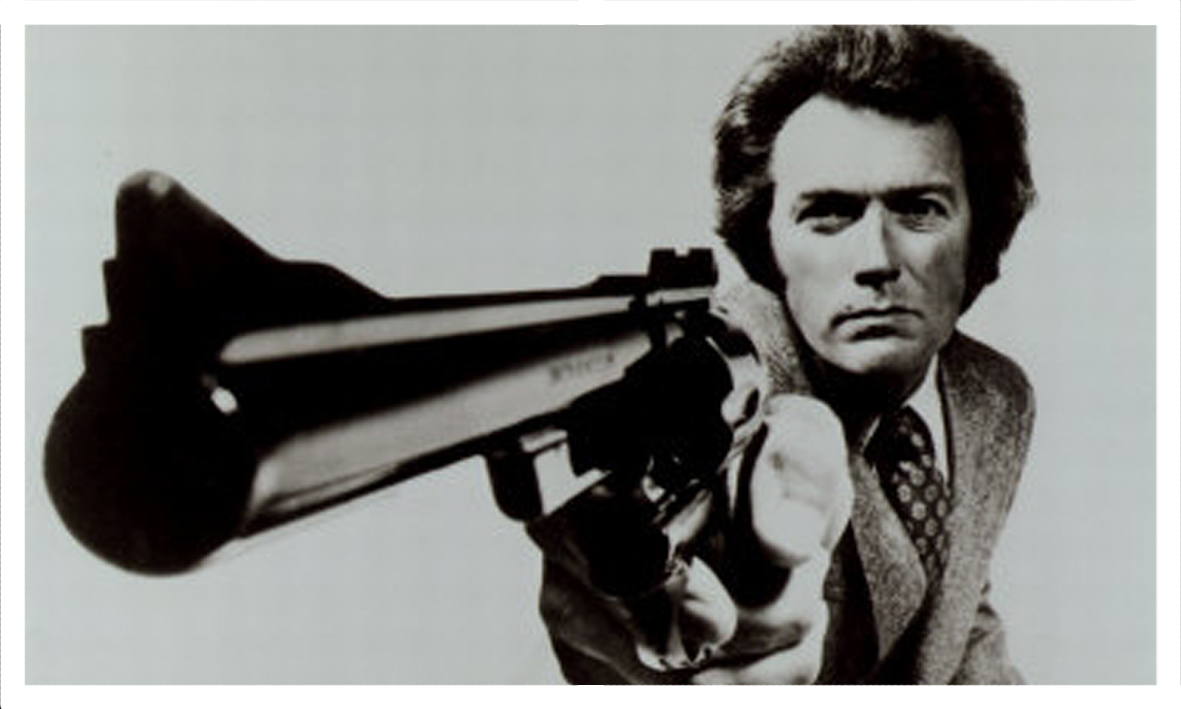
It’s funny that some conservatives are upset about Chrysler’s “Halftime in America” Super Bowl ad, the best commercial of the night. Clint Eastwood, a Herman Cain-loving conservative himself, ambles around all Dirty Harry-ish in the spot, extolling the reversal of fortune that the U.S. auto industry has enjoyed, promising that America is headed back to greatness, and seemingly threatening to murder other countries with his bare hands. I suppose some right-wingers see it as tacit support of Obama.

But it is completely tacit. The commercial conveniently doesn’t mention that without the intervention of the government, the Detroit recovery would likely have never occurred. Those jobs probably would have been gone for good if people like the politicans Clint supports had gotten their way. Sometimes big government is good and sometimes it is not, and anyone who doesn’t realize that we need to figure out these things on a case-by-case basis is too ideological for their own good–and America’s.

Tags:

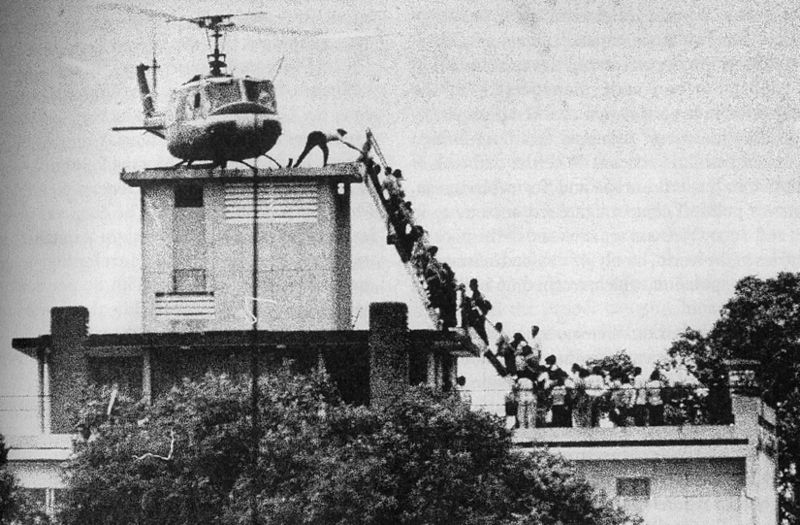
Legendary Vietnam War reporter George Esper just passed away at 79. He famously refused to be called back to the U.S. by the Associated Press so that he could stay and witness the Fall of Saigon. There’s sadly little of his work online. From the Washington Post:

While he considered his coverage of the dramatic end of the 15-year Indochina conflict the high point in a 42-year career of deadline reporting, it was far from the only one. Esper was legendary for his dogged persistence in covering news in war and in peace.

‘You don’t want to be obnoxious and you don’t want to stalk people, but I think persistence pays off,’ Esper said in an interview in 2000.

So when he was assigned to write a story for the 20th anniversary of the 1970 shootings of four students by National Guardsmen at Kent State University and could find no phone number for the mother of one of the victims, Esper drove an hour through a snowstorm to knock on her door.

‘She just kind of waved me off, and she said, ‘We’re not giving any interviews.’ Just like that,’ Esper recalled. ‘I didn’t really push her. On the other hand, I didn’t turn around and leave. I just kind of stood there, wet with snow, dripping wet and cold, and I think she kind of took pity on me.’

Like so many others over the years, she opened up to Esper.”

••••••••••

Fall of Saigon, 1975:

Tags:

I’ve mentioned this before, but I don’t think anything in America should be prohibited if it’s only going to create a widespread black market among consenting adults. Regulated intelligently, sure, but not prohibited. That includes: drugs, guns, abortion, gambling and prostitution. (I limit this rule to America because a place like Japan seems to be fine with a lack of guns among its populace, so respect must be paid to cultural differences.)

The people of Pahrump, Nevada, go a step further, however. In this tiny unincorporated slice of Ron Paul country, the gun-loving locals are paranoid about police states and carry firearms everywhere, including government buildings. (Since the name of town is so odd, I challenge the locals to up the ante and rechristen it “Rifle Butt, Nevada.” That would do quite nicely.) Richard A. Oppel Jr. has a really good piece about Pahrump in the New York Times. An excerpt:

This is the heart of Ron Paul country, the one county in Nevada that the 76-year-old congressman from Texas carried in the 2008 Republican caucuses, and a place that wears its libertarianism proudly.

It is also a place where many people come to be left alone. ‘There are a lot of people who hide in Pahrump,’ said Carl England Jr., who, as pastor of a Baptist church here and also proprietor of a local septic business, knows a lot about his neighbors.

Many people here have owned guns — even some, like Jerry Neese, who are scared of them — not necessarily for concerns about safety but to make a statement about living in a free country. ‘People believe in the rights they have, and want to show they believe in them,’ said Bonnie White, who owns Emmalee’s Guns and Emporium (named for her granddaughter) and sells 500 guns a year. ‘People will fight for their rights here.'”

Tags: , , ,

I’m always posting clips from What’s My Line?, the 1950-67 quiz show in which a panel attempts to guess the identity of mystery guests. It’s incredibly addicting Youtube viewing because the program had an amazing roster of guests, from Eleanor Roosevelt to Brian Epstein to the last living witness of the Lincoln assassination. But the show on November 7, 1965 was particularly poignant, even though the celebrity guest was merely Joey Heatherton, who was best known for being breathy and blond.

That episode marks the final appearance of longtime panelist Dorothy Kilgallen, a New York newspaper columnist. A few hours after the live broadcast, Kilgallen overdosed on alcohol and barbiturates, dying alone in her apartment. The following morning her hairdresser discovered her lifeless body.

That would have been the end of the story, a drug-related death, an accident or, perhaps, suicide, except that Kilgallen had been an outspoken critic of the Warren Commission and had become a confidante of Jack Ruby. She promised publicly that she had information which would explode the commission’s findings about the JFK assassination and complained privately to friends that she believed she was under surveillance. In the wake of a shadowy murder of an American President, many wondered–some still do–if Kilgallen was silenced by foul play. My assumption is that her death was simple and sad, but the conspiracy theory speaks to the distrust people had for the government at the time.

The final guest, after Heatherton, is pioneering female sportswriter, Elinor Kaine

Tags: ,

It’s amazing how little effect a disgraced Richard Nixon’s resignation had on the future of the GOP. It cost the Republicans the White House in 1976, but his party has held the Oval Office more often than not since. And Nixon’s brand of conservatism, which at least had some room for environmentalism and Affirmative Action, has all but vanished from the Right. In 1967, before he was President, Nixon discussed the GOP’s future with William F. Buckley, Jr.


Tags: ,

From Stanford history professor Richard White’s answer to the question, “Does California need a high-speed rail line, ultimately connecting San Francisco to Los Angeles?” in the New York Times:

“We shouldn’t build it. At best it will not solve any problems for decades to come, and at worst it will become an expensive problem itself. It will become a Vietnam of transportation: easy to begin and difficult and expensive to stop.

In a state dismantling its education system and watching its existing infrastructure collapse, it is criminally profligate to build a system that will drain revenue from more-needed projects. This is like building a state-of-the-art driveway while your house collapses.

Highway 5 between Los Angeles and San Francisco is miserable, but it is not the key transportation problem in California. For high-speed rail to work, it needs to get people out of cars, but the project doesn’t touch the huge mass of traffic, which swirls daily in the Los Angeles and San Francisco metropolitan areas. High-speed rail between Boston and Washington, D.C., connects trains with functioning public transportation systems. This is not true in Los Angeles nor in large parts of the Bay area.”

Tags:

I would assume after last night’s embarrassing debate performance, Newt Gingrich is consigned to runner-up status, a sad, pompous buffoon who was only seriously considered because of the dearth of GOP options. But perhaps conservatives view things differently than I do? At any rate, the New York Times’ Timothy Egan righteously undresses the overstuffed hypocrite in “Deconstructing a Demogogue.” An excerpt:

Back in 1994, while plotting his takeover of the House, Gingrich circulated a memo on how to use words as a weapon. It was called ‘Language: A Key Mechanism of Control.’ Republicans were advised to use certain words in describing opponents — sick, pathetic, lie, decay, failure, destroy. That was the year, of course, when Gingrich showed there was no floor to his descent into a dignity-free zone, equating Democratic Party values with the drowning of two young children by their mother, Susan Smith, in South Carolina.

Today, if you listen carefully to any Gingrich takedown, you’ll usually hear words from the control memo.

He even used them, as former Assistant Secretary of State Elliott Abrams wrote in National Review Online this week, in going after President Reagan, calling him ‘pathetically incompetent,’ as Abrams reported. And he compared Reagan’s meeting with the Soviet leader Mikhail Gorbachev to ‘the most dangerous summit for the West since Adolf Hitler met with Neville Chamberlain in 1938 in Munich.”

•••••••••••

The full Gingrich memo about the use of language:

Language: A Key Mechanism of Control

   As you know, one of the key points in the GOPAC tapes is that “language matters.” In the video “We are a Majority,” Language is listed as a key mechanism of control used by a majority party, along with Agenda, Rules, Attitude and Learning. As the tapes have been used in training sessions across the country and mailed to candidates we have heard a plaintive plea: “I wish I could speak like Newt.”

   That takes years of practice. But, we believe that you could have a significant impact on your campaign and the way you communicate if we help a little. That is why we have created this list of words and phrases.

   This list is prepared so that you might have a directory of words to use in writing literature and mail, in preparing speeches, and in producing electronic media. The words and phrases are powerful. Read them. Memorize as many as possible. And remember that like any tool, these words will not help if they are not used.

   While the list could be the size of the latest “College Edition” dictionary, we have attempted to keep it small enough to be readily useful yet large enough to be broadly functional. The list is divided into two sections: Optimistic Positive Governing words and phrases to help describe your vision for the future of your community (your message) and Contrasting words to help you clearly define the policies and record of your opponent and the Democratic party.

   Please let us know if you have any other suggestions or additions. We would also like to know how you use the list. Call us at GOPAC or write with your suggestions and comments. We may include them in the next tape mailing so that others can benefit from your knowledge and experience.

Optimistic Positive Governing Words

   Use the list below to help define your campaign and your vision of public service. These words can help give extra power to your message. In addition, these words help develop the positive side of the contrast you should create with your opponent, giving your community something to vote for!

  • active(ly)
  • activist
  • building
  • candid(ly)
  • care(ing)
  • challenge
  • change
  • children
  • choice/choose
  • citizen
  • commitment
  • common sense
  • compete
  • confident
  • conflict
  • control
  • courage
  • crusade
  • debate
  • dream
  • duty
  • eliminate good-time in prison
  • empower(ment)
  • fair
  • family
  • freedom
  • hard work
  • help
  • humane
  • incentive
  • initiative
  • lead
  • learn
  • legacy
  • liberty
  • light
  • listen
  • mobilize
  • moral
  • movement
  • opportunity
  • passionate
  • peace
  • pioneer
  • precious
  • premise
  • preserve
  • principle(d)
  • pristine
  • pro- (issue): flag, children, environment, reform
  • prosperity
  • protect
  • proud/pride
  • provide
  • reform
  • rights
  • share
  • strength
  • success
  • tough
  • truth
  • unique
  • vision
  • we/us/our

Contrasting Words

   Often we search hard for words to define our opponents. Sometimes we are hesitant to use contrast. Remember that creating a difference helps you. These are powerful words that can create a clear and easily understood contrast. Apply these to the opponent, their record, proposals and their party.

  • abuse of power
  • anti- (issue): flag, family, child, jobs
  • betray
  • bizarre
  • bosses
  • bureaucracy
  • cheat
  • coercion
  • “compassion” is not enough
  • collapse(ing)
  • consequences
  • corrupt
  • corruption
  • criminal rights
  • crisis
  • cynicism
  • decay
  • deeper
  • destroy
  • destructive
  • devour
  • disgrace
  • endanger
  • excuses
  • failure (fail)
  • greed
  • hypocrisy
  • ideological
  • impose
  • incompetent
  • insecure
  • insensitive
  • intolerant
  • liberal
  • lie
  • limit(s)
  • machine
  • mandate(s)
  • obsolete
  • pathetic
  • patronage
  • permissive attitude
  • pessimistic
  • punish (poor …)
  • radical
  • red tape
  • self-serving
  • selfish
  • sensationalists
  • shallow
  • shame
  • sick
  • spend(ing)
  • stagnation
  • status quo
  • steal
  • taxes
  • they/them
  • threaten
  • traitors
  • unionized
  • urgent (cy)
  • waste
  • welfare

Tags: ,

President Richard Nixon in New York City, 1972, at the beginning of the war on drugs, encouraging the absurd Rockefeller Drug Laws, pledging public funds to be wasted on a futile cause. But while Nixon was there at the beginning, the prohibition of drugs has been a bipartisan folly ever since, one that allows campaigning politicians to tell citizens a lie they want to hear. The truth is professional poison. And that comes from someone who has no interest in drugs and doesn’t think anyone should use them.

Tags: ,

George Soros, opportunist turned alarmist, frets in a Newsweek article that the whole damn world might go bust. An excerpt:

“Sitting in his 33rd-floor corner office high above Seventh Avenue in New York, preparing for his trip to Davos, he is more concerned with surviving than staying rich. ‘At times like these, survival is the most important thing,’ he says, peering through his owlish glasses and brushing wisps of gray hair off his forehead. He doesn’t just mean it’s time to protect your assets. He means it’s time to stave off disaster. As he sees it, the world faces one of the most dangerous periods of modern history—a period of ‘evil.’ Europe is confronting a descent into chaos and conflict. In America he predicts riots on the streets that will lead to a brutal clampdown that will dramatically curtail civil liberties. The global economic system could even collapse altogether.

‘I am not here to cheer you up. The situation is about as serious and difficult as I’ve experienced in my career,’ Soros tells Newsweek. ‘We are facing an extremely difficult time, comparable in many ways to the 1930s, the Great Depression. We are facing now a general retrenchment in the developed world, which threatens to put us in a decade of more stagnation, or worse. The best-case scenario is a deflationary environment. The worst-case scenario is a collapse of the financial system.'”

Tags:

« Older entries § Newer entries »