Excerpts

You are currently browsing the archive for the Excerpts category.

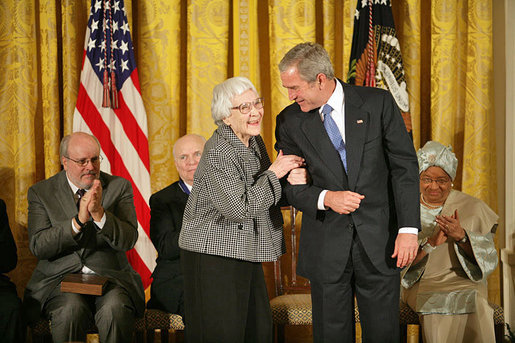
Harper Lee reunites with Boo Radley in 2007. (Image by Eric Draper.)

With the 50th anniversary of the publication of To Kill a Mockingbird upon us, some brainiac from the Daily Mail thought it was a good idea to show up unannounced and bother novelist Harper Lee for an interview, even though Lee hasn’t been interested in doing that kind of thing for more than 45 years. The reporter was politely rebuffed. Good for Lee. Back when she was open to discussing her work, Lee  sat down with Roy Newquist in 1964 and covered many topics, including the then-state of contemporary writing. An excerpt:

“Roy Newquist: When you look at American writing today, perhaps American theatre too, what do you find that you most admire? And, conversely, what do you most deplore?

Harper Lee: Let me see if I can take that backward and work into it. I think the thing that I most deplore about American writing, and especially in the American theatre, is a lack of craftsmanship. It comes right down to this—the lack of absolute love for language, the lack of sitting down and working a good idea into a gem of an idea. It takes time and patience and effort to turn out a work of art, and few people seem willing to go all the way.

I see a great deal of sloppiness and I deplore it. I suppose the reason I’m so down on it is because I see tendencies in myself to be sloppy, to be satisfied with something that’s not quite good enough. I think writers today are too easily pleased with their work. This is sad. I think the sloppiness and haste carry over into painting. The search, such as it is, is on canvas, not in the mind.

But back to writing. There’s no substitute for the love of language, for the beauty of an English sentence. There’s no substitute for struggling, if a struggle is needed, to make an English sentence as beautiful as it should be.

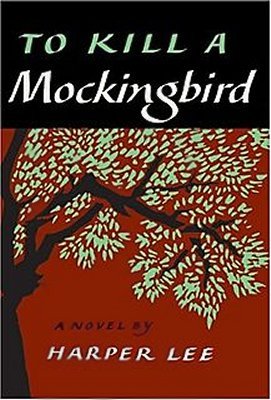
Mockingbird: I don't care for the title. (Image by Eurico Zimbres.)

Now, as to what I think is good about writing. I think that right now, especially in the United States, we’re having a renaissance of the novel. I think that the novel has come into its own, that it has been pushed into its own by American writers. They have widened the scope of the art form. They have more or less opened it up.

Our writers, Faulkner, for instance, turned the novel into something Wolfe was trying to do. (They were contemporaries in a way, but Faulkner really carried out the mission.) It was a vision of enlargement, of using the novel form to encompass something much broader than our friends across the sea have done. I think this is something that’s been handed to us by Faulkner, Wolfe, and possibly (strangely enough) Theodore Dreiser.

Dreiser is a forgotten man, almost, but if you go back you can see what he was trying to do with the novel. He didn’t succeed because I think he imposed his own limitations.

All this is something that has been handed to us as writers today. We don’t have to fight for it, work for it; we have this wonderful literary heritage, and when I say “we” I speak in terms of my contemporaries.

There’s probably no better writer in this country today than Truman Capote. He is growing all the time. The next thing coming from Capote is not a novel—it’s a long piece of reportage, and I think it is going to make him bust loose as a novelist. He’s going to have even deeper dimension to his work. Capote, I think, is the greatest craftsman we have going.
Of course, there’s Mary McCarthy. You may not like her work, but she knows how to write. She knows how to put a novel together. Then there’s John Cheever—his Wapshot novels are absolutely first-rate. And in the southern family there’s Flannery O’Connor.

You can’t leave out John Updike—he’s so happily gifted in that he can create living human beings. At the same time he has a great respect for his language, for the tongue that gives him voice. And Peter De Vries, as far as I’m concerned, is the Evelyn Waugh of our time. I can’t pay anybody a greater compliment because Waugh is the living master, the baron of style.

These writers, these great ones, are doing something fresh and wonderful and powerful: they are exploring character in ways in which character has never been explored. They are not structured in the old patterns of hanging characters on a plot. Characters make their own plot. The dimensions of the characters determine the action of the novel.”

Tags: , , , , , , , , , , ,

Michael Silverblatt: “Joan, please pardon me if I cry during this interview." (Image by David Shankbone.)

Michael Silverblatt, host of KCRW’s Bookworm program, is interviewed in the latest issue of The Believer about the many writers he’s conversed with over the years. It’s a fun read. A couple of excerpts follow.

•••••

Michael Silverblatt: I was really, really afraid of Joan Didion, simply because she’s a no-nonsense type. She has a mind that aggressively finds the flaws in an argument and the places where you’re trying to burnish your weakness with pretty words. And her attitude is “Everybody’s lying and life is the story we’re telling ourselves in order to stay alive. And an artist sees through the story. Sees through the fakeness of the story to the very bare and difficult impossibilities of the coping mechanism functioning in a true situation of devastation.” I was very scared, and that fear did not lessen, as it usually does with subsequent interviews. In fact, when The Year of Magical Thinking came out, about her husband’s death—that was a really hard interview to do! To talk to someone about the book about the death of her husband just after her daughter had died as well? And she had been talking about it all around the country, giving public readings. I’m in the position of someone extending meaningless condolence. If I don’t extend it, I seem like a jerk, but if I ask tough questions I also seem like a jerk. How was I going to do this interview? I was scared of her subject. Also of having at that time my own parents dealing with illnesses. I said to her, “Joan, please pardon me if I cry during this interview. And I’m very nervous about being unable to speak, because this is a subject that you’ve been handling that I don’t handle very well.” And she took my hand and she said, “I’ll get you through it.”

•••••

The Believer: Do you ever become friends with your guests?

Michael Silverblatt: Kurt [Vonnegut] didn’t sign books, he didn’t stay on, he was escorted into a car immediately through a back door, but he said, “Give me your book,” and drew a picture of himself and a bubble coming out of his mouth saying, “Would you be my friend?” and gave me his phone number and he looked at me and said, “I’m so lonely.” I had started reading him before he was discovered, around the time of Mother Night. He meant a lot to me. I had a hunger verging on addiction to enjoy how funny and inventive he was. He wasn’t Pynchon, he wasn’t Barth, he wasn’t Barthelme, he wasn’t the writers he was grouped with, but he had his finger on an American zaniness that hadn’t really been seen since Mark Twain. We began a phone relationship and saw each other several more times before his death.

Tags: , ,

In his collection A Roomful of Hovings and Other Profiles, the great New Yorker writer John McPhee included an impressive profile he wrote about the outdoorsman and naturalist Euell Gibbons. A very well-known public figure during the ’60s and ’70s, Gibbons guested on the Tonight Show and starred in TV commercialsbut he isn’t exactly a household name today. Gibbons, who was at different times in his life a Quaker, a tramp and a communist, wrote several food books and came to prominence for advocating the use the natural foods that grow wild all around us, whether it was weeds in a vacant lot or flowers from a box at Rockefeller Center.

The piece by McPhee was originally written for the April 8, 1968 issue of the New Yorker (paywalled here). In it, the two men spend a week together, living off the land in Pennsylvania. An excerpt:

“Gibbons interest in wild food suggests but does not actually approach madness. He eats acorns because he likes them. He is neither an ascetic nor an obsessed nutritionist. He is not trying to prove that wild food is better than tame food, or that he can survive without the assistance of a grocer. He is apparently not trying to prove anything at all except that there is a marvelous variety of good food in the world and that only a modest part of the whole can be found in even the most super of supermarkets. He is a gourmet with wild predilections. Inadvertently, the knowledge that he has acquired through years of studying edible wild plants has made him an expert on the nourishment aspects of survival in the wilderness, but the subject holds no great interest for him and in some ways he finds it repellent, since survival is usually taught by the military and he is a conscientious objector. Nonetheless, he is given his time to assist, in an unofficial way, at the United States Navy’s survival school in Brunswick, Maine. He has also taught survival techniques at the Hurricane Island Outward Bound School, off the Maine coast. It was in Maine that I first met him–in summer and only briefly–and not long thereafter I wrote to him and asked if he would like to take a week or so and make a late-fall trip to central Pennsylvania living off the land. I apologized that I would not be able to make such a trip sooner than November, and I asked him if he thought we can find enough to eat at that time. His response was that we could stuff ourselves, if we wanted to, right up until the time of the first heavy snowfall.”•

_________________________

Euell Gibbons is mentioned on Match Game in 1975:

Tags: ,

I'm Donnie from Quality Control.

If you’re a white American guy who cleans up well, China may have a well-paying, bogus job for you. An excerpt from Mitch Moxley’s eye-opening article, “Rent a White Guy,” in the Atlantic:

Not long ago I was offered work as a quality-control expert with an American company in China I’d never heard of. No experience necessary—which was good, because I had none. I’d be paid $1,000 for a week, put up in a fancy hotel, and wined and dined in Dongying, an industrial city in Shandong province I’d also never heard of. The only requirements were a fair complexion and a suit.

‘I call these things White Guy in a Tie events,’ a Canadian friend of a friend named Jake told me during the recruitment pitch he gave me in Beijing, where I live. ‘Basically, you put on a suit, shake some hands, and make some money. We’ll be in ‘quality control,’ but nobody’s gonna be doing any quality control. You in?’

I was.

And so I became a fake businessman in China, an often lucrative gig for underworked expatriates here. One friend, an American who works in film, was paid to represent a Canadian company and give a speech espousing a low-carbon future. Another was flown to Shanghai to act as a seasonal-gifts buyer. Recruiting fake businessmen is one way to create the image—particularly, the image of connection—that Chinese companies crave. My Chinese-language tutor, at first aghast about how much we were getting paid, put it this way: ‘Having foreigners in nice suits gives the company face.'”

Tags:

I presented an excerpt some time back from Slouching Towards Bethlehem, Joan Didion’s great collection of reportage about life in California during the 1960s and 1970s. Now I offer a passage from The White Album, her other incisive non-fiction book about that place and time. From the title piece, this excerpt concerns the Tate-LaBianca murders perpetrated by the Manson Family in 1969, which caused the L.A.’s open minds and open doors to be locked shut. To read Didion tell it, those horrific killings were an almost inevitable shattering of a city of glass. An excerpt:

“We play ‘Lay Lady Lay’ on the record player, and ‘Suzanne.’ We went down to Melrose Avenue to see the Flying Burritos. There was a jasmine vine grown over the verandah of the big house in Franklin Avenue, and in the evenings the smell of jasmine came in through all the open doors and windows. I made a bouillabaisse for people who did not eat meat. I imagined that my own life was simple and sweet, and sometimes it was, but there were odd things going around town. There were rumors. There were stories. Everything was unmentionable but nothing was unimaginable. The mystical flirtation with the idea of  ‘sin’–this sense that it was possible to go ‘too far,’ and that many people were doing it–was very much with us in Los Angeles in 1968 and 1969. A demented and seductive vortical tension was building in the community. The jitters were setting in. I recall a time when the dogs barked every night and the moon was always full. On August 9, 1969, I was sitting in the shallow end of my sister-in-law’s swimming pool in Beverly Hills when she received a telephone call from a friend who had just heard about the murders at Sharon Tate Polanski’s house on Cielo Drive. The phone rang many times during the next hour. These early reports were garbled and contradictory. One caller would say hoods, the next would say chains. There were twenty dead, no, twelve, ten, eighteen. Black masses were imagined, and bad trips were blamed. I remember all of the day’s misinformation very clearly, and I also remember this, and wish I did not: I remember that no one was surprised.”

Tags: ,

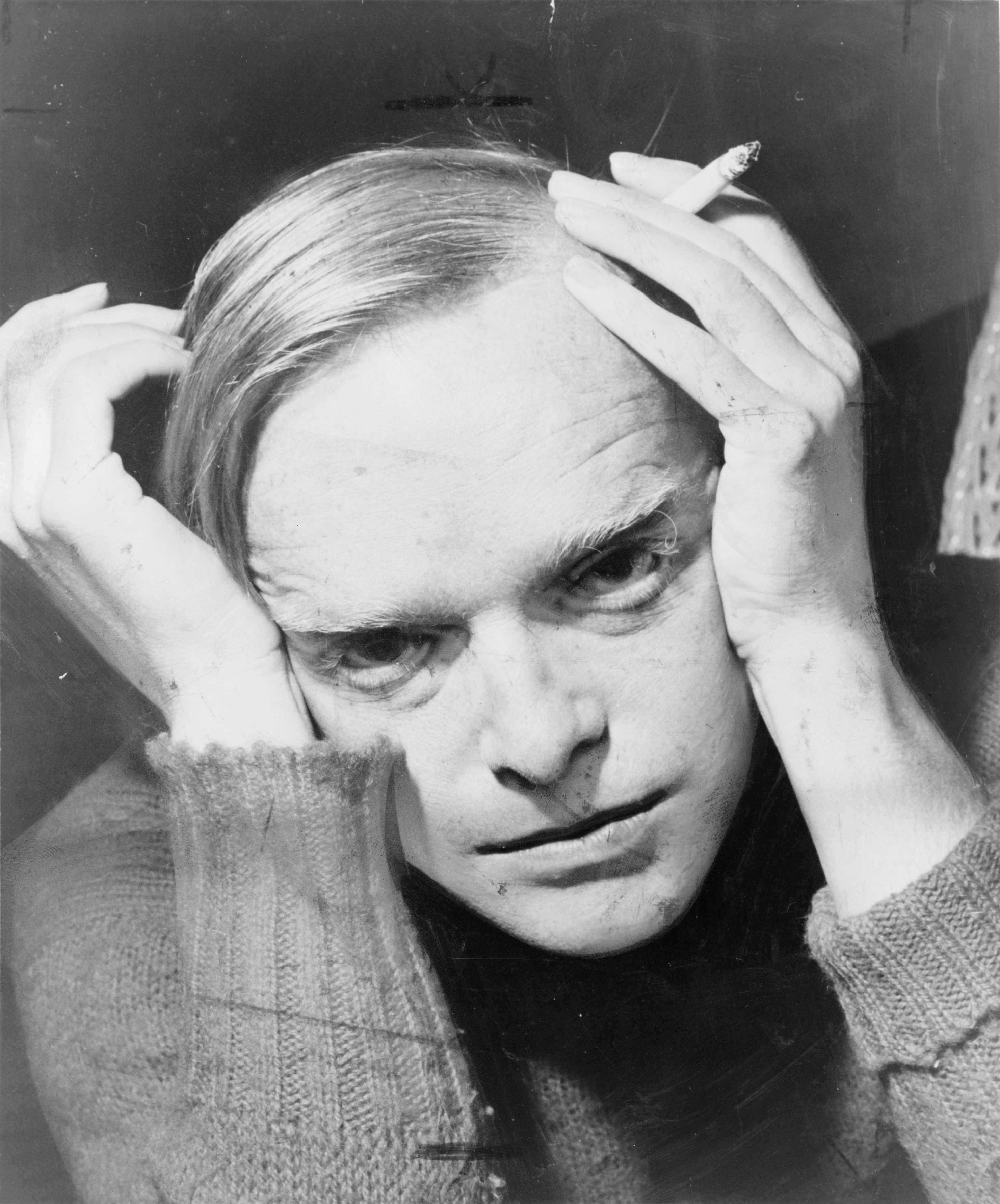
When I was a kid, I saw a really wasted Capote in the Port Authority, trying to get an indifferent homeless woman to talk to him. He was wearing a straw hat. (Image by Roger Higgins.)

In a 1957 interview with the Paris Review, Truman Capote described how he created a comfort zone for himself when writing:

Paris Review: What are some of your writing habits? Do you use a desk? Do you write on a machine?

Truman Capote: I am a completely horizontal author. I can’t think unless I am lying down, either in bed or stretched on a couch lying down and with a cigarette and coffee handy. I’ve got be puffing and sipping. As the afternoon wears on, I shift from coffee to mint tea to sherry to martinis. No, I don’t use a typewriter. Not in the beginning, I write my first version in longhand (pencil). Then I do a complete revision, also in longhand. Essentially, I think of myself as a stylist, and stylists can become enormously obsessed with the placing of a comma, the weight of a semicolon. Obsessions of this sort, and the time I take over them, irritate me beyond endurance.”

Tags:

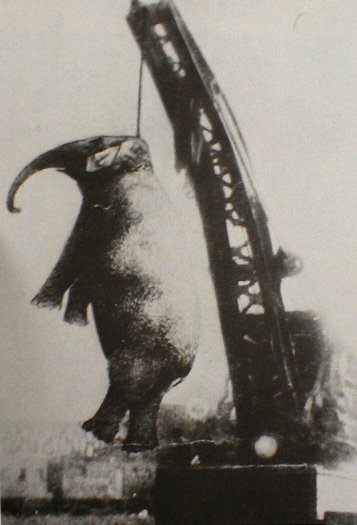
More than 5,000 spectators watched Big Mary’s execution in 1916.

I’m familiar, of course, with the electrocution of Topsy the Elephant at Luna Park in Coney Island in 1903. (It was a stunt perpetrated by Thomas Edison to discredit Nikola Tesla’s Alternating Current, which was the chief competitor to his Direct Current.) But I had never heard of the hanging of Big Mary the Elephant in Erwin, Tennessee, in 1916, even though it’s apparently been written about quite a bit.

Big Mary was the chief attraction of the small, second-rate Southern circus owned by Charlie Sparks. The great Long Form pointed me in the direction of a 2009 article about Mary’s demise in Blue Ridge Country magazine. It seems the pachyderm didn’t take kindly to a new attendant and killed him. After guns and electricity failed to put Mary down, she was hanged with the aid of a crane in a railroad yard. Sad and bizarre. An excerpt:

“Mary was billed as ‘the largest living land animal on earth’; her owner claimed she was three inches bigger than Jumbo, P.T. Barnum’s famous pachyderm. At 30 years old, Mary was five tons of pure talent: she could ‘play 25 tunes on the musical horns without missing a note’; the pitcher on the circus baseball-game routine, her .400 batting average ‘astonished millions in New York.’

Rumor and exaggeration swarmed about Mary like flies. She was worth a small fortune: $20,000, Charlie Sparks claimed. She was dangerous, having killed two men, or was it eight, or 18?

She was Charlie Sparks’ favorite, his cash cow, his claim to circus fame. She was the leader of his small band of elephants, an exotic crowd-pleaser, an unpredictable giant.

On Monday, September 11, 1916, Sparks World Famous Shows played St. Paul, Va., a tiny mining town in the Clinch River Valley.

Which is where drifter Red Eldridge made a fatal decision. Slight and flame-haired, Red had nothing to lose by signing up with Sparks World Famous Shows: he’d dropped into St. Paul from a Norfolk and Western boxcar and decided to stay for a while. Taking a job as janitor at the Riverside Hotel, Eldridge found himself pushing a broom and, then, dreaming of moving on.

Eldridge was hired as an elephant handler and marched in the circus parade that afternoon. It’s easy to imagine that what he lacked in skill and knowledge, he made up for with go-for-broke bravado. A small man carrying a big stick can be a dangerous thing.”

Tags: , , , , , ,

The Paris Review site has a new interview with legendary artist R. Crumb in its summer issue. During the Q&A, Crumb talks about the role psychedelic drugs and Popeye played in his development. An excerpt:

Paris Review

So how did you finally find publication?

R. Crumb

Well, the hippie revolution happened. In 1964 I first got laid, I met my first wife, Dana, and all these protohippies in Cleveland. A lot of them were Jews from Cleveland Heights, Shaker Heights. They started taking LSD and urged me to try it, so Dana got some LSD from a psychiatrist, it was still legal in ’65. We took it and that was totally a road-to-Damascus experience. It knocked you off your horse, taking LSD. I remember going to work that Monday, after taking LSD on Saturday, and it just seemed like a cardboard reality. It didn’t seem real to me anymore. Seemed completely fake, only a paper-moon kind of world. My coworkers, they were like, Crumb, what’s the matter with you, what happened to you? Because I was just staring at everything like I had never seen it before. And then it changed the whole direction of my artwork. Other people who had taken LSD understood right away what was going on, but the people who hadn’t, my coworkers, they didn’t get it.

Paris Review

How did it change your artwork?

R. Crumb

I had been working along in this modern adult cartoon trend, very influenced by the modern, expressionistic, arty quality of work by Jules Feiffer, Ronald Searle, Ralph Steadman. Then, on LSD, I got flung back into this cruder forties style, that suddenly became very powerful to me. It was a kind of grotesque interpretation of this forties thing, Popeye kind of stuff. I started drawing like that again. It was bizarre to people who had known my work before. Even Kurtzman said, What the hell are you doing? You’re regressing!”

Tags:

“You think the Kardashians lack genius?” (Image by Martin Schneider.)

Robert Birnbaum of the Morning News has a fun, freewheeling interview with New Yorker editor David Remnick. The Q&A is pegged to Remnick’s new book about Obama, but the two cover a number of topics, both serious and silly, in an off-the-cuff manner. A few excerpts follow.

___________________

Robert Birnbaum:

What is going to happen with newspapers and such?

David Remnick:

I’m not a fortune teller. I know it would be interesting if I sat here and told you without a trace of uncertainty that in 10 years all magazines are going to be projected on screens on the side of the Empire State Building and the Prudential Building. Or alternately, they would be projected on the inside of your sunglasses in the summertime. I don’t know. Here’s what my job is, and I share that with other editors, too: We are in this moment of technological uncertainty and transition. The goal for me is to make sure we find a way, willy-nilly, to be healthy so that we can do the thing itself. The thing itself is what I care about most. Given a choice between the survival of the long-form narrative journalism, criticism, cartooning—all the things that we do—and print itself, there is no contest. No contest. I, at the age of 51, may still think, for me, the best technology for reading the New Yorker at this moment is the print version. But that’s just me. If your son, decides otherwise, that he wants to read it on an iPad, kenahorah [so be it].

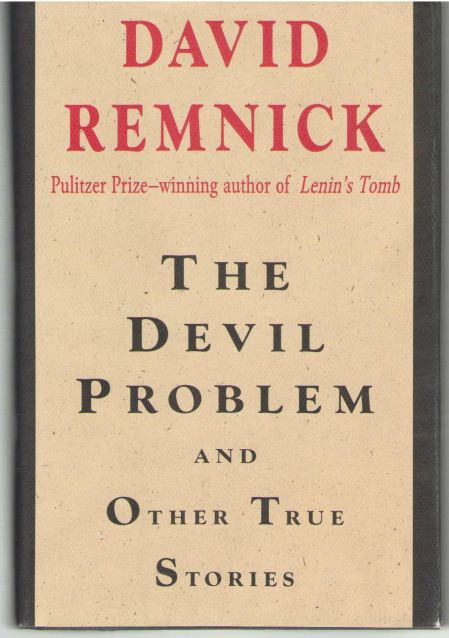
Remnick’s “The Devil Problem and Other True Stories” is one of my favorite non-fiction collections.

Robert Birnbaum:

I have to say I am befuddled by what flits across my TV screen—who are these Kondrashian [sic] people?

David Remnick

You think they lack genius?

Robert Birnbaum

Uh.

David Remnick

(laughs)

Robert Birnbaum

Someone must have genius associated with them.

David Remnick

Something I have never found interesting at all—two unbelievably popular things on television. One is reality television—it never interested me at all. And the other is this neo-talent-show stuff, like American Idol. The reason I don’t like American Idol is that a lot of the talent seems to be a replication of the singing style of Mariah Carey and Whitney Huston. I don’t need it.

___________________

David Remnick

David Owen is a fantastic golf writer.

Robert Birnbaum

I find golf to be the least interesting of pastimes.

David Remnick

To me it looks like a nervous breakdown with a stick.

Tags: ,

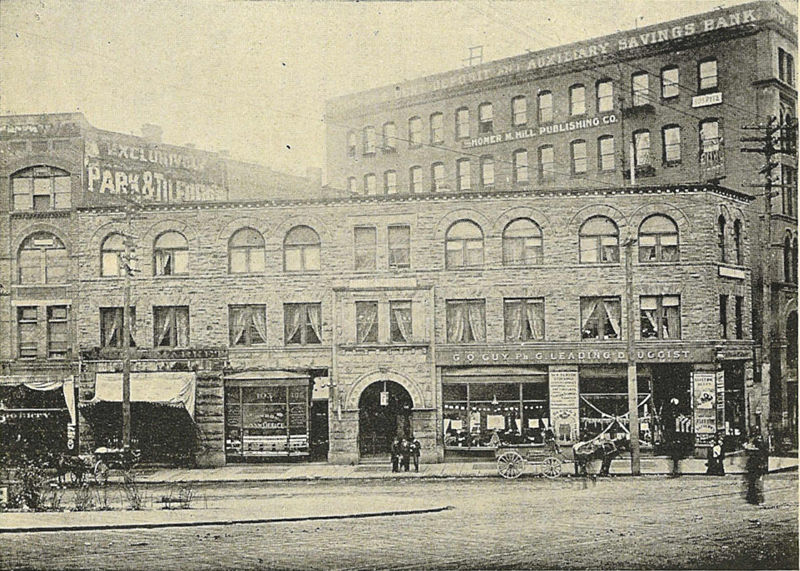
Old Seattle shop pictured on the cover is called "Elephant Store."

On a trip to Seattle some years back, I picked up this fun book, at the Elliott Bay Book Company, by the late area historian Murray Morgan. It tells the tale of some of the most colorful characters in the city’s history, including John Considine, who risked life and limb to bring vaudeville and other more raffish entertainments (gambling, prostitution, etc.) to Seattle during the boom time of the Klondike Gold Rush.

And I’m not kidding when I say he risked his life. Considine had a long-running feud with Police Chief William L. Meredith. After Considine exposed some corruption on the Chief’s part and got him fired, things turned really ugly. In 1901, Meredith first slandered Considine by claiming he impregnated a 17-year-old contortionist and paid for her abortion, and then he shot Considine at point-blank range. Considine was wounded, but not fatally. Meredith wasn’t so lucky when Considine returned fire. Since the deposed lawman had started the shootout, Considine was acquitted by the jury.

Considine eventually cleaned up his ways and brought the first superior movie theater to Seattle and later became involved in the budding motion picture business in Los Angeles. But before all of that, there were the rowdy days of the illicit People’s Theater. Due to anti-vice efforts and economic problems, Considine briefly lost control of the theater. In 1897, he schemed to get it back. An excerpt from Morgan’s book:

The Seattle street where John Considine and William L. Meredith had their fatal gun battle.

“One the evening of the last Thursday in December 1897, a large man wearing a brown derby, a gray raincape, and white gloves, and leading a brindle bulldog on a silver chain, strolled through the rain down Second Avenue South, gravely declining the invitation of streetwalkers and, on occasion, raising his cane in salute to a friend. He paused for a moment at the corner of Second Avenue and Washington to watch the men going down the steps into the People’s Theater. Even on a miserable midwinter night the place was drawing well; young sports out on the town, loggers in for the holidays, businessmen, and, most of all, lonesome Easterners waiting for ships bound for Alaska.

The big man watched thoughtfully, then went to the head of the steps. He frowned at the black-and-gold sign that read, ‘People’s Theater. Moses Goldsmith, Prop.’ Nailed to the wall was a blackboard on which had been written in crayon: ‘See Lady Osmena change clothes in total darkness in a lion cage.’

He went down the steps, paid fifty cents for a seat near the stage, ordered a glass of ‘water plain, unadorned water,’ from an amazed waitress, and turned his attention to the crowd. The place was full. The bar, which stretched along one wall, was crowded; three bartenders were kept busy. Nearly every table was occupied. Women with painted cheeks and skirts nearly up to their knees roamed the room, smiling at the patrons; from time to time the girls went to the stage and sang a loud song or danced an awkward dance. From the curtained box seats in the low balcony came the laughter and shouts and giggles and, most important, a steady ringing of bells as the box-hustlers summoned waiters with drinks.

The place was a gold mine, John Considine decided, a real gold mine. He’d have to get it back.”

Tags: , ,

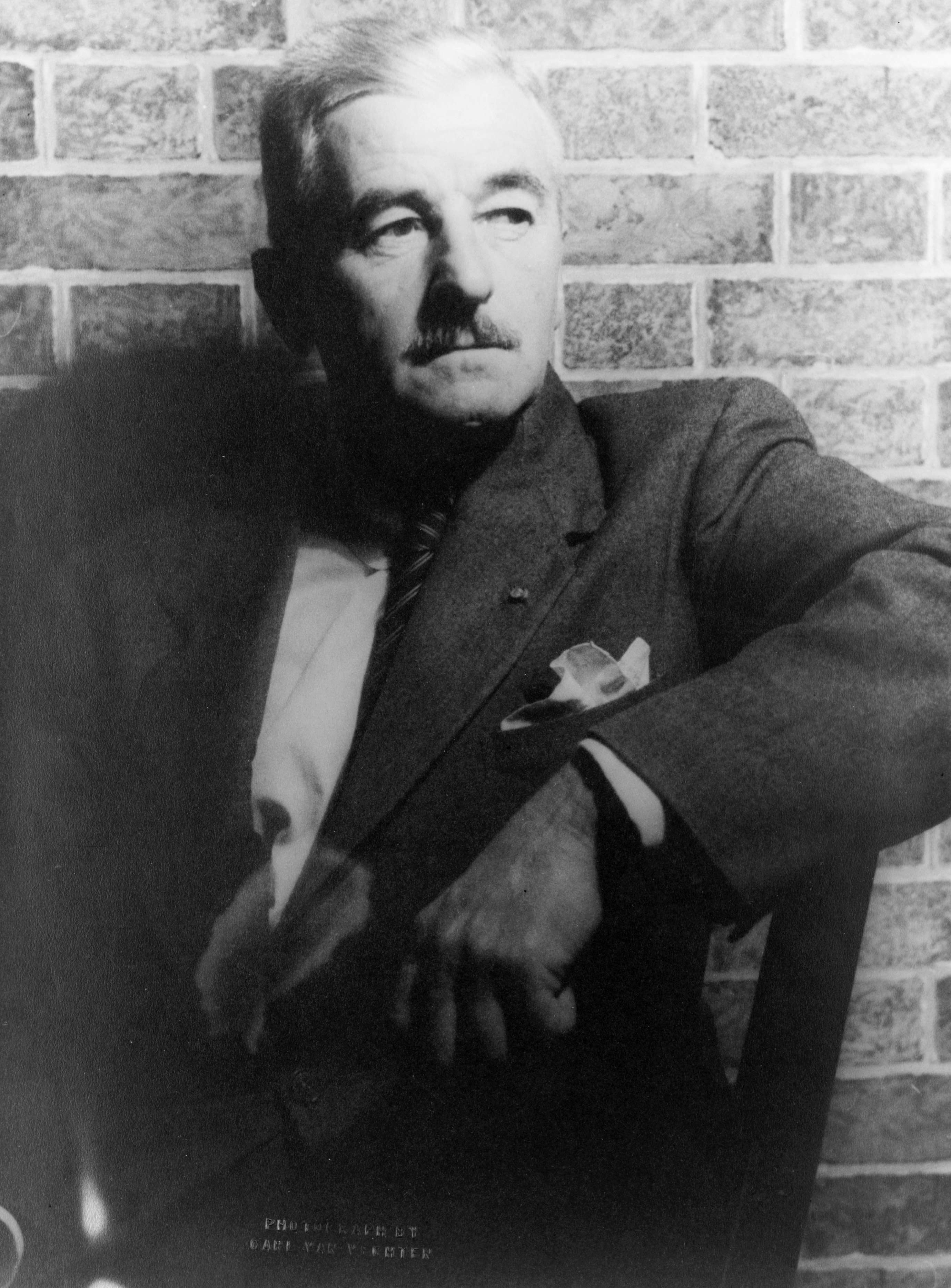
William Faulkner: "There is enough social life in the evening." (Image by Carl van Vechten.)

William Faulkner was better with a pen than a microphone. When he sat down for an interview with the Paris Review in 1956, Faulkner warned his interlocutor that he wasn’t partial to Q&As. “The reason I don’t like interviews,” he said, “is that I seem to react violently to personal questions.” But Faulkner did open up about what he thought was the finest job he ever had. An excerpt:

Paris Review: Then what is the best environment for a writer?

William Faulkner: Art is not concerned with environment either; it doesn’t care where it is. If you mean me, the best job that was ever offered to me was to become a landlord in a brothel. In my opinion, it’s the perfect milieu for a writer to work in. It gives him a perfect economic freedom; he’s free of fear and hunger; he has a roof over his head and nothing whatever to do except keep a few simple accounts and to go once very month and pay off the local police. The place is quiet during the morning, which is the best time of the day to work. There is enough social life in the evening, if he wishes to participate, to keep him from being bored; it gives him a certain standing in society; he has nothing to do because the madam keeps the books; all the inmates of the house are females and would defer to him and call him ‘sir.’ All the bootleggers in the neighborhood would call him ‘sir.’ And he could call the police by their first names.”

Tags:

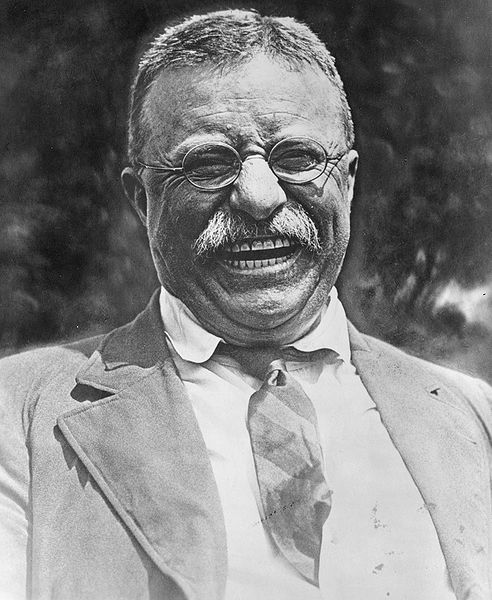
President Roosevelt: Laughing at funny jokes is bully.

John  Dos Passos’ writing is so brisk it’s sometimes hard to catch up to it. A while back, I offered up his biographical sketch about Isadora Duncan. Now I present some of the author’s writing about President Theodore Roosevelt, one of the more interesting characters in American history. The passage comes from 1919, the second volume of the U.S.A. Trilogy. In under one page, Dos Passos describes Roosevelt’s entire Presidency. An excerpt:

     “T.R. drove like a fiend in a buckboard over the muddy roads through the driving rain from Mt. Mercy in the Adirondacks to catch the train to Buffalo where McKinley was dying,
     As President
     he moved Sagamore Hill, the healthy, happy normal American home, to the White House, took foreign diplomats and fat armyofficers out walking in Rock Creek Park where he led them a terrible dance through brambles, hopping across the creek on cobblestones, wading the fords, scrambling up the shady banks.,
     and shook the Big Stick at malefactors of great wealth.
     Things were bully.
     He engineered the Panama revolution under the shadow of which took place the famous hocuspocus of juggling the old and new canal companies by which forty million dollars vanished into the pockets of the international bankers,
     but Old Glory floated over the Canal Zone.
     and the canal was cut through.
     He busted a few trusts,
     had Booker Washington to lunch at the White House,
     and urged the conservation of wild life.
     He got the Nobel Peace Prize for patching up the Peace of Portsmouth that ended the Russo-Japanese War,
     and sent the Atlantic Fleet around the world for everybody to see that
America was a firstclass power. He left the presidency to Taft after his second term leaving to that elephantine lawyer the congenial task of pouring judicial oil on the hurt feeling of the moneymasters.
     and went to Africa to hunt big game.
     Big game hunting was bully.”

Tags: ,

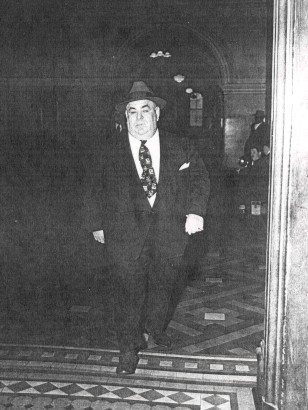
Gambling kingpin William George Lias, aka "Butt Boy" and "Humpty Dumpty." (Image courtesy of the Wheeling Area Genealogical Society.)

Even if he hadn’t been so overweight, West Virgina gambling kingpin William George Lias would have been a larger-than-life character. According to the Wheeling Area Genealogical Society, the man who would someday tip the scales at close to 400 pounds quit school after sixth grade to become a bootlegger. It was the start of a brilliant career in underworld booze and gambling, work that was in large part responsible for giving Wheeling its freewheeling reputation.

In the early 1950s, the Feds thought they found a loophole that could rid them of Lias’ shady business deals: They claimed he was a foreign citizen who was brought into the country illegally by his family when he was a child. It appears the government’s case was baseless as Lias beat the rap and lived on as an American-born citizen until his death in 1970.

During this federal effort to deport Lias, Life ran the article, “He Wants To Stay Put: The Biggest Gambler in Wheeling Fights a U.S. Try to Deport Him.” An excerpt:

“In a federal court in West Virginia last week the government tried to put the squeeze on all 368 pounds of William George (‘I ain’t been no angel’) Lias, a big wheel in Wheeling. Starting with a bread wagon and working up through restaurants, speakeasies, gambling rooms and the numbers racket to control of Wheeling Downs, a pretty half-mile track on an Ohio River island, Lias has prospered despite a few sorrows: a couple of brief Prohibition jail sentences; the sudden death of his first wife, shot down in self-defense by the pistol-packing wife of a pal of his; titanic legal struggles over $2.8 million in unpaid taxes.

Through it all Lias stood up for his rights. He could say that he was, after all, an American. Now the government says that he is not American. It is trying to send him back to Greece where it claims documents prove he was born. Lias, supported by witnesses who remember him as the chubbiest dumpling ever to sag the springs in a baby carriage, argues desperately that the government’s case is a mistake, that he was born and brought up in Wheeling.”

Tags:

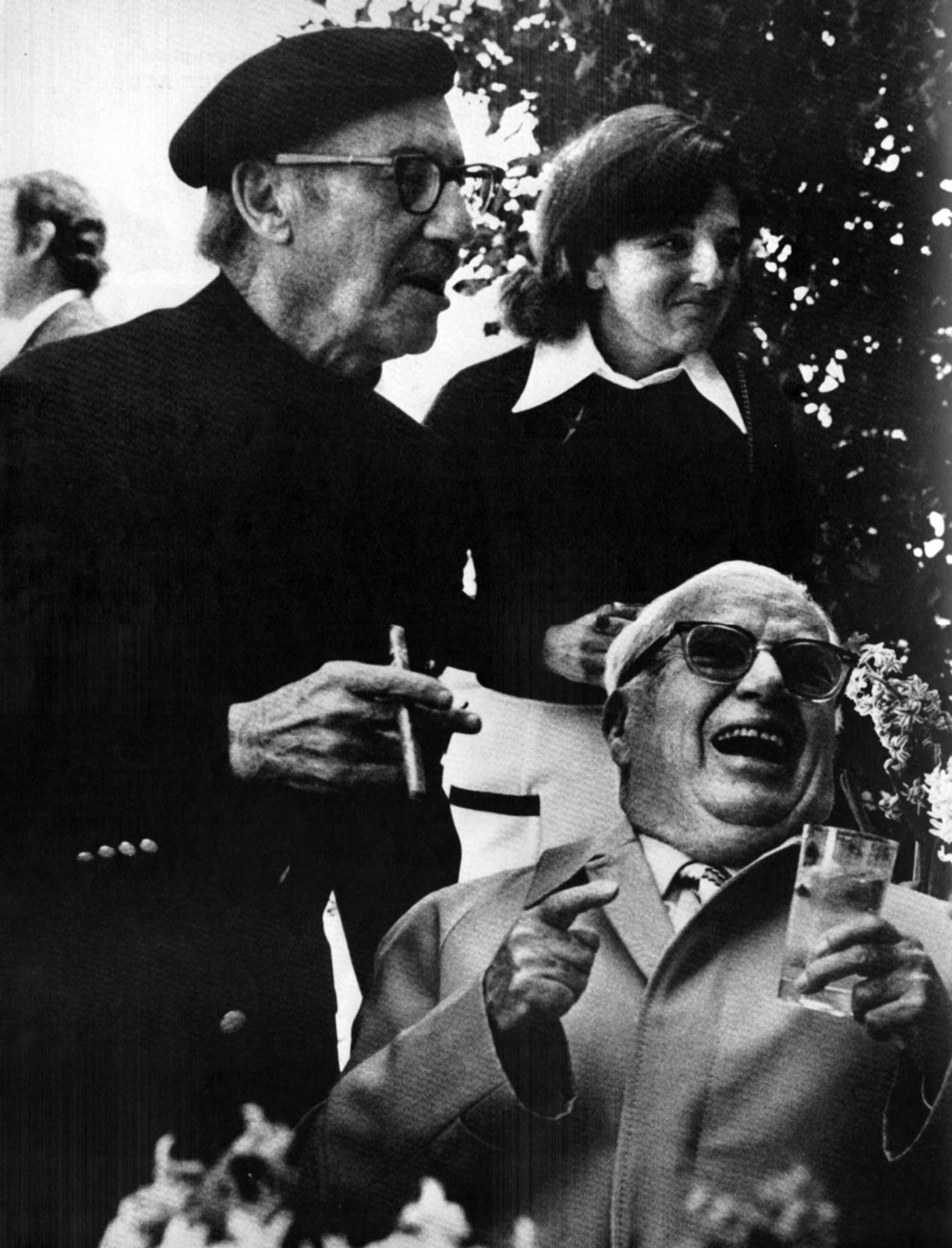
Groucho Marx, perhaps the greatest comedian of them all, sat down with Playboy in March 1974 for a wide-ranging Q&A. Groucho, who was 83 at the time, recalled everything from going to brothels with a young Charlie Chaplin to encountering anti-Semitism at country clubs. The following are a few excerpts.

_________________________

Playboy:

There’s a rumor that you and Harpo once went to a party naked.

Groucho Marx:

It was when we were playing in I’ll Say She Is and we were invited to a bachelor party for a friend of ours who was getting married. So Harpo and I got into the elevator and took off all our clothes and put them in suitcases. We were stark-naked. But we got off at the wrong floor, where the bride was having a party for her friends. So we ran around naked until a waiter finally came with a couple of dish towels—or, in my case, a bath towel.

_________________________


Playboy:

Have you ever been a victim of anti-Semitism?

Groucho Marx:

Oh, sure. Years ago, I decided to join a beach club on Long Island and we drove out to a place called the Sands Point Bath and Sun Club. I filled out the application and the head cheese of the place came over and told me we couldn’t join because I was Jewish. So I said, “My son’s only half Jewish. Would it be all right if he went in the water up to his knees?”

_________________________

Playboy:

The Marx Brothers have also had a number of literary friends. Didn’t you correspond with T. S. Eliot?

Groucho Marx:

He wrote to me first. He said he was an admirer of mine and he would like a picture of me. So I sent him a picture. And he sent it back. He said, “I want a picture of you smoking a cigar.” So I sent him one. Later he told me there were only three people he cared about: William Butler Yeats, Paul Valéry and Groucho Marx. He had those three pictures in his private office. When I went to visit him. I thought he wanted to talk about all those fancy books he had written, like Murder in the Cathedral. But he wanted to talk about the Marx Brothers. So naturally we became close friends and had a lot of correspondence. I spoke at his funeral.

_________________________

Playboy:

How did you and Chaplin first meet?

Groucho Marx:

I took a walk and I passed this dump theater, the Sullivan-Considine. I heard the most tremendous roar of laughter, and I paid my ten cents and went in and there was a little guy on the stage, and he was walking around kinda funny. It was Chaplin. It was the greatest act I’d ever seen. All pantomime.

Then the following week, I went backstage to visit him and tell him how wonderful he was, and that’s how we got acquainted. Each week we would be in the same towns in Canada; I can’t remember all the towns; this was a hell of a long time ago. We used to go to the whorehouses together, because there was no place for an actor to go in those towns, except if you were lucky, maybe you’d pick up a girl, but as a rule, you’d have to go to a hook shop. And then Chaplin and I got very well acquainted. Not together! I mean, I wasn’t with him! I was with him, but not with a girl, I mean….•

Tags: , , , ,

Virginia Tighe told the truth as far as she knew it, but it really wasn’t far enough.

The Colorado housewife caused a sensation in the U.S. in 1950s when, under hypnosis, she described with a perfect brogue the details of her earlier life as “Bridey Murphy,” a 19th-century Irish woman. Tighe (who was only identified by the pseudonym “Ruth Simmons” at the time) had never visited Ireland and seemingly had no way to know the quotidian detail of life in Cork and Belfast in the previous century.

When her hypnotist Morey Bernstein subsequently released a book about her story, The Search for Bridey Murphy, it quickly became a bestseller and a reincarnation craze swept the nation. Pretty soon the name “Bridey Murphy” was as famous as Dwight Eisenhower or Mickey Mantle, even if she never existed, at least not as Tighe’s earlier self.

Official records were later checked and the story began to fall apart. It eventually came to light that when Tighe was a small girl, a neighbor lady named Bridey Murphy Corkell had told her stories about her childhood in Ireland. Over the years, these tales of another land had become repressed memories for Tighe. So she was relaying the past alright, just not her own. But for a while, it was mania.

In the March 19, 1956 issue, Life offered its take with “Bridey Murphy Puts the Nation in a Hypnotizzy.” An excerpt:

Last week a considerable part of the U.S. lay under an Irish spell and the spell was becoming deeper and wilder as fast as the written word, awed gossip and the televised image could spread it. The genie responsible was a red-haired Irishwoman named Bridey (short for Bridget) Murphy, who may or may not have lived in early 19th-century Belfast and Cork, and who made her presence known, in eerily factual detail, during a series of hypnotic sessions held some time ago in Pueblo, Colorado. Bridey spoke through the hypnotized person of an attractive young Pueblo matron whose pseudonym is “Ruth Simmons.” While deep in a trance she told how she had grown up in early 19th-century Ireland, married, died and then even watched her own funeral.

The hypnotist was Morey Bernstein, a 36-year-old Pueblo businessman of impeccable reputation and honesty, who had taken up hypnotism as a hobby. He summoned up Bridey by a familiar technique known as hypnotic regression, whereby the hypnotist leads his subject back to adolescence or early childhood. Going one step further, Bernstein attempted to take his subject back before birth, and the next thing he knew he was listening to Bridey Murphy’s rambling discourse.•

Tags: , ,

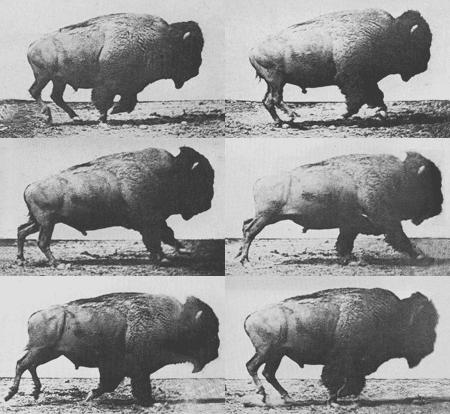
An excerpt from Railroads in the Days of Steam, which recalls how railroad development was perilous for buffalo herds:

“When the first railroads crossed the Mississippi River, the Great Plains were covered from Texas to Canada with vast herds of bison, or American buffalo. 

In the late 1860s and early 1870s, it seemed that everyone who followed the Union Pacific, the Kansas Pacific, and the Santa Fe railroads into the Prairie country wanted the buffalo killed off. Soldiers said they could not tame the hostile Prairie Indians as long as they could depend on the buffalo herds for food. Cattlemen wanted to run longhorns on the big natural pasture occupied by the buffalo.

Professional buffalo hunters were at work on the Plains in the years just after the Civil War providing meat for railroad construction camps and selling a few buffalo robes. But the slaughter of the buffalo did not begin in earnest until 1871, when word came of a market for buffalo hides in England.

A good hunter could shoot one hundred or more buffalo in the morning, then he would call his skinning crew to come up with the wagons. Hides were staked out on the prairie to dry. A well-cured hide was worth from $2.75 to $4, and many hunters earned more than $100 a day.

Passengers on the early trains could see large herds of buffalo, deer and antelope grazing calmly beside the tracks. They would open the car windows and shoot at the herds as the train sped along.”

Not Rosie O'Donnell.

Despite being a big baseball fan, I had never until recently heard the name Dorothy Jane Mills. Mills, along with her late husband, Dr. Harold Seymour, are two of the key figures in the study of the game’s history. The pair wrote a trio of the most important baseball books ever published, which helped nurture generations of researchers and statisticians.

For decades, Mills got the short shrift and her husband got all the credit because he was too sexist to let her have a co-writer’s byline and Mills, the ever-dutiful wife who was raised in an era when women didn’t make waves, only recently asserted her place in the writing and research process.

In a March article in the New York Times, Alan Schwarz profiled the woman that history almost forgot. An excerpt:

“Dorothy Zander grew up in Cleveland during the 1930s and ’40s wanting to become a writer, and while an English major at Fenn College–now Cleveland State University–worked for The Cleveland News as a copy boy. (‘Not a copy girl, a copy boy,’ she repeated curtly.) She volunteered to help her American history professor, Harold Seymour, type his lectures; she found they needed more than typing, and told him so.

They fell in love and married, and she became his primary research assistant for his Cornell doctoral dissertation on baseball history — reading through old newspapers at The Sporting News offices in St. Louis and scrolling through microfilm at the New York Public Library.

She cared nothing for baseball, only the scholarship–and the growing stature of her husband, 17 years her senior.

‘He loved baseball,’ Mills recalled in a telephone interview. ‘He was a bat boy for the Brooklyn Dodgers in the late 1920s and he was the star of the neighborhood.

‘I’m still not a fan of baseball. People can’t understand that. I think it’s a good idea to remain above that. You write a lot more objectively about a subject you’re not in love with.’”

Tags: , ,

Richard Stallman, pioneer hacker, at the University of Calgary in 2009. (Image by D'Arcy Norman.)

Wired has a great piece online in which journalist Steven Levy looks back on the flowering o the Information Age 25 years after the publication of his landmark book, Hackers: Heroes of the Computer Revolution.

Back in the good old days hackers weren’t criminals stealing and spying; they were the nerdy genius programmers who remade the way we think, live and communicate. Levy looks back at the monsters of the industry who became household names–Gates, Wozniak, etc.–but also revisits some of those who never spent time hanging with Bono or dancing with the stars.

One passage that’s particularly interesting focuses on legendary hacker Richard Stallman, a brilliant and belligerent soul who despises the commercialization of what the geeks brought to life. An excerpt about him from Levy’s Wired article:

“I first met Richard Stallman, a denizen of MIT’s AI Lab, in 1983. Even then he was bemoaning the sad decline of hacker culture and felt that the commercialization of software was a crime. When I spoke to him that year, as the computer industry was soaring, he looked me in the eye and said, ‘I don’t believe that software can be owned.’ I called him ‘the last of the true hackers’ and assumed the world would soon squash him.

Was I ever wrong. Stallman’s crusade for free software has continued to inform the ongoing struggles over intellectual property and won him a MacArthur Foundation ‘genius grant.’ He founded the Free Software Foundation and wrote the GNU operating system, which garnered widespread adoption after Linus Torvalds wrote Linux to run with it; the combination is used in millions of devices. More important, perhaps, is that Stallman provided the intellectual framework that led to the open source movement, a critical element of modern software and the Internet itself. If the software world had saints, Stallman would have been beatified long ago.

Yet he is almost as famous for his unyielding personality. In 2002, Creative Commons evangelist Lawrence Lessig wrote, ‘I don’t know Stallman well. I know him well enough to know he is a hard man to like.’ (And that was in the preface to Stallman’s own book.) Time has not softened him. In our original interview, Stallman said, ‘I’m the last survivor of a dead culture. And I don’t really belong in the world anymore. And in some ways I feel I ought to be dead.’ Now, meeting over Chinese food, he reaffirms this. ‘I have certainly wished I had killed myself when I was born,’ he says. ‘In terms of effect on the world, it’s very good that I’ve lived. And so I guess, if I could go back in time and prevent my birth, I wouldn’t do it. But I sure wish I hadn’t had so much pain.'”

Tags: ,

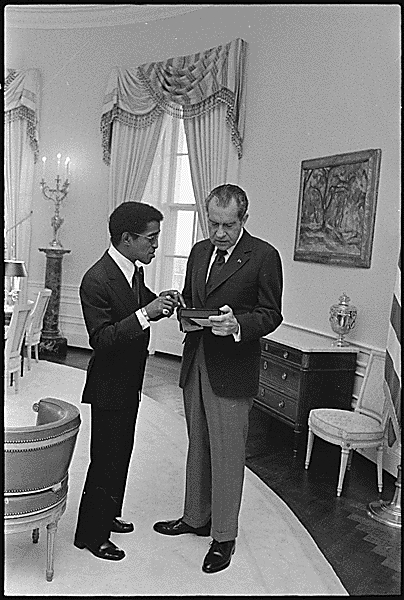
The entertainer pictured in 1973 with Richard Nixon. Davis was criticized by some African-American leaders for palling around with the conservative President.

Billed as “the greatest entertainer in the world” during his lifetime, Sammy Davis Jr. probably had as much claim to the title as anyone. But being that good at singing, dancing, etc., doesn’t come without a price. In Sammy’s case, the cost was education. Practically raised on stage by parents who were vaudeville performers, the school-age Davis received some tutoring in rudimentary reading backstage in between shows.

In an interview in Playboy’s December 1966 issue, Davis remembered how his service in the Army provided an opportunity for him to further his knowledge of literature. An excerpt:

“Playboy: Is it true, as some writers have claimed, that you could barely read and write, that you’d never even gone to kindergarten?

Sammy Davis Jr.: Yeah, it’s true. What’s more, I’ll be turning 40 this year, and I still haven’t gone to kindergarten. Haven’t spent a single day in school my whole life. I say that with mixed emotions. I’m very proud in one sense; I’m very ashamed in another. For instance, you know I’m always being asked for autographs. Say a girl tells me, ‘My name is Rosemari, with an ‘i”. Well I don’t know how to spell the names. I can’t hardly write anything but my own name. It’s a constant, daily embarrassment.

It’s even more of an embarrassment because of my articulate facade. People think, ‘Why, he’s got to have education.’ But I can’t even write! Nothing but chicken scratches! That I’m not proud of. I’m proud that I’ve pulled myself up by my own bootstraps, with the help of some people who cared enough; but I’m not proud of having no education. What little I do have started on the road, when Will Mastin and my dad found someone around the theaters to tutor me to read and write. We’d work between shows in the dressing room—when there was a dressing room—until it was time for me to go on for the next show.

Then in the Army, like I told you, this sergeant took a liking to me and started me reading books. Things like The Picture of Dorian Gray by Oscar Wilde, and some of Carl Sandburg’s books about Lincoln; books by Dickens, Poe, Twain; and a history of the U.S. I would read every minute of the day I had free, then in my bunk until taps, then in the latrine until after midnight. At the PX I bought a pocket dictionary, and I would look up words in places where nobody would see me, then I’d read the books over again. Imagine somebody 18 years old, grown, discovering the thrills of Robinson Crusoe for the first time—reading that kids of 10 take for granted. And a showbiz kid is already 10 years up on the average cat, in street-knowledge terms.

Like, man, I’d had my first serious affair at 14, and at 18 I still didn’t know what a serious book was. That’s a sad paradox. I remember so well the first book I ever read about my own people, and the effect it had on me. It did something to me. That was Native Son, by Richard Wright. Then, later, I read Black Boy. They made me feel something about being black that I had never really felt before. It made me uncomfortable, made me feel trapped in black, you know, in a white society that had created you the way it wanted, and still hated you.”

Tags:

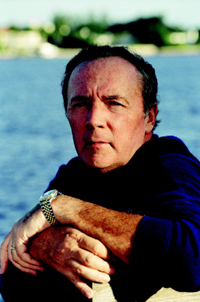
James Patterson: The writer of choice for some of today's best-read convicts. (Photo by Sue Solie-Patterson.)

The Browser pointed me toward an interesting article posted on the New York Public Library website, which is written by Jamie Niehof, an intern with the Correctional Services Program. The piece, “Controlled Chaos: A Day Working the Rikers Island Book Cart,” gives a behind-the-scenes look at contemporary book and periodical borrowing at NYC’s main jail complex. Based on this article, author James Patterson should be very pleased with himself. An excerpt:

“Getting books back from the prisoners and letting them pick out new ones is a bit of controlled chaos. We stood outside the iron door to the house with our cart and had two prisoners come out at one time, check off their returned book, and pick out a new one. Each prisoner is allowed one book and one magazine.

The most popular books are by far James Patterson’s novels, so popular in fact that we have to lock them up after book service because they tend to disappear. I wonder if James Patterson has any idea. National Geographic is the magazine of choice, and there is an entire box of them to choose from, some as far back as the early 80’s. Urban magazines and books were in high demand, with almost no supply.”

Tags:

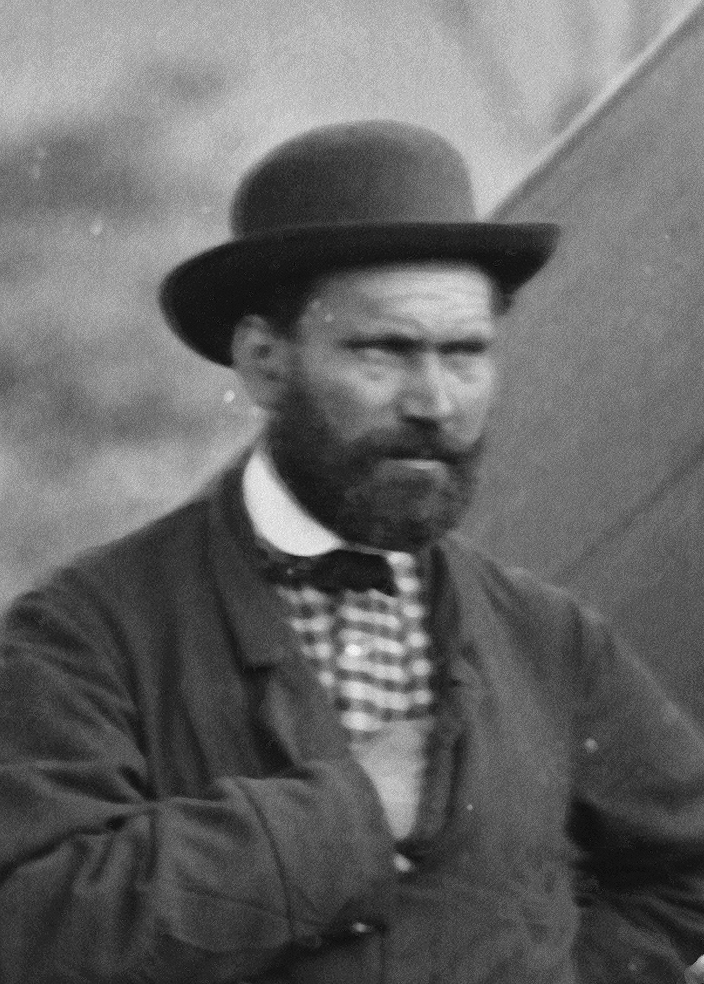
Allan Pinkerton, father of the American private detective industry: "What is this I hear about a detective-punching hellcat?" (Image by Alexander Gardner.)

There was apparently one thing that Miss Mamie Wilson of Rockaway Avenue didn’t take kindly to in 1898: being told she was no lady. I came across this article about the ass-kicking Mamie in the August 2, 1898 issue of the Brooklyn Daily Eagle. It was subtitled: “Private Detective McCool Fell Victim to Miss Wilson’s Pugilistic Prowess.” An excerpt:

“Miss Mamie Wilson of 176 Rockaway avenue, who had Michael Fiero, an Italian barber arrested one day last week, on a charge of threatening to kill her, because she refused to marry him, appeared before Magistrate Teale this morning, and requested to withdraw her charge. She said that she and her mother were going to move from the neighborhood wherein they at present reside and would then be free from molestation at the hands of Fiero. The case was set down for a hearing on August 9.

The young woman was later arraigned before the magistrate on a charge of dislocating the nasal organ of a young man who says he is a private detective. James McCool, the complainant, who lives at 16 Russell place, alleged that on July 27, he was passing Miss Wilson’s door.

‘She called me a loafer, your honor,’ said McCool, ‘and I said she was no lady. Then she struck me with her fist on the nose and dislocated it.’

In answer to the charge, Miss Wilson said that McCool insulted her. She admitted she struck McCool and said he deserved it. When the magistrate said that she would have to be held for the Special Sessions, the young woman became frightened. She was allowed to go under parole.”

More Old Print Articles:

Tags: , , , ,

Just because he’s stopped trying to incite war with the United States, it doesn’t mean Libyan overlord Muammar el-Qaddafi is any less crazy and hellbent on destruction. These days, as he tells the German magazine Spiegel in a new interview, he believes Switzerland is the evil empire. Yes, Switzerland! But the animus seems to stem from Qaddafi’s thuggish son Hannibal being arrested in that country for the savage beating of two people.

A few excerpts from the Spiegel piece.

____________________________

Spiegel: Mr. Gadhafi, for years you repeatedly got into shouting matches with the Western world before making your peace with arch-enemy America four years ago. Now you have declared a holy war on tiny Switzerland, of all countries. Why?

Qaddafi: Switzerland is one country among many; sometimes you have trouble with one country, sometimes with another. We never had difficulties with Switzerland before. We used to appreciate it as a holiday destination. We used to appreciate its companies and its watches. But then Switzerland began to treat us badly. For example, the minaret issue and the publishing of nasty portrayals of the Prophet. It was necessary to draw a line with the Swiss. That is what I did in my speech in Benghazi to mark the Prophet’s birthday.

____________________________

Spiegel: Doesn’t your anger with Switzerland in reality stem from the fact that your son Hannibal was arrested by police in Geneva in July 2008 and accused of beating up two people in his employment?

Qaddafi: The thing with Hannibal has been nothing but a source of enjoyment for Switzerland. This is a gang that doesn’t care about law and order. The way they treated Hannibal proves that Switzerland respects no laws. A man employed by my son brought accusations against him so that he could remain in Switzerland. They can lock him up — but please do so within the law. The police acted like a gang. They were dressed in plain clothes and they broke down the door, put my son in chains and brought his wife to a hospital. They left his daughter, who is one or two years old, alone back at the hotel. Then they put him handcuffed in a cold storage room, and at times in a bathroom — exactly the way al-Qaida treats its victims. An act of terrorism.

Spiegel: According to the Swiss authorities, something entirely different happened in Geneva. They say that your son beat up two people there.

Qaddafi: No, no. Nothing like that happened. Switzerland has not said that to me nor to anyone else. I’m hearing this now for the first time.

Spiegel: But similar things have also happened elsewhere. Your sons have also run into trouble with the police in London, Paris and Germany. What do you say to them when something like this happens?

Qaddafi: These are cases of youthful exuberance.

____________________________

Spiegel: What do you think of German Chancellor Angela Merkel?

Qaddafi: She is a strong personality. More like a man than a woman. But I have never had a conversation with her.

____________________________

Spiegel: Where do you get your facts? Do you watch television? Do you read books?

Qaddafi: I get most of them from the Internet. I constantly sit at my computer. I read in Arabic, but now it is of course also possible to immediately get translations from English.•

Tags: , ,

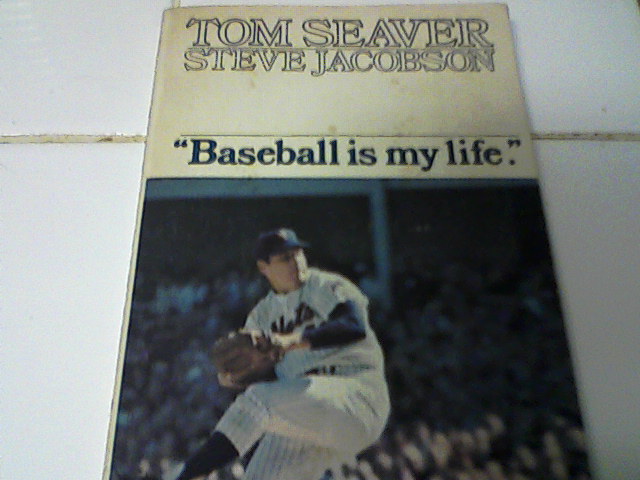
"From a scared minor leaguer to winner of the Cy Young Award--baseball's highest honor for a pitcher--almost overnight!"

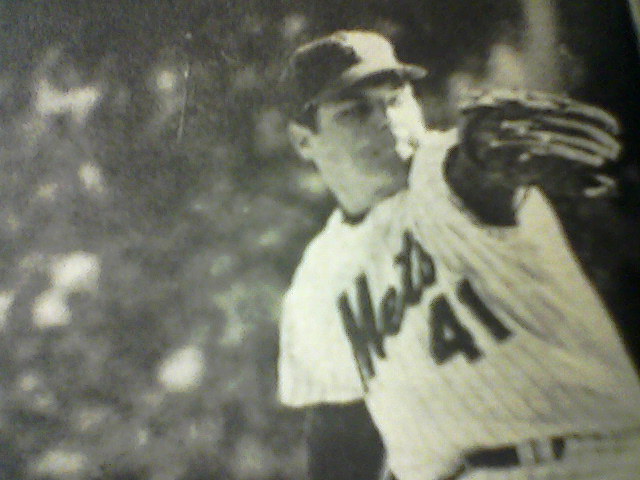
Got my bent, bony fingers on a copy of Tom Seaver’s 1973 softcover book, “Baseball is my life.” Co-authored by sportswriter Steve Jacobson, this 127-page Scholastic Books publication is graced with a few cool photos and was aimed at kids.

“Tom Terrific” looks back on his childhood and how he went from Little League to the pinnacle of the big leagues. He definitely plays the humble hero for kids in the book, though I haven’t heard a whole lot of flattering things over the years about Seaver’s personality. At any rate, he was treated like a Beatle after he led the Miracle Mets to the 1969 World Series and could have published all the books he wanted. In the following excerpt, Seaver recalls the culture shock he experienced after joining the Marine Corps Reserve when he was a 17-year-old American Legion pitcher:

“I hated being in the Marine Corps. But I don’t think anything was worse than the first day at the Marine Corps Recruit Depot in San Diego. I’ve compared memories with other fellows in the service. It just wasn’t my outfit or me; it was everybody and every outfit. It was the first day: anger, frustration, tears, fear–all wrapped together in the unknown.

Seaver on the mound during the 1969 World Series. If baseball hadn't panned out, he planned to become a dentist.

It began with Russ Scheidt, an old, friend, and myself getting on a bus that went to San Diego. When we were five or six years old, Russ and I used to play catch. He’d stand on one side of the street and toss the ball to me on the other side. Neither of us was allowed to cross the street then. He was the kid who told me, when I showed up for my first Little League game, that I had my socks on backwards.

They picked us up at the bus station, got us onto a truck, and they told us to sit down and not talk. It wasn’t bad. Then when we drove through the gates it was like going into a new world.

The door opened and the screaming began. You always know that sticks and stones will break your bones and names will never harm you, but this was something else. When they screamed, we had to jump and move, and we never jumped high enough or moved fast enough. Get out of the bus, stand in line, and hurry up–screaming, screaming with all the foul language that goes with it. I heard words I could never write on a printed page.”

Tags: , ,

"It was, in fact, Wheeler who coined the term 'pressure group.'"

I interviewed Dan Okrent some years ago when he was the embattled Public Editor at the New York Times and found him to be intelligent, keenly self-aware and a mordant wit. Okrent has just published a new book, Last Call: The Rise and Fall of Prohibition. I haven’t gotten my bony hands on a copy yet, but I just read an excellent excerpt in Smithsonian. Here’s a passage from Okrent about that insane and fascinating period and a forgotten historical figure who had great influence upon it:

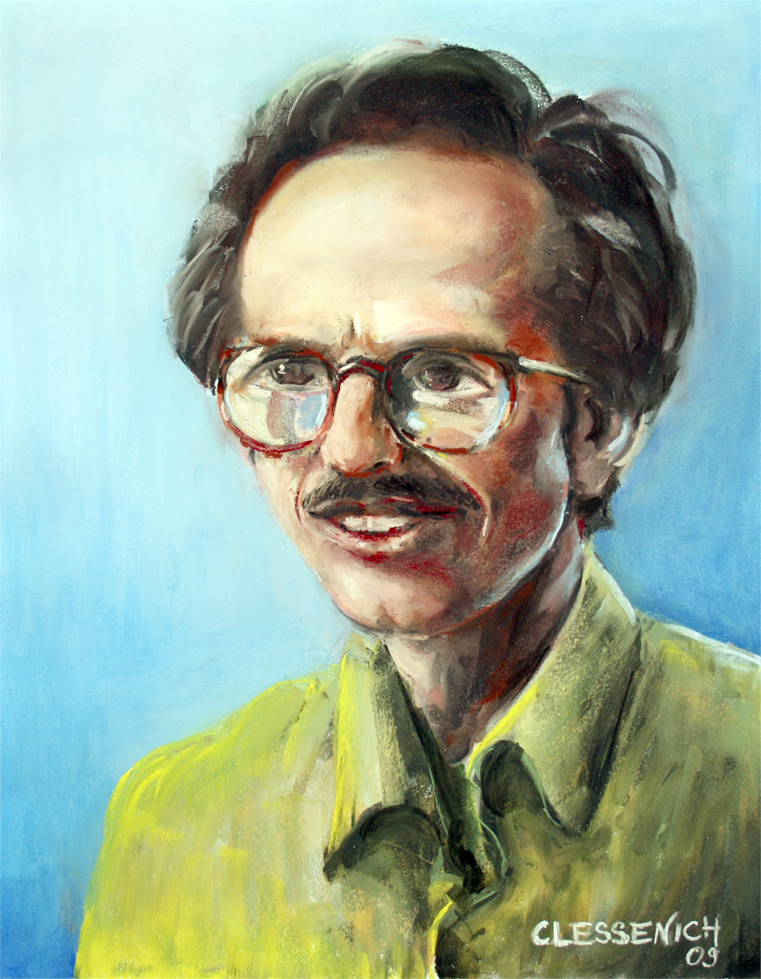
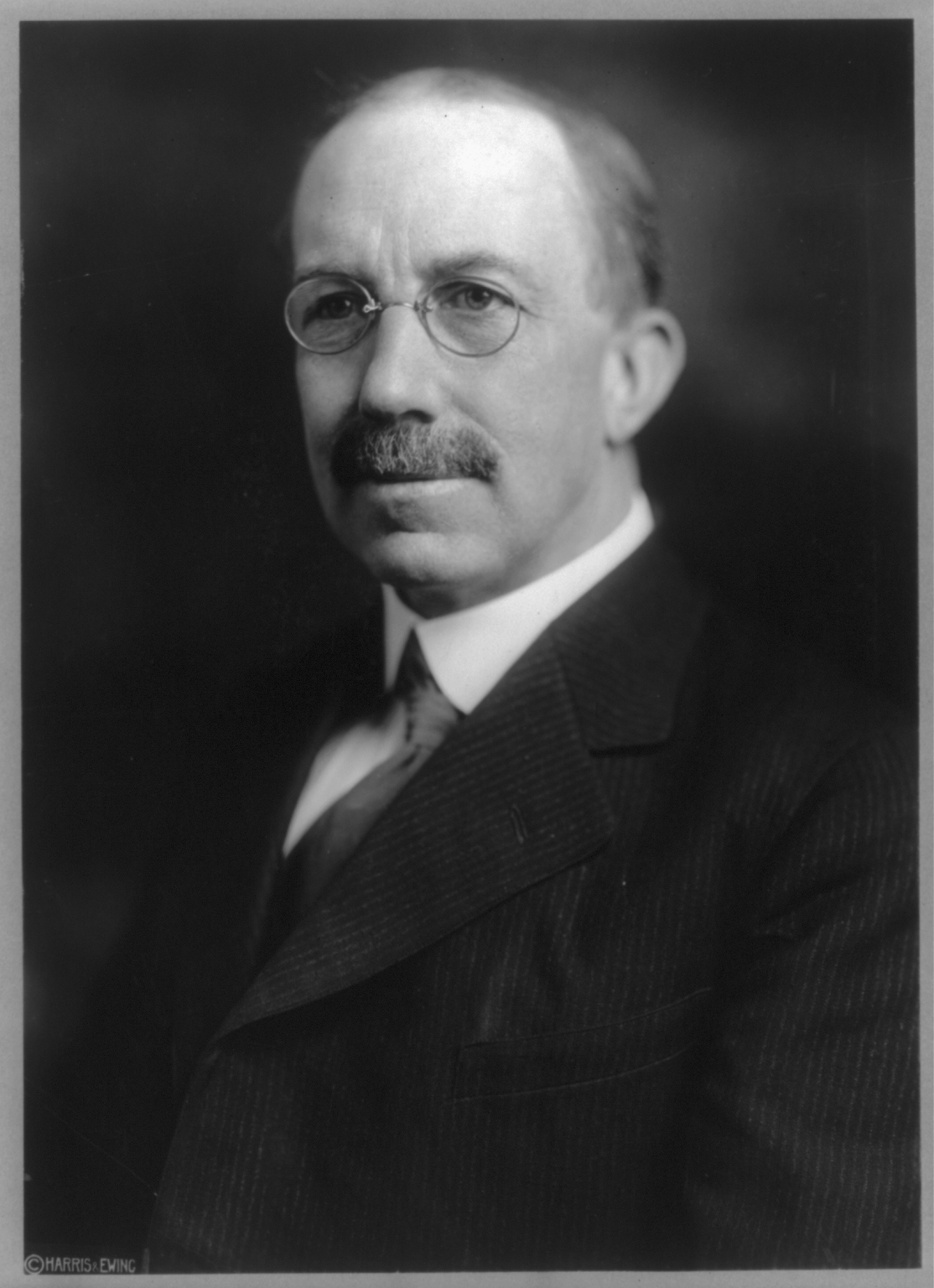
“Wayne Wheeler was a small man, 5-foot-6 or 7. Wire-rimmed glasses, a tidy mustache, eyes that crinkled at the corners when he ventured one of the tight little smiles that were his usual reaction to the obloquy of his opponents—even at the peak of his power in the 1920s, he looked more like a clerk in an insurance office than a man who, in the description of the militantly wet Cincinnati Enquirer, ‘made great men his puppets.’ On his slight frame he wore a suit, a waistcoat and, his followers believed, the fate of the Republic.

Born on a farm near Youngstown, Ohio, in 1869, he was effectively born anew in 1893, when he found himself in a Congregational church in Oberlin, Ohio, listening to a temperance lecture delivered by the Rev. Howard Hyde Russell, a former lawyer who had recently founded an organization called the Anti-Saloon League (ASL). Wheeler had put himself through Oberlin College by working as a waiter, janitor, teacher and salesman. Now, after joining Russell in prayer, he signed on as one of the first full-time employees of the ASL, which he would turn into the most effective political pressure group the country had yet known.

It was, in fact, Wheeler who coined the term ‘pressure group.’ When he teamed up with Russell in 1893, the temperance movement that had begun to manifest itself in the 1820s had hundreds of thousands of adherents but diffuse and ineffectual leadership. The most visible anti-alcohol leader, Frances Willard of the Woman’s Christian Temperance Union (WCTU), had diluted her organization’s message by embracing a score of other issues, ranging from government ownership of utilities to vegetarianism. The nascent Prohibition Party had added forest conservation and post office policy to its anti-liquor platform. But Russell, with Wheeler by his side, declared the ASL interested in one thing only: the abolition of alcohol from American life.”

Tags: ,

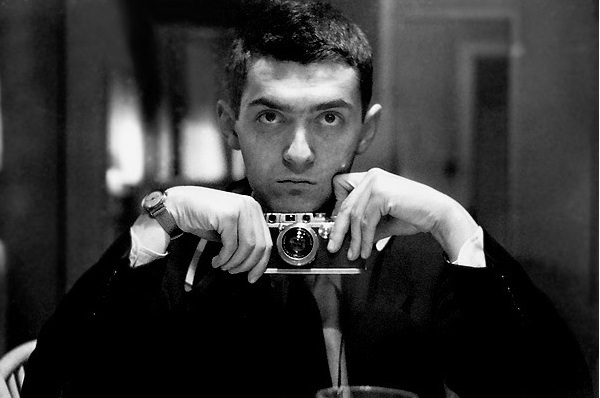
Kubrick photographed himself in the late 1940s with the help of a mirror, back when he was working for "Look" magazine.

I tend to divide people into two categories: Those who realize what an incredible genius Stanley Kubrick was, and other people I don’t like as much. The great website longform.org linked to Michael Herr’s excellent 1999 Vanity Fair piece (simply titled “Kubrick“) about his friend and collaborator, It was written right after the director’s death. Below are a few excerpts about Kubrick’s childhood and early career.

*****

Stanley hadn’t really been Bar Mitzvahed. He was barely making it in school; he couldn’t do junior-high English, let alone Hebrew, and besides, Dr. and Mrs. Kubrick weren’t very religious, and anyway, Stanley didn’t want to. He was not what anybody would have called well rounded. From the day he entered grade school in 1934, his attendance record had been a mysterious tissue of serial and sustained absences, his discipline nonexistent or at least nonapparent, his grades shocking. He’d received Unsatisfactory on “Works and Plays Well with Others,” “Respects Rights of Others,” and, inevitably, “Personality.” He did all right in physics, but he graduated from high school with a 70 average, and college was out of the question. At 17 he was already working as a freelance photographer for Look magazine, and he joined the staff, and he played a lot of chess, and read a lot of books, and otherwise arranged for his own higher education, as all smart people do.

*****

It’s fair only as far as it goes; just as he was multidisciplined, he was variously obsessive, and not fastidious about picking up information, and not afraid of whatever the information might be. Nobody who really thinks he’s smarter than everyone else could ask as many questions as he always did. He was beating the patzers in the park, working for Lookmagazine, sometimes using a series of still photos to tell a story, sometimes taking pictures of people like Dwight Eisenhower and George Grosz, Montgomery Clift, Frank Sinatra and Joe DiMaggio (and, I’m sure, keeping his eyes and ears open), reading 10 or 20 books a week, and trying to see every movie ever made. There was definitely such a thing as a bad movie, but there was no movie not worth seeing. As a kid he’d been part of the neighborhood multitude that poured ritually, communally, in and out of Loew’s Paradise and the RKO Fordham two or three times a week, and now he haunted the Museum of Modern Art and the few foreign-film revival houses, the very underground Cinema 16, and the triple-feature houses along 42nd Street.

*****

Reportedly he was already careless, even reckless, in his appearance, mixing his plaids in wild shirt, jacket and necktie combinations never seen on the street before, disreputable trousers, way-out accidental hairdos. He started infiltrating what- ever film facilities were in the city in those days, hanging around cutting rooms, labs, equipment stores, asking questions: How do you do that? and What would happen if you did this instead? and How much do you think it would cost if … ? He was jazz-mad, and went to the clubs, and a Yankees fan, so he went to the ball games too, all of this in New York in the late 40s and early 50s, a smart, spacey, wide-awake kid like that, it’s no wonder he was such a hipster, a 40s-bred, 50s-minted, tough-minded, existential, highly evolved classic hipster. His view and his temperament were much closer to Lenny Bruce’s than to any other director’s, and this was not merely a recurring aspect of his. He had lots of modes and aspects, but Stanley was a hipster all the time.

More Film posts:

Tags: ,

« Older entries § Newer entries »