Excerpts

You are currently browsing the archive for the Excerpts category.

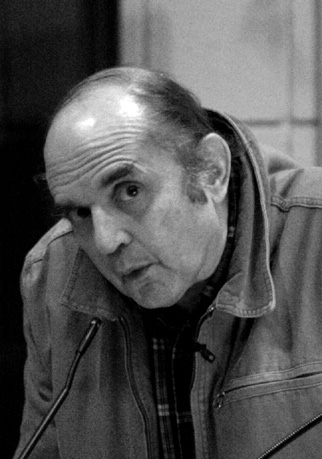
One of the best English-language short-story collections ever written.

In 1981, Paul Bowles sat for a wide-ranging interview with the Paris Review, discussing his life and career. During the Q&A, the great writer spoke about the effect he felt television had on storytelling. I don’t agree with him, but it’s a point that’s long been debated. An excerpt:

“Paris Review: Are you still taping storytellers you meet in cafés [in Morocco]?

Paul Bowles: There aren’t any more. All that’s completely changed. There’s a big difference just between the sixties and seventies. For instance, in the sixties people still sat in cafés with a sebsi [pipe] and told stories and occasionally plucked an oud or a guimbri. Now practically every café has a television. The seats are arranged differently and no one tells any stories. They can’t because the television is going. No one thinks of stories. If the eye is going to be occupied by a flickering image, the brain doesn’t feel a lack. It’s a great cultural loss. It’s done away with both the oral tradition of storytelling and whatever café music there was.”

Tags:

No, not that Amazon. (James Duncan Davidson.)

Slate has an interesting piece by Monte Reel, called “The Most Isolated Man on the Planet,” about the last survivor of an uncontacted tribe in the Amazon Rain Forest. Brazilian officials created a 31-square-mile protected area around him that is off-limits to anyone but the man and have tried to make peaceful contact with him. Those efforts didn’t end well for one government agent. An excerpt:

“A few Brazilians first heard of the lone Indian in 1996, when loggers in the western state of Rondônia began spreading a rumor: A wild man was in the forest, and he seemed to be alone. Government field agents specializing in isolated tribes soon found one of his huts—a tiny shelter of palm thatch, with a mysterious hole dug in the center of the floor. As they continued to search for whoever had built that hut, they discovered that the man was on the run, moving from shelter to shelter, abandoning each hut as soon as loggers—or the agents—got close. No other tribes in the region were known to live like he did, digging holes inside of huts—more than five feet deep, rectangular, serving no apparent purpose. He didn’t seem to be stray castaway from a documented tribe.

Eventually, the agents found the man. He was unclothed, appeared to be in his mid-30s (he’s now in his late 40, give or take a few years), and always armed with a bow-and-arrow. Their encounters fell into a well-worn pattern: tense standoffs, ending in frustration or tragedy. On one occasion, the Indian delivered a clear message to one agent who pushed the attempts at contact too far: an arrow to the chest.”

Tags:

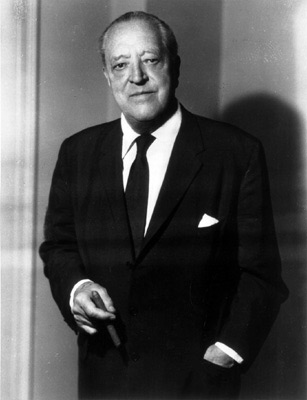
Mies van der Rohe: Sure, less is more, but stop sleeping on my couch.

People are obsessed with those extreme collectors known as hoarders, but the BBC has an interesting storyabout their polar opposites, anti-hoarders who chuck almost all of their physical belongings and keep only a laptop, an external hard drive, an e-book reader and an iPod in their spartan apartments. Their possessions are largely virtual and digital. Some even go a step further and give up their living space and shuttle from one friend’s couch to another to keep themselves as unfettered as possible. The whole thing sounds ridiculous to me, and I’m not someone who has (or wants) many possessions.

One on the subjects profiled is 22-year-old software engineer Kelly Sutton, who is an Angeleno transplant living in that hard-to-like Brooklyn neighborhood known as Williamsburg. An excerpt:

“Meet Kelly Sutton, a spiky-haired 22-year-old software engineer with thick-rimmed glasses and an empty apartment in Brooklyn’s Williamsburg neighbourhood–a hotbed for New York’s young, early adopters of new technology.

Mr Sutton is the founder of CultofLess.com, a website which has helped him sell or give away his possessions–apart from his laptop, an iPad, an Amazon Kindle, two external hard drives, a ‘few’ articles of clothing and bed sheets for a mattress that was left in his newly rented apartment.

This 21st-Century minimalist says he got rid of much of his clutter because he felt the ever-increasing number of available digital goods have provided adequate replacements for his former physical possessions.

‘I think cutting down on physical commodities in general might be a trend of my generation–cutting down on physical commodities that can be replaced by digital counterparts will be a fact,’ said Mr Sutton.”

Tags:

"The best quality at the lowest possible price." (Image by Alfred Wagg Pictures.)

The Albrecht family has been involved in the grocery business in Germany for almost a century, but it was in the late 1940s that brothers Theo and Karl stumbled onto a business principle that revolutionized their growing company and all consumer businesses: discount shopping. They took a no-frills approach, selling staple items at low prices at small stores and eschewing costly advertising. Products that didn’t sell well were quickly removed from the shelves.

Theo Albrecht, who later started the American chain Trader Joe’s, passed away recently and Spiegel has an article about him, the family legacy and why the brothers were incredibly publicity shy. An excerpt:

“Theo and his brother Karl, who is two years older, laid the cornerstone for what became their discount empire in 1948 when they took over their mother’s small grocery store. In 1961, they changed the name to Albrecht’s Discount–or “Aldi” for short. Within decades, the store became a discount chain worth billions, one which permanently changed the way food retailing was done in both Germany and across the globe.

Aldi’s meteoric rise can be traced directly back to the brothers’ business creed: “The best quality at the lowest possible price.” The two Albrecht brothers are considered the founders of the discount strategy, and even today Aldi stores have little in the way of frills and stay away from expensive marketing strategies.

It is a business model that turned the Albrecht brothers into two of the richest people in Germany, with Theo’s net worth said to have been $16.7 billion (€12.8 billion)…Theo and Karl were in close agreement on other issues as well–particularly when it came to keeping far away from the public eye. Extremely little is known about them. Their last public comments come from 1953 and 1971; the last known photos of the two were shot against their will in the 1980s.

One reason for their silence is the 1971 kidnapping of Theo Albrecht, who was abducted and held for 17 days. He was only set free following the payment of a 7 million deutschmark ransom. At the time it was the highest ransom ever to have been paid in Germany. Half of the money, handed over by then-Bishop of Essen Franz Hengsbach, is still missing today.”

Tags: ,

Pac-Man cookies. (Image by Betsy Weber.)

Instapaper posted a link to an excellent story by Jamey Pittman about the creation of Pac-Man, which is, of course, one of the great successes in gaming and business history. It has all the info about how Namco game designer Toru Iwatani made “Puck-Man” (as it was originally called in Japan) a global sensation, even though it was no overnight one. The article’s opening paragraphs:

It was 1977 when a self-taught, capable young man named Toru Iwatani came to work for Namco Limited, a Tokyo-based amusement manufacturer whose main product lines at the time were projection-based amusement rides and light gun shooting galleries. He was just 22 years old with no formal training in computers, visual arts, or graphic design, but his creativity and aptitude for game design were obvious to the Namco executives that met with Iwatani. They offered to hire him—with assurances they would find a place for him in the company—and he accepted.

Iwatani eventually found his place designing titles for Namco’s new video games division. His limited computer skills necessitated his being paired with a programmer who would write the actual code while Iwatani took on the role of game designer for the project. This was a new job for the game industry in 1977 when most games were designed by the programmers who coded them. In addition to a programmer, Iwatani’s team would usually include a hardware engineer to develop the various devices and components, a graphic artist to realize his visual ideas, and a music composer for any music and sound effects needed in the game.

Iwatani had initially wanted to work on pinball machines, but Namco had no interest in the pinball business. Perhaps as a concession, his first game design, called Gee Bee, was a paddle game similar to Atari’s Breakout but with a decidedly pinball-inspired slant to the gameplay. Released in 1978, it was Namco’s first original video game—they had only ported existing Atari games to the Japanese market up to this point—and it enjoyed moderate success in the arcades.”

Tags: ,

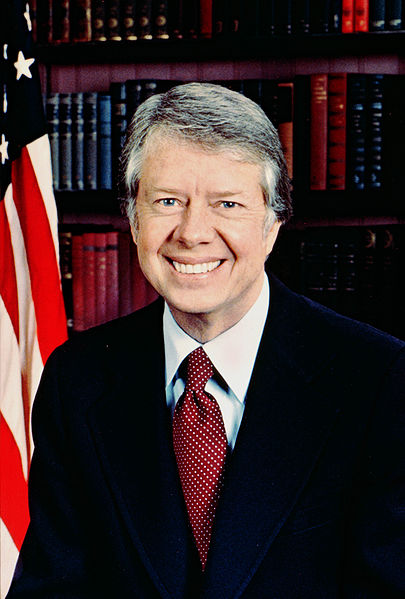
I don't display "flashes of ego," you Afflictor jackass.

Many years ago there was a toothy peanut man from Georgia named Jimmy Carter who became President of the United States. I’m not old enough to analyze the Carter Presidency from memory, but I’ve always believed him to be an honest if feckless leader who was plagued by the Iranian hostage crisis and gas shortages. He’s done wonderful charitable work since leaving office, though he occasionally displays flashes of ego. Overall: a decent man who wasn’t a very distinguished POTUS.

The quasi-Libertarian economist and gourmand Tyler Cowen has a different take on Carter’s legacy on his wonderful site, Marginal Revolution. See Cowen’s whole post. (The reader comments below the post are also worth reading.) Here’s an excerpt:

“At the time I thought Carter was a reasonably good President and it was far from obvious to me that the election of Reagan would in net terms boost liberty or prosperity.

I do understand that he was a public relations disaster and he shouldn’t have fired his entire Cabinet and that he botched the Iran invasion.

Still, I think of Carter as a President with some major pluses and overall I view his term as a step in the right direction.  He also seems to have been non-corrupt — important so soon after Watergate — and since leaving office he has behaved honorably and intelligently, for the most part.”

Tags: ,

Mmm mmm good.

William P. MacFarland was a product marketing manager at the Campbell Soup Company during the 1960s, when Andy Warhol’s silkscreened portraits of the iconic soup cans caused a sensation throughout the art world and entered into the popular consciousness. You might almost expect a big corporation to be tone deaf about the situation and get lawyered up. But instead MacFarland sent Warhol an admiring letter and some free cases of tomato soup. Below is the transcript of the correspondence, but you can see the actual missive at Letters of Note. (Thanks to boing boing for pointing me toward this post.)

•••••

Campbell SOUP Company

CAMDEN 1, NEW JERSEY

May 19, 1964

Mr. A. Warhol
1342 Lexington Avenue
New York, New York

Dear Mr. Warhol:

I have followed your career for some time. Your work has evoked a great deal of interest here at Campbell Soup Company for obvious reasons.

At one time I had hoped to be able to acquire one of your Campbell Soup label paintings – but I’m afraid you have gotten much too expensive for me.

I did want to tell you, however, that we admired your work and I have since learned that you like Tomato Soup. I am taking the liberty of having a couple of cases of our Tomato Soup delivered to you at this address.

We wish you continued success and good fortune.

Cordially,

(Signed, ‘William P. MacFarland’)

William P. MacFarland
Product Marketing Manager

Tags: , ,

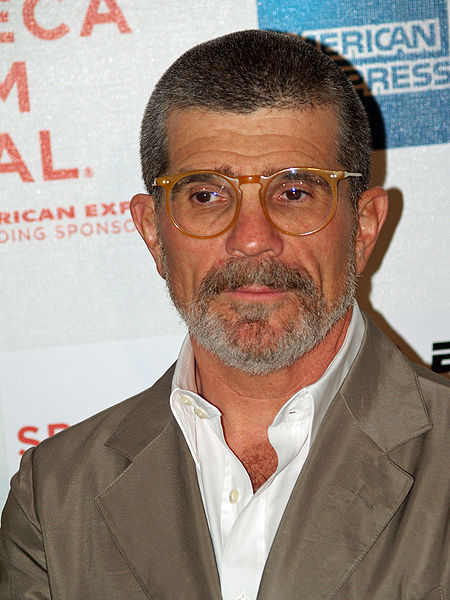
Not one of those smiley conservatives. (Image by David Shankbone.)

I guess I don’t follow the politics of playwrights closely enough, but my immediate reaction when I read David Mamet’s article, “Why I Am No Longer A ‘Brain-Dead Liberal,'” in the Village Voice a couple years back was: Mamet was a liberal?!? Having read his plays and watched his films, I always assumed that he was a right-wing guy. It wasn’t anything specific in his work, just a vibe I got from it. And who cares either way? He’s done a lot of great writing.

Terry Teachout has an analysis of Mamet’s conversion in Commentary. (The piece is pegged to Mamet’s new book of essays, Theatre.) It’s an interesting read, though I don’t agree with Teachout’s conclusion that politically liberal critics will only interpret Mamet’s work from here on in through the prism of his political transformation. An excerpt about Mamet’s disdain for government subsidies for theater:

“Conversely, Mamet dismisses state subsidy for the theatrical arts as no more than a means of propping up incompetent ‘champions of right thinking’ whose work would otherwise be incapable of attracting an audience. Such playwrights, he says, are purveyors of politically correct ‘pseudodramas’ that ‘begin with a conclusion (capitalism, America, men, and so on, are bad) and award the audience for applauding its agreement.’ For Mamet, such plays are the opposite of true theater, whose power lies not in its willingness to coddle our preconceptions but its unparalleled ability to shock us into seeing the world as it really is. ‘In the great drama,’ he writes, ‘we follow a supposedly understood first principle to its astounding and unexpected conclusion. We are pleased to find ourselves able to revise our understanding.'”

Tags: ,

"Dont Eving Thank Off It" sign in New Orleans. (Image by Karen Apricot.)

Jeff Deck is a college grad in his 20s who drove around America in search of typos on public signage. When he found particularly egregious errors, he would use markers and correction fluid to fix mistakes or he would confront the mistaken. Deck was arrested only once and somehow wasn’t repeatedly punched in the face. He did, however, open a Pandora’s box about teaching, race, class, the Internet and the ever-changing English language. Salon’s Thomas Rogers interviewed Deck about his spellchecking sojourn and The Great Typo Hunt, a book about the experience that he co-authored with Benjamin Herson. An excerpt from the Salon Q&A:

Salon: Spelling mistakes are a big part of the way the English language has evolved–and been so successful on the global stage. Aren’t you also holding back language?

Jeff Deck: We came under criticism from people at two different ends of the language philosophy spectrum. In our book we refer to it as the hawk versus hippie dilemma. You have grammar hawks who are ready to jump on anything that has the risk of being non-standard and call it a mistake, and, on the other hand, you have descriptivists who basically have a free-for-all approach. At its most extreme, descriptivism argues that most of these typos aren’t mistakes, it’s language change in motion. We tried to strike a middle ground and say, OK, we’re going to recognize that English is a constantly evolving organism and that the spellings of some things are going to change over time. I’m not going to go around to every instance of the word ‘donut’ and add in the ‘ugh.’

On the other hand, if you look at certain errors on an individual level, where someone accidentally throws a ‘V’ into the word ‘entertainment,’ like we saw on one sign in Atlanta, or a sign we saw in Vegas that offered ‘horsebacking riding’ instead of ‘horseback riding,’ these are not pieces of evidence of some growing consensus; these are just individual errors. They’re something that I think you can in pretty good faith go after.”

Tags: , ,

One of Barbara Ehrenreich's books made the list. (Image by David Shankbone.)

The faculty at NYU’s Arthur L. Carter Journalism Institute have published their list of the ten best pieces of journalism of the decade. Below is a bare-bones list; click here to find out more about each of them.

  • “A Nation Challenged” (The New York Times, 2001.)
  • Random Family: Love, Drugs, Trouble, and Coming of Age in the Bronx (Adrian Nicole LeBlanc, 2003.)
  • The Looming Tower: Al-Qaeda and the Road to 9/11 (Lawrence Wright, 2006.)
  • “The Giant Pool of Money” (This American Life & NPR, 2008.)
  • Ongoing reports from Iraq and Afghanistan (The New York Times, 2003-2009.)
  • The Dark Side: The Inside Story of How the War on Terror Turned into a War on American Ideals (Jane Mayer, 2008.)
  • Nickel and Dimed: On (Not) Getting By in America (Barbara Ehrenreich, 2001.)
  • Coverage of Hurricane Katrina (The Times-Picayune, 2005.)
  • “Soldiers Face Neglect, Frustration at Army’s Top Medical Facility” (The Washington Post, 2007.)
  • Abuse in the Catholic Church” (The Boston Globe, 2002.)

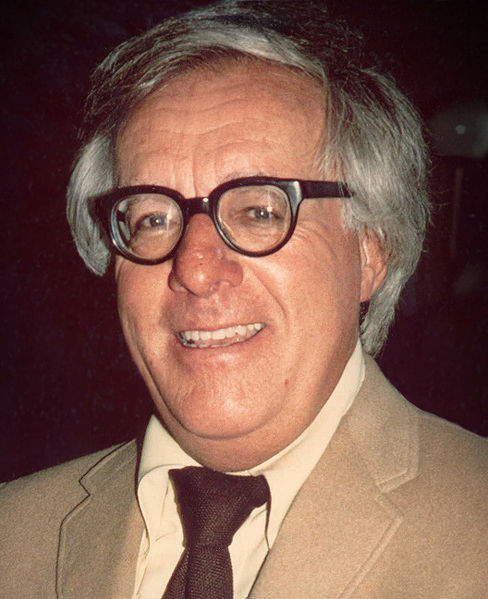
In this excerpt from a Paris Review interview, Ray Bradbury discusses being an autodidact and disses John Irving. An excerpt:

Paris Review: You’re self-educated, aren’t you?

Ray Bradbury: Yes, I am. I’m completely library educated. I’ve never been to college. I went down to the library when I was in grade school in Waukegan, and in high school in Los Angeles, and spent long days every summer in the library. I used to steal magazines from a store on Genesee Street, in Waukegan, and read them and then steal them back on the racks again. That way I took the print off with my eyeballs and stayed honest. I didn’t want to be a permanent thief, and I was very careful to wash my hands before I read them. But with the library, it’s like catnip, I suppose: you begin to run in circles because there’s so much to look at and read. And it’s far more fun than going to school, simply because you make up your own list and you don’t have to listen to anyone. When I would see some of the books my kids were forced to bring home and read by some of their teachers, and were graded on—well, what if you don’t like those books?

I am a librarian. I discovered me in the library. I went to find me in the library. Before I fell in love with libraries, I was just a six-year-old boy. The library fueled all of my curiosities, from dinosaurs to ancient Egypt. When I graduated from high school in 1938, I began going to the library three nights a week. I did this every week for almost ten years and finally, in 1947, around the time I got married, I figured I was done. So I graduated from the library when I was twenty-seven. I discovered that the library is the real school.

Paris Review: You have said that you don’t believe in going to college to learn to write. Why is that?

Ray Bradbury: You can’t learn to write in college. It’s a very bad place for writers because the teachers always think they know more than you do—and they don’t. They have prejudices. They may like Henry James, but what if you don’t want to write like Henry James? They may like John Irving, for instance, who’s the bore of all time. A lot of the people whose work they’ve taught in the schools for the last thirty years, I can’t understand why people read them and why they are taught. The library, on the other hand, has no biases. The information is all there for you to interpret. You don’t have someone telling you what to think. You discover it for yourself.”

Tags: ,

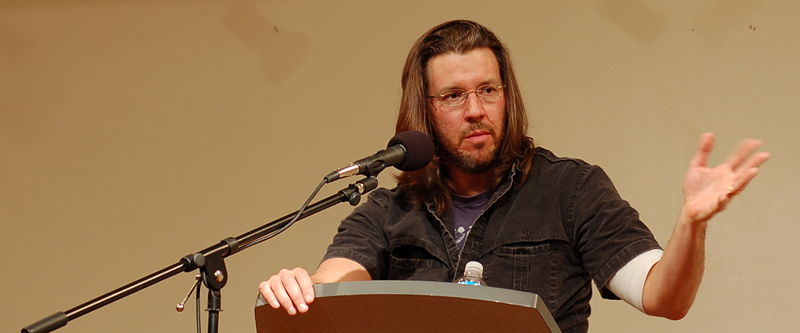
The late David Foster Wallace has seven articles on Kelly's Top 100 list. (Image by Steve Rhodes.)

All-around brilliant guy Kevin Kelly is trying to decide which (English-language) magazine articles are the greatest ever. He’s come up with a list of 100 suggestions for the best and is asking readers to suggest their own and vote for their faves. Titles below are the leaders thus far. View the whole list.

David Foster Wallace, “Federer As Religious Experience.” The New York Times, Play Magazine, August 20, 2006.

David Foster Wallace, “Consider the Lobster.” Gourmet, Aug 2004.

Neal Stephenson, “Mother Earth, Mother Board: Wiring the Planet.” Wired, December 1996. On laying trans-oceanic fiber optic cable.

Gay Talese, “Frank Sinatra Has a Cold.” Esquire, April 1966.

Ron Rosenbaum, “Secrets of the Little Blue Box.” Esquire, October 1971. The first and best account of telephone hackers, more amazing than you might believe.

Jon Krakauer, “Death of an Innocent: How Christopher McCandless Lost His Way in the Wilds.” Outside, January 1993. Article that became Into the Wild.

Tags: , , , , ,

According to this Q&A, Mailer never interviewed Gary Gilmore for "The Executioner's Song." He worked from Schiller's extensive interviews. (Image from MDCarchives.)

For someone so accomplished, Lawrence Schiller isn’t exactly a household name. A photographer, a filmmaker, a writer and an interviewer extraordinaire, Schiller has been a Playboy shutterbug, an Oscar winner in the Documentary category, a collaborator with Norman Mailer and other literary lights and an author of books about O.J. and JonBenet. The Believer‘s Suzanne Snider has outdone herself with an outstanding interview with Schiller. You should read the whole thing, but I present you with an excerpt about how Schiller became an acclaimed photographer at a young age:

The Believer: But then you became a photographer….

Lawrence Schiller: But that was because I couldn’t read. I grew up not knowing I was very seriously dyslexic (I grew out of it a little bit). I was unable to read properly as a young child. I was unable to read at all. I ran away from classes because I didn’t want to be embarrassed. At the same time, my father was in the retail end of selling sporting goods, appliances, and cameras. He was a portrait photographer prior to that, during World War II. So about the tenth grade, he gave me an East German camera called an Exakta.

Exakta camera. (Image by Rama.)

My brother and I were accomplished tennis players at a very young age (I was skinny at the time). When my brother beat me in the eleven-and-unders, I gave up sports (he went on to be a nationally ranked tennis player). I went toward photography, and I became an accomplished sports photographer at a very young age.

I was self-taught. By the age of fourteen I had won second, third, fourth, and fifth in the national Graflex Awards, which allowed me to work in summer of eleventh grade with Andy Lopez of the Acme News Service.

I took some pictures at the death march of Julius and Ethel Rosenberg from Union Square to Knickerbocker Village and I started to publish at a young age through high school and college.… I started to get a big head and a very big ego. I hid my age from all the big magazines around the world. Jacob Deschin, a writer for the New York Times, called me a “pro at sixteen,” when I was still in high school. By the time I graduated from college I won the National Press Photographers Picture of the Year award.

The Believer: What was the photograph?

Lawrence Schiller: It was Nixon losing to Kennedy with a teardrop in his wife’s eye. I never considered myself a good photographer. I still don’t. I thought of myself as a hard worker. My camera was a sponge and I had an instinct that athletes have—anticipation. Photography really represents an enormous amount of anticipation—understanding what might be there the next moment and being prepared for it.”

Tags: , , , , , ,

Floatplanes stand in the midst of King Salmon's natural beauty. (Image by Charlie Kindel.)

Paul Rockwood Jr. and Nadia Rockwood were essential parts of their rural community in King Salmon, Alaska. He was the local weatherman and she was a stay-at-home mom who sang in the local choir and acted in community plays. They were beloved by their neighbors, who were crestfallen when the couple announced they and their four-year-old son were moving to her native England. But before the Rockwoods could leave the state, they were arrested by FBI agents. The pair had secretly been drafting a list of U.S. assassination targets, who they felt were enemies of Islam.

Their neighbors who adored them were left stunned. The Rockwoods weren’t members of a sleeper cell, pretending to be well-adjusted Americans. They seemed to genuinely enjoy their small-town life but gradually grew a homicidal bent as Paul, who had converted to Islam in the early 2000s, came under the sway of extremist websites. The Los Angles Times has a story about the town in the aftermath of the arrests. An excerpt:

This week, Paul and Nadia Rockwood pleaded guilty in U.S. District Court in Anchorage to one count of willfully making false statements to the FBI; in Paul Rockwood’s case, it was a statement about domestic terrorism.

The plea agreements state that Rockwood, 35, had become an adherent of extremist Islam who had prepared a list of assassination targets, including U.S. service members. And, though no plot to carry out the killings was revealed, he had researched methods of execution, including guns and explosives, the agreements say.

Federal charging papers said his wife, 36, who is five months pregnant with the couple’s second child, lied to investigators when she denied knowing that an envelope she took to Anchorage in April at her husband’s request contained a list of 15 intended targets. (None were in Alaska.) She told FBI agents that she thought the envelope contained a letter or a book. She gave it to an unidentified individual who her husband believed shared his radical beliefs, the FBI said.

The plea agreements the couple signed said Paul Rockwood converted to Islam in late 2001 or early 2002 while living in Virginia and became a follower of radical U.S.-born Muslim cleric Anwar Awlaki, now believed to be living in Yemen.

‘This included a personal conviction that it was his religious responsibility to exact revenge by death on anyone who desecrated Islam,’ his agreement said.

Here in King Salmon, where the biggest thing is the annual red salmon run–it happens to be the biggest one in the world — this has the air of a poorly written movie.

‘If all terrorists were this harmless, we’d all be living in a much less complicated world,’ said Rebecca Hamon, who lived in Camarillo before moving 12 years ago to King Salmon, on the Alaska Peninsula, 280 miles southwest of Anchorage.

‘We’ve all been in shock,’ said Mary Swain, who was friends with Nadia and baked the birthday cake for the Rockwoods’ son’s party last year. ‘I mean, kids would go over to her house all the time where she was teaching them ballet. She always went to library time, she went to story time…Her mom would come over here from England and stay with her for a month at a time, and people got to be friends with her too.'”

Tags: , ,

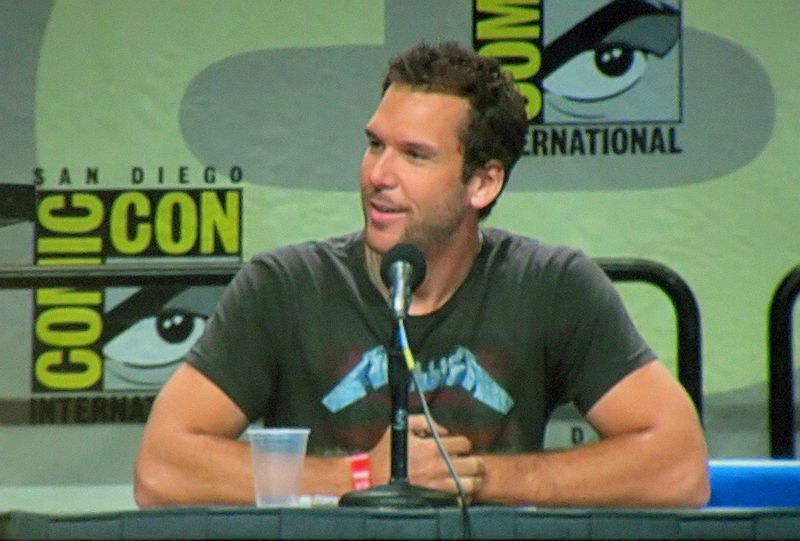
Dane Cook: I didn't make the list, did I? (Image by Lindsey8417.)

I just read Bill Simmons’ latest Mailbag on ESPN, and he veers off into one of his patented brilliant-idiot tangents about comedy. The sports and pop culture enthusiast offers up a year-by-year list, starting in 1975, of the Funniest Person Alive. The caveat is that he only gives the title to comics who have broken through to the mainstream rather than cult favorites (e.g. Bill Hicks, Mitch Hedberg, etc.). You can have a look at the whole list here (scroll down a little more than halfway in the column to find it). An excerpt of 1975-1985:

1975: Richard Pryor

Best stand-up comedian alive (and the most respected). Also crushed his only SNL hosting gig ever with its first legitimately great show and water cooler sketch.

1976: Chevy Chase

SNL‘s first breakout star as it became a national phenomenon. He also made the worst move in Funniest Guy history by leaving the show as he was wrapping up his Funniest Guy season. Even The Decision was a better idea.

1977-78: John Belushi

Replaced Chase as SNL‘s meal ticket in ’77, then had the single best year in Funny Guy History a year later: starred on SNL (in its biggest year ever, when audiences climbed to more than 30 million per episode); starred in Animal House (the No. 1 comedy of 1978 and a first-ballot Hall of Famer); had the No. 1 album (the Blues Brothers’ first album). No. 1 in TV, movies and music at the same time? I’m almost positive this will never happen again. And also, if you put all the funniest people ever at the funniest points of their lives in one room, I think he’d be the alpha dog thanks to force of personality. So there’s that.

1979: Robin Williams, Steve Martin (tie)

Mork and Mindy plus a big stand-up career for Williams; The Jerk plus a best-selling comedy album plus ‘official best SNL host ever’ status for Martin.

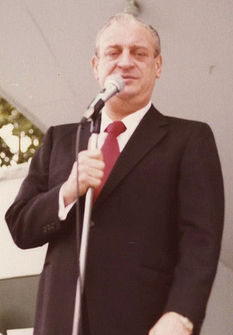
Rodney Dangerfield: If you give me respect, that ruins my act, genius. (Image by Jim Accordino.)

1980: Rodney Dangerfield

His breakout year with Caddyshack, killer stand-up, killer Carson appearances, a Grammy-winning comedy album, even a Rolling Stone cover. Our oldest winner.

1981: Bill Murray

Carried Stripes one year after Caddyshack. Tough year for comedy with cocaine was ruining nearly everybody at this point.

1982-84: Eddie Murphy

The best three-year run anyone has had. Like Bird’s three straight MVPs. And by the way, Beverly Hills Cop is still the No. 1 comedy of all time if you use adjusted gross numbers.

(Random note: Sam Kinison’s 1984 spot on Dangerfield’s Young Comedians special has to be commemorated in some way. At the time, it was the funniest six minutes that had ever happened, and it could have single-handedly won him the title in almost any other year. It’s also the hardest I have ever laughed without drugs being involved. Sadly, I can’t link to it because of the language and because it crosses about 35 lines of decency. But it’s easily found, if you catch my drift.)

1985-86: David Letterman

Went from ‘cult hero’ to ‘established mainstream star,’ ushered in the Ironic Comedy Era, pushed the comedy envelope as far as it could go, and if you want to dig deeper, supplanted Carson as the den father for that generation of up-and-comers and new superstars (Murphy, Leno, Seinfeld, Michael Keaton, Tom Hanks, Howard Stern, etc.) … and, on a personal note, had a bigger influence on me than anyone other than my parents. One of two people I could never meet because I would crumble like a crumb cake. (You can guess the other.)”

Tags: , , , , , , , , ,

Lang directs 1929's "By Rocket to the Moon."

In 1972, iconic director Fritz Lang was interviewed by two reporters, Lloyd Chesley and Michael Gould, and confided in them that he had tired of directing movies by the advent of talkies; he wanted to recreate himself as a chemist. A truly disreputable money man dragged him back into the business and gave him the creative freedom to make the chilling classic, M. An excerpt from the interview:

“Michael Gould: Your themes changed from epic to intimate when you began making sound films.

Fritz Lang: I got tired from the big films. I didn’t want to make films anymore. I wanted to become a chemist. About this time an independent man—not of very good reputation—wanted me to make a film and I said ‘No, I don’t want to make films anymore.’ And he came and came and came, and finally I said ‘Look, I will make a film, but you will have nothing to say for it. You don’t know what it will be, you have no right to cut it, you only can give the money.’ He said ‘Fine, understood.’ And so I made M.

We started to write the script and I talked with my wife, Thea von Harbou, and I said ‘What is the most insidious crime?’ We came to the fact of anonymous poison letters. And then one day I said I had another idea—long before this mass murderer, [Peter] Kurten, in the Rhineland. And if I wouldn’t have the agreement for no one to tell me anything, I would never, never have made M. Nobody knew Peter Lorre.”

Tags:

Penn &... (Image by toadking.)

When two people have worked together for decades as Penn Jillette and Teller have, you assume they must like each other a great deal. But some people have little interest in each other personally though they are great for each other professionally. That seems to be the case as with the anti-magic duo, as evidenced by their comments in a new interview in the Telegraph. (Thanks to the great kottle.org for pointing toward the article.) An excerpt:

“And, most curious of all, they have worked together for an unbroken run of 35 years yet, even now, they appear utterly incompatible: the tall shouty one who thinks and laughs; the small quiet one who feels and cries. “We are artistic and business partners, not primarily friends,” Teller says. ‘When we look at each other, we don’t think: ‘Now there’s a likeable chap!’ We think about the projects we are doing and how we will get them done. When we were first working together, we didn’t have such thick skins. But we recognised how useful we were to each other. And that prevailed.’

Penn says we should compare their relationship not to a loveless marriage but to that of ‘two guys manning a 7/11 down the street. If they aren’t best buddies what do they care, as long as the coffee machine is working and the shelves are stacked? Teller and I work together every day, but socially we go out together maybe only once a year.’”

...Teller. (Image by Eqdoktor.)

Tags: ,

Almost all picky eaters love french fries. No one knows why. (Image by Treimann.)

I’ve been a picky eater since birth. It must have been very tough on my parents, because I was always really skinny as a child no matter how hard they tried to get me to expand my menu. The idea of eating a messy bowl of spaghetti with sauce sickens me. And you will not get me near a cup of soup. I gravitate toward neater foods that have consistent textures and a distinct geometrical shapes, like sandwiches (squares), hamburgers (circles) and pizza slices (triangles). Luckily, I love almost all fruits and vegetables, so the pickiness with other foods doesn’t affect my health.

I’m pretty sure it’s some type of OCD kind of thing, and some scientists agree. The Wall Street Journal has a really interesting article by Shirley S. Wang on the topic called “No Age Limit on Picky Eating.” (Thanks to the great Marginal Revolution for pointing me toward the article.) An excerpt:

“Picky eaters tend to gravitate to certain foods, including blander products that are often white or pale colored, like plain pasta or cheese pizza. For reasons that aren’t clear, almost all adult picky eaters like French fries and often chicken fingers, health experts say.

Amber Scott, of Enon, Ohio, has eaten only about 10 different foods since she was 3 years old. She describes foods that don’t appeal to her as if they are inedible objects. ‘You wouldn’t put a handful of grass in your mouth and chew it up,’ says the 29-year-old. ‘I feel the same way about spaghetti.’ It isn’t as much the flavor as it is the texture and the way her body reacts to a new food, she says. When she tried eating an apricot last fall, her stomach churned. ‘I really wanted to like it, but my body wouldn’t let me,’ she says.

Ms. Scott, a writer, is planning to move to Los Angeles and is ‘terrified’ of having to sit through networking dinners. Like many picky eaters, she says most of her friends don’t know about her tendencies because she tries to avoid social situations that involve eating. She has looked for help in the past but says she couldn’t find a therapist who appeared to understand her condition, and has stopped searching.”

Tags: ,

Esther Williams: "I reached up with my boy's large, clumsy hand to touch my right breast and felt my penis stirring."

As universities begin studying the effects and uses of LSD again, Vanity Fair takes a look back at the drug’s origins and its popularity as part of psychotherapy in Hollywood in the late 50s, before Timothy Leary had taken even a single trip. “Cary in the Sky with Diamonds” is an article by Cari Beauchamp and Judy Balaban. The latter is the daughter of Paramount Pictures president Barney Balaban; she not only experimented with the drug herself but has first-hand knowledge of all of the principals involved.

In one passage, swimming great and movie star Esther Williams, who experimented with LSD when she was in her late thirties, recalls the profound and strange effect the drug had on her. Williams believes the experience helped her confront the deep pain and unhappiness she carried with her since her beloved older brother died when she was eight years old. An excerpt:

Under LSD, Esther saw ‘my father’s face as a ceramic plate. Almost instantly, it splintered into a million tiny pieces, like a windshield when a rock goes through it.’ Then she saw her mother’s face on that terrible day, and ‘all the emotion had drained out of her, and her soft, kindly features had hardened.’

During the session Esther realized—’observing it from a distance as if I were acting in or watching a movie’—that ever since the day her brother had died her life had been consumed by the necessity to replace him in every sense of the word, and “suddenly this little girl was in a race against time to be an adult.”

Does Esther Williams think she has a penis or am I just really high? (Image by Philip H. Bailey.)

Exhausted but calm, Esther left the doctor’s office and returned to her Mandeville Canyon home, where her parents, still emotionally broken by Stanton’s death, were waiting to have dinner with her. She “understood them that night in a profound way, and while I sympathized, I was also sickened by their weakness and their resignation. I saw that they both simply had given up, which, no matter what life had in store for me, was something I could never and would never do.”

But the evening wasn’t over for Esther. After she had said good night to her parents, she went to her bedroom, undressed, and washed. When she looked in the mirror, ‘I was startled by a split image: One half of my face, the right half, was me; the other half was the face of a sixteen-year-old boy. The left side of my upper body was flat and muscular.… I reached up with my boy’s large, clumsy hand to touch my right breast and felt my penis stirring. It was a hermaphroditic phantasm.’ Esther has no recollection of how long she stood there, but there was no question that now ‘I understood perfectly: when Stanton had died, I had taken him into my life so completely that he became a part of me.’”

Tags: , , , ,

Harvey Pekar: "I've always been a fiend for one thing or another, either sports or comix or, you know... jazz, different kinds of literature." (Image by Davidkphoto.)

A fond farewell to the dyspeptic and brilliant graphic comics writer and Letterman foil, Harvey Pekar, who passed away in his Cleveland home yesterday at 70. If you’re not familiar with his work, Pekar’s autobiographical writing brought a realism to comics, focusing on his sad-sack life as an Ohio file clerk rather than superheroes. He collaborated with the artist R. Crumb, among others.

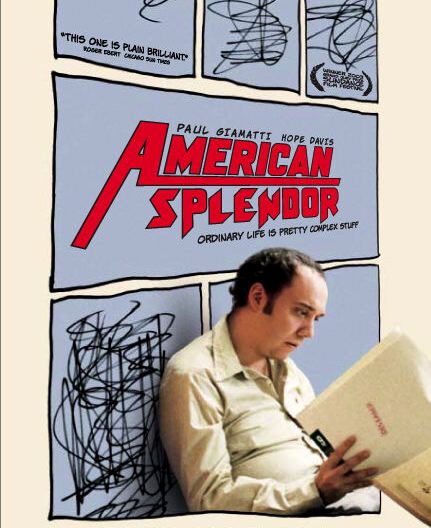
If you’ve never seen the excellent movie based on his life, American Splendor, you should definitely check it out. I interviewed the directors, Shari Springer Berman and Robert Pulcini, right before the film was released, and they are really talented and generous people.

I present you with an excerpt from an interview Pekar did with Walrus Comix (the images on the page are broken, but the Q&A is really good). An excerpt from the section in which Pekar recalls his first meeting with R. Crumb and how he developed his aesthetic:

“So in ’62, Robert Crumb moved to Cleveland from Philadelphia, and he lived about a block and a half from me and he’s the guy that sort of — he and his roommate — hipped me to the underground scene, you know… and he stayed in Cleveland… he worked for the American Greeting Card company for about four years and then I guess he figured he went as far as he could go here and then moved out to San Francisco in the Winter of ‘66 or ’67… But by that time — see I was really into underground comix and I was mainly doing jazz criticism then — I started thinking that comix were generally… you know especially in those days, people looked down on comix, if you said something was like a comic book you know, you were putting it down…. But I saw there was no reason to think that they were intrinsically a limited form… ‘Cause you could choose ANY word that was in the dictionary… You got the same choice of words as SHAKESPEARE… and you got a huge variety of art styles that you could use. Comix are WORDS and PICTURES… WORDS AND PICTURES… you can do ANYTHING with WORDS and PICTURES…

So I just realized that comix at that point had never got beyond the superhero stuff mainly because of the publishers. They were just in it to make a buck and this is what sold and they didn’t want to get away from that formula. Which, I guess, if you’re a businessman and you don’t care about art too much then that’s what you can expect.

So anyway, I started thinking about ways that comix could expand and one thing I thought about was more REALISM… ‘Cause comix never had a realist movement like just about all other art forms had. So I figured if I could do some realistic comix, even if people don’t like ‘em , then maybe I would’ve gained a footnote in history… and so then I thought about doing stuff about the QUOTIDIAN LIFE… you know, ‘every day’ life… because, for one thing, that’s all I knew… I always had a flunky job and lived in these little cramped apartments and was UNRELIEVED at that life.”

Tags: , ,

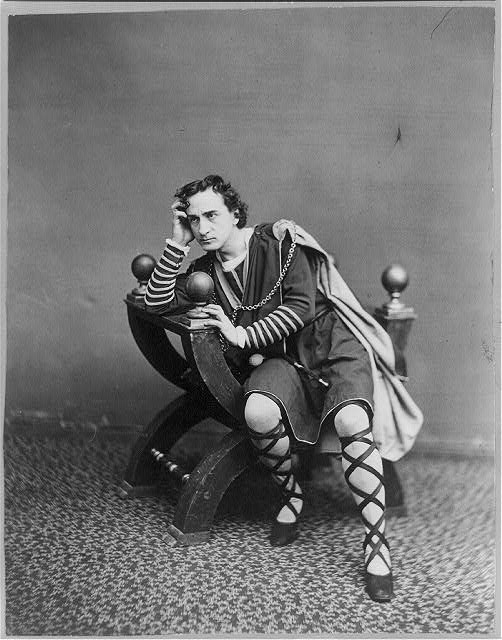
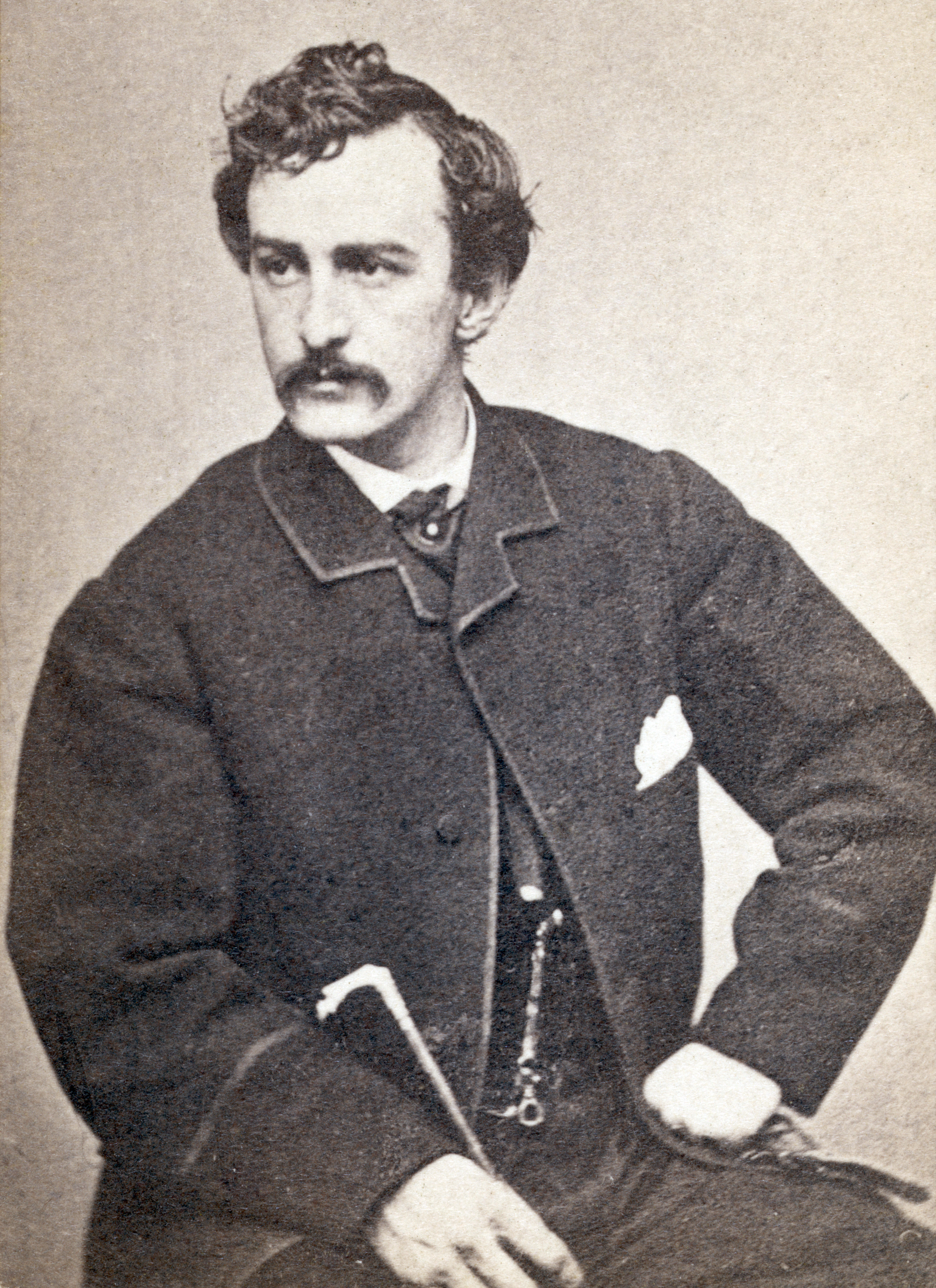
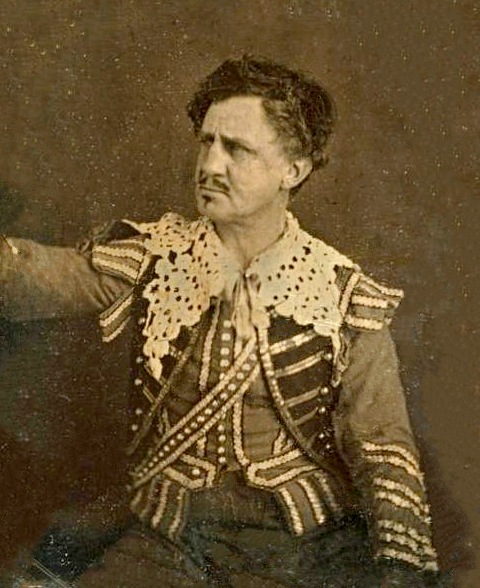
Edwin Booth in his Hamlet costume five years after his brother assassinated Lincoln. (Image by J. Gurney & Son.)

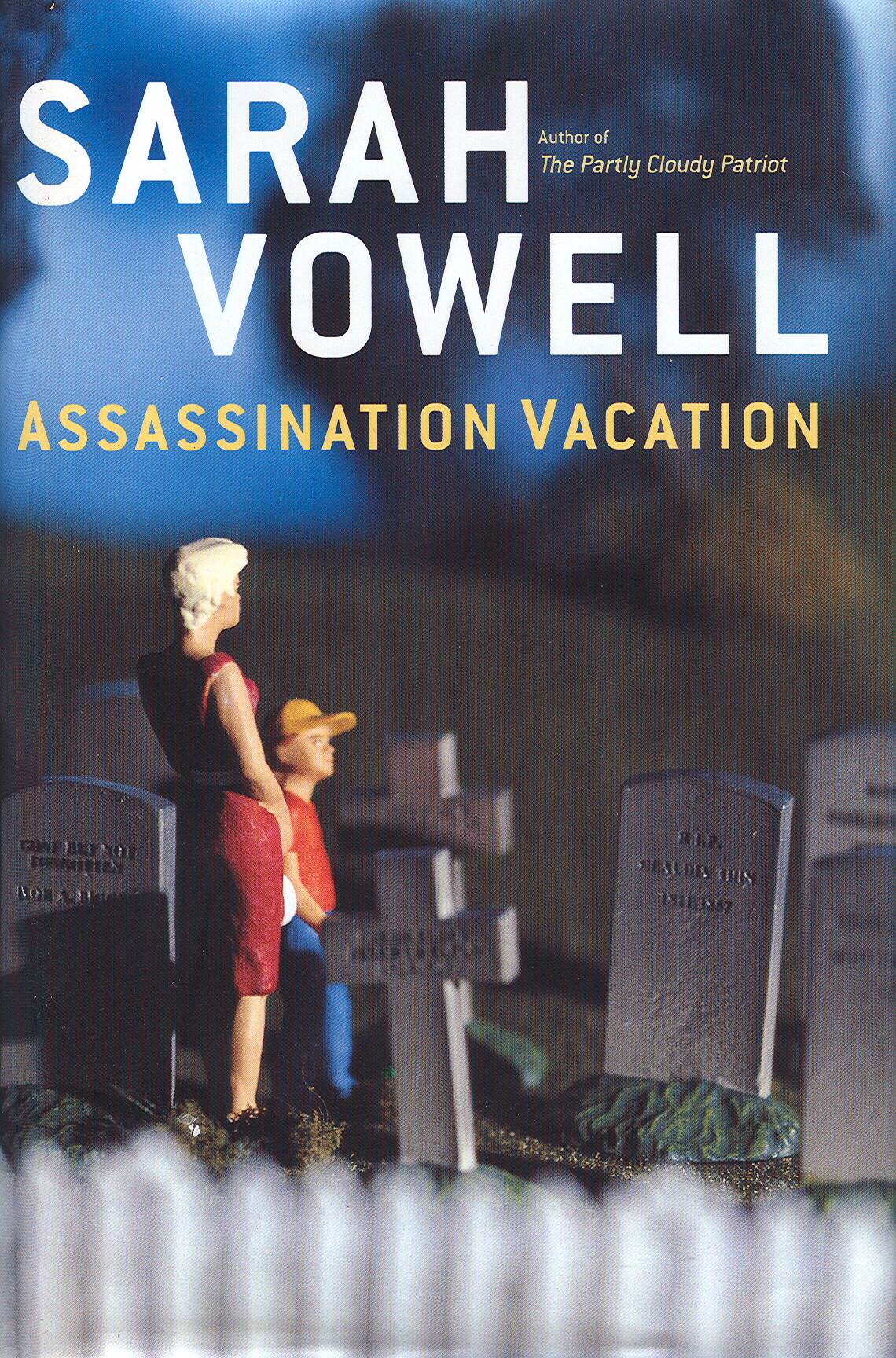
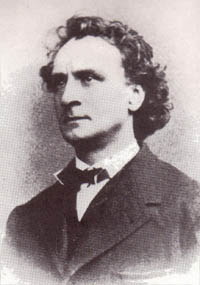
Sarah Vowell’s Assassination Vacation relates the author’s road trip to those sad places where American political murder has occurred. I think just about everyone knows that Abraham Lincoln’s assassin, John Wilkes Booth, came from a famous theatrical family, but Vowell zeroes in on an interesting sidebar: the life and career of the celebrated Shakespearean performer Edwin Booth, the killer’s brother, after the horror of the murder. A passage in which the writer explains to a friend who Edwin was:

“I tell him how Edwin was known as the Hamlet of his day, how his father, Junius Brutus was the greatest Shakespearean actor in England, until 1821, when he emigrated to Maryland, at which point he became the greatest Shakespearean actor in America; how three of Junius’ s children became actors themselves–Edwin, John Wilkes and Junius Brutus Jr.; how the three brothers appeared onstage together only once, in Julius Caesar here in New York in 1864 as a benefit performance for the Shakespeare statue in Central Park;

how their performance was interrupted because that was the night that Confederate terrorists set fires in hotels up and down Broadway and Edwin, who was playing Brutus, interrupted the play to reassure the audience; how the next morning Edwin informed John at breakfast that he had voted for Lincoln’s reelection and they got into one of the arguments they were always having about North versus South; how Edwin retired from acting out of shame when he heard his brother was the president’s assassin, but that nine months later, broke, he returned to the stage here in New York, as Hamlet, to a standing ovation; how he bought the house on Gramercy Park South and turned it into the Players Club, a social club for his fellow thespians and others, including Mark Twain and General Sherman; how he built his own theater, the Booth, on Twenty-third and Sixth, where Sarah Bernhardt made her American debut; and how, in the middle of the Civil War, on a train platform in Jersey City, he rescued a young man who had fallen on to the tracks and that man was Robert Todd Lincoln, the president’s son, so he’s the Booth who saved a Lincoln’s life.”

Tags: , , , , ,

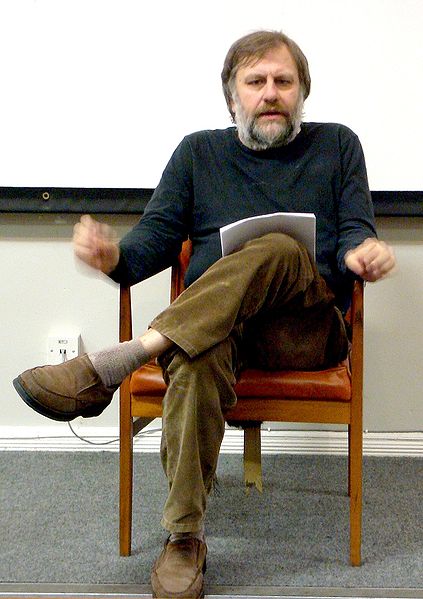
"His last wife was an Argentine lingerie model, 30 years his junior." (Image by Andy Miah.)

A very entertaining douchebag who needs to be smacked with both hands, the Slovenian philosopher and Leftist cultural theorist Slavoj Žižek is the subject of a profile by Philipp Oehmke on the Spiegel website. An excerpt:

“He gives more than 200 lectures a year and has held visiting professorships at elite American universities. He recently spoke to an audience of 2,000 people in Buenos Aires. He is the subject of two documentary films, and in another film he interprets movies from a psychoanalytical point of view as he speeds across the ocean in a motorboat. There are Žižek T-shirts and Žižek records, and there is a Žižek club and an international Žižek journal.

His repertoire is a mix of Lacanian psychoanalysis and Hegel’s idealist philosophy–of film analysis, criticism of democracy, capitalism and ideology, and an occasionally authoritarian Marxism paired with everyday observations. He explains the ontological essence of the Germans, French and Americans on the basis of their toilet habits and the resulting relationship with their fecal matter, and he initially reacts to criticism with a cheerful ‘Fuck you!’–pronounced in hard Slavic consonants. He tells colleagues he values but who advocate theories contrary to his own that they should prepare to enter the gulag when he, Žižek, comes into power. He relishes the shudder that the word gulag elicits.”

Tags: ,

Notice the “Urban Outfitters” sign below the yellow “Grocery” sign.

In the Wall Street Journal’s commercial real estate section, Anton Troianovski has an interesting note about the forthcoming Urban Outiftters store set to open at 2629 Broadway (near 100th Street) this fall. Instead of the store’s usual facade, it is going to have four faux storefront facades: bodega, bar, hat store and hardware store.

A chain store trying to make some sort of ironic comment about the disappearance on Mom & Pop stores in Manhattan depresses me a little, but I have to say that the branding firm Pompei A.D. has done a pretty spectacular job on the facades. (Thanks to Boing Boing for pointing me toward the article.) An excerpt from the WSJ piece:

“Philadelphia-based retailer Urban Outfitters plans to split the facade of a new store on the Upper West Side into four distinct ‘storefronts’: a hat store, a hardware store, a neighborhood bar and a bodega.

‘The whole idea was to do this kind of ironic statement of lining the building with storefronts that would be reminiscent of independent businesses,’ says Ron Pompei, creative director of Pompei A.D., which designed the store, slated to open in August. ‘It’s the story about the streets of New York as they once were.'”
Tags: ,

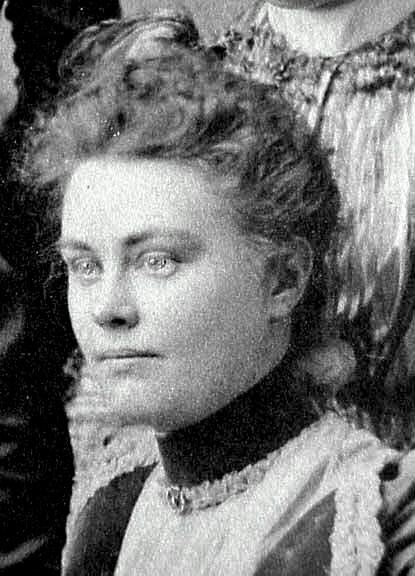
"Cousin Lizzie" was acquitted of murdering her parents in 1893.

What if you’re a neuroscientist who’s been studying the brains of violent psychopaths for 20 years and then you find out your brain and genetics are just like theirs? That’s the situation UC Irvine professor Jim Fallon found himself in after an offhand remark made by a great-grandmother led him to look into his own family’s historical predisposition for violence. Even spookier than finding out that he is a relative of Lizzie Borden, Fallon discovered that his brain activity and genes are identical to that of vicious criminals. Only a happy, loving childhood may have saved him from his natural tendencies.

Fallon’s story is told by Barbara Bradley Hagerty in “A Neuroscientist Uncovers a Dark Secret,” part of an NPR series about brain science and criminology. (Thanks to A&L Daily for pointing me in the direction of this piece.) An excerpt:
“Jim Fallon says he had a terrific childhood; he was doted on by his parents and had loving relationships with his brothers and sisters and entire extended family. Significantly, he says this journey through his brain has changed the way he thinks about nature and nurture. He once believed that genes and brain function could determine everything about us. But now he thinks his childhood may have made all the difference.

‘We’ll never know, but the way these patterns are looking in general population, had I been abused, we might not be sitting here today,’ he says.”

Tags: ,

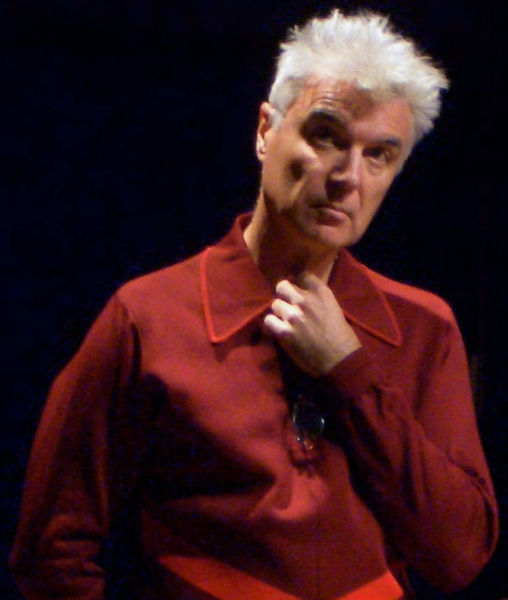
"If a city doesn't have sufficient density, as in L.A., then strange things happen." (Image by Fred von Lohmann.)

The Wall Street Journal brings us “A Talking Head Dreams of a Perfect City,” an article in which the well-traveled and though-provoking singer-songwriter David Byrne (who also has his own cool web presence) describes the features he appreciates (and doesn’t) in an urban center. It’s a fun read. An excerpt about a seldom-discussed benefit of a good-sized city:

“A city can’t be too small. Size guarantees anonymity—if you make an embarrassing mistake in a large city, and it’s not on the cover of the Post, you can probably try again. The generous attitude towards failure that big cities afford is invaluable—it’s how things get created. In a small town everyone knows about your failures, so you are more careful about what you might attempt. Every time I visit San Francisco I ask out loud ‘Why don’t I live here? Why do I choose to live in a place that is harder, tougher and, well, not as beautiful?’ The locals often reply, “You don’t want to live here. It looks like a city, but it’s really a small village. Everyone knows what you’re doing.’ Oh, OK. If you say so. It’s still beautiful.”

Tags:

« Older entries § Newer entries »