Excerpts

You are currently browsing the archive for the Excerpts category.

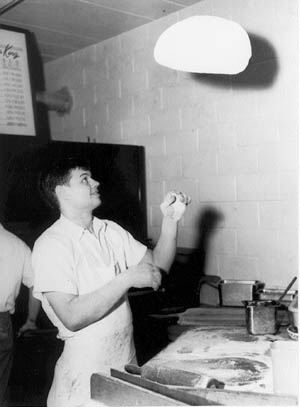
Young Tom Monaghan builds his Domino's empire one pie at a time.

I came across this interesting Washington Monthly article entitled “Pie in the Sky” by Mariah Blake, which chronicles Domino’s Pizza founder Tom Monghan’s self-defeating attempt to build the Ave Maria School of Law.

It’s always fascinating when the hubris and habits that allow people to amass great wealth prove to be their undoing. An excerpt about Monaghan’s controlling nature and propensity to throw around large sums of money:

“The key to Domino’s growth was a tightly controlled franchise system. When a new store opened, headquarters would send a truck stocked with everything from pizza ovens to forks and aprons. Store managers worked from a thick operations manual, known as ‘the Bible,’ which dictated every aspect of operations, down to the smallest detail. Monaghan also kept a tight rein on his employees: store workers were barred from sitting down during their shifts, and executives were expected to uproot their lives and move across the country on Monaghan’s whim. At headquarters, female staffers had to wear skirts or dresses that fell below the knees—pants were strictly forbidden.

As Monaghan’s business grew, so did his appetite for spending. He bought a Gulfstream jet, a Sikorsky S-76 helicopter, and a fleet of cars—among them the Packard that had ferried Franklin Roosevelt to his 1933 inauguration, and a handmade Bugatti Royale. (The latter cost him $8 million, the most ever paid for a classic car.) He also began buying up Frank Lloyd Wright homes, and assembled the world’s largest collection of Wright furniture. But his most famous purchase was the Detroit Tigers, which he bought in 1983. When the team won the World Series the following year, Monaghan had his private helicopter ferry hundreds of Domino’s pizzas to Tiger Stadium.

Even during his prodigal years, Monaghan never lost sight of his Catholic roots. And beginning in the mid-1980s, he started delving more deeply into his faith, and embracing conservative Catholic causes. Then, in 1989, at the suggestion of a Catholic scholar friend, he read a passage from the C. S. Lewis classic Mere Christianity that railed against pride as ‘the essential vice, the utmost evil.’ It dawned on Monaghan that his hunger for success and flashy belongings was pride in its purest form. He immediately swore what he called a ‘millionaire’s vow of poverty’ and began shedding his possessions. Finally, in 1998, he sold Domino’s for an estimated $1 billion and announced that he was retiring from the pizza business so he could devote his time and money to Catholic education. ‘I want to die broke,’ he declared.”


Tags: ,

"Fasel used to be a professional 'ostrich.'"

John Fasel must have been one hell of a bad tailor, because the Williamsburg resident found it necessary to supplement his income performing as a freak who ingested metallic junk in low-brow museums, sideshows and saloons. And he wasn’t a faker who employed sleight of hand–Fasel absolutely chowed down on actual nails, pocket-watch chains, keys, pins, rings, knives, coins, etc.

The “Human Ostrich” was forced in January 1900 to cease the sideshow life and change his diet after doctors performed emergency surgery and removed the hardware store in his belly. But it isn’t easy to quit the glamour of show biz, and one August evening Fasel let a group of young men in a tavern goad him into drinking beers laced with coins and four-inch nails, resulting in the Ostrich ending up in a Brooklyn hospital in critical condition.

The Brooklyn Daily Eagle ran at least four stories about Fasel, which is surprising, since I believe the paper only ran two stories about all of World War I (“Holy Crap, Everyone’s Fighting!” and “Wow, That Was A Bitch”). The New York Times also ran a couple of stories about the idiocy in August 1900, including one called,Junk Eater Critically Ill.”

The Daily Eagle reported on his miraculous recovery a few days later in “Human Ostrich Recovering,” mocking Fasel with the line: “He is now able to partake of raw shingle nails and other light nourishment.” The Brooklyn paper ran a subsequent story lauding Fasel for not being a phony like other sideshow freaks.

"...the extraordinary amount of tin tacks, scrap iron, pen knives, and miscellaneous nails which he swallowed one night last week."

But it was the New York Times four years later that seemed to have the final word when Fasel yet again fell off the wagon. An excerpt from the paper’s April 13, 1904 article,Human Ostrich Dines Too Fast on Hardware“:

“The proudest man in Williamsburg today is undoubtedly John Fasel of 246 Varet Street, who is going around showing his friends an X-ray photograph which brings about in bold relief the extraordinary amount of tin tacks, scrap iron, pen knives, and miscellaneous nails which he swallowed one night last week, and which the doctors are now planning to remove.

Fasel used to be a professional ‘ostrich,’ but four years ago he found it necessary to call a halt on his metallic diet. At that time he was operated on by doctors at St. John’s Hospital, Brooklyn, and still with pride the ‘human ostrich’ recounts the list of junk taken from him on the operating table.

Fasel went on the plain food wagon and remained there until one night last week, when the old appetite for something heavy and solid made him break his pledge. It was at a ball of the White Association of Brooklyn. There Fasel saw another ‘human ostrich’ making a quick lunch of some dog-chains. The ex-ostrich felt a craving right away, and issued a challenge. His friends cheered vociferously, and the ex-ostrich mounted the platform.

The ravenous way in which he quickly disposed of all the knives on the table and the broken up water decanter made his rival stare.”

Tags:

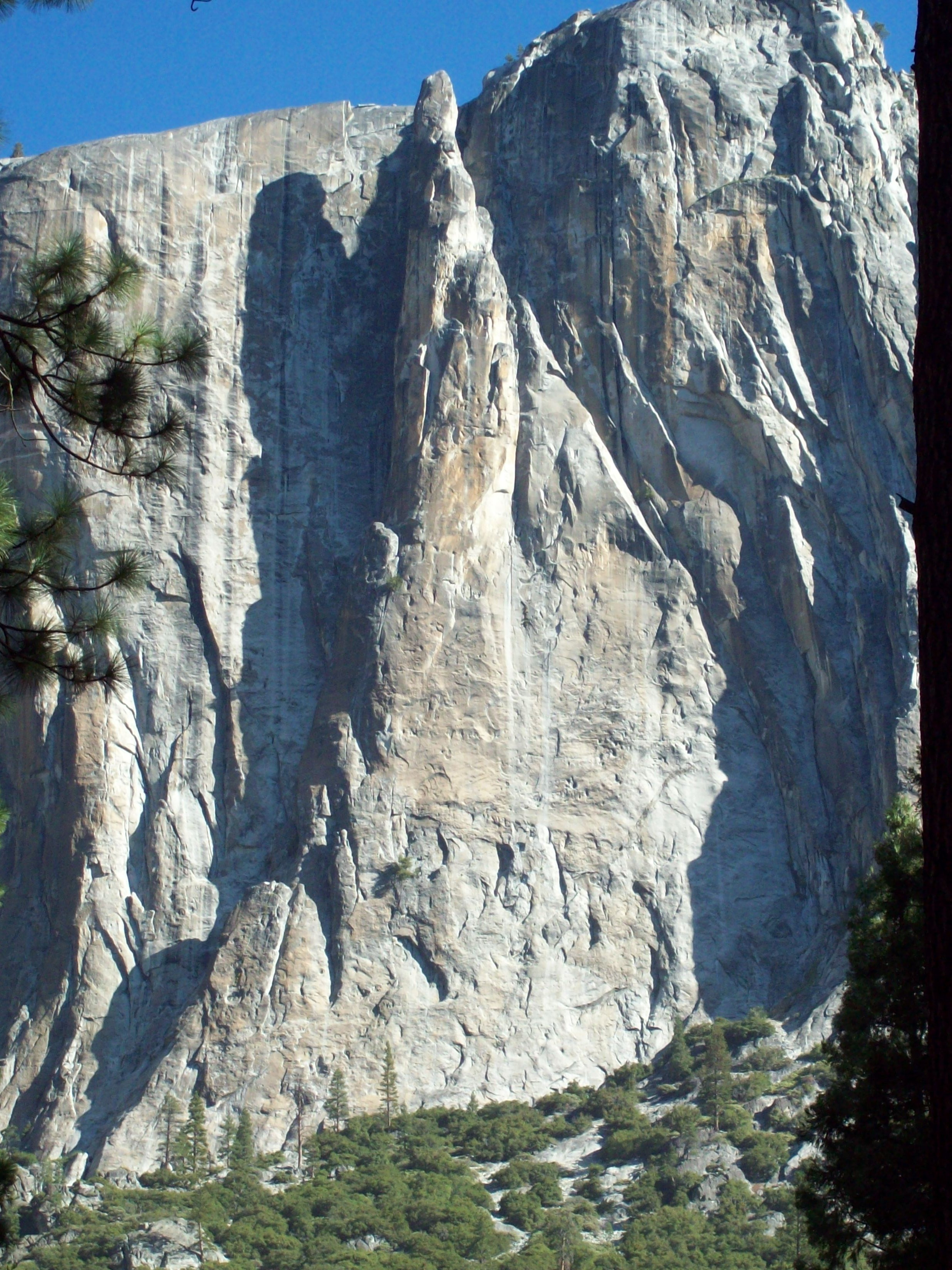
Filthy hippies touched some of these rocks. (Image by Meros Felsenmaus.)

Novelist Edward Abbey (The Monkey Wrench Gang) was a radical eco activist and onetime park ranger. He wasn’t exactly known for subtlety when it came to protecting nature, deriding both mainstream culture and counterculture; he possessed the rare ability to anger both conservatives and left-leaning environmentalists. Abbey was not in a sanguine mood about behavior in Yosemite National Park when he wrote this philippic for the September 3, 1971 issue of Life. An excerpt from “The Park That Caught Urban Blight“:

“For 14 years, I was a seasonal park ranger. But I quit because I found myself forced more and more into the role of a petty policeman. This year, I went to Yosemite Valley, the most troublesome of all Park Service areas, to see the park rangers in their new role as Park Fuzz, to see Smokey the Bear as Smokey the Pig.

In the foothills of the Sierras, up through the old mining towns of Coulterville and Chinese Camp, the flowers were blooming–silvery supine, California poppy, paintbrush and penstemon–and the traffic was light. When I saw a sign ‘Water Ahead,’ I anticipated a drink of pure Sierra Nevada spring water, fresh from the rocks. I found the spring, but another sign beside it read ‘Water Contaminated; Unfit to Drink.’

Later, several miles beyond the park entrance I stopped at a turnout of the classic view of Yosemite Valley below. There was El Capitan, Half Dome, Sentinel Dome, Bridalveil Fall, and a blue haze above the valley floor. Wood smoke? Exhaust fumes? In nearby Cascade Creek I found my first Budweiser can in the clear snow water.

Down in the valley teen-age gypsies with sleeping bags, backpacks and ragged heads slouched along the road, thumbs out. Damn lazy city kids, I thought–let them walk. Good for them, and I spurred my widespread Pontiac right on by. Hitchhiking is illegal in national parks. Hitchhikers are poor, dirty, immoral. I was one; I should know. They steal your credit card, they leave a weird smell lingering in the back seat, they contribute nothing to the national economy.”

Tags:

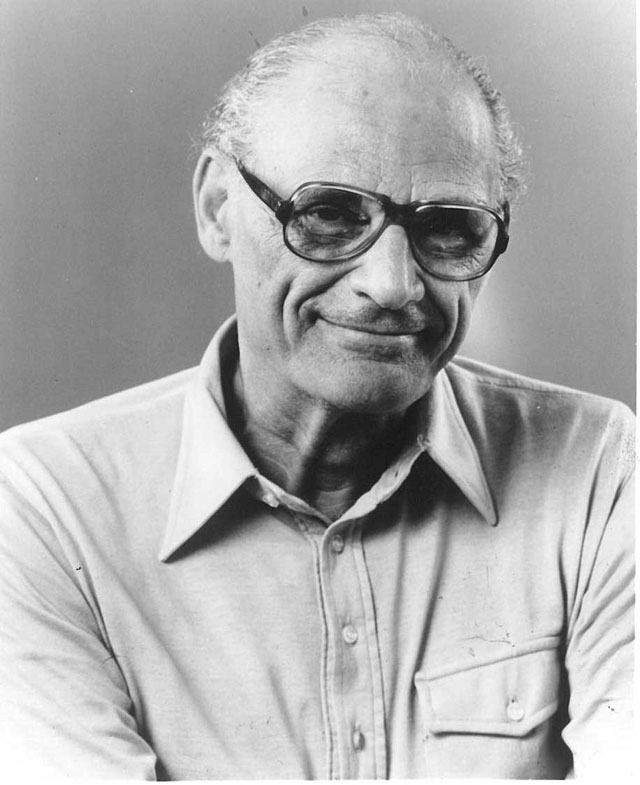
Miller grew up well-to-do in NYC, the son of a wealthy Polish-Jewish immigrants.

From Elia Kazan’s famed 1949 production of Death of a Salesman until the end of his life in 2005, Arthur Miller was a towering figure in American letters. In a 1966 interview in the Paris Review, he looked back on the humble origins of his career as a playwright. An excerpt:

Interviewer: Would you tell us a little about the beginning of your writing career?

Arthur Miller: The first play I wrote was in Michigan in 1935. It was written on a spring vacation in six days. I was so young that I dared to do such things, begin it and finish it in a week. I’d seen about two plays in my life, so I didn’t know how long an act was supposed to be, but across the hall there was a fellow who did the costumes for the University theater, and he said, “Well, it’s roughly forty minutes.” I had written an enormous amount of material and I got an alarm clock. It was all a lark to me, and not to be taken too seriously…that’s what I told myself. As it turned out the acts were longer than that, but the sense of the timing was in me even from the beginning, and the play had a form right from the start.

Being a playwright was always the maximum idea. I’d always felt that the theater was the most exciting and the most demanding form one could master. When I began to write, one assumed inevitably that one was in the mainstream that began with Aeschylus and went through about 2500 years of playwriting. There are so few masterpieces in the theater, as opposed to the other arts, that one can pretty much encompass them all by the age of nineteen.”

Tags: ,

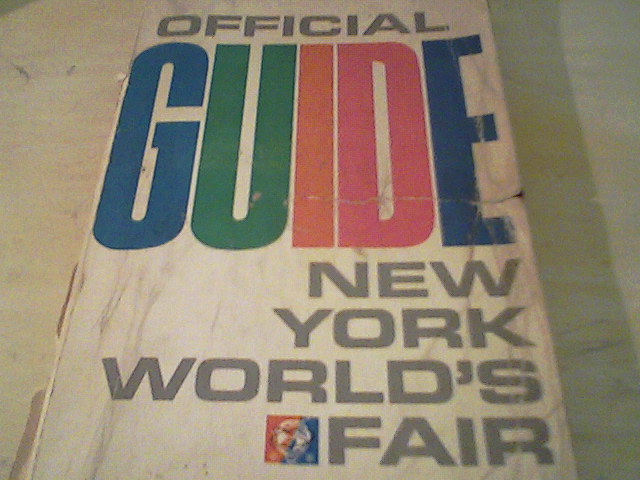
The guide cost an even dollar in 1964.

When I briefly got my tough but tender hands on a copy of the Official Guidebook of the 1939 World’s Fair, I managed to also have a peek at the 1964 Guide. Like the 1939 World’s Fair, the later version took place in Flushing Queens, the neighborhood where both I and the 12-story-high Unisphere were born.

The 1964 World’s Fair had “Peace Through Understanding” as its theme and featured many exhibits that revolved around technology and space travel, unsurprising during the space-race decade. But it also presented Michelangelo’s Pieta, was responsible for popularizing the Belgian waffle in America and unveiled Disney’s animatronic “It’s A Small World” ride.

In addition to info about the prehistoric creatures on display in “Sinclair Dinoland” and the rockets in “Space Park,” the guide has an entry about a curious Cold War-esque subterranean structure prototype called “Underground World Home,” one of which still exists today. An excerpt:

“Something really different in housing is displayed here: a three-bedroom house, completely below ground level. It is presented as the forerunner of dwellings that the builder says have marked advantages for today’s living. Guides explain during the 20-minute tour why underground homes can provide more control over air, climate and noise than conventional houses–as well as protection from such hazards as fire and radiation fallout. The house occupies most of the area inside a rectangular concrete shell, the top of which is two and a half feet underground; a wide staircase brings visitors down to the front door. Windows of the house face scenic murals placed on walls of the shell.”

Tags:

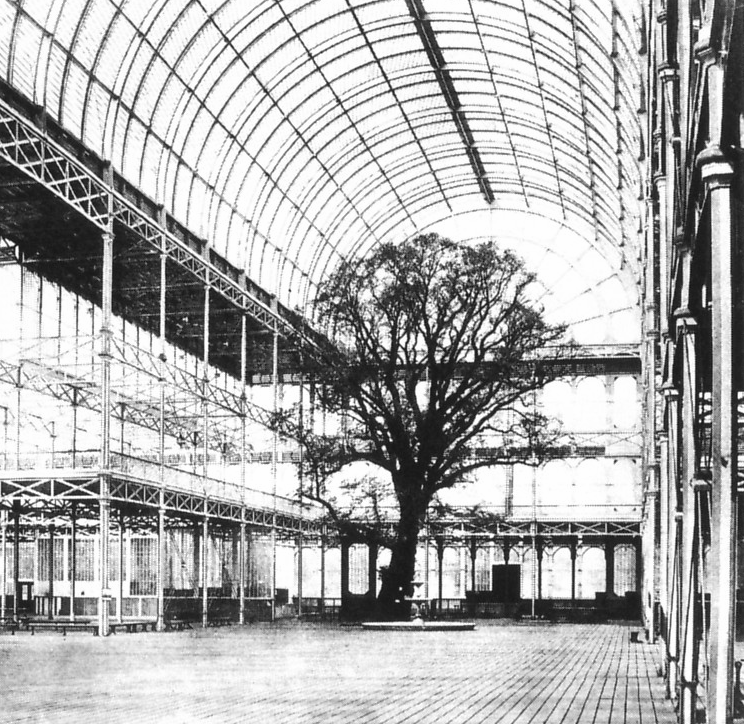
The Crystal Palace was built in under six months.

Engineer Henry Petroski, always a provocative thinker and writer, did some of his best work in the 1985 collection known as To Engineer Is Human: The Role of Failure in Successful Design. Petroski examined a wide array of design disasters and explained how engineering is more of an educated guess than an exact science. And to add context, he singled out some daring engineering feats that succeeded despite their high degree of difficulty.

One such example is the 750,000-square-foot cast iron, wood and glass Crystal Palace in Hyde Park that Joseph Paxton built quickly in the mid-nineteenth century. The edifice was used to house the Great Exhibition, the first World’s Fair. Paxton was a gardener who used innovations in the Crystal Palace that had worked in his greenhouse designs. There were plenty of naysayers who didn’t think it would work, but the building outlived them all. An excerpt:

“One of the most ambitious and innovative structures of the Victorian era was not a bridge or a tower but the vast building constructed to house the Great Exhibition of London in 1851. The story of the Crystal Palace is a fascinating one that bears repeating, for it shows that no matter how innovative an engineering structure might be and no matter how many opponents it may have, the proof is in the putting up and in the testing of it….

Although the true skyscraper did not come into its own until the twentieth century, the Crystal Palace prefigured it in many important ways. The way the light, modular construction ingeniously stiffened against the wind is the essence of modern tall buildings. And the innovative means by which the walls of the Crystal Palace hung like curtains from discrete fastenings, rather than functioning as integral load-bearing parts of the structure, is the principle behind the so-called curtain wall of many modern facades.”

Tags: ,

Rip Torn: And then the blood streamed down Norman Mailer's face. Good times, good times.(Photo by Alan Light.)

Norman Mailer starred as a porn director running for President in Maidstone, the largely improvised 1970 clusterfuck of a film he directed over four days in the Hamptons. The movie itself is something of a time warp, but in any era the conclusion would be unsettling; Mailer and his actor Rip Torn managed to turn it into a very real bloodbath.

Rip Torn recalls for writer Harold Conrad the film’s insane ending in the December 1985 issue of Spin. An excerpt from the article entitled “RIP,” in which the writer and his volatile subject recall those magical moments:

“‘Okay, so now you’re doing Mailer’s film, Maidstone, which leads us into another one of your dilemmas when you hit Mailer on the noggin with a hammer in the final scene of the picture.

‘You make it sound like an assault. You have to know the facts.’

‘Remember me, Rip,’ I say. ‘I was there and it was an assault. That’s what it was supposed to be!’

‘That’s right! I remember now. You were there, but we never had much of a chance to talk.’

Norman Mailer: So I bit Rip Torn's ear and he bled like a stuck pig. (Image from MDCarchives.)

It seemed to me that everybody was there. There must have been a hundred people in that picture–actors, writers, society dames, politicians. The whole project, on and off the screen, was the wildest scene I’d ever been around.

‘Now if you recall,’ says Rip, ‘there was no screenplay for Maidstone. It was all improvisation. It was always agreed that at some point someone would have to kill this porny director. Norman had the role. I had gone over this with him. He knew that. And here we were, shooting the final scene of the picture, and he was still alive!

‘Didn’t you think you’d hurt him, hitting him on the head with a hammer?’

‘I knew it would just bruise him a little bit, but we were shooting for realism. That’s what the picture was all about. I had to make it look like I hit him hard enough to kill him, but I had control of the hammer. It was really just a tap.’

‘Some tap. the blood was streaming down his face. Then you two started to grapple. Norman sunk his teeth into your ear, and you started to bleed like a stuck pig. There was blood all over the place, real blood.'”

Tags: , ,

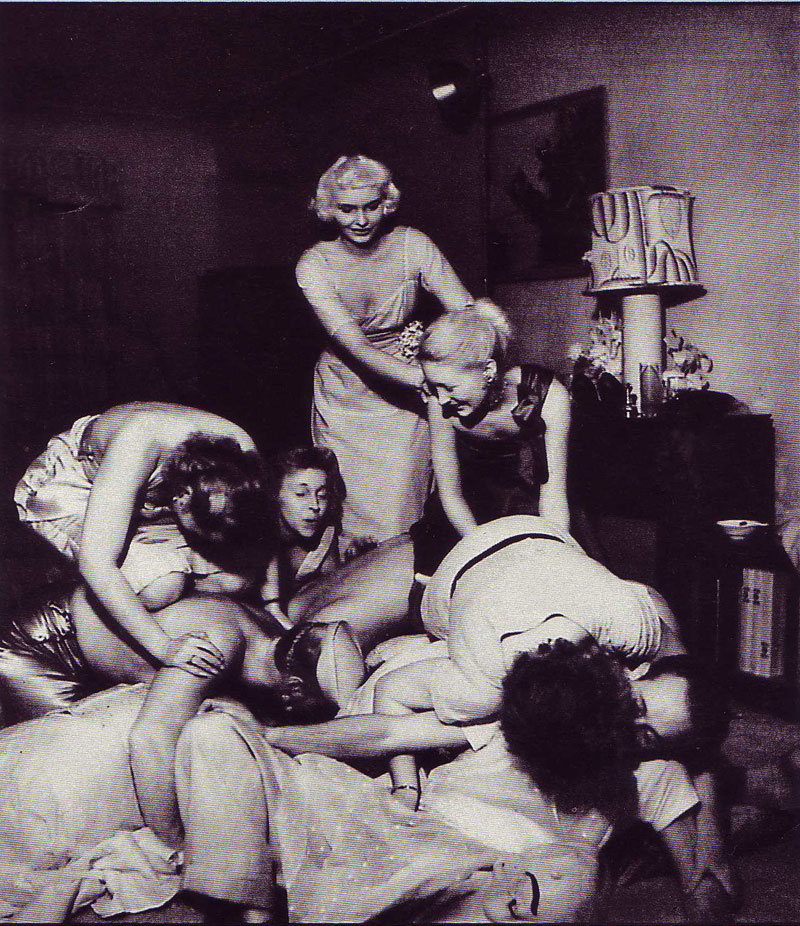
This story in the July 14, 1952 issue of Life magazine was very weird and quite racy for its time. The magazine got so many letters of complaint about it that the editors offered an apology in a subsequent issue. Entitled “Life Goes to a Fumble Party,” the story concerns a lascivious party game called “Fumble,” in which people removed and exchanged clothes, got into a pile on the carpet in the dark and the person who was “It” would grope them until correctly identifying someone. Then that person would become “It” and the feel-copping and cross-dressing would again commence. So much for the buttoned-down 1950s. Not even Eisenhower could apparently stop it.

It seemed the game was pretty much confined to upper-middle-class white people. Photographer Carl Iwasaki used special camera equipment to capture the lewd action in the dark. An excerpt from this insane story:

“In Denver, Colorado, where residents go in for vigorous outdoor entertainment like mountain climbing, people are now taking up a lively indoor entertainment called ‘fumble.’ Like blindman’s bluff, fumble is a game of identification. A person is chosen ‘it’ by drawing the high card from a deck. ‘It’ goes to another room while the other players add and subtract clothes, put on masks or disguise themselves in other ways.

When everyone is disguised, they all fling themselves down onto a huddle on the floor, making a confused tangle of bodies, arms and legs. Then the lights are turned off. ‘It’ reenters the room and, by fumbling among the tangled bodies, tries to identify the a person. If someone is identified, then he or she becomes ‘it.’ But if the fumbler makes an error, he must pay a penalty decided on by the group.

Two of Denver’s greatest fumble enthusiasts are Jack Campbell, owner of a piano company, and his wife Betty. To a recent party they invited Life photographer Carl Iwasaki. The guests, all seasoned fumblers, included a surgeon, a state senator, the granddaughter of a former U.S. senator and the daughter of an oil company president. After the lights went out and the fumbling began, Iwasaki photographed with infra-red film and infra-red flashbulbs, which make it possible to take pictures in the dark. The guests had such a good time they all agreed to play the following week. ‘Nothing melts the social ice like a game or two of fumble,’ said Mrs. Campbell.”

Tags: , ,

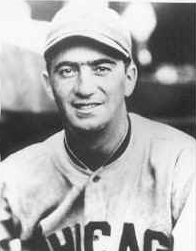
Moe Berg: Rocking the unibrow.

Morris “Moe” Berg wasn’t a particularly distinguished major league catcher, but he was one thing that Yogi Berra, Elston Howard and Josh Gibson never were–a spy for the U.S. government. A graduate of Princeton and Columbia Law School who spoke numerous languages and had a profound intellectual curiosity, Berg was a spy for the Offices of Strategic Services during WWII. He was also the player that the king of the oddballs Casey Stengel once labeled as “the strangest man in baseball.”

Nicholas Davidoff wrote a really good book about the brainy athlete’s shadowy work called The Catcher Was A Spy: The Mysterious Life of Moe Berg in 1994. Davidoff notes on the back cover of the book that Berg is the only former major leaguer to have his baseball card on display at CIA headquarters. An excerpt from the chapter entitled “You Never Knew He Was Around”:

“Moe Berg had always been a loner, and as he receded to the fringes of professional baseball, his eccentricities became more pronounced. Nobody had really ever known much about him. Now he became obviously unusual, and it began to occur to some people to wonder….

An eager conversationalist, even garrulous at times, Berg could be very funny. Yet for the flow of talk, he kept himself to himself. He was as gray as the front page, and he behaved like a newspaper, too; all the latest facts, but no reflections. ‘We knew a lot about [ballplayers’] private lives,’ says Shirley Povich, ‘but he was mysterious. You never saw him hanging around the hotel lobby like other ballplayers. They just accepted Moe for what he was–a man apart.’ The game ended and Berg showered, dressed and disappeared. ”

Other Recent Sports Posts:

Tags: , , , , ,

The episode where Groucho Marx annoyed the hell out of Truman Capote was very special.

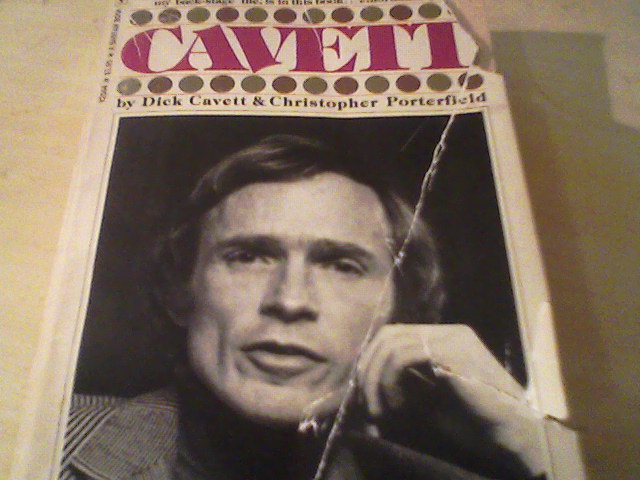
The Dick Cavett Show that ran evenings on ABC from 1969-1975 is my favorite TV program ever, even though I didn’t see a single episode until decades after it went off the air.

Cavett was an unusually honest and curious interlocutor who always had a fascinating mix of people on his panel (Lillian Gish, Satchel Paige and Salvador Dali shared the stage one night). And this was an era when notable personalities were willing to talk about a lot more than the latest product they were pushing. You owe it to yourself to watch or re-watch the shows that are on DVD. (Just don’t start with the Jimi Hendrix disc–it’s a butchered group of interviews that doesn’t contain the full programs.)

In Cavett’s self-titled 1974 memoirs (a book-long interview with his friend Christopher Porterfield), the host recalls the 1970 show when Georgia Governor Lester Maddox stormed off the stageAn excerpt about the incident:

“People ask me about the time Lester Maddox, the former governor of Georgia walked off my show because I refused to apologize for what he saw as an insult to his constituency.

Was he right to walk off? Yes. But not because I failed to apologize. He was right because it was theatrical and well timed, and got him more attention than he had since the old pick-handle-brandishing days of the Pickrick Restaurant. I heard that he papered the wall of his office with the congratulatory wires he got. Maddox is as smart as a whip–or should I say knout?–and knows how to exploit the media as well as or better than Jerry Rubin or Abbie Hoffman ever did. As I said on the next night’s show, he also knows the value of television time, walking off as he did a scanty eighty-eight minutes into the show.

Truman Capote, who was also on the panel that night, says that, of all the TV he has done, to this day people refer to that night wherever he goes.”

Tags: , ,

Malcolm's book is ranked at #97 on the Modern Library's "100 Best Nonfiction Works of the 20th Century."

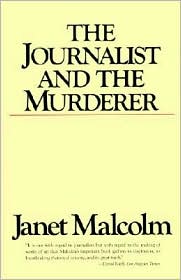
In 1989, Janet Malcolm packed a mighty punch with a single sentence: “Every journalist who is not too stupid or not too full of himself knows what he does is morally indefensible.” That was the first line in her famous (and infamous) much-debated book, The Journalist and the Murderer, which began as a New Yorker article.

In the essay, Malcolm examined the relationship of scribe Joe McGinniss and killer Jeffrey MacDonald, an Army officer and physician who murdered his pregnant wife and two daughters. McGinniss befriended the murderer and pretended to be sympathetic to him, though he thought MacDonald was guilty and was just collecting information for his eventual bestseller, Fatal Vision. Malcolm had other issues with McGinniss, but the central question was and is: Are journalists unethical for betraying their subjects’ faith in the pursuit of truth, even if those subjects are horrifyingly immoral?

Malcolm’s ideas on the subject are very broad and she may have been exorcising her own demons (she can be a mean take-down artist), but the central question is worth investigating. Here’s an excerpt of the rest of the paragraph that immediately follows her infamous first sentence:

“He is a kind of confidence man, preying on people’s vanity, ignorance or loneliness, gaining their trust and betraying them without remorse. Like the credulous widow who wakes up one day to find the charming young man and all her savings gone, so the consenting subject of a piece of nonfiction learns–when the article or book appears–his hard lesson. Journalists justify their treachery in various ways according to their temperaments. The more pompous talk about freedom of speech and ‘the public’s right to know’; the least talented talk about Art; the seemliest murmur about earning a living.”

Tags: , ,

Milla Jovovich: "I love sabermetrics!" (Photo by Georges Biard.)

Astute ESPN baseball writer and all-around smartass Keith Law has published an impressive list of his Top 200 Rock Songs of the 1990s. Of course you’ll disagree with some of the choices since you didn’t compile it yourself, but it will likely bring back some good memories. It convinced me that rock in that decade was better than I thought. An excerpt of a few of his rock selections:

139. Milla – “Gentlemen Who Fell”
That’s Milla Jovovich, who has had a hell of a career jumping from modeling to music to acting to fashion. This has to be one of the five weirdest songs on the list from her on-and-off falsetto to the hints of European folk music interspersed with riffs from an electric guitar.

54. Smashing Pumpkins – “Cherub Rock”
They had a great run for four albums, but nothing quite matched this song’s combination of intensity and sludge for me, like grunge but distinct enough that they couldn’t be lumped into the Seattle scene. The words never made a lick of sense to me, though.

11. Butthole Surfers – “Who Was In My Room Last Night?”
If you know the Surfers at all, it’s probably because of alternative-radio hit “Pepper,” or perhaps from Gibby Haynes’ guest spot on Ministry’s “Jesus Built My Hotrod,” but this is by far their best track, the best song ever written about a bad dream, with a guitar riff that could have come from Tony Iommi’s best work with Black Sabbath.

Tags: , , ,

"His waitresses lived in company housing and kept curfew."

The Wall Street Journal’s Jonathan Eig has published a smart book review of Stephen Fried’s Appetite for America. The book examines how Fred Harvey’s chain of lunchrooms–America’s first national chain of any kind–which grew up around railroads in the Old West beginning in the 1870s, helped to tame that still-wild region of America. Harvey served surprisingly good food, offered a warm environment and imported an all-female waitstaff (“Harvey Girls“) to attract single men looking for brides.

For a formerly poor New York immigrant pot scrubber to have accomplished so much, Harvey had to run a tight ship. An excerpt from the review about his strict business practices:

“He ran his railroad-restaurant business, operating along the Atchison, Topeka & Santa Fe lines, like a military operation. His waitresses lived in company housing and kept curfew. On and off the job, they were expected to follow rules: ‘Have a Sincere Interest in People’ was the first on a list that Mr. Fried reprints. Another reminded employees that ‘Tact is an Asset and HONESTY is still a Virtue.’ Harvey’s decrees didn’t necessarily apply to Harvey: A newspaper in 1881 reported that when he fired the manager of a train-station restaurant in Deming, N.M., Harvey threw the man out the front door onto the train platform ‘and the dining room equipment followed after him in quick order.'”

Tags: , ,

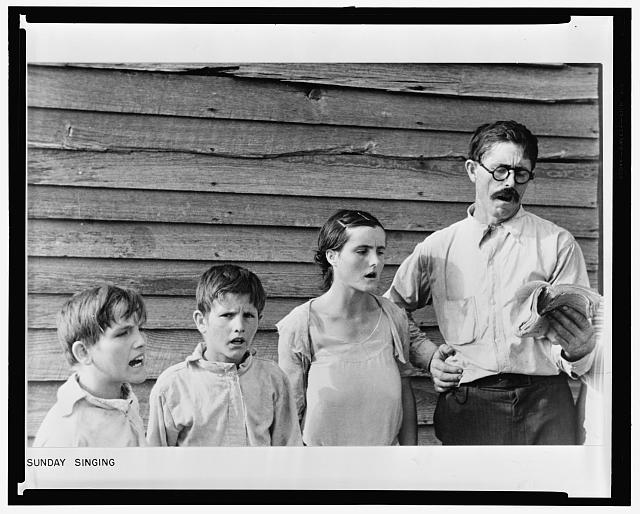
A mid-1930s photo by Evans of Alabama sharecropper Frank Tengle and his family singing hymns.

I came across this interview that some students conducted with the legendary photographer Walker Evans in 1974. It’s from the archives of Image Magazine.

Evans was a Farm Security Administration photographer who traveled the South during the Great Depression with James Agee; from that experience, they ultimately created Let Us Now Praise Famous Men. During this Q&A, he discussed politics, art, his aesthetic and technology. Evans died just a year after this interview took place.

In one passage, Evans talked about teaching photography, but he might as well be talking about teaching in general. An excerpt:

Interviewer: What do you tell your students?

Walker Evans: First of all, I tell them that art can’t be taught, but that it can be stimulated and a few barriers can be kicked down by a talented teacher, and an atmosphere can be created which is an opening into artistic action. But the thing itself is such a secret and so unapproachable. And you can’t put talent into anybody. I think you ought to say so right away and then try to do something else. And that’s what a university is for, what it should be–a place for stimulation and an exchange of ideas and a chance to give people the privilege of beginning to take some of the richness of general life that’s in everybody and has to be unlocked.”

Tags: ,

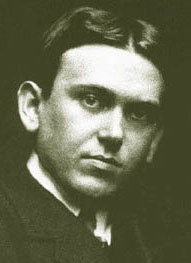
I wrote about everything from the Scopes Monkey Trial to George Washington's weariness of the American people.

Mordant, contrarian, irrepressible, satirical wits like H.L. Mencken are always a source of strength in our country. In addition to being a distinctive prose stylist, the “Sage of Baltimore” was to his time what Stewart, Colbert and Maher are to theirs. His acute readings of American politics, race, class and gender in the first half of the twentieth century are still potent. I highly recommend Vintage Mencken if you’ve never read it.

In the 1948 piece I’m excerpting, Mencken distilled a conflict in which a mixed-race group of tennis players were arrested for attempting to have a match on a Baltimore public court. Mencken’s record as a progressive on civil rights and women’s rights is commendable, though his track record with Jewish people was less distinguished. He often decried the Jewish race, but he also did chastise FDR for not providing refuge for Jewish people after Hitler’s rise to power. Even great thinkers are a mixed-bag, I guess. An excerpt from the Baltimore Evening Sun piece:

“When, on July 11 last, a gang of so-called progressives, white and black, went to Druid Hill Park to stage an inter-racial tennis combat, and were collared and jugged by the cops, it became instantly impossible for anyone to discuss the matter in a newspaper, save, of course, to report impartially the proceedings in court….

But there remains an underlying question, and it deserves to be considered seriously and without any reference whatever to the cases lately at bar. It is this: Has the Park Board any right in law to forbid white and black citizens, if they are so inclined, to join in harmless games together on public playgrounds? Again: Is such a prohibition, even supposing that it is lawful, supported by anything to be found in common sense and common decency?

I do not undertake to answer the first question, for I am too ignorant of law, but my answer to the second is a loud and unequivocal No. A free citizen in a free state, it seems to me, has an inalienable right to play with whomsoever he will, so long as he does not disturb the general peace. If any other citizen, offended by the spectacle, makes a pother, then that other citizen, and not the man exercising his inalienable right, should be put down by the police.”

Tags:

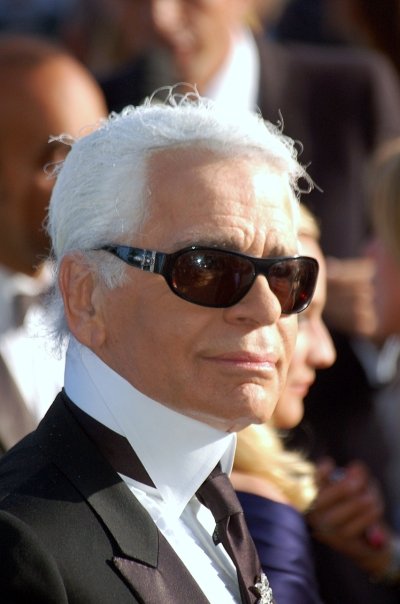
Thankfully, Lagerfeld's great evil lies mostly dormant. (Image courtesy of Georges Biard.)

Canadian filmmaker Bruce LaBruce conducts a lively interview with fashion star Karl Lagerfeld in the new issue of Vice. I don’t really care about Lagerfeld or fashion, but it’s a provocative and suitably ridiculous piece. The following are a few excerpts from the long Q&A.

*****

Bruce LaBruce: I hate it when photographers are like, “Can we have one with your glasses off?” Why? You can see me just fine.

Karl Lagerfeld: I had an interview once with some German journalist—some horrible, ugly woman. It was in the early days after the communists—maybe a week after—and she wore a yellow sweater that was kind of see-through. She had huge tits and a huge black bra, and she said to me, “It’s impolite; remove your glasses.” I said, “Do I ask you to remove your bra?”

*****

Bruce LaBruce: And you have no problem with porn, either.

Karl Lagerfeld: No. I admire porn.

Bruce LaBruce: This is another thing that we have in common.

Karl Lagerfeld: I personally only like high-class escorts. I don’t like sleeping with people I really love. I don’t want to sleep with them because sex cannot last, but affection can last forever. I think this is healthy. And for the way the rich live, this is possible. But the other world, I think they need porn. I also think it’s much more difficult to perform in porn than to fake some emotion on the face as an actor.

*****

Bruce LaBruce: I think that you might have Asperger syndrome. Do you know what that is? It’s a kind of autism. It’s like an idiot savant.

Karl Lagerfeld: That’s exactly what I am. As a child I wanted to be a grown-up. I wanted to know everything—not that I like to talk about it. I hate intellectual conversation with intellectuals because I only care about my opinion, but I like to read very abstract constructions of the mind. It’s very strange.

Tags: ,

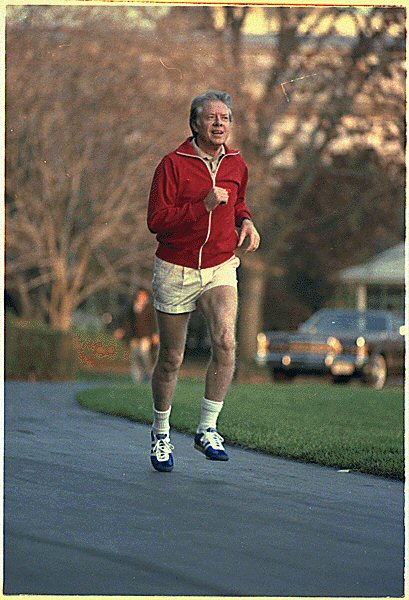
Jimmy Carter, the first jogging U.S. President, out on a run in 1978.

Jogging as an exercise reached critical mass in the United States during the 1970s, but it was during the 1960s when it first took flight. Bill Bowerman, the University of Oregon Track and Field Coach, wrote (along with heart specialist W.E. Harris) the 1966 book, Jogging, which popularized the sport in America. Bowerman, who would later co-found Nike, learned about jogging as a fitness regimen while visiting New Zealand. The book would ultimately sell more than a million copies.

Jogging seemed as much a fad as the CB radio during the ’60s and ’70s, but it endured and became a seemingly permanent part of American fitness. The March 22, 1968 issue of Life published a dopey, tongue-in-cheek review of the Bowerman-Harris book by William Zinsser, during the sport’s first burst of popularity. An excerpt:

“The highest inaugural rite that the government can bestow on its program of outdoor exertion–now that Pierre Salinger has retired from this kind of work–took place recently when four jogging trails were opened near Washington D.C. Secretary of the Interior Stewart L. Udall led 40 people, including several congressmen and 20 members of a Baltimore jogging club, on a two-mile jog over one of the new trails, ending with a speech in which he predicted ‘jogging is going to catch on nationwide.’ Soon, across America, we can expect to hear the rhythmic pad-pad-pad of the sneaker and rustle of the sweat suit. Hearty cries of ‘Well jogged!’ will mingle with the chirping of birds in the virgin air.”

Tags: , ,

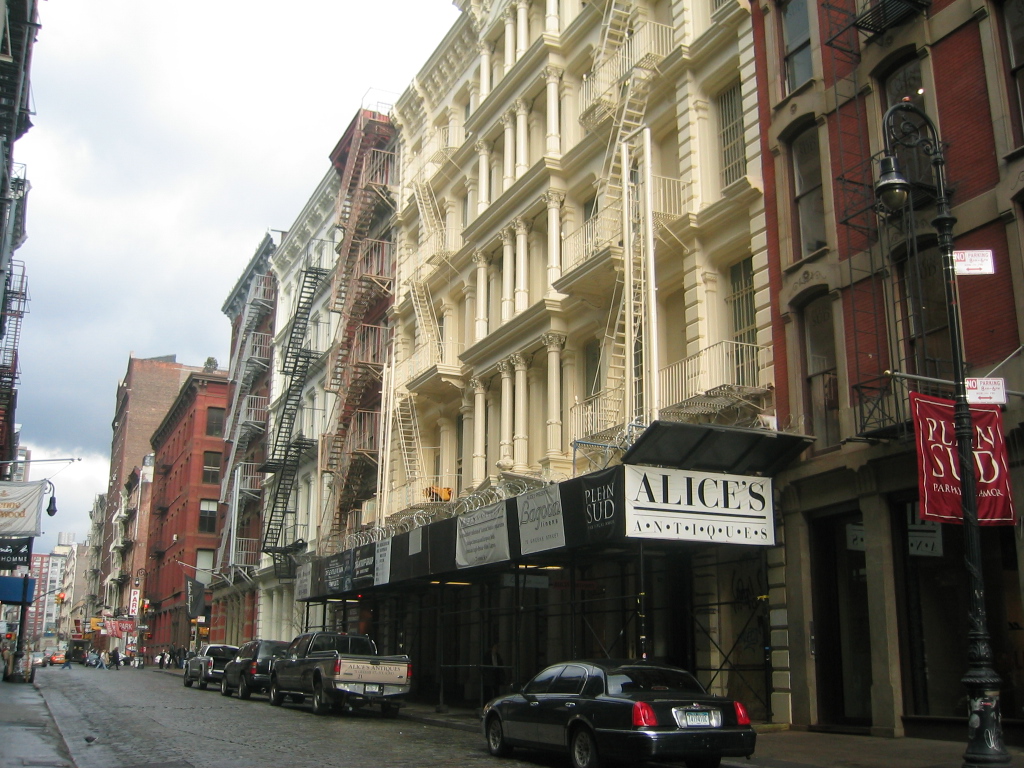
Soho loft buildings looking spiffier today than they did in 1970. (Image by Andreas Praefcke.)

I came across the photo essay “Living Big in a Loft,” a story about the artists working and living in industrial lofts in the then-gritty Soho section of Manhattan, in a 1970 issue of Life.

It’s an old saw by now, but artists who needed cheap space for large-scale creations colonized an area that was then zoned only for light-industrial use. Since the artists were also illegally living in the lofts they purchased and rented, they were in danger of losing their space if building inspectors caught them using the lofts as living quarters.

The photos of the lofts are really cool. The artists mentioned include Tom Blackwell, Jack BealNobu Fukui and Bob Wiegand. An excerpt:

“Multimedia Artist Bob Wiegand swings from a trapeze he installed in his 2,500 square-foot loft, on the fifth floor of a cooperatively owned building. He enjoys performing acrobatic stunts in his studio, although he admits climbing the 144 stairs from the street is probably all the exercise that anyone needs.

Wiegand is one of the original organizers of the ‘SoHo Artists Association,’ a group working to change the laws that prohibit living in lofts. SoHo is short for ‘south of Houston Street,’ the area where most of the disputed loft-residences are located.”

Tags: , , ,

Donald Barthelme: "Grace Paley is a wonderful writer and troublemaker. We are fortunate to have her in our country."

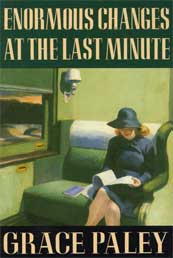
I love the Bronx-born short-story writer Grace Paley, especially her 1974 collection Enormous Changes at the Last Minute. The book contains only 17 stories, but there’s so much humor, pathos and wisdom packed into those pages. (Although I actually recommend you instead buy The Collected Stories, since you can get all 45 of her published short works for just pennies more.)

A political activist as well as a writer, Paley’s work in Enormous Changes was informed by the tumult of New York in the ’60s and early ’70s. She was the perfect writer for that time and place.

Here’s an excerpt from a 1985 David Remnick article about Paley (when she was 62) from the Washington Post:

“‘I’ve been here for almost forever,’ she says. Take ‘here’ to mean New York, and that is true. Paley’s background is richer than just the block. Her parents, Isaac Goodside and Manya Ridnyik, left Russian around 1905 and settled in New York, first on the Lower East Side and then in the Bronx. When they were young in Russia they had been Social Democrats opposed to the czar. Goodside had been exiled to Siberia and Ridnyik to Germany.

In New York, Goodside helped teach himself English by reading Dickens. He became a doctor. Paley’s mother took care of the house–Paley herself often escapes to sweeping and washing when her stories won’t come unstuck.

‘When I was little I used to love to listen to my parents’ stories, all the talk that went on,’ she says. ‘I loved to listen and soon I loved to talk and tell.'”

Tags: , , ,

Roy Mark Hofheinz kept a wonderfully gaudy apartment in the Dome. The pad had a shooting gallery, a putting green and a puppet theater.

As the new textbook rules in the Lone Star State remind us, there’s no kind of crazy like Texas crazy. But that’s not always a bad thing.

One example of the good kind of Texas crazy was Roy Mark Hofheinz, the subject of “Fast Man with a .45,” a 1962 Sports Illustrated article.

Hofheinz was first owner of the Houston Astros (originally called the Colt .45s) and spearheaded the building of the glitzy Astrodome, the first domed sports stadium in the world, which the wealthy Texan claimed was inspired by the Roman Colosseum. It cost a then-staggering sum of $22 million. When it first opened, the Astrodome was nicknamed the “Eighth Wonder of the World.” Hofheinz was a part owner of Ringling Bros. Circus, so such breathless hoopla was never in short supply.

Even though it’s now in its dotage, the Dome had a fascinating existence. In addition to baseball and football, it hosted everything from national political conventions to the Super Bowl to the “Battle of the Sexes” tennis match. It also temporarily housed homeless citizens in the aftermath of Hurricane Katrina. An excerpt from the SI article about the man who got it built:
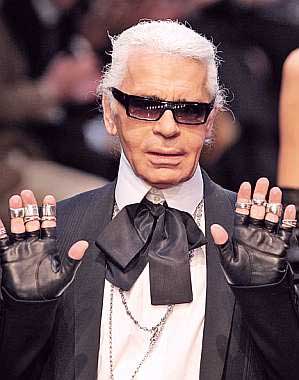
“Roy Hofheinz is a large man with an even larger stomach, a theatrical flair and a mind as quick as a cash-register drawer. He smokes a box of cigars a day, sleeps only when there is nothing else to do and would, if charged with the U.S. space program, have had John Glenn in orbit by the astronaut’s third birthday. He is considered unusual even in Texas.

The grandson of a Lutheran missionary, who spoke 11 languages and came over from Alsace-Lorraine to preach and plant potatoes, Hofheinz has been a dance-band promoter, a radio huckster and a boy-wonder politician (he was Lyndon Johnson’s first campaign manager). He also is a multimillionaire and at one time was the most controversial mayor in the history of Houston.”

Tags:

The oral history Working is one of the best books by the late, great writer, historian and radio host Studs Terkel. I can’t recommend this book enough. There’a also a graphic adaptation that Harvey Pekar worked on, though I haven’t seen a copy.

An excerpt from “Dolores Dante, Waitress”:

People imagine a waitress couldn’t think or have any kind of aspiration other than to serve food. When somebody says to me, ‘You’re great, how come you’re just a waitress?’

Just a waitress. I’d say, ‘Why, don’t you think you deserve to be served by me?’ It’s implying that he’s not worthy, not that I’m not worthy. It makes me irate. I don’t feel lowly at all. I myself feel sure. I don’t want to change the job. I love it.

Some don’t care. When the plate is down you can hear the sound. I try not to have that sound. I want my hands to be right when I serve. I pick up a glass, I want it to be just right. I get to be almost Oriental in the serving. I like it to look nice all the way. To be a waitress, it’s an art.

I feel like a ballerina, too. I have to go between those tables, between those chairs. Maybe that’s the reason I always stayed slim. It is a certain way I can go through a chair no one else can do. I do it with an air. If I drop a fork, there is a certain way I pick it up. I know they can see how delicately I do it. I’m on stage. I tell everyone I’m a waitress and I’m proud.•

Tags: ,

One of Studs Terkel’s oral histories wrapped around a central theme, Working presents people discussing in their own words their jobs and careers. It’s Terkel’s usual mix of astute social commentary and literature, marked by his inimitable knack for getting people to open up in profound ways. Some professions covered include: farm worker, bus driver, jockey, cop, film critic and prostitute. An excerpt from “Terry Mason, Airline Stewardess”:

“When people ask what you’re doing and you say stewardess,you’re really proud, you think it’s great. It’s like a stepping stone. The first two months I started flying I had already been to London, Paris and Rome. And me from Broken Bow, Nebraska. But after you start working it’s not as glamorous as you thought it was going to be.

They like girls that have a nice personality and that are pleasant to look at. If a woman has a problem with blemishes, they take her off. Until the appearance counselor thinks she’s ready to go back on. One day this girl showed up, she had a very slight black eye. They took her off. Little things like that.

We had to go to stew school for five weeks. We’d go through a whole week of make-up and poise. I didn’t like this. They make you feel like you’ve never been out in public. They showed you how to smoke a cigarette, when to smoke a cigarette, how to look at a man’s eyes. Our teacher, she had this idea we had to be sexy. One day in class she was showing us how to accept a light for a cigarette from a man and never blow it out. When he lights it, just look in his eyes. It was really funny, all the girls laughed.”

Read also:

Tags: ,

The same arrogance the made Mailer a great writer also made him sometimes do dumb things. (Image from MDC Archives.)

I think the first time in my childhood that I heard the name “Norman Mailer” was in connection with one of the worst things he ever did. Mailer agitated for the release of convict/writer Jack Henry Abbott, who had spent much of his life in prison. Mailer envisioned Abbott as an American Genet.

It was, of course, a stupendously stupid thing to do. Within six weeks of his 1981 release, Abbott murdered 22-year-old New York waiter/aspiring actor Richard Adan. Whether he was springing cons, running for mayor or seething at Gore Vidal, Mailer often acted out of incredible hubris. But he was a magnificent writer, especially when he was in full-on non-fiction mode.

Some of his best work is collected in Miami and the Siege of Chicago, his street-level examinations of the 1968 Republican and Democrat national conventions, in all their depressing and tumultuous infamy. An excerpt from The Siege of Chicago, which concerns a protest march that was halted with utter brutality:

“There, damned by police on three sides, and cut off from the wagons of the Poor People’s March, there, right beneath the windows of the Hilton that looked down on Grant Park and Michigan Avenue, the stationary march was abruptly attacked. The police attacked with tear gas, with Mace, and with clubs, they attacked like a chainsaw cutting into wood, the teeth of the saw the edge of their clubs, they attacked like a scythe through grass, lines of twenty or thirty policemen striking out in an arc, their clubs beating, demonstrators fleeing. Seen from overhead, from the nineteenth floor, it was like a wind blowing dust, or the edge of waves riding foam on the shore.”

Tags: , , ,

You better keep me away from the time machine. (Image by Brett Weinstein.)

“Magistrate’s Ire Aroused,” declares the sub-heading of this article from the December 1, 1902 issue of the Brooklyn Daily Eagle. It seems that several days before he turned 16, a boy married a bride several years his senior and then saw fit to abandon her. The judge wasn’t a fan of these May-December relationships, especially when the groom was a minor. There may have been steam shooting out of his ears during the hearing. An excerpt:

“‘There should be some way of punishing ministers who marry children,’ said Magistrate Furlong, in the Myrtle avenue court yesterday, when Mrs. Tessie Mich Gordon, who says she is 18 years old, caused her 16 year old boy husband, James C. Gordon of 262 Fifteenth street, to be arraigned on a charge of abandonment.

The Magistarte’s face was flushed, and it was obvious he was not in favor of early marriages–at least, early marriages, of that kind. Young Gordon, the groom, who is a mere stripling, both in years and in size, and who has not even the suspicion of a mustache, stood in front of the judge in a semi-dazed way, as if he were not thoroughly conscious of the important step which he had taken in life. His bride, whom he married less than three months ago, was a Miss Tessie Mich, who gives her age at 18, but is thought to be two years older, is a pretty blond, with bright expressive eyes and a rich head of hair falling in innumerable ringlets. She is petite in figure.

When Court Officer William J. Wyse arrested young Gordon at his father’s house, 262 Fifteenth street, on Saturday night, the boy was at supper, with other members of his family.

‘I have seen a great many strange things over the course of my career on the police force,’ said Oficer Wyse, ‘but I can tell you I was surprised on finding out that the man I was in search of on a charge of abandonment was only a boy.'”

Tags: , , ,

I’ve never been as big a fan of Joan Didion’s novel Play It As It Lays as some are, but I love her non-fiction, especially her must-read collections about the ‘6os and its aftermath, Slouching Towards Bethlehem and The White Album.

The title essay in the former collection, a first-person account of the so-called Summer of Love, is brilliant street-level reportage and a ugly riposte to depictions of the time and place as paradisiacal.

Didion had descended into a personal torpor previous to heading to the Bay Area, but she emerged with a clear-eyed portrait, which was originally published in the Saturday Evening Post. An excerpt:

“I am looking for a guy named Deadeye and I hear he is on the Street this afternoon doing a little business, so I keep an eye our for him and pretend to read the signs in the Psychedelic Shop on Haight Street when a kid, sixteen, seventeen, comes in and sits on the floor beside me.

‘What are you looking for?’ he says.

I say nothing much.

‘I been out of my mind for three days,’ he says. He tells me he’s been shooting crystal, which I pretty much already know because he does not bother to keep his sleeves rolled down over the needle tracks. He came up from Los Angeles some number of weeks ago, but he does not remember the number, and now he’ll take off for New York, if he can find a ride. I show him a sign offering a ride to Chicago. He wonders where Chicago is. I ask where comes from. ‘Here,’ he says. I mean before here. ‘San Jose, Chula Vista, I dunno. My mother’s in Chula Vista.’

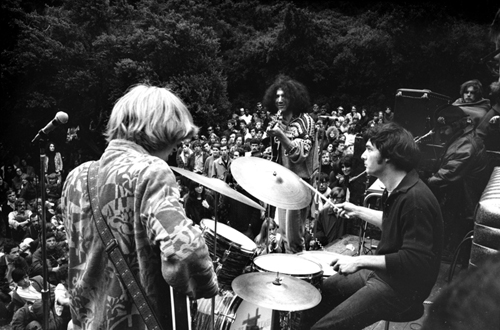
A few days later I run into him in Golden Gate Park when the Grateful Dead are playing. I ask if he found a ride to New York. ‘I hear New York’s a bummer,’ he says.”

Tags:

« Older entries § Newer entries »