Excerpts

You are currently browsing the archive for the Excerpts category.

Not a picture of a Kansas school, but a class photo from a California grade school in 1890.

In 1895, eighth graders in Salina, Kansas, had to pass a mighty tough exam to be promoted. (The full questions from the test were posted by Morehead State and linked to by Marginal Revolution.) I wonder how many adults today could pass this exam. Sure, part of the difficulty stems from the changes in language and priorities as we’ve transitioned from an agrarian economy to the Industrial Age to the Information Age. But looking at this test is a reminder that education and intelligence don’t necessarily improve just because time marches on. Some sample questions:

  • Give nine rules for the use of Capital Letters
  • If a load of wheat weighs 3942 lbs., what is it worth at 50 cts. per bu., deducting 1050 lbs. for tare?
  • What is the cost of 40 boards 12 inches wide and 16 ft. long at $20 per m?
  • Name events connected with the following dates: 1607,  1620,  1800, 1849, 1865.
  • Give four substitutes for caret ‘u’.
  • Give two rules for spelling words with final ‘e’. Name two exceptions under each rule.
  • Mark diacritically and divide into syllables the following, and name the sign that indicates the sound: Card, ball, mercy, sir, odd,cell, rise, blood, fare, last.
  • Describe the mountains of North America.
  • Name and describe the following: Monrovia, Odessa, Denver, Manitoba, Hecla, Yukon, St. Helena, Juan Fermandez, Aspinwall and Orinoco.
  • Why is the Atlantic Coast colder than the Pacific in the same latitude?
  • Describe the movements of the earth. Give inclination of the earth.

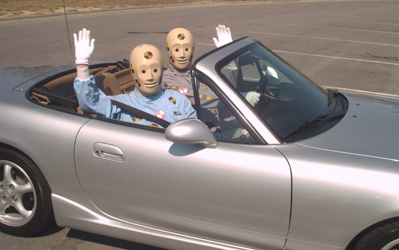
Too dumb to drive on their own, but very friendly.

Cnet has a Q&A with Atari co-founder Nolan Bushnell, who has returned to the board of the once-storied, long-struggling gaming company. In addition to comparing Atari to a successful child that graduated to drug addiction and jail as an adult, Bushnell waxes enthusiastic about auto-cars, the kind of vehicles that use software to do the driving. Google acknowledged recently that it has self-steering cars tooling around busy California streets and highways, monitoring traffic and god knows what else.

I know planes routinely use auto-pilot, but I think Bushnell is a little too sanguine about auto-cars in the near term, since a major psychological aspect of car ownership (in America at least) has to do with control and autonomy. (Thanks Newmark.) An excerpt:

Nolan Bushnell: But the biggest thing for the near future is auto-cars, which will change everything.

Cnet: Tell me about that. Why do you think they’ll change everything, and how so?

Nolan Bushnell: It’ll be within five years, somewhere. The costs are there right now. The Google car actually was cost-effective. Think of no traffic congestion, highways that can hold 30 times as much traffic. Half the energy costs. It just goes on and on. The only issue is how powerful will be the Luddites.

Cnet: What do you imagine would be the chief objection of the Luddites?

Nolan Bushnell: The Schumpeterian creative destruction of entrenched interests. For example. every Teamster, cab driver, UPS driver, all these drivers will need to be retrained. Insurance will drop to a fraction of what it costs now. People don’t understand how horrible the average driver is. The number of body shops will be 20 percent of today. It’ll be disruptive, and they will not go away without a fight. Of course, bars will do a great business because drunk driving will be OK.”

Tags:

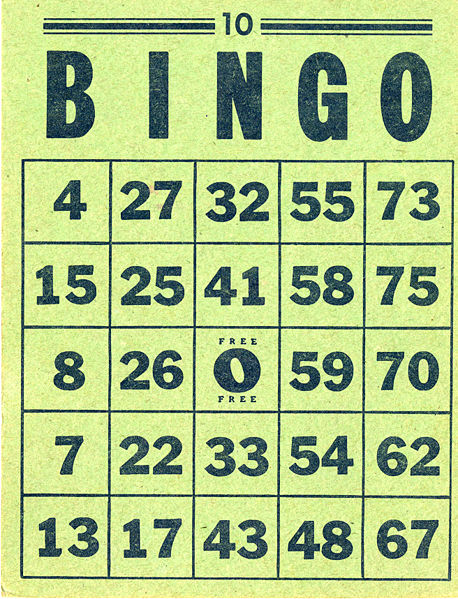
The modern version of Bingo was created in 1929. The origins of the game date back to 1530. (Image by Abbey Hendrickson.)

I missed this smart November 28 article about the last Brooklyn bingo parlors that N. R. Kleinfield wrote for the New York Times, but thankfully Longform pointed me to it. Fun fact from the piece: New York State law requires bingo games to be run for charitable purposes. An excerpt about veteran bingo devotee Cynthia Klivan:

“Ms. Klivan, a companionable retired parole-board clerical supervisor, usually comes to Nostrand Bingo Hall in the Midwood section of Brooklyn six days a week. Nostrand is one of the enduring relics of a fading game long cherished by those long done working. Play happens twice a day — at 11:30 a.m. and 7 p.m. — but not on Sunday mornings.

Ms. Klivan is a day player. Bingo is her fixation, her delight, the center around which her 74-year-old life rotates, as is true of thousands of believers who gravitate to the remaining commercial halls in the city in pursuit of human interaction and a little extra money.

Bingo has been a rite for Ms. Klivan for 30 years. To understand its galvanic pull, one need only rewind a few years, to the day her sister picked her up from the hospital after cancer surgery and asked, ‘Where do you want to eat?’ Ms. Klivan told her she didn’t want to eat. And her sister, looking hard at her, said, ‘You’re not thinking the bingo hall?’

Oh yes, she was.

And when she shambled in the door, surgical drains still in place, everyone had to chuckle. They told her: ‘Cynthia, you’re pale as a ghost. What are you doing here?’

Ignoring them, Ms. Klivan bought her cards and began marking the numbers.”

Tags: ,

Sacks wrote about face-reognition disorders in the title piece of his 1985 collection, "The Man Who Mistook His Wife for a Hat."

I’ve mentioned before that I have a neurological glitch, called prosopagnosia or face-blindness, which causes me problems with face recognition. I can see faces just fine, but I have trouble identifying them out of context. I’m usually okay with people I see on a regular basis, less so with those I run into infrequently or haven’t seen in a long time. It causes countless misunderstandings.

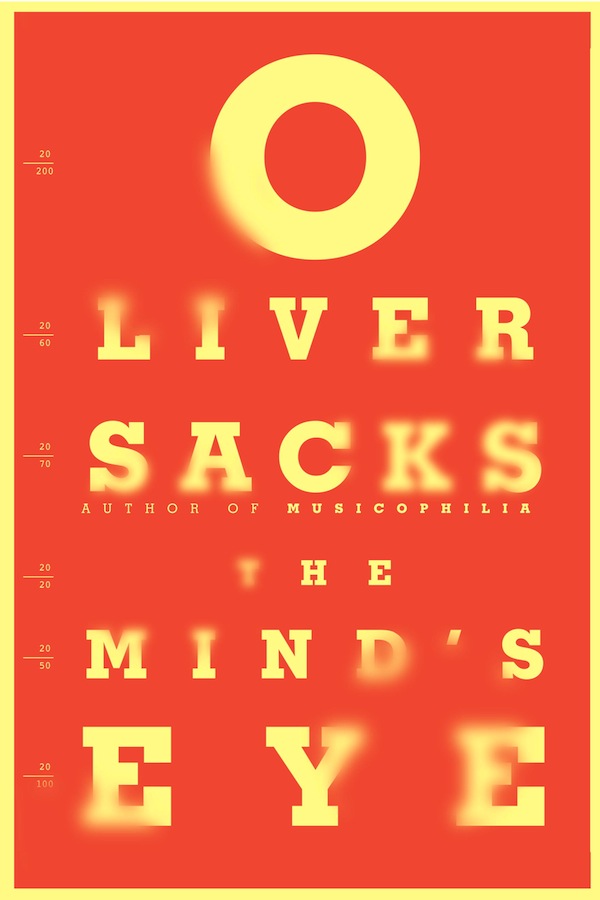
Thankfully, I don’t have  a very severe level of face-blindness, but Oliver Sacks does. It’s so bad for the doctor that he actually can’t recognize himself in a mirror. The neurologist writes about dealing with the disorder in his latest excellent collection of case studies, The Mind’s Eye. An excerpt from his essay, “Face-Blindness”:

“I just assumed that I was very bad at recognizing faces as my friend Jonathan was very good–that this was just within the limits of normal variation, and that he and I just stood on opposite ends of a spectrum. It was only when I went to Australia to visit my older brother Marcus, whom I had scarcely seen in thirty-five years, and discovered that he, too, had exactly the same difficulties recognizing faces and places that it dawned on me that this was something beyond normal variation, that we both had a specific trait, a so-called prosopagnosia, probably with a distinctive genetic basis.

That there were others like me was brought home in various ways. The meeting of two people with prosopagnosia, in particular, can be very challenging. A few years ago I wrote to one of my colleagues to tell him that I admired his new book. His assistant then phoned Kate to arrange a meeting, and they settled on a weekend dinner at a restaurant in my neighborhood.

‘There may be a problem,’ Kate said. “Dr. Sacks cannot recognize anyone.’

‘It’s the same with Dr. W.,’ his assistant replied.

Somehow we did manage to meet and enjoyed dinner together. But I still have no idea what Dr. W. looks like, and he probably would not recognize me, either.”

Tags:

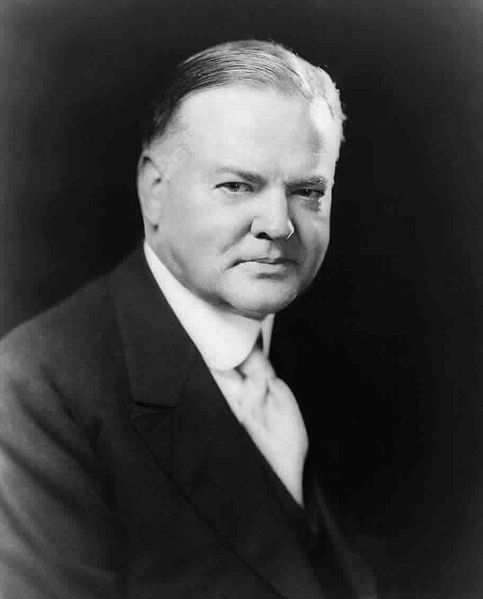
Herbert Hoover: Would it kill you to call?

This fun excerpt from Ammon Shea’s The Phone Book: The Curious History of the Book That Everyone Uses But No One Reads, comes courtesy of the great Marginal Revolution:

“The first American president to have a telephone on his desk was Herbert Hoover, who had one installed in 1929. The White House did have a telephone well before most of the country, as Rutherford B. Hayes had had one installed in the telegraph room of the executive mansion in 1878. It received little use at first, since so few other people had telephones at that time. The very first telephone book for the city of Washington, D.C. lists this presidential telephone simply as ‘No.1.'”

Tags: ,

Watching, always watching. (Image by noodlesnacks.com.)

In the future, we will be killed in new and interesting ways. Currently in development are weapons that are as fascinating as they are frightening. Business Insider has a rundown of ten such science fiction-ish weapons systems. One that’s being worked on right now that doesn’t commit murder–not yet, anyhow– is HI-MEMS, equal parts bug and bot, which is intended as a pesky reconnaissance agent. (Thanks Newmark’s Door.) An excerpt:

“The HI-MEMS is part insect, part machine. First, a micro-mechanical system is placed inside the insect during early stages of metamorphosis. The bugs operate similarly to a remote control car — the goal is to be able to control the bugs movement and location through the implanted microsystem. HI-MEMS will be used for gathering information using its sensors, such as a microphone or a gas detector.”

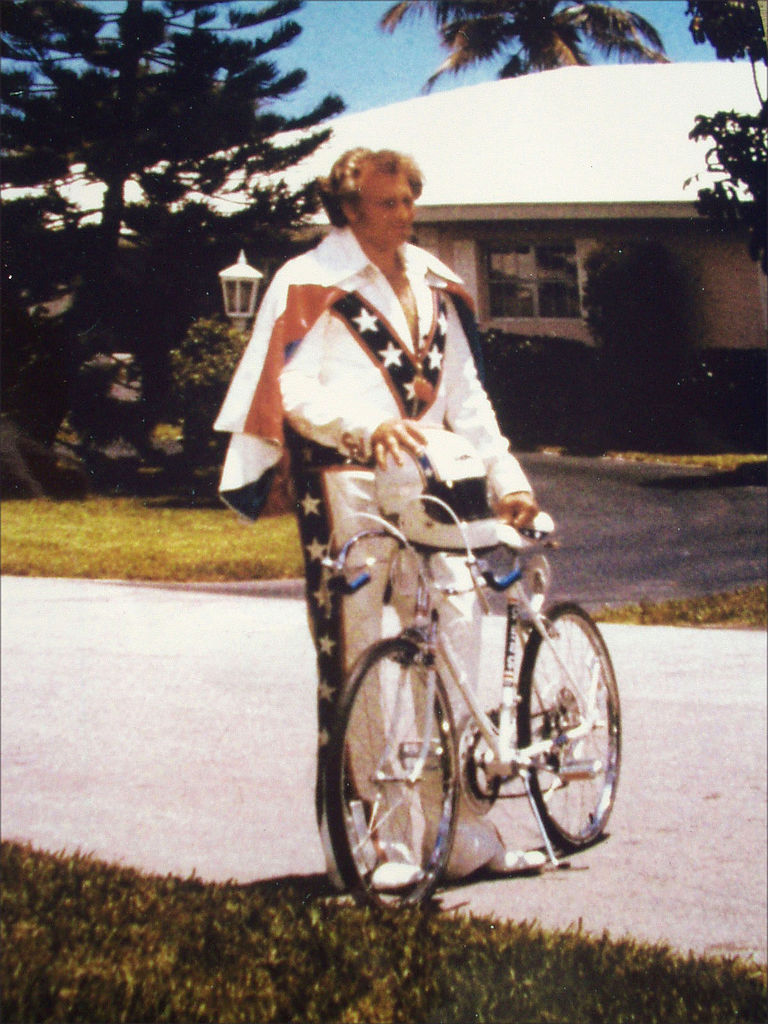
Evel Knievel aboard a less lethal cycle. (Image courtesy of Bill Wolf.)

I’ve long admired “He’s Not a Bird, He’s Not a Plane,” a fun profile of the late, great motorcycle daredevil Evel Knievel from the February 5, 1968 issue of Sports Illustrated. The piece was penned by Gilbert Rogin, a novelist who was also SI‘s managing editor.

The article relays what a sensation Knievel was in the ’60s and ’70s. He dressed like Elvis and escaped death like Houdini, although the dark side of his appeal was the sick fascination of watching what would happen if he couldn’t avert disaster, as he jumped his motorcycle over rows of cars, hotel fountains and actual rivers.

Knievel had none of the sociopolitical significance of Muhammad Ali, but he shared the boxer’s keen understanding of Hollywood, hoopla and the hard sell. He went through a lot of money, broken bones, personal problems, a rock opera and a late-life religious conversion before his death in 2007. In Rogin’s piece, Knievel touted his desire to jump across the Grand Canyon (which never happened). An excerpt about his not-so-successful jump over the fountains at Caesar’s Palace on the last day of 1967:

“On New Year’s Eve, Knievel jumped the ornamental fountains in front of Caesars Palace in Las Vegas, which are billed as the World’s Largest Privately Owned Fountains. Several weeks earlier he had said, ‘I know I can jump these babies, but what I don’t know is whether I can hold on to the motorcycle when it lands. Oh, boy, I hope I don’t fall off.’

Knievel’s fears were justified. Shortly after the motorcycle hit the landing ramp, he fell and rolled 165 feet across an asphalt parking lot. Knievel is now in Southern Nevada Memorial Hospital, recovering from compound fractures of the hip and pelvis. ‘Everything seemed to come apart,’ he said. ‘I couldn’t hang on to the motorcycle. I kept smashing over and over and over and over and over, and I kept saying to myself, ‘Stay conscious, stay conscious.’ But, hey, I made the fountains!'”

••••••••••

Knievel “jumps” the Snake River Canyon, 1974:

Tags: ,

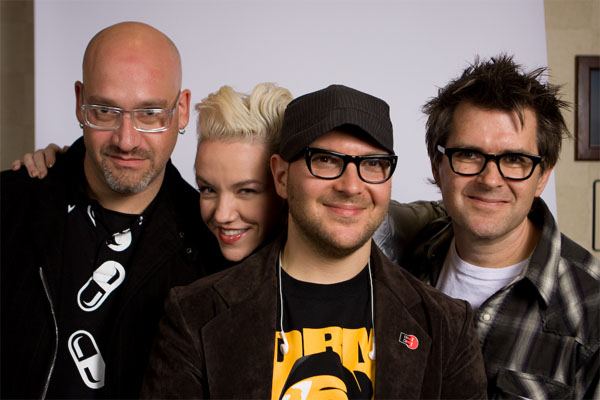
Boing Boing editors David Pescovitz, Xeni Jardin, Cory Doctorow and Mark Frauenfelder. (Image by Dave Bullock.)

Boing Boing, the king of personal blogs that aspire to any level of cerebralness, is sort of an accidental giant. It started as a tiny print zine during the ’80s and became the least likely giant-traffic blog on the web. In an article for Fast Company, Rob Walker profiles the four principals behind the site. An excerpt:

“‘Boing Boing is a holdover from a time when the best blogs were written by smart people who posted whatever was interesting to them,’ observes Jonah Peretti, founder of BuzzFeed. Sure, there are still many such blogs around, but the blogosphere overall has changed radically, with the dominant players falling into recognizable categories — tech (Gizmodo, Engadget), gossip (TMZ, Gawker), politics (the Huffington Post, Politico) — and generally created by teams of professionals looking for growth and profits. ‘The new generation of postpersonal blogs,’ Peretti adds, ‘are much bigger.’

Yet boingboing.net remains among the most popular 10 or 20 blogs around. According to Quantcast data, it gets about 2.5 million unique visitors a month, racking up 9.8 million page views, a traffic increase of around 20% over 2009. It attracts blue-chip advertisers such as American Express and Verizon. It makes a nice living for its founders and a handful of contract employees.

And what really makes it interesting is that it does this with a mix of material that remains as eclectic, strange, and sometimes nonsensical as the obscure personal blog it started out as. Sure, the site offers its take on big, hot-button topics like WikiLeaks or the latest Apple gadgetry. But just as prominent are headlines such as ‘And now, an important message regarding elves,’ or ‘Heavily stapled phone-pole,’ or, to cite a recent favorite of mine, ‘Monkey rides a goat’ (an animated GIF of exactly that).

How can this mishmash command an audience of millions? Particularly now, when the ‘postpersonal’ blogosphere offers slick, focused, comprehensive takes on any subject you can imagine? Maybe the founders’ insistence on keeping the site weird, loose, personal, and fundamentally unprofessional is exactly what keeps the crowd coming back. Boing Boing’s longevity hasn’t happened despite its refusal to get serious, but because of it.”

Tags: , , , , ,

Not an image from the "Mother Jones" story but a fine representation of a broken face. (Image by Manuel Anastácio.)

Mac McClelland of Mother Jones has penned a disturbing article about vigilante justice in Oklahoma’s Indian Nations. A high crime rate and a lack of competent policing has led victims to pay good money for rough justice. (Thanks Arts & Letters Daily.) An excerpt:

“It takes a while to notice Ruben’s scars. Though they’re hardly subtle, they don’t catch your eye as readily as his strong, smooth features or the big-ass smile that’s totally disarming despite his size: six foot three, 225 pounds. Neck like a waist. Friendly as you please. When I pointed to each of the healed-up gashes on his fists and asked what they were from, he replied, ‘Teeth. Teeth. These are all from teeth.’ He charges $1,000 for every one that he knocks out of a person’s head. It’s the same price for each bone he breaks in a face, a practice that’s cost him a couple of knuckles.

The first people who hired Ruben, five years ago, were a regular, law-abiding couple from the Cherokee Nation who had been robbed, their savings snatched from under the mattress. The couple knew who’d stolen from them, but they couldn’t prove it, and they didn’t have any faith that the cops would take action. Ruben was a young Pawnee who had always gotten in a lot of fights and always seemed to win. He didn’t have anything against the guy; it was just a job, like his other odd jobs, roofing or tiling or cement work. He waited for the guy to walk out of a bar one night and started hitting him. Two facial fractures: eye socket and cheekbone. Two thousand dollars. Ruben—who’s asked me to use that name to protect his identity—says he can’t count how many times he’s played vigilante since then in the Indian nations of northeastern Oklahoma.”

Tags:

Zzzzzzzzzzzzzz... (Image by Frank Wouters.)

I can’t vouch for the accuracy of the search machine known as “True Knowledge,” but it has apparently been fed reams of data and picked April 11, 1954 as the most boring day of the twentieth century. The Times of India reports about this yawn-inducing day. (Thanks Marginal Revolution.) An excerpt:

“Developed by Cambridge University technologist William Tunstall-Pedoe, the Internet search engine reached its lofty decision after analysing some 300 million facts about ‘people, places, business and events’ that made the news.

Using complex algorithms, such as how much one piece of information was linked to others, True Knowledge determined that particular Sunday of 1954 to be outstanding in its obscurity.

‘Nobody significant died that day, no major events apparently occurred and, although a typical day in the 20th century has many notable people being born, for some reason that day had only one who might make that claim – Abdullah Atalar, a Turkish academic,’ Tunstall-Pedoe was quoted as saying by the Telegraph.

He said: ‘The irony is, though, that having done the calculation the day is interesting for being exceptionally boring. Unless, that is, you are Abdullah Atalar.'”

Tags: ,

Isabella Rossellini: underwear historian.

Isabella Rossellini was 19, a model, a student designer and new to NYC when Life published this blurb about her (scroll down a bit) in April 1972. An excerpt:

“Two years ago Isabella, fed up with Italy’s classical schooling, won her parents’ permission to switch to a fashion academy in Rome. An accomplished student designer now, she has worked as an assistant wardrobe mistress on one of her father’s films. Last month she came to New York to study English and to be near her mother, who is starring on Broadway. While here, she will also sneak off to the Brooklyn Museum to study the collection of ancient corsetry, the foundation of her fashion academy thesis, ‘The History of Underwear.'”

Tags: ,

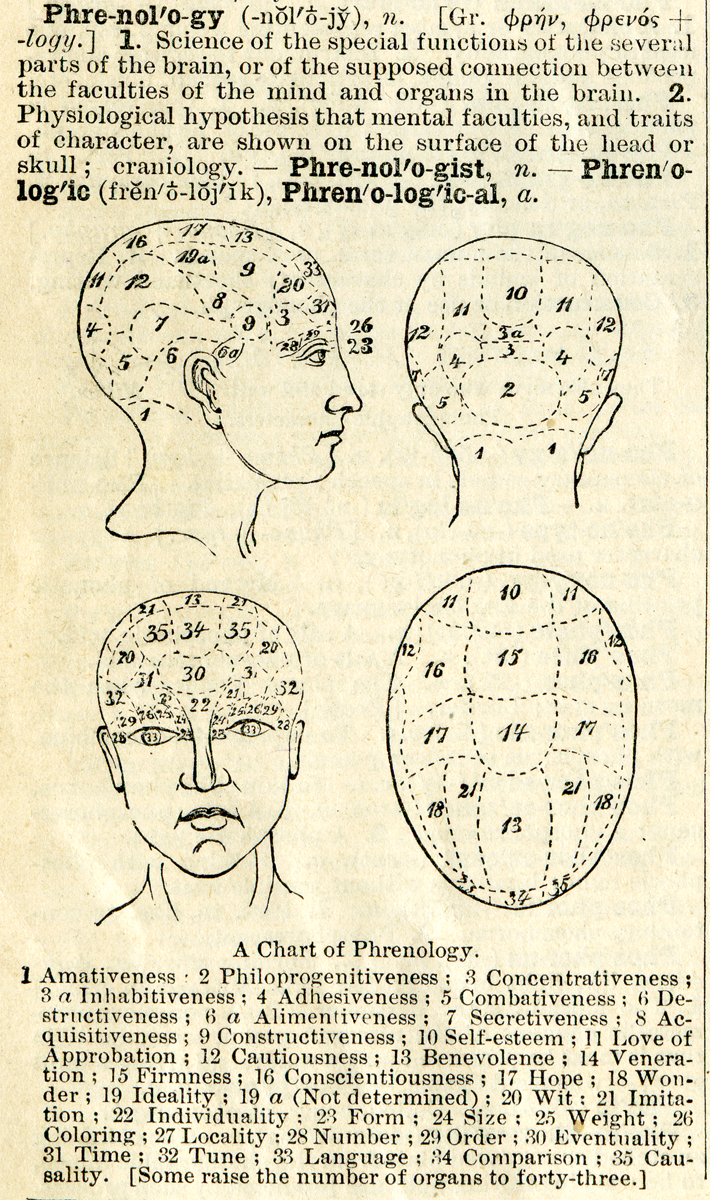
An 1895 chart of phrenology.

Over at Edge, economist Richard Thaler asked the science site’s contributors for responses to this question: “The flat earth and geocentric world are examples of wrong scientific beliefs that were held for long periods. Can you name your favorite example and for extra credit why it was believed to be true?”

I think philosopher Eduardo Salcedo-Albarán had the most intriguing and humane answer:

“Phrenology and lobotomy. Even when these were not scientific paradigms, they clearly illustrate how science affects people’s life and morality. For those not engaged in the scientific work, it is easy to forget that technology, and a great part of the western contemporary culture, results from science. However, people tend to interpret scientific principles and findings as strange matters that have nothing to do with everyday life, from gravity and evolution, to physics and pharmacology.

Phrenology is defined as the ‘scientific’ relation between the skull’s shape and behavioral traits. It was applied to understand, for example, the reason for the genius of Professor Samuel B. F. Morse. However, it was also applied in prisons and asylums to explicate and predict criminal behaviors. In fact, it was also assumed that the skull’s shape explained incapacities to act according to the law. If you were spending your life in an asylum or a prison in 19th century because of a phrenological ‘proof’ or ‘argument,’ you could perfectly understand how important science in your life is, even if you are not a scientist. Even more, if you were going to be a lobotomy’s patient in the past century.

In 1949, Antonio Egas Moniz achieved the Nobel Prize of Physiology and Medicine for discovering the great therapeutic value of lobotomy, a surgical procedure that, in its transorbital versions, consisted of introducing an ice pick through the eye’s orbit to disconnect the prefrontal cortex. Thousands of lobotomies were performed between the decade of 1940’s and the first years of 1960’s, including Rosemary Kennedy, sister of President John F. Kennedy, on the list of recipients; all of them with the scientific seal of a Nobel Prize. Today, half a century later, it seems unthinkable to apply such a ‘scientific’ therapy. I keep asking myself: ‘what if’ a mistake like this one is adopted today as policy on public health?

Science affects people’s lives directly. A scientific mistake can send you to jail or break your brain into pieces. It also seems to affect the kinds of moral stances that we adopt. Today, it would be morally reprehensible to send someone to jail because of the shape of his head, or to perform a lobotomy. However, 50 or 100 years ago it was morally acceptable. This is why we should spend more time thinking of practical issues, like scientific principles, scientific models and scientific predictions as a basis for public health and policy decisions, rather than guessing about what is right or wrong according to god’s mind or the unsubstantiated beliefs presented by special interest groups.”

Tags: , , ,

Siddhartha Mukherjee, the author of "The Emperor of All Maladies," is an oncologist.

The New York Times has published its list of 100 Notable Books of 2010. Below are the non-fiction books included that I’ve read or most want to read:

THE EMPEROR OF ALL MALADIES: A Biography of Cancer. By Siddhartha Mukherjee. (Scribner, $30.) Mukherjee’s powerful and ambitious history of cancer and its treatment is an epic story he seems compelled to tell, like a young priest writing a biography of Satan.

THE FIERY TRIAL: Abraham Lincoln and American Slavery. By Eric Foner. (Norton, $29.95.) Foner tackles what would seem an obvious topic, Lincoln and slavery, and sheds new light on it.

LAST CALL: The Rise and Fall of Prohibition. By Daniel Okrent. (Scribner, $30.) A remarkably original account of the 14-year orgy of lawbreaking that transformed American social life.

THE BOOK IN THE RENAISSANCE. By Andrew Pettegree. (Yale University, $40.) A thought-provoking revisionist history of the early years of printing.

THE MIND’S EYE. By Oliver Sacks. (Knopf, $26.95.) In these graceful essays, the neurologist explores how his patients compensate for the abilities they have lost, and confronts his own ocular cancer.”

Tags: , , , ,

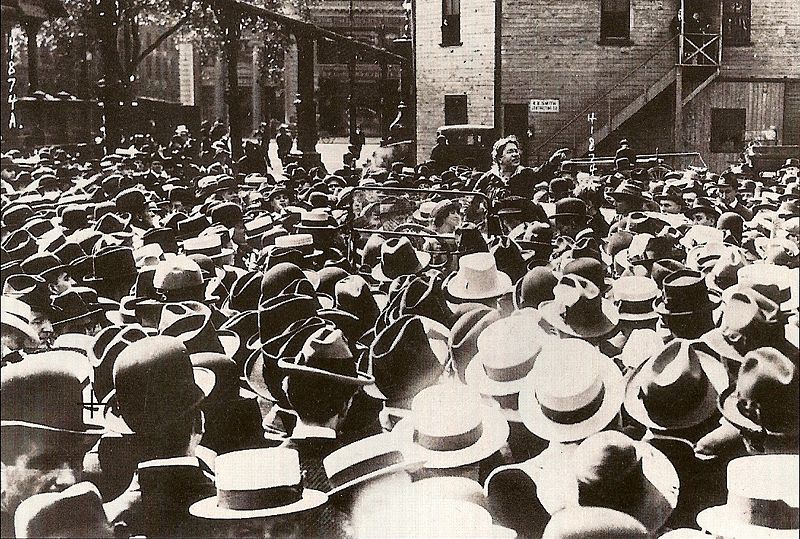
Emma Goldman speaks in Union Square in 1916.

The great Long Form just posted a link to Luc Sante’s  “My Lost City,” an amazing 2003 article in the New York Review of Books about living in NYC during the ’70s and ’80s, as the place changed from gritty to gentrified. It’s my favorite essay ever about New York. I once interviewed Sante about another matter entirely, but I asked him if he knew that this filthy, fascinating city he loved so much would disappear so quickly. “No,” he said, “I thought it was prelude to even greater things.” An excerpt from Sante’s article about street-level history lessons:

“When old people died without wills or heirs, the landlord would set the belongings of the deceased out on the sidewalk, since that was cheaper than hiring a removal van. We would go through the boxes and help ourselves, and come upon photographs and books and curiosities, evidence of lives and passions spent in the turmoil of 1910 and 1920, of the Mexican Border War and Emma Goldman’s Mother Earth and vaudeville and labor unions and the shipping trade, and we might be briefly diverted, but we were much more interested in the boxes on the next stoop containing someone’s considerably more recent record collection.

One day something fell out of an old book, the business card of a beauty parlor that had stood on Avenue C near Third Street, probably in the 1920s. I marveled at it, unable to picture something as sedate as a beauty parlor anywhere near that corner, by then a heroin souk.”

Tags: ,

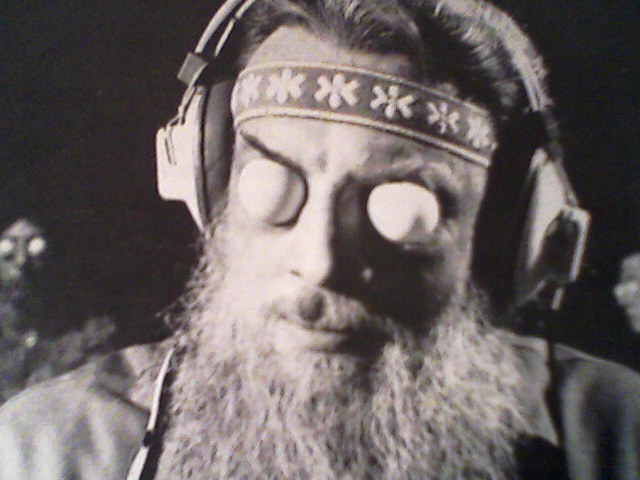
Fidel Castro receives some very shocking news! Actually, halved ping pong balls cover the eyes of biofeedback guru Jack Gariss. (Image by "Life.")

The article, “Flow Gently, Sweet Alpha,” published in a 1972 issue of Life magazine, is a participatory journalism piece by Jane Howard about the biofeedback craze of the time. Howard travels to several locales–New York, Los Angeles and Laredo, Texas–having electrodes glued to her head, learning to “program her dreams,” taking imaginary excursions through cubes of metal and enrolling in a “Mind Control” course in search of enlightenment. Being hooked up to a biofeedback machine for 45 minutes cost $145. Jack Gariss, one of the L.A. spiritual gurus featured in the article, had an earlier career as a screenwriter, earning a credit for The Ten Commandments. An excerpt from the piece:

“Mind Control does not use hardware. ‘Those machines are hopelessly obsolete already,’ one instructor told the 50 or so of us in my class. ‘We’re light years ahead of them. In these four days we’ll open up a channel that will make you feel like you can walk on water. You’d better start with puddles, though, until you’re used to being at your alpha level.’

The Silva Mind Control Institute of Laredo, Texas, was founded a year ago by a visionary electronics technician. ‘None of what you’ll learn here is new,’ our instructor told us in the New York City branch. ‘But José Silva is the first man in history to arrange these ideas in their proper sequence. It took him 26 years’ research.’

Mind Control has 50,000 graduates in 50 states and three foreign countries. In four days we would be graduates, too. We would learn all sorts of things. But first we had to stand up, one by one, and say what our zodiacal signs were, what we did for a living, and why we had come.

‘I’m a Gemini and a barber, and I heard this course was really far out.’

‘I’m a Serpico and a stockbroker, and I figured all this alpha stuff might give me insights about the market.’

‘I’m a waitress, Pisces with Capricorn rising, and I’ll try anything once.'”

Tags: , ,

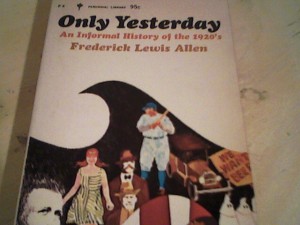
The author dedicated the book to his wife, Dorothy Penrose Allen, who died just prior to its publication.

Breaking coverage of the Teapot Dome Scandal.

Before Frederick Lewis Allen became Editor-in-Chief of Harper’s in 1941, he published a pair of popular histories. The one I’m going to excerpt from is a 1933 tome called Only Yesterday: An Informal History of the 1920’s. It covers the zeitgeist from the end of WWI to the stock market crash of 1929. Pictured is a 1959 paperback version, which then cost 95 cents. (In 1940, Allen published a follow-up, Since Yesterday, which looked at the Great Depression.)

In this excerpt from Only Yesterday, the author describes the rebelliousness of the younger generation in 1920’s America, which sounds very much like an apt description of their grandchildren 40 years later. The passage is from a chapter titled “The Revolution in Manners and Morals”:

“A first-class revolt against the accepted American order was certainly taking place during those early years of the Post-war decade, but it was one with which Nikolai Lenin had nothing whatever to do. The shock troops of the rebellion were not alien agitators, but the sons and daughters of well-to-do American families, who knew little of Bolshevism and cared distinctly less, and their defiance was expressed not in obscure radical publications or in soap-box speeches, but right across the family breakfast table into the horrified ears of conservative fathers and mothers. Men and women were still shivering at the Red Menace when they awoke to the no less alarming Problem of the Younger Generation, and realized that if the Constitution were not in danger, the moral code of the country certainly was.”

Tags:

Boxes. (No public-domain images available of software designers Bob and Carolyn Box.)

Before I put Hackers, Steven Levy’s 1984 book about the rise of renegade computer wizards, back on the shelf, I want to provide one more excerpt. This one is about married couple Bob and Carolyn Box, who decided to make software their livelihood after working as gold prospectors, among other things. They quickly taught themselves to be star hackers at Ken Williams’ gaming company, Sierra On-Line. Even by the eccentric standards of the time, these two had colorful backgrounds. An excerpt:

“Of all Ken’s new programmers, none exemplified his zeal for reforming lives by computer power as much as did Bob and Carolyn Box. Bob Box was in his fifties: they had lived in the area for well over a decade and worked at their ranch-style home five miles from Oakhurst, in the almost undetectable hamlet of Ahwahnee. Bob, who had dark hair, soulful eyes, and a nose of basset-hound proportions, was approximately four feet in height. He was a former New Yorker, a former engineer, a former race car driver, a former jockey, and a former Guinness Book of World Records champion in gold panning. Carolyn Box was slightly over five feet tall, had long brown hair and a world-weary attractiveness, and was the current Guinness Book of World Records champion in gold panning. They’d married twenty-six years ago, when Carolyn was fifteen. For the past few years, they’d been running a gold-prospecting supply business and searching for gold in the Fresno River, which ran in their backyard. The Oakhurst-Coarsegold area was on the southern rim of the California mother lode, and the gold the Boxes dredged up from the river one morning they came up with two thousand dollars’ worth in a half hour financed their programming courses at a Fresno trade school.
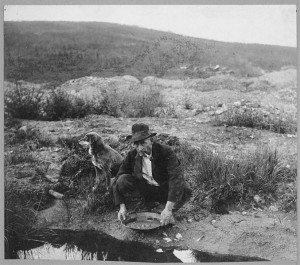
Man panning for gold in Alaska, 1916.

They had realized that the gold of the 1980s would be software, and their goal was to work at On-Line. Though Carolyn Box had been apprehensive about dealing with a computer, she instantly understood the required concept, as if computers were a language she’d always been talking. It was almost supernatural. She was the first one in the history of the school to get a 4.0 average in her courses. Bob did well, too: programming was like gold panning, he realized you proceeded in logical steps, and concentrated while you did it.

But when they presented themselves to Ken, he was skeptical. He told them that programmers usually peaked at nineteen and were over the hill at twenty; even Ken, at twenty-eight, was just about washed up. (Not that he believed it.) Ken wanted to give the Boxes a chance, though, because they fit right in with the dream he had about On-Line and the great computer future. So he told them to put up something on the screen using assembly language, in thirty days. The Boxes’ school had taught them programming in high-level languages on mainframe computers; they knew nothing about Apple assembly language. But working day and night, they came up with an 82-line program only five days later. It moved a dot around the screen. Ken asked them to try something else, and, again working almost every waking hour, the Boxes created a 282-line program with a little airplane moving around the high-resolution screen. Ken hired them, and set them to work programming a pet project of his, an educational game.

Soon the Boxes were hard at work getting a little dog, whom they named Dusty after their own dog, to walk across the screen. They would proudly explain to visitors that their hack used a sophisticated technique called exclusive-or-ing, which allowed for zero-flicker animation. They felt they’d given life to Dusty Dog. ‘This dog is like our pet,’ Carolyn Box would say. When Ken first saw Dusty Dog move across the screen, the little basset legs moving with steady, non-flickering fluidity, he almost burst. ‘It’s days like this that make you proud to be in this business,’ he told them. Even these middle-aged gold prospectors could be software superstars … and Ken was the Moses who led them to the promised Computer Land.”
Tags: , , ,

Tuataras often live to be one hundred years old.

Natalie Angier of the New York Times has an interesting article today about the tuatara, one of Earth’s most unusual vertebrates. Found in New Zealand, the tuatara are lizard-looking reptiles with a third eye atop their skulls and are referred to as “living fossils.” An excerpt:

“The tuatara — whose name comes from the Maori language and means ‘peaks on the back’ — is not an iguana, is not a lizard, is not like any other reptile alive today.

In fact, as a series of recent studies suggest, it is not like any other vertebrate alive today. The tuatara, scientists have learned, is in some ways a so-called living fossil, its basic skeletal layout and skull shape almost identical to that of tuatara fossils dating back hundreds of millions of years, to before the rise of the dinosaurs. Certain tuatara organs and traits also display the hallmarks of being, if not quite primitive, at least closer to evolutionary baseline than comparable structures in other animals.

For example, the tuatara has a third eye at the top of its skull, the legendary if poorly understood pineal eye, which is found in only a sprinkling of reptile species and which vision researchers suspect harks back to nature’s original eye — pretty much a few light-sensitive cells on a stalk. A tuatara’s teeth likewise follow the no-nonsense design seen in dinosaur dentition, erupting directly from the jawbone and without the niceties of tooth sockets and periodontal ligaments that characterize the teeth of all mammals and many reptiles. Some researchers are looking at tuataras for clues to how dental implants, which are inserted directly into the jaw, might be improved.”

Tags:

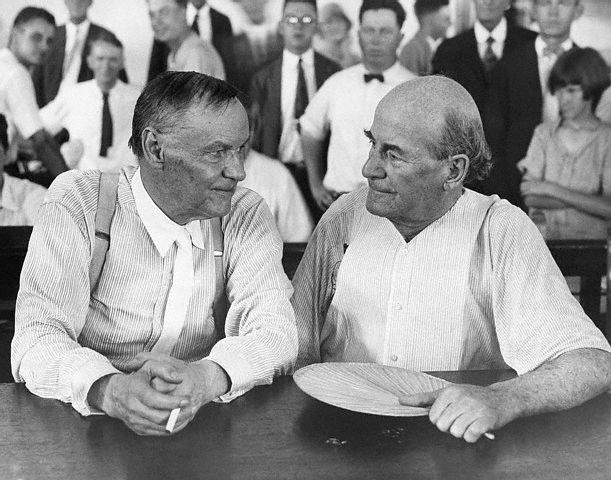
“It’s All About the Fabulous Monkey Trials That Rocked America!” screamed the tag line for Inherit the Wind, the 1960 Stanley Kramer drama about the Scopes Monkey Trial of 1926. Like most people, I always assumed that Scopes was a simple battle between evolutionists and creationists. Clarence Darrow liked logic and William Jennings Bryan hated monkeys.

But according to Stephen Jay Gould’s essay, “William Jennings Bryan’s Last Campaign,” included in the late Queens-born paleontologist’s finest collection, Bully for Brontosaurus, it wasn’t quite that simple. While anyone who has even a shred of logic in their head accepts evolution, the textbook at the center of that trial was truly odious. Tennessee high-school teacher John Scopes taught from A Civic Biology by George William Hunter, which wasn’t exactly the enlightened tome. An excerpt from Gould’s essay, in which he quotes verbatim from Hunter’s disturbing writing about the poorer classes in the United States:

Hundreds of families, such as these described above exist today, spreading disease, immorality and crime to all parts of this country. The cost to society of such families is very severe. Just as certain animals or plants become parasitic on other plants and animals, these families become parasitic on society. They not only do harm to others by corrupting, stealing or spreading disease, but they are actually protected and cared for by the state out of public money. Largely for them the poorhouse and asylum exist. They take from society, but they give nothing in return. They are truly parasites.

If such people were lower animals, we would probably kill them off to prevent them from spreading. Humanity will not allow this, but we do have the remedy of separating the sexes in asylums or other places and in various ways preventing intermarriage and the possibilities of perpetuating such a low and degenerate race.•

Tags: , , , ,

Marshall McLuhan was usually a genuinely incisive thinker and not the mountebank that some make him out to be. His writings still have a lot to teach us about the great paradigm shift we’re currently experiencing. But he was prone to sometimes wildly misread the future like anyone who constantly traffics in tea leaves. One glaring example was his prediction at the end of the 1960s that there might soon be genocide in America. In a 1969 Playboy interview, he opined that the shift from mechanical to technological culture might cause just that to occur. An excerpt:

Playboy:

What, specifically, do you think will happen to [the black man]?

Marshall McLuhan:

At best, he will have to make a painful adjustment to two conflicting cultures and technologies, the visual-mechanical and the electric world; at worst, he will be exterminated.


Playboy:

Exterminated?

Marshall McLuhan:

I seriously fear the possibility, though God knows I hope I’m proved wrong. As I’ve tried to point out, the one inexorable consequence of any identity quest generated by environmental upheaval is tremendous violence. This violence has traditionally been directed at the tribal man who challenged visual-mechanical culture, as with the genocide against the Indian and the institutionalized dehumanization of the Negro. Today, the process is reversed and the violence is being meted out, during this transitional period, to those who are nonassimilable into the new tribe. Not because of his skin color but because he is in a limbo between mechanical and electric cultures, the Negro is a threat, a rival tribe that cannot be digested by the new order. The fate of such tribes is often extermination.•

Tags:

From Stewart Brand’s prophetic December 7, 1972 “Spacewar” article in Rolling Stone, about the potential ramifications of the Internet:

One popular new feature on the Net is AI’s Associated Press service. From anywhere on the Net you can log in and get the news that’s coming live over the wire or ask for all the items on a particular subject that have come in during the last 24 hours. Project that to household terminals, and so much for newspapers (in present form). Since huge quantities of information can be computer-digitalized and transmitted, music researchers could, for example, swap records over the Net with ‘essentially perfect fidelity.’ So much for record stores (in present form).•

Tags:

Steven Levy's next book, about Google, is to be published in 2011.

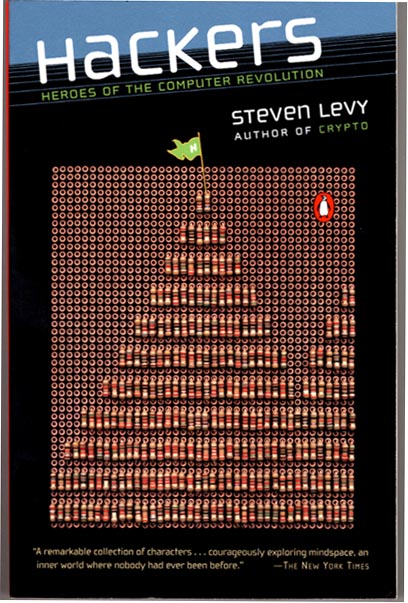
A few months ago, I excerpted a Wired article in which Steven Levy revisited some subjects profiled in his great 1984 book, Hackers: Heroes of the Computer Revolution. That book looked at the pioneers from the ’50s, ’60s, and ’70s who built the foundation of today’s interconnected technology. I’m rereading Hackers now, so I thought I’d provide a passage. This sequence is about the moment when computers passed over from institutions into the hands of Berkeley hackers. Eventually, some of the folks who cut their teeth on this XDS-940 Bay Area behemoth would help personal computing take quantum leaps forward, but initially the work was as unglamorous as it was idealistic and exciting. An excerpt:

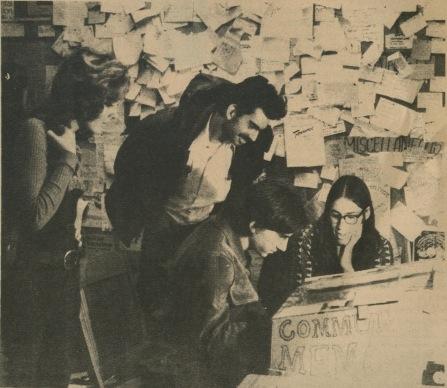
“The first public terminal of the Community Memory project was an ugly machine in a cluttered foyer on the second floor of a beat-up building in the spaciest town in the United States of America: Berkeley, California. It was inevitable that computers would come to ‘the people’ in Berkeley. Everything else did, from gourmet food to local government. And if, in August 1973, computers were generally regarded as inhuman, unyielding, warmongering and nonorganic, the imposition of a terminal connected to one of those Orwellian monsters in a normally good-vibes zone like the foyer outside of Leopold’s Records on Durant Avenue was not necessarily a threat to anyone else’s well-being. It was yet another kind of flow to go with.

A faded photo of the Community Memory project in action in Berkeley during the 1970s.

Outrageous, in a sense. Sort of a squashed piano, the height of a Fender Rhodes, with a typewriter keyboard instead of a musical one. The computer was protected by a cardboard box casing, with a plate of glass set in its front. To touch the keys, you had to stick your hands through little holes, as if you were offering yourself for imprisonment in an electronic stockade. But the people standing by the terminal were familiar Berkeley types, with long stringy hair, jeans, and a demented gleam in their eyes that you would mistake for a drug reaction if you did not know them well. Those who did know them well realized that the group was high on technology. They were getting off like they had never gotten off before, dealing the hacker dream as if it were the most potent strain of sinsemilla in the Bay Area.

The name of the group was Community Memory, and according to a handout they distributed, the terminal was ‘a communication system which allows people to make contact with each other on the basis of mutually expressed interests, without having to cede judgements to third parties.’ The idea was to speed the flow of information in a decentralized, non-bureaucratic system. An idea born from computers, an idea executable only by computers, in this case a time-shared XDS-940 mainframe machine in the basement of a warehouse in San Francisco. By opening a hands-on computer facility to let people reach each other, a living metaphor would be created, a testament to the way computer technology could be used as guerrilla warfare for people against bureaucracies.”

Tags:

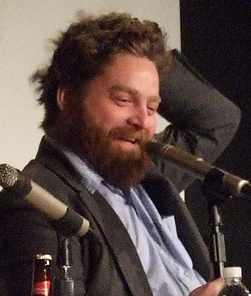
Also from the interview: "There are some people who are still playing beer pong in their late 20s. Do not do that." (Image by Gaelen Hadlett.)

Zach Galifianakis came oh-so-close to graduating from NC State but never quite made it. He sat for an interview with his old school and recalled the good times he had there. (Thanks Newmark’s Door.) An excerpt:

Q: What are your best memories about NC State?

Zach Galifianakis: I think one of my only A’s was in Anthropology. I think it was an ‘A’ – nevertheless, I so enjoyed that class. It opened my way of thinking to be sure. I also took a design course that kind of blew my mind and gave me a different perspective on how the eye and mind work together. Socially, I worked a lot. I worked at Amedeo’s Pizza and also Two Guys. That was my socialization. I never joined any clubs or organizations at State – I was a bit of a loner – but those were some very fond memories.”

Tags:

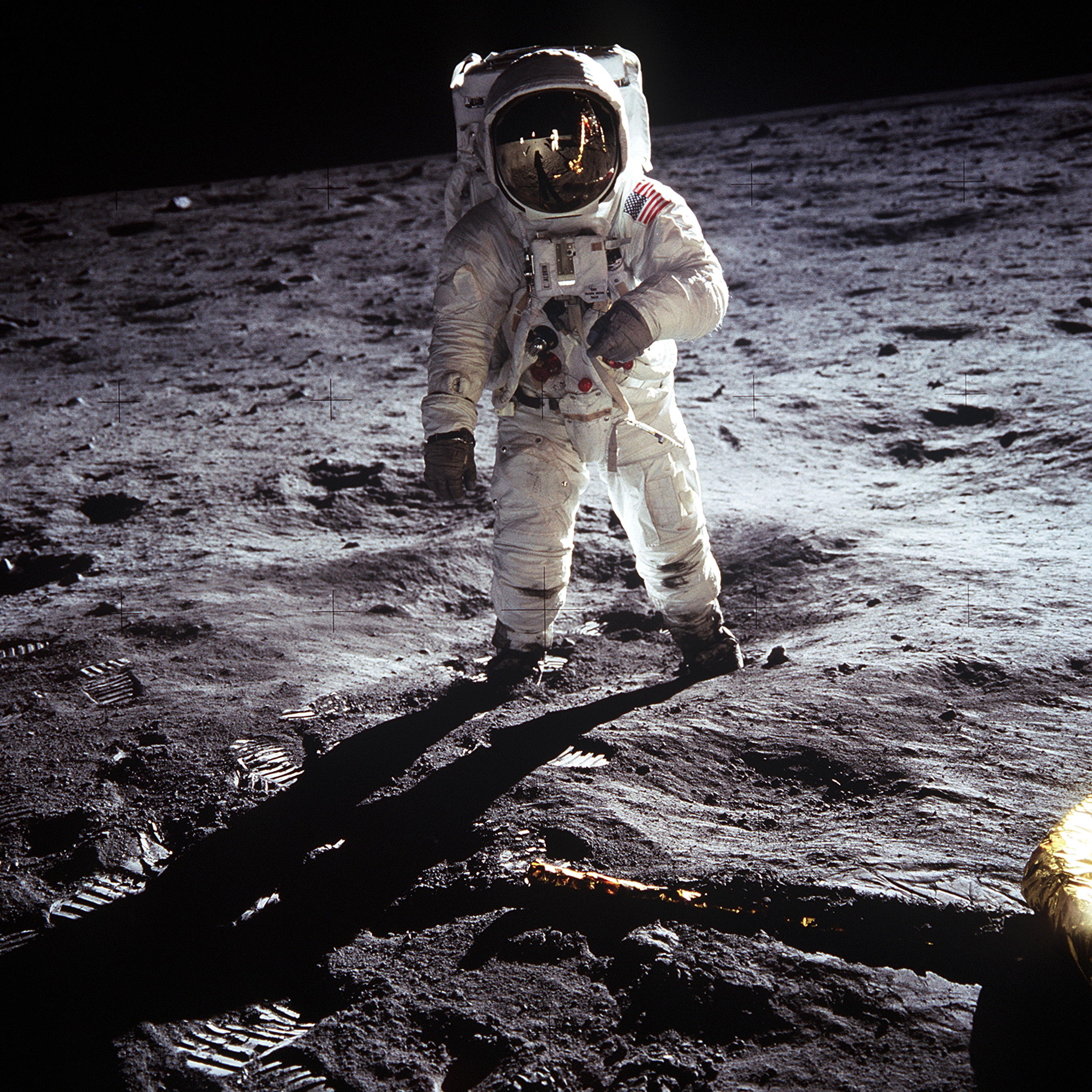
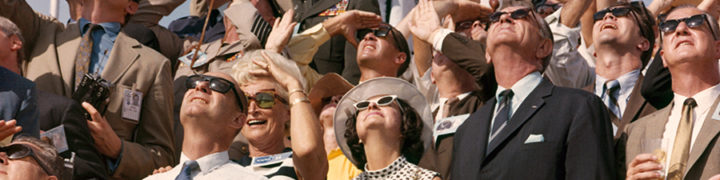
Buzz Aldrin walks on the moon on July 20, 1969. He is still alive--and dancing--while William Safire, H.R. Haldeman and President Nixon have all died.

The awesome Letters Of Note site has published a missive from July 18, 1969 that right-wing wordsmith William Safire sent to Nixon bagman H.R. Haldeman, in the event that Apollo 11 ran into difficulties and the astronauts were stranded to die on the moon. The following letter was to be read to the nation by President Nixon if such a tragedy occurred:

Fate has ordained that the men who went to the moon to explore in peace will stay on the moon to rest in peace.

These brave men, Neil Armstrong and Edwin Aldrin, know that there is no hope for their recovery. But they also know that there is hope for mankind in their sacrifice.

These two men are laying down their lives in mankind’s most noble goal: the search for truth and understanding.

They will be mourned by their families and friends; they will be mourned by the nation; they will be mourned by the people of the world; they will be mourned by a Mother Earth that dared send two of her sons into the unknown.

In their exploration, they stirred the people of the world to feel as one; in their sacrifice, they bind more tightly the brotherhood of man.

In ancient days, men looked at the stars and saw their heroes in the constellations. In modern times, we do much the same, but our heroes are epic men of flesh and blood.

Others will follow, and surely find their way home. Man’s search will not be denied. But these men were the first, and they will remain the foremost in our hearts.

For every human being who looks up at the moon in the nights to come will know that there is some corner of another world that is forever mankind.”

Tags: , ,

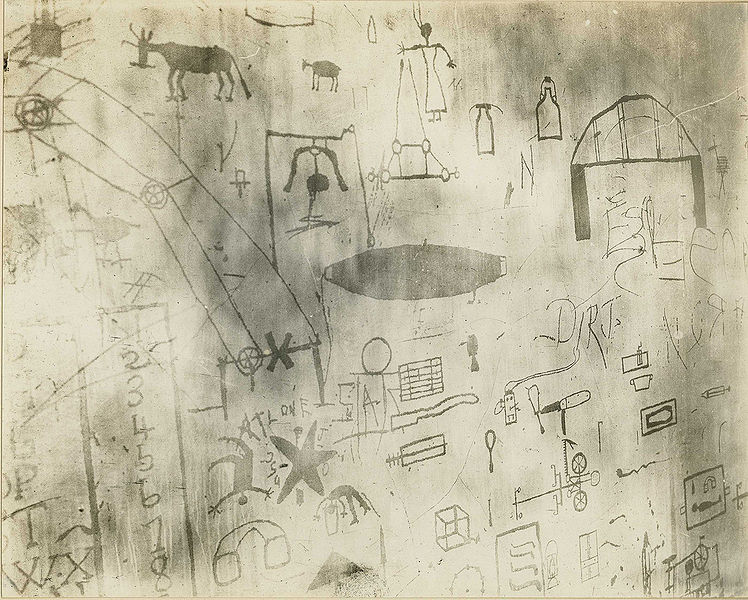
An early 20th-century schizophrenia patient used a pin or a fingernail to scratch this artwork into a hospital wall.

Schizophrenia has historically been blamed on everything from bad DNA to bad parenting (imagine the unfairness of that for a moment), but some in the scientific community are championing the idea that the illness stems from a virus that we all carry. An excerpt from a Discovery article about this theory:

“Schizophrenia is usually diagnosed between the ages of 15 and 25, but the person who becomes schizophrenic is sometimes recalled to have been different as a child or a toddler—more forgetful or shy or clumsy. Studies of family videos confirm this. Even more puzzling is the so-called birth-month effect: People born in winter or early spring are more likely than others to become schizophrenic later in life. It is a small increase, just 5 to 8 percent, but it is remarkably consistent, showing up in 250 studies. That same pattern is seen in people with bipolar disorder or multiple sclerosis.

‘The birth-month effect is one of the most clearly established facts about schizophrenia,’ says Fuller Torrey, director of the Stanley Medical Research Institute in Chevy Chase, Maryland. ‘It’s difficult to explain by genes, and it’s certainly difficult to explain by bad mothers.’

The facts of schizophrenia are so peculiar, in fact, that they have led Torrey and a growing number of other scientists to abandon the traditional explanations of the disease and embrace a startling alternative. Schizophrenia, they say, does not begin as a psychological disease. Schizophrenia begins with an infection.

The idea has sparked skepticism, but after decades of hunting, Torrey and his colleagues think they have finally found the infectious agent. You might call it an insanity virus. If Torrey is right, the culprit that triggers a lifetime of hallucinations—that tore apart the lives of writer Jack Kerouac, mathematician John Nash, and millions of others—is a virus that all of us carry in our bodies. ‘Some people laugh about the infection hypothesis,’ says Urs Meyer, a neuroimmunologist at the Swiss Federal Institute of Technology in Zurich. ‘But the impact that it has on researchers is much, much, much more than it was five years ago. And my prediction would be that it will gain even more impact in the future.'”

Tags: , ,

« Older entries § Newer entries »