Excerpts

You are currently browsing the archive for the Excerpts category.

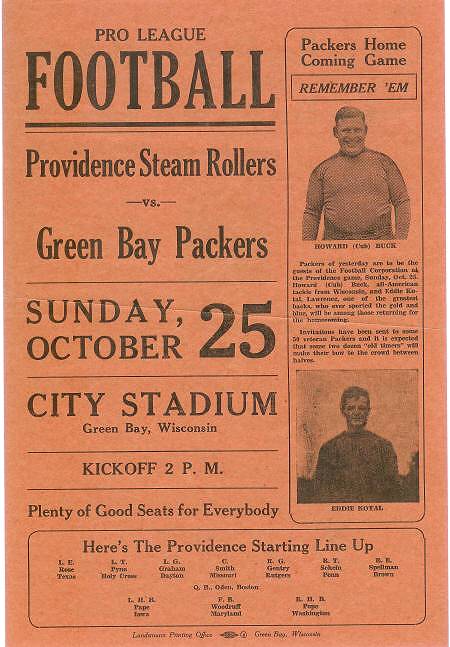
1931 poster advertising Green Bay Packers vs. Providence Steam Rollers.

The Green Bay Packers, headed to the Super Bowl, are the only non-profit, publicly owned major-league American sports team. In a post for the New Yorker‘s News Desk blog, Dave Zirin explains how this unique arrangement came to be. An excerpt:

“In 1923, the Packers were just another hardscrabble team on the brink of bankruptcy. Rather than fold they decided to sell shares to the community, with fans each throwing down a couple of dollars to keep the team afloat. That humble frozen seed has since blossomed into a situation wherein more than a hundred thousand stockholders own more than four million shares of a perennial playoff contender. Those holding Packers stock are limited to no more than two hundred thousand shares, keeping any individual from gaining control over the club. Shareholders receive no dividend check and no free tickets to Lambeau Field. They don’t even get a foam cheesehead. All they get is a piece of paper that says they are part-owners of the Green Bay Packers. They don’t even get a green and gold frame for display purposes.”

Tags:

The Buffalo Beast has put the 2010 version of its annual “50 Most Loathsome Americans” online. As always, it’s an entertaining read. Three excerpts follow.

••••••••••

"Cleveland, with no reason left to exist, has slid into Lake Erie." (Image by Dave Hogg.)

LeBron James
Aside from indirectly employing hundreds of Chinese kids in sweatshops, his sole contribution to society is tossing a ball through a hole. A genetic-lottery-winning monstrosity, he demonstrates the sort of unbridled ego deserving of the NBA’s first all-star midget. (Now that little dude can talk all the smack he wants.) Last year, ‘King’ James actually had Nike goons confiscate video of Jordan Crawford dunking on him during his clinic. This year, he imbued his free agency announcement with the import normally reserved for declarations of war. For a full half hour of his torturous hour-long ESPN special The Decision, he waxed smugly on topics unrelated, as the sad city of Cleveland nervously awaited the ultimately crushing news that he was going to South Beach. Cleveland, left with no reason to exist, has since slid into Lake Erie. Totally true.

••••••••••

"Owes his emotional instability to legendary Merlot consumption and his radioactive Naugahyde complexion to innumerable special interest golf junkets." (Image by Keith Allison.)

John Boehner
Cries so often he embarrasses Glenn Beck’s family. An incorrigibly lazy corporate puppet who owes his emotional instability to legendary Merlot consumption and his radioactive Naugahyde complexion to innumerable special interest golf junkets. His first notable act in Congress was to hand out tobacco lobby checks on the House floor before a vote on anti-smoking legislation; his PAC received $30K from Abramoff-affiliated tribes; he lived in an apartment owned by lobbyist John Milne; he knew about Mark Foley’s page perversion and sat on it. More recently, he compared the financial crisis to an ant and the weak Dodd-Frank bill to a nuke—while concurrently trying to block unemployment benefits. And the most egregious aspect of his drunken weeping on
60 Minutes, about kids having the same education opportunities he did, is that he’s scored hundreds of thousands from for-profit schools and the student loan industry—even sponsoring legislation that would slash public loan funding and redirect it to his golf buddy’s company Sallie Mae. He’s the kind of amoral opportunist who would campaign for Nazi reenactor Rich Iott in secret, not because there is any chance in hell of winning, but because Iott’s stinking rich and bound to repay the favor.

••••••••••

"Lambasted as the Himmler of the Southwest." (Image by Pete Souza.)

Jan Brewer
Gila Monster eugenics gone horrible awry. Killed two people, and another ninety-six languish, unable to afford the life-saving transplants for which she slashed state funding. Cut health care for kids too. Hates health care. Horny for the NRA; signed law nixing concealed carry permits, which had no ill effects in 2010. None. Don’t worry about it. Not a problem. Seriously. It’s totally cool. Attempted to justify the draconian racial profiling law SB 1070 by repeatedly citing fictional desert decapitations. Lambasted as the Himmler of the Southwest, she protested, saying her father died fighting the Nazis. He was never in the military. He died in ‘51. From lung cancer.

Tags: , ,

Some of Clarridge's "agents" attempted to get Hamid Karzai's beard clippings, so the hair could be tested for heroin traces. (Image by Cpl Matthew Roberson.)

It’s stunning to realize that there are American citizens running their own shadow versions of the C.I.A., but that’s a reality in the murky era of military outsourcing. Duane R. Clarridge, a former C.I.A. agent and a staunch right-wing interventionist, operates a network of spies from his home base in San Diego who often work in opposition to American foreign policy–and it’s apparently legal. An excerpt from Mark Mazzetti’s eye-popping article on Clarridge in the New York Times:

“Mr. Clarridge — known to virtually everyone by his childhood nickname, Dewey — was born into a staunchly Republican family in New Hampshire, attended Brown Universityand joined the spy agency during its freewheeling early years. He eventually became head of the agency’s Latin America division in 1981 and helped found the C.I.A.’s Counterterrorism Center five years later.

In postings in India, Turkey, Italy and elsewhere, Mr. Clarridge, using pseudonyms that included Dewey Marone and Dax Preston LeBaron, made a career of testing boundaries in the dark space of American foreign policy. In his 1997 memoir, he wrote about trying to engineer pro-American governments in Italy in the late 1970s (the former American ambassador to Rome, Richard N. Gardner, called him ‘shallow and devious”), and helping run the Reagan administration’s covert wars against Marxist guerrillas in Central America during the 1980s.

He was indicted in 1991 on charges of lying to Congress about his role in the Iran-contra scandal; he had testified that he was unaware of arms shipments to Iran. But he was pardoned the next year by the first President George Bush.

Now, more than two decades after Mr. Clarridge was forced to resign from the intelligence agency, he tries to run his group of spies as a C.I.A. in miniature. Working from his house in a San Diego suburb, he uses e-mail to stay in contact with his ‘agents’ — their code names include Willi and Waco — in Afghanistan and Pakistan, writing up intelligence summaries based on their reports, according to associates.”

Tags: , , ,

"There aren't many things in the world that would make Steve Wienecke look small."

Knokkers, which may be the greatest sport ever, combines bowling and billiards. (Thanks Gizmodo.) An excerpt from an article by Jason Jenkins about the beer-friendly game from Rural Missouri magazine:

“There aren’t many things in the world that would make Steve Wienecke look small. Standing 6 feet 4 inches tall and weighing in at around 270 pounds, this former semi-pro football player and cage fighter casts a large shadow.

But step into his backyard south of Fredericktown and everything, including Steve, shrinks in stature.

Here, in a space large enough to encompass an in-ground swimming pool, Steve has built what he believes is the world’s largest regulation-size pool table. At nearly 30 feet long and 15 feet wide, the table and the hybrid game played on its surface–a combination of billiards and bowling that Steve calls ‘Knokkers’–are the culmination of an idea of 25 years in the making.”

Tags: ,

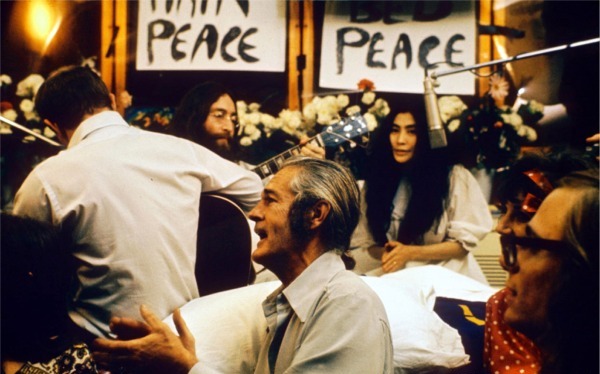
"All I'm saying is that perhaps we can make a revolution without violence." (Image by Roy Kerwood.)

John Lennon was famous for urging everyone to give peace a chance, but there was a moment when he seemed to flinch and curl his fist. It was during a January 1971 interview he and Yoko Ono did with the radical left publication Red Mole. To her credit, Ono wasn’t having any of the macho blather. An excerpt:

Red Mole: Communication is vital for building a movement, but in the end it’s powerless unless you also develop popular force.

Yoko Ono: I get very sad when I think about Vietnam where there seems to be no choice but violence. This violence goes on for centuries perpetuating itself. In the present age when communication is so rapid, we should create a different tradition, traditions are created everyday. Five years now is like 100 years before. We are living in a society that has no history. There’s no precedent for this kind of society so we can break the old patterns.

Red Mole: No ruling class in the whole of history has given up power voluntarily and I don’t see that changing.

Yoko Ono: But violence isn’t just a conceptual thing, you know. I saw a programme about this kid who had come back from Vietnam – he’d lost his body from the waist down. He was just a lump of meat, and he said, ‘Well, I guess it was a good experience.’

John Lennon: He didn’t want to face the truth, he didn’t want to think it had all been a waste…

Yoko Ono: But think of the violence, it could happen to your kids…

Red Mole: But Yoko, people who struggle against oppression find themselves attacked by those who have a vested interest in nothing changing, those who want to protect their power and wealth. Look at the people in Bogside and Falls Road in Northern Ireland; they were mercilessly attacked by the special police because they began demonstrating for their rights. On one night in August 1969, seven people were shot and thousands driven from their homes. Didn’t they have a right to defend themselves?

Yoko Ono: That’s why one should try to tackle these problems before a situation like that happens.

John Lennon: Yes, but what do you do when it does happen, what do you do?

Red Mole: Popular violence against their oppressors is always justified. It cannot be avoided.

Yoko Ono: But in a way the new music showed things could be transformed by new channels of communication.

John Lennon: Yes, but as I said, nothing really changed.

Yoko Ono: Well, something changed and it was for the better. All I’m saying is that perhaps we can make a revolution without violence.

John Lennon: But you can’t take power without a struggle…”
Like a lot of people who move to New York to reinvent themselves, Jerzy Kosinksi was a tangle of fact and fiction that couldn’t easily be unknotted. He was lauded and reviled, labeled as brilliant and a plagiarist, called fascinating and a fraud. The truth, as usual, probably lies somewhere in between. Kosinski was a regular on talk shows, at book parties and at Plato’s Retreat. He acted in Reds and posed for magazine covers. But he was too haunted to be a bon vivant, and in 1991, the author committed suicide.

Kosinski did an interview with The Paris Review in 1972. He opined about what he felt was the ever-dwindling importance of written and verbal language. He was very concerned by how much people liked to watch. Since his death, the Internet has supplanted TV as the premium medium, allowing people to write and publish more words than ever before, though that hasn’t really halted our drift deeper into pictures.

An excerpt:

Question:

Since you often teach English, what is your feeling about the future of the written word?

Jerzy Kosinski

I think its place has always been at the edge of popular culture. Indeed, it is the proper place for it. Reading novels–serious novels, anyhow–is an experience limited to a very small percentage of the so-called enlightened public. Increasingly, it’s going to be a pursuit for those who seek unusual experiences, moral fetishists perhaps, people of heightened imagination, the troubled pursuers of the enlightened self.

Question:

Why such a limited audience?

Jerzy Kosinski:

Today, people are absorbed in the most common denominator, the visual. It requires no education to watch TV. It knows no age limit. Your infant child can watch the same program you do. Witness its role in the homes of the old and incurably sick. Television is everywhere. It has the immediacy which the evocative medium of language doesn’t. Language requires some inner triggering; television doesn’t. The image is ultimately accessible, i.e., extremely attractive. And, I think, ultimately deadly, because it tuns the viewer into a bystander. 

Of course, that’s a situation we have always dreamt of . . . the ultimate hope of religion was that it would release us from trauma. Television actually does so. It “proves” that you can always be an observer of the tragedies of others. The fact that one day you will die in front of the live show is irrelevant—you are reminded about it no more than you are reminded about real weather existing outside the TV weather program. You’re not told to open your window and take a look; television will never say that. It says, instead, “The weather today is . . .” and so forth. The weatherman never says, “If you don’t believe me, go find out.”

From way back, our major development as a race of frightened beings has been toward how to avoid facing the discomfort of our existence, primarily the possibility of an accident, immediate death, ugliness, and the ultimate departure. In terms of all this, television is a very pleasing medium: one is always the observer. The life of discomfort is always accorded to others, and even this is disqualified, since one program immediately disqualifies the preceding one. Literature does not have this ability to soothe. You have to evoke, and by evoking, you yourself have to provide your own inner setting. When you read about a man who dies, part of you dies with him because you have to recreate his dying inside your head.

Question:

That doesn’t happen with the visual?

Jerzy Kosinski:

No, because he dies on the screen in front of you, and at any time you can turn it off or select another program. The evocative power is torpedoed by the fact that this is another man; your eye somehow perceives him as a visual object. Thus, of course, television is my ultimate enemy and it will push reading matter—including The Paris Review—to the extreme margin of human experience.•

Tags: , ,

"Red Dawn 2" recently filmed in Detroit, not needing to dress down it's buildings to make is seem the site of a devestating invasion. (Image by Yves Marchan and Romain Meffre.)

Are we fascinated by the modern ruins of Detroit because they seem otherworldy or because they seem like our future?

The Motor City, shattered by financial apocalypse, has become the popular subject of ruinsploitation books and articles and photo series. Some urban analysts believe that’s because because we subconsciously fear Detroit is a harbinger of what lies ahead for us all. It seems melodramatic, but a good article by John Patrick Leary in Guernica wonders about that very idea. (Thanks Essayist.) An excerpt:

“For media workers from more prosperous cities, Detroit’s spaces of ruination appear to tell a history, or at least evoke a vague sense of historical pathos, absent in those other, wealthier cities. Indeed, one of the notable features of this Detroit boom is the fact that few of the people driving it actually live here. For someone from New York, Paris, or San Francisco, history seems more visible here, and this is the visual fascination that Detroit holds. As [Yves] Marchand and [Romain] Meffre write on their website, ‘Ruins are the visible symbols and landmarks of our societies and their changes, small pieces of history in suspension.’ In a country perennially plagued with a historical amnesia, ruins are rare permanent reminders of a history unsuited to the war memorials and equestrian statues that dot the national landscape. Another reason for the fascination with Detroit’s decline is less about history, though, and more about the future.

Coleman Young, Detroit’s charismatic and still-controversial mayor during the years of the city’s most precipitous decline in the nineteen seventies and eighties, put it well in his fascinating 1994 autobiography, Hard Stuff: ‘Detroit today,’ he wrote, ‘is your town tomorrow.’ From the 1967 riots, when Detroit became the flashpoint of the country’s political and racial crisis, to the deindustrialization and crime of the nineteen seventies and the nineteen eighties, the city has been a bellwether of each major urban crisis since World War II. Today, Detroit, to use an overused but appropriate metaphor given the city’s scarred appearance, is ‘ground zero” of the collapse of the finance and real estate economy in America. Detroit has been hit as hard as any city by the foreclosure crisis and by unemployment, and so it embodies the looming jobless future, or more precisely, our worst fears about that future.”

Tags: , ,

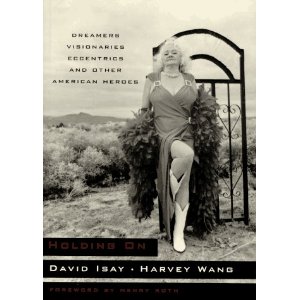
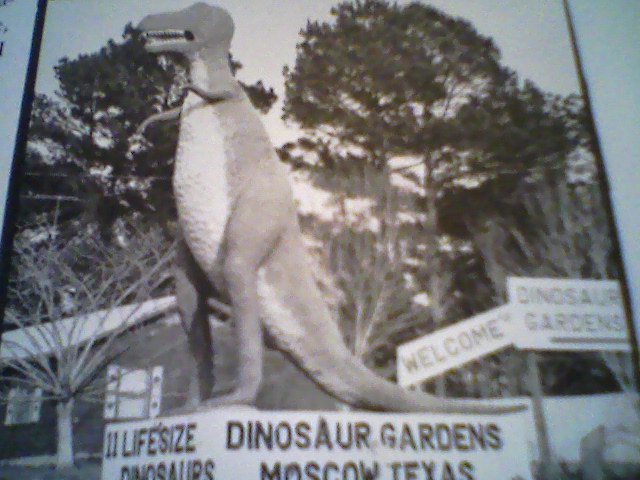
From dust jacket flap: "This book is a tribute to some of America's greatest characters, people holding on to unique ways of life at all costs."

When I recently put up a post about Harvey Wang, it reminded me that in my whole life in New York City, I have only been the victim of theft one time and the stolen item was an excellent 1996 book called Holding On: Dreamers, Visionaries, Eccentrics and Other American Heroes, which Wang co-created with David Isay. I believe my house painter nicked it several years back when I left him alone in the apartment for a couple of hours.

The book, about eccentric Americans (snake handlers, coon-dog graveyard caretakers, hat blockers, burlesque museum curators, etc.) who aren’t willing to be swallowed whole by a homogenized culture, is definitely worth stealing, though I paid a few bucks for a replacement copy. An excerpt from the chapter, “Donald Bean, Proprietor, Dinosaur Gardens, Moscow Texas”:

“‘I Thought I Saw a Dinosaur’ reads the welcome sign to Moscow, Texas, an unincorporated hamlet ninety miles north of Houston. There isn’t much more to the place. Indeed, the number of dinosaurs residing in Moscow rivals the town’s population, all thanks to the retired carpenter named Donald Bean.

‘I try to keep this as much as I can like it would have been back then, you know,’ Bean explains as we begin our tour through the roadside attraction. Canned dinosaur sound effects erupt from small speakers hidden in trees. We round the corner and come upon the theme park’s first dinosaur–Elasmosaurus, a twenty-foot-long flippered beast residing in a murky bog of water, surrounded by a ring of pond scum. ‘If you cleaned it out,’ Bean explained, ‘it wouldn’t be a swamp.’

All told, Donald Bean’s roadside attraction consists of exactly eleven worn fiberglass dinosaurs laid out along a winding trail cut into the woods behind his home. Bean opened up Dinosaur Gardens in 1981–the culmination of a lifelong fascination with these prehistoric creatures. ‘I always liked dinosaurs. They’re large…they’re big, and they ruled the world for years…Thousands of years…Well, millions of years!’ Donald Bean came up with the idea for the theme park in the late 1950s when he happened upon a similar roadside attraction in Oregon while vacationing with his wife, Yvonne. ‘Soon as I saw that I said, ‘That’s what I want to do!’ So I did it’

It took Bean twenty years of planning and saving before he was finally ready to build his own theme park. ‘My wife wasn’t too for the idea right off the jump go, because we spent our life savings on it.’ The park cost the Beans $100,000 to build, and when Dinosaur Gardens opened it was met with just about the level of enthusiasm one might anticipate for a dinosaur theme park in the heart of Moscow, Texas. The masses did not seem to share Bean’s fervor for creatures prehistoric. There were no lines at the ticket office. It kind of disappointed me,’ Bean says, wiping a spider web from Struthiomimus‘s mouth. ‘I don’t know how many people I thought would come, but I thought there’d be quite a few.'”

Tags: , ,

"Jobs was being Jobs: He was telling the truth, he was simplifying the truth, he was exaggerating the truth, he was leaving part of the truth out." (Image by acaben.)

Tom Junod’s 2008 profile about Steve Jobs in Esquire becomes an even better read now for very unfortunate reasons. (Thanks Longform.) The article’s opening:

One day, Steve Jobs is going to die.

First, he is mortal. Second, the odds against him are not only actuarial — the inevitable odds we all face — they are clinical. Four years ago, he announced in a memo to his employees that he had undergone surgery, that the surgery was for the removal of a malignant tumor, that the tumor was on his pancreas, and that the surgery was, as he put it, successful. An exceptional man who specializes in exceptionalizing himself — he has been an economic force for thirty years, and it’s still hard to put him in a category, or even to say exactly what he does — he responded to his disease by exceptionalizing it as well. He was at pains to say that the pancreatic cancer he had was not that kind of pancreatic cancer — not the kind that kills you, without much room for exception, in six months or so — but rather ‘a very rare form of pancreatic cancer… which represents about 1 percent of the total cases…each year, and can be cured by surgical removal.’ Even in extremis, Jobs was being Jobs: He was telling the truth, he was simplifying the truth, he was exaggerating the truth, he was leaving part of the truth out. It is true that his cancer, originating not in the ductwork of the pancreas but rather in the islets of Langerhans, is slow growing and, in the words of one expert, can be addressed ‘with curative intent’; it is also true that even after surgery, the average patient lives about five years.”

Tags: ,

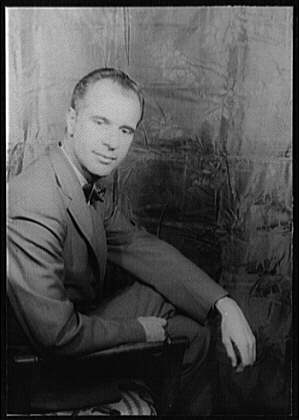
Hersey wrote an aftermath to "Hiroshima" 40 years later, tracing the fates of the six survivors he originally interviewed. (Photo by Carl Van Vechten.)

Truman Capote’s In Cold Blood and John Hersey’s Hiroshima are the two best pieces of long-form American nonfiction I have ever read. I wouldn’t change a word of either one. Hersey’s work, which he wrote for his longtime employer, The New Yorker, was so brilliantly shattering that the entire August 31, 1946 issue was dedicated solely to the article. It became an instant classic and so did the subsequent book version.

Although he was always best know for this piece during his life, Hersey turned out a formidable quantity of other quality fiction and nonfiction. A 1989 Vintage collection, Life Sketches: Incisive and Profoundly Insightful Portraits of Extraordinary Men and Women, 1944-1989, brought together some of Hersey’s finest biographical articles.

The 1945 piece, “The Brilliant Jughead,” tells the story of Private John Daniel Ramey, an illiterate U.S. soldier who was sent to a special training unit in Pennsylvania that conducted a highly successful three-month basic literacy course. This unit, and others like it, taught more than a quarter million illiterate servicemen–who were labeled with the pejorative “jughead” by some fellow soldiers–to read and write during WWII. An excerpt:

“Private Ramey, who was assigned to the Pennsylvania school toward the end of March, 1945, could hardly be called a typical jughead. There is, in fact, no typical illiterate, any more than there is a typical college graduate. Ramey is above whatever average there is. He finished the course, which usually takes twelve weeks, in ten. By jughead standards, Ramey is brilliant. He says that he was often embarrassed, when he was a civilian, by not being able to read and write, but the surprising thing about his life before the war is how much he, an illiterate, was able to do for himself: at one time he owned a house, ran a small coal mine employing twenty-eight men, and had two automobiles, the better of which was a Mercury with, as he says, ‘one of them cloth tops on it,’ bought brand-new. The fact that he is above average makes him especially grateful for the opportunities, the amazements, opened up for him by being educated, for the first time in his life, to the written word.”

Tags: , ,

"She has spent some 15 years since that day studying this emerging breed of 'sociable robots.'" (Image by jeanbaptisteparis.)

Sherry Turkle fell in love with a robot once. It didn’t work out.

Turkle is the MIT professor whose 1995 book, Life on the Screen, was sanguine about the growing interaction between people and technology. But she had doubts after feeling her emotions stir for a robot named Cog she was working with at the university. The personal connection with the bot gave Turkle pause, making her wary that humans are growing reliant on gadgets not just for utility but also for the type of nourishment provided in the past by people.

While her love for Cog may say more about the academic herself than anyone else, Turkle doesn’t think so. She shared some of her fears of how artificial intelligence may soon replace human emotion with Jeffrey R. Young of the Chronicle. (Thanks A&L Daily.) An excerpt:

“She has spent some 15 years since that day studying this emerging breed of ‘sociable robots’—including toys like Furbies and new robotic pets for the elderly—and what she considers their seductive and potentially dangerous powers. She argues that robotics’ growing trend toward creating machines that act as if they were alive could lead people to place machines in roles she thinks only humans should occupy.

Her prediction: Companies will soon sell robots designed to baby-sit children, replace workers in nursing homes, and serve as companions for people with disabilities. All of which to Turkle is demeaning, ‘transgressive,’ and damaging to our collective sense of humanity. It’s not that she’s against robots as helpers—building cars, vacuuming floors, and helping to bathe the sick are one thing. She’s concerned about robots that want to be buddies, ‘implicitly promising an emotional connection they can never deliver.”

Tags: ,

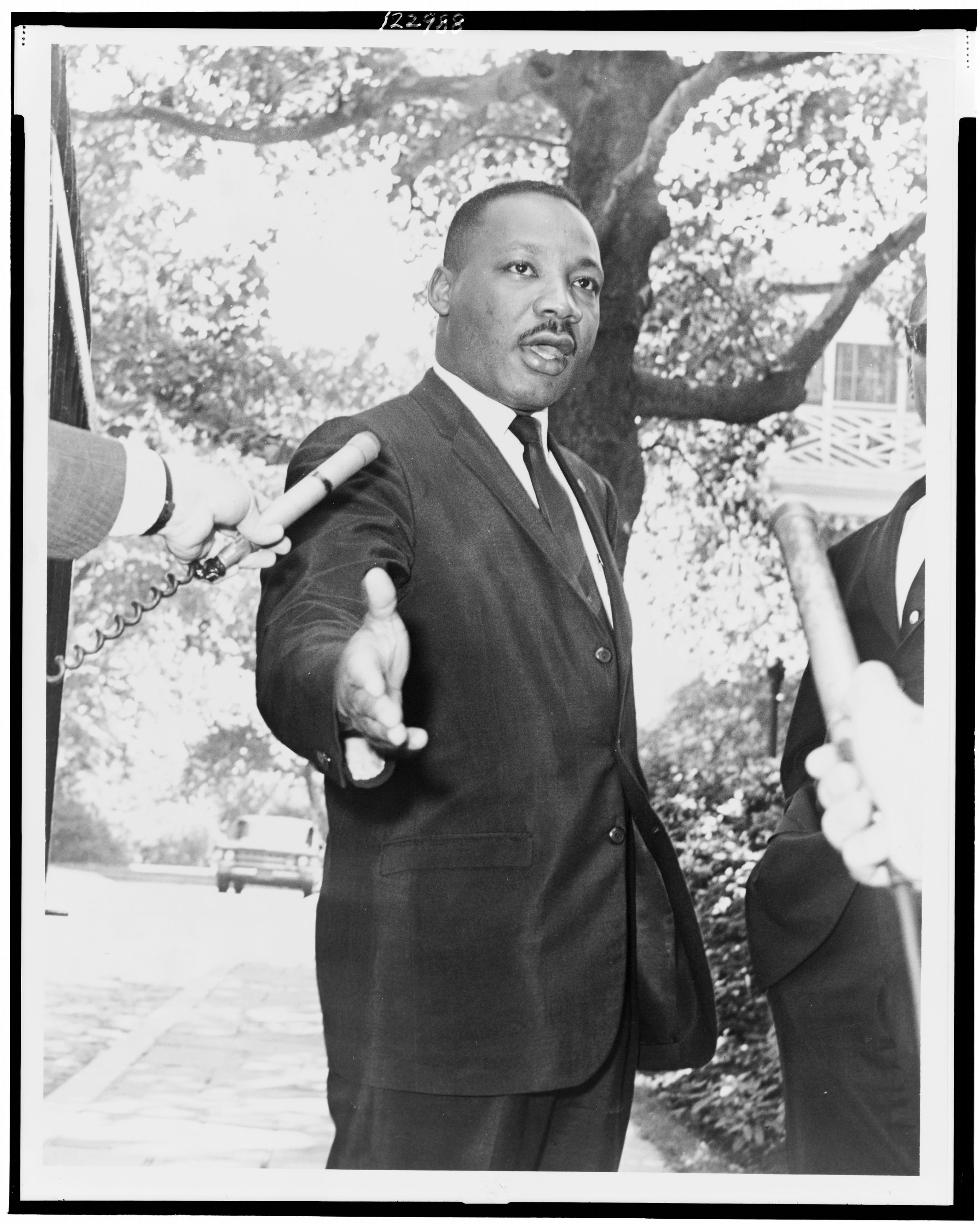
Martin Luther King, Jr. at New York's Grace Mansion on July 30, 1964. (Image by Dick DeMarsico.)

From Martin Luther King, Jr.’s 1965 Playboy interview:

PLAYBOY: You categorically reject violence as a tactical technique for social change. Can it not be argued, however, that violence, historically, has effected massive and sometimes constructive social change in some countries?

MARTIN LUTHER KING: I’d be the first to say that some historical victories have been won by violence; the U.S. Revolution is certainly one of the foremost. But the Negro revolution is seeking integration, not independence. Those fighting for independence have the purpose to drive out the oppressors. But here in America, we’ve got to live together. We’ve got to find a way to reconcile ourselves to living in community, one group with the other. The struggle of the Negro in America, to be successful, must be waged with resolute efforts, but efforts that are kept strictly within the framework of our democratic society. This means reaching, educating and moving large enough groups of people of both races to stir the conscience of the nation.”

Tags:

"All we need is a good sample of soft tissue from a frozen mammoth." (Image by Mauricio Antón.)

After 5,000 years of extinction, the Woolly Mammoth may be getting a new lease on life, as Japanese scientists believe they’ll be able to clone the humongous beasts within a few years. It sounds like such a terrible idea. (Thanks Newser.) An excerpt from a Telegraph article about the experiment:

“Previous efforts in the 1990s to recover nuclei in cells from the skin and muscle tissue from mammoths found in the Siberian permafrost failed because they had been too badly damaged by the extreme cold.

But a technique pioneered in 2008 by Dr. Teruhiko Wakayama, of the Riken Centre for Developmental Biology, was successful in cloning a mouse from the cells of another mouse that had been frozen for 16 years.

Now that hurdle has been overcome, Akira Iritani, a professor at Kyoto University, is reactivating his campaign to resurrect the species that died out 5,000 years ago.

‘Now the technical problems have been overcome, all we need is a good sample of soft tissue from a frozen mammoth,’ he told The Daily Telegraph.

He intends to use Dr Wakayama’s technique to identify the nuclei of viable mammoth cells before extracting the healthy ones.

‘The success rate in the cloning of cattle was poor until recently but now stands at about 30 per cent,’ he said. ‘I think we have a reasonable chance of success and a healthy mammoth could be born in four or five years.'”

Tags: ,

"It's really AOL with a different layout." (Image by Raphaël Labbé.)

I suppose I should be losing sleep over Facebook’s questionable practices regarding privacy, but I’m not. What really bothers me about Mark Zuckerberg’s toy is how utterly prosaic a product it is. Zuckerberg hasn’t come up with anything great or original; his chief accomplishments are recognizing a niche in the market and having the brass to not sell the company to a big media conglomerate that would have bungled the whole thing. Facebook isn’t a perfect design like the iPod but a creeping mediocrity with some utility. It’s a global high school yearbook, and its success largely stems from how uninventive it is. John C. Dvorak explains further in his new PCmag.com article, “Why I Don’t Use Facebook.” (Thanks Reddit.) An excerpt:

“Which begs the question as to why anyone would use Facebook when it is essentially AOL done right? The fastest growing group on Facebook are people in their 70’s. Oldsters are flocking to Facebook the way they once did with AOL. Facebook is a simple system for the masses that do not really care about technology and do not want to learn anything new except something easy like Facebook.

Whenever someone tells me to check out something on Facebook, I recall the heyday of AOL with its keywords. ‘Go to the Internet at www.blah.com or AOL keyword: blah. This was a common comment on the nightly news or in magazines. The AOL keyword is replaced by the Facebook page name.

There is no reason for anyone with any chops online to be remotely involved with Facebook, except to peruse it for lost relatives. So, next time you log on, remember it’s really AOL with a different layout.

Welcome to the past.”

Tags: ,

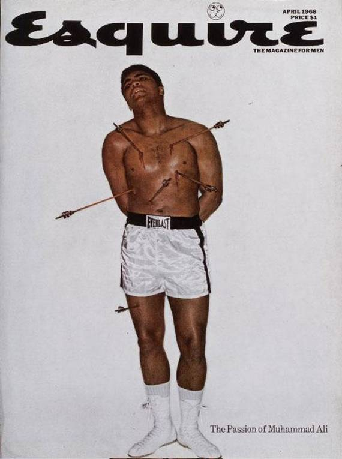
"The Passion of Muhammad Ali," April 1968, "Esquire."

Brilliant, blustery and belligerent, Bronx-born advertising legend George Lois created some of the most iconic magazine covers ever, alongside editor Harold Hayes, for Esquire in the 1960s. They were the kind of uncluttered, political and thought-provoking images that are rarely even attempted today in a magazine world governed by a focus-group mentality. Lois has never been shy about his utter disdain for contemporary magazine covers, but in a new Vice interview, he reveals a few he’s liked. An excerpt.

Vice: Have you seen a single cover from the past few years that you liked?

George Lois: Once in a while, and it really thrills me.

The New Yorker did two or three terrific covers over the last couple of years that really nailed what was going on. That terrific drawing of Obama and Hilary Clinton in bed together, answering the phone, was fucking good. David Remnick is a fan of mine. We had lunch once and he said, ‘Do you think I should do some photographic covers?’ I said, ‘What? Are you fucking nuts? You’re the only mag that stands out or has a chance of standing out! You don’t fill it with blurbs; you have drawings, which in many cases are whimsical and sweet. That’s terrific, but you should do a cover about something that happened last Thursday. Have somebody come up with a great idea on Friday, and then it comes out the next Monday. You’ll nail what happened!’ Then he did three or four of them, and I said, ‘Jesus Christ, somebody’s listening to me!’ But that’s about it.”

Tags: ,

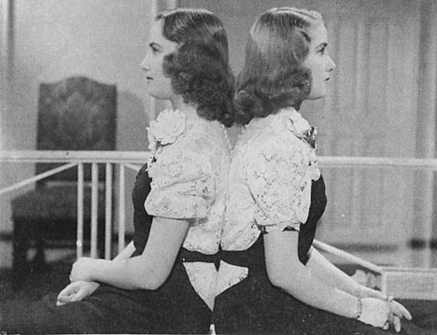
A 1940s photo of the Argentine actors known as the Legrand sisters. No public domain photos available of the sisters featured in the "Times" story.

Bob Pool of the Los Angeles Times reports on Inez Harries and Venice Shaw, twin sisters in California who are celebrating their 100th birthdays this Sunday–together, of course. These women remained close and share similar lives and tastes, but even twins who are separated at birth seem to have much in common despite the different stimuli they experience. Nature is a fierce thing, even in the face of nurture. An excerpt:

“Born Jan. 15, 1911, in Pasadena to citrus ranch manager William Hesser and his wife, Anna, the twins were reared in San Fernando and later in what is now Granada Hills. The family also lived in Whittier for a time.

Harries is now a Sylmar resident and Shaw lives in Newbury Park.

Inseparable as young children, the twins dressed alike, double-dated as teenagers and worked at the same Sunkist packing house as young adults. Later, after both were married, the two couples vacationed together on camping trips to such places as Yosemite and Kings Canyon national parks.

Family photos show them dressed in identical baby clothes and in matching dresses, sewn by their mother, in elementary school and high school — their San Fernando High School senior portrait from 1929 shows them wearing identical pink polka-dot outfits.

In grade school, the pair had the same friends — at the same time. They would pick one girl and Inez would be on one side of her and Venice on the other, they recall.

‘Other kids called us ‘Twinny’ rather than make a mistake calling us the wrong name,’  Harries said.”

Tags: , , ,

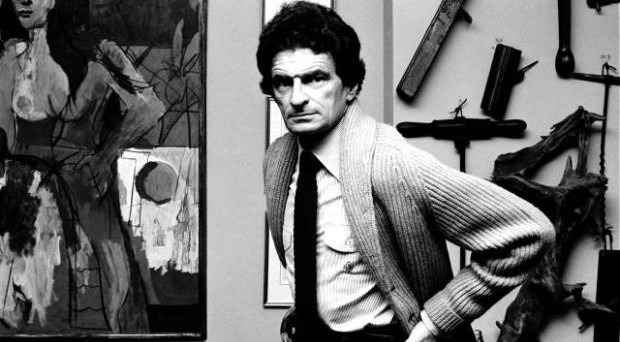
One of Wang's subjects, bowling alley mechanic Bill Newman, is someone I recall from my childhood in Queens.

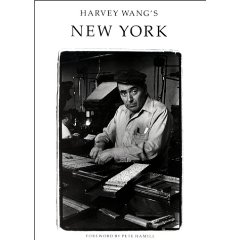
Of all my favorite books about NYC, I think the one I love above all others is Harvey Wang’s New York. The 1990 book contains an introduction by Pete Hamill and just a few dozen black-and-white photos with a paragraph of text accompanying each one. And that’s all it needs.

Wang, a photographer and filmmaker, who maintains a website of his work, uses his trusty Leicas and Nikons to capture a phase of the city that had entered into obsolescence and is all but gone now: a New York that wasn’t drunk on self-awareness and star power, a place that was perhaps harder but less self-conscious.

In the book, Wang profiles New Yorkers at work in trades such as blacksmith, mannequin maker and scrap-metal collector, among others. He also interviews a seltzer bottler named George Williams. An excerpt:

“‘I go to sleep dreaming of seltzer bottles,’ says George Williams, who estimates he fills 3,000 empty glass canisters with a mixture of filtered water and carbon dioxide gas every day. He works at G & K Beer Distributors in Canarsie, Brooklyn. Kenny Gomberg, grandson of G & K founder Moe Gomberg says at the beginning seltzer was the biggest part of the business. Now it’s a novelty. George started in the business about thirty-five years ago at Cohen Seltzer Works in Boro Park, one of the dozens of bottlers in business back then. There are just a few left that fill the antique Czech-made bottles with a Barnett and Foster Syphon (sic) Filler machine that dates back to 1910. Says George, ‘The younger generation mostly goes for flavored sodas.'”

ALSO: Harvey Wang is having an exhibit of the many photographs he took of Adam Purple’s amazing Lower East Side earthwork, “The Garden of Eden,” fifteen thousand square feet of natural beauty that the artist somehow grew out of urban blight. It was sadly razed by developers in 1986. Wang’s photographs of the erstwhile oasis and its eccentric creator will be on display at the FusionArts Museum Gallery from February 2-20.

Tags: , , , , ,

Rapper Stu Stone entertains the troops during 2010, but Baghdad nightlife is scarce outside of U.S. military bases. (Image by Spc. Cal Turner.)

Baghdad discos and nightclubs, once legendary, are now strobe-less thanks to the U.S. war in Iraq and the religious conservatism that has arisen in the city in its aftermath. According to a Washington Post piece by Yahya Barzanji, the party has relocated north into liberal Kurdish territories. An excerpt:

“Dozens of dance halls and clubs have opened across the Kurdish region during the past months, capitalizing on a crackdown against alcohol in Baghdad, where officials in November began closing clubs serving booze and banned alcohol sales at stores.

That prompted the capital’s nightlife – its musicians, dancers and impresarios, and the patrons who flock to them – to migrate north.

‘Baghdad has become a dead city where there is no more amusement, no drinks and no music. They have dressed the capital in religious clothes,’ said Hameed Saleh, a Baghdad Academy of Music graduate who plays the drums and oud, the Arabic forerunner to the lute, at Kurdonia Club. ‘Now I play music in Sulaimaniyah and my life is secure.’

Baghdad in the 1970s and 1980s was renowned for being the capital of Middle East nightlife with the most raucous nightclubs and an endless flow of whiskey. U.N. sanctions and Saddam Hussein’s newfound piety dimmed its star a bit in the 1990s, but it was the U.S.-led invasion in 2003, the violence that ensued and the rise of conservative Islamic militias that all but snuffed it out.

Nightlife in Baghdad tried to rise from the dead after violence declined in 2008, but the final blow came when religious conservatives began enforcing a Saddam-era ban on alcohol in clubs and added a ban in stores.”

Tags: ,

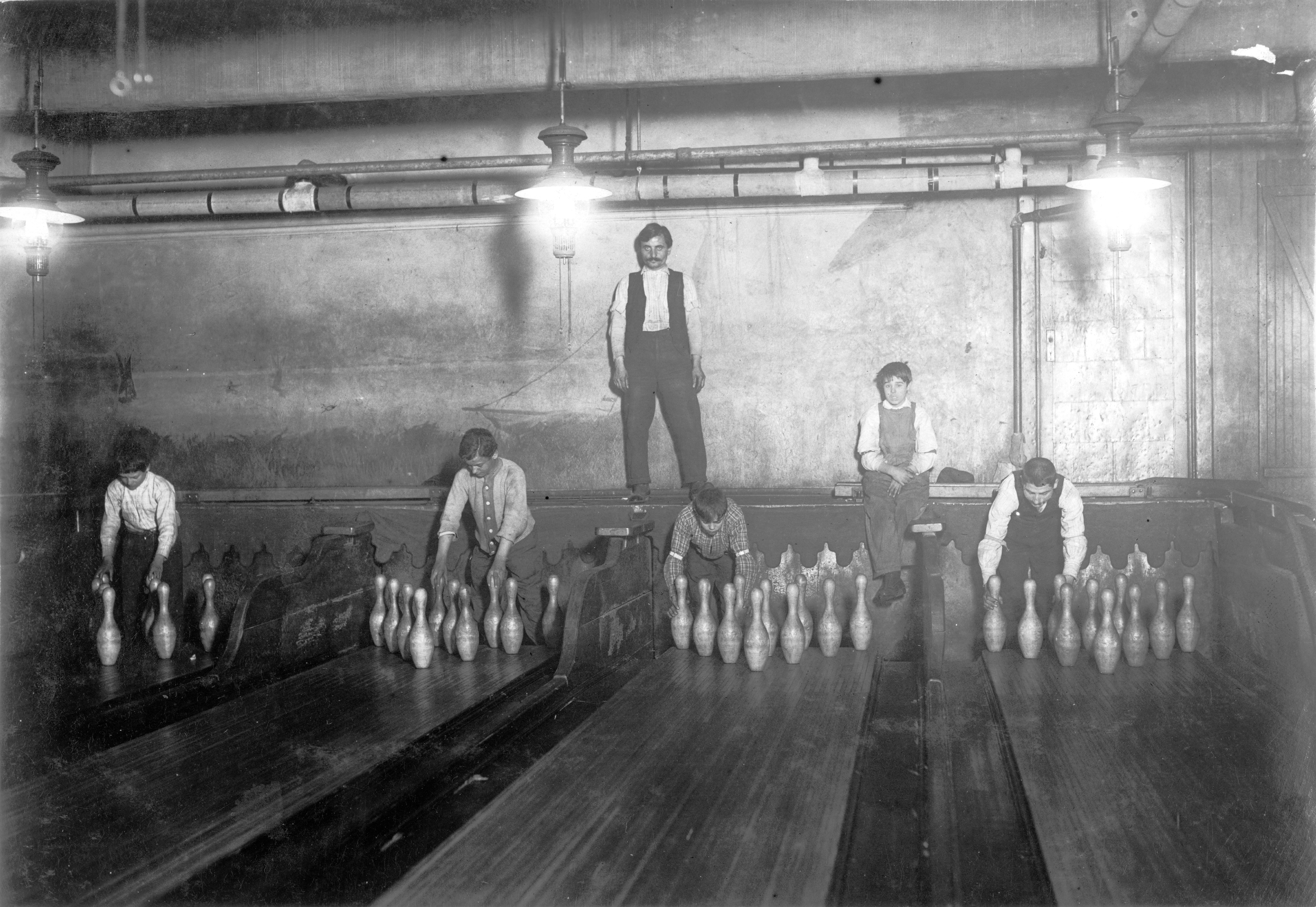
Brooklyn pin boys (circa 1912) do work that would be automated four decades later.

I came across a 1954 article in Sports Illustrated about the then-booming game of bowling, which was becoming increasingly popular thanks to new machinery that automatically placed pins and returned balls. These machines were referred to in the article as “gadgets Rube Goldberg never dreamed of.” The opening of the piece explains the origins of the beer-soaked sport. An excerpt:

“The futuristic fantasy of steel and wire shown above is the pin-spotting machine developed by the American Machine & Foundry Co., a gadget which has revolutionized the bowling industry and started the pin boy on his way out after an unbroken tenure of some 17 centuries. It is a far cry indeed from the game originated around 250 A.D. by a Bavarian priest who first set up a wooden pin in the cloister of his church. He labeled the pin Heide (heathen) and called upon each parishioner to knock it down with a rounded stone. If the Kegeler (thrower) scored a hit, he was judged to be living a devout, pure life. If he missed, his soul was presumed to require cleansing at church.”

Tags:

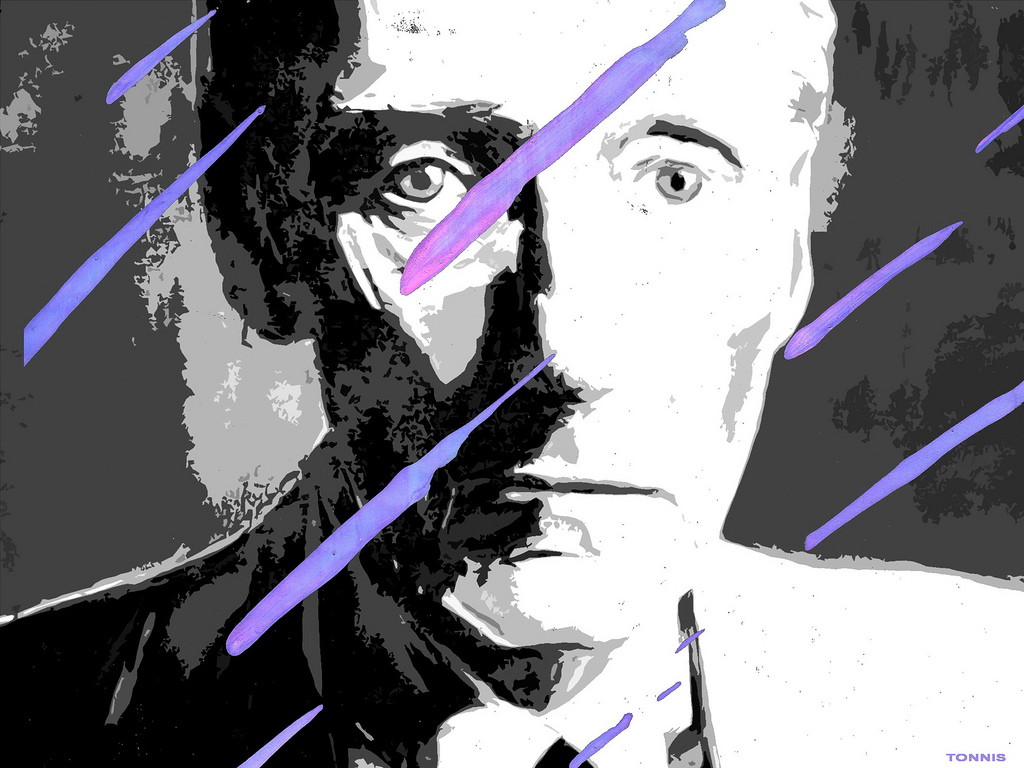
Burroughs published "Junky" under the pen name "William Lee" in 1953. (Image by Christiaan Tonnis.)

I have zero interest in drugs, but I think William S. Burroughs’ first novel, Junky, is pretty much perfect writing, even though he wasn’t particularly enamored with this work. In a 1965 Paris Review Q&A, a chain-smoking Burroughs recalled how the writing of Junky came about. An excerpt:

Interviewer: When and why did you start to write?

Burroughs: I started to write in about 1950; I was thirty-five at the time; there didn’t seem to be any strong motivation. I was simply endeavoring to put down in a straightforward, journalistic style something about my experiences with addiction and addicts.

Interviewer: Why did you feel compelled to record these experiences?

Burroughs: I didn’t feel compelled. I had nothing else to do. Writing gave me something to do every day. I don’t feel the results were at all spectacular. Junky is not much of a book, actually. I knew very little about writing at that time.

Interviewer: Where was this?

Burroughs: In Mexico City. I was living near Sears, Roebuck, right around the corner from the University of Mexico. I had been in the Army for four or five months and I was there on the GI Bill, studying native dialects. I went to Mexico partly because things were becoming so difficult with the drug situation in America. Getting drugs in Mexico was quite easy, so I didn’t have to rush around, and there wasn’t any pressure from the law.”

Tags:

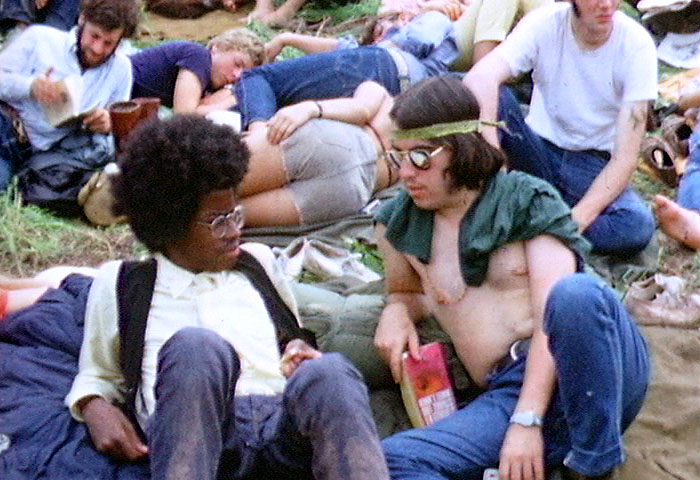
"They're a dirty, immoral bunch." (Image by Derek Redmond and Paul Campbell.)

Ebony magazine was on the scene in San Francisco in 1967 to turn out a good Summer of Love article, “The Hippies of Hashberry: A New Generation Flees Fabled American Dream.” There was, naturally, an African-American angle to part of Charles E. Brown’s piece, which explained that the hippies were more taken with Native American culture than the Beats, who were influenced by black culture. But most of the report looked at hippiedom in a broader context. An excerpt:

“A residential neighborhood just south of San Francisco’s Golden Gate Park is probably where it all began. The steepled rooftops of Haight-Ashbury’s Victorian homes were once the mark of middle-class respectability. Three years ago the hippies converged and christened the place Hashberry. Now, as the ‘squares’ depart to resume ‘more orderly’ lives, the hippies come in larger numbers, mostly in the summer…They come to Haight-Ashbury to be ‘where it’s at.’

‘But they carry lice and venereal disease wherever they go,’ a Haight Street realtor complains. ‘They’re a dirty, immoral bunch.’ His views are seconded by most people in authority–certainly the police in nearly every city in America.

There are those, like Episcopalian minister Malcolm Boyd, who see them in a different light: as young men and women in search of an honest morality, a morality that is foreign to middle-class Americans. ‘This is a time of great social ferment,’ says the Rev. Mr. Boyd, ‘and very little is being swept under the rug…the people who appear to be copping out–the hippies–are making serious contributions…while some who pose as liberals are not.'”

Tags: ,

A 2008 Wall Street Journal article revealed that inmates in American prisons used cans of mackerel as currency, mostly because they were worth about a dollar and packs of cigarettes, an erstwhile coinage, had been banned. An Orlando Sentinel piece by Drew Harwell declares that honey buns are also a coin of the realm in penitentiaries as well as being a popular last meal for the condemned on death row. The sticky, sugary blobs are now more coveted behind prison walls than tobacco or envelopes or Coke. An excerpt:

In September, the day after the New Orleans Saints beat the San Francisco 49ers in a Monday Night Football game, a fight broke out in the Alpha Pod of the Hernando County Jail.

Inmate Ricardo Sellers, 21, had punched Brandon Markey, 23, in the face, sending Markey to a Brooksville hospital, according to Hernando deputies. Sellers was angry that Markey hadn’t paid up after losing a bet over football.

His debt? Four honey buns.

For all their sweetness, honey buns have a history of involvement in prison violence. In 2006, at the Kent County Jail in Michigan, inmate Benny Rochelle dragged his cell mate off the top bunk, killing the man, when he could not find his honey bun. And last year, at the Lake Correctional Institution west of Orlando, two men were sentenced to life in prison for stabbing with crude shivs the man they thought had stolen shaving cream, cigarettes and a honey bun from their footlockers.

Yes, murder over honey buns. Was it their decadence, or their status as jailhouse currency?

In Texas and Pennsylvania, inmates bartered honey buns for tablets of Seroquel, an addictive antipsychotic abused on the street as a sleeping pill.

In Sarasota, a millionaire businessman charged with child abuse earned the nickname ‘Commissary King’ after fashioning honey buns into birthday cakes for inmates he felt he could sway to his defense.

In Naples, a bail bondsman was accused of giving an inmate hundreds of dollars’ worth of honey buns over 13 years as rewards for referring him business.”

Tags: , , ,

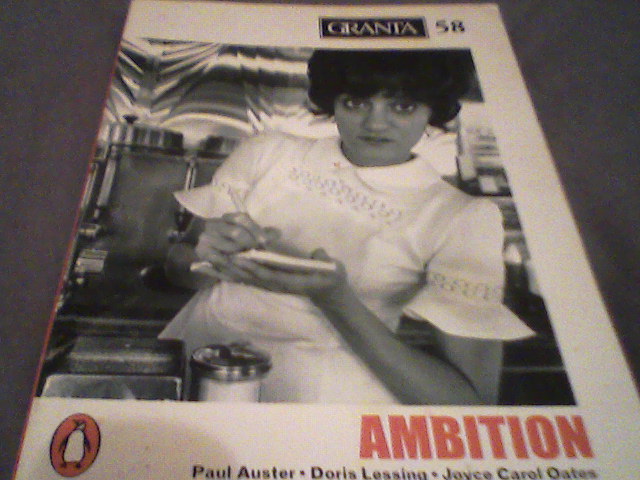
In the article, Brian MacKinnon hinted that he would get plastic surgery and try to enter medical school under a new identity.

In 1997 Granta published its Ambition” issue. It contains a really great piece called “I Was Brandon Lee,” written by journalist Ian Parker, who is now a staff writer for the New Yorker. The story profiles a brazen impostor named Brian MacKinnon, a Scottish man who in 1995 went back and attended his old high school again when he was 32, pretending to be “Brandon Lee,” a Canadian teen who excelled academically, enjoyed extracurriculars and dreamed of being a doctor when he “grew up.”

One of the most interesting things about the case is that administrators, teachers and fellow students convinced themselves that the oldish-looking MacKinnon was 17, even though the truth stared them in the face. An excerpt:

“Gwyneth Lightbody was surprised, but hoped she did not show her surprise. ‘I said, ‘Well–in you come.” She told me that ‘He did not look like your typical teenager. I assumed he was an adult, but when you’re presented with facts…I mean, in teaching, you see all sorts of strange sights. It could be he had some illness that made him age rapidly–or something.’

On the first day she met some fellow teachers mid-morning. ‘We were all saying, ‘Have you got a pupil that looks old?’ We all thought he was an adult. But we assumed everything had been done, and he was just a bit of an oddity.’ Pupils were doing the same, trying to make Brandon fit his own story–by reminding themselves, for example, of the wide range in teenage body types. ‘I had a boyfriend who was over six feet then,’ one student said to me; another said: ‘I could think of boys with beards and hairy chests. If someone says they’re seventeen, you’re not going to turn round and say no, no you’re not.’ By lunch it seems MacKinnon had been accepted as an old-looking, odd-looking teenager–an alien from Canada–rather than an adult who looked his age.”

Tags: , ,

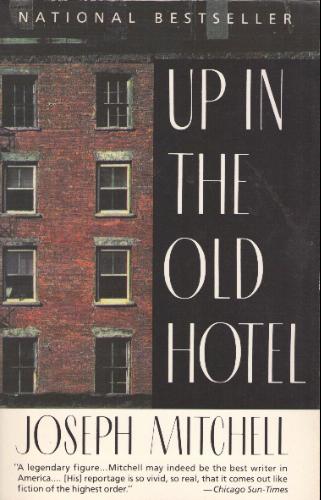
All three articles excerpted are contained Mitchell''s great collection, "Up in the Old Hotel."

Three wonderful opening sentences from articles written by the unimpeachable New Yorker legend Joseph Mitchell.

••••••••••

From “Mr. Hunter’s Grave” (1956):

“When things get too much for me, I put a wild-flower book and a couple of sandwiches in my pockets and go down to the South Shore of Staten Island and wander around awhile in one of the old cemeteries there.”

••••••••••

From “Hit on the Head with a Cow” (1938):

“When I have time to kill, I sometimes go to the basement of a brownstone tenement on Fifty-ninth Street, three-quarters of a block west of Columbus Circle, and sit on a rat-gnawed Egyptian mummy and cut up touches with Charles Eugene Cassell, an old Yankee for whose bitter and disorderly mind I have great respect.”

••••••••••

From “Goodbye, Shirley Temple” (1939):

“I’ve been going to Madame Visaggi’s Third Avenue spaghetti house off and on since speakeasy days, and I know all the old customers.”

Tags:

Roomba can't intellectualize vacuuming, but it gets the job done. (Image by Larry D. Moore.)

Steven Levy has an excellent piece, “The AI Revolution Is On,”  in the current Wired. In it, Levy points out that artificial intelligence has turned out to be markedly different than what science in the ’50s and ’60s predicted. The reason is because yesterday’s scientists tried to make machines emulate the human brain. But since we still don’t really know how that organ operates, researchers threw away the playbook during the ’80s and have since focused on allowing computers to be “themselves.” An excerpt:

“AI researchers began to devise a raft of new techniques that were decidedly not modeled on human intelligence. By using probability-based algorithms to derive meaning from huge amounts of data, researchers discovered that they didn’t need to teach a computer how to accomplish a task; they could just show it what people did and let the machine figure out how to emulate that behavior under similar circumstances. They used genetic algorithms, which comb through randomly generated chunks of code, skim the highest-performing ones, and splice them together to spawn new code. As the process is repeated, the evolved programs become amazingly effective, often comparable to the output of the most experienced coders.

MIT’s Rodney Brooks also took a biologically inspired approach to robotics. His lab programmed six-legged buglike creatures by breaking down insect behavior into a series of simple commands—for instance, ‘If you run into an obstacle, lift your legs higher.’ When the programmers got the rules right, the gizmos could figure out for themselves how to navigate even complicated terrain. (It’s no coincidence that iRobot, the company Brooks cofounded with his MIT students, produced the Roomba autonomous vacuum cleaner, which doesn’t initially know the location of all the objects in a room or the best way to traverse it but knows how to keep itself moving.)

The fruits of the AI revolution are now all around us. Once researchers were freed from the burden of building a whole mind, they could construct a rich bestiary of digital fauna, which few would dispute possess something approaching intelligence. ‘If you told somebody in 1978, ‘You’re going to have this machine, and you’ll be able to type a few words and instantly get all of the world’s knowledge on that topic,’ they would probably consider that to be AI,’ Google cofounder Larry Page says. ‘That seems routine now, but it’s a really big deal.'”

Tags: , ,

« Older entries § Newer entries »