Excerpts

You are currently browsing the archive for the Excerpts category.

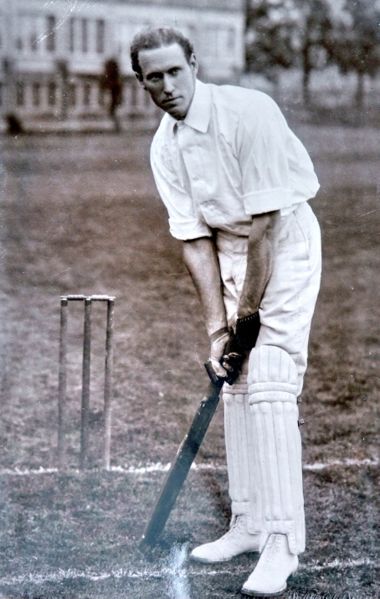
John Barton "Bart" King at bat in a Philadelphia match in 1900.

In 1900, cricket and baseball (or “base ball”) both enjoyed great popularity in America. People of that era probably couldn’t imagine a time when cricket wouldn’t be an important part of our sporting life. An excerpt from the 1901 Brooklyn Daily Eagle Almanac:

“Cricket continued to flourish in the United States during 1900. The annual contest with Canada again resulted in favor of the United States. Philadelphia is the stronghold of American Cricket, and in the Inter-City match with All New York maintained her superiority by winning the match in most hollow fashion. The Germantown Cricket Club won the Halifax Cup, the emblem of Quaker supremacy, for the sixth time in succession. In the metropolitan district, chief interest in the game is now centered in Brooklyn, where no less than six clubs have their headquarters. The championship of the Metropolitan District Cricket League was again captured by the Knickerbocker Athletic Club, while in the New York Cricket Association series the Paterson Cricket Club proved successful and retained the championship.”

Tags:

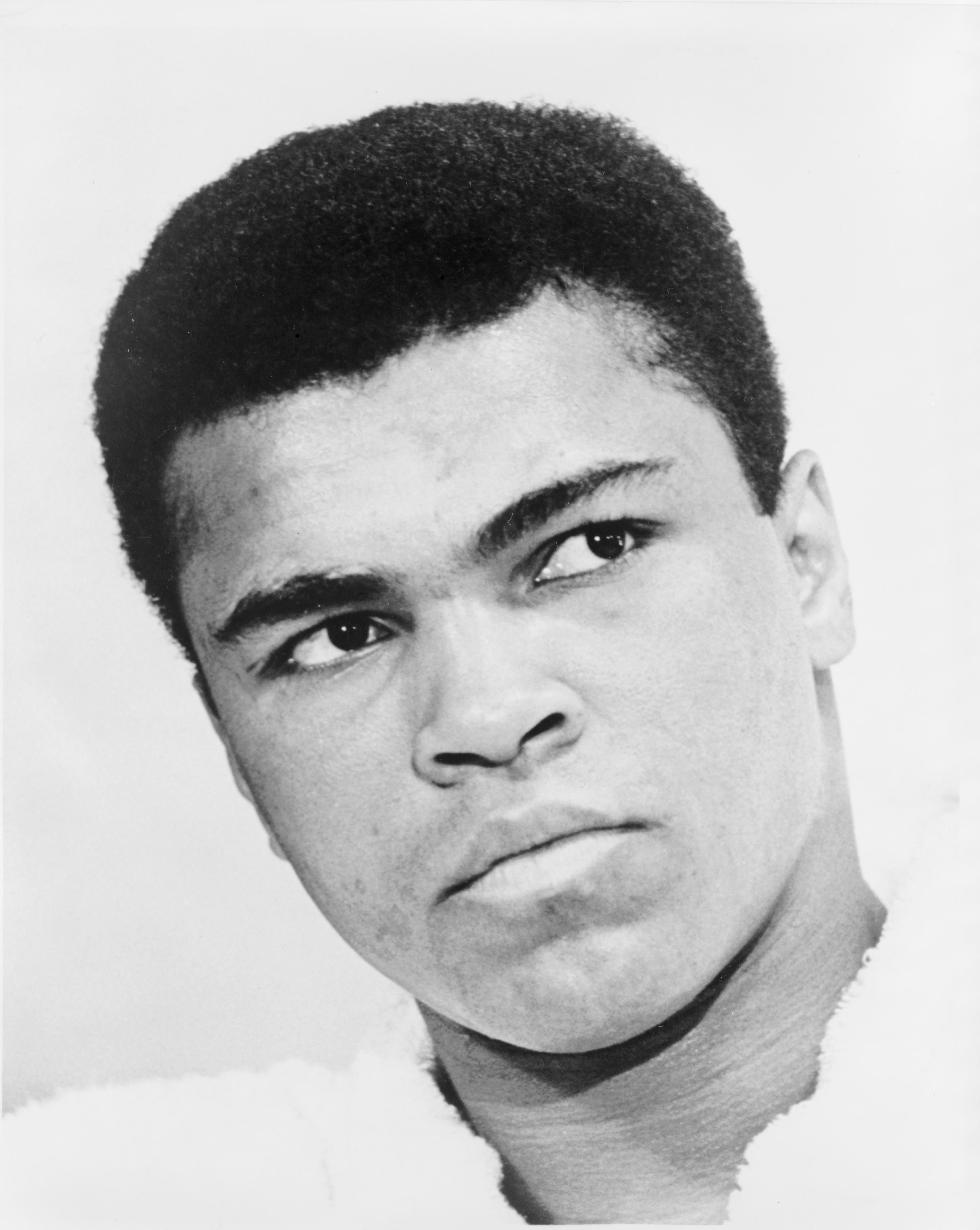
"They say I'm the fastest heavyweight in the ring today. That comes from punching underwater." (Image courtesy of Ira Rosenberg.)

I heard years ago that the young Muhammad Ali made up a bogus story about training underwater for a boxing match in order to get his face in Life magazine. The man was always very gifted when it came to hoopla. I came across the 1960 article, “A Wet Way to Train for a Fight,” on Google Books. Even a quick look at the spread will make it clear why a photo mag was a patsy for such a visual story. Ali hadn’t yet converted to Islam and was still called Cassius Clay. An excerpt from the article:

“The boxer punching up a storm with underwater lefts and rights is as cocky as he is unconventional. ‘Not to be bragging or anything like that,’ says the 19-year-old Cassius Marcellus Clay, ‘but they say I’m the fastest heavyweight in the ring today. That comes from punching underwater.’ Taking a cue from the immortal Ty Cobb, who weighted his shoes in training so that he would feel feather-footed when the season started, Clay goes into a swimming pool and, as these underwater pictures show, does a stunt of submarine shadowboxing. ‘You try to box hard,’ he explains. ‘Then when you punch the same way out of water you get speed. Clay, an Olympic champion before turning pro and winning his first eight fights, has been criticized for talking too much about everything including about how he will win the first world heavyweight title. His answer is to keep on talking–until he gets under water and just makes bubbles.”

Tags: ,

"Looks more like a ship sitting upside down on the water." (Image by Alexander Remizov.)

If the world keeps getting warmer and the oceans rise, we’ll have issues much larger to deal with than booking a room in a luxury hotel. But Russian architect Alexander Remizov has nonetheless designed a pre-fab hotel that can be built on water as readily as on land. An excerpt from a Spiegel article about the waterborne lodging known as the “Ark”:

“The rising sea waters caused by global warming have inspired a Russian architect to design a hotel that could be built on water as well as land. The eco-friendly ‘Ark’ could be constructed in just a few months anywhere in the world, the designer says.

It’s called “The Ark”, but looks more like a ship sitting upside down on the water. A new design by Russian architect Alexander Remizov challenges the tradition of land-based hotel living and would provide a refuge in the future — should the world face a modern-day flood of Biblical proportions.

Remizov designed the hotel as part of a program on architecture and disaster relief through the International Union of Architects (UIA). He collaborated with a German design and engineering firm and the Moscow-based scientist Lev Britvin, who, according to Remizov, has developed energy-saving solutions for space stations. They are now searching for investors to make the design a reality.”

Tags:

"Cow-dung toothpaste." (Image by Pikaluk.)

Some philosophers like working in airports, so why can’t photographers live in them? Native New Yorker Taryn Simon did just that for five days in 2009 (at JFK) to compile more than a thousand photos for her book, Contraband. The volume documents a wide variety of items confiscated from passengers by Customs officials. In a piece in the Guardian by Sean O’ Hagan, there’s a partial list of some of the verboten goods:

“The seized items include various drugs (Xanax, anabolic steroids, Ritalin, khat, ketamine, hashish), counterfeit jewellery, bags, hats, sportswear, shirts, DVDs and watches as well as several kinds of plants, seeds, grass, nuts and foodstuffs. Among the more exotic confiscated substances are deer antlers, deer blood, deer penis and deer tongue, as well as cow-dung toothpaste and cow urine.”

Tags: ,

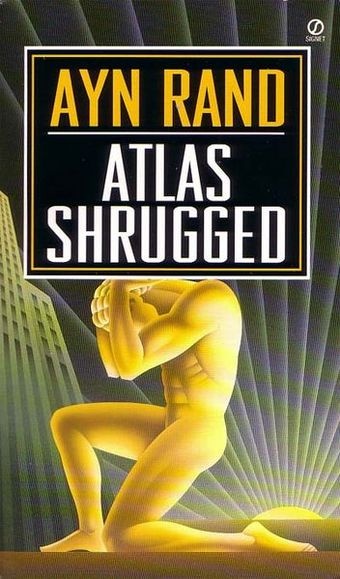
The Objectivist novelist Ayn Rand sat down for an interview with Playboy in 1964, back when that magazine routinely did Q&As with incredible subjects. She gave opinions on everything from politics to philosophy to religion to literature. An excerpt from the interview, conducted by Alvin Toffler, in which she shares her ardently contrarian views of novelists of that era:

Playboy: Are there any novelists whom you admire?

Ayn Rand: Yes. Victor Hugo.

Playboy: What about modern novelists?

Ayn Rand: No, there is no one that I could say I admire among the so-called serious writers. I prefer the popular literature of today, which is today’s remnant of Romanticism. My favorite is Mickey Spillane.

Playboy: Why do you like him?

Ayn Rand: Because he is primarily a moralist. In a primitive form, the form of a detective novel, he presents the conflict of good and evil, in terms of black and white. He does not present a nasty gray mixture of indistinguishable scoundrels on both sides. He presents an uncompromising conflict. As a writer, he is brilliantly expert at the aspect of literature which I consider most important: plot structure.

Playboy: What do you think of Faulkner?

Ayn Rand: Not very much. He is a good stylist, but practically unreadable in content–so I’ve read very little of him.

Playboy: What about Nabokov?

Ayn Rand: I have read only one book of his and a half–the half was Lolita, which I couldn’t finish. He is a brilliant stylist, he writes beautifully, but his subjects, his sense of life, his view of man, are so evil that no amount of artistic skill can justify them.”

Tags: , , , , ,

"Iverson had hit rock bottom. At 34—having nearly exhausted his athletic gifts — he’d washed out of the NBA." (Image by Keith Allison.)

Beset by personal problems and in possession of seriously diminished skills, former NBA great Allen Iverson finds himself playing minor-league basketball in Turkey. Philadelphia magazine writer Robert Huber visited Istanbul to file a report about the troubled, faded star as he attempts to revive his life in an unlikely locale. (Thanks Longform.) An excerpt:

“IVERSON IS AT A CROSSROADS IN HIS LIFE. There is no going off into the sunset for him, no taking his vast millions and his fame and finishing off the job of raising his five kids in splendor and ease. Nothing works that way for him.

In fact, last spring — just after Iverson abandoned the Sixers following a short second stint with the team — Gary Moore said publicly that things were very bad for Iverson. His young daughter Messiah was quite sick with an undisclosed illness. His wife had filed for divorce. There were stories that he was gambling and drinking himself into oblivion. At one point, Moore beseeched a reporter with a chilling request:

‘Please pray for us. We need all the prayers we can get.’

(Image by reeb0k2008.)

Iverson had hit rock bottom. At 34—having nearly exhausted his athletic gifts — he’d washed out of the NBA, largely seen as too troubled and demanding to finish his career with some team needing to get a few more fannies in the seats. That failed last year in Philly, after Iverson had already been pushed out of Detroit and bolted from Memphis. His career seemed done, and maybe he was, too.

So he has come to Turkey to resurrect not only his basketball career, but his life. In … Istanbul? How is he going to survive camped out in a Friday’s in Istanbul?

As one NBA official put it, the guy spent the past five years pretty much living in either bars or casinos. But word has it that his family is coming, that he and Tawanna have reconciled and she’s about to arrive with all five kids, ranging in age from two to 16. The team has checked out schools and is finding the family a villa to live in. It’s a new beginning.”

Tags: , ,

“There are bullets all over the side of this building.”

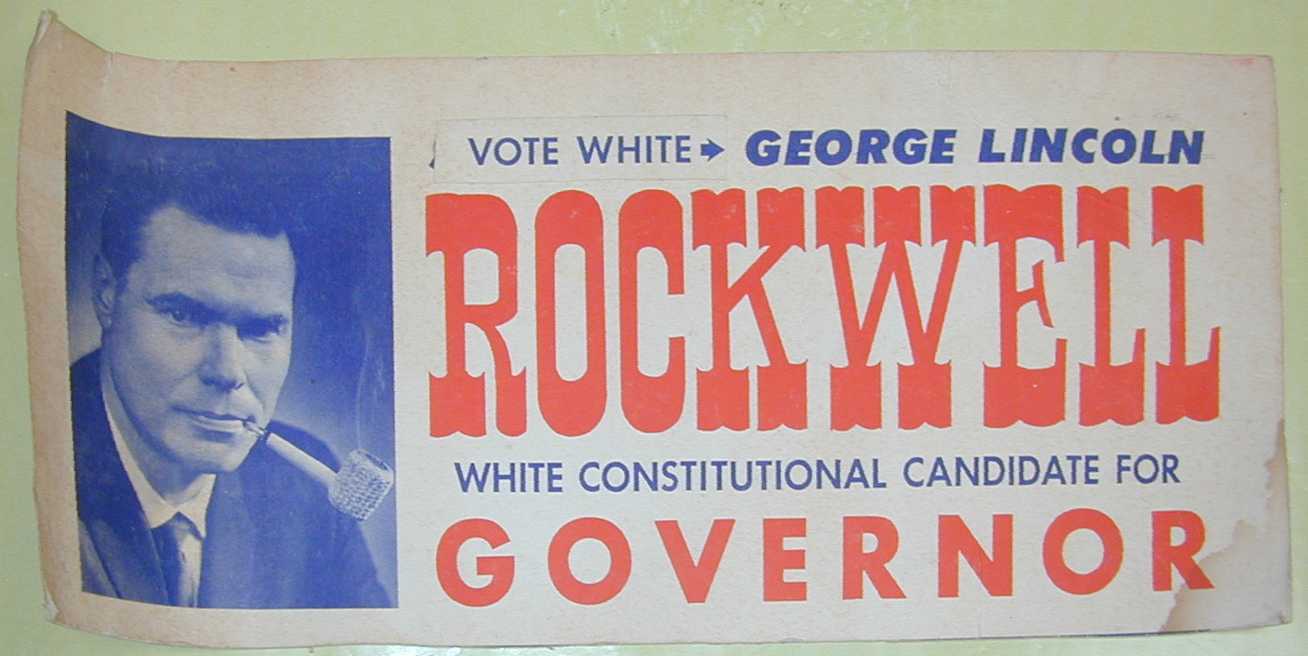
Before he became famous worldwide for the Roots phenomenon, Alex Haley was a journalist known for some of Playboy magazine’s finest interviews. Haley, who had conducted Q&As with Malcolm X, Martin Luther King, Miles Davis and numerous other larger-than-life characters, really outdid himself with his 1966 session with American Nazi Party founder George Lincoln Rockwell. Since Rockwell was unaware that Haley was African-American when he agreed to the interview, he decided to keep a firearm at the ready during the talk, just in case the journalist decided to assassinate him.

Rockwell’s parents were vaudeville comedians who knew Groucho Marx, and the reviled bigot was considered a class clown when he first entered Brown in 1938. But it was during those college years that he began to speak out against racial equality, a path that would lead him to being a full-blown hatemonger. Rockwell’s fears of being killed were realized the year after Haley’s piece ran, when his calls for racial violence were silenced by bullets. An excerpt from the interview’s blood-chilling opening:

Playboy: Before we begin, Commander, I wonder if you’d mind telling me why you’re keeping that pistol there at your elbow, and this armed bodyguard between us.

Rockwell: Just a precaution. You may not be aware of the fact that I have received literally thousands of threats against my life. Most of them are from cranks, but some of them haven’t been; there are bullet holes all over the out side of this building. Just last week, two gallon jugs of flaming gasoline were flung against the house right under my window. I keep this gun within reach and a guard beside me during interviews because I’ve been attacked too many times to take any chances. I haven’t yet been jumped by an impostor, but it wasn’t long ago that 17 guys claiming to be from a university came here to ‘interview’ me; nothing untoward happened, but we later found out they were armed and planned to tear down the flag, burn the joint and beat me up. Only the fact that we were ready for that kind of rough stuff kept it from happening.

We’ve never yet had to hurt anybody, but only because I think they all know we’re ready to fight anytime. If you’re who you claim to be, you have nothing to fear.”

Tags: , ,

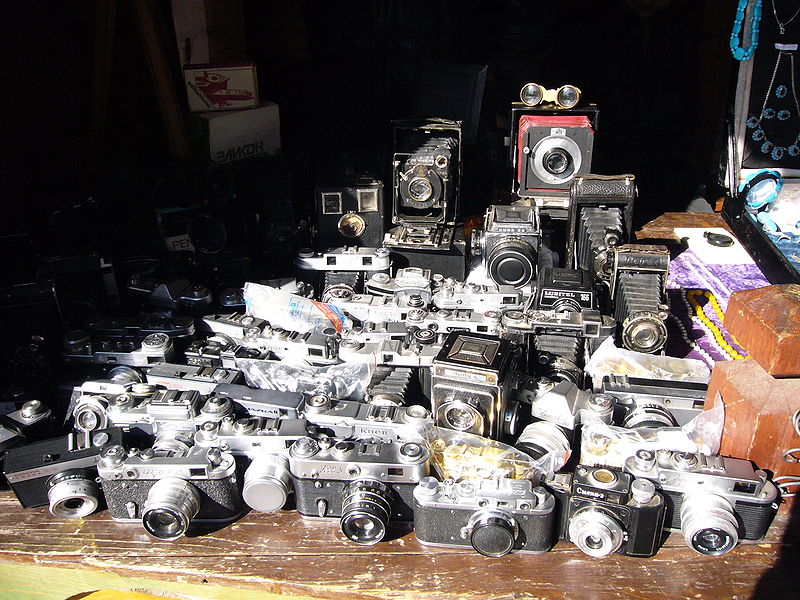
"High-resolution, low-cost cameras are proliferating." (Image by Leonid Dzhepko.)

An article by Steve Lohr in the New York Times looks at the positives and negatives involved in the coming proliferation of cameras that can recognize objects, gestures, situations and even faces. An excerpt:

“High-resolution, low-cost cameras are proliferating, found in products like smartphones and laptop computers. The cost of storing images is dropping, and new software algorithms for mining, matching and scrutinizing the flood of visual data are progressing swiftly.

A computer-vision system can watch a hospital room and remind doctors and nurses to wash their hands, or warn of restless patients who are in danger of falling out of bed. It can, through a computer-equipped mirror, read a man’s face to detect his heart rate and other vital signs. It can analyze a woman’s expressions as she watches a movie trailer or shops online, and help marketers tailor their offerings accordingly. Computer vision can also be used at shopping malls, schoolyards, subway platforms, office complexes and stadiums.

All of which could be helpful — or alarming.

‘Machines will definitely be able to observe us and understand us better,’ said Hartmut Neven, a computer scientist and vision expert at Google. ‘Where that leads is uncertain.’”

Tags: ,

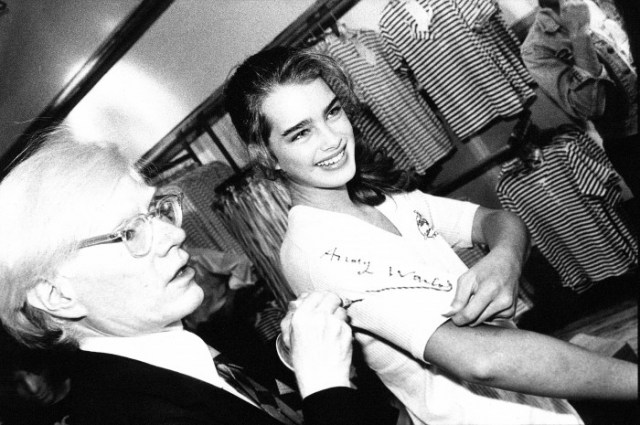
Andy Warhol autographs Brooke Shields' tee at Fiorucci's NYC store. (Image by Franco Marabelli.)

When skinny jeans were still known as skin-tight, the New York disco scene of the ’70s had a favorite store, and it was Fiorucci’s on East 59th Street. A place to see and be seen, it was full of celebrities of all types, trying to acquire a pair of gold cowboy boots or some green combat clothes. Its creator, Elio Fiorucci, took a different path than most retailers of the era to arrive at his Studio 54–ready ensembles. An excerpt from an article by Priscilla Tucker about Fiorucci’s in the March 28, 1977 New York magazine:

“The secret of his success, says Fiorucci, is ‘to be able to listen to what the public has to say. I am a chronicler, like a journalist. I am a coordinator of situations.’

Toward this end he employs young people–‘They are my antennae’–and sends them all over the world, wherever they want to go, looking at the products of village life in Indonesia, shopping the outdoor markets of Colombia, bringing things back to be reproduced or modified in Fiorucci factories. Anything–clothes, tinware, soap, bicycles, pottery–that attracts his stylists turns up in the stores. Employees are free to innovate, hiring now a girl who makes flowers on the spot, now a couple with fabrics and a sewing machine, to whip up before your eyes made-to-order skirts for less than those on Fiorucci’s racks.

Fiorucci himself often hires on the spur of the moment just because he likes the way someone puts himself or herself together. He found Mariagrazia, who now manages both his Milan stores and his New York store, while she was working at Gucci. ‘The atmosphere at Gucci was not real,’ says Mariagrazia, who finds reality in dressing à la Fiorucci, in army pants with strands of flowers hanging down her T-shirt, her fuzzy hair bobbing as she directs the moving of the pastel jeans to the back of the store, the rosebud challis dresses downstairs, the sexy posters over by the free-espresso bar.”

Tags: , ,

"One of my mentors told me that my real mistake was trying to replicate my work. He told me doing that was just setting myself up for disappointment."

I fell behind in my New Yorker reading in December, so I just got to this intriguing Jonah Lehrer article about a puzzling problem for scientific researchers: the inability to replicate their landmark findings in subsequent studies. It seems that researchers regularly avoid rechecking their results because they know future tests may call their findings into question. Does that mean that their original studies were unintentionally biased, subjective in some way that they don’t understand? The troubling occurrence is called the “decline effect.” One of the subjects Lehrer discusses the situation with is Jonathan Schooler, a highly self-aware psychology professor at the University of Santa Barbara. An excerpt:

“Jonathan Schooler was a young graduate student at the University of Washington in the nineteen-eighties when he discovered a surprising new fact about language and memory. At the time, it was widely believed that the act of describing our memories improved them. But, in a series of clever experiments, Schooler demonstrated that subjects shown a face and asked to describe it were much less likely to recognize the face when shown it later than those who had simply looked at it. Schooler called the phenomenon ‘verbal overshadowing.’

The study turned him into an academic star. Since its initial publication, in 1990, it has been cited more than four hundred times. Before long, Schooler had extended the model to a variety of other tasks, such as remembering the taste of a wine, identifying the best strawberry jam, and solving difficult creative puzzles. In each instance, asking people to put their perceptions into words led to dramatic decreases in performance.

But while Schooler was publishing these results in highly reputable journals, a secret worry gnawed at him: it was proving difficult to replicate his earlier findings. ‘I’d often still see an effect, but the effect just wouldn’t be as strong,’ he told me. ‘It was as if verbal overshadowing, my big new idea, was getting weaker.’ At first, he assumed that he’d made an error in experimental design or a statistical miscalculation. But he couldn’t find anything wrong with his research. He then concluded that his initial batch of research subjects must have been unusually susceptible to verbal overshadowing. (John Davis, similarly, has speculated that part of the drop-off in the effectiveness of antipsychotics can be attributed to using subjects who suffer from milder forms of psychosis which are less likely to show dramatic improvement.) ‘It wasn’t a very satisfying explanation,’ Schooler says. ‘One of my mentors told me that my real mistake was trying to replicate my work. He told me doing that was just setting myself up for disappointment.’”

Tags: ,

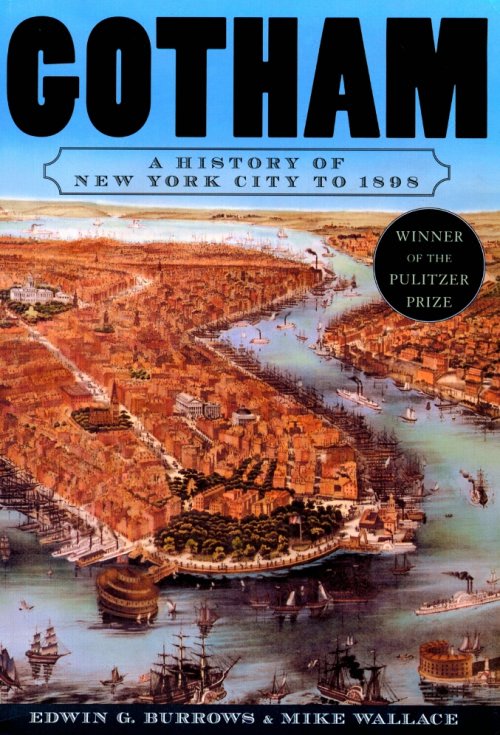
An out-of-control New Year’s Eve celebration in New York in 1827, as described in Gotham, by Edwin G. Burrows and Mike Wallace:

“On New Year’s Eve, as the city bade farewell to 1827, several thousand workingmen–laborers, apprentices, butcher boys, chimney sweeps–set out from the Bowery on a raucous march through the darkened downtown streets, drinking, beating drums and tin kettles, shaking rattles, blowing horns. The crowd headed down Pearl Street through the heart of the city’s commercial district, smashing crates and barrels and making what one account described as ‘the most hideous noises.’ From there the marchers wheeled across town to the Battery, where they knocked out the windows of genteel residences and attempted to tear down the iron railing around the park. At two in the morning they tromped up Broadway, just in time to harass revelers leaving a fancy dress-ball at the City Hotel. A contingent of watchmen appeared but, after a tense confrontation, gave way, and ‘the multitude passed noisily and triumphantly up Broadway.'”

Tags: ,

"Human manure shops showed up at markets."

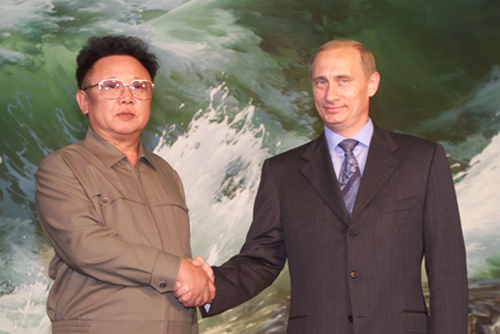
The human spirit always pushes back against totalitarian lockdown with interesting black markets. According to a report in news.com.au (a site I’m admittedly not very familiar with), the modern-day hellhole that is North Korea is unsurprisingly a hotbed for a wide assortment of items being sold without government approval. (Thanks Reddit.) An excerpt:

“Skinny jeans, adult films and human excrement are among some of the most wanted items for consumers in North Korea.

Kim Young-soo, a professor at Seoul’s Sogang University who has interviewed several recent defectors from the Communist country, said that the items were selling ‘like hot cakes.’

Other popular items sold in North Korea included TV dramas and instant noodles, he said.

Yonhap news agency reported that shops began selling human excrement to deal with acute shortages of fertiliser in North Korea.

‘Each household used to use human excrement as fertilizer, but because it’s hard to keep up with the amount, human manure shops showed up at markets,’ Professor Kim said.”

Tags:

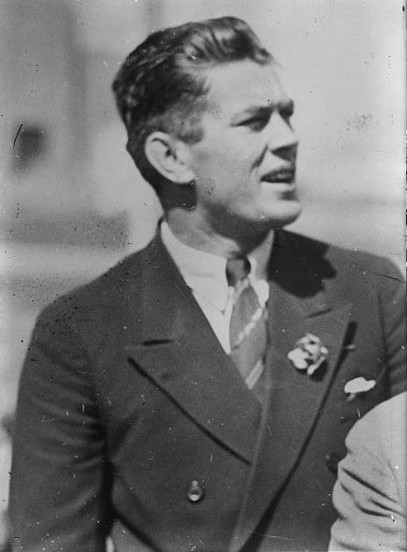
I own several different paperback editions of Janet Flanner’s Paris Was Yesterday: 1925-1939, some purchased, some gleaned. Flanner, the correspondent who wrote for the New Yorker under the pen name Genêt, chronicled European politics and culture from her vantage point in the City of Lights. In one diary-style entry, she records the night in 1928 when heavyweight boxing champ Gene Tunney drank beer with playwright Thornton Wilder. An excerpt:

Gene Tunney broke up the shop at Lipp’s when he recently entered there one night with Mr. Thornton Wilder. The heavyweight champion ordered and obtained a schooner of light beer; Mr. Wilder, because he was with Mr. Tunney, also received something to drink, doubtless not what he ordered, for service was paralyzed. The cashier, ordinarily a creature of discretion, ceased making her change; the waiters rallied round Tunney’s table shamelessly. All the French women stared, whispering, ‘Comme il est beau!’ ‘Quel homme magnifique!’ their escorts murmured without jealousy. It was a triumph which the champion accepted without too much grace. Nervously doffing and donning his hat as if the bay leaves irked him, he talked loudly, intelligently, for a half hour, and left.”

Tags: , ,

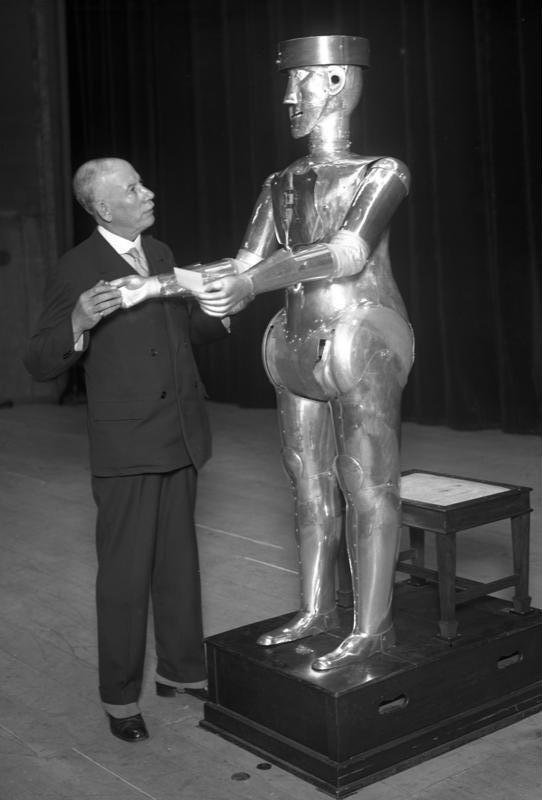
An old-school robot in 1932. Engkey is much more modern.

Yahoo! News has a report by Jung Ha-Won about English being taught to South Korean grade-school students by robots who are controlled remotely from the Philippines. It’s not being done so much out of necessity, but to jump start the South Korean robotics sector. (Thanks Marginal Revolution.) An excerpt:

“Almost 30 robots have started teaching English to youngsters in a South Korean city, education officials said Tuesday, in a pilot project designed to nurture the nascent robot industry.

Engkey, a white, egg-shaped robot developed by the Korea Institute of Science of Technology (KIST), began taking classes Monday at 21 elementary schools in the southeastern city of Daegu.

The 29 robots, about one metre (3.3 feet) high with a TV display panel for a face, wheeled around the classroom while speaking to the students, reading books to them and dancing to music by moving their head and arms.

The robots, which display an avatar face of a Caucasian woman, are controlled remotely by teachers of English in the Philippines — who can see and hear the children via a remote control system.

Cameras detect the Filipino teachers’ facial expressions and instantly reflect them on the avatar’s face, said Sagong Seong-Dae, a senior scientist at KIST.”

Tags: ,

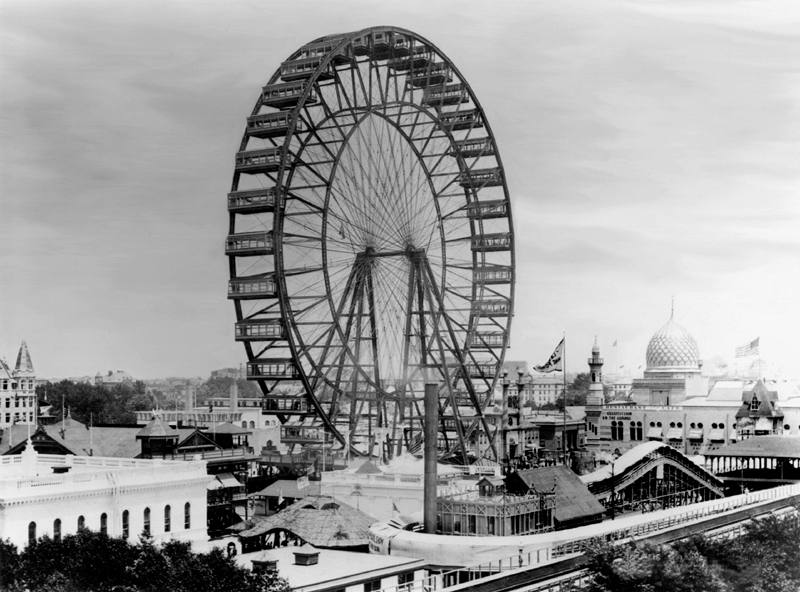
The first Ferris Wheel, at the Columbian Exposition in Chicago in 1893. It was 264 ft. high.

Guy de Maupassant is said to have lunched at the Eiffel Tower every day so that he could avoid looking at the edifice he so despised, and he wasn’t the only Parisian intellectual to hate on Gustave Eiffel’s “bridge to the sky.” French artists and thinkers railed against the tower even as it was in its planning stages as part of the Universal Exposition of 1889, claiming that it was a blight on the city.

But the Eiffel Tower was a huge hit during the fair, so much so that the planners of the 1893 World’s Columbian Exposition in Chicago felt that they needed to do something dramatic to compete with it. Daniel H. Burnham, Chief of Construction for the Columbian, searched futilely for an answer for a long time before George Ferris supplied him with one. An excerpt from Henry Petroski’s Remaking the World:

Burnham found himself at a banquet addressing architects and engineers, he praised the former but excoriated the latter for not having met the expectations of the people. Nothing had been proposed that displayed the originality or novelty to rival the Eiffel Tower. He wanted something new in engineering science, but felt the engineers were giving him only towers.

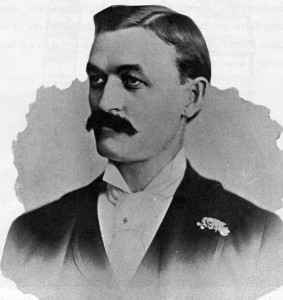
George Washington Gale Ferris, Jr.

Among the engineers at the banquet was the youngish George Washington Gale Ferris, Jr. He was born in Galesburg, Illinois, in 1859, and at the age of five moved with his family to western Nevada. There, while living on a ranch, he became fascinated with a large undershot water wheel, which raised buckets out of the Carson River to supply a trough for the horses. Ferris would later recall his fascination with the wheel’s action, but, according to some accounts, as a youngster he was not equally fascinated with formal education. … When Ferris would later be asked where the idea for his great wheel came from, he recalled that, a while after hearing Burnham’s challenge, he found himself at a Saturday afternoon dinner club made up mainly of world’s fair engineers.

According to Ferris, “I had been turning over every proposition I could think of. On four or five of these I had spent considerable time. What were they? Well, perhaps I’d better not say. Any way none of them were very satisfactory… It was at one of these dinners, down at a Chicago chop house, that I hit on the idea. I remember remarking that I would build a wheel, a monster. I got some paper and began sketching it out. I fixed the size, determined the construction, the number of cars we would run, the number of people it would hold, what we would charge, the plan of stopping six times in its first revolution and loading, and then making a complete turn–in short, before the dinner was over I had sketched out almost the entire detail, and my plan has never varied an item from that day. The wheel stands at the Plaissance at this moment as it stood before me then.”•

Tags: , , ,

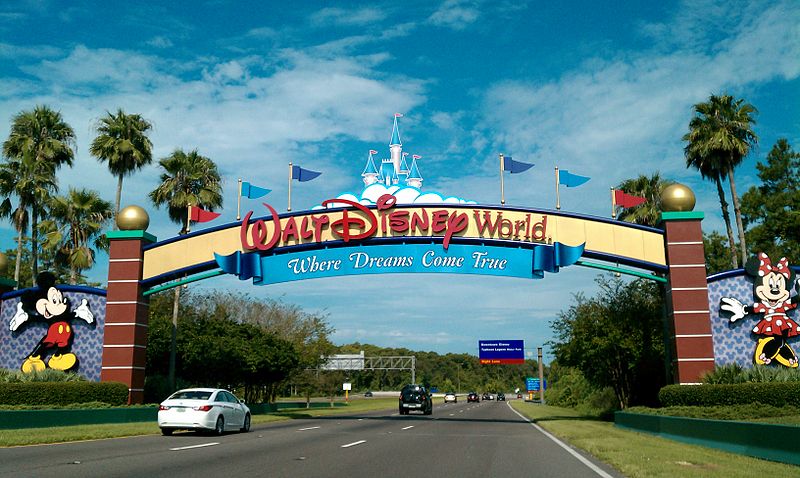
"Disney has spent the last year outfitting an underground, nerve center to address that most low-tech of problems, the wait." (Image by Jrobertiko.)

As speedier technology makes certain aspects of life almost instantaneous. others that require patience (e.g., long lines at amusement parks) become more annoying. In order to deal with their customers not wanting to wait around, Walt Disney World in Orlando has constructed a high-tech bunker in order to preempt any inconvenience for its visitors–and also to subtly and creepily control their actions. Brooks Barnes has an interesting article on the topic in the Business section of the New York Times. An excerpt:

“To handle over 30 million annual visitors — many of them during this busiest time of year for the megaresort — Disney World long ago turned the art of crowd control into a science. But the putative Happiest Place on Earth has decided it must figure out how to quicken the pace even more. A cultural shift toward impatience — fed by video games and smartphones — is demanding it, park managers say. To stay relevant to the entertain-me-right-this-second generation, Disney must evolve.

Walt Disney: Sadly, his head wasn't actually cryogenically frozen. Just a myth. (Image by NASA.)

And so it has spent the last year outfitting an underground, nerve center to address that most low-tech of problems, the wait. Located under Cinderella Castle, the new center uses video cameras, computer programs, digital park maps and other whiz-bang tools to spot gridlock before it forms and deploy countermeasures in real time.

In one corner, employees watch flat-screen televisions that depict various attractions in green, yellow and red outlines, with the colors representing wait-time gradations.

If Pirates of the Caribbean, the ride that sends people on a spirited voyage through the Spanish Main, suddenly blinks from green to yellow, the center might respond by alerting managers to launch more boats.”

Tags:

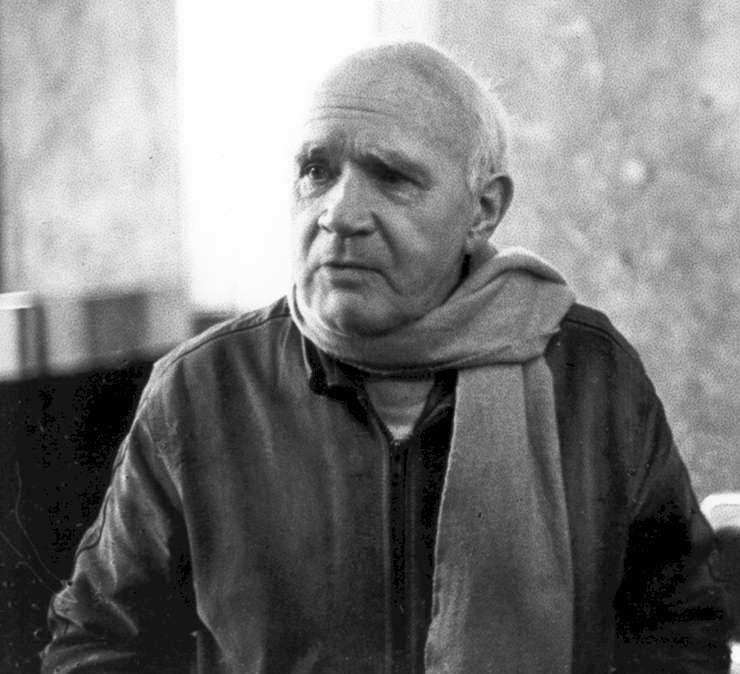
Jean Genet: Great writer, complete a-hole.

It’s not to say that the playwright and novelist Jean Genet was an utter poseur when it came to being an outlaw, but it’s difficult to untangle what of his biography was real and what was his own creation. Genet identified himself as an orphan, a child neglected by foster parents, a homeless thief, a hustler and a jailbird–but it seems like a fair amount of the “facts” were fiction.

Regardless, the 53-year-old writer was an international sensation for his novel, The Thief’s Journal, and for his plays, including The Balcony and The Blacks, by the time he sat down for an interview with Playboy in April 1964. Genet discussed his life and antisocial attitude. And he was asked a bizarre line of questioning about the assassination of President John F. Kennedy, which had occurred the previous November. He unsurprisingly provided an equally bizarre answer. An excerpt:

Playboy: How do you feel about crimes such as that of which Lee Harvey Oswald has been accused? Did you find him boring–or subtle and sensitive?

Jean Genet: I have a feeling of fellowship with Oswald. Not that I was hostile to President Kennedy. I simply wasn’t interested in him. But I feel that I’m with the lone individual who opposes such a highly organized society as American society or Western society or any society in the world that damns evil. I sympathize with him–just as I do with a great artist who takes a stand against a whole society: neither more nor less. I’m with any lone man. But even though I’m—how shall I put it?—morally with a man who is alone, men who are alone remain alone. Even though I may be with Oswald when he commits his crime—if he did commit it—he was alone. Even though I’m with Rembrandt when he paints his pictures, he, too, is alone.”

Tags:

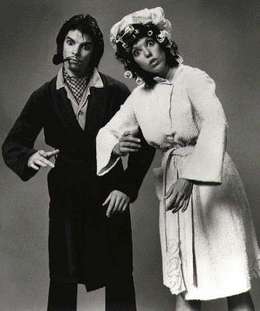
Lorene Yarnell was living in Norway with her fourth husband when she died.

Michael Jackson evolved many moves he borrowed from James Brown, but as unlikely as it seems, he may have cribbed just as many Off the Wall and Thriller gyrations from mime duo Robert Shields and Lorene Yarnell. For a brief, shining moment in the late ’70s (while Jackson was in his formative years), the mime couple, billed as Shields and Yarnell, became a television staple, dazzling audiences with a skill that is usually more of a punchline than a showstopper. Their body control was stunning, and it’s not surprising that Shields had studied with Marcel Marceau and Yarnell was a trained dancer.

Shields and Yarnell were married and then they weren’t, but they remained wedded professionally until Yarnell passed away this year at 66 from a cerebral aneurysm. The Times Magazine has a really well-written remembrance of her (and the Shields and Yarnell tandem) by Elizabeth McCracken in its annual “The Lives They Lived” issue. An excerpt:

Shields and Yarnell practiced hours of nostril and eyebrow exercises in order to be believably mechanical. As the Clinkers, they are virtuosic and upsetting, human beings who can pass as robots, playing robots who wish to pass as human. It’s a parody marriage. The Clinkers know they’re supposed to embrace, but they can’t figure out how; they just carom off each other.

The robots, being robots, endure. Michael Jackson was a fan; he apparently modeled not only dance moves but also some of his many-buttoned military costumes on Robert Shields. Hip-hop dancers studied the Clinkers’ automatonics, setting them to music, and the Robot became one of the most lasting of all break-dancing moves. On city corners across the world, you can see street performers, spray-painted white and silver and brass, who for a quarter will ’bot for you, each a monument to Shields and Yarnell.”

Below is a clip, replete with a horrifyingly inauthentic laugh track, of Shields and Yarnell as the Clinkers.

Tags: , , , ,

"The Japanese auto industry isn’t likely to carve out a big slice of the U.S. market.” (Image by IFCAR.)

Listverse has compiled a number of embarrassing science, tech and business quotations that have proven very, very incorrect. “Experts” being wrong is always fun because it makes the rest of us feel less stupid. (Thanks Reddit.) Here are a few from the full list:

  • “With over 50 foreign cars already on sale here, the Japanese auto industry isn’t likely to carve out a big slice of the U.S. market.” — Business Week, August 2, 1968.
  • “That virus is a pussycat.” — Dr. Peter Duesberg, molecular-biology professor at U.C. Berkeley, on HIV, 1988.
  • “Within the next few decades, autos will have folding wings that can be spread when on a straight stretch of road so that the machine can take to the air.” — Eddie Rickenbacker, Popular Science, July 1924.
  • ‘The abdomen, the chest and the brain will forever be shut from the intrusion of the wise and humane surgeon.’ – Sir John Eric Ericson, Surgeon to Queen Victoria, 1873.
  • “Airplanes are interesting toys but of no military value.” — Marechal Ferdinand Foch, Professor of Strategy, Ecole Superieure de Guerre.

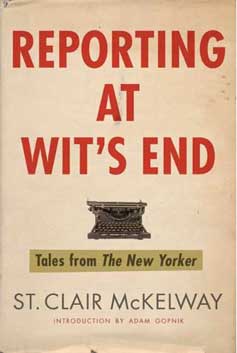
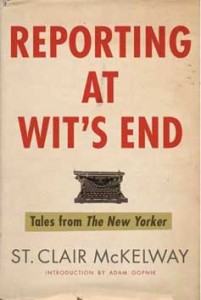
"Reporting at Wit's End," a thick paperback collection of great McKelway reportage is currently on sale at Amazon for $7.20.

A New Yorker writer for decades, St. Clair McKelway (1905-1980) had an insatiable appetite for criminals of all kinds–impostors, embezzlers, counterfeiters, etc.–and the law-enforcement personnel who tried to bring them to justice. In recent decades, McKelway has been more of a cult favorite than a legend like Liebling or Mitchell, but hopefully the 2010 paperback collection of his work, Reporting at Wit’s End, will remedy that situation.

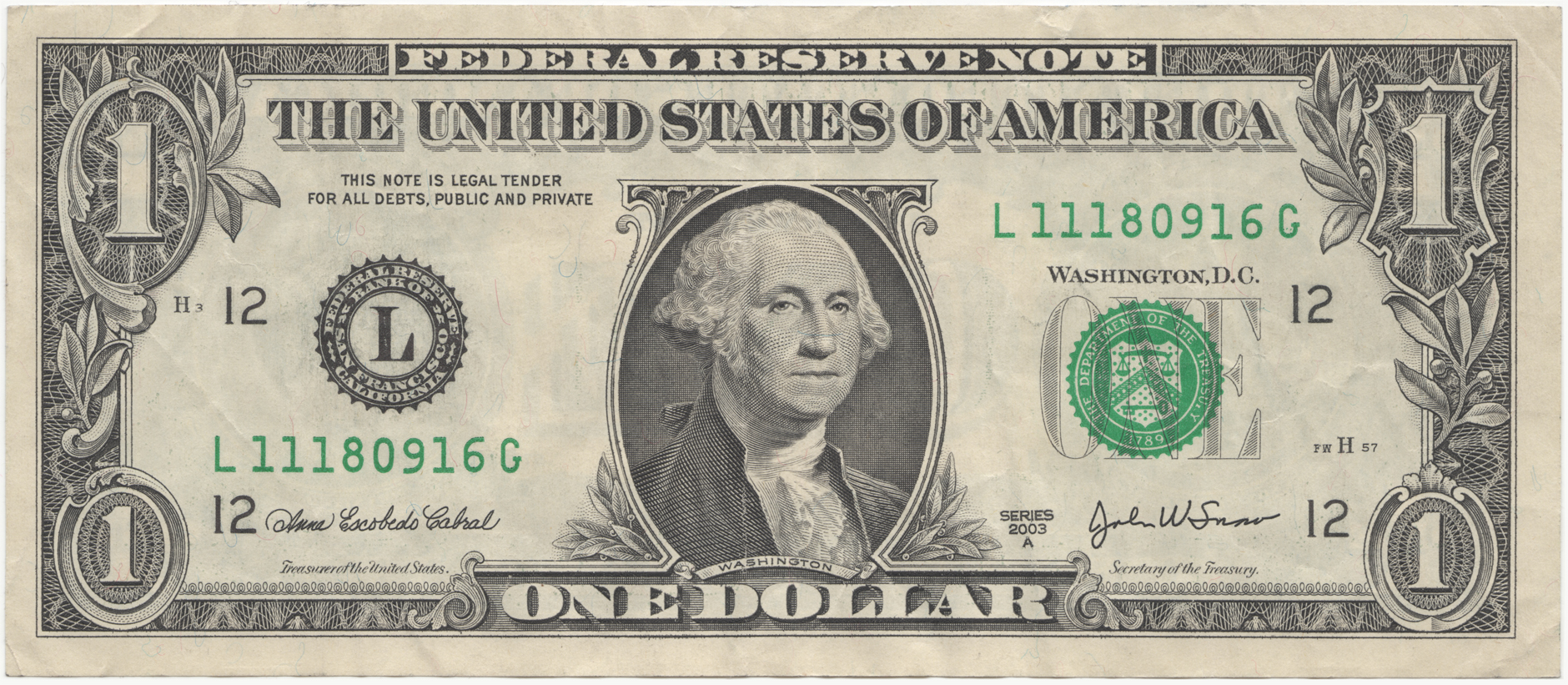
It was the counterfeiter category that gave McKelway the raw material for his most famous article, a 1949 piece entitled, “Mister 880,” about an elderly paperhanger who used a hand cranked printing press to manufacture barely passable duplicates of one dollar bills. Despite being a crappy counterfeiter, Mister 880 frustrated the Feds for a decade and was the unlikely target of a massive manhunt, before a series of flukish events brought him down. An excerpt from the opening of that piece (which was also adapted for film):

“In the late summer of 1938, an elderly widower named Edward Mueller found that he was in need of money for the support of his dog and himself. He was a man of simple tastes, and the dog was an undemanding mongrel terrier. Mr. Mueller had for many years been a superintendent in apartment buildings on the Upper East Side. Living in the basements of these buildings, he and his wife had raised two children, a boy and a girl. By the time Mrs. Mueller died, in 1937, the children had grown up and gone off to homes of their own. The son had a job and was doing well; the daughter had married. After the death of his wife, Mueller moved out of the basement that had been their home together and rented a small, sunny flat on the top floor of the brownstone tenement near Broadway and Ninety-sixth Street. He and the dog took possession of it in the spring of 1938. Feeling that he was too old to be a superintendent any longer, Mueller tried for a while to make a living as a junkman. He was sixty-three at the time and was gentle, sweet-tempered, and strongly independent. Only five feet three inches tall, he had a lean, hard-muscled frame, a healthy pink face. bright blue eyes, a shiny bald dome, a fringe of snowy hair over his ears, a wispy white mustache and hardly any teeth. He bought a pushcart secondhand and, accompanied by his dog, roamed the neighborhood when the weather was good, picking up junk in vacant lots and along the river front under the West Side Highway. He went about his work in a leisurely manner and always looked happy. Sometimes he stopped to talk to strangers who wanted to talk, and at other times he carried on fragmentary, one-sided conversations with the dog that trotted at his heels. He was able to sell some of the odds and ends he picked up to the wholesale junk dealers, but before many months had gone by, he began to realize that he wasn’t making enough to live on, and that if he didn’t do better his savings would soon be gone and he would be destitute.
When his son and daughter visited him, and when he went to see them, Mueller said that he was getting along all right and didn’t need a thing. For a full half century, he had depended only on himself, and he had the flinty pride on an elderly man who had worked hard since he was a boy of thirteen and had never asked helped from anybody. The life he had lived had been a respectable and law-abiding one. Everybody who had ever known Mueller would have said that he was probably the last man in the world to try to make money dishonestly. That was exactly what Mueller did, however. In November, 1938, he became a counterfeiter of one dollar bills.”
Tags: ,

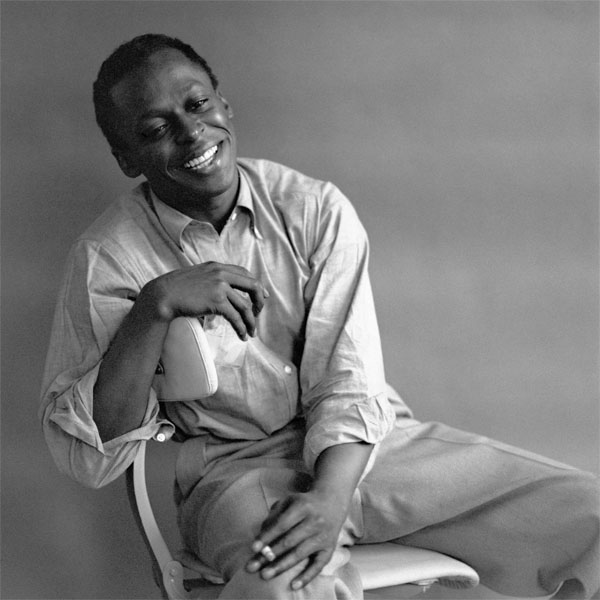
Miles Davis in a 1955 photo by Tom Palumbo.

Trumpet player Miles Davis was already a legend in 1962, when he was interviewed by Alex Haley for Playboy. He was raised in a relatively well-to-do household in Illinois, the son of a dentist. His prodigious musical talent saw that through his ups and down with a vicious heroin addiction, he managed to always maintain financial security. But creature comforts could only go so far in calming the nerves of a person of color who grew up in the Jim Crow era and still lived in a racially divided America. An excerpt from the Q&A:

Playboy: You’re said to be one of the financially best-off popular musicians. Is this correct?

Miles Davis: Well, I don’t have any access to other musicians’ bankbooks. But I never have been what you would call poor. I grew up with an allowance, and I had a big newspaper route. I saved most of what I made except for buying records. But when I first left home as a musician, I used to spend all I made, and when I went on dope, I got in debt. But after I got enough sense to kick the habit, I started to make more than I needed to spend unless I was crazy or something.

Now I got a pretty good portfolio of stock investments, and I got this house–it’s worth into six figures, including everything in it. My four kids are coming up fine. When the boys get in from school, I want you to see them working out on the bags in our gym downstairs. I keep myself in shape and teach the kids how to box. They can handle themselves. Ain’t nothing better that a father can pass along.

Then I got my music, I got Frances, and my Ferrari–and our friends. I got everything a man could want–if it just wasn’t for this prejudice crap. It ain’t that I’m mad at white people, I just see what I see and I know what’s happening. I am going to speak my mind about anything that drags me about this Jim Crow scene. This whole prejudice mess is something you would feel so good if it could just be got rid of, like a big sore eating inside of your belly.”


Tags: ,

Kottke has an interesting post about a “liquids sculptor” named Shinchi Maruyama, who tosses fluids into the air and then photographs what are stunning and momentary shapes. An excerpt from a Dallas Morning News interview with the artist by Nicole Pasulka:

Dallas Morning News: These images, or sculptures are so exciting, fleeting and unique. How do you determine or control the shape of the water or ink?

Shinchi Maruyama: Just keep throwing the liquids for the sake of it.

Dallas Morning NewsIt seems there’s a definitive moment of performance in your work, though this be said of all painting and sculpture. Are you more aware of the event or moment of your sculpture because the final result is a photograph?

Shinchi Maruyama: I think I am more aware of the moment recently after many years of experimenting with liquids. But no matter how many times I repeat the same process of throwing it in the air, I never achieve the same result. And I am so fascinated by this unexpected interaction of liquids colliding, which happens fairly infrequently, that I am overwhelmed by its beauty.”

Tags: ,

Salon sisters. The one on the left is mine.

In its pre-WWII heyday, Coney Island wasn’t just an amusement park but also a grand social experiment that was an assault on propriety and a raffish and often outrageous laboratory for urbanism and science (babies were incubated and elephants electrocuted). An excerpt from John E. Kasson’s 1978 book, Amusing the Million:

“Beginning with the various sideshows and exhibits along Coney Island’s main promenade, the Bowery, the tourists entered into this carnival world. As in traditional carnivals and fairs, the grotesque was prominently represented symbolizing the exaggerated and excessive character of Coney Island as a whole. Midgets, giants, fat ladies and ape-men were both stigmatized and honored as freaks. They fascinated spectators in the way they displayed themselves openly as exceptions of the rules of the conventional world. Their grotesque presence heightened the visitors’ sense that they had penetrated a marvelous realm of transformation, subject to laws all its own. The popular, distorting mirrors furnished the illusion that the spectators themselves had become freaks. Thus Coney Island seemed charged with a magical power to transmute customary appearances into fluid new possibilities.”

Tags:

"New York, just like I pictured it, skyscrapers and everything." (Image by Dennis Afraz.)

Neuroscientist Jonah Lehrer had an excellent article in the New York Times Magazine this weekend, about Geoffrey West and Luis Bettencourt, theoretical physicists who are applying their science training to urban problems. (By the way, if you’ve never read Lehrer’s book, Proust Was a Neuroscientist, I highly recommend it). An excerpt:

“Along with Luis Bettencourt, another theoretical physicist who had abandoned conventional physics, and a team of disparate researchers, West began scouring libraries and government Web sites for relevant statistics. The scientists downloaded huge files from the Census Bureau, learned about the intricacies of German infrastructure and bought a thick and expensive almanac featuring the provincial cities of China. (Unfortunately, the book was in Mandarin.) They looked at a dizzying array of variables, from the total amount of electrical wire in Frankfurt to the number of college graduates in Boise. They amassed stats on gas stations and personal income, flu outbreaks and homicides, coffee shops and the walking speed of pedestrians.

"These are the laws, they say, that automatically emerge whenever people ‘agglomerate,’ cramming themselves into apartment buildings and subway cars." (Image by Rebecca Kennison.)

After two years of analysis, West and Bettencourt discovered that all of these urban variables could be described by a few exquisitely simple equations. For example, if they know the population of a metropolitan area in a given country, they can estimate, with approximately 85 percent accuracy, its average income and the dimensions of its sewer system. These are the laws, they say, that automatically emerge whenever people ‘agglomerate,’ cramming themselves into apartment buildings and subway cars. It doesn’t matter if the place is Manhattan or Manhattan, Kan.: the urban patterns remain the same. West isn’t shy about describing the magnitude of this accomplishment. ‘What we found are the constants that describe every city,’ he says. ‘I can take these laws and make precise predictions about the number of violent crimes and the surface area of roads in a city in Japan with 200,000 people. I don’t know anything about this city or even where it is or its history, but I can tell you all about it. And the reason I can do that is because every city is really the same.’ After a pause, as if reflecting on his hyperbole, West adds: ‘Look, we all know that every city is unique. That’s all we talk about when we talk about cities, those things that make New York different from L.A., or Tokyo different from Albuquerque. But focusing on those differences misses the point. Sure, there are differences, but different from what? We’ve found the what.'”

Tags: , ,

Sign in West University Place, Texas. (Image by WhisperToMe.)

Texting while driving is all the rage in scary headlines, but auto deaths in America have been reduced dramatically over the last five years, just as the handheld computing craze has exploded. What gives? Joseph B. White tries to uncover the answer in an article in the Wall Street Journal. It may be that technology (and other factors) are responsible for the decrease. An excerpt:

“So what’s helping to reduce deaths? Technology deserves some credit, according to the data. Deaths in side-impact crashes declined between 2005 and 2008 at a faster rate than the decline for deaths overall. That suggests that side airbags are helping more people survive crashes, the researchers found.

The Michigan study found a nearly 20% decline in deaths among young drivers, age 16 to 25. Among the possible reasons: the increasing number of states that use graduated licensing programs that delay granting full driving privileges until teens have more experience, and rising teen joblessness.

The exact role of the economy in declining highway deaths is a big unknown. Messrs. Sivak and Schoettle highlight pieces of data that suggest that as the economy slowed down, so did motorists.”

Tags:

« Older entries § Newer entries »