Excerpts

You are currently browsing the archive for the Excerpts category.

A great zucchini but not the Great Zucchini. No public domain images of him. (Image by Lmbuga.)

An excerpt from “The Peekaboo Paradox,” Gene Weingarten’s excellent 2006 Washington Post chronicle of the complicated life of Eric Knaus, better known as D.C.’s most popular children’s party entertainer, the Great Zucchini:

“From the moment I met him, there were things that puzzled me about the Great Zucchini. Unless I drove him, for example, he relied on cabs to get to all of his gigs. He’d recently totaled his car, he explained, and hadn’t gotten around to buying a new one. Besides, he said, he found cabs less restrictive.

Also, the Great Zucchini didn’t seem to live anywhere. He had an address in Bethesda, but he would always want to meet at one Starbucks or another. Every time I proposed coming to his house some morning, he was staying elsewhere overnight. He seemed to crash everywhere but home.

His act was never fancy, but in recent months it had lost whatever frills it once had. On his Web site, the Great Zucchini is pictured at the White House Easter Egg Roll, where he once performed in a fancy black vest with cartoon smiley faces on it. He used to wear that vest to all his performances but lost it some time ago and has no plans to replace it.

He is more than a little disorganized. He lost a glowing-thumb trick, then found it, but it was broken, and he never got a new one. At one point, he lost his cell phone. When we were together, he often commandeered mine. Many of his magic props seem to be weathered to the point of decrepitude. His dirty diaper is years old. His magic bag with a false panel — a ‘change bag,’ in magicians’ terms — is soiled and ripped. The once-orange sponge balls he palms for an illusion are brown with use. And there’s that persistent, just-rolled-out-of-bed stubble. He didn’t always have that.

Some parents I talked to were worried that the Great Zucchini might be rotting on the vine. Their guess was substance abuse, or something even darker.

This was understandable, but wrong. His demons turned out to be of a different species, more benign, perhaps, but also more interesting.

Have you ever tried to peel a zucchini? It’s not like a potato. The skin is pretty thick. You don’t get it all with the first swipe.

Eric and I were in Arlington, at a fifth birthday party for a boy named Charlie. It was the first time the mother, Sarah Moore, had hired the Great Zucchini, and she had no complaints. He was everything she’d been told he’d be, she said, as she surveyed her post-party, preprandial dining room, aswarm with giddy kids.

‘He’s a big draw. You know, we wouldn’t have gotten half this turnout with a moon bounce,’ Sarah said, completely seriously.

On our way to the party, Eric and I had been talking football, and I had said I thought the New York Giants would win their next game. He agreed but said they wouldn’t beat the spread. I’d found that a little odd, and on our way back from the party I took a stab.

‘You’re a gambler,’ I said.

‘I need a cigarette,’ he said.

We stopped for cigarettes. He took a long drag, and smiled. It was as though he’d been waiting for this release for weeks.

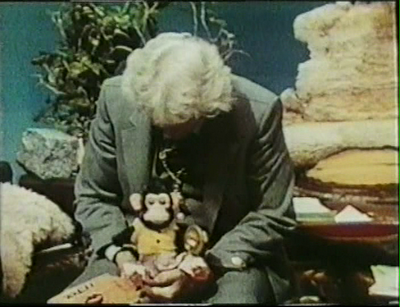
‘Look, I’m not Mister Rogers, okay?'”

Tags: , ,

Grover Lewis' writing feels like sort of a mixed-bag to me, intermittently soaring but very uneven.

Grover Lewis was a prominent New Journalism writer of the 1960s and 1970s, probably best known for his Rolling Stone on-location pieces in which he ensconced himself on film sets and gave readers a behind-the-scenes look at how Sam Peckinpah and John Huston, among others, got their work done. He also had a taste for the film business’s fascinating fringe characters.

Lewis passed away in 1995 while in the midst of writing his memoirs. Unlike many of his contemporaries, Lewis is all but forgotten, despite the existence of a handsome collection of his work, Splendor in the Short Grass, which was published by the University of Texas Press in 2005. The book contains a piece taken from his uncompleted memoirs, in which Lewis recalls the tragic circumstances of how he lost both his parents while he was eight years old. An excerpt from “Goodbye If You Call That Gone”:

“History and legend bind us to the past, along with unquenchable memory.

In the spring of 1943, my parents–Grover Lewis, a truck driver, and Opal Bailey Lewis, a hotel waitress–shot each other to death with a pawnshop pistol. For most of a year, Big Grover had stalked my mother, my four-year-old sister, and me across backwater Texas, resisting Opal’s decision to divorce him. When she finally did and when he finally cornered her and pulled the trigger as he’d promised to do, she seized the gun and killed him, too.

A next-door neighbor of Opal’s–called ‘Dad’ North because of his advanced age–witnessed the mayhem shortly after dawn on a rainy Monday morning in May. Big Grover was twenty-seven years old, Opal twenty-six, and they’d been married for almost eleven years. My father survived for half a day without regaining consciousness, and died in the same charity hospital where I was born. Opal died where she fell, under a shadeless light bulb in the drafty old rooming house where she’d been living alone, and struggling to keep Titter and me in a nearby nursery school. No charges were filed, and a formal inquest was considered unnecessary since the police and the coroner’s office declared the case solved by mid-morning. My uncle Dubya Cee, Opal’s older brother, talked to one of the detectives involved and found out some additional information, which he shared only with the Bailey elders. Such, anyway, were the bare bones of the story as passed along in family history that soon blurred off into murky family legend. It was the sum of what I was allowed to know, although there remained to be answered, of course, questions I had not yet learned to ask.”

Tags:

Computer made from found wood by Ron van der Ende.

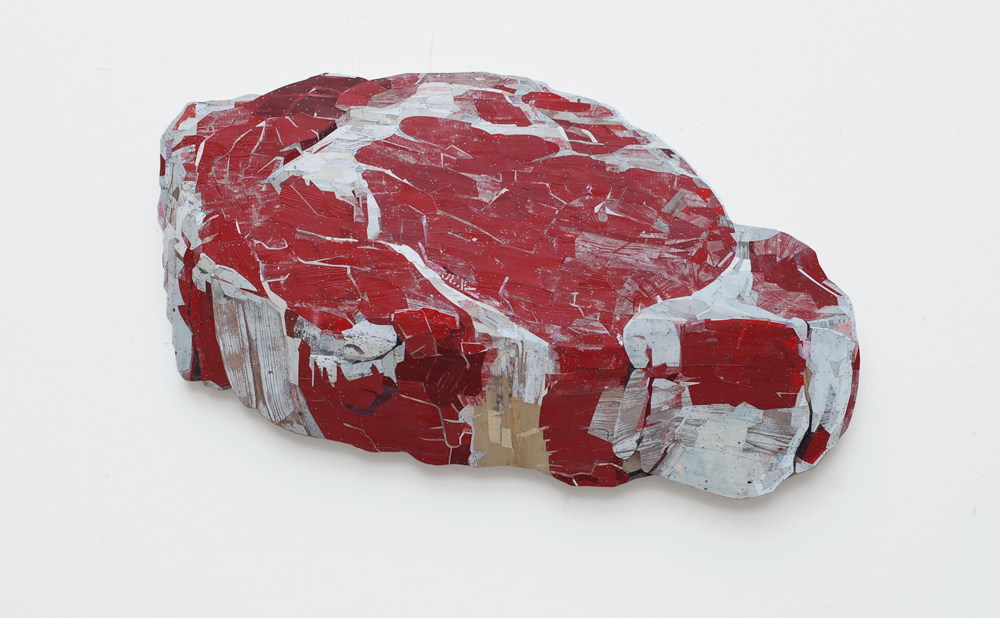
Juxtapoz has a photo series about the work of Dutch artist Ron van der Ende, who uses found wood to carve hyperrealistic sculptures of artifacts of the Industrial and Information Ages.  In an interview with diskursdisco, the artist explains how he creates his work:

Ron van der Ende: I collect old doors and stuff. Old painted wood that I find in the street. I take it apart and skin it to obtain a 3mm thick veneer with the old paint layers still intact. I construct bas-reliefs that I cover with these veneers much like a constructed mosaic. I do not paint them!”


Tags:

You can't tell from the gates of Hollybrook Cemetery in Southampton, but it's like a Disney cartoon inside. Click the "Daily Mail" article to see some examples.

Emily Dickinson’s words about religious worship (“Some keep the Sabbath going to the Church —
/ I keep it, staying at Home”) should apply equally to mourning. For some people it’s a private occasion and for others it’s a
New Orleans funeral. No one should tell someone else how to mourn.

Marginal Revolution pointed me to an article by Bel Mooney in the Daily Mail about colorful graveyards in England, which are overflowing with bright balloons, toys and sculptures of cartoon characters. Some people are not happy about it. An excerpt:

“There is a growing trend for graves to be festooned with toys, plastic ornaments and trinkets, balloons, wind-chimes and hanging objects.

The sight and sound of these exhibitions grows ever more exuberant – so much so that an Essex council is introducing a one-month limit on what can be put on a grave. Other councils are surely likely to follow.

Traditionalists argue that graveyards are places of peace and contemplation and those who visit to lay flowers on Mum’s grave shouldn’t have to negotiate their way past piles of soft toys or be disturbed by the cacophony of competing wind-chimes.

But for their part, those who want to heap graves with cuddly toys protest their right to remember their dead in whatever way they choose. Which means that anything goes, from a gravestone in the shape of a Newcastle United shirt, to life-sized effigies of the deceased, to resin pigs and dogs, plastic dolphins and even meerkats.

I would never use the word ‘tacky’ to describe such displays – though many people do. It sounds too snobbish, too much to do with a certain kind of taste.”

Tags:

“God’s Angry Man,” Werner Herzog’s 1980 look at Los Angeles televangelist Gene Scott, follows the colorful Stanford grad who screamed at and threatened his television flock with pro-wrestling flair. Herzog’s portrait captures the holy man at the height of his powers. What became of Scott in the years after the film? He divorced and remarried in his dotage, becoming wedded to a pretty 32-year-old woman named Melissa, who was previously known as porn star “Barbie Bridges.” Scott, who died in 2005, was remembered in a Los Angeles Times obituary. An excerpt:

Gene Scott, the shaggy, cigar-smoking televangelist whose eccentric religious broadcasts were beamed around the world, has died. He was 75.

Scott died Monday after a stroke, family spokesman Robert Emmers said.

For three decades, Scott was pastor of Los Angeles University Cathedral, a Protestant congregation of more than 15,000 members housed in a landmark downtown building.

In the mid-1970s, Scott began hosting a nightly live television broadcast of Bible teaching. His nightly talk show and Sunday morning church services were aired on radio and television stations to about 180 countries around the world by his University Network.

Scott was most recognizable by his mane of white hair and scruffy beard.•

Tags: , ,

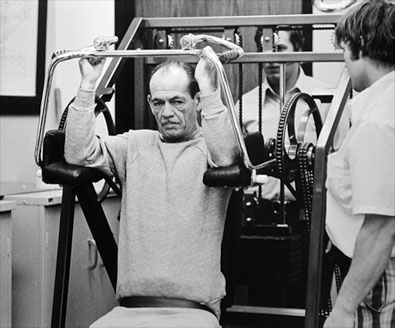
Arthur Jones' workout regimen included Nautilus pullovers and chain smoking.

Bill Bowerman, Arnold Schwarzenegger and the recently deceased Jack LaLanne all helped spark fitness crazes in America, but half-crazy Arkansan Arthur Jones may have had a bigger influence on the modern health club than anyone else. Jones created Nautilus machines, which resembled the exterior of a shellfish, selling his first unit in 1970. This equipment shifted the focus of exercise from barbell lifting to high-intensity machine training.

In 1985, Time profiled Jones and his growing empire. If he just pioneered exercise equipment, Jones would have been interesting in a small way. But he was also a cantankerous world traveler and adventurer who was married six times to much younger women and had the kind of massive ego and appetites particular to the self-made American male.

His 2007 obituary in the New York Times included Jones’ famous quote: “I shot 630 elephants and 63 men, and I regret the elephants more.” An excerpt from the Time piece about Jones when he was 58:

“The gravel-voiced Jones has none of the polish of his machines. He wears horn-rimmed glasses and ill-fitting pants, gulps coffee, chain-smokes Pall Malls and often totes a Colt .45. ‘When I was broke, I was crazy; now that I am rich, I am eccentric,’ he declares. He is about 65 but refuses to confirm it. His motto for summing up his favorite pursuits: ‘Younger women, faster airplanes and bigger crocodiles.’

Jones has had five wives, all of whom he married when they were between the ages of 16 and 20. He lives with his current spouse Terri, 23, on his 600-acre Jumbo Lair spread near Ocala, Fla., which is also home to 90 elephants, three rhinos, a gorilla, 150 snakes, 300 alligators and 400 crocodiles. The animals come in handy for Jones’ research projects, which he and his staff conduct with no particular goal. ‘If I knew what I was going to discover, I wouldn’t do it,’ huffs Jones. ‘Very little in life happens according to plan.’ But with his growing fortune, Jones has plans that tend to happen.”

Tags:

Talese

Gay Talese in 2006, (Image by David Shankbone.)

During a 2009 interview with the Paris Review, New Journalism legend Gay Talese recalls how he published his first article at the New York Times. An excerpt (Thanks Longform):

“The copy boys had to go at night to Times Square to wait for the arrival of the late-evening tabloids, which we’d deliver to the editors so that they could see what the other newspapers were reporting. While I was waiting in Times Square one night I became transfixed by that electronic news ticker scrolling around three of the sides of the old New York Times building. Fifteen thousand lightbulbs spelling out that day’s headlines, in five-foot-high letters. I wondered, How do they do that?

"Fifteen thousand lightbulbs spelling out that day’s headlines, in five-foot-high letters. I wondered, How do they do that?"

After I delivered the papers I had some free time, so I went back to the old Times building and I climbed the stairs until I found a door open on the fourth floor. Behind it was a man standing on a ladder, holding what looked like an accordion. I said, Excuse me, I’m a copy boy, and I was just wondering, what are you doing? He said, I’m doing the headlines. I asked him how he did it. He said, They call me and read me the headlines, and I type them into this device here, and it makes the bulbs light up in the right way. He said he’d been working there for twenty-five years. I asked him what his first big headline was, and he said, Oh, election night, 1928. HERBERT HOOVER BEATS AL SMITH. I asked him if I could come back with a notepad and interview him about his career and some of the famous headlines he’d written, and he agreed.

One of the good things about being a copy boy was that you got to know a lot of people on the staff. Especially if you were polite. I had good manners, thanks to growing up in the store—a reverential attitude toward the customer. So I approached Meyer Berger, one of the famous reporters on the paper at the time and a wonderful, generous man. He said I could write up the piece on his typewriter and show it to him. I did, and he liked it. He showed it to his editor, and soon it was published, without a byline, on the editorial page.”

Tags: ,

Guangzhou is one of the cities included in the Pearl River project. (Image by Myouzke.)

Yglesias has a post about the latest Chinese mass development, a megacity along Pearl River which will link many of its urban manufacturing areas with a dizzying array of infrastructure projects. The post also decries the lack of regional planning in the United States, while completely ignoring the land grabs and uprooting of reluctant people necessary to make such sweeping changes. Also: Some Chinese megalopolises, like Ordos, become insta-ghost towns. But here’s the Yglesias screed:

“I would say the key merit of this plan isn’t just the possibility for more coherent regional planning (it might work out well, or the planning might be out of touch and inept) so much as it is the deliberate desire to keep filling in China’s most prosperous, highest-productivity area. And it’s quite reasonable to expect people to continue flowing away from the poor countryside to opportunity in richer areas, and specifically this area which is quite prosperous by Chinese standards. Rich, productive urban areas are, after all, where the best opportunities lie and it’s sensible for the Chinese to be planning for the infrastructure needs of a future in which more people flock to them.

The tragedy is that we’ve largely stopped doing this in the United States. Of course people still flock to the Boston-Washington corridor, the Bay Area, etc. But we don’t adopt the kind of infrastructure and zoning policies that would facilitate those areas becoming substantial denser. Consequently, instead of having the fastest net population growth in the richest metropolitan areas (or states) we have people flocking to Houston and Phoenix in search of cheap housing.”

"I closed the window and sat there on the edge of the bed holding my club, thinking somebody fucking crazy from the lobby was going to come up." (Photo by David Shankbone.)

Before he was reborn, Mickey Rourke was a huge mess and before that a huge star. Before all of it, he lived in New York on no money during a time when the city had begun offering only the coldest shoulder possible to starving artists. In an interview in the February 1987 issue of Playboy, Rourke, then in the first great flowering of his career, recalled his hard-knock life as a young actor in NYC. A few excerpts follow.

••••••••••

“Down the hall, a little guy was opening the grille, peeking in; you couldn’t even jerk off in private. It was one of those welfare hotels with nut jobs walking up and down, you know, fucking crazies and killers and guys who were truck drivers who thought they were women. The first night, there was this loud fucking music coming up from somewhere, man. And I kept hearing these voices and shit from downstairs. I closed the window and sat there on the edge of the bed holding my club, thinking somebody fucking crazy from the lobby was going to come up and bust into the room. ‘Cause at the time, you know, I had left a lifestyle where I was a little wary of that kind of shit. The slightest sound at the door or whatever and I was jumpy. And there were a lot of strange sounds at that joint, believe me. I put a fucking chair next to the door with a can propped right on the edge, and another can on the window ledge. Anybody tries to break in, you know, I’m gonna hear it.”

••••••••••

“When I moved to the Marlton Hotel, I remember I was walking down the street, man, and I saw these dudes down on Christopher Street, and they were all wearing motorcycle jackets. With all the leather, all dressed in black, the whole thing. They kept looking at me, and I’m thinking, Fuck, man, where can I go? What fucking gang is that? None of my boys were with me. This wasn’t Miami. I kept thinking, What the fuck is this guy looking at me like that for, man? ‘Cause you didn’t eyeball somebody back home in Miami unless you wanted to get down, you know—unless you were ready to fight. What I didn’t realize was that they were sissies, all dressed up in leather.”

••••••••••

“It was funny, in a way. In the wintertime, I was really, really lonely. And I used to work down by the water, moving furniture in this warehouse where Lee Marvin, Steve McQueen, Gene Hackman and a bunch of other guys had all worked, too. The guy who ran it was an old actor or something and used to tell me stories about them. Anyway, I used to walk home during the night, and I was so fucking lonely, you know, I’d pretend I had a girlfriend waiting for me in my room, waiting to have a cup of coffee with me or go to the movies. As I walked home, I was still daydreaming. Same way I daydreamed in school. I’d say to myself, ‘Oh, now I’m going home; she’ll be waiting for me.’ Because I couldn’t talk to girls. It’s easier now. They come running.”

Tags:

Architect Gunnar Birkerts, Sven's father, designed the Corning Museum of Glass in Corning, NY.

Mule Variations has a new interview with Sven Birkerts and it touches on the author’s prophetic 1994 work, The Gutenberg Elegies, which examined the fate of reading in the age of Internet. An excerpt:

“Mule Variations: In 1994, in the days before widespread use of the Internet or cell phones, you wrote inThe Gutenberg Elegies, ‘We will all spend more and more of our time in cyberspace producing, sending, receiving, and responding, and necessarily less time interacting in a ‘hands on’ way with the old material order.  Similarly, we will establish a wide lateral interaction, dealing via screen with more and more people at the same time our face-to-face encounters diminish.  It will be harder and harder – we know this already – to step free of our mediating devices.’  At the time, this observation was far from readily apparent to the public at large.  Now that it has played out as you predicted, do you ever feel like The Gutenberg Elegies was too far ahead of its time?  That if you had published it, say, five years later in 1999 more people would have understood what you were talking about?

Sven Birkerts: I think it came out at a time when the people who tend to think about these things were thinking about them, even though it hadn’t entered the wider public consciousness.  I think it was a wonderfully opportune time to start the debate.  And it was very coincidental, the publication of that book, because it came out at the very same time as Being Digital by Nicholas Negroponte, who runs the MIT media labs.  And his was this raving, ‘Here’s the new world!  All solutions are in hand!  We’re all digital!’  And so the books were reviewed over and over and over again together.  And he and I did a couple things where we’d go on talk shows together.  To me, it said we’d come to a moment where it could be talked about.  What’s interesting to me now is that the wave’s falling back a little.  Some of the people were so gung ho about it, for instance Jaron Lanier who published a book this year.  Here’s this wild-haired Silicon Valley computer visionary suddenly starting to find the problems with the current situation.  He’s coming back from his raving enthusiasm.  He saw where the digits were going, but he didn’t see what would happen when the digits got tied up with the economy, etc.”

Tags:

Julie and child, 1983. (Image by Darcy Padilla.)

Photographer Darcy Padilla’s amazing 18-year photo series, The Julie Project, follows a deeply troubled woman named Julie Baird through her life, beginning in 1993 in a flophouse in San Francisco. It’s heartbreaking and important work, though it’s not for the faint of heart. An excerpt below from the story’s introduction (Thanks to Kottke and Dooce):

“I first met Julie on February 28, 1993. Julie, 18, stood in the lobby of the Ambassador Hotel, barefoot, pants unzipped, and an 8 day-old infant in her arms. She lived in San Francisco’s SRO district, a neighborhood of soup kitchens and cheap rooms. Her room was piled with clothes, overfull ashtrays and trash. She lived with Jack, father of her first baby Rachael, and who had given her AIDS. She left him months later to stop using drugs.

Her first memory of her mother is getting drunk with her at 6 and then being sexually abused by her stepfather. She ran away at 14 and became drug addict at 15. Living in alleys, crack dens, and bunked with more dirty old men than she cared to count.

For the last 18 years I have photographed Julie Baird’s complex story of multiple homes, AIDS, drug abuse, abusive relationships, poverty, births, deaths, loss and reunion. Following Julie from the backstreets of San Francisco to the backwoods of Alaska.”

Tags: ,

"Miami" was originally spelled "Mayaimi."

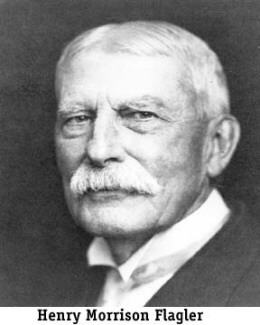
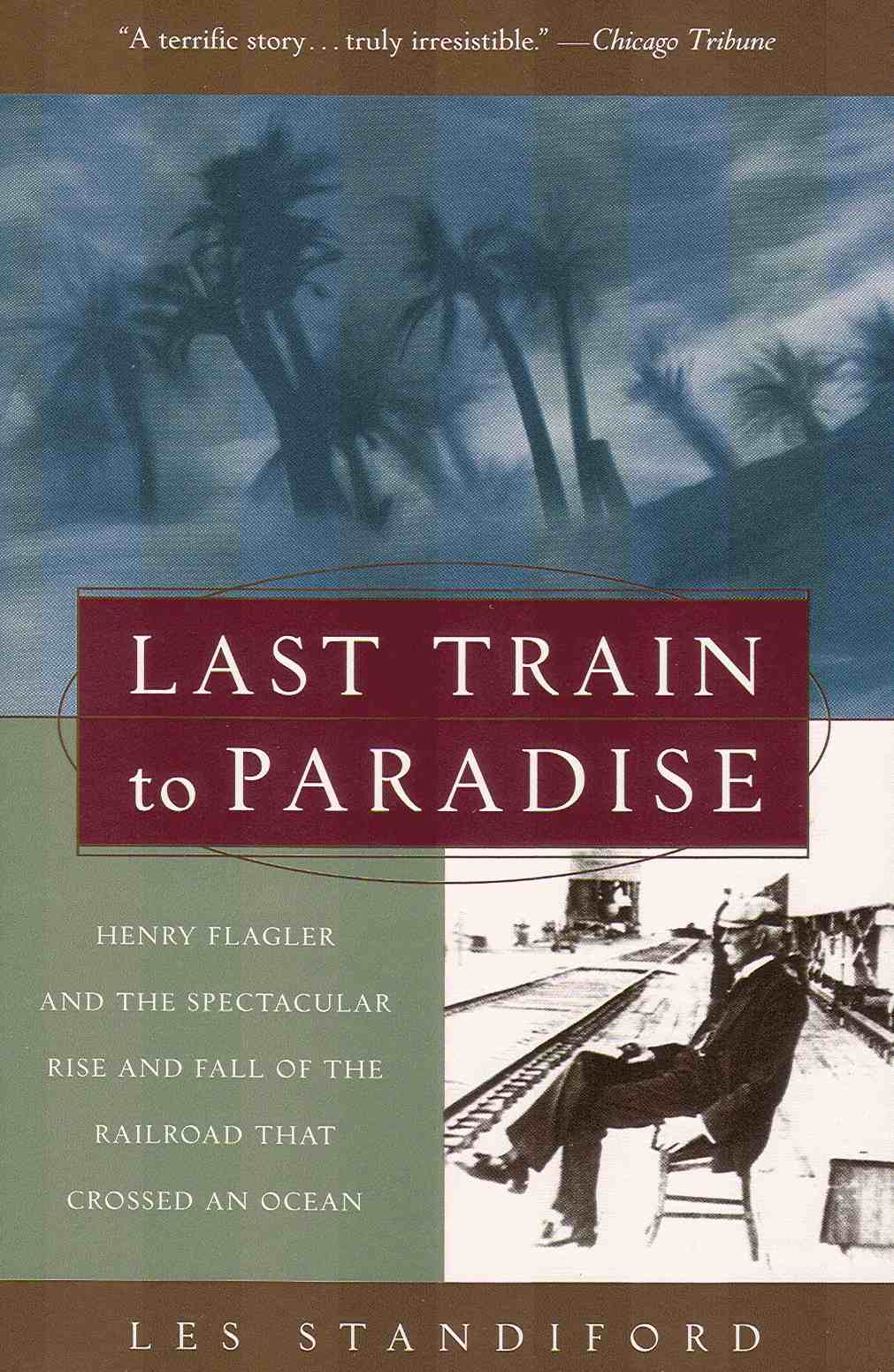
Henry Flagler dreamed the impossible dream and actually got to live it, if only for a while. A founding partner of Standard Oil, Flagler amassed amazing wealth by 1885 when he decided to transform Florida from swampland into an American Riviera. Soon, his grand hotels dotted places like St. Augustine and West Palm Beach, and he built the Florida East Coast Railroad, which extended all the way down to the city that would become Miami.

But in 1898 Flagler wanted more. To fulfill his plans, he would have to further extend the railroad from Biscayne Bay to Key West, which was roughly 125 miles off the coast. That would require a miracle of engineering. It didn’t happen overnight, but in 1912 Flagler’s Florida Overseas Railroad was completed. The visionary didn’t have much time to bask in his success, however. Flagler died the following year at 83 years old, after a fall in his home. In 1935, a hurricane destroyed the Key West railroad, which was never rebuilt.

An excerpt from Lee Standiford’s Last Train to Paradise about the day the Florida Overseas Railroad opened:

“THE EIGHTH WONDER OF THE WORLD, headlines now bannered, such epithets as ‘Flagler’s Folly’ long forgotten. He had arrayed before him thousands of grateful citizens, along with a multitude of foreign dignitaries and government officials come to pay homage to what had been accomplished solely because of his vision and his unswerving devotion to that objective. Few people in history have accomplished so great a task or lived to experience such a moment as Flagler did.

The man he hired to bring his dream to fruition had died on the job and hundreds of other men had lost their lives as well, and despite all bromides otherwise, some weight of their passing had to have rested upon Flagler’s shoulders. Storms weathered, court fights fought, political enemies bested, impossible engineering problems solved, good men buried, rails joined at last. So many currents, so many thoughts and notions to meld and comprehend, after eighty-two years of life.

There’s no way to fathom how much of this had passed through his mind that day, but on his way off the platform Flagler placed a hand on Parrott‘s shoulder and whispered, ‘Now I can die happy. My dream is fulfilled.'”

Tags:

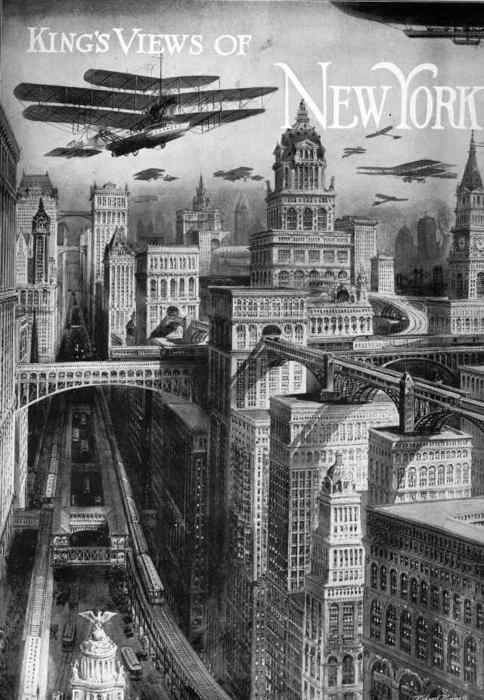
The cover of a 1911 Moses King guidebook predicted New York City's future pretty accurately.

David W. Dunlap has an incredibly fun slideshow on the New York Times site, which recalls urban planning from NYC’s past that was wildly bold and wholly unrealistic. An excerpt:

“Sobersided planners and wide-eyed visionaries thought this astonishing pace of transformation would never abate. A dreamer named W. Parker Chase proposed in 1932 that the 50 million people living in New York City 50 years on would ride vacuum-tube escalators and take air taxis to their 250-story office towers. The Regional Plan Association envisioned a 1,200-foot-long bathhouse complex at Great Kills Park on Staten Island. Robert Moses, who usually had the power to get things done, tried to persuade the United Nations to build a Brasília-like center at Flushing Meadow Park in Queens. (Midtown Manhattan, he warned in 1946, would by then ‘not be a proper, dignified and practical location’ for the United Nations.)

Dr. John A. Harriss, a distinguished expert on traffic control, went as far as to propose damming and draining the East River, before replacing it with a five-mile-long network of vehicular and train tunnels topped by boulevards and promenades. Pure folly? Not to the advocates of Westway, a highway that would have tunneled through landfill in the Hudson River until the plan was scuttled in 1985.”

Tags: , ,

The wheel, still in use.

NPR’s Robert Krulwich had an interesting conversation with Kevin Kelly of Wired. Kelly claimed to the disbelieving host that no tool or technology in the history of the Earth has ever gone extinct on a global scale. Krulwich can’t believe the assertion but has yet to disprove it. An excerpt:

“He said, ‘I can’t find any [invention, tool, technology] that has disappeared completely from Earth.’

Nothing? I asked. Brass helmets? Detachable shirt collars? Chariot wheels?

Nothing, he said.

Can’t be, I told him. Tools do hang around, but some must go extinct.

If only because of the hubris — the absolute nature of the claim — I told him it would take me a half hour to find a tool, an invention that is no longer being made anywhere by anybody.

Go ahead, he said. Try.

If you listen to our Morning Edition debate, I tried carbon paper (still being made), steam powered car engine parts (still being made), Paleolithic hammers (still being made), 6 pages of agricultural tools from an 1895 Montgomery Ward & Co. Catalogue (every one of them still being made), and to my utter astonishment, I couldn’t find a provable example of an technology that has disappeared completely.”

Tags: ,

Julius Fromm died in London from a heart attack just days after the Allies' won WWII.

Julius Fromm was a German chemist who improved the condom, democratized its use and built a fortune from rubber. But he was Jewish so his empire was subsumed by the Nazis in 1938. An excerpt from an article about his life in the Berlin Review of Books (Thanks Instapaper):

“Julius Fromm then hit upon the idea of making condoms. The early condoms from the eighteenth century were generally made of animal intestines, and were used primarily by wealthy men – like Giacomo Casanova, who referred to them as ‘English riding coats’ – to protect against the incurable syphilis. These condoms were difficult to use, diminished pleasure, frequently broke, and offered only limited protection against venereal diseases. In 1893 the American industrialist Charles Goodyear developed rubber vulcanisation. When the sap of the rubber tree is formed into rubber, then treated with sulphur and heated to high temperatures, it forms an elastic and durable material that can be used to make raincoats, shoes, tyres and condoms which rather looked like bicycle inner tubes with bulging seams. Later a dipping method was invented that made possible the production of thinner and seamless condoms. Julius Fromm saw a market he could tap into and founded his company in 1914, opening a small workshop in the Bötzow area in the Prenzlauer Berg district of Berlin. With World War I and the liberalisation of sexual values in the Weimar Republic, the demand for condoms exploded and Fromm’s business quickly expanded, and he established factories near the Spree River in Berlin-Mitte.”

Tags: , ,

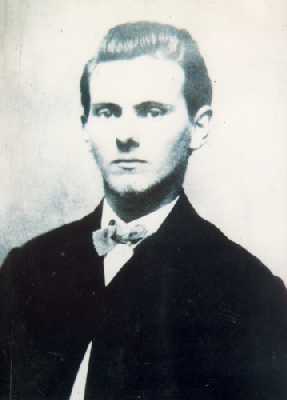
"...memories of slavery, the Civil War and Jesse James."

Some people tell a certain story at a particular time and everyone wants to believe it, even though it couldn’t possibly be true. Usually, these tall tales have something to do with unattainable wealth of one kind or another and our deep desire to possess it. Charlie Smith was just such a storyteller and his wealth was longevity. No one will argue that he didn’t have a very good run, but Smith didn’t make it as close to 137 as he wanted people to believe.

Smith became something of a minor celebrity in the 1960s-70s with his “memories” of life on plantations and on the frontier, claiming to have been born in 1842 (though documents uncovered later put lie to these assertions). His renown grew to the point that he was invited to watch the moon launch at the Kennedy Space Center. He doubted aloud (without irony) that the space mission was anything but a hoax.

Life magazine took Smith very seriously in its October 13, 1972 issue, providing an interesting story if not a factual one. An excerpt from the article:

“A researcher from the Martin Luther King Center in Boston traveled to Barstow, Florida, late last month to stick a microphone into the deeply furrowed face of Charlie Smith. The purpose was to add Smith’s recollections to the center of the black oral history bank.

What could this retired candy store owner from backwoods Florida have to offer? Among other things, memories of slavery, the Civil War and Jesse James.

Charlie Smith has become the object of historical research because he has obtained the incredible age of 130. He is the oldest living American. For three hours Smith talked into the tape recorder, and even sang a couple of frontier ballads. He described being lured onto a slave ship in Liberia by tales of ‘fritter trees’ in far-off America, then being put on an auction ship in New Orleans. He wound up on a Texas plantation owned by a Charlie Smith, whose name he adopted. Freed during the Civil War, Smith told of years as a cowpuncher, gambler, bootlegger and outlaw.”

Tags:

1970s tabletop Sony Trinitron TV. (Image by Daniel Christensen.)

Jeff Yang of the San Francisco Gate has written an article about how Steve Jobs Apple ethos was formed in large part because of his almost fetishistic devotion to former Sony CEO Masaru Ibuka. Ibuka didn’t worry about losing market share in the short run–he wanted, like Jobs subsequently would, to create transformative products and win the future. An excerpt:

“‘Ibuka was really the heart and soul of the company,’ says [Alan] Deutschman, who wrote about Sony’s elder statesman in his most recent book, Walk the Walk. ‘He was the one responsible for Sony’s sense of purpose. This was a company that was launched in a Tokyo that had been leveled by firebombing in World War II, that had experienced the kind of destruction associated with Hiroshima and Nagasaki, and whose residents were facing homelessness, hunger and desperation. And yet Ibuka laid out a mission statement for Sony that was aimed at changing the world.’

That statement was simple and to the point: ‘Sony will be the company that is most known for transforming the global image of Japanese goods as being of poor quality.’ It defined Sony by what it would not do — make bad products — making it something of an omission statement, if you will.

Masaru Ibuka: "We will only do breakthrough technology."

By way of example, Deutschman tells the story of how Sony entered the color TV marketplace, noting that in the Sixties, when color TV was going from 3% to 25% of the market, Sony was one of the few electronics companies that didn’t sell a color model. ‘People were telling Ibuka, ‘You have to come in to this market, everyone will take your market share,’ says Deutschman. ‘And Ibuka refused, saying, ‘No, we will only do great products. We will only do high quality goods. We will only do breakthrough technology.”

As a result, the company found itself in a precarious financial situation, losing out to its primary rivals — until it came upon the aperture-grille technology that Sony unveiled in 1966 as the core of the Trinitron TV. A full 25% brighter than its rivals, Trinitron became the best-selling color TV for the next quarter century.

‘At the time, Sony was committed to not releasing a crappy product just because the market was there; they waited until they had a truly revolutionary innovation, combined it with great design and then profited from it for long, long time,’ says Deutschman. ‘For decades, Sony was a perfect place for engineers to fully use their creativity, because it was focused on bringing real meaning and benefit to society by making great products.'”

Tags: , , ,

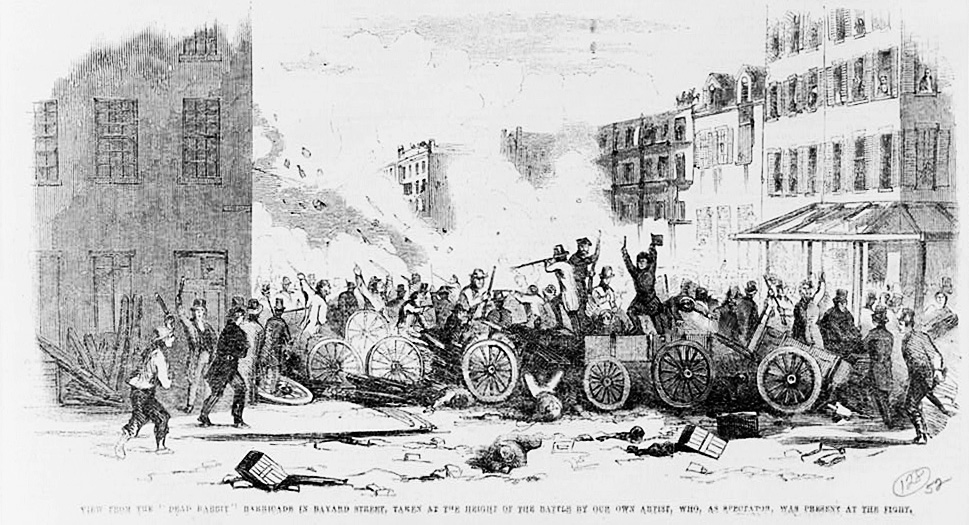
An 1857 illustration of the the Dead Rabbits battling the Bowery Boys.

In the raucous and often lawless Lower New York City of the nineteenth century, many a vicious gang was berthed in illicit groggeries stashed in the back rooms of corner groceries. But there wasn’t always honor among thieves and sometimes gangs splintered. In his great book, Low Life, Luc Sante relays how such a fragmenting led to the formation and naming of the Dead Rabbits. An excerpt:

“The Roach Guards, named after Ted Roach, the liquor dealer who backed them, suffered a factional dispute some time in the 1830s. During the argument a member of one feuding sector evidently threw a rabbit carcass into the assemblage of the other. These recognized a potent symbol when they saw one and hoisted the corpse as their banner. Henceforth they called themselves the Dead Rabbits, an epithet whose pungency was not diminished by the fact that in flash lingo ‘dead’ was an intensifier meaning ‘best’ and a ‘rabbit’ was a tough guy. Further distancing themselves from their former parent body, the Dead Rabbits sewed red stripes down the outer seams of their pants; the Roach Guards continued to sport blue ones.”

More Afflictor Luc Sante posts:

Tags: ,


Long Form
pointed me to a great post on Ptak Science about the history of hobo language and lexicons. It includes the above “Glossary of Slanguage,” taken from an anonymous 1946 pamphlet called “Hobo Exposed, or How to be a Hobo.”

More Afflictor hobo-related posts:

Wired has a story by Spencer Ackerman about plants being engineered by biologist June Medford to detect explosives. Expect them to be in pots in our airports very soon. An excerpt:

“Picture this at an airport, perhaps in as soon as four years: A terrorist rolls through the sliding doors of a terminal with a bomb packed into his luggage (or his underwear). All of a sudden, the leafy, verdant gardenscape ringing the gates goes white as a sheet. That’s the proteins inside the plants telling authorities that they’ve picked up the chemical trace of the guy’s arsenal.

It only took a small engineering nudge to deputize a plant’s natural, evolutionary self-defense mechanisms for threat detection. ‘Plants can’t run and hide,’ says June Medford, the biologist who’s spent the last seven years figuring out how to deputize plants for counterterrorism. ‘If a bug comes by, it has to respond to it. And it already has the infrastructure to respond.’”

Tags: ,

"They receive visitors of the other sex, and ply their vocation on the streets for a livelihood."

Alison Leigh Cowan of the City Room at the New York Times has an interesting piece about an 1870 guidebook, The Gentleman’s Companion, which was a directory of brothels and streetwalkers in Manhattan. The Times got to briefly handle a crumbling copy that is kept under lock and key at the New-York Historical Society, but there’s a digital version for everyone to read. A few excerpts from the publication follow. (I’ve left the writing as it was, though some of it is patchy.)

••••••••••

In passing up Broadway, any evening, between the hours of 7 and 11 o’clock, one is surprised to see so many well-dressed and comely females whose ages range from fifteen to twenty-five years, unattended by companions of the opposite sex.

These young ladies are Nymphes de Pave or as they familiarly termed ‘Cruisers’ have furnished rooms in which they receive visitors of the other sex, and ply their vocation on the streets for a livelihood.

As a general fact, these girls are smart. good-looking, well-educated and are neat and prepossessing in appearance. This is especially the case with those who are called ‘Badgers,’ but more widely known as panel thieves. These plunderers have had full swing, of late, and have robbed many an unsuspecting stranger of his all. The sooner justice puts an end to their swindling career, the better it will be for public and for the girls themselves.”

••••••••••

"It is a third class house where may be found the lowest class of courtezans."

The house No. 58 West Houston street, is kept by Mrs. Mayer who furnishes the best accommodations for ladies and gentlemen. This house is kept in a very quiet and orderly manner. The next house, No. 55, is kept by Miss Ada Blaghfield, the dashing brunette, who has eight boarders, both blondes and brunettes. These are a pretty lot of girls, of pleasing and engaging manners. It is regarded as a first class house, very quiet and orderly and is visited by some of the first citizens.

••••••••••

The establishment at No. 111 Spring street is a house of assignation kept by Hattie Taylor. It is a third class house where may be found the lowest class of courtezans. It is patronized by roughs and rowdies, and gentlemen who turn their shirts wrong side out when the other side is dirty.

Tags: , , ,

“Dear Sarah, Beverly and All, I am enjoying the trip and safe so far. I slept all night at Snyder, Texas, at the Strayhorn Motel and feel rested. I sure wish you were with me. Today I went to Carlsbad Caverns. Love, Bill. P.S. I am sending you and Beverly a package from a souvenir store near here.”

During a 1958 visit to New Mexico, Bill Bragg sent a postcard to his wife at their home in Macon, Georgia. It just recently arrived after being lost for 52 years. Thankfully, the Braggs had never moved. Ed Grisamore of the Macon Telegraph has a story about the long-delayed card. An excerpt:

“The 5-cent postcard — with a few bumps, bruises, blue-ink smears and a 3-cent stamp barely hanging on — somehow reached its final destination.

The postmark was Nov. 10, 1958. It had been mailed from Whites City, N.M.

Oh, well. Better late than never.

A lot of things have changed, though.

Wilmer ‘Bill’ Bragg Jr. was a 30-year-old Marine when he penned those words. He’s now an 82-year-old great-grandfather and needs a magnifying glass to read them.

The Braggs still live on the same property along Liberty Church Road. It has been in Sarah’s family since 1943.

‘This incident is extremely rare and, over the course of postal history, it is always a great moment when we are able to deliver the mail no matter what condition it is in,’ said Nancy Ross, a spokeswoman for the U.S. Postal Service in the South Georgia District.”

Tags: , , ,

McCracken discovered that "pitchers have very little control over what happens on balls hit into the field of play." (Image by schwenkenstein01.)

Arizona baseball stats geek Robert “Vörös” McCracken had the kind of idea that can make a career, but he instead watched his life come undone. McCracken was the wunderkind sabermetrician lauded in Moneyball for figuring out a radically different and improved way of ranking pitchers. It made him the next big thing in baseball numbers circles, the heir apparent to Bill James, and landed him a job with the Boston Red Sox. But bipolar disorder and a number of other setbacks led to unemployment, poverty and depression. Jeff Passan profiles McCracken and his current between-innings life inSabremetrician in Exilefor The Post Game on Yahoo! Sports. An excerpt:

“He visited a doctor, was diagnosed with a mild case of bipolar disorder and received a prescription for Seroquel, a popular antipsychotic drug that would help him sleep and prevent the ruminations.

‘At some point, if you’re not mentally well, nothing else matters,’ McCracken says. ‘Nothing good happens. You’re forced to make decisions. And because you’re forced, there’s no guarantee they’re the right ones. But they’re decisions you’ve got to make. I can either spend the rest of my life in an institution, or I can change the way I think about what I’m doing with the rest of my life. I can continue to ratchet up the stress levels and be the supergenius who makes millions of dollars, or I can calm down and be satisfied with my lot.’

Satisfaction is an ongoing battle. McCracken gave up baseball for a few years before he starting blogging about it again. The frequency of the posts petered out as his attention moved to soccer, and the demand for employment there exceeded any bites he got in baseball.

McCracken tried. He spoke with Cleveland and San Diego. Nothing materialized. Last year, he was hoping to get a job with the Diamondbacks, whose stadium is less than 30 miles from his home in Surprise, Ariz. Then GM Josh Byrnes was fired, and McCracken never heard from the organization again. He tries to understand why, whether his time with Boston hurt him or his mental illness scares teams off or his appearance — McCracken is significantly overweight – hinders his reputation.

All cop-outs, McCracken says.”

Tags: , ,

"Some of the tenements managed to boast a saloon, brothel, or dance hall on every floor."

An excerpt about raffish pre-Civil War New York saloons from Luc Sante’s great book Low Life:

“The low-class Bowery dives just emerging featured a novelty: no glasses. Drinks, at three cents per, were served from barrels stacked behind the bar via thin rubber tubes, the stipulation being that the customer would drink all he wanted until he had to stop for a breath. Needless to say, there were many who developed deep lung capacity and tricks of circular respiration in order to outwit the system. In the decades before the Civil War the worst dives were located on the waterfront, and they traded with a highly elastic clientele of sailors. Sailors were free spenders, rootless, and halfway untraceable; they were marks of the first order. The street most overrun by sailors was Water Street, and there some of the tenements managed to boast a saloon, brothel, or dance hall on every floor. Notable were John Allen’s saloon-cum-whorehouse and Kit Burns’ Sportsmen Hall, which was an entire three-story building in which every variety of vice was pursued, but none so famous as its matches to the death between terriers and rats, held in a pit in its first-floor amphitheater, hence the resort’s more common name, the Rat Pit. Commerce was aided by the fact that, whether through fluke or graft, Kit Burns’s was the terminus for one of the early stage transit lines.”

Tags: , ,

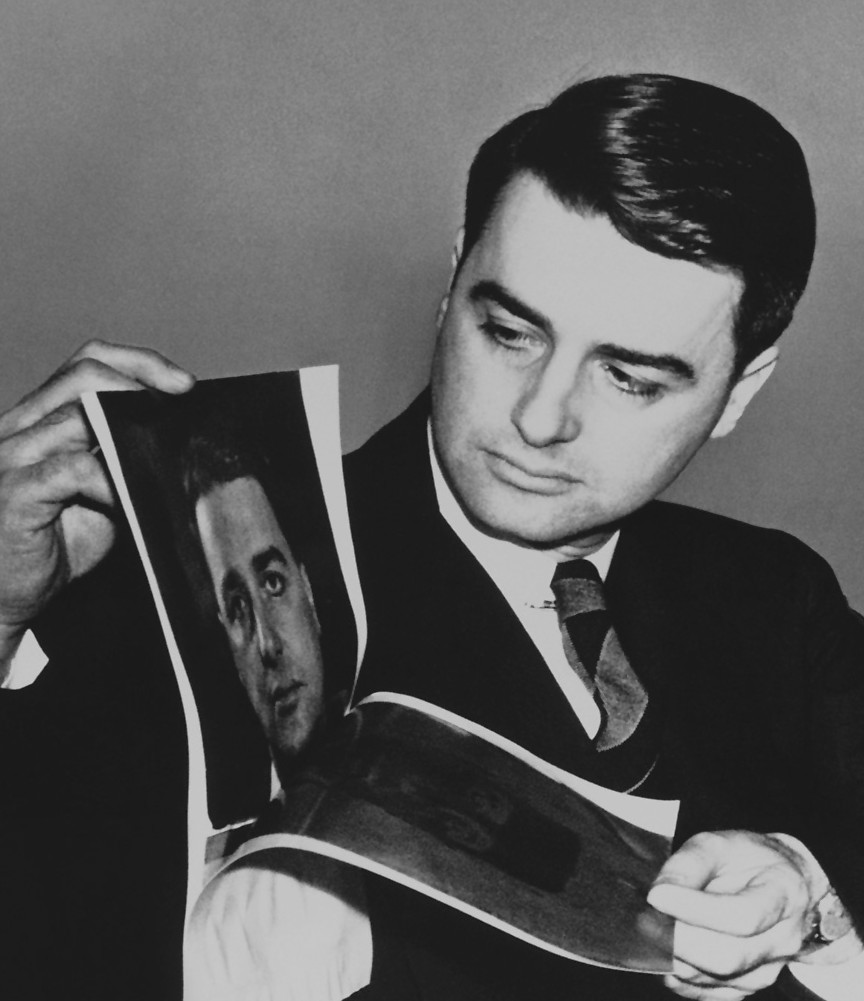
In 1972, scientist and Polaroid co-founder Dr. Edwin H. Land released the SX-70 collapsible instant camera, which featured a new type of self-developing film that required nothing of a photographer beyond a point and a click. In the October 27 issue of Life that year, Land unveiled his new invention and opined on the nature of creativity. In his description of the birth of the first Polaroid camera in the 1940s, he offers a pretty great explanation about the creative process in general. An excerpt:

Many people are creative but use their competence in ways so trivial that it takes them nowhere. Their kind of creativity is not cumulative. True creativity is characterized by a succession of acts each depending on the one before and suggesting the one after. This kind  of cumulative creativity led to the development of Polaroid photography.

One day when we were vacationing in Santa Fe in 1943 my daughter, Jennifer, who was then 3, asked me why she could not see the picture we had just taken of her. As I walked around that charming town, I undertook the task of solving the puzzle she had set for me.

Within the hour, the camera, the film and the physical chemistry became so clear that with a great sense of excitement I hurried to the place where a friend was staying, to describe to him in detail a dry camera which would give a picture immediately after exposure. In my mind it was so real that I spent several hours on this description.

Four years later we demonstrated the working system to the Optical Society of America. All that we at Polaroid had learned about making polarizers and plastics, and the properties of the viscous liquids, and the preparation of the microscopic crystals smaller than the wavelengths of light was preparation for that day in which I suddenly knew how to make a one-step photographic process. I learned enough about what would work in different fields to be able to design the camera and film in the space of that walk.•

___________________________

In 1970, Edwin H. Land gave a tour of the Polaroid company.

Tags:

« Older entries § Newer entries »