
Excerpts

You are currently browsing the archive for the Excerpts category.

(Image by Wikimedia Foundation.)

The Awl, that fascinating stream of information and ideas, has a particularly wonderful article-length post inWikipedia and the Death of the Expert,” which was written by Maria Bustillos. It was just a few short years ago that Jimmy Wales’ brainchild was being openly mocked. People were too focused on what Wikipedia wasn’t (a flawless source), ignoring what it was (an excellent starting point for a curious mind, one of the great triumphs of crowdsourcing and an apotheosis of amateurism). But the laughter has stopped. Wikipedia hasn’t contributed to the decline of civilization but to the storehouse of knowledge, widening it with a lack of disdain toward so-called “low culture.” The original idea for Wikipedia didn’t come from crowdsourcing, but it would still be an empty room without the crowd that occupied it.

The opening of Bustillos’ Awl post:

“It’s high time people stopped kvetching about Wikipedia, which has long been the best encyclopedia available in English, and started figuring out what it portends instead. For one thing, Wikipedia is forcing us to confront the paradox inherent in the idea of learners as ‘doers, not recipients.’ If learners are indeed doers and not recipients, from whom are they learning? From one another, it appears; same as it ever was.

It’s been over five years since the landmark study in Nature that showed ‘few differences in accuracy’ between Wikipedia and theEncyclopedia Britannica. Though the honchos at Britannica threw a big hissy at the surprising results of that study, Nature stood by its methods and results, and a number of subsequent studies have confirmed its findings; so far as general accuracy of content is concerned, Wikipedia is comparable to conventionally compiled encyclopedias, including Britannica.”

••••••••••

Jimmy Wales describes the birth of Wikipedia at TED in 2005:

The conclusion of Stacy Schiff’s 2006 New Yorker article, “Know It All,” which realized that the Wiki mob was winning but wasn’t sure if the victory was Pyrrhic: “In the nineteen-sixties, William F. Buckley, Jr., said that he would sooner ‘live in a society governed by the first two thousand names in the Boston telephone directory than in a society governed by the two thousand faculty members of Harvard University.’ On Wikipedia, he might finally have his wish. How was his page? Essentially on target, he said. All the same, Buckley added, he would prefer that those anonymous two thousand souls govern, and leave the encyclopedia writing to the experts.

Over breakfast in early May, I asked Cauz for an analogy with which to compare Britannica and Wikipedia. ‘Wikipedia is to Britannica as ‘American Idol’ is to the Juilliard School,’ he e-mailed me the next day. A few days later, Wales also chose a musical metaphor. ‘Wikipedia is to Britannica as rock and roll is to easy listening,’ he suggested. “It may not be as smooth, but it scares the parents and is a lot smarter in the end.’ He is right to emphasize the fright factor over accuracy. As was the Encyclopédie, Wikipedia is a combination of manifesto and reference work. Peer review, the mainstream media, and government agencies have landed us in a ditch. Not only are we impatient with the authorities but we are in a mood to talk back. Wikipedia offers endless opportunities for self-expression. It is the love child of reading groups and chat rooms, a second home for anyone who has written an Amazon review. This is not the first time that encyclopedia-makers have snatched control from an élite, or cast a harsh light on certitude. Jimmy Wales may or may not be the new Henry Ford, yet he has sent us tooling down the interstate, with but a squint back at the railroad. We’re on the open road now, without conductors and timetables. We’re free to chart our own course, also free to get gloriously, recklessly lost. Your truth or mine?”


Tags: ,

Footage of the Stepper 3D humanoid robot perambulating at Tsinghua University. The bot is being developed to participate in an annual soccer tournament called RoboCup, which will be held this year in Istanbul in July. From Singularity Hub: “I love the idea behind RoboCup: using the game of soccer to develop robotics and promote science and technology. The robots operate autonomously during play, utilizing programs that determine how they will find the ball, control the ball, and score a goal. RoboCup’s ultimate mission is to generate robots that can beat humans at a soccer match by the year 2050.”

"California has absorbed some eight million people since 1950." (Image by Matthew Field.)

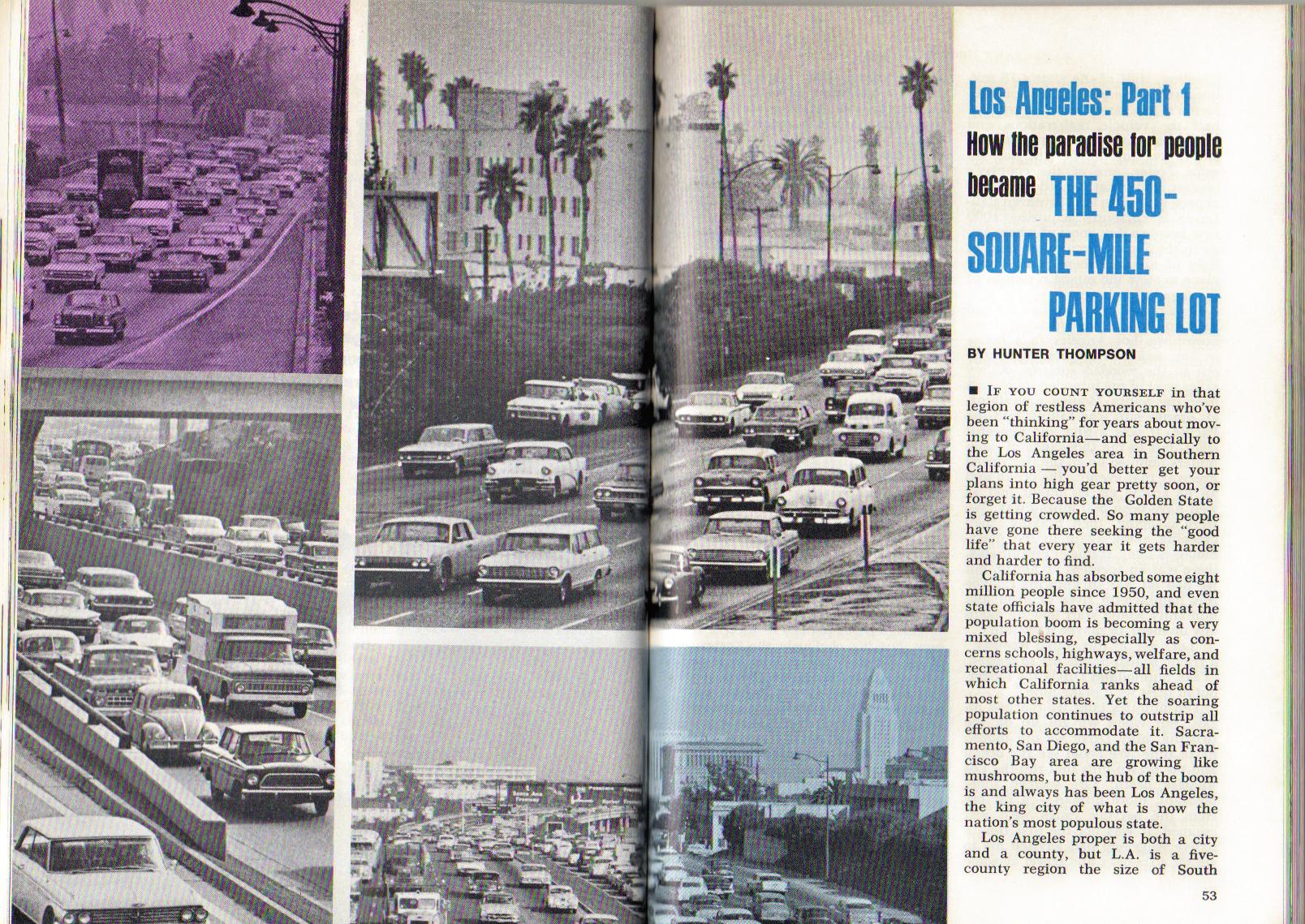
In the 1965 Pageant magazine article, “The 450-Square-Mile Parking Lot,” Hunter S. Thompson (who hadn’t yet begun using the middle initial) looked up at the sunny Los Angeles sky and saw it falling, with the county becoming overcrowded and choked with exhaust. In retrospect, of course, it all seems quaint. The opening:

“If you count yourself in that legion who’ve been ‘thinking’ for years about moving to California–and especially to the Los Angeles area in Southern California–you’d better get your plans into high gear pretty soon, or forget it. Because the Golden State is getting crowded. So many people have gone there seeking the ‘good life’ that every year it gets harder and harder to find.

California has absorbed some eight million people since 1950, and even state officials have admitted that the population boom is becoming a very mixed blessing, especially as concerns schools, highways, welfare, and recreational facilities–all fields in which California ranks ahead of most other states. Yet the soaring population continues to outstrip all efforts to accommodate it. Sacramento, San Diego, and the San Francisco Bay area are growing like mushrooms, but the hub of the boom is and always has been Los Angeles, the king city of what is now the nation’s most populous state.” (Thanks to The Electric Typewriter.)

••••••••••

Starkly different views of 1965 L.A.: The Farmers Market and the Watts Riots.

Tags:

Great when they were silent and great when they talked, Stan Laurel and Oliver Hardy spend time together for the final time ever in this home movie, likely shot in 1956, the year before Hardy died. (Thanks Open Culture.)

From Hardy’s Los Angeles Times obituary: “Oliver Hardy, rotund film comedian, died yesterday. He was 65. Death came to the portly half of the famed Laurel and Hardy comedy team from the effects of a paralytic stroke he suffered last September 12. So severe was the stroke that it left him almost completely paralyzed. He was unable to speak and could hardly move one arm. He had wasted away to a comparative shadow from his comical bumbling bulk which at the height of his fame bulged to 350 pounds.”

••••••••••

Fat & Skinny in “The Music Box” in 1932:

Tags: ,

"That's All Folks." (Image by Wildhartlivie.)

Ben Ehrenreich’s The End. is an excellent 2010 Los Angeles magazine article which examines the act of dying in L.A. County. It rightly won a National Magazine Award. An excerpt:

“So here you are, dead and alone. Chances are you didn’t want this, but your wishes were ignored. Whatever happens to the part of you that you recognize as somehow quintessentially you (call it soul, self, spirit, spark), the other part isn’t finished yet—the fleshly part, the limbs and guts that ached and pleased you in so many ways, the meaty bits that you vainly or grudgingly dragged around for all those years. That piece is still of interest to the bureaucrats. It is still a potential source of profit. In your absence its journey is just beginning.

The path forks before it. Which way it goes will be determined by the cause of your demise. All the state wants is a death certificate: Think of it as a letter from your doctor excusing you from paying income tax forever. The county, though, wants to know why you died and if there might be a reason to push the cops and the courts and the jails into motion. The coroner holds the key to all that machinery. The key itself is what you once called you. If you have not been under the care of a physician for six months, if you die during surgery or as a result of injuries sustained in an accident or an assault (self-inflicted or otherwise), or if there’s any suspicion that your death might be something other than ‘natural,’ your next stop will be the Los Angeles County Department of Coroner—which is, assistant chief coroner Ed Winter tells me more than once, the busiest such department in the country.”

••••••••••

The L.A. County Coroner’s souvenir shop:

Tags: ,

In February, Paris Review Daily featured a James Atlas interview with Douglas Coupland about the latter’s recent biography of Marshall McLuhan:

Did you see him as a prophet of the revolution in global communications?

Douglas Coupland: No. Like most people, I only knew his three clichés: Medium equals message, global village, and the scene from Annie Hall . I’ve found that most people truly would like to know more about the man, but it’s almost impossible to do. His language is a universe unto itself and is astonishingly dense and hard to navigate. He died the year I started art school [1980], and his stock was at an all time low. His name never came up.

Why did you believe he was still relevant?

Douglas Coupland: Well, I didn’t. I had to figure that out myself. It took months of reading and rereading his stuff to realize that in Marshall we had a classically trained scholar realizing that there’s this thing coming down the pipe—the Internet—yet because he didn’t understand the ultimate interface, he was frustrated in his inability to describe it clearly. I think that’s what people really respond to in Marshall: the almost vibrating sense of being in on one of the biggest prognostications of all time, yet having news of its arrival coming from this fuddy-duddy guy in 1950s Toronto. How on earth did that happen?”

More McLuhan posts:

••••••••••

“Hello Doug. Would you personally miss bees if they disappeared?”

Tags: , ,

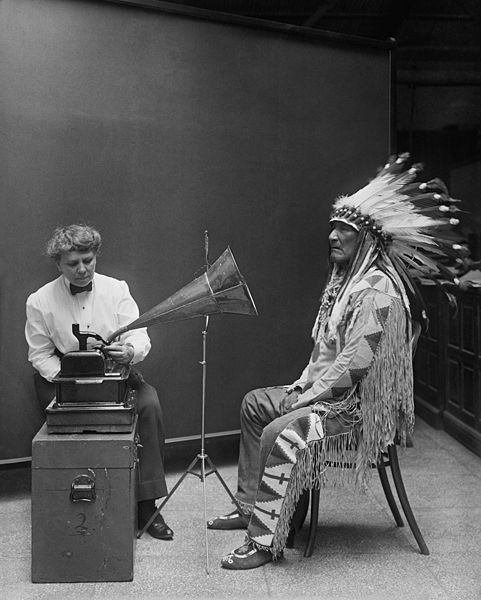
In this classic 1916 photograph, ethnographer Frances Densmore appears to use an early phonographic device to make a recording of Mountain Chief of the Blackfoot Indians at the Smithsonian. The Minnesota native Densmore specialized in preserving Native American music, beginning her alliance of several decades with the Smithsonian in 1907. According to a post on the Institution blog, the photo was likely staged and wasn’t the actual recording session.

Densmore passed away in 1957 at age 90. A passage about Mountain Chief from The Vengeful Wife and Other Blackfoot Stories:

“Mountain Chief recalled that when the Assiniboines and Crees began to retreat, he mounted his horse and raced after those who were trying to cross the Oldman River. He ran down two enemy warriors on the trail, then dismounted to face a Cree armed with a spear who was starting to enter the water. Mountain Chief stabbed him between the shoulders with his own spear, took the man’s weapons and went back to his horse. Then he ran over another enemy who was armed with a gun; the man grabbed the bridle, but the Piegan swung his horse’s head around to shield himself then struck the man with the butt of his whip. As the Cree fell back, Mountain Chief jumped off his horse and killed him. ‘When I struck him,’ recalled the Piegan warrior, ‘he looked at me and I found that his nose had been cut off. I heard afterward that a bear had bitten his nose off.'”

Tags: ,

A digital coin of the realm, which emerged during Web 1.0 and collapsed when the Internet bubble burst, is trying to take root again in the form of Bitcoin. From Duncan Geere’s Wired UK article: “Bitcoins can be saved on a personal computer in a wallet file, or stored on the web in a third-party wallet service. On the one hand, that means that you’re not holding onto it yourself; on the other, it means that it’s safe if your hard drive fails.”

"Evidence of the city’s decline was everywhere: subway cars bruised with graffiti." (Image by JJ Special.)

Jonathan Mahler, author of the incredible book about NYC in crisis during the 1970s, Ladies and Gentlemen, the Bronx Is Burning, wrote a New York magazine article in 2005 that recalled how Rupert Murdoch’s rise to media domination was largely driven by the Aussie’s gambit that the beleaguered city would return to prominence. An excerpt:

“The year was 1976, and evidence of the city’s decline was everywhere: subway cars bruised with graffiti, arson fires that swallowed whole ghetto blocks, soaring murder rates, and annual six-figure job losses. The city put on its best face for the Democratic convention, hastily enacting an anti-loitering law that enabled cops to round up most of the prostitutes in the vicinity of Madison Square Garden. For a few days anyway, even Times Square was more or less hooker-free. But the area soon returned to being America’s most infamous erogenous zone.

Around the country, cartoonists poked fun at New York in its apocalypse: The city was a sinking ship, a zoo where the apes were employed as zookeepers, a stage littered with overturned props. Central Park had become a running joke in Johnny Carson’s nightly monologues (‘Some Martians landed in Central Park today . . . and were mugged’). The syndicated columnists Rowland Evans and Robert Novak understated the matter considerably when they wrote, ‘Americans do not much like, admire, respect, trust, or believe in New York.’

It’s easy now to look back at this moment and see it for what it was—a classic market bottom. But at the time, few recognized it as such. One man who did was Murdoch. Where others saw a city in financial distress, he saw a place ripe for entrepreneurship. Where others saw a failed experiment in social democracy, he saw an opening for simple supply-and-demand capitalism.”

••••••••••

Walter Cronkite on New York City’s financial emergency, 1976:

Tags: ,

Life in London from 1500 to 1800, courtesy of Ethan Zuckerman, a researcher at the Berkman Center for Internet and Society at Harvard:

“What’s harder to understand, for me, at least, is why anyone would have moved to London in the years from 1500 – 1800, the years in which it experienced rapid, continuous growth and became the greatest metropolis of the 19th century. First, the city had an unfortunate tendency to burn down. The Great Fire of 1666, which left as many as 200,000 in the city homeless, was merely the largest of a series of ‘named fires’ severe enough to distinguish themselves from the routine, everyday fires that imperiled wood and thatch houses, packed closely together and heated with open coal or wood fires. It’s likely that more Londoners would have been affected but for the fact that 100,000 – a fifth of the city’s population – had died the previous year from an outbreak of the bubonic plague, which spread quickly through the rat-infested city. (It didn’t help that the mayor of London had ordered all cats and dogs killed for fear they were spreading the plague – instead, they were likely keeping the plague rats in check.)

Tags:

Midge MacKenzie 1966 film, “Neon,” profiles Pop Art sculptor Billy Apple, who made good use of the titular gas. Tom Wolfe, seen here in those sad years before the white suit had been invented, is featured.

From a March 18, 1966 Time magazine piece: “BILLY APPLE, 30, a New Zealander (real name: Barrie Bates) who works in Manhattan, believes ‘neon is the purest, hippest color in the world; Day-glo phosphorescent paint looks 1929-ish next to it.’ In Auckland, he wanted to be an engineer, now carefully varies the diameter of his neon tubes to produce different hues. Apple turned to art and working in a paint factory, he contracted dermatitis and a lasting dislike for turpentine. Even before he arrived at London’s Royal College of Art, he says, he found his solution in electric colors. While experimenting with them, Apple learned to make highlights by bathing bronze objects in neon. The bronze tints are erased and only the fluid splash of reflected neon remains like a cloak of many colors.”

Tags: ,

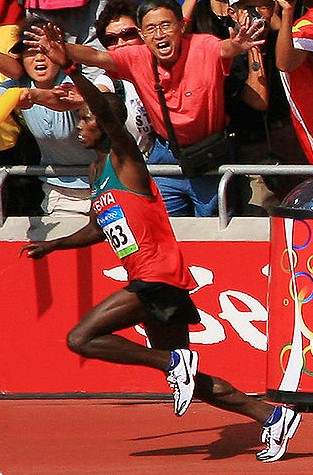
A triumphant Wanjiri in Beijing. (Image by 正在休渔期.)

In a sad and bizarre story, the great 24-year-old Kenyan long-distance runner Sammy Wanjiru, who became the first marathoner from his country to win Olympic gold, apparently killed himself in a leap from his home’s balcony after a domestic dispute. From the just-published Reuters report:

“Jaspher Ombati, the regional police chief for the area, said Wanjiru appeared to have sustained internal injuries after the fall and was confirmed dead by doctors at a nearby hospital.

‘It is not yet clear whether it was a suicide or if he jumped out of rage or what caused him to fall to the ground,’ Ombati said of Wanjiru, who also won the Chicago and London marathons.

Ombati said Wanjiru’s wife, Triza Njeri, had come home to find Wanjiru in bed with another woman and locked the couple in the bedroom and ran outside. Wanjiru then leaped from the balcony, Ombati said.

••••••••••

Wanjiru in 2009, as he prepared to run the Chicago Marathon, which he won:

Tags:

Physicist Leonard Susskind presents a TED Talk about the Richard Feynman he knew, the person and the scientist.

Feynman was the rare physicist famous enough to be featured in People magazine. From a 1985 piece: “As a young scientist at Los Alamos during the development of the A-bomb, Richard Feynman delighted in exposing security lapses by picking the locks on safes and filing cabinets that contained top secret information, leaving behind notes signed, ‘Same guy.’ But there were even earlier warning signals that the Nobel prizewinning physicist and California Institute of Technology professor had, as one friend says, ‘a mind that works differently from other people’s.’ As a toddler in Far Rockaway, N.Y., his father, Mel, a uniform salesman, read him excerpts from the Encyclopedia Britannica. And as a teenager he read advanced calculus for pleasure.

Now Feynman, 67 and considered one of the world’s top theoretical physicists, can claim another achievement: his deliciously amusing autobiography, Surely You’re Joking, Mr. Feynman! (W. Norton, $16.95). Co-authored by Ralph Leighton, a math teacher who started taping conversations with his friend Feynman seven years ago, the book spent 14 weeks on the New York Times best-seller list, a surprise to practically everybody—including the author. ‘I had no purpose in doing the book other than to amuse my friends,’ says Feynman.

A picturesque, unscientific collection of anecdotes, including instructions for picking up a woman in a bar, Surely You’re Joking has earned Feynman $56,000 so far and has elicited reaction from some unexpected quarters. ‘I got a call from a topless dancer,’ he says, ‘who claims we had a mutual acquaintance 15 years ago.'”

Tags: ,

Robert D. Kaplan’s famous 1994 Harper’s article, “The Coming Anarachy,” imagined a future of global scarcity, environmental disaster, overpopulation, crime and tribalism, with nations lacking genuine boundaries and central government control. It would be a vast divide of haves and have-nots. Some of it has proven true, some not. Kaplan’s most spot-on prognostication foresaw terrorist organizations operating without regard to borders, existing as their own sovereign nation across nations. An excerpt:

“Also, war-making entities will no longer be restricted to a specific territory. Loose and shadowy organisms such as Islamic terrorist organizations suggest why borders will mean increasingly little and sedimentary layers of tribalistic identity and control will mean more. ‘From the vantage point of the present, there appears every prospect that religious . . . fanaticisms will play a larger role in the motivation of armed conflict” in the West than at any time for the last 300 years,’ Van Creveld writes. This is why analysts like Michael Vlahos are closely monitoring religious cults. Vlahos says, ‘An ideology that challenges us may not take familiar form, like the old Nazis or Commies. It may not even engage us initially in ways that fit old threat markings.’ Van Creveld concludes, ‘Armed conflict will be waged by men on earth, not robots in space. It will have more in common with the struggles of primitive tribes than with large-scale conventional war.’ While another military historian, John Keegan, in his new book A History of Warfare, draws a more benign portrait of primitive man, it is important to point out that what Van Creveld really means is re-primitivized man: warrior societies operating at a time of unprecedented resource scarcity and planetary overcrowding.” (Thanks to The Electric Typewriter.)

Tags:

Hunter S. Thompson in all his glory in Vegas and Hollywood in 1978.

From Lucian K. Truscott IV’s review of Fear and Loathing in Las Vagas in the July 13, 1972 Village Voice: “Hunter Thompson lived in Aspen then, and his ranch, located outside town about 10 miles, tucked away up a valley with National Forest land on every side, was the first place I stopped. It was late afternoon and Thompson was just getting up, bleary-eyed and beaten, shaded from the sun by a tennis hat, sipping a beer on the front porch.

I got to know him while I was still in the Army in the spring of 1970, when he and a few other local crazies were gearing up for what would become the Aspen Freak Power Uprising, a spectacular which featured Thompson as candidate for sheriff, with his neighbor Billy for coroner. They ran on a platform which promised, among other things, public punishment for drug dealers who burned their customers, and a campaign guaranteed to rid the valley of real estate developers and ‘nazi greedheads’ of every persuasion. In a compromise move toward the end of the campaign, Thompson promised to ‘eat mescaline only during off-duty hours.’ The non-freak segment of the voting public was unmoved and he was eventually defeated by a narrow margin.

In the days before the Freak Power spirit, Thompson’s ranch served as a war room and R&R camp for the Aspen political insurgents. Needless to say there was rarely a dull moment. When I arrived last summer, however, things had changed. Thompson was in the midst of writing a magnum opus, and it was being cranked out at an unnerving rate. I was barely across the threshold when I was informed that he worked (worked?) Monday through Friday and saved the weekends for messing around. As usual, he worked from around midnight until 7 or 8 in the morning and slept all day. There was an edge to his voice that said he meant business. This was it. This was a venture that had no beginning or end, that even Thompson himself was having difficulty controlling.

‘I’m sending it off to Random House in 20,000-word bursts,’ he said, drawing slowly on his ever-present cigarette holder. ‘I don’t have any idea what they think of it. Hell, I don’t have any idea what it is.’

‘What’s it about?’ I asked.

‘Searching for The American Dream in Las Vegas,’ replied Thompson coolly.”

Tags: ,

"Within this group is a quixotic band of soldering, laser-cutting, software-programming types who, defying all economic logic, contend that they can reverse America’s manufacturing slump." (Image by littleBits.)

Anand Giridharadas has a really good piece in the Sunday Times Magazine this week about littleBits founder Ayah Bdeir and the American culture of manufacturing things, in the wake of the credit-default swap scheme that made nothing and left us nearly bankrupt. An excerpt:

“If you lived in Detroit in 1961 and watched Alfred Hitchcock’s Psycho at a drive-in, you might have caught a 30-minute trailer called ‘American Maker,’ sponsored by Chevrolet. ‘Of all things Americans are, we are makers,’ its narrator began, over footage of boys building sand castles. ‘With our strengths and our minds and spirit, we gather, we form and we fashion: makers and shapers and put-it-togetherers.’

Fifty years on, the American maker is in a bad way. Such is the state of American industry that waste paper is among the top 10 exports to China, behind nuclear equipment but far ahead of traditional mainstays like iron and steel. Manufacturing employment has fallen by a third in the last decade alone, with more than 40,000 factories shutting down. More Americans today are unemployed than are wage-earning ‘put-it-togetherers.’ But the American romance with making actual things is going through a resurgence. In recent years, a nationwide movement of do-it-yourself aficionados has embraced the self-made object. Within this group is a quixotic band of soldering, laser-cutting, software-programming types who, defying all economic logic, contend that they can reverse America’s manufacturing slump. America will make things again, they say, because Americans will make things — not just in factories but also in their own homes, and not because it’s artisanal or faddish but because it’s easier, better for the environment and more fun.”

••••••••••

The 1961 “American Maker” trailer mentioned in the article:

Tags: , ,

From “Invasion,” Tom Junod’s 2010 Esquire piece about his house being besieged by an army of those tiny colonists known as ants:

“A few years ago, I interviewed the great biologist E. O. Wilson right before he and his colleague Bert Hölldobler published their magnum opus, The Superorganism. The book, a study of ant societies, was an exploration of the notion that ants are such organized organisms that they almost don’t count as individual organisms at all but rather as cells of the colony they serve. The colony is the superorganism, and as Wilson told me, ‘an ant colony is far more intelligent than an ant.’ I’ll say. An ant by itself is an inoffensive creature, at worst a crunchy annoyance, smidgeny and obsessively clean and, above all, dumb, with a pindot of a brain. An ant by itself is not going to get any ideas… the problem being that it’s rarely by itself, that it’s representative of something, and that what it represents not only has ideas — it has designs. Wilson’s book proposes that what an ant colony possesses is a kind of accumulated intelligence, the result of individual ants carrying out specialized tasks and giving one another constant feedback about what they find as they do so. Well, once they start accumulating in your house in sufficient numbers, you get a chance to see that accumulated intelligence at work. You get a chance to find out what it wants. And what you find out — what the accumulated intelligence of the colony eventually tells you — is that it wants what you want. You find out that you, an organism, are competing for your house with a superorganism that knows how to do nothing but compete. You are not only competing in the most basic evolutionary sense; you are competing with a purely adaptive intelligence, and so you are competing with the force of evolution itself.” (Thanks Atlantic.)

••••••••••

Ant-sploitation horror movie trailer from 1977:

Tags: , ,

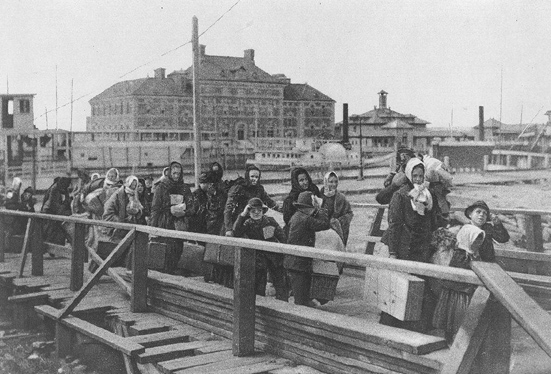
Immigrants arrive at Ellis Island in NYC in 1902.

Annie Lowrey’s Slate piece,Let in the Super-Immigrants!,” argues that America’s quickest path to economic turnaround is to fast-track educated alien workers to citizenship status, favoring the highly skilled over the poor, huddles masses. The opening:

“This winter, George Mason economist Tyler Cowen published The Great Stagnation, an ebook arguing that the United States has exhausted all its easy sources of growth. We have, Cowen says, no more low-hanging fruit: no more cheap frontier land to farm, no more places to build new interstates, no rural homes to electrify, no more girls to send to school and then add to the workforce. From now on, Cowen says, growth will be slower, and transformative innovations like toilets and telephones will be rarer.

Cowen is alarmingly convincing, and The Great Stagnation received a round of queasy applause from the chattering classes—including from this publication. But maybe there remains one last shiny, fat apple hanging right in front of our faces, one last endeavor that would bring us fast, costless, and easy growth. It is immigration reform. The United States can grow faster by stealing the rest of the world’s smart people.

Today, the Obama White House is reaffirming its pledge to do just that.”


Tags: ,

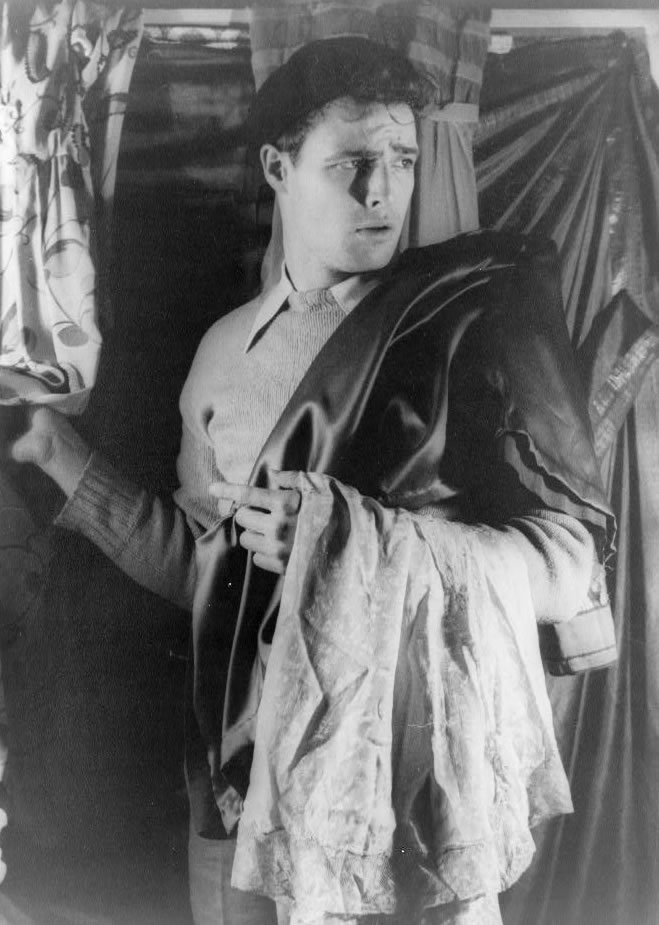
"Have you ever been analyzed? I was afraid of it at first." (Image by Carl Van Vechten.)

Longform made an incredible find with “The Duke In His Domain,” a 1957 New Yorker profile of Marlon Brando by Truman Capote. The former was already an icon thanks to Streetcar, The Wild One and On the Waterfront; the latter was still roughly a decade from publishing his masterpiece, In Cold Blood. Capote traveled to the set of Sayonara in Tokyo to interview Brando, who was at the start of a long personal decline, still somewhat accessible but increasingly less so. An excerpt:

“The maid had reëntered the star’s room, and Murray, on his way out, almost tripped over the train of her kimono. She put down a bowl of ice and, with a glow, a giggle, an elation that made her little feet, hooflike in their split-toed white socks, lift and lower like a prancing pony’s, announced, ‘Appapie! Tonight on menu appapie.’

Brando groaned. ‘Apple pie. That’s all I need.’ He stretched out on the floor and unbuckled his belt, which dug too deeply into the swell of his stomach. ‘I’m supposed to be on a diet. But the only things I want to eat are apple pie and stuff like that.’ Six weeks earlier, in California, Logan had told him he must trim off ten pounds for his role in Sayonara, and before arriving in Kyoto he had managed to get rid of seven. Since reaching Japan, however, abetted not only by American-type apple pie but by the Japanese cuisine, with its delicious emphasis on the sweetened, the starchy, the fried, he’d regained, then doubled this poundage. Now, loosening his belt still more and thoughtfully massaging his midriff, he scanned the menu, which offered, in English, a wide choice of Western-style dishes, and, after reminding himself ‘I’ve got to lose weight,’ ordered soup, beefsteak with French-fried potatoes, three supplementary vegetables, a side dish of spaghetti, rolls and butter, a bottle of sake, salad, and cheese and crackers.

‘And appapie, Marron?’

He sighed. ‘With ice cream, honey.’

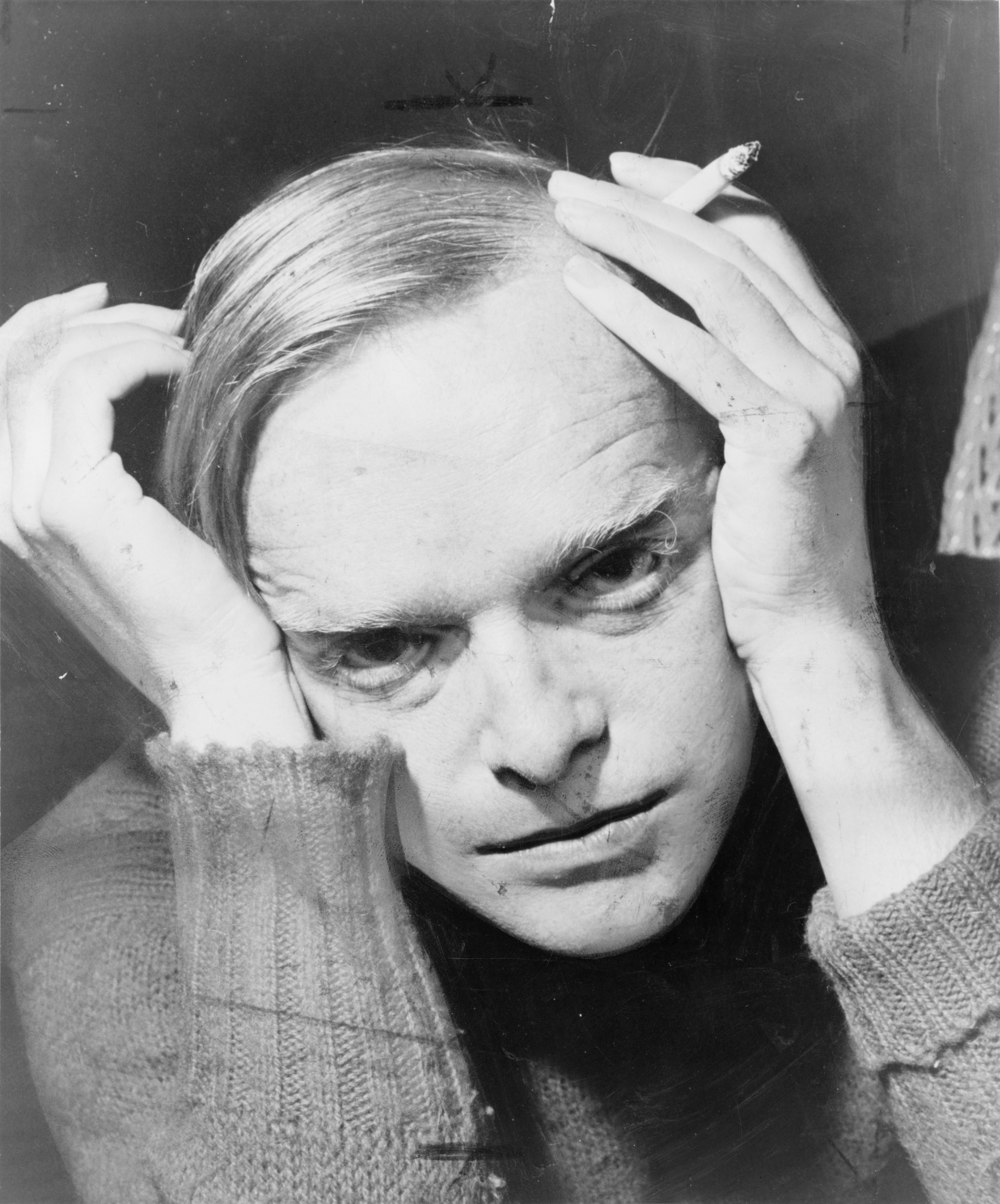
Capote, world-weary in 1959. (Image by Roger Higgins.)

Though Brando is not a teetotaller, his appetite is more frugal when it comes to alcohol. While we were awaiting the dinner, which was to be served to us in the room, he supplied me with a large vodka on the rocks and poured himself the merest courtesy sip. Resuming his position on the floor, he lolled his head against a pillow, drooped his eyelids, then shut them. It was as though he’d dozed off into a disturbing dream; his eyelids twitched, and when he spoke, his voice—an unemotional voice, in a way cultivated and genteel, yet surprisingly adolescent, a voice with a probing, asking, boyish quality—seemed to come from sleepy distances.

‘The last eight, nine years of my life have been a mess,’ he said. ‘Maybe the last two have been a little better. Less rolling in the trough of the wave. Have you ever been analyzed? I was afraid of it at first. Afraid it might destroy the impulses that made me creative, an artist. A sensitive person receives fifty impressions where somebody else may only get seven. Sensitive people are so vulnerable; they’re so easily brutalized and hurt just because they are sensitive. The more sensitive you are, the more certain you are to be brutalized, develop scabs. Never evolve. Never allow yourself to feel anything, because you always feel too much. Analysis helps. It helped me. But still, the last eight, nine years I’ve been pretty mixed up, a mess pretty much.'”

••••••••••

Dick Cavett interviews a reluctant Brando in 1973. After the show, Brando took Cavett to dinner in Chinatown, and the actor famously punched paparazzo Ron Galella, breaking his jaw. The photographer sued and ultimately agreed to a $40,000 settlement.

Watch the rest of interview here.

Tags: , , ,

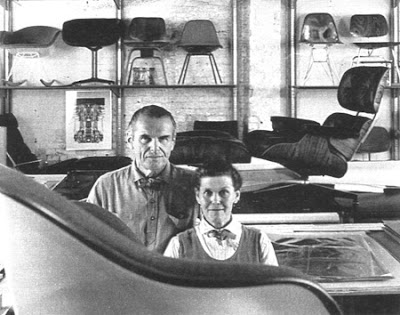
The Eames Lounge Chair debuts in 1956 on an Arlene Francis show on NBC.

Tags: , ,

"The employees families have to promise 'not sue the compan.'"(Image by Glenn Fleishman.)

If a new report on Think Progress is accurate, Apple is employing curious methods to deal with a series of suicides by workers turning out iPhones and iPads at a soul-crushing pace at the Taiwan-based Foxconn factories:

“In the wake of a huge wave of suicides at Foxconn plants, the company began reforming its practices related to the suicides. Among these changes included installing anti-suicide nets to catch workers who attempted to leap out of company windows. Yet workers are also being forced to sign a non-suicide pact as a condition of employment. As part of the pact, the employees families have to promise ‘not sue the company, bring excessive demands, take drastic actions that would damage the company’s reputation or cause trouble that would hurt normal operations’ in the case of a suicide.”

joandidionwater34567

The opening of Holy Water,” Joan Didion’s 1977 essay about H2O, a scarce and precious thing in Southern California, with its endless summer, omnipresent swimming pools and expansive deserts:

Some of us who live in arid parts of the world think about water with a reverence others might find excessive. The water I will draw tomorrow from my tap in Malibu is today crossing the Mojave Desert from the Colorado River, and I like to think about exactly where that water is. The water I will drink tonight in a restaurant in Hollywood is by now well down the Los Angeles Aqueduct from the Owens River, and I also think about exactly where that water is: I particularly like to imagine it as it cascades down the 45-degree stone steps that aerate Owens water after its airless passage through the mountain pipes and siphons.

As it happens my own reverence for water has always taken the form of this constant meditation upon where the water is, of an obsessive interest not in the politics of water but in the waterworks themselves, in the movement of water through aqueducts and siphons and pumps and forebays and afterbays and weirs and drains, in plumbing on the grand scale. I know the data on water projects I will never see. I know the difficulty Kaiser had closing the last two sluiceway gates on the Guri Dam in Venezuela. I keep watch on evaporation behind the Aswan in Egypt. I can put myself to sleep imagining the water dropping a thousand feet into the turbines at Churchill Falls in Labrador. If the Churchill Falls Project fails to materialize, I fall back on waterworks closer at hand — the tailrace at Hoover on the Colorado, the surge tank in the Tehachapi Mountains that receives California Aqueduct water pumped before — and finally I replay a morning when I was seventeen years old and caught, in a military-surplus life raft, in the construction of the Nimbus Afterbay Dam on the American River near Sacramento. I remember that at the moment it happened I was trying to open a tin of anchovies with capers. I recall the raft spinning into the narrow chute through which the river had been temporarily diverted. I recall being deliriously happy.•

joandidion6

Tags:

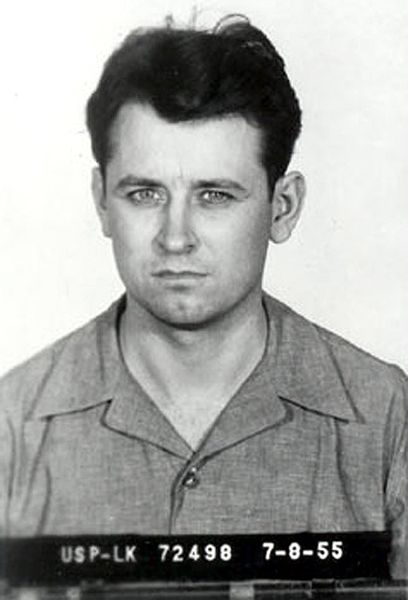
Only one supermarathon has been inspired by a prison break by MLK assassin James Earl Ray.

A brief history of the bizarre and creepy origins of the annual Barkley Marathons in Tennessee, from The Immortal Horizon,” Leslie Jamison’s new Believer account of the grueling 100-mile race:

“The first race was a prison break. On June 10, 1977, James Earl Ray, the man who shot Martin Luther King Jr., escaped from Brushy Mountain State Penitentiary and fled across the briar-bearded hills of northern Tennessee. Fifty-four hours later he was found. He’d gone about eight miles. Some might hear this and wonder how he managed to squander his escape. One man heard this and thought: I need to see that terrain!

Over twenty years later, that man, the man in the trench coat—Gary Cantrell by birth, self-dubbed Lazarus Lake—has turned this terrain into the stage for a legendary ritual: the Barkley Marathons, held yearly (traditionally on Lazarus Friday or April Fool’s Day) outside Wartburg, Tennessee. Lake (known as Laz) calls it ‘The Race That Eats Its Young.’ The runners’ bibs say something different each year:SUFFERING WITHOUT A POINT; NOT ALL PAIN IS GAIN. Only eight men have ever finished. The event is considered extreme even by those who specialize in extremity.” (Thanks Longform.)

••••••••••

Local runners attempt the Barkley:

Tags: , ,

Straight razor applied to lathered face by pubescent boy.

A muckraker and an artist, the great photographer Lewis Hine took this classic 1917 shot of 12-year-old barber Frank De Natale plying his trade in Boston. By this point, child labor laws, which Hine’s work had helped advance, precluded this lad from working full-time; he was a barber after-school and on Saturdays. A note from an 1884 Brooklyn Daily Eagle article about the child barbers of an earlier era:

“‘How are barbers taught?’

‘We generally get small boys. They are regularly indentured to us by their parents. They are compelled to stay with us for three years. We give them about $50 for the first year and increase their wages as they become accustomed to the work. At first they do nothing but brush the clothes of the customers. Then we make them watch us while we are shaving or hair cutting. If the boy is smart he is soon permitted to lather the customers’ faces, while the hands are busy with other men. They finally graduate into full fledged barbers and receive a salary of from $5 to $12 per week.'”

Tags: ,

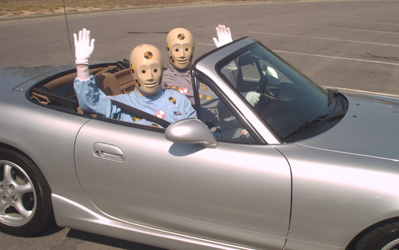
The heft of Google’s wealth and influence is squarely behind the proliferation of self-driving cars, a concept which has been around since the 1950s and may be coming to Nevada roads in the near future. John Markoff reports in the New York Times:

“Google, a pioneer of self-driving cars, is quietly lobbying for legislation that would make Nevada the first state where they could be legally operated on public roads.

And yes, the proposed legislation would include an exemption from the ban on distracted driving to allow occupants to send text messages while sitting behind the wheel.

The two bills, which have received little attention outside Nevada’s Capitol, are being introduced less than a year after the giant search engine company acknowledged that it was developing cars that could be safely driven without human intervention.

Last year, in response to a reporter’s query about its then-secret research and development program, Google said it had test-driven robotic hybrid vehicles more than 140,000 miles on California roads — including Highway 1 between Los Angeles and San Francisco.

More than 1,000 miles had been driven entirely autonomously at that point; one of the company’s engineers was testing some of the car’s autonomous features on his 50-mile commute from Berkeley to Google’s headquarters in Mountain View.”

Tags:

« Older entries § Newer entries »