Excerpts

You are currently browsing the archive for the Excerpts category.

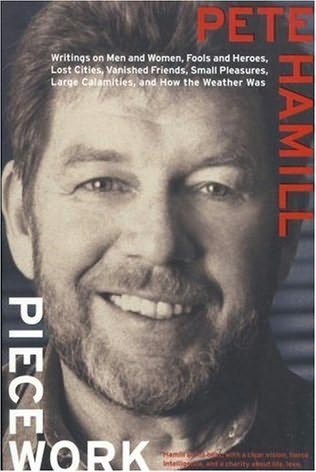
The opening of “Cities of New York,” from Pete Hamill’s excellent collection, Piecework, in which the writer recalls NYC’s mid-twentieth century decline, which didn’t reverse until new media technology businesses began to take root in the city in the 1990s:

“If I’d grown up in another city, I almost certainly would have become another kind of writer. Or I might not have become a writer at all. But I grew up in New York in the 1940s, when New York was a great big optimistic town. The war was over and the Great Depression was a permanent part of the past; now we would all begin to live. To a kid (and to millions of adults) everything seemed possible. If you wanted to be a scientist or a left-fielder for the Dodgers, a lawyer or a drummer with Count Basie: well, why not? This was New York. You could even be an artist. Or a writer.

As a man and a writer, I’ve been cursed by the memory of that New York. Across five decades, I saw the city change and its optimism wane. The factories began closing in the late 1950s, moving to the South, or driven out of business by changing styles or tastes or means of production. When the factories died, so did more than a million manufacturing jobs. Those vanished jobs had allowed thousands of men like my father (an Irish immigrant with an eighth-grade education) to raise families in the richest city on earth. They joined unions. They proudly voted for the Democratic ticket. The put paychecks on kitchen tables, asked their kids if they’d finished their homework, went off to night games at the Polo Grounds or Ebbets Field, and were able to walk in the world with pride. Then the great change happened. The manufacturing jobs were replaced with service work. Or with welfare. One statistic tells the story: In 1955, there were 150,000 New Yorkers on welfare; in 1995, there were 1.3 million.

With the jobs gone, the combined American plagues of drugs and guns came to the neighborhoods.”

••••••••••

Pete Hamill discusses the legacy of Frank Sinatra on local NYC news:

Tags: ,

A 2008 National Socialist Party rally in D.C.

The opening of Jesse McKinley’s well-written New York Times account of the strange murder of Riverside, California, resident Jeff Hall, a representative of the neo-Nazi National Socialist Party, who was recently shot to death by his tow-headed ten-year-old son:

“The day before he allegedly shot his father, the sandy-haired 10-year-old boy showed off a prized possession to a visitor. It was a thin leather belt emblazoned with a silver insignia of the Nazi SS.

‘Look what my dad got me,’ the boy said shyly, perched on the living room stairs, one of the few quiet spots in a house with five children.

A little more than 12 hours later, the police say, the boy stood near those stairs with a handgun and killed his father, Jeff Hall, as he lay on the living room couch. It was about 4 a.m. on May 1; paramedics declared Mr. Hall dead when they arrived.

The police say that the killing was intentional, but that the motives behind it are still not fully understood. But whatever the reason, it has cast fresh light on the fringe group to which Mr. Hall devoted his life: the National Socialist Movement, the nation’s largest neo-Nazi party, whose message stands in surreal juxtaposition to the suburban, workaday trappings of many of its members.”

••••••••••

Hall can be seen at this creepy 2009 anti-immigration rally. He’s the speaker with the shaved head who’s on camera early in the clip:

Tags: ,

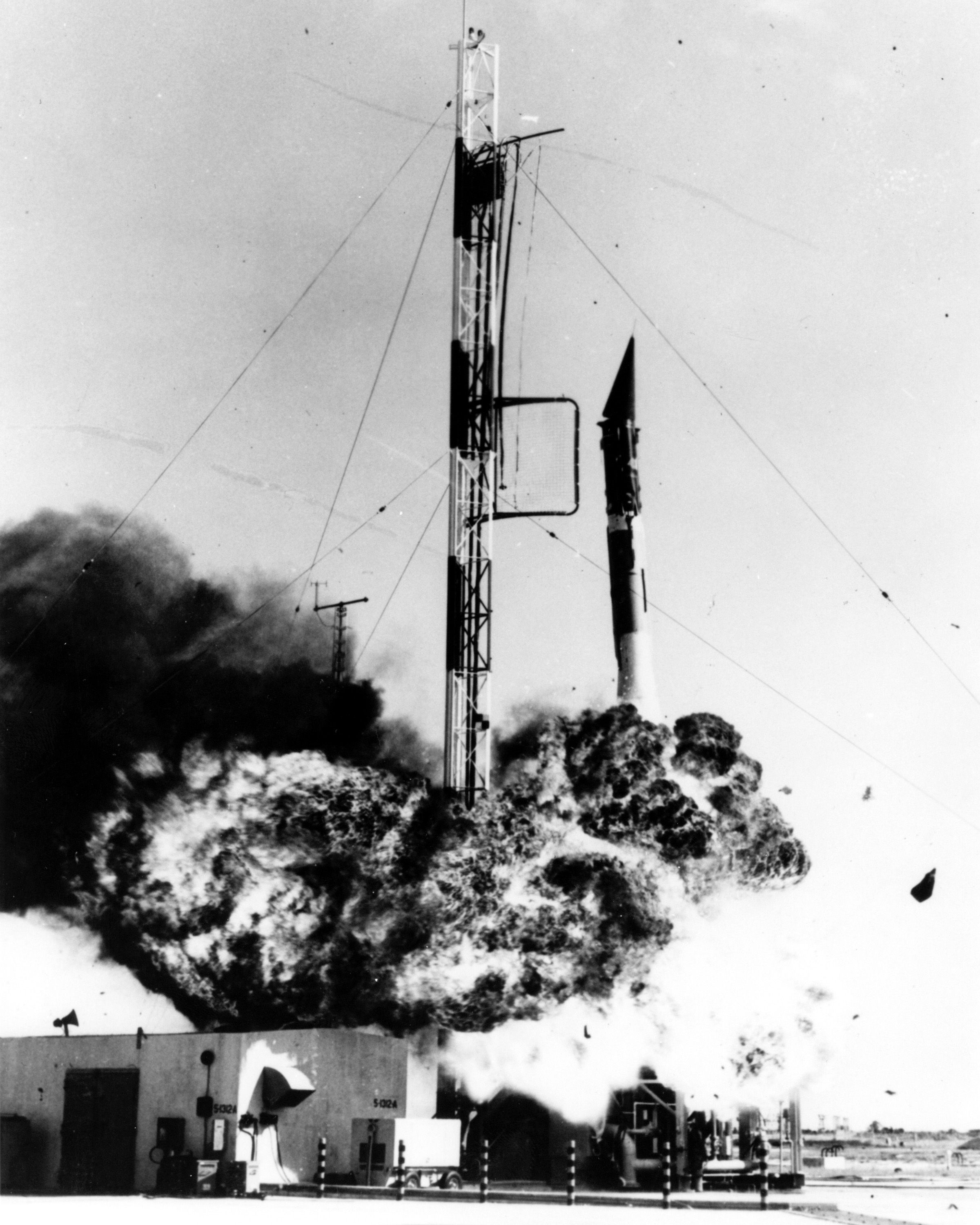
A failed launch during IGY saw the Vanguard malfunction in December 1957.

In 1957-58, 64 nations from both sides of a Cold War that would continue for three more decades came together to perform large-scale scientific research as part of an alliance known as International Geophysical Year. It was an unprecedented display of global information sharing, with satellites launched and knowledge of space travel gained. Life magazine covered the outset of the project with the article, “The World Studies the World.” An excerpt:

“Through the top of a strange sheet-metal shack at Ft. Churchill, Manitoba, a powerful research rocket last week streaked into the upper air to perform one of the first major experiments of the newly launched International Geophysical Year. While the rocket is radioing its data from 160 miles up, a team of seismologists deep in a Chilean tunnel were taking data from earthquake recorders. A pair of oceanographers on the remote Pacific island of Jarvis were collecting samples of ocean water. And in the South Pole Americans were observing the fluctuations of a rare red aurora.

Japanese stamp commemorating IGY.

In hundreds of other places and ways, 8,000 scientists of 64 nations were starting history’s most ambitious scientific research program. In the IGY, says Dr. Joseph Kaplan, chairman of U.S. IGY committee, ‘scientists of the world are going to take a long and special look at our earth –at its wrinkled crust, its hot heart, its deep seas, its envelope of air, its mighty magnetism, its relationship to outer space.’

IGY, which will last for 18 months through December 1958, will cost half a billion dollars. Its end results should be of extreme practical value; vastly improved communications, more accurate navigation for ships and planes, billions of dollars and many lives saved with improved weather forecasting, and further progress toward mastery of polar regions and outer space.”

••••••••••

Donald Fagen sings a hopeful 1982 song which he wrote from the vantage point of those involved in IGY: “Here at home we’ll play in the city / Powered by the sun / Perfect weather for a streamlined world / There’ll be spandex jackets, one for everyone.”

Tags: ,

Hanna Rosin’s 2010 Atlantic article, “The End Of Men,” concerns American males falling further and further behind women in education, employment, etc. The opening focuses on biologist Ronald Ericsson, who caused a media-stoked panic in the 1970s when he created a method that purportedly allows parents to choose the sex of their offspring. This development led some feminists to  fear that women would be doomed in America. An excerpt:

“IN THE 1970s the biologist Ronald Ericsson came up with a way to separate sperm carrying the male-producing Y chromosome from those carrying the X. He sent the two kinds of sperm swimming down a glass tube through ever-thicker albumin barriers. The sperm with the X chromosome had a larger head and a longer tail, and so, he figured, they would get bogged down in the viscous liquid. The sperm with the Y chromosome were leaner and faster and could swim down to the bottom of the tube more efficiently. Ericsson had grown up on a ranch in South Dakota, where he’d developed an Old West, cowboy swagger. The process, he said, was like ‘cutting out cattle at the gate.’ The cattle left flailing behind the gate were of course the X’s, which seemed to please him. He would sometimes demonstrate the process using cartilage from a bull’s penis as a pointer.

Dr. Ericsson's property was used for this 1980 Marlboro Country print ad.

In the late 1970s, Ericsson leased the method to clinics around the U.S., calling it the first scientifically proven method for choosing the sex of a child. Instead of a lab coat, he wore cowboy boots and a cowboy hat, and doled out his version of cowboy poetry. (People magazine once suggested a TV miniseries based on his life called Cowboy in the Lab.) The right prescription for life, he would say, was “breakfast at five-thirty, on the saddle by six, no room for Mr. Limp Wrist.’ In 1979, he loaned out his ranch as the backdrop for the iconic ‘Marlboro Country’ ads because he believed in the campaign’s central image—’a guy riding on his horse along the river, no bureaucrats, no lawyers,’ he recalled when I spoke to him this spring. ‘He’s the boss.’ (The photographers took some 6,500 pictures, a pictorial record of the frontier that Ericsson still takes great pride in.)

Feminists of the era did not take kindly to Ericsson and his Marlboro Man veneer. To them, the lab cowboy and his sperminator portended a dystopia of mass-produced boys. ‘You have to be concerned about the future of all women,’ Roberta Steinbacher, a nun-turned-social-psychologist, said in a 1984 People profile of Ericsson. ‘There’s no question that there exists a universal preference for sons.’ Steinbacher went on to complain about women becoming locked in as ‘second-class citizens’ while men continued to dominate positions of control and influence. ‘I think women have to ask themselves, ‘Where does this stop?’ she said. ‘A lot of us wouldn’t be here right now if these practices had been in effect years ago.’

Ericsson, now 74, laughed when I read him these quotes from his old antagonist. Seldom has it been so easy to prove a dire prediction wrong.” (Thanks to The Electric Typewriter.)

Tags: ,

From an 1895 edition of the Brooklyn Daily Eagle:

“Members of the Fifteenth ward citizens’ association for the abolishment of Newtown Creek nuisances are complaining that stenches from the creek at night have increased steadily since April 17, and that the air was so filled with foul smelling vapor at 4 o’clock yesterday morning that sleep was out of the question for people living in the Fifteenth and Eighteenth wards. The members of the citizens’ association insist that fat rendering and bone boiling establishments and fertilizer manufactories on the shores of the creek empty foul smelling material stored during the day into the creek at night, and they believe that if the proprietors of stench emitting factories who are indicted are not speedily brought to trial the nuisances will soon become as intolerable as ever.”

A beautiful passage of the late folkie, Karen Dalton, who was something of a Billie Holiday for the coffee-house set and was sadly plagued by many of the same demons as Lady Day. (Thanks to The Documentarian.)

From the 2007 Guardian article, “The Best Singer You’ve Never Heard Of“: “Dalton turned up in Greenwich Village in the early 60s. She had left behind her husband in Enid, Oklahoma, and arrived with her 12-string guitar, a banjo and at least one of her two children. She began to sing at the pass-the-hat folk venues that were flourishing at the time and played with Bob Dylan, Fred Neil and Richard Tucker. Dylan recalls her as ‘funky, lanky and sultry.’ ‘My favorite singer in the place was Karen Dalton,’ he remembers in Chronicles. ‘Karen had a voice like Billie Holiday’s and played the guitar like Jimmy Reed.'”

Tags: ,

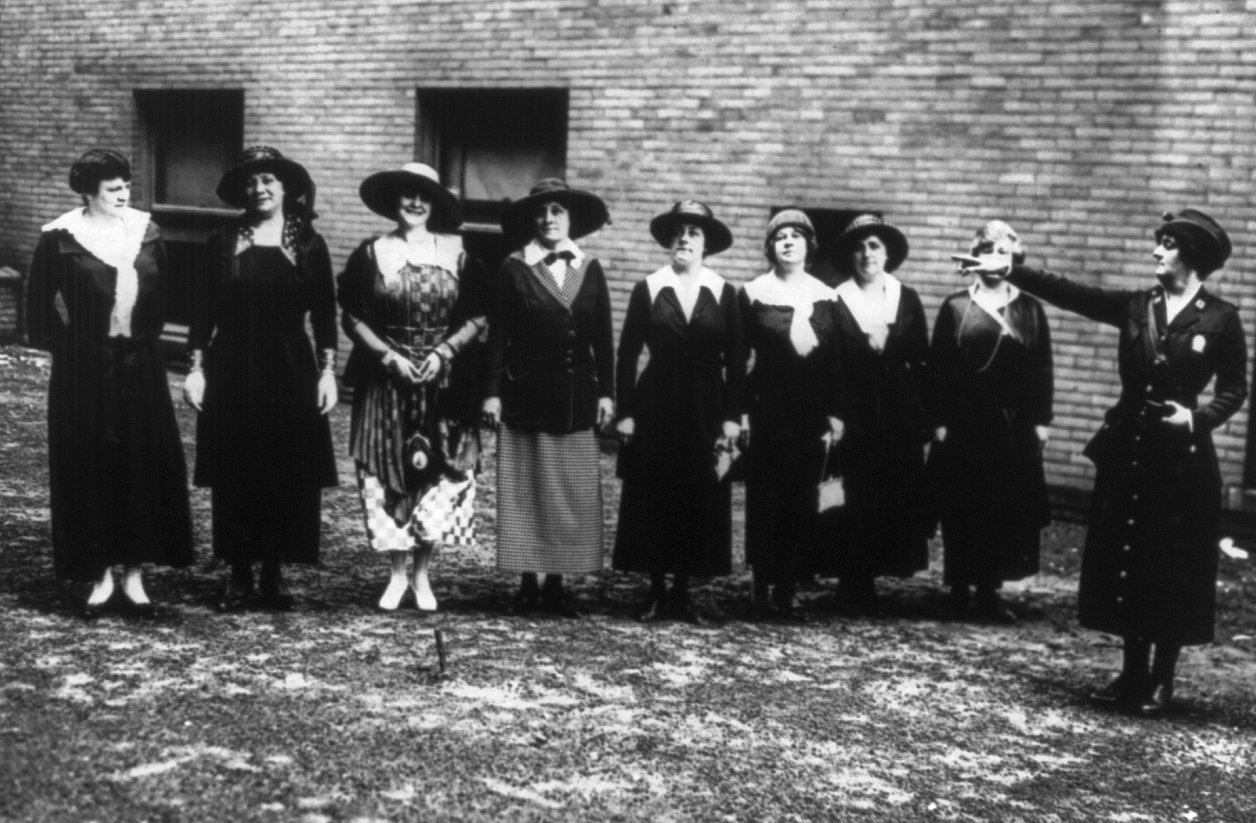
This classic photo from the Bain Collection profiles members of the women’s police reserve of New York City in 1918, the year that females began participating in the volunteer auxiliary. From a New York Times article about the formation of this new crime-fighting force:.

“New York City’s morals are to be toned up in the near future by the activities of a police reserve of volunteer women. It was announced at Police Headquarters last night that the Police Reserves which Commissioner Enright reorganized out of the Home Defense League, recruited so successfully by his predecessor, Commissioner Woods, was to have the prestige of this auxiliary.

The Special Deputy would not have the women police cope with rough and violent lawbreakers; on the the other hand, their forte under the plan would be to keep a finger on the city’s pulse in an effort to detect signs of unlawful developments before they grew to serious proportions, to watch out for cases of sedition, to uplift the general moral atmosphere of the city in the neighborhood of their posts. If need arose for the use of a nightstick or other instrument for curbing crime, the work would be referred to the men members of the force.”

Tags:

The perfect opening of “The Double Game,a just-published New Yorker article about the best-laid post-war American plans for Pakistan and India, written by the resolutely excellent Lawrence Wright:

“It’s the end of the Second World War, and the United States is deciding what to do about two immense, poor, densely populated countries in Asia. America chooses one of the countries, becoming its benefactor. Over the decades, it pours billions of dollars into that country’s economy, training and equipping its military and its intelligence services. The stated goal is to create a reliable ally with strong institutions and a modern, vigorous democracy. The other country, meanwhile, is spurned because it forges alliances with America’s enemies.

The country not chosen was India, which ’tilted’” toward the Soviet Union during the Cold War. Pakistan became America’s protégé, firmly supporting its fight to contain Communism. The benefits that Pakistan accrued from this relationship were quickly apparent: in the nineteen-sixties, its economy was an exemplar. India, by contrast, was a byword for basket case. Fifty years then went by. What was the result of this social experiment?

India has become the state that we tried to create in Pakistan. It is a rising economic star, militarily powerful and democratic, and it shares American interests. Pakistan, however, is one of the most anti-American countries in the world, and a covert sponsor of terrorism. Politically and economically, it verges on being a failed state.”

Tags:

From “World’s Largest Wooden Structure,” a photo essay on Yatzer.com about Seville’s recently completed Metropol Parasol, which was designed by J. Mayer H. Architects:

“The Metropol Parasol scheme with its imposing timber structure offers a range of attractions and amenities to be used by the public.  Such functions include an archaeological museum, a farmers market, an elevated plaza, and multiple bars and restaurants underneath and inside the parasols, as well as a panorama terrace on the upper level of the parasols. Realized as one of the largest and most innovative bonded timber-constructions with a polyurethane coating, the parasols grow out of the archaeological excavation site into a contemporary landmark, thus defining a distinctive relationship between the historical medieval city and the contemporary city beat!  Metropol Parasols mix-used multicultural program sets off a dynamic development for culture and commerce in the heart of Seville and beyond.”

Immanuel Velikovsky’s theories about our planet’s history, which came into vogue during the 1970s, are catastrophist nonsense but a whole lot of fun if you recognize they’re fictional. Philip Kaufman realized this and used them to forward the plot of his excellent version of Invasion of the Bodysnatchers, which was released in 1978, the year before the scientist died at age 84. Below is an amusing 1972 BBC doc about the Velikovsky phenomenon.

A 1950 Popular Science note about Velikovsky: “Astronomers at Harvard consider the sensational theory of Dr. Immanuel Velikovsky that the earth stood still a couple of times in Biblical days sheer nonsense.”

Tags: ,

The opening of “Mind vs. Machine,” Brian Christian’s recent Atlantic article about the author’s particpation in the Turing Test, an annual event in which computers compete to exhibit intelligent behavior that can pass for human:

“BRIGHTON, ENGLAND, SEPTEMBER 2009. I wake up in a hotel room 5,000 miles from my home in Seattle. After breakfast, I step out into the salty air and walk the coastline of the country that invented my language, though I find I can’t understand a good portion of the signs I pass on my way—LET AGREED, one says, prominently, in large print, and it means nothing to me.

I pause, and stare dumbly at the sea for a moment, parsing and reparsing the sign. Normally these kinds of linguistic curiosities and cultural gaps intrigue me; today, though, they are mostly a cause for concern. In two hours, I will sit down at a computer and have a series of five-minute instant-message chats with several strangers. At the other end of these chats will be a psychologist, a linguist, a computer scientist, and the host of a popular British technology show. Together they form a judging panel, evaluating my ability to do one of the strangest things I’ve ever been asked to do.

I must convince them that I’m human.

Fortunately, I am human; unfortunately, it’s not clear how much that will help.” (Thanks to The Electric Typewriter.)

••••••••••

Tags: ,

On this Kentucky Derby weekend, we look back more than three decades ago when Bluegrass State native Steve Cauthen collected record earnings in 1977 as a 17-year-old jockey and followed it up by winning the Triple Crown the next year astride Affirmed. Cauthen became an international sensation, featured in People as well as Sports Illustrated. But he couldn’t maintain jockey weight as he continued growing and moved to England to compete for a few years, as that country’s jockeys ride at a heavier weight.

Cauthen and Affirmed triumph in 1978 at Churchill Downs:

From a 1977 SI issue in which Cauthen was crowned Sportsman of the Year: “It is not enough to marvel that at the age of 17 he has accomplished more in a year than any jockey in history. It is not enough that already there exists the mad school of thought that this little boy is the finest rider of all time. These are incredible things to ponder about someone so young, but somehow, as young as he is—and younger-looking still—the immensity of his achievement in 1977 cannot be properly understood until you stand in his high school and see the open country faces of the other children of Walton and realize that Steve Cauthen should be there among them still. He should be a senior in high school this day, hearing the bells and whiffing the smell.

And he would be…but for the coincidence of his size and his family background, but for the depth of his desire and some amazing gift of God that no one can comprehend.

Instead, almost at this very moment, several hundred miles away, when a bell rings, Steve Cauthen will burst from the starting gate at Aqueduct, bound to his horse in consummate harmony, seamless, one with the creature—a prodigy like none we have ever seen before, the leading money rider of any year, a fearless athlete, a resolute little doll-person, Sportsman of the Year, so very tiny, so very young, so very extraordinary and ageless in his grace at this one thing he does that he always calls ‘race riding.'”

Tags:

Retronaut dug up this fun print ad for the first commercially successful laptop microcomputer, the 1981 Osborne 1.

From the ad copy: “The guy on the left has two file folders, a news magazine, and a sandwich. The guy on the right has the Osborne 1, a fully functional computer system in a portable package the size of a briefcase. Also in the case are the equiva;lent of 1600 typed pages. stored on floppy diskettes. The owner of the Osborne 1 is going to get more work done–and better work done with less time and with less effort.”

You hear the drumbeat from Tea Party activists and pandering politicians about how government is getting too much control of our lives, gaining too much power. Of course, the opposite is true. As technology continues personalizing and proliferating, government is going to have an increasingly harder time regulating business, communications and individuals. That implies both good and bad things. Personal liberties are paramount, but the ability to marshal the force of government is often crucial during crises.

In “City of Fear,” an  excellent 2007 Vanity Fair article by the routinely great William Langewiesche, the writer looks at how a Brazilian prison gang used cell phones to coordinate the shutdown of a city, and what this implies for the future of central control in general. Subsequent uprisings in Middle Eastern countries have made this piece seem prophetic. The article’s opening:

“For seven days last May the city of São Paulo, Brazil, teetered on the edge of a feral zone where governments barely reach and countries lose their meaning. That zone is a wilderness inhabited already by large populations worldwide, but officially denied and rarely described. It is not a throwback to the Dark Ages, but an evolution toward something new—a companion to globalization, and an element in a fundamental reordering that may gradually render national boundaries obsolete. It is most obvious in the narco-lands of Colombia and Mexico, in the fractured swaths of Africa, in parts of Pakistan and Afghanistan, in much of Iraq. But it also exists beneath the surface in places where governments are believed to govern and countries still seem to be strong.”

••••••••••

William Langewiesche and Stephen Colbert discuss the spread of nukes:


Tags: ,

“King Leer” has a casual chat.

From his 1992 New York Times obituary: “Benny Hill, the English television comedian whose mischievous grin and cherubic looks somehow made him a master of double-entendre, British bawdy style, and ultimately gained him a kind of international cult status, was found dead last night at his home in southwest London. He was 67 years old.

While the cause of death was not determined, Mr. Hill’s chronic heart condition had been well publicized in the London newspapers. The police in Teddington, his hometown, discovered the body after neighbors grew concerned after not seeing Mr. Hill for two days, a spokeswoman for Scotland Yard said last night.

Mr. Hill’s humor, a cross between a leer from W. C. Fields and the naivete of Charlie Chaplin, with a large dose of the Keystone Kops thrown in, found a devoted audience in England, at least among those who confessed to having an appetite for his madcap sight gags and for the young women in skimpy outfits in most of his routines. Though he became a television star in England in the 1950’s, it was not until 1979, when a series of variety specials appeared as a half-hour series in the United States, that Mr. Hill gained worldwide acclaim.”

Tags:

The best science book I read during the aughts was Alan Weisman’s 2007 theoretical tome, The World Without Us. Weisman, a journalist not a scientist, imagines what would happen to all we’ve built if human beings suddenly disappeared from the face of the Earth. What would become of oil wells and subways and bridges and apartment buildings if they were untended? Weisman’s findings are fascinating.

mmmmm


An excerpt about New York City sans people from the book: “In the first few years with no heat, pipes burst all over town, the freeze-thaw cycles move indoors, and things start to seriously deteriorate. Buildings groan as their innards expand and contract; joints between walls and rooflines separate. Where they do, rain leaks in, bolts rust, and facing pops off, exposing insulation. If the city hasn’t burned yet, it will now. Collectively, New York architecture isn’t as combustible as, say, San Francisco’s incendiary rows of clapboard Victorians. But with no firemen to answer the call, a dry lightning strike that ignites a decade of dead branches and leaves piling up in Central Park will spread flames through the streets. Within two decades, lightning rods have begun to rust and snap, and roof fires leap among buildings, entering panel offices, filled with paper fuel. Gas lines ignite with a rush of flames that blows out windows. Rain and snow blow in, and soon even poured concrete floors are freezing, thawing, and starting to buckle. Burnt insulation and charred wood add nutrients to Manhattan’s growing soil cap. Native Virginia creeper and poison ivy claw at walls covered with lichens, which thrive in the absence of air pollution. Red-tailed hawks and peregrine falcons nest in increasingly skeletal high-rise structures.”

Tags: ,

Millard Kaufman's first novel.

From “First at Ninety,” a 2007 New Yorker article about the debut novel of nonagenarian Millard Kaufman, by the always excellent Rebecca Mead:

“Kaufman grew up in Baltimore. After graduating from Johns Hopkins, he moved to New York and became a copyboy at the Daily News for thirteen dollars and seventy cents a week. When the Second World War broke out, he enlisted in the Marines, with whom he participated in the campaign to win Guadalcanal and landed at Guam and Okinawa. ‘I weighed a hundred and eighty-two pounds when I went overseas, and when my wife met me afterward she didn’t recognize me—I weighed a hundred and twenty-eight,’ Kaufman said. ‘I had dengue fever and malaria, and I didn’t really feel like I could spend the heat of the summer or the cold of the winter in New York anymore.’

He moved to California, where he took up screenwriting, winning an Oscar nomination in 1953 for a movie called Take the High Ground. (He was nominated again two years later, for Bad Day at Black Rock.) He lent his name to Dalton Trumbo, who had been blacklisted, for a movie called Gun Crazy. ‘The only time I ever met him was at a meeting of the Writers Guild,’ Kaufman said. ‘It was such a bore, and I left and went into a bar at the hotel, and Trumbo was there. We met because some guy was standing between us who was fairly drunk, and he said, ‘What’s all that noise?’ One of us said, ‘It’s a writers’ meeting.’ He said, ‘What do they write?’ and we said, ‘Movies.’ He looked aghast and said, ‘You mean they write that stuff?” Kaufman’s most enduring contribution to entertainment, at least thus far in his career, is as co-creator of Mr. Magoo, whom he modelled in part on an uncle. ‘That is what we thought the character was based on until, twenty years later, we were accused of being nasty about people with bad eyesight,’ he said.

Kaufman began the novel after his most recent screenplay, which he undertook at the age of eighty-six, came to nothing. His alliance with McSweeney’s was a product of circumstance. ‘My literary agent, who was younger than me, had died suddenly, and I had nobody,’ Kaufman said. He is now writing a second novel. ‘Years ago, I was working in Italy, and Charlie Chaplin and his family came from Switzerland,’ he recalled. ‘We were at a beach north of Rome, and it was a very foggy day and the beach was lousy. At about three o’clock it cleared up, and Chaplin said, ‘I’m going back to the hotel. Unless I write every day, I don’t feel I deserve my dinner.’ That made an impression on me.’

Kaufman writes longhand and has a secretary type up his work. ‘The only promise to myself that I have ever kept was no more typewriters,’ he said. ‘I hate the damn thing.’ (When it was suggested to Kaufman that he might want to check his Amazon ratings after Bowl of Cherries comes out, he said that he wasn’t sure what Amazon ratings were.)”

••••••••••

Mr. Kaufman:

Mr. Magoo:

Tags: , ,

"They can loft enormous payloads." (Image by AngMoKio.)

From “Is There a Future for Airships?a new Scientific American article wondering whether the past can become prelude:

“The notion that airships represent the future of air cargo is being revived by a new generation of entrepreneurs some 75 years after a catastrophic fireball brought the industry to a screeching halt.

Far safer than the Hindenburg, whose tragic 1937 docking remains an icon of aerospace gone wrong, these modern airships are a hybrid of lighter-than-air and fixed-wing aircraft. They can loft enormous payloads without requiring the acres of tarmac or miles of roadway necessary for conventional air and truck transport. And they do so at a fraction of the fuel and cost of aircraft.

Airships ‘give you access and much larger payloads at much lower costs,’ said Peter DeRobertis, project leader for commercial hybrid air vehicles at Lockheed Martin’s Aeronautics and Skunk Works division in Fort Worth, Texas. ‘It’s also a green aircraft; you’re not polluting.'”

••••••••••

Famously haunting summation by Herbert Morrison: “Oh, the humanity.”

Tags: ,

Millions of tons of plastic recyclables fall into our oceans from barges each year, sinking beneath the water’s surface, out of sight and out of mind. But what about plastic encroaching on nature in plain sight, why don’t we take notice of that? The always observant Ian Frazier, a proud tree hugger, does. In “Tilting at Tree Bags,” his 2001 Mother Jones article, Frazier tells of his very personal quest to relieve New York City trees of plastic bags that attached to their branches, An excerpt:

“Sometimes when we snagged an unusually pesky high bag, windows at a nearby apartment house would fly open and people would stick their heads out and applaud. Once an old woman invited us in and gave us lunch. Sometimes people came up to us and thanked us, and once a guy handed me a dollar bill. Mostly, though, people looked at us with mystication, or smiled and shook their heads in a ‘what a crazy city’ way. Once, in Brooklyn’s Prospect Park, a jogger stopped and watched us for a minute or two as we tried to remove a complicatedly entangled bag. ‘That’s a lot of trouble to go through for just a bag,’ he said. I said to him, “Is it any more pointless than running in a big circle back to your apartment?’

Bag snagging was our exercise, our companionship, our hobby, our impromptu community action program. Its aesthetic pleasures were large: A tree from which one or more plastic bags has been removed is, oddly, more beautiful than a tree which never had any bags in it to begin with. In the past, some of our outdoor activities — hitting golf balls at passing ships — had bordered on vandalism, but bag snagging gave some of vandalism’s thrill while actually being its opposite. Throughout the city we went where we wanted without asking permission, improving the landscape. Now I understood, a bit, how people felt who had worked on the construction of some major public landmark like the Empire State Building. Sometimes when I’d go by a park in a taxicab I would point out the window and say with pride, ‘You see that tree? We took an extra-large pair of green stretch pants out of it the other day.'” (Thanks Kevin Kelly.)

••••••••••

Frazier on the Colbert Report:

www.colbertnation.com


Tags:

"So much depends upon..." (Image by Jared and Corin.)


“The Red Wheelbarrow”

so much depends

upon

a red wheel

barrow

glazed with rain

water

beside the white

chickens.

Tags:

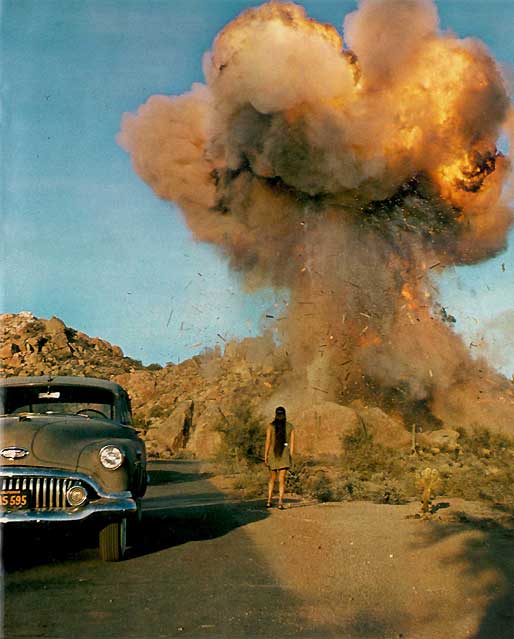
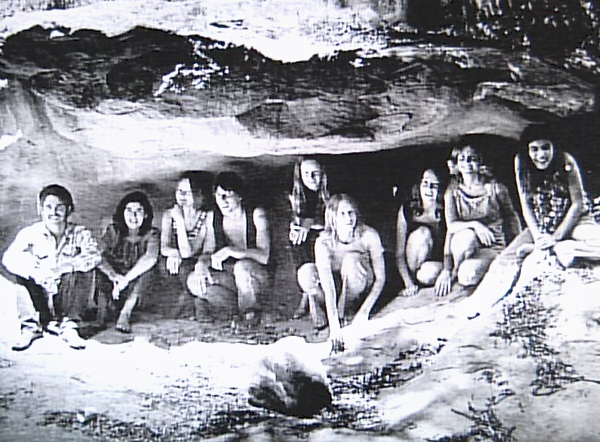
From “Manson: An Oral History,” Los Angeles Magazine‘s 2009 recollection of the man behind the 1969 Tate-LaBianca murders, which rocked Hollywood and shocked a nation:

Bill Gleason, Los Angeles County deputy sheriff assigned to probe auto thefts. He is 77 and retired.

Charles Manson and some of his group just showed up at the Spahn Ranch and started living in the movie sets. Most of the buildings were false fronts, but they made them into rooms. I thought they were just a bunch of hippies, but we started getting reports that members of the Straight Satans, a motorcycle gang from Venice, were going to the ranch on weekends and partying. The word was that they were trading drugs for sex with the women there. Some of the women were runaway juveniles who provided Manson with cash and credit cards stolen from their homes. We also had reports that members of the group were shooting a machine gun. The Manson people were also stealing and building dune buggies and driving them onto adjoining properties, creating a nuisance. A couple of nights before the raid, we hiked into the ranch and found a stolen, brand-new 1969 Ford and a stolen Volkswagen. That was the main basis for our search warrant—to recover these vehicles and try to identify who stole them.

I really didn’t pay much attention to Manson. We’d already taken most of the adults out, and everyone was saying, “Where’s Charlie.” He was hiding under one of the buildings. The deputies had to go in and forcibly remove him. I arrested them one week after the Tate murders, but none of them said anything. Everybody just sat there.”


“The Family” is arrested, December 2, 1969. Lynette “Squeaky” Fromme, who is interviewed in this report. tried to assassinate President Ford in 1975.

Tags: , ,

The Dainese D-Tec, available this year. (Thanks Reddit.)

From a 2000 Popular Mechanics article about Dainese getting involved with the design of space suits: “Dainese may be known for its luxe motorcycle helmets and leathers, but the Italian company recently displayed two pieces of decidedly futuristic apparel at the 2008 Legend of the Motorcycle Concours d’Elegance.

In anticipation of NASA’s down-the-road Mars landing missions, Dainese has teamed up with MIT for an ambitious project that intends to pressurize an astronaut’s body without the usual bubble of air that creates bulky spacesuits. We’ve seen the suit concept before, but bringing on these bike gurus is just cool—and smart.

Ditching the old-school ‘Moon Man’ image, Dainese’s futuristic space duds feature a fitted design strung with intertwining black-and-gold filaments. It may look like a sleek bodysuit by Armani, but the filaments actually serve a crucial purpose: They run along Lines of Non Extension (LoNEs) on the human body, which according to chairman Lino Dainese ‘remain stationary even when we move. If these points are united,’ he explains, ‘the same pressure is established throughout the body.’

Oddly enough, Dainese insists that this concept of ‘adherent suits’ originated in the 1950s, but was abandoned because prototypes were too stiff. While the suit has been in development for several years, Dainese hopes the suit will be used when NASA finally sets foot on the Red Planet sometime around the year 2030.”

Tags:

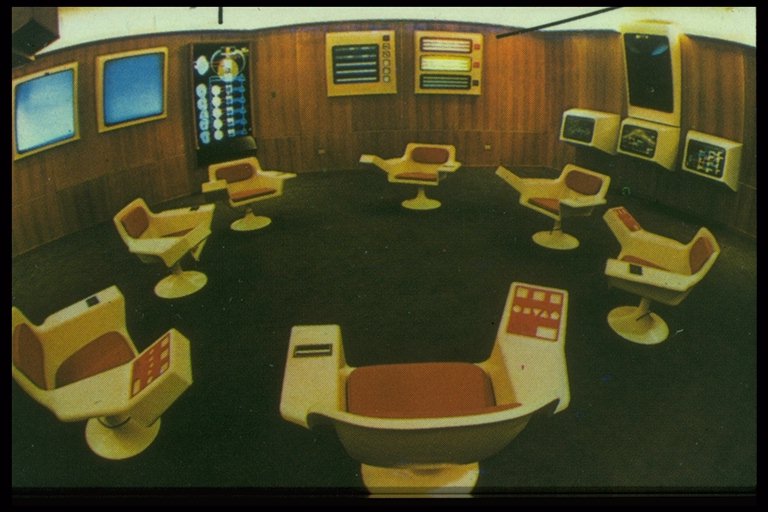
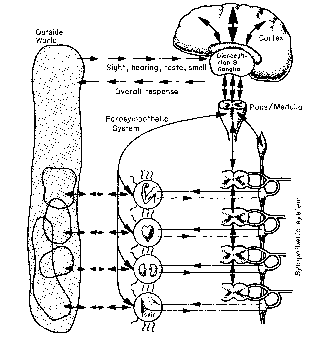
Lost in the collateral damage of the 1973 coup d’etat in Chile that toppled Salvador Allende was Project Cybersyn, a singular computerized business control management system set up by British organizational guru Stafford Beer. “Cybersyn,” a portmanteau for Cybernetic Science, was an odd mélange of socialism, biology, business dynamics, computer science and space-age accoutrements. Telex machines in a Santiago-based control room (which seemed straight out of Star Trek) were used to sync up Chilean factories and provide real-time management for them. Its goal was no less than to regulate the entire national economy. It seems like a terrible and fascinating idea.

The control center was destroyed during the coup, but Beer’s influence went far beyond Chile or the business world; Brian Eno, an acolyte, wrote the forward to a collection of Beer essays. The following is an excerpt of Beer’s writing about Project Cybersyn at its outset:

“Dear friends, I should like to greet you personally to this place, in the development of which I have taken enormous personal interest, and for this reason I am asking you to take a special interest in it. What you see is the outcome of 18 months of hard work on the part of a group of extremely professional Chilean engineers who have devoted their efforts to solving corporate management problems. They have created for us  a series of tools to help us in the task of controlling the economy. Modern science, and specifically electronic  computer science, offers the Government a new opportunity to address modern economic problems. We have seen that the power of this science has not  yet been used in the so-called developed countries. We have developed a system on our own. What you are about to hear today is revolutionary – not only because this is the first time that this is applied in the world –  it is revolutionary because we are making a deliberate effort to give the people the power that science gives to us, enabling them to use it freely.”

••••••••••

Beer briefly explains feedback:

Tags: , ,

Damn, those Kenyans are good. (Image by Pete Souza.)

Economist Tyler Cowen’s instant reaction to the political ramifications of the raid that killed Osama bin Laden, posted at 11:30pm on May 1:

“My quick take is that that Obama will be re-elected (getting Osama is way more important than Iraq, or Saddam in the American mind, attacks on American soil, etc.), at this point the Republicans won’t try to beat him from the center and will thus nominate a more extreme candidate and lose badly, and the most important effects will be on Pakistan, not this country.”


Tags: , ,


From the April 23, 1900 Brooklyn Daily Eagle:

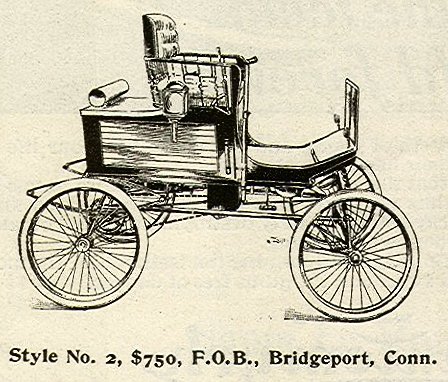
“The first horseless carriage to make its appearance in Riverhead arrived here yesterday by way of Quogue. It is the property of Richard Lawrence. Mr. and Mrs. Lawrence rode out from the city on the machine and say they had a delightful trip, covering the distance to Westhampton to excellent time, with no mishaps, the first day, and coming across the plains to their home the next morning. This latter section of the trip, covering twelve miles, was made in a trifle over an hour, which is excellent time considering the sandy road. The machine is a handsome road wagon, propelled by gasoline and is known as a locomobile. It attracted a large crowd at every place it stopped at in the village and several of the staid old farm horses went into fits at its approach.”

Tags: ,

« Older entries § Newer entries »