Lots of gizmos and gadgets.
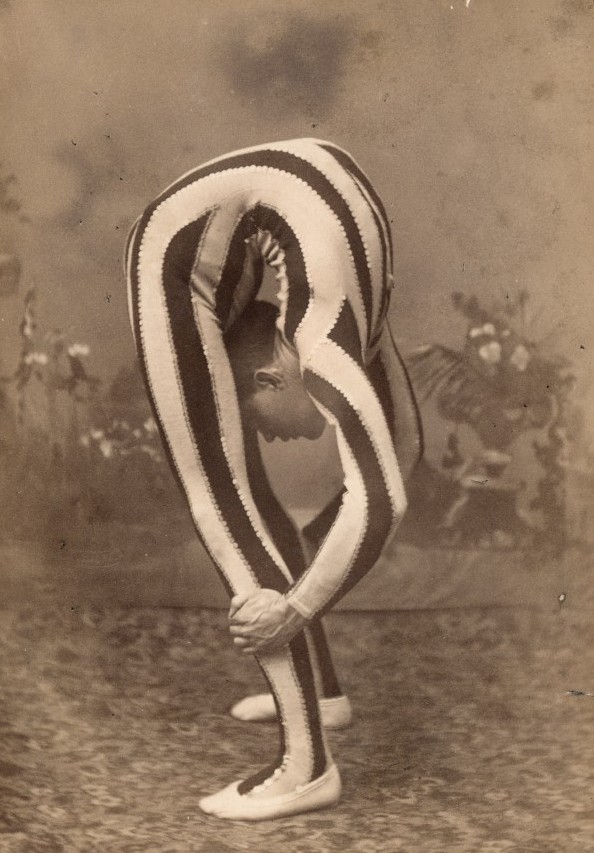
"Raymond Wood, a contortionist, is lying in a precarious condition."
A vital report from Indiana reached the offices of the Brooklyn Daily Eagle on September 1, 1894. It concerned a contortionist who had apparently been poisoned by the dye in his green tights. An excerpt:
“Anderson, Ind.—Raymond Wood, a contortionist, is lying in a precarious condition, caused by wearing green tights. He did his act at a home minstrel performance in this city last Friday and in perspiring the tights faded. The was especially the case on his right leg below the knee. He thought nothing of it and was surprised to find the member highly inflamed the next morning. It had become discolored and swollen to twice the usual size and it is now feared that amputation will be necessary, if not more serious results are caused by blood poisoning, extending over the entire system.”
Tags: Raymond Wood

One of Wang's subjects, bowling alley mechanic Bill Newman, is someone I recall from my childhood in Queens.
Of all my favorite books about NYC, I think the one I love above all others is Harvey Wang’s New York. The 1990 book contains an introduction by Pete Hamill and just a few dozen black-and-white photos with a paragraph of text accompanying each one. And that’s all it needs.
Wang, a photographer and filmmaker, who maintains a website of his work, uses his trusty Leicas and Nikons to capture a phase of the city that had entered into obsolescence and is all but gone now: a New York that wasn’t drunk on self-awareness and star power, a place that was perhaps harder but less self-conscious.
In the book, Wang profiles New Yorkers at work in trades such as blacksmith, mannequin maker and scrap-metal collector, among others. He also interviews a seltzer bottler named George Williams. An excerpt:
“‘I go to sleep dreaming of seltzer bottles,’ says George Williams, who estimates he fills 3,000 empty glass canisters with a mixture of filtered water and carbon dioxide gas every day. He works at G & K Beer Distributors in Canarsie, Brooklyn. Kenny Gomberg, grandson of G & K founder Moe Gomberg says at the beginning seltzer was the biggest part of the business. Now it’s a novelty. George started in the business about thirty-five years ago at Cohen Seltzer Works in Boro Park, one of the dozens of bottlers in business back then. There are just a few left that fill the antique Czech-made bottles with a Barnett and Foster Syphon (sic) Filler machine that dates back to 1910. Says George, ‘The younger generation mostly goes for flavored sodas.'”
ALSO: Harvey Wang is having an exhibit of the many photographs he took of Adam Purple’s amazing Lower East Side earthwork, “The Garden of Eden,” fifteen thousand square feet of natural beauty that the artist somehow grew out of urban blight. It was sadly razed by developers in 1986. Wang’s photographs of the erstwhile oasis and its eccentric creator will be on display at the FusionArts Museum Gallery from February 2-20.
Tags: Adam Purple, Bill Newman, George Williams, Harvey Wang, Kenny Gomberg, Pete Hamill

"I need deer meat." (Image by Disney.)
Deer/Roadkill?? (20 miles/Phillipsburg)
If you see any dead deer on th side of the road,,,please call me ,,I need deer meat to help feed rescued dog.

Rapper Stu Stone entertains the troops during 2010, but Baghdad nightlife is scarce outside of U.S. military bases. (Image by Spc. Cal Turner.)
Baghdad discos and nightclubs, once legendary, are now strobe-less thanks to the U.S. war in Iraq and the religious conservatism that has arisen in the city in its aftermath. According to a Washington Post piece by Yahya Barzanji, the party has relocated north into liberal Kurdish territories. An excerpt:
“Dozens of dance halls and clubs have opened across the Kurdish region during the past months, capitalizing on a crackdown against alcohol in Baghdad, where officials in November began closing clubs serving booze and banned alcohol sales at stores.
That prompted the capital’s nightlife – its musicians, dancers and impresarios, and the patrons who flock to them – to migrate north.
‘Baghdad has become a dead city where there is no more amusement, no drinks and no music. They have dressed the capital in religious clothes,’ said Hameed Saleh, a Baghdad Academy of Music graduate who plays the drums and oud, the Arabic forerunner to the lute, at Kurdonia Club. ‘Now I play music in Sulaimaniyah and my life is secure.’
Baghdad in the 1970s and 1980s was renowned for being the capital of Middle East nightlife with the most raucous nightclubs and an endless flow of whiskey. U.N. sanctions and Saddam Hussein’s newfound piety dimmed its star a bit in the 1990s, but it was the U.S.-led invasion in 2003, the violence that ensued and the rise of conservative Islamic militias that all but snuffed it out.
Nightlife in Baghdad tried to rise from the dead after violence declined in 2008, but the final blow came when religious conservatives began enforcing a Saddam-era ban on alcohol in clubs and added a ban in stores.”
Tags: Hameed Saleh, Yahya Barzanji
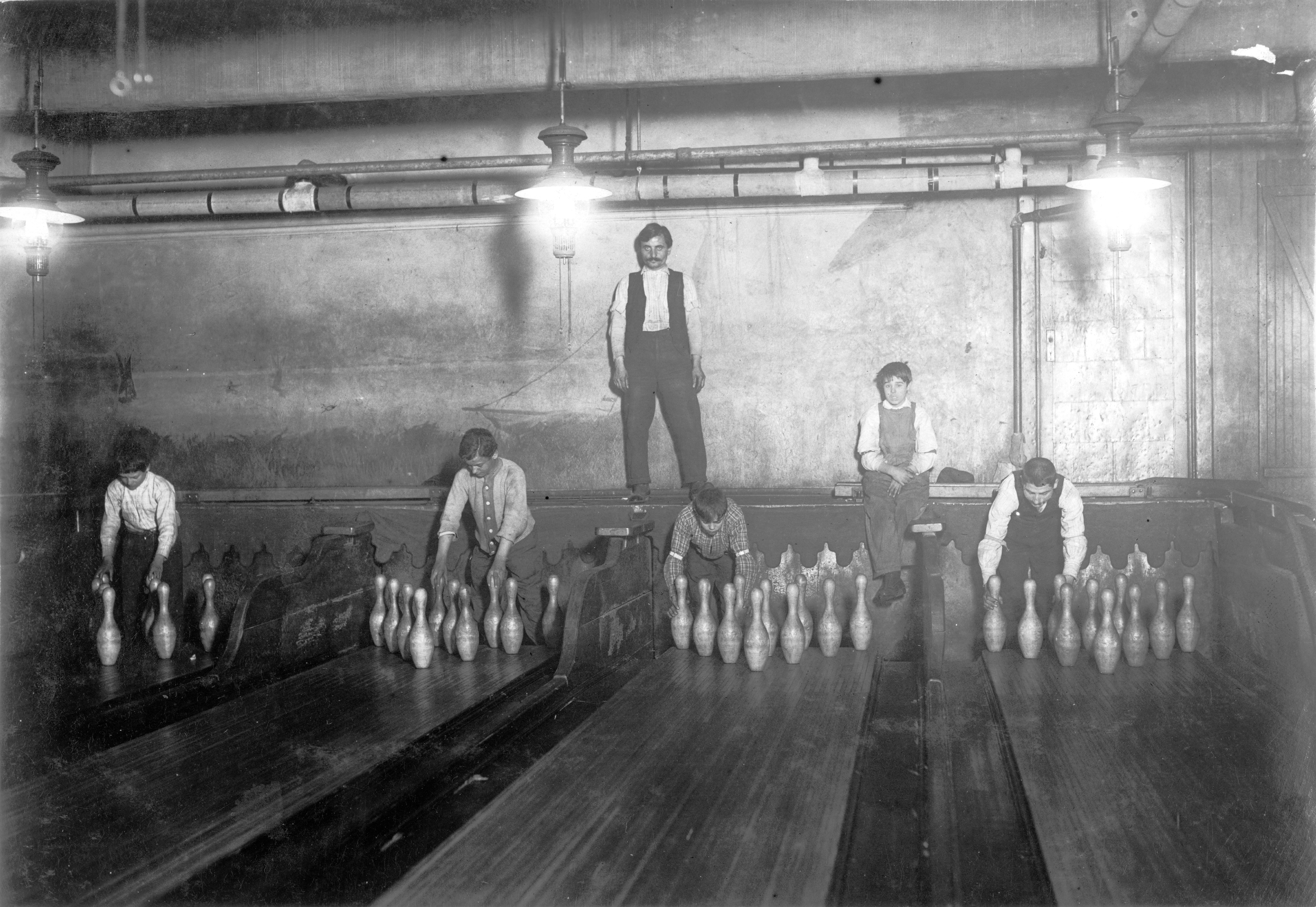
Brooklyn pin boys (circa 1912) do work that would be automated four decades later.
I came across a 1954 article in Sports Illustrated about the then-booming game of bowling, which was becoming increasingly popular thanks to new machinery that automatically placed pins and returned balls. These machines were referred to in the article as “gadgets Rube Goldberg never dreamed of.” The opening of the piece explains the origins of the beer-soaked sport. An excerpt:
“The futuristic fantasy of steel and wire shown above is the pin-spotting machine developed by the American Machine & Foundry Co., a gadget which has revolutionized the bowling industry and started the pin boy on his way out after an unbroken tenure of some 17 centuries. It is a far cry indeed from the game originated around 250 A.D. by a Bavarian priest who first set up a wooden pin in the cloister of his church. He labeled the pin Heide (heathen) and called upon each parishioner to knock it down with a rounded stone. If the Kegeler (thrower) scored a hit, he was judged to be living a devout, pure life. If he missed, his soul was presumed to require cleansing at church.”
Tags: Rube Goldberg

"If she can only cook as well as Honeywell can compute."
In a Wall Street Journal article about an exhibit at the Computer History Museum, Deborah Gage recalls a pricey appliance, the Honeywell 316:
“…a short-lived experiment designed to help women store recipes, organize menus, and balance the family checkbook. As high and wide as a table, it weighed over 100 pounds, took two weeks to learn to program and was sold by Niemen Marcus for about $10,000 in 1969.”

(Image by Joi Ito.)
Tags: Deborah Gage
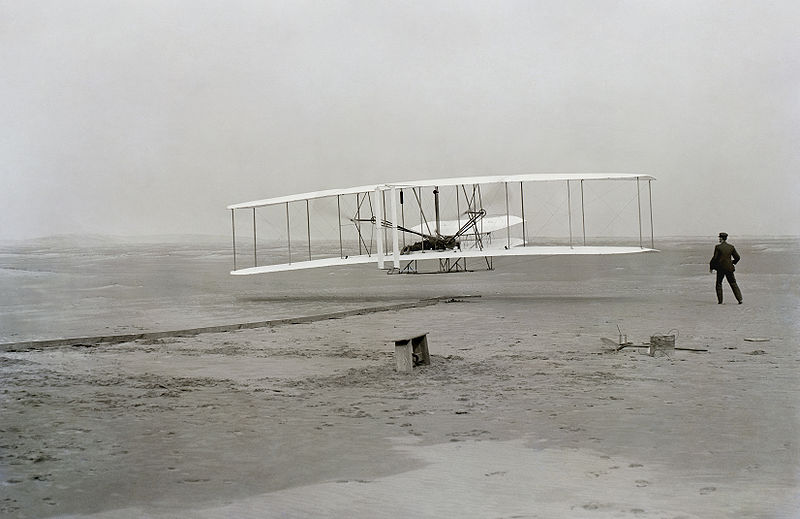
The first sustained flight.
Letters of Note reprints the telegram the Wright Brothers sent to their father, who was a Bishop of the Church of the United Brethren in Christ, in 1903, after getting their Flyer to successfully make four sustained trips. The transcript:
“176 C KA C8 33 Paid. Via Norfolk Va
Kitty Hawk N C Dec 17

7 Hawthorne St
Success four flights thursday morning all against twenty one mile wind started from Level with engine power alone average speed through air thirty one miles longest 57 seconds inform Press home Christmas.
Orevelle Wright 525P”
Tags: Milton Wright, The Wright Brothers
He sort of sucks. (Thanks Reddit.)
The way medicine used to be practiced before Obamacare ruined everything.

"We accept Pay Pal." (Image by Lipedia.)
Real Mummy Kitty (yes really) – $450 (Virginia)
I am posting this for sale in New York because we just saw the show “Oddities” featuring the store “Obscurities” and there was a mummified cat on the show. New York will probably be more open to odd things for sale than where we live. This is a real cat preserved underneath an old barn we just tore down. We accept Pay Pal.
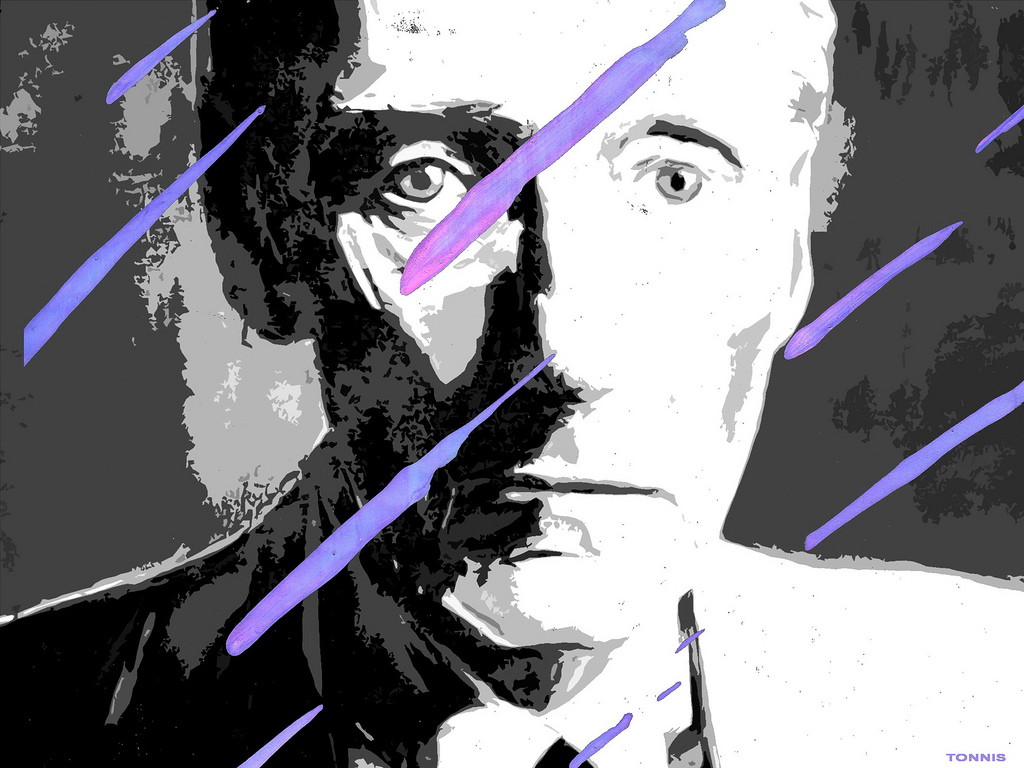
Burroughs published "Junky" under the pen name "William Lee" in 1953. (Image by Christiaan Tonnis.)
I have zero interest in drugs, but I think William S. Burroughs’ first novel, Junky, is pretty much perfect writing, even though he wasn’t particularly enamored with this work. In a 1965 Paris Review Q&A, a chain-smoking Burroughs recalled how the writing of Junky came about. An excerpt:
“Interviewer: When and why did you start to write?
Burroughs: I started to write in about 1950; I was thirty-five at the time; there didn’t seem to be any strong motivation. I was simply endeavoring to put down in a straightforward, journalistic style something about my experiences with addiction and addicts.
Interviewer: Why did you feel compelled to record these experiences?
Burroughs: I didn’t feel compelled. I had nothing else to do. Writing gave me something to do every day. I don’t feel the results were at all spectacular. Junky is not much of a book, actually. I knew very little about writing at that time.
Interviewer: Where was this?
Burroughs: In Mexico City. I was living near Sears, Roebuck, right around the corner from the University of Mexico. I had been in the Army for four or five months and I was there on the GI Bill, studying native dialects. I went to Mexico partly because things were becoming so difficult with the drug situation in America. Getting drugs in Mexico was quite easy, so I didn’t have to rush around, and there wasn’t any pressure from the law.”
Tags: William S. Burroughs
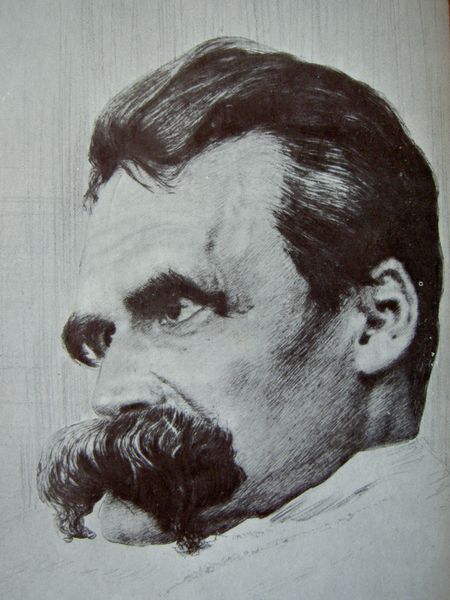
"That incipient insanity appears in many of the writings can hardly be doubted." (Image by Hans Olde.)
Announcing the death of God probably wasn’t a real consensus-builder back in the nineteenth century, so Friedrich Nietzsche took it on the chin in 1900 when he died. This postmortem, originally published in the Springfield Republican and reprinted in the November 4, 1900 Brooklyn Daily Eagle, was a scathing takedown of the extremist philosopher. An excerpt:
“The death of Friedrich Nietzsche is of no special significance to the world, because for ten years past the famous German philosopher had been in an insane asylum, the victim of the hopeless mania and paralysis, which mercifully brought death.
That incipient insanity appears in many of the writings can hardly be doubted. The brilliant gleams of intellectual insight with which they abound are obscured by great masses of nonsense, a delirium of wild and whirling words, which only the most extreme of his disciples can pretend to understand. His favorite vehicle was the aphorism; he disdained to stoop for demonstration. He might as well have said with the man in the anecdote, ‘I am not arguing–I’m just telling you.’ He likened his aphorisms to mountain peaks and said it took long legs to stride from one to the next. And the least capable of such a stride are those who have the habit of stopping to look where they leap.
Nietzsche’s philosophy is too extravagant and Teutonic to have gained much vogue outside of Germany, but it might very well be the fin de siecle philosophy of the civilized world. It represents the extreme swing of the pendulum away from Christianity. Two things made Nietzsche foam at the mouth, Wagnerism and Christianity. His special detestation was the altruism on which Christianity is founded. His ideal man was the ‘blonde brute,’ as he called him, the magnificent, untamed animal, pitiless, ruling by the right of strength, robbing, killing, regardless of others, joyous and exultant in unbridled egotism. Altruism he hated because it was the religion of the weak and sickly, a religion, he thought, pulling men down to the common level, preventing the development of the ‘beyond-man,’ as he fanatically called his ideal brute. The weak, the halt and the blind, the sick and the unfortunate touched not his sympathies. Away with such rubbish–the refuse of the race.
What profound irony in the fact that this upholder of such savage doctrines spent his last years, helpless and imbecile, in one of those kindly retreats which the religion he despised has given the world!”
Tags: Friedrich Nietzsche
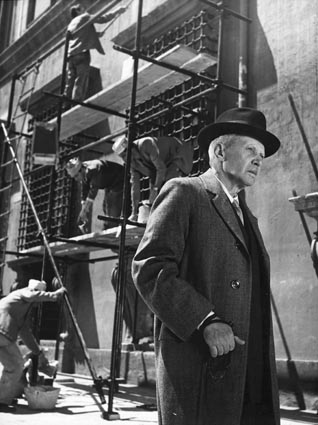
Carlo Battisti was a linguistics professor. His turn in "Umberto D." was his only role.
Vittorio de Sica’s spare yet devastating 1952 drama about a post-war Italian pensioner who careers from stubborn to suicidal is a companion piece stylistically and thematically to his most famous neorealist classic, The Bicycle Thief, and its equal (or better) creatively, despite being a colossal bomb commercially at the time of its release.
Umberto Domenico Ferrari (Carlo Battisti, a non-professional actor) is a retired Italian government employee who spent 30 years in the Ministry of Public Works but can’t get by on his puny pension. The film opens as Umberto and his fellow elders stage an illegal protest about their treatment, but the police arrive and the seniors scurry. Owing his vituperative landlady back rent, Umberto sells his gold pocket watch for a pittance to raise some lire, but it increasingly appears like he’s a man out of time. Too dignified to beg and seemingly forgotten by old friends, Umberto and his beloved pet dog, Flike, are headed for eviction. The crestfallen gentleman determines to find his pooch a good place to stay before he voluntarily enters his final resting place.
Umberto is a self-described “broken-down old man,” but it isn’t only his coporeal crumbling or finacial fix that has him desperate. It’s also the fraying of the moral code he sees around him in a nation no longer chastened by war. The apartment’s teenage housemaid is pregnant but not sure which boy is the father. The landlady rents rooms by the hour to amorous couples. It’s no country for old men. At first Umberto is indignant about surviving such indignities. Early in the film, he says of his landlady, “She’s hoping I’ll die, but I’m not going to.” Pretty soon, however, he’s not so sure.
Recent Film Posts:
- Classic DVD: The Wicker Man (1973)
- Classic DVD: Blow-Up (1966)
- Classic DVD: Invasion of the Bodysnatchers (1978)
- Classic DVD: The Stepford Wives (1975)
- Classic DVD: Rollerball (1975)
- New DVD: Exit Through the Gift Shop
- Strange, Small & Forgotten Films: Stay Hungry (1976)
- Classic DVD: Westworld (1973)
- Classic DVD: Slacker (1991)
- Strange, Small & Forgotten Films: Decasia: The State of Decay (2002)
- Classic DVD: 32 Short Films About Glenn Gould (1993)
Tags: Carlo Battisti, Vittorio De Sica
Robot actors on stage and in guerrilla performances. The big advantage is that they use slightly less cocaine than human actors. (Thanks Reddit.)
“It might be possible to make the television set so slim that it could be hung on the wall.” Two futuristic reports mixed in with other stuff.
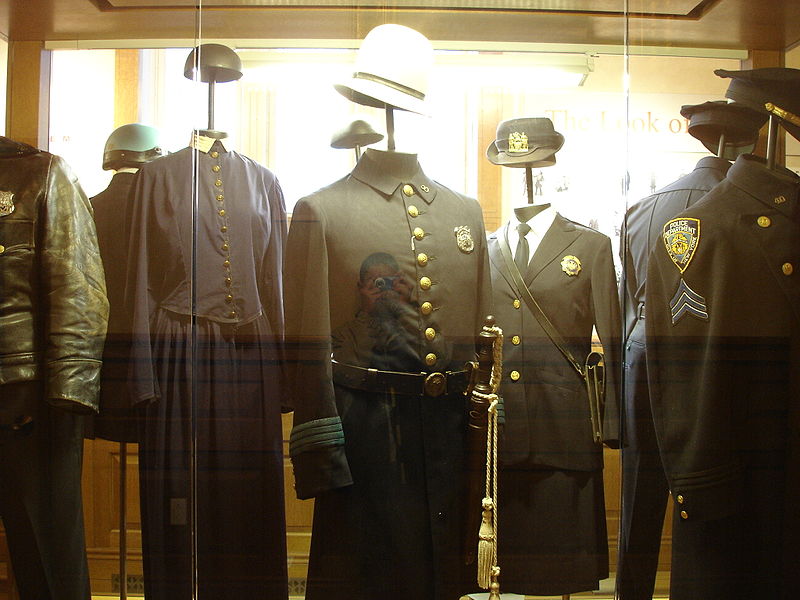
Vintage uniforms at the New York City Police Museum. (Image by official-ly cool.)
Wanted: Family Police Heirlooms
Do you have a collection of police memorabilia from your own career, or a family member…….and have no one interested in preserving this heritage? Are you concerned about the collection falling into the wrong hands (criminals, unscrupulous dealers)? If so, feel free to contact me. I am a retired police officer, with 28 years on the job. I am a nationally recognized collector of police memorabilia such as badges, cabinet cards, Gamewell police call boxes, vintage uniforms, restraint devices (handcuffs, leg irons), shoulder patches, and other items. I would love to add new items into my collection, and will travel to your location to inspect your collection and provide an estimate. Of special interest are entire collections, or pre-1900 one of a kind items. Please contact me and I’ll provide you with specifics as to my background and collecting endeavors to satisfy you that you would be in good hands.
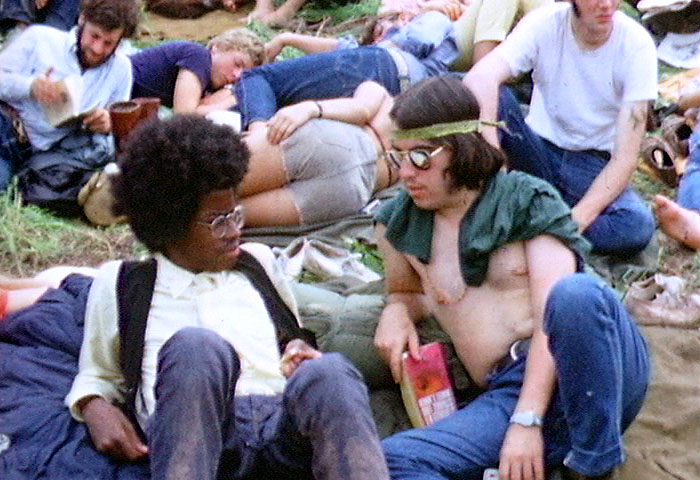
"They're a dirty, immoral bunch." (Image by Derek Redmond and Paul Campbell.)
Ebony magazine was on the scene in San Francisco in 1967 to turn out a good Summer of Love article, “The Hippies of Hashberry: A New Generation Flees Fabled American Dream.” There was, naturally, an African-American angle to part of Charles E. Brown’s piece, which explained that the hippies were more taken with Native American culture than the Beats, who were influenced by black culture. But most of the report looked at hippiedom in a broader context. An excerpt:
“A residential neighborhood just south of San Francisco’s Golden Gate Park is probably where it all began. The steepled rooftops of Haight-Ashbury’s Victorian homes were once the mark of middle-class respectability. Three years ago the hippies converged and christened the place Hashberry. Now, as the ‘squares’ depart to resume ‘more orderly’ lives, the hippies come in larger numbers, mostly in the summer…They come to Haight-Ashbury to be ‘where it’s at.’
‘But they carry lice and venereal disease wherever they go,’ a Haight Street realtor complains. ‘They’re a dirty, immoral bunch.’ His views are seconded by most people in authority–certainly the police in nearly every city in America.
There are those, like Episcopalian minister Malcolm Boyd, who see them in a different light: as young men and women in search of an honest morality, a morality that is foreign to middle-class Americans. ‘This is a time of great social ferment,’ says the Rev. Mr. Boyd, ‘and very little is being swept under the rug…the people who appear to be copping out–the hippies–are making serious contributions…while some who pose as liberals are not.'”
Tags: Charles E. Brown, Malcolm Boyd
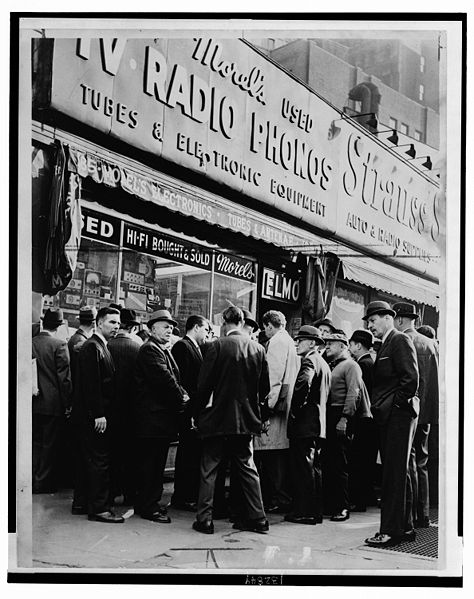
Orlando Fernandez took this photo for the "New York World Telegram."
People across the country gathered information instantly from the Internet yesterday about the shooting of Arizona Representative Gabrielle Giffords. But in the pre-wired age, on November 22, 1963, concerned citizens of another tragedy, the assassination of President Kennedy, learned details by flocking to Morel’s Electronics shop in New York City, on Greenwich and Dey Streets. An even earlier generation had learned about the sinking of the Titanic by listening to a wireless transmission at Wanamaker’s department store.
Tags: Gabrielle Giffords, Orlando Fernandez, President John F. Kennedy

A 2008 Wall Street Journal article revealed that inmates in American prisons used cans of mackerel as currency, mostly because they were worth about a dollar and packs of cigarettes, an erstwhile coinage, had been banned. An Orlando Sentinel piece by Drew Harwell declares that honey buns are also a coin of the realm in penitentiaries as well as being a popular last meal for the condemned on death row. The sticky, sugary blobs are now more coveted behind prison walls than tobacco or envelopes or Coke. An excerpt:
“In September, the day after the New Orleans Saints beat the San Francisco 49ers in a Monday Night Football game, a fight broke out in the Alpha Pod of the Hernando County Jail.
Inmate Ricardo Sellers, 21, had punched Brandon Markey, 23, in the face, sending Markey to a Brooksville hospital, according to Hernando deputies. Sellers was angry that Markey hadn’t paid up after losing a bet over football.
His debt? Four honey buns.
For all their sweetness, honey buns have a history of involvement in prison violence. In 2006, at the Kent County Jail in Michigan, inmate Benny Rochelle dragged his cell mate off the top bunk, killing the man, when he could not find his honey bun. And last year, at the Lake Correctional Institution west of Orlando, two men were sentenced to life in prison for stabbing with crude shivs the man they thought had stolen shaving cream, cigarettes and a honey bun from their footlockers.
Yes, murder over honey buns. Was it their decadence, or their status as jailhouse currency?
In Texas and Pennsylvania, inmates bartered honey buns for tablets of Seroquel, an addictive antipsychotic abused on the street as a sleeping pill.
In Sarasota, a millionaire businessman charged with child abuse earned the nickname ‘Commissary King’ after fashioning honey buns into birthday cakes for inmates he felt he could sway to his defense.
In Naples, a bail bondsman was accused of giving an inmate hundreds of dollars’ worth of honey buns over 13 years as rewards for referring him business.”
Tags: Benny Rochelle, Brandon Markey, Drew Harwel, Ricardo Sellers
Quebec researcher Jean-Christophe Laurence recently showed tech gadgets that have fallen into disuse (floppy disks, ColecoVision game cartridges, Fisher-Price turntables, etc.) to schoolchildren and asked them to figure out what they were once used for. “Oh, I though it was a bomb,” one child says when examining an 8-track player. Great stuff. (Thanks Reddit and Geekosystem.)
Tags: Jean-Christophe Laurence
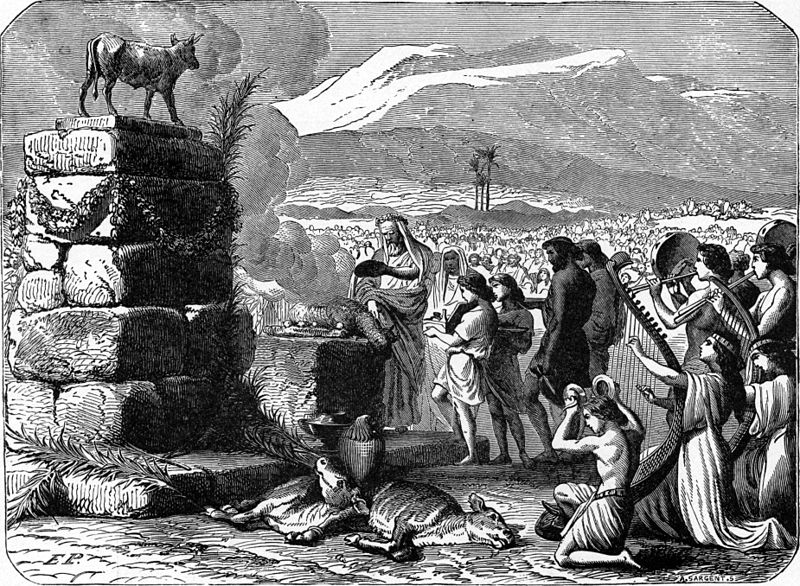
Pagans pray to a golden idol. (Image by A. Sargent.)
- Roman Catholics…212,000,000
- Protestants…115,000,000
- Greek and Oriental Churches…91,000,000
- Atheists, Deists and Infidels…100,000,000
- Jews…8,000,000
- Buddhists, Confucians…400,000,000
- Brahmanism…107,000,000
- Mohammedans…154,000,000
- Pagan…62,000,000
- All other Creeds (1,100)…106,000,000
• Taken from the 1893 Brooklyn Daily Eagle Almanac.
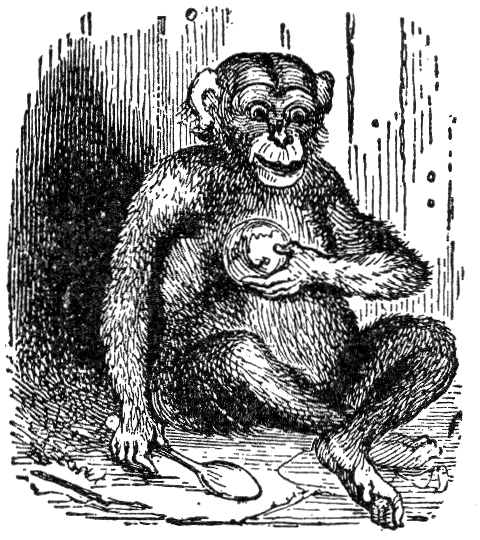
"Sometimes the monkey goes out for a stroll on the beach."
This story from the August 12, 1894 Brooklyn Daily Eagle explains why so few barber shops these days have pet monkeys. An excerpt:
“A chief attraction of the barber shop attached to Schillinger’s hotel on Rockaway Beach is a monkey, which the barber plays with in the absence of faces to scrape or hair to cut. Sometimes the monkey goes out for a stroll on the beach. Yesterday afternoon he was peregrinating when little Ellen Mason of Allen street and Railroad avenue, who was also out for a stroll, happened to meet him. The child became frightened, and ran with the monkey in hot pursuit. In a playful way the monkey perched on one of Ellen’s arms and bit a good piece out of it. The child screamed, which had the effect of attracting the barber’s attention, who grabbed the miscreant by the tail as he was meditating another assault. The child was carried home and her wound bandaged.
Ellen’s father last night made application to Justice Smith for a warrant to shoot the monkey. It was granted.”
Tags: Ellen Mason, Justice Smith
A driver education class for first graders in Phoenix, Arizona, in 1954. Not such a bad idea, really. Jimmy Stewart narrates.
Tags: Jimmy Stewart
March 22, 2010: Sarah Palin–“Commonsense Conservatives & lovers of America: ‘Don’t Retreat, Instead – RELOAD!’ Pls see my Facebook page.”

March 25, 2010: Rep. Gabrielle Giffords–“We’re on Sarah Palin’s targeted list, but the thing is that the way that she has it depicted has the crosshairs of a gun sight over our district, and when people do that, they’ve gotta realize there are consequences to that action.”
January 8, 2011: Rep. Gabrielle Giffords shot in Tucson rampage; federal judge killed.