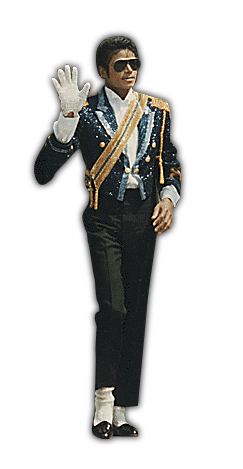
Newspaper Article Of Michael Jackson & Monkey (Astoria)
Unique Photo!!
Ideas and technology and politics and journalism and history and humor and some other stuff.
Unique Photo!!
Tags: Michael Jackson

"There aren't many things in the world that would make Steve Wienecke look small."
Knokkers, which may be the greatest sport ever, combines bowling and billiards. (Thanks Gizmodo.) An excerpt from an article by Jason Jenkins about the beer-friendly game from Rural Missouri magazine:
“There aren’t many things in the world that would make Steve Wienecke look small. Standing 6 feet 4 inches tall and weighing in at around 270 pounds, this former semi-pro football player and cage fighter casts a large shadow.
But step into his backyard south of Fredericktown and everything, including Steve, shrinks in stature.
Here, in a space large enough to encompass an in-ground swimming pool, Steve has built what he believes is the world’s largest regulation-size pool table. At nearly 30 feet long and 15 feet wide, the table and the hybrid game played on its surface–a combination of billiards and bowling that Steve calls ‘Knokkers’–are the culmination of an idea of 25 years in the making.”
Tags: Jason Jenkins, Steve Wienecke
That’s how you work off the carbs, people. (Thanks Reddit.)
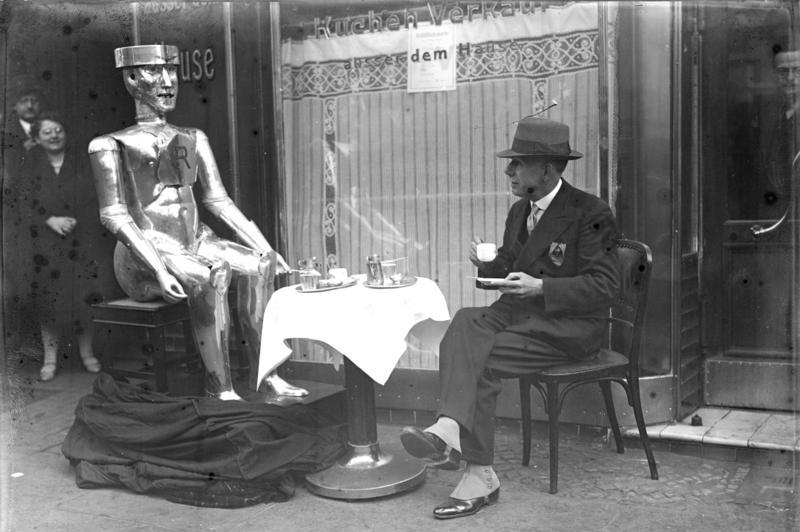
"And, in their final form, the changing robots had developed a more robust gait."
Ray Kurzweil is a brilliant guy who seems maybe a little too optimistic about technological advances on our horizon. But he has an interesting post on his blog about robots that are being developed that start out as “tadpoles” and morph and change over their lives, which seems to help them learn how to walk better. An excerpt:
“In a first-of-its-kind experiment, University of Vermont roboticist Josh Bongard created both simulated and actual robots that, like tadpoles becoming frogs, change their body forms while learning how to walk. Over generations, his simulated robots also evolved, spending less time in ‘infant’ tadpole-like forms and more time in ‘adult’ four-legged forms.
These evolving populations of robots were able to learn to walk more rapidly than ones with fixed body forms. And, in their final form, the changing robots had developed a more robust gait — better able to deal with, say, being knocked with a stick — than the ones that had learned to walk using upright legs from the beginning.
‘This paper shows that body change, morphological change, actually helps us design better robots,’ Bongard says. ‘That’s never been attempted before.'”
Tags: Josh Bongard, Ray Kurzweil
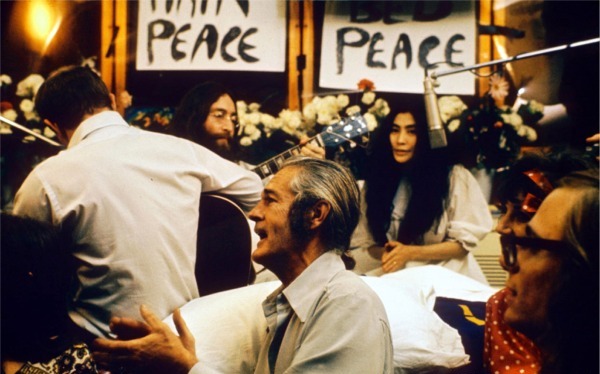
"All I'm saying is that perhaps we can make a revolution without violence." (Image by Roy Kerwood.)
John Lennon was famous for urging everyone to give peace a chance, but there was a moment when he seemed to flinch and curl his fist. It was during a January 1971 interview he and Yoko Ono did with the radical left publication Red Mole. To her credit, Ono wasn’t having any of the macho blather. An excerpt:
“Red Mole: Communication is vital for building a movement, but in the end it’s powerless unless you also develop popular force.
Yoko Ono: I get very sad when I think about Vietnam where there seems to be no choice but violence. This violence goes on for centuries perpetuating itself. In the present age when communication is so rapid, we should create a different tradition, traditions are created everyday. Five years now is like 100 years before. We are living in a society that has no history. There’s no precedent for this kind of society so we can break the old patterns.
Red Mole: No ruling class in the whole of history has given up power voluntarily and I don’t see that changing.
Yoko Ono: But violence isn’t just a conceptual thing, you know. I saw a programme about this kid who had come back from Vietnam – he’d lost his body from the waist down. He was just a lump of meat, and he said, ‘Well, I guess it was a good experience.’
John Lennon: He didn’t want to face the truth, he didn’t want to think it had all been a waste…
Yoko Ono: But think of the violence, it could happen to your kids…
Red Mole: But Yoko, people who struggle against oppression find themselves attacked by those who have a vested interest in nothing changing, those who want to protect their power and wealth. Look at the people in Bogside and Falls Road in Northern Ireland; they were mercilessly attacked by the special police because they began demonstrating for their rights. On one night in August 1969, seven people were shot and thousands driven from their homes. Didn’t they have a right to defend themselves?
Yoko Ono: That’s why one should try to tackle these problems before a situation like that happens.
John Lennon: Yes, but what do you do when it does happen, what do you do?
Red Mole: Popular violence against their oppressors is always justified. It cannot be avoided.
Yoko Ono: But in a way the new music showed things could be transformed by new channels of communication.
John Lennon: Yes, but as I said, nothing really changed.
Yoko Ono: Well, something changed and it was for the better. All I’m saying is that perhaps we can make a revolution without violence.
John Lennon: But you can’t take power without a struggle…”
It seems the surest way to announce that your company, products and employees lack genius is to rely heavily on market research and focus groups. What you’re basically saying is that you know you can’t be ahead of the curve so you’d like someone else to help you just keep up. When Steve Jobs was working on the iPad and wanted to rely on touch screens rather than a stylus, his judgement was questioned, particularly because he didn’t do any market research. His response was: “It isn’t the consumers’ job to know what they want,” realizing on his own that moving from mouse to stylus wasn’t a bold step into the future. And I think most great things have been created by one or two people who just knew. There aren’t enough of those people to go around, so we get focus groups instead. (George Lois agrees with me.)
Jobs obviously wasn’t the first one attempt popularizing touch-screen. In the 1983 edition of Computer Chronicles below, Hewlett-Packard reps share their own touch-screen technology. I wonder what market research said about it back then. By the way: The younger host on your right is Gary Kildall.
Tags: Gary KIldall, Steve Jobs
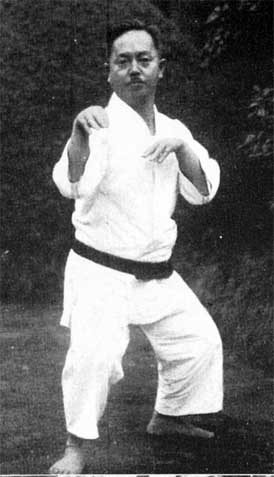
"Hit me up if u 4real."
im lookin for some1 that can show me how to defend myself and show me how to fight hit me up if u 4real i can pay
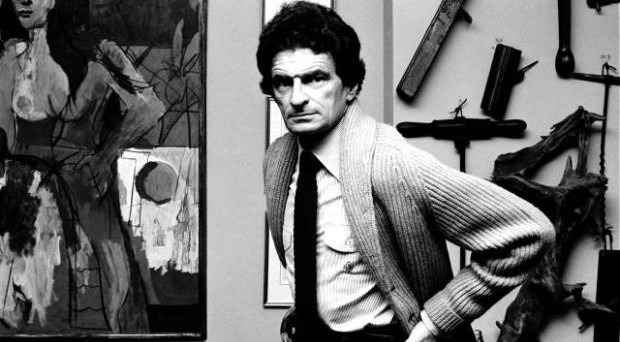
Like a lot of people who move to New York to reinvent themselves, Jerzy Kosinksi was a tangle of fact and fiction that couldn’t easily be unknotted. He was lauded and reviled, labeled as brilliant and a plagiarist, called fascinating and a fraud. The truth, as usual, probably lies somewhere in between. Kosinski was a regular on talk shows, at book parties and at Plato’s Retreat. He acted in Reds and posed for magazine covers. But he was too haunted to be a bon vivant, and in 1991, the author committed suicide.
Kosinski did an interview with The Paris Review in 1972. He opined about what he felt was the ever-dwindling importance of written and verbal language. He was very concerned by how much people liked to watch. Since his death, the Internet has supplanted TV as the premium medium, allowing people to write and publish more words than ever before, though that hasn’t really halted our drift deeper into pictures.
An excerpt:
Question:
Since you often teach English, what is your feeling about the future of the written word?
Jerzy Kosinski:
I think its place has always been at the edge of popular culture. Indeed, it is the proper place for it. Reading novels–serious novels, anyhow–is an experience limited to a very small percentage of the so-called enlightened public. Increasingly, it’s going to be a pursuit for those who seek unusual experiences, moral fetishists perhaps, people of heightened imagination, the troubled pursuers of the enlightened self.
Question:
Why such a limited audience?
Jerzy Kosinski:
Today, people are absorbed in the most common denominator, the visual. It requires no education to watch TV. It knows no age limit. Your infant child can watch the same program you do. Witness its role in the homes of the old and incurably sick. Television is everywhere. It has the immediacy which the evocative medium of language doesn’t. Language requires some inner triggering; television doesn’t. The image is ultimately accessible, i.e., extremely attractive. And, I think, ultimately deadly, because it tuns the viewer into a bystander.
Of course, that’s a situation we have always dreamt of . . . the ultimate hope of religion was that it would release us from trauma. Television actually does so. It “proves” that you can always be an observer of the tragedies of others. The fact that one day you will die in front of the live show is irrelevant—you are reminded about it no more than you are reminded about real weather existing outside the TV weather program. You’re not told to open your window and take a look; television will never say that. It says, instead, “The weather today is . . .” and so forth. The weatherman never says, “If you don’t believe me, go find out.”
From way back, our major development as a race of frightened beings has been toward how to avoid facing the discomfort of our existence, primarily the possibility of an accident, immediate death, ugliness, and the ultimate departure. In terms of all this, television is a very pleasing medium: one is always the observer. The life of discomfort is always accorded to others, and even this is disqualified, since one program immediately disqualifies the preceding one. Literature does not have this ability to soothe. You have to evoke, and by evoking, you yourself have to provide your own inner setting. When you read about a man who dies, part of you dies with him because you have to recreate his dying inside your head.
Question:
That doesn’t happen with the visual?
Jerzy Kosinski:
No, because he dies on the screen in front of you, and at any time you can turn it off or select another program. The evocative power is torpedoed by the fact that this is another man; your eye somehow perceives him as a visual object. Thus, of course, television is my ultimate enemy and it will push reading matter—including The Paris Review—to the extreme margin of human experience.•
Electric headlights never really caught on.
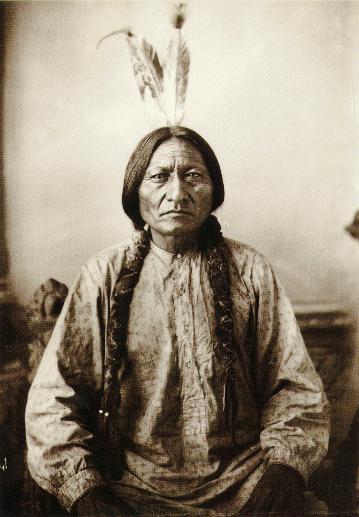
"Sitting Bull was not in the fight, but watched it from a bluff some distance off."
Legendary Sioux warrior Sitting Bull had his bravery and honesty called into question in a revisionist report in the September 15, 1889 Brooklyn Daily Eagle that was originally published in the Minneapolis Journal. An excerpt:
“W.H. Mosher, of Ypsilanti, Mich., is in the city. He was formerly in charge of a store at Standing Rock Agency, Dak., and among his frequent visitors were Sitting Bull, Gall, Red Cloud and others of the famous personages of the Sioux tribe. Mr. Mosher was recently discussing Sitting Bull’s claim to honors in the Custer fight.
‘Sitting Bull has become famous as the hero of the Custer battle on the Indian side, but the fact is that he was not in the fight at all. I can understand Sioux well and speak it fairly. One night Sitting Bull and Gall met in my store and for over an hour discussed the details of the battle, and once or twice almost reached a fighting point. Gall was making an attack on Sitting Bull for attempting to steal his bravery.
‘The fact is that Sitting Bull was the first to reach a telegraph station with the news of the massacre, and he made the most of the opportunity. He pictured himself in the the thickest of the fight and had scalps with him to prove it, but they were all secured after the battle and not in it. Sitting Bull was not in the fight, but watched it from a bluff some distance off. At its close he rushed down and took three or four scalps and then rode away and painted himself a hero. At least that is what the Indians say. Gall was the natural leader and is regarded as a very brave warrior. Sitting Bull was merely a medicine man and had the reputation of being a coward.'”
Tags: Gall, General George Armstrong Custer, Red Cloud, Sitting Bull, W.H. Mosher
Septuagenarian Romanian inventor Justin Capra has designed seven unconventional flying machines, including a jetpack.
Tags: Justin Capra
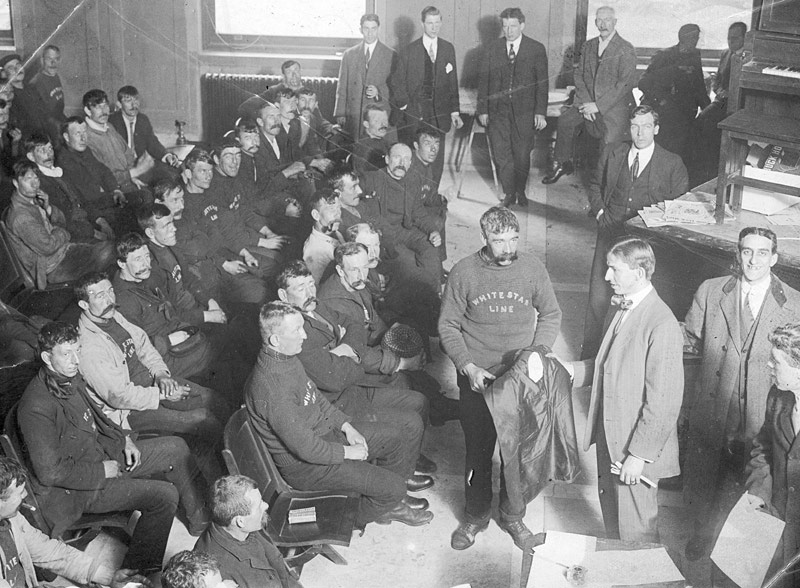
Surviving "Titanic" crew members wear warm, dry clothes that read "White Star Line," which was the name of the shipping company that owned the sunken vessel.
Even though it was women and children first into the lifeboats during the sinking of the Titanic, some crew members did survive the infamous meeting of steel and ice. The 1912 image above, from the International News Service, shows surviving crew members who had been transported to New York City wearing warm, dry clothes they had just been given. An excerpt about the Titanic‘s tragic maiden voyage from the New York Times article, “Biggest Liner Plunges to the Bottom at 2:20 A.M.“:
“The White Star liner Olympic reports by wireless this evening that the Cunarder Carpathia reached, at daybreak this morning, the position from which wireless calls for help were sent out last night by the Titanic after her collision with an iceberg. The Carpathia found only the lifeboats and the wreckage of what had been the biggest steamship afloat.
The Titanic had foundered at about 2:20 A.M., in latitude 41:16 north and longitude 50:14 west…all her boats are accounted for and about 655 souls have been saved of the crew and passengers, most of the latter presumably women and children.
There were about 2,100 persons aboard the Titanic.“
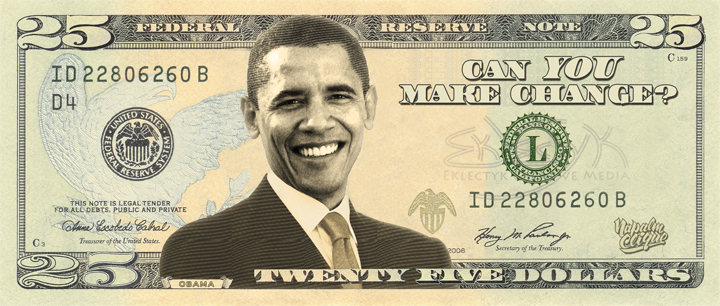
"I want something awesome in return."
Hi all, I’m a 22 year old athlete and I have in my possession 25 dollars, I would like to get rid of it, but I want something awesome in return. So please tell me what you’d be willing to trade my 25 dollars for.
Thanks all, and nothing illegal or disgusting.

"Red Dawn 2" recently filmed in Detroit, not needing to dress down it's buildings to make is seem the site of a devestating invasion. (Image by Yves Marchan and Romain Meffre.)
Are we fascinated by the modern ruins of Detroit because they seem otherworldy or because they seem like our future?
The Motor City, shattered by financial apocalypse, has become the popular subject of ruinsploitation books and articles and photo series. Some urban analysts believe that’s because because we subconsciously fear Detroit is a harbinger of what lies ahead for us all. It seems melodramatic, but a good article by John Patrick Leary in Guernica wonders about that very idea. (Thanks Essayist.) An excerpt:
“For media workers from more prosperous cities, Detroit’s spaces of ruination appear to tell a history, or at least evoke a vague sense of historical pathos, absent in those other, wealthier cities. Indeed, one of the notable features of this Detroit boom is the fact that few of the people driving it actually live here. For someone from New York, Paris, or San Francisco, history seems more visible here, and this is the visual fascination that Detroit holds. As [Yves] Marchand and [Romain] Meffre write on their website, ‘Ruins are the visible symbols and landmarks of our societies and their changes, small pieces of history in suspension.’ In a country perennially plagued with a historical amnesia, ruins are rare permanent reminders of a history unsuited to the war memorials and equestrian statues that dot the national landscape. Another reason for the fascination with Detroit’s decline is less about history, though, and more about the future.
Coleman Young, Detroit’s charismatic and still-controversial mayor during the years of the city’s most precipitous decline in the nineteen seventies and eighties, put it well in his fascinating 1994 autobiography, Hard Stuff: ‘Detroit today,’ he wrote, ‘is your town tomorrow.’ From the 1967 riots, when Detroit became the flashpoint of the country’s political and racial crisis, to the deindustrialization and crime of the nineteen seventies and the nineteen eighties, the city has been a bellwether of each major urban crisis since World War II. Today, Detroit, to use an overused but appropriate metaphor given the city’s scarred appearance, is ‘ground zero” of the collapse of the finance and real estate economy in America. Detroit has been hit as hard as any city by the foreclosure crisis and by unemployment, and so it embodies the looming jobless future, or more precisely, our worst fears about that future.”
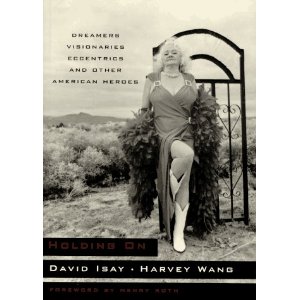
From dust jacket flap: "This book is a tribute to some of America's greatest characters, people holding on to unique ways of life at all costs."
When I recently put up a post about Harvey Wang, it reminded me that in my whole life in New York City, I have only been the victim of theft one time and the stolen item was an excellent 1996 book called Holding On: Dreamers, Visionaries, Eccentrics and Other American Heroes, which Wang co-created with David Isay. I believe my house painter nicked it several years back when I left him alone in the apartment for a couple of hours.
The book, about eccentric Americans (snake handlers, coon-dog graveyard caretakers, hat blockers, burlesque museum curators, etc.) who aren’t willing to be swallowed whole by a homogenized culture, is definitely worth stealing, though I paid a few bucks for a replacement copy. An excerpt from the chapter, “Donald Bean, Proprietor, Dinosaur Gardens, Moscow Texas”:
“‘I Thought I Saw a Dinosaur’ reads the welcome sign to Moscow, Texas, an unincorporated hamlet ninety miles north of Houston. There isn’t much more to the place. Indeed, the number of dinosaurs residing in Moscow rivals the town’s population, all thanks to the retired carpenter named Donald Bean.
‘I try to keep this as much as I can like it would have been back then, you know,’ Bean explains as we begin our tour through the roadside attraction. Canned dinosaur sound effects erupt from small speakers hidden in trees. We round the corner and come upon the theme park’s first dinosaur–Elasmosaurus, a twenty-foot-long flippered beast residing in a murky bog of water, surrounded by a ring of pond scum. ‘If you cleaned it out,’ Bean explained, ‘it wouldn’t be a swamp.’
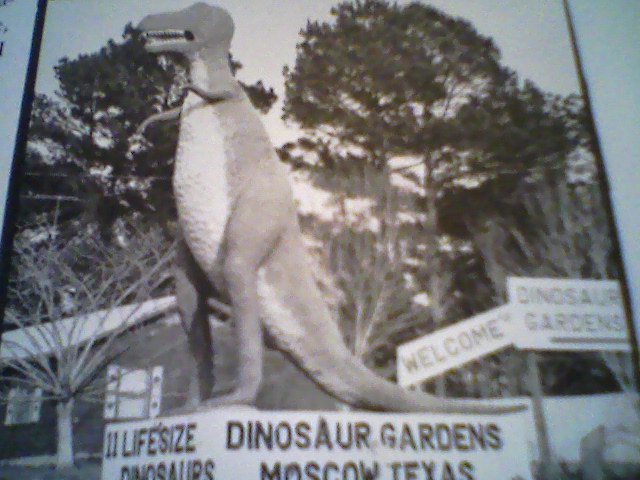 All told, Donald Bean’s roadside attraction consists of exactly eleven worn fiberglass dinosaurs laid out along a winding trail cut into the woods behind his home. Bean opened up Dinosaur Gardens in 1981–the culmination of a lifelong fascination with these prehistoric creatures. ‘I always liked dinosaurs. They’re large…they’re big, and they ruled the world for years…Thousands of years…Well, millions of years!’ Donald Bean came up with the idea for the theme park in the late 1950s when he happened upon a similar roadside attraction in Oregon while vacationing with his wife, Yvonne. ‘Soon as I saw that I said, ‘That’s what I want to do!’ So I did it’
It took Bean twenty years of planning and saving before he was finally ready to build his own theme park. ‘My wife wasn’t too for the idea right off the jump go, because we spent our life savings on it.’ The park cost the Beans $100,000 to build, and when Dinosaur Gardens opened it was met with just about the level of enthusiasm one might anticipate for a dinosaur theme park in the heart of Moscow, Texas. The masses did not seem to share Bean’s fervor for creatures prehistoric. There were no lines at the ticket office. It kind of disappointed me,’ Bean says, wiping a spider web from Struthiomimus‘s mouth. ‘I don’t know how many people I thought would come, but I thought there’d be quite a few.'”
Tags: David Isay, Donald Bean, Harvey Wang
–
Spider-Man would appear to be the biggest dingus of the lot.

"Jobs was being Jobs: He was telling the truth, he was simplifying the truth, he was exaggerating the truth, he was leaving part of the truth out." (Image by acaben.)
Tom Junod’s 2008 profile about Steve Jobs in Esquire becomes an even better read now for very unfortunate reasons. (Thanks Longform.) The article’s opening:
“One day, Steve Jobs is going to die.
First, he is mortal. Second, the odds against him are not only actuarial — the inevitable odds we all face — they are clinical. Four years ago, he announced in a memo to his employees that he had undergone surgery, that the surgery was for the removal of a malignant tumor, that the tumor was on his pancreas, and that the surgery was, as he put it, successful. An exceptional man who specializes in exceptionalizing himself — he has been an economic force for thirty years, and it’s still hard to put him in a category, or even to say exactly what he does — he responded to his disease by exceptionalizing it as well. He was at pains to say that the pancreatic cancer he had was not that kind of pancreatic cancer — not the kind that kills you, without much room for exception, in six months or so — but rather ‘a very rare form of pancreatic cancer… which represents about 1 percent of the total cases…each year, and can be cured by surgical removal.’ Even in extremis, Jobs was being Jobs: He was telling the truth, he was simplifying the truth, he was exaggerating the truth, he was leaving part of the truth out. It is true that his cancer, originating not in the ductwork of the pancreas but rather in the islets of Langerhans, is slow growing and, in the words of one expert, can be addressed ‘with curative intent’; it is also true that even after surgery, the average patient lives about five years.”
Tags: Steve Jobs, Tom Junod

Milch cow.
Info taken from the 1890 Brooklyn Daily Eagle Almanac.
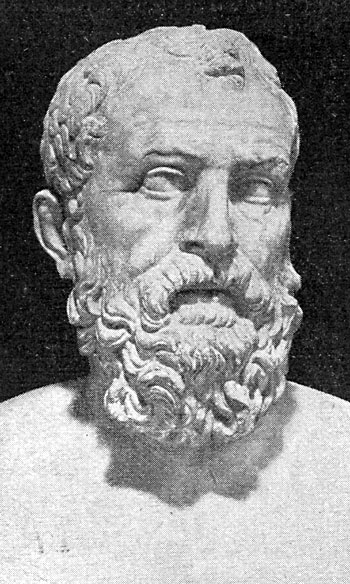
"From the 600 bc."
this is a egyptian dagger i believed is from the 600 bc dont really i got it from a friend from overseas is very rare
This is sad. Let’s hope he gets some help. (Thanks Reddit.)
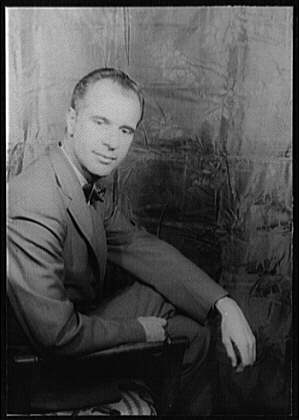
Hersey wrote an aftermath to "Hiroshima" 40 years later, tracing the fates of the six survivors he originally interviewed. (Photo by Carl Van Vechten.)
Truman Capote’s In Cold Blood and John Hersey’s Hiroshima are the two best pieces of long-form American nonfiction I have ever read. I wouldn’t change a word of either one. Hersey’s work, which he wrote for his longtime employer, The New Yorker, was so brilliantly shattering that the entire August 31, 1946 issue was dedicated solely to the article. It became an instant classic and so did the subsequent book version.
Although he was always best know for this piece during his life, Hersey turned out a formidable quantity of other quality fiction and nonfiction. A 1989 Vintage collection, Life Sketches: Incisive and Profoundly Insightful Portraits of Extraordinary Men and Women, 1944-1989, brought together some of Hersey’s finest biographical articles.
The 1945 piece, “The Brilliant Jughead,” tells the story of Private John Daniel Ramey, an illiterate U.S. soldier who was sent to a special training unit in Pennsylvania that conducted a highly successful three-month basic literacy course. This unit, and others like it, taught more than a quarter million illiterate servicemen–who were labeled with the pejorative “jughead” by some fellow soldiers–to read and write during WWII. An excerpt:
“Private Ramey, who was assigned to the Pennsylvania school toward the end of March, 1945, could hardly be called a typical jughead. There is, in fact, no typical illiterate, any more than there is a typical college graduate. Ramey is above whatever average there is. He finished the course, which usually takes twelve weeks, in ten. By jughead standards, Ramey is brilliant. He says that he was often embarrassed, when he was a civilian, by not being able to read and write, but the surprising thing about his life before the war is how much he, an illiterate, was able to do for himself: at one time he owned a house, ran a small coal mine employing twenty-eight men, and had two automobiles, the better of which was a Mercury with, as he says, ‘one of them cloth tops on it,’ bought brand-new. The fact that he is above average makes him especially grateful for the opportunities, the amazements, opened up for him by being educated, for the first time in his life, to the written word.”
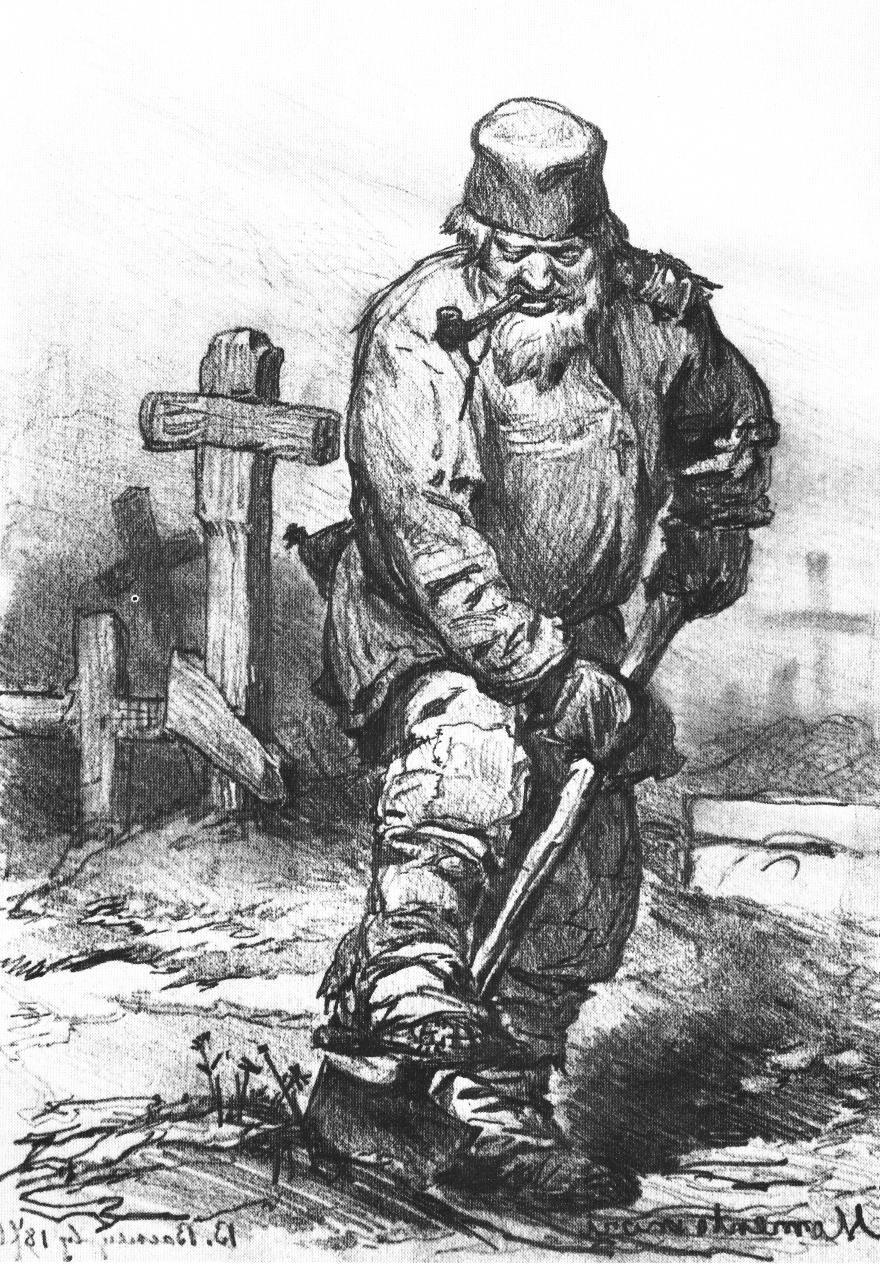
"A gravedigger was arrested...on the charge of stealing potatoes out of the lot." (Image by Viktor Vasnetsov.)
Gravediggers stealing potatoes is a problem that still plagues us today, but it was positively rampant in 1900, as is evidenced by this article from the December 29, 1900 issue of the Brooklyn Daily Eagle. An excerpt:
“A week ago John Miskofsky, 27 tears old, of 126 Vienna avenue, a gravedigger, was arrested on the complaint of Theodore Paltz of Hegeman and William avenues, on the charge of stealing potatoes out of the lot. After the first arraignment Miskofsky was paroled, but failed to appear in court on the day set for the examination. Magistrate Worth then instructed Court Officer Albert N. Shuttleworth to arrest him. Yesterday the officer went to Miskofsky’s home and was told by his wife that he was at work in the Evergreen Cemetery. Shuttleworth went, as directed, to the cemetery, and finally located his man at the bottom of a grave that he was digging. He was placed under arrest and was locked up in the Ralph avenue station.
Miskofsky told the officer that he had paid Paltz $1.35 for the potatoes and thought he would not have to return to the court. The officer so explained the case to Magistrate Teale this morning in the Gates avenue court, where the prisoner was again arraigned, but he was held for examination until Wednesday, and went to jail in default of $200 bail.”
Tags: Court Officer Albert N. Shuttleworth, John Miskofsky, Magistrate Teale, Magistrate Worth, Theodore Paltz
Vital experiment conducted by Bioastronautics Research.

Made in the wake of the chaos theory entering into public consciousnes, Errol Morris’ unorthodox 1997 documentary focuses on a quartet of men in disparate professions–a wild-animal trainer, a topiary gardener, a mole-rat specialist and a roboticist–trying in their own way to do what the chaos theorists were also attempting to accomplish–find the underlying sense of unity in ostensible disorder.
Gardener George Mendonςa uses his hedge clippers to transform bushes into leafy elephants, giraffes and bears. These painstaking creations take years to grow and can be undone by one severe rainstorm or snowfall. “You’re fighting the elements,” he says, “trying to get them to do what you want them to do. It’s a constant battle.” Also battling is zoologist Raymond A. Mendez, who puzzles over how to create a secure captivity for African mole-rats, whose teeth can chew through concrete. MIT robot scientist Rodney Brooks has to somehow make machines obey his wishes, realizing that every success he enjoys may be helping silicon-based life eventually supplant carbon-based humans.
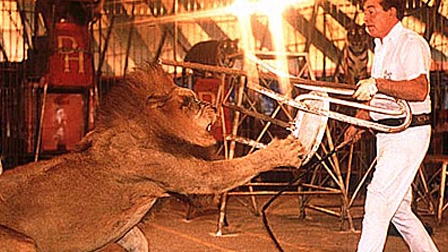 While these three men eagerly face their challenges and are largely willing to embrace the future, lion trainer Dave Hoover isn’t quite so cheerful about the the old guard being lost in the shuffle of new ideas: The chaos he faces isn’t only that unpredictable, maned creature in the cage with him, but also a more sophisticated world that isn’t quite so awed by a traveling circus. He pines for his mentor, Clyde Beatty, the legendary animal trainer, and the simpler days when the big top was greeted with a sense of wonder because people weren’t as connected to information and one another. Hoover knows that the accepted order has been undone, disproved and abandoned, to never return. New order, if it exists, must be discovered, and it may never be as grand.•
Tags: Dave Hoover, Errol Morris, George Mendonςa, Raymond A Mendez, Rodney Brooks

Kim Jong-il lives in an insane, delusional bubble.
Mentally ill despot Kim Jong-il has pretty much ruined North Korea and its people with totalitarianism, human-rights violations and asinine economic policies. But he figures one good way to raise capital is to hold an international golf tournament. It would probably be wise for players to remain on the course at all times. A report from an Australian news service:
“The proposed tournament will be held in April at a golf course west of the capital Pyongyang, where the dictator Kim Jong-il supposedly sank 11 holes-in-one during a single round.
The cash-strapped communist state is inviting foreign amateur players to take part, charging them $1,000 for the five-day tour.
The golf course has not seen a round played since South Korea suspended cross-border tours nearly two years ago, after a North Korean soldier shot dead a Seoul housewife who had strayed into a restricted zone.”
Tags: Kim Jong-il

