
"I find some of my new works disturbing, just as I find nature as a whole disturbing."

Not even Henri-Georges Clouzot’s The Mystery of Picasso, a great 1956 close-up of the Cubist at work, can touch Thomas Riedelsheimer’s Rivers and Tides for revealing the artistic process. Spectacularly photographed, the film shows British sculptor Andy Goldsworthy twisting and bending elements of nature into stunning site-specific creations that are so singular that it would appear no one else on the planet would have thought of them if Goldsworthy hadn’t urged them into existence.

Goldsworthy uses the earth as a medium, working with twigs, icicles, stones, moss and flowers to create gorgeous sculptures, most of which are swept away by wind or water soon after he photographs them. The film follows him as he decamps from his Scottish home to work on a commission in Nova Scotia. Soft-spoken and extremely self-aware, Goldsworthy eagerly battles the elements–trying to find harmony with them, not conquer them–which can be a challenging task. He repeatedly attempts to build a cairn on the beach as the tide approaches, but his frustration mounts as the structure collapses four times. But Goldsworthy ultimately grows philosophical about his lack of success on this particular day, understanding that the threat of failure nourishes his art. “Total control can be the death of work,” he asserts.

On some level, Goldsworthy realizes that total control–of nature or himself–in an impossibility. He acknowledges going through withdrawal symptoms if his bare hands aren’t consistently molding the earth. He seems puzzled, almost spooked by his obsessive need to fathom the environment’s possibilities and mysteries, understanding that nature itself may be more knowable than human nature.

Recent Film Posts:

Tags: ,

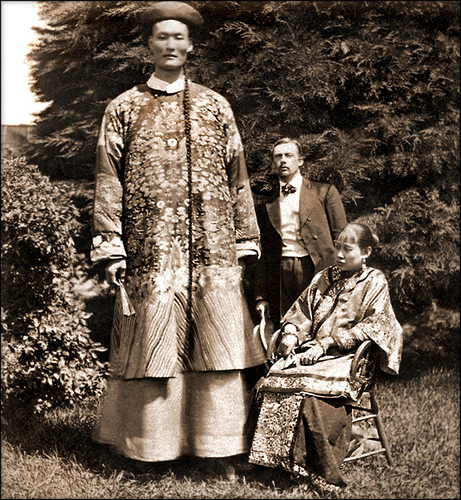
Chang, the Chinese Giant.

P.T. Barnum founded the first New York dime museum in 1841, but in the years after the Civil War they really proliferated throughout the city. Despite the word “museum,” there was no fine art on display in these exhibition halls–just sideshow and freak acts. The following are actual dime museum attractions that were advertised during the 1880s in the Brooklyn Daily Eagle.

••••••••••

  • Barney Baldwin, the Living Man with the Broken Neck
  • The Iowa Giantess (weighs 450 pounds with a luxuriant beard)
  • Professor Smith and His Wonderful Goat
  • Mr. Gus Alward and His Talking Hand
  • Chang, the Chinese Giant
  • Tisha Booty, the Human Pin Cushion
  • Venus, Empress of the Aerial Wire
  • The Wild Australian Boy
  • Mr. Edwards, the Wonderful Change Artist
  • Mlle. Elward and Her Wonderful Mind Reading
  • The Champion Lady Pedestrian of the World
  • Millie Christine, Two-Headed Nightingale
  • Reily, Prince of Jugglers
  • Whiston, the Humorist
  • The Albino Lady
  • Walter Stuart, a Man with Head and Body
  • Baron Littlefinger
  • Man Fish
  • Vanolar the Great
  • The Leopard Boy
  • The Animated Skeleton
  • The Wonderful Turk
  • Guiteau, the Assassin
  • Rhoda, the Herodian Mystery


Tags: , , , , , , , , , , , , , , , , , , , , , , ,

Numbers and those who crunch them are all the rage in sports today, but as this 1959 video of the Case Institute of Technology basketball team shows, it’s nothing new. The assistant coach was an undergraduate computer wizard named Don Knuth who fed data into an IBM 650 to help improve his school’s chances. Knuth went on to become a legend in the field of computing and is currently Professor Emeritus at Stanford University. An excerpt from an interview at computer history.org in which Knuth recalls the first time he saw a computer:

“Later on in my freshman year there arrived a machine that, at first,  I could see only through the glass window. They called it a computer. I think it was actually called the IBM 650 ‘Univac.’ That was a funny name, because Univac was a competing brand. One night a guy showed me how it worked, and gave me a chance to look at the manual. It was love at first sight. I could sit all night with that machine and play with it.”

Tags:

"Lol, awkward!" (Image by Xnatedawgx.)

Selling my urine

Lol, awkward! Truth be told I know some of you need clean urine samples. 23 year old female here, never done drugs ever and don’t drink/smoke. If you need some urine let me know with the price your willing to pay for it. Hit me up.

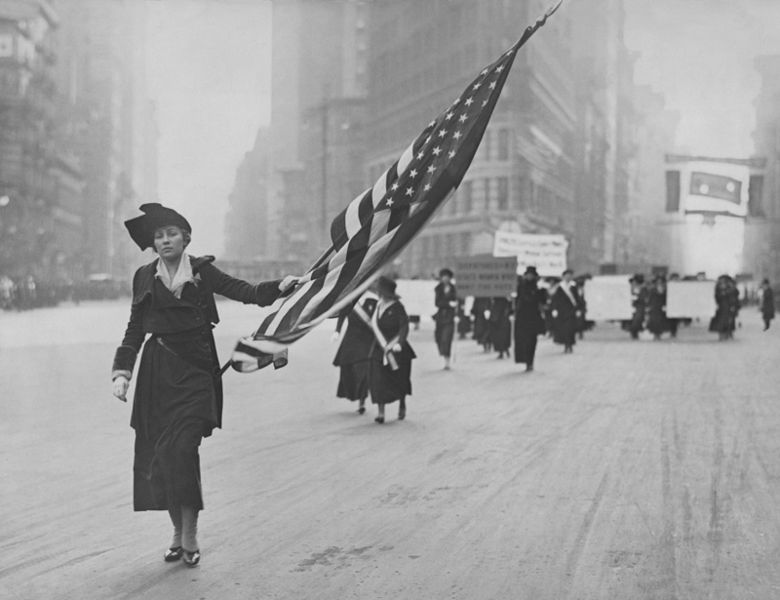
Neysa McMein displays her patriotic side in New York City in 1917.

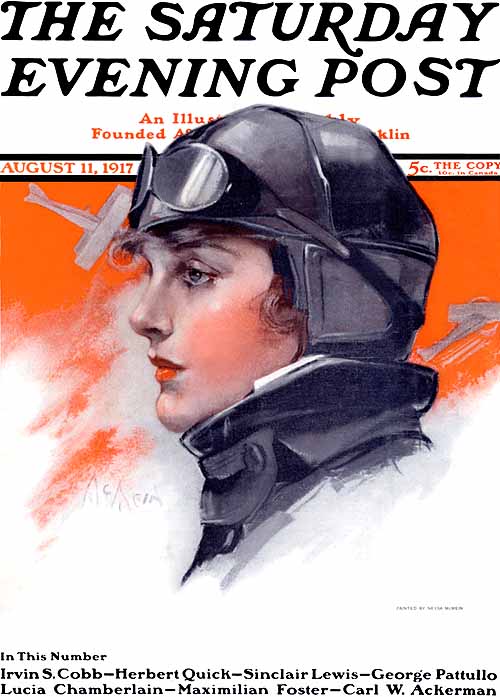
This classic photograph shows commercial artist and portraitist Neysa McMein serving as a flag bearer during a 1917 New York City parade. The image originally appeared in the New York Times, but the photographer is unknown. McMein moved to New York from Illinois and became a wildly successful commercial artist who created covers for the Saturday Evening Post and numerous women’s publications of the day. She was also a steadfast member of the Algonquin Round Table and a feminist and early joiner of the Lucy Stone League, which believed women should keep their names after marriage. An excerpt about her from the Harpo Marx book, Harpo Speaks!:

“The biggest love affair in New York City was between me–along with two dozen other guys–and Neysa McMein. Like me, Neysa was an unliterary, semi-literate gate-crasher at the Algonquin. But unlike me, she was beautiful and bursting with talk and talent. A lot of us agreed she was the sexiest gal in town. Everybody agreed she was the best portrait and cover artist of the times.

Her studio was our third most favorite hangout, after the Algonquin and Woollcott‘s apartment. We had some wonderful parties at Neysa’s place, and I was always the last to leave.”

One of McMein's covers, a 1917 "Post" that also featured an article by Sinclair Lewis.

Tags: , ,

1970s tabletop Sony Trinitron TV. (Image by Daniel Christensen.)

Jeff Yang of the San Francisco Gate has written an article about how Steve Jobs Apple ethos was formed in large part because of his almost fetishistic devotion to former Sony CEO Masaru Ibuka. Ibuka didn’t worry about losing market share in the short run–he wanted, like Jobs subsequently would, to create transformative products and win the future. An excerpt:

“‘Ibuka was really the heart and soul of the company,’ says [Alan] Deutschman, who wrote about Sony’s elder statesman in his most recent book, Walk the Walk. ‘He was the one responsible for Sony’s sense of purpose. This was a company that was launched in a Tokyo that had been leveled by firebombing in World War II, that had experienced the kind of destruction associated with Hiroshima and Nagasaki, and whose residents were facing homelessness, hunger and desperation. And yet Ibuka laid out a mission statement for Sony that was aimed at changing the world.’

That statement was simple and to the point: ‘Sony will be the company that is most known for transforming the global image of Japanese goods as being of poor quality.’ It defined Sony by what it would not do — make bad products — making it something of an omission statement, if you will.

Masaru Ibuka: "We will only do breakthrough technology."

By way of example, Deutschman tells the story of how Sony entered the color TV marketplace, noting that in the Sixties, when color TV was going from 3% to 25% of the market, Sony was one of the few electronics companies that didn’t sell a color model. ‘People were telling Ibuka, ‘You have to come in to this market, everyone will take your market share,’ says Deutschman. ‘And Ibuka refused, saying, ‘No, we will only do great products. We will only do high quality goods. We will only do breakthrough technology.”

As a result, the company found itself in a precarious financial situation, losing out to its primary rivals — until it came upon the aperture-grille technology that Sony unveiled in 1966 as the core of the Trinitron TV. A full 25% brighter than its rivals, Trinitron became the best-selling color TV for the next quarter century.

‘At the time, Sony was committed to not releasing a crappy product just because the market was there; they waited until they had a truly revolutionary innovation, combined it with great design and then profited from it for long, long time,’ says Deutschman. ‘For decades, Sony was a perfect place for engineers to fully use their creativity, because it was focused on bringing real meaning and benefit to society by making great products.'”

Tags: , , ,

A really well-made film that was apparently originally shown in movie theaters.

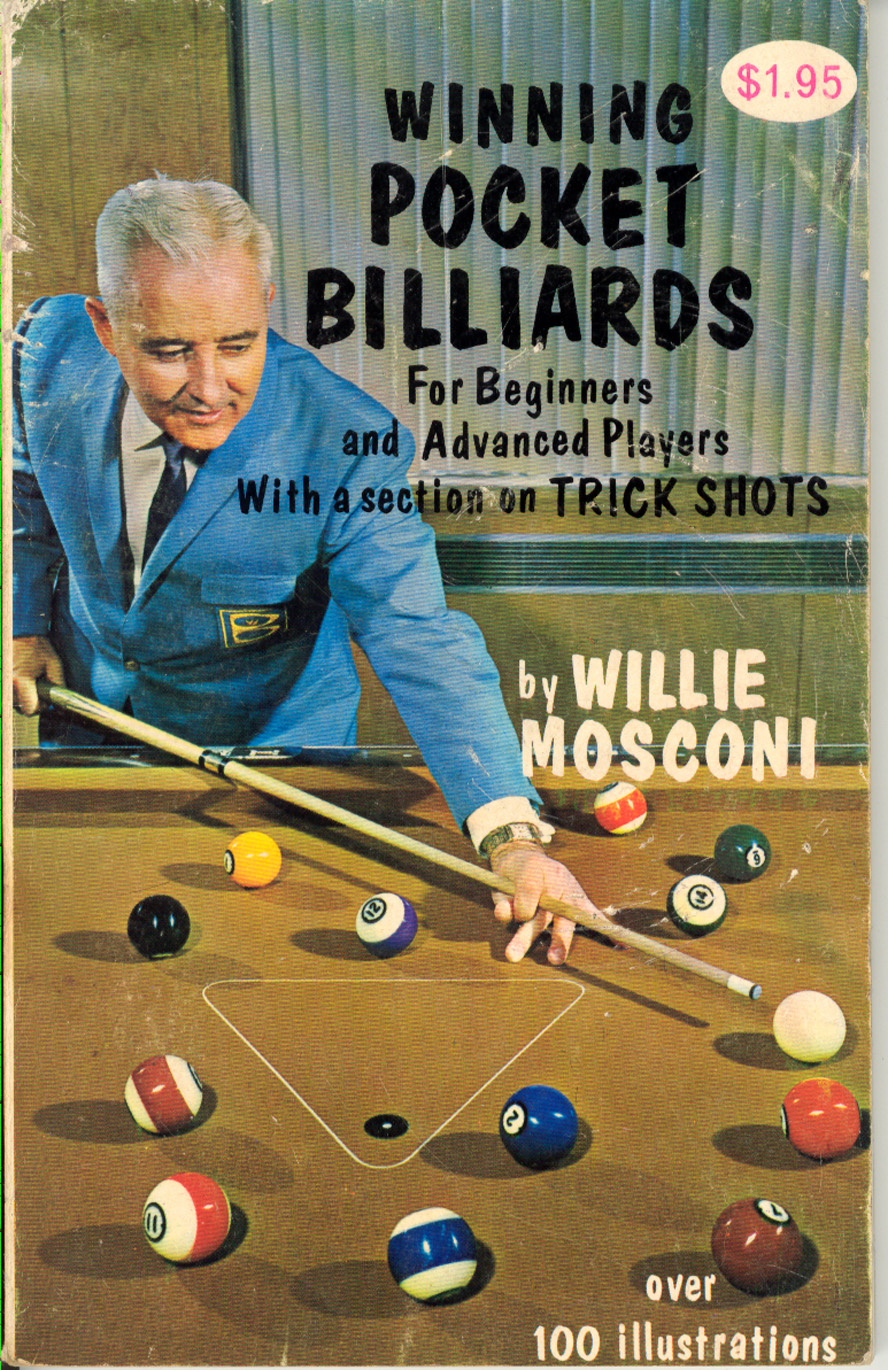
Before pro sports was a multi-billion-dollar business and athletes needed to be gigantic and juiced, a pool cue and incredible hand-eye coordination was sufficient to make someone a national star, even if they possessed a paunch and appeared unable to outrun a cigarette machine. Such was the case of Willie Mosconi, a working-class Philadelphia boy who displayed prodigious facility for the game from a tender age. Considered dapper by the modest standards of the pool hall, Mosconi was, along with fellow billiards wizard Minnesota Fats, one of the most famous “athletes” in America during the ’60s and ’70s.

Winning Pocket Billiards is a handsomely covered 1965 instructional book by Mosconi. There are a generous number of photos that show how to make the trick shots that Mosconi had mastered (as if) and a foreword that explains how he came to be so great at the game even though his father, who owned a pool hall, initially dreamed his son would become a great vaudeville performer. An excerpt:

“At the age of seven, Willie was launched on a round of exhibitions leading to a widely advertised match with another billiard prodigy, ten-year-old Ruth McGinnis. He won easily with a high run of 40. With the praise of an amazed audience still ringing in his ears, Willie ‘retired.’

As he tells it now, ‘I was disenchanted and confused. Earlier my dad had tried to prevent me from learning the game, and then he pushed me into it too fast.’

At the age of seventeen, the illness of both parents necessitated his leaving high school before graduation. In the Depression year of 1929, Willie became an upholsterer’s apprentice, starting at $8 a week and dexterously progressing to a piecework job for $40 per week before he was fired. He and his boss exchanged punches in disagreement over Willie’s request for a day off to watch the Athletics start winning the World Series.

Jobless and broke, Willie mustered courage, and revived a neglected touch at pool to enter and win a local tournament with a $75 first prize. He went on to finish third in the city championship that year. That might be the year that Willie cast the pattern of his life.”

___________________________

Mosconi showing off on I’ve Got a Secret, 1962:

Tags: ,

It’s that thing that’s about to devastate your medium, Bryant.

Tags: ,

"An hour after his demise the body was placed in an ice coffin."

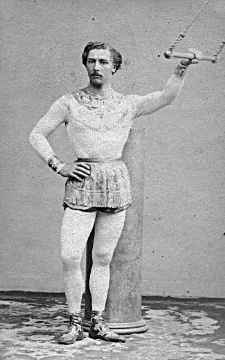
Along with his brothers Louis and Willie, acrobat Rudolph Mette was part of a high-flying nineteenth-century circus act, but he was brought low by drink and found dead in a Brooklyn stable one summer evening in 1887. The July 3 Brooklyn Daily Eagle provided a brief postmortem of the trapeze man. An excerpt:

“Rudolph Mette, aged 41, one of the celebrated Mette Brothers, acrobats, was found dead at 11:30 o’clock last evening in the hay loft of Henry Hamilton’s stable, on Bedford avenue and North Fifth street.

It was rumored that he had died from alcoholism, but Mr. Hamilton says that the cause of his death was congestive chills.

An hour after his demise the body was placed in an ice coffin and Coroner Lindsay was notified. Mette has a sister residing on Graham avenue and another living in New York. Should either of them refuse to bury him Mr. Hamilton will defray the funeral expenses.

The Mette brothers were among the most noted acrobats of this century, having been connected with Barnum’s, Forepaugh’s and other circuses. The deceased was the owner of a trick pony at one time, for which, it is said, Barnum offered him $7,000.”

Tags: , , , , , ,

"Bob." (Image by Timothy Sanford.)

Taxidermy old bull/cow skull with horns – $125 (Brooklyn)

I’m selling Bob, my giant bull skull. He’s about 32″ wide (horn tip to horn tip) by 18″ long. He has teeth! Quite easy to pick up and carry on the subway. Some staring to be expected.


A few search-engine keyphrases bringing traffic to Afflictor this week:

Afflictor: Astounding simians since 2009. (Image by T. W. Wood.)

Judging by this commercial for the erstwhile Indiana-based national restaurant chain, Burger Chef, patrons were allowed to sit on the roof and ride horses around the parking lot. There’s not a Burger Chef anywhere in the country anymore, but at its apex, only McDonald’s had more fast-food locations in America. Founded (almost incidentally) by Frank P. Thomas in 1957 in Indianapolis, the chain of hundreds of outlets was sold to General Foods in 1968. That company subsequently sold the restaurants to Hardee’s in the 1980s, which discontinued the brand. An excerpt about Burger Chef from the Encyclopedia of Indianapolis:

“In 1957 Frank P. Thomas opened a pilot restaurant at Little America Amusement Center to promote and sell the automated hamburger grill he had invented. Failing to sell the grill but successfully marketing his 15-cent hamburgers, Thomas instead opened the first Burger Chef.”

Tags:

Orson Welles’ 1974 cine-essay about the art of the hoax is sensational in both senses of the word, zestfully beginning as an examination of one fraud and stumbling ass-backwards into an even bigger scam. As if the engaging, globe-trotting Hungarian art forger Elmyr de Hory wasn’t a fascinating-enough figure for this uncommon documentary, his biographer, Clifford Irving, who was interviewed extensively by Welles for the film, proved to be a better one.

Failed fiction writer Irving seemed to hit his stride in 1969 when he published Fake!, a true-crime account about de Hory, a perpetually struggling artist who decided to exploit his incredible facility for mimicking the painting styles of masters. He’d whip up a Matisse or Picasso and feign being a former Hungarian aristocrat who was selling family treasures because he was cash poor. Plenty of art dealers knew it was a ruse, but since de Hory’s work was so convincing, they tacitly went along with the con to get rich. De Hory’s forgeries purportedly hang in museums all over the world, and his remarkable tale made the book a best-seller and gave Welles his initial subject.

But then a better subject emerged.

While the film was being made, Irving’s own more spectacular fraud began to be exposed. His new book, an “authorized” biography about reclusive tycoon Howard Hughes, whom he had never met or spoken to, was proven to be a phony. The fallout gave Welles an even richer palette to work with, and his story gleefully bounces from faker to faker, examining how they did what they did and how they came undone. The resulting work is a playful, freewheeling meditation, a Godardian Welles film, that examines a pair of hoaxers from every angle with eagerness and a respect that’s far more than grudging.

The third hoaxer in the film is, of course, Welles himself, a self-professed “charlatan,” whose 1938 War of the Worlds radio broadcast about Martians invading Earth caused widespread panic in a country that was still very naive about media manipulation. Welles admired scammers because he knew that legitimate artists con their audiences into believing an illusion and that hoaxers are just their purer brethren and their creations valuable. As de Hory says of his uncanny canvases, “If you hang them in a museum long enough, they become real.”

____________________________________

Welles made a nine-minute trailer that used material not in the final film. Click on the “Watch on YouTube” link to view the short.

Tags: , , ,

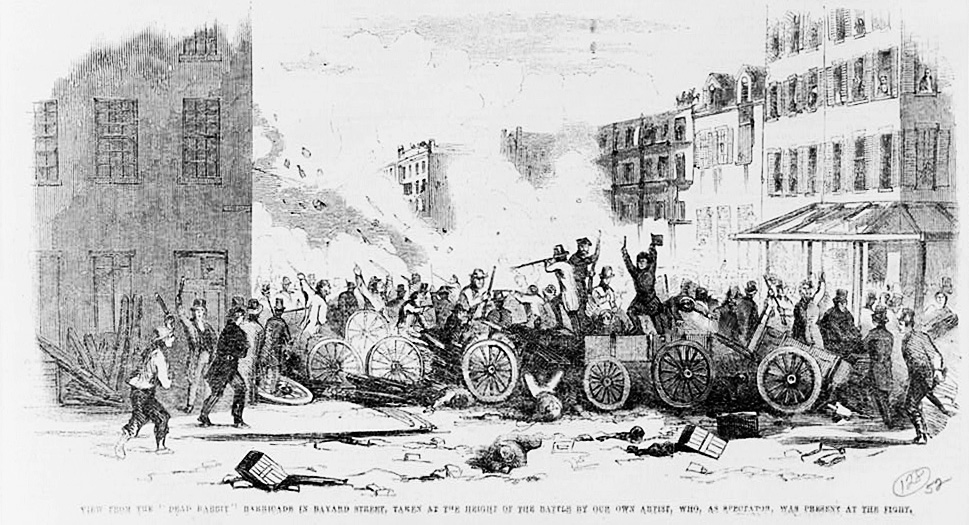
An 1857 illustration of the the Dead Rabbits battling the Bowery Boys.

In the raucous and often lawless Lower New York City of the nineteenth century, many a vicious gang was berthed in illicit groggeries stashed in the back rooms of corner groceries. But there wasn’t always honor among thieves and sometimes gangs splintered. In his great book, Low Life, Luc Sante relays how such a fragmenting led to the formation and naming of the Dead Rabbits. An excerpt:

“The Roach Guards, named after Ted Roach, the liquor dealer who backed them, suffered a factional dispute some time in the 1830s. During the argument a member of one feuding sector evidently threw a rabbit carcass into the assemblage of the other. These recognized a potent symbol when they saw one and hoisted the corpse as their banner. Henceforth they called themselves the Dead Rabbits, an epithet whose pungency was not diminished by the fact that in flash lingo ‘dead’ was an intensifier meaning ‘best’ and a ‘rabbit’ was a tough guy. Further distancing themselves from their former parent body, the Dead Rabbits sewed red stripes down the outer seams of their pants; the Roach Guards continued to sport blue ones.”

More Afflictor Luc Sante posts:

Tags: ,


Long Form
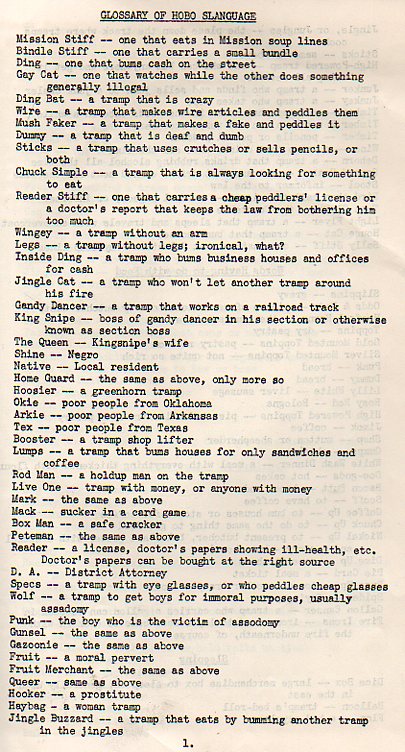
pointed me to a great post on Ptak Science about the history of hobo language and lexicons. It includes the above “Glossary of Slanguage,” taken from an anonymous 1946 pamphlet called “Hobo Exposed, or How to be a Hobo.”

More Afflictor hobo-related posts:

Wired has a story by Spencer Ackerman about plants being engineered by biologist June Medford to detect explosives. Expect them to be in pots in our airports very soon. An excerpt:

“Picture this at an airport, perhaps in as soon as four years: A terrorist rolls through the sliding doors of a terminal with a bomb packed into his luggage (or his underwear). All of a sudden, the leafy, verdant gardenscape ringing the gates goes white as a sheet. That’s the proteins inside the plants telling authorities that they’ve picked up the chemical trace of the guy’s arsenal.

It only took a small engineering nudge to deputize a plant’s natural, evolutionary self-defense mechanisms for threat detection. ‘Plants can’t run and hide,’ says June Medford, the biologist who’s spent the last seven years figuring out how to deputize plants for counterterrorism. ‘If a bug comes by, it has to respond to it. And it already has the infrastructure to respond.’”

Tags: ,

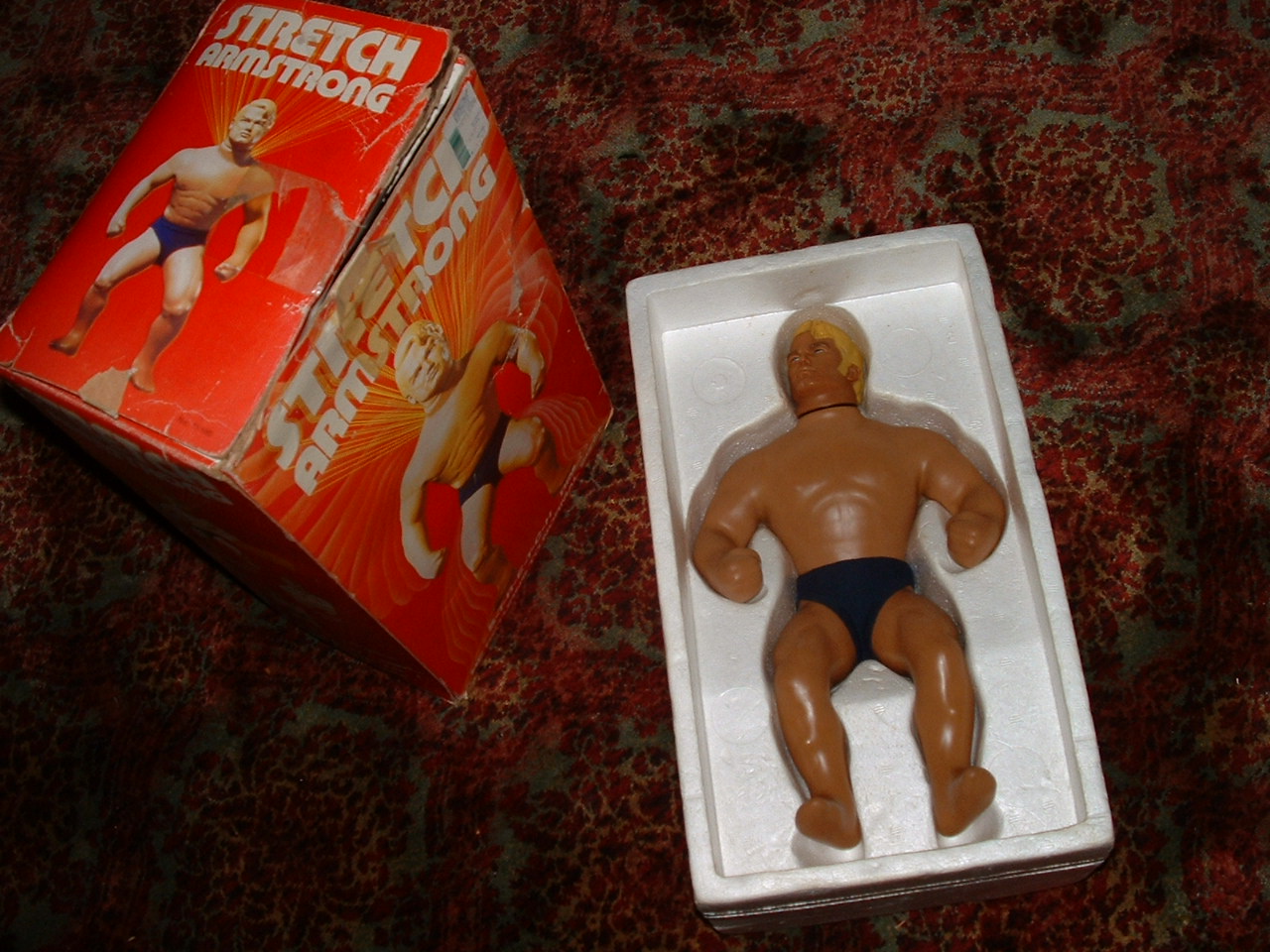
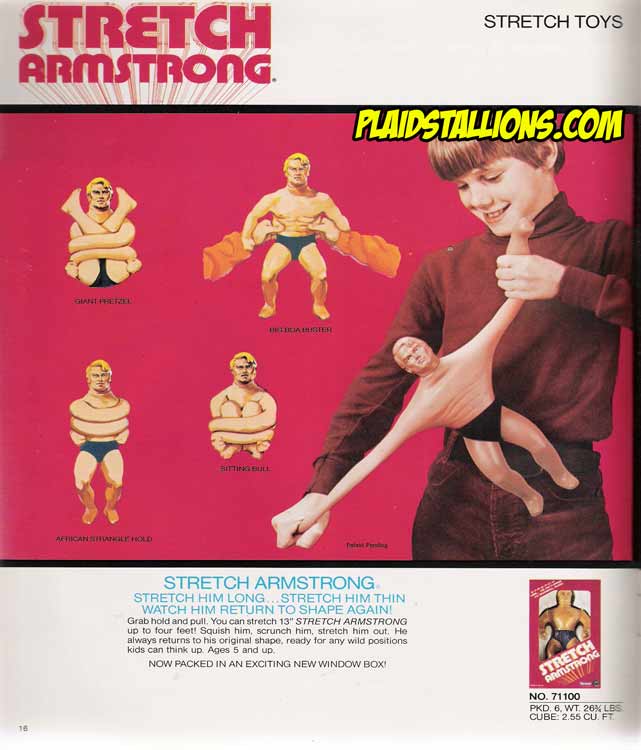
"The toy has to be a human shaped Stretch Armstrong though, with the corn syrup inside." (Image by Alex Beattie.)

In Need of Stretch Armstrong – $20 (new york city area)

I am in this band called Sediment Club that is making a music video. we have been looking on ebay for a reasonably priced stretch armstrong toy for this one scene, but we’ve been having a hard time. If you have one of these toys that still stretches, and would be willing to work something out, please email us. we don’t need any collector items or rare toys, it can be beat up and scoffed or used or whatever, as long as it can still stretch. we only need it for one short scene, so if you’d even want to rent it out to us for the day, that would be fine, too. we wouldn’t need it after the scene anyway. we aren’t on a huge budget, but we can pay you $20 if you want to sell and $15 if you want to rent the toy out. if anything it would be helping artists make weird art. we’ll give you a copy of the video when it’s done.

the toy has to be a human shaped stretch armstrong though, with the corn syrup inside.


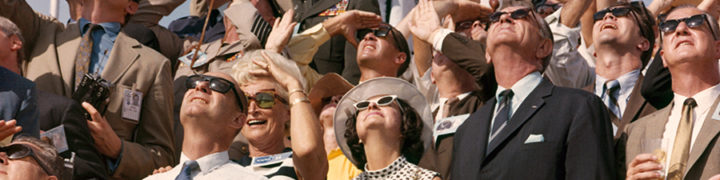
Before the Super Bowl was sold as a global event, it was a national one. At Super Bowl III in the Orange Bowl, a trio of Apollo 8 astronauts led the crowd–which included Joe and Ted Kennedy, Bob Hope and Spiro Agnew– in pledging allegiance to the U.S. flag. The Florida A&M University marching band provided the halftime entertainment.

Tags: , , ,

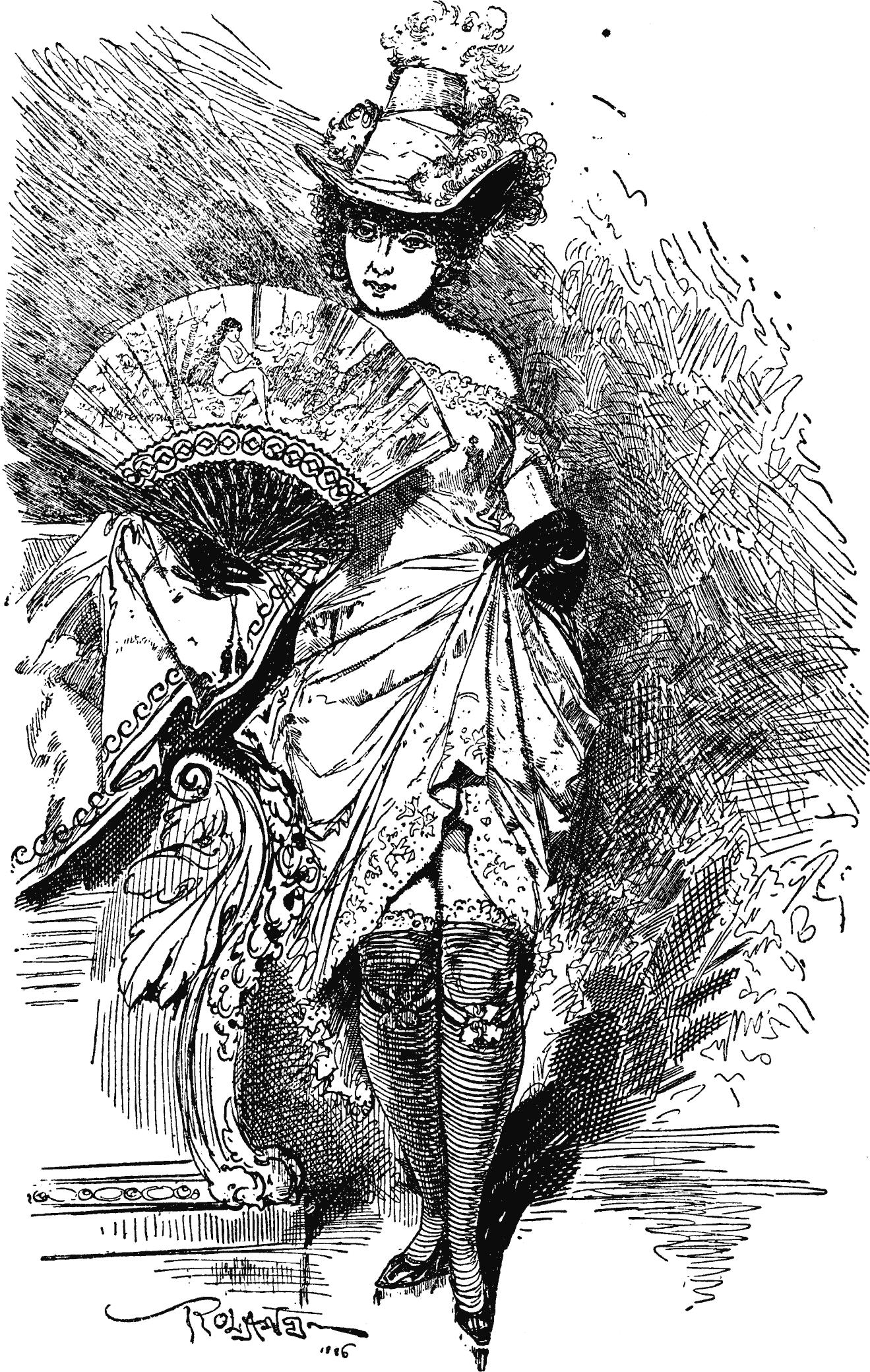
"They receive visitors of the other sex, and ply their vocation on the streets for a livelihood."

Alison Leigh Cowan of the City Room at the New York Times has an interesting piece about an 1870 guidebook, The Gentleman’s Companion, which was a directory of brothels and streetwalkers in Manhattan. The Times got to briefly handle a crumbling copy that is kept under lock and key at the New-York Historical Society, but there’s a digital version for everyone to read. A few excerpts from the publication follow. (I’ve left the writing as it was, though some of it is patchy.)

••••••••••

In passing up Broadway, any evening, between the hours of 7 and 11 o’clock, one is surprised to see so many well-dressed and comely females whose ages range from fifteen to twenty-five years, unattended by companions of the opposite sex.

These young ladies are Nymphes de Pave or as they familiarly termed ‘Cruisers’ have furnished rooms in which they receive visitors of the other sex, and ply their vocation on the streets for a livelihood.

As a general fact, these girls are smart. good-looking, well-educated and are neat and prepossessing in appearance. This is especially the case with those who are called ‘Badgers,’ but more widely known as panel thieves. These plunderers have had full swing, of late, and have robbed many an unsuspecting stranger of his all. The sooner justice puts an end to their swindling career, the better it will be for public and for the girls themselves.”

••••••••••

"It is a third class house where may be found the lowest class of courtezans."

The house No. 58 West Houston street, is kept by Mrs. Mayer who furnishes the best accommodations for ladies and gentlemen. This house is kept in a very quiet and orderly manner. The next house, No. 55, is kept by Miss Ada Blaghfield, the dashing brunette, who has eight boarders, both blondes and brunettes. These are a pretty lot of girls, of pleasing and engaging manners. It is regarded as a first class house, very quiet and orderly and is visited by some of the first citizens.

••••••••••

The establishment at No. 111 Spring street is a house of assignation kept by Hattie Taylor. It is a third class house where may be found the lowest class of courtezans. It is patronized by roughs and rowdies, and gentlemen who turn their shirts wrong side out when the other side is dirty.

Tags: , , ,

IBM celebrates its century mark with a 30-minute film called “They Were There,” which was directed by Errol Morris and scored by Philip Glass. I interviewed Morris once, and I was depressed when he told me how much trouble he has raising money for his amazing documentaries. That’s probably true of every non-fiction filmmaker who isn’t Michael Moore. Well, at least there are coporate gigs to pay the bills.

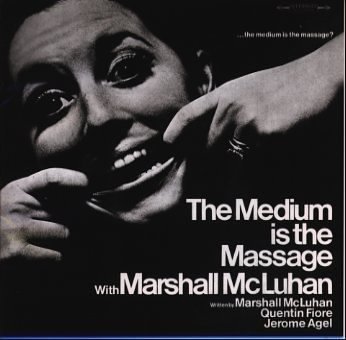
Boing Boing pointed me to a remarkable site called “Marshall McLuhan Speaks: Centennial 2011,” which celebrates what would have been the media philosopher’s 100th birthday. It contains clips of McLuhan opining about things he saw on the horizon that others didn’t. It’s amazing to think how celebrated and discredited McLuhan was in such short order during the ’60s and ’70s, but I think his ideas are mostly a good legacy. A transcript of McLuhan’s words from 1966, describing what sounds very much like the Internet:

“Instead of going out and buying a packaged book of which there have been 5,000 copies printed, you will go to the telephone, describe your interests, your needs, your problems, and they at once xerox, with the help of computers from the libraries of the world, all the latest material just for you personally, not as something to be put out on a bookshelf. They send you the package as a direct personal service. This is where we’re heading under electronic information conditions.”

More Afflictor posts about Marshall McLuhan:

Tags:

"The searcher after health and beauty must blow as large a bubble as she can while seated."

Society has come up with many ways to drive women crazy, but few of them involve blowing soap bubbles. One such instance is described in this groundbreaking health reporting in the September 27, 1902 issue of the Brooklyn Daily Eagle. An excerpt:

“The latest suggestion for acquiring health and beauty is to practice bubble blowing with a clay pipe. It is claimed that if a woman will adhere to the practice for a reasonable length of time she will find her cheeks have become plump and the contour of her neck decidedly improved. Blowing bubbles is a similar operation to the deep breathing exercises now so highly recommended, and the searcher after health and beauty must blow as large a bubble as she can while seated, blowing slowly and gradually, for fear of bursting the bubble. After a few minutes the exercise is repeated standing.

Then she lies flat on her back on the floor with chin as high as possible and blows as long as she can, the first bubble slowly and then as rapidly as possible.”

"No poop."


WANTED – USED DIAPERS! (carroll gardens)

We are a green building company seeking baby diapers. Urine is ok. No poop.

We use them as a base in our green roofs.

The diapers hold huge amounts of water and the urine is good fertilizer.

Turn the world green! Keep those diapers out of the landfill and help make green roofs!

« Older entries § Newer entries »