
This is how I caught the F this morning.

Alan Taylor, the amazing photo editor who ran the Boston Globe‘s Big Picture, has moved on to the Atlantic to create a new photo blog called “In Focus.” Unsurprisingly, the new site is already outstanding. Current photo series provide stunning images of the Egyptian revolution, America’s extreme winter weather and Afghanistan. These are topics being covered in a million places, but Taylor manages to bring a different perspective to the ubiquitous.
Tags: Alan Taylor
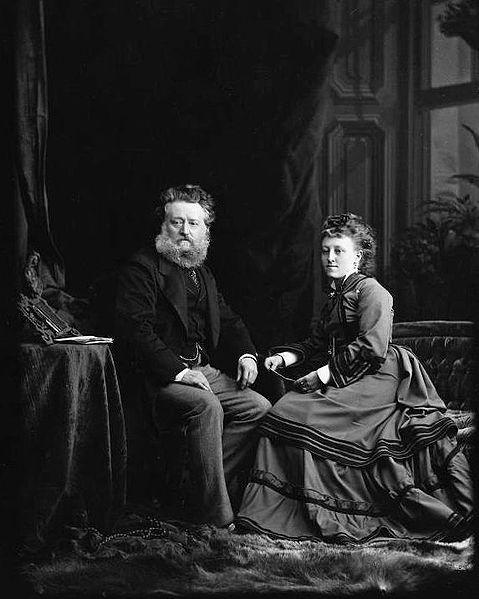
"Mr. Smith is in comfortable circumstances. He is about 35 years old. His wife is a fine looking woman, a few years her husband's junior, and was quite a favorite with other occupants of the flat house."
Mrs. Sarah V. Smith apparently had had enough. In 1891, she up and left her merchant husband and took just about everything with her. Mr. Smith was not amused. The Brooklyn Daily Eagle reported on the sorry domestic situation in its May 3, 1891 issue. An excerpt:
“Mrs. Sarah V. Smith, wife of Isaac N. Smith, a Duane street, New York, wholesale dealer of twine and wrapping paper, mysteriously disappeared from her home in the Kensington apartment house, at the corner of Throop avenue and Quincy street, on Thursday. Where she has gone or why she went away nobody on the premises seems to know. Mr. Smith, who did not know of the wife’s disappearance until several hours after she had vacated her apartments, is evidently as much in the dark regarding her motive in leaving as everybody else. The deserted husband unceremoniously left the premises on Friday morning–the day following his wife’s going away–and has not returned since.

"Isaac N. Smith, a Duane street, New York, wholesale dealer of twine and wrapping paper." (Image by Daniel Schwen.)
The Smith family had occupied the East flat on the second floor of the Kensington building for almost a year. Mr. Smith is in comfortable circumstances. He is about 35 years old. His wife is a fine looking woman, a few years her husband’s junior, and was quite a favorite with other occupants of the flat house. The couple have two children, aged 3 and 5 years respectively. On Thursday evening, according to a statement subsequently made by Mr. Smith, he started for business as usual, bidding his wife an affectionate good bye. At six o’clock that evening he returned home and was astounded to find upon entering his apartment the bulk of furniture and household belongings missing and nothing discernible of his wife and children. The carpets in every room of the house had been taken up and with the other fixings removed. About the only articles left were a framed picture of Mrs. Smith and a large Saratoga trunk containing Mr. Smith’s clothing. The mystified husband made anxious inquiries throughout the building relative to his wife’s disappearance, but obtained but little satisfaction.
The following advertisement, which has a direct bearing on the mystery, appeared in last night’s Eagle: ‘SMITH–TO WHOM IT MAY CONCERN: My wife SARAH V. SMITH, has left my bed and board without my consent and wishes, and I hereby forbid any person or persons from trusting her on my account. ISAAC N. SMITH.'”
The great Les Blank directed this short doc about a Los Angeles “Love-In” on Easter Sunday in 1967. Longhairs + Hell’s Angels. (Thanks Documentarian.)
Tags: Les Blank

RoboCop: statuesque. (Image by MGM.)
Detroit may be down in the dumps, but the fine citizens aren’t letting Mayor Dave Bing‘s refusal to allocate funds for a RoboCop statue keep them from their dreams. They’ve begun a Kickstarter campaign to raise the necessary cash. (Thanks MLive and Reddit.) An excerpt:
“None of us have ever made a giant solid metal permanent sculpture before. It turns out to be a pretty expensive process (who would have thought?), but not too much for the world to fund. After talking to numerous sculptors and metal workers, the current game plan is this: We can take a relatively small figure of RoboCop (conceivably even an action figure), have it 3D scanned by lasers (cool!) and scale its form to create a light-weight model of any size we’d like, which can then be used to pour and cast liquid metal.”
Tags: Mayor Dave Bing
From Aaron Saenz on the Singularity Hub: “Robots have barely learned how to walk, but Vstone is already pushing them to run. The Japanese robot research and manufacturing firm has announced it is putting together the world’s first marathon for our mechanical offspring. The Robot Challenge will have bipedal bots racing around a 100m track for 422 laps either remotely controlled or operating completely autonomously by following a painted line.”
Tags: Aaron Saenz

"Good condition." (Image by Maddin.)
Butt plug barter and you have (Bklyn)
1 med butt plug for trade good condition let me know what you have to trade
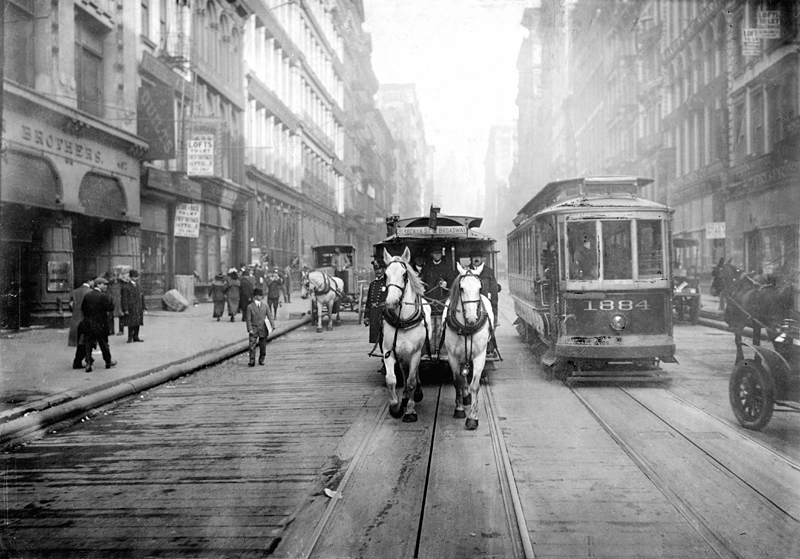
Horse-drawn tram alongside the electric kind in Soho. (Image by the Brown Brothers.)
Taken in 1917, this photo shows the end of the line for horse-drawn trams in New York City, as the changeover to electric cars (the streetcar on the right, for example) was all but complete. The caption contained with this public domain image reads as follows: “Just before the last of these vehicles was banished from the streets of New York City, the photographer snapped one of them as it passed alongside a ‘Modern Electric Car.’ This photo was shot on Broadway just north of the intersection with Broome Street. The car is headed southbound.”
At this point, electric and steam-powered vehicles were still predominant in America, with the gas-guzzler taking a back seat. An excerpt from a post on reliableplant.com about automobiles in the United States in the year this photo was taken:
“It’s hard to believe, but 38 percent of vehicles in the U.S. were electric in that year; 40 percent were steam powered and only 22 percent used gasoline. There was even a fleet of electric taxis in New York City.
But between the limited range of EVs and a lack of infrastructure to support recharging, the market was crying for a new and cheaper source of auto power, and that came in the form of the internal combustion, gasoline-powered engine.”
Don’t ever try a stunt like this while wearing long pants. You’ll pull a groin. (Thanks Crunchy.TV.)
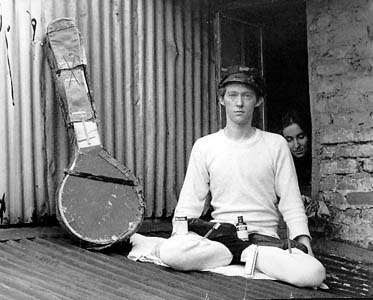
Mel Lyman, jug band player with a Christ complex, died of unknown causes in 1978.
I recently came across “The Lyman Family’s Holy Siege of America,” David Felton’s excellent 1971 exposé of Mel Lyman’s Massachusetts-based commune/cult. An erstwhile jug band musician, Lyman became convinced he was the messiah after dropping acid a few too many times with Timothy Leary’s Boston acolytes. His unbridled egomania would have been scary even if he hadn’t admired Charles Manson so much.
I was only familiar with the cult because as a fan of Michelangelo Antonioni’s flawed but fascinating 1970 drama, Zabriskie Point, I read somewhere that the film’s intense young leads, Daria Halprin and Mark Frechette, were members of the Lyman Family. But they had a lot of company at the commune when it came to intensity. A chilling excerpt from Felton’s piece:
“We believe that woman serves God through man,” said Lou, an attractive former nun now in her first stage of pregnancy. ‘I was sort of into women’s lib before I came up here, you know, “cause so many men are such piss-ants, such faggots. But when I came up here and started serving them breakfast, I really began looking up to them.”
She shoved a spoonful of strained vegetables into the squirming infant on her lap.
“The men here on the Hill are real men; the men out there are faggots, with their long hair and everything. If they weren’t, they wouldn’t let their women get away with the things they do.”
Lou learned about the true role of women from something Mel wrote in the Avatar. “If a woman is really a woman, and not just an old girl,” wrote Mel, “then everything she does is for her man and her only satisfaction is in making her man a greater man. She is his quiet conscience, she is his home, she is his inspiration and she is his living proof that his life, his labors, are worthwhile.
“A woman who seeks to satisfy herself is the loneliest being in God’s creation. A woman who seeks to surpass her man is only leaving herself behind. A man can only look ahead, he must have somewhere to look from. A woman can only look at her man…I have stated the Law purely and simply. Don’t break it.”
Not that anyone does. Most of the Hill women, if they’re not holding down outside “female” jobs as waitresses or secretaries, spend their time cooking, sewing, cleaning house, tending the children and serving the men. They seem to do so with great relish, developing an almost worshipful attitude toward the men.
“I mean, couldn’t you feel it in those men at lunch?” asked Lou, “how strong they were? How simple. Life here is so simple. Of course, the more simple life is, the harder it is. Let me tell you, there’s a lot of hate and frustration up here. And pain.
“When I first came up here I was a bitch.’ Lou sneered at herself.
“A bitch, hah, that’s putting it mildly. I was a viper. I hated Mel Lyman, I hated everyone here. I resisted like hell. And the thing that shocked me was how much they still cared about me. I mean, with me my hatred was personal, ’cause I hated on such a low level. But they taught me how to hate on a higher level.”
Why did she first hate Mel? I asked.
“Because he was stronger than me. I guess I wanted to be God too. But finally I had to break down; he was so much stronger than me, I finally had to accept it.”
“Do you believe he’s God?”
“Yeah, in the sense that Jesus Christ came down on earth. But he’s dead, so Mel’s the son of God now.” As she said these last words, Lou raised her eyes in adoration toward a photograph of Mel on the opposite wall, the one on the cover of the Christ issue.
“When I first met Mel,” she continued, “it was really weird ’cause he was the most down-to-earth, easygoing guy I’d ever met. Until he looked at you, and then, oh God, his force just filled the room.
“Now I love him intensely, I’m his forever. I want to conquer the world for Mel. I get so mad at that world out there I want to kill, I want to shove Mel in their hearts. He’s the only one who knows how to deal with feeling, the feelings you have at the time, whether they’re love, or hate, or fear.”•

Tags: Daria Halprin, David Felton, Mark Frechette, Mel Lyman, Michelangelo Antonioni
The black turtleneck had yet to be invented. (Thanks Reddit.)
Tags: Steve Jobs

Hugo Gernsback may have been America’s first professional futurist, and while he wasn’t always right he was always interesting. Gernsback invented the first home radio kits right after the turn of the nineteenth century and sold his gadgets by mail order from his Brooklyn offices. He loved science fiction as much as science–saw them as complements, really–and published some of the earliest examples of the form in his publications, including Amazing Stories. The sci-fi Hugo Award is named for him.
Gernsback never stopped trying to amaze with outlandish inventions and predictions. Just four years before his death, the July 26, 1963 issue of Life profiled the man in “Barnum of the Space Age,” which reported his prophecies for the future. An excerpt:
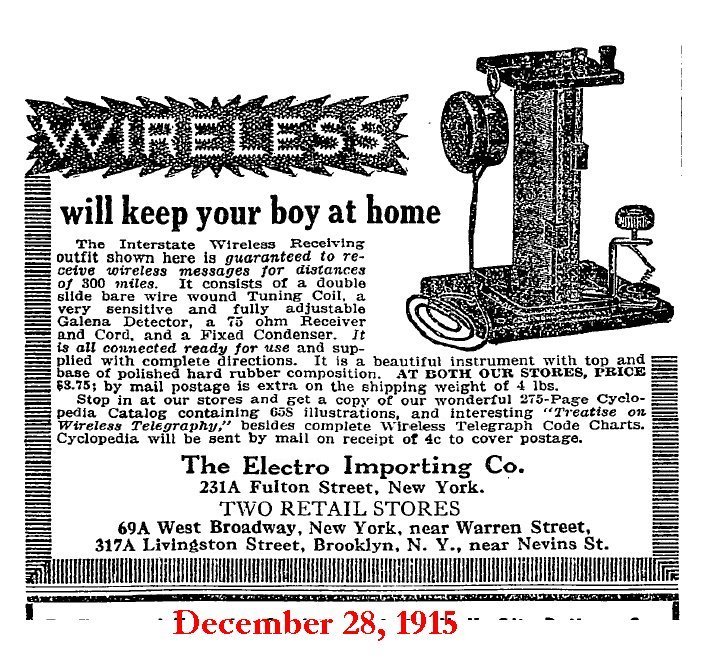
A Hugo Gernsback print advertisement.
“Science is now so big, so flamboyant and so barnacled with politicians, press agents, generals and industrialists that Hugo Gernsback, who invented it back in 1908 (and has re-invented it, annually, since) can scarcely make himself heard above the babble of the late-comers. Although he is now 78, Gernsback is still a man of remarkable energy who raps out forecasts of future scientific wonders with the rapidity of a disintegrate gun. He believes that millions will eventually wear television eyeglasses–and has begun work on a model to speed the day. ‘Instant newspapers’ will be printed in U.S. homes by electromagnetic waves, in his opinion as soon as U.S. publishers wrench themselves out of the pit of stagnant thinking in which Gernsback feels they are wallowing at present. He also believes in the inevitability of teleportation–i.e., reproducing a ham sandwich at a distance by electronic means, much as images are now reproduced on a television screen.”
Tags: Hugo Gernsback

Here’s a classic 1992 homage to the mundane in which Andy Warhol chows down on Burger King. It’s a passage from Jørgen Leth’s 66 Scenes From America. The interminable post-meal period when Warhol prepares to speak was improvised by the Pop Artist.
Tags: Andy Warhol, Jørgen Leth

"A bit jumpy." (Image by Steven G. Johnson.)
Rhino iguana up for adoption – $75 (colonia)
have a foot long baby rhino iguana about 6 months old a bit jumpy but all babies are. up for adoption becuase im moving.
Sky News report about a South African family with a pet hippo.
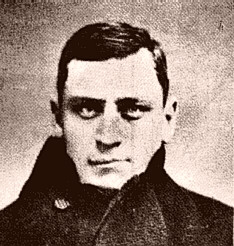
"In his way he was an artist, but his art was one that did not add much to the joy of nations."
Francis J. Alvany, the 19th-century bunco artist known as “Hungry Joe,” never had his fill when it came to schemes and dupes and ruses. Born in 1850, Hungry Joe spent most of his 52 years on Earth using hook, crook and any other means to separate marks from their money. He was so duplicitous that even when he passed away, no one was sure he wasn’t faking it. The New York Times dedicated newsprint to Hungry Joe’s chicanery as did the Brooklyn Daily Eagle. A trio of brief Eagle articles about his life and times follow.
••••••••••
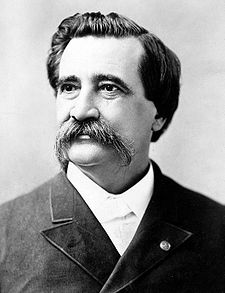
“He came pretty near getting $150 out of General John A. Logan once."
“Hungry Joe and General John A. Logan” (May 5, 1889): “He came pretty near getting $150 out of General John A. Logan once. The general was in one of the rooms on the ground floor on the Twenty-third street side of the house where the ladies’ entrance is located. The boy at the door came and told me that the general had gone into his room accompanied by a bunco man. I went around and knocked at the door. Hungry Joe was just going away, but I barred the door and asked the general if he had given the fellow any money. The general was inclined to get nettled at my question, and blurted out that the young man was the son of the president of the bank in Chicago where the general’s account was kept. I said: ‘Why general, the man is a thief, a common thief.’ He would scarcely believe me. But presently Hungry Joe took $50 out of his pocket, which he got from Logan, and handing it back said I was on to him and the general might as well have his eyes opened. The general had given him $50 and was going to give him $100 the next day.”
••••••••••
“Hungry Joe Released” (Brooklyn Daily Eagle, June 21, 1896): “Hungry Joe, the famous bunco steerer and the man of many aliases, was released from the Maryland penitentiary this morning after serving a seven year’s sentence for swindling and left for New York at 8:10 A.M. He says he intends to become a bookmaker and follow the races for a living. Hungry Joe whose right name is said to be Alvany, is a native of Baltimore and is said to have swindled Oscar Wilde out of $1,500 during his checkered career. He was sent to the penitentiary here for swindling a Baltimore man out of $5,000, and has been a model prisoner, continually asserting his innocence of the crime of which he was convicted. He is said to be worth $150,000 as the result of his operations prior to his conviction.”
••••••••••

"With a simple three card monte game he emptied the pockets of a brother of a Brooklyn police captain." (Image by ZioDave.)
“Hungry Joe” (Brooklyn Daily Eagle, March 25, 1902): The late Hungry Joe–if he is late–was viewed with alarm by some and jealousy by others. The people who viewed him with alarm were those who were unfortunate enough to have money, or watches, or any other goods and chattels he wished to possess, for as he so wished he took them. The people who viewed him with jealousy, in which was a mixture of admiration, are the other people who try to get folks’ chattels away from them. For Joe was the slickest fellow in the bunco business. He it was who had the courage and the skill to wring money out of a judge of a criminal court, the late Judge Noah Davis. He bled the venerable Charles Francis Adam in Boston; he got hundreds of thousands of dollars from General Logan, Oscar Wilde and other more or less celebrities, and with a simple three card monte game he emptied the pockets of a brother of a Brooklyn police captain. The captain took it back.
Joe had partners who led his dupes into rooms where bogus gambling schemes were in operation, but for the boldest of his strikes he took no one into his confidence. In his way he was an artist, but his art was one that did not add much to the joy of nations, and in spite of his infrequent and mysterious exemption from arrest in this city he was arrested elsewhere and made to serve terms behind the bars. Probably he died–if he is dead–without leaving much to his heirs. Probably, also, if he had put the same ingenuity, the same address, the same energy into any decent business he would have made that business pay. This man elected–or elects–to pass his life in running away from the police. Either he buys safety with a large percent of his earnings, or he never knows sound sleep. He has his days of luxury and weeks of woe. It is a wretched, a contemptible life, that of a criminal, and nobody but a fool will choose it. Hungry Joe, the bunco king, was nobody’s fool at his work, but he was the poorest and cheapest of fools when he threw away the chance to make himself a rich, respected, useful man, to turn himself into a despised and hunted creature.”
Tags: Charles Francis Adam, Francis J. Alvany, General John A. Logan, Hungry Joe, Judge Noah Davis, Oscar Wilde
Nope, no idea.
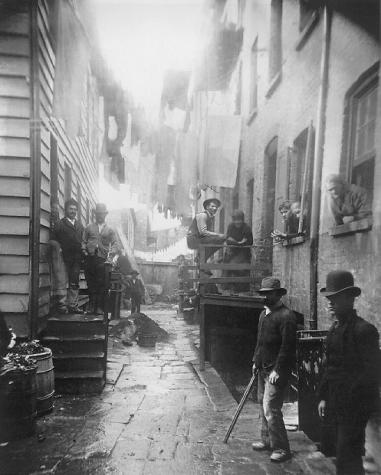
Bandits Roost, an alleyway in the notorious slum known as the Bend. (Image by Jacob Riis.)
Muckraking newspaperman Jacob Riis wasn’t any sort of radical socialist, just a very humane police reporter who knew how to use his abundant writing talent for forces of good. His 1890 book, How the Other Half Lives: Studies Among the Tenements of New York, was a landmark work of photojournalism that sought to expose the well-to-do classes of the city to the incredible hardships (child labor, sweatshops, unsanitary conditions, etc.) endured by the denizens of its poorest quarters, who were out of sight and out of mind.
The book succeeded tremendously in alerting the city to its Dickensian lack of social safety nets, but it continues to be a great read because it’s a genuine work of art, beautifully written and photographed. An excerpt from the chapter, “The Bend”:
“WHERE Mulberry Street crooks like an elbow within hail of the old depravity of the Five Points, is ‘the Bend,’ foul core of New York’s slums. Long years ago the cows coming home from the pasture trod a path over this hill. Echoes of tinkling bells linger there still, but they do not call up memories of green meadows and summer fields; they proclaim the home-coming of the ragpicker’s cart. In the memory of man the old cow-path has never been other than a vast human pig-sty. There is but one ‘Bend’ in the world, and it is enough. The city authorities, moved by the angry protests of ten years of sanitary reform effort, have decided that it is too much and must come down. Another Paradise Park will take its place and let in sunlight and air to work such transformation as at the Five Points, around the corner of the next block. Never was change more urgently needed. Around ‘the Bend’ cluster the bulk of the tenements that are stamped as altogether bad, even by the optimists of the Health Department. Incessant raids cannot keep down the crowds that make them their home. In the scores of back alleys, of stable lanes and hidden byways, of which the rent collector alone can keep track, they share such shelter as the ramshackle structures afford with every kind of abomination rifled from the dumps and ash-barrels of the city. Here, too, shunning the light, skulks the unclean beast of dishonest idleness. ‘The Bend’ is the home of the tramp as well as the rag-picker.”
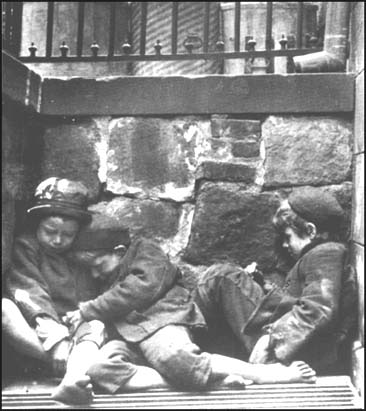
Mulberry Street: It was like "Our Gang" with lots of pulmonary tuberculosis.
Tags: Jacob Riis

A great zucchini but not the Great Zucchini. No public domain images of him. (Image by Lmbuga.)
An excerpt from “The Peekaboo Paradox,” Gene Weingarten’s excellent 2006 Washington Post chronicle of the complicated life of Eric Knaus, better known as D.C.’s most popular children’s party entertainer, the Great Zucchini:
“From the moment I met him, there were things that puzzled me about the Great Zucchini. Unless I drove him, for example, he relied on cabs to get to all of his gigs. He’d recently totaled his car, he explained, and hadn’t gotten around to buying a new one. Besides, he said, he found cabs less restrictive.
Also, the Great Zucchini didn’t seem to live anywhere. He had an address in Bethesda, but he would always want to meet at one Starbucks or another. Every time I proposed coming to his house some morning, he was staying elsewhere overnight. He seemed to crash everywhere but home.
His act was never fancy, but in recent months it had lost whatever frills it once had. On his Web site, the Great Zucchini is pictured at the White House Easter Egg Roll, where he once performed in a fancy black vest with cartoon smiley faces on it. He used to wear that vest to all his performances but lost it some time ago and has no plans to replace it.
He is more than a little disorganized. He lost a glowing-thumb trick, then found it, but it was broken, and he never got a new one. At one point, he lost his cell phone. When we were together, he often commandeered mine. Many of his magic props seem to be weathered to the point of decrepitude. His dirty diaper is years old. His magic bag with a false panel — a ‘change bag,’ in magicians’ terms — is soiled and ripped. The once-orange sponge balls he palms for an illusion are brown with use. And there’s that persistent, just-rolled-out-of-bed stubble. He didn’t always have that.
Some parents I talked to were worried that the Great Zucchini might be rotting on the vine. Their guess was substance abuse, or something even darker.
This was understandable, but wrong. His demons turned out to be of a different species, more benign, perhaps, but also more interesting.
Have you ever tried to peel a zucchini? It’s not like a potato. The skin is pretty thick. You don’t get it all with the first swipe.
Eric and I were in Arlington, at a fifth birthday party for a boy named Charlie. It was the first time the mother, Sarah Moore, had hired the Great Zucchini, and she had no complaints. He was everything she’d been told he’d be, she said, as she surveyed her post-party, preprandial dining room, aswarm with giddy kids.
‘He’s a big draw. You know, we wouldn’t have gotten half this turnout with a moon bounce,’ Sarah said, completely seriously.
On our way to the party, Eric and I had been talking football, and I had said I thought the New York Giants would win their next game. He agreed but said they wouldn’t beat the spread. I’d found that a little odd, and on our way back from the party I took a stab.
‘You’re a gambler,’ I said.
‘I need a cigarette,’ he said.
We stopped for cigarettes. He took a long drag, and smiled. It was as though he’d been waiting for this release for weeks.
‘Look, I’m not Mister Rogers, okay?'”
And carbon-based scone-ordering was suddenly threatened. (Thanks Geekosystem.)

"I am a 22 year old performance artist and experimental film maker with a pleasant disposition and positive outlook." (Image by Trampoline club du Dauphiné.)
Trampoline needed for film shoot!!! – $20 (Anywhere!)
This is maybe a strange request but I am looking to temporarily borrow and not buy a trampoline.
I am making a short film in which I desperately one!
My hopes are: You let me jump on your trampoline for no more than 30 mins and in return I bake you delicious treats or pay you the $20 I have suggested above!
I am a 22 year old performance artist and experimental film maker with a pleasant disposition and positive outlook.
Thank you in advance friends!


According to an article in The Week, there are 360,000 pieces of space junk (rocket debris, missle shards, old satellite hardware, etc.) orbiting Earth and threatening to destroy our current satellite systems. But Japan has a plan to use a metallic fish net to collect the floating flotsam. An excerpt:
“The Japanese Aerospace Exploration Agency has a solution. It has teamed up with Nitto Seimo, a fishing net manufacturer, to design a giant, metallic net to be launched into space. The net would rotate around the planet, and collect the orbital trash. Once the net is full, gravity would pull it toward Earth — and it would burn up as it re-entered the atmosphere. Japan wants to launch the net within the next two years.”
Gotta be uncomfortable for the monkey. And for everybody else.
Ralph Arlyck’s 15-minute 1970 film profiled his 4-year-old neighbor Sean Farrell, who lived in a Haight-Ashbury hippie household with his parents and whoever else drifted through. The short doc became quite the sensation because the tyke discussed his marijuana use. In 2005, there was a long-form follow-up doc called Following Sean.
Tags: Ralph Arlyck, Sean Farrell

Grover Lewis' writing feels like sort of a mixed-bag to me, intermittently soaring but very uneven.
Grover Lewis was a prominent New Journalism writer of the 1960s and 1970s, probably best known for his Rolling Stone on-location pieces in which he ensconced himself on film sets and gave readers a behind-the-scenes look at how Sam Peckinpah and John Huston, among others, got their work done. He also had a taste for the film business’s fascinating fringe characters.
Lewis passed away in 1995 while in the midst of writing his memoirs. Unlike many of his contemporaries, Lewis is all but forgotten, despite the existence of a handsome collection of his work, Splendor in the Short Grass, which was published by the University of Texas Press in 2005. The book contains a piece taken from his uncompleted memoirs, in which Lewis recalls the tragic circumstances of how he lost both his parents while he was eight years old. An excerpt from “Goodbye If You Call That Gone”:
“History and legend bind us to the past, along with unquenchable memory.
In the spring of 1943, my parents–Grover Lewis, a truck driver, and Opal Bailey Lewis, a hotel waitress–shot each other to death with a pawnshop pistol. For most of a year, Big Grover had stalked my mother, my four-year-old sister, and me across backwater Texas, resisting Opal’s decision to divorce him. When she finally did and when he finally cornered her and pulled the trigger as he’d promised to do, she seized the gun and killed him, too.
A next-door neighbor of Opal’s–called ‘Dad’ North because of his advanced age–witnessed the mayhem shortly after dawn on a rainy Monday morning in May. Big Grover was twenty-seven years old, Opal twenty-six, and they’d been married for almost eleven years. My father survived for half a day without regaining consciousness, and died in the same charity hospital where I was born. Opal died where she fell, under a shadeless light bulb in the drafty old rooming house where she’d been living alone, and struggling to keep Titter and me in a nearby nursery school. No charges were filed, and a formal inquest was considered unnecessary since the police and the coroner’s office declared the case solved by mid-morning. My uncle Dubya Cee, Opal’s older brother, talked to one of the detectives involved and found out some additional information, which he shared only with the Bailey elders. Such, anyway, were the bare bones of the story as passed along in family history that soon blurred off into murky family legend. It was the sum of what I was allowed to know, although there remained to be answered, of course, questions I had not yet learned to ask.”
Tags: Grover Lewis