"It's going in the trash." (Image by Father of JGKlein.)
Huge Batman bust with broken ear
Swing by and pic it up because after the weekend its going in the trash
Ideas and technology and politics and journalism and history and humor and some other stuff.
"It's going in the trash." (Image by Father of JGKlein.)
Swing by and pic it up because after the weekend its going in the trash
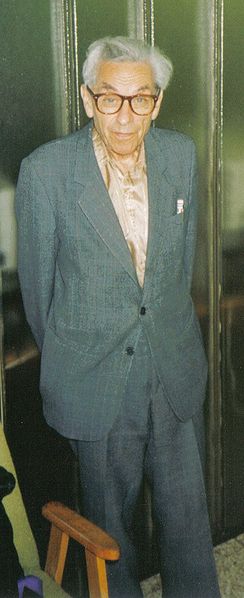
"He was a kind of mathematical troubadour." (Image by Kmhkmh.)
Even in a field marked by eccentricity, mathematician Paul Erdös was an odd number. The Hungarian published more papers than any other mathematician in history, even though he never really had an official post or a home or any money. He just traveled around the world, crashed with an array of academics and worked on seemingly unsolvable problems. He hardly slept or ate. This peripatetic pattern and self-abnegation continued until his death in 1996. An excerpt from Jeremy Bernstein’s 1998 Atlantic essay, which meditates on Paul Hoffman’s biography about the monomaniacal human computer, The Man Who Loved Only Numbers:
“Around 1950, when I was an undergraduate in mathematics at Harvard, my tutor George Mackey remarked that he was having a visitation from Paul Erdös.
I had never heard of Erdös (the correct pronunciation seems to have been ‘air-dish’ although I always used ‘air-dosh’), but Mackey explained that he was a kind of mathematical troubadour. He had no actual position — not because he was not offered them, but because they would interfere with his modus operandi.
Erdös migrated rapidly among 25 or so countries. He carried all his belongings in one small suitcase and a shopping bag, the greater part of which was filled with his mathematical papers and notebooks. He had no interest in clothes and even less in money. He needed three or four hours of sleep. He would arrive at a place and announce, ‘My brain is open,’ then proceed to collaborate with any and every mathematician who could keep up with him.
His collection of interesting unsolved problems in almost every field of mathematics, but especially in the theory of numbers where he probably did his most enduring work, seemed inexhaustible. What was exhaustible was the stamina of the mathematicians he landed on. Erdös would knock at a colleague’s door. ‘Hello’ he’d begin. ‘Let n be prime and letf(n) be defined as…’ After a few days of this, friends would be ready for a vacation.”
Paul Erdös tells an anecdote about a mathematician even odder than himself:
Tags: George Mackey, Jeremy Bernstein, Paul Erdos, Paul Hoffman

"In this book are powerful satires to help restore your sanity."
This 35¢ Ballantine paperback collection of pieces by some of the most famous humorists of the 1950s is so out of print that even Amazon doesn’t seem to have a readily available bare listing for it. Within its 154 pages are essays, illustrations and song lyrics by Robert Benchley, S.J. Perelman, James Thurber and Ogden Nash, among others. Leading off the book is “The Night the Old Nostalgia Burned Down: My Own New York Childhood,” a ridiculous “memoir” by Frank Sullivan. He’s all but forgotten now, but Sullivan was a prominent humorist for the New York World and the New Yorker from the 1920s to the 1950s. A page about him on a website about Saratoga Springs (his hometown) recalls Sullivan as being “known for his gentle touch and for the collection of fictitious characters he created: Aunt Sally Gallup, Martha Hepplethwaite, the Forgotten Bach (a member of the Bach family who was tone deaf), and Mr. Arbuthnot, the cliché expert.” An excerpt from his piece in The Wild Reader:
“Father was very strict about the aristocratic old New York ritual of the Saturday-night bath. Every Saturday night at eight sharp we would line up: Father; Mother; Diamond Jim Brady; Mrs. Dalrymple, the housekeeper; Absentweather, the butler; Aggie, the second girl; Aggie, the third girl; Aggie, the fourth girl; and the twelve of us youngsters, each equipped with soap and a towel. At a command of our father, we would leave our mansion on East Thirtieth Street and proceed solemnly up Fifth Avenue in single file to the old reservoir, keeping a sharp eye out for Indians. Then, at a signal from Papa, in we’d go. Everyone who was anyone in New York in those days had a Saturday-night bath in the reservoir.”
Tags: Frank Sullivan, James Thurber, Ogden Nash, Robert Benchley, S.J. Perelman
Don’t quit your day job, you bucket of bolts. (Thanks Reddit.)

"The woman who received the valentine caused the arrest of the lady who is charged with sending it" (Image by Quentin Massys.)
Back in the nineteenth century when Valentine’s Day was still known as “St. Valentine’s Day,” sending a comic valentine was at least as likely as sending a sentimental one. A comic valentine was a card that had a grotesque illustration which mocked the recipient’s most obvious flaw (big ears, weak chin, prominent brow, etc.) and contained a rude and abusive poem. It was generally thought of as a middle-class tradition, but even high society got into the act sometimes. The excerpts below from a trio of Brooklyn Daily Eagle articles recall the nasty tradition, which not everyone appreciated.
••••••••••
“Making Valentines” (December 19, 1886): “The average citizen is not apt to receive a comic valentine descriptive of his principal fault or weakness with any degree of pleasure. He oftener gets mad and in some cases searches for the sender. McLaughlin Brothers’ factory in Brooklyn has, during the past ten months, turned out 15,000,000 comic and 5,000,000 sentimental valentines. With such advantages practical jokers and lovers will have plenty of material with which to work on February 14, Valentine’s birthday. The former prevalent custom of venting a petty spite by sending a comic valentine has comparatively died out in the eastern and Middle States. West of the Mississippi River the valentine has, however, a ready sale.”
••••••••••
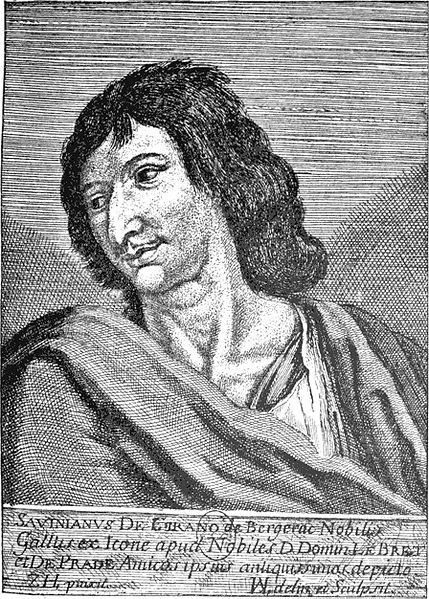
"Cyra'nose' de Bergerac."
“The Comic Valentine” (February 21, 1899): “The right of people to amuse themselves at the expense of others is contested by one woman who resides in the aristocratic portion of the Fourteenth Ward. She received a valentine representing a person with a large nose, and accompanied by doggerel rhymes, together with manuscript additions of a reprehensible character. The lady that sent this gift had been obliged to move from her chateau on North First street at the request of her landlord, and she accused the recipient of the gift of hastening her departure. The woman who received the valentine caused the arrest of the lady who is charged with sending it, and the case has proceeded so far as to be adjourned. Right or wrong in the accusation, the refusal of a person to be amused by reflections on one’s nose will be commended in many quarters where the misfortunes of the arch-type of sufferers, Cyranose de Bergerac, are still unknown. In some quarters of the city the sending of valentines that are called comic has been as absolutely discontinued as the New Year call.”
••••••••••
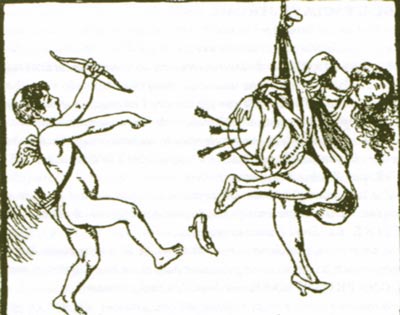
Arrows in the butt. (Image by Martin van Maële.)
“Valentine Causes Murder” (February 14, 1900): “C.R. Stewart, grocer, died to-day from the effects of a shot fired by his son Louis, aged 19, in a quarrel over a comic valentine. The son, who is in jail, says he was protecting his mother from an assault made upon her last night by his father. Mr. Stewart had received an offensive valentine and had accused his wife of having sent it. She denied the accusation, and he attempted to assault her when the son fired the shot and afflicted the fatal wound.”

Harry Gabriel Aronoff, who lived to 100 years old, had the very eventful experience of being a tank commander during WWII. An excerpt from his obituary in the February 13 San Diego Union-Tribune:
“He enlisted in the Army on March 16, 1941 and served as a tank Commander during World War II. He fought at the Battle of the Bulge in Normandy, and other places, he single-handedly captured eleven German soldiers after his landing in France. After WW II, Harry and Evelyn moved to San Diego where he worked as a meat cutter until he retired. For more than 50 years he volunteered at the VA and Naval hospitals, was elected to various positions with the DAV and was three times the DAV Commander. He also served as the Commander and Chaplin for the Jewish War Veterans. He is a life member of the Masons and Shriners.”
Tags: Harry Gabriel Aronoff
Watch this six-bladed baby take off.

"This is what happens when you smoke a lot of weed."
sadly enough i need my ged and don’t want to take the test, any idea on how i can get one, , i need it for a jod, and i want to take a class that requires it ,, so please let me know how we can get it,,
AND FOR ALL THOSE THAT WILL SAY , JUST TAKE THE TEST YOU LOSER, keep IT TO YOURSELF AND GET A LIFE JUST MOVE ON..THIS IS WHAT HAPPENS WHEN YOU SMOKE ALOT OF WEED AND LET 15 YEARS GO BY, PLUS REALLY LAZY AND DON’T HAVE THE TIME, I WORK TWO JOBS.. BLA BLA BLA.
In 1999, preacher Jack Van Impe cheerfully used Y2K to scare the bejeezus out of his flock and raise some funds, with help from his brittle-boned wife, Rexella. They haven’t exactly toned down the rhetoric since. (Thanks Crunchy.TV.)
Tags: Jack Van Impe, Rexella Van Impe
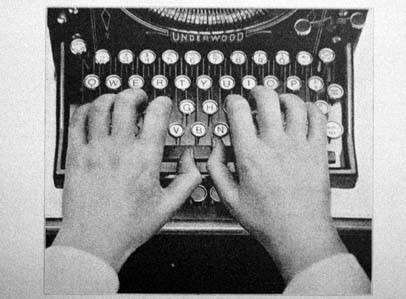
A few search engine keyphrases that brought traffic to Afflictor this week:
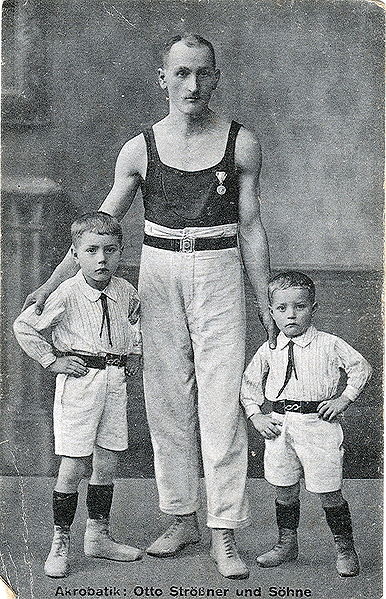
Afflictor: Exchanging sharp looks with that arrogant acrobat--you know the one--and his two jackass sons since 2009.
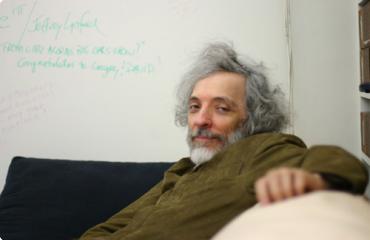
Gregory Chudnovsky (pictured) and his brother, David, are Distinguished Industry Professors at NYU's Polytechnic Institute. (Image by Gregory Chudnovsky / NYU.)
The first two paragraphs of “Mountains of Pi,” Richard Preston’s excellent 1992 New Yorker account of eccentric math geniuses, the Chudnovsky brothers, and their home-built supercomputer:
“Gregory Volfovich Chudnovsky recently built a supercomputer in his apartment from mail-order parts. Gregory Chudnovsky is a number theorist. His apartment is situated near the top floor of a run-down building on the West Side of Manhattan, in a neighborhood near Columbia University. Not long ago, a human corpse was found dumped at the end of the block. The world’s most powerful supercomputers include the Cray Y-MP C90, the Thinking Machines CM-5, the Hitachi S-820/80, the nCube, the Fujitsu parallel machine, the Kendall Square Research parallel machine, the nec SX-3, the Touchstone Delta, and Gregory Chudnovsky’s apartment. The apartment seems to be a kind of container for the supercomputer at least as much as it is a container for people.
Gregory Chudnovsky’s partner in the design and construction of the supercomputer was his older brother, David Volfovich Chudnovsky, who is also a mathematician, and who lives five blocks away from Gregory. The Chudnovsky brothers call their machine m zero. It occupies the former living room of Gregory’s apartment, and its tentacles reach into other rooms. The brothers claim that m zero is a ‘true, general-purpose supercomputer,’ and that it is as fast and powerful as a somewhat older Cray Y-MP, but it is not as fast as the latest of the Y-MP machines, the C90, an advanced supercomputer made by Cray Research. A Cray Y-MP C90 costs more than thirty million dollars. It is a black monolith, seven feet tall and eight feet across, in the shape of a squat cylinder, and is cooled by liquid freon. So far, the brothers have spent around seventy thousand dollars on parts for their supercomputer, and much of the money has come out of their wives’ pockets.”
Tags: David Volfovich Chudnovsky, Gregory Volfovich Chudnovsky, Richard Preston
From Geekersmagazine: “Scientists from Cornell, the University of Chicago and iRobot have created human-analogue hands using nothing but coffee grounds, party balloons and a vacuum pump.”

"It is sent to Munich and made into wigs by girls." (Image by Charles S. Lillybridge.)
A lot of you have been requesting I post something from 1898 about doll hair, so here’s a note from the Brooklyn Daily Eagle of that year:
“The hair on the heads of most of the hundreds of thousands of dolls exhibited in shop windows is made from the hair of the Angora goat. This product is controlled by an English syndicate, and is valued at £80,000 a year. After the hair is prepared it is sent to Munich and made into wigs by girls.”
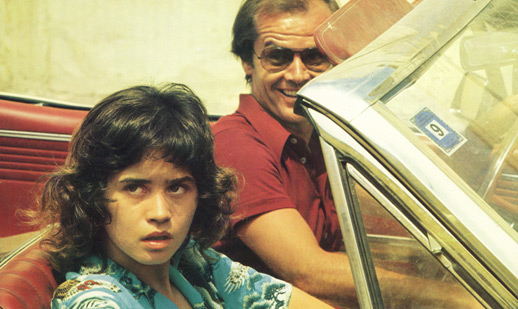
Maria Schneider died one week ago at age 58. No cause of death was announced.
An existential thriller set in languid deserts and brisk airports, Michelangelo Antonioni’s drama quietly and gradually stalks the truth, right down to its pitch-perfect, remarkably understated conclusion, which is one of the most analyzed scenes in film history. An afterthought when it was released, The Passenger is now rightly recognized as one of the masterworks of the ’70s.
Journalist David Locke (Jack Nicholson) finds himself deep in the Sahara desert wrapping up a documentary about a revolution whose horrors he can barely begin to fathom. Complicating matters are his own personal demons, which seem equally inscrutable. All Locke knows is that he wants out of his life, that he desires to throw away the baggage of all that he’s become. The reporter gets the opportunity when an acquaintance named Robertson, who is staying at the same dusty, no-star hotel, dies suddenly, presumably from a heart attack. Their ages and faces are similar, so Locke switches places; he’s the one who is announced as deceased and he’s reborn as Robertson.
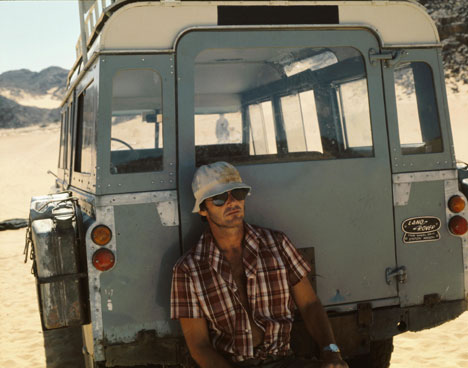 But a second act can be tricky and not just because it soon becomes clear that Robertson was dealing arms to a band of rebels. While Locke knows he has no way of fulfilling his end of the munitions contract, which could imperil his life, he has another problem: Freedom from his old self makes Locke realize that angst and anxiety weren’t particular to just him. He dutifully follows Robertson’s agenda book and is diverted, if briefly, in Munich where the erstwhile journalist meets an architecture history student (Maria Schneider) who’s willing to impetuously go along with him on his road to nowhere.
Pursued from city to city by an ever-growing cabal of people who want to meet the mysterious Robertson, Locke, who had hoped to become nothingness, instead has only multiplied his being. In one scene, Locke’s automobile breaks down in the middle of the desert and he screams furiously at the universe, “Alriiiight!” signaling his defeat. As if the outcome was ever in doubt.•
Tags: Jack Nicholson, Maria Schneider, Michelangelo Antonioni
The stylus would be the size of a telephone pole. (Thanks Reddit.)

"Just a bunch of bricks." (Image by Thegreenj.)
Broken bricks, dirty bricks, just a bunch of bricks.
I’ll pay a little bit of money for them, but mostly I’m hoping to help someone by hauling some crap out of your basement or whatever.

Baseball pitcher Whitey Ford and timepiece melter Salvador Dali shill for Braniff during the 1970s.
Tags: Salvador Dali, Whitey Ford
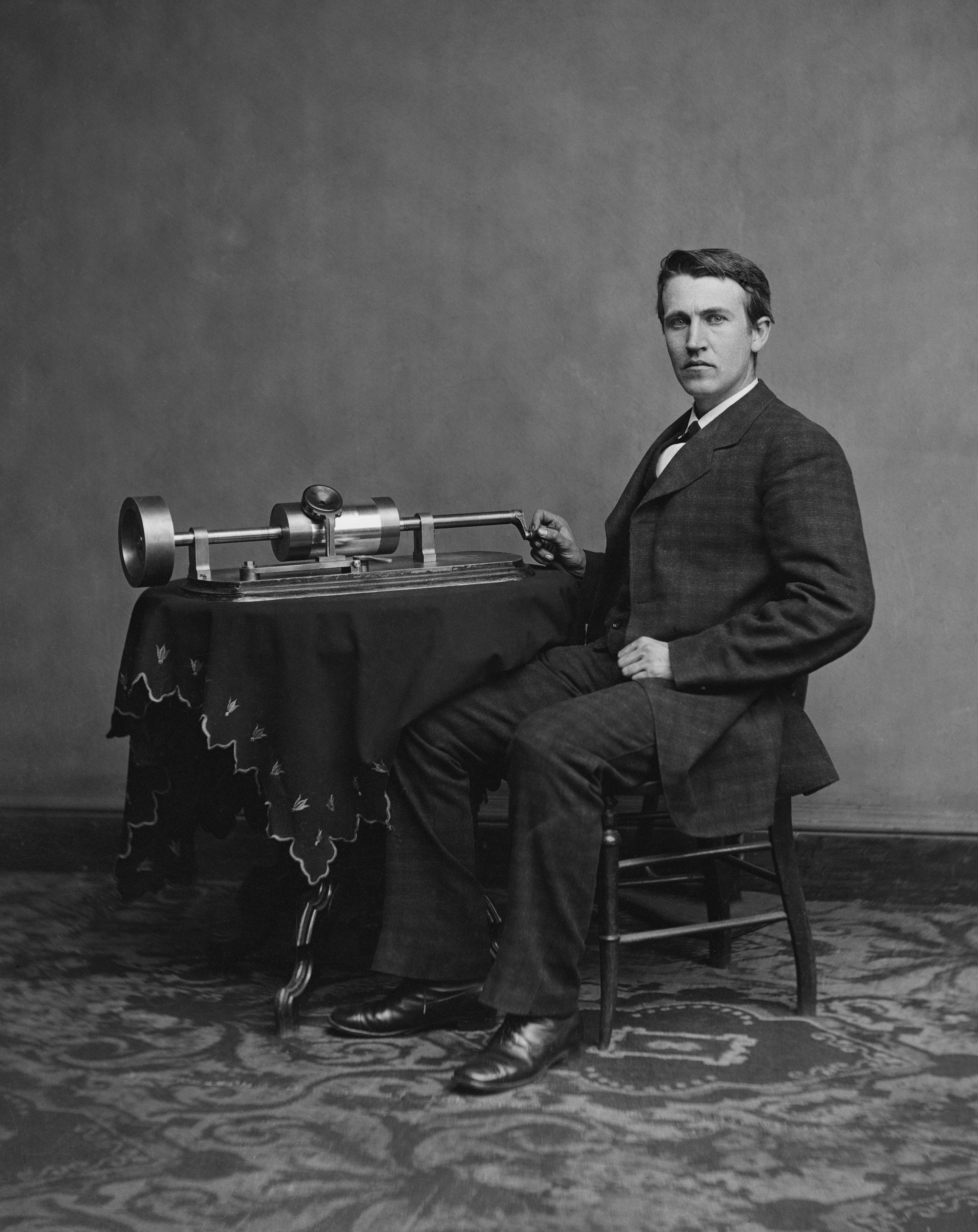
Thomas Edison with phonograph in 1868.
As we clasp hands and celebrate Thomas Edison’s birthday today, here’s a note about his modest beginnings in the December 1, 1898 issue of the Brooklyn Daily Eagle:
“When Thomas Edison was a boy he made a set of working telegraph instruments, not covering a small envelope in size, in his spare time. He fixed this on a line connecting the station at which he was at work and the town, using tenpenny nails for insulators; and in dry weather the tiny telegraph company worked very well, though things were apt to go wrong in rainy seasons. During the first months Edison and a boy friend who ran the line netted 31 cents from their venture–not a large amount, but enough to show that the instruments were of some use.”
Tags: Thomas Edison
Holton Rower uses many paint colors + gravity. (Thanks Open Culture.)
Tags: Holton Rower
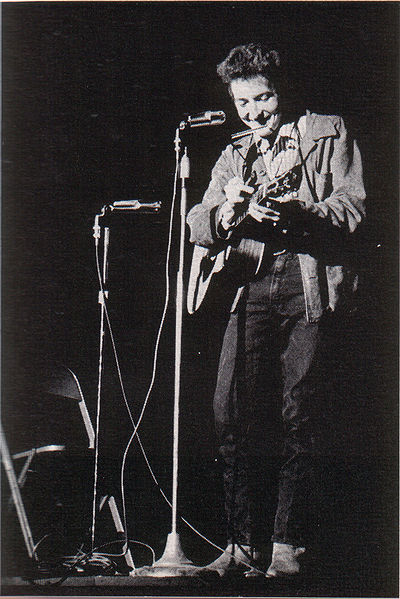
Bob Dylan in 1963, a couple of years before he went electric.
In the aftermath of his controversial shift from folk musician to rock star, Bob Dylan took the art of the non-answer to illogical but entertaining extremes during a 1966 Playboy interview, conducted by Nat Hentoff:
“Playboy: Mistake or not, what made you decide to go the rock-‘n’-roll route?
Bob Dylan: Carelessness. I lost my one true love. I started drinking. The first thing I know, I’m in a card game. Then I’m in a crap game. I wake up in a pool hall. Then this big Mexican lady drags me off the table, takes me to Philadelphia. She leaves me alone in her house, and it burns down. I wind up in Phoenix. I get a job as a Chinaman. I start working in a dime store, and move in with a 13-year-old girl. Then this big Mexican lady from Philadelphia comes in and burns the house down. I go down to Dallas. I get a job as a ‘before’ in a Charles Atlas ‘before and after‘ ad. I move in with a delivery boy who can cook fantastic chili and hot dogs. Then this 13-year-old girl from Phoenix comes and burns the house down. The delivery boy – he ain’t so mild: He gives her the knife, and the next thing I know I’m in Omaha. It’s so cold there, by this time I’m robbing my own bicycles and frying my own fish. I stumble onto some luck and get a job as a carburetor out at the hot-rod races every Thursday night. I move in with a high school teacher who also does a little plumbing on the side, who ain’t much to look at, but who’s built a special kind of refrigerator that can turn newspaper into lettuce. Everything’s going good until that delivery boy shows up and tries to knife me. Needless to say, he burned the house down, and I hit the road. The first guy that picked me up asked me if I wanted to be a star. What could I say?
Playboy: And that’s how you became a rock-‘n’-roll singer?
Bob Dylan: No, that’s how I got tuberculosis.”
Tags: Bob Dylan, Nat Hentoff
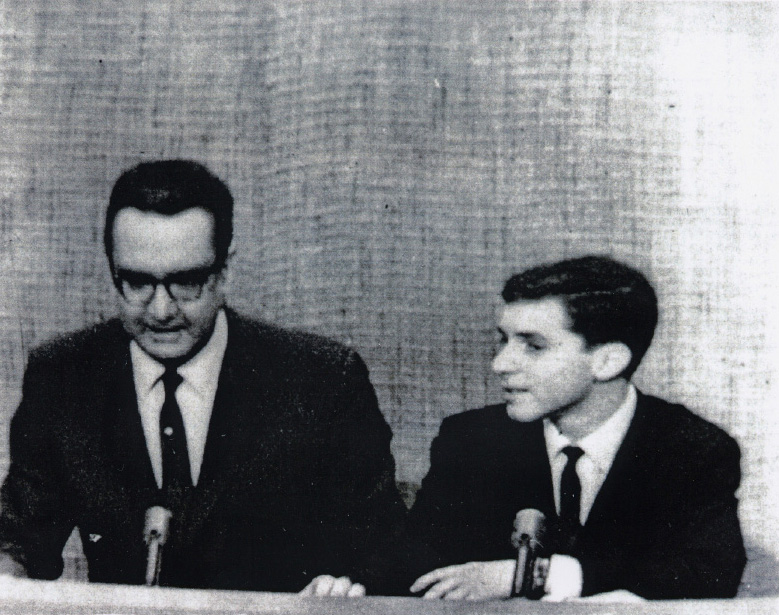
Singularity enthusiast Ray Kurzweil is profiled by Lev Grossman in a Time piece entitled, “2045: The Year Man Becomes Immortal.” In the article, the futurist predicts that the singularity–that moment when artificial intelligence surpasses human intelligence–will occur in 2045, which seems very ambitious. Grossman recalls that in 1965 a teenage Kurzweil appeared on the TV show I’ve Got a Secret to perform a piano piece composed by a computer he built.
Tags: Lev Grossman, Ray Kurzweil

"This will be a permanent situation." (Image by Steven Arnold.)
or goes to flea markets etc. i am in need of someone who can help me out about once or twice a month with the following:
1. administer an enema and a full body deep tissue massage.
in exchange for these services i will swap various things that you can sell. this will be a permanent situation and i have quite a bit of things. each visit you can pick a certain amount of things to sell. the 2 treatments take about 3 hours. if interested please leave contact info. thank you kindly.
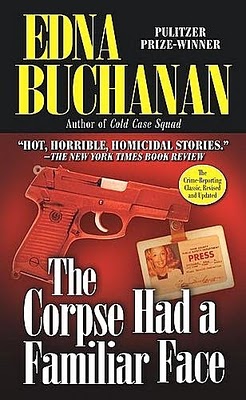 The opening paragraph of “Covering the Cops,” Calvin Trillin’s outstanding 1986 New Yorker profile of police reporter and mystery novelist Edna Buchanan:
“In the newsroom of the Miami Herald, there is some disagreement about which of Edna Buchanan’s first paragraphs stands as the classic Edna lead. I line up with the fried-chicken faction. The fried-chicken story was about a rowdy ex-con named Gary Robinson, who late one Sunday night lurched drunkenly into a Church’s outlet, shoved his way to the front of the line, and ordered a three-piece box of fried chicken. Persuaded to wait his turn, he reached the counter again five or ten minutes later, only to be told that Church’s had run out of fried chicken. The young woman at the counter suggested that he might like chicken nuggets instead. Robinson responded to the suggestion by slugging her in the head. That set off a chain of events that ended with Robinson’s being shot dead by a security guard. Edna Buchanan covered the murder for the Herald—there are policemen in Miami who say that it wouldn’t be a murder without her—and her story began with what the fried-chicken faction still regards as the classic Edna lead: ‘Gary Robinson died hungry.'”
Tags: Calvin Trillin, Edna Buchanan, Gary Robinson


