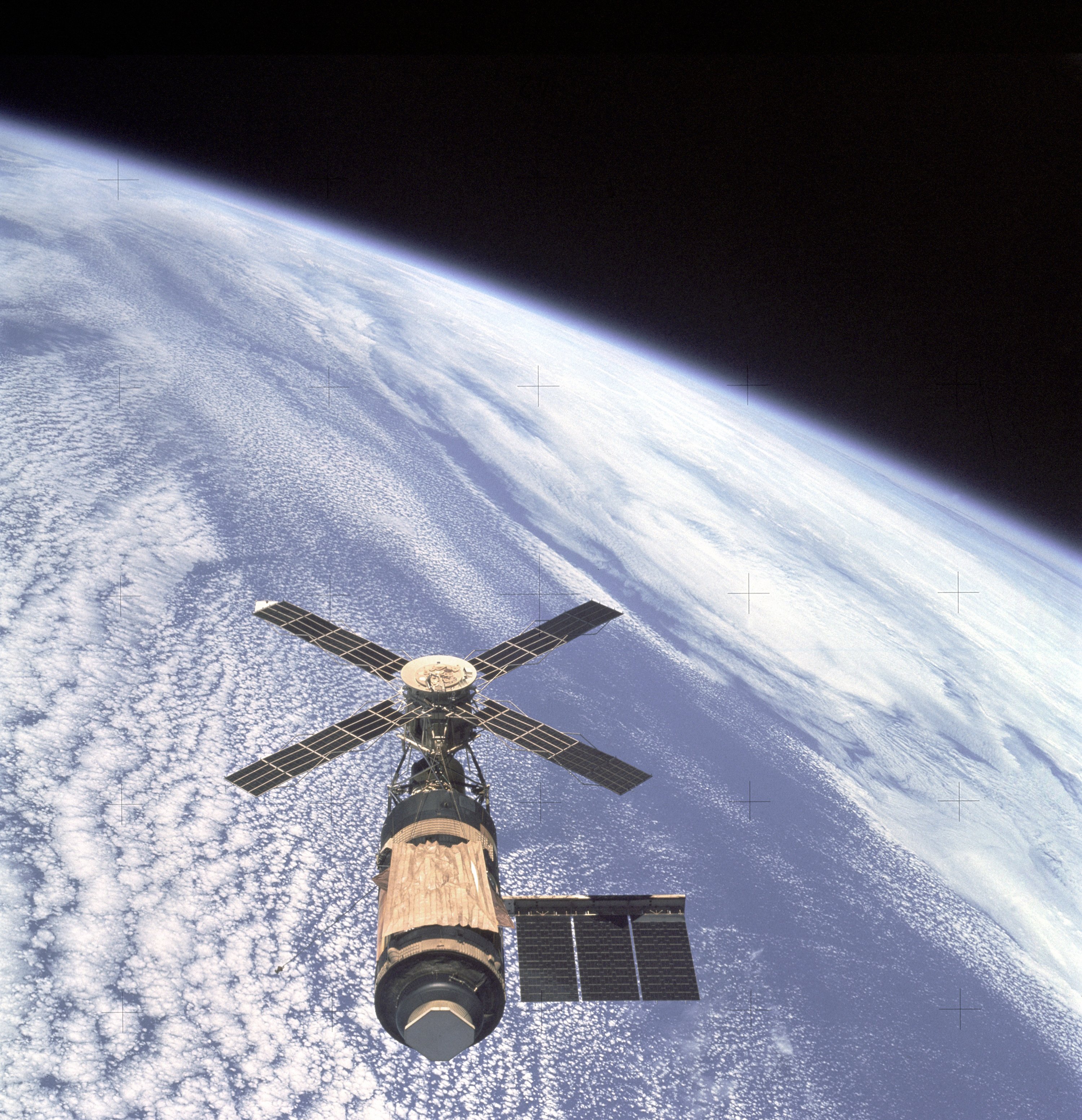

This classic 1974 NASA photograph shows the Skylab Orbital Workshop in its final orbit before returning to Earth. Skylab became a sensation of sorts behind closed doors in Washington because the astronauts photographed the super-secretive Area 51 (also known as “Groom Lake”), even though they had been ordered not to. Once the mission was complete, there was a scrum among various agencies for control of the photos (which were never released). Dwayne A. Day revealed the brouhaha in 2006 for the Space Review. An excerpt:
“Far out in the Nevada desert, miles from prying eyes, is a secret Air Force facility that has been known by numerous names over the years. It has been called Paradise Ranch, Watertown Strip, Area 51, Dreamland, and Groom Lake. Groom is probably the most mythologized real location that few people have ever seen. According to people with overactive imaginations, it is where the United States government keeps dead aliens, clones them, and reverse-engineers their spacecraft. It is also where NASA filmed the faked Moon landings.
However, for humans whose feet rest on solid ground, Groom is the site of highly secret aircraft development. It is where the U-2 spyplane, the Mach 3 Blackbird, and the F-117 stealth fighter were all developed. It has also probably hosted its own fleet of captured, stolen, or clandestinely acquired Soviet and Russian aircraft. Because of this, the United States government has gone to extraordinary lengths to preserve the area’s secrecy and to prevent people from seeing it.
This secrecy was threatened in early 1974 when the astronauts on Skylab pointed their camera out the window and took pictures of a facility that did not officially exist. They returned to Earth and their photographs quickly became a headache for NASA, the CIA, and the Department of Defense.”
“GPS and the End of the Road“ is Ari N. Schulman’s New Atlantis article about how the technological boom has resulted in a revolution in navigation. Of course, while we know better where we’re headed, other people also know where we’re headed. And reliance on GPS likely diminishes our ability to naturally navigate, making it one more step in the direction of cars that drive themselves. An excerpt:
“If each successive era has closed an old realm of exploration while opening up another, then what are we to make of the innovations in navigational technologies that have just gotten underway in earnest over the last ten years? The rise of digital mapping and the Global Positioning System (GPS) has seemed to come upon us almost as a matter of course, blended in with the general dawning of the digital age, and on its own relatively unremarked — but it has in a blink ushered in the greatest revolution in navigation since the map and compass.
The conception of GPS by the U.S. military began in the 1960s. Satellites with extremely precise onboard clocks constantly send out packets of information containing the time and coordinate at which they were sent; navigation devices here below receive the signal and calculate the transit time and distance. By combining information from several satellites, an accurate and precise coordinate for the navigation device can be calculated. In 1983, a navigational error sent Korean Air Lines Flight 007 into restricted Soviet airspace, where it was shot down, killing all 269 people aboard; subsequently, President Reagan directed that GPS be opened up for civilian use once it had been fully implemented. This occurred in the early 1990s, when a network of satellites was put in place.” (ThanksLongform.)
For whatever reason, I lately find myself thinking about a 2006 Economist obituary for Pink Floyd’s Syd Barrett, who self-medicated his worsening mental illness with massive doses of LSD, extinguishing his great talent by 1968, three years after the group had formed. An excerpt from the obit:
“His weird words and odd, simplistic melodies, sent through an echo-machine, seemed sometimes to be coming from outer space.
Yet there was also something quintessentially English and middle class about Mr Barrett. His songs contained the essence of Cambridge, his home town: bicycles, golden robes, meadows and the river. Startlingly, he sang his hallucinations in the perfect, almost prissy enunciation of the Home Counties. He made it possible to do rock in English rather than American, inspiring David Bowie among others. The band’s first album, ‘The Piper at the Gates of Dawn’ (1967), made Mr Barrett central, plaintively calling up the new age from some distant and precarious place.
Yet the songs were already tipping over into chaos, and by January 1968 Mr Barrett was unable to compose or, almost, to function. Dope, LSD and pills, consumed by the fistful, overwhelmed a psyche that was already fragile and could not bear the pressures of success. At concerts he would simply play the same note over and over, or stand still in a trance. If he played, no one knew where he was going, least of all himself. The band did not want to part with him, but could not cope with him; so he was left behind, or left them, enduring drug terrors in a cupboard under the stairs in his London flat. Casualties of ‘bad trips’ usually recovered, with stark warnings for the unwary. Mr Barrett, famously, went on too many and never came back.”
••••••••••
“Come on you raver, you seer of visions / Come on you painter, you piper, you prisoner”:
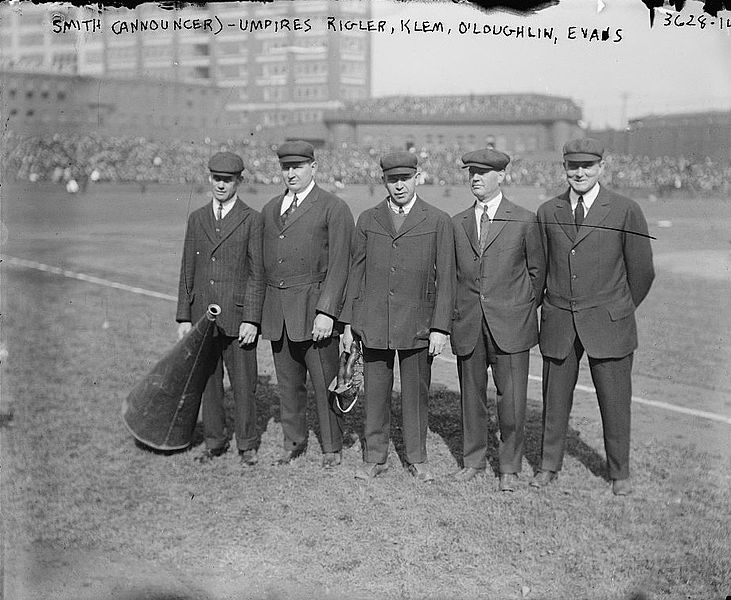
Umpiring baseball apparently comes with a degree of ethnic bias, as millions of pitch calls were analyzed and umpires displayed a persistent tendency to call pitches more favorably for members of their own ethnic group. Considering how few African-American baseball players there currently are and the lack of Latin American umpires, I wonder if that sample size had an effect on the study. An excerpt from an article on Ars Technica by John Timmer:
“Several studies have shown that sporting officials have a tendency to exhibit subtle biases in favor of members of their own ethnic group, So, an umpire that’s white might be expected to favor a white pitcher, giving him more favorable calls when pitches are at the edge of the strike zone. This sort of bias might be expected to be subtle, but the research has the sort of statistical power that comes from large numbers: a record of over 3.5 million pitches, and what their outcomes were. (Here, the authors turned to ESPN.com for a pitch-by-pitch record of the game to match up with their computer data.)
After eliminating things like foul balls, swinging strikes, and intentional balls, the authors still had a very impressive collection of data to work with: 1.9 million pitches in which the umpires made a decision. Then came the real drudge work. Using sources such as About.com and web searches, the authors pieced together the ethnic origins of all the major league players and umpires involved. And then they started crunching numbers. And what they found was a subtle bias that went away when the umpires thought someone was watching them.”
Waiting for Elton John as he shows up for a 1975 concert in Los Angeles? A sequined Bob Mackie baseball uniform and a guffawing Charles Nelson Reilly. Not that there’s anything wrong with that.
Civilization was encroaching on the Wild West in the 1890s, as cowboys began to trade their trusted steeds for bicycles. At least that’s what was reported in the December 18, 1895 edition of the Brooklyn Daily Eagle. An excerpt:
“Kansas and Texas cowboys are now using bicycles in herding, rounding up and driving cattle to pasture, corral or barn. As a lively broncho has more double cussedness bound up in his diminutive carcass than any other animal in existence, the use of the wheel in its stead will destroy the romance which distance lends to the festive cowboy. Imagine a long haired, leather-breeched, sombreroed cowboy, guns, cartridge belt. etc.; cavorting across prairie, canyon and divide, in the effort to round up or rope a frisky long horn or cut out marketable steers from the bunch. Then when the Mescalero, Chiricahua and Yaqui Apache, the hereditary foes of the cowboy, are compelled to steal the bicycles instead of the ponies of the cow punchers, the demoralization of the trail, round-up and drive will have been complete.”
ideas for offensive halloween costume? (Halloweentown)
Need ideas for something messed up…not like a Klansmen or Hitler. Preferably something current events. I thought something like Charlie Sheen, but not sure what I’d do with that. Somethin like Amy Winehouse but I’m a guy…open to suggestions. In the past I’ve done OJ, a suicide bomber, things like that…
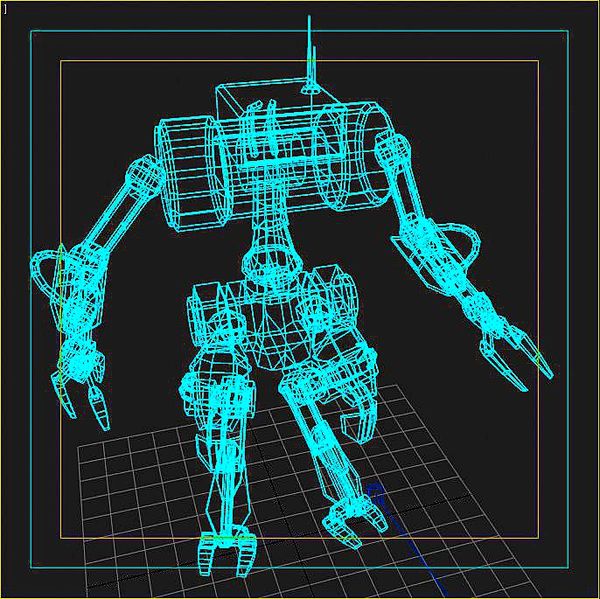
Has the rise of the machines made widespread enployment in America a thing of the past? That’s the question Douglas Rushkoff asks at the CNN site. An excerpt:
“New technologies are wreaking havoc on employment figures — from EZpasses ousting toll collectors to Google-controlled self-driving automobiles rendering taxicab drivers obsolete. Every new computer program is basically doing some task that a person used to do. But the computer usually does it faster, more accurately, for less money, and without any health insurance costs.
We like to believe that the appropriate response is to train humans for higher level work. Instead of collecting tolls, the trained worker will fix and program toll-collecting robots. But it never really works out that way, since not as many people are needed to make the robots as the robots replace.
And so the president goes on television telling us that the big issue of our time is jobs, jobs, jobs — as if the reason to build high-speed rails and fix bridges is to put people back to work. But it seems to me there’s something backwards in that logic. I find myself wondering if we may be accepting a premise that deserves to be questioned.
I am afraid to even ask this, but since when is unemployment really a problem? I understand we all want paychecks — or at least money. We want food, shelter, clothing, and all the things that money buys us. But do we all really want jobs?
We’re living in an economy where productivity is no longer the goal, employment is. That’s because, on a very fundamental level, we have pretty much everything we need. America is productive enough that it could probably shelter, feed, educate, and even provide health care for its entire population with just a fraction of us actually working.”
Misphonia is a condition which causes the sufferer to feel rage and panic when they hear mouth sounds, like those caused by eating and drinking. It can be socially isolating, of course. From aNew York Times article about the affliction by Joyce Cohen:
“He believes the condition is hard-wired, like right- or left-handedness, and is probably not an auditory disorder but a ‘physiological abnormality’ that resides in brain structures activated by processed sound.
There is ‘no known effective treatment,’ Dr. Moller said. Patients often go from doctor to doctor, searching in vain for help.
Dr. Johnson agreed. ‘These people have been diagnosed with a lot of different things: phobic disorders, obsessive-compulsive disorder, bipolar, manic, anxiety disorders,’ she said.
Dr. Johnson’s interest was piqued when she saw her first case in 1997. ‘This is not voluntary,’ she said. ‘Usually they cry a lot because they’ve been told they can control this if they want to. This is not their fault. They didn’t ask for it and they didn’t make it up.’ And as adults, they ‘don’t outgrow it,’ she said. ‘They structure their lives around it.’
Taylor Benson, a 19-year-old sophomore at Creighton University in Omaha, says many mouth noises, along with sniffling and gum chewing, make her chest tighten and her heart pound. She finds herself clenching her fists and glaring at the person making the sound.
‘This condition has caused me to lose friends and has caused numerous fights,’ she said.” (Thanks Marginal Revolution.)
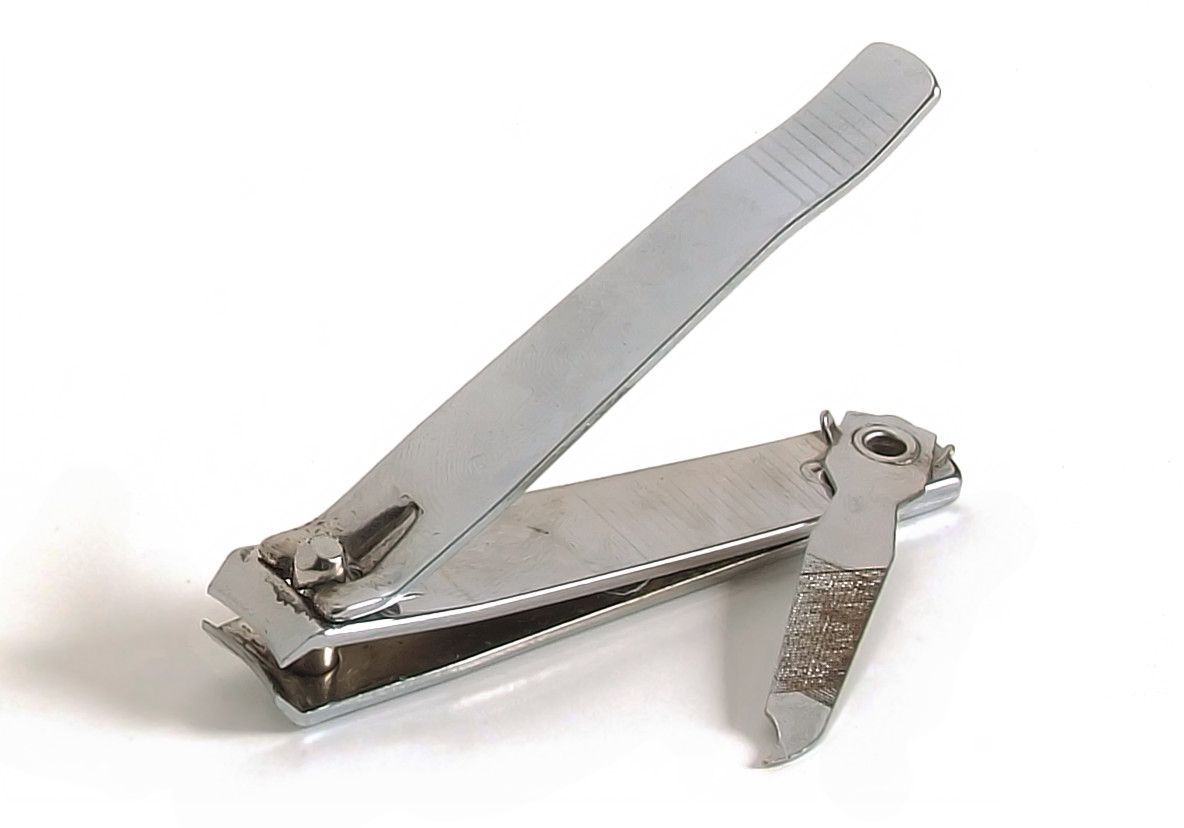
I think I’d like to clip my nails on the train! (Midtown West)
I’m gonna go do that! That sounds like fun! You can all suck my dick! CLIP CLIP CLIP CLIP SNIP SNIP. Can’t you just hear it now. I’m gonna fart while I’m doing this. God, I’m gonna eat sooooo much chili tonight before tomorrow’s big day!
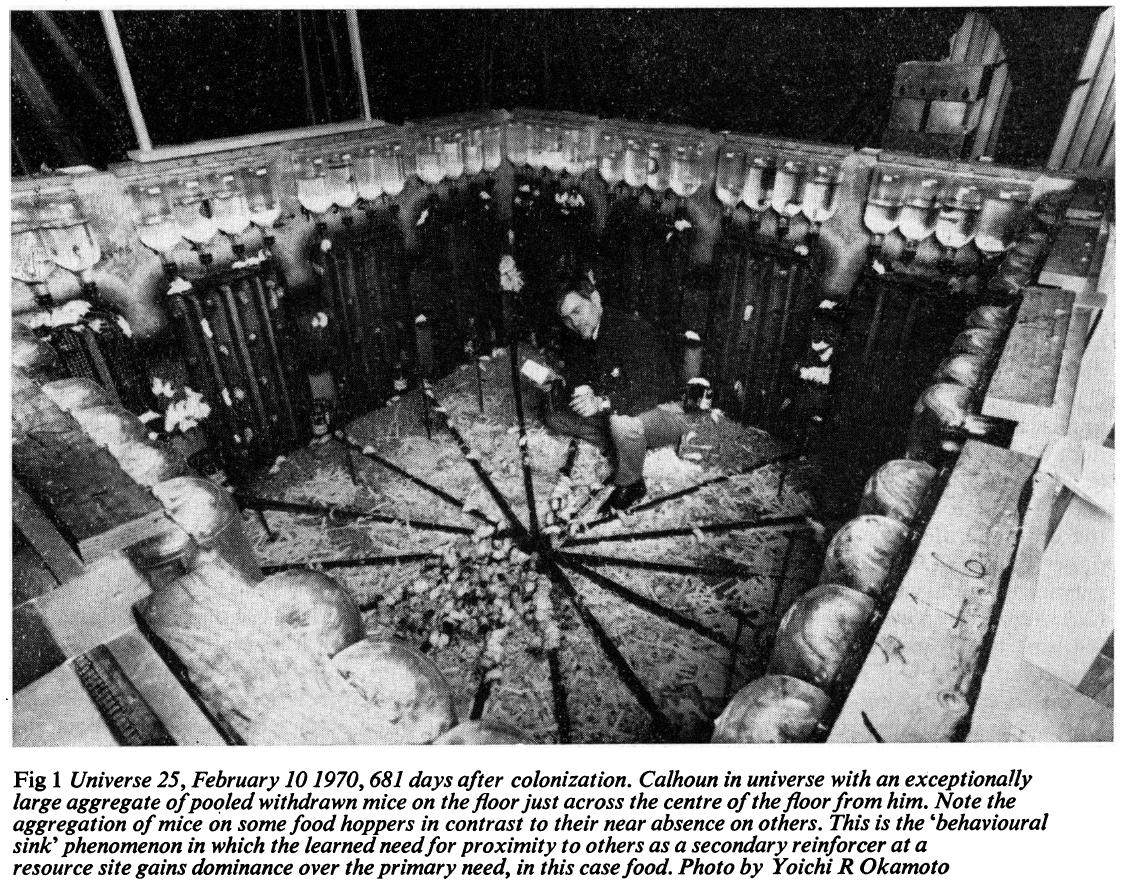
In Cabinet, Will Wiles recalls the work of John B. Calhoun, a scientist who used rodents to study the effects of overpopulation. Despite Malthusian hand-wringing, population density seems to be a good thing overall for humans. An excerpt:
“So what exactly happened in Universe 25? Past day 315, population growth slowed. More than six hundred mice now lived in Universe 25, constantly rubbing shoulders on their way up and down the stairwells to eat, drink, and sleep. Mice found themselves born into a world that was more crowded every day, and there were far more mice than meaningful social roles. With more and more peers to defend against, males found it difficult and stressful to defend their territory, so they abandoned the activity. Normal social discourse within the mouse community broke down, and with it the ability of mice to form social bonds. The failures and dropouts congregated in large groups in the middle of the enclosure, their listless withdrawal occasionally interrupted by spasms and waves of pointless violence. The victims of these random attacks became attackers. Left on their own in nests subject to invasion, nursing females attacked their own young. Procreation slumped, infant abandonment and mortality soared. Lone females retreated to isolated nesting boxes on penthouse levels. Other males, a group Calhoun termed ‘the beautiful ones,’ never sought sex and never fought—they just ate, slept, and groomed, wrapped in narcissistic introspection. Elsewhere, cannibalism, pansexualism, and violence became endemic. Mouse society had collapsed.” (Thanks Longreads.)
Jacqueline Mroz has an interesting article in the New York Times about a single sperm donor siring 150 children. Having so many kids from the same sperm donor living in close proximity to one another causes complications, as you might expect. An excerpt:
“As more women choose to have babies on their own, and the number of children born through artificial insemination increases, outsize groups of donor siblings are starting to appear. While Ms. Daily’s group is among the largest, many others comprising 50 or more half siblings are cropping up on Web sites and in chat groups, where sperm donors are tagged with unique identifying numbers.
Now, there is growing concern among parents, donors and medical experts about potential negative consequences of having so many children fathered by the same donors, including the possibility that genes for rare diseases could be spread more widely through the population. Some experts are even calling attention to the increased odds of accidental incest between half sisters and half brothers, who often live close to one another.
‘My daughter knows her donor’s number for this very reason,’ said the mother of a teenager conceived via sperm donation in California who asked that her name be withheld to protect her daughter’s privacy. ‘She’s been in school with numerous kids who were born through donors. She’s had crushes on boys who are donor children. It’s become part of sex education’ for her.”
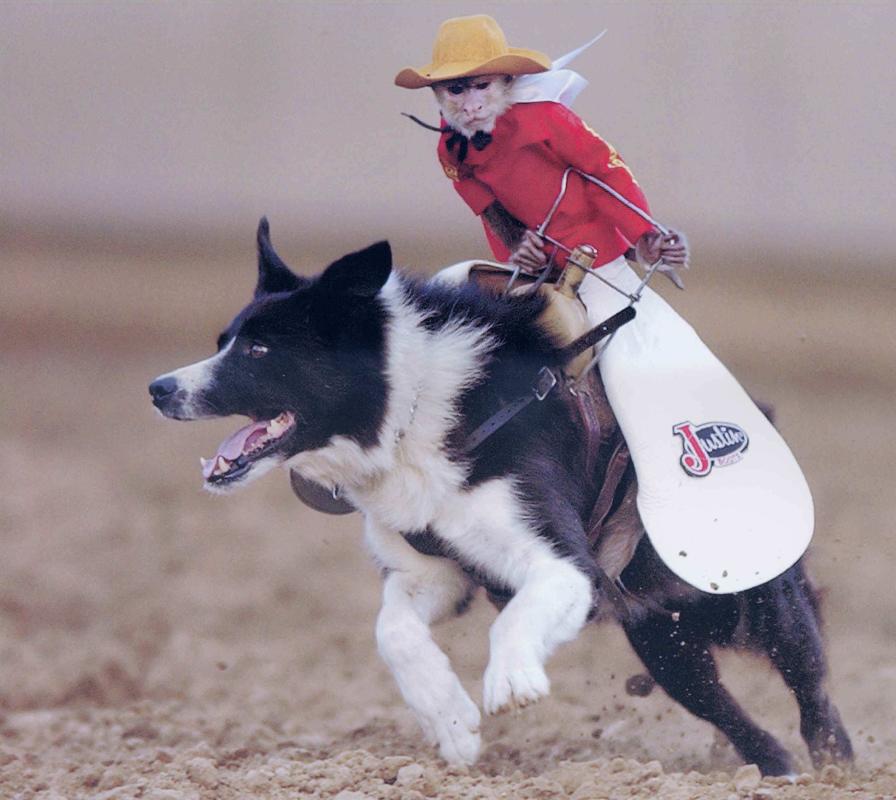
"Its owner had taught it to fire a pistol while galloping on the back of a dog."
The most ridiculous thing I have ever read was published in the June 29, 1889 edition of the Brooklyn Daily Eagle. The story in full:
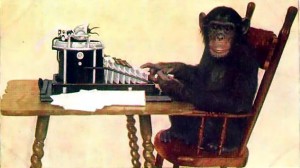
“A correspondent writing to a Paris contemporary from Montriebard, in the department of Lois et Cher, says: ‘A learned monkey named Bertran was deeply attached to its owner, who among other tricks, had taught it to fire a pistol while galloping on the back of a dog. The master of the animal, it seems, lately met with certain domestic troubles and, in a dejected frame of mind a few days ago, he sent a bullet through his head, death being instantaneous. The monkey was present at the death of his master, and probably took in every particular. In any case,when a doctor was called in to see if life was extinct in the man he was astonished to find himself in presence of a double suicide, the monkey’s body being stretched beside that of his master, with the revolver being clasped between his fingers. It is stated that the animal picked up the pistol after his master had blown out his brains, and imitated what he had just seen done, sending a bullet through his head precisely as the man had done.'”
Margaret Mead commenting on speeded-up America inLife in 1968, remarks that seem even more applicable in our time:
“There is tremendous confusion today about change. This isn’t surprising because people are living in a period of the fastest change the world has ever known. Young people have been confronted with the changes, but at the same time they have no sense of history and no one has been able to explain to them what has happened. We are always very poor at teaching the last 25 years of history. Adults have been shrieking about the fact that great newnesses are here but they are not talking about what the newnesses are.”
••••••••••
“Trance And Dance In Bali,” by Margaret Mead and Gregory Bateson, 1939:
Dennis Hopper interviewed by David Brenner in 1986, just as David Lynch released his masterpiece, Blue Velvet, which would lead to a career renaissance for the actor. Hopper was married for a few years toDaria Halprin.
IS THE END OF THE WORLD AS WE KNOW IT COMING ? WHETHER YOU ARE A BELIVER OR NOT GO TO OUR WEBSITE AND PUT YOUR LEGACY AWAY IN OUR TIMECAPSULE PASS IT ON