Alternet has an article by Tana Ganeva about creepy new uses for facial recognition technology. An excerpt:
“In the fall, police officers from 40 departments will hit the streets armed with the Mobile Offender Recognition and Information System (MORIS) device. The gadget, which attaches to an iPhone, can take an iris scan from 6 inches away, a measure of a person’s face from 5 feet away, or electronic fingerprints, according to Computer vision central. This biometric information can be matched to any database of pictures, including, potentially, one of the largest collections of tagged photos in existence: Facebook. The process is almost instant, so no time for a suspect to opt out of supplying law enforcement with a record of their biometric data.
Lee Tien of the Electronic Frontier Foundation told AlterNet that while it’s unclear how individual departments will use the technology, there are two obvious ways it tempts abuse. Since officers don’t have to haul in an unidentified suspect to get their fingerprints, they have more incentive to pull people over, increasing the likelihood of racial profiling. The second danger lurks in the creation and growth of personal information databases. Biometric information is basically worthless to law enforcement unless, for example, the pattern of someone’s iris can be run against a big database full of many people’s irises.”
After two decades of the GOP trying to destroy a couple of moderate Presidents whose main fault is that they belong to another party, we should drop the pretense that a Republican Party still exists. It’s fully and finally the Tea Party now. It’s a political group based on scorched-earth policies, bad science, tax cuts for the wealthy and adherence to an irrational and injurious ideology at all costs. It’s politics as hostage negotiations and nothing more.
Bill Clinton may have had moral failings that made him an easy target (though he wasn’t nearly as morally bankrupt as those who pursued him), but he was going to be targeted regardless. Obama, who has made it easy for them to rally their base by virtue of being black and intelligent, is a clear centrist who has been branded an extremist and undermined at every turn at the expense of the American people. The Tea Party will now run its Presidential election saying that the economy is struggling because of too many government restrictions (too little oversight caused the economic collapse) and high taxes on so-called “job creators” (taxes have been low on the wealthy for almost a decade and no jobs have been created because of it).
Mike Lofgren, a Republican operative for 30 years, recently stepped away from what he now sees as a fringe party. He’s written about the experience on truthout. An excerpt:
“To those millions of Americans who have finally begun paying attention to politics and watched with exasperation the tragicomedy of the debt ceiling extension, it may have come as a shock that the Republican Party is so full of lunatics. To be sure, the party, like any political party on earth, has always had its share of crackpots, like Robert K. Dornan or William E. Dannemeyer. But the crackpot outliers of two decades ago have become the vital center today: Steve King, Michele Bachman (now a leading presidential candidate as well), Paul Broun, Patrick McHenry, Virginia Foxx, Louie Gohmert, Allen West. The Congressional directory now reads like a casebook of lunacy.
It was this cast of characters and the pernicious ideas they represent that impelled me to end a nearly 30-year career as a professional staff member on Capitol Hill. A couple of months ago, I retired; but I could see as early as last November that the Republican Party would use the debt limit vote, an otherwise routine legislative procedure that has been used 87 times since the end of World War II, in order to concoct an entirely artificial fiscal crisis. Then, they would use that fiscal crisis to get what they wanted, by literally holding the US and global economies as hostages.
The debt ceiling extension is not the only example of this sort of political terrorism. Republicans were willing to lay off 4,000 Federal Aviation Administration (FAA) employees, 70,000 private construction workers and let FAA safety inspectors work without pay, in fact, forcing them to pay for their own work-related travel – how prudent is that? – in order to strong arm some union-busting provisions into the FAA reauthorization.”
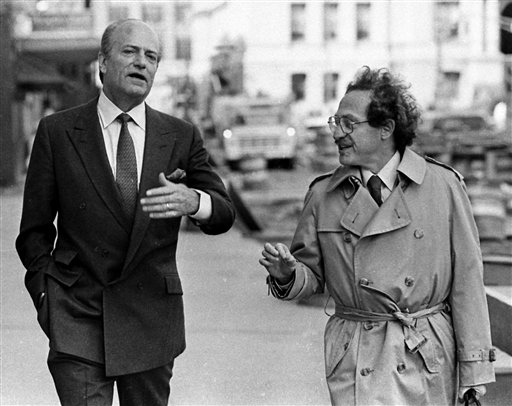
In 1985, Barbara Walters interviewed infamous society spouse Claus von Bülow, who married well though his wife did not. One odd thing: Walters was made up like Tammy Faye Bakker. Did female reporters on TV in the ’80s always wear such heavy make-up?
Shockingly, Vanity Fair squeezed in a story or two about the lurid case of heiress Sunny von Bülow. From Dominick Dunne’s 1985 article, “Fatal Charm: The Social Web of Claus von Bülow“:
From the beginning, the von Bülow proceedings, legal and otherwise, had had an air of unreality about them. His once beautiful wife was one of the country’s richest heiresses. His stepchildren were a prince and princess. His daughter was a disinherited teenager. His former mistress was a socialite actress. His current lady friend was a thrice-married Hungarian adventuress who was not the countess she was often described as being. The maid who testified against him had once worked for the Krupps. And lurking darkly in the background was a publicity-mad con man bent on destroying him.
The apartment of Sunny von Bülow, even by Fifth Avenue standards, is very grand. Located in one of the most exclusive buildings in New York, its current market value is estimated by one of the city’s top realtors at nearly $8 million. Although a sophisticated friend of von Bülow’s complained that the forty-foot drawing room has ‘far, far too many legs,’ it should be pointed out that the legs are by Chippendale and of museum quality, as is nearly every object in the fourteen-room apartment looking down on Central Park.
According to the terms of Sunny von Bülow’s will, the apartment will go to von Bülow when she dies. So will Clarendon Court, the fabulous mansion set on ten acres overlooking the sea in Newport, Rhode Island, where her two comas took place during successive Christmas holidays, in 1979 and 1980. So will $14 million of her $75 million fortune. In the meantime the maintenance on the apartment is paid for by Sunny’s estate, so in effect von Bülow and his self-proclaimed mistress, Andrea Reynolds, have been largely supported by his comatose wife since his conviction in 1982 for her attempted murder. That verdict was overturned on appeal because certain materials had been withheld from the defense and others had been improperly admitted as evidence.•
Steve Jobs waswary of technology in the classroomwhen he was asked about the topic in 1993, and now schools decked out with the latest tech teaching tools are so far seeing stagnant test scores. Are our measurements of educational growth lacking and passé or is the problem with our schools (and ourselves) something that can’t be remedied by bytes and bots? An excerpt from apiece on the topicby Matt Richtel in the New York Times:
“CHANDLER, Ariz. — Amy Furman, a seventh-grade English teacher here, roams among 31 students sitting at their desks or in clumps on the floor. They’re studying Shakespeare’s As You Like It — but not in any traditional way.
In this technology-centric classroom, students are bent over laptops, some blogging or building Facebook pages from the perspective of Shakespeare’s characters. One student compiles a song list from the Internet, picking a tune by the rapper Kanye West to express the emotions of Shakespeare’s lovelorn Silvius.
The class, and the Kyrene School District as a whole, offer what some see as a utopian vision of education’s future. Classrooms are decked out with laptops, big interactive screens and software that drills students on every basic subject. Under a ballot initiative approved in 2005, the district has invested roughly $33 million in such technologies.”
Hello.. My fience and I are a young couple who needs help financially and is willing to help another couple bare a child. I am a 22 yr old healthy Latin American female I am willing to sell my eggs. My fience is a 25 yrs old healthy latin American male willing to sell sperm. We know that this isn’t like selling a purse or something simple like that but we would go through all the steps of accomplishing your dreams in helping you in a birth of a child.. If you like to contact us please email us and we will get back to you asap. Thank you Johnny and Virginia
F. Lee Bailey, one of the first celebrity lawyers of the TV era, who was involved in the Sam Sheppard, Patty Hearst and O.J. Simpson trials, among others, talks to questionable interlocutor Joe Pyne, in 1966.
Good piece by Jonathan Newton in the Washington Post about the arm operation known as Tommy John Surgery. The procedure, created by Dr. Frank Jobe, was first performed in 1974 on the pitcher for whom it was named. The article gets to the heart of just how experimental the ligament-reconstruction procedure was when John went under the knife, and explains what changes to the operation have reduced risk. An excerpt:
“When Jobe operated, he sliced John’s elbow wide open and moved the ulnar nerve in order to reach the bone. He took a tendon from a cadaver’s leg and attached it with screws. Then he hoped John’s body would react favorably and the tendon would serve the same role as the ligament.
‘We didn’t really know whether we could do it or not,’ Jobe said. ‘We didn’t know whether we could heal it or not. We didn’t know whether a tendon would be accepted by the body and receive blood supply and become part of the body.’
Jobe and John waited. John did not throw a ball again for 16 weeks. Jobe decided he should not pitch in a major league game again until one year of rigorous rehab. Every step of the way, the recovery unfolded as Jobe hoped. John returned in 1974, and in seven of the next eight seasons he threw more than 200 innings.
‘I would never have thought it would happen,’ Jobe said. ‘I didn’t do it again for another two years. After another year or so, I had a couple successes. I thought, This may be something we ought to use a little more routinely.”
••••••••••
Elton John (no relation) performs at Dodger Stadium in 1975, the year Tommy John couldn’t pitch for L.A. as he recuperated from surgery:
A writer waltzes into a Paris hospital and asks a doctor to act incredibly unethically and the medico eagerly complies, as reported in an article in the February 1, 1893 issue of the Brooklyn Daily Eagle, which was originally published in the Pall Mall Gazette. An excerpt:
“The other day I wanted to include in a page of fiction a realistic description of the agonies that a starving person undergoes before death puts an end to the suffering. I had consulted several doctors and obtained from them statements of the symptoms preceding death from starvation. Still, I felt a description based on such information was wanting in certain particulars and could not well be put into the mouth of a supposed sufferer. Suddenly it occurred to me to go to the Hospital de la Charite, and beg the doctors attached to the Clinique Hypnotherapique to hypnotize one of the patients, to suggest that she was starving, and then to allow me to write down the sensations experienced by the subject as she described them. I called at the hospital unexpectedly and explained the object of my visit. The doctor smiled, and without a word sent for a patient, who was immediately put into a hypnotic state. Nothing passed between the doctor and the subject before she was hypnotized.
It was then suggested to her that she had been without food for many days and was actually starving. The patient soon showed signs of great suffering and distress and at the doctor’s invitation described the sensations she felt. I was astounded. A symptom that I had noticed in scores of cases among the starving Russian peasants last winter was described by the hypnotized woman with a physical movement familiar to me, although I had entirely forgotten it, and my attention had not been called to it by any medical man consulted.
The patient was taken by suggestion progressively through the stages of starvation as far as was safe and was afterward brought back to a normal state on it being suggested to her that she had swallowed nourishing food. Still, it was some time before the food she had taken in imagination seemed to benefit her; she persisted in declaring that it caused her a great deal more bodily pain than the pangs of hunger. Dr. Jules Luys, member of the Academy of Medicine, the eminent professor at the Charite, was greatly interested in the result of this experiment, which was carried out for me under the observation of Dr. Encausse, his chief of the laboratory. He told me afterwards that he had known this woman for many years and was sure that she had not suffered from hunger.”
From “Lost in the Supermarket,” David Mattin’s attempt to make sense of the recent London riots, published today at the Los Angeles Review of Books:
“Now, two weeks on, Britain is puzzling over what has happened. In the sound of the metropolitan British middle-class — the politicians, the columnists, the activists — trying to explain these riots to each other, there can be discerned a strange, schizophrenic mixture of anger and uncertainty, a frustrating inability to get much beyond first principles. What caused these riots? What do the people who participated in them want? What do they tell us about the country in which we live? What, in short, do the riots mean?
Across the last two weeks, these questions have been the subject of much talk; they can accommodate so much talk because their answers are so elusive. Even the left’s best attempt to imbue the riots with a meaning — the argument that contends that they were an expression of inchoate anger at the current austerity, and the mismanagement that brought us to it — is, on close examination, not satisfactory. And that is because there is a sense in which the English riots of 2011 mean nothing at all. Nothing, at least, to the people who participated in them. Which is what makes them so uniquely frightening, and problematic. “
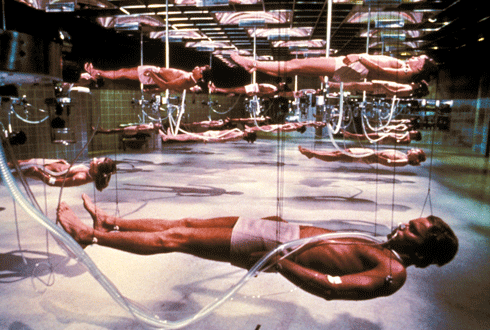
Michael Crichton’s prophetic 1978 genre picture foresaw an America with a small number of haves and many have-nots, and the ethical problems that could develop in a land of such disparate levels of wealth and so many emergent technologies. Adapted from a novel by Robin Cook, the Queens-born doctor who’s turned out a slew of medical thrillers, the film version of Coma was perhaps most famous in its day for its feminist hero, Dr. Susan Wheeler, played by Geneviève Bujold, but it now makes its mark most prominently in ways that cross gender lines.
Boston Medical is a wealthy and prestigious hospital with a sterling reputation, as it seems no one has yet noticed that a higher-than-average number of young, healthy patients have signed in for mundane operations to remove appendixes or repair knees and have flatlined on the operating table. Dr. Wheeler certainly notices when her best friend is added to the growing list of the comatose, and she starts poking around the hospital for answers even though everyone, even her fellow doctor and boyfriend (Michael Douglas), believes she’s hysterical. As Wheeler follows the trail of corpses from the hospital to the nearby Jefferson Institute, a cutting edge facility where those healthy bodies with dead brains are kept pristine-but for what purpose?–she is sure that the “accidents” in O.R. are no mistake.
As Wheeler tries to sort through the welter of lies, she meets Jeffeson Institute attendant Mrs. Emerson (Elizabeth Ashley), who pointedly tells her, “I have no supervisor.” Emerson isn’t just talking about herself but about the ability of the powerful to prey on the weak in a society that clearly favors the former. There are certainly some hokey plot twists in Coma, as a few scenes were written to increase the action element at the expense of logic, but it’s still a powerful film instead of a dated one.
Bio-printers will be able to create perfect replacement organs in the future, so harvesting flesh,which actually still happens in developing countries, will eventually be a thing of the past. But does that mean our organs will be safe? Not exactly. What is ever more in play isn’t our organs themselves, but the information within one of them in particular–our brains. The nouveau tech corporations are aimed at locating and marking our personal preferences, tracking our interests and even our footsteps, knowing enough about what’s going on inside our heads to predict our next move. In a time of want and desperation and disparity of wealth, how much information will we surrender? It may be far less nefarious to read a mind than pluck a brain, but what we’re seeing now is probably just the beginning, as the profit motive is huge. To not pay attention to a line from Crichton’s film would mean we ourselves our in a collective coma: “We are dealing in an area of uncertainty, an area where there are no rules, contradictory laws and no clear social consensus as to what should be done.”•
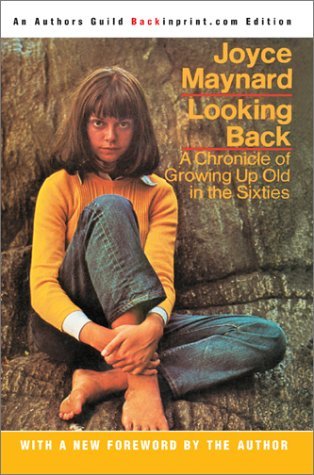
In 1972, with the cover story “An 18-Year-Old Looks Back On Life,” the New York Times Magazine got into generation-defining business, with the aid of precocious writer Joyce Maynard, a representative of the first American generation to have been raised by that glowing picture tube in the living room and to have taken space-age technology for granted. For Maynard, the article spawned a book and a romantic relationship with the Garbo-ish author J.D. Salinger. She became something of a scorned figure in American Letters, perhaps seeming to have gotten too much too soon. The opening of her famous (and infamous) Times piece:
“Every generation thinks it’s special–my grandparents because they remember horses and buggies, my parents because of the Depression. The over-30’s are special because they knew the Red Scare of Korea, Chuck Berry and beatniks. My older sister is special because she belonged to the first generation of teen-agers (before that, people in their teens were adolescents), when being a teen-ager was still fun. And I–I am 18, caught in the middle. Mine is the generation of unfulfilled expectations. “When you’re older,” my mother promised, “you can wear lipstick.” But when the time came, of course, lipstick wasn’t being worn. “When we’re big, we’ll dance like that,” my friends and I whispered, watching Chubby Checker twist on “American Bandstand.” But we inherited no dance steps, ours was a limp, formless shrug to watered-down music that rarely made the feet tap. “Just wait till we can vote,” I said, bursting with 10-year-old fervor, ready to fast, freeze, march and die for peace and freedom as Joan Baez, barefoot, sang “We Shall Overcome.” Well, now we can vote, and we’re old enough to attend rallies and knock on doors and wave placards, and suddenly it doesn’t seem to matter any more.
My generation is special because of what we missed rather than what we got, because in a certain sense we are the first and the last. The first to take technology for granted. (What was a space shot to us, except an hour cut from Social Studies to gather before a TV in the gym as Cape Canaveral counted down?) The first to grow up with TV. My sister was 8 when we got our set, so to her it seemed magic and always somewhat foreign. She had known books already and would never really replace them. But for me, the TV set was, like the kitchen sink and the telephone, a fact of life.
We inherited a previous generation’s hand-me-downs and took in the seams, turned up the hems, to make our new fashions. We took drugs from the college kids and made them a high-school commonplace. We got the Beatles, but not those lovable look-alikes in matching suits with barber cuts and songs that made you want to cry. They came to us like a bad joke–aged, bearded, discordant. And we inherited the Vietnam war just after the crest of the wave–too late to burn draft cards and too early not to be drafted. The boys of 1953–my year–will be the last to go.
So where are we now? Generalizing is dangerous. Call us the apathetic generation and we will become that. Say times are changing, nobody cares about prom queens and getting into the college of his choice any more–say that (because it sounds good, it indicates a trend, gives a symmetry to history) and you make a movement and a unit out of a generation unified only in its common fragmentation. If there is a reason why we are where we are, it comes from where we have been.”
••••••••••
Maynard queried by that handsome, world-weary robot Charlie Rose, 1998:
Trailer for To Die For, the 1995 film adapted from a Maynard book:
I am born and raised in NY I live and breath NY. Nothing is home like walking around Manhattan. Well for the reason for the ad. I’be been unemployed for sometime now and not sure if I’m willing to get back in the rat race again looking for something more life satisfying. Really taking a good look at my desires and abitities and come to a few conclusions. Life is way to short and if not everyone most people feel like their in whole you just can’t escape. I want to make your goals my goals. I know tons of talented and not so talented people but we all have a talent we excell at. For me I love people the more time andvariety of personalities I reach the more fulfilled I fell. I want to hear from you let me know what you would like out of life and I want to help from the mundane to the crazy 1 hour 1 NIGHT a trip with a friend.
Don’t misunderstand I will not perform any services myself. What I’m asking is maybe to have lunch ill pay I want to hear your fantasy and help you follow thru and ill put all the players to action.
You have a party, anniversary, looking to propose I’ll make you feel like the star you should be.
Want to hang with friends have a exotic night,male, female, gay, bi, swingers just a regular man/women and not sure how to get what you want.
I know how I’m in NYC and NJ I want to help you go to that place that you feel fulfilled and satisfied place. I don’t bite I’m not joking and it wont cost you to email and start some dialogue with me its free worst case you’ll meet a straight forward visionary who sees everyone as a person with desires just like me.
From the thug in the street to the matrede in the finest restaurant if I don’t know them I have a friend that will. Limos, boat rides, house party, DJ’s clubs, restaurants, strippers, you name it call me? I can only handle sooooo much need to shuffle thru the talkers to find some real honest people out there. By the way this is not free think of me as an organizer of fun. I want to hear from you. Tourist welcome I would also like to see real NYers like myself. Also always looking to meet new friends and associates email me with your talents and Lets talk.
I’m currently working with a limo company that has alot of there vehicles sitting Monday thru Thursday and will put together interesting treats for those days so if you have a restaurant, hall or room in manhaattan contact me I have some potential business for you Lets talk.
The mass-market paperback has understandably passed into obsolescence, thanks to the inexpensive e-book. Mixed in with all the dross that was published were undervalued genre works that introduced a lot of young people to reading. An excerpt from a story about the dying dead-tree edition from Julie Bosman in theNew York Times:
“A comprehensive survey released last month by the Association of American Publishers and the Book Industry Study Group revealed that while the publishing industry had expanded over all, publishers’ mass-market paperback sales had fallen 14 percent since 2008.
‘Five years ago, it was a robust market,’ said David Gernert, a literary agent whose clients include John Grisham, a perennial best seller in mass market. ‘Now it’s on the wane, and e-books have bitten a big chunk out of it.’
Fading away is a format that was both inexpensive and widely accessible — thrillers and mysteries and romances by authors like James Patterson, Stephen King, Clive Cussler and Nora Roberts that were purchased not to be proudly displayed on a living room shelf (and never read), but to be addictively devoured by devoted readers.”
In 1976, Dinah Shore interviews Michael Jackson, already a gigantic star but several years before he turned out his twin solo masterpieces, Off The Wall and Thriller.
Promo at the end for the following day’s program: “Don’t miss tomorrow’s show when Dinah welcomes a new opponent for Muhammad Ali, Japan’s heavyweight wrestling champion, Antonio Inoki. Also on hand will be good ol’ boy Eddy Arnold, Mort Sahl and Gary Burghoff–you know, Radar from M*A*S*H. So be watching tomorrow afternoon at 3:30.”
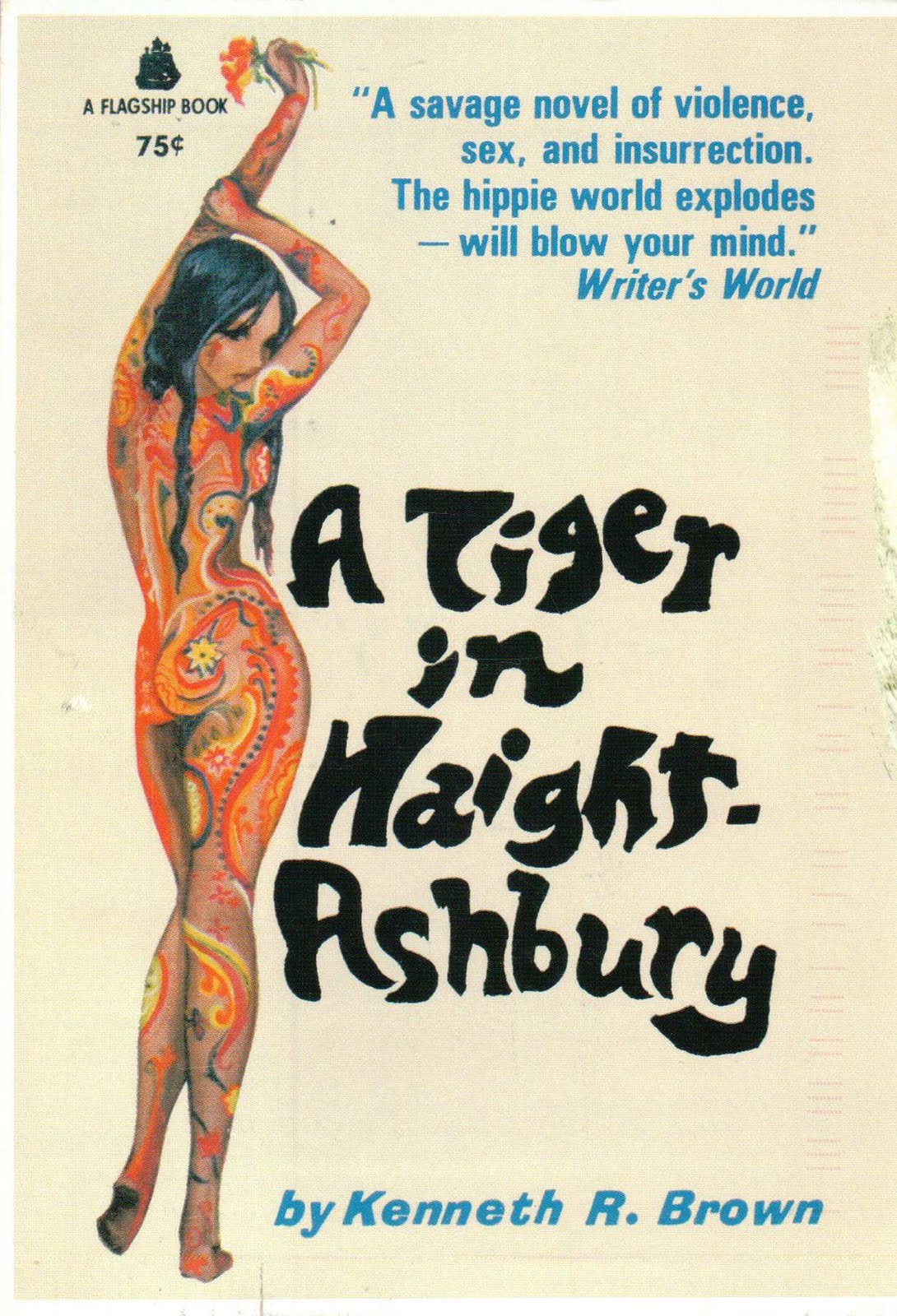
In 1972, Clifford Irving wrote an “authorized” biography of Howard Hughes, claiming he had the cooperation of the ultra-reclusive figure. The book turned out to be an elaborate hoax.
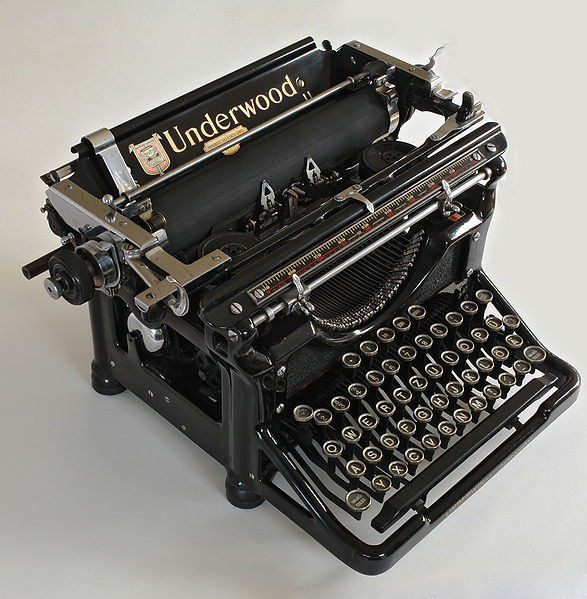
Rural areas of India lack electricty, so the typewriter remains a popular tool. From anarticle by Mark Magnier in the Los Angeles Times:
“It’s a stultifying afternoon outside the Delhi District Court as Arun Yadav slides a sheet of paper into his decades-old Remington and revs up his daily 30-word-a-minute tap dance.
Nearby, hundreds of other workers clatter away on manual typewriters amid a sea of broken chairs and wobbly tables as the occasional wildlife thumps on the leaky tin roof above.
‘Sometimes the monkeys steal the affidavits,’ Yadav said. ‘That can be a real nuisance.’
The factories that make the machines may be going silent, but India’s typewriter culture remains defiantly alive, fighting on bravely against that omnipresent upstart, the computer.”
Eye-scanning on a massive scale is currently being carried out in India, in efforts to have permanent records of poor people. From a report in the New York Times by:Lydia Polgreen:
“KALDARI, India — Ankaji Bhai Gangar, a 49-year-old subsistence farmer, stood in line in this remote village until, for the first time in his life, he squinted into the soft glow of a computer screen.
His name, year of birth and address were recorded. A worker guided Mr. Gangar’s rough fingers to the glowing green surface of a scanner to record his fingerprints. He peered into an iris scanner shaped like binoculars that captured the unique patterns of his eyes.
With that, Mr. Gangar would be assigned a 12-digit number, the first official proof that he exists. He can use the number, along with a thumbprint, to identify himself anywhere in the country. It will allow him to gain access to welfare benefits, open a bank account or get a cellphone far from his home village, something that is still impossible for many people in India.”
William Gibson describes discovering personal computers, via The Paris Review:
“I was walking around Vancouver, aware of that need, and I remember walking past a video arcade, which was a new sort of business at that time, and seeing kids playing those old-fashioned console-style plywood video games. The games had a very primitive graphic representation of space and perspective. Some of them didn’t even have perspective but were yearning toward perspective and dimensionality. Even in this very primitive form, the kids who were playing them were so physically involved, it seemed to me that what they wanted was to be inside the games, within the notional space of the machine. The real world had disappeared for them—it had completely lost its importance. They were in that notional space, and the machine in front of them was the brave new world.
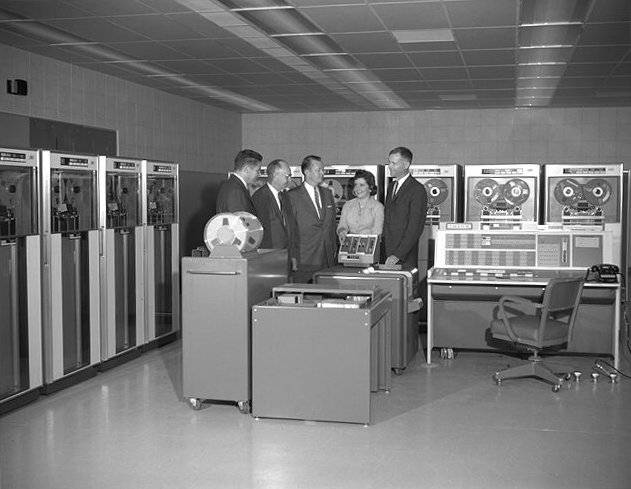
The only computers I’d ever seen in those days were things the size of the side of a barn. And then one day, I walked by a bus stop and there was an Apple poster. The poster was a photograph of a businessman’s jacketed, neatly cuffed arm holding a life-size representation of a real-life computer that was not much bigger than a laptop is today. Everyone is going to have one of these, I thought, and everyone is going to want to live inside them. And somehow I knew that the notional space behind all of the computer screens would be one single universe.”
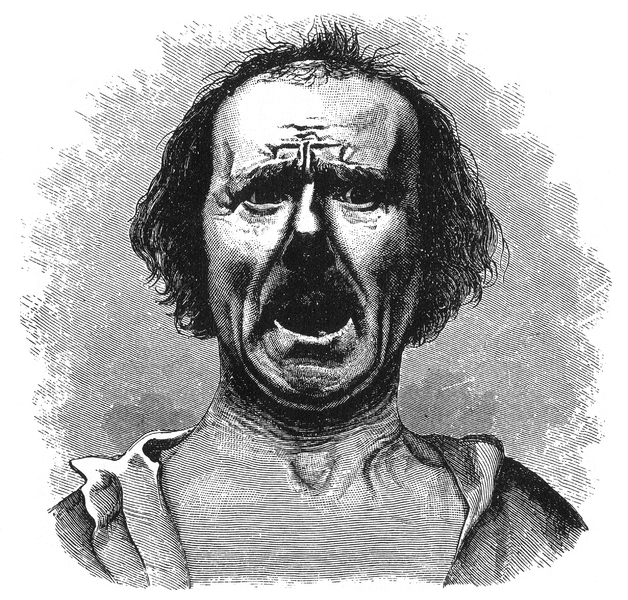
"The chief subjects we wish to elucidate concern the brain and the nerves."
Even in the 19th century, conducting medical experiments on criminals was generally frowned upon. But not by everyone, as evidenced by an article from the October 21, 1886 edition of the Brooklyn Daily Eagle, which was originally published in the Chicago Journal. An excerpt:
“In a conversation that I had recently with a prominent Chicago physician, he was bemoaning the prejudice that existed against vivisection autopsies, and all the means by which the medical profession acquires its knowledge of the human body and its skill in relieving human suffering. ‘What we need now,’ he said, ‘is a legal enactment turning over criminals convicted of heinous capital offenses to the medical fraternity for experimentation on the vital forces. Of course I never expect to see this done. The sentimentalists would rather see a million good people languish and die for want of medical skill than to see one cutthroat like Frank Rand subjected to surgical operations which would prove fatal. The truth is that this would be less liable to the charge of inhumanity than the vivisection of the lower animals. It would pain me exceedingly to have a dog subjected to torture, because the dog is an innocent and affectionate animal, whereas some of the men we now hang deserve a worse fate. Then, too, we would not have to keep up the practice for years. If there were only a law turning over the worst capital criminals of the year 1886 to us for the purpose, the benefit to suffering humanity could not be estimated. The chief subjects we wish to elucidate concern the brain and the nerves.”