"Why do people giggle or look at me funny?"

Male Toe Polish

I am a male who enjoys wearing dark color toe polish. Why do people giggle or look at me funny? Celebrities do it and it’s cool. It’s just paint. Why are tattoos acceptable but not polish. I just don’t get it!!! Anyone have an opinion on this??

The year 2001: A Space Odyssey was released and a year before Apollo 11 landed on the moon, Stanley Kubrick was asked during a Playboy Interview what he thought we would find on the surface of our natural satellite. An excerpt:

Playboy: What do you think we’ll find on the moon?

Kubrick: I think the most exciting prospect about the Moon is that if alien races have ever visited Earth in the remote past and left artifacts for man to discover in the future, they probably chose the airless lunar vacuum, where no deterioration would take place and an object could exist for millennia. It would be inevitable that as man evolved technologically, he would reach his nearest satellite and the aliens would then expect him to find their calling card–perhaps a message of greeting, a cache of knowledge or simply a cosmic burglar alarm signaling that another race had mastered space flight. This, of course, was the central situation of 2001.”

••••••••••

“Universe,” Roman Kroitor and Colin Low’s 1960 short which informed 2001:

Tags: , ,

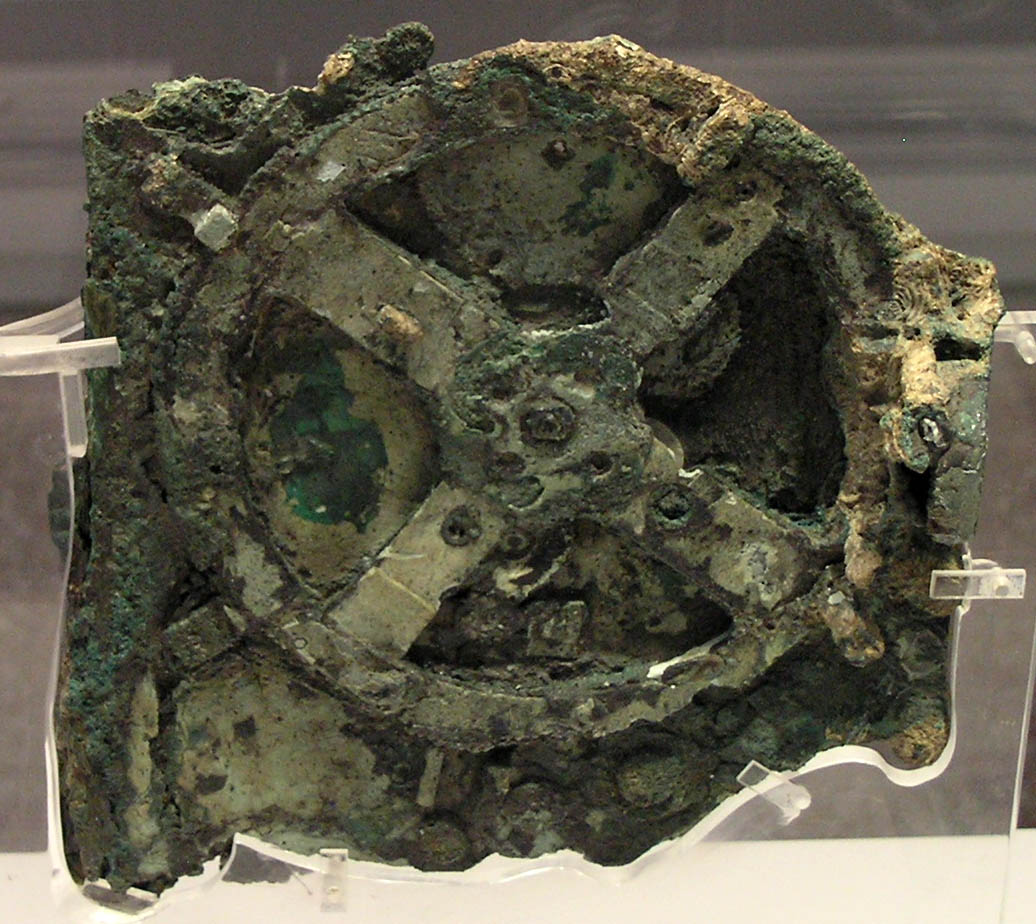
From “Fragmentary Knowledge,” John Seabrook’s 2008 New Yorker article about the Antikythera Mechanism, perhaps humankind’s first computer:

“Looking back over the first 50 years of research on the Mechanism, one is struck by the reluctance of modern investigators to credit the ancients with technological skill. The Greeks are thought to have possessed crude wooden gears, which were used to lift heavy building materials, haul up water, and hoist anchors, but historians do not generally credit them with possessing scientifically precise gears—gears cut from metal and arranged into complex ‘gear trains’ capable of carrying motion from one driveshaft to another. Paul Keyser, a software developer at IBM and the author of Greek Science of the Hellenistic Era, told me recently, ‘Those scholars who study the history of science tend to focus on science beginning with Copernicus and Galileo and Harvey, and often go so far as to assert that no such thing existed before.’ It’s almost as if we wished to reserve advanced technological accomplishment exclusively for ourselves. Our civilization, while too late to make the fundamental discoveries that the Greeks made in the sciences—Euclidean geometry, trigonometry, and the law of the lever, to name a few—has excelled at using those discoveries to make machines. These are the product and proof of our unique genius, and we’re reluctant to share our glory with previous civilizations.

In fact, there is evidence that earlier civilizations were much more technically adept than we imagine they were. As Peter James and Nick Thorpe point out in Ancient Inventions, published in 1994, some ancient civilizations were aware of natural electric phenomena and the invisible powers of magnetism (though neither concept was understood). The Greeks had a tradition of great inventors, beginning with Archimedes of Syracuse (ca. 287–212 BC), who, in addition to his famous planetarium, is believed to have invented a terrible clawed device made up of large hooks, submerged in the sea, and attached by a cable to a terrestrial hoist; the device was capable of lifting the bow of a fully loaded warship into the air and smashing it down on the water—the Greeks reportedly used the weapon during the Roman siege of Syracuse around 212 BC. Philon of Byzantium (who lived around 200 BC) made a spring-driven catapult. Heron of Alexandria (who lived around the first century AD) was the most ingenious inventor of all. He described the basic principles of steam power and is said to have invented a steam-powered device in which escaping steam caused a sphere with two nozzles to rotate. He also made a mechanical slot machine, a water-powered organ, and machinery for temples and theaters, including automatic swinging doors. He is perhaps best remembered for his automatons—simulations of animals and men, cleverly engineered to sing, blow trumpets, and dance, among other lifelike actions.” (Thanks Electric Typewriter.)

••••••••••

Some of Heron’s automata:

Tags: , , ,

A passage about the threats that attend our amazing scientific progress, from Wil S. Hylton’s New York Times Magazine article, “How Ready Are We For Bioterroism?“: 

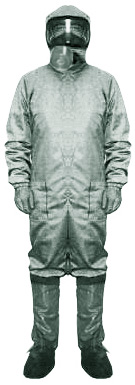
“The specter of a biological attack is difficult for almost anyone to imagine. It makes of the most mundane object, death: a doorknob, a handshake, a breath can become poison. Like a nuclear bomb, the biological weapon threatens such a spectacle of horror — skin boiling with smallpox pustules, eyes blackened with anthrax lesions, the rotting bodies of bubonic plagues — that it can seem the province of fantasy or nightmare or, worse, political manipulation. Yet biological weapons are as old as war itself. The ancient Hittites marched victims of plague into the cities of their enemies; Herodotus described archers’ firing arrows tipped with manure. By the 20th century, nearly every major nation developed, produced and in some cases used a panoply of biological weapons, including anthrax, plague, typhoid and glanders.

A decade after the 9/11 attacks, it is easy to forget the anthrax letters that sprang up just a few weeks later and to dismiss the fear that swept the country as a relic of a fragile moment that already belongs to history. But in the wake of those events, many national-security experts began to reconsider the risk of a biological attack — and reached some unsettling conclusions. Since the collapse of the Soviet Union, most scientists had assumed that the difficulty of building a bioweapon was far beyond the ability of a terror cell, but looking again in the early 21st century, many experts came to believe that advances in laboratory technology brought the science within reach. ‘What took me three weeks in a sophisticated laboratory in a top-tier medical school 20 years ago, with millions of dollars in equipment, can essentially be done by a relatively unsophisticated technician,’ Brett Giroir, a former director at the Defense Advanced Research Projects Agency (Darpa), told me recently. ‘A person at a graduate-school level has all the tools and technologies to implement a sophisticated program to create a bioweapon.'”

Tags: ,

No training wheels necessary.

It’s the simple pleasures in life that bring the most enjoyment, as demonstrated in this December 4, 1898 article from the Brooklyn Daily Eagle, which was originally published in the Philadelphia Record. An excerpt;

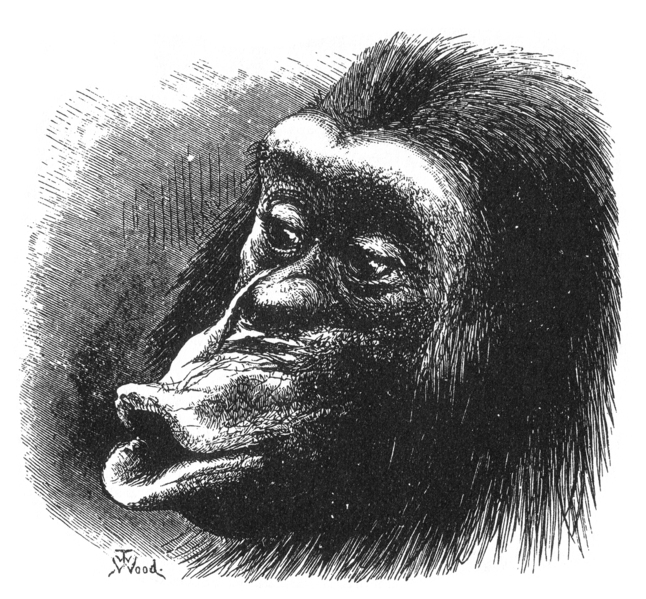
“Boolan, the wonderfully human-looking orang-outang out at the Zoo, has not yet been placed upon public exhibition, but she is learning new tricks every day that will surprise and delight visitors to the gardens where they are permitted to see her. Head Keeper Manley yesterday gave her an apple in a paper bag, and, thinking she merely devour the fruit and destroy the wrapping, paid no more attention to her until he heard a loud report like that of a popgun. Where Boolan learned the trick no one knows, but she had taken the bag in one hand after eating the apple, and, holding it up to her lips, had blown into the opening until it was full of wind. Then, with as much dexterity as children who do the same thing, the little orang-outang compressed the top of the bag to keep the air in, amd smashed it upon her knee. She appeared to be so much delighted with the result that the keeper sent out and got half a dozen bags, with which she repeated the performance until the supply was exhausted.”

Tags: ,

So, legendary TV comedian and all-around blowhard Milton Berle used to tell a serious anecdote about impregnating a woman he wasn’t married to, and the emotional fallout of the experience. He repeated it once in 1974 on Mike Douglas’ talk show when sharing the panel with a hugely wasted and gigglish Richard Pryor. The younger comic couldn’t supress his laughter during the maudlin tale, and Berle felt dissed. One of the greatest moments in the history of moments. At the 1:20 mark of this compilation of the bizarre.

The end of Berle’s story: He and the unnamed woman decided to have the baby. It was a boy. Berle and the mother kept his paternity a secret between them and never told the child or anyone else. The kid grew up to be a performer in show biz, and Berle aided his career but kept the secret.

Tags: , ,

From a 1972 Playboy Interview with Buckminster Fuller, who offers his non-PC take on social revolution:

PLAYBOY: When you say that young people are doing their own thinking and refusing to follow dogma, do you feel that this generation is fundamentally different from those that came before?

FULLER: Most assuredly. The masses of them are different. Let me go back to the reasons for this, because one of the most interesting discoveries I’ve made relates to it. When Malthus, as a young economist, began receiving his data at the start of the 19th Century, he was the first economist dealing with total data from the whole earth seen as a closed system. And he found that apparently, people were reproducing themselves more rapidly than they were producing food for themselves. Darwin followed, with his survival of the fittest, and these two compounded to justify the actions of the men I call the great pirates, the imperialists of that period, the elect, as they thought of themselves. Then Karl Marx came along, with the same jargon, assuming scarcity as a permanent condition and agreeing with the Darwin argument. And Marx said that the fittest among men was the worker, because the worker was closest to nature and knew how to cope with it. He knew how to cultivate and handle the chisel, and so forth, and the other people were parasites.

As late as 1815 in England, commoners caught killing a rabbit were often hanged on the spot without a trial; those animals belonged to the nobles and the king. These most powerful men ate the meat and the other people could make do with what was left over. And in their ignorance about what they should eat and what would give them nourishment, they let themselves get into a position where those who were powerful and ate well could rule by the sword. The proportion of nobles to the total population was so small that everybody assumed there must be some mystical reason they should have the best of it. And what was evident to everybody was that not only were the poor people illiterate and ill-clothed, and so forth, but they also seemed dumb.

Now, this was something that hurt me very much when I was a kid. I was brought up with this class thing, and I hated it and didn’t believe it was valid. But I couldn’t get over this thing that confronted me: Poor people seemed to be dumb. I worked with them and I loved them, but they were dumb. And Karl Marx accepted this. These people, while they were the fittest, gave in to the nobles out of dumbness, so Marx saw that people like that would need powerful rules if they were to be saved. If you’re going to pull  the top down on society and your people are dumb, there have to be standards that everyone can recognize and follow, so you make a virtue of your dumbness and your coarseness and you live by strong rules. You wear your baggy and stupid clothes and make yourself proud of them.

A great many young people feel tremendously sympathetic with this idea these days, as I did at Harvard more than 50 years ago. You want to join with the underdog and therefore you wear his clothing and give up your standard of living. But this idea is becoming obsolete, however much it might appeal to the moral logic of young people. Because only in the past ten years have we finally had the first scientific proof – and now absolute scientific proof – that malnutrition during the child’s time in the womb and during the early years of life causes permanent brain damage. So this dumbness and coarseness factor that Mark built into his theory of class warfare is purely the damaged brain of malnutrition – something we now can eliminate by the kind of revolution that pulls the bottom up instead of pulling the top down.”

••••••••••

Tags:

"Amazing." (Image by Harry Poulsen.)

Looking For Mom Jeans (New York )

I’ve finally decided what I want to be for Halloween. A 90’s mom. I need To find a bigger size pair of high wasted Women’s Jeans. Preferable Light wash. Let me know if you can help me out would be amazing.

••••••••••

“I’m not a woman anymore…I’m a mom”:

A new way to capture 360°. (Thanks Mashable.)

Scientist John McCarthy, who just passed away, coined the term “Artificial Intelligence” in 1955. From the BBC:

“Professor McCarthy is also credited with coining the term “Artificial Intelligence” in 1955 when he detailed plans for the first Dartmouth conference. The brainstorming sessions helped focus early AI research.

Prof McCarthy’s proposal for the event put forward the idea that “every aspect of learning or any other feature of intelligence can in principle be so precisely described that a machine can be made to simulate it”.

The conference, which took place in the summer of 1956, brought together experts in language, sensory input, learning machines and other fields to discuss the potential of information technology.”

••••••••••

“I’m half crazy, all for the love of you,” 1961

Tags:

The opening of a New York Times obituary by Margalit Fox about Swami Bhaktipada, formerly Keith Gordon Ham of Peekskill, New York, who led one wacky life:

“Swami Bhaktipada, a former leader of the American Hare Krishna movement who built a sprawling golden paradise for his followers in the hills of Appalachia but who later pleaded guilty to federal racketeering charges that included conspiracy to commit the murders-for-hire of two devotees, died on Monday in a hospital near Mumbai, India. He was 74.

The cause was kidney failure, his brother, Gerald Ham, said.

Mr. Bhaktipada, who was released from prison in 2004 after serving eight years of a 12-year sentence, moved to India in 2008.

The son of a Baptist preacher, Mr. Bhaktipada was one of the first Hare Krishna disciples in the United States. He founded, in 1968, what became the largest Hare Krishna community in the country and presided over it until 1994, despite having been excommunicated by the movement’s governing body.”

••••••••••

Krishnas get cold shoulder at Hippie Fest in Cincinnati, 1970:

Tags: , , ,

A time warp from 1970, this clip has David Frost interviewing Geraldine Jones, the feminine alter ego of comedian Flip Wilson. Wilson was, for a while, the biggest thing in American TV, and the pressure seemed to be a little more than he could bear. The Geraldine phrase, “What you see is what you get,” is said to have been responsible for the computer term “WYSIWYG.”

Wilson with Ed Sullivan, also 1970:

Tags: , ,

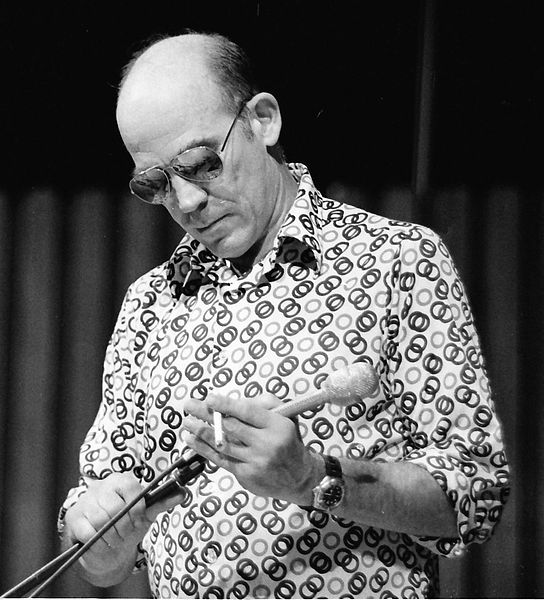
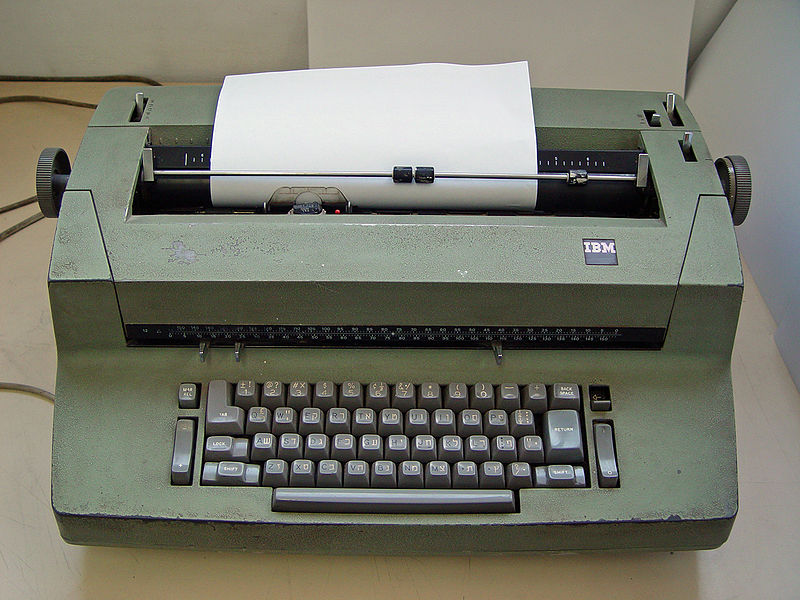
"Flying in IBM Selectric typewriters with the right typeface; booze and drugs (usually he had this part already done); arranging for a handler-assistant at his end." (Image by MDCarchives.)

As Johnny Depp’s The Rum Diary is about to be released, Jann Wenner recalls working with Hunter S. Thompson, on the Huffington Post. No surprises, really. An excerpt:

“After Fear and Loathing in Las Vegas, everything else he wrote was a full-on siege. Setting up the assignment was easy–Hunter was pretty much welcome everywhere and had the skills and instincts to run a presidential campaign if he had wanted. But then came the travel arrangements: hotels, tickets, researchers, rental cars.

Later in the process, finding a place for him to hunker down and write–The Seal Rock Inn, Key West, Owl Farm, preferably isolated and with a good bar. Flying in IBM Selectric typewriters with the right typeface; booze and drugs (usually he had this part already done); arranging for a handler-assistant at his end. Back at Rolling Stone, I had to be available to read and edit copy as it came in eight-to-ten-page bursts via the Xerox telecopier (the Mojo Wire), a primitive fax using telephone lines that had a stylus that printed onto treated, smelly paper (at a rate of seven minutes per page).

I had to talk to Hunter for hours, then track and organize the various scenes and sections. He would usually begin writing in the middle, then back up or skip around to write what he felt good about at the moment, report¬ing scenes that might fit somewhere later, or spinning out total fantasies (‘Insert ZZ’ or ‘midnight screed’) that would also find a place–parts that were flights of genius. Generally the lede was easy, describing the invariably dramatic weather wherever he was writing from. Then a flurry of headlines and chapter headings and the transitions he had to produce on demand to create the flow and logic, and always, sooner or later, the conclusion, which we always called ‘the Wisdom.'”

More Hunter S. Thompson posts:

Tags: ,

Live ten-minute coverage of the total eclipse of the sun, 1979. Anchored by Frank Reynolds, with reports by anyone who could get unduly excited about a temporary absence of light.

Tags:

Milton Friedman, in defense of sweatshops, from a 1972 Playboy Interview:

PLAYBOY: Even if minimum-wage laws have been as counterproductive as you say, isn’t there a need for some government intervention on behalf of the poor? Laissez faire, after all, has long been synonymous with sweatshops and child labor—conditions that were eliminated only by social legislation.

FRIEDMAN: Sweatshops and child labor were conditions that resulted more from poverty than from laissez-faire economics. Wretched working conditions still exist in nations with all sorts of enlightened social legislation but where poverty is still extreme. We in the United States no longer suffer that kind of poverty because the free-enterprise system has allowed us to become wealthy.

Everybody does take the line that laissez faire is heartless. But when do you suppose we had the highest level of private charitable activity in this country? In the 19th century. That’s when we had the great movement toward private nonprofit hospitals. The missions abroad. The library movement. Even the Society for Prevention of Cruelty to Animals. That was also the era in which the ordinary man, the low-income man, achieved the greatest improvement in his standard of living and his status. During that period, millions of penniless immigrants came in from abroad, with nothing but their hands, and enjoyed an enormous rise in their standard of living.

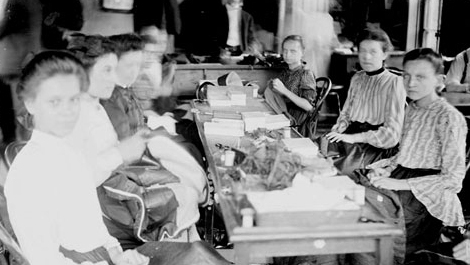
My mother came to this country when she was 14 years old. She worked in a sweatshop as a seamstress, and it was only because there was such a sweatshop in which she could get a job that she was able to come to the U.S. But she didn’t stay in the sweatshop and neither did most of the others. It was a way station for them, and a far better one than anything available to them in the old country. And she never thought it was anything else. I must say that I find it slightly revolting that people sneer at a system that’s made it possible for them to sneer at it. If we’d had minimum-wage laws and all the other trappings of the welfare state in the 19th century, half the readers of Playboy would either not exist at all or be citizens of Poland, Hungary or some other country. And there would be no Playboy for them to read.”

••••••••••

An Open Mind episode with Friedman, 1975:

Tags:

"Was Gabriel Byrne in the Ataturk Airport in Istanbul, Turkey around the first week of January 2005?"

Gabriel Byrne (Brooklyn)

Not sure if I should have posted this under Missed Connections, but someone HAS to know the answer to this question:

Was Gabriel Byrne in the Ataturk Airport in Istanbul, Turkey around the first week of January 2005?

Had a very bizarre incident where I was in the Ataturk Airport, awaiting a flight that wouldn’t be leaving for Frankfurt, Germany for another 3 hours or so. It was relatively early in the morning (3am-5am?), and there were very few people in the airport. I purchased an English language newspaper and sat down in a remote waiting area. Awhile later, a dark-haired gentleman wandered through the airport and chose to sit down right across from me, of all places in the entire airport. I made eye contact and nodded to acknowledge him, then went back to reading the paper. Since I was traveling alone, I didn’t want to be too chatty or overly friendly to a stranger, but every now and again I found this individual staring at me with a strange little smile, as if to say, “You know who I am, but you’re not sure…”

Eventually, his flight was called, and he parted ways with a gentle smile. To this day, I still don’t know if that was Gabriel Byrne sitting across from me. If that was him, I missed a chance to say hello to my favorite actor. Unfortunately, I’ll never know. Such is life, I suppose.

Tags:

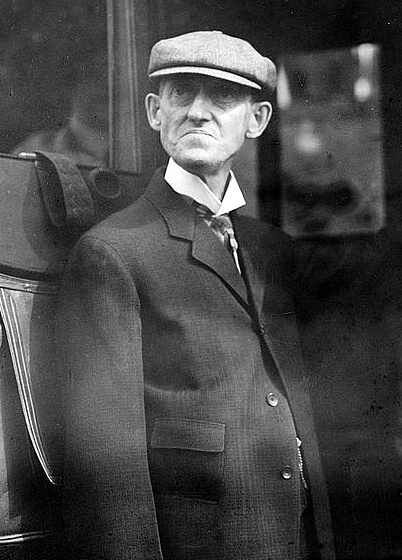
John T. Brush was an orphan, a Civil War veteran, and a robber baron.

Michael Weinreb outdoes himself at Grantland, with a historical piece explaining why three American sports leagues (MLB, NBA, NHL) settle championships with seven-game series. Why seven games? The opening:

“John T. Brush was an orphan, a Civil War veteran, and a robber baron. He was born in 1845, and by the 1880s, he was a prominent baseball owner, a crotchety tycoon who used his department-store fortune to purchase franchises in Indianapolis and Cincinnati before taking control of the National League’s New York Giants. It was Brush who first proposed an unpopular salary cap he referred to as the ‘Brush Classification Plan.’ It was Brush who harbored such a grudge against the American League that he refused to allow his Giants to play the Boston Pilgrims in 1904, thereby resulting in the first of the two World Series-less falls of the 20th century. The players disliked him; the media tore into him with a purplish rage. ‘Chicanery is the ozone which keeps his old frame from snapping,’ wrote the Sporting News, ‘and dark-lantern methods the food which vitalizes his body tissues.’

Brush died 99 years ago, en route to a sanatorium in Southern California to recuperate from a car crash. Unless you harbor a fetish for the dead-ball era or the history of Midwestern textile operations, you have almost certainly never heard of him. And neither had I, until one night, in the midst of yet another protracted postseason series, I thought of a simple question that seems to have no definitive answer. What I wanted to know was how the idea for a seven-game series had begun, and why it became the conventional wisdom among three of the four major professional sports in America, and why this format has come to feel so inherently equitable. And what I realized is that, as much as we would like to think that we have evolved over the course of the century since John T. Brush expired on that cross-country train, and as much as we believe that we’ve found new and better ways to quantify information, the structure of determining a champion in professional sports is still based as much on superstition as it is on rational thought.”

Tags: ,

"Some on the right were baffled that the ostensible Marxists demonstrating in lower Manhattan would observe a moment of silence and assemble makeshift shrines for a top one-percenter like Jobs." (Image by David Shankbone.)

In his excellent new piece in New York about the looming class war, which has been waged silently and unilaterally for nearly three decades against the middle class, Frank Rich explains why the Occupiers expressed grief over the death of that wealthy capitalist Steve Jobs. An excerpt:

“But while Romney is a class enemy liberals and conservatives can unite against, perhaps nothing has revealed how much the class warriors of the right and left of our time have in common than the national outpouring after Steve Jobs’s death. Indeed, the near-universal over-the-top emotional response—more commensurate with a saintly religious or civic leader, not a sometimes bullying captain of industry—brought Americans of all stripes together as few events have in recent memory.

Some on the right were baffled that the ostensible Marxists demonstrating in lower Manhattan would observe a moment of silence and assemble makeshift shrines for a top one-percenter like Jobs, whose expensive products were engineered for near-­instant obsolescence and produced by Chinese laborers in factories with substandard health-and-safety records. For heaven’s sake, the guy didn’t even join Warren Buffett and Bill Gates in their Giving Pledge. ‘There is perhaps no greater image of irony,’ wrote the conservative blogger Michelle Malkin, ‘than that of anti-capitalist, anti-corporate, anti-materialist extremists of the Occupy Wall Street movement paying tribute to Steve Jobs.’

Yet those demonstrators who celebrated Jobs were not necessarily hypocrites at all—and no more anti-capitalist than the Bonus Army of 1932. If you love your Mac and iPod, you can still despise CDOs and credit-default swaps. Jobs’s genius—in the words of Regis McKenna, a Silicon Valley marketing executive who worked with him early on—was his ability ‘to strip away the excess layers of business, design, and innovation until only the simple, elegant reality remained.’ The supposed genius of modern Wall Street is the exact reverse, piling on excess layers of business and innovation on ever thinner and more exotic creations until simple reality is distorted and obscured. Those in Palin’s ‘real America’ may not be agitated about the economic 99-vs.-one percent inequality brought about by the rise of the financial sector in the past three decades, but, like class warriors of the left, they know that ‘financial instruments’ wreaked havoc on their 401(k)s, homes, and jobs. The bottom line remains that Wall Street’s opaque inventions led directly to TARP, the taxpayers’ bank bailout that achieved the seemingly impossible feat of unifying the left and right in rage against government—much as Jobs’s death achieved the equally surprising coup of unifying left and right in mourning a corporate god.”

•••••••••••

Frank Rich, being treated slightly better than Lindsey Buckingham:

Tags: ,

Those good people responsible for the excellent Electric Typewriter site asked me to create a reading list of ten great long-form pieces of journalism that they could recommend to their readers. So I did. If you want to check out my choices–and read some classic articles for free–visit their site over the next two days.

Richard Nixon, during his “Wilderness Years,” just months after losing the gubernatorial race in California, political obituary already written, schmoozing with Jack Paar, 1963.

Tags: ,

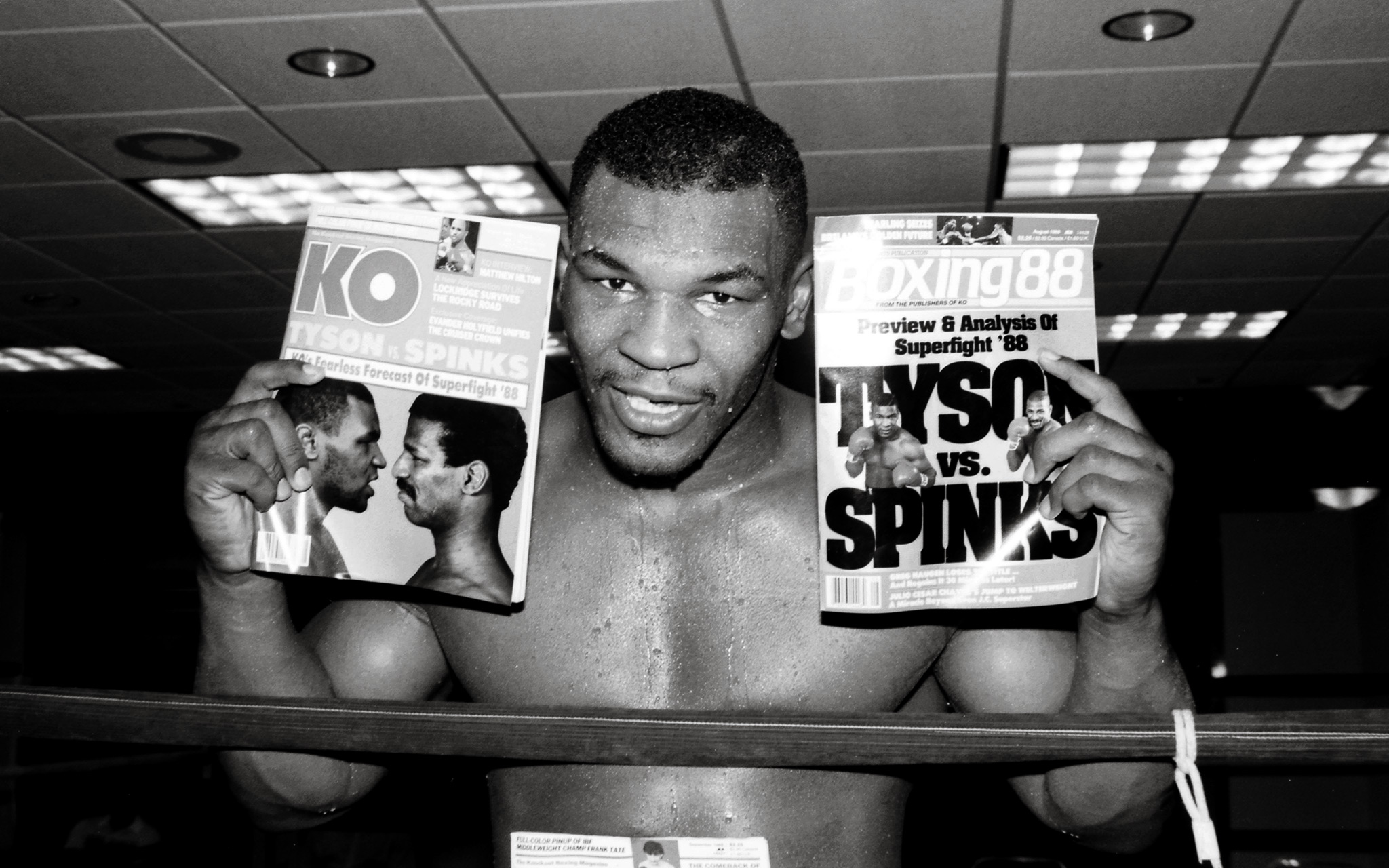
In Spin in 1988. Norman Mailer publishedUnderstanding Mike Tyson,’ a piece of reportage about the last heavyweight that mattered, in those days when he was still ascendant in the ring, still the “Baddest Man on the Planet,” before things turned just plain bad. As is the case with a boxing card itself, the article first introduces all of the preliminary figures, making you wait for the person you came to see. The opening:

As an arena for boxing, the Convention Hall at Atlantic City is not one of the happier architectural palaces of the world. It drops the kind of pall on an audience that would come from witnessing a cock-fight in a bank. Lyndon Johnson was nominated there in 1964 with two identical sixty-foot close-up photographs of himself on either side of the podium. The Hall looked on that occasion like the coronation chamber for a dictator. Now, on the night of June 27, 1988, thousands of seats were laid on the great flat floor, and people in the seventeenth row ringside were paying $1,500 a ticket to see the Tyson-Spinks Heavyweight Championship. Since the gala glitz of the Trump Plaza was but a connecting corridor away from Convention Hall, and the Trump Plaza was architecturally close to its purpose, possessing a retina-red decor that inspired you to sport and gamble, the shock in moving from gaming tables to the fight was as palpable as sex after midnight is distinguishable from the gray dawn.

The fight also took forever to start. Celebrities were introduced for fifteen minutes and the successful gamblers who had given back some of their winnings for a last minute pair of tickets could now find a little consolation for the bad ringside seats. (Catching a bout from the seventeenth row is equal to watching a couple make love in a room on the other side of the street.) To be able to boo or cheer, however for Sean Penn and Madonna, Jackie Mason, Warren Beatty, Jack Nicholson, Michael Jordan, Magic Johnson, Marvin Hagler, George Steinbrenner (booed), Dexter Manley, Matthew Broderick, Carl Weathers, Burt Young, Judd Nelson, Chuck Norris, Oprah Winfrey, Don Johnson, Tom Brokaw, Don King, and Jesse Jackson, all in person, would revive the ego when telling about it to the folks back home.

At the press ringside, where you see the fight a lot better, the rumor was that Donald Trump had planned to invite Frank Sinatra to sit next to him but was worried that the ring floor might be pitched too high for Frank and other guests in the front row. So, the ring was lowered. Sinatra, working at rival Bally’s, declined the invitation. It was not appropriate to be seated next to the competition. The principle remained intact, however. Trump understood the psychology of success. It was more important that his front row contingent have a good view than that the suckers in the seventeenth pew complain because the ring had been pitched in a hollow.

Just before the fight began, Trump came into the ring with Muhammad Ali. Ali now moved with the deliberate awesome calm of a blind man, sobering all who stared upon him. He looked like the Shade of the boxing world. “I, who gave you great pleasures for years, now ask you to witness the costs of your pleasures,” he could as well have said. Then Trump standing beside him, was able to hear over the PA system, “New Jersey thanks you, Donald Trump.”

Spinks came into the ring wearing white trunks. He was a much-respected fighter. He has won thirty-two fights and lost none. He had been light-heavyweight champion and had moved up in weight to fight Larry Holmes, taking the heavyweight championship from Holmes by decision and keeping it in the return bout. He had knocked out Gerry Cooney in five rounds. He was an artfully awkward fighter who tried to never do the same thing twice, and he had been the underdog in many of his undefeated fights. He possessed a little of Ali’s magic–he found unorthodox ways to win. People who loved the gallant, the sly, and the innovative, liked Spinks. He invariably did a little better than expected. Tonight, however, he did not look happy. He was smiling too much. In fact, Spinks seemed distracted and relaxed at once. One had not seen that kind of separation from oneself since sitting next to Sonny Liston in a poker game the night before Liston’s second fight with Ali in Lewiston, Maine. Liston had been the relaxed man in the room. He had giggled equally whether he won or lost. The stakes were nickels and dimes, but Liston took great pleasure in peeking at his hole cards before each round of betting. It was easy to mistake such relaxation for confidence, yet the following night Liston was knocked out in one round by a punch that some are still insisting they never saw. It had not been relaxation that was witnessed at the poker game, but resignation.

So the sight of Spinks increased the pall. Spinks was giving a dry-mouthed smile. His nervousness was evident; worse, it was deep. Boxers can come into the ring keen with fear, or rendered sluggish by it, and Spinks did not look keen. It can well be an unendurable load to know for a hundred nights that one is going to face Mike Tyson at the end of them, Tyson with his thirty-four victories and no defeats, his power, his speed, his ongoing implacable offensive force.

Tyson, however, looked drawn. Not afraid, not worried, but used-up in one small part of himself, as if a problem still existed that he had not been able to solve. His expression suggested how hard it was to hold off murderous impulses for a long time. He was waiting for the bell.•
Tags: , ,

It probably doesn’t matter if childrem have a low-tech or high-tech education provided their parents are interested and encouraging. But some employees of Silicon Valley’s biggest digital companies are opting to educate their own children sans computers. An excerpt from Matt Richtel’s New York Times article on the topic:

“While other schools in the region brag about their wired classrooms, the Waldorf school embraces a simple, retro look — blackboards with colorful chalk, bookshelves with encyclopedias, wooden desks filled with workbooks and No. 2 pencils.

On a recent Tuesday, Andie Eagle and her fifth-grade classmates refreshed their knitting skills, crisscrossing wooden needles around balls of yarn, making fabric swatches. It’s an activity the school says helps develop problem-solving, patterning, math skills and coordination. The long-term goal: make socks.

Down the hall, a teacher drilled third-graders on multiplication by asking them to pretend to turn their bodies into lightning bolts. She asked them a math problem — four times five — and, in unison, they shouted “20” and zapped their fingers at the number on the blackboard. A roomful of human calculators.”

••••••••••

Miss Crabtree didn’t need electronic gizmos to keep Chubbsy Ubbsy enrapt:

Tags:

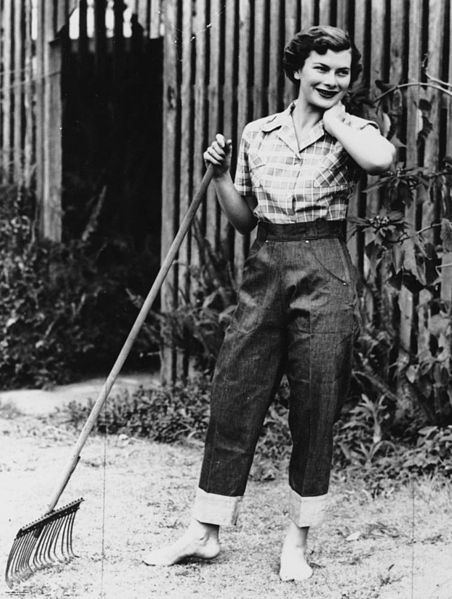
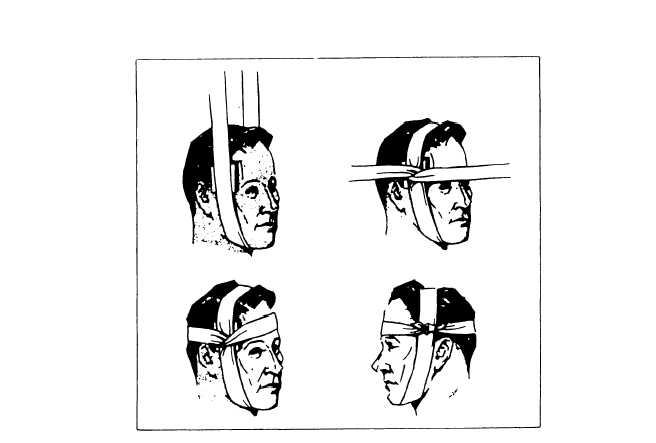
"His feet were bare and his head was swathed in bandages."

Getting kicked in the head by a horse can provoke strange behavior, as evidenced by an article in the November 9, 1899 Brooklyn Daily Eagle. An excerpt:

“Hempstead, L.I.–John Lucas, who was brought to the Nassau Hospital sometime ago from Valley Stream, where he had been injured by being kicked in the head by a horse, made his escape last night from the hospital by actually walking through the corridor to a roof in front of the hospital and then sliding down one of the posts of the veranda to the ground beneath.

Lucas was attired only in his nightgown. His feet were bare and his head was swathed in bandages, which caused him to present a most weird appearance. He walked down Fulton Street, the principal village thoroughfare, for nearly half a mile to Main Street and on his way he passed a number of women who screamed and made for the nearby houses. Several men in carriages passed him, but were afraid to arrest him. They, however, notified the Chief of Police, who with the assistance of S.P. Allen got Lucas into a carriage and took him back to the hospital. He suffered no ill effects from his walk.”

Tags: ,

Quite a while ago, I posted an excerpt from Ron Rosenbaum’s seminal 1971 Esquire blue-box article, which inspired the young Steves (Jobs and Wozniak) to become phone phreaks and begin their little computer company. At Slate, Rosenbaum recalls meeting Jobs in the ’80s and learning of his role in the birth of Apple. An excerpt:

“The lunch with Jobs took place in a huge hangar-like restaurant—then-fashionable, now-defunct—called, I swear, ‘America.’ I had been doing a story about California surfer-styled ad man Jay Chiat, the one who devised the Apple’s turning-point ‘1984’ ad, depicting a lithe young woman hurling a hammer at a screen upon which an evil looking Big Brother-type was delivering a harangue. The ad captured—or created—the Apple ethos of rebellion against the tyranny of conformity.

Anyway Jobs was in town and he came to the lunch with Chiat, and after the introductions, he told me about how the blue box article had inspired him and Wozniak. How they’d taken down the cycles-per-second of the tones AT&T used to translate phone numbers into audio signals, some of which I’d disclosed in the article, and how they’d found the others in some obscure technical journals and had begun building their own blue boxes, hoping to sell them on the underground market. (Gamblers and mobsters liked to use them to keep their communications outside the system.)

Even then, at that lunch, Jobs displayed his characteristic design sensibility when talking about these illicit gadgets. Some of the sleeker ones were about the size of cigarette pack, with silvery keyboard panels—not too different in appearance from the later iPod—and I remember his keen interest in what model, what design, I’d gotten hold of.

But he came across as a very level-headed guy, unpretentious even though his company was then blowing up big time. I remember being gratified at my story having some influence, and indeed I put Jobs’ revelation into the story about Chiat, but it was cut by an otherwise astute editor. Jobs just wasn’t that important then.”

••••••••••

Jobs tells the blue-box story:

Another Ron Rosenbaum post:

Tags: ,

« Older entries § Newer entries »