A year after Woody Allen interviewed Billy Graham, he guest hosted a 1971 Tonight Show for Johnny Carson. No monologue but Ed McMahon is there as well as guests Bob Hope and James Coco. Hope was Allen’s favorite comic. The final part of the show doesn’t seem to be online.
Tags: Bob Hope, James Coco, Johnny Carson, Woody Allen
In the Boston Globe, Samuel Arbesman’s uses cliodynamics, which applies math to history, to predict if America will flourish or fall. An excerpt: from “How Long Will America Last?”:
“This data set is expansive, including everything from the Babylonian Empire of ancient Mesopotomia — known for such contributions as Hammurabi’s Code — to the Byzantine Empire, which has provided us with the eponymous word for red tape. Some of the world’s empires lasted an exceptionally long time: The ancient, and now little known, Elam empire located in present-day Iran lasted a thousand years. Others were short-lived, for all their power: The Phrygian and Lydian empires were around for only about six decades each. (The data set, based on earlier research in empires, ends at 600 A.D.)
If you crunch these all together, the first thing you discover is that the average lifetime of these powers is 215 years.
If you’re playing at home, this number is pessimistically eerie: It’s been 223 years since the ratification of the US Constitution. And that should perhaps give us some pause. To make this explicit, the United States has now outlasted the majority of the empires in my historical data set, and is now crossing the threshold into hoary old age.
But there is a more interesting way to look at it than simply taking an average. By putting all the life spans together, we can see a pattern that statisticians call a distribution — the underlying shape of the ‘density’ of the life spans. Distributions give us a much better sense than the average because, just as with incomes, life spans needn’t be distributed like a bell-shaped curve. They can be skewed towards one end or the other.”
Tags: Samuel Arbesman
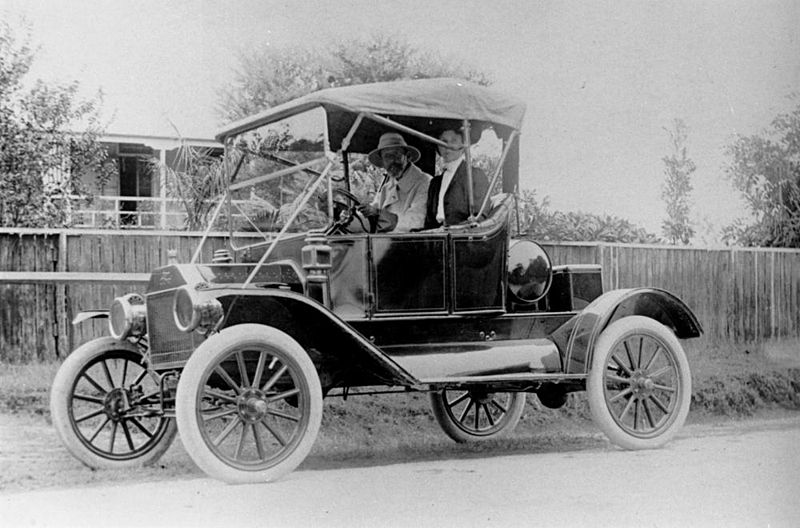
Great find by the Electric Typewriter in uncovering “Farewell, My Lovely!” E.B. White’s 1936 New Yorker paean to Henry Ford’s Model T, the car that made America a car country. The opening:
“I see by the new Sears Roebuck catalogue that it is still possible to buy an axle for a 1909 Model T Ford, but I am not deceived. The great days have faded, the end is in sight. Only one page in the current catalogue is devoted to parts and accessories for the Model T; yet everyone remembers springtimes when the Ford gadget section was larger than men’s clothing, almost as large as household furnishings. The last Model T was built in 1927, and the car is fading from what scholars call the American scene—which is an understatement, because to a few million people who grew up with it, the old Ford practically was the American scene.
It was the miracle God had wrought. And it was patently the sort of thing that could only happen once. Mechanically uncanny, it was like nothing that had ever come to the world before. Flourishing industries rose and fell with it. As a vehicle, it was hard-working, commonplace, heroic; and it often seemed to transmit those qualities to the persons who rode in it. My own generation identifies it with Youth, with its gaudy, irretrievable excitements; before it fades into the mist, I would like to pay it the tribute of the sigh that is not a sob, and set down random entries in a shape somewhat less cumbersome than a Sears Roebuck catalogue.”
••••••••••
Henry Ford’s funeral, 1947:
Tags: E.B. White, Henry Ford
Woody Allen interviews Rev. Billy Graham, 1970.
Tags: Billy Graham, Woody Allen
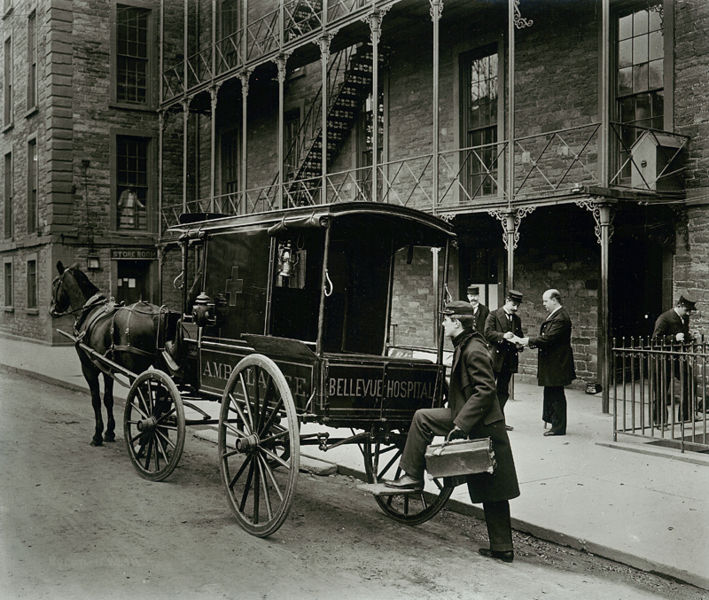
It seems that right around 1900, the only employees Bellevue Hospital could get to work in its Morgue were complete alcoholics. Luckily, Bellevue also had an Alcoholic Ward. An excerpt from a May 7, 1901 Brooklyn Daily Eagle article:
“There were many new faces among the helpers at Bellevue Hospital, Manhattan, this morning, owing to the suspensions last night and arrests for drunkenness. The alcoholic ward contains many of the late helpers. The new assistants come from the convalescent patients and the city lodging house. The disgraceful row last night between two stretcher bearers of the Morgue brought out the alarming degree of dissipation at Bellevue following each pay day.
It has long been a notorious fact that the attendants at the Morgue are seldom the same for any two weeks. Superintendent Rickard said that responsible men cannot be gotten for from $10 to $12.50 a month. Yesterday, he said, there was a greater degree of intoxication at the institution than ever before, although it has been bad enough at any time.
A couple of days ago a rough and tumble fight occurred between the chef, a man named Vozen, and his assistant, named Hopkins. Hopkins, while intoxicated, got Vozen down and began to pound him and had him almost knocked out when help arrived. Hopkins was suspended. Vozen was incapacitated for work.
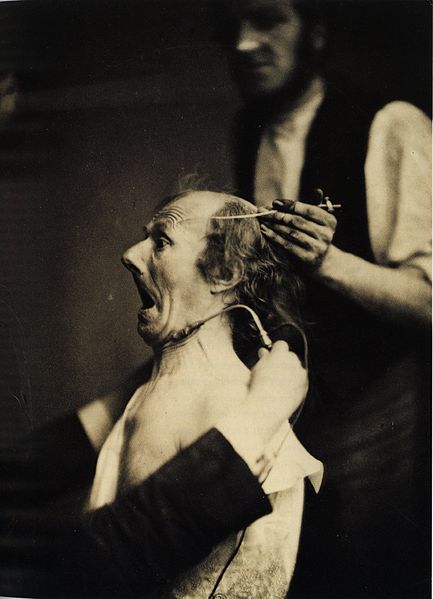
"A couple of days ago a rough and tumble fight occurred between the chef, a man named Vozen, and his assistant, named Hopkins."
John Roff, attendant at the Morgue, came into the place Sunday with a pair of black eyes, face scarred and lacerated and so drunk he could hardly walk. He was suspended and on the announcement of his decision said he would lick the whole staff.
John Dunn, an attendant, rode into Bellevue this morning in a hansom cab. He was so badly intoxicated that he had to be carried from the cab. He wore a bouquet of lilacs and violets. He wore a silk hat, which had seen much usage. He was put in his cab and driven from the grounds and is riding about yet, so far as the hospital people know.
 Another attendant came to Bellevue this morning with a strong smell of liquor on his breath and when he found the treatment that had been meted out to his associates he rushed into a ward and sprinkled checkerberry on his mustache. He was sober enough to go to work, but the odor of wintergreen is offensively palpable.
George Lewis, an attendant, who has been suspended for drunkenness before, was ‘disgustingly’ sober, as one hilarious attendant said this morning, and was put to work in Roff’s place. He said he would never touch liquor again.
Superintendent Rickard said that drunkenness among the attendants was very common, but it was more flagrant this month than ever before. The attendants are paid every month. The men and women are such people as to be unable to get work anywhere else and look forward every month to their pay for intoxication. Some can not wait for pay day and get orders and go down town and cash them. The only remedy for this, Superintendent Rickard says, is to pay more wages and get a better class of attendants.”
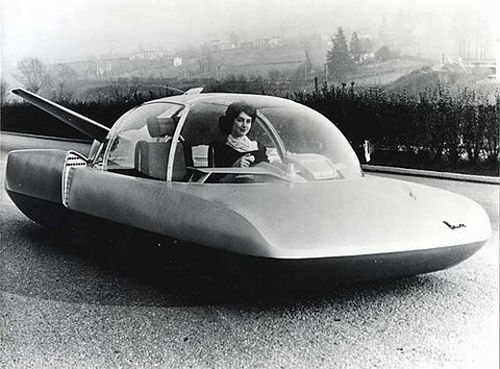
Wireless charging for electric cars is the goal of automakers. From Scientific American:
“‘Almost universally, all the carmakers have learned…that consumers find plugging in a vehicle is inconvenient, and the carmakers have concluded they need to offer some type of wireless, hands-free charging,’ says David Schatz, director of business development and marketing for WiTricity Corp. in Watertown, Mass., which makes wireless chargers for phones and cars. With WiTricity’s system, a user would not have to park his or her car directly on a charging mat, let alone deal with wires. As long as the car is within range of the charging station, energy begins to flow into the battery.”
••••••••••
“Allows for efficient non-stop operation”:
Tags: David Schatz
CBS News is bringing back it’s “On the Road” segments, which were helmed with distinction by Charles Kuralt. Here’s a great 1976 report about the 1847 massacre of the Whitman missionary family in Washington state.
1976 Charles Kuralt “On the Road” Segment on the Whitmans. from Larry Cebula on Vimeo.
Tags: Charles Kuralt, Narcissa Whitman
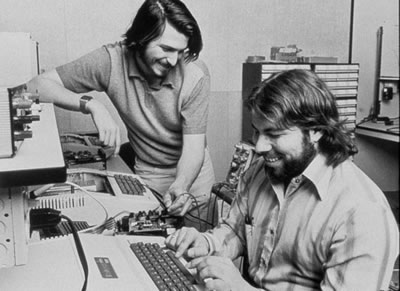
Walter Isaacson, a writer who can communicate complicated ideas lucidly, was the perfect biographer for Steve Jobs, a technologist who could make complex functions work simply. Steven Johnson offers up his thoughts on Isaacson’s Jobs bio immediately after reading it. An excerpt:
‘While Jobs historically had a reputation for being a nightmare to work with, in fact one of the defining patterns of his career was his capacity for deep and generative partnerships with one or two other (often very different) people. That, of course, is the story of Jobs and Woz in the early days of Apple, but it’s also the story of his collaboration with Lasseter at Pixar, and Jony Ive at Apple in the second act. (One interesting tidbit from the book is that Jobs would have lunch with Ive almost every day he was on the Apple campus.) In my experience, egomaniacal people who are nonetheless genuinely talented have a hard time establishing those kinds of collaborations, in part because it involves acknowledging that someone else has skills that you don’t possess. But for all his obnoxiousness with his colleagues (and the book has endless anecdotes documenting those traits), Jobs had a rich collaborative streak as well. He was enough of an egomaniac to think of himself as another John Lennon, but he was always looking for McCartneys to go along for the ride with him.’
Tags: Steve Jobs, Steven Johnson, Walter Isaacson

Who doesn’t need, sometimes, to be where the streets have no name? An excerpt from Jesse McKinley’s survey of Death Valley in the New York Times:
“IT’S just before midnight on the edge of Death Valley and I’m standing in a dark room in the Amargosa Opera House and Hotel with five people who are certain that we’re talking to ghosts.
‘There’s something going on,’ said one ghost hunter who is holding a device meant to find electromagnetic fields. Sure enough, it’s going wild. And while I don’t believe in ghosts, I have goose bumps.
Death Valley National Park doesn’t need a lot of help being spooky. One of the lowest, most arid places on earth, the valley has more ghost towns than actual ones: dried-up spots like Leadfield, Chloride City and Skidoo, whose last residents skedaddled as soon as the gold, or rumor thereof, was gone.
Even the places that survive have foreboding names like Furnace Creek or haunted reputations like Death Valley Junction, just outside the park’s eastern gate, where paranormal fans convene to hunt the spirits of miners, mistresses and other metaphysical outliers. Then there are anomalies like the park’s Racetrack Playa, where rocks seemingly slide across sand under their own power.
Death Valley’s mysteries and its extremes have always intrigued me.”
Tags: Jesse McKinley
Peter Sellers goofing around during a rare talk-show appearances, 1970.
Sellers works broad with Dean Martin, 1973:
More Peter Sellers posts:
- Sellers stars in Being There. (1979)
Tags: Dean Martin, Peter Sellers
Some search-engine keyphrases bringing traffic to Afflictor this week:

Afflictor: Fearing the Earth might look slightly different after a Rick Perry Presidency.
- Old Print Articles: Inside a Brooklyn boxing establishment (1889) + Orangutan learns a simple trick (1889) + Guy kicked in head by horse escapes from hospital (1899).
- Classic Photographs; John Glenn accepts invitation from the future (1962).
- Featured Videos: Mesmerizing DeLorean doc (1981) + Lee Iacocca rallies America (1984) + Richard Pryor laughs at Milton Berle’s illegitimate child (1974) + David Frost interviews Geraldine Jones (1970) + Bill Gates predicts the future of mobile commerce (1995) + Johnny Cash on 60 Minutes (1982) + Total eclipse of the sun (1979) + K-Tel bottle-cutter kit commercial + Liz Taylor and Richard Burton enjoy bickering (1970) + Robot rides bicycle in Japan + Qaddafi profiled on 60 Minutes (2001).
- Recently Posted on NYC’s Craigslist: Gabriel Byrne has the laziest stalker in the world + Occupy Wall Street’s message grows even more diffuse + I am in denial over my weight gain + I thought I was getting laid, and then my raft was gone + My painted toenails are probably the least weird thing about me + Social Security checks funding orgies.
- Norman Mailer profiles fellow pugilist Mike Tyson in 1988.
- In 1968, Stanley Kubrick wondered what we might find on the moon.
- Recalling how Richard Dawkins coined the term “meme” in 1976.
- The agonizing evolution of the word “consumer.”
- Frank Rich analyzes class warfare in America.
- Milton Friedman defends sweatshops in 1972.
- Some Silicon Valley bigwigs send their kids to Luddite schools.
- Rick Perry is at least as bad as you thought, perhaps worse.
- How much is automation hurting the job market?
- Was the Antikythera Mechanism humankind’s first computer?
- Michael Weinreb explains why sports series are best-of-seven.
- Buckminster Fuller opines on social revolution in 1972.
- Jann Wenner recalls former employee Hunter S. Thompson.
- Swami Bhaktipada had an unusual life, to say the least.
- Preparing for the next wave of bioterrorism.
- How journalist Ron Rosebaum inspired Steve Jobs’ career.
- John McCarthy coined the term “Artificial Intelligence” in 1955.
- Internet irreverence is making waves in China.
- This week’s Afflictor keyphrase searches.
Tags: Harry Reasoner, Johnny Cash
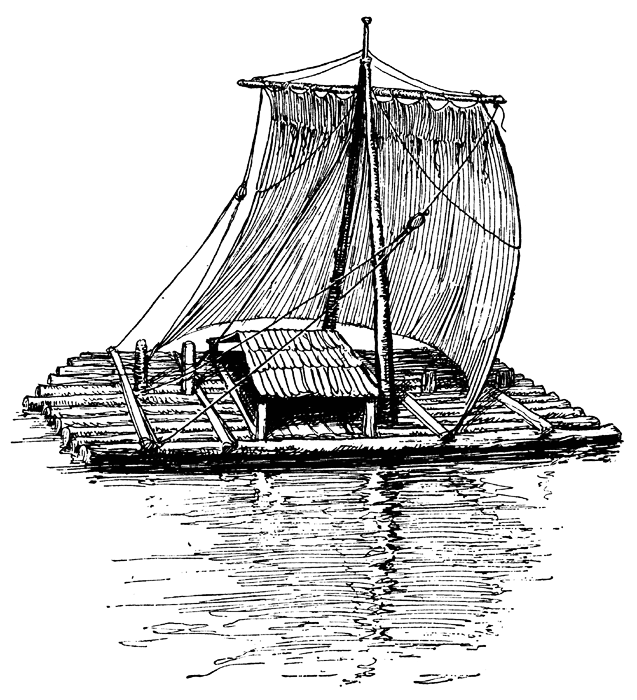
You Stole Our Raft!
But we filmed you.
Dog, you won’t get away with this. We’re sending the coastguard after you.
If anybody has seen this criminal, don’t let her calm demeanor and good looks fool you. She will steal your stuff too, and then she’ll just float away.
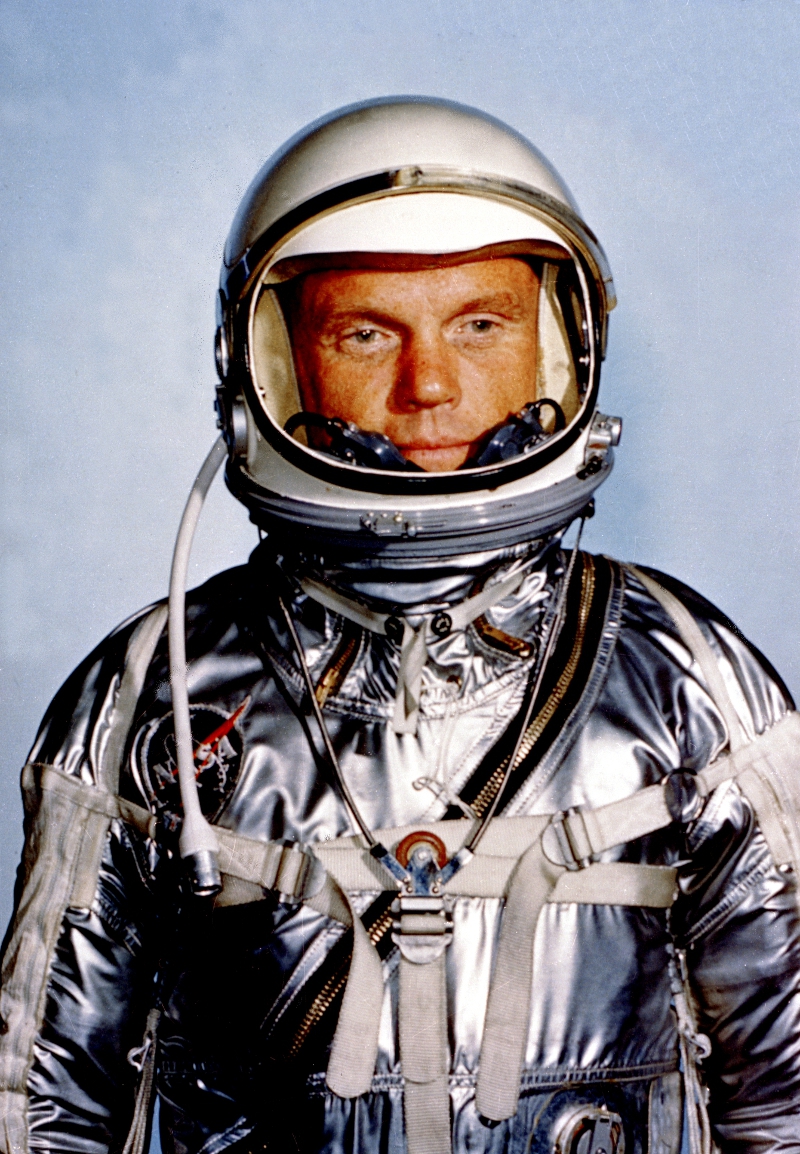
This classic 1962 NASA photograph shows American astronaut John Glenn suited up for Mercury 6, the first successful U.S. attempt to put a manned spaceship into orbit. Glenn, who was the pilot of that mission, explained his participation in the burgeoning space program in a March 3, 1961 Life cover story: “‘A lot of people ask,’ he reflected recently, ‘why a man is willing to risk hat, tail and gas mask on something like this. Well, we’ve got to do it. We’re going into an age of exploration that will be bigger than anything the world has ever seen. I guess I’m putting my family up against some risks. I could do other jobs which might increase my life expectancy. But this could help my kids, too. I want them to be better off than I was as a young man. With risks you gain.
‘I’ve got a theory about this,’ Glenn continued, speaking with great care. ‘People are afraid of the future, of the unknown. If a man faces up to it and takes the dare of the future, he can have some control over his destiny. That’s an exciting idea to me, better than waiting with everybody else to see what’s going to happen.”
••••••••••
“Godspeed, John Glenn”:
Tags: John Glenn
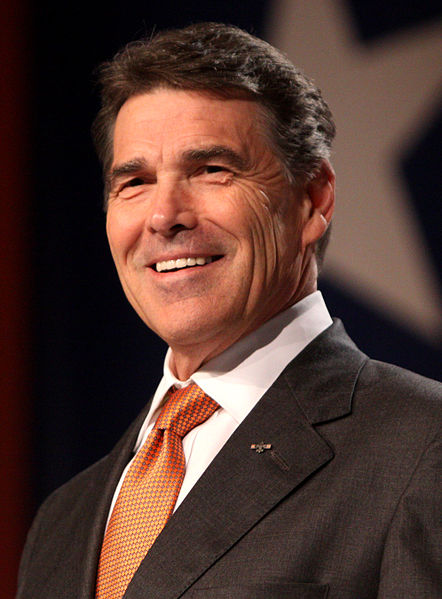
"...too incompetent even to hold his own in televised debates with a half-bright pizza salesman like Herman Cain and a goggle-eyed megachurch Joan of Arc like Michele Bachmann." (Image by Gage Skidmore.)
I don’t exactly trust Matt Taibbi’s work, and not just because of the lack of impartiality. His seems to possess a massive ego, needs to take everything to extremes, and fails to acknowledge his mistakes even when he’s utterly wrong. But he is a really talented writer, dazzling sometimes, and useful for information provided you don’t take him as gospel. Rick Perry, the floundering former frontrunner of the GOP, is his target in the latest Rolling Stone. An excerpt:
“Perry’s campaign is still struggling to recover from the kind of spectacular, submarine-at-crush-depth collapse seldom seen before in the history of presidential politics. The governor went from presumptive front-runner to stammering talk-show punch line seemingly in the speed of a single tweet, rightly blasted for being too incompetent even to hold his own in televised debates with a half-bright pizza salesman like Herman Cain and a goggle-eyed megachurch Joan of Arc like Michele Bachmann. But such superficial criticisms of his weirdly erratic campaign demeanor don’t even begin to get at the root of why we should all be terrified of Perry and what he represents. After all, you have to go pretty far to stand out as a whore and a sellout when you come from a state that has produced such luminaries in the history of political corruption as LBJ, Karl Rove and George W. Bush. But Rick Perry has managed to set a scary new low in the annals of opportunism, turning Texas into a swamp of political incest and backroom dealing on a scale not often seen this side of the Congo or Sierra Leone.
In an era when there’s exponentially more money in politics than we’ve ever seen before, Perry is the candidate who is exponentially more willing than we’ve ever seen before to whore himself out for that money. On the human level he is a nonpersonality, an almost perfect cipher – a man whose only discernible passion is his extreme willingness to be whatever someone will pay him to be, or vote for him to be. Even scarier, the religious community around which he has chosen to pull his human chameleon act features some of the most extreme end-is-nigh nutcases in America, the last people you want influencing the man with the nuclear football. Perry is a human price tag – Being There meets Left Behind. And sometimes there’s nothing more dangerous than nothing at all.”
Tags: Matt Taibbi, Rick Perry
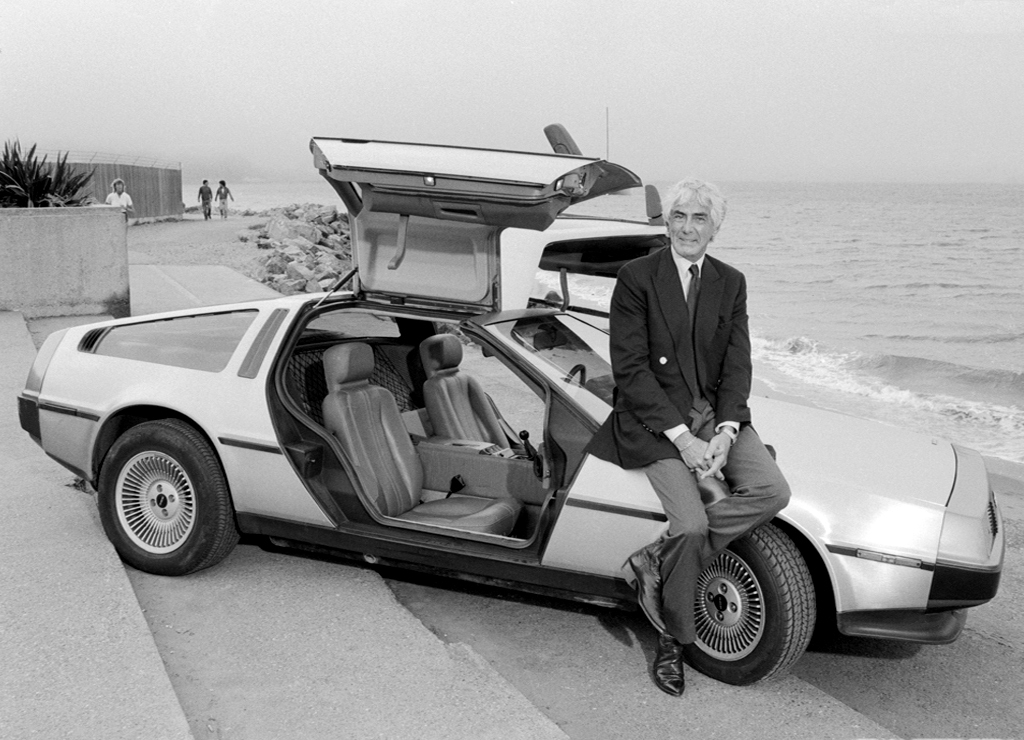
Haunting 1981 DeLorean doc by Pennebaker and Hegedus.
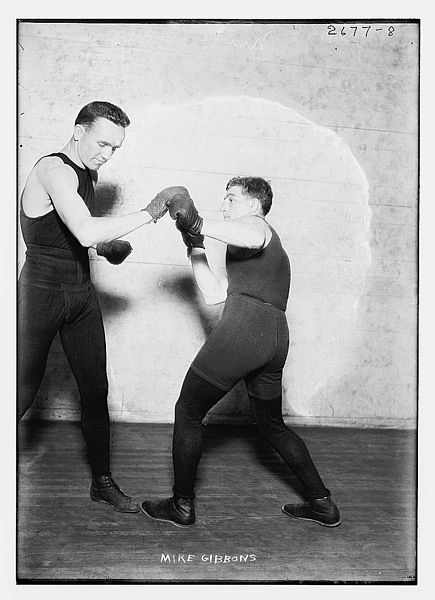
"There was a stool in the corner of the roped inclosure and on each stood a pair of badly damaged boxing gloves."
One of my favorite A.J. Liebling articles is “The University of Eighth Avenue,” a 1955 SI profile of old-time New York boxer Billy Ray. In the piece, Ray fondly recalls a Brooklyn barroom featuring all manner of organized violence: cockfighting, dogfighting and boxing. The tavern was across the street from Calvary Cemetery. By chance, I just happened upon an old article in the Brooklyn Daily Eagle from 1889 (a reprint of a New York Sun piece), which I think is about the same establishment. Ray had given the proprietor’s name as “Hughie Bart” and the Eagle refers to him as “Pete Hart,” but there are many similarities. The full article:
“Just across the road from the northeast corner of the old Calvary Cemetery stands a little frame structure that is called a pavilion by Pete Hart, who owns it. Mr. Hart is an old time free and easy singer, and there are few men on Long Island or anywhere else who know how to entertain non church goers better than he. Pete is a slim man, verging on the meridian of life, and has an old gold mustache. To the casual observer the pavilion is a very ordinary saloon, with no pretensions to grandeur. The first story consists of two rooms. The outer room has a little bar across one end of it and the inner room is ornamented with a lot of pictures representing calm and rural scenery; also with a few round tables, some wooden chairs and a number of young men who look as though they were given to scrapping. There is a small door in one end of this room which opens into an inclosure about thirty feet square. In the center is a rough wooden platform, fenced in with ropes. On one side are three rows of planks, the upper one being so near the low ceiling that a tall man can’t sit upon it. Behind this door is an ancient piano.
"After it was over a young fellow danced a clog and was enthusiastically applauded."
Yesterday afternoon a sign in chalk was hung about the door leading into this inclosure, which declared that admission could be had for the trifling outlay of 25 cents. A stalwart young man stood in front of the door collecting this amount from every one who entered. At 4 o’clock about one hundred and sixty men were inside and the air was heavy with tobacco smoke. There were stools in the corners of the roped inclosure and on each stood a pair of badly damaged boxing gloves, and a bottle of water. The gentlemen were all known to each other as Skinny, Freckles, etc., and after a young man had been induced to thump on the piano, various heroic efforts were put forth to induce other young men to sing. There was a stir in the doorway and two young men in tights and canvas shoes climbed through the ropes into the ring, and, after affectionately shaking hands, began to pound each other with the gloves. The utmost order prevailed during the set to. After it was over a young fellow danced a clog and was enthusiastically applauded. James McNamee of the Hornbacher Athletic Club sparred three rounds with Dan O’Hara. McNamee is a handsome young fellow and knows a lot about boxing. He has sparred frequently with Jack Dempsey and has proved himself worthy of meeting good men. He thumped O’Hara whenever and wherever he liked to the great delight of the crowd and to the astonishment of Mr. O’Hara.
Hugh Groden, who was recently whipped in a ten round go with Sailor Brown, had a hot set with Smoke Hennessey. Mr. Hennessey amused the crowd later in the day by an unexpected attack on Mr. O’Hara. It was during the last set of the day and near the close of a three round go between O’Hara and John McCormick. Hennessey sprang into the ring and with his bare knuckles tried to strike O’Hara. The latter warded off the blow and struck Hennessey so hard with the boxing gloves he wore that he sent him flying through the ropes. Among the other set tos was one between Billy Dacey and Dan McVeigh and one between Mike Murray and Billy McGibben.”
Tags: A.J. Liebling, Billy Ray, Dan O'Hara, Hugh Groden, Hughie Bart, Jack Dempsey, James McNamee, Pete Hart, Smoke Hennessey

From Brook Larmer’s New York Times Magazine article about Chinese animator Pi San and the dangerous art of Internet political humor in modern China:
“No government in the world pours more resources into patrolling the Web than China’s, tracking down unwanted content and supposed miscreants among the online population of 500 million with an army of more than 50,000 censors and vast networks of advanced filtering software. Yet despite these restrictions — or precisely because of them — the Internet is flourishing as the wittiest space in China. ‘Censorship warps us in many ways, but it is also the mother of creativity,’ says Hu Yong, an Internet expert and associate professor at Peking University. ‘It forces people to invent indirect ways to get their meaning across, and humor works as a natural form of encryption.’
To slip past censors, Chinese bloggers have become masters of comic subterfuge, cloaking their messages in protective layers of irony and satire. This is not a new concept, but it has erupted so powerfully that it now defines the ethos of the Internet in China. Coded language has become part of mainstream culture, with the most contagious memes tapping into widely shared feelings about issues that cannot be openly discussed, from corruption and economic inequality to censorship itself. ‘Beyond its comic value, this humor shows where netizens are pushing against the boundaries of the state,’ says Xiao Qiang, an adjunct professor at the University of California, Berkeley, whose Web site, China Digital Times, maintains an entertaining lexicon of coded Internet terms. ‘Nothing else gives us a clearer view of the pressure points in Chinese society.'”
••••••••••
A Pi San animation:
Tags: Brook Larmer, Hu Yong, Pi San, Xiao Qiang

"Nice figures & attitudes as well."
Dating Women 50 + (Greenwich Village)
Two years ago I set up a date site after a friend met someone nice and local on his very first try on ….Craigslist ! They got together for months on the weekends and had alot of fun . I eventually made contact with a woman in Maryland and after a few e-mails and phone calls she drove up to spend the nite. 45 minutes after first meeting we were in a Holiday Inn in Morris County getting it on. She later drove back up & brought me back to her home for a 4 day visit that included a threesome in Delaware ! Wow. The next woman was local and again we had dinner and had sex the first date and every weekend after for the next three months or so. They were both willing & eager to enjoy themselves and we parted on good terms. Nice figures & attitudes as well. I’m 56 6’1″ 190 lbs.
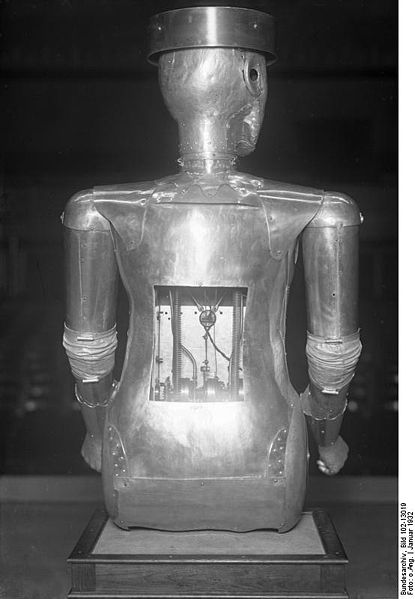
A post from TechnoAnthropology about employment in a time of increasing technological efficiency:
“The old Luddite fears seem to have been somewhat founded. Factories are making cars and needing less workers to do it. Brad McClenny (who sits in the office next to mine), armed with the internet, MS Word, machine translation, and digital phones, runs the international student program for our college in a way that it took a team of three people to do ten years ago (Kathy, Amanda, and that other girl).
As a starry-eyed libertarian, I try to believe that for every job that efficiency kills, we’ll get other ones, as all of the unemployed people begin to invent killer iPhone apps and musical masterpieces that we all can’t live without, and sell them to the people holding the remaining old-school jobs. It might be true. It would be cool.
Another thing that might be cool (in a starry-eyed not-libertarian way) would be transitioning into something like the Star Trek economy, where there is sufficient efficiency to guarantee everyone exactly the clothes and meals they want replicated, and we spend our time following our callings, quite aside from any need for money. This would take futuristic levels of automation and efficiency. It would also take redistribution. Some historical re-distributive plans in other countries got ugly. Americans are taught about these in school, and don’t like them. I don’t think that America will go for this kind of re-distribution anytime soon. Well, not if we know we’re going for it.”
The future of mobile commerce, as predicted by Bill Gates in a CD that came with his 1995 book, The Road Ahead.
Microsoft’s new video predicting the future of tech:
Tags: Bill Gates
That happily married (and remarried) couple, Richard Burton and Elizabeth Taylor, profiled on 60 Minutes, 1970.
Their greatest joint film effort, Who’s Afraid of Virginia Woolf?, as performed by fast-talking commercial pitchmen (and women), SCTV, 1980:

One repugnant thing I’ve noticed about cable TV news during this Wall Street-fueled economalypse that we’re struggling through is that talking heads–and not just on business channels–have taken to using the word “consumer” in place of “citizen,” not only when they’re talking about consumption but in almost every instance. It’s gross, as if we’re just so many credit card swipes and little else. Erin Burnett, the former Goldman Sachs analyst who recently brought her sense of privilege to CNN, is particularly egregious with this usage. I love commerce and business innovations and product design, but it’s horrifying that we’ve been gradually and quietly reduced to the sum of our purchases instead of the sum of all we are.
In the wake of 9/11, the recently departed Libyan despot tried to recast himself as anti-terrorist during a 60 Minutes interview with PBS strongman Charlie Rose.
Tags: Charlie Rose, Muammar al-Qaddafi