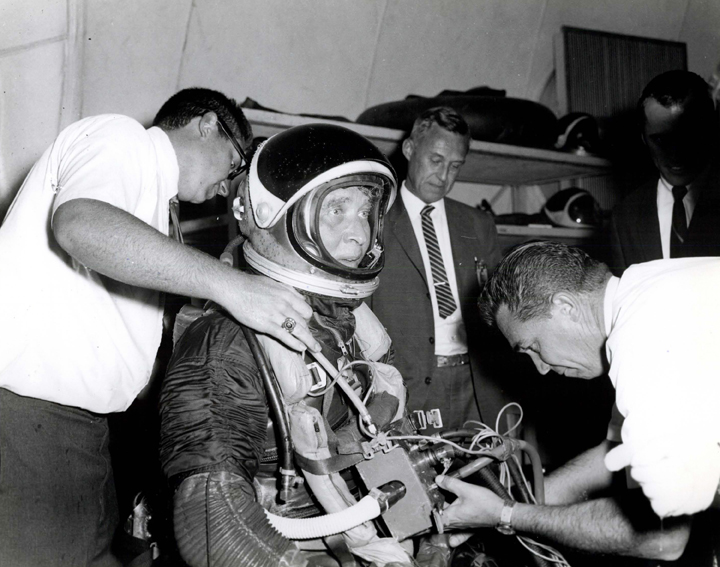
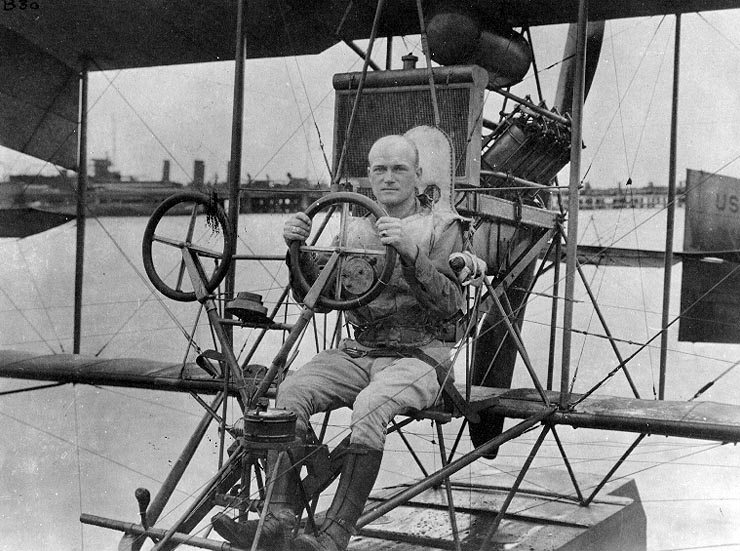
In our lifetimes, will we see commercial flights that are completely automated and pilotless? My guess is yes. The opening of Philip E. Ross’ investigation of that topic in IEEE Spectrum:

“Time was when a uniformed man would close a metal gate, throw a switch, and intone, ‘Second floor—men’s clothing, linens, power tools…’ and the carload of people would glide upward. Now each passenger handles the job with a punch of a button and not a hint of white-knuckled hesitation. The first automatic elevator was installed by Otis Elevator Co. in 1924; the things became common in the 1950s.

And back in the day, every train had an ‘engineer’ in the cab of the locomotive. Then robo-trains took over intra-airport service, and in the past decade they have appeared on subway lines in Copenhagen, Detroit, Tokyo, and other cities.

Quietly, automation has taken charge of many other life-and-death functions. It manages white-hot ribbons of steel that shoot through rolling mills. It guides lasers that sculpt the eye and scalpels that excise the prostate gland. It runs oceangoing freighters, the crews of which have shrunk by an order of magnitude in living memory. And, most obviously, it is mastering aerial warfare. Today, the U.S. military trains twice as many ground operators for its unmanned aerial vehicles (UAVs) as pilots for its military jets. Its UAVs started off by flying surveillance missions, then took on ground attack; now they are being readied to move cargo and evacuate wounded soldiers.

In the sphere of commercial flight, too, automation has thinned the cockpit crew from five to just the pilot and copilot, whose jobs it has greatly simplified. Do we even need those two? Many aviation experts think not.” (Thanks Browser.)

Tags:

Jean-Luc Godard on TV’s creeping influence on film. From Room 666, 1982.

See also:

Tags:

"Some people are afraid of chronic wasting disease."

eat deer

its a shame we dont eat deer. some people hate the idea because deer are so cute and some people are afraid of chronic wasting disease even tho there hasnt been a single case of deer to human transference that I heard of. still the deer populations can get large and eating deer would be the logical answer. 

Kim Basinger uses beer-enriched shampoo. Shouldn’t you? From 1978.

Tags:

A genius computer scientist who long ago predicted cloud computing, social networks and the current connectivity, David Gelernter was famously sent an explosive by the Unabomber, though his life accomplishments should render that bold headline a footnote. The Economist has an excellent short profile of the technologist. An excerpt:

“More than two decades ago, Dr Gelernter foresaw how computers would be woven into the fabric of everyday life. In his book Mirror Worlds, published in 1991, he accurately described websites, blogging, virtual reality, streaming video, tablet computers, e-books, search engines and internet telephony. More importantly, he anticipated the consequences all this would have on the nature of social interaction, describing distributed online communities that work just as Facebook and Twitter do today.

‘Mirror Worlds aren’t mere information services. They are places you can ‘stroll around’, meeting and electronically conversing with friends or random passers-by. If you find something you don’t like, post a note; you’ll soon discover whether anyone agrees with you,’ he wrote. ‘I can’t be personal friends with all the people who run my local world any longer, but via Mirror Worlds we can be impersonal friends. There will be freer, easier, more improvisational communications, more like neighbourhood chatting and less like typical mail and phone calls. Where someone is or when he is available won’t matter. Mirror Worlds will rub your nose in the big picture and society may be subtly but deeply different as a result.'”

••••••••••

Gelernter’s Lifestreaming predated Facebook:

Tags:

Richard Stallman is right about social networks, but it’s not like we’re unaware of the intrusion–we just don’t care. In this scary world, we want a brother at any cost, even if it’s Big Brother. We want someone to watch over us.

Tags:

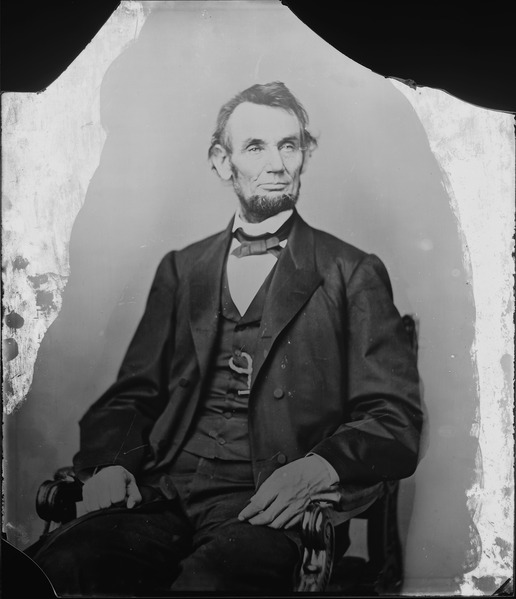
"This kind of grave robbing began in this country in 1876, with an attempt to steal the body of President Lincoln from its resting place in Springfield, Ill."

Robbing graves to supply medical schools with cadavers is as old as the dissecting table itself, but the ransoming of famous corpses began in earnest in America when an attempt was made to disinter President Lincoln’s remains from his final resting place. A report from the March 13, 1888 Brooklyn Daily Eagle:

“Within the last ten years there has arisen a phase of grave robbing against which the law in its present form seems to provide but poorly. Previously the operations of grave robbers had been confined to procuring subjects for the dissecting table, and it is for this class of crimes that the present laws are framed. They do not contemplate the union of shameful extortion to sacrilege in the form of grave robbing for the purpose of obtaining ransom.

Of late years the plundering of cemeteries and vaults with this purpose has become of such frequency that it is now deemed prudent, if not necessary, to place a guard over the grave of every person of wealth or distinction immediately after burial. This kind of grave robbing began in this country in 1876, with an attempt to steal the body of President Lincoln from its resting place in Springfield, Ill. It was the purpose of the conspirators to hold the body for a ransom of $250,000, together with the pardon of a noted counterfeiter to whom they were friendly. The success of the scheme was happily thwarted by the confusion of one of the confederates.

Two years later a like attempt made on the body of A.T. Stewart, of New York, was more successful. The details of this robbery are still remembered. The body has been recovered by the family, but at what cost is not accurately known. Those concerned in the plot have never been apprehended. These well known cases serve to indicate the good reasons for the precautions taken in the protection of the bodies of ex-President Grant, of William H. Vanderbilt and more recently of Mrs. John Jacob Astor. 

By way of showing to what extent the law is powerless in such cases, it is of interest to cite the theft of the body of Earl Crawford, in Scotland, in 1882. On the arrest of one of the perpertrators of this outrage it was found that there was no statute more applicable to this case than that for the punishment of sacrilege. No penalties for robbery could be imposed, since a dead body could not be regarded at law as property.

The maximum penalty prescribed by the public statutes of our State for criminal grave robbing is imprisonment not exceeding three years, or by fine not exceeding $2,000. The whole chapter of which this section forms a part has for its subject the preservation of chastity, morality, decency and good order. It is true that it is no more an offense to steal the body of a rich man than it is to steal the body of a poor man, yet there is in the former case an additional element which finds an additional punishment in the eyes of the law. It would seem that but just that in cases where extra inducement in the hope of extortion exists, extra penalties should be imposed; for sacrilege may remain mercifully unknown to the relatives of the dead, but grave robbing, with the aim of extorting ransom, cruelly wounds the hearts of the living and is one of the most shameful forms of plunder.”

Tags: , ,

Buying on credit will likely never cease, though the plastic cards that have long been part of the transactions may disappear. From a brief history of credit cards by Hilary Greenbaum and Dana Rubinstein in the New York Times Magazine:

“In Looking Backward, Edward Bellamy’s 1888 novel about a socialist utopia more than a century hence, citizens are issued ‘credit cards’ entitling them to shares of the national wealth. In today’s dystopian reality, people use a different sort of card to buy stuff on the Internet. Yet according to Robert Manning, a historian and author of Credit Card Nation, plastic remains ‘one of the top 10 innovations in the post-World War II period.’ Even if it owes its ubiquity, in part, to a New York businessman named Frank X. McNamara, who forgot to bring cash to a lunch meeting. In 1950, McNamara introduced a cardboard charge card. He called it the Diners Club.

During the 1920s, department stores started issuing charge plates or coins — round or rectangular and mostly made from metal — to encourage loyal customers to run a tab. The most popular, made by a company called Charga-Plate, was rectangular and big enough for an account number, a name and an address.”

••••••••••

“He wines and dines without ever spending cash,” 1963:

Tags: , ,

The first use of the Time-Slice special effect on TV, 1993.

Grotesque images don’t bother us unless they remind us of ourselves–then they’re appalling. Photographer Diane Arbus was the most famous cataloger of people who broke the mold: giants, dwarves, twins, transvestites, etc. She was accused of exploitation, but she was always really exploring the frailties of those viewing, not those on view. In the above classic 1966 photo, Arbus’ subjects are twin girls who are identical save expressions set in different directions.

Arbus committed suicide in July 1971. From her Village Voice obituary by A.D. Coleman: “Diane Arbus slashed her wrist and bled to death in her Westbeth apartment–sometime late Monday or early Tuesday, since her diary contained an entry dated Monday, July 25. Hers was the third suicide at Westbeth, the second by a photographer. Her body was discovered by her close friend Marvin Israel, on Wednesday, July 28. Funeral services were held at Campbell’s on Madison Avenue. She was 48 years old.

Diane Arbus studied with Lisette Model and earned her living as a commercial photographer, but her concern as an artist–I should say her concerns, as twinned as the children in one of her most famous images–were the freakishness of normalcy and the normalcy of freakishness. She called freaks ‘the quiet minorities,’ and defined her special field of interest in photography as a ‘sort of contemporary anthropology,’ much reminiscent of August Sander, with whose work her own had considerable affinity.

In a 1967 interview for Newsweek, she said about freaks, ‘There’s a quality of legend about them. They’ve passed their test in life. Most people go through life dreading they’ll have a traumatic experience. Freaks were born with their trauma. They’ve already passed it. They’re aristocrats.’

And, about herself, in a more recent statement: ‘Once I dreamed I was on a gorgeous ocean liner, all pale, gilded, cupid-encrusted, rococo as a wedding cake. There was smoke in the air, people were drinking and gambling. I knew the ship was on fire and we were sinking, slowly. They knew it too but they were very gay, dancing  and singing and kissing, a little delirious. There was no hope. I was terribly elated. I could photograph anything I wanted to.'”

Tags: ,

"This way we can all die like Jim Henson."

Time For Humanity To Fold

We’re the worst thing to happen to this planet. Our raw naked greed is the problem. We want things and we want them enough to kill for them, to put lethal toxins in the environment for them, to allow others to starve for them. We suck. Nothing intelligent designed us, we are the product of a few billion years of random chance that almost worked. Almost.

Eventually the bacteria will kill most of us off, quicker because advertising has convinced us that bacteria is scary and we need to wash ourselves, do dishes and do laundry with anti-bacterial soaps, which of course, just makes the bacteria stronger in the long run. This way we can all die like Jim Henson. Or maybe a Captain Trips scenario ala’ Stephen King’s ‘The Stand’. However it happens, the sooner, the better. My sincere good wishes and good will to the next species that moves up the evolutionary ladder, I hope you do better than we did.

In France.

Three short works by Michel Gondry:

“Let Forever Be,” the Chemical Brothers.

Air France commercial.

Directing the opening of Jimmy Kimmel Live.

Tags:

From a 1979 Philip K. Dick interview in Science Fiction Review, in which the author inexplicably shows great love for Chairman Mao and makes an interesting point about the human capacity for blocking out the truth:

Question:

Right now, the first reports are coming back from our probes on Mars. What effect, if any, would news of life on Mars have on humanity?

Philip K. Dick:

You mean the average person?

Question:

Yes. What would it do to their thoughts of themselves, and their place in the universe?

Philip K. Dick: 

All right. Yesterday, Chairman Mao died. To me, it was as if a piece of my body had been torn out and thrown away, and I’m not a Communist. There was one of the greatest teachers, poets, and leaders that ever lived. And I don’t see anybody walking around with any particularly unhappy expression. There have been some shots of people in China crying piteously, but I woke my girlfriend up at 7:00 in the morning. I was crying. I said, ‘Chairman Mao has died.’ She said, ‘Oh my God, I thought you said ‘Sharon was dead” — some girl she knows. I think I would be like that. I think there would be little, if any, real reaction. If they can stand to hear that Chairman–that that great poet and teacher, that great man, that–one guy on TV — one Sinologist — said ‘The American public would have to imagine as if, on a single day, both Kennedys, Dr. King, and Franklin D. Rossevelt were all killed simultaneously,’ and even then they wouldn’t get the full impact of it. So I don’t really think that to find life on Mars is going to affect people. One time I was watching TV, and a guy comes on, and he says, ‘I have discovered a 3,000,000-year-old humanoid skull with one eye and two noses.’ And he showed it — he had twenty-five of them, they were obviously fake. And it had one eye, like a cyclops, and had two noses. And the network and everybody took the guy seriously. He says, ‘Man originated in San Diego, and he had one eye and two noses.’ We were laughing, and I said, ‘I wonder if he has a moustache under each nose?

People just have no criterion left to evaluate the importance of things. I think the only thing that would really affect people would be the announcement that the world was going to be blown up by the hydrogen bomb. I think that would really effect people. I think they would react to that. But outside of that, I don’t think they would react to anything. ‘Peking has been wiped out by an earthquake, and the RTD — the bus strike is still on.’ And some guy says, ‘Damnit! I’ll have to walk to work!’ So? You know, 800,000 Chinese are lying dead under the rubble. Really. It cannot be burlesqued.

I think people would have been pleased if there was life on Mars, but I think they would have soon wearied of the novelty of it, and said, ‘But what is there on Jupiter? What can the life do?’ And, ‘My pet dog can do the same thing.’ It’s sad, and it’s also very frightening in a way, to think that you could come on the air, and you could say, ‘The ozone layer has been completely destroyed, and we’re all going to die of cancer in ten years.’ And you might get a reaction. And then, on the other hand, you might not get a reaction from people. So many incredible things have happened.

I talked to a black soldier from World War II who had entered the concentration camp — he had been part of an American battalion that had seized a German death camp — it wasn’t even a concentration camp, it was one of the death camps, and had liberated it. And he said he saw those inmates with his own eyes, and he said, ‘I don’t believe it. I saw it, but I have never believed what I saw. I think that there was something we don’t know. I don’t think they were being killed.’ They were obviously starving, but he says, ‘Even though I saw the camp, and I was one of the first people to get there, I don’t really believe that those people were being killed by millions. For some reason, even though I myself was one of the first human’ — notice the words ‘human beings’ — ‘human beings to see this terrible sight, I just don’t believe what I saw.’ And I guess that’s it, you know. I think that may have been the moment when this began, was the extermination of the gypsies, and Jews, and Bible students in the death camps, people making lampshades out of people’s skins. After that, there wasn’t much to believe or disbelieve, and it didn’t really matter what you believed or disbelieved.•
Tags: , ,

In his New York Times opinion piece about the vacuum of governance in large swaths of Pakistan among other places, Steve Inskeep mentions in passing the late urban planner Constantinos Doxiadis, who was one of the key figures in 20th-century urban life. Funny that someone who held so much sway over so many lives is all but forgotten to those outside of city planning. A 1960s NBC interview with Doxiadis:

Tags: , ,

Some search-engine keyphrases bringing traffic to Afflictor this week:

Afflictor: Thinking Herman Cain's clever new campaign ad probably won't be enough to save him.

From “The Omega Glory,” Michael Chabon’s essay about that amorphous thing known as The Future, at The Long Now:

“The Sex Pistols, strictly speaking, were right: there is no future, for you or for me. The future, by definition, does not exist. ‘The Future,’ whether you capitalize it or not, is always just an idea, a proposal, a scenario, a sketch for a mad contraption that may or may not work. ‘The Future’ is a story we tell, a narrative of hope, dread or wonder. And it’s a story that, for a while now, we’ve been pretty much living without.

Ten thousand years from now: can you imagine that day? Okay, but do you? Do you believe ‘the Future’ is going to happen? If the Clock works the way that it’s supposed to do—if it lasts—do you believe there will be a human being around to witness, let alone mourn its passing, to appreciate its accomplishment, its faithfulness, its immense antiquity? What about five thousand years from now, or even five hundred? Can you extend the horizon of your expectations for our world, for our complex of civilizations and cultures, beyond the lifetime of your own children, of the next two or three generations? Can you even imagine the survival of the world beyond the present presidential administration?” (Thanks TETW.)

•••••••••

Punks and rotters, the lot of them, 1976:

Tags: , ,

Vin Scully for Continental and its electronic video games and “specially condensed” double-feature movies, 1970s.

Tags:

"No roadkill." (Image by FotoosVanRobin.)

Venison Wanted! (eastern LI)

Hi!
I’m looking for some venison for my family. Must be fresh…no roadkill.
Maybe you have more than you need?
Maybe you like to hunt but not eat the meat?
I’ll pay a fair price.

Thanks! 

Experimenting with mobile phones in 1922. (Thanks Open Culture.)

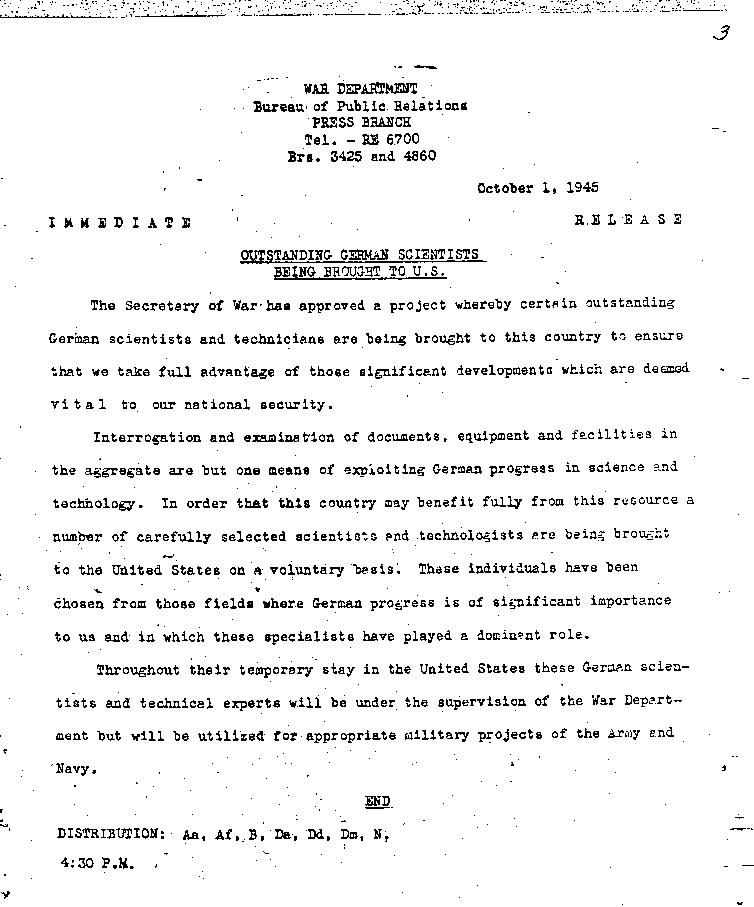
Compromise as much as courage was key to the U.S.A. touching down on the moon first. Operation Paperclip rounded up scores of Nazi scientists at the conclusion of WWII, and brought them to America to make us preeminent in rockets, satellites, and ultimately, spaceships, without ever holding these men accountable for their atrocities. Chief among these unlikely American heroes was brilliant Wernher von Braun, who was portrayed to the American public as a scientist who was dispassionate about politics, just another pawn in the horrible Nazi game. Of course, that was far from the truth. From “The Rocket Man’s Dark Side,” Leon Jaroff’s 2002 Time report about the genius whose awful past was lost in space:

Still, he was apolitical, wasn’t he, and during the war had really only been pursuing his lifelong interest in rocketry. And hadn’t he fully redeemed himself with his great contributions to our space race with the Soviets?

That’s the gist of the official von Braun biography posted  on the web site of NASA’s Marshall Space Flight Center, where under the directorship of von Braun, the mighty Saturn 5 rocket was developed. And it’s this sanitized biography that has roused the indignation of Tom Gehrels, a noted University of Arizona astronomer and pioneer in the program to discover and track Earth-threatening asteroids. A member of the Dutch resistance during World War II, Gehrels readily acknowledges von Braun’s contributions to the world of science, but is all too aware of the little-known dark side of both him and his brother Magnus. “They were Jekyll and Hyde characters,” Gehrels insists, “and the full truth ought to be known.”

It is Gehrels who has pieced together that truth, largely from interviews with surviving political prisoners who had been forced to build V-1s and V-2s under the supervision of the von Brauns in an underground complex near Nordhausen, Germany. These prisoners were housed in an adjacent concentration camp called Dora, and new arrivals were given the standard welcoming speech: ‘You came in through that gate, and you’ll leave through that chimney [of the crematorium].’

Indeed, some 20,000 died at Dora, from illness, beatings, hangings and intolerable working conditions. Workers, scantily clad, were forced to stand at attention in the biting cold during roll calls that went on for hours. Average survival time in the unventilated paint shop was one month. One prisoner told of being bitten on his legs by guard dogs. Presumably to test the effectiveness of a new medication, one of his legs was treated, the other allowed to fester and deteriorate.

For reasons best known to von Braun, who held the rank of colonel in the dreaded Nazi SS, the prisoners were ordered to turn their backs whenever he came into view. Those caught stealing glances at him were hung. One survivor recalled that von Braun, after inspecting a rocket component, charged, “That is clear sabotage.” His unquestioned judgment resulted in eleven men being hanged on the spot. Says Gehrels, ‘von Braun was directly involved in hangings.”•


Dr. Strangelove’s backstory—and salutes—were inspired by von Braun.

See also:

Tags: , ,

"Jakey, the monkey, was tied to the leg of a table."

Monkey-related arson was the cause of four out of five fires in nineteeneth-century America. Non-empirical proof of this statistic can be found in the August 22, 1887 edition of the Brooklyn Daily Eagle. An excerpt:

“Mrs. Sylvester M. Folsom, of Fort Hamilton, has furnished the neighborhood in which she has led an adventurous life for a dozen years with a constant round of sensational episodes. She was the wife of sporting Billy Clark when his prize fighters’ resort was in full blast, and after she was divorced from him, married Alpheus E. Clark, a soldier, who ran away from her after a short but tempestuous wedded life. Her third husband, Sylvester M. Folsom, the village barber, has been, like his predecessors, a cause of constant jealousy to the woman, and a few weeks ago, on the ground that he was too frequent a visitor to a good looking member of a local family, Mrs. Folsom shot at the head of the obnoxious household and, failing to hit him, clubbed him into unconsciousness.

"Mrs. Folsom placed the lighted lamp she had carried down with her on the stairway, and laid some parlor matches on the table." (Image by Rolf Schlagenhaft.)

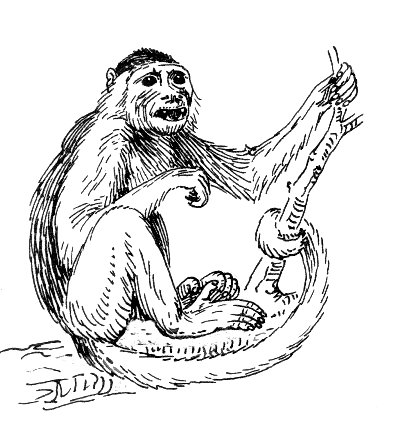
She recently secured her freedom from the New Utrecht jail on bail and returned to her home at the Fort. The only occupant of her own quarters in the lower portion of the house who remained to greet her was a monkey, whom she had left in care of Sergeant Grossman, of Battery I. This morning Mrs. Folsom went into the basement to prepare the breakfast for the Grossman family. Jakey, the monkey, was tied to the leg of a table that stood not far from the stairs leading down to the basement. Mrs. Folsom placed the lighted lamp she had carried down with her on the stairway, and laid some parlor matches on the table. She then went out to get kindling wood. As she opened the door a few minutes later she discovered the place on fire. Jakey had climbed upon the table and was still engaged in cracking parlor matches, and when they became too hot to hold dropping them on to the rubbish covered floor.

Mrs. Folsom’s first thought was for the Grossman family, upstairs, on the floor just above the rapidly growing flames. Mrs. Grossman had already been aroused by the smoke and was astir. Her two little children were, however, asleep in bed, when the frightened housekeeper burst open the door and let in the volume of smoke. Mrs. Folsom seized upon the children and carried them safely downstairs. Mrs. Grossman followed, but was near being too late to get through the burning basement with safety. Her clothing took fire, but she was fortunate in being able to reach the open air and assistance before she or the children were injured. 

All efforts to save Jakey, the mischievous cause of the fire, were unavailing, and his cries for help soon died away in the flames that entirely consumed the house before the hand engine from Bay Ridge made its appearance.”

Tags: , , ,

Senseg creates interfaces that you can feel.

"The footage would capture the candidate seeming engaged in the kind of heart-to-heart dialogues with working-class Americans that the campaign had otherwise left off his schedule that day." (Image by Gage Skidmore .)

The source of the considerable reservoir of rage beneath Mitt Romney’s well-polished exterior is as mysterious as President Obama’s ever-present sense of calm–though it’s obviously more concerning. Robert Draper’s new New York Times Magazine article about the likely GOP Presidential nominee suggests that Romney is unflappable–I’m not buying it–but makes good points about the guy you’d least like to have a beer with competing for the country’s highest office. An excerpt;

“It’s very unlikely that we’ll ever hear Mitt Romney and Barack Obama openly discuss the things they have in common. Nonetheless, we may well see in the general election a contest between two dispassionate and accommodating pragmatists and skilled debaters who relish intellectual give-and-take, and whose willingness to compromise has infuriated the party faithful. Both have promised change. Each will frame the other as being not up to the task.

How ably Romney the nominee will defend himself, given the kid-gloves treatment by his current competition and the campaign’s avoidance of large segments of his own life story, is difficult to say just yet. In early November I watched Romney return to Iowa for only the fourth time. He stopped in Dubuque and Davenport and, before decent-size crowds, essentially regurgitated his address on the economy from the week before. In both cases he spoke for less than 20 minutes and did not take questions from the audience. Far more of his ground time was devoted to filming promotional material in a Dubuque sheet-metal factory, where the footage would capture the candidate seeming engaged in the kind of heart-to-heart dialogues with working-class Americans that the campaign had otherwise left off his schedule that day.

Near the end of his talk in Davenport, he said to the 275 east Iowans in attendance, ‘I want you to get to know me a little better.’ After wrapping up his speech, he moved briskly through the crowd, pausing now and then to take photos and sign autographs, before flying out of Iowa with Stuart Stevens and a couple of other staff members.”

••••••••

“Did you hear what I said?”

Tags: ,

« Older entries § Newer entries »