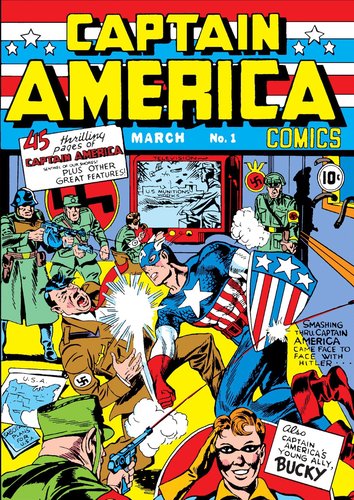
From Bruce Weber’s New York Times obituary of Joe Simon, the comic-book legend who not only co-created Captain America but also made Hitler a villain in his panels right before America entered WWII:
“He took to drawing at an early age, creating comic strips and cartoons for his high school newspaper and yearbook. After graduating, he worked in the art department at newspapers in Rochester and Syracuse, learning how to retouch photographs and lay out pages. He created cartoons and illustrations for the papers’ sports sections — ‘Drawing athletes prepared me for drawing superheroes,’ he said in his autobiography — and began to write as well, covering boxing matches and other sports events.
He eventually moved to New York, where his first job was for Paramount Pictures, retouching still photographs of movie stars. ‘I retouched some of the most famous bosoms in motion pictures — Gloria Swanson, Joan Crawford, Bette Davis, Carole Lombard and Dorothy Lamour,’ he wrote. ‘Good bosom men were considered experts and got lots of work. I could hold up a sagging bust line with the best of them.'”
Christopher Hitchens, that godless heathen (I mean that as a compliment as well as a statement of fact), just passed away from esophageal cancer. From “Mommie Dearest,” his enthusiastic flogging of Mother Teresa published on Slate in 2003:
MT was not a friend of the poor. She was a friend of poverty. She said that suffering was a gift from God. She spent her life opposing the only known cure for poverty, which is the empowerment of women and the emancipation of them from a livestock version of compulsory reproduction. And she was a friend to the worst of the rich, taking misappropriated money from the atrocious Duvalier family in Haiti (whose rule she praised in return) and from Charles Keating of the Lincoln Savings and Loan. Where did that money, and all the other donations, go? The primitive hospice in Calcutta was as run down when she died as it always had been—she preferred California clinics when she got sick herself—and her order always refused to publish any audit. But we have her own claim that she opened 500 convents in more than a hundred countries, all bearing the name of her own order. Excuse me, but this is modesty and humility?
The rich world has a poor conscience, and many people liked to alleviate their own unease by sending money to a woman who seemed like an activist for “the poorest of the poor.” People do not like to admit that they have been gulled or conned, so a vested interest in the myth was permitted to arise, and a lazy media never bothered to ask any follow-up questions. Many volunteers who went to Calcutta came back abruptly disillusioned by the stern ideology and poverty-loving practice of the ‘Missionaries of Charity,’ but they had no audience for their story. George Orwell’s admonition in his essay on Gandhi—that saints should always be presumed guilty until proved innocent—was drowned in a Niagara of soft-hearted, soft-headed, and uninquiring propaganda.•
GQ writer Jon Ronson converses with our AI brethren in his excellent March 2011 article, “Robots Say the Damndest Things.” The opening:
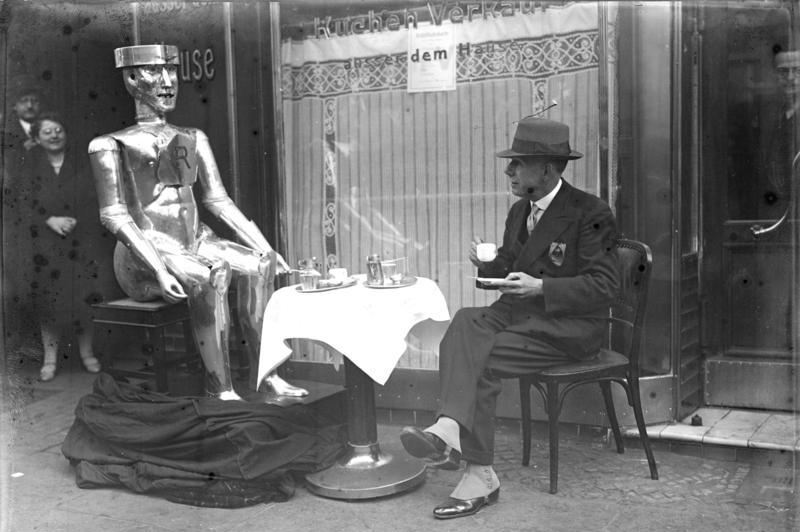
“I’m having an awkward conversation with a robot. His name is Zeno. I clear my throat. ‘Do you enjoy being a robot?’ I ask him, sounding like the Queen of England when she addresses a child.
‘I really couldn’t say for sure,’ he replies, whirring, glassy-eyed. ‘I am feeling a bit confused. Do you ever get that way?’
Zeno has a kind face, which moves as expressively as a human’s. His skin, made of something called Frubber, looks and feels startlingly lifelike, right down to his chest, but there’s nothing below that, only a table. He’s been designed by some of the world’s most brilliant AI scientists, but talking to him is, so far, like talking to a man suffering from Alzheimer’s. He drifts off, forgets himself, misunderstands.
‘Are you happy?’ I ask him.
‘Sorry,’ says Zeno. ‘I think my current is a bit off today.’ He averts his gaze, as if embarrassed.
I’ve been hearing that there are a handful of humanoid robots scattered across North America who have learned how to have eloquent conversations with humans. They listen attentively and answer thoughtfully. One or two have even attained a degree of consciousness, say some AI aficionados, and are on the cusp of bursting into life. If true, this would be humanity’s greatest achievement ever, so I’ve approached the robots for interviews. Conversations with robots! I’ve no doubt the experience is going to be off the scale in terms of profundity.
‘Are you happy?’ I ask Zeno again.
‘I prefer not to use dangerous things,’ he replies.”
I remember reading some years back that Hershey made a special chocolate bar crammed with thousands of calories for the U.S. Army so that soldiers could stave off starvation. Now the American military has come up with a BBQ chicken sandwich that doesn’t spoil for two years. From NPR:
“For the U.S. military around the world, the enemy can be hard to pinpoint and even harder to defeat. But back at home, the Army has a tiny and vexing foe in its sights: the bacteria that cause food to rot.
In this bacterial battle, though, it’s clearer who’s winning, and the evidence is a humble pocket sandwich, which looks from the outside no different than your average hot pocket in the frozen foods aisle.
But this sandwich is spectacularly resilient to threats (or hurdles, in Army speak) that would turn it into a dry, moldy mess if they could. Unlike probably any other sandwich out there, this one keeps the microbial forces of nature at bay for up to two years.”
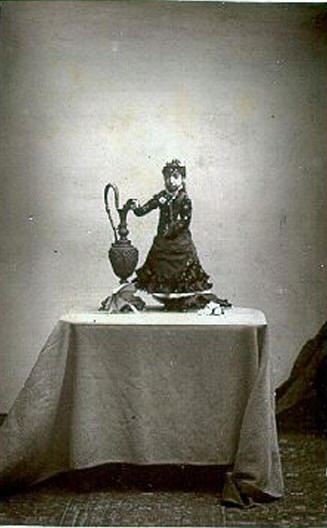
"Miss Lucia Zarate, his companion and intended wife, is over 15 years of age and weighs less than five pounds."
In a much earlier time before the phrase “little people” was the preferred term of usage, the tiniest among us were often exhibited at circuses, sideshows and dime museums. The May 18, 1879 Brooklyn Daily Eagle had a story about such a pair of Lilliputians. An excerpt:
“The ensuing week is the third and positively the last of the famous little people, known to the world as ‘Uffnor’s Marvelous Midgets.’ This week will close their tour of the United States, as they sail directly to Europe to remain some three or four years. These tiny morsels were first brought together about three years ago, and since the first day they were placed upon exhibition have drawn immense audiences in every city in which they were introduced. Many celebrated ‘little folks’ and ‘dwarfs’ have been from time to time brought before the public, but in searching history or biography there is no record of any couple so infinitesimally small as these two wonderful beings so aptly called ‘Midgets.’ The largest of the pair, General Mite, is 14 years of age and weighs only nine pounds; Miss Lucia Zarate, his companion and intended wife, is over 15 years of age and weighs less than five pounds. To realize such a marvelous departure of nature from her ordinary productions requires quite a stretch of the imagination. Their combined age is nearly thirty years, while their united weight is only fourteen pounds. Such little creatures appeal to the sensibilities and sympathies of men, women and children alike, and awaken a peculiar interest akin to enthusiasm. These miraculous human wonders remain but six days longer, and will give afternoon and evening levees at Music Hall, at an admission fee of twenty-five cents.”
Steve Jobs has posthumously received much credit for the “Think Different” advertising campaign that relaunched the Apple brand in 1997. Rob Siltanen, former creative director of TBWA/Chiat/Day, sets the record straight for Forbes. An excerpt:
“While I’ve seen a few inaccurate articles and comments floating around the Internet about how the legendary ‘Think Different’ campaign was conceived, what prompted me to share this inside account was Walter Isaacson’s recent, best-selling biography on Steve Jobs. In his book, Isaacson incorrectly suggests Jobs created and wrote much of the ‘To the crazy ones’ launch commercial. To me, this is a case of revisionist history.
Steve was highly involved with the advertising and every facet of Apple’s business. But he was far from the mastermind behind the renowned launch spot. In fact, he was blatantly harsh on the commercial that would eventually play a pivotal role in helping Apple achieve one of the greatest corporate turnarounds in business history. As you’ll learn later in my account, the soul of the original ‘The crazy ones’ script I presented to Jobs, as well as the original beginning and ending of the celebrated script, all ultimately stayed in place, even though Jobs initially called the script ‘shit.’ I’ve also read a few less than correct accounts on how the ‘Think Different’ campaign was originally conceived. While several people played prominent parts in making it happen, the famous ‘Think Different’ line and the brilliant concept of putting the line together with black and white photographs of time-honored visionaries was invented by an exceptionally creative person, and dear friend, by the name of Craig Tanimoto, a TBWA/Chiat/Day art director at the time.
I have read many wonderful things about Steve Jobs and how warm and loving he was to his wife, children and sister. His Stanford commencement address is one of the most touching and inspiring speeches I have ever heard. Steve was an amazing visionary, and I believe the comparisons of him to some of the world’s greatest achievers are totally deserved. But I have also read many critical statements about Steve, and I must say I saw and experienced his tongue lashings and ballistic temper firsthand—directed to several others and squarely at me. It wasn’t pretty. While I greatly respected Steve for his remarkable accomplishments and extraordinary passion, I didn’t have much patience for his often abrasive and condescending personality. It is here, in my opinion, that Lee Clow deserves a great deal of credit. Lee is more than a creative genius. In working with Jobs he had the patience of a saint.” (Thanks Browser.)
A passage from My Dinner with Andre, about reality, that elusive thing, which has only grown fuzzier since the film’s release in 1981. And despite history being recorded with ever greater devotion, it still is increasingly forgotten.
Paul Allen is willing to invest $200 million of his Microsoft billions to create a mega-aircraft with wingspans wider than football fields, which are capable of launching truck-sized satellites into space. From today’s Wall Street Journal:
“The concept seems to border on science fiction. It envisions a behemoth mother ship with twin, narrow fuselages, featuring six Boeing Co. 747 engines attached to a record 385-foot wingspan, plus a smaller rocket pod nestled underneath. Expected to weigh roughly 1.2 million pounds, the combination would roughly match the maximum takeoff weight of the largest, fully loaded Airbus A380 superjumbo plane, but the wings would be more than 120 feet longer than those of the Airbus A380.
Flying at roughly 30,000 feet, the craft would climb sharply just as it released the rocket, which would use a cluster of four or five engines to boost itself into orbit.
The sheer size of the endeavor presents severe engineering and production challenges. While scientists have long studied the principles of air-launched rockets—Mr. Rutan recalls beginning preliminary work on such a project as long ago as 1991—Stratolaunch Systems Inc., as the new venture is called, still hasn’t firmed up critical design details.”
•••••••••••
A clip from Paul Allen’s 2011 talk with male impersonator Rosie Charles:
A bunch of great articles from this year that made me rethink assertions, informed me or entertained me. All available for free.
“Getting Bin Laden” (Nicholas Schmidle, New Yorker): The best long-form journalism of the new century. Perfect writing and editing. Will be read with equal fascination 50 years from now.
“The Movie Set That Ate Itself,” (Michael Idov, GQ): Intrepid reporter with a deadpan sensibility ventures onto the most insane movie set ever.
“Better, Faster. Stronger“ (Rebecca Mead, New Yorker): Wicked portrait of a Silicon Valley self-help guru. Reading this piece is a good way to learn how to write profiles.
‘”The Elusive Big Idea” (Neal Gabler, New York Times): I don’t agree with most of the assertions of this essay, but it’s deeply intelligent and provocative.
“Douglas Rushkoff” (Peggy Nelson, HiLowbrow.com): Deep and probing interview with the media ecologist.
“Zell to L.A. Times: Drop Dead” (Laurie Winer, L.A. Review of Books): Great writing about Sam Zell and the painful decline of the Los Angeles Times.
“Show the Monster” (Daniel Zalewski, The New Yorker): Brilliant Guillermo del Toro portrait for fans of film or great writing.
“The Man Who Inspired Jobs” (Christopher Bonanos, The New York Times): Polaroid founder Edwin H. Land was oddly omitted from Steve Jobs’ obits, but this lucid, insightful essay remedied that oversight. Better yet: Bonanos is apparently working on a book about Polaroid.
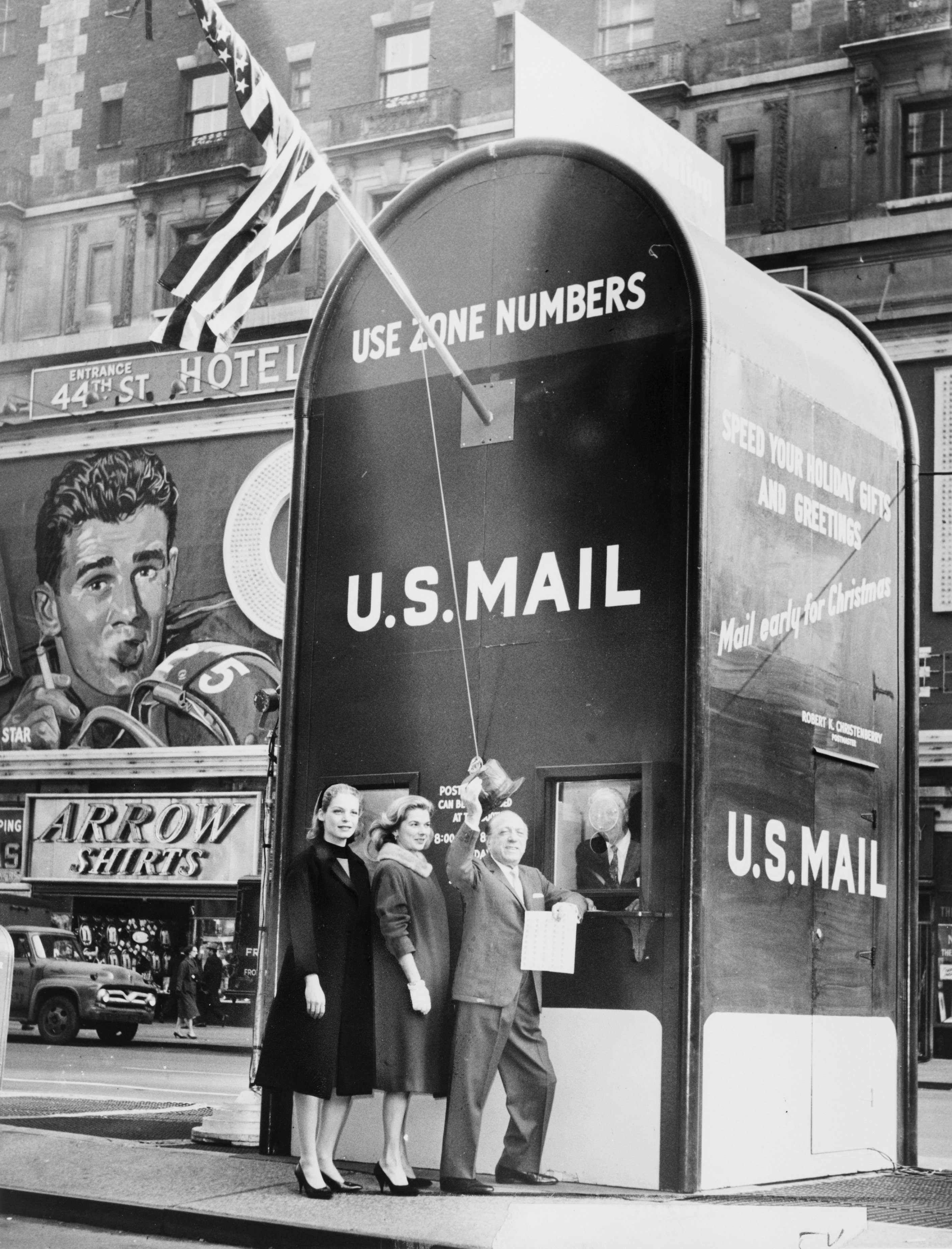
Mail delivered by the United States Postal Service increased every year for 200 years until 2007, when the digital revolution jumpstarted the USPS’s obsolescence. Technology has doomed the former linchpin of American communications, but technology actually rescued it in the 1960s. An excerpt from an Alexis Madrigal piece in the Atlantic:
“Despite these successes, there have been some hard times for the Postal Service. The biggest crisis USPS faced probably came in the mid-1960s. During that time, which was before Richard Nixon signed a bill that made the service ‘self-funding,’ the Post Office could not get enough funds from Congress to buy the machines they needed to keep up with the post-War explosion in the mail. In October of 1966 the situation came to a head, when, as the museum exhibit put it, ‘a flood of holiday advertisements and election mailings choked the system.’ The Chicago Post Office, the largest in the country, ‘stopped delivering mail for three weeks.’
Automation was the only way out. Zip codes, which were only introduced in 1963, became the lynchpin in the automated postal system. Imagine life without them: a single person can’t sort more than a letter a second, which is at best, 3,600 letters an hour. With the help of machines, postal workers could gain almost an order of magnitude of speed, sorting 30,000 letters an hour.”
••••••••••
“An army of men in wool pants running through the neighborhood handing out pottery catalogs door to door”:
woman who threatened me and wouldnt go away- (Upper West Side)
This woman sits around in the park all day, as though she has nothing else to do.
Her and I had an issue and I walked away. She kept comeing over to me and getting in front of my face. I told her to go away. She threatened me. What should I do?
She is always gossiping and telling people what to do who come into the park! It is unpleasant for me to come back and I enjoy the park so much! Help!
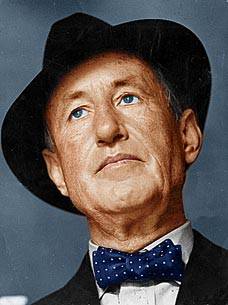
A brief excerpt of Ian Fleming discussing 007’s propensity for violence, in a1964 Playboy Interview:
“Playboy: You’ve been criticized for being ‘obsessed’ with violence in your books. Do you feel the charge is justified?
Fleming: The simple fact is that, like all fictional heroes who find a tremendous popular acceptance, Bond must reflect his own time. We live in a violent era, perhaps the most violent man has known. In our last War, 30 million people were killed. Of these, some six million were simply slaughtered, and most brutally. I hear it said that I invent fiendish cruelties and tortures to which Bond is subjected. But no one who knows, as I know, the things that were done to captured secret agents in the last War says this. No one says it who knows what went on in Algeria.”
The opening of Ben Paynter’s “The Meteor Farmer,” a 2007 Wired article about a Midwestern man hunting for the remains of rock that had fallen to Kansas from heavens:
“For two weeks, Steve Arnold trudged through the dusty farmland of Kiowa County, Kansas, a 6-foot rope trailing over his shoulder. Tied to the end of the rope was a metal detector cobbled together from PVC pipe and duct tape. Back and forth Arnold paced, pulling the jury-rigged device across the dirt, hunting for meteorites. He had already found a few, but nothing bigger than 100 pounds or so. Mostly, he found horseshoes. And beer cans. Soon the farmers would want him off their land; planting season was coming. To speed things up, Arnold attached his contraption to a tractor. He was sure there was a bigger rock out there, just a few feet beneath the turf.
On a Thursday afternoon, his rig yelped, a shrill beep sounding through his headphones. He drove forward, tires pulling in the fine soil, and the detector crescendoed to an electric wail. Arnold saved the coordinates on his GPS receiver, marked the spot with a pile of dirt, and pulled out his cell phone.
Three days later, Arnold and his partner and investor – an oil and gas attorney from San Antonio named Philip Mani – were attacking the site with a backhoe. After digging down about 5 feet, Arnold scrabbled into the hole with a shovel and started clearing. Finally, the blade clanged against something metallic. The more dirt he moved, the more meteorite he exposed. They lowered the backhoe scoop and strapped the rock to it. Grinding and whining, the machine pulled free the biggest meteorite Arnold had ever seen.
Its shell was mottled, stippled like ground beef. That’s a pattern typical of pallasites, the rarest type of meteorite on Earth. One side was rounded and streamlined by passage through the atmosphere. ‘It’s oriented, Steve!’ Mani shouted. ‘It’s oriented!’
About the size of a beer keg, the rock weighed 1,430 pounds, the largest pallasite ever found in the US. By Arnold’s reckoning, it was worth more than $1 million.” (ThanksLongform.)
•••••••••••
“A modern-day treasure hunter was searching for something out of this world–literally”:
The only reason that David Stern is still the NBA Commissioner is because David Stern has been the NBA Commissioner for a long time and people have come to expect that the NBA Commissioner will be David Stern. I’ve blogged about this for quite awhile, so I’m not merely piling on Stern in wake of a lockout, a less-than-appealing CBA and the Chris Paul trade snafu. Stern did an excellent job in building the league in the ’80s and ’90s, turning his best and most marketable players into brands, but he should have stepped down at around the time Michael Jordan retired. Over the last decade quite a few franchises have fallen into financial disarray, many teams elaborately paper attendance and record ratings occurred last year because players did the exact opposite of what commissioner and owners wanted, with stars like Lebron James opting to make free agency truly free and relocating to new teams despite facing financial penalties.
The biggest problem is that NBA owners are in the same state of mind that baseball owners were in the ’70s and ’80s, trying to control their assets (the players) rather than allowing a flow of talent around the league. The more freedom baseball players had, the more their salaries elevated, the more year-round interest there was in the sport and the richer everyone got. The new NBA collective bargaining agreement allows for more a little more player movement, but it still rewards stars who stay in the same market. It also limits free agent contracts to four years, which places cost control ahead of logic. Wealthy teams signing stars to onerous long-term deals can destabilize those big-market teams and along with some degree of revenue sharing give smaller-market teams competitive balance. As in the rest of the world, the free market needs regulation but it’s certainly better for competition to have fewer restrictions based on fear and paranoia. It’s amazing wealthy capitalists who own these teams don’t get this. Essentially, Stern and the owners are blocking the very things that could make the league healthier. It’s time for a new commissioner who understands these things.•
••••••••••
“Pistol” Pete Maravich and Bob McAdoo compete in HORSE, 1978:
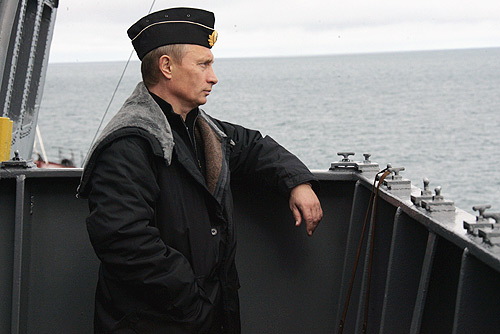
David Remnick can write about any topic brilliantly, but it’s always special when he focuses on American politics, boxing or Russia. He has a new New Yorker article on the latter topic, focusing on Vladimir Putin at a time when the once and perhaps future president of the Russian Federation is facing vociferous dissent from his people for the first time. The opening:
“On the night of November 20th, two weeks before elections for the State Duma, Vladimir Putin set aside the cares of the Kremlin and went to the Olympic SportComplex for an ultimate-fighting match—a ‘no rules’ heavyweight bout between a Cyclopean Russian named Feodor (the Last Emperor) Yemelianenko and a self-described anarchist from Olympia, Washington, named Jeff (the Snowman) Monson. The bout was broadcast nationally on Rossiya-2, one of the main state television channels. Putin, wearing a blue suit and no tie, was at ringside. He has always been eager to project the macho posture of a muzhik, a real man. He has had himself photographed riding horses bare-chested, tracking tigers, shooting a whale with a crossbow, piloting a firefighting jet, swimming a Siberian river, steering a Formula One race car, befriending Jean-Claude Van Damme, and riding with a motorcycle gang. Once, on national television, he tried to bend a frying pan with his bare hands. He did not quite succeed, but the effort was appreciated. And now ultimate fighting: the beery crowd of twenty thousand—some prosperous, some less so—were his own, Putin’s people.
Yemelianenko and Monson were of a rough equivalence: heads shaved, two enormous sacks of rocks, though the Russian was distinguished by his unstained skin; Monson had tattoos from ankle to neck, including two in crowd-friendly Cyrillic—svoboda and solidarnost’. The gesture got him nowhere. Almost from the start, the Russian dominated the fight. Yemelianenko, with a deft and powerful kick, snapped a bone in Monson’s leg, causing the American to limp pitifully. But, even as Yemelianenko took command, steadily reducing Monson to a swollen, bloody pulp—a source of pleasure to the crowd—it was hard to tell if Putin was enjoying himself. The camera flashed to him now and then. He barely betrayed a smile. His face, now smoothed with Botox and filler (it is said), is more enigmatic than ever. What was more, he had larger concerns. He knew that, no matter how hard his operatives tried to get out the vote in the provinces and massage the results, the Kremlin party, United Russia, was going to lose ground.
At the end of the bout—a unanimous decision for Yemelianenko—the Prime Minister climbed through the ropes to pay tribute to the loser and to congratulate his countryman. By this time, the American handlers were tenderly helping their warrior to the dressing room. Monson could no longer walk. His lips were as fat as bicycle tires.
Putin had a kind word for Monson (‘a real man’) and paid Yemelianenko the ultimate compliment of Russian masculinity, calling him a ‘nastoyashii Russki bogatyr‘—a genuine Russian hero. As Putin spoke, and as the national audience watched, many in the crowd started to jeer and whistle. This had never happened to Putin before, not once in two four-year terms as President, not in three-plus years as Prime Minister. And yet now, having announced his intention to reassume the Presidency in March, possibly for another twelve years, he was experiencing an unmistakable tide of derision.”
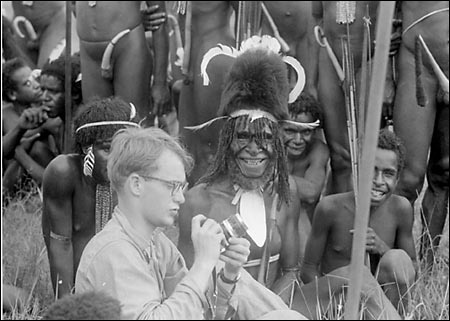
“They had moved extra patrol boats in, chartered air search planes from as far away as Australia and sent policeman sloshing through coastal swamps to look for Mike.” (Image by Harvard.)
Michael Rockefeller may not have been devoured by crocodiles or cannibals but he was most definitely swallowed whole by the rugged expanses of New Guinea in 1961. The wealthy young scion of Governor Nelson Rockefeller was in that country studying the culture and art of the Asmat people when he and his associate found themselves stranded in a canoe. Rockefeller decided to try to swim 12 miles to shore. He was never seen again, his body never recovered, and sensational theories about his disappearance began to emerge. From a1961 Life articleby Richard B. Stolley about the fruitless rescue mission:
“The full horror of this primitive country where his son was lost struck Governor Nelson Rockefeller only after he had seen it himself. En route from New York with his daughter, Mary Strawbridge, he was cheered by news that his son’s companion, Dutch Anthropologist Rene Wassing, had been saved. When the governor’s chartered jetliner landed at Biak, on the north side of the island, colonial authorities described for him the enormous search already under way. They had moved extra patrol boats in, chartered air search planes from as far away as Australia and sent policeman sloshing through coastal swamps to look for Mike and to urge the friendly Asmat natives to do the same.
A Dutch admiral told Rockefeller that the Navy had put a seaman into Flamingo Bay, where Mike disappeared, with two metal gasoline cans like those Mike had used. By holding the cans in front of him, the sailor could swim quite rapidly, and the experiment proved that young Rockefeller might easily have reached shore. Everywhere in New Guinea, compassionate Dutch officials treated Rockefeller not so much with deference due a man who is one of the most powerful leaders in the U.S. but with the sympathy deserved by a father who has lost a son.”