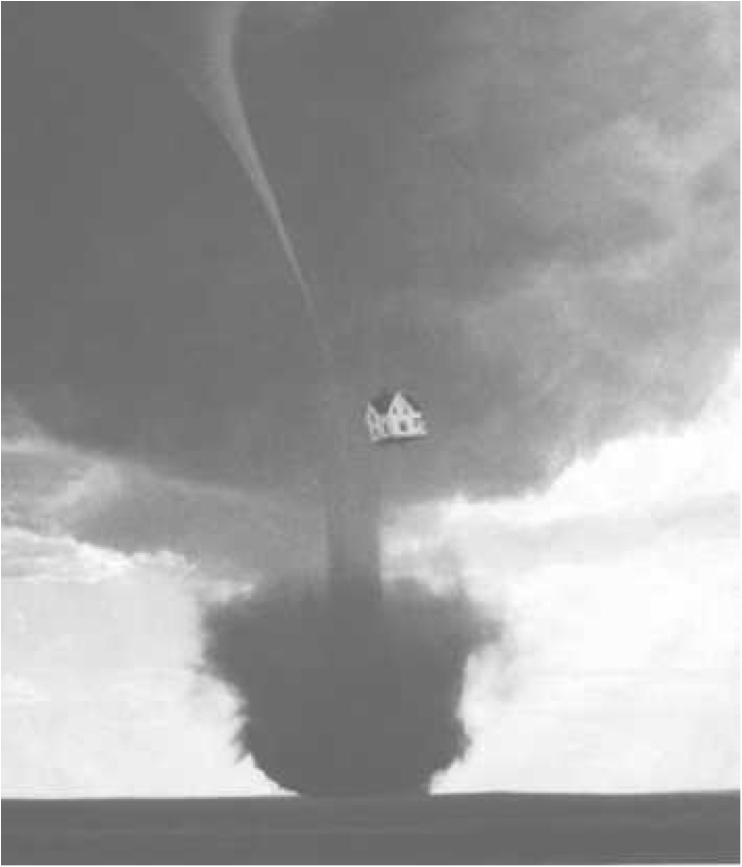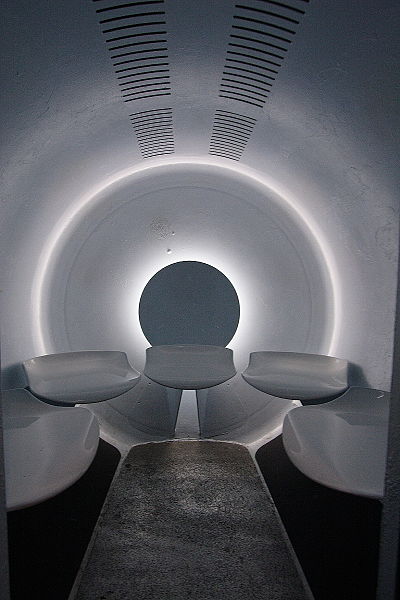
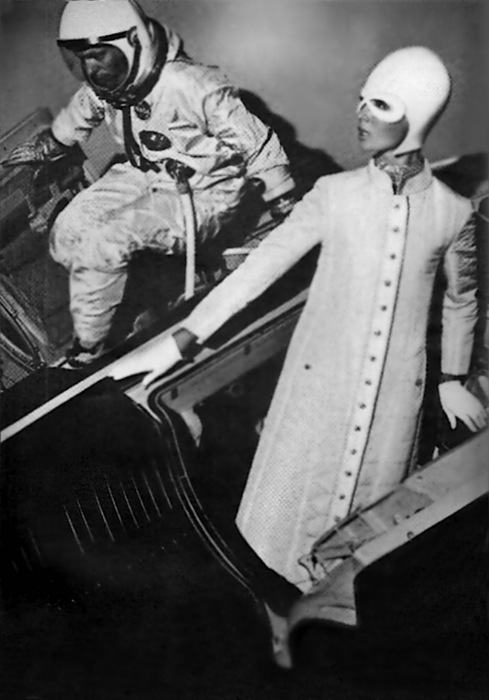
"The oceans will boil away and the atmosphere will dry out as water vapor leaks into space." (Image by Pierre Cardin.)

As the sun ages, its light becomes stronger, not weaker. What to do when the future grows too bright, if we even make it that far? From Andrew Grant’s excellent new Discover article,How to Survive the End of the Universe“:

“For [theoretical physicist Glenn] Starkman and other futurists, the fun begins a billion years from now, a span 5,000 times as long as the era in which Homo sapiens has roamed Earth. Making the generous assumption that humans can survive multiple ice ages and deflect an inevitable asteroid or comet strike (NASA predicts that between now and then, no fewer than 10 the size of the rock that wiped out the dinosaurs will hit), the researchers forecast we will then encounter a much bigger problem: an aging sun.

Stable stars like the sun shine by fusing hydrogen atoms together to produce helium and energy. But as a star grows older, the accumulating helium at the core pushes those energetic hydrogen reactions outward. As a result, the star expands and throws more and more heat into the universe. Today’s sun is already 40 percent brighter than it was when it was born 4.6 billion years ago. According to a 2008 model by astronomers K.P. Schröder and Robert Connon Smith of the University of Sussex, England, in a billion years the sun will unleash 10 percent more energy than it does now, inducing an irrefutable case of global warming here on Earth. The oceans will boil away and the atmosphere will dry out as water vapor leaks into space, and temperatures will soar past 700 degrees Fahrenheit, all of which will transform our planet into a Venusian hell-scape choked with thick clouds of sulfur and carbon dioxide. Bacteria might temporarily persist in tiny pockets of liquid water deep beneath the surface, but humanity’s run in these parts would be over.

[Astronomer Greg] Laughlin was intrigued by the idea of using simulations to traverse enormous gulfs of 
time: ‘It opened my eyes to the fact that things will still be there in timescales that 
dwarf the current age 
of the universe.’

Such a cataclysmic outcome might not matter, though, if proactive Earthlings figure out a way to colonize Mars first. The Red Planet offers a lot of advantages as a safety spot: It is relatively close and appears to contain many of life’s required ingredients. A series of robotic missions, from Viking in the 1970s to the Spirit rover still roaming Mars today, have observed ancient riverbeds and polar ice caps storing enough water to submerge the entire planet in an ocean 40 feet deep. This past August the Mars Reconnaissance Orbiter beamed back time-lapse photos suggesting that salty liquid water still flows on the surface.

The main deterrent to human habitation on Mars is that it is too cold. A brightening sun could solve that—or humans could get the job started without having to wait a billion years. ‘From what we know, Mars did have life and oceans and a thick atmosphere,’ says NASA planetary scientist Christopher McKay. ‘And we could bring that back.'”
Tags: , , ,

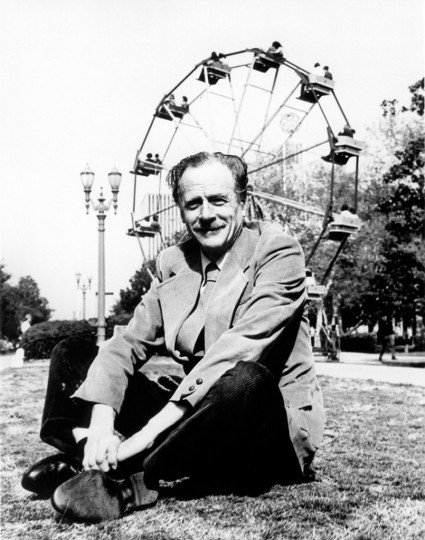
Marshall McLuhan and artist and ace typographer Harley Parker enjoy a bull session in 1967’s “Picnic in Space,” which is informed by the work of Warhol, Lichtenstein and Godard.

Tags: ,

"Eat up to 5 sandwiches the whole day and as much drink as you want."

How To Lose Weight

Eat Pickles 10 calories for a whole pickle and diet soda, water and or Wylers Orange drink (tastes like Tang) slice bread with one slice of cheese and one slice of meat no Mayonaise (200 calories).

Eat up to 5 sandwiches the whole day and as much drink as you want. you can have a little coffee in the morning with milk and sugar. total 1000 calories a day. take a multi vitamin. take a small walk daily. 

Just listened to a fun interview that Bill Simmons did with stats guru Bill James at the MIT Sloan Sports Analytics Conference. I paid close attention to James’ ability to remember names and dates, and like pretty much every informavore I’ve ever encountered, his recall isn’t very good. The memory is just so elastic even for someone who’s brilliant, except for a few anomalies. Interesting that James points out that he was actually aided in his early career in the 1970s by working with numbers in a time before everyone had a computer or two in their pocket. Because collecting and crunching info was so difficult in an unwired world, others interested in sports stats pretty much gave up while James soldiered on. An excerpt from James talking about his first use of computers:

Bill Simmons: There’s no way you’re using a computer at this time?

Bill James: We didn’t have personal computers, no. Everything was handwritten and in notebooks.

Bill Simmons: When did you move over to the personal computer?

Bill James: I enjoyed personal compyers as soon as they came out–

Bill Simmons: I would have guessed.

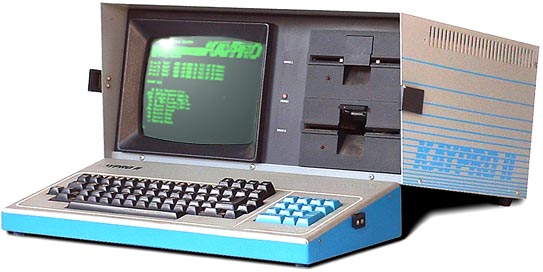
Bill James: I never could program or anything like that. We had a Kaypro…I had a spreadsheet on it that was 32 cells long and 16 wide.”

•••••••••

A great 1983 Kaypro commercial by ad legend Joe Sedelmaier:

Tags: , ,

Pierre Trudeau dominated Canadian politics for more than 15 years beginning in 1968. A politican as rock star, he’s still the country’s Prime Minister best remembered outside of Canada and likely the most divisive one within the nation.

Trudeau responding to personal attacks, 1972:

Trudeau meets with John and Yoko, 1969 (no sound until :30):

Tags: , ,


Some search-engine keyphrases bringing traffic to Afflictor this week:

Afflictor: Thinking big, dumb Rush and the GOP may have slightly angered female voters. (Image by Monsterteeth.)

  • A Recent Film I Liked Now on Home Video: Project Nim.

In the wake of a devastating earthquake last year, Japanese researchers are experimenting with home levitation. From Popsci: “Instead of building super-strong yet flexible structures to withstand earthquakes, what if you built your house to levitate on a cushion of air? This is already being employed in Japan, a little less than a year after the massive earthquake and tsunami that devastated the country.

The levitation system is the brainchild of a company called Air Danshin Systems Inc., which the Japanese-culture-and-art site Spoon & Tamago says roughly translates to ‘anti-seismic.’ It was founded in 2005 but has caught on after the March 11, 2011 Tohoku earthquake.”

I’ve recently linked to a couple of excellent pieces of Charles Duhigg’s reportage for the New York Times (here and here). He has another impressive article, this one for Slate about the hidden corners of consumerism, called “The Power of Habit.” The opening:

“One day in the early 1900s, a prominent American businessman named Claude C. Hopkins was approached by an old friend with an amazing new creation: a minty, frothy toothpaste named ‘Pepsodent’ that, he promised, was going to be huge.

Hopkins, at the time, was one of the nation’s most famous advertising executives. He was the ad man who had convinced Americans to buy Schlitz beer by boasting that the company cleaned their bottles ‘with live steam’ (while neglecting to mention that every other company used the same method). He had seduced millions of women into purchasing Palmolive soap by proclaiming that Cleopatra had washed with it, despite the sputtering protests of outraged historians.

But Hopkins’ greatest contribution would be helping to create a national toothbrushing habit. Before Pepsodent, almost no Americans brushed their teeth. A decade after Hopkins’ advertising campaigns, pollsters found that toothbrushing had become a daily ritual for more than half the population. Everyone from Shirley Temple to Clark Gable eventually bragged about a ‘Pepsodent smile.”

••••••••

Steve and Eydie don’t have filthy, scummy teeth, 1978:

Tags: ,


From the September 15, 1901 Brooklyn Daily Eagle:

“An anarchist picnic which was to have been held at West Hoboken, N.J. to-day was abandoned, because the police gave notice that any person who participated in any public demonstration made by the anarchists would be promptly arrested.”

From Wired: “The robot on display in the video above is being developed by DARPA, the Pentagon’s blue-sky research agency, as part of their Autonomous Robotic Manipulation (ARM) program. Launched in 2010, the initiative aims to come up with robots that can perform highly complex tasks (bomb dismantling, for one) with very little human input.”

"Vintage dolls & toys." (Image by Stephenson Brown.)

Estate Sale (Rowayton, Connecticut)

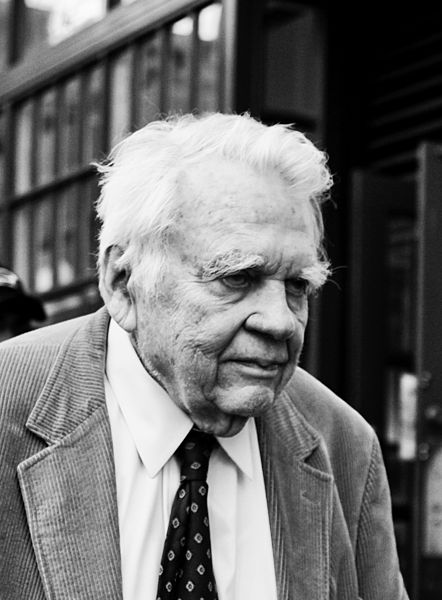
Estate of Andy Rooney

Rowayton, CT

Saturday thru Monday: March 3 – 5, 2012

10am — 5pm each day

Wonderful old Victorian home in Rowayton has been home to the Rooney family for 60 years — chock full of Americana, modern art and memorabilia from Andy Rooney’s incredible career in journalism and television. Period antiques and an amazing collection of American early 20th c prints and oils create a sale full of surprises and an opportunity to shop for a piece of history! 

Special offering: Andy’s antique Underwood typewriter, his vintage desk chair, pieces of furniture made by A. Rooney, many autographed books, vintage press & WWII memorabilia.

Prints: A. Calder, R. Crawford, J. T. Arms, G. Peterdi, J. Lasker, S. Andrews; Paintings & Drawings: Ralston Crawford, Joseph Stella, Gertrude Fiske, Sheldon Pennoyer, Isabelle Bishop, Adolfo Rolla, Louise Matthiasdottir; Photo: signed Berenice Abbott’s “Tredwell House”; original cartoons: Wingert, Stevenson, Darrow.

Furnishings: 19th c gilt “grapevine” mirror; 19th c overmantle mirror w/carved eagle; early NY sideboard; Empire chest; NY cutleaf table; 19th c tambour secretary w/tiger maple; tiger maple side chairs; Thos Moser bowback stool; double pedestal dining table w/ 5 leaves; set of 8 dining chairs; pr early 19th c carved footstools; Persian & Chinese carpets; Portuguese grospoint rug, Tiffany sterling coffeepot c. 1930; Geo. Jensen sterling server; Steuben, Baccarat, Orrefors, Lalique, Venetian glass; antique cut crystal, unique collection of early 19th c cast iron cookie molds; Wedgwood, Spode, Haviland, Dresden, Royal Worcester, flow blue china; early 18th c English highboy; 18th c Am. tallcase clock; vintage sleigh bed; gentlemen’s chest; unique 19th c vanity/work table; period flip top table; tiger maple gateleg console table; butler’s tray table; pr wing chairs; leather club chair; pr Federal twin beds; antique pine chest; loveseat sofabed; 19th c medical calipers (Vienna); vintage dolls & toys; great library w/many vintage & art books; copper pots; old brass; vintage clothing & jewelry, old NY Giants programs & Superbowl souvenirs.

Three floors of collectibles — don’t miss this sale!

Tags:

Marshall McLuhan watching the tube, urging us to drown out the white noise, to observe more closely.

Tags:

"Then I threw a net around him and brought him home to Camden."

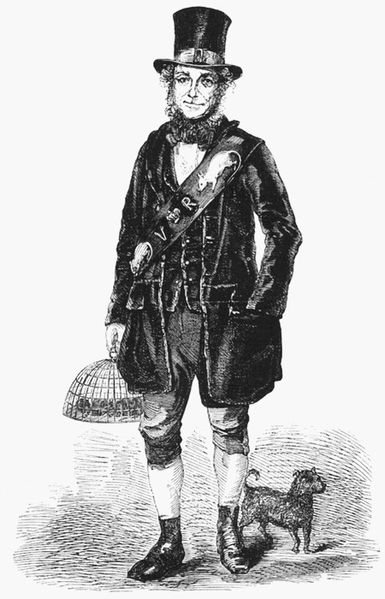
Jack Gregory, an East Coast rat-catcher of some repute, relayed tales from his trade in an article in the August 10, 1884 edition of the Brooklyn Daily Eagle, which was originally published in the Philadelphia Record. The article:

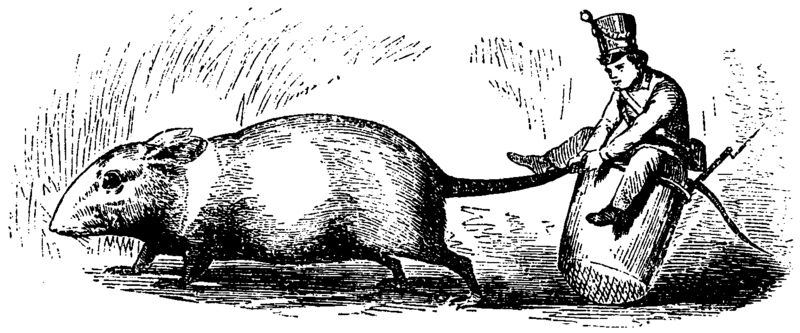
“‘I have caught and killed plenty of big rats in my time, but the biggest ones were captured along the wharves,’ said old Jack Gregory, or ‘English Jack,’ as he is called by his acquaintances. Gregory is a little old fellow, not more than five feet in height, and pressing close upon his 60th year. He lives in Camden, on William Street, below Roydon. When he starts out on his rat catching expeditions he is always accompanied by two little Scottish terriers, chained together. With a box of ferrets thrown over his shoulder, ‘English Jack,” presents an odd picture. ‘I have followed rat catching for a living for forty years,’ said Gregory, ‘but the most vicious chaps are generally found along the wharves, near where the sewers empty into the river. They grow up in the sewers, and eventually find their way to the water’s edge, and there they settle permanently or else take up quarters in the warehouses near the docks. I don’t mind a job of clearing a stable of rats. That’s fun for me. But when I am called upon to clear out a warehouse I always know that it means tough work, with the loss of about two or three ferrets. Nine times out of ten a rat will run away from a ferret, and when they emerge from their holes my dogs and I just lay for them and kill them as soon as they show themselves. But I have had many a valuable ferret killed by wharf rats. The rats being used to eating garbage greedily devour everything they come across, and grow to be tremendously large. I have seen lots that were as big as cats, and ferocious fellows they were, too.

"Gregory is a little old fellow, not more than five feet in height, and pressing close upon his 60th year."

I remember once a pitched battle that took place between three of my ferrets and five rats, down at the sugar boiling house on Delaware Avenue, below South Street. Each rat was fully from fifteen to eighteen inches in length, and must have weighed from four to five pounds. They had it hot and heavy for a quarter of an hour. The ferrets fairly chewed the rats to pieces and came out victorious, though they got severely bitten themselves. Subsequently one of the ferrets died.  That night I succeeded in killing ninety rats. But I have seen larger rats than those in my time. A few years ago my dogs caught a rat down at the Washington Avenue grain elevator, which was much bigger than a cat. It was two feet long and weighed twelve pounds. He must gave been quite old and unusually fat. I guess he was the king rat about the elevator. I was very anxious to capture him alive, and it was hard work to drive the dogs off, so eager were they to put an end to him. He had fought them hard, notwithstanding his age, and the dogs had their dander up. I managed to draw them away, and then I threw a net around him and brought him home to Camden. I doctored him for three weeks and his wounds healed pretty well. A saloon keeper near the old Navy Yard made me an offer of $20 and I sold the rat to him to place on exhibition. He did not make much by the venture, as the saloonkeeper’s wife was afraid of the big rat, and being anxious to get rid of the animal poisoned it. While the animal was on exhibition there was a sign displayed on the iron cage in which it was confined, saying: ‘Don’t fool with the rat.’ This injunction was rather unnecessary, for all the customers willingly refrained from poking their fingers between the bars to stir him up. His looks were enough to frighten folks.'”

Tags:

William F. Buckley, Jr. welcomes Phyllis Schlafly and Ann Scott to debate the Equal Rights Amendment, 1973.

Tags: , ,

Researchers in Japan have developed a handgun that can literally stop people from talking in mid-sentence. It has scary Big Brother applications, obviously, though speech today relies more on opposable thumbs than vocal cords. From Extreme Tech:

“Japanese researchers have created a hand-held gun that can jam the words of speakers who are more than 30 meters (100ft) away. The gun has two purposes, according to the researchers: At its most basic, this gun could be used in libraries and other quiet spaces to stop people from speaking — but its second application is a lot more chilling.

The researchers were looking for a way to stop ‘louder, stronger’ voices from saying more than their fair share in conversation. The paper reads: ‘We have to establish and obey rules for proper turn-taking when speaking. However, some people tend to lengthen their turns or deliberately interrupt other people when it is their turn in order to establish their presence rather than achieve more fruitful discussions. Furthermore, some people tend to jeer at speakers to invalidate their speech.’ In other words, this speech-jamming gun was built to enforce ‘proper’ conversations.'”

Janelle Nanos has a timely article, “So Appy Together,” in Boston Magazine, which asks whether smartphones are fundamentally changing what it means to be human. The short answer is “yes.” Until we figure out how to safely use biotech to make our memories more elastic than they naturally are, we need strategies and processes and tools to manage data overload. If you read this blog very much, you know that I think the net gain from these tools far outweighs any negative, but with utility comes dependency–perhaps even a sort of control. An excerpt from Nanos’ piece:

I LOVE MY SMARTPHONE. It’s become a second brain in my pocket that’s changed how I process information. It’s with me every waking moment — and the sleeping moments, too — tracking my daily habits. And through my constant e-mail and Facebook activity, and the personal documentation of my life via Twitter and Instagram photos, it’s become the lens through which I see the world. All day long, I find myself instinctively reaching for my phone, using it as a tool to validate my existence.

But lately, my smartphone and I have taken our relationship to the next level. I provide it with ever-more-intimate details about my life. Last year, for example, I set a few goals for myself. I wanted to lose some weight, save money, and run a half marathon. With only a few app downloads, my phone became a trainer, life coach, and confidant. It now knows what I eat, how I sleep, how much I spend, how much I weigh, and how many calories I burn (or don’t) at the gym each day. It’s gotten to the point where my phone now somehow knows more about me than anyone else in the world, including my own darling husband. My gadget has become a tiny black mirror, reflecting back how I see myself. Which means things are getting more complicated between us.” (Thanks Browser.)

Tags:

When the Tea Party was red hot and the Birther movement was at its peak, an Esquire interviewer asked Chris Rock if he thought racism was returning–or had never declined–in America. He was undisturbed. “When I see the Tea Party and all this stuff,” Rock answered, “it actually feels like racism’s almost over. Because this is the last — this is the act up before the sleep.”

I think this national contraception brouhaha may be saying the same thing about sexism. On one level, it’s a just an awkward and desperate act of pandering to an extremist base by opportunistic politicians in the year of election. But there may be something more fundamental about it. Over the last decade, women have embraced higher education as men have fallen from it, and while education is no longer the definite path to success and power it once was, you would have to assume the numbers say women will be ascendant in business and politics in America for the next couple of decades.

And that shift may be disconcerting to some who still cling to a paternalistic vision of America. But those who feel this way tend to be on the higher end of the age scale and their numbers continue to thin.

Political power doesn’t shift quietly or easily, but the big picture tells us it’s going to shift in the favor of women in the near fiuture. That doesn’t mean there will never be sexism (or racism) any more, but that its viability as a means of political control is all but over. The clamor over reproductive rights sounds less like a clarion call than a death rattle.•

In 1967, Professor David F. James visited I’ve Got a Secret for a demonstration.

Tags:

"I’m too excited to drive." (Image by Niki Sublime.)

From “An Uneasy Spy Inside 1970s Suburbia,” one of a series of retrospective 2010 articles in the Los Angeles Times about Philip K. Dick, who speeded to his death with the help of amphetamines, but not before decoding our future:

“During his last few years, when he became financially stable for one of the rare times in his life, his daughters visited him at the Santa Ana apartment he moved to after the implosion of his marriage. Dick’s oldest child, daughter Laura, born in 1960, recalls his place full of Bibles, encyclopedias – Dick was a ferocious autodidact – and recordings of Wagner operas.

Phil’s second daughter Isolde, now 42, visited enough during this period to get to know her father for the first time. She recalls him as working hard to be a good father and struggling to overcome his limitations, both with and without success.

During one visit, he got Isa excited about a trip to Disneyland, then open past midnight. ‘He said, ‘We’re gonna go and stay ‘til it closes!’ But in my mind we were there for only 20 or 30 minutes before he said, ‘Honey, my back’s really hurting.’ I think he was just overwhelmed by all the crowds. I knew him, and knew he was uncomfortable moving outside his comfort zone.’

He spent more of his time walking from the apartment to a nearby Trader Joe’s to get sandwiches, a park where he and Isa tried awkwardly to play kickball, and an Episcopalian church where he had running theological discussions with the clergy.

He’d bought himself a Fiat sports car, but almost never drove, telling Isa, ‘Honey, I’m just so excited to see you, I’m too excited to drive.’ She learned quickly to read her father’s code, which seemed designed to protect her from ugly realities.

Sometimes he’d stay up all night, leaving his visitors laughing for hours as he spun idea after idea, or wrote, in a blaze, until dawn. ‘He could go from that really engaging personality to being withdrawn and closed off,’ Isa remembered, explaining that he would sometimes cancel visits at the last minute. ‘I could tell when we spoke on the phone his voice would go really low and flat. When he had that tone he was depressed. He’d say something like he had the flu. ‘The flu’ was usually his code.'”

Tags:

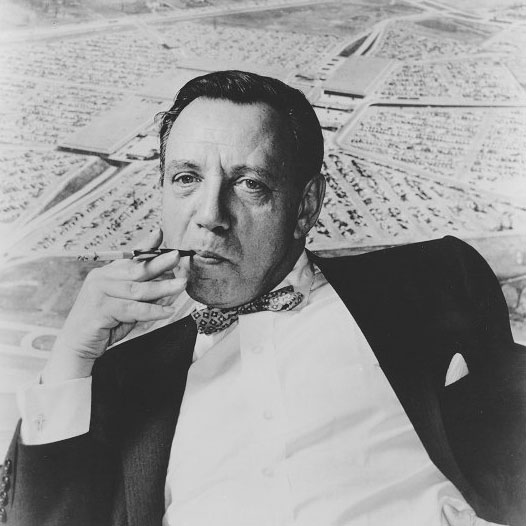
"Victor Gruen was short, stout, and unstoppable."

FromThe Terrazzo Jungle,” Malcolm Gladwell’s great 2004 New Yorker article about the birth of the mall, long before anyone could imagine many of them becoming ghosts or virtual:

“Victor Gruen was short, stout, and unstoppable, with a wild head of hair and eyebrows like unpruned hedgerows. According to a profile in Fortune (and people loved to profile Victor Gruen), he was a ‘torrential talker with eyes as bright as mica and a mind as fast as mercury.’ In the office, he was famous for keeping two or three secretaries working full time, as he moved from one to the next, dictating non-stop in his thick Viennese accent. He grew up in the well-to-do world of prewar Jewish Vienna, studying architecture at the Vienna Academy of Fine Arts—the same school that, a few years previously, had turned down a fledgling artist named Adolf Hitler. At night, he performed satirical cabaret theatre in smoke-filled cafés. He emigrated in 1938, the same week as Freud, when one of his theatre friends dressed up as a Nazi Storm Trooper and drove him and his wife to the airport. They took the first plane they could catch to Zurich, made their way to England, and then boarded the S.S. Statendam for New York, landing, as Gruen later remembered, ‘with an architect’s degree, eight dollars, and no English.’ On the voyage over, he was told by an American to set his sights high—’don’t try to wash dishes or be a waiter, we have millions of them’—but Gruen scarcely needed the advice. He got together with some other German émigrés and formed the Refugee Artists Group. George S.  Kaufman’s wife was their biggest fan. Richard Rodgers and Al Jolson gave them money. Irving Berlin helped them with their music. Gruen got on the train to Princeton and came back with a letter of recommendation from Albert Einstein. By the summer of 1939, the group was on Broadway, playing eleven weeks at the Music Box. Then, as M.  Jeffrey Hartwick recounts in Mall Maker, his new biography of Gruen, one day he went for a walk in midtown and ran into an old friend from Vienna, Ludwig Lederer, who wanted to open a leather-goods boutique on Fifth Avenue. Victor agreed to design it, and the result was a revolutionary storefront, with a kind of mini-arcade in the entranceway, roughly seventeen by fifteen feet: six exquisite glass cases, spotlights, and faux marble, with green corrugated glass on the ceiling.  It was a ‘customer trap.’  This was a brand-new idea in American retail design, particularly on Fifth Avenue, where all the carriage-trade storefronts were flush with the street.  The critics raved. Gruen designed Ciro’s on Fifth Avenue, Steckler’s on Broadway, Paris Decorators on the Bronx Concourse, and eleven branches of the California clothing chain Grayson’s.  In the early fifties, he designed an outdoor shopping center called Northland outside Detroit for J.  L.  Hudson’s. It covered a hundred and sixty-three acres and had nearly ten thousand parking spaces. This was little more than a decade and a half since he stepped off the boat, and when Gruen watched the bulldozers break ground he turned to his partner and said, ‘My God but we’ve got a lot of nerve.'” (Thanks TETW.)

••••••••••

Gruen commissioned this 1968 film about the revitalization of Fresno and the building of the Fulton Mall:

Tags: ,

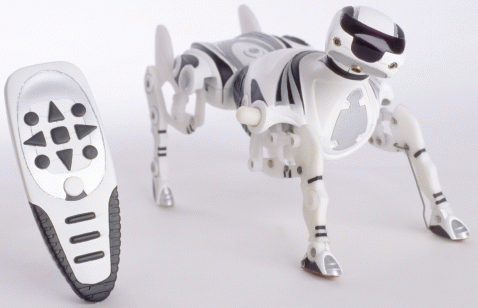
"He can be playful, naughty, curious, angry, depressed and rude."

Robonetics Robopet – the perfect pet. Mint. Remote and user manual. – $45 (southwest suffolk, sayville)

Robopet is the perfect fusion of technology and personality. He comes alive with a combination of user-controlled movements and autonomous, free-roaming behaviors, some of them naughty and some of them nice. And, at seven inches, he’s the perfect interactive pet to take anywhere!

Man’s best friend? Robopet is more than that. In fact his creators claim that he’s the ultimate fusion of technology and personality. And we’d have to agree; because thanks to a clever combination of user-controlled movements and autonomous, free roaming behavior this ultra-intelligent dog practically comes alive. And just like a real pet he can be playful, curious, angry, depressed, rude and even disobedient.

Robopet can walk, run, sit down, stand up, lie down and get up, and roll over. He can be playful, naughty, curious, angry, depressed and rude. He makes digital animal sounds, like barking, whimpering, growling and panting. Train your Robopet

Robopet is trainable, teach him to sit, beg, and roll over. You can reinforce good behavior You can discourage bad behavior You can influence Robopet’s personality. But remember: Praise him too much and you’ll spoil him, Punish him too much and he’ll become timid. Robopet can learn tricks

He can see and avoid obstacles in his path, He can see and avoids table edges, He responds to sounds, He responds to human movement, He can function as a guard dog. Robopet also responds to commands from Robosapien V2.

Length 9in. Long Battery requirements: Robopet: 4 x AAA batteries (not included) Remote Controller: 3 x AAA batteries (not included) Mint condition. Had to have for Christmas and then never used!!!! Original remote and user’s maunal. Can meet local. $45

From “An Odd Little Fire,” in the September 24, 1895 Brooklyn Daily Eagle:

“Edward McCann, a peripatetic pop corn peddler, had his wagon on the corner of Tompkins Avenue and Quincey Street last night when the naphtha tank which furnishes illumination exploded. The wagon caught fire and was burned up, together with the contents. McCann estimates his loss at $200.”


Tags:

"The elevator would zip along at 125 mph." (Image by Robert Lawton.)

I’m assuming better options for civilian space travel will come along before 2050 when Japan is planning on opening its Elevator Into Space, but here’s a bit about it from CNET:

“Japanese construction company Obayashi wants to build an elevator to space and transport passengers to a station about a tenth the distance to the moon.

The elevator would use super-strong carbon nanotubes in its cables and could be ready as early as 2050, according to Tokyo-based Obayashi.

The cables would stretch some 60,000 miles, about a quarter the distance to the moon, and would be attached to Earth at a spaceport anchored to the ocean floor. The other end would dangle a counterweight in space.

The elevator would zip along at 125 mph, possibly powered by magnetic linear motors, but would take about a week to get to the station. It would carry up to 30 people.”

•••••••••••

Canada: We have so little. (Image by Wikipedia.)

After a good, long run, Great Britain was dethroned as Afflictor Nation champion, with Canada emerging as the country that sent the most unique visitors to this blog in February. The Top 5 finishers:

  1. Canada
  2. Germany
  3. Great Britain
  4. Ukraine 
  5. Netherlands

Piers Morgan: At least he can't give me a proper mocking this month. (Image by Pete Riches.)


« Older entries § Newer entries »