Dick Cavett interviews Evel Knievel, 1971.
Another Evel Knievel post:
Ideas and technology and politics and journalism and history and humor and some other stuff.
You are currently browsing the archive for the Videos category.
Dick Cavett interviews Evel Knievel, 1971.
Another Evel Knievel post:
Tags: Dick Cavett, Evel Knievel
Speaking of The Day of the Locust…
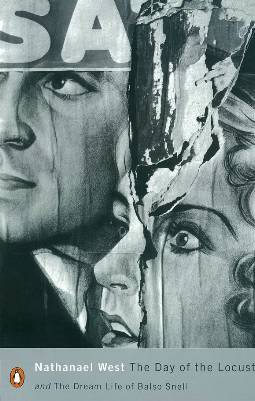
I’d read somewhere that Nathanael West had written at least parts of his two devastating short novels, Miss Lonleyhearts and The Day of the Locust, while working the graveyeard shift at Manhattan hotels in the 1920s. From a 1970 Time article about the author called, “A Great Despiser”:
“Early in 1927, West found himself working as night manager in a seedy little Manhattan hotel on 23rd Street called Kenmore Hall; later, he moved uptown as manager of the shabby-genteel Sutton Club Hotel.
In disaster, it would seem, West found his will to write. In the hotels, he found his subject. He saw them as zoos of failure, terminal wards filled with ‘dismantled innocents’ who had lost the battle for survival in a machine civilization. With the skinned eyes of poverty, he saw that he too might someday lose the battle and wind up on the other side of the desk. Horrified, fascinated, wrung with love, he watched his tenants like a man watching himself die in a mirror. He chatted with them endlessly: he steamed open their letters and read their secrets; and through long, lonely nights in hotel offices, he braided their stories into books.”
••••••••••
The original Homer Simpson on screen, 1975:
Tags: Nathanael West

Dogged reporting by Shane Ryan on Grantland about Richard Fliehr, better known as professional wrestling legend Rc Flair, who is closing in on senior-citizen status and faltering badly into his dotage. Nixon didn’t get this level of scrutiny from Woodward and Bernstein. The sad story is obviously reminiscent of the great Darren Aronofsky-Mickey Rourke collaboration, The Wrestler. The opening:
“Ric Flair has been physically attacked by at least three of his four wives.
In a 2005 divorce case with Elizabeth Harrell — wife no. 2 — Flair’s lawyers detailed their accusations. “On more than one occasion,” they wrote, “Plaintiff (Beth) has assaulted the Defendant (Flair), striking him about the head and body in an effort to provoke him into a physical confrontation.”
In 2009, Flair filed a criminal complaint against Tiffany Vandemark — wife no. 3 — whom he accused of ‘hitting him in the face with a phone charger.’
And in 2010, Flair and his current wife, Jacqueline Beams, returned to their Charlotte, N.C., home after dinner at the Lodge Restaurant. There, for reasons never made explicit, Jacqueline punched him repeatedly in the face. She was arrested.
The story of Ric Flair was once about a college dropout who rose through the ranks of professional wrestling to become a legend. It was about his nickname, ‘The Nature Boy,’ and his signature figure four leglock, both lifted from an older wrestler named Buddy Rogers. It was about his multiple championships, his bleach-blond hair, his fast-talking patter (by his own reckoning, Flair was a ‘stylin’, profilin’, limousine-riding, jet-flying, kiss-stealing, wheelin’-n’-dealin’ son of a gun!’), and his signature, trademarked cry: ‘WOOO!’
Today the story is about a man known in the court system as Richard Morgan Fliehr, 62, born in 1949 and adopted by parents who raised him in Minnesota. That’s what he was called this past April, when a judge ejected Fliehr from his Charlotte home because he couldn’t pay his rent. That’s what he was called in May, when he faced an arrest order for an unpaid $35,000 loan. That’s what he’s called on the paychecks from Total Nonstop Action, a second-tier outfit where he’s still compelled to perform despite suffering from alcoholic cardiomyopathy, and where almost everything he earns goes toward old debts: lawyers, ex-wives, the IRS, former business partners, and anyone who made the mistake of lending him money.”
••••••••••
“Wherever I go, I never leave a lady without a smile on her face.”
“I’m an old broken down piece of meat”:
Tags: Ric Flair, Richard Fliehr, Shane Ryan
I hope this Scientology video isn’t real.
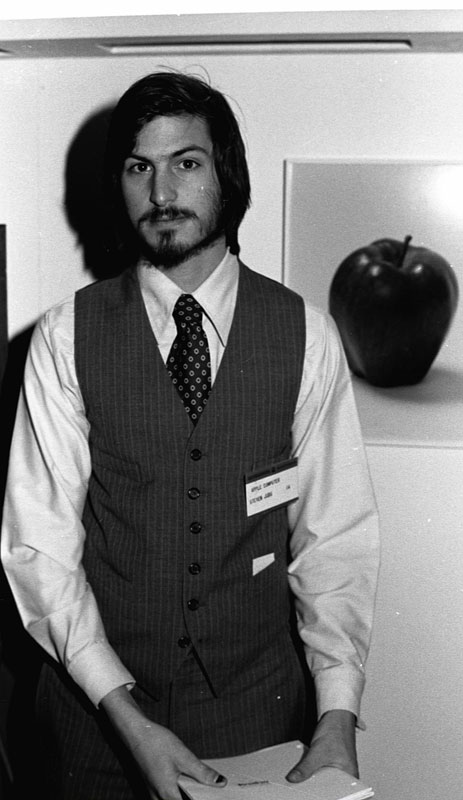
Sad if inevitable news that Steve Jobs is stepping down as CEO of Apple due to health concerns. I have major misgivings about the treatment of workers in Apple’s factories in Asia and the company’s light regard for consumer privacy, but Steve Jobs is one of the most singular Americans of his time. An artist as businessperson, a visionary who not only saw the future of tech but made it, Jobs brought big ideas to the marketplace and delivered on them, more often than not, sensationally. His latter stint at Apple was more spectacular than his first, giving lie to F. Scott Fitgerald’s famous line that there are no second acts in America, which is oft-quoted and has always been untrue. But never more so than in the case of Jobs.
More Steve Jobs posts:
Tags: Steve Jobs
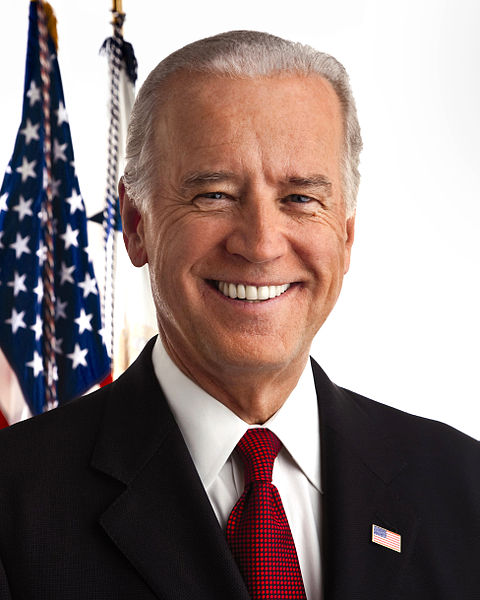
Joe Biden famously christened health-care reform as a “Big Fucking Deal,” but there is another BFD in his past, an inexplicable one, which may be health-care reform’s undoing when lawsuits go before the Supreme Court next year. An excerpt from Jeffrey Toobin’s excellent new New Yorker profile about Justice Clarence Thomas and his equally conservative wife, Virginia:
“Thomas was confirmed in the Senate by a vote of fifty-two to forty-eight, and neither the Judiciary Committee nor any other part of the government has since seen fit to reëxamine the Thomas-Hill controversy. Still, a good deal of evidence has since emerged about the protagonists and their testimony. Even near the end of the hearings, several other women who had worked for Thomas were prepared to testify and corroborate Hill’s testimony that Thomas had a history of making female subordinates uncomfortable with personal and sexual talk. The group included Angela Wright, Rose Jourdain, and Sukari Hardnett; other associates of Thomas, among them Kaye Savage and Fred Cooke, would have testified about the nominee’s long-standing interest in pornography, which would have corroborated Hill’s account. But Joseph Biden, the chairman of the Judiciary Committee at the time, decided not to call these witnesses. This year, Lillian McEwen, a Washington lawyer who had a long-term romantic relationship with Thomas before he met Ginni, published a memoir, D.C. Unmasked & Undressed. She, too, remarked on the Justice’s ‘strong interest in pornography,’ and she also said that Thomas scrutinized his work colleagues as prospective sexual partners. In short, virtually all the evidence that has emerged since the hearings corroborates Hill’s version of events.”
••••••••••
Anita Hill, October 11, 1991:
Tags: Angela Wright, Anita Hill, Clarence Thomas, Fred Cooke, Joe Biden, Kaye Savage, Lillian McEwen, Rose Jourdain, Sukari Hardnett, Virginia Thomas
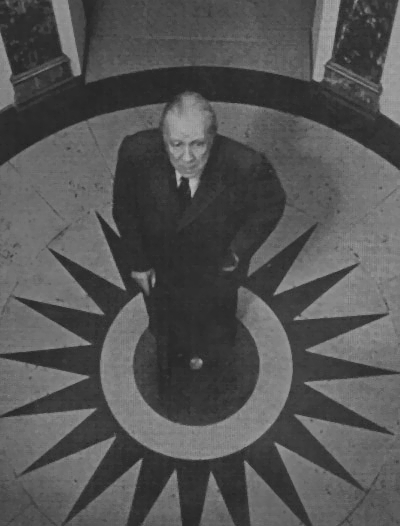
Much as I’ve tried to feel differently, I’ve always liked the idea of Borges much more than the actual writings of Borges. But on this, his 112th birthday, I came across “Borges, a Blind Writer With Insight,” a 1971 New York Times interview with the Argentine writer, who apparently appeared on the Today show right around that time. An excerpt:
“Today his short stories — some hardly dawdle past a paragraph — appear in The New Yorker, and they are collected in books. Essences of essences. Labyrinths within mazes within mirrors.
 When he comes to this country — he is here on a visit now — he has an utterly respectful audience. How many Latin-American authors are so well translated? He is naturally taken as a candidate for elevation to the Nobel Prize.
Beware! Who knows what this Imaginary Being will say next? On the Today show on television he invoked the name of Gustave Flaubert, and actually whispered a book’s title in excellent French. The effect could not have been more startling had he changed into a Hippogriff and pecked at the startled interviewer.
Replying to questions, he draws from the cadences of memory. Borges says, ‘At my age [71], what can I do but plagiarize what I’ve already said, no?’
What shall a writer be in the glare of glosses on glosses and endless honors? Scholars consecrate volumes to his carefully turned ironies. Is he a Domesticated Industry?
Borges lives on the north side of Buenos Aires. Recently he took a taxi to the National Library on the south side. The taxi driver said, ‘Are you by any chance Borges?’
Borges said ‘Well, more or less’ or ‘I think so.'”
Tags: Jorge Luis Borges

Swedish Prime Minister Tage Erlander, videoconferencing, 1960.
This classic photo shows videoconferening in the days of rotary phones, which was possible in analog form right around the time of TV’s introduction, but it wasn’t available to consumers for several decades and Skype was a mere pipe dream at the time. Copy from a 1969 Bell Systems publication about the introduction of the “Picturephone”:
“THE TELEPHONE brought a new dimension to human communications. Where previously men had been able to send written messages over wires as electrical signals, the telephone made it possible for the human voice to span the miles. Now, almost a hundred years later, the telephone is commonplace and another dimension is being added-that of sight. And just as the telephone has revolutionized human habits of communicating and made a major contribution to the quality of modern life, many of us at Bell Labs believe that PICTUREPHONE® service, the service that lets people see as well as hear each other, offers potential benefits to mankind of the same magnitude. It is a tribute to the flexibility and versatility of the existing telephone network that Picturephone service, now being readied for introduction as a regular Bell System offering, can be added as an integral part of telephone service. What is Picturephone service like? Most important, of course, the user sees the person with whom he is talking. People today are so accustomed to using the telephone and to its usefulness as an instrument of communication, that they sometimes overlook the importance of vision in communication. But think, do you telephone the person in the next office or go to see him? Most people sense a more complete and satisfying exchange when they can both see and talk to each other. Thus, the advantage of more complete communication with Picturephone service is readily apparent.
Picturephone service is useful in other ways too. Graphic material, such as drawings, photographs, and physical objects, can be viewed with the Picturephone set. The equipment can also be used to communicate with a computer. The customer ‘talks’ to the computer via TOUCH-TONE@ dialing buttons, and the computer’s responses are displayed on the picture tube.”
••••••••••
Below is amazing footage of computer pioneer Douglas Carl Engelbert‘s 1968 demo of videoconferecning (and other tech stuff, including the mouse) , which was aimed at the business market: “You as an intellectual worker, supplied with a computer display, backed up with a computer that was alive for you all day, and was instantly responsive to every action you had. How much value could you derive from that?”
Trump, that fucking idiot. (Thanks Atlantic.)
Tags: Donald Trump
In 1977, while subbing for Johnny Carson. As Denver says, “Far out!”
Related posts:
Tags: Carl Sagan, John Denver
Hopefully the earth stays quiet today.
More earthquake posts:
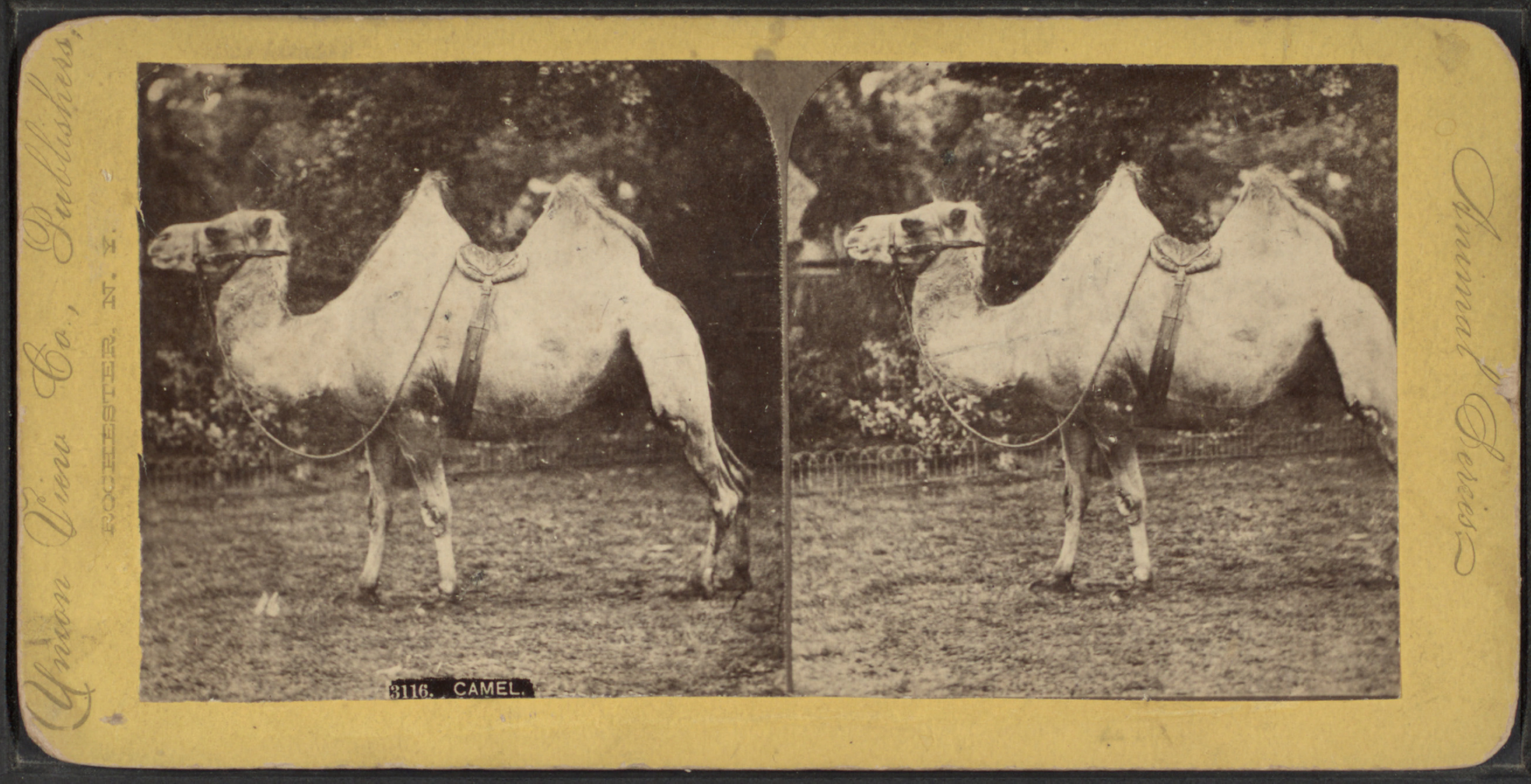
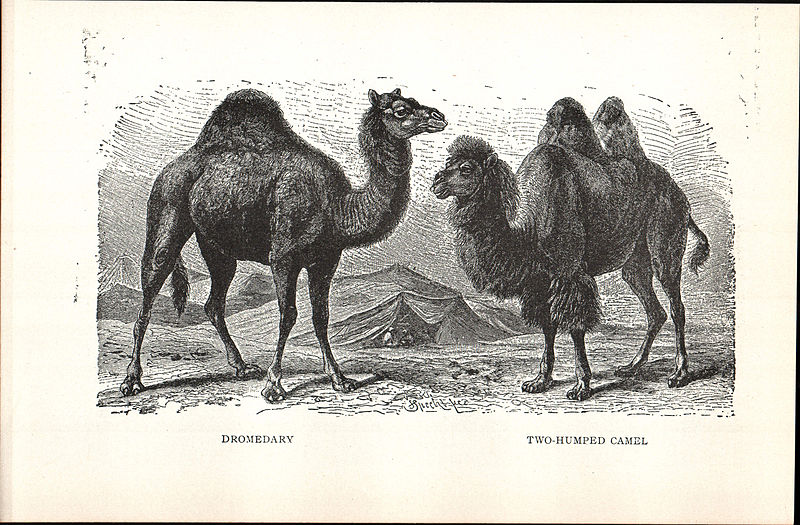
Camels didn’t always thrive in 19th-century America, but people kept trying to integrate them into life in the U.S. In fact, according to the first of the three stories below from the Brooklyn Daily Eagle, the beasts were used by the United States Postal Service in the 1850s to deliver mail on the Great Plains.
•••••••••••
“The Camels Are Coming” (April 2, 1856): “The camel experiment over the plains (for mail and other transport), for which Congress made appropriation two years ago, will soon be tried. The camels are now en route from Asia Minor. The whole number is 33, viz: 9 male and 15 female camels; 4 male and 5 female dromedaries. The vessel and this cargo is expected to arrive in Texas about that time. Several of the animals are presents from the Viceroy of Egypt.”
•••••••••••
 “Three Camels on the Bridge” (July 26, 1883): “This morning about four o’clock, three camels, on their way from Coney Island to Central Park, were being driven across the bridge by three young lads. When near the New York tower the camels got frightened and ran away, but Officer Dooley, who was stationed at the New York entrance, seeing the animals approach at a furious rate, closed the gates and thus captured them. One of the boys was knocked down and kicked by one of the animals, but his injuries did not prevent him from proceeding on his journey. These are the first camels that have crossed the bridge, and it seems rather unfortunate that their initial trip should have been attended with this little accident. Officer Dooley says that as long as he lives he should never forget the sight that these beasts presented as they ran at full speed toward him. It had been such a long time since he saw a camel and it being the last beast on earth that he expected to meet on the bridge, he said that they almost scared him out of his senses.”
•••••••••••
“Baby Camel Wears Boots” (July 23, 1902): “The baby camel born in Central Park several months ago was provided with a new pair of leather boots this morning by Superintendent Smith. The camel of of the double hump species, and is one of three of the species in the Park menagerie. When it was born Superintendent Smith discovered that the animal’s forelegs were very weak–so weak, in fact, that the camel was unable to stand up unless it stood on the ankle joints.”
•••••••••••
Camel ride, Luna Park, Coney Island, 1903:
"They lack the ability to process all that information in real time and then intelligently act on the results." (Image by Bin im Garten.)
From “Autonomous Robots in the Fog of War,” Lori G. Weiss’ new IEEE Spectrum report about the future of robotic warfare, which may be more in the distance than in the offing:
“So why haven’t we seen a fully autonomous robot that can sense for itself, decide for itself, and seamlessly interact with people and other machines? Unmanned systems still fall short in three key areas: sensing, testing, and interoperability. Although the most advanced robots these days may gather data from an expansive array of cameras, microphones, and other sensors, they lack the ability to process all that information in real time and then intelligently act on the results. Likewise, testing poses a problem, because there is no accepted way to subject an autonomous system to every conceivable situation it might encounter in the real world. And interoperability becomes an issue when robots of different types must interact; even more difficult is getting manned and unmanned systems to interact.
To appreciate the enormous challenge of robotic sensing, consider this factoid, reported last year in The Economist: ‘During 2009, American drone aircraft…sent back 24 years’ worth of video footage. New models…will provide ten times as many data streams…and those in 2011 will produce 30 times as many.’ It’s statistics such as those that once prompted colleagues of mine to print up lanyards that read ‘It’s the Sensor, Stupid.'”
••••••••••
BigDog, from the good people at Boston Dynamics:
Tags: Lori G. Weiss
Tom Snyder studies Howard Hughes’ Spruce Goose in 1979.
Tags: Howard Hughes, Tom Snyder

"The algorithms used by Amazon to set and update prices started outbidding each other." (Image by J.J. Harrison.)
Algorithms increasingly run many aspect of our lives, but sometimes this computer-generated math we can barely comprehend runs amok. An excerpt from a cautionary tale about algorithms by Jane Wakefield at the BBC:
“At last month’s TEDGlobal conference, algorithm expert Kevin Slavin delivered one of the tech show’s most ‘sit up and take notice’ speeches where he warned that the ‘maths that computers use to decide stuff’ was infiltrating every aspect of our lives.
Among the examples he cited were a robo-cleaner that maps out the best way to do housework, and the online trading algorithms that are increasingly controlling Wall Street.
‘We are writing these things that we can no longer read,’ warned Mr Slavin.
‘We’ve rendered something illegible. And we’ve lost the sense of what’s actually happening in this world we’ve made.’
Algorithms may be cleverer than humans but they don’t necessarily have our sense of perspective – a failing that became evident when Amazon’s price-setting code went to war with itself earlier this year.
The Making of a Fly – a book about the molecular biology of a fly from egg to fully-fledged insect – may have been a riveting read but it almost certainly didn’t deserve a price tag of $23.6m (£14.3m).
It hit that figure briefly on the site after the algorithms used by Amazon to set and update prices started outbidding each other.
It is a small taste of the chaos that can be caused when code gets smart enough to operate without human intervention, thinks Mr Slavin.
‘This is algorithms in conflict without any adult supervision,’ he said.”
••••••••••
Slavin’s TED Talk about algorithms infiltrating our lives:
Tags: Jane Wakefield, Kevin Slavin
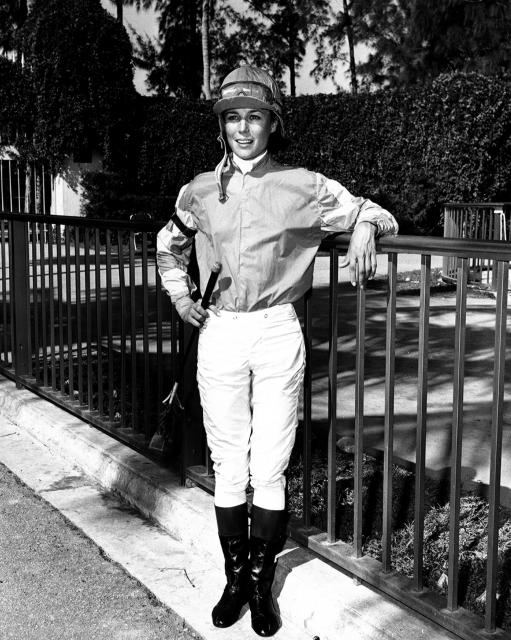
Jockey Robyn Smith’s remarkably quick journey from aspiring Hollywood starlet to respected professional athlete was the basis of a 1972 Sports Illustrated story by scribe Frank Deford. But her greatest fame was still in the distance, occurring by virtue of an unlikely 1980 marriage to legendary film dancer Fred Astaire. An excerpt from the SI profile of Smith, who was given to telling tall tales about herself:
As a kid she played boys’ games, and certainly jockeys don’t intimidate her because she is, after all, taller than everybody she rides against. “The men jockeys have treated me terrific,” she says, “but then, all my friends have always been men. I resented being called a tomboy, though, because I wouldn’t want to be a man. I like them too much. I just get along with them, period. Women resent this for some reason. My mother used to resent this. Like when she and my father would have people over, I’d hang around with the men.” Robyn always addresses married couples as “you guys.”
She exercises every morning, runs religiously, and indulges herself only in a little wine and brandy. She is a fine golfer, long off the tee, and picks up any sporting activity easily. Ransohoff, the film producer, took her deep-sea fishing. “We hit a school of albacore,” he says, “and I mean they were rolling. Robyn hung more albacore in that hour than any man on board.”
“I’m thin, but I’m strong,” Robyn explains clinically, getting set to flex again. “I always had good muscles. I’m a rare physical individual—and I’m not trying to be narcissistic about it. It’s just that I’m very unusual in that way.”
Yet Robyn has taken off so much weight that she appears to have no emotional reservoir to sustain her. Her system is littered with the residual effects of weight pills, water pills, hormone pills, big pills, little pills, pill pills that she gobbles indiscriminately. Even when she was a world-beater at the spring meeting, she was constantly at a temperamental flood tide. She breaks into tears regularly, not only over losing a race but, say, while watching some banal TV drama. The least aggravation unnerves her. People fall out of her favor upon the smallest alleged slight, only to return just as whimsically to her good graces. Her fetish for freedom borders now on mania; it is easier to schedule an appointment with the Dalai Lama than Robyn Smith. She has become less receptive to criticism, and woe to the most well-intentioned innocent who forgets and idly tells her the same thing twice.•
_______________________________
Smith profiled in 1985.
Tags: Frank Deford, Fred Astaire, Robyn Smith

From “Swamp Dreams,” a great New York piece by Robert Sullivan about a shopping colossus rising (perhaps) in the Meadowlands, in what’s supposedly a post-mall America:
“If you disregard military bases and airports, and maybe the dam the Chinese government is beginning to regret it built on the Yangtze, the mall currently under construction at the Meadowlands will be one of the biggest feats of construction in history: the world’s largest commercial space, with at least six zeros attached to all the calculations. There is to be an astonishing 7.5 million square feet of retail space. Every year, the mall’s developers expect 55 million people—almost the population of Italy—to show up for, say, breakfast and some jeans and maybe a luxury item, as well as a show or a fighter-jet flight simulation or a grande decaf latte beneath a TV screen that will make Times Square seem like a rec room from the seventies. There will be the first indoor ski slope in North America: 800 feet long, sixteen stories high, with fresh snow made daily. There will be a skating rink the size of a small lake. And in the water-themed part of the structure, there will be a gigantic room modeled after Hawaii, with a tropical climate, a pool featuring six-foot waves, and possibly some kind of whale or unusual fish, explained to shoppers by sea-life educators.”
••••••••••
“It was known as Xanadu…now the American Dream.”
Tags: Robert Sullivan
Electric fingers, from the fine people at Advanced Arm Dynamics. Or perhaps you would prefer a hand transplant at UCLA.
Neil Armstrong interviewed on the Beeb in 1970.
Tags: Neil Armstrong
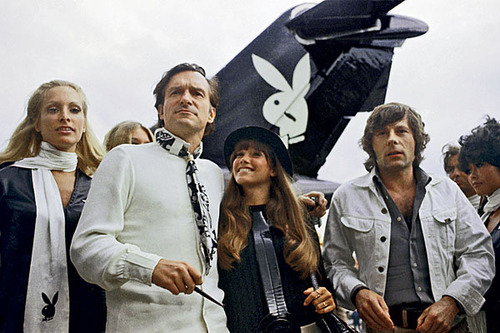
Roman Polanski and Sharon Tate discussing shifting mores with Hugh Hefner on Playboy After Dark, July 1968.
Tags: Hugh Hefner, Roman Polanski, Sharon Tate

From “Marrying Absurd,” Joan Didion’s 1967 essay about getting hitched in Las Vegas, a garish man-made oasis that shouldn’t logically exist, but does so stubbornly, spectacularly, almost mythically:
“What people who get married in Las Vegas actually do expect–what, in the largest sense, their ‘expectations’ are– strikes one as a curious and self-contradictory business. Las Vegas is the most extreme and allegorical of American settlements, bizarre and beautiful in its venality and in its devotion to immediate gratification, a place the tone of which is set by mobsters and call girls and ladies’ room attendants with amyl nitrite poppers in their uniform pockets. Almost everyone notes that there is no ‘time’ in Las Vegas, no night and no day and no past and no future (no Las Vegas casino, however, has taken the obliteration of the ordinary time sense quite so far as Harold’s Club in Reno, which for a while issued, at odd intervals in the day and night, mimeographed ‘bulletins’ carrying news from the world outside); neither is there any logical sense of where one is. One is standing on a highway in the middle of a vast hostile desert looking at an eighty-foot sign which blinks ‘STARDUST’ or ‘CAESAR’S PALACE.’ Yes, but what does that explain? This geographical implausibility reinforces the sense that what happens there has no connection with ‘real’ life; Nevada cities like Reno and Carson are ranch towns, Western towns, places behind which there is some historical imperative. But Las Vegas seems to exist only in the eye of beholder all of which makes it an extraordinary and interesting place, but an odd one in which to want to wear a candlelight satin Priscilla of Boston wedding dress with Chantilly lace insets, tapered sleeves and a detachable modified train.” (Thanks TETW.)
••••••••••
Elvis marries Priscilla, Las Vegas, 1967:
More Joan Didion posts:
Tags: Joan Didion
Newsreel footage from 1930 of Helen Keller and Anne Sullivan.
Tags: Anne Sullivan, Helen Keller
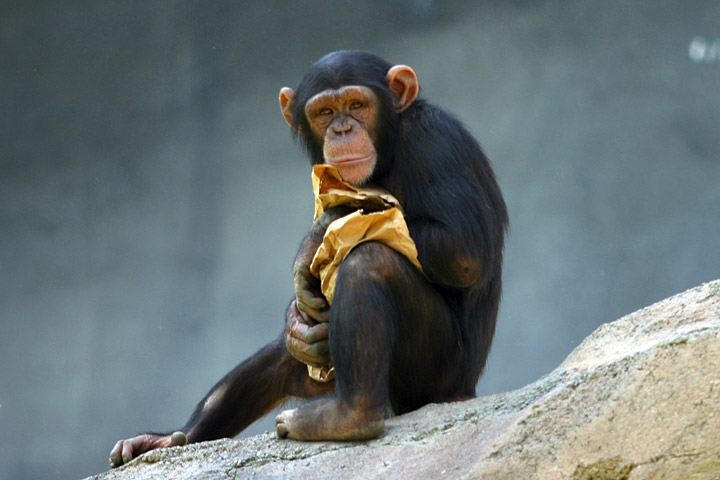
From a piece about the highly developed social behaviors of animals by Alexandra Horowitz and Ammon Shea in the Sunday Review of the New York Times:
“You’re at a dinner party. Your hostess regales you with a long, meandering tale of her recent back surgery. It ends with attempted humor: she laughs and glances at you. You laugh in response, trying to convey an appreciation for her humor that you don’t actually feel. Congratulations: you are now at the level of social politeness of chimpanzees.
In this study, the laughs of 59 chimps (yes, they do laugh) were recorded and the sounds analyzed. The researchers discovered that when one chimp laughed others sometimes engaged in “laugh replications” that lacked the full acoustic structure of spontaneous laughter. In other words, they were fake-laughing.”
••••••••••
They’re humoring us until they’re smart enough to make it their planet:
More simian posts:
Tags: Alexandra Horowitz, Ammon Shea
For the relief of stomach pains and such.
Tags: Salvador Dali