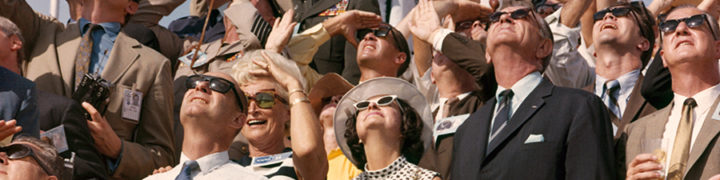
F. Lee Bailey, one of the first celebrity lawyers of the TV era, who was involved in the Sam Sheppard, Patty Hearst and O.J. Simpson trials, among others, talks to questionable interlocutor Joe Pyne, in 1966.
You are currently browsing the archive for the Videos category.
Tags: F. Lee Bailey, Joe Pyne
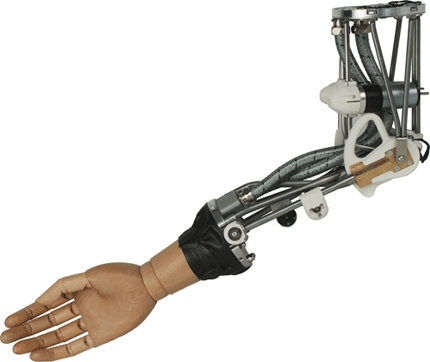
Good piece by Jonathan Newton in the Washington Post about the arm operation known as Tommy John Surgery. The procedure, created by Dr. Frank Jobe, was first performed in 1974 on the pitcher for whom it was named. The article gets to the heart of just how experimental the ligament-reconstruction procedure was when John went under the knife, and explains what changes to the operation have reduced risk. An excerpt:
“When Jobe operated, he sliced John’s elbow wide open and moved the ulnar nerve in order to reach the bone. He took a tendon from a cadaver’s leg and attached it with screws. Then he hoped John’s body would react favorably and the tendon would serve the same role as the ligament.
‘We didn’t really know whether we could do it or not,’ Jobe said. ‘We didn’t know whether we could heal it or not. We didn’t know whether a tendon would be accepted by the body and receive blood supply and become part of the body.’
Jobe and John waited. John did not throw a ball again for 16 weeks. Jobe decided he should not pitch in a major league game again until one year of rigorous rehab. Every step of the way, the recovery unfolded as Jobe hoped. John returned in 1974, and in seven of the next eight seasons he threw more than 200 innings.
‘I would never have thought it would happen,’ Jobe said. ‘I didn’t do it again for another two years. After another year or so, I had a couple successes. I thought, This may be something we ought to use a little more routinely.”
••••••••••
Elton John (no relation) performs at Dodger Stadium in 1975, the year Tommy John couldn’t pitch for L.A. as he recuperated from surgery:
Tags: Elton John, Frank Jobe, Tommy John
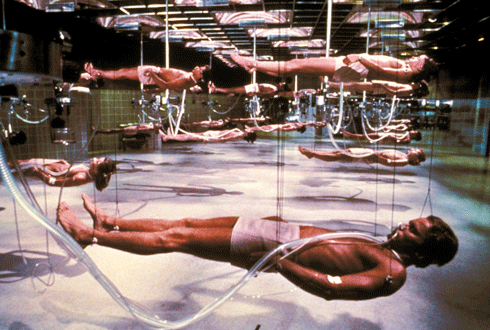
Michael Crichton’s prophetic 1978 genre picture foresaw an America with a small number of haves and many have-nots, and the ethical problems that could develop in a land of such disparate levels of wealth and so many emergent technologies. Adapted from a novel by Robin Cook, the Queens-born doctor who’s turned out a slew of medical thrillers, the film version of Coma was perhaps most famous in its day for its feminist hero, Dr. Susan Wheeler, played by Geneviève Bujold, but it now makes its mark most prominently in ways that cross gender lines.
Boston Medical is a wealthy and prestigious hospital with a sterling reputation, as it seems no one has yet noticed that a higher-than-average number of young, healthy patients have signed in for mundane operations to remove appendixes or repair knees and have flatlined on the operating table. Dr. Wheeler certainly notices when her best friend is added to the growing list of the comatose, and she starts poking around the hospital for answers even though everyone, even her fellow doctor and boyfriend (Michael Douglas), believes she’s hysterical. As Wheeler follows the trail of corpses from the hospital to the nearby Jefferson Institute, a cutting edge facility where those healthy bodies with dead brains are kept pristine-but for what purpose?–she is sure that the “accidents” in O.R. are no mistake.
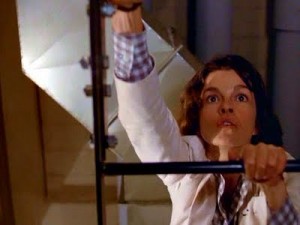
As Wheeler tries to sort through the welter of lies, she meets Jeffeson Institute attendant Mrs. Emerson (Elizabeth Ashley), who pointedly tells her, “I have no supervisor.” Emerson isn’t just talking about herself but about the ability of the powerful to prey on the weak in a society that clearly favors the former. There are certainly some hokey plot twists in Coma, as a few scenes were written to increase the action element at the expense of logic, but it’s still a powerful film instead of a dated one.
Bio-printers will be able to create perfect replacement organs in the future, so harvesting flesh, which actually still happens in developing countries, will eventually be a thing of the past. But does that mean our organs will be safe? Not exactly. What is ever more in play isn’t our organs themselves, but the information within one of them in particular–our brains. The nouveau tech corporations are aimed at locating and marking our personal preferences, tracking our interests and even our footsteps, knowing enough about what’s going on inside our heads to predict our next move. In a time of want and desperation and disparity of wealth, how much information will we surrender? It may be far less nefarious to read a mind than pluck a brain, but what we’re seeing now is probably just the beginning, as the profit motive is huge. To not pay attention to a line from Crichton’s film would mean we ourselves our in a collective coma: “We are dealing in an area of uncertainty, an area where there are no rules, contradictory laws and no clear social consensus as to what should be done.”•
Tags: Geneviève Bujold, Michael Crichton, Michael Douglas, Robin Cook
Atlanta-based PodPonics grows produce in shipping containers in urban environments. (Thanks Singularity Hub.)
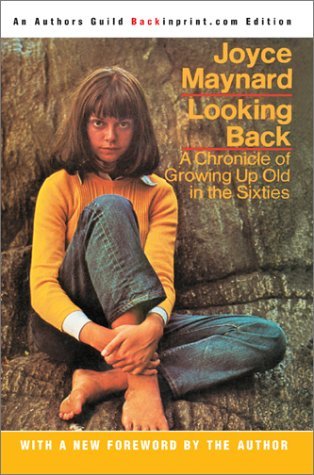
In 1972, with the cover story “An 18-Year-Old Looks Back On Life,” the New York Times Magazine got into generation-defining business, with the aid of precocious writer Joyce Maynard, a representative of the first American generation to have been raised by that glowing picture tube in the living room and to have taken space-age technology for granted. For Maynard, the article spawned a book and a romantic relationship with the Garbo-ish author J.D. Salinger. She became something of a scorned figure in American Letters, perhaps seeming to have gotten too much too soon. The opening of her famous (and infamous) Times piece:
“Every generation thinks it’s special–my grandparents because they remember horses and buggies, my parents because of the Depression. The over-30’s are special because they knew the Red Scare of Korea, Chuck Berry and beatniks. My older sister is special because she belonged to the first generation of teen-agers (before that, people in their teens were adolescents), when being a teen-ager was still fun. And I–I am 18, caught in the middle. Mine is the generation of unfulfilled expectations. “When you’re older,” my mother promised, “you can wear lipstick.” But when the time came, of course, lipstick wasn’t being worn. “When we’re big, we’ll dance like that,” my friends and I whispered, watching Chubby Checker twist on “American Bandstand.” But we inherited no dance steps, ours was a limp, formless shrug to watered-down music that rarely made the feet tap. “Just wait till we can vote,” I said, bursting with 10-year-old fervor, ready to fast, freeze, march and die for peace and freedom as Joan Baez, barefoot, sang “We Shall Overcome.” Well, now we can vote, and we’re old enough to attend rallies and knock on doors and wave placards, and suddenly it doesn’t seem to matter any more.
My generation is special because of what we missed rather than what we got, because in a certain sense we are the first and the last. The first to take technology for granted. (What was a space shot to us, except an hour cut from Social Studies to gather before a TV in the gym as Cape Canaveral counted down?) The first to grow up with TV. My sister was 8 when we got our set, so to her it seemed magic and always somewhat foreign. She had known books already and would never really replace them. But for me, the TV set was, like the kitchen sink and the telephone, a fact of life.
We inherited a previous generation’s hand-me-downs and took in the seams, turned up the hems, to make our new fashions. We took drugs from the college kids and made them a high-school commonplace. We got the Beatles, but not those lovable look-alikes in matching suits with barber cuts and songs that made you want to cry. They came to us like a bad joke–aged, bearded, discordant. And we inherited the Vietnam war just after the crest of the wave–too late to burn draft cards and too early not to be drafted. The boys of 1953–my year–will be the last to go.
So where are we now? Generalizing is dangerous. Call us the apathetic generation and we will become that. Say times are changing, nobody cares about prom queens and getting into the college of his choice any more–say that (because it sounds good, it indicates a trend, gives a symmetry to history) and you make a movement and a unit out of a generation unified only in its common fragmentation. If there is a reason why we are where we are, it comes from where we have been.”
••••••••••
Maynard queried by that handsome, world-weary robot Charlie Rose, 1998:
Trailer for To Die For, the 1995 film adapted from a Maynard book:
Tags: J.D. Salinger, Joyce Maynard
In 1976, Dinah Shore interviews Michael Jackson, already a gigantic star but several years before he turned out his twin solo masterpieces, Off The Wall and Thriller.
Promo at the end for the following day’s program: “Don’t miss tomorrow’s show when Dinah welcomes a new opponent for Muhammad Ali, Japan’s heavyweight wrestling champion, Antonio Inoki. Also on hand will be good ol’ boy Eddy Arnold, Mort Sahl and Gary Burghoff–you know, Radar from M*A*S*H. So be watching tomorrow afternoon at 3:30.”
Tags: Dinah Shore, Michael Jackson

In 1972, Clifford Irving wrote an “authorized” biography of Howard Hughes, claiming he had the cooperation of the ultra-reclusive figure. The book turned out to be an elaborate hoax.
Tags: Clifford Irving, Mike Wallace
A 1968 segment from the British science and tech show, Tomorrow’s World, which looks at how Pink Floyd’s “improvised” light show was created.
Amazing futuristic Braniff Airlines ad, from 1968.
Roger Ebert is one of the all-time great newspaper writers, on par with Royko and Breslin and Hamill. He’s amazingly lucid, prolific and bright. And his ability to continue growing and learning, especially in the face of his health problems, is inspiring. But that doesn’t mean he hasn’t been hugely wrong about films at times. The first video below, a ridiculous review of Blade Runner, by Ebert and his late TV partner Gene Siskel, was dug up by Open Culture. The second one, a pan of Blue Velvet, is etched into my brain for its wrongheadedness. Luckily for Roger, I can’t find his venomous take of Jim Jarmusch’s 1995 masterpiece, Dead Man. Well, we all have our moments.
Starts at the two-minute mark:
Ebert disses Blue Velvet, 1986:
Tags: Roger Ebert
After hosting David Bowie in 1975, Dinah Shore invited him back, along with Iggy Pop, in 1977. Dinah called Iggy by his real first name “Jimmy.” Rosemary Clooney was also on hand. Not in color for part and some stills are used, but still worth it. In fact, the technical deficiencies actually enhance the viewing, as if Chris Marker directed an episode of Dinah!
Tags: David Bowie, Dinah Shore, Iggy Pop, Rosemary Clooney
With stem-cell sprayguns, swarmbots in outer space, hand transplants and bio-printers. among other innovations, the impossible never seemed more possible. In a great essay on his blog, “Why the Impossible Happens More Often,” Kevin Kelly holds forth on how a new level of organization and collaboration are creating new possibilities that were out of the question just a few years ago. The opening:
“I’ve had to persuade myself to believe in the impossible more often. In the past several decades I’ve encountered a series of ideas that I was conditioned to think were impossibilities, but which turned out to be good practical ideas. For instance, I had my doubts about the online flea market called eBay when it first came out. Pay money to a stranger selling a car you have not seen? Everything I had been taught about human nature suggested this could not work. Yet today, strangers selling automobiles is the major profit center for the very successful eBay corporation.
I thought the idea of an encyclopedia that anyone could change at any time to be a non-starter, a hopeless romantic idea with no chance of working. It seemed to go against my general understanding of human nature and group interaction. I was so wrong. Today I use Wikipedia at least once a day.
Twenty years ago if I had been paid to convince an audience of reasonable, educated people that in 20 years time we’d have street and satellite maps for the entire world on our personal hand held phone devices — for free — and with street views for many cities — I would not be able to do it. I could not have made an economic case for how this could come about “for free.” It was starkly impossible back then.
These supposed impossibilities keep happening with increased frequency.”
••••••••••
Kevin Kelly lectures on the meaning of technology, in Amsterdam in 2009:
Tags: Kevin Kelly
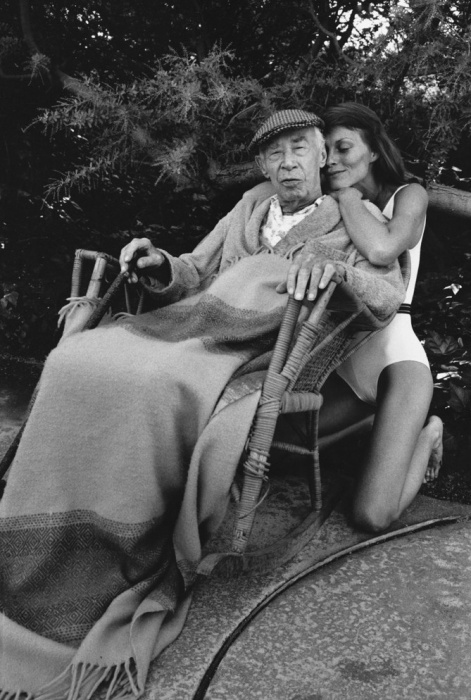
Amazing 35-minute short doc about Henry Miller from 1975 that was directed by Tom Schiller, who was an original Saturday Night Live writer.
Tags: Henry Miller, Tom Schiller
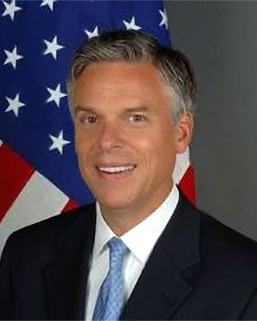
Only in the Bizarro world of 2011, when the Republican Party is essentially the de facto Tea Party, can Jon Huntsman seem too liberal to be the party’s Presidential nominee. He’s ultra-conervative on social issues and has the type of sophisticated intelligence that could be attractive to Independents who’ve wearied of Obama. But because he believes in global warming and thought the debt ceiling shenanigans were ridiculous, he has essentially no shot at the nomination. You will accept the self-defeating ideology without question or else. An excerpt about Huntsman’s formative years at the American Conservative:
“Huntsman Jr. had a rebellious phase. He dropped out of high school to focus on his progressive-rock band, Wizard. Ask him about those days and he slips into semi-seriousness. He describes Emerson Lake and Palmer, Yes, and Genesis as ‘highly impactful in terms of [his] view of the music world.’ And he jokes that the ’80s were a mostly ‘lost decade’ in terms of music when explaining his fondness for ’90s acts like the Foo Fighters and Ben Folds Five.
He eventually completed his GED and went to University of Utah; he also went on a two-year mission on behalf of the LDS church. Assigned to Taiwan, he quickly set to learning Standard Chinese Mandarin and Taiwanese Hokkein. These years proved pivotal. He not only acquired the skills that would allow him to expand his father’s business in Asia, he also found himself an unofficial diplomat.
‘It was not just the effort to learn the language, the effort to learn the new highly structured system,’ he recalls, ‘I learned a lot about Asia, and I learned a lot about the United States.’ Huntsman arrived in Taiwan in the years following the Shanghai Communique, during which U.S. relations with mainland China began to normalize, a development that angered the Taiwanese.” (Thanks Marginal Revolution.)
••••••••••
Prog rock, via Anderson, Bruford, Wakeman and Howe:
Dean discovers prog rock:
Tags: Jon Huntsman
Brian Wilson created a fantasy world of endless waves to escape his demons, but eventually drugs and mental illness caused him to wipe out. Interviewed by Mike Douglas in 1976.
Tags: Brian Wilson, Mike Douglas
Man apparently draws while asleep.
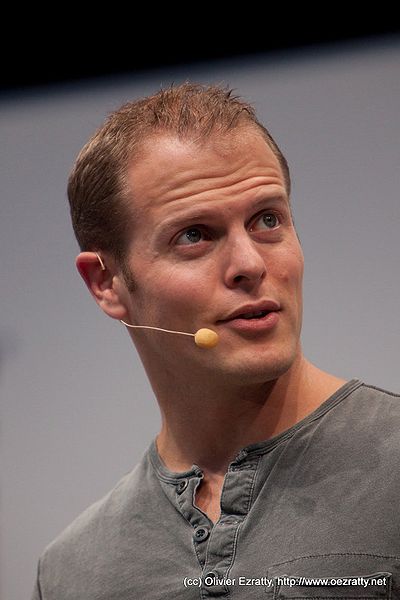
"He preferred to spend his time learning the tango in Buenos Aires or archery in Kyoto." (Image by Olivier Ezratty.)
If you haven’t had a chance yet to read Rebecca Mead’s great New Yorker profile of souped-up self-help guru, Timothy Ferriss, don’t let it slide. Ferriss is the best-selling author behind the 4-Hour Workweek and other similarly alluring titles. The article is hilarious and sums up the age we live in, the desperation people feel to find some way to the other side of this very discomfiting paradigm shift we’re experiencing. An excerpt;
“Ferriss’s first book, The 4-Hour Workweek, was turned down by twenty-six publishers before being accepted by Crown, and he recounts this statistic with pride. But it’s easy to understand the caution of those twenty-six. Ferriss’s aesthetic is a pointed rejection of the culture of constant BlackBerrying, corporate jockeying, and office all-nighters that is celebrated in most business-advice books, and in films such as The Social Network. The 4-Hour Workweek was inspired by a personal epiphany. In 2004, Ferriss, feeling burned out as the C.E.O. of a sports-nutrition company, where he worked twelve-hour days, seven days a week, discovered that he preferred to spend his time learning the tango in Buenos Aires or archery in Kyoto. He also found that, by automating his business operations to the largest extent possible, he was able to pull this off. (To a point, at least. Kane Ng, a Hollywood executive who is Ferriss’s friend, told me, expansively, ‘Tim is a total fraud, you know. ‘Four-hour workweek’? He is constantly busting ass.’ Of course, it was Seneca who said that hyperbole ‘asserts the incredible in order to arrive at the credible.’) Ferriss advises would-be members of the New Rich to check e-mail no more than twice a day, and to set automated responses advising correspondents of the recipient’s unavailability. (Anyone who e-mails Ferriss these days immediately receives in her inbox an automated response, with the cheery sign-off ‘Here’s to life outside of the inbox!’) The book counsels readers to take what Ferriss calls ‘mini-retirements’ now—a month in Costa Rica, three months in Berlin—rather than saving up the prospect of leisure for the final decades of life. And it recommends funding all this by discovering a ‘muse,’ which Ferriss defines, as Seneca did not, as ‘an automated vehicle for generating cash without consuming time.’
Finding one’s muse, like catching one’s rabbit before cooking it, is more easily said than done, but Ferriss’s advocacy of liberation from the workplace has had a wide appeal, especially among younger people to whom the workplace may be unattainable in the first place, given the unemployment rate. Similarly, his latest book, The 4-Hour Body, speaks to the peculiar obsessions and insecurities of the young American male. Ferriss tells readers how they might lose twenty pounds in thirty days without exercise—eggs, spinach, and lentils are crucial—and how to triple their testosterone levels. (Gentlemen, put your iPhone in the pocket of your backpack, not the pocket of your jeans.) The book, which is five hundred and forty-eight pages long, contains a lot of colorfully odd advice—he recommends increasing abdominal definition with an exercise he calls ‘cat vomiting’—but it also reassures readers that they need not go so far as to have Israeli stem-cell factor injected into the cervical spine, as Ferriss did in the name of inquiry. Nor need they necessarily incorporate into their regimen Ferriss’s method for determining the effectiveness of controlled binge eating: weighing his feces to find out exactly what kind of shit he was full of.”
••••••••••
“The four-hour workweek is possible, but you need to completely unplug and reset”:
Tags: Rebecca Mead, Timothy Ferriss
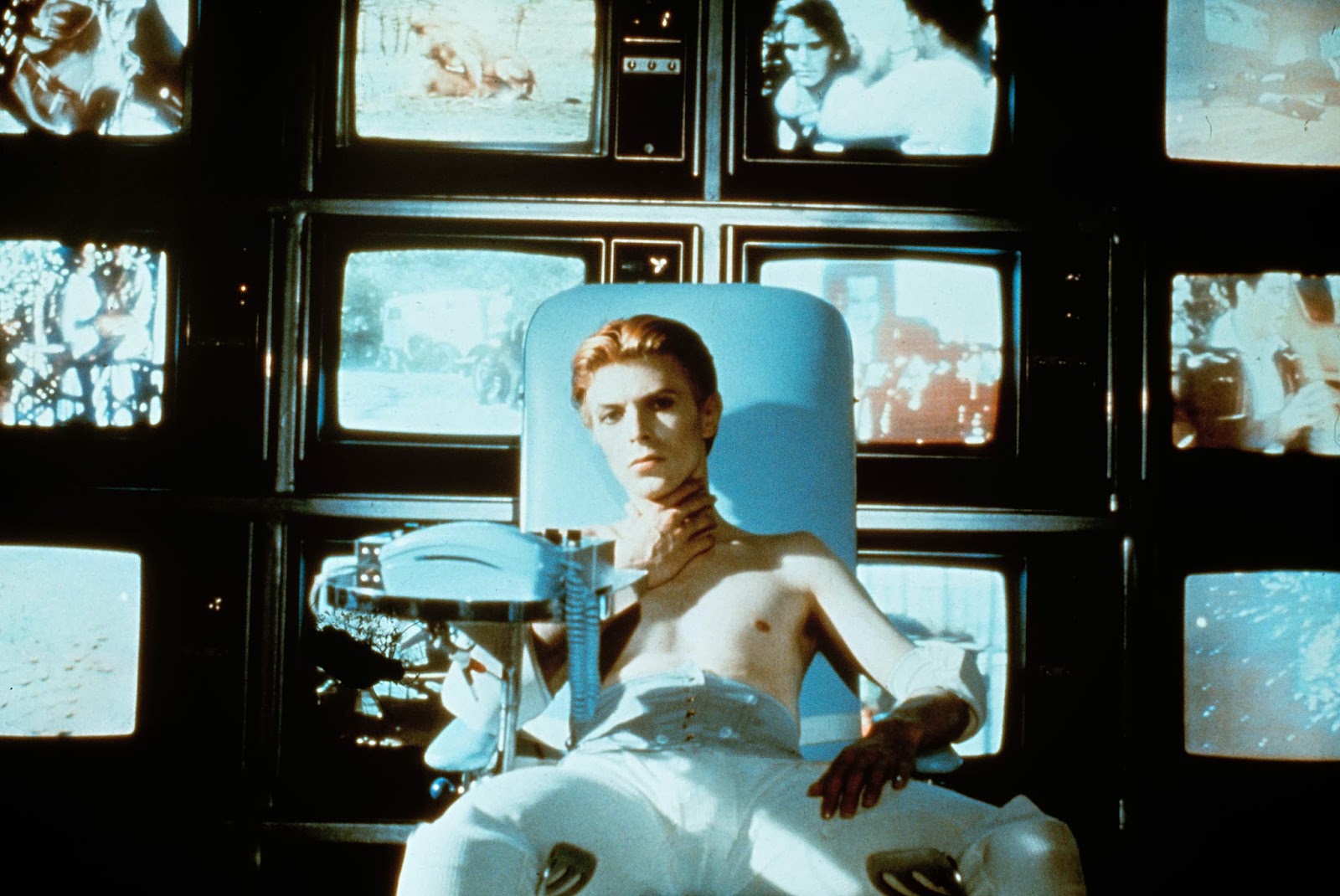
David Bowie, Dinah Shore, Henry Winkler and Nancy Walker in 1975. In one segment, Bowie gets a karate lesson.
More from the same interview:
Tags: David Bowie, Dinah Shore, Henry Winkler, Nancy Walker
Stetson Kennedy, the civil rights activist and folklorist, just passed away at 94. Kennedy wrote the book, I Rode With The Ku Klux Klan, in the 1950s, which was an eye-opener for America, but he was later acccused (rightly, it would seem) of exaggeration and sensationalism. He even brought his anti-KKK struggle to the airwaves while working as a consultant for the Superman radio program. Kennedy ran (unsuccessfully) for governor of Florida, and Woody Guthrie wrote a song about him. Quite a life.
Kennedy interviewed for Freakonomics:
Billy Bragg sings “Stetson Kennedy”:
Tags: Stetson Kennedy, Woody Guthrie
Bionic eyeball.
Tags: Rob Spence
Quite a time warp. I hate Star Wars with a passion, but, still, interesting.
But still no asteroids.
In 1959, Hugh Hefner talks with Lenny Bruce, who had not yet been consumed by heroin and legal troubles.
Tags: Hugh Hefner, Lenny Bruce
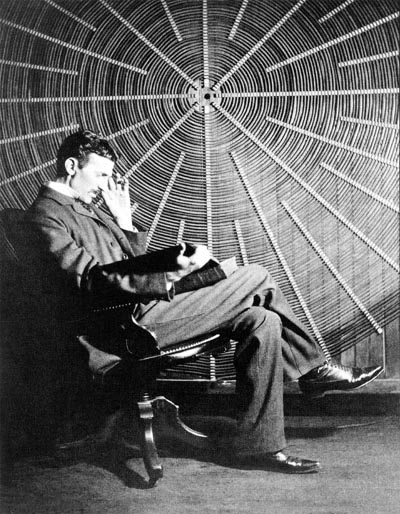
From a page of obituaries about electrical genius Nikola Tesla, who died alone and in modest means in 1943 at the New Yorker Hotel:
“Tesla’s ideas bordered increasingly on what some considered the fantastic as he advanced in years. On his seventy-eighth birthday he announced in an interview that he had invented a ‘death beam’ powerful enough to destroy 10,000 airplanes at a distance of 250 miles and annihilate an army of 1,000,000 soldiers instantaneously.
On his eighty-fourth birthday he declared he stood ready to divulge to the United States Government the secret of the ‘death beam’ that, he said, would build an invisible Chinese Wall of defense around the country against any attempted attack by an enemy air force, no matter how large.”
••••••••••
David Bowie as Tesla, in The Prestige:
Tags: Nikola Tesla
Up next: plague of frogs.