Sneakers are now impervious to chocolate syrup.
Ideas and technology and politics and journalism and history and humor and some other stuff.
You are currently browsing the archive for the Videos category.
Sneakers are now impervious to chocolate syrup.
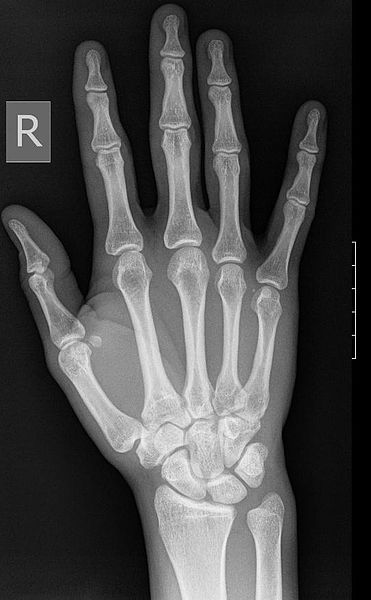
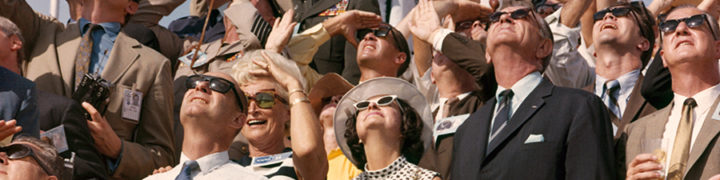
From “A Brief Rant On the Future of Interaction Design,” a really smart illustrated essay by Bret Victor about, among other things, the limitations of the touchscreen:
“I believe that hands are our future.
So then. What is the Future Of Interaction?
The most important thing to realize about the future is that it’s a choice. People choose which visions to pursue, people choose which research gets funded, people choose how they will spend their careers.
Despite how it appears to the culture at large, technology doesn’t just happen. It doesn’t emerge spontaneously, like mold on cheese. Revolutionary technology comes out of long research, and research is performed and funded by inspired people
And this is my plea — be inspired by the untapped potential of human capabilities. Don’t just extrapolate yesterday’s technology and then cram people into it.,,Our hands feel things, and our hands manipulate things. Why aim for anything less than a dynamic medium that we can see, feel, and manipulate?” (Thanks Browser.)
••••••••••
Monkey with touchscreen playing Angry Birds:
Tags: Bret Victor
Devo for Honda Scooters, 1984.
Tags: Devo
David Bowie and Marianne Faithfull sing Sonny and Cher, 1973.
Tags: David Bowie, Marianne Faithfull
The promotional trailer for the videocassette release of the Frost-Nixon interviews. It apparently played in movie theaters.
Tags: David Frost, Richard M. Nixon
A 1972 3-D short by Pixar founder Ed Catmull, and Fred Parke, with some “making of” info.
Tags: Ed Catmull, Fred Parke
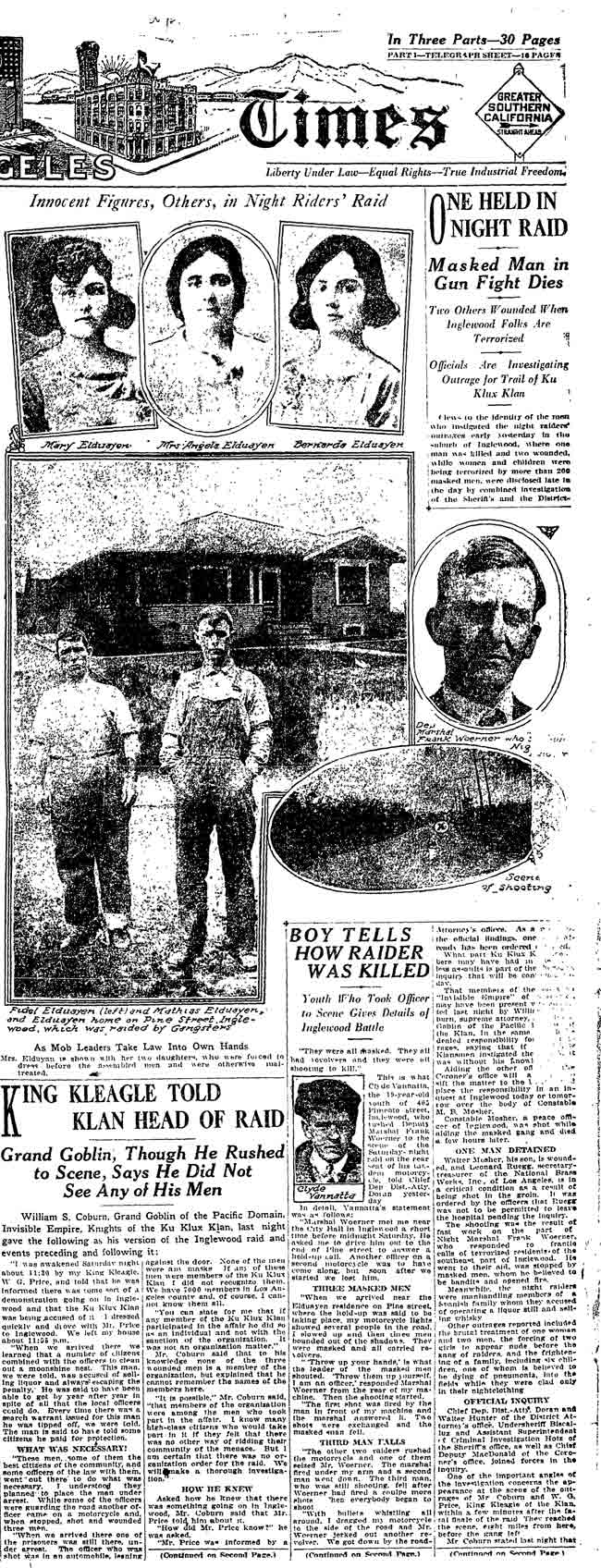
At the L.A. Review of Books, Laurie Winer, a former Los Angeles Times writer, provides a wonderfully caustic inside look at the demise of that once-great newspaper, which cratered due to seismic shifts in technology and the stunning dickishness of belligerent billionaire Sam Zell. The opening:
“Since it seemed it couldn’t get much worse, Los Angeles Times editor-in-chief James O’Shea decided to look on the bright side. It was 2007, and the newspaper had a new owner. He was Sam Zell, an iconoclast, as they call rich older men who ride motorcycles and wear leather jackets, whether they look good in them or not. Maybe Zell would be iconoclastic in the right way, you know, odd but decent and smart, useful, so O’Shea phoned the Chicago businessman about giving the Times an in-person interview. Zell agreed. O’Shea then offered to pick up his new boss at the airport. Zell declined, informing O’Shea that his personal jet could easily deposit him near his beach house in Malibu.
When Zell called back an hour later, the polite part of their relationship was already done. Zell informed O’Shea that he would, in fact, fly into LAX and make himself available to reporters at an office there. ‘I was going to invite all of you to come to my house in Malibu,’ said Zell — for the second time indicating his address — ‘until you sent a fucking reporter up there and scared the shit out of my housekeeper.’ Zell wanted it conveyed that he traveled in an entirely different social sphere than O’Shea. ‘Let me tell you something,’ he continued in his distinctive rasp. ‘You want to talk to me, call me and I’ll talk. But you don’t fuck with my employees. Got that?’ O’Shea immediately apologized, even though he wasn’t sure what for.
And so began the improbable last chapter in the fall of a major newspaper, as chronicled by O’Shea in The Deal from Hell: How Moguls and Wall Street Plundered Great American Newspapers. Among other things, the book is a reminder that whenever you think things can’t get worse, they can. They can get much, much worse.”
••••••••••
“Hopefully, we get to the point where our revenue is so significant that we can do puppies and Iraq…fuck you”:
Tags: James O’Shea, Laurie Winer, Sam Zell
Please stop touching his mouth.
Another Marlin Perkins post:
Tags: Marlin Perkins
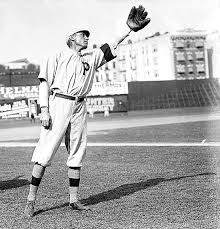
In “The King of Human Error” in Vanity Fair, Michael Lewis has an excellent profile of psychologist Daniel Kahneman, who inspired the Moneyball revolution–even though Lewis realized Kahneman’s influence only in retrospect. An excerpt in which the journalist explains the surprising reach of Kahneman and his late professional partner, Amos Tversky:
“Kahneman and Tversky were psychologists, without a single minor-league plate appearance between them, but they had found that people, including experts, unwittingly use all sorts of irrelevant criteria in decision-making. I’d never heard of them, though I soon realized that Tversky’s son had been a student in a seminar I’d taught in the late 1990s at the University of California, Berkeley, and while I was busy writing my book about baseball, Kahneman had apparently been busy receiving the Nobel Prize in Economics. And he wasn’t even an economist. (Tversky had died in 1996, making him ineligible to share the prize, which is not awarded posthumously.) I also soon understood how embarrassed I should be by what I had not known.
Between 1971 and 1984, Kahneman and Tversky had published a series of quirky papers exploring the ways human judgment may be distorted when we are making decisions in conditions of uncertainty. When we are trying to guess which 18-year-old baseball prospect would become a big-league all-star, for example. To a reader who is neither psychologist nor economist (i.e., me), these papers are not easy going, though I am told that compared with other academic papers in their field they are high literature. Still, they are not so much written as constructed, block by block. The moment the psychologists uncover some new kink in the human mind, they bestow a strange and forbidding name on it (‘the availability heuristic’). In their most cited paper, cryptically titled ‘Prospect Theory,’ they convinced a lot of people that human beings are best understood as being risk-averse when making a decision that offers hope of a gain but risk-seeking when making a decision that will lead to a certain loss. In a stroke they provided a framework to understand all sorts of human behavior that economists, athletic coaches, and other ‘experts’ have trouble explaining: why people who play the lottery also buy insurance; why people are less likely to sell their houses and their stock portfolios in falling markets; why, most sensationally, professional golfers become better putters when they’re trying to save par (avoid losing a stroke) than when they’re trying to make a birdie (and gain a stroke).
When you wander into the work of Kahneman and Tversky far enough, you come to find their fingerprints in places you never imagined even existed.”
••••••••••
Daniel Kahneman at TED, 2010:
Tags: Amos Tversky, Daniel Kahneman, Michael Lewis
The miracle of call waiting, in 1977.
Telexistence allows robots to transmit senses remotely.
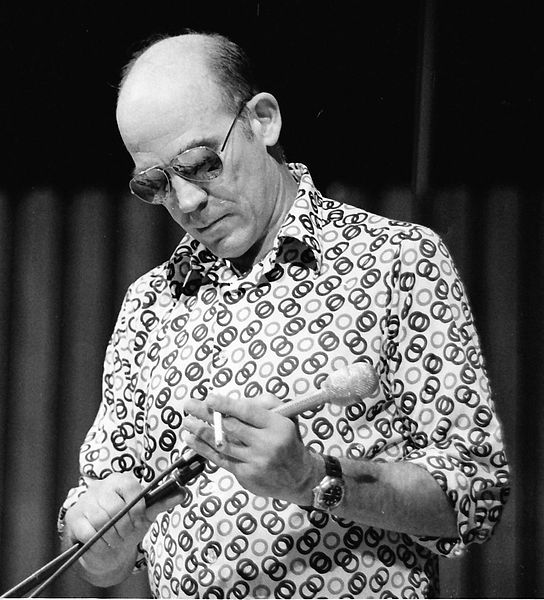
Having a film version of The Rum Diary in theaters and a movie about J. Edgar Hoover ready to be released reminded of a 1974 Playboy Interview with Hunter S. Thompson that I read a couple of years ago. In the piece, which took Craig Vetter seven months to complete, Thompson cracked a joke about being pals with the former FBI honcho. An excerpt:
“PLAYBOY: Would you run for the Senate the same way you ran for sheriff?
THOMPSON: Well, I might have to drop the mescaline issue, I don’t think there’d be any need for that—promising to eat mescaline on the Senate floor. I found out last time you can push people too far. The backlash is brutal.
PLAYBOY: What if the unthinkable happened and Hunter Thompson went to Washington as a Senator from Colorado? Do you think you could do any good?
THOMPSON: Not much, but you always do some good by setting an example—you know, just by proving it can be done.
PLAYBOY: Don’t you think there would be a strong reaction in Washington to some of the things you’ve written about the politicians there?
THOMPSON: Of course. They’d come after me like wolverines. I’d have no choice but to haul out my secret files—all that raw still Ed Hoover gave mejust before he died. We were good friends. I used to go to the track with him a lot.
PLAYBOY: You’re laughing again, but that raises a legitimate question: Are you trying to say you know things about Washington people that you haven’t written?
THOMPSON: Yeah, to some extent. When I went to Washington to write Fear and Loathing: On the Campaign Trail ’72, I went with the same attitude I take anywhere as a journalist: hammer and tongs—and God’s mercy on anybody who gets in the way. Nothing is off the record, that kind of thing. But I finally realized that some things have to be off the record. I don’t know where the line is, even now. But if you’re an indiscreet blabber-mouth and a fool, nobody is going to talk to you—not even your friends.”
••••••••••
Thompson and Keith Richards consider the reincarnation of Hoover, 1973:
Tags: Craig Vetter, Hunter S. Thompson, J. Edgar Hoover, Richard M. Nixon
By Motorola Solutions. (Thanks CNN.)

A fun bit of linguistic history from Henry Hitchings’ Salon article, “What’s the Language of the Future?“:
“There have been attempts to create an artificial language for use by all the world. In the second half of the nineteenth century and then especially in the early years of the twentieth, schemes to construct new languages were numerous. Most of these are now forgotten: who remembers Cosmoglossa, Spokil, Mundolingue, Veltparl, Interlingua, Romanizat, Adjuvilo or Molog? Some of the innovators sound like remarkably odd people. Joseph Schipfer, developer of Communicationssprache, was also known for promoting means of preventing people from being buried alive. Etienne-Paulin Gagne, who devised Monopanglosse, proposed that in time of famine Algerians help their families and friends by exchanging their lives or at least some of their limbs for food, and was willing if necessary to give up his own body to the needy.
Only two schemes enjoyed success. In 1879 a Bavarian pastor, Johann Martin Schleyer, devised Volapük. It was briefly very popular: within ten years of its invention, there were 283 societies to promote it, and guides to Volapük were available in twenty-five other languages. As Arika Okrent observes in her book In the Land of Invented Languages, Volapük is a gift to people with a puerile sense of humour: ‘to speak’ is pükön, and ‘to succeed’ is plöpön. More famous and less daft-sounding were the efforts of Ludwik Zamenhof, a Polish ophthalmologist of Lithuanian Jewish descent, who in the 1870s began work on creating Esperanto, a language without irregularities. He published his first book on the subject in 1887, summing up the language’s grammar in sixteen rules and providing a basic vocabulary. Zamenhof’s motives were clear; he had grown up in the ghettos of Bialystok and Warsaw, and, struck by the divisiveness of national languages, he dreamt of uniting humanity. Esperanto is certainly the most successful of modern invented languages, but although it still has enthusiastic supporters there is no prospect of its catching on as Zamenhof once hoped.”
••••••••••
Learning Ubbi Dubbi, 1972:
Tags: Henry Hitchings
In Nick Tosches great book, The Devil and Sonny Liston, the author identifies his subject’s main problem: “In the Saturday night cigarette smokehouse neon dark of that dive, Charles Liston, who neither knew his age nor felt any ties of blood upon this earth nor saw any future beyond the drink in front of him and the smoky dark spare refuge of this barroom from the bone-cutting, river-heavy dank and freezing chill, knew only that he was nobody and that he had come from nowhere and that he was nowhere. He did not see that one could be nobody with a capital ‘N.’” Smokin’ Joe Frazier, who just passed away, and his two greatest opponents, Muhammad Ali and George Foreman, became not just important nobodies but cultural kings.
Frazier, who could barely get a word in, with Ali and Dick Cavett:
Tags: Dick Cavett, George Foreman, Joe Frazier, Muhammad Ali
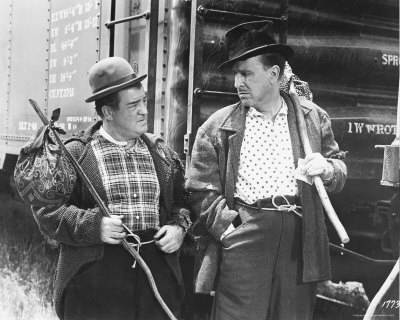
I always thought Abbott and Costello were able to provoke nervous laughter not because of their fumbling deadbeat personas but due to the duo’s sinister undercurrent, as they often seemed to be one small step from utter criminality. Abbott, the manipulative sharpie who was the ringleader of the grifter pair, had a barely concealed vicious streak, and he seemed capable of armed robbery, arson or sex crimes. For the right payoff, he would consider murder. Or perhaps he would indulge in a thrill killing to pass time during the interminable work-free days. No he wouldn’t bloody his own hands but would instead goad his buffoonish other half, whose rage stemmed from a lifetime of humiliations, into committing the deed. What saved them from the gas chamber was in no way a sense of morality but their utter cowardice and constant state of lethargy.
In this clip, the villains handcuff and batter an officer of the law but he manages to escape with his life:
Tags: Bud Abbott, Lou Costello
Fred Astaire performs for Dick Cavett, 1970.
Tags: Dick Cavett, Fred Astaire

In the New York Times, Frederick Seidl asks whether the motorcycle is all but done for as a consumer good, victim of a bleak recession and sleek tech products. An excerpt:
“The iPhone 4S, the iPad 2, the 11-inch and 13-inch thin, light MacBook Air computers — these are the sleek gorgeousness young people go on about, have to have, and do have, in the millions. These machines, famous for the svelte dignity of their designs — and of course, far less expensive than a motorcycle — are a lens to see the world through and to do your work on. It’s their operating speeds that thrill. Young people cut a bella figura on their electronic devices.
Now, of course, it is not just the young who buy Apple products. I lay emphasis on the young, particularly young men, because they are the ones who might otherwise be buying motorcycles, and aren’t, at least not at all in the numbers they did before the economic downturn. The great recession was disastrous for motorcycle sales around the country, especially, it seems, for sport bikes, the ones that perform with brio but have no practical point to make. In other words, they are not bikes to tour on, they are not a comfortable way for you and a companion — wife or partner or friend — to travel to work or to a distant campground. You can do it, but it’s not ideal. Young riders were not buying motorcycles of any kind, and especially, it seems, not sport bikes.
Or, to say it another way, it’s as if the recession induced a coma in all the potential new motorcyclists, and in so many of the already experienced motorcyclists, from which they woke changed, changed utterly, and found themselves standing in line outside an Apple store, patiently waiting to buy the latest greatness.”
••••••••••
“Hi’ya sweetheart”:
Monkey goes zoom:
Tags: Frederick Seidl
A metallic exoskeleton suit intended for workers in nuclear plants.
In addition to numerous others things, the rise of personal computers killed off the concept of World’s Fairs, at least in America. People used to descend on them by the millions to be wowed by inventions, technology and cultures they couldn’t experience in their workaday lives. But who needs to drive hundreds or thousands of miles to be awed now? What’s the sense of going anywhere to be connected to crowds of other people? It’s all possible now 24 hours a day on tiny screens in our pockets.
The final World’s Fair in the U.S. was the 1984 one in New Orleans, which declared bankruptcy. There were financial problems all along, so perhaps it would have been a boondoggle regardless. But it was also just a sign of the times, the end of an era. A 60 Minutes report about the New Orleans fiasco:

Technology enables a phenom’s talent in Alex Pappademas’ smart New York Times Magazine piece about the ascent of a young rap producer who works under the name “Lex Luger.” Even if you don’t like hip-hop, the subject and the storytelling are really compelling, capturing a young artist reflecting in the moment after the arrival of great fame. The opening:
“A few years ago, before anyone knew his name, before rap artists from all over the country started hitting him up for music, the rap producer Lex Luger, born Lexus Lewis, now age 20, sat down in his dad’s kitchen in Suffolk, Va., opened a sound-mixing program called Fruity Loops on his laptop and created a new track. It had a thunderous canned-orchestra melody, like an endless loop of some bombastic moment from Wagner or Danny Elfman; a sternum-rattling bass line; and skittering electronic percussion that brought to mind artillery fire. When the track was finished, he e-mailed it to a rapper named Waka Flocka Flame. Luger had recently spent a few months in Atlanta with Waka, sequestered in a basement, producing most of the music for Waka’s debut album. Waka had asked him for one more beat, one that could potentially be the album’s first single.
Months later, Luger — who says he was ‘broke as a joke’ by that point, about to become a father for the second time and seriously considering taking a job stocking boxes in a warehouse — heard that same beat on the radio, transformed into a Waka song called ‘Hard in da Paint.’ Before long, he couldn’t get away from it.”
••••••••••
“Hard in da Paint”:
Tags: Alex Pappademas, Lex Luger, Lexus Lewis
Stupendously idiotic, the Intimacy 2.0 line of dresses, made by Dutch designers, become sheerer when a wearer is excited by a potential mate. (Thanks Fastcodesign.)
It was in the 1970s that control of media and information began its migration to the hands of the individual, and people became excited about new tech toys, even ones that tha weren’t particularly awesome, like CB radios. In 1977, Tom Snyder and friends tout the wonders of holography.
Tags: Tom Snyder

I recall reading somehwere that Kurt Vonnegut had co-written a screenplay with the odd comedian Steven Wright. The script was unproduced, and I imagine Wright still has it. Anyhow, there’s a new biography of Vonnegut, by Charles J. Shields, which examines the many contradictions of the novelist’s life and his bitter later years. From Janet Maslin’s New York Times piece about the book:
“Mr. Shields is not shy about using the words ‘a definitive biography of an extraordinary man’ to describe his book. And So It Goes is quick to trumpet its biggest selling points. Mr. Shields means to separate image from perception: He depicts Vonnegut as an essentially conservative Midwesterner, proud of his German heritage and capitalist instincts, who developed an aura of radical chic. He also describes a World War II isolationist who aligned himself with Charles A. Lindbergh yet became an antiwar literary hero. And he finds a life-affirming humanist sensibility in a writer celebrated for black humor. How this man would eventually be recruited to brainstorm with the Jefferson Airplane and be hipper than his own children are among the mysteries on which Mr. Shields casts light.
And So It Goes also traces the paradoxes in Vonnegut’s personal life. He was widely regarded as a lovable patriarch, for instance, at a time when he had left his large family behind. He also sustained a populist reputation even when he developed a high social profile in New York with the photographer Jill Krementz, his second wife. Ms. Krementz, who is called ‘hard-wired to the bowels of hell’ by Vonnegut’s son, Mark, clearly did not cooperate with Mr. Shields. The book takes frequent whacks at her, holding her accountable for much of the unhappiness in Vonnegut’s last years.
Mr. Shields provides a good assessment of misconceptions about Vonnegut’s writing. Those impressions persisted throughout his later life, perhaps because the books that followed Cat’s Cradle, The Sirens of Titan, God Bless You, Mr. Rosewater and Slaughterhouse-Five became increasingly unreadable.
‘On the strength of Vonnegut’s reputation, Breakfast of Champions spent a year on the best-seller lists,’ Mr. Shields writes of that 1973 disappointment, ‘proving that he could indeed publish anything and make money.'”
••••••••••
“Hey, Kurt, you read lips?”:

Steve Jobs looked at a mock-up tablet version of Sports Illustrated in 2009–roughly six months before he unveiled the iPad–and was his usual charming self in evaluating it. From Mediabistro:
“The demo was impressive, especially considering the Apple iPad would not be unveiled for another half a year. Unfortunately, not everyone was impressed. After Apple unveiled the iPad, Steve Jobs came to Time Inc.’s New York offices and met with the editors of some of their biggest magazines. He was asked what he thought of SI’s demo.
‘I think it is really, really stupid,’ Jobs said. That stung Terry McDonnell, the editor of SI and the Time Inc. sports group.
‘I was sad, and we were all kind of stunned,’ McDonnell said. ‘It was not stupid, in fact it anticipated everything he was doing.'”