
Urban Studies

You are currently browsing the archive for the Urban Studies category.

They'll never take me alive. (Image by T. Lersch.)

Justice wasn’t blind so much as dumb in Brooklyn courtrooms in the 1880s. That’s the conclusion I drew after reading this article in the July 29, 1882 edition of the Brooklyn Daily Eagle in which a monkey was the subject of a terrible miscarriage of justice. Either that or the judge in the case was an incredible smartass. An excerpt:

“The general opinion that monkeys are of no earthly use to mankind, except to exhibit at circuses, and that they are wanting in human instincts is shown to be erroneous by the part which one of these animals played this morning in an altercation between two men in the Eastern District.

Thomas Connors and Frederick Weldler were having a set to in the house of the latter, on North Eighth street. From hot words the parties came to blows, and after three or four rounds it became evident to Weldler that his opponent was too much for him. Upon a table was a large monkey, an interesting observer of all that was taking place. When Weldler found that his chances of victory were very dubious unless he resorted to some new tactics the happy thought came to him to enlist the aid and sympathies of his long tailed protege, and, grabbing the monkey by the tail, he threw him on the face of his antagonist.

A most interesting fight then ensued. The monkey began to claw, scratch, bite and otherwise spoil the countenance of Mr. Connors. The monkey was by far too much for his man, and at last Connors, bleeding and panting, was obliged to leave the house. He sought Officer Phelan, the veteran guardian of the peace in the Fourteenth Ward, and had him arrest Weldler for assault and battery. The parties were taken before Justice Nasher.

After hearing his story Justice Nasher said to Connors: ‘Then it was the monkey who assaulted you.’

‘Yes, it was the monkey, but Weldler threw him at me and set him on,’ replied the defeated man.

‘Well, you have no case, as I see,’ said the court,’ against Mr. Weldler. It appears that the monkey is the guilty party, and if you will bring him here we will examine him. Mr. Clark make out a warrant for the arrest of the monkey.’

Connors did not wait for the warrant but left the court room, remarking as he did so something about taking the law into his own hands and having satisfaction.”

Judge Judy: I once ruled in favor of a salamander. (Image by Susan Roberts.)

More Old Print Articles:

Tags: , , ,

"I'm a 40 yo woman, age is starting to creep up on me." (Image by Tomas Castelazo.)

Want to buy Retin-A – $100 (Passaic Cnty)

I want to buy Retin A but I don’t have health insurance and I don’t want to pay out of pocket to get a RX. If anyone has any Retin A, 0.05 or .10 preferred but I would take 0.25. I ordered some online but it takes almost a month to get it, and I’m anxious to get it now. Willing to pay top $ if you have some on hand. Thx. ps I’m a 40 yo woman, age is starting to creep up on me. I’ve researched it and I know all the side effects and I’ll be cautious while using it.

It's fun pretending I'm a Nazi, Mom!

Toys were less politically correct back in the day, but these 1947 items from Little Novelty Company in Long Beach, California, were doozies by any standards. When we were just a couple years removed from WWII, this ad, which ran in comic books, offered children replica German and Italian firearms for a measly $1.25. You know, weapons just like the ones that were used to murder Allied soldiers and force Jewish people into death camps. An excerpt from the copy:

“Kids! Kids! Kids! Adults too! Here is a gun that is exactly like that carried by the German officers in World War II. It is the improved model of the German Luger. Reproduced in actual size, design and balance. Made of solid cast aluminum and finished in gun-metal black. An authentic World War II souvenir.

Also available: The Celebrated Italian 7.65 Brevettata. This small, semi-automatic pistol was one of the finest made by the Fascists. Carried by the crack Italian Alpine troops. Later used by the underground. Reproduced in actual size, design and balance. Made of solid cast aluminum and finished in gun-metal black.

Absolutely Safe! Cannot Be Fired.”

More Old Print Ads:

Spy magazine existed during the ’80s mostly to ensure that Tama Janowitz didn’t get away with too much. You see, Tama Janowitz wrote novels that were more successful than their merit suggested they should be, so she needed to be put in her place. Thankfully, a bunch of jackasses with fancy educations who wished they were writing crappy books that sold a lot of copies were there to ridicule her. Take that, Tama Janowitz!

Seriously, Kurt Andersen and Graydon Carter chose just the right moment to publish Spy. New York was in the midst of a decade of greed that rivaled the Roaring Twenties for excess but with none of the earlier era’s panache. The publication was there to take the piss out of the whole stupid thing–the Milkens, the Helmsleys, the Trumps. (I will always feel indebted to Spy for dubbing Donald Trump a “short-fingered vulgarian.”) I can’t say I ever read the magazine much at the time, but the only things that came out of that decade that ended up influencing comedy more were Letterman and the Simpsons.

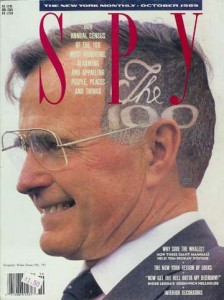
I got my grimy, grubby fingers on a copy of the October 1989 issue that is built around the “Spy 100,” the snarky mag’s annual takedown of insider traders, political advisors and all manner of irksome cretins that made NYC break out in hives. It features a fairly famous cover that shows President Bush (the sleepy one, not his son who gave the entire planet a vigorous rogering from behind) with words carved into his hair, as was the idiotic custom of some kids of the time. (The idea was later borrowed for this Newsweek cover.) The list skewers the expected (political hit-man Lee Atwater was number one), the unexpected (people excessively grieving the late Lucille Ball) and, yes, Tama Janowitz. An excerpt from the passage about hotelier horror Leona Helmsley:

“Caught billing more than $4 million in personal expenses to the real estate empire she gold-dug out of her now-enfeebled husband. Convicted of tax evasion (conspiracy and mail fraud; acquitted on charges of extortion of kickbacks from cowering business vendors). Continued running self-reverential ads. Anticipating the horror stories about her routine terorization of employees, Leona’s lawyer admitted in opening remarks–boasted even–that she was a ‘tough bitch.’ Trump called her a ‘disgrace to humanity in general.'”

Tags: , , , , , , ,

A man named Jim Steager sings about Jesus while wearing dog make-up and the world collectively shudders. (Thanks Cynical-C and Boing Boing.)


Tags:

Not Pablo, but an amazing simulation.

Adorable cuddly Chinchilla up for adoption (free). (Fairfield CT)

It is with great sadness that I write this add today. My wife Elizabeth and I have owned a male Chinchilla (Pablo) for almost 6 years now. He is great, we love him but unfortunately we are looking to have him adopted as we are running out of room quickly in our townhouse. We have a son that is 2.5 years old and a baby girl on the way due in September. As of now my son has his own room and Pablo is situated in our spare bedroom; also know affectionately as “Pablo’s room”. Once our little girl arrives there will no longer be a spare bedroom; we are moving my son into his “big boy room” which is currently Pablo’s/the spare bedroom and converting his current room into a nursery for our baby girl.

I thought we would have moved into a larger home by now, but with the horrible economy and me losing my job about a year ago we have not been able to do so. So, for both economic reasons and for living space/constraints (we are literally running out of room) we are considering trying to find Pablo a new home. However, we are nervous…..we feel very guilty/sad and we don’t want to just give him away to anyone. We also feel bad that we have not been able to give Pablo as much attention then we used to with our son taking up a lot our attention and now our newest addition on the way. We want him to have a good home, more space and someone/somewhere where he will get love and attention as well.

More Craigslist ads:

Tags: ,

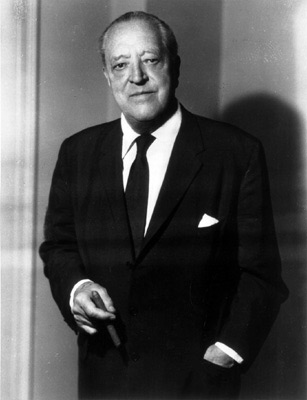
Mies van der Rohe: Sure, less is more, but stop sleeping on my couch.

People are obsessed with those extreme collectors known as hoarders, but the BBC has an interesting storyabout their polar opposites, anti-hoarders who chuck almost all of their physical belongings and keep only a laptop, an external hard drive, an e-book reader and an iPod in their spartan apartments. Their possessions are largely virtual and digital. Some even go a step further and give up their living space and shuttle from one friend’s couch to another to keep themselves as unfettered as possible. The whole thing sounds ridiculous to me, and I’m not someone who has (or wants) many possessions.

One on the subjects profiled is 22-year-old software engineer Kelly Sutton, who is an Angeleno transplant living in that hard-to-like Brooklyn neighborhood known as Williamsburg. An excerpt:

“Meet Kelly Sutton, a spiky-haired 22-year-old software engineer with thick-rimmed glasses and an empty apartment in Brooklyn’s Williamsburg neighbourhood–a hotbed for New York’s young, early adopters of new technology.

Mr Sutton is the founder of CultofLess.com, a website which has helped him sell or give away his possessions–apart from his laptop, an iPad, an Amazon Kindle, two external hard drives, a ‘few’ articles of clothing and bed sheets for a mattress that was left in his newly rented apartment.

This 21st-Century minimalist says he got rid of much of his clutter because he felt the ever-increasing number of available digital goods have provided adequate replacements for his former physical possessions.

‘I think cutting down on physical commodities in general might be a trend of my generation–cutting down on physical commodities that can be replaced by digital counterparts will be a fact,’ said Mr Sutton.”

Tags:

The proto-Alfred E. Neuman.

The great Letters of Note website, which publishes antique missives that have some historical value, has published an old rejection letter that Mad magazine used to send out to writers and artists who didn’t quite make the grade. It dates from the reign of editor Al Feldstein, who ran the mag for 29 years, beginning in 1956. See the original letter and stationery, and read the transcript below:

“Dear Contributor:-

Sorry, but we’ve got bad news!

You’ve been rejected!

Don’t take this personally though. All of us feel rejected at one time or another. At least, that’s what our group therapist tells us here at MAD. He says we shouldn’t worry about it.

So that should be your attitude: ‘What-Me worry?’

Besides – although you’ve been rejected, things could have been a lot worse. Your material might have been ACCEPTED!

Then where would you be?

MAD-ly

(Signed, ‘Al Feldstein’)

Al Feldstein
Editor

P.S. Our group therapist also mentioned that many people are so rejected by a rejection that they don’t try again. And we wouldn’t want THAT! We really WOULD like you to keep sending us your article ideas and scripts. . .so we can keep sending you these idiotic rejection slips!”

Tags:

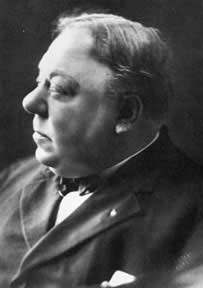
John Bunny: "Round and puffy, with little gimlet-hole eyes."

Before Chaplin, Keaton, Lloyd and the rest, New York City native John Bunny was the first international film comedian. But Bunny, a stage actor who made a very successful transition to the big screen, died in Brooklyn in 1915 during the still-nascent film era, and he isn’t remembered as well as the other silent greats. I came across his obituary in the New York Times. An excerpt form the article subtitled, “Fat, Big, Round-Faced Actor Who Made Millions Laugh Succumbs at 52”:

“John Bunny, the moving picture actor whose big round face and fat form were familiar to millions of patrons of the movie theaters, died yesterday at his residence, 1.416 Glenwood Road, Brooklyn, from Bright’s Disease. Mr. Bunny was stricken with illness about three weeks ago while on a tour with his production, “John Bunny in Funnyland.”

The name of John Bunny will always he linked with the movies. For while he was identified with this branch of the amusement world during only a comparatively small part of his career as an actor, it was the motion picture that first brought him fame and fortune.

Mr. Bunny had been a comedian for a quarter of a century before he went into moving pictures. He was the ninth John Bunny of a line of English sea captains, and the first of the line not to follow the sea. He was born in this city fifty-two years ago. As a young man he made up his mind to be an actor and he began as a member of a small touring minstrel show. Moderate success was the reward of his efforts and eventually he gained that goal of all American actors–a place in Broadway’s incandescent sun. He was blessed with a strong comedy sense, to which endowment nature had added a comic aspect that proved especially valuable for his later work. He was seen frequently in musical comedies, with Hattie Williams in one of her successes, and with Lew Fields in “Old Dutch,” among others.

But it was with the coming of the movies that Mr. Bunny’s fame became universal, till at the time of his death his face was one of the best known in the world. The comedian foresaw the importance of cinema was to play in amusing the multitude, and at the same time he appreciated his abundant qualifications as a comedian of the screen. He had grown exceedingly heavy–he weighed 260 pounds–and as he was beneath the average height his figure immediately suggested the comic. His face, in keeping with his pudgy body, was round and puffy, with little gimlet-hole eyes that peered out from their depths in a kindly, humorous way. It was a mobile face that broke into ripples when Mr. Bunny laughed.”

Below: “Troublesome Secretaries” (1911).


More Old Print Articles:

Tags:

"The best quality at the lowest possible price." (Image by Alfred Wagg Pictures.)

The Albrecht family has been involved in the grocery business in Germany for almost a century, but it was in the late 1940s that brothers Theo and Karl stumbled onto a business principle that revolutionized their growing company and all consumer businesses: discount shopping. They took a no-frills approach, selling staple items at low prices at small stores and eschewing costly advertising. Products that didn’t sell well were quickly removed from the shelves.

Theo Albrecht, who later started the American chain Trader Joe’s, passed away recently and Spiegel has an article about him, the family legacy and why the brothers were incredibly publicity shy. An excerpt:

“Theo and his brother Karl, who is two years older, laid the cornerstone for what became their discount empire in 1948 when they took over their mother’s small grocery store. In 1961, they changed the name to Albrecht’s Discount–or “Aldi” for short. Within decades, the store became a discount chain worth billions, one which permanently changed the way food retailing was done in both Germany and across the globe.

Aldi’s meteoric rise can be traced directly back to the brothers’ business creed: “The best quality at the lowest possible price.” The two Albrecht brothers are considered the founders of the discount strategy, and even today Aldi stores have little in the way of frills and stay away from expensive marketing strategies.

It is a business model that turned the Albrecht brothers into two of the richest people in Germany, with Theo’s net worth said to have been $16.7 billion (€12.8 billion)…Theo and Karl were in close agreement on other issues as well–particularly when it came to keeping far away from the public eye. Extremely little is known about them. Their last public comments come from 1953 and 1971; the last known photos of the two were shot against their will in the 1980s.

One reason for their silence is the 1971 kidnapping of Theo Albrecht, who was abducted and held for 17 days. He was only set free following the payment of a 7 million deutschmark ransom. At the time it was the highest ransom ever to have been paid in Germany. Half of the money, handed over by then-Bishop of Essen Franz Hengsbach, is still missing today.”

Tags: ,

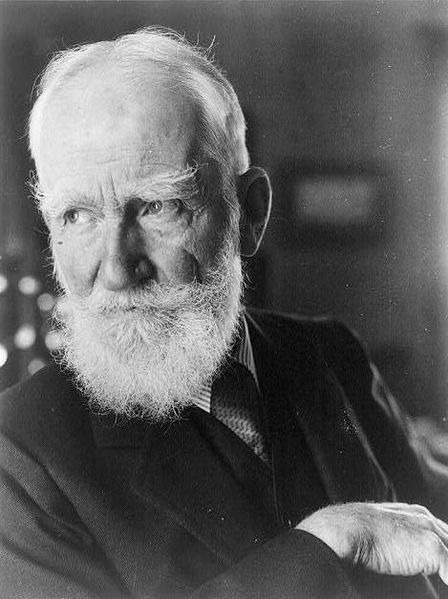
Shaw photographed in 1934, two years before his voyage to Miami.

Playwright George Bernard Shaw visited Miami in 1936 and sat for an interview with the press on the deck of a cruise ship before setting foot on land. He was in a joking, happy mood, and mostly kidded the press about their idiotic questions. But he did talk (seemingly) seriously about his objections to America’s Constitution. One thing I didn’t realize about Shaw: He walked like a huge dingus. He’s partially kidding, but partially dingus. Watch the video.

More Featured Videos:

Tags:

Pac-Man cookies. (Image by Betsy Weber.)

Instapaper posted a link to an excellent story by Jamey Pittman about the creation of Pac-Man, which is, of course, one of the great successes in gaming and business history. It has all the info about how Namco game designer Toru Iwatani made “Puck-Man” (as it was originally called in Japan) a global sensation, even though it was no overnight one. The article’s opening paragraphs:

It was 1977 when a self-taught, capable young man named Toru Iwatani came to work for Namco Limited, a Tokyo-based amusement manufacturer whose main product lines at the time were projection-based amusement rides and light gun shooting galleries. He was just 22 years old with no formal training in computers, visual arts, or graphic design, but his creativity and aptitude for game design were obvious to the Namco executives that met with Iwatani. They offered to hire him—with assurances they would find a place for him in the company—and he accepted.

Iwatani eventually found his place designing titles for Namco’s new video games division. His limited computer skills necessitated his being paired with a programmer who would write the actual code while Iwatani took on the role of game designer for the project. This was a new job for the game industry in 1977 when most games were designed by the programmers who coded them. In addition to a programmer, Iwatani’s team would usually include a hardware engineer to develop the various devices and components, a graphic artist to realize his visual ideas, and a music composer for any music and sound effects needed in the game.

Iwatani had initially wanted to work on pinball machines, but Namco had no interest in the pinball business. Perhaps as a concession, his first game design, called Gee Bee, was a paddle game similar to Atari’s Breakout but with a decidedly pinball-inspired slant to the gameplay. Released in 1978, it was Namco’s first original video game—they had only ported existing Atari games to the Japanese market up to this point—and it enjoyed moderate success in the arcades.”

Tags: ,

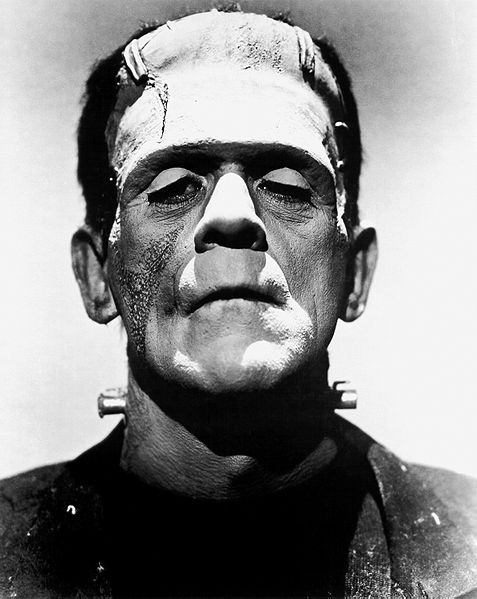
No, not that Frankenstein, you silly.

I found this odd postmortem about a deceased artist named John Frankenstein in the April 17, 1881 edition of the Brooklyn Daily Eagle. He apparently came from a bohemian family of German immigrant painters and sculptors and had many siblings. (Although the article only mentions a trio of brothers, he also had two sisters.) I can only find a little information online about the Frankenstein artistic dynasty of the nineteenth century, so if anyone out there is an art historian with more knowledge on the topic, please drop me a line.

Although the piece doesn’t say it explicitly, Frankenstein, a recluse with money problems, may have committed suicide. An excerpt from the article, which is subtitled, “What Followed the Completion of Somebody’s Bust”:

“John Frankenstein, the painter, sculptor and poet, who, as briefly related in the Eagle of yesterday, was found dead in the midst of the most squalid surroundings, in a lonely dwelling, located on the extreme southern end of the village of East New York, is, as was discovered after a lengthy search, by a reporter, one of the four brothers of marked ability, well known in different portions of the United States. All of them were painters, who ranked high, but they were all eccentric and possessed of too much theory to enable them to accumulate wealth in this (to a marked extent) practical country. Counselor Sackett of this city, who was well acquainted with them, says they lived in an age which had not progressed sufficiently to appreciate them. They were entirely engrossed in art, as an element that tended to elevate mankind and it was repugnant to their natures to regard it as merely a method of obtaining bread and butter. He has known them to suffer the necessities of life, when by disposing of their work for a fair sum of money they would have been enabled to live comfortably. They were very kind hearted and had they been wealthy, would have been philanthropists. They seemed to think that rich men should endow them, so that they could pursue art without a thought of daily necessities.

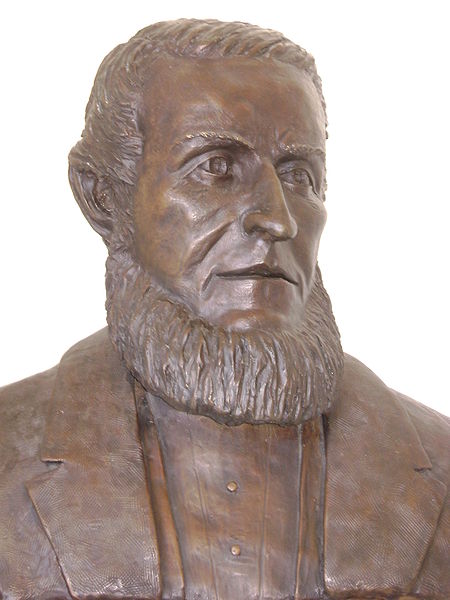
A bust, but not by Frankenstein. (Image by Oleg Alexandrov.)

They were deep thinkers, and on any subject that was broached, they could converse with more than average ability. One of the brothers is dead. He, as an artist and poet, was far superior to any of the others. Another is a learned mathematician. He holds the position of professor of mathematics in a college in Chicago. Several years ago he created quite a sensation in the scientific world by announcing he had discovered a method whereby the intersection of colored lines at certain angles could produce light. He called this discovery Magic Reciprocals. It was a wonderful discovery, it is said. As yet, no practical use has been made of it.

George Frankenstein, the third brother, is an artist, and has a studio on Broadway in New York City. His paintings are said to be very beautiful and valuable. At one time the deceased was with this brother, but at length he tired of the world, and sought the hermit like retirement which he found in East New York.

His life had been a very sad one, and no one who reads it as depicted in his satire entitled American Art, can fail to be impressed with a feeling of deep sympathy for him. The physician, Dr. F. H. Miller, who saw him several days before his death, is inclined to believe he died of a broken heart. He had been engaged for some time on a bust of great value, and had just completed it, when accidentally he knocked it from the stand upon which he kept it. Falling to the floor, it was irretrievably injured. It seemed to completely crush him, and although he was beginning the work again, he pined away, until he died. His body is at the morgue. It will be claimed by his brother, who will have it interred in Evergreens Cemetery. Among his numerous effects which will be taken charge of by the public administrator, together with the money in the neighborhood of $200, found in his pockets, was a beautiful original poem, entitled “The Falling of Snow,” the first line of which was:

‘I sat at the window and watched the snow fall/
Its mantle of purity thrown over all.'”

More Old Print Articles:

Tags: , , ,

"Controlled sparring." (Image by Rls.)

sparring club opening (medford)

Im looking for fighters who want to train and beat the shit out of each other…period. controlled sparring. must be atleast 18.

Thanks to Dangerous Minds for posting this trailer for a Hulk film made in Bangladesh. It’s inspiring. I want to drop everything now and make movies.

More Featured Videos:

Cable Cars: Faster than traveling by burro.

I found this old cable car ticket stub that I still had from a trip to San Francisco in the late ’90s. I used it as bookmark for a while, and it’s been sitting in a desk drawer ever since. I don’t remember what a fare cost in those days and there’s no price listed on the stub. On the ticket’s reverse side, there’s some text entitled “Cable Car Facts.” An excerpt:

“Invented in San Francisco, the cable cars have been operating here since Andrew Hallidie first ran his creation down the Clay Street Hill in 1873.

Once a form of transportation used in cities around the world, the San Francisco cable cars are the last in daily revenue service. They were made a National Historic Landmark in 1964.

The cable cars travel a sturdy 9 1/2 miles per hour when they grip the steel cable that runs beneath the street.

Double ended cable cars run only on California Street and the smaller single-ended cars run on the Powell-Mason and Powell-Hyde lines.

The cable car barn at Washington and Mason houses the cable car museum and the machinery that moves the cable.”

More Miscellaneous Media:

  • Bronx high school newspaper. (1947)
  • Mad magazine. (1966)
  • Vancouver Blazers hockey guide. (1974-75)
  • John Hummer NBA card. (1973)
  • Carolina Cougars ABA Yearbook. (1970)
  • The Washington Senators MLB Yearbook. (1968)
  • Ugandan currency with Idi Amin’s picture. (1973)
  • Tom Van Arsdale basketball card. (1970)
  • Okie from Muskogee” sheet music. (1969)
  • California Golden Seals hockey magazine. (1972)
  • Beatles Film Festival Magazine (1978)
  • ABA Pictorial (1968-69)
  • Tom Seaver’s Baseball Is My Life. (1973)
  • Hockey Digest (1973)
  • World’s Fair Guide (1964)
  • World’s Fair Guide (1939)
  • Buffalo Braves Yearbook (1972-73)
  • New York Nets Yearbook (1976-77)
  • “Tom Dooley” sheet music.
  • Tags:

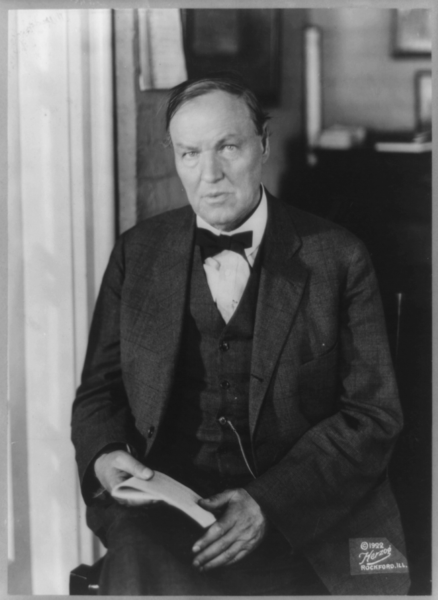
    Clarence Darrow represented the defense in the Scopes-Monkey Trial in exchange for a pedicure.

    Attorney/Lawyer for Barter – $1 (Upper East Side)

    Bartering attorney services from full service firm which includes ivy league educated lawyers for equal trade. Let us know what you have to offer. This is not a free. We offer top notch legal representation however we are willing to accept goods or services if you make the right offer.

    Some wanted items:

    1. Spanish lessons
    2. Spa gift certificates
    3. Restaurant Meals
    4. Dentist
    5. Bloomingdale gift certificates
    6. Yoga works gift certificate/ private yoga instruction
    7. Make me an offer….

    More Craigslist ads:

    A photo of the burning-rope trick, though I don't believe it's Alan Alan himself. (Image by Magicusb.)

    Alan Alan (born Alan Rabinowitz) is a retired British magician and escapologist who gained fame in the 1950s for stunts in which he had to escape being buried alive and being suspended and shackled from a burning rope far above the ground. (The latter trick is one he is credited with creating.) I don’t really like such things because they can always go wrong and life seems dangerous enough already. But Alan Alan carved a nice life for himself with such suspenseful acts. In 2006, he was honored by the Magic Circle. Go here to see him performing the burning rope trick in 1959.

    More Featured Videos:

    Tags:

    Oil on canvas, Winter Landscape, by Emile Jean Crapuchettes.

    Emile Jean Crapuchettes, he of the unfortunate surname and the precocious artistic talent, was born in 1889 and lived and created his whole life in Northern California, until his death in 1972. He’s not particularly well-known today, but seems to have been renowned in his time. Emile, the son of working-class parents, was a child prodigy who drew amazing chalk illustrations on the sidewalk outside of his family’s Bay Area laundromat. The San Francisco Call reported on the boy’s great talent when he was just four (and misspelled his last name, leaving off the “s”). The Brooklyn Daily Eagle subsequently reprinted the story on June 26, 1896, with the subtitle, “A Young San Francisco Boy Who Makes Remarkable Pictures.” An excerpt:

    “The very latest California discovery in the way of infant prodigies is that of a 4 year old artist, who bids fair some day to rival the Gibsons, the Abbeys, the Vierges in the field of illustration. The work of the child wonder is the subject of no end of comment in the vicinity of his home, and the predictions as to his future are as numerous as the host of enthusiastic observers of his efforts, while the fame that is foreseen by all these ready made critics is of a variety as bright as the coals that keep the flatirons hot and as glowing as the polished shirt fronts to which the mother of the astonishing youngster has imparted the finishing touches in her little French laundry on Folsom street.


    Steam engine in 1893, much like the one young Crapuchettes sketched. (Image by A.P. Yates.)

    Mme. Crapuchette regards her little son Emile as a valuable assistant in affairs of her household; for, as young as he is, he is already quite competent to peel the potatoes, scrape the carrots, shell the peas and run errands in the neighborhood; but Mme. Crapuchette places no especial value on the artistic genius displayed by her precocious heir. In fact, Emile has often given offense by indulging his habit of scratching odd caricatures on the whitewashed walls, and ruining with his black pencil marks much good white paper which might otherwise be put to use in sending notices to forgetful patrons to the effect that there has been no recent diminution in the amount of their indebtedness. And then again, Emile covers the sidewalks with chalk figures that sweeping does not easily remove and that cause crowds to stop in front of the laundry door to talk foolishly about Emile being a ‘natural born artist.’

    It has been remarked by the proprietress of the laundry that those people who halt and talk so much about the genius of the young Crapuchette never bring much work to the establishment, and, therefore, the madam would be quite as well pleased if they would go along about their business. The truth is that Emile’s parents do not take much stock in what strangers with busy tongues call ‘Emile’s gifts.’ Monsieur Crapuchette, it is very likely is looking forward to the day when his son Emile will be able to do much more than clean vegetables and run short errands–when that boy shall take his place on the delivery cart and exercise his wits in drumming up customers for the laundry. What a disappointment there will be when Emile, having grown old enough to drive the cart and solicit patronage, straightway washes his hands of the occupation by which his parents gained a livelihood. And then, how he will surprise those parents when he is earning handfuls of gold money for making pictures for the newspapers and the magazines.

    Emile may be seen upon almost any sunny afternoon playing about the door of the laundry at 1,007 Folsom street. He goes bareheaded always, and is usually dressed in check apron and brown overalls. He isn’t beautiful, but is wonderfully bright. His brilliant brown eyes show keen intelligence. His complexion is light, and a rather flat nose mars the regularity of his features. When a Call man found him yesterday he was sketching a steam engine on the sidewalk, and near him was a box of colored crayons, with which some kindly interested and generous person had supplied him.

    ‘My boy, who showed you how to make the pictures of a steam engine?’ asked the newsgatherer.

    ‘No one showed me,’ answered the child, with a decidedly French accent. ‘I see it all the time go by.'”

    Tags:

    Bettie B. will earn about $1,600 in her first year as a telephone operator. Perhaps now she can afford to have that hideous neck scar removed.

    I briefly got my greasy, grimy hands on a yellowed October 10, 1947 copy of The Admiral, a daily newspaper of amazingly high quality that was published by the students and teachers at Christopher Columbus High School in the Bronx. Columbus was at the time (still is?) a school that excelled in writing, oration and theater, turning out Anne Bancroft and Sal Mineo, among many other Broadway and film actors who never got quite as famous. (It should also be noted that David “Son of Sam” Berkowitz attended Columbus, though he was definitely not representative of the student body.)

    The articles focus on school happenings and civic matters occurring beyond academic walls. And because not everyone could be Anne Bancroft, there were ads on the back page for jobs that might interest graduating seniors. An excerpt from an advertisement seeking telephone operators:

    “Bettie B. will be happy in an essential job that’s ‘right’ for her. Naturally, girls who have been in the thick of things in high school affairs want a good ‘first job’. They want to go where their work is necessary and appreciated, where they will have every chance to use their ingenuity and intelligence. Telephone operators earn the full salary of $32 for a five-day week during training, $35 in eighteen months with further increases thereafter. There are many other jobs open, too. These jobs, as well as operating jobs, all have frequent pay increases and paid vacations. Work with friendly people, Ask your guidance counselor about us. Then make it a date. Ask your local operator for Enterprise 10,000–a free call!”

    More Miscellaneous Media:

  • Mad magazine. (1966)
  • Vancouver Blazers hockey guide. (1974-75)
  • John Hummer NBA card. (1973)
  • Carolina Cougars ABA Yearbook. (1970)
  • The Washington Senators MLB Yearbook. (1968)
  • Ugandan currency with Idi Amin’s picture. (1973)
  • Tom Van Arsdale basketball card. (1970)
  • Okie from Muskogee” sheet music. (1969)
  • California Golden Seals hockey magazine. (1972)
  • Beatles Film Festival Magazine (1978)
  • ABA Pictorial (1968-69)
  • Tom Seaver’s Baseball Is My Life. (1973)
  • Hockey Digest (1973)
  • World’s Fair Guide (1964)
  • World’s Fair Guide (1939)
  • Buffalo Braves Yearbook (1972-73)
  • New York Nets Yearbook (1976-77)
  • “Tom Dooley” sheet music.
  • Tags: , ,

    Mmm mmm good.

    William P. MacFarland was a product marketing manager at the Campbell Soup Company during the 1960s, when Andy Warhol’s silkscreened portraits of the iconic soup cans caused a sensation throughout the art world and entered into the popular consciousness. You might almost expect a big corporation to be tone deaf about the situation and get lawyered up. But instead MacFarland sent Warhol an admiring letter and some free cases of tomato soup. Below is the transcript of the correspondence, but you can see the actual missive at Letters of Note. (Thanks to boing boing for pointing me toward this post.)

    •••••

    Campbell SOUP Company

    CAMDEN 1, NEW JERSEY

    May 19, 1964

    Mr. A. Warhol
    1342 Lexington Avenue
    New York, New York

    Dear Mr. Warhol:

    I have followed your career for some time. Your work has evoked a great deal of interest here at Campbell Soup Company for obvious reasons.

    At one time I had hoped to be able to acquire one of your Campbell Soup label paintings – but I’m afraid you have gotten much too expensive for me.

    I did want to tell you, however, that we admired your work and I have since learned that you like Tomato Soup. I am taking the liberty of having a couple of cases of our Tomato Soup delivered to you at this address.

    We wish you continued success and good fortune.

    Cordially,

    (Signed, ‘William P. MacFarland’)

    William P. MacFarland
    Product Marketing Manager

    Tags: , ,

    Jean Claude Van Damme: But I don't have $25,000. (Image by Georges Biard.)

    Role in an action film…… – $25000 (Washington, DC)

    We are currently looking for final funds for a high quality/low budget action film. Check our website to see the quality of our work. We have worked with numerous Emmy winners on projects that have received distribition/pick-up.

    We are looking for the final $25k for an action film. It includes houses blowing up, a car chase through Georgetown into Virginia and back into DC that is spectacular, tons of gunshots, intrigue, and excitement all with a DC backdrop. Email me to see examples. Seriously, it will have as much action as many high budget action films. Can’t tell you how (proprietary info), but I can show you if you are serious about funding.

    If you are only looking for a role and don’t have the cash, we are always looking for interesting locations/skill sets. If you have access to a mansion or deserted warehouse or science lab or house that is still suffering from fire damage, or anything you think might make an interesting filming location, offer it up. Oops, forgot to mention we are shooting in Washington, DC. Guess that is important to mention, huh.

    In addition to a return on your monies, we offer the following:

    • Depending on how much you barter, we will provide a role for you or a friend, relative, girlfriend or boyfriend, animal, mistress, etc. It may be a speaking role and will be contractually guaranteed to make the final cut.
    • VIP status at DC premiere. Advertise your business on the red carpet backdrop. Hobnob with DC celebs and athletes.
    • Behind the scenes access – come to the castings, rehearsals, shooting, post party, etc. and hang out with the cast and crew
    • Executive Producer credit
    • A director’s chair with your name on it.

    Come on. The economy sucks. If you were to put it in the market, you’d lose it anyways. With this, you have a great chance to make money and you will definitely have fun.

    More Craigslist ads:

    Tags:

    The twisted folks at the Found Footage Festival dug up this jaw-dropping ’80s music video by the Glamour Boyz. I’m not sure, but I think the fellows might have been fans of Michael Jackson, especially that “Billie Jean” song. You can mock them all you want because their gigantic shoulder pads will protect them.

    More Featured Videos:

    Tags:

    Acrylic, oilstick and spray paint, by Jean-Michel Basquiat.

    YOU WON’T SEE THIS EVER AGAIN – $1200 (fLORIDA)

    Absolutely authentic Paint Brushes and Palette knife from the Late Jean Michel Basquiat
    Please Google his name,

    We were friends on maui, given to me before I took him to the airport, to go to Honolulu
    he never returned, died of overdose of Heroin, He left all of his painting supplies with me
    I can verify this story.

    More Craigslist ads:

    Tags:

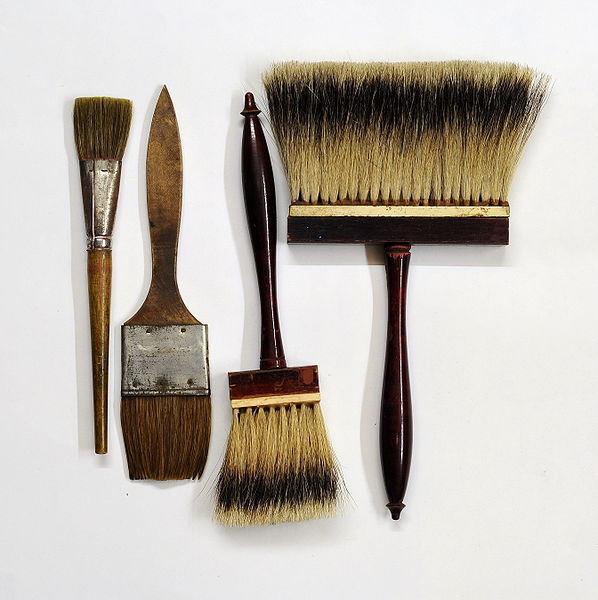
    Paintbrushes: Not intended for dainty girl hands. (Image by Hans Bernhard.)

    It was in Brooklyn, New York, in November of 1900 that one of the most unimportant victories in the history of the women’s rights movement was won. Seriously, some lady wanted her house to be painted and her husband was really busy, so she did it herself. And everyone apparently went a little nuts because a woman dared to commit the shocking act of painting a house! People have always been terrible.

    An excerpt from a story about the so-called scandal, which ran in the Brooklyn Daily Eagle and is subtitled, “This Woman Doesn’t Propose to Pay a Man for Drinking Beer”:

    “Mrs. Charles W. Hollister, who is the wife of a carpenter well known in East New York, and who is the mother of an interesting family of children, is painting her own house at 113 Sheppard avenue. She says:

    ‘The painters all demand too much money for the work and they use inferior paint. My husband did not have time to do the work so I made up my mind to do it myself and don’t think it’s anybody’s business but my own.

    ‘I know all the neighbors are talking about me and men make remarks as they pass by that are not nice. I pay no attention to them. I don’t care to have a man around here with a pipe in his mouth, drinking beer half the time and his boss charging me for it. The whole matter is that I want the house painted to suit myself so I do the work.'”

    More Old Print Articles:

    Tags:

    « Older entries § Newer entries »