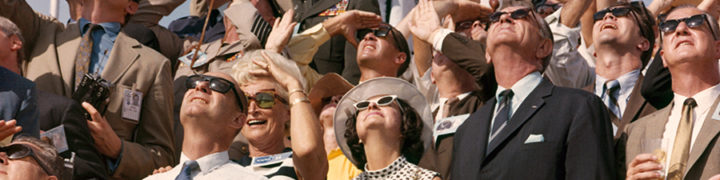
Short old-school movie about the Houston Astrodome, the world’s first roofed, air-conditioned stadium, which opened in 1965. Even back then, there were luxury suites. Audio is patchy.
You are currently browsing the archive for the Urban Studies category.
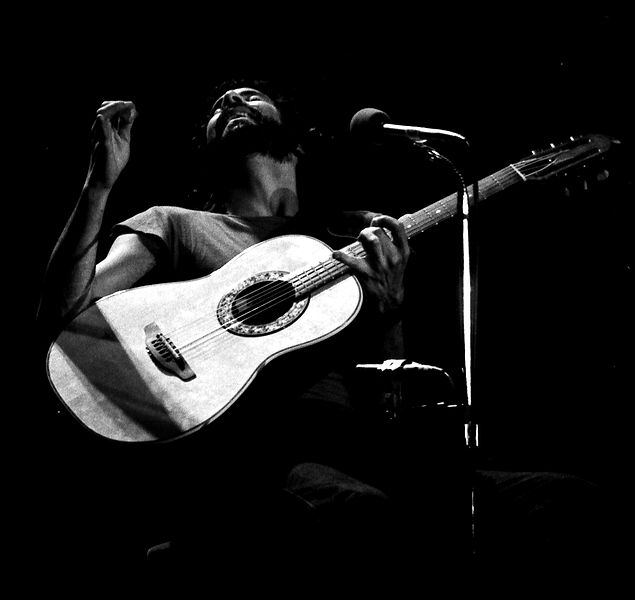

"Who is The Foreigner? Is it a guru? A person?" (Image by William McElligott.)
Before religious conversion, a name change, disgraceful comments about the fatwa declaring death to Salman Rushdie, a no-fly list with his new name (Yusuf Islam) on it and a couple of libel lawsuits, Cat Stevens was a wildly popular yet skittish rock star whose work suggested a burgeoning spirituality but could not predict the many permutations ahead. In 1973, as he was releasing his album Foreigner, Stevens was profiled by Paul Gambaccini in Rolling Stone. An excerpt:
“Stevens is a person who obeys his instincts. He went to Jamaica to record Foreigner not so much for studio facilities as ‘for sunshine. I couldn’t get it in England, and I didn’t want to go to America.’ He didn’t work with longtime producer Paul Samwell-Smith because, ‘I wanted an immediate feel to it. He is a great producer, but he is very clean, if a note is wrong he wants to fix it up. This time I wanted to do a certain part, I wanted to just play it, and let it be.’
Veteran musician Phil Upchurch was selected to play because, ‘I was listening to the radio and this long track was playing and it was just getting better and better and I wanted it to end so I could see who it was by and yet it just kept getting better. They said it was Phil Upchurch and I went out and bought an album. I knew from that that he was right to work with.’
‘Foreigner Suite,’ he said, was not a pre-planned opus. ‘It happened. I wrote fragments that came together and as they did I said, what’s happening here? And it turned out to be what I now consider to be not the many parts, but one song.
The only thing left to do was to title the work. Although the word never appears in the suite, ‘foreigner’ was chosen, because: ‘We’re all foreigners. Say to a foreigner that he’s a foreigner and he’ll say you’re a foreigner! We’re all foreigners here, in a wider sense. One hundred years from now I won’t be here, there’ll be nothing left of me, but the earth will still exist. People ask me, ‘Who is The Foreigner? Is it a guru? A person?’ It’s wider than any single person.”
••••••••••
The complete 18-minute “Foreigner Suite,” 1973:
“I’d try to phone Ayatollah Khomeini and tell him exactly where this man is”:
Tags: Cat Stevens, Paul Gambaccini, Yusuf Islam

From “Not Worth Nicking,” a new article in the Economist about the evolving taste of U.K. thieves, who, unsurprisingly, shun old-school media goods in favor of portable computing products:
“Indeed, thefts of entertainment products like CDs and DVDs have collapsed in England and Wales, to the point that they are now taken in just 7% of all burglaries in which something is stolen (see chart). They are now targeted no more frequently than are toiletries and cigarettes
The reason is the falling value of physical media products. The average price of a CD album in Britain fell from £10.77 to £7.32 between 2001 and 2010, according to the BPI, a trade group—almost a halving, in real terms. And the dishonest get their music and films free, via the internet. DVDs are under pressure not just from piracy but also from video-on-demand services.
Computers, on the other hand, are both valuable and increasingly portable: they are now taken more commonly than anything except purses and wallets.”
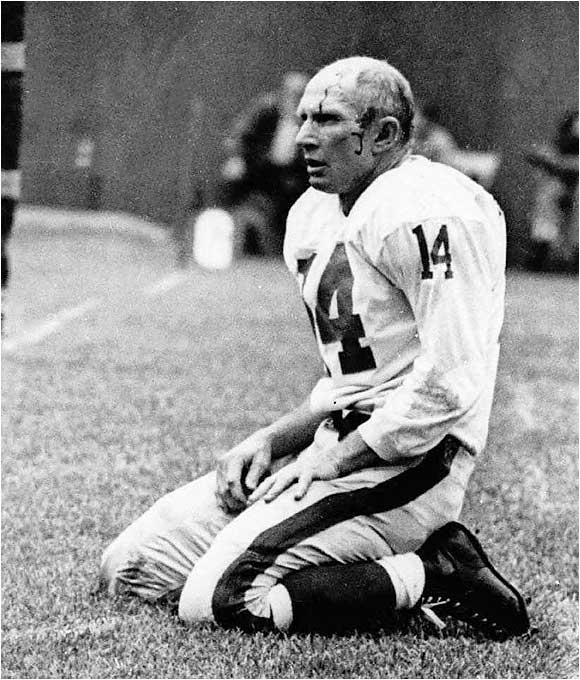
The opening of “The Fragile Teenage Brain,” neuroscientist Jonah Lehrer’s devastating Grantland examination of football’s concussion problem, a plague not only on the NFL but also on high schoolers playing under the lights on Friday nights:
“If the sport of football ever dies, it will die from the outside in. It won’t be undone by a labor lockout or a broken business model — football owners know how to make money. Instead, the death will start with those furthest from the paychecks, the unpaid high school athletes playing on Friday nights. It will begin with nervous parents reading about brain trauma, with doctors warning about the physics of soft tissue smashing into hard bone, with coaches forced to bench stars for an entire season because of a single concussion. The stadiums will still be full on Sunday, the professionals will still play, the profits will continue. But the sport will be sick.
The sickness will be rooted in football’s tragic flaw, which is that it inflicts concussions on its players with devastating frequency.”
••••••••••
Colt McCoy gets concussion, returns to game two plays later:
Tags: Jonah Lehrer
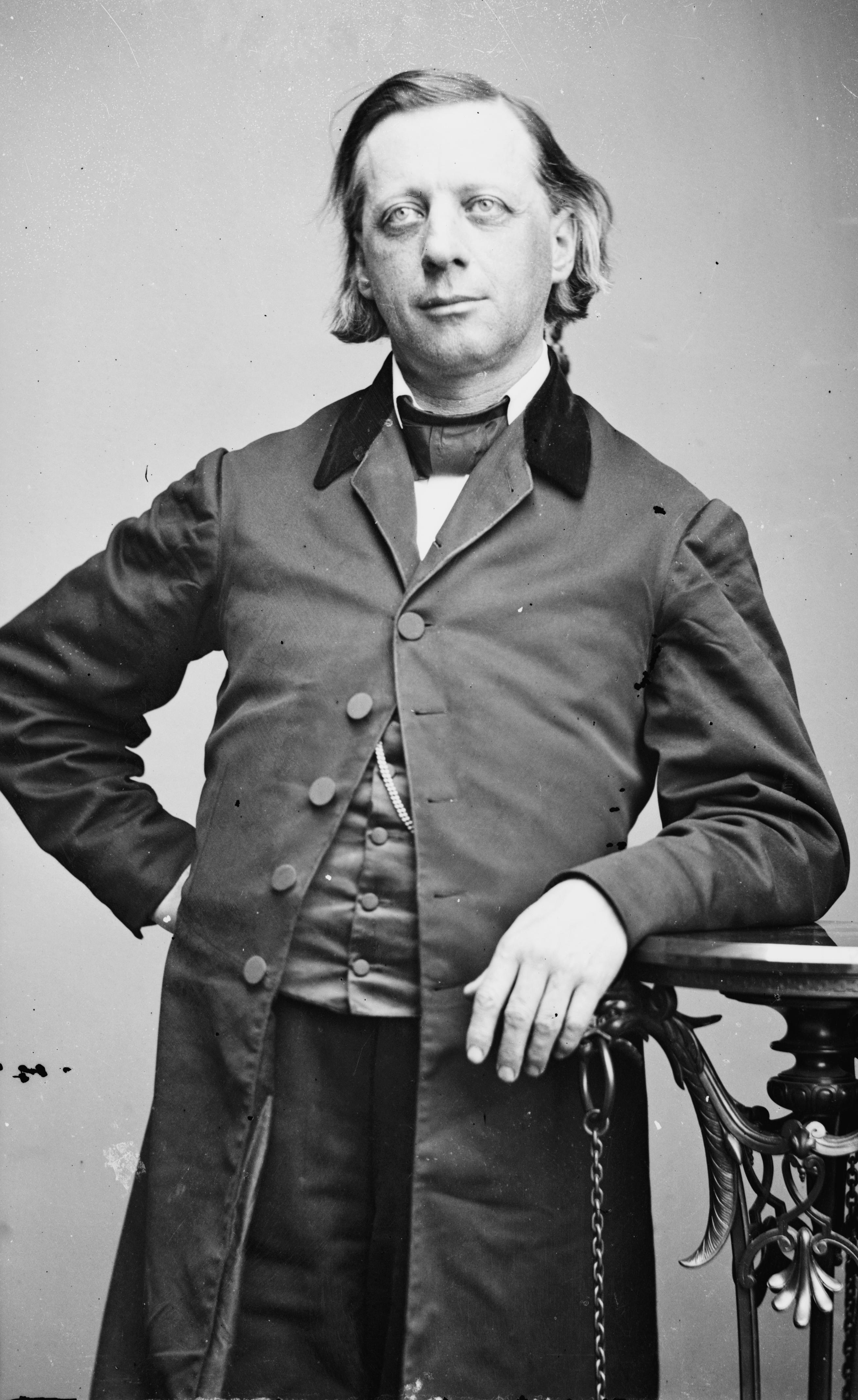
This classic photograph of preacher, politician and fervent abolitionist Henry Ward Beecher was taken at some point between 1855 and 1865 by Mathew Brady’s studio. From an eyewitness account in the New York Times of a speech Ward delivered in Charleston, South Carolina, on April 17, 1865, less than three months after the 13th Amendment outlawed slavery, as countless former slaves who had been sold and sold again tried to reunite with family:
“Feeling was accumulating in the audience, and began to be heard in the low moaning and response, like the sound of the waves upon a distant shore; but when he spoke directly to the blacks before him, of their sufferings in the days gone by, and now of their release; of the loss of their children and of the return of so many, and exhorted them since God had done so much for them to wait with faith and patience for the remainder, and assured them that the morning was on the mountains and the day was at hand, they broke out all over the house in low ejaculations of praise and of thanksgiving. The day was at hand, and they saw it; and the suppressed tone was that of men who could not restrain their joy for the vision. There was no loud shouting, nothing boisterous; it was simply the overflow of deep feeling that could not be restrained. If any of you have open sins, he said, abandon them. If any harbor revenge, rid yourselves of it. I hear good things of you; do better. Mothers in Israel, I expect to hear still more worthy things of you. Fathers, I expect to hear of you counseling better things than ever before. Young men, I expect to hear that you are more virtuous and manly than those that have gone before you.
Many of you old saints will only look over into the promised land, and see it afar off, but your children will enter in. Israel is going to be free. [Cries of ‘Bless de Lord,’ ‘We believe it,’ and one voice near me broke out into a clear hearty laugh of joy.] Intelligence is coming, liberty is coming, virtue is coming.
It is not my joy that this family is down or that one, but this is my joy, that Charleston is free, and every man guiltless of crime can walk her streets unmolested. That our nation marked out for so great things is free. And brethren, consecrate yourselves to the service of Christ, live nobler lives. Bear the cross, it is not for a great white. Some of you are almost down to the river, and it is not half as deep as you think it is. They wait for you on the other shore; you that have showed kindness to the poor white prisoners; you that have borne stripes for it; your reward is waiting you on the further shore.
Sobs and ejaculations of praise swelled through the church.”
Tags: Henry Ward Beecher, Mathew Brady
Playing the 3-D first-person shooter game, Maze War, on the Xerox Alto, the trailblazing 1970s networked computer that influenced young Steve Jobs.
Tags: Steve Jobs
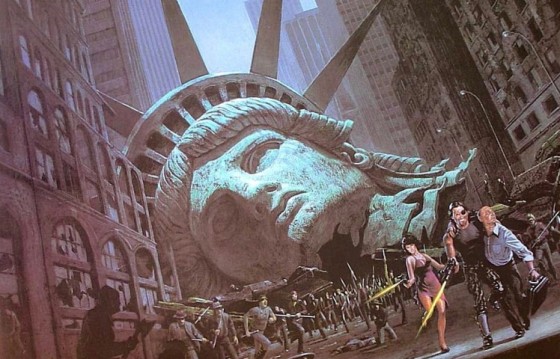
The Year 2017 (Nuclear Winter Wasteland)
Well it’s year 2017. A bomb goes off in Times Square. It’s not a real nuclear bomb as we have created but a dirty bomb. There is enough radiation to evacuate NYC and the surrounding 50 miles of the blast zone. The stock market crashes. People kill each other just to flee the city. Food and water are contaminated. Can’t even eat the dog and cat stew so popular in 2012. Think this can’t happen. Sure it can.

I have a neurological disorder that makes it difficult for me to recognize faces out of context, even of people I know well. The average brain, however, is wired to do a pretty remarkable job at such a task–but how? The opening of “How the Brain Spots Faces,” a post by Mark Brown at Wired UK that reports on MIT face-recognition experiments:
“Our brains are made to find faces. In fact, they’re so good at picking out human-like mugs we sometimes see them in a jumble of rocks, a bilious cloud of volcanic ash or some craters on the Moon.
But another amazing thing about our brain is that we’re never actually fooled into thinking it’s a real person looking back at us. We might do a second take, but most normal brains can tell the difference between a man and the Moon.
Neuroscientists from the Massachusetts Institute of Technology wanted to investigate how the brain decides exactly what is and is not a face. Earlier studies have shown that the fusiform gyrus, located on the brain’s underside, responds to face-like shapes — but how does it sort flesh from rock?”
••••••••••
A parade of faces from “Cry,” Godley & Creme, 1985:
Tags: Mark Brown
Wow. Original Beatles manager Brian Epstein on What’s My Line? in 1964. Host John Daly mistakenly identifies him as “Barry.” Epstein was allegedly the inspiration for Baby, You’re a Rich Man, the song used so effectively at the conclusion of The Social Network.
“How does it feel to be one of the beautiful people?”:
Tags: Brian Epstein, The Beatles

I blogged before about Mike Daisey’s one-man show, The Agony and the Ecstasy of Steve Jobs, about Apple’s factories in Shenzhen, China, and the horrible work conditions that make possible our amazing and inexpensive consumer electronics. Daisey shares a generous portion of his performance on an episode of This American Life. (Embedding isn’t working for me; go here to listen.)
But is the existence of a terrible sweatshop still a positive step in impoverished corners of the globe? Listen to the provocative post-performance analysis by Ira Glass and company.
Tags: Mike Daisey
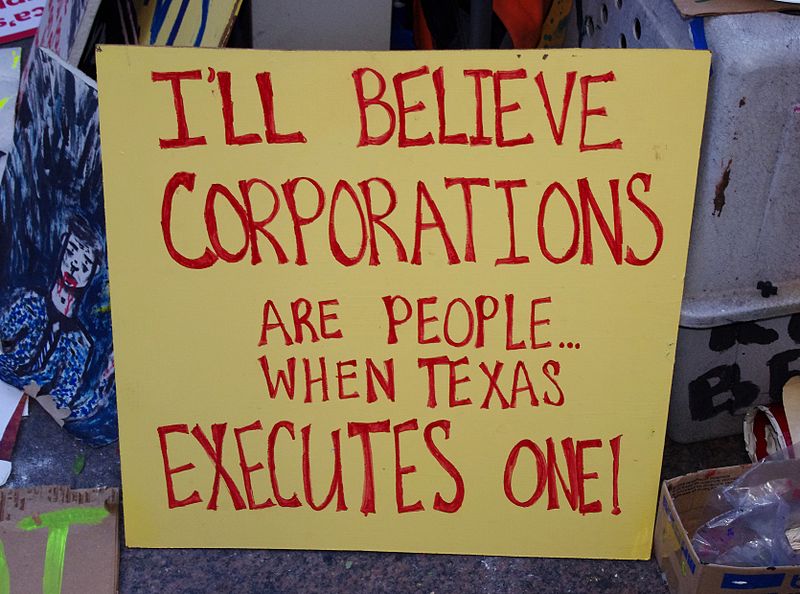
Occupy Wall Street, Day 21. (Image by David Shankbone.)
From a smart oral history about the Occupy Wall Street movement, via Max Chafkin at Vanity Fair:
“CHELSEA ELLIOTT
Freelance graphic designer
I’d gone there the first week, and I was telling my friends about it: ‘Oh, there’s this great march on Saturday. Marches are so fun. We dance, and there’s music, and we laugh the whole time.’ I mean, parts of it were like that, but it was huge and there was chaos.
RAYMOND W. KELLY
New York City police commissioner
You need a permit to have a parade—that’s 50 or more people. In our minds, if you’re not having an actual parade, we’ll let you walk on the sidewalk. But on Saturday in Union Square Park, they decided to violate the tacit understanding that they would stay on the sidewalk. It was at University Place where they ran down the street and started blocking traffic. I happened to be in the area that day and I actually saw people doing this. That’s where the first large number of arrests took place.
CHELSEA ELLIOTT
I was on the sidewalk at 12th Street and University, and this group of cops stood in front of me and said, ‘You can’t go past here.’ There was this girl behind me who was getting upset, screaming ‘Fascists.’ A cop came and slammed her down on the ground and dragged her by her hair. I just started screaming. Then another officer walked over and pepper-sprayed us. It took a few seconds to actually feel it. I was like, ‘What happened? Why am I wet?’ And then all of a sudden it hurts to open your eyes and you can’t really breathe. It’s this horrible burning all over your face.
Elliott was never arrested. She fell to the ground and was attended by volunteer medics. The officer who sprayed her was later identified by Anonymous as Deputy Inspector Anthony Bologna. A Police Department review found that he had broken protocol and docked him 10 vacation days as punishment.
CHELSEA ELLIOTT
I walked back to the park. I talked to some of the people I knew, and they were like, ‘Yeah, there’s already a video online.’
VLAD TEICHBERG
Former derivatives trader; co-founder, Global Revolution
When the pepper-spray video came out, that was the hook. That’s what made people focus on [Occupy Wall Street]. The video showed that we weren’t just a bunch of quote-unquote anarchists. It showed our humanity.”
•••••••••••
Tags: Chelsea Elliott, Max Chafkin, Raymond Kelly, Vlad Teichberg
That amazing 1970s Schaefer Beer commercial featuring a Moog synthesizer reminded me of this 1969 Tomorrow’s World segment introducing Robert Moog’s great contribution to music.
Tags: Robert Moog
Performance artist Momoyou Torimitsu–she’s wearing the nurse’s uniform–commenting on the rigidity of corporate culture.
Tags: Momoyou Torimitsu
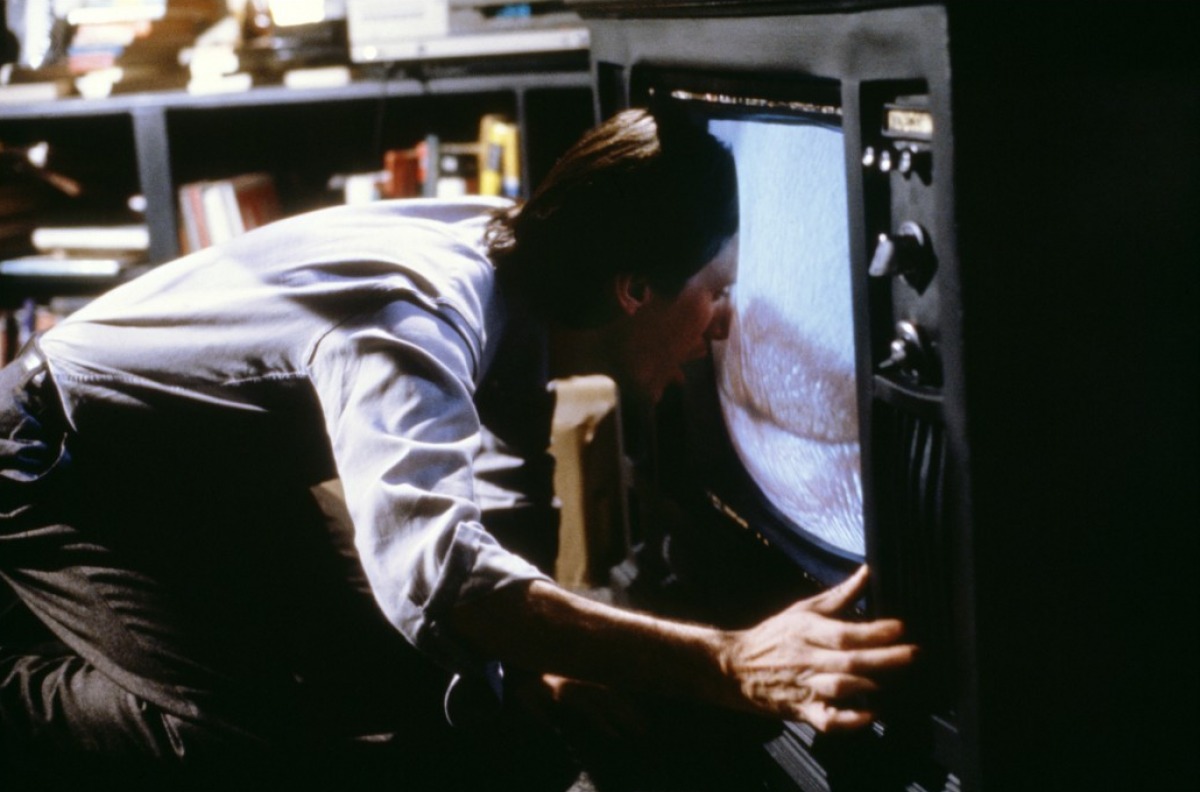
On the Inevitable Thoughts blog, Colin Vanderbilt argues that everything we fear from the rise of the machines is already here:
“Our society has become awe-inspiring because of the technology we created and used, but there was a cost. We are now dependent on it. Our planet is the Tower of Babylon, and every single support beam is a piece of technology. Our tower will continue to get higher every year as everything gets ‘better’ and ‘progress’ continues, but let’s consider why we are convinced that we must build our technological tower higher?
Technology kills hundreds of thousands of people every year (cars, guns, industrial working conditions), it causes upwards of 50,000 species a year to go extinct, it poisons our drinking water and our bodies every day, it cuts down 13 million hectacres of forest every year, and all this without any kind of artificially intelligent robots. Everything that we could possibly fear that robots will do when they rule the planet is already happening.”
Tags: Colin Vanderbilt
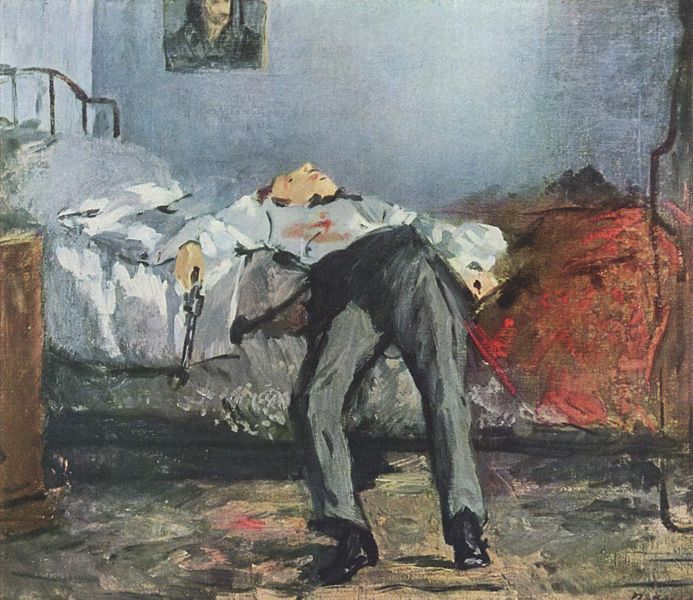
"He was discovered by a servant and medical aid was summoned, but he died two hours later." (Image by Edouard Manet.)
Marriage doesn’t agree with everyone. Such was the case with plutocrat Nicholas C. Creede who preferred a massive dose of morphine to matrimony, as evidenced by an article from the August 17, 1897 issue of the Brooklyn Daily Eagle. An excerpt:
“Los Angeles, Cal.–Nicholas C. Creede, millionaire mine owner, after which the town of Creede, Col., is named, committed suicide with morphine last evening at his home in this city, because his wife, from whom he had separated, insisted upon renewing their married relations.
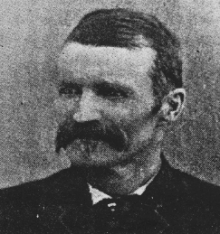 On January 4 last, Creede and his wife separated and agreed to dissolve at once, so far as possible without legal process, their marital bonds. Mrs. Creede accepted $20,000 cash and surrendered all further claims upon her husband, at the time voluntarily withdrawing from his premises. It was understood, after the necessary time had elapsed, that Creede would institute legal proceedings and begin suit for absolute divorce. At that time it appeared that both husband and wife were well satisfied, and while Mrs. Creede considered that the amount of cash settled upon her was insignificant as compared with her husband’s wealth, she left him and took up her home in Alabama.
About three weeks ago Mrs. Creede returned to Los Angeles and proposed to her husband a reconciliation. This was much to Creede’s distaste and he endeavored to avoid his wife, but being unsuccessful, he determined to end his life. Last evening he took a large dose of morphine and went into the garden to die. He was discovered by a servant and medical aid was summoned, but he died two hours later. Mrs. Creede was notified of her husband’s death, but declined to discuss the tragedy. The 2-year-old child of Edith Walters Walker, the actress, adopted by Creede over a years ago, is in the care of his friends at Escondido.”
on my nerves
Is it just me but ever since I’ve started yoga again my bitter side is really coming out…inner peace where r u?
The great Memphis photographer William Eggleston was at the vanguard of color photos as a legitimate aesthetic. An inveterate drinker who somehow functions at a very high level, he’s appropriately on display in the Cat Power video, Lived in Bars. Eggleston can be seen most clearly at the 2:14 mark when he gives the singer a kiss on the side of the head.
Tags: Cat Power, Chan Marshall, William Eggleston
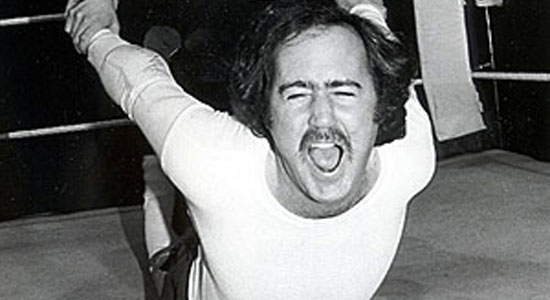
Never knew that Laurie Anderson was a running partner–and wrestling partner–of Andy Kaufman back in the day, until I read this passage from a Believer Q&A conducted by Amanda Stern:
“BLVR:
Did he talk about why he was doing what he was doing?
Laurie Anderson:
He didn’t have to. The hardest part was wrestling with him, because he would be doing these club shows where he was very abusive to women, very abusive: ‘Those broads think they are… Who do they think they are?’ You know, ‘I will not respect a woman until she comes up here and wrestles me down,’ and that was my cue to come up there and wrestle him down, and I’m like on my third whiskey—I don’t usually drink, but trying to get up the nerve—and he would fight, and he wasn’t pretending. He’d twist my arm.
BLVR:
Did you ever get really hurt?
Laurie Anderson:
No, he wouldn’t break my arm, but he would really twist it around, and I fought back. It was definitely not pretend-wrestling. He wasn’t acting, and neither was I, but at the same time it was a game. There are plenty of ways you can play the game of fighting and really seem to be fighting without going for the jugular. Anyway, he was just curious about taboos. To be playing bongos and sobbing—I mean, everyone in the club is looking at that and going, ‘My god, this is so embarrassing.’ You’re not supposed to cry while you sing or play. That’s our job as the audience. We get to have a tear roll quietly down our cheeks, but not the performer.”
______________________
Andy was Intergender Wrestling Champion, back when that title still meant something:
Laurie looked at the viral nature of language in 1984, before all communication went in that direction:
Tags: Amanada Stern, Andy Kaufman, Laurie Anderson
Consumer electronics begin shrinking in earnest, 1985.
Another moral failing in the recent history of the Catholic Church came in response to the death sentence imposed on Salman Rushdie by Ayatollah Khomeini after the publication of The Satanic Verses. From a 1989 New York Times piece by Michael T. Kaufman:
“In the United States, 17 Roman Catholic writers, including William Kennedy, Maureen Howard, Garry Wills and the Rev. Andrew Greeley, wrote a letter critical of statements by John Cardinal O’Connor, the Archbishop of New York. The letter noted the statement Sunday by the Cardinal in which he said that he would not read the book but that he proclaimed ‘his sympathy for the aggrieved position’ of Muslims.
The Catholic writers said they ‘deplore the moral insensitivity to the plight of Mr. Rushdie and an ecumenical zeal that would appear to support repression.’
Gara LaMarche, the head of the freedom-to-write program of American PEN, an international writers’ group, acknowledged that ‘for a short period of time immediately after the death threat there was a great deal of discussion about what was the best way to help Salman Rushdie.’ He said that this may have ‘given an impression of reluctance,’ but he added that in recent days writers have been calling from all over the world to offer their help with petitions and readings.”
••••••••••
Christopher Hitchens addresses the non-defense of Rushdie, 1989:
Tags: John Cardinal O'Connor, Michael T. Kaufman, Salman Rushdie
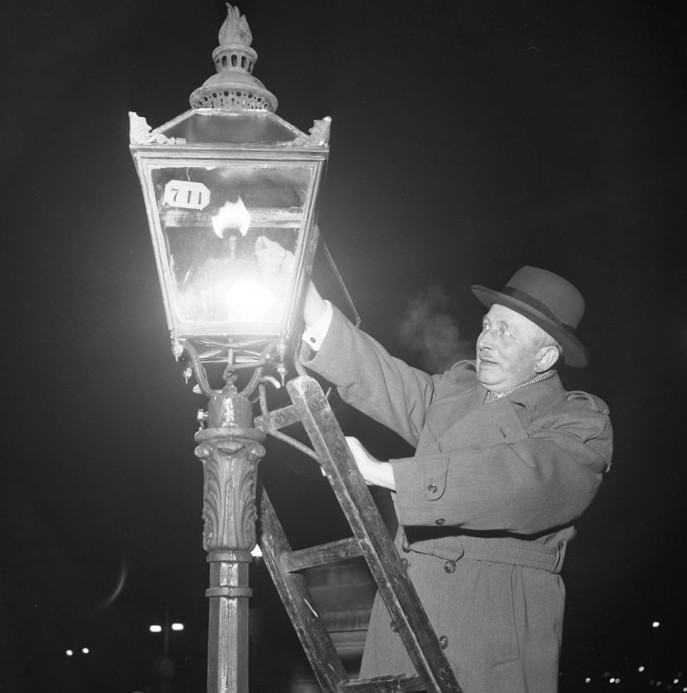
The electric street lamp, a beacon of modernization, is disappearing across America due to the flagging economy. A. Roger Ekirch looks at a darker reality in an Opinion section piece in the New York Times. An excerpt:
“Leaving the hyperbole aside, artificial illumination has arguably been the greatest symbol of modern progress. By making nighttime infinitely more inviting, street lighting — gas lamps beginning in the early 1800s followed by electric lights toward the end of the century — drastically expanded the boundaries of everyday life to include hours once shrouded in darkness. Today, any number of metropolitan areas in the United States and abroad, bathed in the glare of neon and mercury vapor, bill themselves as 24-hour cities, open both for business and pleasure.
So it is all the more remarkable that, in what appears to be a spreading trend, dozens of cities and towns across America — from California and Oregon to Maine — are contemplating significantly reducing the number of street lamps to lower their hefty electric bills. In some communities, utility companies have already torn posts from the ground. Faced with several million dollars in unpaid bills, Highland Park, Mich., has lost two-thirds of its lamps, whereas officials in Rockford, Ill., have extinguished as many as 2,300, or 16 percent of all the city’s streetlights.”
Tags: A. Roger Ekirch
A 1917 clip of pioneer and entertainer Buffalo Bill Cody, with his unusual handshake. He realized early on that the Old West could be commodified.
Tags: Buffalo Bill Cody
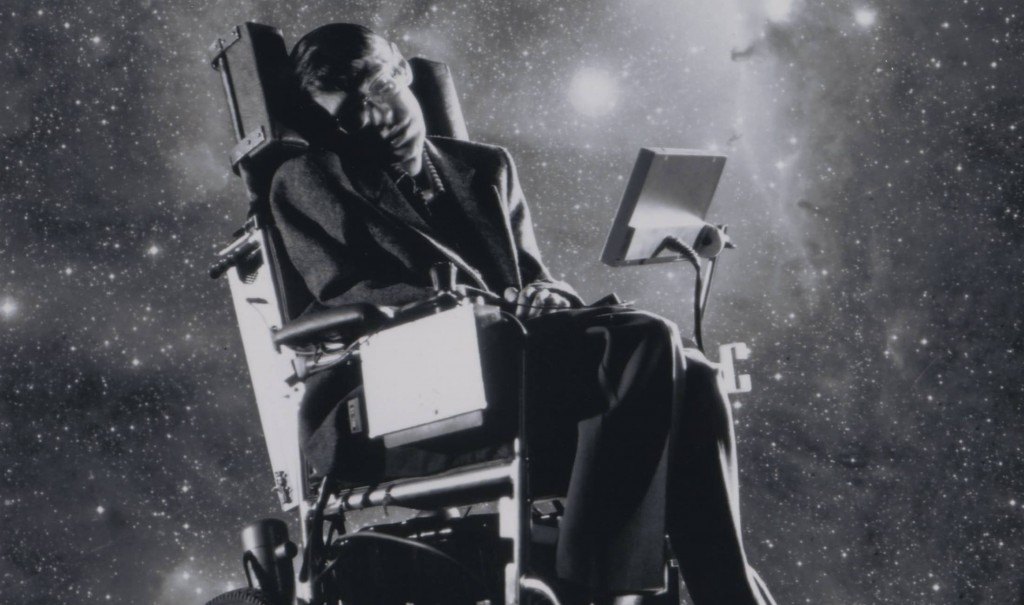
"It wouldn't be Stephen's voice any more" (Image by Errol Morris.)
From “The Man Who Saves Stephen Hawking’s Voice,” a New Scientist Q&A conducted by Catherine de Lange with the phsyicist’s personal technician, Sam Blackburn, who is soon leaving his post:
“Stephen’s voice is very distinctive, but you say there might be a problem retaining it?
I guess the most interesting thing in my office is a little grey box, which contains the only copy we have of Stephen’s hardware voice synthesiser. The card inside dates back to the 1980s and this particular one contains Stephen’s voice. There’s a processor on it which has a unique program that turns text into speech that sounds like Stephen’s, and we have only two of these cards. The company that made them went bankrupt and nobody knows how it works any more. I am trying to reverse engineer it, which is quite tricky.
Can’t you update it with a new synthesiser?
No. It has to sound exactly the same. The voice is one of the unique things that defines Stephen in my opinion. He could easily change to a voice that was clearer, perhaps more soothing to listen to – less robotic sounding – but it wouldn’t be Stephen’s voice any more.”
••••••••••
“Which came first, the chicken or the egg?”:
Tags: Catherine de Lange, Errol Morris, Sam Blackburn, Stephen Hawking
"I need $5000."
SPERM DONOR – $3500 (NY)
I’M A MEN 35 YEARS OLD,FATHER OF 2, I’M DONATION MY SPERM FOR SOME ONE THAT’S REALLY NEED,,,,,,,I’M HEALTH ,DRUGS FREE ,SMOKE FREE,,,,,,,,,,,
I’M WILL DONATING BECAUSE I NEED $5000,IF YOU WANT MORE INFO CONTACT ME ASAP,THANKS,,,,,
SERIOUS PEOPLE ONLY << >>

This is tremendous. During the 1970s, at the height of prog rock popularity, Schaefer Beer had multitalented musician Edd Kalehoff make a commercial in which he played the company’s jingle on a Moog synthesizer. Kalehoff is a legend in the TV biz, having created the cues for The Price Is Right and the Monday Night Football theme song. But here he rocked at his most progressive.
Tags: Edd Kalehoff