Urban Studies

You are currently browsing the archive for the Urban Studies category.

The opening of “The Greatest Running Shoe Never Sold,” Bob Parks’ new Businessweek article about a lone inventor trying to partner with a mega-corporation:

“Late one night in August 1997, 54-year-old inventor Lenn Rockford Hann placed two bottles of Gatorade near Concourse F of Chicago O’Hare International Airport, unlaced his sneakers, removed his socks, then dodged curious maintenance workers for two hours while running 13.1 miles on the walkways. His pace surprised him. He was convinced the springy, resilient surface was almost perfect. ‘My legs felt amazing,’ says Hann, a marathoner. ‘I’ve been chasing a shoe that feels that good ever since.’

For years, Hann had been designing a running shoe that he hoped would give him an edge. After his airport run (in the days of lighter security, naturally), he knew he was on to something, and he became obsessed with O’Hare’s movable sidewalks. Finding a walkway in the midst of repair on a subsequent jog, he jumped into the pit to look at its clockworks. There he found rollers on each side, with nothing holding people up in the middle but the belt’s tension. The next day, Hann called the belt company, Dunlop Conveyer Belting, and learned they were adjusted to 2,500 foot-pounds of force to create the right balance.

Athletic brands spend millions every year trying to build a better sneaker that will propel them to the front of the $6.3 billion running shoe business, one of the biggest and most visible areas of sporting goods, with 11 percent growth in 2011, according to industry analyst SportsOneSource. Nearly all sneakers have a sole that looks like lasagna, composed of layers of rubber, foam, and plastic. The fluffy foam is made from ethylene-vinyl acetate, or EVA, which has its critics: EVA adds weight to shoes, and lab tests show it requires more energy per stride. Running shoe companies have long sought an EVA substitute that absorbs shock but also returns more energy. ‘Consumers like the cushioned feeling associated with a conventional running shoe,’ says Darren Stefanyshyn, a University of Calgary researcher and former chairperson of the Footwear Biomechanics Group. ‘If you could provide that without using foam, you’d have a winner.’

It took him eleven years, but Hann finally converted his airport research into a breakthrough sneaker patented in 2008, a shoe with an entirely different system to cushion and propel the foot. It quickly attracted the attention of fast-growing athletic brand Under Armour (UA), which spent two years and hundreds of thousands of dollars to develop it as the prospective centerpiece of the company’s first line of footwear. Hann’s shoe was scheduled to launch early this year and was poised to rock the footwear industry, but it never quite made it to market.”
Tags: , ,

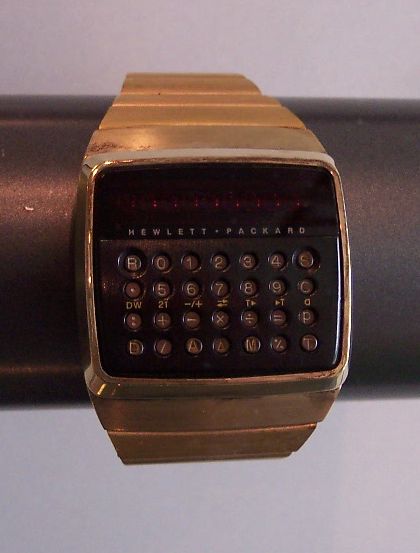
In 1977, Hewlett-Packard introduced the original wristwatch-calculator combo, which was the first commercially available wearable computer. The 01 Wrist Instrument didn’t just provide a variety of functions–calculator, stopwatch, 200-year calendar, among them–it also allowed for the interaction of these functions. Portable tools have grown exponentially more sophisticated in the subsequent 35 years, but our general use of them seems to have remained simple and largely uninspired. Have the numbers we carry in our pockets shrunk so much that we’ve forgotten their value? Is the meaning reduced to so much lint? From the Hewlett-Packard Journal, December 1977:

“The concept of a combined wristwatch and calculator is a natural outgrowth of today’s digital watch and pocket calculator technologies. However, merely putting these two functions into one small case does not add significantly to the capabilities already available to the consumer. Only when the time and computation functions are allowed to interact freely can the full potential of the combination be realized and significant new capabilities be made available.

It is this interaction, along with state-of-the-art watch and calculator technologies, that provide the wearer of the HP-01 Wrist Instrument with the information that was previously unavailable, and makes the HP-01, after a brief experience with it, more difficult to do without than it might at first appear.”

••••••••••

Hologram of HP-01 Wrist Instrument:

How can you have stunning science fiction when science itself is so stunning? From “Superstuff: When Quantam Goes Big,” a Michael Brooks article at New Scientist:

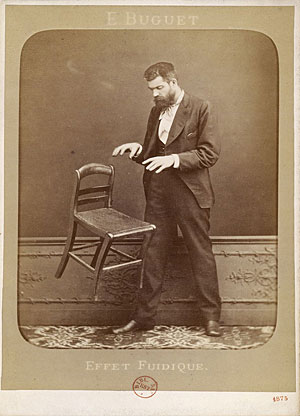
“FOR centuries, con artists have convinced the masses that it is possible to defy gravity or walk through walls. Victorian audiences gasped at tricks of levitation involving crinolined ladies hovering over tables. Even before then, fraudsters and deluded inventors were proudly displaying perpetual-motion machines that could do impossible things, such as make liquids flow uphill without consuming energy. Today, magicians still make solid rings pass through each other and become interlinked – or so it appears. But these are all cheap tricks compared with what the real world has to offer.

Cool a piece of metal or a bucket of helium to near absolute zero and, in the right conditions, you will see the metal levitating above a magnet, liquid helium flowing up the walls of its container or solids passing through each other. ‘We love to observe these phenomena in the lab,’ says Ed Hinds of Imperial College, London.

This weirdness is not mere entertainment, though. From these strange phenomena we can tease out all of chemistry and biology, find deliverance from our energy crisis and perhaps even unveil the ultimate nature of the universe. Welcome to the world of superstuff.” (Thanks Browser.)

••••••••••

It’s only a trick, for now–1900:

Tags: ,

Clint Eastwood interviewed in 1974 in New Orleans for Canadian TV. Eastwood has, of course, usurped much of his own violent, macho image in late-career work, but he remains a staunch conservative politically, recently extolling the virtues of Herman Cain.

Tags:

From “The Hacker Is Watching,” David Kushner’s new GQ piece about the unlikely culprit behind a creepy new wave of computer hacking, which exploits the omnipresence of cameras, among other things:

“The more ubiquitous cameras become, the less we’re aware they’re even there. They stare out at us blankly from our phones and laptops, our Xboxes and iPads, a billion eyes and ears just waiting to be turned on. But what if they were switched on—by someone else—when you least expected it? How would you feel, how would you behave, if the devices that surround your life were suddenly turned against you?

It’s a question that James Kelly and his girlfriend, Amy Wright, never thought they’d have to entertain. But one instant message changed everything. Amy, a 20-year-old brunette at the University of California at Irvine, was on her laptop when she got an IM from a random guy nicknamed mistahxxxrightme, asking her for webcam sex. Out of the blue, like that. Amy told the guy off, but he IM’d again, saying he knew all about her, and to prove it he started describing her dorm room, the color of her walls, the pattern on her sheets, the pictures on her walls. ‘You have a pink vibrator,’ he said. It was like Amy’d slipped into a stalker movie. Then he sent her an image file. Amy watched in horror as the picture materialized on the screen: a shot of her in that very room, naked on the bed, having webcam sex with James.

Mistah X wasn’t done. The hacker fired off a note to James’s ex-girlfriend Carla Gagnon: ‘nice video I hope you still remember this if you want to chat and find out before I put it online hit me up.’ Attached was a video still of her in the nude. Then the hacker contacted James directly, boasting that he had control of his computer, and it became clear this wasn’t about sex: He was toying with them. As Mistah X taunted James, his IMs filling the screen, James called Amy: He had the creep online. What should he do? They talked about calling the cops, but no sooner had James said the words than the hacker reprimanded him. ‘I know you’re talking to each other right now!’ he wrote. James’s throat constricted; how did the stalker know what he was saying? Did he bug his room?

They were powerless. Amy decided to call the cops herself. But the instant she phoned the dispatcher, a message chimed on her screen. It was from the hacker. ‘I know you just called the police,’ he wrote. She panicked. How could he possibly know? She ran into her bathroom and slammed the door behind her. As she pleaded for the police to come quickly, she reached into the shower and cranked the water all the way up, hoping the hacker couldn’t hear her.”

Tags:

The opening of “Love, Boxing, and Hunter S. Thompson,” screenwriter John Kaye’s raucous Los Angeles Review of Books essay:

HUNTER AND INGA: 1978

The third (and last) time I went to New Orleans was in September of 1978. I was living in Marin County, and I took the red-eye out of San Francisco, flying on a first-class ticket paid for by Universal Pictures, the studio that was financing the movie I was contracted to write. The story was to be loosely based on an article written by Hunter Thompson that had been recently published in Rolling Stone magazine. Titled ‘The Banshee Screams for Buffalo Meat,’ the 30,000-word piece detailed many of the (supposedly) true-life adventures Hunter had experienced with Oscar Zeta Acosta, the radical Chicano lawyer who he’d earlier canonized in Fear and Loathing in Las Vegas.

Hunter and I were in New Orleans to attend the hugely anticipated rematch between Muhammad Ali and Leon Spinks, the former Olympic champion who, after only seven fights, had defeated Ali in February. The plan was to meet up at the Fairmont, a once-elegant hotel that was located in the center of the business district and within walking distance of the historic French Quarter. Although Hunter was not in his room when I arrived, he’d instructed the hotel management to watch for me and make sure I was treated with great respect.

‘I was told by Mister Thompson to mark you down as a VIP, that you were on a mission of considerable importance,’ said Inga, the head of guest services, as we rode the elevator up to my floor. ‘Since he was dressed quite eccentrically, in shorts and a Hawaiian shirt, I assumed he was pulling my leg. The bellman who fetched his bags said he was a famous writer. Are you a writer also?’ I told her I wrote movies. ‘Are you famous?’

‘No.’

‘Do you have any cocaine?’

I stared at her. Her smile was odd, both reassuring and intensely hopeful. In the cartoon balloon I saw over her head were the words: I’m yours if you do. ‘Yes, I do.’

‘That is good.'”

••••••••••

The late-career Ali regains the title yet again:

Tags: ,

A couple of interesting bits from “Big, Bigger, Best,” Nick Summers’ new Daily Beast article about ESPN, that sports-programming behemoth.

••••••••••

“With revenue of $8.5 billion last year, ESPN has become the principal cash spigot of the Walt Disney Co., the network’s 80 percent parent. To the largest entertainment corporation on earth, the backwater of Bristol has become more important than Disney World and Disneyland combined.”

••••••••••

““ESPN, through … sheer muscle, has been able to say to us, ‘You will carry this service on the lowest level subscription you offer, and you will make all of them pay for it,’ says Matt Polka, CEO of the American Cable Association, a trade group. ‘My next-door neighbor is 74, a widow. She says to me, ‘Why do I have to get all that sports programming?’ She has no idea that in the course of a year, for just ESPN and ESPN2, she is sending a check to Disney for about $70. She would be apoplectic if she knew … Ultimately, there’s going to be a revolt over the cost. Or policymakers will get involved, because the costs of these things are so out of line with cost of living that someone’s going to put up a stop sign.'”

••••••••••

The first SportsCenter, 1979, hosted by Lee Leonard:

Tags: ,

The sometimes maddening and always provocative film critic Pauline Kael dishing on Cecil B. DeMille and others in 1982. She is still missed.

Tags: ,

"If he closes in on me, I'm going to key him in his face." (Image by Francinegirvan@Wikipedia.)

DUMB Dad (nyc)

so here I am walking on a side street shclepping my 2 Trader Joe bags when dad and his kid come up the block in the opposite direction.
The kid is not holding dads hand and bumps into me and my bags. Nothing tragic. He doesn’t fall even or cy or anything. So I continue. 

about 20 seconds later I hear dad blurt out, ‘watch where your going’. I turn around to see dad and kid stopped up the block. 
I’m totally surprised, and a little pissed, so I yell back ‘watch your kid’ or hold your kid. dad gets irate yelling back at me. 
finally i’ve had enough of him and yell, ‘fuck you’. He say’s ‘what’? 
I retort, ‘you heard me, FUCK YOU!’ 

Now he’s about to make a move in my direction. He’s half my age and twice my size, me 58 but in good shape. 
I reach into my pocket for my keys, figuring if he closes in on me, I’m going to key him in his face. 

But he backs off, finally using his pint size brain and walks away like cowardly dick he is. 

I conclude it’s time to buy some mace. Too many assholes in this fucked up city. This shit ONLY happens in NY.

"The malady as diagnosed followed the typical course of languor and malaise, rapid prostration, remission, recurrence, collapse and insensibility, convulsion, black vomit, and death."

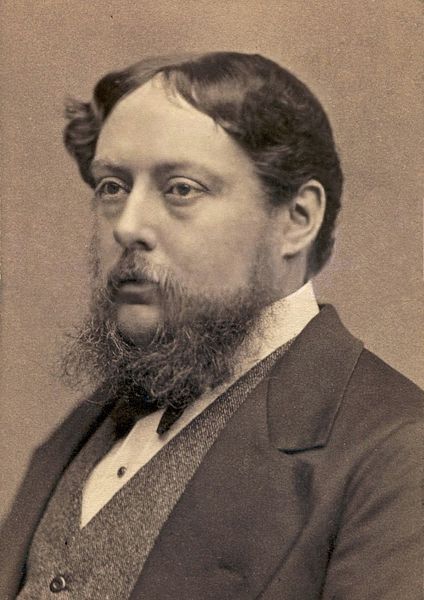
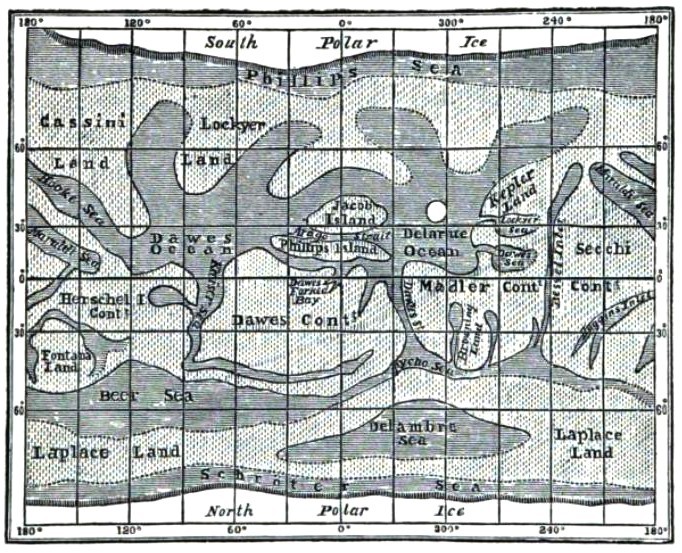
The 19th-century British astronomer Richard A. Proctor produced one of the first maps of Mars, but he was cut down in America at age 51 by the scourge of yellow fever. An excerpt from a report of his final hours in the September 13, 1888 New York Times:

“Prof. Richard A. Proctor, astronomer, lecturer, and author, died last night at the Willard Parker Hospital, Sixteenth-street and the East River, where he was quarantined as a yellow fever patient from Florida. He was prostrated in Room 88 at the Westminster Hotel Tuesday morning, and the malady as diagnosed followed the typical course of languor and malaise, rapid prostration, remission, recurrence, collapse and insensibility, convulsion, black vomit, and death. Prof. Proctor was at the time of the the attack suffering from cardiac uraemic troubles, and for some time it was suspected that a violent pilous attack aggravated and accelerated these affections, but the diagnoses of experts were apparently confirmed in his last moments, when the characteristic ejecta were noticed.

Proctor's map of Mars.

The Professor has a country seat and observatory at Oak Lawn, Marion County, Fla. He left there on Saturday, intending to sail for Europe on the 15th, and he was one of the first guests to register at the Hotel Westminster on Monday morning. He came here by rail and his family remained at Oak Lawn. He appeared fatigued and languid after he had taken a bath, but he was alert and bustling during the afternoon and evening. Tuesday morning he told a bell boy that he was ailing and asked for lemonade and a word with Boniface W.G. Schenck. Mr. Schenck admits that when he learned the Professor was not well he decided on ascertaining exactly what was the matter with him, because he came from Florida, so when he hailed him in the corridor outside his room in his customary hearty fashion he scanned him closely. The Professor, who looked like a very sick man, repeated his request for lemonade.

‘Better put a ‘stick’ in it, Professor,’ suggested Mr. Schenck, and the result was that the invalid drank a goblet of whisky  and lemonade.

Then Mr. Schenck had a chat with his guest, and it prompted him to suggest that a physician be sent for. Prof. Proctor did not appear to consider that his condition warranted it, but he permitted Mr. Schenck to summon Dr. George S. Conant, who was once a diagnostician in the division of contagious diseases. After seeing his patient Dr. Conant visited Mr. Schenck and told him that the Professor was going to be a very sick man. He could not, he said, say what he believed was the matter with him, but his diagnosis warranted him in suggesting that an officer of the Board Of Health he called in consultation, and Dr. Cyrus Edson, Chief Inspector of Contagious Diseases, was summoned. He made up his mind in a few minutes, and told Mr. Schenck that it was extremely probable that the Professor would be dead in 10 or 12 hours of yellow fever, and suggested that his family be notified.”

Tags: , , ,

RFK in Indiana, 1968: “I have some very sad news for all of you.”

Early MLK TV spot, 1957: “I think it’s better to be aggressive at this point.”

Tags: ,

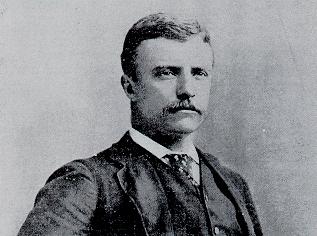
Theodore Roosevelt, NYC Police Commissioner, 1895.

File this one under unintended consequences. Theodore Roosevelt attempted to reduce drunkenness in 1890s New York City while he was police commissioner and instead encouraged vice of all kinds. From “How Dry We Aren’t,” Richard Zacks’ new Opinion piece in the New York Times:

During the November elections in 1895, corrupt Tammany Democrats won in a landslide by campaigning against Rooseveltism and dry Sundays. Undaunted, Roosevelt lobbied the Republican-dominated legislature to pass even tougher excise laws. On April 1, 1896, the Raines Law went into effect, expanding the Sunday shut-down hours from midnight Saturday to 5 a.m. Monday, banning “free lunch” counters, and requiring that saloon doors be kept locked and blinds raised to let police peer inside. The law also exempted hotels with 10 rooms, which could serve guests liquor with a meal 24 hours a day, seven days a week.

In a New York minute (actually the next few months), more than 1,000 saloons added 10 dinky rooms. Tammany building inspectors didn’t care if some had four-foot-high ceilings or were in former coal bins. “Ten beers and one hard-boiled egg scarcely constitute a meal,” complained Roosevelt, but local judges disagreed, allowing most anything to pass for food. The playwright Eugene O’Neill once described on a saloon table “an old desiccated ruin of dust-laden bread and mummified ham or cheese which only the drunkest yokel from the sticks” would ever dream of eating.

New York — already awash in illegal casinos and brothels — was transformed into the city that never sleeps. These Raines Law saloon-hotels could serve round the clock. Even the Metropolitan Opera added 10 bedrooms to be able to offer late-night wine. And those saloon bedrooms, located a drunken stagger from the bar, provided a haven for prostitutes and a temptation to couples who’d had a few too many drinks. Adding 10,000 cheap beds was bound to loosen the city’s morals.

Roosevelt’s liquor crackdown backfired; so did the Raines Law. The city’s spirit of place, what Stephen Crane once dubbed New York’s ‘wild impulse,’ refused to be tamed.”

••••••••••••

Roosevelt is interred on Long Island, 1919:

Tags: ,

Because of some scurrilous remarks he made (including in this 1963 video), Malcolm X never got the recognition he deserved in mainstream culture. He had a brilliant mind and cut through all the bullcrap, and it’s still painful that one of our best and brightest sons lived in a situation that forced him to turn against his country. Shame on all these well-heeled reporters for giving him such a difficult time over his name change. Shame also on all the journalists who kept referring to Muhammad Ali as “Cassius Clay” after his own name change. When people have had their history stolen from them, they have the every right to remake their present and future.

Tags:

"I hate to part with it, but due to divorce is a must."

REAL and AUTHENTIC Geronimo Hair!!! – $200 (Chelsea)

This is an ACTUAL piece of hair from the Great Warrior himself. I have certification letter and other documents on this item this I received when I purchased it. It is a Rare and Unique Item to own. I hate to part with it, but due to divorce is a must.

Comes unframed, in extra thick plastic protective sheet. Actual hair is sealed in a protective case as seen in photo and is approximately 1/16″ long…

Reduced for quick sale! Was $1000.

I’m really surprised by the nastiness that Jodi Kantor has faced from media figures since the publication of her book, The Obamas. When Piers Morgan interviewed the author, he seemed to have not read the book but was coached into believing that he had to be accusatory with his guest, to vaguely suggest she had acted poorly. (When you consider Morgan’s deplorable methods of news gathering while he was a tabloid editor in London, the insinuations becomes farcical.) Soledad O’Brien at least read the book but seemed to be acting more as a publicist for Michelle Obama than a journalist.

Because of the many partisan, even racist, attacks on the Obamas, it’s no surprise that the clearly private First Couple might feel sensitive to all scrutiny. But they are the most public of figures and not off bounds to analysis; no one who vigorously pursued the highest office in the land could expect less.

Nor is Kantor above scrutiny. But it would be wise for critics to actually know what they are accusing her of doing, apart from behaving like a reporter. Anyone who’s read Kantor’s work over the years in the New York Times knows that she’s a rigorous and fair-minded writer and can’t readily be mistaken for Kitty Kelley.

Tags: , ,

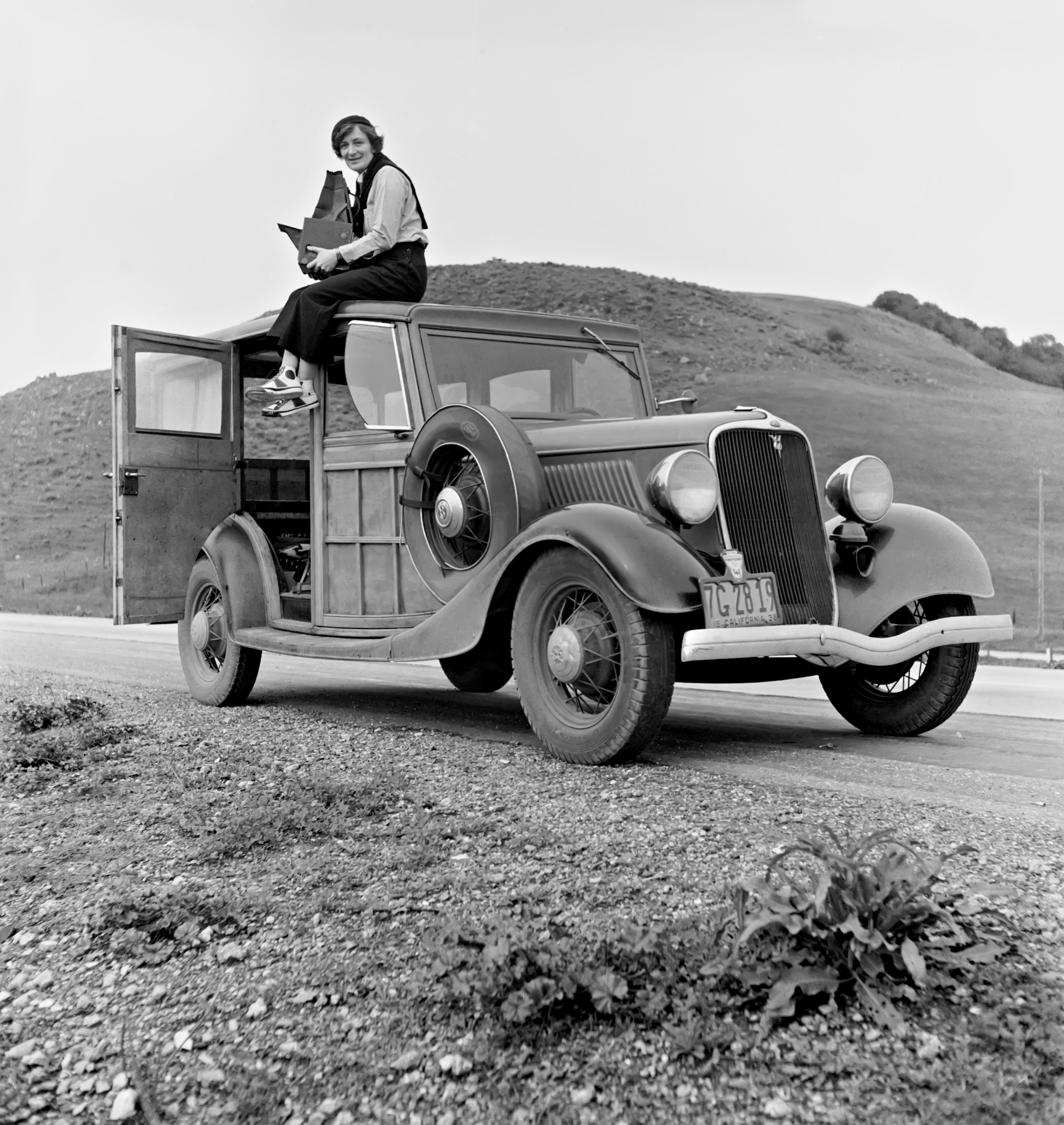
This classic picture taken by Rondal Partridge profiles genius photographer Dorothea Lange in California in 1936, the same year she snapped her most famous image, “Migrant Mother.” Posessing the eye of a painter and the sensibilities of a documentarian, Lange captured the rough-hewn life of Americans during the Great Depression, particularly that of the Okies. Born in Hoboken, New Jersey, she eventually settled in San Francisco, where she opened a studio. Lange passed away there in 1965. From her obituary in the New York Times:

“Her portrait ‘Migrant Mother,’ is in the Library of Congress. In 1960 it was selected by a University of Missouri panel as one of the 50 most memorable pictures of the last 50 years.

She enjoyed telling newcomers how to improve their work. ‘Pick a theme and work it to exhaustion,’ she advised them. ‘Then pick another, or handle several themes at a time. Let yourself loose on a theme. It is the only way to make the most of it.'”

Tags:

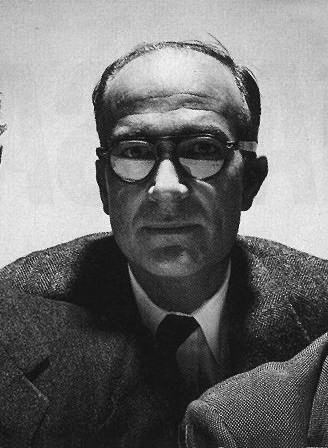
A description of William Shockley from Tom Wolfe’s 1983 Esquire article about Robert Noyce, who worked for a time for the Bell Labs genius and boss from hell, whose erratic nature alienated pretty much everyone, and that was before he dirtied himself with nonsense eugenics theories: 

The first months on Shockley’s Ph.D. production line were exhilarating. It wasn’t really a production line at all. Everything at this stage was research. Every day a dozen young Ph.D.’s came to the shed at eight in the morning and began heating germanium and silicon, another common element, in kilns to temperatures ranging from 1,472 to 2,552 degrees Fahrenheit. They wore white lab coats, goggles, and work gloves. When they opened the kiln doors weird streaks of orange and white light went across their faces, and they put in the germanium or the silicon, along with specks of aluminum, phosphorus, boron. and arsenic. Contaminating the germanium or silicon with the aluminum, phosphorus, boron, and arsenic was called doping. Then they lowered a small mechanical column into the goo so that crystals formed on the bottom of the column, and they pulled the crystal out and tried to get a grip on it with tweezers, and put it under microscopes and cut it with diamond cutters, among other things, into minute slices, wafers, chips; there were no names in electronics for these tiny forms. The kilns cooked and bubbled away, the doors opened, the pale apricot light streaked over the goggles, the tweezers and diamond cutters flashed, the white coats flapped, the Ph. D.’s squinted through their microscopes, and Shockley moved between the tables conducting the arcane symphony.

In pensive moments Shockley looked very much the scholar, with his roundish face, his roundish eyeglasses, and his receding hairline; but Shockley was not a man locked in the pensive mode. He was an enthusiast, a raconteur, and a showman. At the outset his very personality was enough to keep everyone swept up in the great adventure. When he lectured, as he often did at colleges and before professional groups, he would walk up to the lectern and thank the master of ceremonies and say that the only more flattering introduction he had ever received was one he gave himself one night when the emcee didn’t show up, whereupon – bango!- a bouquet of red roses would pop up in his hand. Or he would walk up to the lectern and say that tonight he was getting into a hot subject, whereupon he would open up a book and – whump! -a puff of smoke would rise up out of the pages.

Shockley was famous for his homely but shrewd examples. One day a student confessed to being puzzled by the concept of amplification, which was one of the prime functions of the transistor. Shockley told him: ‘If you take a bale of hay and tie it to the tail of a mule and then strike a match and set the bale of hay on fire, and if you then compare the energy expended shortly thereafter by the mule with the energy expended by yourself in the striking of the match, you will understand the concept of amplification.’

On November 1,1956, Shockley arrived at the shed on South San Antonio Road beaming. Early that morning he had received a telephone call informing him that he had won the Nobel Prize for physics for the invention of the transistor; or, rather, that he was co-winner, along with John Bardeen and Walter Brattain. Shockley closed up shop and took everybody to a restaurant called Dinah’s Shack over on El Camino Real, the road to San Francisco that had become Palo Alto’s commercial strip. He treated his Ph. D. production line and all the other employees to a champagne breakfast. It seemed that Shockley’s father was a mining engineer who spent years out on remote durango terrain, in Nevada, Manchuria and all over the world. Shockley’s mother was like Noyce’s. She was an intelligent woman with a commanding will. The Shockleys were Unitarians, the Unitarian Church being an offshoot of the Congregational. Shockley Sr. was twenty years older than Shockley’s mother and died when Shockley was seventeen. Shockley’s mother was determined that her son would someday ‘set the world on fire,’ as she once put it. And now he had done it. Shockley lifted a glass of champagne in Dinah’s Shack, and it was as if it were a toast back across a lot of hardwrought durango grit Octagon Soap sagebrush Dissenting Protestant years to his father’s memory and his mother’s determination.

That had been a great day at Shockley Semiconductor Laboratory. There weren’t many more. Shockley was magnetic, he was a genius, and he was a great research director–the best, in fact. His forte was breaking a problem down to first principles. With a few words and a few lines on a piece of paper he aimed any experiment in the right direction. When it came to comprehending the young engineers on his Ph.D. production line, however, he was not so terrific.

It never seemed to occur to Shockley that his twelve highly educated elves just might happen to view themselves the same way he had always viewed himself: which is to say, as young geniuses capable of the sort of inventions Nobel Prizes were given for. One day Noyce came to Shockley with some new results he had found in the laboratory. Shockley picked up the telephone and called some former colleagues at Bell Labs to see if they sounded right. Shockley never even realized that Noyce had gone away from his desk seething. Then there was the business of the new management techniques. Now that he was an entrepreneur, Shockley came up with some new ways to run a company. Each one seemed to irritate the elves more than the one before. For a start, Shockley published their salaries. He posted them on a bulletin board. That way there would be no secrets. Then he started having the employees rate one another on a regular basis. These were so-called peer ratings, a device sometimes used in the military and seldom appreciated even there. Everybody regarded peer ratings as nothing more than popularity contests. But the real turning point was the lie detector. Shockley was convinced that someone in the shed was sabotaging the project. The work was running into inexplicable delays, but the money was running out on schedule. So he insisted that one employee roll up his sleeve and bare his chest and let the electrodes be attached and submit to a polygraph examination. No saboteur was ever found.•


A 1974 Firing Line with Shockley, who at this point was sadly tarnishing his reputation with a second act as a quack trying to link race, class and IQ, with African-Americans not faring too well in his theories nor anyone who was an unskilled laborer.

Tags: , , ,

One of the last spooky echoes of the violent elements of the ’60s Radical Left was the armed robbery of a Brinks truck in suburban New York in 1981. The crime went from bad to worse, with two police officers being murdered. Judith Clark, a 31-year-old veteran political activist who was the getaway driver, was arrested and has remained in prison ever since, despite transforming herself from violent activist to model prisoner. I think it’s great when a prisoner reforms, but it’s difficult for me to accept that she should be released considering the nature of the crime. In all fairness, many people, including Clark’s former warden, disagree. The opening of Tom Robbins’ new article about the longtime prisoner in the New York Times Magazine:

“On Oct. 20, 1981, a band of militant zealots armed with automatic weapons tried to rob a Brink’s truck in a shopping mall in Nanuet in Rockland County, N.Y. Before it was over, two armored-car guards were shot and two police officers — one black and one white — were gunned down at a roadblock. The crime was one of the last spasms of ’60s-style, left-wing violence. To the militants, it was an ‘expropriation’ for something they called the Republic of New Afrika, a place that existed mainly in their fevered dreams.

Judith Clark was one of four people arrested that day for armed robbery and murder. She was 31, a veteran of the white left who traveled the radical arc from student protest to the Weathermen to the fringes beyond. A new single mother, she kissed her infant daughter goodbye that morning, promising to be home soon.

No one ever accused Clark of holding or firing a gun that deadly afternoon. But she was there, a willing participant, at the wheel of a tan Honda getaway car. Over the next two years while she awaited trial in jail, Clark became a fiercer warrior than she was on the day of the robbery. During court hearings, she told the judge she was a ‘freedom fighter’ who didn’t recognize the right of imperialist courts to try her. She called court officers ‘fascist dogs!’ when they clashed with her supporters.

Her better-known co-defendant, Kathy Boudin, arrested at the scene of the shootings after having been a fugitive since a 1970 bomb blast in a Greenwich Village town house killed three of her Weather Underground comrades, sat mutely beside her. At trial, Clark and two other defendants — David Gilbert, a Weather Underground member, and Kuwasi Balagoon, a former Black Panther — boycotted the courtroom, listening to the piped-in testimony from their basement cells. The defendants insisted on representing themselves; no one cross-examined witnesses on their behalf. When Clark appeared in court to make a closing argument, she merely confirmed her guilt. ‘Revolutionary violence is necessary, and it is a liberating force,’ she told the jury.”

Tags: ,

How cool. A clip of William F. Buckley with great Southern writers Walker Percy and Eudora Welty in 1972. I think my favorite Welty short story is “Music From Spain,” which takes place not in the South but in San Francisco.

From a Paris Review Q&A with Welty:

INTERVIEWER
‘Music from Spain’ takes place in San Francisco.

WELTY
That’s using impression of place. I was in San Francisco for only three or four months—that’s seeing it in a flash. That story was all a response to a place, an act of love at first sight. It’s written from the point of view of the stranger, of course—the only way to write about a strange place. On the other hand, I couldn’t write a story laid in New York, where I’ve come so many times—because it’s both familiar and unfamiliar, a no-man’s-land.”

Tags: , ,

The opening of a Techcrunch article by Vinod Khosla about his extreme faith in the efficacy of algorithms, believing they can even supplant our most basic institutions:

“I was asked about a year ago at a talk about energy what I was doing about the other large social problems, namely health care and education. Surprised, I flippantly responded that the best solution was to get rid of doctors and teachers and let your computers do the work, 24/7 and with consistent quality.

Later, I got to cogitating about what I had said and why, and how embarrassingly wrong that might be. But the more I think about it the more I feel my gut reaction was probably right. The beginnings of ‘Doctor Algorithm’ or Dr. A for short, most likely (and that does not mean ‘certainly’ or ‘maybe’) will be much criticized. We’ll see all sorts of press wisdom decrying ‘they don’t work’ or ‘look at all the silly things they come up with.’ But Dr A. will get better and better and will go from providing ‘bionic assistance’ to second opinions to assisting doctors to providing first opinions and as referral computers (with complete and accurate synopses and all possible hypotheses of the hardest cases) to the best 20% of the human breed doctors. And who knows what will happen beyond that?” (Thanks Browser.)

••••••••••

“Maybe the way to innovate schools is to eliminate schools”:

Tags:

"Ants are said by those who have tasted them to have a peculiarly agreeable, strongly acid flavor." (Image bt Muhammad Mahdi Karim.)

Dietary habits vary based on geography and according to an article in the February 11, 1889 edition of the Brooklyn Daily Eagle, which ran originally in the Pittsburgh Dispatch, Maine lumberjacks were partial to buckets of ants. The story in full:

“Should a Maine lumberman find a stump or rotten log with thousands of big black ants in it he scoops the torpid insects from their Winter domicile and fills his dinner pail with them. When he gets back to his camp at night he sets the pail in a cool place until his supper is ready, then brings it forth, and, while helping himself to pork and beans, helps himself also to ants. There is no accounting for tastes, and he esteems a handful of ants a very choice morsel.

Ants are said by those who have tasted them to have a peculiarly agreeable, strongly acid flavor. The woodsmen, whose food consists largely of salted meat, baked beans and similarly hardy victuals, naturally have a craving for something sour. ‘Ants are the very best of pickles,’ said an old logger, who confessed to having devoured thousands of them. ‘They are clearly insects, and there is no reason why they should not be eaten, if one can get over a little squeamishness caused by the thought of taking such crawling things into the stomach. There is nothing repulsive about them, and when a man has once learned to eat the creatures as pickles he prefers them to any kind.’

Ants have at various times and in different countries been quite extensively used in medicine, and formic acid, which was first obtained by distilling the bodies of those insects but is now artificially prepared, is a well known and useful chemical product.

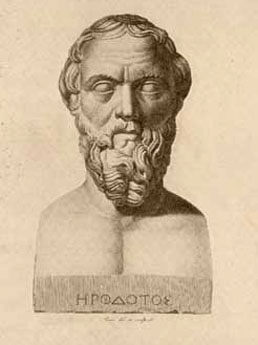
"Herodotus tells of ants that live in the desert of India, which are in size 'somewhat less than dogs, but larger than foxes.'"

Herodotus tells of ants that live in the desert of India, which are in size ‘somewhat less than dogs, but larger than foxes.’ These creatures, in heaping up the earth after the manner of common ants, were a very efficient aid to the Indian gold hunters. The sand they throw up being largely mixed with gold, the Indians were accustomed to go to the desert in the heat of the day, when the ants were under ground, load the sand into sacks, pile their sacks upon their camels and hasten from the spot as rapidly as possible. The ants, according to the historian, were not only the swiftest of animals, but were gifted with such a sense of smell that they immediately became aware of the presence of men in their territory, and unless the Indians got away while the ants were assembling to attack them not a man could escape.”

The first movie I can remember seeing as a child was a TV showing of The Hunchback of Notre Dame, starring Charles Laughton. Here he is in 1956 on What’s My Line?, when he was appearing on Broadway.

Quasimodo provides sanctuary:

Tags:

James Lee Byars, “The perfect Love Letter is I write ‘I love you’ backwards in the air," 1974.

FromThe Man Who Runs the World’s Smartest Website,” an Observer piece about literary agent John Brockman and his heady site, Edge, which grew from an idea by the late artist James Lee Byars:

“In cyberspace, Brockman is best known for Edge.org, a site he founded as a continuation of what he describes as ‘a failed art experiment’ by his late friend, performance artist James Lee Byars. Byars believed, Brockman recalls, ‘that to arrive at a satisfactory plateau of knowledge it was pure folly to go to Widener Library at Harvard and read six million books. Instead, he planned to gather the 100 most brilliant minds in the world in a room, lock them in and have them ask one another the questions they’d been asking themselves. The expected result – in theory – was to be a synthesis of all thought.’ But it didn’t work out that way. Byars did identify his 100 most brilliant minds and phoned each of them. The result: 70 hung up on him.

Byars died in 1997, but Brockman persisted with his idea, or at any rate with the notion that it might be possible to do something analogous using the internet. And so Edge.org was born as a kind of high-octane online salon with Brockman as its editor and host. He describes it as ‘a conversation. We look for people whose creative work has expanded our notion of who and what we are. We encourage work on the cutting edge of the culture and the investigation of ideas that have not been generally exposed.’”

Tags: ,

"My partners and I are compiling research."

Ever seen a Ghost?

Have you ever had an encounter, or multiple encounters with a ghost?

If you have, and would like to talk about it, my partners and I are compiling research from people with firsthand encounters.

We are extremely interested in hearing what you have to say.

We’re not here to exploit either your personal experience or identity.

If you are up to it, email me with a schedule and we’ll find a time to meet in a place that everybody is comfortable with.

We are not looking for insane and whacky stories, we are looking for the truth.

Colonel William d’Alton Mann, photo undated.

A brief history of the blind item, a staple of gossip pages since 1891 which has only proliferated during the Internet Age, from an Awl piece by Carrie-May Siggins:

“Credit for the invention of the blind item is given to a man named Colonel William d’Alton Mann. After becoming a Civil War hero in the battle of Gettysburg, he made a fortune licensing an invention for an equipment-hauling rig to the US and Austrian armies. In 1891, his brother, who published the New York City society paper Town Topics, vanished after he discovered he was wanted on an obscenity charge. Mann, whose long white beard and shock of white hair made him a dead ringer for Santa, took over Town Topics and transformed it into one of the most notorious gossip rags ever published.

Colonel Mann’s written contribution to the paper was a column called ‘Saunterings,’ a sharp, sardonic weekly piece about the goings on in high society, much of which he witnessed himself. He often kept his musings nameless, as with this example from February 3, 1893:

‘High society has been treated to a sorry spectacle of inebriety during the last two weeks at balls and dinners, and I am glad to say that this shocking example, though unfortunately a woman, is not an American, but a specimen of British aristocracy. … If Great Britain is to send us such specimens of her boasted aristocracy, I would advise society to entertain in camera and with a bread and water diet.’

Although no one was named in these items, Colonel Mann devised an easily breakable code to help tip off readers. Flip over the piece of newsprint and directly on the other side of ‘Saunterings’ one would find a tepid write-up about an act of charity by a member of the Sykes family, or a barely news-worthy piece about William Vanderbilt. Blind item solved.”

Tags: ,

« Older entries § Newer entries »