James Gleick, author of The Information; A History, a Theory, a Flood, explaining how the shift from oral communications to the written word impacted humanity.
Ideas and technology and politics and journalism and history and humor and some other stuff.
You are currently browsing the archive for the Urban Studies category.
James Gleick, author of The Information; A History, a Theory, a Flood, explaining how the shift from oral communications to the written word impacted humanity.
Tags: James Gleick
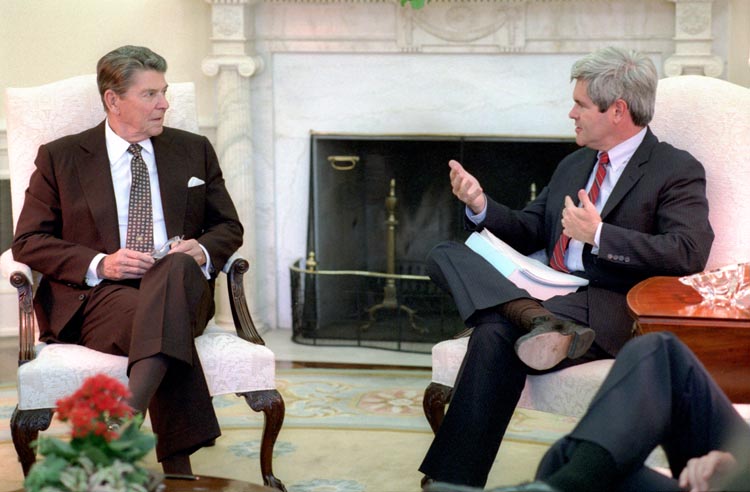
I would assume after last night’s embarrassing debate performance, Newt Gingrich is consigned to runner-up status, a sad, pompous buffoon who was only seriously considered because of the dearth of GOP options. But perhaps conservatives view things differently than I do? At any rate, the New York Times’ Timothy Egan righteously undresses the overstuffed hypocrite in “Deconstructing a Demogogue.” An excerpt:
“Back in 1994, while plotting his takeover of the House, Gingrich circulated a memo on how to use words as a weapon. It was called ‘Language: A Key Mechanism of Control.’ Republicans were advised to use certain words in describing opponents — sick, pathetic, lie, decay, failure, destroy. That was the year, of course, when Gingrich showed there was no floor to his descent into a dignity-free zone, equating Democratic Party values with the drowning of two young children by their mother, Susan Smith, in South Carolina.
Today, if you listen carefully to any Gingrich takedown, you’ll usually hear words from the control memo.
He even used them, as former Assistant Secretary of State Elliott Abrams wrote in National Review Online this week, in going after President Reagan, calling him ‘pathetically incompetent,’ as Abrams reported. And he compared Reagan’s meeting with the Soviet leader Mikhail Gorbachev to ‘the most dangerous summit for the West since Adolf Hitler met with Neville Chamberlain in 1938 in Munich.”
•••••••••••
The full Gingrich memo about the use of language:
Language: A Key Mechanism of Control
As you know, one of the key points in the GOPAC tapes is that “language matters.” In the video “We are a Majority,” Language is listed as a key mechanism of control used by a majority party, along with Agenda, Rules, Attitude and Learning. As the tapes have been used in training sessions across the country and mailed to candidates we have heard a plaintive plea: “I wish I could speak like Newt.”
That takes years of practice. But, we believe that you could have a significant impact on your campaign and the way you communicate if we help a little. That is why we have created this list of words and phrases.
This list is prepared so that you might have a directory of words to use in writing literature and mail, in preparing speeches, and in producing electronic media. The words and phrases are powerful. Read them. Memorize as many as possible. And remember that like any tool, these words will not help if they are not used.
While the list could be the size of the latest “College Edition” dictionary, we have attempted to keep it small enough to be readily useful yet large enough to be broadly functional. The list is divided into two sections: Optimistic Positive Governing words and phrases to help describe your vision for the future of your community (your message) and Contrasting words to help you clearly define the policies and record of your opponent and the Democratic party.
Please let us know if you have any other suggestions or additions. We would also like to know how you use the list. Call us at GOPAC or write with your suggestions and comments. We may include them in the next tape mailing so that others can benefit from your knowledge and experience.
Optimistic Positive Governing Words
Use the list below to help define your campaign and your vision of public service. These words can help give extra power to your message. In addition, these words help develop the positive side of the contrast you should create with your opponent, giving your community something to vote for!
|
|
Contrasting Words
Often we search hard for words to define our opponents. Sometimes we are hesitant to use contrast. Remember that creating a difference helps you. These are powerful words that can create a clear and easily understood contrast. Apply these to the opponent, their record, proposals and their party.
|
|
Tags: Newt Gingrich, Timothy Egan
Chris Elliott as a robot designed to be slenderer than Shelley Winters, 1986.
Tags: Chris Elliott
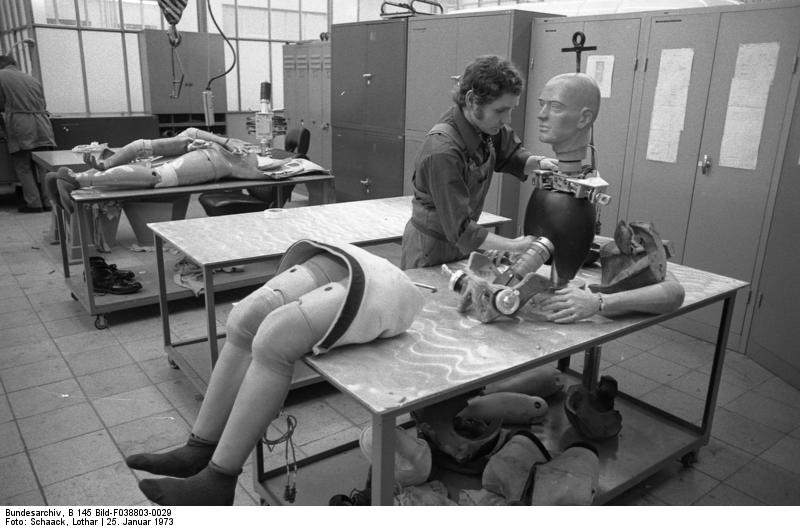
From “Let the Robot Drive: The Autonomous Car of the Future Is Here,” Tom Vanderbilt’s new Wired piece about humans on the verge of relinquishing control of the wheel:
“[Chris] Urmson, with the soft-spoken, intense mien of a roboticist who has debugged a Martian rover in the deserts of Chile, occupies the nominal ‘driver’s seat’—just one of the entities open to ontological inquiry this morning.
The last time I was in a self-driving car—Stanford University’s ‘Junior,’ at the 2008 World Congress on Intelligent Transportation Systems—the VW Passat went 25 miles per hour down two closed-off blocks. Its signal achievement seemed to be stopping for a stop sign at an otherwise unoccupied intersection. Now, just a few years later, we are driving close to 70 mph with no human involvement on a busy public highway—a stunning demonstration of just how quickly, and dramatically, the horizon of possibility is expanding. ‘This car can do 75 mph,’ Urmson says. ‘It can track pedestrians and cyclists. It understands traffic lights. It can merge at highway speeds.’ In short, after almost a hundred years in which driving has remained essentially unchanged, it has been completely transformed in just the past half decade.”
•••••••••••
Kraftwerk, “Autobahn,” 1975:
Tags: Chris Urmson, Tom Vanderbilt

I am very healthy and just a little short on cash. Buyer will arrange for pickup by a professional,
or at least someone who’s done it before. No BS offers, Price is very reasonable!
I will consider a trade for a PS3 with some good games
Joan Crawford on What’s My Line?, in 1957. She uses the appearance to promote the International Adoption Agency, though, to put it mildly, she wasn’t exactly mother of the year. Peter Ustinov is on the panel.
A decided preference for wooden hangers:
Tags: Joan Crawford
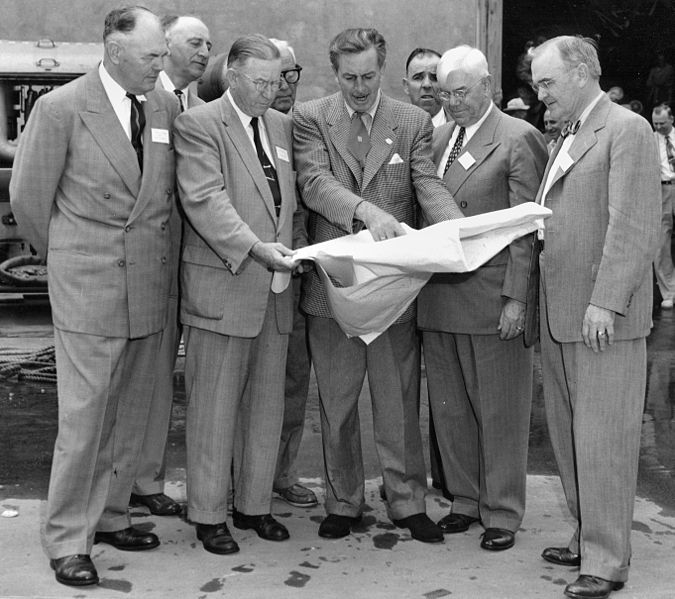
From “The Machine-Tooled Happyland,” Ray Bradbury’s 1965 Holiday analysis of the robot-centric Disneyland:
“We live in an age of one billion robot devices that surround, bully, change and sometimes destroy us. The metal-and-plastic machines are all amoral. But by their design and function they lure us to be better or worse than we might otherwise be.
In such an age it would be foolhardy to ignore the one man who is building human qualities into robots—robots whose influence will be ricocheting off social and political institutions ten thousand afternoons from today.
Snobbery now could cripple our intellectual development. After I had heard too many people sneer at Disney and his audio-animatronic Abraham Lincoln in the Illinois exhibit at the New York World’s Fair, I went to the Disney robot factory in Glendale. I watched the finishing touches being put on a second computerized, electric- and air-pressure-driven humanoid that will “live” at Disneyland from this summer on. I saw this new effigy of Mr. Lincoln sit, stand, shift his arms, turn his wrists, twitch his fingers, put his hands behind his back, turn his head, look at me, blink and prepare to speak. In those few moments I was filled with an awe I have rarely felt in my life.
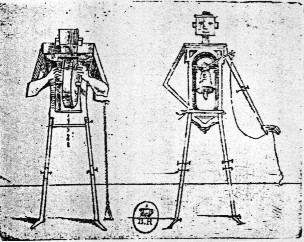
Giovanni Battista Bracelli's robot drawings, 1624.
Only a few hundred years ago all this would have been considered blasphemous, I thought. To create man is not man’s business, but God’s, it would have been said. Disney and every technician with him would have been bundled and burned at the stake in 1600.
And again, I thought, all of this was dreamed before. From the fantastic geometric robot drawings of Bracelli in 1624 to the mechanical people in Capek’s R.U.R. in 1925, others have conceived and drawn metallic extensions of man and his senses, or played at it in theater.
But the fact remains that Disney is the first to make a robot that is convincingly real, that looks, speaks and acts like a man. Disney has set the history of humanized robots on its way toward wider, more fantastic excursions into the needs of civilization.” (Thanks Longform.)
••••••••••
“We also accompanied him on a trip to Disneyland,” 1968:
Tags: Ray Bradbury, Walt Disney
It’s difficult to fathom that just about 20 years ago, the spellcheck function wasn’t ubiquitous–even intrusive–and there was actually a market for a product like this one.
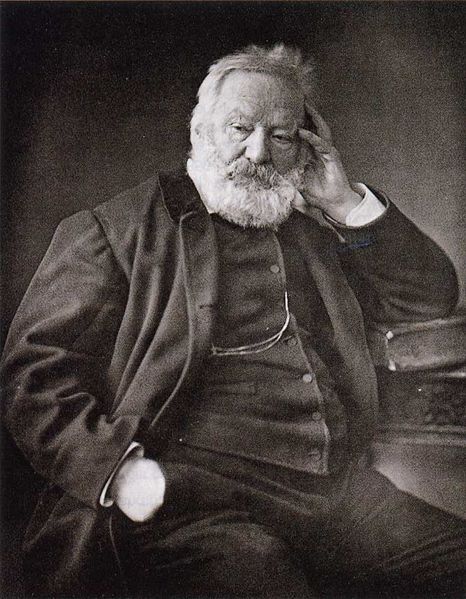
"Make her a pretty frock at once."
Generals in Napoleon’s army apparently didn’t want their sons crying, as little Victor Hugo learned, much to his chagrin. From an article in the August 1, 1897 Brooklyn Daily Eagle:
“The great French writer, Victor Hugo, tells this story about his own childhood–his father it is remembered, was one of Napoleon’s generals.
‘When I was five or six years old, I was crying. My father, who heard me, did not reprove me, but this is the way he punished me:
‘Why, the poor, dear little girl,’ he said, in a cool, ironical manner. ‘What’s the matter with her? What’s making her cry? She shan’t be found fault with. It’s right for little girls to cry. But how’s this? What have you been dressing her in boys’ clothes for? Make her a pretty frock at once, and to-morrow she shall go and take a walk in the garden of Tulleries.
‘Sure enough, the nurse put the girl’s dress on me the next day, according to order, and took me to walk at the Tulleries. I was well mortified, as you may perhaps imagine. But I never again cried from that day until I had become a man grown.'”
Tags: Victor Hugo
President Richard Nixon in New York City, 1972, at the beginning of the war on drugs, encouraging the absurd Rockefeller Drug Laws, pledging public funds to be wasted on a futile cause. But while Nixon was there at the beginning, the prohibition of drugs has been a bipartisan folly ever since, one that allows campaigning politicians to tell citizens a lie they want to hear. The truth is professional poison. And that comes from someone who has no interest in drugs and doesn’t think anyone should use them.
George Soros, opportunist turned alarmist, frets in a Newsweek article that the whole damn world might go bust. An excerpt:
“Sitting in his 33rd-floor corner office high above Seventh Avenue in New York, preparing for his trip to Davos, he is more concerned with surviving than staying rich. ‘At times like these, survival is the most important thing,’ he says, peering through his owlish glasses and brushing wisps of gray hair off his forehead. He doesn’t just mean it’s time to protect your assets. He means it’s time to stave off disaster. As he sees it, the world faces one of the most dangerous periods of modern history—a period of ‘evil.’ Europe is confronting a descent into chaos and conflict. In America he predicts riots on the streets that will lead to a brutal clampdown that will dramatically curtail civil liberties. The global economic system could even collapse altogether.
‘I am not here to cheer you up. The situation is about as serious and difficult as I’ve experienced in my career,’ Soros tells Newsweek. ‘We are facing an extremely difficult time, comparable in many ways to the 1930s, the Great Depression. We are facing now a general retrenchment in the developed world, which threatens to put us in a decade of more stagnation, or worse. The best-case scenario is a deflationary environment. The worst-case scenario is a collapse of the financial system.'”
Tags: George Soros
Jan Hammer, Miami Vice house composer, explaining how he could create such gritty urban music while living in a rustic environment. Intro provided by a pimped-out Philip Michael Thomas. It’s like the 1980s vomited blood.
Tags: Jan Hammer, Philip Michael Thomas
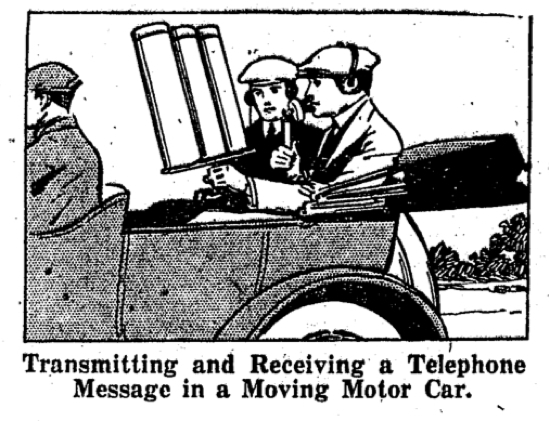
"Sandusky Register," March 1920.
From Smithsonian‘s Paleofuture blog, which presents a brief history of the first car phone, or “the portable stovepipe wireless telephone”:
“An article in the March 21, 1920 Sandusky Register in Sandusky, Ohio retold the story of a man in Philadelphia named W. W. Macfarlane who was experimenting with his own ‘wireless telephone.’ With a chauffeur driving him as he sat in the back seat of his moving car he amazed a reporter from The Electrical Experimenter magazine by talking to Mrs. Macfarlane, who sat in their garage 500 yards down the road.
A man with a box slung over his shoulder and holding in one hand three pieces of stove pipe placed side by side on a board climbed into an automobile on East Country Road, Elkins Park, Pa.
As he settled in the machine he picked up a telephone transmitter, set on a short handle, and said:
‘We are going to run down the road. Can you hear me?’
Other passengers in the automobile, all wearing telephone receivers, heard a woman’s voice answering: ‘Yes, perfectly. Where are you?’
By this time the machine was several hundred yards down the road and the voice in the garage was distinctly heard.
This was one of the incidents in the first demonstration of the portable wireless telephone outfit invented by W. W. Macfarlane, of Philadelphia, as described by the Electrical Experimenter.”
Tags: W. W. Macfarlane
Before the advent of advanced animation, video-game cops read subtitles of long, boring lectures given by their commanding officers. Atari, 1982.

"These meals keep more than 7 years and could save your life."
When an emergency hits, it’s already too late.
In a broad emergency FEMA and the US government will be overloaded and incapable of dealing with 20-300 million people.
Hurricane Katrina was a limited emergency and it took 2 weeks to get help. Who do you turn to? Yourself. (Sorry, we do not sell firearms.)
We also carry:

"Sorry, we do not sell firearms."
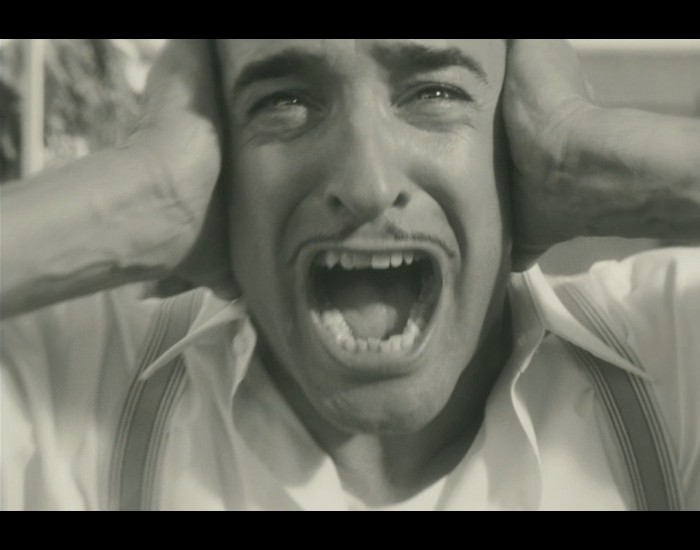
The future sounds scary.
It’s no slight toward Hugo or The Artist, but those two nostalgic, backwards-looking films being granted the most Oscar nominations this year is the latest sign of Hollywood living in a state of fear. With technology run amok and in the hands of the masses, where can the industry turn for security? Milking the 3-D fad until the diminishing financial returns completely disappear is a temporary salve, but retreating into the past, an earlier more comfortable age when no one had a voice–not the actors on the screen nor the audience–isn’t just a self-absorbed salute, it’s a delusion. For all its liberal politics, Hollywood is a very conservative industry, one that will cannibalize itself until its gums bleed. As we know from the collapse of the studio system, bold ideas will only be allowed to guide the staggering monolith once no other option is left.

Turning back the clock.
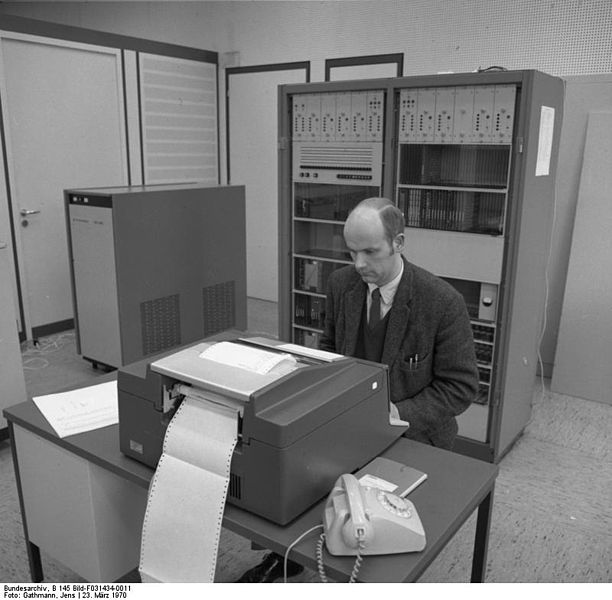
"And if it breaks? You print another for minimal cost." (Image by Jens Gathmann@Wikipedia.)
Now that 3D printers are a reality, the two types of piracy we’ve encountered historically–physical and digital–will combine to form a new means of thievery. From Geek.com:
“Just like pirates today decide to download a movie rather than pay the high theater prices to watch it, pirates of the future will have the option to bypass the cost, and become creators themselves.
The same logic can be applied to many products: why buy the iPad X case when you can download the 3D model someone leaked/stole? Why buy a camera part when it can be printed and glued at home? Not only do you save on the retail price, there’s no shipping to worry about other than your base materials, which can be bought in bulk. And if it breaks? You print another for minimal cost. Obviously materials and 3D printer technology limit this to certain types of products, but that list is only going to expand as 3D printers improve, and, crucially, as more commercial products are made with 3D printers.”
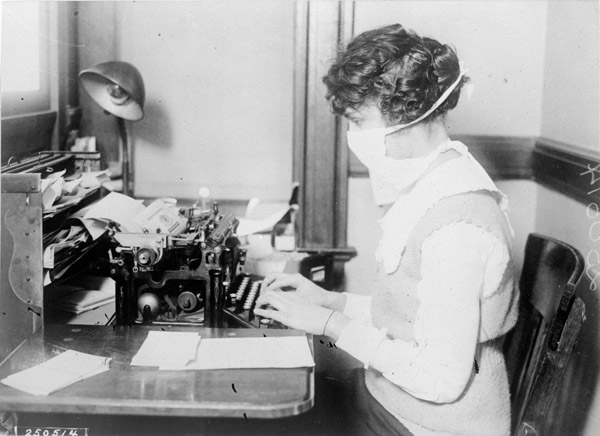
This classic photograph shows a New York City typist tending to her duties during the 1918 influenza outbreak. The surgical mask became a ubiquitous accessory on street cars and baseball diamonds, as well as at workplaces, but still 50 million lives were claimed worldwide. From a 2007 historical article by John Galvin in Popular Mechanics:
“Initially called ‘the three day fever,’ it started like any flu, with a cough and a headache, followed by intense chills and a fever that could quickly hit 104 degrees F. It could take a month before survivors felt completely well, and after they emerged from an energy-sapped stupor many said it felt as though they’d been aggressively hit with a club. But for those 650,000 Americans who actually died from the Spanish flu in 1918, the suffering was much worse.
Deep brown spots would appear on a victim’s cheeks and a thick, bloody fluid would begin to overwhelm his lungs. Starting at the ears, their faces would gradually turn blue as circulating blood could not get oxygenated. Soon, victims would start to drown in their own fluid — often coughing up a pinkish froth as they fought to inhale. ‘It is only a matter of a few hours then until death comes, and it is simply a struggle for air until they suffocate,’ an army doctor, based outside of Boston at Camp Devens, wrote to a colleague in 1918. ‘It is horrible.’
The influenza pandemic of 1918 killed an estimated 50 million people around the world — 34 million more than died from the First World War in progress alongside it.”
Tags: John Galvin
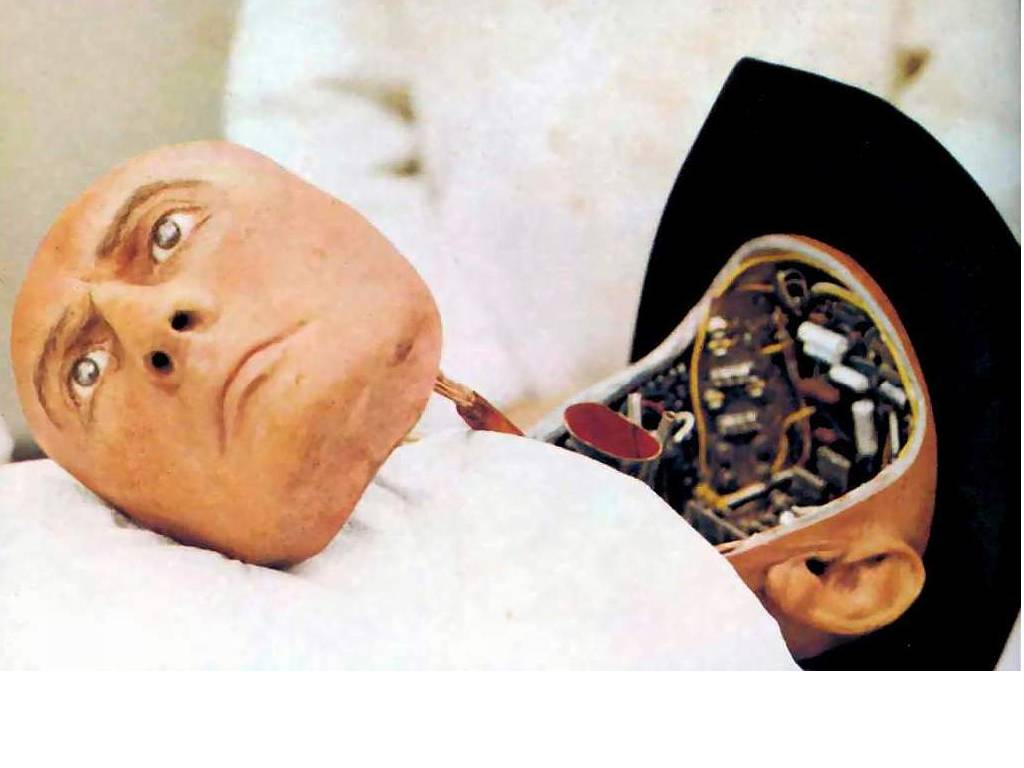
Steve Wozniak holds forth on the future of computing in a new Vancouver Sun article. An excerpt:
“Ever the engineering scientist, he offered his view that within as few as 40 years computing technology will be so advanced that computers will nearly be sentient beings capable of personality.
‘The war against the machines was a long, long time ago,’ he said.
Mankind didn’t set out deliberately to create a brain, Wozniak said. But by first building computers, and then linking them through Arpanet, the forerunner of the Internet, and then creating search engines to handle the mass of information now available, the world ended up with a brain.
‘I think by accident we’re going to stumble on conscious computers that have feelings and look at you and understand how you’re doing,’ he said. ‘My iPhone has almost all the senses I have except taste and smell. It has an eye and an ear and it can feel when I am touching it and it can feel when it is being moved. It even knows where in the world it is from GPS. Even I don’t know that.”
••••••••••
Johnny Cash on John Henry: “You full of vinegar now but you ’bout through.”
Tags: Steve Wozniak
Look, it’s that guy from the Apple computer commercial. No, not Justin Long–the other guy. No, not John Hodgman. Seriously, I give up with you.
“Because they change things”:
Tags: Mohandas Gandhi

"Very soon I began seeing her byline in the rock papers, the major intellectual conduits of youth at that time." (Image by Klaus Hiltscher.)
The opening of “The Mother Courage of Rock,” Luc Sante’s appraisal of Patti Smith in the New York Review of Books:
“I first heard of Patti Smith in 1971, when I was seventeen. The occasion was an unsigned half-column item in the New York Flyer, a short-lived local supplement toRolling Stone, marking the single performance of Cowboy Mouth, a play she cowrote and costarred in with Sam Shepard, and it was possibly her first appearance in the press. What caught my eye and made me save the clipping—besides the accompanying photo of her in a striped jersey, looking vulnerable—was her boast, ‘I’m one of the best poets in rock and roll.’ At the time, I didn’t just think I was the best poet in rock and roll; I thought I was the only one, for all that my practice consisted solely of playing ‘Sister Ray’ by the Velvet Underground very loud on the stereo and filling notebook pages with drivel that naturally fell into the song’s meter. (I later discovered that I was just one of hundreds, maybe thousands, of teenagers around the world doing essentially the same thing.)
Very soon I began seeing her byline in the rock papers, the major intellectual conduits of youth at that time. Her contributions were not ordinary. She reviewed a Lotte Lenya anthology for Rolling Stone (‘[She] lays the queen’s cards on the table and plays them with kisses and spit and a ribbon round her throat’). She wrote a half-page letter to the editors of Crawdaddy contrasting that magazine’s praise for assorted mediocrities with the true neglected stars out in the world:
Best of everything there was
and everything there is to come
is often undocumented.
Lost in the cosmos of time.
On the subway I saw the most beautiful girl.
In an unknown pool hall I saw the greatest shot in history.
A nameless blonde boy in a mohair sweater.
A drawing in a Paris alleyway. Second only to Dubuffet.
Creem devoted four pages to a portfolio of her poems (‘Christ died for somebodies sins/but not mine/melting in a pot of thieves/wild card up the sleeve/thick heart of stone/my sins my own…’—if this sounds familiar, you expect the next line to be ‘they belong to me,’ but it’s not there yet).”
•••••••••
Patti Smith singing “You Light Up My Life” on Kids Are People Too, 1980s:
Lotte Lenye, “Mack the Knife,” 1962:
Tags: Lotte Lenye, Luc Sante, Patti Smith
The full 1970 documentary, “Soft Self-Portrait of Salvador Dali.” Just during the opening scene: insane piano solo, screeching cats, Orson Welles on narration. Tremendous stuff.
Tags: Orson Welles, Salvador Dali
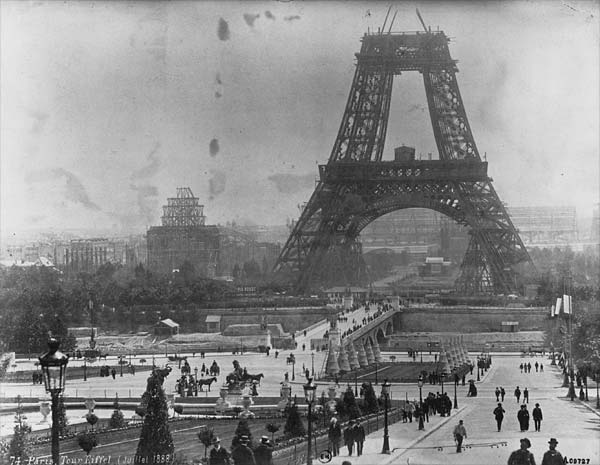
Inverting vandalism, the Urban eXperiment or UX, is a group of artists who preserve fading Parisian landmarks–after surreptitiously breaking into them. The opening of “The New French Hacker-Artist Underground,” Jon Lackman’s Wired article about the group:
“Thirty years ago, in the dead of night, a group of six Parisian teenagers pulled off what would prove to be a fateful theft. They met up at a small cafè near the Eiffel Tower to review their plans—again—before heading out into the dark. Lifting a grate from the street, they descended a ladder to a tunnel, an unlit concrete passageway carrying a cable off into the void. They followed the cable to its source: the basement of the ministry of telecommunications. Horizontal bars blocked their way, but the skinny teens all managed to wedge themselves through and ascend to the building’s ground floor. There they found three key rings in the security office and a logbook indicating that the guards were on their rounds.
But the guards were nowhere to be seen. The six interlopers combed the building for hours, encountering no one, until they found what they were looking for at the bottom of a desk drawer—maps of the ministry’s citywide network of tunnels. They took one copy of each map, then returned the keys to the security office. Heaving the ministry’s grand front door ajar, they peeked outside; no police, no passersby, no problem. They exited onto the empty Avenue de Sègur and walked home as the sun rose. The mission had been so easy that one of the youths, Natacha, seriously asked herself if she had dreamed it. No, she concluded: ‘In a dream, it would have been more complicated.’
This stealthy undertaking was not an act of robbery or espionage but rather a crucial operation in what would become an association called UX, for ‘Urban eXperiment.’ UX is sort of like an artist’s collective, but far from being avant-garde—confronting audiences by pushing the boundaries of the new—its only audience is itself. More surprising still, its work is often radically conservative, intemperate in its devotion to the old. Through meticulous infiltration, UX members have carried out shocking acts of cultural preservation and repair, with an ethos of ‘restoring those invisible parts of our patrimony that the government has abandoned or doesn’t have the means to maintain.’ The group claims to have conducted 15 such covert restorations, often in centuries-old spaces, all over Paris.”
Tags: Jon Lackman
A seven-minute clip of Mark Boyd’s 1967 psychedelic light show from London’s influential if short-lived UFO club, which notably hosted Pink Floyd.

Syd Barrett and Roger Waters, also 1967:
Tags: Mark Boyd, Roger Waters, Syd Barrett
"THERAPEUTIC."
I can help you with all your math problems in exchange for massage. NON-SEXUAL. THERAPEUTIC.
I am a professional math tutor.
I need massage for back pain.