Urban Studies

You are currently browsing the archive for the Urban Studies category.

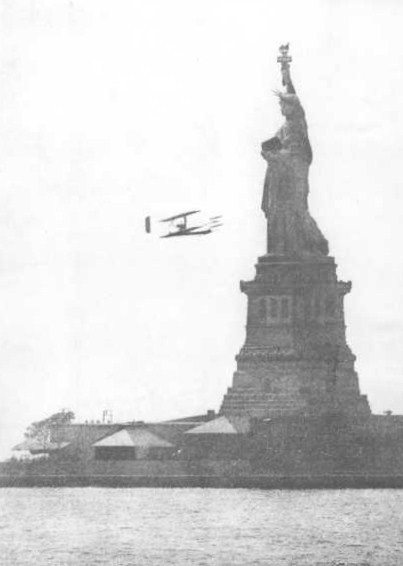
Wilbur Wright, flight around Statue of Liberty, 1909.

Look up in the sky and you will see neither bird nor plane but the future–it is here now. From Farhood Manjoo’s new Slate piece,I Love You, Killer Robots“:

“It was way back in May 2010 that I first spotted the flying drones that will take over the world. They were in a video that Daniel Mellinger, one of the robots’ apparently too-trusting creators, proudly posted on YouTube. The clip, titled ‘Aggressive Maneuvers for Autonomous Quadrotor Flight,’ depicts a scene at a robotics lab at the University of Pennsylvania, though a better term for this den might be “drone training camp.”

In the video, an insectlike, laptop-sized ‘quadrotor’ performs a series of increasingly difficult tricks. First, it flies up and does a single flip in the air. Then a double flip. Then a triple flip. In a voice-over so dry it suggests he has no idea the power he’s dealing with, Mellinger says, ‘We developed a method for flying to any position in space with any reasonable velocity or pitch angle.’ What does this mean? It means the drone can fly through or around pretty much any obstacle. We see it dance through an open window with fewer than 3 inches of clearance on either side. Next, it flies and perches on an inverted surface—lying in wait.”

Tags:

Up to 18 mph. From the good folks at Boston Dynamics.

"William was wily, wary and wicked."

A former cat-meat salesman named Pickles, who later turned to horse thievery, was the subject of a colorful profile in the March 27, 1876 Brooklyn Daly Eagle. An excerpt:

Another escape from the Penitentiary has come to light. This time it was a clean walk out instead of an escape. The fact has been concealed by the prison authorities for over a month. William Pickles, alias Clark, was the convict who, on the afternoon of February 23, shouldered a pitchfork and walked out at the Penitentiary, ostensibly to the cow stables opposite. They are waiting for his return, but he does not come. A facetious fellow convict, when he heard of William’s departure, began humming the tune, ‘Oh, Willie, we have missed you.’ This Pickles is a character who has made a mark on his day and generation.

"It was a dizzying leap from a cat meat purveyorship." (Image by Lipedia.)

He drew his first breath in ‘Lunnon Town,’ some forty-eight years ago. At a tender age he was apprenticed to a costermonger, who made vocal the streets of London with his cries of ‘Cat meat,’ ‘Cat meat.’ In course of time William became a boss caterer to the feline race. He bade farewell to the shores of his native land about twenty years ago, on account of some little misunderstanding with the authorities there. He came to New York, and at once began to flourish like the typical green bay tree. William was wily, wary and wicked. After viewing the opportunities presented to an enterprising mind in a free land he concluded to direct his attention to horse flesh. It was a dizzying leap from a cat meat purveyorship but Pickles had a great and adaptable soul. He became a trader in horses–in other people’s.

A man of Pickles’ qualities had not much difficulty in getting horses for nothing, and selling them for a good deal. He was thoroughly impartial in his selection of the noble quadroped. He would yank out a claim peddler’s horse from a stable as quick as he would a Hambletonian. It all depends on his opportunities. It is said that in the course of the two or three weeks Pickles would transmogrify the veriest hackney into as trim a looking animal as a gentleman would care to sit behind. He could make a white horse black to order, dapple a pure bay, affix a mark of aristocracy on the brow, make a moribund nag look fresh and cheerful–in short, he was a wizard veterinarian. He could take a kink out of the leg, put strength in the backbone, fructify the tail and do anything with the animal he had in hand in short of causing it to grow a pair of side whiskers. This might have come in time had not Pickles’ scientific pursuits been interrupted by the police. This occurred in the zenith of his prosperity, when he was in the enjoyment of the proud reputation of being ‘one of the handiest men about horses you ever saw.’ He was sent to Sing Sing for ten years. He languished there for about half of his term when one night he managed to reach the sewer pipe and through it he crawled out of the prison.”


Tags:

I miss my wife – still

This afternoon I thought about what kind of couch to buy. I thought that I should get one where the two of us could lie down naked comfortably together and cuddle up. This notion shocked me since we have been apart going on a few years now. Funny how the mind plays these tricks. Life goes on…  

From “Can You Build a Human Body?” an interactive BBC feature that explains how close we are to artificially creating a complete array of functioning organs. From the section on skin:

“One of the greatest challenges in bionics is to replicate skin – its ability to feel pressure, temperature and pain is incredibly difficult to reproduce.

Prof Ali Javey, from the University of California, Berkeley, is trying to develop an ‘e-skin’ a material that ‘mechanically has the same properties as skin.’ He has already woven a web of complex electronics and pressure sensors into a plastic which can bend and stretch.

Getting those sensors to send data to a computer could give a sense of touch to robots.”

••••••••••

Printing electronic skin:

Tags:

Harpo Marx, who was plugging his new book, appeared on I’ve Got a Secret, 1961. Johnny Carson on the panel.

From the 1983 New York Times obituary of Mildred Dilling, who taught Harpo how to play his musical instrument and was profiled in the New Yorker in 1940 (subscription required):

Mildred Dilling, a concert harpist who performed for five Presidents, taught Harpo Marx and owned the world’s largest private collection of harps, died in her Manhattan home last Thursday. She was 88 years old.

Miss Dilling performed throughout North and South America, the Orient and Europe. At the peak of her career, she gave 85 concerts and traveled 30,000 miles a year. In her early 80’s, Miss Dilling was still performing 10 concerts a year. She also conducted harp workshops at colleges and universities, giving master classes at the University of California, Los Angeles.”

Tags: , ,

"These realms of knowledge contain concepts such as data mining, non-linear dynamics and chaos theory." (Image by Steve Jurvetson.)

From “School for Quants,” Sam Knight’s interesting Financial Times look at the training of the next generation of financial-sector math geniuses who will likely be building and destroying and building and destroying the world’s economy in the near future:

“As of this winter, the centre had about 60 PhD students, of whom 80 per cent were men. Virtually all hailed from such forbiddingly numerate subjects as electrical engineering, computational statistics, pure mathematics and artificial intelligence. These realms of knowledge contain concepts such as data mining, non-linear dynamics and chaos theory that make many of us nervous just to see written down. Philip Treleaven, the centre’s director, is delighted by this. ‘Bright buggers,’ he calls his students. ‘They want to do great things.’

In one sense, the centre is the logical culmination of a relationship between the financial industry and the natural sciences that has been deepening for the past 40 years. The first postgraduate scientists began to crop up on trading floors in the early 1970s, when rising interest rates transformed the previously staid calculations of bond trading into a field of complex mathematics. The most successful financial equation of all time – the Black-Scholes model of options pricing – was published in 1973 (the authors were awarded a Nobel prize in 1997).

By the mid-1980s, the figure of the ‘quantitative analyst’ or ‘quant’ or ‘rocket scientist’ (most contemporary quants disdain this nickname, pointing out that rocket science is not all that complicated any more) was a rare but not unheard-of species in most investment houses. Twenty years later, the twin explosions of cheap credit and cheap computing power made quants into the banking equivalent of super-charged particles. Given freedom to roam, the best were able – it seemed – to summon ever more refined, risk-free and sophisticated financial products from the edges of the known universe.

Of course it all looks rather different now. Derivatives so fancy you need a degree in calculus to understand them are hardly flavour of the month these days. Proprietary trading desks in banks, the traditional home of quants, have been decimated by losses and attempts at regulation since the start of the financial crisis. There is nothing like the number of jobs there used to be.” (Thanks Browser.)

Tags:

Two Texas doctors, Billy Cohn and Bud Frazier, create life without a pulse.

Tags: ,

The Lytro camera by Ren Ng permits you to focus retroactively.

Tags:

We can’t unlearn what is learned, although we do have the capacity to change how we use knowledge, to improve or deteriorate ethically. From a story about civilian drones in the Economist:

“Safety is not the only concern associated with the greater use of civilian drones, however. There is also the question of privacy. In America, at least, neither the constitution nor common law prohibits the police, the media or anyone else from operating surveillance drones. As the law stands, citizens do not have a reasonable expectation of privacy in a public place. That includes parts of their own backyards that are visible from a public vantage point, including the sky. The Supreme Court has been very clear on the matter. The American Civil Liberties Union, a campaign group, says drones raise ‘very serious privacy issues’ and are pushing America ‘willy-nilly toward an era of aerial surveillance without any steps to protect the traditional privacy that Americans have always enjoyed and expected.'”


From “Carnival Ends in Disorder,” in the October 9, 1896 Brooklyn Daily Eagle:

“Kansas City, Mo.–Kansas City’s Fall Carnival came to an end amid scenes of roystering and riotous disorder seldom witnessed anywhere. Many fights and brawls resulted and over seventy arrests were made. As a result of the state of affairs Chief of Police Irwin has declared that in future carnivals no masqueraders will be permitted on the streets at night.”

Tags:

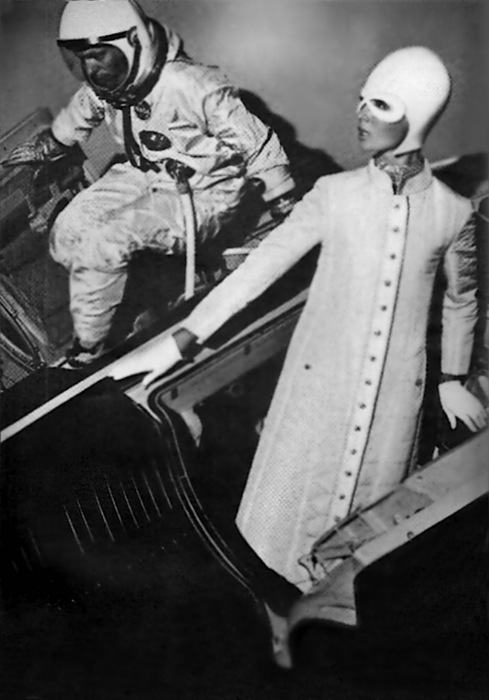
"The oceans will boil away and the atmosphere will dry out as water vapor leaks into space." (Image by Pierre Cardin.)

As the sun ages, its light becomes stronger, not weaker. What to do when the future grows too bright, if we even make it that far? From Andrew Grant’s excellent new Discover article,How to Survive the End of the Universe“:

“For [theoretical physicist Glenn] Starkman and other futurists, the fun begins a billion years from now, a span 5,000 times as long as the era in which Homo sapiens has roamed Earth. Making the generous assumption that humans can survive multiple ice ages and deflect an inevitable asteroid or comet strike (NASA predicts that between now and then, no fewer than 10 the size of the rock that wiped out the dinosaurs will hit), the researchers forecast we will then encounter a much bigger problem: an aging sun.

Stable stars like the sun shine by fusing hydrogen atoms together to produce helium and energy. But as a star grows older, the accumulating helium at the core pushes those energetic hydrogen reactions outward. As a result, the star expands and throws more and more heat into the universe. Today’s sun is already 40 percent brighter than it was when it was born 4.6 billion years ago. According to a 2008 model by astronomers K.P. Schröder and Robert Connon Smith of the University of Sussex, England, in a billion years the sun will unleash 10 percent more energy than it does now, inducing an irrefutable case of global warming here on Earth. The oceans will boil away and the atmosphere will dry out as water vapor leaks into space, and temperatures will soar past 700 degrees Fahrenheit, all of which will transform our planet into a Venusian hell-scape choked with thick clouds of sulfur and carbon dioxide. Bacteria might temporarily persist in tiny pockets of liquid water deep beneath the surface, but humanity’s run in these parts would be over.

[Astronomer Greg] Laughlin was intrigued by the idea of using simulations to traverse enormous gulfs of 
time: ‘It opened my eyes to the fact that things will still be there in timescales that 
dwarf the current age 
of the universe.’

Such a cataclysmic outcome might not matter, though, if proactive Earthlings figure out a way to colonize Mars first. The Red Planet offers a lot of advantages as a safety spot: It is relatively close and appears to contain many of life’s required ingredients. A series of robotic missions, from Viking in the 1970s to the Spirit rover still roaming Mars today, have observed ancient riverbeds and polar ice caps storing enough water to submerge the entire planet in an ocean 40 feet deep. This past August the Mars Reconnaissance Orbiter beamed back time-lapse photos suggesting that salty liquid water still flows on the surface.

The main deterrent to human habitation on Mars is that it is too cold. A brightening sun could solve that—or humans could get the job started without having to wait a billion years. ‘From what we know, Mars did have life and oceans and a thick atmosphere,’ says NASA planetary scientist Christopher McKay. ‘And we could bring that back.'”

Tags: , , ,

Marshall McLuhan and artist and ace typographer Harley Parker enjoy a bull session in 1967’s “Picnic in Space,” which is informed by the work of Warhol, Lichtenstein and Godard.

Tags: ,

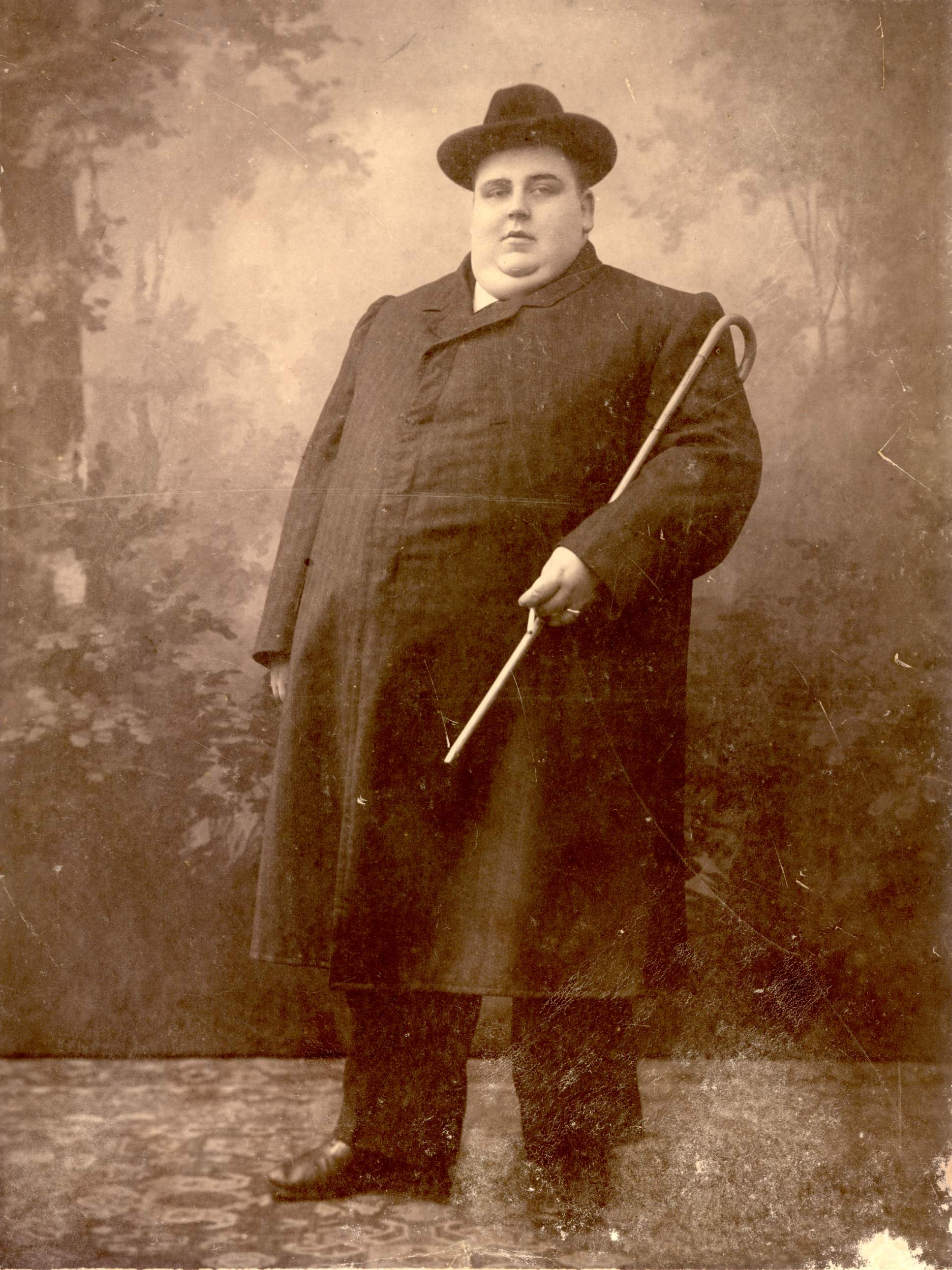
"Eat up to 5 sandwiches the whole day and as much drink as you want."

How To Lose Weight

Eat Pickles 10 calories for a whole pickle and diet soda, water and or Wylers Orange drink (tastes like Tang) slice bread with one slice of cheese and one slice of meat no Mayonaise (200 calories).

Eat up to 5 sandwiches the whole day and as much drink as you want. you can have a little coffee in the morning with milk and sugar. total 1000 calories a day. take a multi vitamin. take a small walk daily. 

Just listened to a fun interview that Bill Simmons did with stats guru Bill James at the MIT Sloan Sports Analytics Conference. I paid close attention to James’ ability to remember names and dates, and like pretty much every informavore I’ve ever encountered, his recall isn’t very good. The memory is just so elastic even for someone who’s brilliant, except for a few anomalies. Interesting that James points out that he was actually aided in his early career in the 1970s by working with numbers in a time before everyone had a computer or two in their pocket. Because collecting and crunching info was so difficult in an unwired world, others interested in sports stats pretty much gave up while James soldiered on. An excerpt from James talking about his first use of computers:

Bill Simmons: There’s no way you’re using a computer at this time?

Bill James: We didn’t have personal computers, no. Everything was handwritten and in notebooks.

Bill Simmons: When did you move over to the personal computer?

Bill James: I enjoyed personal compyers as soon as they came out–

Bill Simmons: I would have guessed.

Bill James: I never could program or anything like that. We had a Kaypro…I had a spreadsheet on it that was 32 cells long and 16 wide.”

•••••••••

A great 1983 Kaypro commercial by ad legend Joe Sedelmaier:

Tags: , ,

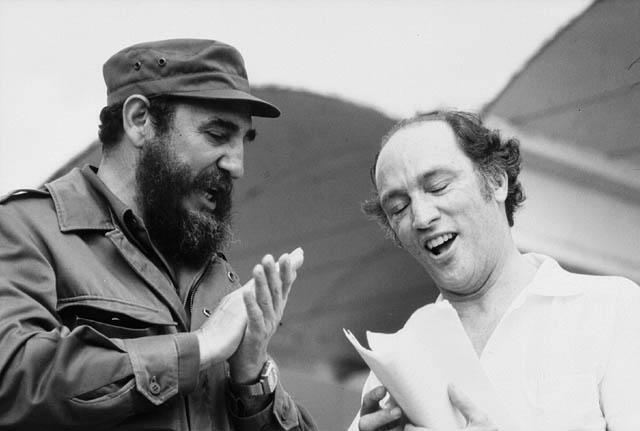
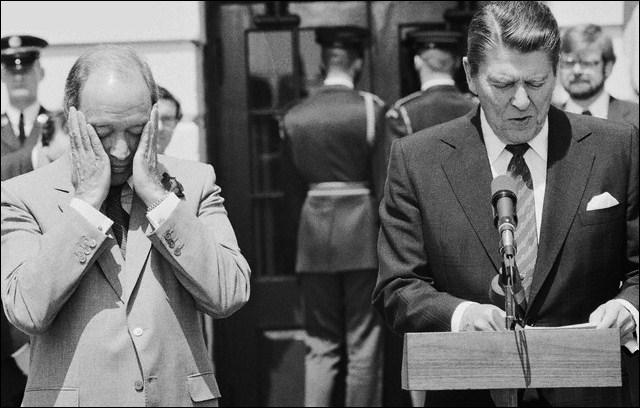
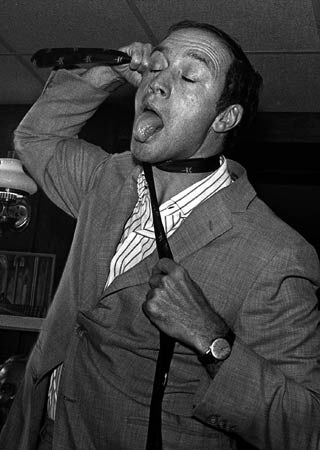
Pierre Trudeau dominated Canadian politics for more than 15 years beginning in 1968. A politican as rock star, he’s still the country’s Prime Minister best remembered outside of Canada and likely the most divisive one within the nation.

Trudeau responding to personal attacks, 1972:

Trudeau meets with John and Yoko, 1969 (no sound until :30):

Tags: , ,

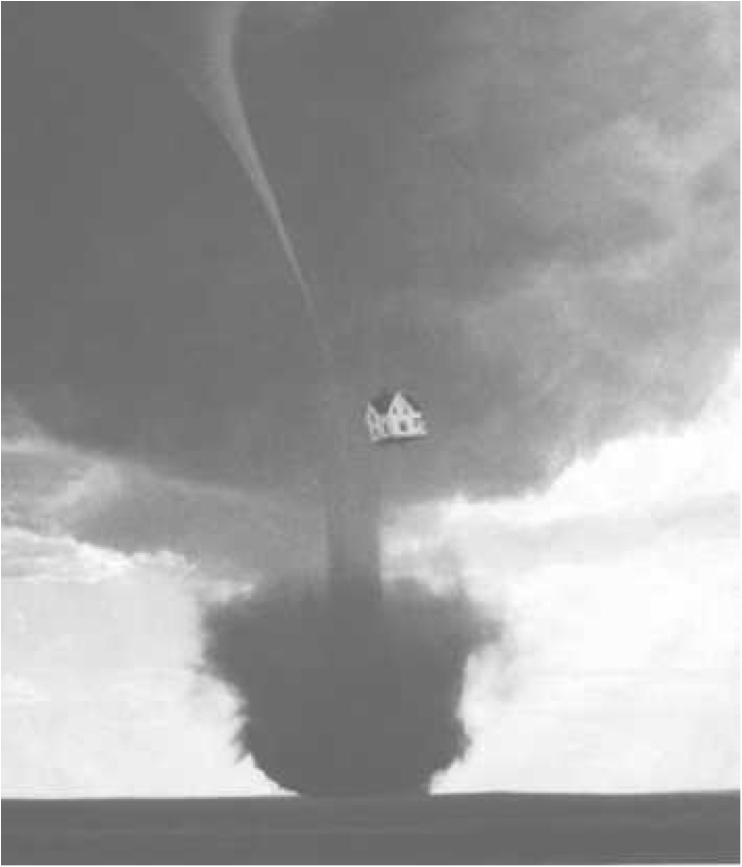
In the wake of a devastating earthquake last year, Japanese researchers are experimenting with home levitation. From Popsci: “Instead of building super-strong yet flexible structures to withstand earthquakes, what if you built your house to levitate on a cushion of air? This is already being employed in Japan, a little less than a year after the massive earthquake and tsunami that devastated the country.

The levitation system is the brainchild of a company called Air Danshin Systems Inc., which the Japanese-culture-and-art site Spoon & Tamago says roughly translates to ‘anti-seismic.’ It was founded in 2005 but has caught on after the March 11, 2011 Tohoku earthquake.”

I’ve recently linked to a couple of excellent pieces of Charles Duhigg’s reportage for the New York Times (here and here). He has another impressive article, this one for Slate about the hidden corners of consumerism, called “The Power of Habit.” The opening:

“One day in the early 1900s, a prominent American businessman named Claude C. Hopkins was approached by an old friend with an amazing new creation: a minty, frothy toothpaste named ‘Pepsodent’ that, he promised, was going to be huge.

Hopkins, at the time, was one of the nation’s most famous advertising executives. He was the ad man who had convinced Americans to buy Schlitz beer by boasting that the company cleaned their bottles ‘with live steam’ (while neglecting to mention that every other company used the same method). He had seduced millions of women into purchasing Palmolive soap by proclaiming that Cleopatra had washed with it, despite the sputtering protests of outraged historians.

But Hopkins’ greatest contribution would be helping to create a national toothbrushing habit. Before Pepsodent, almost no Americans brushed their teeth. A decade after Hopkins’ advertising campaigns, pollsters found that toothbrushing had become a daily ritual for more than half the population. Everyone from Shirley Temple to Clark Gable eventually bragged about a ‘Pepsodent smile.”

••••••••

Steve and Eydie don’t have filthy, scummy teeth, 1978:

Tags: ,


From the September 15, 1901 Brooklyn Daily Eagle:

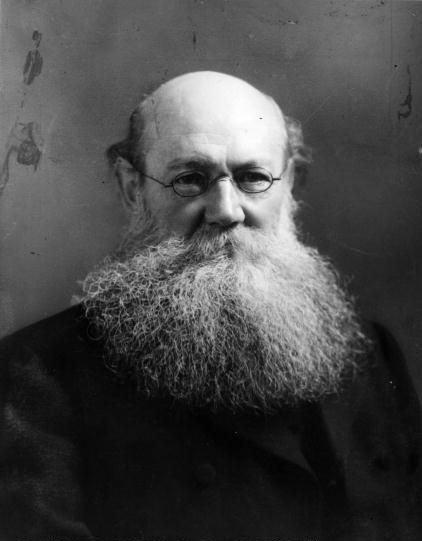
“An anarchist picnic which was to have been held at West Hoboken, N.J. to-day was abandoned, because the police gave notice that any person who participated in any public demonstration made by the anarchists would be promptly arrested.”

From Wired: “The robot on display in the video above is being developed by DARPA, the Pentagon’s blue-sky research agency, as part of their Autonomous Robotic Manipulation (ARM) program. Launched in 2010, the initiative aims to come up with robots that can perform highly complex tasks (bomb dismantling, for one) with very little human input.”

"Vintage dolls & toys." (Image by Stephenson Brown.)

Estate Sale (Rowayton, Connecticut)

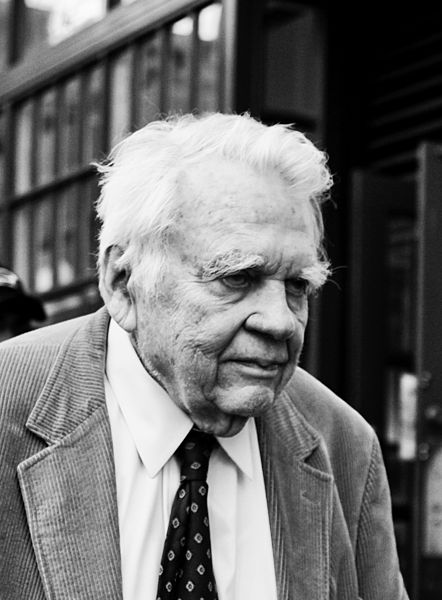
Estate of Andy Rooney

Rowayton, CT

Saturday thru Monday: March 3 – 5, 2012

10am — 5pm each day

Wonderful old Victorian home in Rowayton has been home to the Rooney family for 60 years — chock full of Americana, modern art and memorabilia from Andy Rooney’s incredible career in journalism and television. Period antiques and an amazing collection of American early 20th c prints and oils create a sale full of surprises and an opportunity to shop for a piece of history! 

Special offering: Andy’s antique Underwood typewriter, his vintage desk chair, pieces of furniture made by A. Rooney, many autographed books, vintage press & WWII memorabilia.

Prints: A. Calder, R. Crawford, J. T. Arms, G. Peterdi, J. Lasker, S. Andrews; Paintings & Drawings: Ralston Crawford, Joseph Stella, Gertrude Fiske, Sheldon Pennoyer, Isabelle Bishop, Adolfo Rolla, Louise Matthiasdottir; Photo: signed Berenice Abbott’s “Tredwell House”; original cartoons: Wingert, Stevenson, Darrow.

Furnishings: 19th c gilt “grapevine” mirror; 19th c overmantle mirror w/carved eagle; early NY sideboard; Empire chest; NY cutleaf table; 19th c tambour secretary w/tiger maple; tiger maple side chairs; Thos Moser bowback stool; double pedestal dining table w/ 5 leaves; set of 8 dining chairs; pr early 19th c carved footstools; Persian & Chinese carpets; Portuguese grospoint rug, Tiffany sterling coffeepot c. 1930; Geo. Jensen sterling server; Steuben, Baccarat, Orrefors, Lalique, Venetian glass; antique cut crystal, unique collection of early 19th c cast iron cookie molds; Wedgwood, Spode, Haviland, Dresden, Royal Worcester, flow blue china; early 18th c English highboy; 18th c Am. tallcase clock; vintage sleigh bed; gentlemen’s chest; unique 19th c vanity/work table; period flip top table; tiger maple gateleg console table; butler’s tray table; pr wing chairs; leather club chair; pr Federal twin beds; antique pine chest; loveseat sofabed; 19th c medical calipers (Vienna); vintage dolls & toys; great library w/many vintage & art books; copper pots; old brass; vintage clothing & jewelry, old NY Giants programs & Superbowl souvenirs.

Three floors of collectibles — don’t miss this sale!

Tags:

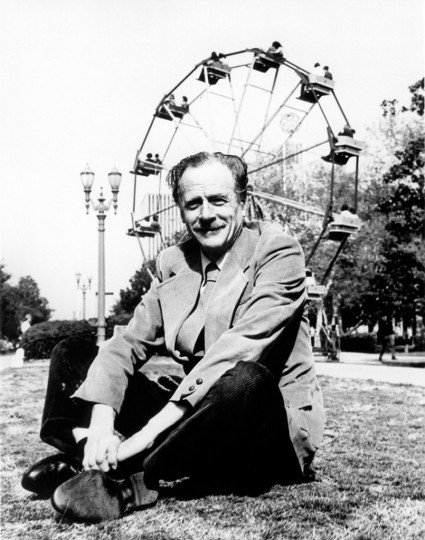
Marshall McLuhan watching the tube, urging us to drown out the white noise, to observe more closely.

Tags:

"Then I threw a net around him and brought him home to Camden."

Jack Gregory, an East Coast rat-catcher of some repute, relayed tales from his trade in an article in the August 10, 1884 edition of the Brooklyn Daily Eagle, which was originally published in the Philadelphia Record. The article:

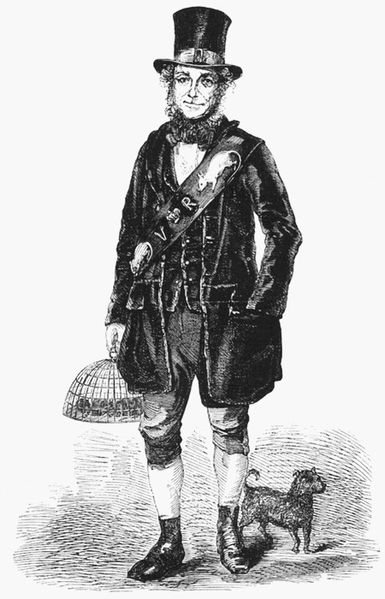
“‘I have caught and killed plenty of big rats in my time, but the biggest ones were captured along the wharves,’ said old Jack Gregory, or ‘English Jack,’ as he is called by his acquaintances. Gregory is a little old fellow, not more than five feet in height, and pressing close upon his 60th year. He lives in Camden, on William Street, below Roydon. When he starts out on his rat catching expeditions he is always accompanied by two little Scottish terriers, chained together. With a box of ferrets thrown over his shoulder, ‘English Jack,” presents an odd picture. ‘I have followed rat catching for a living for forty years,’ said Gregory, ‘but the most vicious chaps are generally found along the wharves, near where the sewers empty into the river. They grow up in the sewers, and eventually find their way to the water’s edge, and there they settle permanently or else take up quarters in the warehouses near the docks. I don’t mind a job of clearing a stable of rats. That’s fun for me. But when I am called upon to clear out a warehouse I always know that it means tough work, with the loss of about two or three ferrets. Nine times out of ten a rat will run away from a ferret, and when they emerge from their holes my dogs and I just lay for them and kill them as soon as they show themselves. But I have had many a valuable ferret killed by wharf rats. The rats being used to eating garbage greedily devour everything they come across, and grow to be tremendously large. I have seen lots that were as big as cats, and ferocious fellows they were, too.
"Gregory is a little old fellow, not more than five feet in height, and pressing close upon his 60th year."

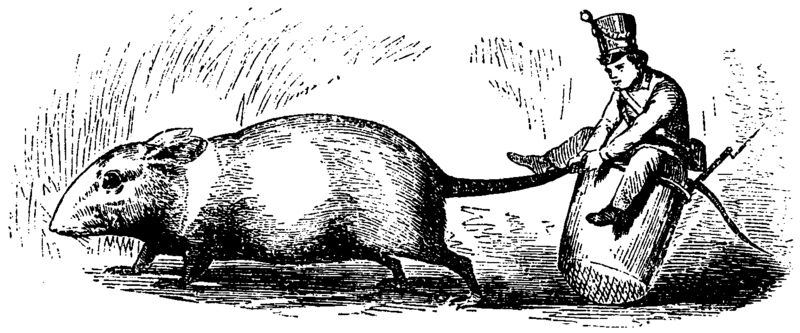
I remember once a pitched battle that took place between three of my ferrets and five rats, down at the sugar boiling house on Delaware Avenue, below South Street. Each rat was fully from fifteen to eighteen inches in length, and must have weighed from four to five pounds. They had it hot and heavy for a quarter of an hour. The ferrets fairly chewed the rats to pieces and came out victorious, though they got severely bitten themselves. Subsequently one of the ferrets died.  That night I succeeded in killing ninety rats. But I have seen larger rats than those in my time. A few years ago my dogs caught a rat down at the Washington Avenue grain elevator, which was much bigger than a cat. It was two feet long and weighed twelve pounds. He must gave been quite old and unusually fat. I guess he was the king rat about the elevator. I was very anxious to capture him alive, and it was hard work to drive the dogs off, so eager were they to put an end to him. He had fought them hard, notwithstanding his age, and the dogs had their dander up. I managed to draw them away, and then I threw a net around him and brought him home to Camden. I doctored him for three weeks and his wounds healed pretty well. A saloon keeper near the old Navy Yard made me an offer of $20 and I sold the rat to him to place on exhibition. He did not make much by the venture, as the saloonkeeper’s wife was afraid of the big rat, and being anxious to get rid of the animal poisoned it. While the animal was on exhibition there was a sign displayed on the iron cage in which it was confined, saying: ‘Don’t fool with the rat.’ This injunction was rather unnecessary, for all the customers willingly refrained from poking their fingers between the bars to stir him up. His looks were enough to frighten folks.'”
Tags:

William F. Buckley, Jr. welcomes Phyllis Schlafly and Ann Scott to debate the Equal Rights Amendment, 1973.

Tags: , ,

Researchers in Japan have developed a handgun that can literally stop people from talking in mid-sentence. It has scary Big Brother applications, obviously, though speech today relies more on opposable thumbs than vocal cords. From Extreme Tech:

“Japanese researchers have created a hand-held gun that can jam the words of speakers who are more than 30 meters (100ft) away. The gun has two purposes, according to the researchers: At its most basic, this gun could be used in libraries and other quiet spaces to stop people from speaking — but its second application is a lot more chilling.

The researchers were looking for a way to stop ‘louder, stronger’ voices from saying more than their fair share in conversation. The paper reads: ‘We have to establish and obey rules for proper turn-taking when speaking. However, some people tend to lengthen their turns or deliberately interrupt other people when it is their turn in order to establish their presence rather than achieve more fruitful discussions. Furthermore, some people tend to jeer at speakers to invalidate their speech.’ In other words, this speech-jamming gun was built to enforce ‘proper’ conversations.'”

« Older entries § Newer entries »