Urban Studies

You are currently browsing the archive for the Urban Studies category.

It wasn’t her most unusual assignment, but Oriana Fallaci spent a year focused on NASA in the mid-60s when the space race was in high gear. The result was If the Sun Dies, a book-length mélange of reportage and personal impressions about humans hurtling into the future. Fallaci was known for her ferocious Q&A interviews, but she was also a brilliant prose writer. A bigoted ass at times, but really brilliant. Here are the first three paragraphs from her book about life among the boldest rocketeers the world has ever known, in which she travels to Los Angeles to do research and finds the city to be odd and denatured:

“You couldn’t see the stone, so thick and lush was the grass. I tripped over it and fell flat, alongside the road. Nobody came to help me. But then who could? There was nobody walking along the road, nobody along the roads of the whole city. Nobody existed, nobody with feet and legs, with a body on his legs, a head on his body. Only automobiles existed, sliding by, smooth, controlled, always at the same speed, at the same distance, never a man inside, nor a woman. There were human forms behind the steering wheels, yes, but so straight they were, and still, that they could not be men or women; they were automatons, robots. Isn’t modern technology perfectly able to make robots identical to ourselves? Isn’t the first rule for robots ‘remember that you must not interfere with the actions of humans unless they ask you to’? And was I asking anyone to intervene? On the contrary. Stretched out on the grass by the roadside, my cheeks burning with embarrassment, I was only hoping that they wouldn’t notice me and laugh at me. And the robots obeyed, sliding by, smooth and controlled, always at the same speed, at the same distance, not even asking their computers whether the woman lying there was dead or alive and if she was alive why she wasn’t getting up. I wasn’t getting up because I had noticed something absurd. The grass didn’t smell like grass.
I stuck my nose into it and sniffed. No, it didn’t smell like grass, it had no smell at all. I grasped a blade and tugged. No, it didn’t come out and it didn’t break. I scrabbled underneath with my fingernail, looking for a speck of earth. No, you couldn’t even get hold of a speck of earth. How odd. Yes, it was the color of earth, it had the consistency of earth. And the grass that was planted in it was the same color as grass, it had the consistency of supple fresh grass, even watered with an ingenious sprinkler system to keep it green and make it grow; my God, I couldn’t be delirious, dreaming, the grass was grass, yes, of course it…Was it grass? I sniffed it again. Again I grasped a blade between my thumb and forefinger and tugged. Again I scrabbled underneath with my fingernail, looking for a speck of earth, and like a dagger-thrust in my brain the doubt became certainty. The grass was plastic. Yes, and perhaps all the grass I’d seen there, the grass plots along the avenues, along the highways, in front of the houses, the churches, the schools, looked after by gardeners, watered, treated like real grass, grass that grows and dies, was all plastic. A huge shroud of plastic, of grass that never grows or dies, a mockery.
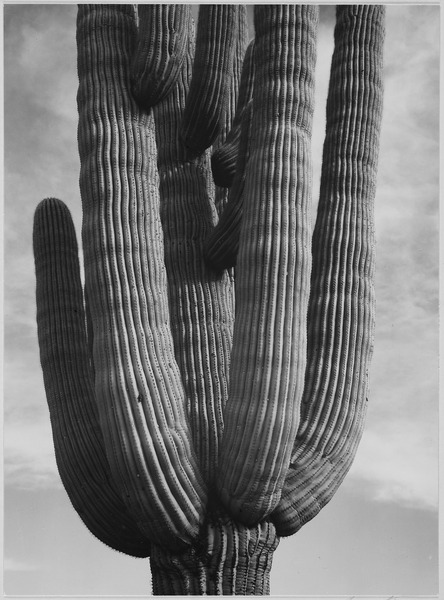
I jumped up as if I’d been stung by a thousand wasps, hurried back to my hotel, flung open my door of my suite and almost fell over the cactus plant that adorned the living room. It was a big cactus, green, lush, bristling with thorns, and on top there was a flower. I felt the flower, I bent it and twisted it. It remained intact. I poked my finger between the thorns, squeezed the fleshy part, hoping for a drop of liquid. I felt only the sponginess of rubber. I squeezed the thorns with both hands, desperately praying that they would prick me, that they would tell me I’d made a mistake. They only tickled me gently, the thorns were made of aluminum and rounded points. And the plant in the corridor? False, too. And the hedge in the garden? False of course. And probably those trees too around which there were never any flies or birds, every blade of grass, every branch, every leaf was false in this city where nothing green sprouted and grew and died. The daisies, the azaleas, the rhododendrons, the rose in that vase…The vase was on the TV and I approached it without hope. I gently removed a rose, raised it to my face, let it drop, and the rose went crack; it shattered on the floor in a thousand splinters of glass. On the floor a cold frost, a spark of light remained. I had reached Los Angeles, first stage of my journey into the future and into myself.”
Tags:

From a really good boingboing interview that Avi Solomon conducted with Kevin Kelly:

Kevin Kelly: I would say over the long-term that humans cannot really influence the direction of technology and I would say that there are certain inevitabilities in the progression of technologies. What we can influence is the character of the technologies.

So I would say that the web, a web was inevitable, in that as long as we were producing things, that if we rewound history to the same start point, same conditions, and let it run, that you would keep getting the web at some relative point in the sequence. And that if you were to do an intergalactic survey of all the planets of the universe that had civilizations that all of them would also go through a moment when they connected everything to everything. That is inevitable. But what kind of internet, what kind of web they make is not inevitable. The character, whether it was open or closed, national or transnational, non-profit or commercial, based on this protocol or that protocol, those things are not at all inevitable, and those are political, entrepreneurial and market decisions we make. And they make a huge difference to us. So the kind of system we have is a choice that we have.”

Tags: ,

I read in one of the books about Saturday Night Live that a rival show on ABC had been called Saturday Night Live when Lorne Michael’s creation debuted. It was a short-lived comedy-variety program hosted by Howard Cosell and featuring guests like Evel Knievel and Muhammad Ali and a cast member named Bill Murray. It aired live from the Ed Sullivan Theater. The Saturday Night Live on NBC that we all know was originally called Saturday Night to avoid conflict over the title. This is a promo that ran for the Cosell show.

Tags:

"The liver strikingly resembles the liver of a camel or a seal."

In a ranking of the best pathologists in the history of the world, Dr. William Moser would not be near the top of the list. From the July 18, 1898 Brooklyn Daily Eagle:

“Some of the medical profession in this borough are at present discussing the subject of an interesting human liver recently come upon by Dr. William Moser, pathologist of St. Catharine’s and St. Mary’s Hospitals in the course of an autopsy on a middle aged male adult. Dr. Moser has presented the liver to the Brooklyn Medical Society and it is now preserved and on view at the society’s rooms.

Dr. Moser, who, on account of his abilities, possesses the respect of his fellows in the profession, made the statement to an Eagle reporter this morning that the discovery was one of the strongest pieces of corroborative evidence in support of Darwin’s theory of evolution recently discovered.

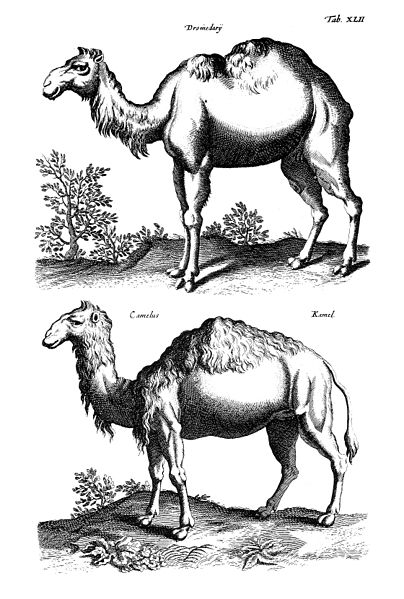
He said: ‘The specimen to which I have drawn the attention of the profession demonstrates a human liver analogous to that of a camel or a seal from the fact that it consists of numerous lobes like theirs. In fact, I am convinced that we have in it a specimen of atavism, or a reversion to a remote ancestral type or to our own next of kin, the orangutan or the ape. In this instance the liver strikingly resembles the liver of a camel or a seal, and going a step backward, furnishes strong evidence in support of Darwin’s theory of evolution.'”

Tags:

Best known today for having kinky sex with Keira Knightley, Carl Jung was successor to Sigmund Freud as the most famous psychoanalyst on the planet. From 1959, two years before the doctor’s death.

Tags:

In a chilling scene from 1949’s The Third Man, Harry Lime makes abstractions of human beings, reducing them to dots. How can people not be expendable when time and history and population are considered? It’s enough to make the blood run cold, and it’s the kind of thinking that has been employed to commit atrocities.

But a similar type of thinking can be used to do great good. If you want to judge people objectively, if you want to remove prejudice, if you want to make decisions based on facts and not emotions, if your aim is to seek truth and not be prone to the delusions of narrative, it might not be bad to selectively see people as dots. Not to reduce the humanity of others but to diminish our own faulty decision-making processes.

From Evgeny Morozov on the Browser, a passage about Lewis Mumford’s feelings about technology, especially the invention of clocks:

“Technology became something of a subject, I guess, in the late 1860s/70s but it only really emerged as a field for academic study in the late 1930s. The most influential early book aimed at a popular audience was Technics and Civilization by Lewis Mumford, published in 1934. It touched the worlds of history and economics and, to an extent, political philosophy. Mumford tried to look back as far as he could and study how human societies incorporated various technologies, but also how they made choices about which technologies to take on, how to regulate them, and how those decisions ended up shaping societies themselves.

The most famous example he evoked was the invention and wide acceptance of the clock. Mumford thought that the clock was one of the technologies that allowed capitalism to emerge because it provided for synchronisation and for people to cooperate. But I think this was also one of the first texts that critically engaged with the potentially negative side effects of technology. Mumford actually looked at how some technologies were authoritarian – that was his term – how some led to centralisation and establishment of control over human subjects and how some of them were driven by a completely different ethos.

Tags: ,

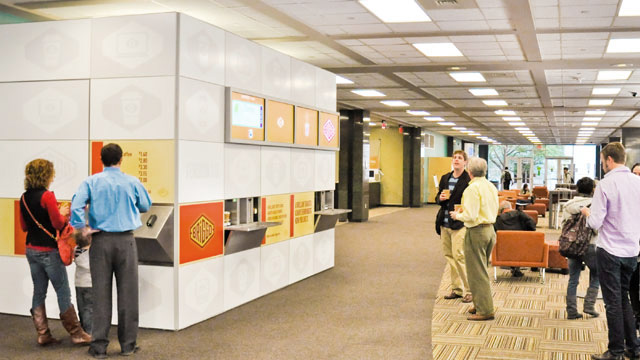
Briggo has introduced Intelligent Networked Coffee Kiosks at the University of Texas, so robistas can make your lattes. From Anton Olsen at Wired:

“When I was in Austin for SXSW the family and I stopped by Briggo’s prototype robotic coffee shop at the University of Texas. Someone mentioned robots and coffee in the same sentence and I couldn’t resist.

The first version of Briggo went online in November 2011 and it appears to be a hit with students and professors alike. Customers can order drinks off the web, a smart phone app, or at the kiosk itself. Even before ordering, the status of the queue and estimated time for each drink is clearly listed. This gives the customer some flexibility to choose a quick coffee drink over their favorite americano if the queue is backed up. Payment is handled at the time the order is placed so all that’s left to do is pick up the coffee on the way to class. The robot can even send a text when the drink is done.”

Tags:

Charles Fishman, author of The Big Thirst, nominates Las Vegas as the most water savvy area of the United States. It seems counterintuitive that a piece of desert crammed with swimming pools and gargantuan fountains could be considered water smart, but the city consistently makes it work despite meagre natural resources. An excerpt from his book at Marketplace:

“There is no two-mile stretch of ground anywhere in the United States that has such a density of water features, water attractions, and sheer water exuberance. Las Vegas, which can invest something as routine as breakfast with outlandish extravagance, has taken our most unassuming substance and unleashed it as the embodiment of glamour, mystery, power, and allure. In the way that only Las Vegas can, it has created a whole new category–ostentatious water.

The Las Vegas Strip is a demonstration of water imagination, of water mastery, and also of absolute water confidence.

It’s all the more remarkable because Las Vegas is the driest city in the United States. Of the 280 cities in the United States with at least 100,000 people, Las Vegas is No. 280 in precipitation and No. 280 in number of days each year that it rains. Las Vegas gets 4.49 inches of precipitation a year. And it rains or snows, on average, just nineteen days a year.

A metropolis with 2 million residents and 36 million visitors a year, Las Vegas gets ninety percent of its water from a single source, Lake Mead, the spectacular, man-made reservoir created on the Colorado River by Hoover Dam. When Lake Mead is full, it holds a sixty-year supply of water for Las Vegas.

But Las Vegas is legally allowed to take only a tiny sliver of Lake Mead water — 300,000 acre-feet a year, 98 billion gallons. All the water Las Vegas is allowed lowers the lake between two and three feet. Las Vegas’s allocation is about 4 percent of what everybody else gets to take from Lake Mead — 96 percent of the water people use from Lake Mead goes to either California or Arizona. And Las Vegas’s allocation is fixed in law, just as the allocations of California and Arizona are fixed — so the amount of water Las Vegas has access to hasn’t changed even as Las Vegas’s population has doubled, and doubled again, even as the city has added 100,000 new hotel rooms, along with fountains and waterfalls, swimming pools and shark tanks.”

••••••••••

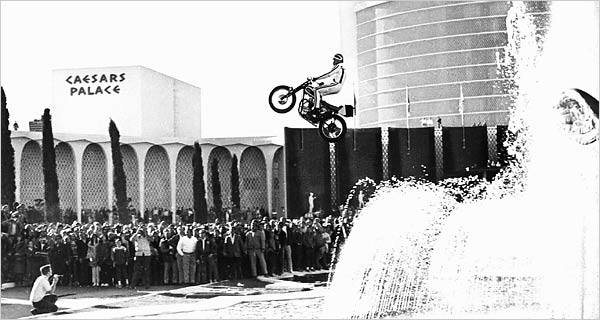
Evel Knievel’s failed attempt at jumping the fountains at Caesars Palace, 1967:

Tags: ,

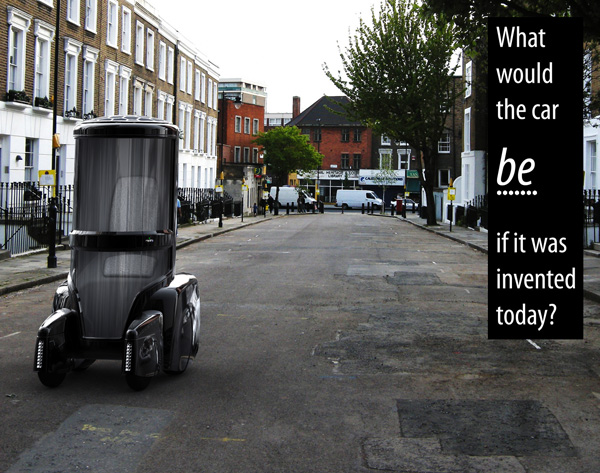
It’s a really interesting question: If automobiles had never been invented and we were making the first ones right now, what would the design look like? I’m pretty sure they wouldn’t look like Robert Hagenstrom’s answer, the Urban Flower vehicle, which he designed as if it were the initial automobile. It resembles a Segway crossed with an iron maiden. From Yankodesign: “Lanes, traffic lights, zebra crossings, standard parking lots, and the car itself would be replaced with compact, solar powered charging stations, and public personal vehicles available at the swipe of a credit card. The personal craft would navigate the streets much in the same way as a person on a crowded sidewalk; aware of surrounding objects, and in constant communication others around it, avoiding congestion as it navigates unique routes to its destination.”

Tags:

Is this the life or what (Midtown)

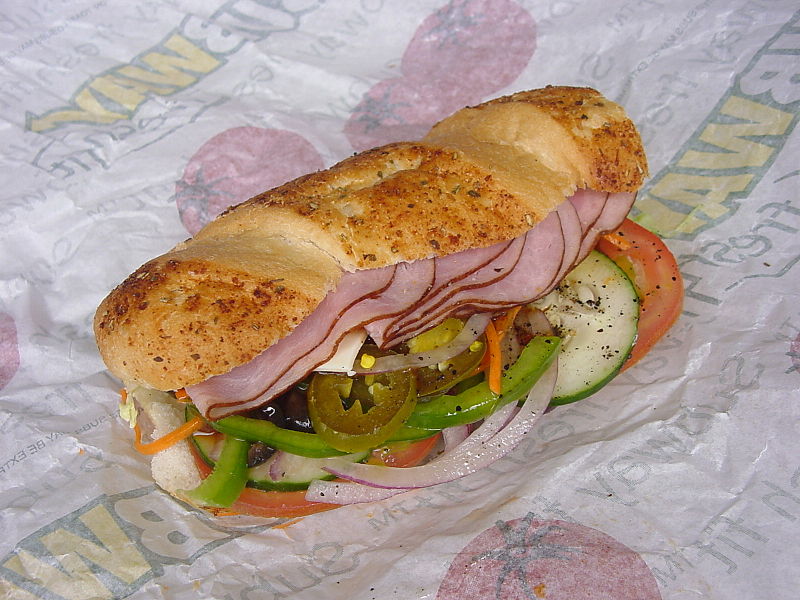
Sooo…I just masturbated at work, and then after I went to go get a sandwhich. Is this life or what!

Gary Numan questioning the fealty of his social network, 1979.

Tags:

"Fitzsimmons."

From the April 13, 1897 edition of the Brooklyn Daily Eagle:

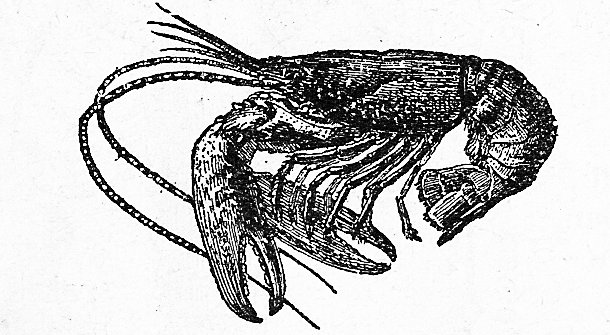
“Fitzsimmons, the lobster weighing 31 pounds, which has been one of the attractions of the aquarium, New York, died during the night.”

Tags:

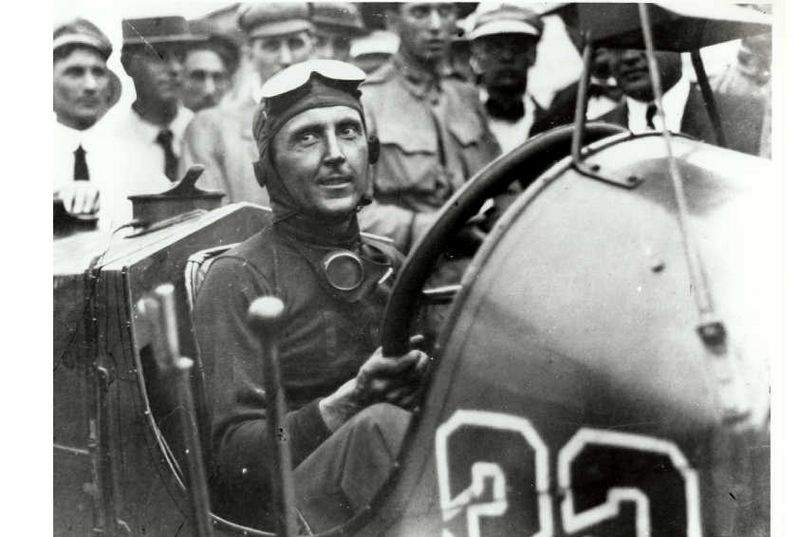
In 1961, newly crowned Indianapolis 500 champ A.J. Foyt appeared on I’ve Got a Secret with Ray Harroun, who won the inaugural Indy 500 in 1911.

Tags: ,

In his new Slate article, “What Will Become of the Paper Book?” Michael Argesta predicts that while printed books will soon be a thing of the past for the masses, specialized, elaborately designed volumes will continue to be published for those with disposable income. An excerpt:

“Who will buy these new, well-made paper books? One likely result of the transition to e-books is that paper book culture will move further out of reach for those without disposable income. Debt-ridden college students, underemployed autodidacts, and the everyday mass of bargain-hunters will find better deals on the digital side of the divide. (Netflix for books, anyone?)

As paper books become more unusual, some will continue to buy them as collectors’ items, others for the superior sensory experience they afford. There’s reason to think this is happening already: Carl Jung’s Red Book, a facsimile edition featuring hand-painted text and illustrations, sold well in America in 2010 despite its $195 price tag. When readers believe that a book is special in itself, as an object, they can be persuaded to pay more.

Bookshelves will survive in the homes of serious digital-age readers, but their contents will be much more judiciously curated. The next generation of paper books will likely rival the art hanging beside them on the walls for beauty, expense, and ‘aura’—for better or for worse.”

Tags:

Michelangelo Antonioni, in 1982, thinking about a “future with no end,” knowing that film–and everything else–would soon change greatly. The rise of the machines and the fall of communism altered the landscape, as movies became more non-verbal for a truly global, multilingual market.

Tags:

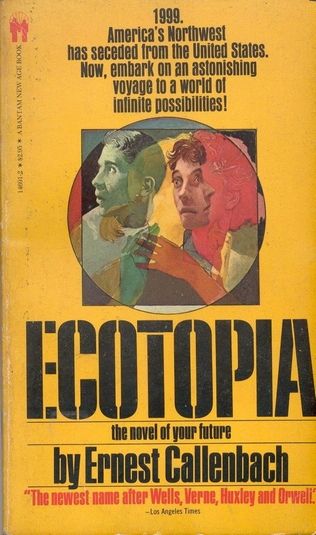
Mark Bittman at the New York Times mentions Ernest Callenbach’s 1975 futuristic novel, Ecotopia, in his most recent column. Callenbach, who also founded Film Quarterly, recently passed away. The book fantasizes that Northern California, Washington and Oregon secede to create a green paradise in which fossil fuels are banned. I’ve always meant to read it but never have. I must correct this. From a TomDispatch post about the late writer:

Callenbach once called that book ‘my bet with the future,’ and in publishing terms it would prove a pure winner. To date it has sold nearly a million copies and been translated into many languages. On second look, it proved to be a book not only ahead of its time but (sadly) of ours as well. For me, it was a unique rereading experience, in part because every page of that original edition came off in my hands as I turned it. How appropriate to finish Ecotopia with a loose-leaf pile of paper in a New York City where paper can now be recycled and so returned to the elements.

Callenbach would have appreciated that. After all, his novel, about how Washington, Oregon, and Northern California seceded from the union in 1979 in the midst of a terrible economic crisis, creating an environmentally sound, stable-state, eco-sustainable country, hasn’t stumbled at all. It’s we who have stumbled.  His vision of a land that banned the internal combustion engine and the car culture that went with it, turned in oil for solar power (and other inventive forms of alternative energy), recycled everything, grew its food locally and cleanly, and in the process created clean skies, rivers, and forests (as well as a host of new relationships, political, social, and sexual) remains amazingly lively, and somehow almost imaginable — an approximation, that is, of the country we don’t have but should or even could have.

Callenbach’s imagination was prodigious. Back in 1975, he conjured up something like C-SPAN and something like the cell phone, among many ingenious inventions on the page. Ecotopia remains a thoroughly winning book and a remarkable feat of the imagination, even if, in the present American context, the author also dreamed of certain things that do now seem painfully utopian, like a society with relative income equality.”

••••••••••

Callenbach discussing Ecotopia in 1982:

Tags: ,

Pegasus Holdings has announced it’s building an insta-ghost town in New Mexico. It will be a mid-size American city that could house 35,000, but no one will live there. The fully functioning soundstage city will be used to experiment with smart technologies. From the company’s press release:

“Targeted for completion in 2014, CITE will resemble a mid-sized American city, including urban and suburban neighborhoods, open spaces and highways. It will reflect the current mix of new and aging infrastructure found in most U.S. cities. This will allow innovators, researchers, and potential investors the only environment of its kind to test their technologies in a facility that is not only secure, but also replicates real-world challenges. Unique to CITE, the test infrastructure will be unpopulated, allowing for a true laboratory without the complication and safety issues arising from having residents.

CITE will provide the opportunity for end-to-end testing, evaluation and demonstration of new intelligent and green technologies and innovations emerging from the world’s public laboratories, universities, and the private sector allowing them to better understand the cost and potential limitations of new technologies prior to commercial introduction. CITE will also provide a new testing and evaluation opportunity for those small and medium firms which often find testing prohibitive, cost and otherwise, at existing public and private facilities. Among the countless testing opportunities are integration of renewable energies, intelligent traffic systems, next-generation wireless networks, smart grid cyber security and terrorism vulnerability.”


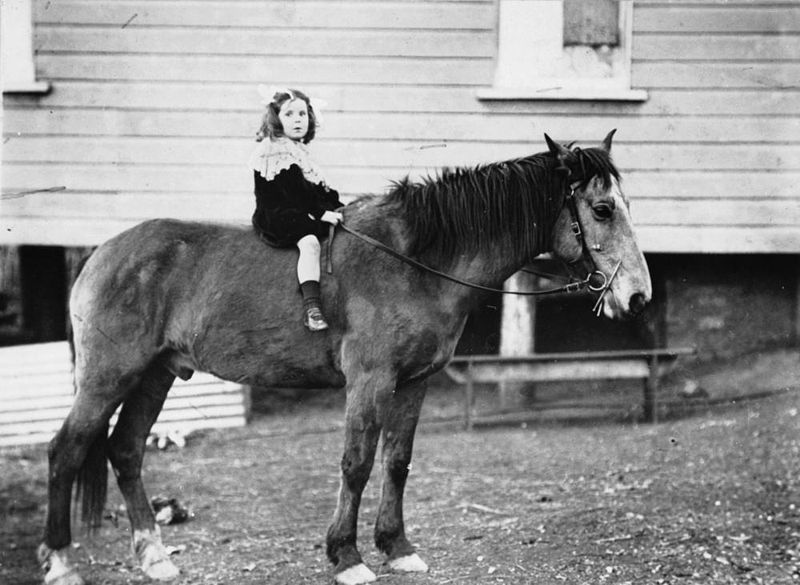
A young girl with dreams of being a trick rider was arrested after running away from home and following a circus from town to town. A report from the August 25, 1894 edition of the Brooklyn Daily Eagle:

“Lizzie Finck, the pretty 14 year old girl who was arrested on Thursday at Patchogue for following the circus will be given over to the custody of her parents tonight. Lizzie was identified as the daughter of John Finck, formerly of Brooklyn but now of Mount Vernon, N.Y. The circus manager, who caused the arrest of the girl, says she was noticed to be a regular attendant of the show at both afternoon and evening exhibitions in every town the circus had visited for a week past. As the girl invariably appeared in a different costume every day, the circus people were greatly puzzled and hesitated about causing her arrest.

It was not until she appeared at Sag Harbor on Wednesday that the manager decided to have her taken into custody should she follow them further. The next day she was promptly on hand for the street parade at Patchogue and among the fist to purchase tickets for the afternoon exhibition. 

The complaint was made to Justice Hegeman, to whom the prisoner made a garbled confession. She declares she intends to be a circus rider and that the present interference with her plans will not in any way change her ideas. The girl’s father was telegraphed for.”

Tags: , ,

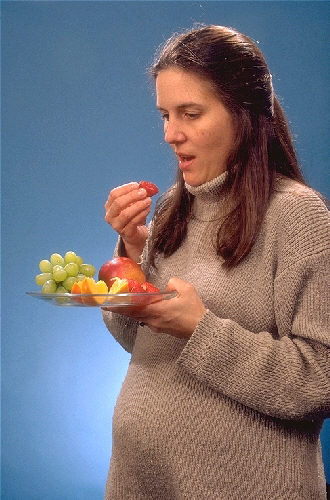
I need urine!

I need a pregnant chick’s urine…

Serious replies only. Need it ASAP!

I love everything about McDonald’s except for the food–the awful, awful food. Oh, and the smell coming from the food. That also blows.

But from the kitchen systems to the bright-colored plastic furniture to the branding and packaging, I’m really taken by it all. If only the food didn’t taste like feet with ketchup.

In a recent (and very good) New York Times Magazine article by Keith O’Brien about the chain’s contemporary, Gladwellian marketing strategy, it was noted that West Coast outlets have begun adding flat-screen TVs that play a nascent McDonald’s Channel. No, you won’t see war coverage or towers being struck by airplanes. It’s innocuous stuff aimed at keeping diners in the restaurants longer, in the hope that extended stays will mean additional purchases. Here’s the promotional video for the channel.

Tags:

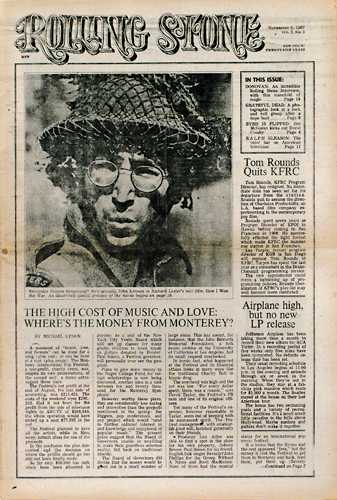
From Simon Reynolds’ sprawling L.A. Review of Books interview (Pt. 1 + Pt. 2 + Pt. 3 + Pt. 4) with Greil Marcus, an exchange about how the legendary rock journalist came to sever ties with Rolling Stone:

SR: But you left Rolling Stone after only a few years as the reviews editor, right? How come?

GM: It was a complicated situation. Originally Jann formed an editorial board to decide everything: hiring and firing, themes, the future. It was Ralph Gleason and John Burks, who was the managing editor, and Jann and me. We met every couple of weeks, maybe weekly. Usually at my house. And after the third or fourth meeting my wife said to me, ‘How long do you think Jann is really going to want to keep you people around just to tell him how he’s doing everything wrong?’ Which is what we were doing, pretty much! I thought, ‘Oh, he values our opinion.’ In the spring of 1970, when the Kent State shootings took place, and the shootings in Jackson State, which have been completely forgotten but were a big deal then, campuses across the country erupted and higher education in the U.S. was brought to pretty much a standstill. And Nixon goes on to the Lincoln Memorial in the middle of the night to talk to protesters and he’s drunk. So people are, like, ‘What’s going on here?’ Jann was out of town, so John Burks and I put together a really fabulous issue, called ‘The Pitiful Helpless Giant’ — those were Nixon’s words about the USA; he was saying the U.S. was not going to become a pitiful helpless giant. When Jann got back, I think he found that the paper — we didn’t call it a magazine then — was being taken away from him. It wasn’t that he did or didn’t like what we had done, but what we had done was something major: a firm and strong political stand just through what we’d published. The paper was slipping away from him. He was losing his moral authority by having ceded so much of it to other people.

When I became record reviews editor, I made it clear to him after a few months — nobody had done the job before me — that the record review section was an independent republic within the country of Rolling Stone. That meant that nobody else could tell me what to review or what a writer could say. They could argue with me, but ultimately it was my decision. And that worked well. There was one incident where Paul McCartney makes his first solo record and people thought it was wonderful: this rough, homemade one-man-band album. It was accompanied by a press release, a self-interview, about why he no longer needed the Beatles and how little he thought of them … this real obnoxious statement, you know? I assigned it to a friend of mine, Langdon Winner, and Jann saw the piece and said: ‘We can’t run it this way — he’s just reviewing it as if it’s this nice little record. It’s not just a nice little record, it’s a statement and it’s taking place in a context that we know: it’s one person breaking up the band. This is what needs to be talked about.’ I said I didn’t agree and “in any case it’s up to Langdon to say what he wants to say.’ Jann said, “We have to talk about this.” So we went to dinner that night and spent three fucking hours arguing about this record review. Finally he convinced me. So I went over to Langdon’s and sat down with him and spent three more hours arguing with him until I convinced him! Now to me this was the essence of great editing, of how you put out a publication that is utterly honest. All that time spent over one 750 word review! And it was worth it.

But Jann had to take the paper back, he really did. He called me in … June 1970, I guess, and said, ‘I really want to talk about what you’re going to be doing here.’ It was all ‘do this’ and “do that” and ‘you’re not doing that.’ I came away from this long conversation really feeling great: it was a new role at the magazine, with more freedom. I came home and told my wife about it in great detail. And Jenny said, ‘Greil, you’ve just been fired.’ I said, ‘I have?!?’ And she explained to me what this conversation had really been about. Now to this day, Jann will probably say that I quit, and I will say I was fired. But it was that subtle. It was pretty slick.”

Tags: , ,

It started, for the most part, during the 1980s. Americans of modest means were encouraged to relate to the wealthy and powerful, ignoring their own circumstances. Don’t vote for people who have your interests at heart because your interests will soon change. You are a hardworking person and in America, a meritocracy, people like that will join the elite. Vote for the future you think you will have, not the present your are enduring. Union members needn’t support candidates who are pro-union. Seniors can support those who would decimate social security. Do not tax the rich because you’ll soon be rich.

Of course, the math doesn’t add up. No matter how much of a meritocracy we are, not every person who works hard will become incredibly successful. A good deal of luck goes into these things as well. And voting so often for our fantasies instead of our realities has only made things more difficult for the great majority.

It was no surprise that former Lifestyles of the Rich & Famous host Robin Leach recently called President Obama a “socialist.” But Leach tripped himself up on one point while doing so. He said that he came to America in the 1960s hoping to become wildly successful and wants those opportunities for others, not mentioning how much tax policy and the corporate role in government has changed since then. As far as race and gender, the 1960s was a less fair time, but we weren’t then a country that based monetary policy on what was best for the super-rich. If anyone proposed that we return to the policies of the 1960s, Leach would call them socialists as well.•

Tags:

Medical history is stained by human blood, but not only that of patients. For centuries, human remains were vital ingredients in solutions used to treat a myriad of maladies. From Maria Dolan at Smithsonian:

“[Louise] Noble’s new book, Medicinal Cannibalism in Early Modern English Literature and Culture, and another by Richard Sugg of England’s University of Durham, Mummies, Cannibals and Vampires: The History of Corpse Medicine from the Renaissance to the Victorians, reveal that for several hundred years, peaking in the 16th and 17th centuries, many Europeans, including royalty, priests and scientists, routinely ingested remedies containing human bones, blood and fat as medicine for everything from headaches to epilepsy. There were few vocal opponents of the practice, even though cannibalism in the newly explored Americas was reviled as a mark of savagery. Mummies were stolen from Egyptian tombs, and skulls were taken from Irish burial sites. Gravediggers robbed and sold body parts.

‘The question was not, ‘Should you eat human flesh?’ but, ‘What sort of flesh should you eat?’’ says Sugg. The answer, at first, was Egyptian mummy, which was crumbled into tinctures to staunch internal bleeding. But other parts of the body soon followed. Skull was one common ingredient, taken in powdered form to cure head ailments. Thomas Willis, a 17th-century pioneer of brain science, brewed a drink for apoplexy, or bleeding, that mingled powdered human skull and chocolate. And King Charles II of England sipped ‘The King’s Drops,’ his personal tincture, containing human skull in alcohol. Even the toupee of moss that grew over a buried skull, called Usnea, became a prized additive, its powder believed to cure nosebleeds and possibly epilepsy. Human fat was used to treat the outside of the body. German doctors, for instance, prescribed bandages soaked in it for wounds, and rubbing fat into the skin was considered a remedy for gout.

Blood was procured as fresh as possible, while it was still thought to contain the vitality of the body. This requirement made it challenging to acquire.” (Thanks Browser.)

Read also:

Tags: , ,

Apart from Kentucky Derby day, horse racing has long suffered a diminished place in the sports and gambling worlds, so the Hong Kong Jockey Club decided to make itself over with high-tech, touchscreen gaming tables. From David Zax at MIT: “Horseracing almost feels like a throwback; it evokes images of old men angrily stubbing out cigars. But the new gaming tables–incorporating RFID, secure e-commerce and banking, multi-touch, digital video, and web technologies–are anything but a throwback. Up to eight gamers can play at a time. The tables debuted at the sleek and stylish ‘Adrenaline Bar’ at Happy Valley, Hong Kong’s most famous racecourse.”

Tags:

« Older entries § Newer entries »