Urban Studies

You are currently browsing the archive for the Urban Studies category.

It was funny when Barbara Walters recently dissed the political opinions of Megan McCain: “Oh, who cares what Meghan McCain says, forgive me. I’m sorry.” The young McCain has done nothing in particular to earn her position as a pundit. But I’ll answer Barbara with a question:

Who cares what the bikini woman from Survivor thinks about politics? Forgive me, I’m sorry, but you’re responsible for that one.

Tags: ,

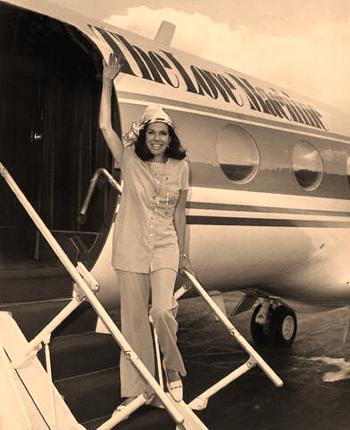
The Williams WASP X-Jet, 1974.

From the July 27, 1902 Brooklyn Daily Eagle:

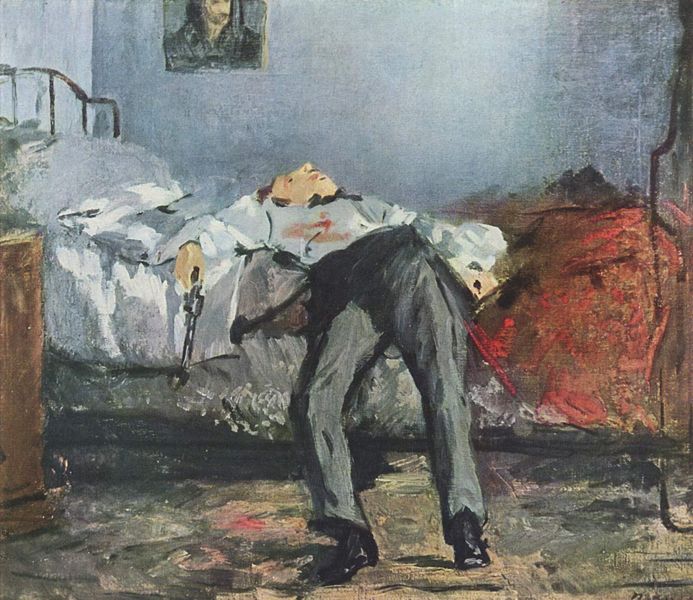
“Alfred Londo, who until last Tuesday was an orderly in the insane pavilion at Bellevue Hospital, and who eloped with and married Winnie Brennan, an attendant in the female department of the insane pavilion, last night attempted suicide in a cell in the East Twenty-Second Street police station, Manhattan. Previously he had declared in the street that he was tired of married life and wanted to die and had assaulted a policeman in an attempt to get the latter’s revolver. After it was all over Londo was lodged in the prison ward at Bellevue charged with having attempted suicide. 

‘Let me die,’ he said. ‘No more married life for me. I’ve had enough.'”

Tags: ,

"What if death was not an option in the next reality?"

I just realized something

The type of person we are in this life, which will end for all of us, will define who we are in the next life. After we experience death, we will face a whole new reality. That’s a fact we all will face. What if death was not an option in the next reality? What if we were faced with all the things we cherished in this life. Good and bad. With all the intent behind achieving those goals. And then be faced with a Judge in charge of sorting out good from bad. That simple. Something to sleep on. Never too late to change, as long as we’re all still here. At least we can bring that to the table.

A very cool 1986 profile of Jim Whiting, the machine-friendly artist who invented the mechanical family for Herbie Hancock’s landmark Rockit video.

Tags: ,

The Russian city of Berezniki was built atop an undergound mine during the dark days of Soviet-era madness, so it’s constantly prone to rapidly forming sinkholes capable of swallowing people or buildings whole. In order to safeguard the more than 150,000 residents, scientists constantly monitor the situation with a dizzying array of surveillance cameras. But even that may not be enough to save the burg. From Andrew E. Kramer in the New York Times:

“Mining engineers first tried to maintain the supports by pumping in saltwater, intending to raise the salinity of the floodwater to the saturation point before the structure collapsed, but that did not work.

After that, the local government adopted the policy in effect today, of careful observation and early warning: geologists, surveyors and emergency personnel use a panoply of high-technology monitors. These include the video surveillance system, seismic sensors, regular surveys and satellite monitoring of the changes in altitude of roofs, sidewalks and streets.

‘We will fight the holes with science,’ the mayor, Sergei P. Dyakov, said in an interview. The city will not need to relocate, he said, because engineers believe that no new holes will open. Much of the mine was filled before the flood, he said, and the sinkholes occurred in an anomalous area that had not been filled in.

But federal officials and company executives are debating whether to relocate the entire city to the opposite bank of the Kama River, where the bedrock is solid.”

Tags: ,

Michel Gondry, who is never fully awake, talks to Beck about dreams.

Tags: ,

Privately owned and operated prisons are such a horrible idea for America because they incentivize the perpetuation of the cycle of crime. Why would a corporate facility ever want to have their cells empty? It’s more than harvesting organs: It’s the harvesting of whole bodies and souls. The government should run all our penitentiaries, it should be a burden on us all if they are really full, and we should work to change that dynamic. The opening of “Louisiana Is the World’s Prison Capital,” Cindy Chang’s excellent and heartbreaking New Orleans Times-Picayune piece:

Louisiana is the world’s prison capital. The state imprisons more of its people, per head, than any of its U.S. counterparts. First among Americans means first in the world. Louisiana’s incarceration rate is nearly triple Iran’s, seven times China’s and 10 times Germany’s.

The hidden engine behind the state’s well-oiled prison machine is cold, hard cash. A majority of Louisiana inmates are housed in for-profit facilities, which must be supplied with a constant influx of human beings or a $182 million industry will go bankrupt.Several homegrown private prison companies command a slice of the market. But in a uniquely Louisiana twist, most prison entrepreneurs are rural sheriffs, who hold tremendous sway in remote parishes like Madison, Avoyelles, East Carroll and Concordia. A good portion of Louisiana law enforcement is financed with dollars legally skimmed off the top of prison operations.

If the inmate count dips, sheriffs bleed money. Their constituents lose jobs. The prison lobby ensures this does not happen by thwarting nearly every reform that could result in fewer people behind bars.” (Thanks Browser.)

Tags:

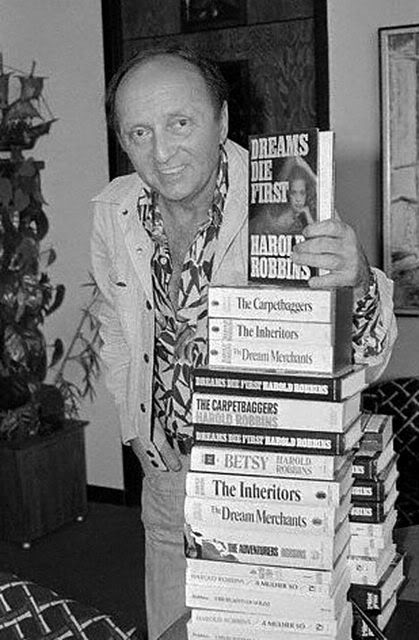
All this stuff about Jacqueline Susann got me thinking about another author of popular trash from before my time, Harold Robbins, who was the best-selling novelist in the world about 40 years ago, specializing in literature that was most suitable for the beach or masturbation, though preferably not both at the same time. From 1971, a really fun portrait of the wet-dream merchant.

Some Bay Area bars are using face-detecting sensors to collect and broadcast info about their patrons. From the San Francisco Chronicle tech blog:

“Bar patrons will be getting their cocktails with a garnish of facial detection technology at some San Francisco venues this weekend.

SceneTap, social app that relies on software to capture the demographics and popularity of a spot, will launch in 25 bars  and restaurants in San Francisco on Friday, company officials said.

Hidden sensors will discreetly record the age and gender of the people entering and leaving and broadcast that information out to SceneTap users so that they can make an informed decision about going to that venue based on how crowded it is, the male-to-female ratio or the age range, said CEO Cole Harper.

Critics say the app is intrusive and ‘creepy,’ but Harper argued that it’s just a way for venues to better focus their advertising efforts.”

Mike McGrady, an ink-stained wretch from an era when it seemed like newsprint would flow forever, just passed away. More than his journalistic career, McGrady, to his horror, was best known for Naked Came the Stranger, a trashy 1969 hoax novel that he co-wrote with a couple dozen other Newsday reporters and editors. Meant as a satire of Jacqueline Susann and similar popular writers of the day, it was initially published earnestly under a nom de plume and sold quite well. From Margalit Fox’s New York Times obituary of the late scribe:

“Intended to be a work of no redeeming social value and even less literary value, Naked Came the Stranger by all appearances succeeded estimably on both counts.

Originally issued by Lyle Stuart, an independent publisher known for subversive titles, the novel was a no-holds-barred chronicle of a suburban woman’s sexual liaisons, with each chapter recounting a different escapade:

She has sex with a mobster and sex with a rabbi. She has sex with a hippie and sex with at least one accountant. There is a scene involving a tollbooth, another involving ice cubes and still another featuring a Shetland pony.

The book’s cover — a nude woman seen from behind — left little to the imagination, as, in its way, did its prose:

‘Ernie found what Cervantes and Milton had only sought. He thought the fillings in his teeth would melt.’

The purported author was Penelope Ashe, who as the jacket copy told it was a ‘demure Long Island housewife.’ In reality, Mr. McGrady had dreamed up the book as ironic commentary on the public’s appetite for Jacqueline Susann and her ilk.”

••••••••••

A 1975 adaptation from the director of The Opening of Misty Beethoven:

Tags: , , ,

Priggish Canadian interviewer Barbara Frum and pills-and-vulvae novelist Jacqueline Susann insult and irritate each other during the mid-1960s.

Tags: , ,

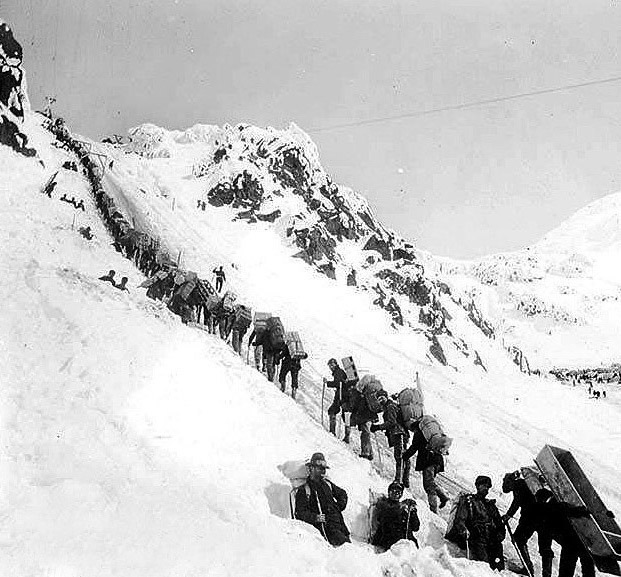
Gold seekers traverse Chilkoot Pass, 1898.

The 1890s was the setting for a North American gold rush second only in fame to the ’49ers of San Francisco. Thousands of hopefuls made their way to the Klondike region in the Yukon with eyes as wide as nuggets, hoping for strikes, but the price was high, as violence and desperation abounded and privations were severe. Making matters worse was an apparent monopoly on food importation to the rugged terrain by a handful of ill-managed concerns. From an account in the July 23, 1897 Brooklyn Daily Eagle:

Great Falls, Mont.–Frank Moss, an old time miner in this section, who four years ago, was one of a party of Americans to first visit the Klondike country, returned today and tells a story of horrors and starvation seldom equaled even in modern novels. He describes Klondike as a placer camp seven miles long and thirteen miles wide, located in a sink, walled in by boulders of rock 3,000 feet high. Gold, he says, abounds but no ordinary man can stand the hardships of the uncivilized region.

When Moss left here four years ago he was a sturdy fellow over six feet tall. From hardships and privation he is a cripple for life and badly broken in health. In three years, he says, he saw over 2,000 graves, made in the Klondike basin, a large majority dying from starvation. The steamship companies bring in all food and allow no private importation. Consequently it is not uncommon to go for weeks with but a scant supply and for days entirely without food. The gold brought in last week to Seattle, Moss says, does not represent the findings of individual shippers, but a large proportion was confiscated from the effects of those 2,000 miners who fell prey to the hardships. At the death of a man possessed of dust, his body was buried without a coffin and the dust divided among those who cared for him.

The richest strike, Moss says, has been made by a 21 year old boy named George Hornblower of Indianapolis. In the heart of a barren waste, known as Boulder Field, he found a nugget for which the Transportation Company gave him $5,700. He located his claim at the find and in four months has taken out over $1,000,000. The richest section, Moss says, is yet undeveloped. It is 100 miles from Klondike and known as the Black Hole of Calcutta. It is inhabited by ex-convicts of Bohemia and murders and riots take the place of law and order. A few months ago Klondike organized a justice committee and its laws prevail there now. With the great crowds preparing to go to the scene now, Moss says hunger and suffering will be great. Moss returns with $6,000 in dust and leaves tomorrow for his old home in Dubuque, Ia., where he will spend the balance of his years.”

Paying for provisions with gold dust, 1899.

Tags: ,

Slavoj Žižek, genius and fool, using questionable geological evidence to make a case for humans embracing technology over nature.

Tags:

My wife gets mad at me when I initiate sex after watching womens gymnastics

Am I the only man that does this?

Summer olympics is going to be great this year. I am going to be working from home 2 days a week.

In 1971, when philosopher Peter Singer wrote “Famine, Affluence, and Morality,” the world was a much different place, a much less interdependent place. His main idea was that people purchasing things they didn’t absolutely need while someone in the world was starving was morally indefensible. Sure, that’s true, I agree. But what about beyond stabilizing such a society? What if consumer spending is the only way to raise others above a basic and tenuous subsistence?

I don’t mean this as a personal rationalization. I don’t buy a lot of crap I don’t need. But what if buying surplus goods is the only way to truly help not only ourselves but to bring struggling people into the marketplace and let them share in the material wealth (and the burdens) of such a system? Globalization could be a slow, painful step in the right direction. Or not. It depends on us. I’m really not interested in ideologies or what appears correct, just results. From the essay:

“The outcome of this argument is that our traditional moral categories are upset. The traditional distinction between duty and charity cannot be drawn, or at least, not in the place we normally draw it. Giving money to the Bengal Relief Fund is regarded as an act of charity in our society. The bodies which collect money are known as ‘charities.’ These organizations see themselves in this way – if you send them a check, you will be thanked for your ‘generosity.’ Because giving money is regarded as an act of charity, it is not thought that there is anything wrong with not giving. The charitable man may be praised, but the man who is not charitable is not condemned. People do not feel in any way ashamed or guilty about spending money on new clothes or a new car instead of giving it to famine relief. (Indeed, the alternative does not occur to them.) This way of looking at the matter cannot be justified. When we buy new clothes not to keep ourselves warm but to look ‘well-dressed’ we are not providing for any important need. We would not be sacrificing anything significant if we were to continue to wear our old clothes, and give the money to famine relief. By doing so, we would be preventing another person from starving. It follows from what I have said earlier that we ought to give money away, rather than spend it on clothes which we do not need to keep us warm. To do so is not charitable, or generous. Nor is it the kind of act which philosophers and theologians have called ‘supererogatory’ – an act which it would be good to do, but not wrong not to do. On the contrary, we ought to give the money away, and it is wrong not to do so.”

Tags:

Disney research potentially turns all the world into a touchscreen.

"Unless he starts killing and stuffing homeless people I'll probably never run into him."

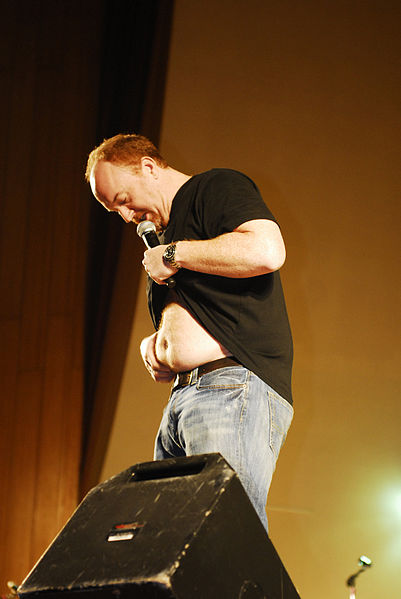
A few exchanges from Louis C.K.’s new Ask Me Anything on Reddit:

[–]crackedsanity 771 points  ago

Hi there. Thanks for doing the AMA :) Have you run into Ewan McGregor since he told you to put your money where your mouth is?

[–]iamlouisck Louis CK[S] 1706 points  ago

No. We don’t do the same kinds of things. Unless he starts killing and stuffing homeless people I’ll probably never run into him. I would totally kiss him right on the lips, though. Totally.

I just watched one of your standup specials with my mom over the weekend. What is one of the most embarrasing things that you’ve done with your mom?

[–]iamlouisckLouis CK[S] 123 points  ago

i was in line with my mom at a store once. two cute teenage girls (i was teenage then so it’s okay) were standing behind her talking. One of them accidentally stepped on my mom’s heel. She said “Ow!” The girl said “Oh my god. I’m so sorry!” My mom said “Well you really did me in!” and turned her back on them. The girls supressed a giggle behind her back. This whole thing made me love my mother WAY more. I’ll never forget it.
One of them girls had a fucking can on her too.

[–]MotorboatingSofaB 262 points  ago

Hey Louis. Long time fan. I have began to lose my hair as well. Didn’t really bother me in the beginning as I had a GF, but now I start to take notice to it more and more. How did you come to terms with the fact that one day you will no longer have hair on the top of your head?

[–]iamlouisckLouis CK[S] 720 points  ago

I remember the day I saw my hair was thinning. I don’t remember caring much. I don’t care. It’s just hair. It never bothered me much. I was pretty young, too. And it happened and is happening veeery slowly. I have a feeling dead people get really mad when we complain about losing hair.”

Salon has republished a really good Imprint piece by Michael Silverberg in which the New Yorker‘s excellent art editor Françoise Mouly explains how the magazine creates its covers. (There is a new book that shows the process, collecting some of the brilliant rough sketches that never made it to the newsstand.) The opening:

“Françoise Mouly, the New Yorker’s art editor since 1993, doesn’t have normal relationships with the artists who draw the magazine’s covers. ‘Think of me as your priest,’ she told one of them. Mouly, who co-founded the avant-garde comics anthology RAW with her husband, Art Spiegelman, asks the artists she works with—Barry Blitt, Christoph Niemann, Ana Juan, R. Crumb—not to hold back anything in their cover sketches. If that means the occasional pedophilia gag or Holocaust joke finds its way to her desk, she’s fine with that. Tasteless humor and failed setups are an essential part of the process. ‘Sometimes something is too provocative or too sexist or too racist,’ Mouly says, ‘but it will inspire a line of thinking that will help develop an image that is publishable.'”

Tags: ,

Noam Chomsky and Michel Foucault have a bull session on Dutch TV in 1971.

Tags: ,

Japan’s JR-Maglev is the fastest commuter train in the world. It uses a magnetic levitation system to clock in at up to 361 mph.

Gary Anderson designed the ubiquitous recycling symbol while an architecture grad student in the 1970s in Southern California. It was not a long and torturous process. An excerpt from his story in a new Financial Times piece:

“I studied engineering at the University of Southern California at a time when there was a lot of emphasis in the US on training young people to be engineers. It was in the years after Sputnik and the philosophy was that America was in danger of falling behind the Russians in the technical arena. That said, I eventually switched to architecture. I just couldn’t get a grasp on electronics. Architecture was more tangible.

I got my bachelor’s degree in 1971 and stayed on to do a master’s. It was around that time that I saw a poster advertising a design competition being run by the Container Corporation of America. The idea was to create a symbol to represent recycled paper – one of my college requirements had been a graphic design course so I thought I’d give it a go.

It didn’t take me long to come up with my design: a day or two. I almost hate to admit that now. But I’d already done a presentation on recycling waste water and I’d come up with a graphic that described the flow of water: from reservoirs through to consumption, so I already had arrows and arcs and angles in my mind.”

Tags:

From the May 6, 1888 edition of the Brooklyn Daily Eagle:

Cincinnati, Oh.–George Hummel, a baker living at 104 Mound Street, made desperate by financial difficulties, shot himself through the body last night in his bedroom. After a surgeon had dressed his wounds, a Newfoundland dog pushed his way into the bedroom and mounted guard over his master. No one dared enter until this morning, when Mrs. Hummel made the venture. The dog sprang upon her and lacerated her arm. A police officer was called in and he shot the dog. Mr. Hummel’s wound is dangerous.”

Tags: ,

Zooey Deschanel can only have her darling discussions about tomato soup with Siri today because of pioneering work in computer voice recognition that was done decades ago. Amazing video from Stanford University, 1968.

Many of you have eaten dog and horse.

Probably rat, too, if you went to school on west Long Island in the 70’s and 80’s and bought school lunches.

Oh yeah. You’ve eaten those animals.

« Older entries § Newer entries »