
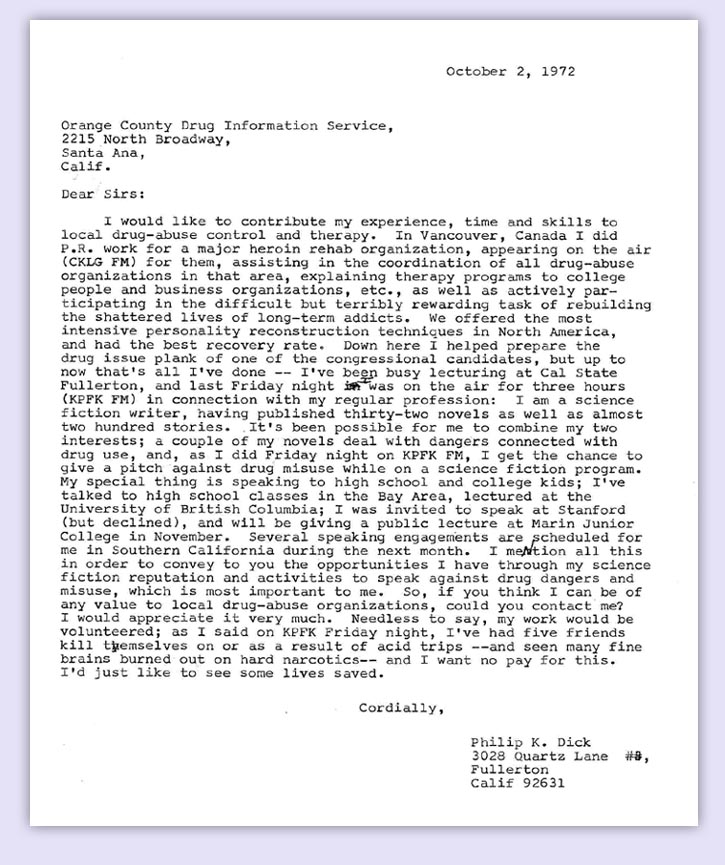
Funny and sad, this 1972 letter published at philipkdick.com was an insane attempt by the speeded-up sci-fi author to offer his knowledge about drugs (which was considerable) to the Orange County Drug Information Service.

Ideas and technology and politics and journalism and history and humor and some other stuff.
You are currently browsing the archive for the Urban Studies category.
Funny and sad, this 1972 letter published at philipkdick.com was an insane attempt by the speeded-up sci-fi author to offer his knowledge about drugs (which was considerable) to the Orange County Drug Information Service.
Tags: Philip K. Dick

Engineering, like much of life, is a series of approximations and educated bets, which may end up in failure. In order to create something almost beyond the possibility of disaster, it would have to be as overbuilt as the Brooklyn Bridge, and that’s pretty cost prohibitive at this point in developed countries.
I can’t explain exactly why I’m so interested in this 1977 video about the Failure Analysis Associates in Los Angeles, which still exists today. It’s a company run by ghostbusters searching for the ghost in the machine, who try to figure out why the best laid plans of mice and men ended up motionless in a spring-loaded trap.
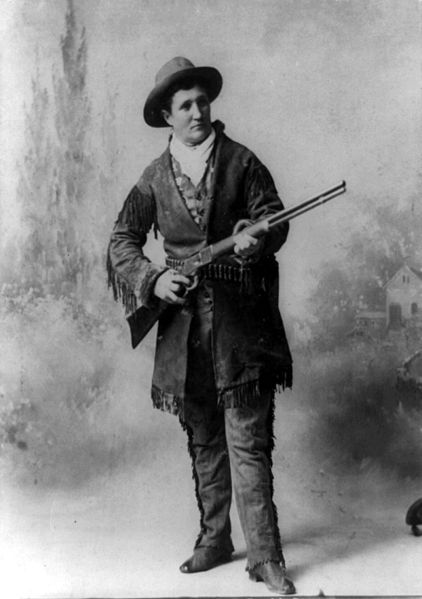
“Calamity” Jane died in Terry, South Dakota, on August 1, 1903.
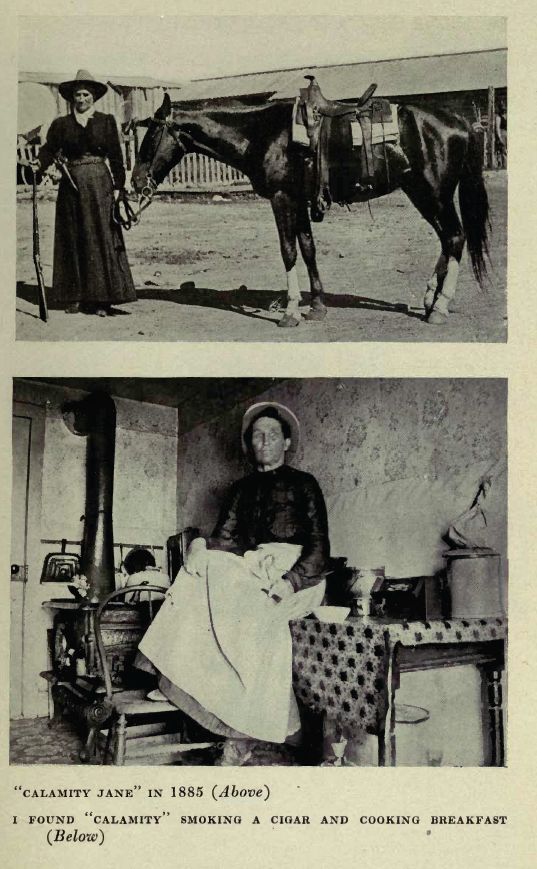
One of the most storied of all American frontier legends was Martha Jane Canary, better known as “Calamity” Jane. A sharpshooter, she was a contemporary of “Wild Bill” Hickok and General George Custer. But the harsh elements can get the best of the heartiest soul, and Jane found herself on the decline as she neared her fiftieth birthday. A story about her published two years before her death in the July 12, 1901 Brooklyn Daily Eagle:
“Anaconda, Mont.–Mrs. Josephine Winfield Brake of Buffalo, N.Y., authoress and Washington correspondent for a New York newspaper, has been in Montana for the past week searching for ‘Calamity’ Jane, the noted plainswoman. Yesterday Mrs. Brake discovered ‘Calamity’ Jane in the hut of a negress at Horr, near Livingston. The poor woman was suffering with fever and was broken in spirit. The scene that followed the offer of Mrs. Brake to take ‘Calamity’ to her own home in Buffalo, where she could spend the remainder of her days in comfort, was pathetic in the extreme.
‘Calamity’ Jane has been on the frontier since she was a young girl. She was in the Black Hills at the time of the killing of ‘Wild Bill’ (William Hickok), and it was said that it was she who captured his murderer. She rendered valuable services to Custer, Reno, Egan and other Indian fighters. Of late years she has drifted about the state from place to place, making a livelihood as best she could. During the summer she sold pictures of herself to park tourists. During the past couple of years she has been ill a considerable portion of the time. The newspapers have largely printed severe articles concerning her, some of which attracted the attention of General Egan and others, who interested themselves in the woman’s plight. The result was that Mrs. Brake took steps to find Jane and the two women have now left Livingston for Buffalo.
‘Calamity’ Jane is about 50 years of age. Her maiden name was Canary and she is said to be from New York. She has been married more than once, her last husband being one Burke, a Livingston drayman.”
Tags: "Wild Bill" Hickok, Calamity Jane, George Custer, Josephine Winfield Brake

In America, our Mark Cubans buy sports franchises for fun and ego and access to all sorts of things. In China, a wealthy video-game magnate like Zhu Jun buys a football team and expensive players and coaches for all those reasons, but for a sense of nationalism as well. The following are a couple of brief passages from an interview the owner of the Shanghai Shenhua did with Patti Waldmeir of the Financial Times, which reveals a larger picture of a China that hopes to import what it needs for now while nurturing generations who will be able to create these things for themselves in the future.
••••••••••
“‘Football is a game every man loves,’ he says. ‘Through playing football, we hope to become stronger. China is becoming richer nowadays but, from my point of view, China is rich rather than strong. The country is lacking resistance. But football is a game full of resistance.’
What kind of resistance, I wonder? ‘Conflict,’ he replies. ‘China is not strong because people never say ‘No’. Tradition makes them restrain themselves rather than being open. What I am doing is to prove we can actually do everything, no matter whether the general public understands us or not.'”
••••••••••
“If the hope is that world-class players such as [Didier] Drogba and [Nicolas] Anelka can help create a world-class football nation to rival China’s status in the global economy – or for that matter, in ping-pong – it will not be easy. A mere 2,000 years after a game suspiciously like football was invented in China, the world’s most populous country has yet to make its presence felt in the world’s most popular sport.
The Chinese love to watch football; when the country qualified for its first and only World Cup tournament to date, in 2002, a reported 170m new television sets were bought to follow the team’s progress. But Chinese state media has quoted football officials as saying that only 100,000 children, in this land of 1.3bn, are playing any form of organised football, partly the result of high levels of corruption in the past.
The country’s presumed next ruler, Xi Jinping, recently outlined his plan for the Chinese game: first qualify for another World Cup; then host a World Cup; then win one. Part of Zhu’s vision, it seems, is that ‘Chinese football needs idols. Good young players will only be attracted when we make achievements.’”
Tags: Didier Drogba, Nicolas Anelka, Patti Waldmeir, Xi Jinping, Zhu Jun

Today is the 40th anniversary of Nolan Bushnell’s Atari, the pre-PC age way to get your kids to shut up for five minutes. The first commercial for the living-room friendly version of Pong from 1975, a lousy ad for a great product.
Although I wouldn’t say Atari invented Pong. Willian Higinbotham created Tennis for Two in 1958.
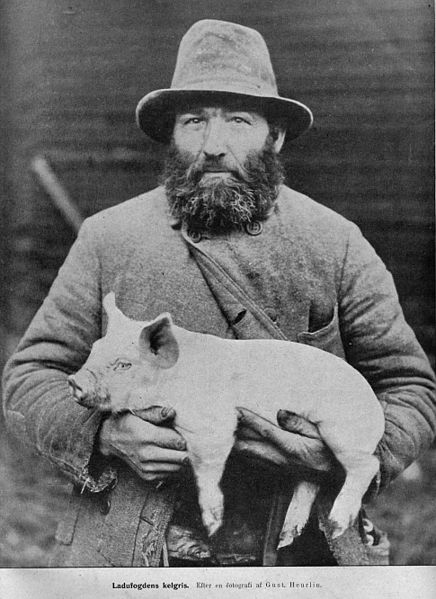
“Either way, it’s a guaranteed kill.”
COME DOWN TO MY RANCH FOR A DAY OF HOG HUNTIN`. WE ARE LOCATED JUST 90min. FROM MIAMI AND 30min. FROM FT. MYERS IN THE FLORIDA EVERGLADES`. WE`VE GOT LOTS OF MEAT HOGS AND TROPHY BOARS, YOU CAN HUNT FROM BLINDS OR SPOT & STALK EITHER WAY ITS A GUARANTEED KILL WITH GUN OR BOW. IF YOU WOULD LIKE TO HEAR MORE DETAILS ABOUT THE HUNT PLEASE CALL ME.
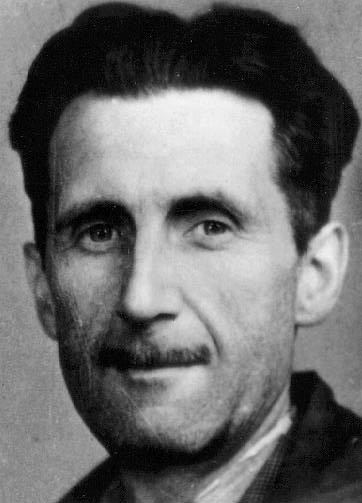
Michael Crichton arguing that Orwell’s 1984 actually did come to pass, not by totalitarian regime but by our own hands. You know–we like to watch and be watched.
Tags: Michael Crichton

From “How We Understand Our Gadgets,” Lewis Lapham’s new Tom Dispatch appraisal of these days of miracle and wonder:
“Like England in the late sixteenth century, America in the early twenty-first has in hand a vast store of new learning, much of it seemingly miraculous — the lines and letters that weave the physics and the metaphysics into strands of DNA, Einstein’s equations, Planck’s constant and the Schwarzschild radius, the cloned sheep and artificial heart. America’s scientists come away from Stockholm nearly every year with a well-wrought wreath of Nobel prizes, and no week goes by without the unveiling of a new medical device or weapons system.
The record also suggests that the advancement of our new and marvelous knowledge has been accompanied by a broad and popular retreat into the wilderness of smoke and mirrors. The fear of new wonders technological — nuclear, biochemical, and genetic — gives rise to what John Donne presumably would have recognized as the uneasy reawakening of a medieval belief in magic.
We find our new Atlantis within the heavenly books of necromancy inscribed on walls of silicon and glass, the streaming data on an iPad or a television screen lending itself more readily to the traffic in spells and incantation than to the distribution of reasoned argument. The less that can be seen and understood of the genies escaping from their bottles at Goldman Sachs and MIT, the more headlong the rush into the various forms of wishful thinking that increasingly have become the stuff of which we make our politics and social networking, our news and entertainment, our foreign policy and gross domestic product.” (Thanks Browser.)
Tags: Lewis Lapham
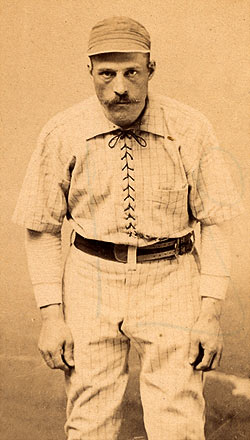
Baseball stats guru Bill James believes that steroids (or some derivative) will be eventually be safe and legal, but that doesn’t mean he thinks that Congress wasted money on the steroids hearings. He says as much in a recent Q&A session with readers on his site, providing four reasons why he feels that way, though I think reasons 3 and 4 aren’t particularly sturdy. The exchange:
“Q: In your recent piece on [Roger] Clemens, you write, ‘My view is that…it was an entirely appropriate use of the power of congress to step in and tell them to fix the problem.’ What was ‘the problem’? I assume you’re referring to steroids and HGH, but why do you consider them a problem?
A: I would say there were four reasons that it was a problem:
1) It was disrespectful of the law,
2) It promoted the widespread use of potentially dangerous and harmful substances by young people aspiring to be athletes,
3) The public largely despised the use of steroids by athletes, and
4) If sports are a significant cultural activity, which I believe they are, then it damages the culture for sports to be allowed to become something foreign and unnatural.”
Tags: Bill James
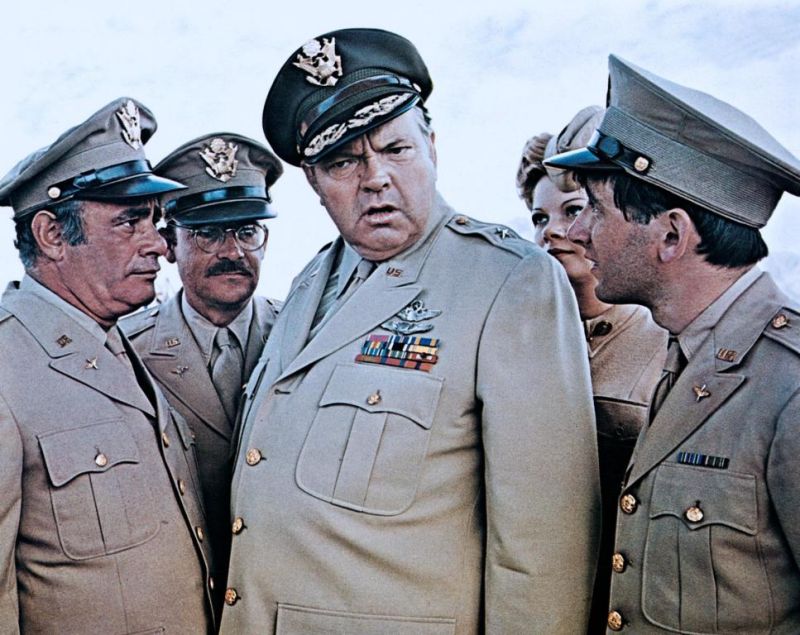
Sorry to hear of the passing of Nora Ephron, who was one of the women who saved New Journalism in the ’60s and ’70s from being an all-boys school. From “Yossarian Is Alive and Well in the Mexican Desert,” her 1969 New York Times article about Mike Nichols filming Catch-22, a passage about the presence of Orson Welles and his legend:
“The arrival of Orson Welles, for two weeks of shooting in February, was just the therapy the company needed: at the very least, it gave everyone something to talk about. The situation was almost melodramatically ironic: Welles, the great American director now unable to obtain big- money backing for his films, was being directed by 37-year-old Nichols; Welles, who had tried, unsuccessfully, to buy Catch-22 for himself in 1962, was appearing in it to pay for his new film, Dead Reckoning. The cast spent days preparing for his arrival. Touch of Evil was flown in and microscopically reviewed. Citizen Kane was discussed over dinner. Tony Perkins, who had appeared in Welles’s film, The Trial, was repeatedly asked What Orson Welles Was Really Like. Bob Balaban, a young actor who plays Orr in the film, laid plans to retrieve one of Welles’s cigar butts for an admiring friend. And Nichols began to combat his panic by imagining what it would be like to direct a man of Welles’s stature.
‘Before he came,’ said Nichols, ‘I had two fantasies. The first was that he would say his first line, and I would say, ‘NO, NO, NO, Orson !” He laughed. ‘Then I thought, perhaps not. The second was that he would arrive on the set and I would say, ‘Mr. Welles, now if you’d be so kind as to move over here. . .’ And he’d look at me and raise on eyebrow and say, ‘Over there?’ And I’d say, ‘What? Oh, uh, where do you think it should be?”
Welles landed in Guaymas with an entourage that included a cook and experimental film-maker Peter Bogdanovich, who was interviewing him for a Truffaut-Hitchcock-type memoir. For the eight days it took to shoot his two scenes, he dominated the set. He stood on the runway, his huge wet Havana cigar tilting just below his squinting eyes and sagging eye pouches, addressing Nichols and the assembled cast and crew. Day after day, he told fascinating stories of dubbing in Bavaria, looping in Italy and shooting in Yugoslavia. He also told Nichols how to direct the film, the crew how to move the camera, film editor Sam O’Steen how to cut a scene, and most of the actors how to deliver their lines. Welles even lectured Martin Balsam for three minutes on how to deliver the line, ‘Yes, sir.’
A few of the actors did not mind at all. Austin Pendleton got along with Welles simply by talking back to him.
‘Are you sure you wouldn’t like to say that line more slowly?’ Welles asked Pendleton one day.
‘Yes,’ Pendleton replied slowly. ‘I am sure.’
But after a few days of shooting, many of the other actors were barely concealing their hostility toward Welles–particularly because of his tendency to blow his lines during takes. By the last day of shooting, when Welles used his own procedure, a lengthy and painstaking one, to shoot a series of close-ups, most of the people on the set had tuned out on the big, booming raconteur.”
Tags: Mike Nichols, Nora Ephron, Orson Welles, Peter Bogdanovich
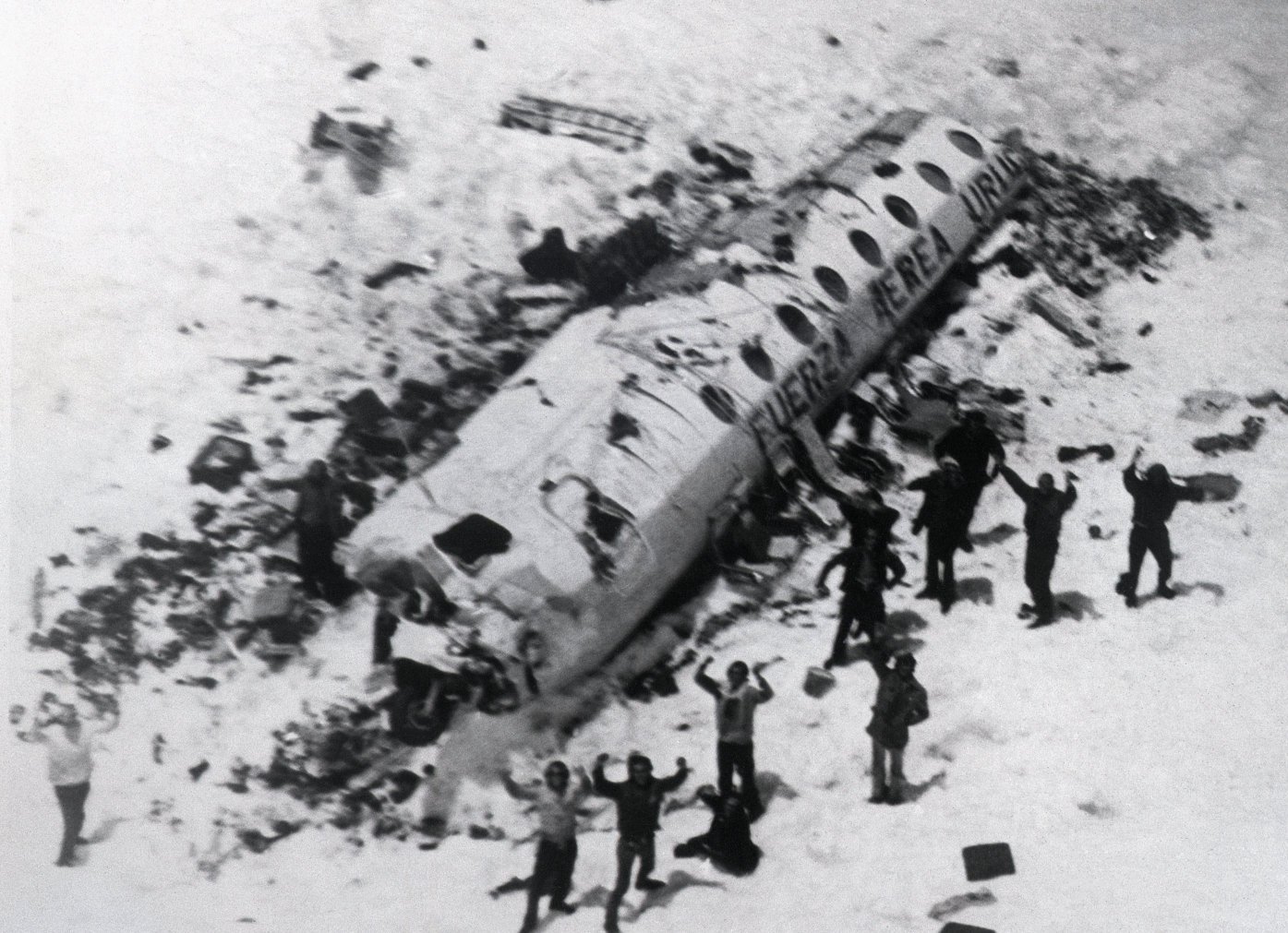
From “One Man’s Meat Is Another’s Person,” Raymond Sokolov’s 1974 Natural History article about cannibalism, a topic much in the news then because of the startling story from two years earlier about plane crash survivors in the Andes making desperately needed nutrients of dead passengers. The opening:
“HUMANS may taste good, but most societies are a long way from cannibalism. Of all the taboos in Western society, the prohibition against the eating of human flesh is the most widely obeyed. Thousands among us kill someone every year. Incest is not common, yet it occurs—and enriches the fantasy life of many an analysand. But cannibalism is an infraction of the social order that very few have risked.
Like all forbidden fruits, nevertheless, cannibalism fascinates us. Ever since Columbus first discovered it among the Caribs (who were called canibales, whence the name), it has inspired an entire literature of speculation and raised a dark question in the minds of people too civilized to feel anything but repulsion at the idea of bolting human steaks but unable to keep from wondering in untrammeled moments what they taste like.
Explorers, probably translating a Fijian phrase, reported that the stuff was known to its fanciers in the Pacific as ‘long pig.’ This never seemed more than a dubious description of the savor of our muscular Christian selves. The enigma basically remained until late 1972. Survivors of a Uruguayan plane crash in the Andes, who were cut off from the outside world for weeks, in desperation ate fellow passengers killed in the accident. After their rescue, the survivors told Piers Paul Read—who set down their story in the current best-seller Alive (Lippincott)—that after cooking the meat briefly (they tried it first raw), ‘the slight browning of the flesh gave it an immeasurably better flavor–softer than beef but with much the same taste.’
That is the kind of testimony one can believe, especially from Uruguayans, who know their beef. It is also good news that humans taste good: alternatives to soyburgers are always welcome, and we can at last exonerate cannibal societies of the charge of unrefined savagery. Instead, they were gastronomes.”
••••••••••
“16 men survived for 72 days by doing the unthinkable”:
Tags: Piers Paul Read, Raymond Sokolov'
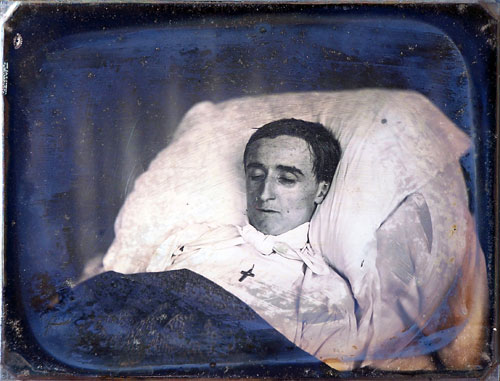
From the January 19, 1892 edition of the Brooklyn Daily Eagle:
“Wilksbarre, Pa.–At the Retreat Poor House, near this city, is a Polander named John Mica, who has been sleeping for thirteen months and shows no signs of waking up. He was taken there from Wilkesbarre City Hospital about fourteen months ago. The sleeper opens his eyes occasionally to take a little nourishment, but immediately drops his head under the covers and falls into a comatose condition. The case has not been explained.”
Tags: John Mica

Dutch company Mars One plans a reality TV show about humans living on our neighboring planet in 2023, conflating technological prowess and narcissism, two hallmarks of contemporary Western culture. It doesn’t appear to be an elaborate prank as insane as it sounds.
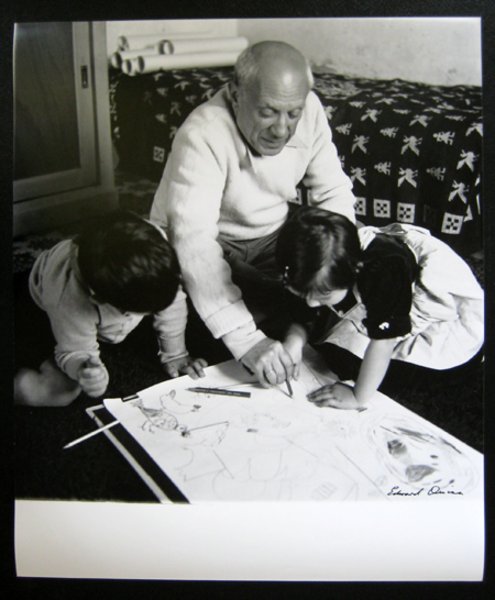
Video-game designer Ste Pickford wonders why he still sketches on a pad with pen and pencil in this Digital Age. From his blog post:
“I’m no luddite. I’ve been happily working as a designer on computers for over 25 years, and I’m comfortable making graphics and building finished work on a computer. I can happily draw and paint with the Wacom pad (and even with a mouse if I have to), and I have no problems staring at the screen for hours on end, but I still revert back to pen and paper when I want to work out something new.
Why is this?
Is it because, despite my extensive computer experience, I started drawing before the computer age? I had never seen a computer before the age of 10, and probably not touched a mouse until I was about 17, but I had a pencil in my hand from the age of about 2 or 3. Perhaps the younger generation of designers, who’ve used computers since they were born, will be able to go completely digital and never need paper at all?
Or, more likely, is it that there still isn’t a software / hardware combination that offers the flexibility and ease-of-use of pen and paper, when you have unformed ideas that you need to explore?
Where is the digital paper I dreamed about as a kid?”
•••••••••
Spiromania, 1973:
Tags: Ste Pickford

As Stephen Hawking’s motor skills further deteriorate, plans are afoot to tap directly into his head with cutting edge technology. From the Telegraph:
“Hawking, 70, has been working with scientists at Standford University who are developing a the iBrain – a tool which picks up brain waves and communicates them via a computer.
The scientist, who has motor neurone disease and lost the power of speech nearly 30 years ago, currently uses a computer to communicate but is losing the ability as the condition worsens.
But he has been working with Philip Low, a professor at Stanford and inventor of the iBrain, a brain scanner that measures electrical activity.
‘We’d like to find a way to bypass his body, pretty much hack his brain,’ said Prof Low.
Researchers will unveil their latest results at a conference in Cambridge next month, and may demonstrate the technology on Hawking.”
Tags: Philip Low, Stephen Hawking
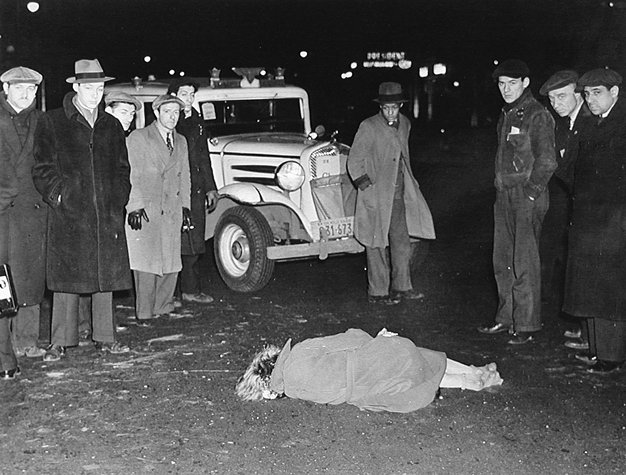
I was recently reading an Art in America article by that excellent Luc Sante about the tabloid photographer Weegee, which reminded me of a 1946 Life piece about the shutterbug. From “Weegee Shows How to Photograph a Corpse“:
“As part of a six-week photography seminar at Chicago’s Institute of Design, the stubby, untidy, cigar-chewing Manhattan photographer who calls himself Weegee and who is famous for his pictures of mayhem and murder recently enlivened his course in spot-news photography by showing students how to photograph a corpse. After one of his lectures (‘Now, a stiff…they’re the nicest kind of subject. They don’t try to cover up…I always try to make ’em look nice and comfortable’), Weegee procured a dummy and a plastic $1 revolver, cheerfully set out on a field trip to demonstrate the technique.
In Lincoln Park, Weegee sprawled the pasty-faced tuxedoed dummy on a sidewalk, advised, ‘That’s the way they are, unless it’s a dumbed-up job.’ Yhen he circled the body, disarranged its clothes, hoisted his 8-year-old Speed Graphic and squeezed off a picture.
Up to a year ago, Weegge (real name: Arthur Felig) was New York City’s most remarkable police-beat photographer. From a $17-a-month room littered with a police radio, cigar boxes full of negatives, cardboard cartons containing flash bulbs and shoes, and a dingy double bed in which he usually slept with his clothes on. Weegee roared off nightly in a rickety 1938 Chevrolet to cover fires, accidents and violent deaths. A bachelor, he worked from midnight to 7a.m., detested telephones, kept his savings in the back of his car and managed to get the laundry done once a month. Now all that is changed. His increasing fame has led him to buy a tuxedo, to publish a book (The Naked City, Essential Books, $4), to take up free-lancing for publications like Vogue and to announce that he would never again ‘photograph anybody laying on the ground, waiting for a hearse, with blood all around them.’ Today Weegee photographs society and cover girls (‘The body beautiful…alive, I mean.’), claims he meets a better class of people and even sleeps in pajamas ‘except when I’m very tired.'”
Tags: Arthur Felig, Luc Sante, Weegee

“You can catch fish, hunt wild pig and goat.”
forget working, working is for poor people. be a vagabond, jump on a freight train, and get out of dodge., leave jersey, be a hobo type of individual, think like a child, dream of far away places, get a job on a tramp steamer heading for the south seas, stop at tropical islands, explore: hunt for treasure, you just need enough money for food and shelter. live in the south seas, food is free, weaather beautiful, guys and gals gorgeous, you can catch fish, hunt wild pig and goat, fruit is free plenty of island to roam and settle down. anyone can do this.
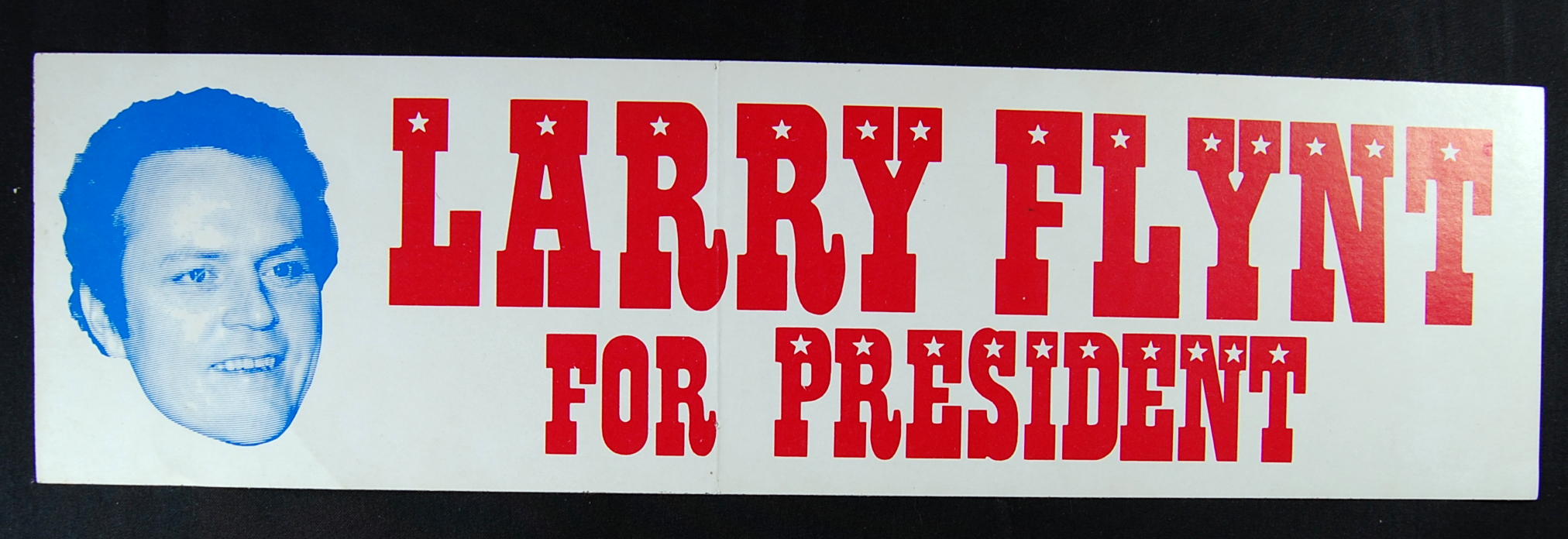
What does it mean that Al Goldstein and Larry Flynt were once, not too long ago, considered the filthiest, most disgraceful people in the nation and now even the most obscene thing they were selling can easily be viewed on a computer screen in any home (and on most phones) at every single moment? Were they ahead of their time? Were they the McLuhans of filth? I’m not even talking about a battle over civil rights but one about human nature. It seems now like they were merely announcing the future, and one that has been overwhelmingly accepted and approved by the country that was so outraged by them.
A relatively modest moment for Goldstein was this interview he did with mental minstrel Tiny Tim roughly 30 years ago. The language is very NSFW unless your work involves a gloryhole.
Tags: Al Goldstein, Larry Flynt, Tiny Tim
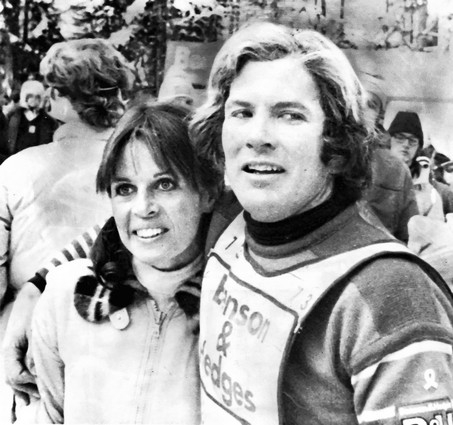
Claudine Longet had it all, for a while.
That ended when the chanteuse murdered skier and free spirit “Spider’ Sabich with a gunshot blast. An excerpt from an April 5, 1976 People article about the infamous incident:
‘What more could a woman want?’ singer-actress Claudine Longet once boasted to a friend. ‘I have my husband, my children and my lover.’ The husband was singer Andy Williams; the lover, ruggedly handsome Vladimir (‘Spider’) Sabich, 31, one of the most daring racers on the international pro ski circuit. In 1975, after a separation of nearly five years, Longet, 35, was granted a divorce from Williams. Then last week, in the rustically elegant stone-and-log house near Aspen, Colo. that Claudine and her three children shared with Sabich, the skier was shot and killed with a .22-caliber pistol.
Claudine, who had been seen with friends earlier in the day at a local pub known as the Center, told police Sabich had been showing her how to handle the gun when it accidentally discharged. She is scheduled to appear in court April 8 to learn if she will be formally accused. Although friends accept Longet’s account of the tragedy, they describe her four-year liaison with Sabich as turbulent. “They have had violent fights in public, screaming at each other,” said one. And it was widely reported in Starwood, an exclusive residential enclave where many of Aspen’s beautiful people dwell, that Sabich had told Claudine to move out of his $250,000 house by April 1. He still loved her, friends say, but felt confined by the constant presence of Longet and the children.•
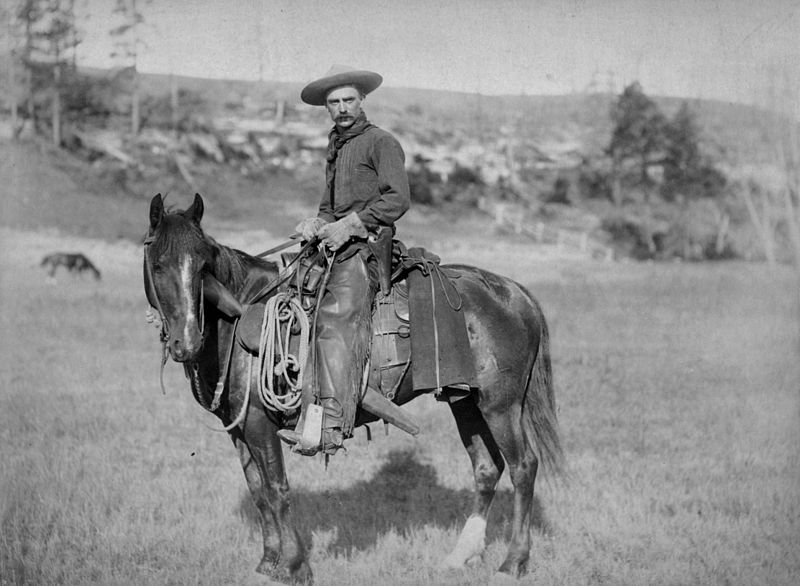
“Sheriff Burns returned to this city, bringing with him Buckskin’s left foot, on which one of the toes was known to be malformed.”
A story of frontier justice was published in the July 28, 1871 Brooklyn Daily Eagle. An excerpt:
“The Los Angeles Star gives this subjoined account of the killing of noted desperado and murderer, Buckskin Joe:
‘Yesterday morning Sheriff Burns returned to this city, bringing with him Buckskin’s left foot, on which one of the toes was known to be malformed, and twisted above the others in such a manner as to enable the foot to be readily identified; his rifle, an old-fashioned muzzle-loader, with which he was wont to do deadly execution on bear, deer, and sometimes men; his buckskin cap and purse, and an old almanac, found on his body, and used by him as a memorandum book.
During the first part of the month the Sheriff received a letter from the San Rafael mines, Lower California, arriving at San Rafael on the 14th. Upon receipt of the warrants, the Governor, Don Manuel C. Roja, dispatched Justo Chavis, his chief executive officer, with a party of five men to make the arrest. After eight days of searching, during which no trace of any party, except Buckskin could be found, the camp of the gentleman was discovered by Indians at a spring situated about a mile from the tops of the Sierra Madre range, on the side of the mountain nearest Colorado desert. When first seen by Mexican officers, Buckskin, alone, was leaving his camp. Making a cut-off, the party soon overtook him on the mountain ridge, and surrounded him, Justo Chavis in front, who summoned him to surrender. At the same time Quirrino Endelacio, who was in the rear, rode his horse against him. Buckskin dropped his own rifle, and seizing Quirrino’s Spencer, attempted to wrest it from him. In the struggle, the gun went off accidentally while Buckskin had hold of the muzzle, the ball passing through his hand, entering his left side below the heart, and breaking his backbone. He fell immediately, and died about two hours after making a lengthy confessions of the murder with which he was charged.”
Tags: Buckskin Joe, Don Manuel C. Roja, Justo Chavis, Quirrino Endelacio, Sheriff Burns

Long-form interview with B.F. Skinner about the nature of education.
Tags: B.F. Skinner
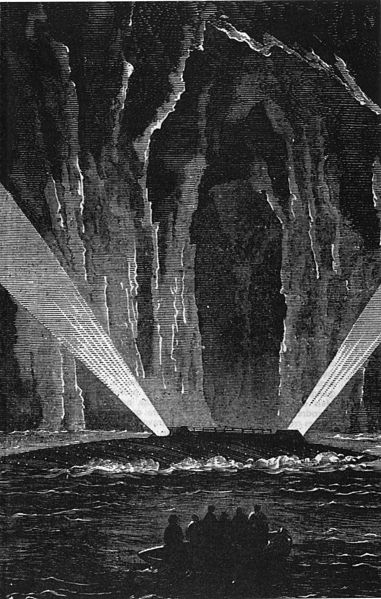
Subterreanan suburbs fit for a post-apocalyptic prince aren’t the only new plans for the space beneath our streets. From “Our Underground Future,” Leon Neyfakh’s new Boston Globe think-piece:
“A cadre of engineers who specialize in tunneling and excavation say that we have barely begun to take advantage of the underground’s versatility. The underground is the next great frontier, they say, and figuring out how best to use it should be a priority as we look ahead to the shape our civilization will take.
‘We have so much room underground,’ said Sam Ariaratnam, a professor at Arizona State University and the chairman of the International Society for Trenchless Technology. ‘That underground real estate—people need to start looking at it. And they are starting to look at it.’
The federal government has taken an interest, convening a panel of specialists under the banner of the National Academy of Engineering to produce a report, due out later this year, on the potential uses for America’s underground space, and in particular its importance in building sustainable cities. The long-term vision is one in which the surface of the earth is reserved for the things we want to see and be around—houses, schools, yards, parks—while all the other facilities that are needed to make a city run, from water treatment plants to data banks to freight systems, hum away underground.
Though the basic idea has existed for decades, new engineering techniques and an increasing interest in sustainable urban growth have created fresh momentum for what once seemed like a notion out of Jules Verne.” (Thanks Browser.)
Tags: Leon Neyfakh
Groucho, seemingly oblivious, sasses Ray Bradbury on You Bet Your Life, 1955.
Tags: Groucho Marx, Ray Bradbury
From Astra Taylor’s Examined Life, a section in which moral philosopher Peter Singer questions how we spend our money in a world of unevenly distributed plenty. Though I wonder if the free market isn’t part of the solution.
Tags: Peter Singer

At MIT’s Technology Review, Patti Maes, who researches human-computer interaction, answers questions about the future of smartphones. I think she’s a little aggressive in the timeline of her prediction, but she could be right and I could be wrong. An excerpt:
“What will smart phones be like five years from now?
Phones may know not just where you are but that you are in a conversation, and who you are talking to, and they may make certain information and documents available based on what conversation you’re having. Or they may silence themselves, knowing that you’re in an interview.
They may get some information from sensors and some from databases about your calendar, your habits, your preferences, and which people are important to you.
Once the phone is more aware of the user’s current situation, and the user’s context and preferences and all that, then it can do a lot more. It can change the way it operates based on the current context.
Ultimately, we may even have phones that constantly listen in on our conversations and are just always ready with information and data that might be relevant to whatever conversation we’re having.”
Tags: Patti Maes