Science/Tech

You are currently browsing the archive for the Science/Tech category.

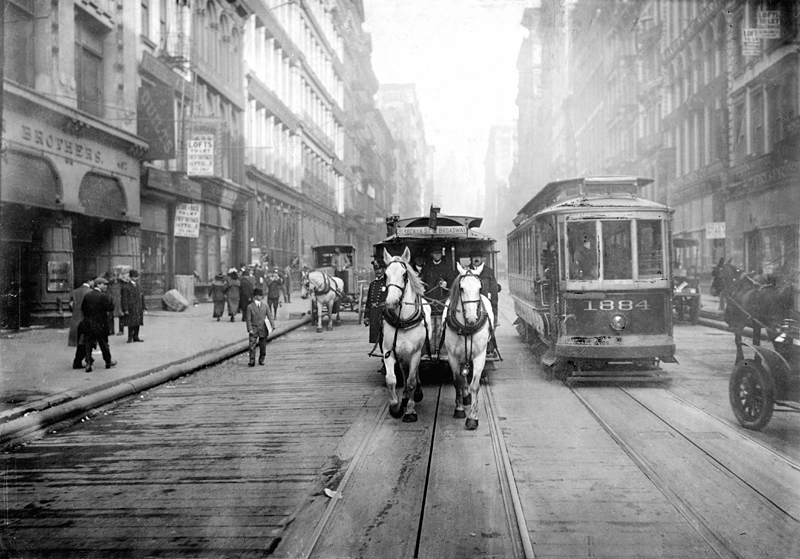
Horse-drawn tram alongside the electric kind in Soho. (Image by the Brown Brothers.)


Taken in 1917, this photo shows the end of the line for horse-drawn trams in New York City, as the changeover to electric cars (the streetcar on the right, for example) was all but complete. The caption contained with this public domain image reads as follows: “Just before the last of these vehicles was banished from the streets of New York City, the photographer snapped one of them as it passed alongside a ‘Modern Electric Car.’ This photo was shot on Broadway just north of the intersection with Broome Street. The car is headed southbound.”

At this point, electric and steam-powered vehicles were still predominant in America, with the gas-guzzler taking a back seat. An excerpt from a post on reliableplant.com about automobiles in the United States in the year this photo was taken:

“It’s hard to believe, but 38 percent of vehicles in the U.S. were electric in that year; 40 percent were steam powered and only 22 percent used gasoline. There was even a fleet of electric taxis in New York City.

But between the limited range of EVs and a lack of infrastructure to support recharging, the market was crying for a new and cheaper source of auto power, and that came in the form of the internal combustion, gasoline-powered engine.”

Mel Lyman, jug band player with a Christ complex, died of unknown causes in 1978.

I recently came acrossThe Lyman Family’s Holy Siege of America,” David Felton’s excellent 1971 exposé of Mel Lyman’s Massachusetts-based commune/cult. An erstwhile jug band musician, Lyman became convinced he was the messiah after dropping acid a few too many times with Timothy Leary’s Boston acolytes. His unbridled egomania would have been scary even if he hadn’t admired Charles Manson so much.

I was only familiar with the cult because as a fan of Michelangelo Antonioni’s flawed but fascinating 1970 drama, Zabriskie Point, I read somewhere that the film’s intense young leads, Daria Halprin and Mark Frechette, were members of the Lyman Family. But they had a lot of company at the commune when it came to intensity. A chilling excerpt from Felton’s piece:

“We believe that woman serves God through man,” said Lou, an attractive former nun now in her first stage of pregnancy. ‘I was sort of into women’s lib before I came up here, you know, “cause so many men are such piss-ants, such faggots. But when I came up here and started serving them breakfast, I really began looking up to them.”

She shoved a spoonful of strained vegetables into the squirming infant on her lap.

“The men here on the Hill are real men; the men out there are faggots, with their long hair and everything. If they weren’t, they wouldn’t let their women get away with the things they do.”

Lou learned about the true role of women from something Mel wrote in the Avatar. “If a woman is really a woman, and not just an old girl,” wrote Mel, “then everything she does is for her man and her only satisfaction is in making her man a greater man. She is his quiet conscience, she is his home, she is his inspiration and she is his living proof that his life, his labors, are worthwhile.

“A woman who seeks to satisfy herself is the loneliest being in God’s creation. A woman who seeks to surpass her man is only leaving herself behind. A man can only look ahead, he must have somewhere to look from. A woman can only look at her man…I have stated the Law purely and simply. Don’t break it.” 

zabirskiepoint789

Not that anyone does. Most of the Hill women, if they’re not holding down outside “female” jobs as waitresses or secretaries, spend their time cooking, sewing, cleaning house, tending the children and serving the men. They seem to do so with great relish, developing an almost worshipful attitude toward the men.

“I mean, couldn’t you feel it in those men at lunch?” asked Lou, “how strong they were? How simple. Life here is so simple. Of course, the more simple life is, the harder it is. Let me tell you, there’s a lot of hate and frustration up here. And pain.

“When I first came up here I was a bitch.’ Lou sneered at herself.

“A bitch, hah, that’s putting it mildly. I was a viper. I hated Mel Lyman, I hated everyone here. I resisted like hell. And the thing that shocked me was how much they still cared about me. I mean, with me my hatred was personal, ’cause I hated on such a low level. But they taught me how to hate on a higher level.”

Why did she first hate Mel? I asked.

“Because he was stronger than me. I guess I wanted to be God too. But finally I had to break down; he was so much stronger than me, I finally had to accept it.”

“Do you believe he’s God?”

“Yeah, in the sense that Jesus Christ came down on earth. But he’s dead, so Mel’s the son of God now.” As she said these last words, Lou raised her eyes in adoration toward a photograph of Mel on the opposite wall, the one on the cover of the Christ issue.

“When I first met Mel,” she continued, “it was really weird ’cause he was the most down-to-earth, easygoing guy I’d ever met. Until he looked at you, and then, oh God, his force just filled the room.

“Now I love him intensely, I’m his forever. I want to conquer the world for Mel. I get so mad at that world out there I want to kill, I want to shove Mel in their hearts. He’s the only one who knows how to deal with feeling, the feelings you have at the time, whether they’re love, or hate, or fear.”•
Tags: , , , ,

The black turtleneck had yet to be invented. (Thanks Reddit.)

Tags:

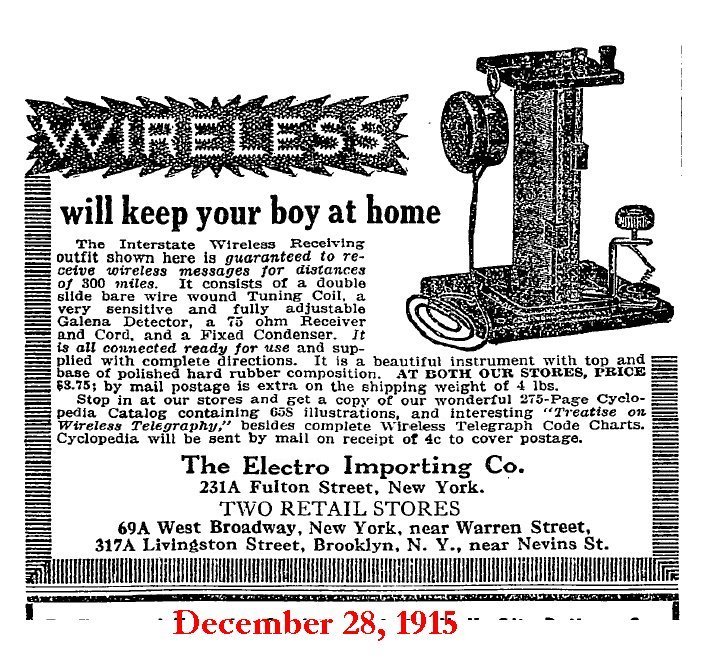
Hugo Gernsback may have been America’s first professional futurist, and while he wasn’t always right he was always interesting. Gernsback invented the first home radio kits right after the turn of the nineteenth century and sold his gadgets by mail order from his Brooklyn offices. He loved science fiction as much as science–saw them as complements, really–and published some of the earliest examples of the form in his publications, including Amazing Stories. The sci-fi Hugo Award is named for him.

Gernsback never stopped trying to amaze with outlandish inventions and predictions. Just four years before his death, the July 26, 1963 issue of Life profiled the man in “Barnum of the Space Age,” which reported his prophecies for the future. An excerpt:

A Hugo Gernsback print advertisement.

“Science is now so big, so flamboyant and so barnacled with politicians, press agents, generals and industrialists that Hugo Gernsback, who invented it back in 1908 (and has re-invented it, annually, since) can scarcely make himself heard above the babble of the late-comers. Although he is now 78, Gernsback is still a man of remarkable energy who raps out forecasts of future scientific wonders with the rapidity of a disintegrate gun. He believes that millions will eventually wear television eyeglasses–and has begun work on a model to speed the day. ‘Instant newspapers’ will be printed in U.S. homes by electromagnetic waves, in his opinion as soon as U.S. publishers wrench themselves out of the pit of stagnant thinking in which Gernsback feels they are wallowing at present. He also believes in the inevitability of teleportation–i.e., reproducing a ham sandwich at a distance by electronic means, much as images are now reproduced on a television screen.”

Tags:

And carbon-based scone-ordering was suddenly threatened. (Thanks Geekosystem.)

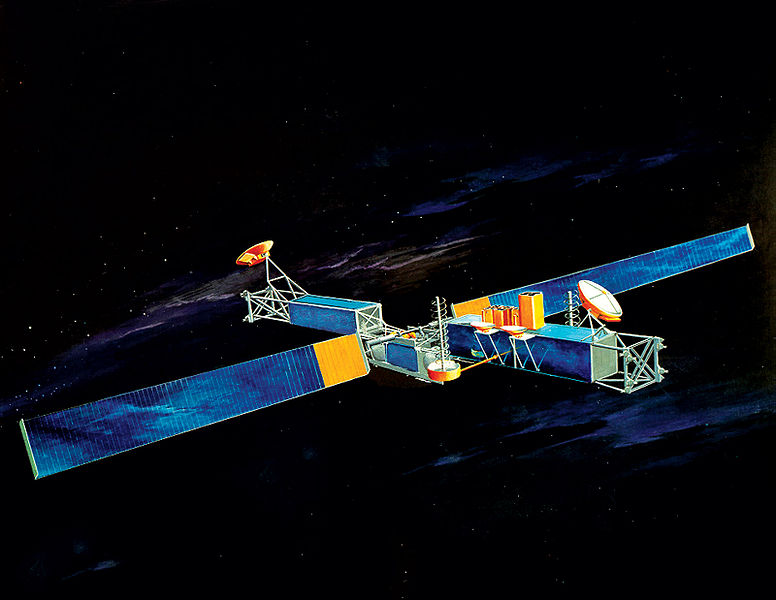
According to an article in The Week, there are 360,000 pieces of space junk (rocket debris, missle shards, old satellite hardware, etc.) orbiting Earth and threatening to destroy our current satellite systems. But Japan has a plan to use a metallic fish net to collect the floating flotsam. An excerpt:

“The Japanese Aerospace Exploration Agency has a solution. It has teamed up with Nitto Seimo, a fishing net manufacturer, to design a giant, metallic net to be launched into space. The net would rotate around the planet, and collect the orbital trash. Once the net is full, gravity would pull it toward Earth — and it would burn up as it re-entered the atmosphere. Japan wants to launch the net within the next two years.”

Robert Krulwich has a story on NPR about meat-eating furniture, including the flypaper clock featured in this video. At least it doesn’t show the coffee table that guillotines and devours mice that it attracts with cheese bits. No joke.

Tags:

China simply doesn’t have this type of ingenuity. (Thanks Reddit.)

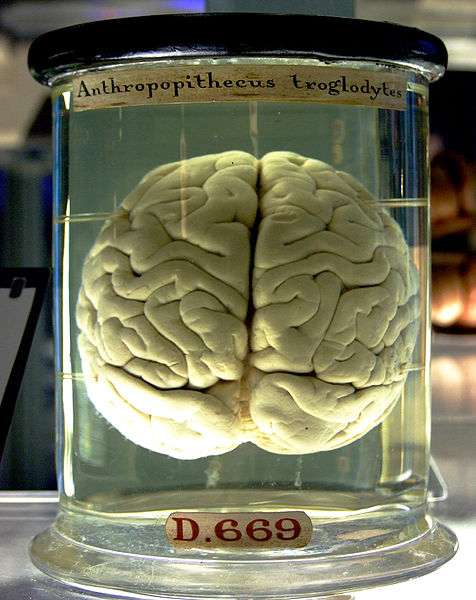
"Interesting things in jars." (Image by Gaetan Lee.)

AUTOSKREELIK (SOZO)

Private collector seeking: Prosthetics, lusus naturae, medical devices, anatomical bits, mech, 3-D, tools, analog communication, taxidermy, interesting things in jars, conjoined_____?, head(s) on stick(s), dolls no one will look at, foetus, scientific ephemera, parasites, curious moulds, masks, skin, iron maiden, photographs, skellingtons, exotic ducks, eyes, flail. I am not in retail. Pictures appreciated.


Arianna Huffington: a friend of measles.

The acquisition of the Huffington Post gives AOL ownership of some brilliant muckraking.

Tags: ,

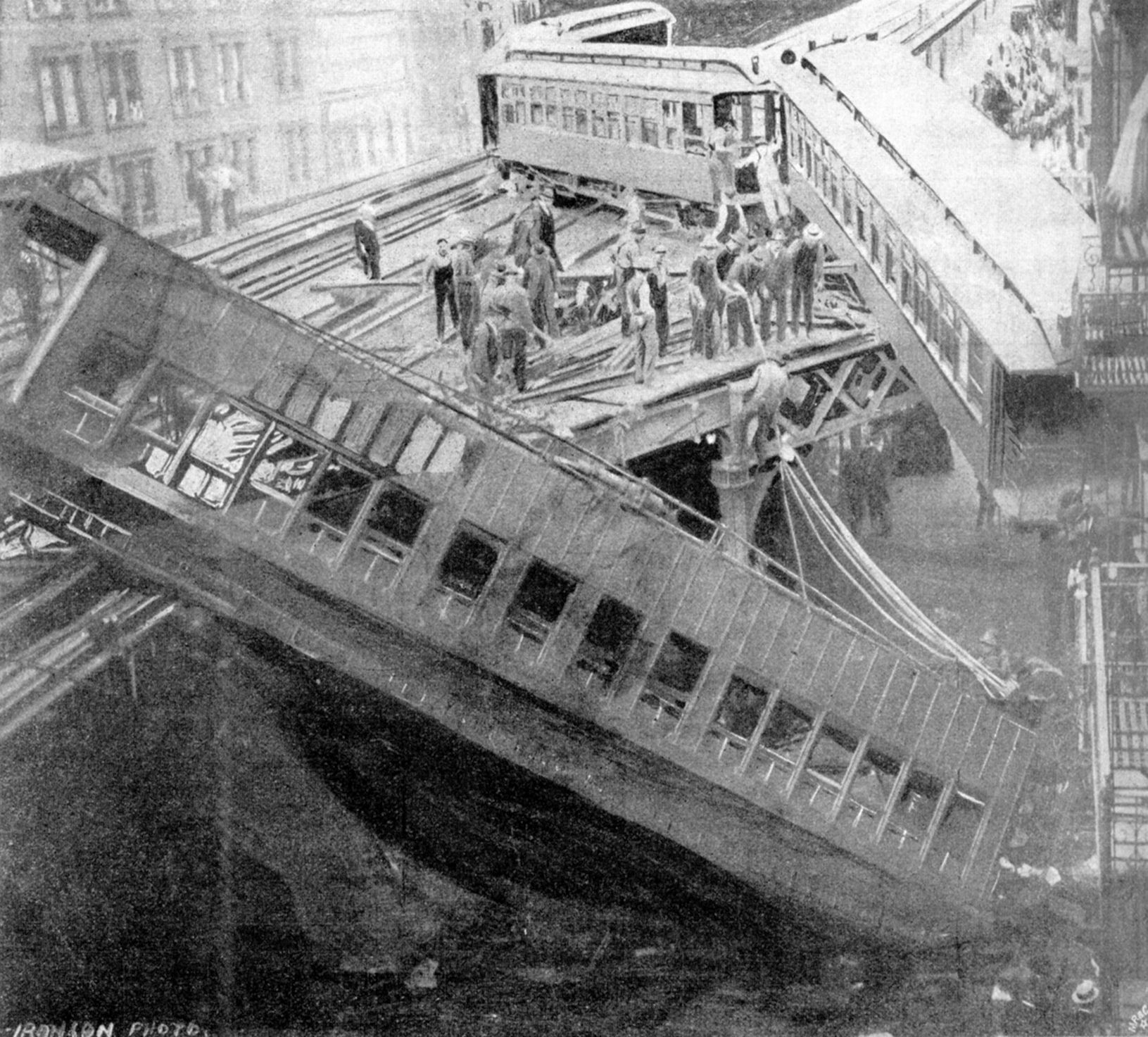
The 1905 IRT wreck occurred just a few minutes after seven in the morning.

September 11 was an ominous date in NYC history even before 2001, if on a smaller scale. Due to a switching error, a horrendous 1905 train wreck killed 12 and seriously injured another 48 in Manhattan on the erstwhile IRT Ninth Avenue line at West 53rd Street. As this astounding (and anonymous) photo illustrates, it was a horrifying calamity of Hollywood blockbuster proportions long before movies were capable of simulating such disasters. The motorman, Paul Kelly, faced criminal charges for the crash because police suspected the incident was a willful act connected to an imminent strike by the motormen. Kelly went on the lam and eluded capture for nearly two years. The July 1, 1907 New York Times reported on his arrest in San Francisco. An excerpt:

“Paul Kelly, wanted by the New York police on a criminal charge growing out of the death of twelve persons in an elevated railroad wreck on Sept. 11, 1905, was arrested here last night by local detectives and detained pending orders from New York. Kelly admitted his identity.

The day before the strike of the elevated railroad men in New York, Kelly, who was a union motorman, was in charge of the train which was wrecked. It was charged that Kelly willfully disobeyed orders. He disappeared, and the Police Commissioner of New York offered a reward of $500 for his arrest.

Kelly has been here for a year, and has been in the employ of the Southern Pacific Railroad in a local freight yard.”

Tags:

I previously posted a clip of a 1950s housewife on LSD, but let’s see what acid does to a girl with an orange.

Tags:

Even the guts of Paris look beautiful. (Thanks Open Culture.)

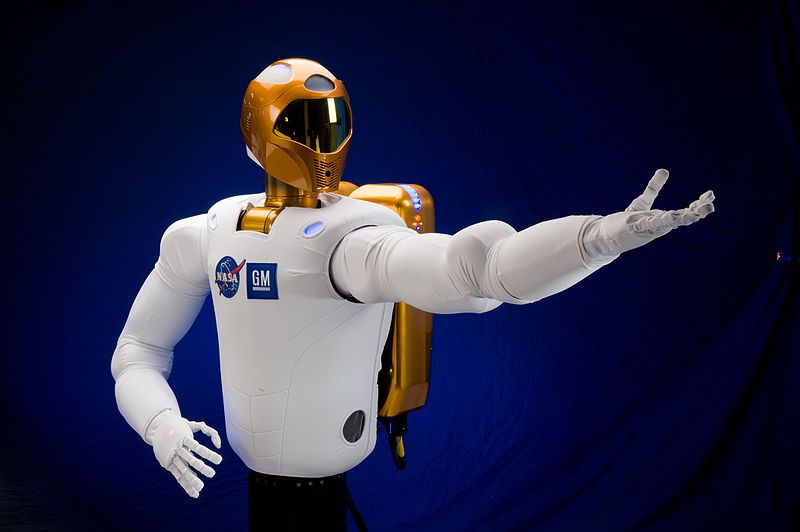
"There will be plenty for R2 to do while waiting for its lower extremities." (Imaghe by NASA.)

The specimen pictured on your left is Robonaut 2 (or R2 for short), the first human-like robot that NASA will send into space. In February, R2 joins the International Space Station to aid in conducting scientific projects. The robot’s legs aren’t ready yet, so it’s launching ahead of them and they will be sent up and attached in space when they’re ready. The same thing happened with Buzz Aldrin, who was merely a torso when he first went to the moon. His limbs and genitals were shipped separately. An excerpt from a NASA news release:

“NASA’s Robonaut 2 is primed and ready for launch aboard space shuttle Discovery in February. R2 is so ready, in fact, that it’s going up ahead of its legs, which will follow on a later launch.

‘The robot’s legs aren’t ready yet,’ says Rob Ambrose of NASA’s Johnson Space Center. ‘We’re still testing them. But there will be plenty for R2 to do while waiting for its lower extremities.’

R2 will be the first humanoid robot to travel and work in space, so it’ll be training for some big responsibilities.

‘This robot will eventually become the space station crew’s right-hand ‘it.” (Ambrose says R2 is neither male nor female.)

Thanks to the legs and a few other upgrades, ‘it’ has a bright future. In fact the ultimate goal is for R2 to help the astronauts with EVAs. But first, like a student in school, the robot must progress stepwise as new features – like legs — are added and it acquires new abilities.”

Tags: ,

Guangzhou is one of the cities included in the Pearl River project. (Image by Myouzke.)

Yglesias has a post about the latest Chinese mass development, a megacity along Pearl River which will link many of its urban manufacturing areas with a dizzying array of infrastructure projects. The post also decries the lack of regional planning in the United States, while completely ignoring the land grabs and uprooting of reluctant people necessary to make such sweeping changes. Also: Some Chinese megalopolises, like Ordos, become insta-ghost towns. But here’s the Yglesias screed:

“I would say the key merit of this plan isn’t just the possibility for more coherent regional planning (it might work out well, or the planning might be out of touch and inept) so much as it is the deliberate desire to keep filling in China’s most prosperous, highest-productivity area. And it’s quite reasonable to expect people to continue flowing away from the poor countryside to opportunity in richer areas, and specifically this area which is quite prosperous by Chinese standards. Rich, productive urban areas are, after all, where the best opportunities lie and it’s sensible for the Chinese to be planning for the infrastructure needs of a future in which more people flock to them.

The tragedy is that we’ve largely stopped doing this in the United States. Of course people still flock to the Boston-Washington corridor, the Bay Area, etc. But we don’t adopt the kind of infrastructure and zoning policies that would facilitate those areas becoming substantial denser. Consequently, instead of having the fastest net population growth in the richest metropolitan areas (or states) we have people flocking to Houston and Phoenix in search of cheap housing.”

From second-degree burns to completely healed in 96 hours.

Scott Brusaw’s solar-powered glass-based roadways trap the sun’s power and melt snow. (Thanks Bioscholar.)

Tags:

Architect Gunnar Birkerts, Sven's father, designed the Corning Museum of Glass in Corning, NY.

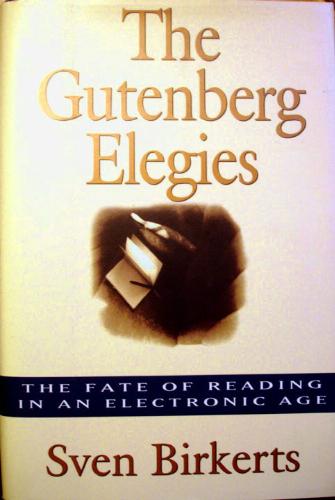
Mule Variations has a new interview with Sven Birkerts and it touches on the author’s prophetic 1994 work, The Gutenberg Elegies, which examined the fate of reading in the age of Internet. An excerpt:

“Mule Variations: In 1994, in the days before widespread use of the Internet or cell phones, you wrote inThe Gutenberg Elegies, ‘We will all spend more and more of our time in cyberspace producing, sending, receiving, and responding, and necessarily less time interacting in a ‘hands on’ way with the old material order.  Similarly, we will establish a wide lateral interaction, dealing via screen with more and more people at the same time our face-to-face encounters diminish.  It will be harder and harder – we know this already – to step free of our mediating devices.’  At the time, this observation was far from readily apparent to the public at large.  Now that it has played out as you predicted, do you ever feel like The Gutenberg Elegies was too far ahead of its time?  That if you had published it, say, five years later in 1999 more people would have understood what you were talking about?

Sven Birkerts: I think it came out at a time when the people who tend to think about these things were thinking about them, even though it hadn’t entered the wider public consciousness.  I think it was a wonderfully opportune time to start the debate.  And it was very coincidental, the publication of that book, because it came out at the very same time as Being Digital by Nicholas Negroponte, who runs the MIT media labs.  And his was this raving, ‘Here’s the new world!  All solutions are in hand!  We’re all digital!’  And so the books were reviewed over and over and over again together.  And he and I did a couple things where we’d go on talk shows together.  To me, it said we’d come to a moment where it could be talked about.  What’s interesting to me now is that the wave’s falling back a little.  Some of the people were so gung ho about it, for instance Jaron Lanier who published a book this year.  Here’s this wild-haired Silicon Valley computer visionary suddenly starting to find the problems with the current situation.  He’s coming back from his raving enthusiasm.  He saw where the digits were going, but he didn’t see what would happen when the digits got tied up with the economy, etc.”

Tags:

He emerges drunk, surly and ready to watch some football. No, he’s not going to your sister’s house. (Thanks Reddit.)

Only 54 miles per hour but still pretty cool. (Thanks Open Culture.)

"Miami" was originally spelled "Mayaimi."

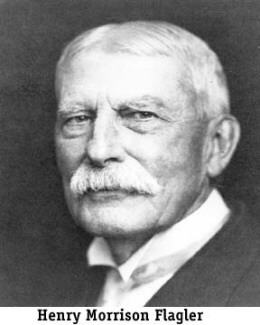
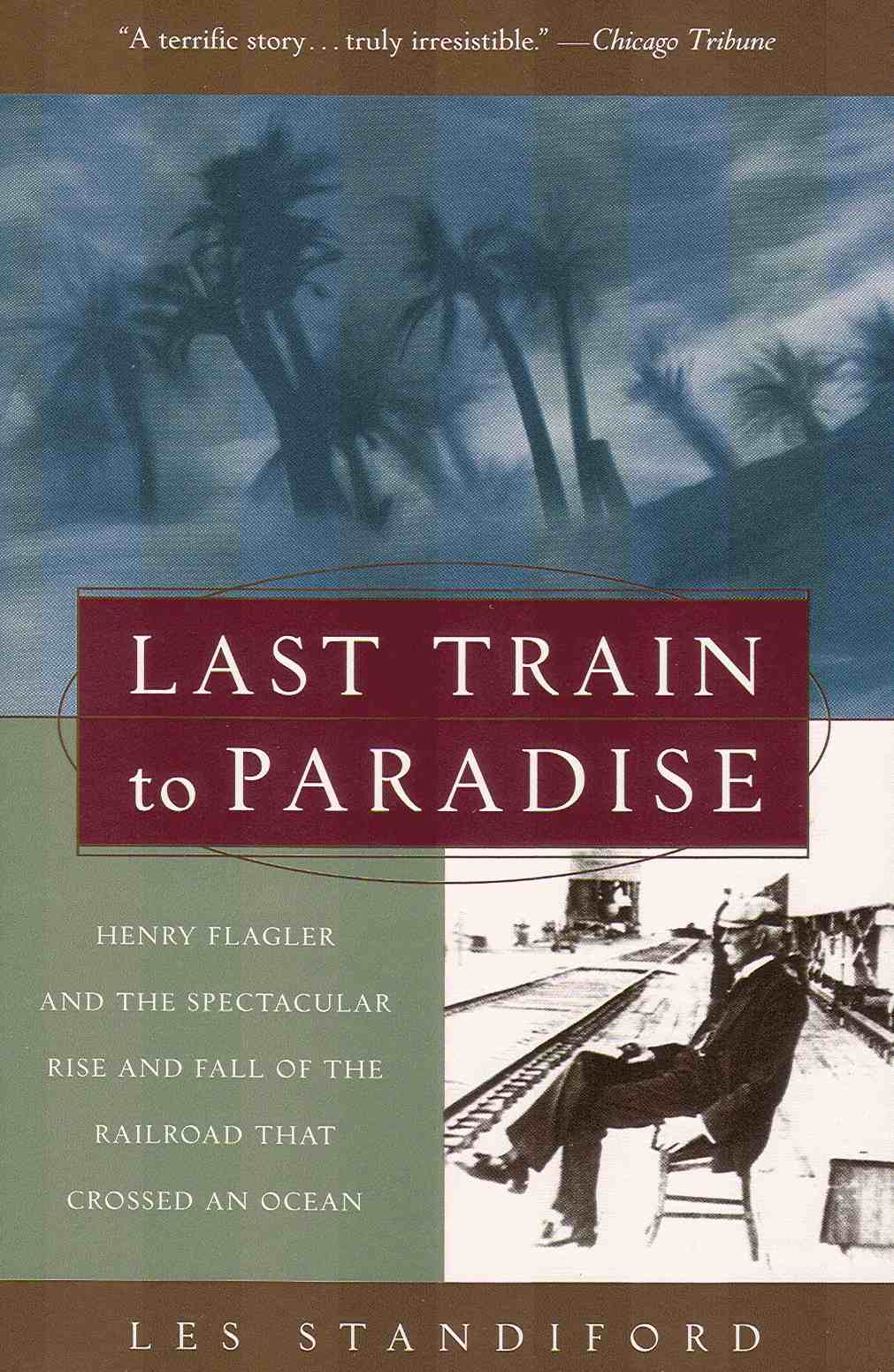
Henry Flagler dreamed the impossible dream and actually got to live it, if only for a while. A founding partner of Standard Oil, Flagler amassed amazing wealth by 1885 when he decided to transform Florida from swampland into an American Riviera. Soon, his grand hotels dotted places like St. Augustine and West Palm Beach, and he built the Florida East Coast Railroad, which extended all the way down to the city that would become Miami.

But in 1898 Flagler wanted more. To fulfill his plans, he would have to further extend the railroad from Biscayne Bay to Key West, which was roughly 125 miles off the coast. That would require a miracle of engineering. It didn’t happen overnight, but in 1912 Flagler’s Florida Overseas Railroad was completed. The visionary didn’t have much time to bask in his success, however. Flagler died the following year at 83 years old, after a fall in his home. In 1935, a hurricane destroyed the Key West railroad, which was never rebuilt.

An excerpt from Lee Standiford’s Last Train to Paradise about the day the Florida Overseas Railroad opened:

“THE EIGHTH WONDER OF THE WORLD, headlines now bannered, such epithets as ‘Flagler’s Folly’ long forgotten. He had arrayed before him thousands of grateful citizens, along with a multitude of foreign dignitaries and government officials come to pay homage to what had been accomplished solely because of his vision and his unswerving devotion to that objective. Few people in history have accomplished so great a task or lived to experience such a moment as Flagler did.

The man he hired to bring his dream to fruition had died on the job and hundreds of other men had lost their lives as well, and despite all bromides otherwise, some weight of their passing had to have rested upon Flagler’s shoulders. Storms weathered, court fights fought, political enemies bested, impossible engineering problems solved, good men buried, rails joined at last. So many currents, so many thoughts and notions to meld and comprehend, after eighty-two years of life.

There’s no way to fathom how much of this had passed through his mind that day, but on his way off the platform Flagler placed a hand on Parrott‘s shoulder and whispered, ‘Now I can die happy. My dream is fulfilled.'”

Tags:

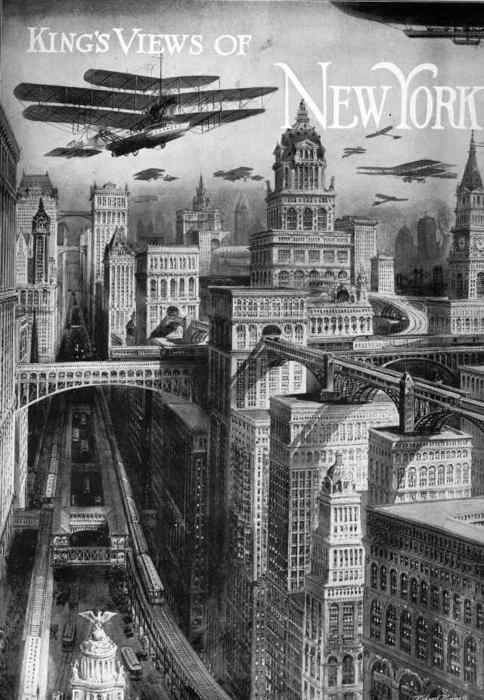
The cover of a 1911 Moses King guidebook predicted New York City's future pretty accurately.

David W. Dunlap has an incredibly fun slideshow on the New York Times site, which recalls urban planning from NYC’s past that was wildly bold and wholly unrealistic. An excerpt:

“Sobersided planners and wide-eyed visionaries thought this astonishing pace of transformation would never abate. A dreamer named W. Parker Chase proposed in 1932 that the 50 million people living in New York City 50 years on would ride vacuum-tube escalators and take air taxis to their 250-story office towers. The Regional Plan Association envisioned a 1,200-foot-long bathhouse complex at Great Kills Park on Staten Island. Robert Moses, who usually had the power to get things done, tried to persuade the United Nations to build a Brasília-like center at Flushing Meadow Park in Queens. (Midtown Manhattan, he warned in 1946, would by then ‘not be a proper, dignified and practical location’ for the United Nations.)

Dr. John A. Harriss, a distinguished expert on traffic control, went as far as to propose damming and draining the East River, before replacing it with a five-mile-long network of vehicular and train tunnels topped by boulevards and promenades. Pure folly? Not to the advocates of Westway, a highway that would have tunneled through landfill in the Hudson River until the plan was scuttled in 1985.”

Tags: , ,

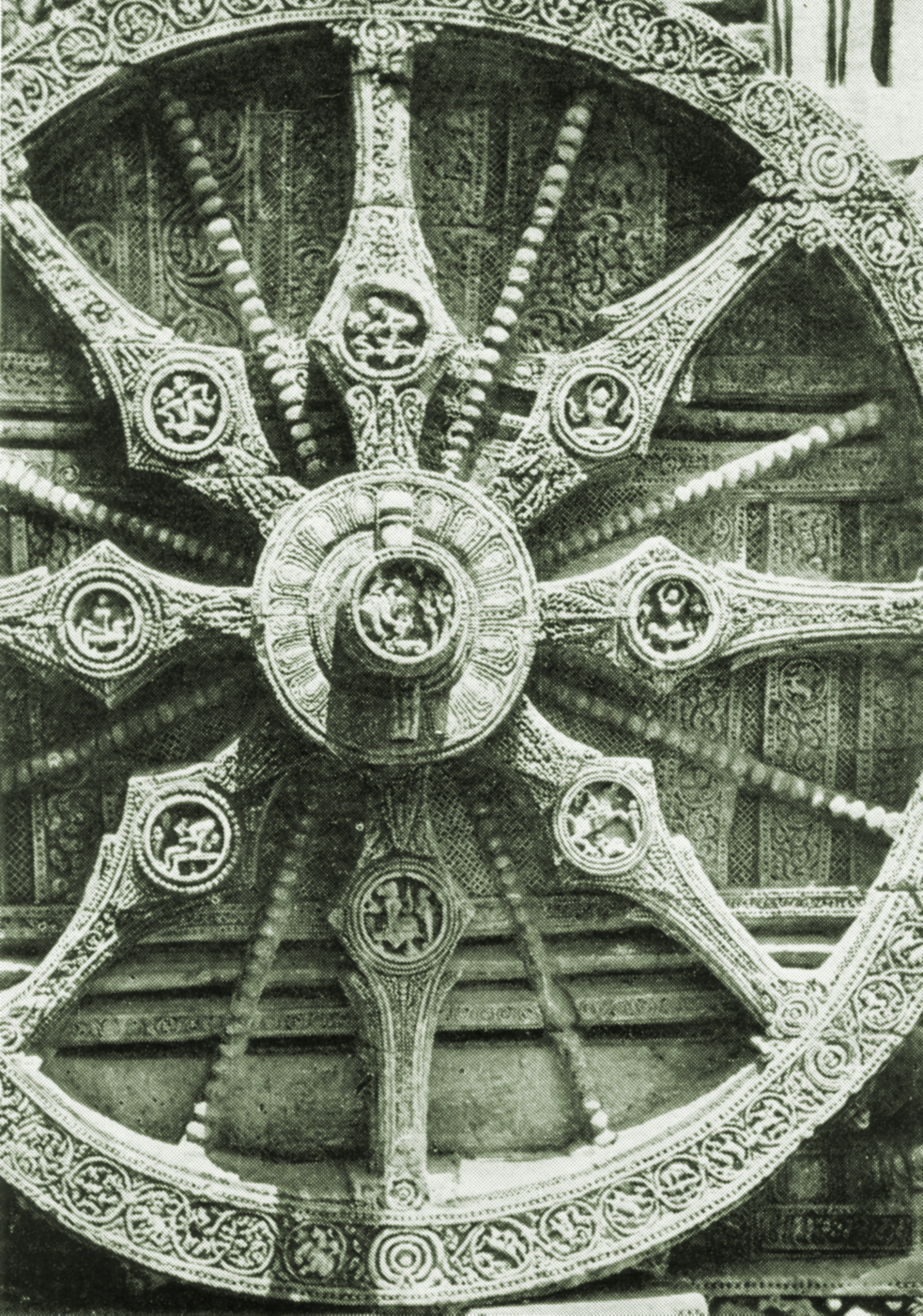
The wheel, still in use.

NPR’s Robert Krulwich had an interesting conversation with Kevin Kelly of Wired. Kelly claimed to the disbelieving host that no tool or technology in the history of the Earth has ever gone extinct on a global scale. Krulwich can’t believe the assertion but has yet to disprove it. An excerpt:

“He said, ‘I can’t find any [invention, tool, technology] that has disappeared completely from Earth.’

Nothing? I asked. Brass helmets? Detachable shirt collars? Chariot wheels?

Nothing, he said.

Can’t be, I told him. Tools do hang around, but some must go extinct.

If only because of the hubris — the absolute nature of the claim — I told him it would take me a half hour to find a tool, an invention that is no longer being made anywhere by anybody.

Go ahead, he said. Try.

If you listen to our Morning Edition debate, I tried carbon paper (still being made), steam powered car engine parts (still being made), Paleolithic hammers (still being made), 6 pages of agricultural tools from an 1895 Montgomery Ward & Co. Catalogue (every one of them still being made), and to my utter astonishment, I couldn’t find a provable example of an technology that has disappeared completely.”

Tags: ,

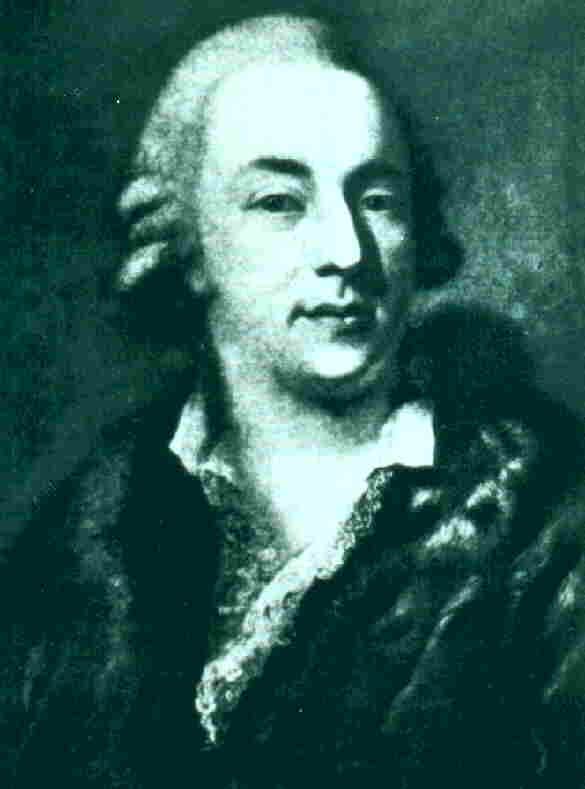
Julius Fromm died in London from a heart attack just days after the Allies' won WWII.

Julius Fromm was a German chemist who improved the condom, democratized its use and built a fortune from rubber. But he was Jewish so his empire was subsumed by the Nazis in 1938. An excerpt from an article about his life in the Berlin Review of Books (Thanks Instapaper):

“Julius Fromm then hit upon the idea of making condoms. The early condoms from the eighteenth century were generally made of animal intestines, and were used primarily by wealthy men – like Giacomo Casanova, who referred to them as ‘English riding coats’ – to protect against the incurable syphilis. These condoms were difficult to use, diminished pleasure, frequently broke, and offered only limited protection against venereal diseases. In 1893 the American industrialist Charles Goodyear developed rubber vulcanisation. When the sap of the rubber tree is formed into rubber, then treated with sulphur and heated to high temperatures, it forms an elastic and durable material that can be used to make raincoats, shoes, tyres and condoms which rather looked like bicycle inner tubes with bulging seams. Later a dipping method was invented that made possible the production of thinner and seamless condoms. Julius Fromm saw a market he could tap into and founded his company in 1914, opening a small workshop in the Bötzow area in the Prenzlauer Berg district of Berlin. With World War I and the liberalisation of sexual values in the Weimar Republic, the demand for condoms exploded and Fromm’s business quickly expanded, and he established factories near the Spree River in Berlin-Mitte.”

Tags: , ,

As this 15-minute video shows, Silicon Valley emerged as the center of the tech world due to a dispute about semiconductor research among scientists in 1957. A mutiny of sorts by eight employees of transistor inventor William Shockley paved the way for the area to become the nonpareil computing community. An excerpt from a New York Times article about the scuttlebutt:

SEPT. 18, 1957: Revolt of the Nerds

Fed up with their boss, eight lab workers walked off the job on this day in Mountain View, Calif. Their employer, William Shockley, had decided not to continue research into silicon-based semiconductors; frustrated, they decided to undertake the work on their own. The researchers — who would become known as ‘the traitorous eight’ — went on to invent the microprocessor (and to found Intel, among other companies). ‘Sept. 18 was the birth date of Silicon Valley, of the electronics industry and of the entire digital age,’ says Mr. Shockley’s biographer, Joel Shurkin.”

Tags:

« Older entries § Newer entries »